
Self-Guided Japan Tours: What Is Booked for You, How Much Free Time You Get, and What It Costs
The middle path between an escorted coach tour and a spreadsheet: hotels, Shinkansen tickets, luggage forwarding and an airport meet booked before you land, a 24/7 line in Japan, and most of the days left to you. How the format works, using the tours we actually run — with the catalogue prices.
Booking a trip to Japan can feel like standing in front of a vending machine with 200 buttons. Escorted coach tour? Fully independent, with a spreadsheet open at 2 a.m.? For most travelers there is a middle path that gets overlooked: a self-guided tour package. The hotels, the Shinkansen tickets, the luggage forwarding and the airport meet are booked before you land, and there is a support line in Japan if something goes sideways — but nobody holds up a flag while you eat lunch.
This is what people mean when they search for "Japan tours with free time built in". This page explains how the format works using the self-guided Japan tours we actually run: what is booked, what is left to you, how the days fall on a real itinerary, what each tour costs, and where Mount Fuji, the temples and the tea ceremony fit into the free days. The idea is that you can judge whether it fits your trip before you send us your dates.
🧭 Quick Answer: How Our Self-Guided Japan Tours Work
- What is booked for you: every hotel, breakfast included (the family routes are the only exception, because they use apartment-style hotels), the bullet trains and limited-express tickets for every leg between the major cities, a transportation IC card already loaded, luggage forwarding on the long hops, and our staff meeting you at the airport with the trip documents. Travel insurance and a 24/7 English line in Japan are included on all of them.
- What is free time: the days inside each city. The 12-day Japan Highlights tour (GR002) has five full free days plus the afternoons of four transfer days. There is no group, no guide walking in front of you, and no 7 a.m. luggage call.
- What it costs: catalogue ranges per person, two sharing — from USD 1,200 for 7 days (BF001) to USD 4,200–5,900 for the 15-day west-Japan tours. Deluxe-hotel versions run USD 4,200–7,600; SOLO versions, priced for one traveler, from USD 3,700.
- Who runs it: a Japan-based operator. The people on the support line are in Japan, in your time zone, during your trip.
Find the self-guided route that fits your trip
Choose the length and places you want to explore. We arrange the hotels and listed transfers; you explore at your own pace. A local guide can be arranged as an option.
These are set self-guided itineraries, with the hotels and transport listed on each tour page. International flights, most meals and sightseeing tickets are extra. Catalogue ranges checked October 12, 2026. Prices vary by departure date; availability is confirmed when you inquire.
A rough travel month is enough to start. Your choice is copied into an editable inquiry. Requesting a quote does not make a booking.
What a Self-Guided Japan Tour Actually Is
A self-guided Japan tour is a set itinerary where the logistics are arranged in advance and the days are yours. The operator books the hotels, arranges the transportation between the major cities, and gives you a day-by-day plan; you travel independently between and within each city, without a tour guide or a group. Some operators call the same thing a semi-independent tour, an independent tour package, or a self-drive-style package without the car. The words vary; what matters is what is actually booked.
Think of it as scaffolding. The frame is built before you arrive — where you sleep, which train you are on, what happens to your suitcase. Where you go each morning, where you eat, and whether you skip a temple to nap are up to you. On our tours the plan arrives as a set of Japan travel documents handed to you at the airport: hotel addresses in Japanese for taxi drivers, the train legs, and local recommendations for each day that you are free to ignore. The local expertise is in the documents and on the phone line, not walking in front of you.
Compare that with escorted tours, where a tour leader manages a group of 15 to 40 people from breakfast to dinner and the pace is set by the coach schedule. Both formats have their place. But for anyone who wants to linger over a bowl of ramen, chase a side street, or spend a whole afternoon in one garden, the self-guided format is the better fit — and it is the one the country is unusually well built for: the whole country is wired for travelers who want to explore Japan independently.
What Is Booked for You — and What Is Not
Every operator's list is different, so here is ours, taken from the current catalogue rather than a brochure sentence.
✅ Booked and paid for before you land
- Every night's hotel — modern hotels near the station in the major cities, a hot-spring hotel where the tour includes one; breakfast every morning; upgraded hotels throughout on the deluxe GR1xx versions
- Bullet trains and limited-express tickets for every leg between cities — the transportation between destinations is the part you never queue for
- A transportation IC card, already loaded, handed to you on arrival — ¥3,000 on BF001, ¥5,000 on GR002, ¥13,000 on GR001 — for local trains, subways and buses
- Luggage forwarding on the long hops — Tokyo → Kyoto and back on GR002, Tokyo → Osaka and back on GR001, Tokyo → Osaka on BF001 — so you ride the trains with a day bag
- A chartered taxi where the route needs one (Shirakawa-go on GR002 and GR009); the Hakone Free Pass on GR007 and GR009; the ama-hut lunch and Ago Bay cruise on GR001
- Our staff meeting you at your arrival airport with the documents and IC card, then walking you to the right taxi rank, limousine-bus stop or train platform
- Travel insurance, and a 24/7 English support line staffed in Japan for the whole trip
✋ Not included — on purpose
- International flights
- Lunches and dinners — the included meals are breakfast and the handful named on a tour (the ama-hut lunch on GR001; the hotel dinners in Hakone and Nara on GR009)
- Entrance fees to temples, museums and gardens — most are ¥300–¥1,000 and you choose which ones
- Public transportation beyond the loaded IC card, and taxis you decide to take
- Accommodation tax, and hotel extras such as early check-in
- A guide walking with you. That is the point — but if you want one for a day, see the FAQ
Leaving meals and entry tickets out is deliberate. It keeps the price honest, and you did not fly across the world to eat every meal at a set-menu restaurant chosen for a group.
Self-Guided vs Escorted Tours vs Fully Independent
Escorted tours put you in a group with a tour guide, coach transport, included meals and a fixed schedule. They are good if you want to switch your brain off, and less good if you would like three hours in one shrine and no souvenir stop.
If you are planning a honeymoon specifically, our Japan honeymoon packages guide lists the couple-suited routes with prices.
Private guided and tailor-made tours give you a guide for your own party and an itinerary built around a special interest — gardens, food, wartime history. They are the most expensive option, and they are not what we sell: our tours are set itineraries — private travel for your own party without a private-tour price — which is exactly what keeps the prices on this page where they are.
Fully independent travel is the cheapest on paper and a real time sink in practice. Kyoto hotels in cherry blossom season, seats on the bullet trains with large luggage, ryokan that do not take foreign online bookings — the booking layer is where first trips go wrong, and one missed connection on a busy weekend can blow up a day. A self-guided package removes that layer and leaves you the easy part.
🔍 Self-guided, semi-independent, or a group tour — what the words mean
| Escorted group tour | Self-guided / semi-independent package | Fully independent (DIY) | |
|---|---|---|---|
| Who plans the route | The operator; fixed | The operator; you choose between set routes | You |
| Who books hotels and trains | The operator | The operator | You, one site at a time |
| Guide with you | Every day | No — staff at the airport on day one, then a phone line | No |
| Free time | Little | Most days | All of it |
| If a train is cancelled | Guide handles it | 24/7 line in Japan handles it | You handle it |
| Group size | 15–40 | Whoever you travel with | Whoever you travel with |
| Typical price for 12 days | Higher | USD 3,300–4,800 (GR002) | Lower, plus your evenings |
Interested in a tour? Click a route code above, or search for it in the top-right Search bar.
For a first trip to Japan, the middle column tends to be the sweet spot: the safety net of a proper plan without the rigidity of a bus. If you want to compare the same three formats specifically for walking trips, our self-guided walking tours guide does that for the Nakasendo and Kumano Kodo.
Japan Tours With Free Time Built In: What the Days Actually Look Like
"Free time built in" is easy to claim and hard to check, so here is the 12-day Japan Highlights & World Heritage route (GR002) day by day, split into what is arranged and what is yours. The pattern — two nights in Tokyo at each end, three in Kyoto, a mountain town in the middle — is shared by most of our 12-day tours.
🗓️ GR002 day by day — arranged vs yours
| Day | Sleep | Arranged for you | Yours |
|---|---|---|---|
| 1 | Tokyo | Airport meet; documents and transportation IC card handed over; hotel check-in | First evening in Tokyo |
| 2 | Tokyo | — | Full free day. Asakusa and Sensoji Temple, Shibuya, the Imperial Palace gardens, Harajuku — the documents list the sightseeing spots; you pick, at your own pace |
| 3 | Takayama | Suitcase forwarded to Kyoto; Shinkansen to Nagoya, limited express into the Japanese Alps | Afternoon in Takayama's old town |
| 4 | Takayama | Chartered taxi to Shirakawa-go and back | The village itself — no timetable inside it |
| 5 | Kyoto | Trains Takayama → Kyoto | Morning market in Takayama; first afternoon in Kyoto |
| 6 | Kyoto | — | Full free day. Fushimi Inari Shrine, Kinkaku-ji, the temples of Higashiyama |
| 7 | Kyoto | — | Full free day. Osaka or Arashiyama suggested; the IC card covers the local trains |
| 8 | Nara | Suitcase forwarded to Tokyo; train to Nara; free shuttle to the hotel | Morning in Kyoto (Nishiki Market); afternoon in Nara |
| 9 | Nara | — | Full free day. Todai-ji, Nara Park, Kasuga Taisha |
| 10 | Tokyo | Trains Nara → Tokyo | Morning in Nara; evening in Tokyo |
| 11 | Tokyo | — | Full free day. Day trips suggested in the documents: Kamakura, Nikko, or Mount Fuji and Lake Kawaguchi |
| 12 | — | Tour ends at hotel check-out | Your own way to the airport |
From the GR002 itinerary in the current catalogue. Five full free days (shaded) plus four transfer days that are half yours. The only day arranged end to end is the Shirakawa-go taxi.
Why that balance works: Japan rewards wandering. The best ramen shop near your hotel, the tiny shrine three blocks off the tourist trail, the vending machine that dispenses hot corn soup at 2 a.m. — none of it happens on a coach. What a tour package should do is take the friction out of the parts that are genuinely hard to arrange from abroad, and then get out of the way. That is the Japan experience most travelers are actually after.
The Tours, With Real Prices
These are the self-guided tour packages we run, with the catalogue price range for each. All of them start and end in Tokyo, cover Tokyo and Kyoto properly, and add one region — and its destinations — that most first-time visitors never reach.
🗺️ The tours, with real prices
| Tour | Days | Destinations | USD pp (2 sharing) |
|---|---|---|---|
| Japan Golden Route Highlights (BF001) the 7-day first-timer | 7 | Tokyo · Kyoto · Osaka | 1,200–1,800 |
| Japan Highlights & World Heritage (GR002) the day-by-day above | 12 | Tokyo · Takayama · Shirakawa-go · Kyoto · Nara | 3,300–4,800 |
| Hidden Gems: Ise-Shima Escape (GR001) ama-hut lunch, Ago Bay cruise, Koyasan day trip | 12 | Tokyo · Nagoya · Toba & Kashikojima · Osaka · Koyasan · Nara · Kyoto | 3,300–4,400 |
| Cultural Essence: Kyoto & Kanazawa Short Escape (GR006) | 12 | Tokyo · Osaka · Kyoto · Kanazawa | 2,800–4,200 |
| Timeless Traditions: Kanazawa & Hida (GR003) | 12 | Tokyo · Kanazawa · Takayama · Shirakawa-go · Kyoto · Nara | 3,200–4,700 |
| Sea of Serenity: Kashikojima & Cultural Japan (GR007) Hakone Free Pass, two hotel dinners | 13 | Tokyo · Hakone · Ise-Shima · Kyoto · Himeji · Hiroshima | 3,700–5,200 |
| Spirit of Tradition: Shirakawa-go & Cultural Japan (GR009) the 14-day route | 14 | Tokyo · Hakone · Takayama · Shirakawa-go · Kyoto · Nara · Hiroshima | 4,100–5,900 |
| Castles & Heritage of West Japan (GR005) | 15 | Tokyo · Kanazawa · Kyoto · Nara · Himeji · Naoshima · Hiroshima | 3,700–5,400 |
| Scenic Japan: Culture & Countryside (GR004) | 15 | Tokyo · Kyoto · Osaka · Okayama · Naoshima · Himeji · Hiroshima · Fukuoka | 4,200–5,900 |
| Deluxe-hotel versions — GR102 · GR103 · GR106 · GR101 | 12 | Same routes, upgraded hotels throughout | 4,200–7,600 |
| SOLO versions — SL001 · SL003 · SL004 · SL005 · SL007 | 12–15 | Priced and booked for one traveler, single rooms | 3,700–6,100 |
Interested in a tour? Click a route code above, or search for it in the top-right Search bar.
Catalogue ranges per person, two sharing (SOLO: one person); the price sheet on each tour page shows the figure for your departure month. International flights and most entrance fees are not included.
Choosing between them is mostly a question of what you add to Tokyo and Kyoto. The Japanese Alps tours (GR002, GR003, GR009) give you mountain villages, a preserved old town and Japanese history you can walk through. The Ise-Shima tours (GR001, GR007) give you the sea: pearl farms, an ama diver's hut for lunch, and the most important shrine in the country. The 15-day west-Japan tours (GR004, GR005) cover broad areas of the country and are the closest thing we run to the grand tours of old — Himeji Castle, the art islands of the Seto Inland Sea, Hiroshima's Peace Park — and they suit travelers who suspect this is their one unforgettable trip to Japan.
Who Self-Guided Japan Tours Suit — and Who Should Skip Them
First-Time Visitors
For first time visitors who are put off by kanji station signs and hotel check-ins, a package removes the scary parts (bookings, transport logistics) and leaves the days free. With a week, BF001 does Tokyo, Kyoto and Osaka. With twelve days, GR002 or GR001 are the ideal itinerary for a first visit: the two big cities properly, plus one region — the Alps or the Ise coast. If you are still deciding how long to go for, our two-week Japan itinerary and trip-cost guide are the two pages to read next.
Solo Travellers
Solo travelers get the biggest security bump from the format: a booked hotel every night, tickets in hand, and a number to call if a typhoon reroutes your train — without the awkwardness of a group. The SOLO series (SL001, SL003, SL004, SL005, SL007) runs the same tours priced and booked for one person, with single rooms and the same airport meet and 24/7 line — our Japan solo tours guide compares them with group tours for solos, room by room. Japan is one of the safest countries in the world for solo travel, including for women; our solo female travel guide covers the practical side.
Travellers Over 60
The question is how much walking, not age. Transfers between towns are by train or chartered taxi, and the long walking days on every tour are optional. We wrote a separate page on Japan tours for seniors that lists, tour by tour, how much walking each one actually involves.
Families
The same tours work with children because the days are yours to size: a full free day can be one museum and a park. See our family vacation packages page for the routes we suggest with kids, and the ninja experience route if that is the thing your children are asking for.
Repeat Visitors and Special-Interest Trips
If you have done the Golden Route, the interesting tours are the ones that leave it for destinations off the standard itinerary. GR004 and GR005 go west to Naoshima, Himeji and Fukuoka. NT002 walks a stretch of the Nakasendo and the Kumano Kodo and sleeps in temple lodging on Koyasan; KM003 is built around Koyasan and the Alps. Our Nakasendo guide and Kumano Kodo guide explain those trails. For northern Japan, the Hokkaido packages use chartered taxis through the national parks where the trains stop. For more destinations off the standard route, see beyond the crowds.
Who Should Skip It
If you speak Japanese, this is your fifth visit, and you enjoy building spreadsheets, you do not need us — book it yourself. And if you want a guide beside you every day, an escorted tour or a private guide is the right product, not this one.
Mount Fuji, Hakone and Day Trips on the Free Days
The free days are where Mount Fuji, Miyajima Island and the smaller destinations come in. Every 12-day tour lists Mount Fuji among its destinations because the second free day in Tokyo is written around it: the tour documents suggest Kamakura, Nikko, or Mount Fuji and Lake Kawaguchi as day trips from Tokyo, and you choose on the morning, with the forecast in mind. Mount Fuji hides behind cloud on many summer days and is clearest in winter; if the sky is grey, Kamakura's Great Buddha and coastline make a fine substitute, and there is no tour guide waiting for you to decide.
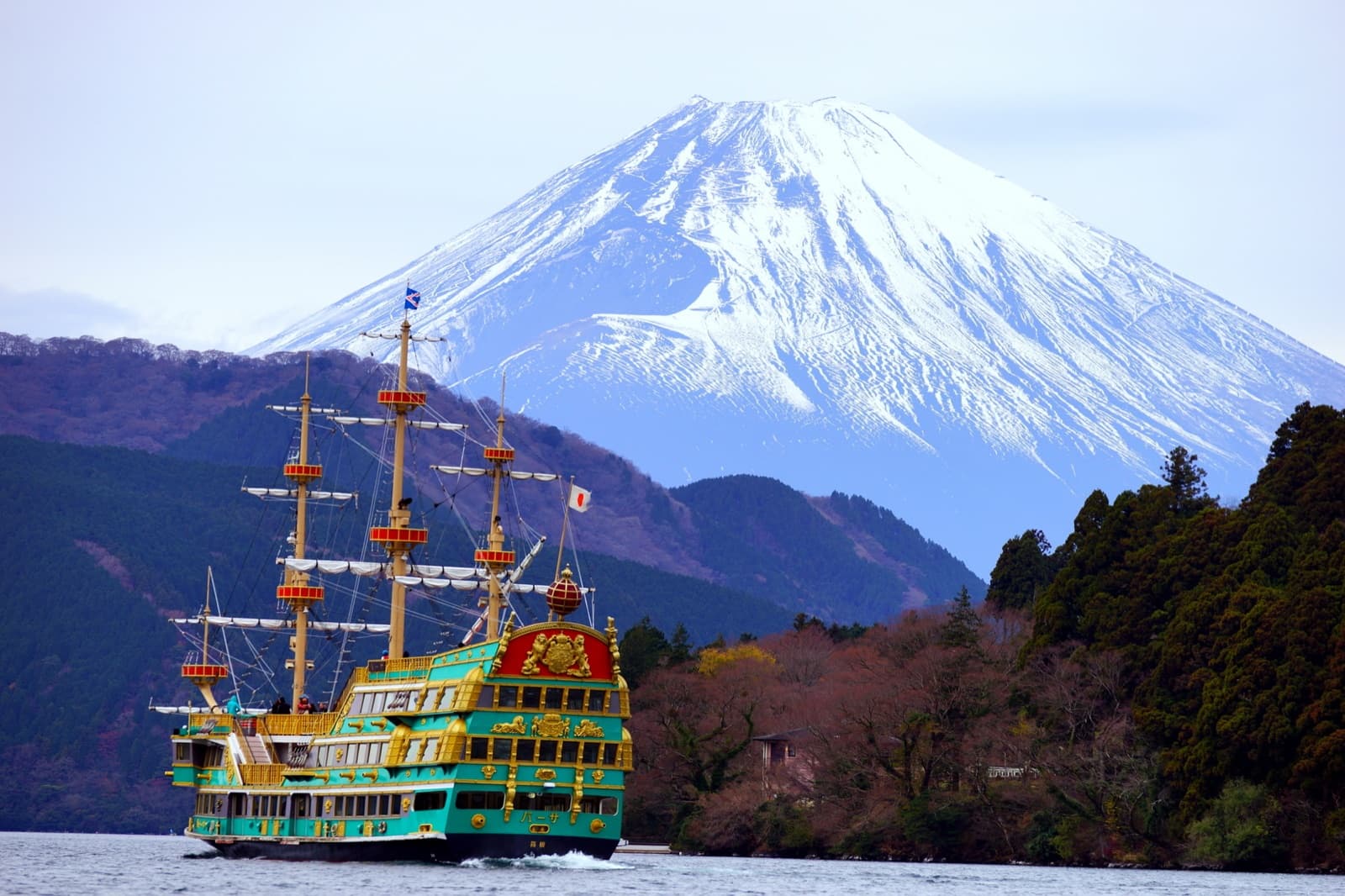
On the two Hakone tours (GR007, GR009) Mount Fuji is built into the itinerary rather than left to chance. Day 3 goes by Shinkansen to Odawara and local train up to Hakone-Yumoto; the included Hakone Free Pass covers the ropeway over the steaming vents at Owakudani and the boat across Lake Ashi, with Mount Fuji behind it when the weather cooperates; the night is a hot-spring hotel with dinner included. It is the one day on those tours where the hot springs are the point, and you still explore Hakone at your own pace.
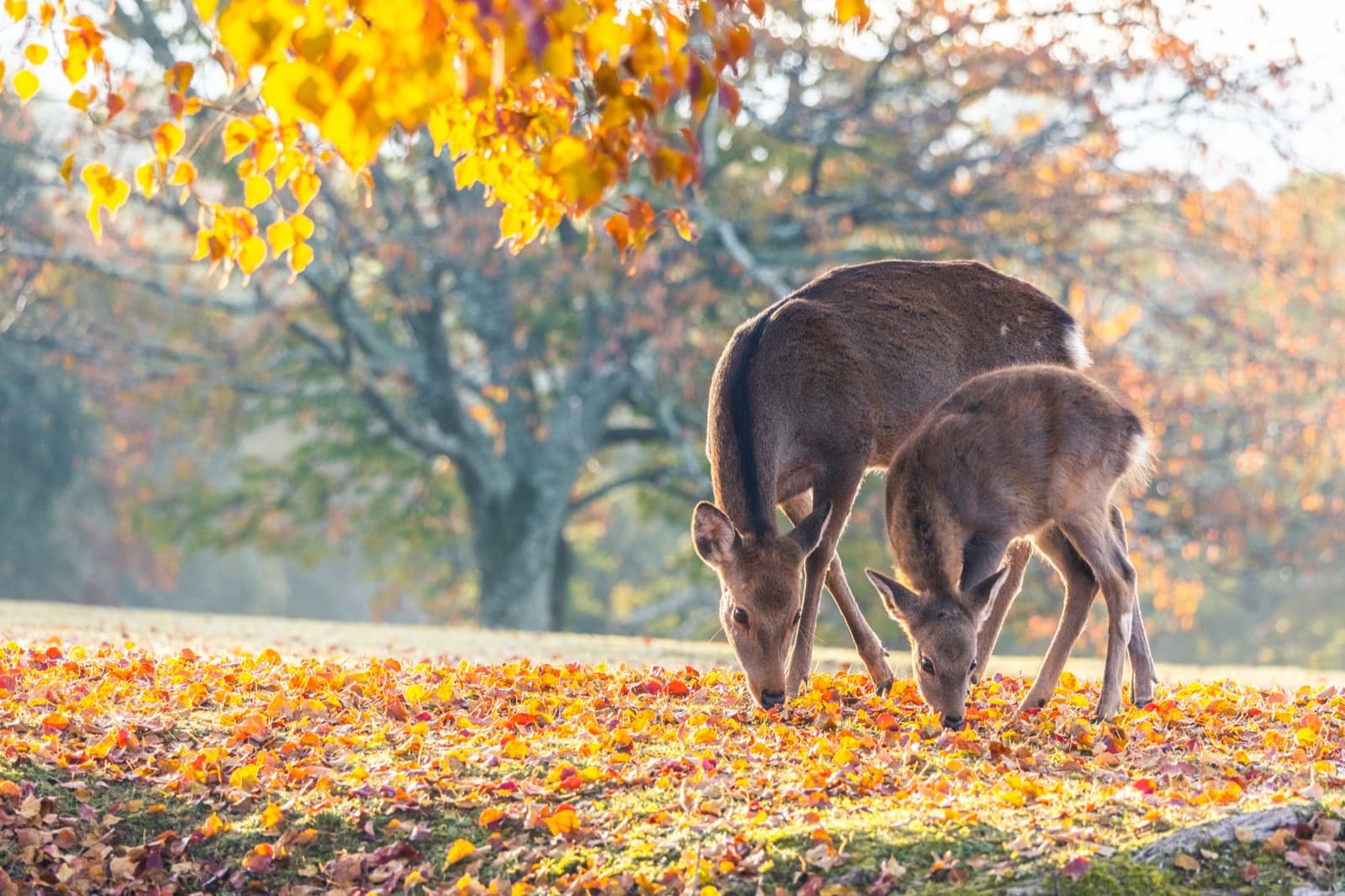
From Kyoto, the classic day trips are Nara (a hotel night on most of the 12-day tours rather than a day trip), Osaka for the food, and Arashiyama's bamboo grove — all on local trains the transportation IC card covers. From Hiroshima, on GR004, GR005, GR007 and GR009, Miyajima Island is a short train and ferry ride and the best-known half-day trip in western Japan; it is not on the itinerary, so travelers wishing to see the floating torii add it on the free afternoon. Historic sites that need a full day — Himeji Castle, the Naoshima art islands — are written into the west-Japan tours as destinations rather than left as day trips.
Cultural Experiences for the Free Days
A self-guided Japan tour includes no guided cultural experiences, and that is deliberate (a local guide can still be arranged as an option for part of the trip): the free days are for them. The most rewarding cultural experiences in the country are short, bookable a few days ahead, and better without a group of forty and a tour guide with a flag. A few that fit an afternoon:
- Tea ceremony. A proper tea ceremony takes 45 minutes to an hour in a working tea house, not a hotel demonstration. Kyoto has the widest choice of tea ceremony venues; Uji, twenty minutes south by train, is the historic home of Japanese matcha. Book a tea ceremony a few days ahead rather than on the day.
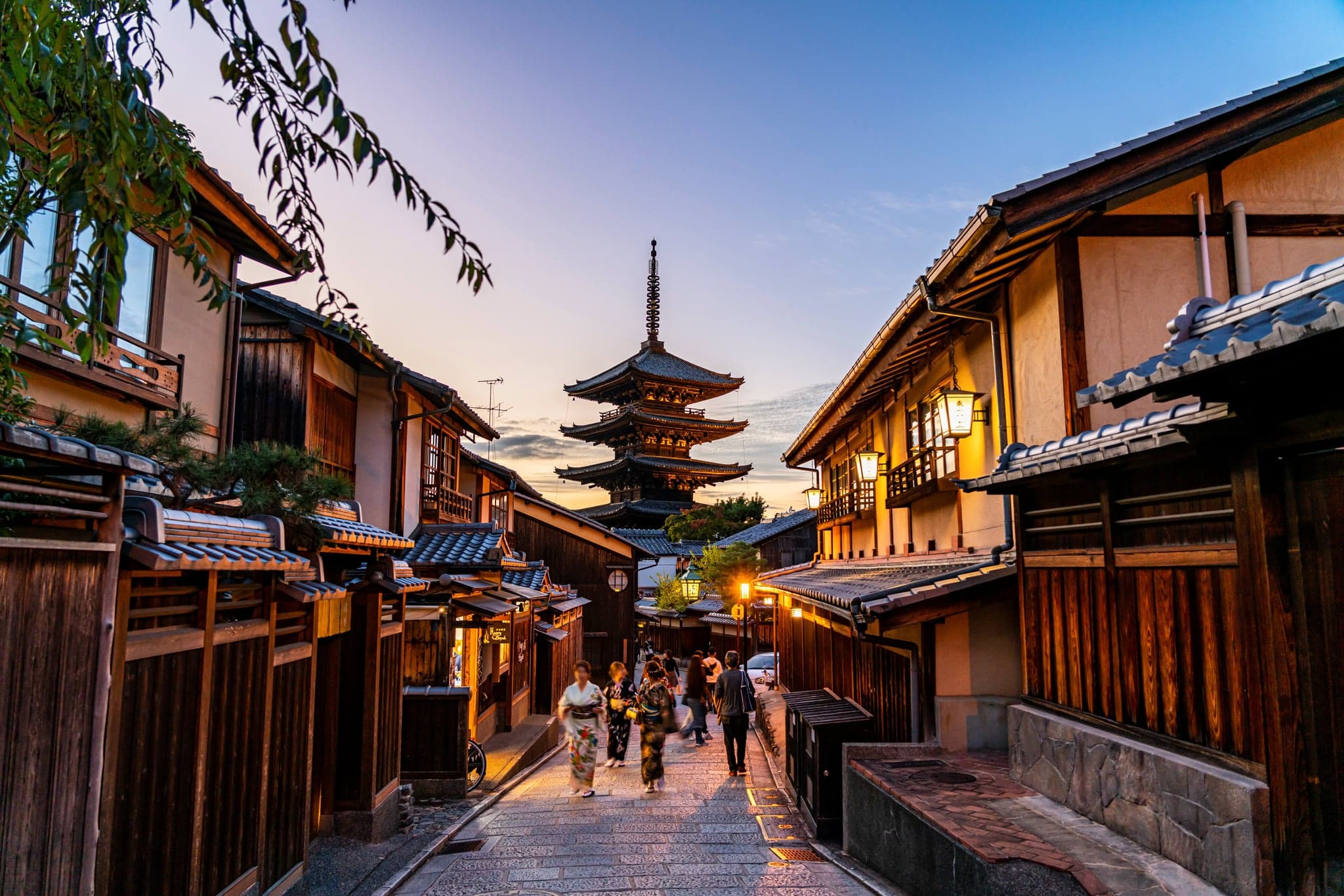
- Temples and shrines at the quiet hours. Fushimi Inari Shrine is open around the clock and free; at 7 a.m. the torii tunnels are yours. Meiji Shrine in Tokyo is a forest in the middle of the city, a few minutes from Harajuku Station. Kyoto's temples charge ¥300–¥1,000 each, which is why entrance fees are left out of the tour price — you choose which temples, and how many.
- Japanese cuisine, in local restaurants. The tour documents carry local recommendations for each day, but the rule that works everywhere in the country is to follow the lunchtime queue of office workers. Osaka's food culture for street food, Takayama for Hida beef, Kanazawa for seafood at the morning market, Nara for a slow lunch near the park — delicious cuisine is the easy part of Japan, and Japanese cuisine outside the big two cities rewards curiosity.
- Hot springs. The Hakone tours (GR007, GR009) include a hot-spring hotel night. Elsewhere, most cities have a public bath within a taxi ride; our onsen etiquette guide above covers the rules.
- Japanese history without the lecture. Takayama's Edo-period old town and the magistrate's office at Takayama Jinya, Himeji Castle, Hiroshima's Peace Park and museum — historic sites that explain themselves, on your own clock, and the parts of Japanese culture that a coach window never shows you.
None of these are booked by us, and none of them need to be. What the tour gives you is the free day in the right city with a hotel near the station and the transportation already paid for; what you do with it is the Japan experience you came for.
Trains, IC Cards and the JR Pass Question
Trains are how you tour Japan, and the bullet trains are how you cross the country. Tokyo to Kyoto is about two hours and fifteen minutes on the fastest Shinkansen; Kyoto to Osaka is about fifteen minutes. The trains are punctual to the minute, the signage on every major line is in English, and public transportation inside each city is dense enough that you rarely need a taxi. The one part of Japan rail that genuinely trips people up is the ticketing — which is the part a tour package takes off your hands.
On our tours you do not need a Japan Rail Pass. The bullet trains and limited-express tickets for every intercity leg are included, and the loaded transportation IC card covers the local trains, subways and buses inside each city. If you are planning independently instead, the arithmetic changed in October 2023, when the nationwide pass rose by roughly 70 per cent; for most Golden Route trips, point-to-point tickets now come out cheaper. Our JR Pass guide runs the numbers.
Two facts worth knowing whichever way you travel: Shinkansen seats go on sale one month before departure, and popular legs on busy weekends do sell out; and a suitcase whose three sides add up to more than 160 cm needs a seat with an oversized-baggage area on the Tokaido, Sanyo and Kyushu lines. Luggage forwarding sidesteps the second problem entirely, which is why it is built into every tour above.
From our Japan travel team
Japan is one of the easiest countries in the world to travel independently — the trains run to the minute and the signage is good — but a long trip has its moments, from a typhoon day to a missed connection. Every self-guided tour we build comes with 24/7 support from our operators in Japan and travel insurance included, so if plans have to change you get practical help quickly, in English, from someone who is awake in your time zone. If you would like to know how the support works on a specific route, feel free to get in touch.
Hotels, Breakfast, Luggage and Ryokan Nights
Self-guided Japan tour packages use a mix of modern hotels and traditional inns, and ours are chosen for the two things that matter on a self-guided trip: they are close to the station you arrive at, and they will forward your luggage. Breakfast is included on the GR and SOLO routes listed here; the seven-day BF001 is room only, and family-route inclusions vary. Check the individual itinerary before comparing the total. The deluxe GR1xx versions run the same itineraries with upgraded hotels throughout. If you want a sense of what a night costs on your own, our hotel prices guide compares Tokyo, Kyoto and Osaka.
Two of the tours include hotel dinners where the hotel is the evening: GR009 includes two, in Hakone and Nara; GR007 includes two, in Hakone and on the Ise-Shima coast. The Hakone night is a hot-spring hotel, with Mount Fuji above Lake Ashi when the sky is clear. Traditional inns with a multi-course dinner and a shared bath are a core part of traditional Japanese culture, and worth doing at least once — but not five nights in a row unless you love multi-course dinners. Our ryokan guide and onsen etiquette guide cover what to expect at the hot springs.
Luggage forwarding is the best-kept secret of Japan travel. The nationwide door-to-door service (takkyubin, run by Yamato Transport) moves a suitcase from one hotel to the next for roughly ¥2,000–¥3,000, usually by the following day. On our tours the long hops are already booked into the itinerary — Tokyo to Kyoto and back on GR002, Tokyo to Osaka and back on GR001 — so you keep an overnight bag with medication and a change of clothes and ride the Shinkansen without wrestling a case up the station stairs. The luggage forwarding guide explains how to use it on the days that are not covered.
When to Go
Cherry blossom season (late March to early April in Tokyo and Kyoto) is spectacular and the busiest window of the year for inbound travel; hotels are the constraint. Golden Week (late April to early May) and Obon (mid-August) are domestic holidays when trains and hotels fill with Japanese travelers. The rainy season runs from June into mid-July on the main islands — it rarely rains all day — and typhoons are possible from August into early October; our typhoon season guide explains how the planning rules make it a non-issue. Autumn colour peaks in Kyoto from mid-November into early December and is arguably the best season overall. Winter is clear, cold and quiet outside the ski areas.
Late April after Golden Week, May, early June and October are the comfortable, less crowded windows for the tours on this page, and they sit outside cherry blossom season and the autumn peak. The full month-by-month picture is in our best time to visit Japan guide.
From our Japan travel team
Cherry blossom season and the autumn colours in October and November are the busiest windows in central Japan — hotels and train seats fill up fast, so please start planning early. Our self-guided tours handle the bookings and support you from reservation through the trip itself, so you can enjoy Japan at your own pace. Just ask and we will suggest departure dates that avoid the worst of the crowds.
Common Mistakes on a First Self-Guided Trip
Trying to See Too Much
Ten cities in twelve days is a good way to see the inside of ten train stations. The tours above deliberately stay two or three nights in each city; if you are planning your own, pick fewer places and stay longer.
Underestimating Tokyo and the Walking
Getting from Shinjuku to Asakusa takes 30–40 minutes on the metro, and a normal sightseeing day among Kyoto's temples is easily 15,000 steps — temple grounds are gravel and hillsides, and older subway stations have stairs. Plan neighbourhoods by day, not by list, and never more than two "big" things a day.
Buying a Rail Pass You Do Not Need
See above. On a package the intercity tickets are included; independently, do the arithmetic before you buy.
Carrying Your Suitcase
Forward it. Japanese hotel rooms are small, station stairs are real, and the Shinkansen has rules about big bags.
Booking Too Late for the Peak Windows
For cherry blossom and autumn colour, the hotels go first. Whether you book a package or plan it yourself, this is the one part of a Japan trip that rewards being early.
How Booking Works
- Pick a tour and rough dates. The table above is the whole list; each tour page has the full day-by-day and the price sheet by departure month.
- Send us your dates and party size. Tell us if you need single rooms, if anyone has mobility notes, or if you have a fixed constraint at either end.
- The Japan travel experts on our team in Japan confirm availability and the price for your departure month. The tours are sold as set itineraries; if you need a different shape — an extra night somewhere, a different last city — ask at this stage and we will say plainly what is possible for your dates.
- We book the hotels, trains and luggage forwarding. You book your flights.
- Our staff meet you at the airport with the documents and the loaded IC card, and the trip starts.
Nothing on this page is a "from" price with the real number hidden behind a form. The ranges are the catalogue ranges, and the figure for your month is on the tour page before you contact anyone.
Would you like help choosing a self-guided route for your dates and budget? Get in touch through Plan My Trip on our self-guided tours site, and we’ll suggest the tours that best fit your dates and plans.
Frequently Asked Questions
Is it easy to tour Japan on your own?
Yes — the trains are punctual, the signage is in English, and the cities are safe. What is not easy is the booking layer: hotels in Kyoto during peak season, Shinkansen seats with large luggage, and ryokan that do not take foreign online bookings. A self-guided package removes that layer and leaves you the easy part.
What is the difference between a self-guided tour and an independent tour package?
Nothing in practice — operators use both names for the same thing: a route where the hotels, trains and transfers are booked for you and the days are yours. Some call it semi-independent. What you are checking for is what is actually booked (see the list above) and whether there is someone to call in Japan.
How much free time is built into a self-guided Japan tour?
On our 12-day routes, most of it. GR002 has five full free days — two in Tokyo, two in Kyoto, one in Nara — plus the afternoons of four transfer days. The only day arranged end to end is the chartered taxi to Shirakawa-go; the only fixed appointments elsewhere are the trains and the handful of included experiences, such as the ama-hut lunch on GR001.
What are the best self-guided tours in Japan for a first visit?
For a first trip, the 12-day routes — GR002 (Takayama and Shirakawa-go) or GR001 (Ise-Shima and Koyasan) — cover Tokyo and Kyoto properly and add one region most first-timers never reach. With only a week, BF001 does Tokyo, Kyoto and Osaka in seven days from USD 1,200.
How much does a self-guided Japan tour cost?
From our catalogue, per person with two sharing: USD 1,200–1,800 for the 7-day BF001, USD 2,800–4,800 for the 12-day routes, USD 3,700–5,900 for the 13- to 15-day routes, and USD 4,200–7,600 for the deluxe-hotel versions. SOLO versions for one traveler run USD 3,700–6,100. International flights, most meals and entrance fees are not included.
Can I travel on a self-guided tour alone?
Yes. The SOLO series (SL001, SL003, SL004, SL005, SL007) runs the same routes priced for one traveler with single rooms, an airport meet and the same 24/7 support.
Do I need a Japan Rail Pass on a self-guided tour?
Not on ours. The Shinkansen and limited-express tickets for every leg between cities are included, and the loaded IC card covers local trains, subways and buses inside each city. The nationwide pass is a question for independent planners, and since its 2023 price rise it is rarely the cheaper option on a Golden Route trip.
Can I change the route or add nights?
The tours are sold as set itineraries, which is what keeps the price where it is. If you need a different shape — an extra night somewhere, a different city at the end — tell us at quote stage and we will say plainly what is possible for your dates. During the trip, the 24/7 line is there when weather or a cancelled train forces a change.
How far ahead should I book a self-guided Japan tour?
Hotels are the constraint, not the trains. For cherry blossom (late March–April) and autumn colour (October–November) the earlier the better; outside those windows a few months is comfortable. Send us your dates and we will tell you what is still open.
Which company should I choose for a self-guided tour of Japan?
Check three things: what is actually booked (hotels, trains, luggage, insurance), whether support is staffed in Japan during your trip, and whether the price on the page is the real one. We are a Japan-based operator and every route on this page is one we run ourselves, with the catalogue price shown.
Planning Your Self-Guided Japan Trip
Self-guided doesn't mean unsupported. Every tour on this page books the hotels, the bullet trains between cities and the luggage forwarding, meets you at the airport with the documents, and gives you a phone line in Japan for the days something goes wrong. The rest of the trip — the temples, the tea ceremony, the day trips, the local restaurants — is yours. If you have rough dates, send them over and we will tell you which routes are open for your month and what they cost. If you have questions, or you are not sure which tour suits you, please feel free to get in touch.
Tour comparison and inquiry options updated: October 12, 2026. Inclusions, IC-card amounts, luggage legs, free days and prices are taken from the current catalogue itineraries and price sheets and can change by departure date; Shinkansen baggage rules from JR Central.
Related Articles
Japan Tours for Seniors: How Much You Walk, What Is Booked for You, and Which Route Fits
13 min read
Japan Travel Packages: Real Prices for 113 Self-Guided Trips, and What's Actually Included
20 min read
2 Weeks in Japan (2026–27): A 14-Day Itinerary for First-Timers With Trains, Costs & Seasons
20 min read