
Ninja Experience Japan for Kids: A Practical Family Guide for Self-Guided Travelers
Two things share the name: the one-hour ninja museum shows in Kyoto and Asakusa, and the real outdoor training course at Akame 48 Falls in Iga, the ninja homeland. Prices, ages, how to reach each — and our 4-day Iga and Ise route from Osaka, which takes you to the Akame valley and the Iga-ryu Ninja Museum.
Planning a trip with kids and hoping to work in something with actual swords, black hoods, and throwing stars? A ninja experience in Japan for kids is one of the easiest wins you can slot into a self-guided itinerary — as long as you know which kind you are booking.
Search "ninja experience Japan for kids" and page one is full of the same thing: the Samurai and Ninja Museum in Kyoto (near Nishiki Market) and its Tokyo samurai sister branch in Asakusa (a couple of minutes from Sensō-ji). Both are hands-on, both are run in English, and both are family friendly by design — built for parents and children rather than serious martial-arts students. They are also indoor shows that last about an hour — a fun experience, but a show, and the tour guide will tell you so. The ninja homeland is somewhere else entirely — Iga, in Mie Prefecture — and the hands-on training course at Akame 48 Falls there is the one your children will still be talking about at Christmas. This guide covers both, honestly, and then shows how to fit the Akame day into a trip — on your own, or around our 4-day route through Iga and Ise.
If your kids are between roughly 5 and 14, this is probably the highest fun-per-yen activity on your trip. Younger ones love the dress-up and tossing ninja stars. Older kids get into the history and the guide's knowledge of the traditions of Japan. Whether it is your son or your daughter who is ninja-obsessed, there is a version that fits. Parents get a rare cultural stop that doesn't end with anyone whining about "another temple."
🥷 Quick Answer: Ninja Experiences in Japan for Kids
- Two very different things share the name. The Kyoto and Asakusa "samurai & ninja museums" are one-hour indoor shows with a costume, pictures in armor and a ninja-stars throw — good for a rainy afternoon and a family friendly first taste. The real thing is in Iga, where the Ninja Forest at Akame 48 Falls runs a 90-minute outdoor training course in the valley.
- Akame, officially: ¥3,500 adults, ¥3,000 elementary/junior-high, ¥2,200 under-elementary; departures 10:30 and 13:30; minimum two people; book at least an hour ahead; recommended from age 4, children take part on their own from 7.
- The catch is getting there. Akame is rural Mie — Kintetsu limited express to Nabari, then a bus or taxi, and the booking line is in Japanese. Our 4-day KR002 route from Osaka covers the getting there: Kintetsu limited express to Nabari, then a private taxi to the Akame 48 Waterfalls, and a day in Iga with an English-speaking guide after that. The Ninja Forest training session itself is not in its itinerary.
Which Ninja Experience Is Which
| Experience | Where / how long | What kids actually do | Best for |
|---|---|---|---|
| Samurai & Ninja Museum (Kyoto, Asakusa) | City centre; about 1 h; 30-minute guided tours every 15 minutes, bookable online; you enter the venue as a small group of travelers | Museum tour, dress up in a ninja outfit or samurai armor, shuriken throw, blowgun, a sword demonstration; photos | A wet afternoon, very young children, or a trip that never leaves the big cities |
| Ninja Experience Cafe (Tokyo, Osaka, Kyoto) | City centre; about 1 h | Costume, a short skills session, themed food | Under-6s who want to wear the outfit and go home |
| Iga-ryu Ninja Museum (Iga-Ueno) | The historic ninja town; half a day with the castle | The trick ninja house, weapons exhibits, a live show, costume rental in town | History-minded kids 8+; pairs naturally with Akame — 30 minutes apart |
| Ninja Forest, Akame 48 Falls (Nabari) | A river valley of waterfalls; about 1.5 h plus changing; 10:30 or 13:30 | 20-plus outdoor training modules in costume: wall climbing, rope crossing, log walking, hidden doors, shuriken, and the summer-only water-spider crossing on the river | Ages 4+ (with a parent under 7); the one your children will still talk about |
Akame figures from the operator's official page, checked September 2026: the fee includes costume rental and the valley conservation charge; open year-round except December 28 – January 2 (Thursdays closed December to mid-March); on rainy days the roofed modules are used.
Why a Family Friendly Ninja Experience Works So Well
Regular museums lose kids fast. This one flips that: visitors can participate in hands-on experiences such as wearing samurai armor, throwing ninja stars, and learning about the covert missions of these legendary warriors. Because your children are doing things — not reading placards — attention spans stretch, the whole family stays engaged, and kids enjoyed it is the line we hear afterwards, not "can we go now".
The city versions are also short and family friendly in the practical sense: you visit, you join, you leave. A basic ticket runs roughly an hour, which fits neatly into a day already packed with a temple visit or a market walk. Nobody is stuck for a half-day. Akame is the opposite kind of day: it is the destination, and the reason to be in Mie at all.
Samurai Ninja Museum Kyoto: The Classic City Option
The Samurai Ninja Museum Kyoto sits in Nakagyo Ward, minutes from Nishiki Market. The venue offers guided tours in English every 15 minutes, making Japanese history accessible to international visitors, so you rarely wait long past your scheduled departure time — you enter the venue, meet the guide, and the fun starts.
The basic ticket (¥3,300 for adults / ¥2,970 for children when booked online; walk-in prices are higher) includes a guided tour of the museum, a ninja experience, a samurai experience, and a samurai sword demonstration (held most mornings). Kids get to try on scaled armor, throw ninja stars, take pictures, and hear stories that go well beyond the usual "ninjas were sneaky" line. The tour guide walks the whole family through Japan's history in bite-sized pieces, helpful and patient with younger travelers, keeping children entertained without dumbing it down. It is a fun experience they can enter straight from the market — no long walk, no build-up.
From our Japan travel team
Kyoto hotels and trains fill up fast in spring and autumn, so please start planning early — especially if you want a room within walking distance of Nishiki Market. Our self-guided tours handle the bookings and support you through the trip, and this museum slots easily into one of the Kyoto free days that every family itinerary includes. If you would like us to help place it in your route, feel free to get in touch.
Tokyo Samurai Ninja Museum Asakusa: The Tokyo Version
The Tokyo Samurai Ninja Museum in Asakusa is the one most travelers walk into. It sits at 1-8-13 Nishi-Asakusa, Taito-ku — about six minutes on foot from Exit 1 of Asakusa Station on the Ginza and Asakusa lines — and runs 30-minute hands-on guided tours daily, leaving every 15 minutes, each with a maximum of 20 travelers. That constant turnover is a lifesaver if your morning at Sensō-ji ran long.
Prices for the basic ticket with ninja stars throwing are in the same range as Kyoto; children pay a reduced rate and the very youngest go free — the exact age bands are on the booking page. Bring the whole family — it is a great family activity for a first morning in Tokyo, and the staff are helpful with strollers and shy children.
What's Inside: A Fun Experience in About an Hour
Once you enter the venue, a guide in traditional attire greets the group and gives a short talk on samurai and ninja history — the shinobi weren't the black-clad assassins of Hollywood, and hearing the authentic background is honestly half the fun. This is the mysterious world the whole trip has been promising your children, and the basic ticket is the experience they can enter without any preparation: a guided tour, hands-on samurai experiences and ninja experiences, and plenty of pictures.
Activities usually cover:
- Ninja stars (shuriken) throwing — the highlight for most kids, and the moment they transform from tourists into shinobi
- Ninja blowgun practice — surprisingly hard, endlessly funny
- Dressing up — armor for the samurai experience, a full ninja outfit for the shinobi side; you wear it over your own clothes
- Sword fighting basics — a light introduction, not a martial-arts class
- Museum tour — a short walk past armor, swords, and daily tools, with a helpful guide answering the questions kids actually ask
The instructor keeps things moving so nobody gets bored, and there is more shuriken time than you expect — most kids throw the stars three or four rounds. The items used for the experiences are models and duplicates, to keep both guests and the collection safe.
Ninja Training Japan Family Upgrades
If your kids want more than the basic — say, a full ninja outfit and longer training — the Kyoto branch sells family-focused upgrade courses of around two hours that add things like family chanbara (foam sword fighting) and more shuriken time. The upgrade is worth the money if you've got a kid who's already ninja-obsessed and you are not going to Iga. For casual visitors, the basic ticket is plenty — and it is still a blast.
Kyoto vs Tokyo: Which Branch to Pick
Short answer: whichever city you're already spending more time in.
- Kyoto feels more atmospheric — you're minutes from Nishiki, and it is the samurai and ninja venue we send most families to. Great pairing with a kimono walk. Smaller groups mean more personal attention from guides, so if your kids are shy, Kyoto edges ahead.
- Tokyo (Asakusa) is easier to reach from most hotels. Great pairing with Sensō-ji and a river cruise.
Where the Ninja Begins: Real Training at Akame 48 Falls, Iga
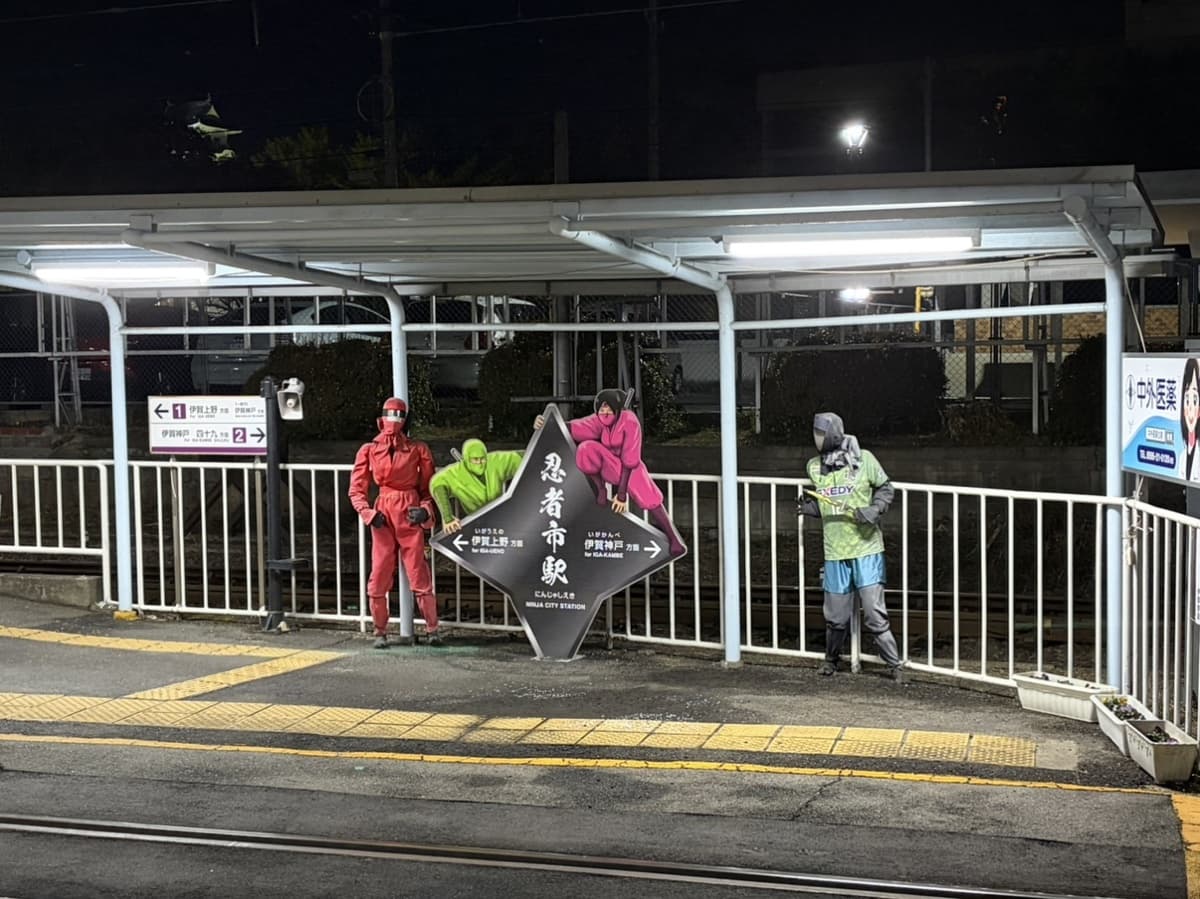
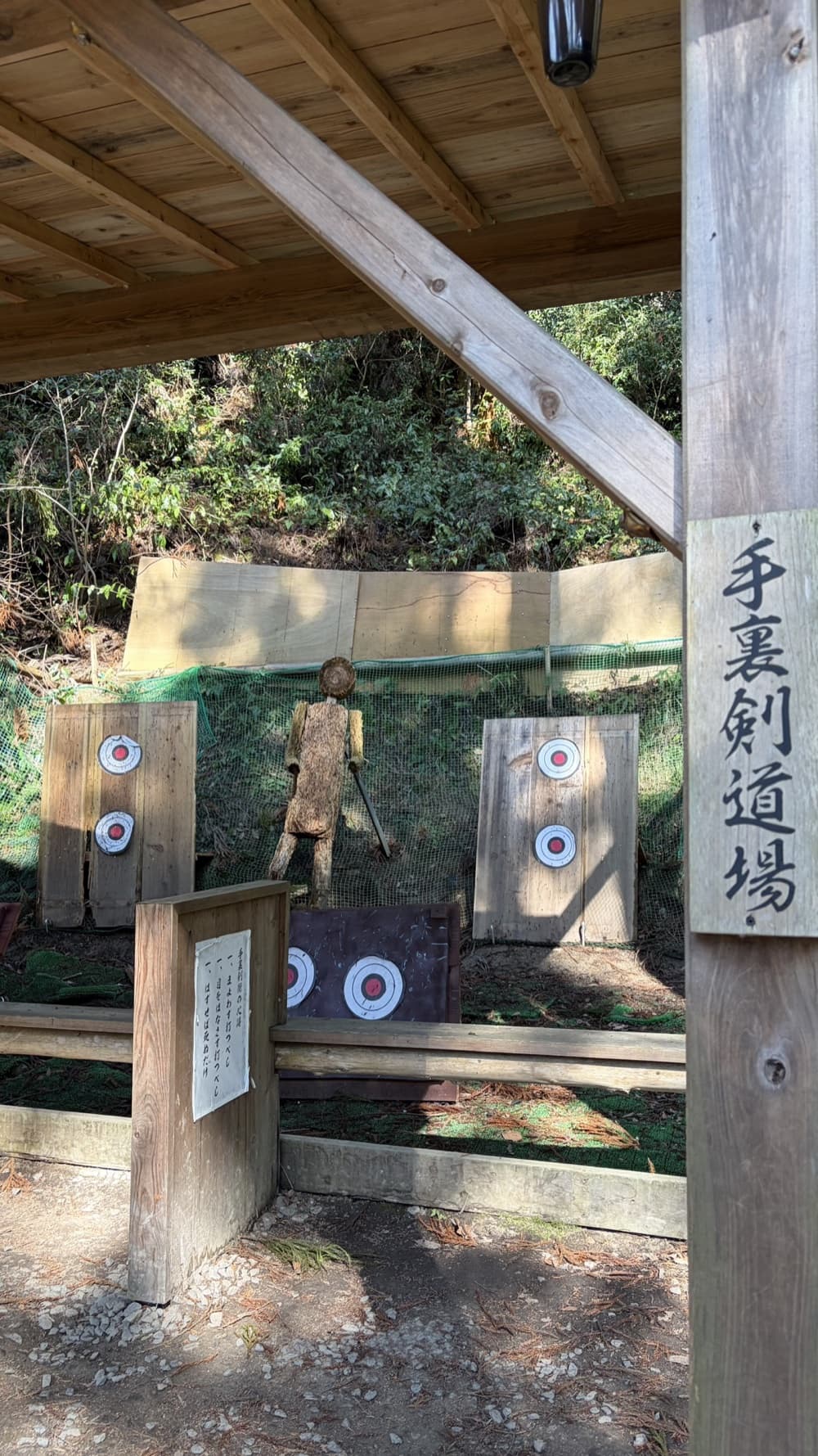
Iga is where the ninja actually came from — the ninja realm, if you like — and the training ground of the Iga-ryu was the wooded gorge at Akame — a chain of 48 waterfalls in what is now Nabari, Mie Prefecture. Today the Ninja Forest at the mouth of the valley runs the real ninja training the Kyoto and Tokyo shows are imitating — the experience they can enter only by coming to Iga: you change into the costume, then work through more than twenty outdoor modules — wall climbing, rope crossings, log walks, hidden doors, shuriken, and in summer the water-spider crossing on the river itself. It takes about an hour and a half plus changing time, and it is real enough that under-7s do it alongside a parent.
The numbers, from the operator's official page: ¥3,500 for adults (high school and up), ¥3,000 for elementary and junior-high children, ¥2,200 for younger children, including the costume and the valley conservation charge; costume rental alone is ¥1,000. Two sessions a day, at 10:30 and 13:30, minimum two participants, booked at least an hour ahead. It runs year-round except December 28 to January 2, closes on Thursdays from December to mid-March, and on wet days moves to the roofed modules.
The waterfall walk itself is the other half of the day. The trail up the gorge is uneven and beautiful; you do not have to go far to see the first big falls, and families with small children usually turn around well before the top.
🧭 Why the Akame day takes more planning than it looks
- It is not on the way to anything. Nabari sits on the Kintetsu line between Osaka and Ise, not on the Shinkansen. Getting there from Tokyo means Shinkansen → Nagoya → limited express → Nabari → bus or taxi into the valley, with a 10:30 or 13:30 start to hit.
- The booking is by phone, in Japanese, at least an hour before, for a minimum of two. Miss the slot and the day is gone.
- It is a real valley. The trail is uneven and the course is outdoors; with children under 7 a parent takes part. Someone who knows the ground, the weather call and the roofed alternatives makes the difference.
- Then you still have to move on with the bags and tired children. Our KR002 route takes care of the transport: a private taxi waits at Nabari Station on day 1 for lunch and the Akame 48 Waterfalls, and on day 2 an English-speaking guide takes you around Iga by private taxi before the limited express to Ise-Shima. It does not include the Ninja Forest training session.
From our Japan travel team
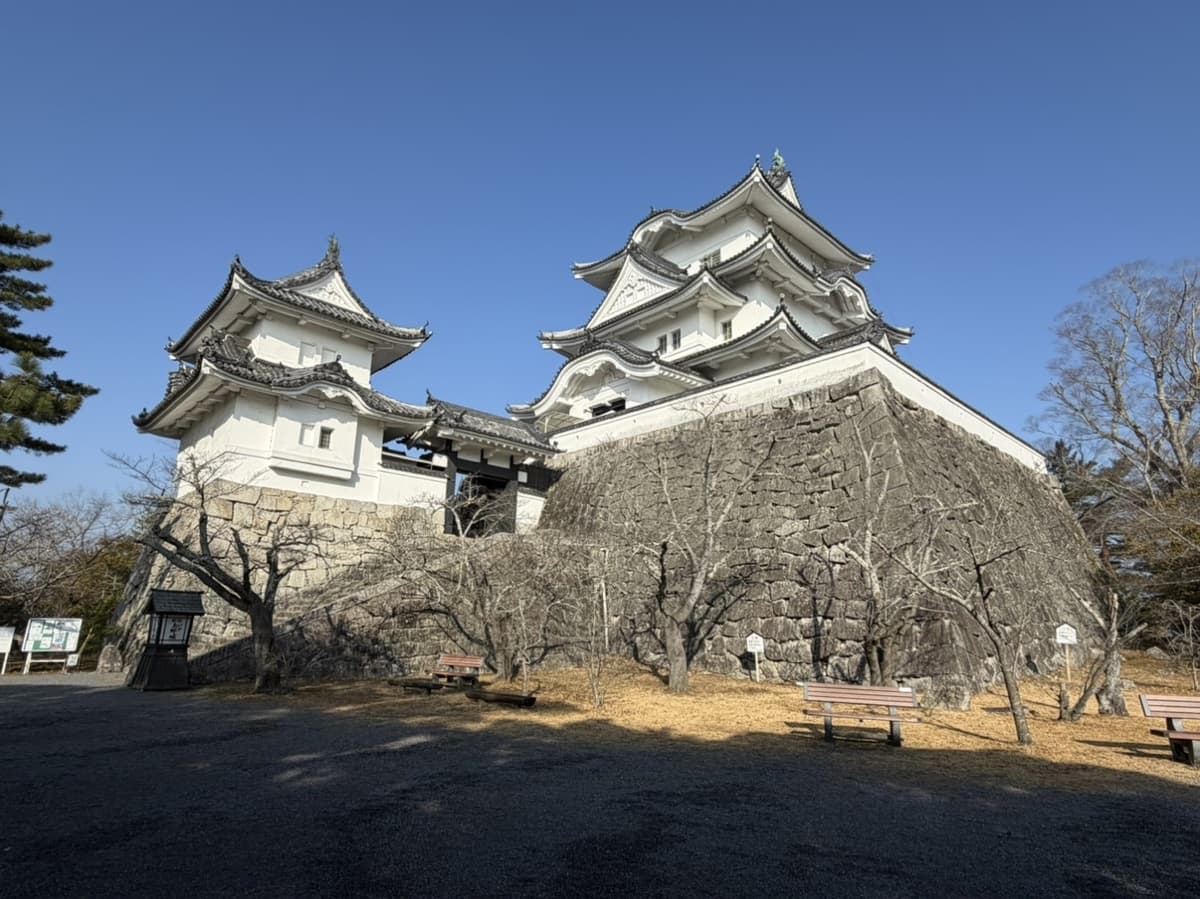
If you are going to try a ninja experience in Japan, we would suggest doing it in Iga — the real thing, in the landscape where the ninja actually trained, rather than a show in a city. Our 4-day KR002 route spends a day in Iga with an English-speaking guide, at Iga Ueno Castle and the Iga-ryu Ninja Museum. Feel free to get in touch and we will walk you through it.
From our Japan travel team
Iga is the birthplace of the ninja, and the training at Akame 48 Falls is popular with Japanese families too — children put on the costume and try the walls, ropes and shuriken for real. Our KR002 route starts and ends in Osaka, so the aquarium in Osaka or the deer in Nara can go before or after it. If the timing works for your family, we would love to help you plan it.
How to Fit It Into a Real Self-Guided Itinerary
For the city museums, the fit is easy. A sample Tokyo day that works well:
- Morning: Sensō-ji Temple and Nakamise shopping street
- Late morning: Join the ninja experience at the Asakusa museum (book a late-morning slot; sessions run with a maximum of 20 travelers)
- Lunch: Tempura or unagi around Asakusa
- Afternoon: Sumida River cruise to Odaiba
For Kyoto, pair the museum visit with Nishiki Market in the morning and Gion in the late afternoon. Easy walk between them.
For Akame, the fit is a few days in Mie rather than a side trip from a big city. Our route through Iga and Ise starts and ends in Osaka and has the trains, taxis, guides and hotels arranged. It is not one of our family packages, and its stop at Akame is the waterfall walk, not the Ninja Forest training course — so treat it as the frame for the trip and tell us your children's ages when you ask:
🗓️ Legend of Iga Ninjas & Spirits of Ise (KR002)
4 days · USD 2,800–5,500 per person · starts and ends in Osaka (on day 1 you can join from Osaka or Nagoya) · Nabari → Akame → Iga → Ise-Shima
| Day | Where | What is arranged for you |
|---|---|---|
| 1 | Nabari → Akame | Our staff meet you in Osaka or Nagoya with your travel set; Kintetsu limited express to Nabari; a private taxi waits at the station for lunch and a walk through the Akame 48 Waterfalls valley |
| 2 | Iga → Kashikojima | Private taxi with an English-speaking guide: Iga Ueno Castle, the Iga-ryu Ninja Museum (demonstrations, exhibits and a traditional ninja residence) and a kumihimo braiding experience; then the limited express to Kashikojima in Ise-Shima, with dinner at the hotel |
| 3 | Ise-Shima | Private taxi with an English-speaking guide all day: Meoto Iwa (the Wedded Rocks), the Outer and Inner Shrines of Ise Jingu, Okage Yokocho, and the view over Ago Bay from Yokoyama Observatory; dinner at the hotel |
| 4 | Ise-Shima → Osaka | Private taxi: a katsuobushi (bonito flakes) workshop and a seafood lunch with the ama women divers at their hut, then the Kintetsu limited express back to Osaka or Nagoya in the afternoon |
Included: 3 nights with breakfast, 3 lunches and 2 dinners, limited express trains, IC card with ¥10,000 loaded, a private sightseeing taxi on days 1 and 4 and a taxi with an English-speaking guide on days 2 and 3, 24/7 support and travel medical insurance during your stay in Japan. Not included: flights and any transport before and after the route, accommodation tax, and entrance fees for anything not detailed in the itinerary.

Booking, Refunds, and Small Print
City museums: book in advance — visitors join the ninja experience in timed groups. Walk-ins are accepted at both branches but slots go quickly, especially in July, cherry-blossom season, and Golden Week, and buying online usually gets you a lower price than the door. Refund policies vary by seller: booking directly generally gives you more flexibility for a full refund with early cancellation, while third-party platforms can be stricter — read the fine print and screenshot your confirmation. Group sizes are small; some listings cap a session at a maximum of 20 travelers in busy periods, and July, cherry-blossom season and Golden Week are when that cap bites. Book direct if a full refund on cancellation matters to you.
Akame: the operator takes bookings by phone (0595-64-2695) at least an hour before the 10:30 or 13:30 start, for two people or more. There is no online checkout, so ask your hotel to call for you the day before.
Accessibility and Who Should Skip It
The city museums are wheelchair- and stroller-accessible and close to public transport, and the staff are helpful with prams and pushchairs. Pregnant travelers can still join the museum tour and watch, but should sit out the active sword and shuriken portions. Very young children can enter but won't get much from the activities — aim for ages 5 and up for the real reaction, when they can join the ninja experience properly rather than just watch. Akame is the opposite case: it is outdoors, on uneven ground, and the point is that the children do it — from 4 with a parent, alone from 7.
From our Japan travel team
The Akame course is outdoors in a river valley, so please bring shoes that can get wet, a change of clothes for the children, and insect repellent in summer. The water-spider crossing on the river only runs in the summer months, and on rainy days the training moves to the covered modules. It is the kind of small preparation that makes the day much easier — and if you have any questions before you travel, feel free to get in touch.
Common Mistakes to Avoid
- Showing up at a city museum without a booking on a weekend. You may get in, but not at the time you want.
- Going straight after landing. Jet-lagged kids and shuriken don't mix.
- Booking the wrong Tokyo branch. Maikoya runs more than one Tokyo location and lists a new Shinjuku branch — check the address on your confirmation matches the one you plan to walk to. Asakusa (1-8-13 Nishi-Asakusa) is the established one.
- Assuming a museum visit is a full-day activity. It's an hour. Plan around it.
- Assuming Akame is a museum. It is a valley and a training course; budget the whole day, and do not try it as a side trip from Tokyo.
Is It Worth It? A Great Family Activity and a Great Time — Honest Take
For families with primary-school kids, yes — easily. The city museums are a fun experience that gives children a hook into Japanese folklore and Japan's history without lecturing, and the whole thing is over before anyone melts down. It is a great family activity and a great time — one of those rare tourist stops where parents and children, visitors alike, come out grinning, with so much fun packed into an hour that nobody asks for a screen. Travelers who visit with a reluctant teenager report the same thing. For teenagers or adults traveling alone, the basic museum ticket may feel light — go for the sword upgrade, or go to Iga. Akame is worth it for anyone from 4 to 14 whose eyes lit up at the word "ninja", and it is the day parents tell us about afterwards.
Interested in a family trip to Japan with a ninja experience? Get in touch through Plan My Trip on our self-guided tours site, and we’ll suggest the tours that best fit your dates and plans.
FAQ
Can a 4-year-old do a ninja experience in Japan?
At Akame 48 Falls the operator recommends the training from age 4, with a parent taking part alongside children under 7; from 7 children can do the course on their own. The city museums in Kyoto and Asakusa take younger children for the costume and photo parts.
Where in Japan can kids have a ninja experience?
Indoor shows at the Samurai & Ninja Museums in Kyoto and Asakusa and the Ninja Experience Cafes in Tokyo, Osaka and Kyoto; the trick house and museum in Iga-Ueno; and the outdoor Ninja Forest training course at Akame 48 Falls in Nabari, Mie — the last is the only one that is a real training course rather than a show.
How do we get to Akame 48 Falls?
Kintetsu limited express to Nabari — about an hour from Osaka, around 90 minutes from Nagoya — then a bus or taxi to Akameguchi and the valley. From Tokyo it is Shinkansen to Nagoya first. Our KR002 route takes the Kintetsu limited express from Osaka or Nagoya to Nabari and continues to the Akame waterfalls by private taxi.
How much does the Akame ninja training cost?
¥3,500 for adults, ¥3,000 for elementary and junior-high children, ¥2,200 for younger children, including costume rental and the valley conservation charge; costume rental alone is ¥1,000. Sessions start at 10:30 and 13:30 and need a minimum of two people, booked at least an hour ahead.
Does the ninja training run in the rain?
Yes — on wet days the operator uses the roofed training modules. The summer-only water-spider river crossing depends on conditions on the day.
Do we need to speak Japanese?
Not at the city museums — all guided tours are run in English in Kyoto and Asakusa. Akame's booking line is in Japanese, so ask your hotel to call for you. On our KR002 route, the day in Iga is with an English-speaking guide.
How long does the museum experience take?
Around 60 minutes for the basic ticket. Upgrade packages in Kyoto run about two hours. Akame is about 90 minutes of training plus changing, and the waterfall walk on top.
Can we take pictures?
Yes — pictures in samurai armor or a ninja outfit are part of the fun at the museums (the stars-throwing shot is the one everyone keeps), and the Akame course is made for them. Bring a phone with space.
Is it good in July and the summer heat?
The museums are indoor and air-conditioned — a proper escape from July heat. Akame is outdoors, but the valley is shaded and the summer-only water-spider crossing is the reason to go then.
Where do we book, and can we get a full refund?
Museums: directly through the operator for the best refund terms, or via the major booking platforms. Book at least a few days ahead in peak season. Akame: by phone, at least an hour before the session.
What should kids wear?
At the museums, comfortable clothes you can move in — the costume goes over your own clothes. At Akame, shoes that can get wet, a change of clothes, and insect repellent in summer.
What is the best age to take children to Japan?
From about 5 upward the trains, food and long days work well; 7–12 is the sweet spot for the Akame course.
Planning a family trip with the real ninja day in it?
Tell us your children's ages and your dates. We will tell you whether the 10:30 or 13:30 session fits, whether the summer water-spider crossing will be running, and whether our 4-day Iga and Ise route suits your family.
Last updated: October 12, 2026. Akame prices, times, age rules and closures are from the operator's official page; museum prices from the operator's booking pages; package details from our current catalogue. All can change — confirm before you travel.