
Kumano Kodo 2026: Self-Guided Trek Guide (Routes & Itinerary)
A UNESCO pilgrimage you can walk without a tour group — how to choose the Nakahechi route, a day-by-day itinerary, getting there, onsen stops, luggage transfer, and where to stay.
The Kumano Kodo is a network of ancient pilgrimage trails through the mountainous Kii Peninsula in southern Japan, leading to three sacred shrines known as the Kumano Sanzan. The short version: go, if you want quiet forest trails, traditional inns, and onsen towns instead of another day in Tokyo or Kyoto. It's one of only two pilgrimages in the world with UNESCO World Heritage status (the other is the Camino de Santiago) — and it's genuinely well set up for self-guided walkers.
You don't need a tour group or fluent Japanese. You do need a plan, decent shoes, and accommodations booked early. This guide covers choosing a route, a realistic itinerary, getting there from Osaka or Kyoto, and the rookie mistakes that trip up first-timers — focused on the Nakahechi, the imperial route most international travelers actually walk.
Quick Answer: Walking the Kumano Kodo
Walk the Nakahechi route (Kii-Tanabe → Hongu → Nachi). Allow 2 days minimum, 5–6 for the full experience. It's well-signposted in English, no guide needed. Sleep in minshuku and ryokan booked months ahead via kumano-travel.com, use the luggage transfer (~¥4,000/bag) so you walk with a day pack, and soak at Yunomine Onsen. Pair it with a Koyasan temple stay.
Best route
Nakahechi
Days
2–6
Guide?
Not needed
Gateway
Kii-Tanabe
What the Kumano Kodo Actually Is
Your main suitcase moves between inns by takkyubin while you hike — our luggage forwarding guide covers the rates and the two-day airport rule for the way home.
For over 1,000 years, people from all levels of society — including retired emperors — made the pilgrimage to Kumano along a network of mountain routes. It isn't one trail but several (Nakahechi, Kiiji, Iseji, Kohechi, Ōhechi), all historically funnelling pilgrims toward the three Kumano Sanzan shrines: Kumano Hongu Taisha, Kumano Nachi Taisha, and Kumano Hayatama Taisha. The trails were designated a UNESCO World Heritage site in 2004 as part of the "Sacred Sites and Pilgrimage Routes in the Kii Mountain Range."
The Kansai region holds a remarkable concentration of UNESCO World Heritage sites, and Wakayama's Kumano Kodo is one of them. Some visitors come to conquer the full pilgrimage routes on foot; others simply pay their respects at the Kumano Sanzan — the three highest-ranking, most prestigious shrines on the trail. Either way works.
Which Route Should You Walk?
The routes aren't interchangeable — picking the wrong one is the most common planning mistake.
Nakahechi: The Imperial Route
This is what most people mean by "walking the Kumano Kodo." Used by emperors and nobles from the 10th century, it runs from Kii-Tanabe on the west coast east toward the grand shrines, with traditional lodgings in small villages along the way — ideal for self-guided trekking. Around 80% of visitors who walk the Kumano Kodo do the Nakahechi. If you're new to multi-day hiking in Japan, this is the obvious choice.
Kohechi: The Mountain Route from Koyasan
The Kohechi links Koyasan and Kumano Hongu Taisha — the shortest connection but some of the steepest trail, crossing three passes over 1,000 m. It's for advanced, experienced hikers only, and is effectively closed mid-December to mid-March due to snow. Skip it on a first trip.
Other Routes
The Iseji (eastern coast from Ise), Ōhechi (Pacific coast views), and Kiiji (Osaka to Tanabe) see far less foot traffic and have less English signage. Most international visitors don't walk them first time.
The Classic Nakahechi Itinerary
A realistic self-guided plan from Osaka or Kyoto, hitting at least two of the Kumano Sanzan:
- Day 0 — Travel to Kii-Tanabe. ~2.5h from Osaka, ~3h from Kyoto. Aim to reach Kii-Tanabe by noon, or overnight there and start fresh.
- Day 1 — Takijiri-oji → Takahara (~4 km, 2–3 hr). A short, steep warm-up to a ridge-top village with sunset views. Stop at the Pilgrimage Center for an English map.
- Day 2 — Takahara → Chikatsuyu. A longer day through small settlements and Oji shrines. Pace yourself; the next day is the long one.
- Day 3 — Chikatsuyu → Hongu. The big push to Kumano Hongu Taisha. Don't miss Oyunohara, marked by the world's largest torii gate (33.9 m).
- Day 4 — Rest at Yunomine Onsen. Soak at Tsuboyu, the only hot spring that's part of the UNESCO route (30-minute slots, first-come).
- Day 5 — Hongu → Hayatama (Shingu) → Nachi. By bus, train, or the traditional river boat to the riverside Hayatama shrine, then south to Nachi.
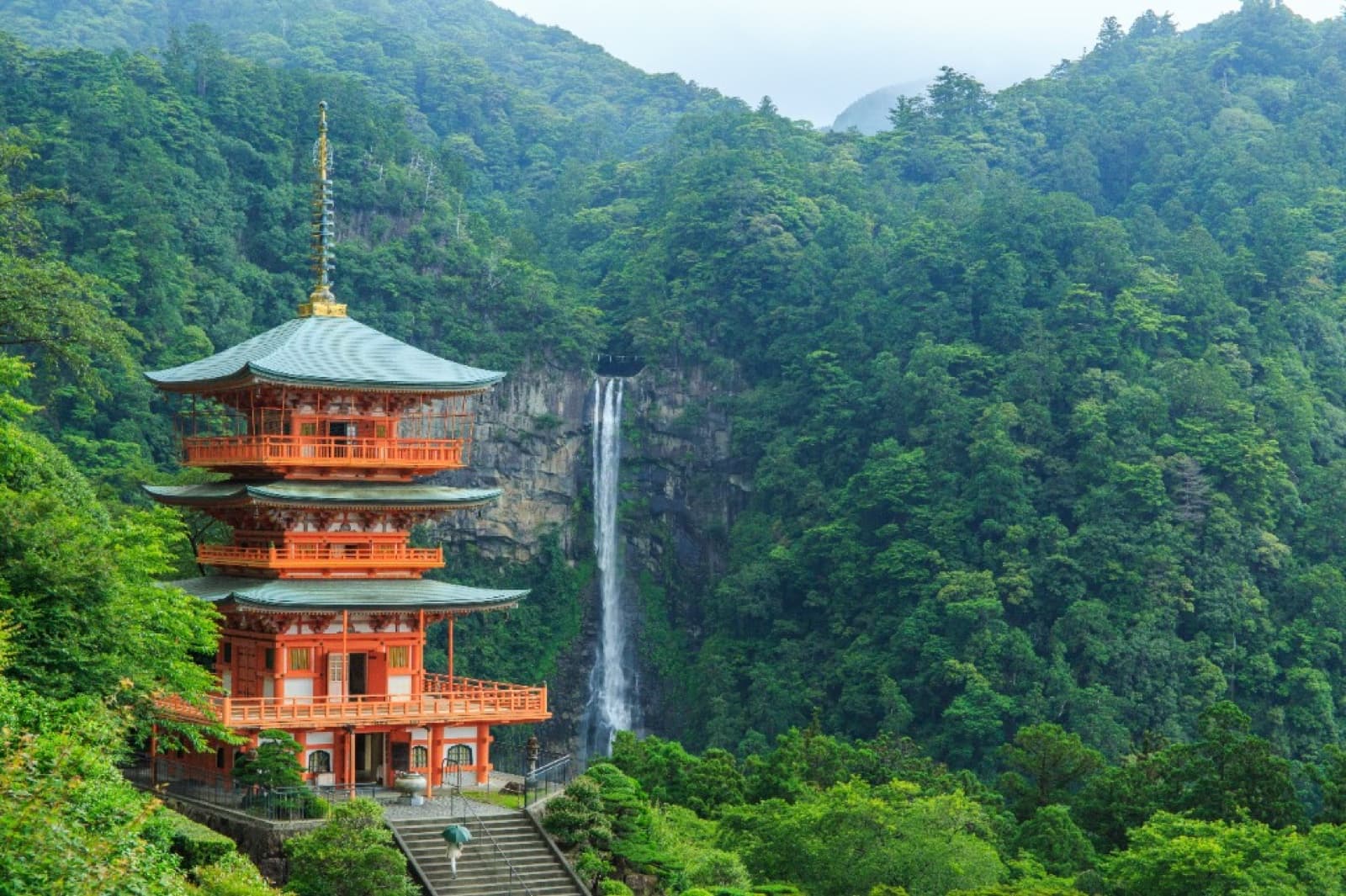
- Day 6 — Nachi Taisha & Nachi Falls. Climb the Daimon-zaka cedar slope to the shrine; the three-storied pagoda framed against the 133 m falls is the region's postcard shot.
- Day 7 — Return by train from Kii-Katsuura or Shingu along the Pacific coast.
Don't Miss: Kumano Nachi Taisha & Nachi Falls
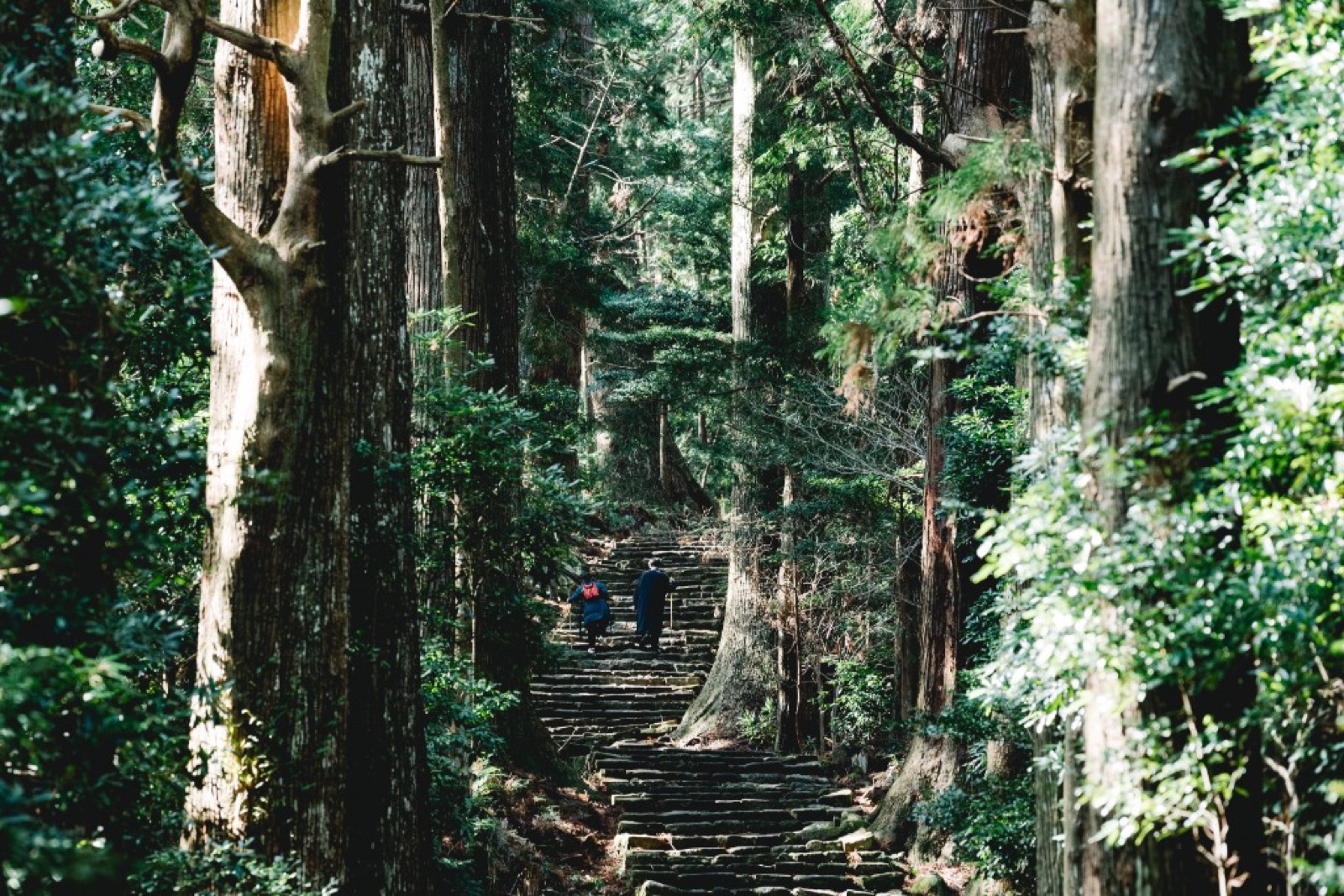
The standout along the Kumano Kodo is Kumano Nachi Taisha. Climb the Daimon-zaka — a moss-and-cedar stone staircase framed by towering ancient trees — to reach the vermillion shrine and the neighboring Seiganto-ji temple. From here you look out onto Nachi Falls: at 133 m, Japan's tallest single-drop waterfall, which the shrine enshrines as a deity. Standing before it with the three-storied pagoda in the frame is the region's postcard moment.
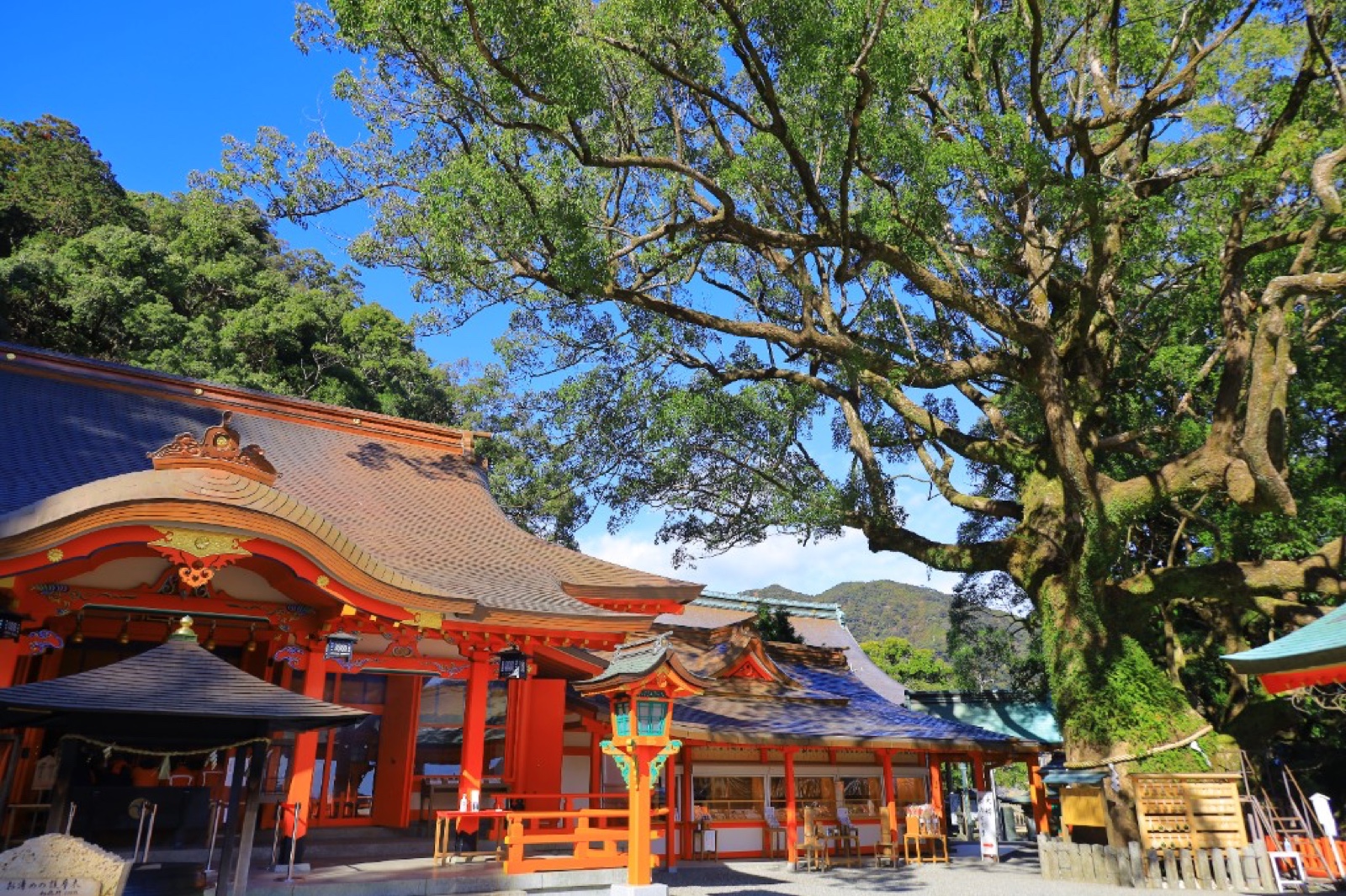
Tip — collect the stamps: Pick up a Wakayama Prefecture Kumano Kodo stamp booklet (¥100 at tourist information offices) and stamp it at each sacred site as you walk. It's a fun, pilgrim-style souvenir of your journey.
Shorter Options If You Don't Have a Week
You can taste the Kumano Kodo without the full slog. A popular shortcut starts at Hosshinmon-oji and walks the final ~2-hour stretch into Hongu. Two solid days get you to Hongu and the onsen; three add Nachi. Five to six days is the sweet spot.
How to Get There
By train you'll head to Kii-Tanabe Station, with frequent services from Kansai Airport, Osaka, and Kyoto down the coast. From Kii-Tanabe, buses (no. 81/85/91/95) reach Hongu Taisha-mae in just over two hours for ¥2,100 — useful if you want to skip the walk and just see the shrine. ATMs are scarce between Tanabe and Shingu, so withdraw cash at a 7-Eleven or post office before you leave the city.
Combining Kumano Kodo with Koyasan
Many travelers pair the trek with a temple stay at Koyasan (Mount Koya) — one of Japan's most sacred sites, home to the vast Okunoin cemetery and the mausoleum of Kobo Daishi. Our Koyasan temple stay guide covers what a night in a shukubo involves, the morning service and the trains up the mountain. If you're not walking the steep Kohechi between them, a seasonal bus connects Koyasan with the Hongu/Yunomine area and Kii-Tanabe. In 2026 it runs April 2–Nov 30, Sun/Mon/Thu–Sat only (not Tue/Wed) — plan around the off-days. Because Koyasan is registered under the same UNESCO World Heritage listing, a self-guided itinerary that pairs the trek with a Koyasan shukubo (temple-lodging) experience is our top recommendation. Our hidden gems guide has more on the Kii Peninsula.
Where to Sleep & Luggage Transfer
Lodging is the single biggest constraint — capacity in the small villages is genuinely limited, so book as early as possible (the Tanabe City tourism bureau's kumano-travel.com handles many inns directly). Most travelers stay in minshuku or ryokan and eat the set meals at their lodging, since restaurants are scarce.
Use the daily luggage shuttle (from ~¥4,000/bag): your main bag is forwarded to the next guesthouse so you walk with just a day pack. On day three's cedar-forest climb, you'll be glad you did.
When to Go
The Nakahechi is open year-round. Spring and autumn are the popular, comfortable months (book far ahead; November foliage is gorgeous). Summer is hot and humid — carry extra water. Winter is quiet with possible light snow at elevation (the Kohechi closes; Nakahechi stays open, but daylight is short). Avoid Golden Week (early May) and Obon (mid-August), and favor mid-week, since village capacity is limited. June's rainy season can make paths slick — see our rainy season guide.
Common Mistakes to Avoid
- Booking too late. Popular guesthouses sell out months ahead in spring and autumn — lock in lodging before flights if you can.
- Arriving at Kii-Tanabe too late on day one and missing your bus or first walk. Aim for noon, or overnight in Tanabe.
- Skipping the Pilgrimage Center at Takijiri-oji. Free, helpful, English maps.
- Trying to see all three shrines in two days. Possible by bus, but you'll feel like you're riding a bus, not walking a pilgrimage.
- Ignoring the seasonal Koya–Kumano bus schedule. It doesn't run Tue/Wed.
For the wider trip, see our Nakasendo trail guide and walking Japan guide.
Planning a wider Japan trip around a walk on the Kumano Kodo? Get in touch through Plan My Trip on our self-guided tours site, and we’ll suggest the tours that best fit your dates and plans.
FAQ: Kumano Kodo
How long is the Nakahechi route?
About 38 km to Kumano Hongu Taisha, or roughly 68 km if you continue to Nachi Falls. Most walkers spread it over four to six walking days. If a single day of it is all your knees will sign up for, the 7.5 km Hosshinmon-oji section is the one — see how it sits alongside our other low-walking routes in the Japan tours for seniors guide.
Do I need a guide for the Kumano Kodo?
No. The Nakahechi is well-signposted in English and Japanese, accommodations can be booked in advance, and a smartphone with offline maps does the rest. A guide is optional, not necessary.
Can I walk the Kumano Kodo without speaking Japanese?
Yes, on the Nakahechi — English signage, pilgrim materials, and English-friendly booking exist. The Kohechi and Iseji are tougher without some Japanese.
What's the best plan if I only have two days?
Base at Yunomine Onsen or near Hongu. Walk the Hosshinmon-oji to Hongu section, visit Hongu Taisha, soak in the onsen, and bus to Nachi the next morning.
Do I have to carry all my luggage?
No. A daily luggage shuttle (from ~¥4,000/bag) forwards your main bag to the next guesthouse, so you walk with just a day pack. Book it with your accommodation.
How does it compare to the Camino de Santiago?
Quieter, shorter, more forest, more hot springs, and more isolated villages. If you loved the Camino you'll love this; if you've done neither, the Kumano Kodo is the gentler introduction. You can even register as a Dual Pilgrim if you've walked both.
When should I avoid walking the Kumano Kodo?
Avoid Golden Week (early May) and Obon (mid-August) when villages fill and prices rise, and be cautious in the June rainy season when paths get slick. Mid-week in spring or autumn is ideal.
Related Articles
Koyasan Temple Stay: What a Night in a Shukubo Is Really Like, and What It Costs
16 min read

Luggage Forwarding Japan: The Practical Guide to Takkyubin for Self-Guided Travelers
14 min read
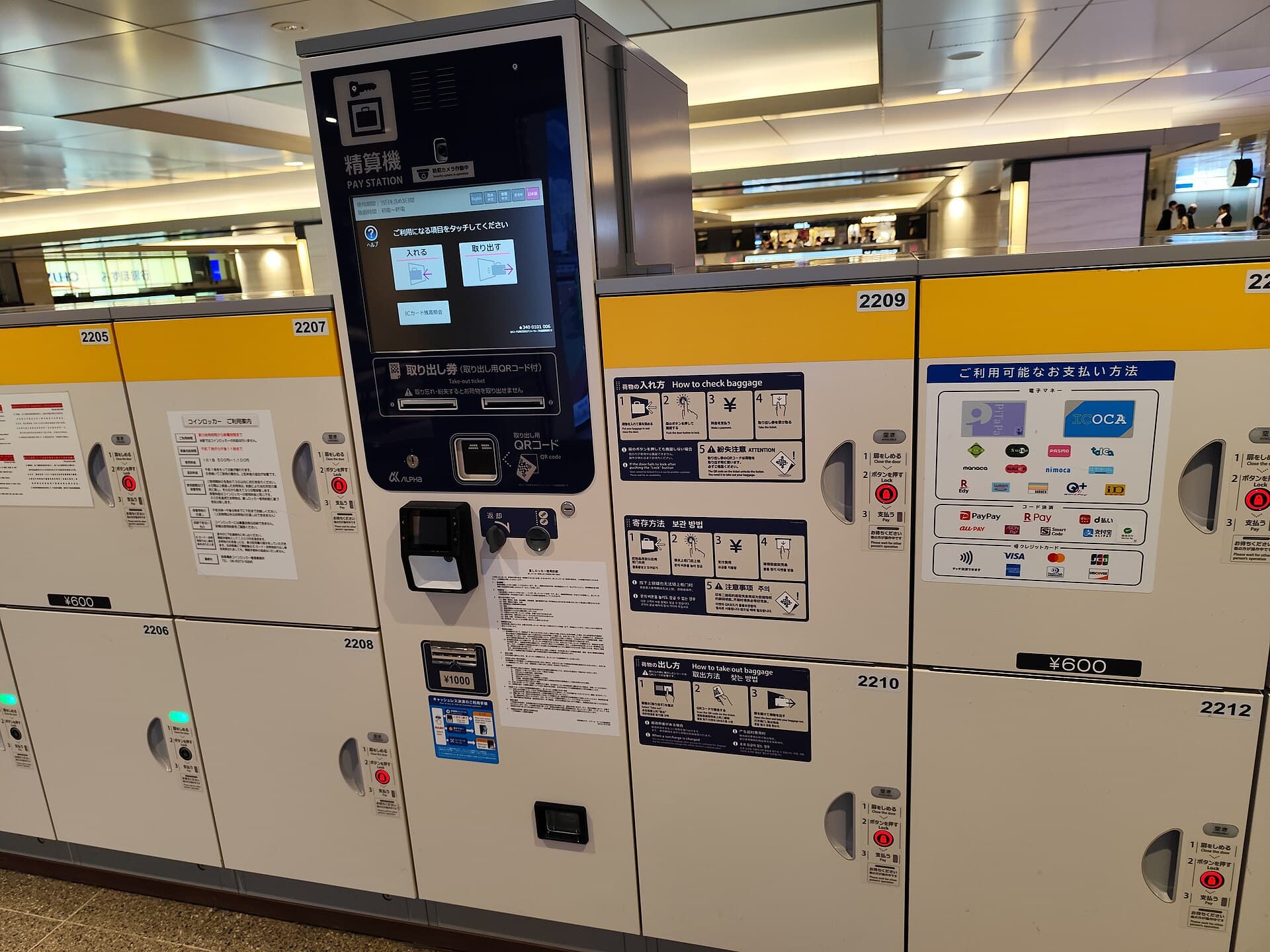
Japan Luggage Storage 2026: Coin Lockers, Takkyubin & Hands-Free Travel
12 min read