
Luggage Forwarding Japan: The Practical Guide to Takkyubin for Self-Guided Travelers
Send the big suitcase from hotel to hotel for ¥3,020–3,160 and ride the shinkansen with a day bag. How takkyubin works, Yamato's official 2026 rates by size, the airport rules (two days ahead), same-day delivery from Haneda, and the mistakes that strand a bag.
🧳 Quick Answer: Should You Use Luggage Forwarding in Japan?
Yes, if you're doing a multi-city itinerary. For a standard hotel-to-hotel move between major cities like Tokyo and Kyoto, luggage forwarding in Japan costs ¥3,020–3,160 for a normal check-in suitcase (Yamato's 160 size) with next-day delivery often available if accepted before the local cutoff. You board the bullet train with a small day bag while your large suitcase travels separately and is delivered on the date confirmed by the carrier; keep overnight essentials with you.
Tokyo → Kyoto/Osaka
¥3,160 · date confirmed at drop-off
Airport → hotel
Counter-specific total
Hotel → airport
send 2 days ahead
Limit
160 cm / 25 kg (up to 200 cm / 30 kg)
The service is called takkyubin. Locals use it constantly. Once you understand how it fits into a Japan trip, you'll wonder how anyone drags heavy bags up and down train station stairs on purpose.
This guide covers what the service is, when to use it, when not to, how much it really costs, and how to fold it into a real self-guided route. (If you only need somewhere to leave a bag for a few hours, that is a different problem — see our luggage storage and coin locker guide.)
What Is Takkyubin? Japan's Luggage Delivery Service Explained
Takuhaibin is a convenient, moderately priced service for sending parcels, luggage and other types of goods from door to door nationwide. Delivery is usually on the next day, except over very long distances, when it can take longer.
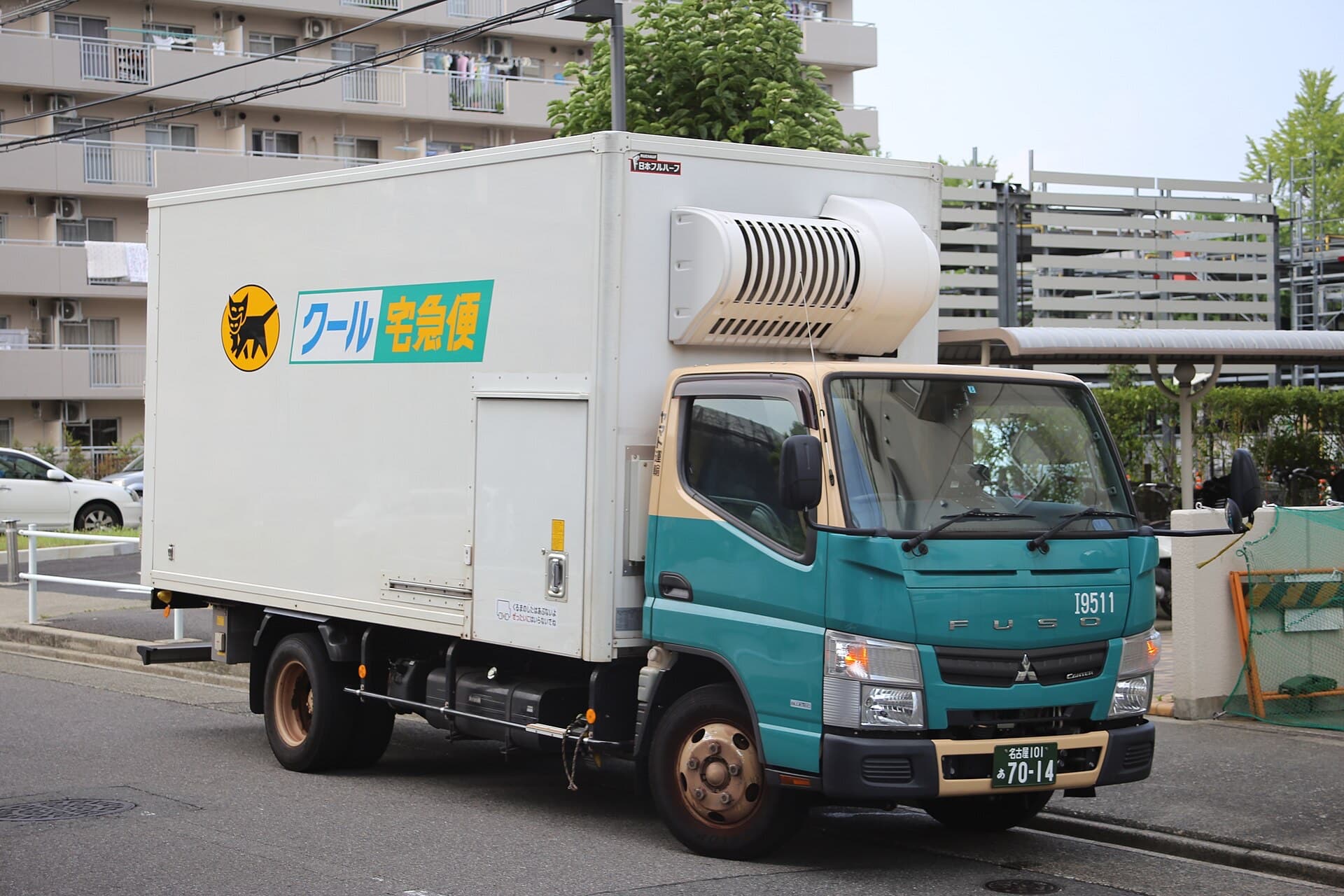
Yamato Transport started the service in the 1970s and remains the market leader with their Takkyubin (written TA-Q-BIN on the English site). Although it is a registered trademark, Takkyubin is commonly used to refer to takuhaibin services in general. Yamato Transport's main competitors are Sagawa Express and Japan Post.
You'll see Yamato Transport everywhere. The yellow logo with the black cat carrying her kitten is one of the most recognizable brands in the country. Ask any local for "Kuroneko" and they'll know exactly what you mean.
The service is domestic only. For sending souvenirs back home, you'll want Japan Post's international options instead.
Why Luggage Forwarding in Japan Makes Sense for Travelers
Japan's trains are efficient, but they weren't built for tourists lugging 28-inch suitcases.
While Japan's public transportation system is remarkably efficient, train platforms and carriages are often crowded. As for the shinkansen, although it offers more room, passengers traveling with luggage whose total dimensions exceed 160 cm and are no more than 250 cm are now required to reserve a designated oversized baggage space on the Tokaido, Sanyo and Kyushu lines — and pay ¥1,000 if they turn up without one. Reserving the seat with baggage space adds no charge beyond the applicable reserved-seat fare; luggage over 250 cm cannot be brought aboard.
Translation: your big case is a hassle on the train. You have to reserve special seats. You block aisles. You lift it overhead. And when you arrive at a busy station like Kyoto or Shin-Osaka, you're fighting through crowded stations with limited elevators.
Sending bags ahead solves this in one move. Several of our self-guided tours include specified delivery legs; compare those routes below.
How the Takkyubin Service Actually Works
The basic flow is simple.
You hand the bag to your hotel or a convenience store, it's scanned and trucked overnight, and delivered to your next hotel under your name and check-in date.
At the hotel front desk, you fill out a small waybill. You write your name, the destination hotel name and address, the guest name on that reservation, and a delivery date. The hotel staff take payment, hand you a receipt with a tracking number, and that's it. Ask the hotel when the next collection is; an evening request may miss that day’s dispatch.
That receipt matters. Keep it until the bag lands. You can check delivery status any time by entering the tracking number on Yamato's English website.
Where You Can Drop Off Luggage
You have several options for sending bags:
Hotel Reception
The easiest.
Most Japanese hotels — from budget business hotels to luxury ryokan — will forward your luggage to your next destination. Ask the front desk, fill out the same form, and the carrier confirms the expected delivery date. Most hotels handle takkyubin daily. The reception team knows the drill even if the guest doesn't speak Japanese.
Convenience Store
Direct drop-off at a convenience store (participating FamilyMart or 7-Eleven stores displaying the Yamato logo) is slightly cheaper — Yamato takes ¥100 off the rate when you bring the parcel to a counter, konbini or sales office yourself, and some hotels add a small handling fee on top.
If you spot the black cat logo on the storefront, they handle it. Bring the destination address written out, ideally in Japanese, since konbini staff usually can't help with translation. Note that some convenience stores cannot accept size 180 or 200 parcels.
Yamato Sales Offices and Luggage Counters
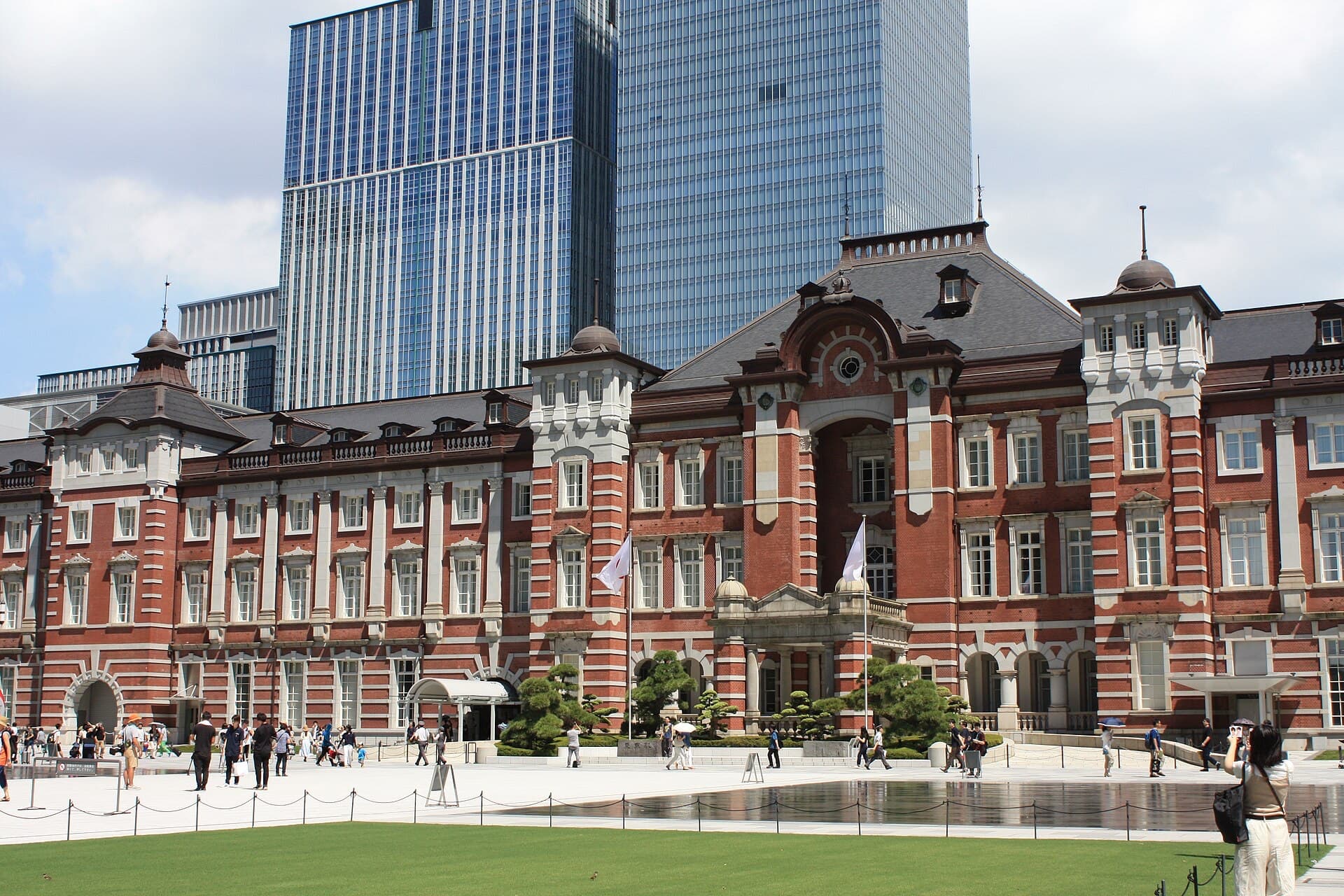
Standalone Yamato branches exist across cities, and there are baggage service counters inside the biggest stations, including Tokyo Station and Kyoto Station — handy if you're already passing through.
Airport Counters
Almost every arriving international traveler has the option of shipping bags direct from arrivals. Narita, Haneda, Kansai and Chubu — all the major airports — have Yamato (Kuroneko) or JAL ABC luggage-delivery counters in the arrivals halls.
Haneda Airport and Narita Airport: Shipping from Arrivals
Arriving late? Check the counter opening time and daily shipping cutoff before planning to send your bag.
Narita and Haneda have luggage counters, but obtain the total price and earliest delivery date at your chosen counter. Standard Airport TA-Q-BIN to an airport adds ¥660; Narita and Haneda also have counter-use charges, so do not assume one universal surcharge covers every direction and service.
Yamato lists same-day delivery from Haneda to eligible hotels in central Tokyo and selected surrounding areas. Drop off by 11:00; delivery starts after 18:00. A size-160 bag costs ¥5,170 to a central Tokyo hotel or ¥5,780 to other eligible areas. Check the hotel address against the service map. Standard shipping at the listed Terminal 2 and Terminal 3 counters has an 18:30 cutoff; arrival at 22:00 cannot be assumed to qualify for that day’s dispatch.
Arriving in the morning may let you send the suitcase and sightsee with a day bag, provided you clear arrivals and reach the counter before its cutoff. Narita has different services and schedules; confirm them separately.
💬 From our Japan travel team
Walk-up counter service generally needs no advance booking. Allow for immigration and queues, then confirm the actual delivery estimate. Next-day service does not guarantee arrival by lunchtime or hotel check-in. An overnight buffer can help the itinerary accommodate the specified luggage transfers.
How Much Does Luggage Delivery Cost?
Pricing depends on two things: the size of the bag (measured length + width + height in cm, with a weight cap per size) and the distance between origin and destination. These are Yamato's published TA-Q-BIN rates, cash price per parcel, sent from the Kanto region (Tokyo):
💴 Yamato TA-Q-BIN rates from Tokyo (2026, per bag)
| Size | Max dimensions / weight | Kanto, different prefectures | To Kansai (Kyoto/Osaka) | To Hokkaido | To Okinawa |
|---|---|---|---|---|---|
| 120 | 120 cm / 15 kg | ¥2,040 | ¥2,170 | ¥2,610 | ¥3,360 |
| 140 | 140 cm / 20 kg | ¥2,630 | ¥2,780 | ¥3,250 | ¥4,030 |
| 160 | 160 cm / 25 kg | ¥3,020 | ¥3,160 | ¥3,630 | ¥4,680 |
| 180 | 180 cm / 30 kg | ¥3,680 | ¥4,480 | ¥5,220 | ¥7,210 |
| 200 | 200 cm / 30 kg | ¥4,470 | ¥5,410 | ¥6,540 | ¥8,860 |
Source: the current Japanese Yamato cash tariff, checked October 12, 2026; each row is published, not extrapolated from another size. The Kanto column is for different prefectures. An eligible shipment wholly within one prefecture has a separate rate: ¥2,410 for size 160, subject to service, dispatch and payment conditions. A qualifying personal drop-off reduces the standard tariff by ¥100; airport and hotel-counter charges must be confirmed separately.
For size 140–160, Tokyo to Kyoto or Osaka is ¥2,780–3,160 before eligible discounts and extra handling charges. The size and weight both matter: use the larger category if either limit is exceeded. Airport and same-day services have separate prices; compare their full totals.
Four size-160 suitcases from Tokyo to Kyoto total ¥12,640 at the standard ¥3,160 rate, before eligible discounts or handling charges. Two bags sent over two equally priced legs also total ¥12,640. The number of bags matters more than the number of travellers.
Delivery Time: What to Expect
Next-day delivery is common between major Honshu cities when the bag is accepted before cutoff, but it is not universal. Check the postal-code delivery estimate; remote areas, weather and busy periods can add time. Selected same-day services also cross city boundaries, including Kyoto to Osaka, so check the specific product rather than assuming all intercity delivery takes overnight.
Two-day delivery applies for longer distances, roughly:
- Honshu ↔ Hokkaido: 2 days
- Honshu ↔ Kyushu: 1–2 days
- Anything involving Okinawa: 2+ days
Same-day delivery does exist but only in specific city zones and only if you drop off in the morning — Haneda to the 23 wards, or Kyoto Station to hotels in Kyoto city (¥3,470 for a 160-size bag). Don't plan on it for a normal hotel-to-hotel hop.
Agree the delivery date with the receiving hotel and ask how early it will accept a bag. Storage before or after your stay is a hotel policy, not a delivery-service entitlement.
When to Use Luggage Forwarding vs. Coin Lockers
Different tools for different jobs.
🚚 Use takkyubin when…
- • You're changing cities
- • You have heavy bags or bulky luggage (skis, golf bags)
- • You can spare a day of transit
- • The next stop is a ryokan, mountain town or onsen village
🔒 Use coin lockers when…
- • You're staying in one city
- • You just need to stash a bag for a few hours between checkout and your evening train
- • You're on a day trip and coming back the same day
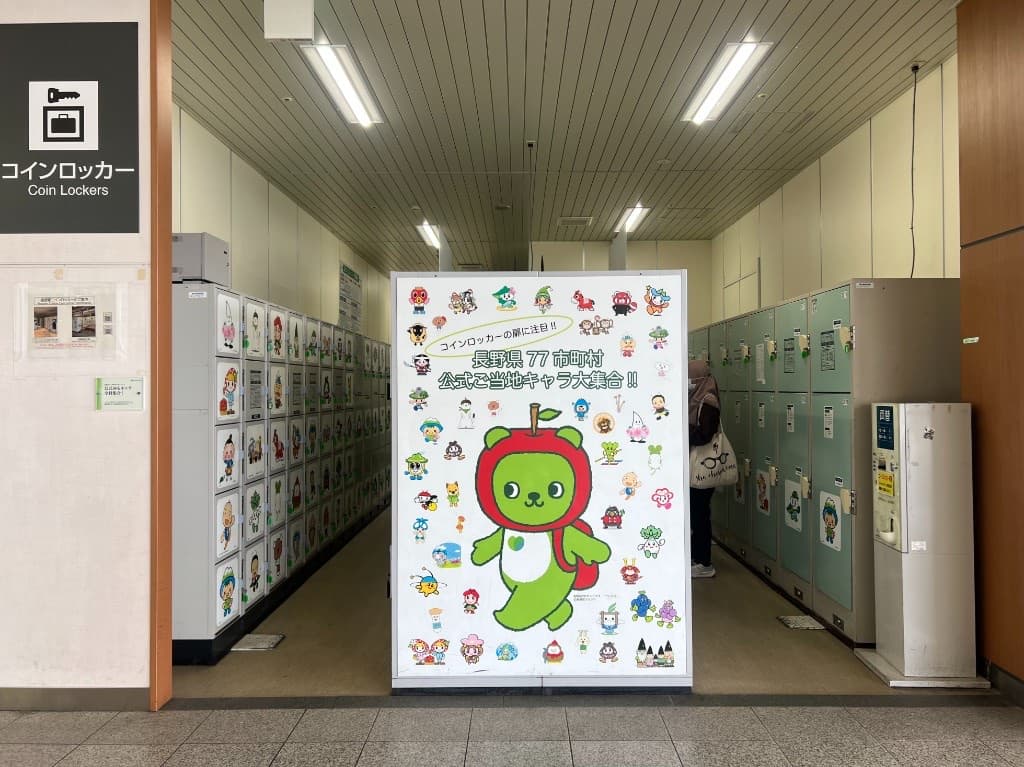
Use takkyubin for overnight city changes. Use coin lockers (or the hotel luggage hold) for same-day sightseeing. Lockers are not a substitute for shipping a bag to another city — locker sizes, prices and where to find them are in our luggage storage guide.
A Real Multi-City Itinerary Using Luggage Forwarding
Here's what a standard 10-day Japan trip looks like when you use forwarding properly:
- Day 1: Land at Narita. Drop the large suitcase at the Yamato counter, ship to your Tokyo hotel. Ride the Narita Express with a daypack.
- Days 2–4: Tokyo. The big bag lives in your hotel room; you carry nothing during the day.
- Day 4 before collection cutoff: Ask the hotel front desk to ship your bag to your Kyoto hotel for next-day delivery.
- Day 5: Shinkansen to Kyoto with just a small overnight bag (see our Tokyo to Osaka guide for the train itself). Check tracking; the bag may arrive after your hotel check-in.
- Days 6–8: Kyoto and day trips. Same drill.
- Day 8 before collection cutoff: Ship the bag to your Osaka hotel — or use airport delivery only after confirming that the sending deadline for the Day 10 flight is met.
- Day 10: Fly home light.
This pattern works because Japan's rail network is fast enough that the bag basically travels alongside you, one night behind.
Sending Bags to the Airport for Departure
Great trick for the last day.
If you're leaving Japan, you can use Yamato's Airport TA-Q-BIN to send your bags directly from your current hotel to the airport. Just ask your hotel staff. They will help you with the forms, collect the fee, and facilitate the whole process. This means you can spend your last day in Japan exploring, shopping, or eating sushi, instead of lugging around your luggage. Your bag is waiting at the airport counter when you're ready to check in — bring your ID and the receipt to collect it.
Important: for delivery to the airport, Yamato requires the bag to be sent by two days before your departure date (three days in some areas), and the exact sending deadline depends on the counter you drop it at. For a Sunday flight, Friday before the local cutoff may work on a two-day route; a three-day route requires Thursday or earlier. Don't cut this close.
Common Mistakes to Avoid
- Sending the wrong bag. Don't forward the suitcase with tonight's medication, tomorrow's contact lenses or your passport. Keep essentials — and anything with a lithium battery — in a carry-on.
- Bad timing. If your next hotel check-in is tomorrow, ship today. Not the morning of.
- Wrong destination type. Can you send luggage to an Airbnb? Usually no — it must be a staffed reception or luggage desk. Small guesthouses without a front desk may not accept deliveries.
- Language friction at konbini. Convenience-store staff are efficient but rarely speak courier-form-level English. Have the destination address printed out.
- Forgetting the receipt. A missing receipt makes tracing harder; contact the dispatch point with the details.
- Sending to the airport the day before. Standard Airport TA-Q-BIN needs the published advance deadline; a separate, limited Haneda same-day product has different rules.
Hands-Free Travel: What Comfortable Travel Actually Feels Like
Japanese has a term for this: tebura kanko, or "hands-free sightseeing." It's marketed by Yamato as Hands-Free Travel, and once you try it, it's hard to go back.
Think about what a normal city-change day usually looks like. You wake up, pack, drag bags to the lobby, check out, wheel them to the train station, up the stairs, onto the platform, hoist them onto the shinkansen (or wedge them behind your seat), pull them off at the next station, and drag them across another city to the next hotel. That's an hour or two of physical effort right in the middle of your holiday.
With takkyubin, that hour becomes: walk to the station with a daypack, board train, get off, walk to hotel, keys please. Big difference.
Especially for parents with kids, older travelers, or anyone doing more than three cities in two weeks.
Regional Trips: Mount Fuji, Hakone, and Onsen Towns
The service is a lifesaver for detours to smaller destinations. If you're spending a night in Hakone or a ryokan near Mount Fuji, you don't need your large suitcase — you need a small overnight bag with a change of clothes and a toothbrush.
Ship the big case from your Tokyo hotel straight to Kyoto (or wherever's next). Take the small suitcase or a backpack to the mountains. Trains up to Hakone and around the Fuji Five Lakes are small, sometimes with switchbacks and steep steps, so the less you're carrying the better.
Same logic applies to onsen towns like Kinosaki, Kusatsu, or Yudanaka — you rarely want a large suitcase there — and to walking routes: on the Kumano Kodo and the Nakasendo, booked local luggage services may let you hike with a daypack. Standard overnight TA-Q-BIN does not automatically provide same-day inn-to-inn transfers.
💬 From our Japan travel team
The trains and buses around Mount Fuji and Hakone can get crowded on weekends and during peak foliage in October and November, and hotels near the lakes and mountain onsen fill up months in advance. Our self-guided tours pair a Tokyo stay with Mount Fuji, Hakone and other side trips, and luggage delivery is included only on the legs listed for the chosen tour. If you would rather enjoy the trip without arranging luggage moves and deliveries yourself, just ask us.
Practical Tips Before You Drop Off Your Bag
- Have your next hotel's name, full address and phone number written down — Japanese script helps
- Photograph your bag before drop-off
- Know your size: the standard limit is 160 cm combined and 25 kg for a size-160 parcel; sizes 180 and 200 go up to 30 kg but not every convenience store takes them
- Bring cash: konbini and counters increasingly take cards and IC cards like Suica, but cash is always safe
- Get a receipt and photograph it, in case you lose the paper
- Tell your next hotel a bag is coming — a quick email helps, especially for smaller inns
Do You Need to Speak Japanese?
Short answer: no, not really.
Airport Yamato counters and larger hotel front desks handle English constantly. The forms are standardized, and staff will fill in most of it if you show them your reservation on your phone.
At a convenience store, it helps to have the destination written down in Japanese, because the shipping label prints as it's entered. You can screenshot the destination hotel's address in Japanese from Google Maps and show it to the clerk. Works fine.
Alternatives: Sagawa Express, Japan Post, and Others
Yamato has the biggest network and the smoothest tourist experience, but it's not the only option. Sagawa Express, JAL ABC (at the airports), Japan Post, LuggAgent (through Klook), and ShipGo also provide similar services.
Ask which service your hotel handles, then compare the actual rate, collection cutoff and destination acceptance. Yamato, Sagawa and other services need not have the same price, size limits or delivery time.
Building Takkyubin Into Your Japan Travel Plans
Budget by suitcase and delivery leg. For example, two size-160 suitcases on two Tokyo–Kansai-priced legs total ¥12,640 before eligible discounts and handling charges. A short ryokan stop may be better served by sending the large cases past it and carrying an overnight bag.
The self-guided routes we build at selfguidejapan.com are designed with this in mind — and the specified luggage transfers are included in the price, along with 24-hour phone support and insurance. Hotels have front desks with English-friendly staff who handle luggage delivery daily, shinkansen bookings are made assuming you'll be light on train days, and rest nights are placed where they make sense so bags can catch up.
If you're not sure how to structure your first Japan trip around luggage logistics — or you want someone else to sort the hotels, trains and support — take a look at our self-guided packages. We'll handle the moving parts so you can focus on the sushi.
Compare Our Routes for This Trip
Included luggage delivery covers the listed legs, not every change of hotel. Keep daily essentials, medicine and any valuables with you, and confirm collection times with the hotels.
| Route | Duration | USD per person | How it fits |
|---|---|---|---|
| Japan Highlights &World Heritage (GR002) | 12 days | $3,300–4,800 | Specified bag transfers: Tokyo to Kyoto, then Kyoto to Tokyo. |
| Japan Golden Route Highlights (BF001) | 7 days | $1,200–1,800 | Specified bag transfer: Tokyo to Osaka; carry an overnight bag for Kyoto. |
| Hop Through Japan’s Hot Springs & Highlights (HS002) | 14 days | $4,300–5,700 | Specified bag transfers: Tokyo to Kyoto, Kyoto to Kanazawa, and Kanazawa to Tokyo. |
| Alpine Wonders of Central Japan (NT004) | 12 days | $5,100–6,600 | Specified bag transfers: Tokyo to Matsumoto and Takayama to Tokyo. |
Published catalogue ranges checked October 12, 2026. Prices vary by date and room choice. International flights, attraction tickets and unlisted local transport are extra unless explicitly included. Confirm the chosen itinerary and its inclusions before booking.
Want your luggage sent ahead between cities on your Japan trip? Get in touch through Plan My Trip on our self-guided tours site, and we’ll suggest the tours that best fit your dates and plans.
Check the current Yamato tariff, Haneda same-day conditions and standard airport deadline. Selected Tokyo offices offer a separate same-day service to Haneda: deposit by 11:00 for international-counter pickup from 17:00 to 23:00, subject to flight-time conditions. This is not available to Narita. Kyoto’s published size-160 same-day rate is ¥3,470 within Kyoto or ¥4,020 to eligible Osaka destinations; confirm acceptance and cutoff.
The published luggage legs are not daily delivery. BF001 includes six hotel nights without breakfast; carry enough for the Kyoto nights while the main case goes to Osaka. GR002 and NT004 include eleven nights with breakfast, and HS002 thirteen. International flights, local taxes, entrances and unlisted transfers are additional. Support is available during the itinerary; insurance is subject to its terms.
FAQ: Luggage Forwarding in Japan
Is takkyubin the same as luggage shipping?
Yes. Takkyubin (also written TA-Q-BIN) is the Yamato-branded name for Japan's most common luggage delivery service. Sagawa Express and Japan Post offer similar options.
How much does luggage forwarding cost in Japan?
For size 160, up to 25 kg, the standard cash rate is ¥3,020 between different Kanto prefectures, ¥3,160 Tokyo–Kyoto/Osaka, ¥3,630 to Hokkaido and ¥4,680 to Okinawa. Eligible same-prefecture shipments have a separate ¥2,410 rate. Discounts, airport charges and hotel handling depend on the service.
How long does luggage delivery take between Tokyo and Kyoto?
Often the next day if handed over before the dispatch cutoff. Confirm the postal-code delivery estimate and keep overnight essentials with you; arrival by check-in is not guaranteed.
Can I use takkyubin from Haneda Airport?
Yes. Eligible same-day hotel deliveries require drop-off by 11:00 and arrive after 18:00. Size 160 costs ¥5,170 to central Tokyo hotels or ¥5,780 to other eligible areas. Check the address, terminal counter and cutoff; standard service has different conditions.
Is my luggage insured?
Standard Yamato takkyubin carries liability of up to ¥300,000 per parcel under the carrier's terms. Keep your receipt, and keep valuables, passports and medication with you.
Can I ship luggage to an Airbnb or vacation rental?
Usually no. You need a staffed reception. If your rental doesn't have one, ship to a nearby Yamato sales office and pick up in person with ID.
Do I need to book in advance?
Ordinary counter service generally requires no booking, but ask both hotels about dispatch, acceptance and storage. Standard airport delivery needs dispatch two days before the flight, or three in some areas, before the local cutoff. Peak periods may need more buffer.
Can I forward bulky luggage like a snowboard or golf bag?
Yes. Yamato runs dedicated Ski TA-Q-BIN and Golf TA-Q-BIN services, and standard parcels go up to size 200 (200 cm combined, 30 kg), though some convenience stores do not accept sizes 180 or 200.
How do I check delivery status?
Enter the tracking number from your receipt on Yamato's English tracking page. Updates are close to real time.
What's the difference between takkyubin and Yamato Transport?
Yamato Transport is the company. Takkyubin is their branded delivery service. In practice, travelers use the words interchangeably.
Or Let the Bags Take Care of Themselves
Tell us your dates, hotels, party size and number of suitcases. We will compare routes with suitable included luggage legs, explain what you carry between deliveries, and quote any additional service separately.
Rates checked October 12, 2026 against Yamato’s current Japanese tariff and service pages. Airport and same-day services have separate conditions; confirm the hotel address and daily cutoff before shipping.
Related Articles
Kyoto to Osaka: The Practical Guide for Self-Guided Travelers
13 min read
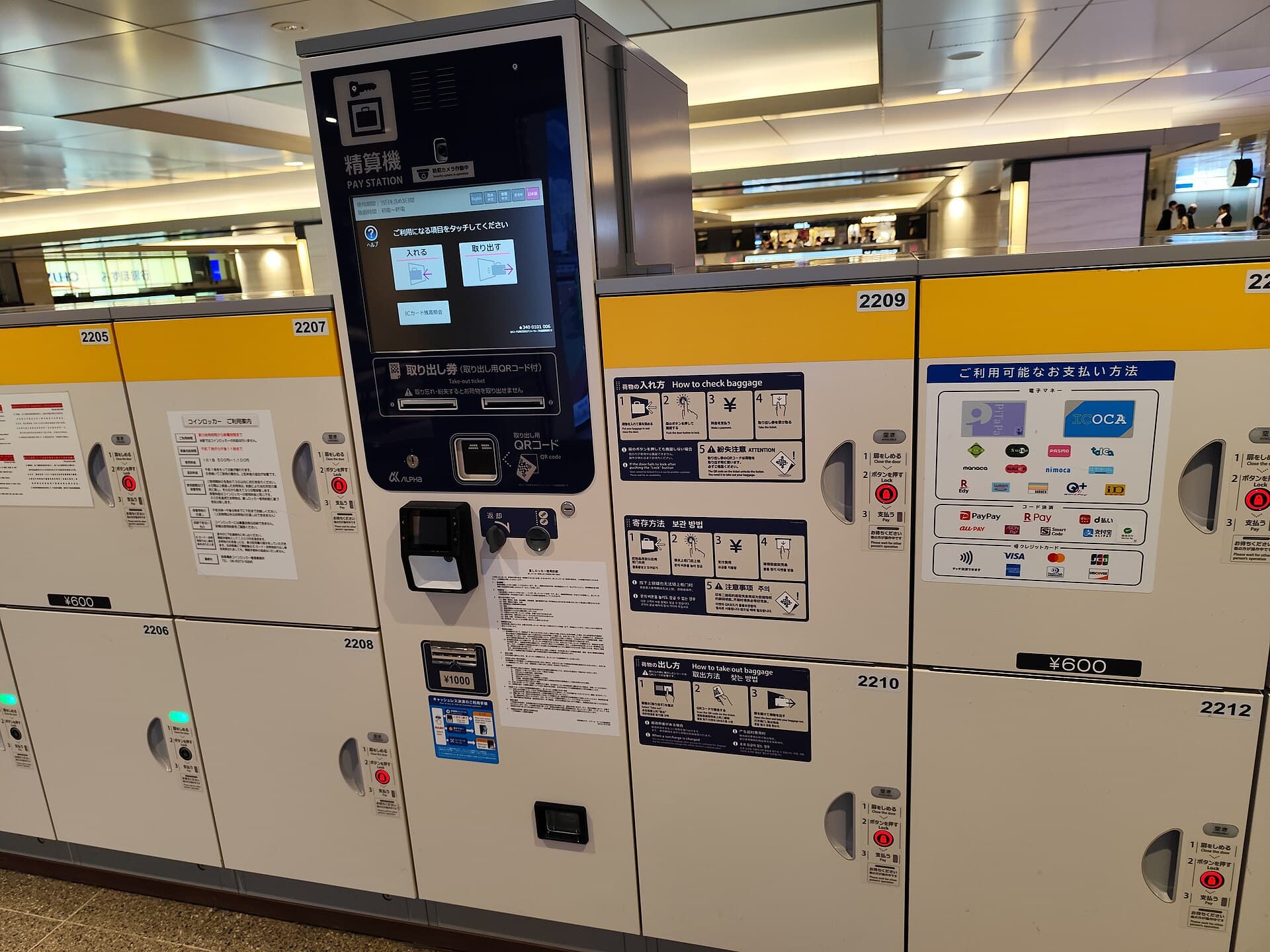
Japan Luggage Storage 2026: Coin Lockers, Takkyubin & Hands-Free Travel
12 min read
Tokyo to Osaka (and Back): Shinkansen vs Flight vs Bus — Times, 2026 Prices & When the JR Pass Pays
18 min read