
Spring in Japan: When to Go, Where the Blossoms Are and How to Plan It
March to May, month by month: the cherry blossom front from Tokyo and Kyoto to Hirosaki, spring weather and what to pack, the 2027 Golden Week dates, festivals worth a day, and a 12-day blossom-season route.
Spring in Japan runs from March to May, and it's the season most people picture before they've even booked a flight: cherry trees in full bloom over castle moats, picnics on blue tarps, and mild days that suit long walks.
If you want to visit Japan for the cherry blossoms, aim for late March to early April in Tokyo, Kyoto and Osaka. If you miss that, the bloom keeps moving north: it reaches Hirosaki in late April and Hokkaido around early May.
The short version for a spring trip? For flowers, go between late March and mid April. For warmer weather and smaller crowds, go in mid May. And think twice before you book the Golden Week stretch at the turn of April and May. This guide covers what each of the spring months looks like, where to see the blossoms, which spring festivals are worth a detour, and the mistakes that catch travelers out every year.
Quick Answer: Spring in Japan
- Cherry blossoms: late March to early April in Tokyo, Kyoto and Osaka; late April in Hirosaki; late April to early May in Hokkaido.
- Best weather, fewer crowds: mid May, after Golden Week.
- Golden Week 2027: Thursday, April 29, then Saturday, May 1 to Wednesday, May 5.
- 2027 forecasts: the first blossom forecasts come out from mid December; our 2027 forecast guide tracks them.
- Our spring routes: from $900 for four days around Nara's weeping cherries (KR003) to twelve days across Japan.
Tokyo, April
14°C average
Full bloom lasts
about a week
Golden Week
Apr 29, May 1–5
Book hotels
months ahead
When Is Spring in Japan? A Month-by-Month Look
Japan is a long country, so spring doesn't arrive everywhere at once. Okinawa's first cherry blossoms open in January, while Hokkaido can still be bare in mid April. Along the Tokyo–Kyoto–Osaka corridor, the pattern looks like this.
March: Plum Blossoms and the First Sakura
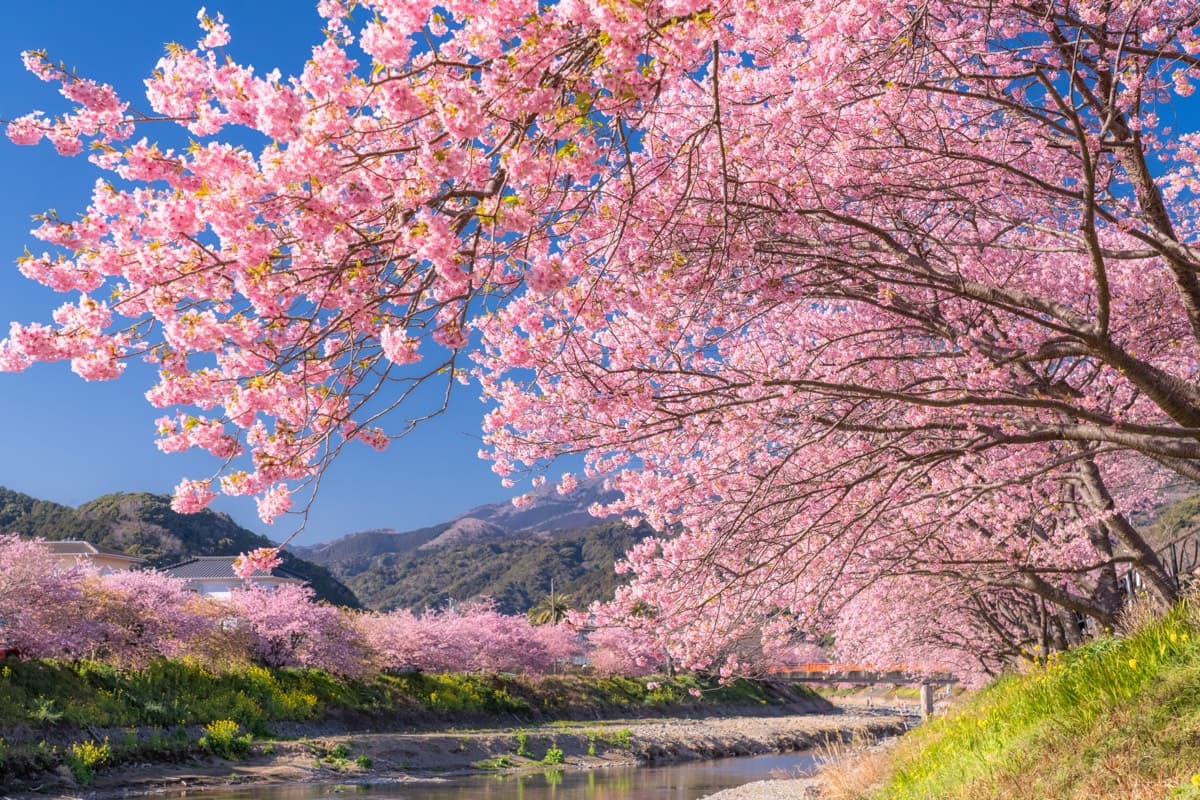
Early spring belongs to the plum blossoms, the first big flowers of the year. They open while it still feels like winter, they smell sweeter than sakura, and they draw far fewer people. Kairakuen in Mito is counted among the three great gardens of Japan; it has around 3,000 plum trees and holds its plum festival from mid February into March. On the Izu Peninsula, the deep-pink Kawazu cherries flower in February and early March — our Kawazu Cherry Blossom Festival guide has the dates.
Then the Somei-Yoshino cherry trees take over. In 2026 the Japan Meteorological Agency declared Tokyo's blossoms open on March 19, which was early, after a warm February. For the rest of the month, see Japan in March 2027.
April: Peak Cherry Blossom Season
Early April is the classic time to visit Japan for sakura. Tokyo and Kyoto usually reach full bloom around the turn of the month, and the petals start falling within a week. After that, the bloom climbs into the mountains and moves north. Prices and crowds also hit their spring high, so book early. The month in detail: Japan in April 2027.
May: Late Spring, New Tea and Festivals
Late spring in Japan doesn't get enough credit. Golden Week takes up the first few days of May. After that come warm days, new-season tea and blooming flowers everywhere, from wisteria to the pink moss phlox below Mount Fuji. It's also a lovely time to cycle the roughly 70 km Shimanami Kaido across the islands of the Seto Inland Sea.
The rainy season doesn't usually reach Tokyo until early June, so mid May is great for hiking and other outdoor activities. One caveat for southern Japan: Okinawa's rainy season normally starts in May. More in Japan in May 2027.
Spring Weather in Japan and What to Pack
Spring weather in Japan changes quickly. Tokyo averages roughly 9°C in March, 14°C in April and 19°C in May, but a sunny 20°C afternoon can turn into a cold, drizzly evening. Northern Japan and mountain towns like Takayama are colder.
| City | March | April | May |
|---|---|---|---|
| Tokyo | 9.4°C · 116 mm | 14.3°C · 134 mm | 18.8°C · 140 mm |
| Kyoto | 8.8°C · 106 mm | 14.4°C · 117 mm | 19.5°C · 151 mm |
| Sapporo | 1.1°C · 78 mm | 7.3°C · 55 mm | 13.0°C · 56 mm |
Average temperature and rainfall, Japan Meteorological Agency normals (1991–2020).
For spring, pack layers: a warm mid-layer for March and early April, a light waterproof jacket, and shoes you can walk in all day. Trust me on the shoes.
From our Japan travel team
Cedar and cypress pollen is heavy across much of Japan from March into April, right in the middle of cherry blossom season. If you get hay fever at home, bring the medication you already know works for you, and pack a few masks for long walks through parks and temple grounds lined with cedar trees. If you have questions about packing for your dates, feel free to get in touch.
How the Cherry Blossoms Move North (and How to Read Forecasts)
Sakura season isn't a single date. The bloom moves across the entire country as a front, from Okinawa in January to Hokkaido in late April and early May. Altitude adds its own delay, so a mountainside can peak a couple of weeks after the town below it.
The Japan Meteorological Agency makes the official calls. In Tokyo it watches a sample Somei-Yoshino tree at Yasukuni Shrine. When five or six flowers are open, the season has started, and full bloom means about 80% of the blossoms are open. Private forecasters such as the Japan Meteorological Corporation, Weathernews and tenki.jp publish spring forecasts from winter and update them through March; none had published a 2027 forecast as of early October 2026.
Early forecasts are educated guesses, and the weather in February can shift everything by a week. I usually tell people to give their blossom cities four or five days and to plan a route that covers more than one latitude or altitude. If Tokyo's petals have already fallen, Yoshino or Hirosaki may still be in bloom. City-by-city dates, and how they shifted in 2026, are in our cherry blossom forecast for 2027.
Cherry Blossom Hotspots in Tokyo and Kyoto
Tokyo: Ueno Park, Meguro River and the Imperial Palace
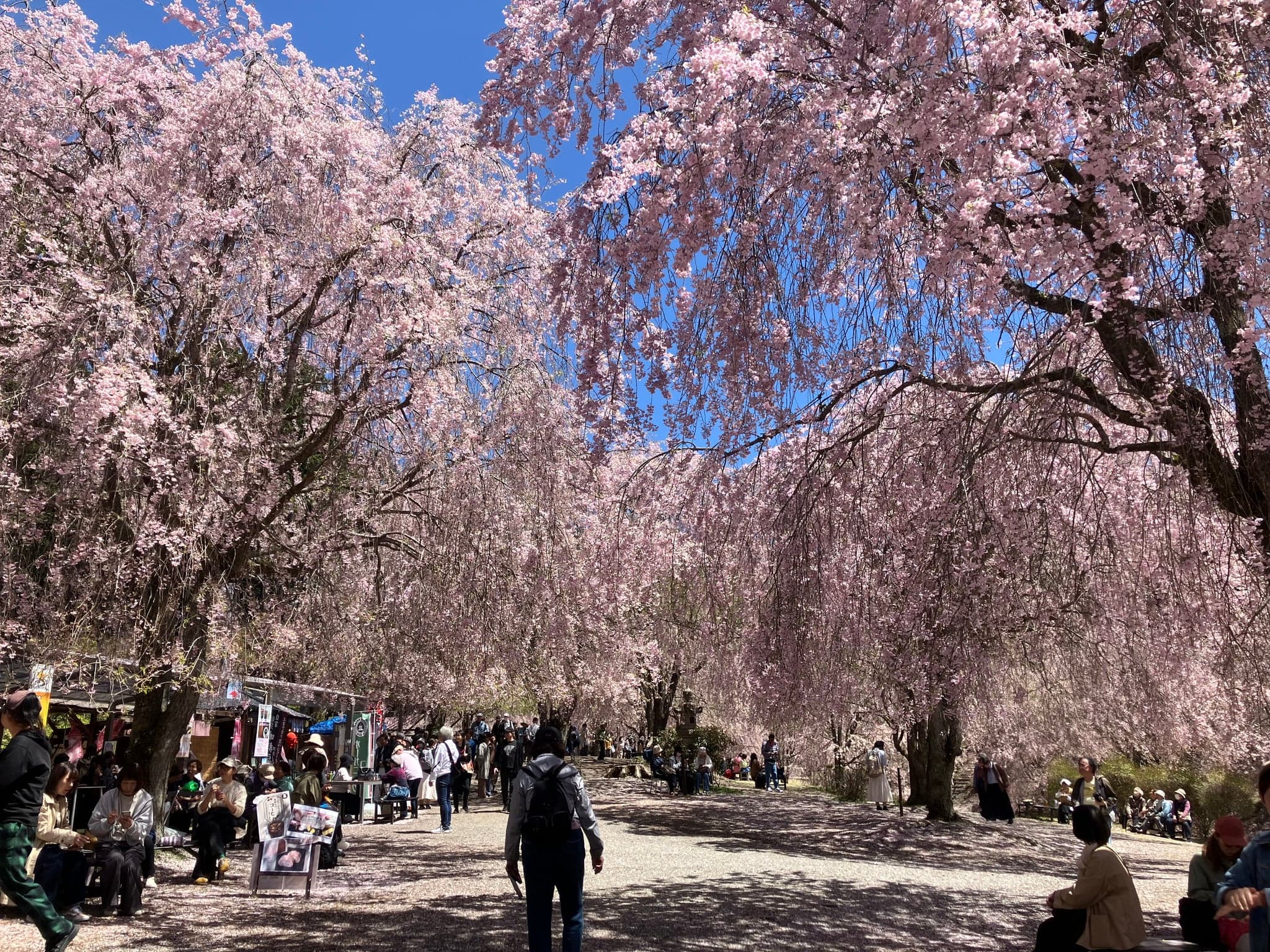
Ueno Park is the classic hanami (flower viewing) party: blue tarps under the blooming cherry trees, food stalls, beer and noise until late on a spring evening. If you want to enjoy hanami the way locals do, grab a few mates and start here.
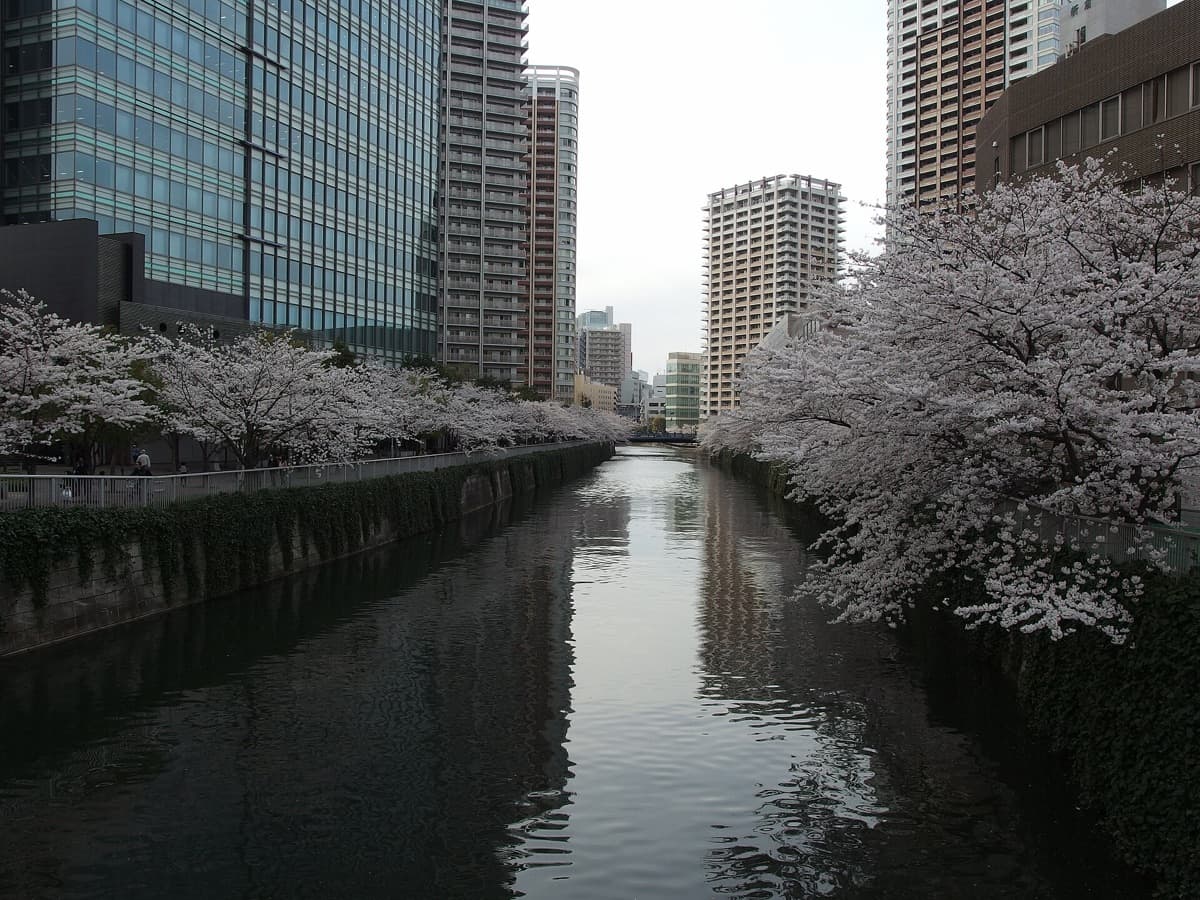
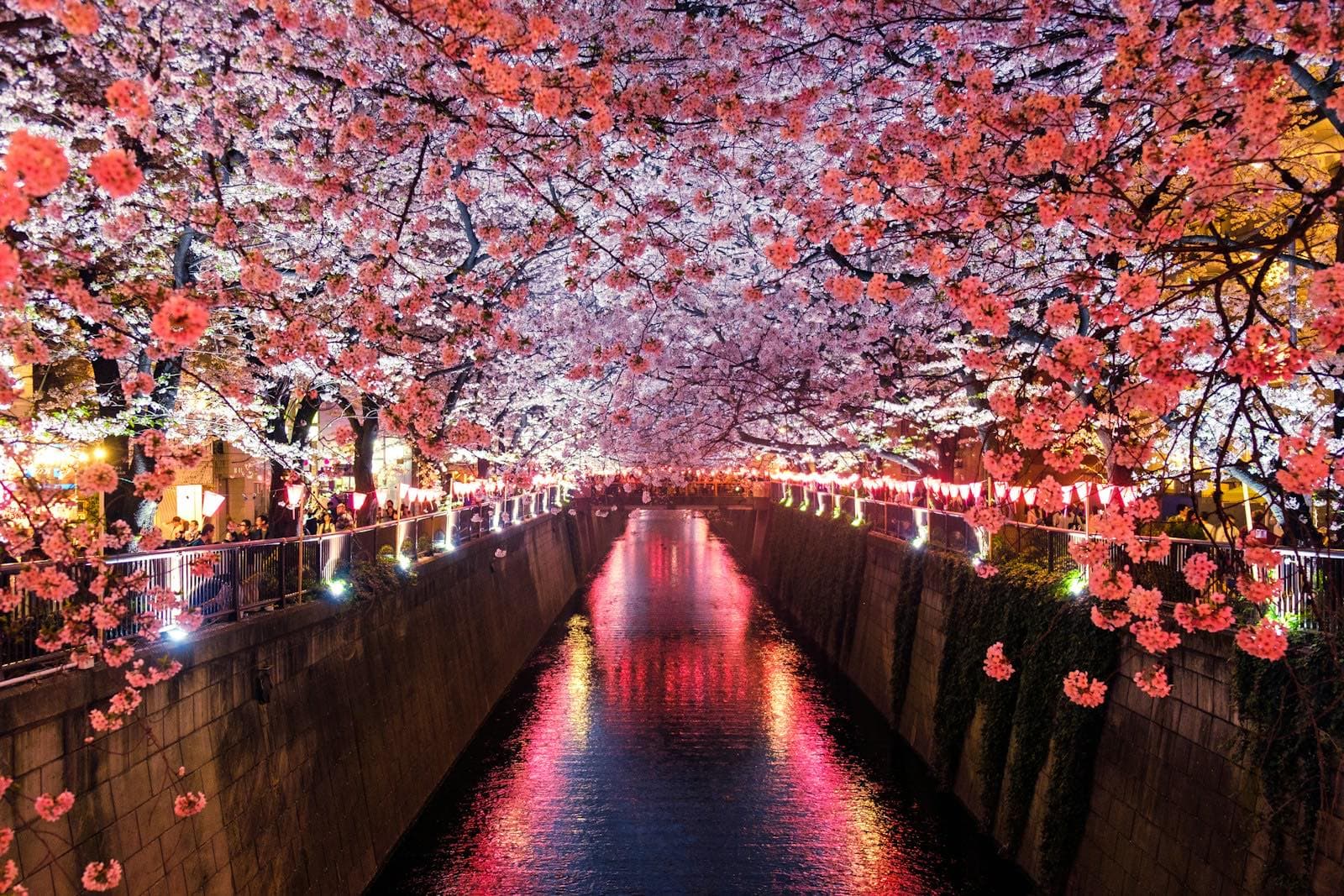
The Meguro River is calmer, with about 800 trees arching over a narrow canal near Nakameguro Station. Go on a weekday morning.
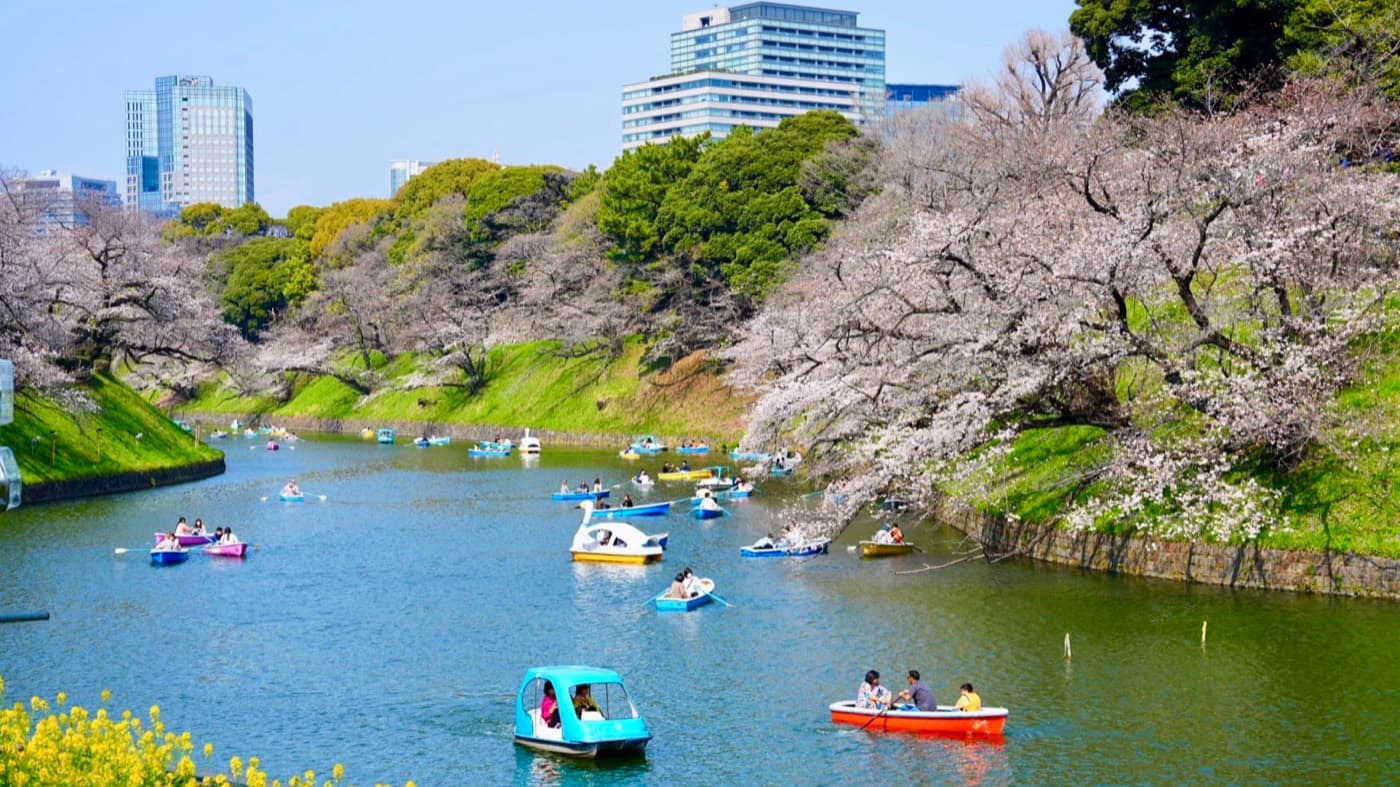
For something grander, walk the moats of the Imperial Palace. Chidorigafuchi has around 260 trees and rowboats for hire (expect queues at peak). In most years the palace also opens Inui-dori, a street inside the grounds, for about a week of flower viewing. Our Tokyo cherry blossom guide covers the city spot by spot.
Kyoto: The Philosopher's Path at Dawn
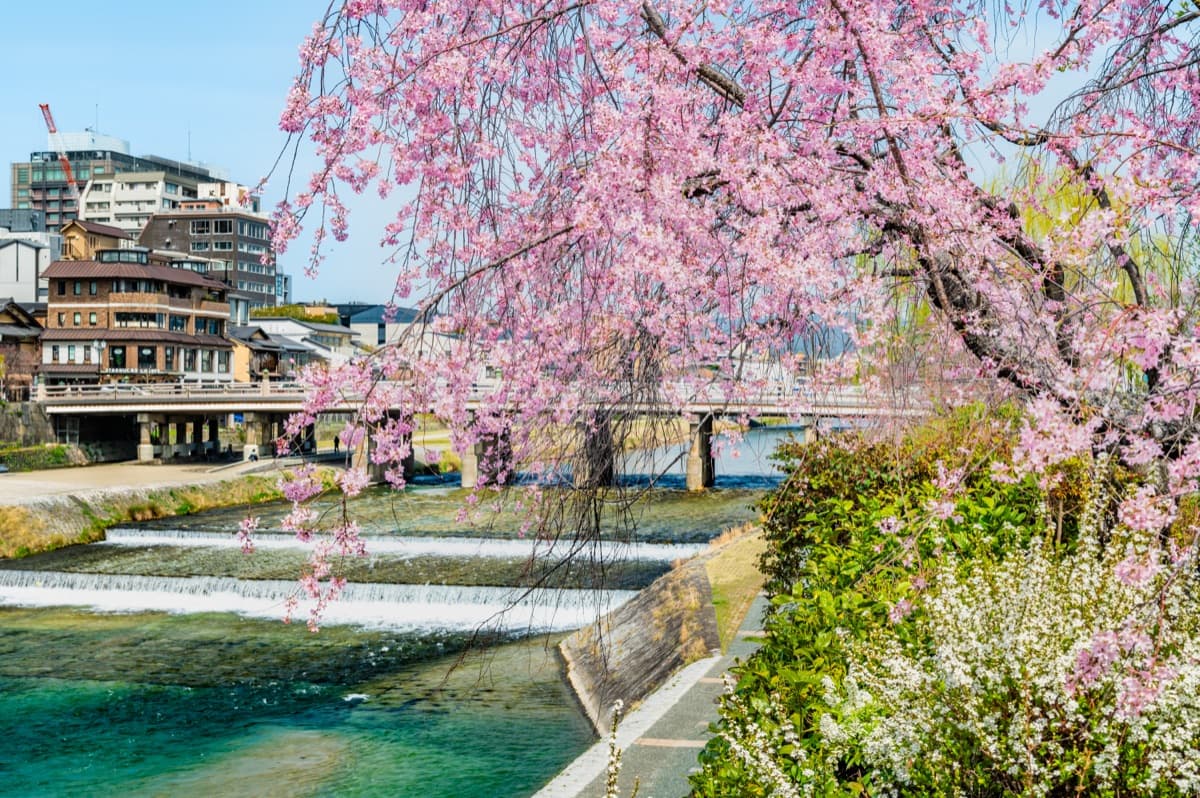
The Philosopher's Path runs about 2 km along a canal from near Ginkakuji toward Nanzenji. Hundreds of cherry trees line it, and they usually peak in early April. It's one of the prettiest walks in Japan. Go at 7 a.m. Honestly, by mid-morning the crowds slow you to a shuffle. The weeping cherries along the Kamo River are a calmer alternative, and our things to do in Kyoto guide has the rest of the city.
Want blossoms without the crowds? Our Hidden Cherry Blossom & Ancient Temple of Nara tour (KR003, departures April 8–17, 2027) takes the Kintetsu Railway to Takami-no-Sato, a mountain garden with over 1,000 weeping cherry trees, and on to Hasedera Temple. It includes three nights in Osaka with daily breakfast and the entrance fees for both. The rest of the Nara day is in our things to do in Nara guide.
Beyond the Cities: Fuji, Yoshino and the Alps
Mount Fuji and Lake Kawaguchi
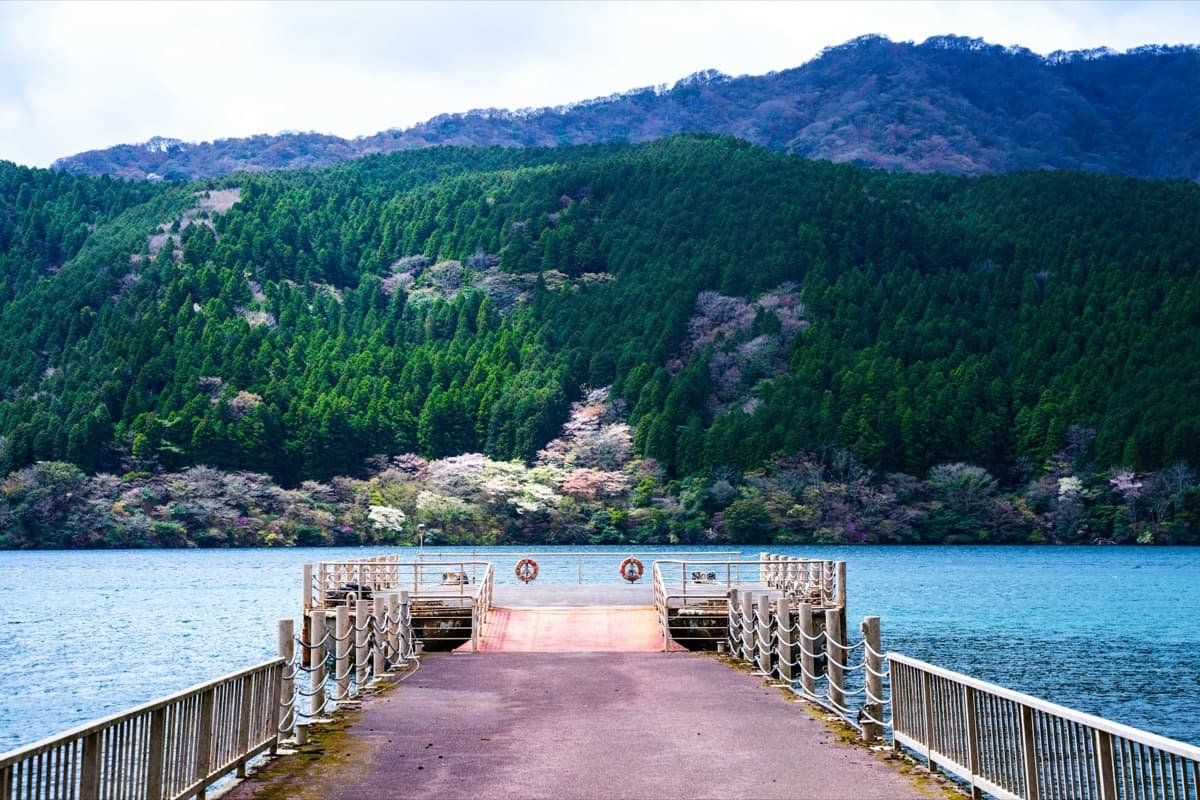
The north shore of Lake Kawaguchi is the classic picture of Japan in spring: cherry trees, water and Mount Fuji's snowy peak behind. The Fuji Five Lakes are higher than Tokyo, so the blossoms usually peak in early to mid April. From mid April into late May, the Fuji Shibazakura Festival near Lake Motosu covers the hillsides in the tiny pink flowers of moss phlox (in 2026 it ran April 11 to May 24, with adult tickets ¥1,000–1,300 depending on the date).
The Fuji Excursion limited express runs from Shinjuku to Kawaguchiko, and highway buses cover the same route. Go early. Spring haze hides Fuji more often than people expect, and clear-weather mornings are your best chance. The practical details are in our Kawaguchiko guide. Several of our Golden Route Plus tours include a stay in Hakone, another good base for Fuji views.
Mid April: Mount Yoshino and the Japan Alps
Mount Yoshino in Nara has about 30,000 cherry trees spread across four zones. The lowest flowers open around the end of March and the highest in mid or late April, so it's a great backup if you arrive after the city bloom. Our Mount Yoshino guide covers the four groves and how to get there.
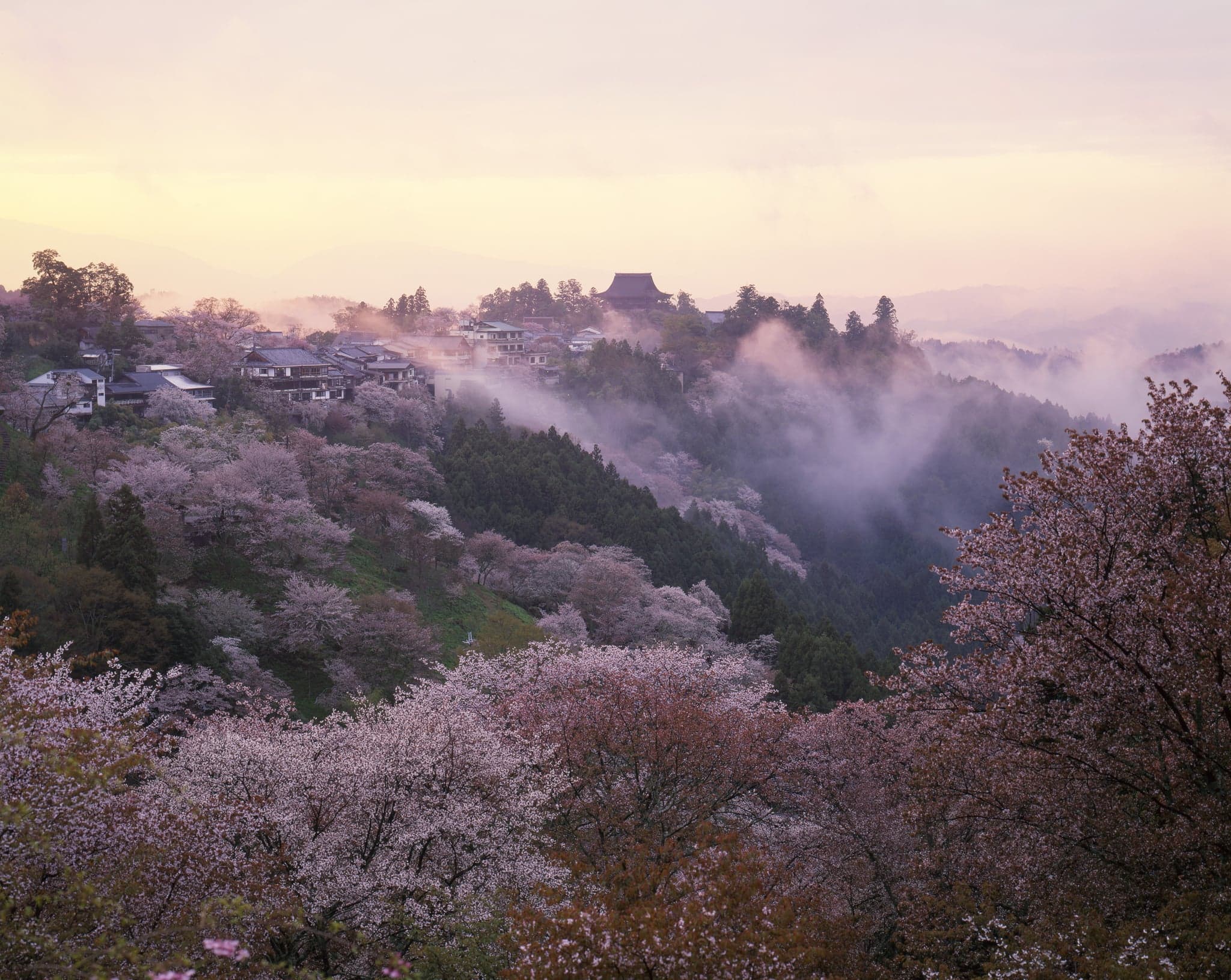
Our 4-day Yoshino & Koyasan tour (KR001) takes the Blue Symphony sightseeing train from Osaka and includes a half-day Yoshino walk with an English-speaking guide. It ends with temple lodging on Koyasan, where the Okunoin path runs through towering cedar trees. Departures run from spring to autumn, so ask whether your dates match the bloom.
Prefer snow in spring? The Tateyama Kurobe Alpine Route reopens in mid April — on April 15 in each of 2024, 2025 and 2026 — when the walls of the Yuki-no-Otani snow corridor rise over ten meters (12 m in 2026). Our spring-only Alpine Routes & Cultural Japan tour (NT105) has April and May 2027 departures.
Northern Japan: Where Sakura Season Ends
Northern Japan is your backup if you miss the blossoms further south. By the time Tokyo's trees have turned green, the blossoms in Tohoku and Hokkaido are only starting: Hakodate and Sapporo usually reach full bloom from the last days of April into early May. In the rural areas of Tohoku, cherry trees line rivers and country roads, the crowds are far smaller than Kyoto's, and the weather is noticeably cooler.
Hirosaki Cherry Blossom Festival: The Castle Goes Back on Its Walls
Hirosaki Park in Aomori is one of the best cherry blossom spots in Japan, with about 2,600 trees of more than 50 varieties around Hirosaki Castle. The castle keep dates to 1810, late in the Edo period, and is one of only 12 original keeps left in the country. The 2027 Hirosaki Cherry Blossom Festival is scheduled for April 16 to May 5; in 2026 an early bloom moved the start forward a week, to April 10, so watch the dates in March.
Spring 2027 should be special. In 2015 the keep was moved inward so the stone walls beneath it could be rebuilt, and since July 2026 it has been inched back onto its original base, with the move due to finish around mid November. That should make 2027 the first sakura season in over a decade with the keep back in its classic spot above the moat.
From Tokyo, the Tohoku Shinkansen takes about three hours to Shin-Aomori, and the JR Ou Line takes another 30–40 minutes to Hirosaki. None of our tours stay overnight in Hirosaki, so plan it as a one- or two-night side trip from a Tokyo base.
Golden Week and Children's Day: Plan Around Them
Golden Week is a run of national holidays and the busiest stretch of the spring season in Japan. In 2027 it starts with Showa Day on Thursday, April 29. After a working Friday, the long weekend runs from Saturday, May 1 to Wednesday, May 5, with Constitution Memorial Day, Greenery Day and Children's Day on May 3, 4 and 5. Plenty of people take April 30 off as well, which turns it into a seven-day break.
Trains are busiest heading out at the start of the break and coming back on May 4–5, and hotel prices jump. My advice: stay in one city during the holidays and do your long Shinkansen trips before or after. Our Golden Week 2027 guide has the day-by-day crowd picture.
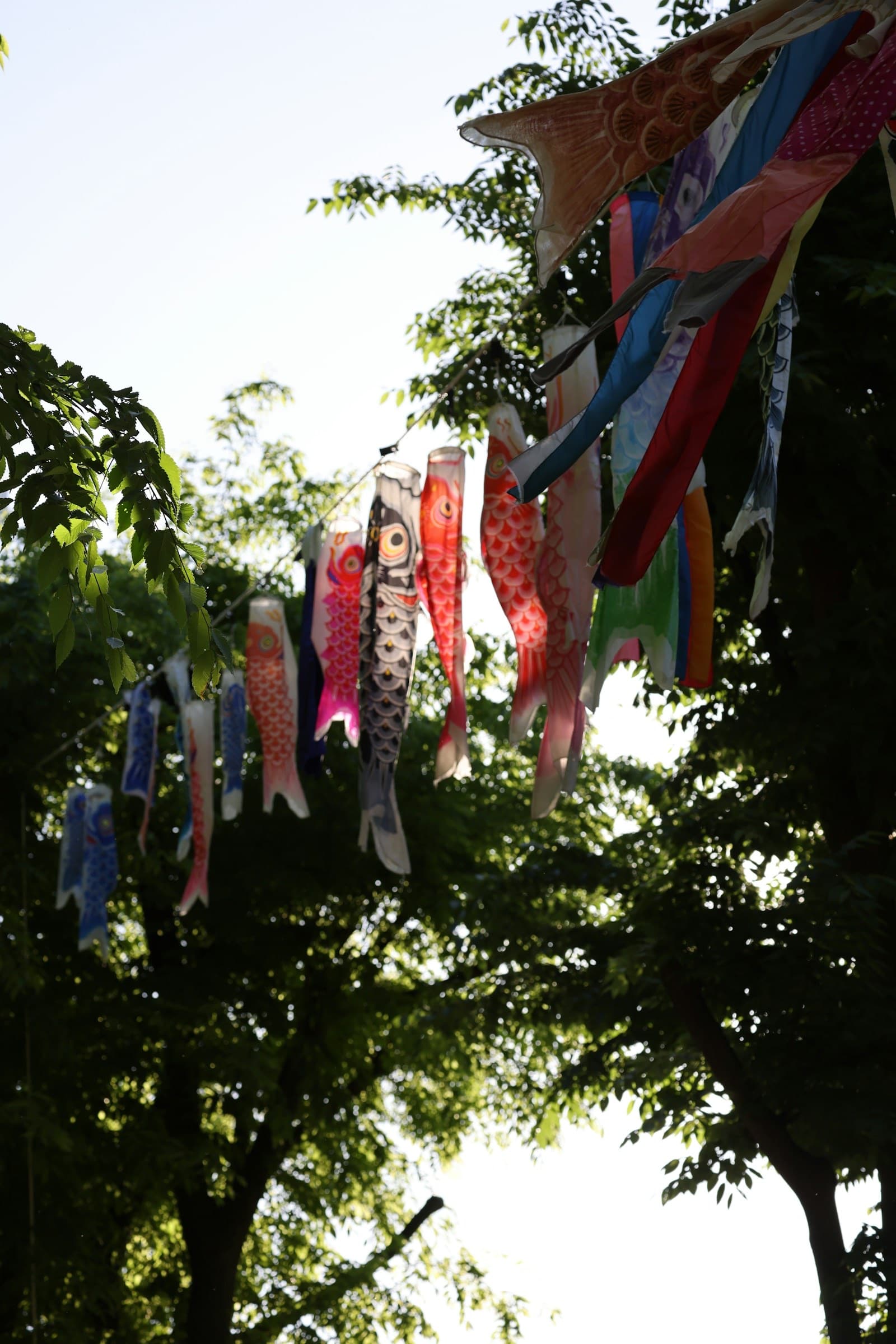
On May 5 you'll see koinobori, carp-shaped streamers flown for children's health and good fortune, and shops selling kashiwa mochi wrapped in oak leaves.
From our Japan travel team
Late March to mid April and Golden Week are the two busiest travel windows of the Japanese spring, and hotels in Tokyo and Kyoto book up months ahead. Hotels and trains fill up fast, so start planning early; our self-guided tours handle the bookings and support you through the trip. If you already have rough dates in mind, feel free to get in touch and we'll suggest departures that fit.
Spring Festivals Worth Building a Day Around
Spring festivals in Japan are less about fireworks and more about processions, floats and shrine rituals. These are the cultural festivals I'd plan a day around.
Aoi Matsuri: Kyoto's Heian Procession on May 15
Every May 15, several hundred people in Heian-period traditional costumes walk with ox-drawn carts decorated with wisteria flowers. The procession leaves the Kyoto Imperial Palace around 10:30 a.m., stops at Shimogamo Shrine and goes on to Kamigamo Shrine in the afternoon. It's the most elegant of Kyoto's spring events. Watching from the roadside is free, and paid seats at the palace and at Shimogamo go on sale in spring through kyoto.travel.
Kyoto's spring dances are the other draw: the 2027 Miyako Odori runs April 1–30 at the Gion Kobu Kaburenjo, three shows a day, with tickets from ¥5,000 on sale from January 6, 2027.
Takayama Floats and Tokyo's Portable Shrines
At Takayama's Spring Festival on April 14–15 every year (a Wednesday and Thursday in 2027), 12 ornate floats come out in the old town, some with mechanical marionettes that perform twice a day, and rooms go fast. Rain cuts the program back rather than postponing it. Our Takayama guide covers the town the rest of the year.
In Tokyo, Asakusa's Sanja Matsuri is usually held over the third weekend of May. Around a hundred portable shrines are carried through the streets, with traditional music and food vendors along the side streets. Check each year's dates before you book.
Fruit Picking: As Many Strawberries As You Can Eat
Strawberry picking (ichigo-gari) is the classic spring fruit picking in Japan, and the season runs roughly from January into May. Most farms use a timed format, usually about 30 minutes in the greenhouse to eat as many strawberries as you can. Prices vary by farm and month, and often drop later in the season.
My favorite for travelers is Kunozan in Shizuoka, where farms along the coast road grow "stone wall" strawberries on sunny slopes above the sea, with picking from January into early May. Shizuoka Station is on the Tokaido Shinkansen between Tokyo and Kyoto. Hikari and Kodama trains stop there, but Nozomi trains don't. That makes it an easy half-day break on the way between the two cities. Spring weekends get busy, so check whether your farm takes reservations.
What to Eat: Sakura Mochi, Mountain Vegetables and New Tea
Spring food in Japan is built on seasonal ingredients. Sakura mochi, a pink rice cake wrapped in a salted cherry leaf, comes in two styles. Tokyo's version uses a thin, crepe-like wrapper and is said to date from 1717 near Chomeiji temple. Kansai's domyoji style is chewy and grainy. Try both and pick a favorite.
In mountain towns, look for mountain vegetables (sansai) such as fuki, warabi and udo, often served as tempura. Late April into May is also shincha season, when the year's first green tea arrives from Shizuoka and Uji. It's a lovely time to join one of Kyoto's tea ceremonies.
Common Mistakes Travelers Make in Japan in Spring
- Betting everything on one forecast date. Spring blossoms shift. Build in a few spare days and a backup region.
- Visiting destinations at their busiest hour. Kyoto's canals and Tokyo's parks are calmest before 8 a.m.
- Ignoring Golden Week. It won't ruin your trip, but a trip to Japan that doesn't plan around it can lose whole days to queues.
- Underpacking for the north. Spring evenings in Tohoku and the mountains can still feel close to winter.
- Bad hanami manners. Don't pick flowers or shake branches, and take your rubbish with you, because public bins are rare.
- Too many one-night stops. Most people who visit Japan in spring enjoy it more with three-night bases than with a new hotel every day.
Turning It Into an Itinerary: 12 Days in Cherry Blossom Season
Here's a spring route for a late March or early April trip to Japan that gives you more than one chance to catch the bloom:
- Days 1–4, Tokyo: Ueno Park, the Meguro River and Chidorigafuchi, plus a day trip to Lake Kawaguchi.
- Day 5, Shizuoka: Take the Shinkansen west and stop for strawberry picking at Kunozan.
- Days 6–9, Kyoto: The Philosopher's Path at dawn, a Nara day trip and a tea ceremony.
- Day 10, Yoshino: One night on the mountain if the upper slopes are still in bloom.
- Days 11–12, Osaka: Food, and the blossoms at the castle park if the flowers are still out, then home.
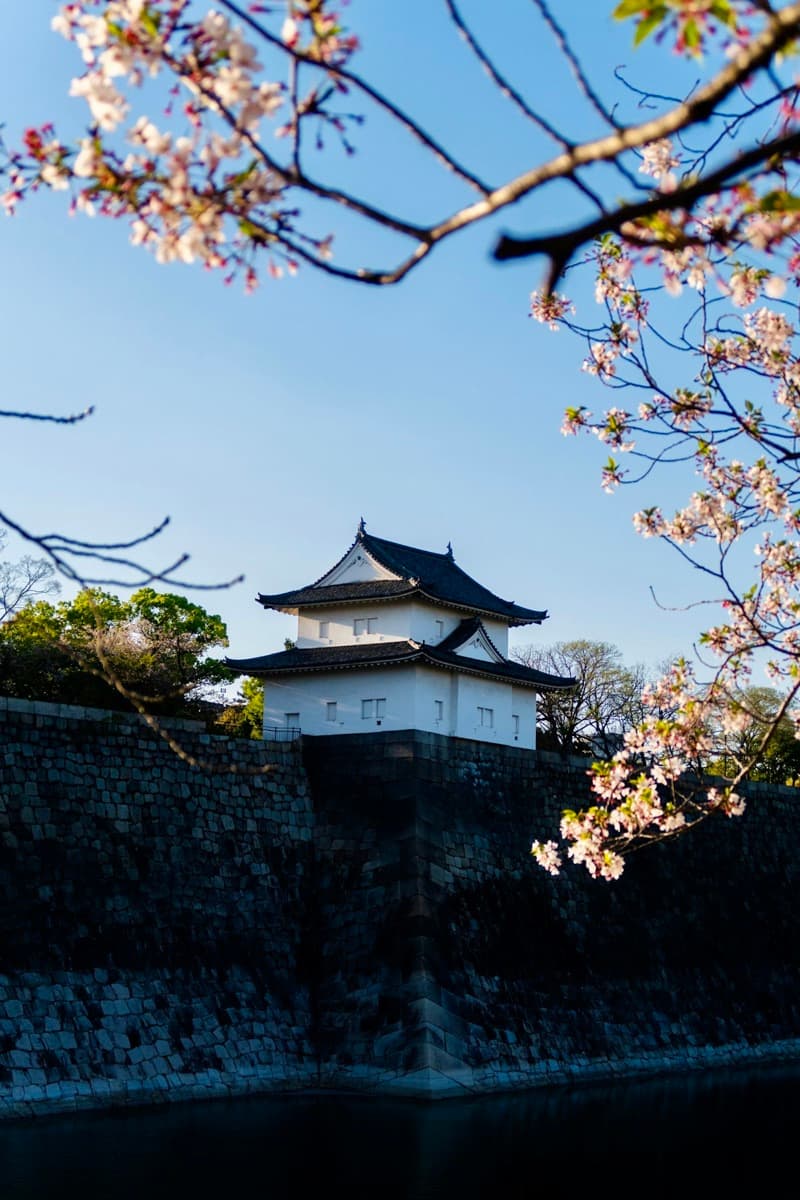
If you visit Japan after mid April instead, swap the Kyoto days for Hirosaki or the Alps. For a May trip, plan around the Aoi Matsuri and keep long train trips out of Golden Week.
Useful Tools for Spring Travel Planning
These are the resources I actually use:
- Cherry blossom forecasts: Japan Meteorological Corporation, Weathernews and tenki.jp.
- Festival details: kyoto.travel for Aoi Matsuri seat sales, and Hirosaki's official tourism site for festival dates.
- Getting around Japan: Google Maps or NAVITIME for train times. An IC card such as Suica or ICOCA covers local trains, buses and convenience stores, and the smartEX app handles Tokaido Shinkansen reservations.
Plan Your Spring Trip with Self Guide Japan
If you'd rather not juggle forecasts, hotels and train seats yourself, selfguidejapan.com puts together self-guided routes so you can explore Japan at your own pace and still see the best of what Japan offers in spring. Self-guided means nobody leads you around, though a local guide can be arranged as an option. We give you your trip documents, the tickets for the legs we book and a loaded IC card. Our tours also come with 24/7 support while you're in Japan. These are the routes that run in spring 2027; prices are per person and move with the departure date and room type.
| Route | Length | From (USD per person) | Why in spring |
|---|---|---|---|
| Japan Golden Route Highlights (BF001) | 7 days | $1,200–1,800 | Tokyo, Kyoto and Osaka in a week — the shortest way into blossom season. |
| Hidden Cherry Blossom & Ancient Temple of Nara (KR003) | 4 days | $900–1,500 | Departures April 8–17, 2027 only. Takami-no-Sato’s weeping cherries and Hasedera Temple from an Osaka base, entrance fees included. |
| Spiritual Peak Experience: Yoshino & Koyasan (KR001) | 4 days | $1,400–2,000 | The Blue Symphony train to Yoshino, a guided half day there, then temple lodging on Koyasan. Spring to autumn departures. |
| Cultural Essence: Kyoto & Kanazawa Short Escape (GR006) | 12 days | $2,800–4,200 | Tokyo, Kyoto and Kenrokuen in Kanazawa; the lowest-priced twelve-day route. |
| Japan Highlights & World Heritage (GR002) | 12 days | $3,300–4,800 | Tokyo, Takayama, Shirakawa-go, Kyoto and two nights in Nara. |
| Castles & Heritage of West Japan (GR005) | 15 days | $3,700–5,400 | Himeji, Kanazawa, Kyoto and Miyajima — castle grounds at their best in blossom season. |
| Alpine Routes & Cultural Japan (NT105) | 11 days | $3,000–4,000 | April and May 2027 departures only: the Tateyama snow walls, then Toyama, Kanazawa and Kyoto. |
Interested in a tour? Click the route name above, or search by route code in the top-right Search bar.
For the blossom-season departures in more detail, including which week each route spends in Kyoto, see our cherry blossom tours page. To price your own version first, try the calculator below.
Japan Trip Cost Calculator (2026)
Set your trip below — the estimate updates instantly. Yen prices are converted at a rounded ¥150 to the dollar; the market rate is about ¥157 in September 2026, which makes yen costs a few percent cheaper than shown.
Intercity is priced as point-to-point tickets unless you add the pass — on the Tokyo–Kyoto–Osaka route the pass usually costs more than the tickets.
Estimated total
$4,530
$2,265/person · $453/day · 2 travelers, 10 days
Estimate only — a mid-range guide, not a binding quote. Peak season & specific hotels shift the total.
For comparison, our self-guided routes run about $270–390 per person per day with hotels, trains, luggage delivery and 24/7 support included — the difference from a DIY estimate is the hotel class and having it all arranged.
Interested in a spring trip to Japan? Get in touch through Plan My Trip on our self-guided tours site, and we'll suggest the tours that best fit your dates and plans.
Spring in Japan FAQ
When is the best time to visit Japan in spring?
For cherry blossoms in Tokyo and Kyoto, late March to early April. For warm weather and smaller crowds, mid May, after Golden Week.
How long do cherry blossoms last?
About a week from full bloom in any one place, and the flowers fall faster if rain or wind hits. If you follow the bloom north or uphill, your cherry blossom season can last several weeks.
Is Golden Week a bad time for a trip to Japan?
It isn't bad, just busy. In 2027 the holidays fall on April 29 and May 3–5, with a five-day weekend from May 1 to 5. Book early and avoid long-distance travel at the start of the break and on May 4–5.
Can I still see cherry blossoms in early May?
Yes, in northern Japan. Hokkaido usually blooms from late April into early May, and the Hirosaki festival is scheduled to run until May 5 in 2027.
Dates and figures were checked on October 2, 2026 against the Cabinet Office holiday list, the Japan Meteorological Agency, the Tateyama Kurobe Alpine Route, the Hida Takayama tourism association, Fuji Motosu Resort, the Gion Kobu Kaburenjo and the Hirosaki convention and tourism association. Routes and prices are from our catalogue on the same date.
Related Articles
Japan Cherry Blossom Forecast 2027: The Practical Planning Guide for Self-Guided Travelers
14 min read
Japan Cherry Blossom Tours 2027: Peak Dates, Real Prices and Self-Guided Routes From $900
19 min read
Tokyo Cherry Blossom 2027: A Self-Guided Traveler's Planning Guide
16 min read