
Tokyo Cherry Blossom 2027: A Self-Guided Traveler's Planning Guide
Aim at the last week of March through the first week of April. Expected first bloom around March 24, full bloom near March 31 — and peak viewing lasts only 5–7 days. Forecast timing, the best spots, day trips, and how to book flexibly.
Planning a Japan cherry blossom trip for spring 2027? Here is the short version up front. Official forecasts do not start rolling out until December, so for now you plan from averages: late March to early April for Tokyo, Kyoto and Osaka, with mid-to-late April for northern Japan. For Tokyo specifically, aim your dates at the last week of March through the first week of April.
That is the window most travelers should book around. If you are chasing peak bloom, the safest strategy is a flexible 10-day trip spanning late March into early April with two buffer days you can shuffle. Cherry blossoms bloom fast and fall faster: a tree stays in bloom for roughly 10–14 days from kaika (first opening) to the end, but peak viewing lasts only 5–7 days once full bloom is reached. Miss it by four days and you are looking at green leaves. Our month guides cover the rest of the trip around the blossoms: March 2027 and April 2027.
🌸 Quick Answer: Tokyo Cherry Blossom 2027
- Expected first bloom (kaika): around March 24; full bloom (mankai) around March 31 — JMA 1991–2020 averages for the benchmark tree at Yasukuni Shrine.
- Book for: the last week of March through the first week of April, with two flexible days.
- Peak window: 5–7 days after full bloom. Rain or strong wind can end it early.
- Tokyo vs Kyoto: Tokyo peaks 3–5 days earlier, so you can chase the front south-to-north on one trip.
- The 2027 forecast itself is not out yet — first private forecasts land around December–February. Book flexibly and check weekly from early March.
When Does Tokyo Sakura Season 2027 Actually Peak?
The honest answer: nobody knows the exact bloom dates yet. The first 2027 forecast from japan-guide.com is expected around February. Until then, we work from averages and last year's pattern.
Here is what we do know. By Japan Meteorological Agency 1991–2020 averages, Tokyo's benchmark tree in the grounds of Yasukuni Shrine first blooms around March 24 and reaches full bloom about March 31 — three to five days ahead of Kyoto and Osaka (April 4), because of Tokyo's strong urban heat-island effect and warm Pacific exposure. So mid-March is too early, mid-April is too late, and late March to early April is the target.
In 2026, blossoms arrived 3–7 days earlier than the historical average because of a warm February. If 2027 follows the same warm pattern, expect early blooms again; if the winter runs cold, the sakura front slides back toward its long-term averages.
The Rough 2027 Window
Across central Japan (Tokyo, Kyoto, Hakone, Osaka), the 2027 season is likely to fall from the end of March into early April — call it March 28 to April 5. For Tokyo specifically, first bloom in the last week of March with full bloom around March 31 is the current best guess, assuming a normal winter. Book flexibly, then watch the forecast weekly from early March. Our Japan cherry blossom forecast 2027 guide tracks the nationwide picture as the numbers land.
How the Japan Cherry Blossom Forecast Works
Understanding the forecast is the difference between a great cherry blossom trip and an expensive miss. There are two phases that matter.
🌱 Kaika (first bloom)
Roughly 5–6 flowers open on the benchmark tree. This is the date the news reports.
🌸 Mankai (full bloom)
80% of buds open — typically one week to 10 days after kaika in Tokyo. Peak photos are the 4–5 days either side.
The Japan Meteorological Corporation builds its predictions from somei-yoshino trees at some 1,000 viewing spots nationwide. The Japan Weather Association publishes a parallel forecast, and japan-guide.com runs its own algorithm plus on-site observations.
The Three Tools Worth Bookmarking
- Japan Meteorological Corporation (JMC) — the go-to nationwide forecast. The first 2027 round is typically published in January 2027, then updated weekly; early outlooks from Weathernews and JMC usually start appearing from autumn 2026.
- japan-guide.com sakura reports — real photos from staff on the ground.
- Weathernews Japan — daily updates once flowering starts.
Check them together, not one in isolation.
The Sakura Front: Why Timing Depends on Where You Go
The sakura front moves from southern Japan up to Hokkaido over roughly two months. As it reaches Hokuriku and Tohoku, those areas flower in early April; the front is expected to reach the southern tip of Hokkaido in late April. For scale: Tokyo's first bloom in 2026 came on March 19 (full bloom March 28), while Sapporo's arrived about a month later, on April 18 (full bloom April 24), per JMA observations.
So if you land in early February, you can still see cherry blossoms — just not in Tokyo yet.
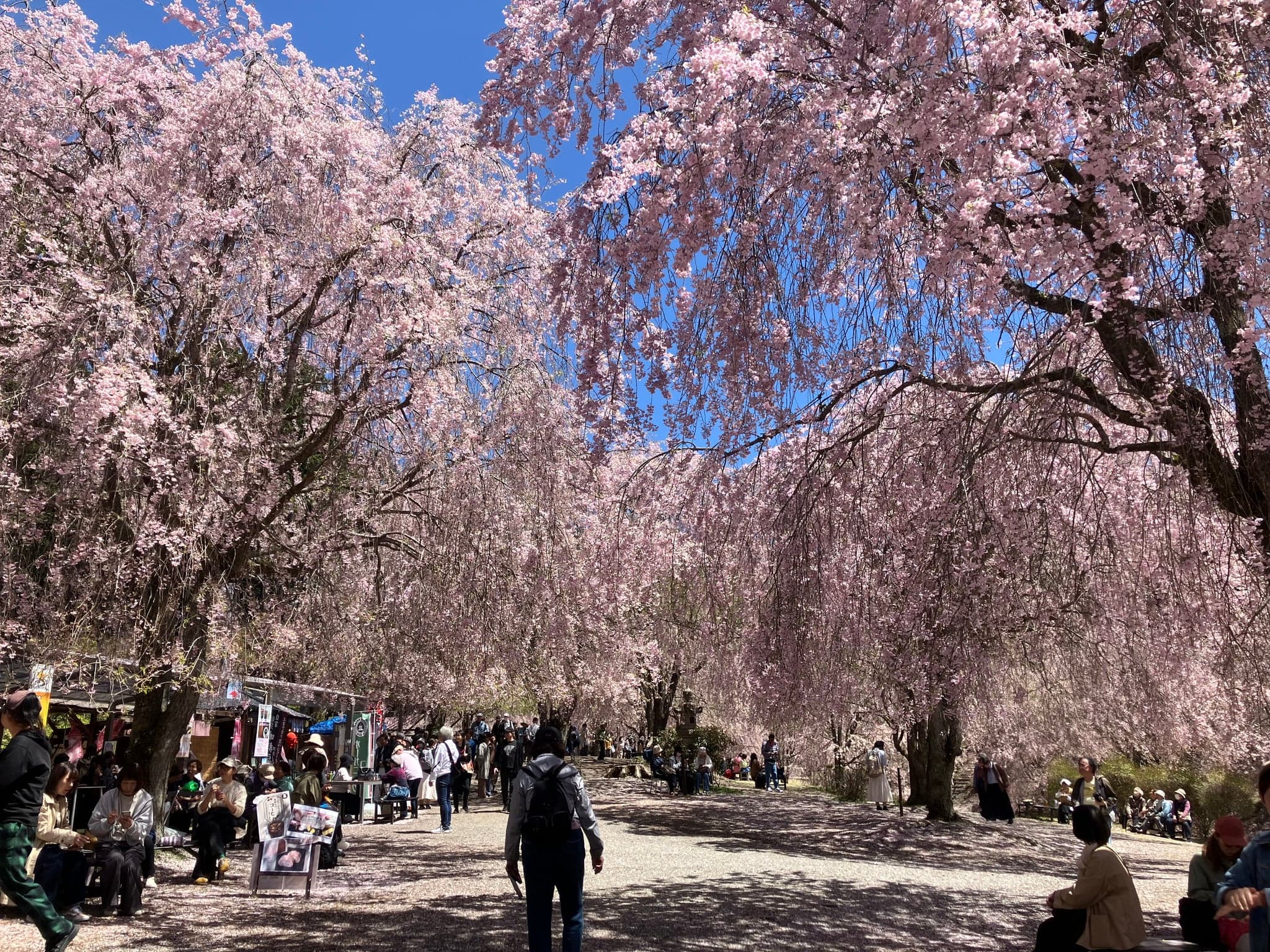
The other variable is the tree itself. Japan has hundreds of named cherry spots and the viewing window shifts with the variety, not just the latitude: the early kawazu-zakura of Izu, the somei-yoshino that the forecasts track, the mountainside zones of Yoshino that bloom in sequence, and the late weeping and double-flowered varieties that carry the season into mid-April. Two places a few hours apart can be a fortnight apart in timing.
💬 From our Japan travel team
This is exactly why we would point you at a one- to two-week route across the country rather than a single-city stay. Our self-guided tours run nationwide itineraries of that length (our Japan cherry blossom tours guide lists the spring routes and their 2027 prices), and on a late-March departure you are moving through several bloom zones and several varieties at once — so even if Tokyo peaks early or a storm strips the petals, somewhere on your route is in flower. That is the surest way to actually see sakura rather than gamble one city on one week.
Early Bloomers: Late January to Early March
Head south of Tokyo, where some varieties bloom as early as January. Atami-zakura is among the earliest in Japan, with around 58 trees peaking in late January. Kawazu on the Izu Peninsula is famous for kawazu-zakura — around 850 trees with large pink petals, blooming from early February to early March. Miurakaigan in Kanagawa is an easy 1.5-hour trip from Tokyo for mid-February viewing. These are gold for anyone visiting in February who still wants the pink-tunnel photo.
Late Bloomers: Mid to Late April
Missed the Tokyo peak? Head north. The Hirosaki Cherry Blossom Festival is scheduled for April 23 to May 5, 2027, though that shifts with the actual bloom. Approximately 2,600 cherry trees of over 50 varieties bloom throughout Hirosaki Park during the festival, drawing roughly two million visitors a year. It is genuinely one of the best flower-viewing events in Japan and worth the Shinkansen ride if your dates run late.
Best Cherry Blossom Spots in Tokyo
Tokyo has more cherry blossom spots than you can cover in a week. These are the ones worth prioritizing.
Ueno Park
One of Japan's most crowded and popular hanami spots, with more than 1,000 trees along the street toward the National Museum and around Shinobazu Pond. Classic hanami parties, loud groups, food stalls everywhere — go for the atmosphere, not the peace. Real crowds build from about 11 a.m. on weekends, so aim for weekday mornings before 9 a.m.
Chidorigafuchi
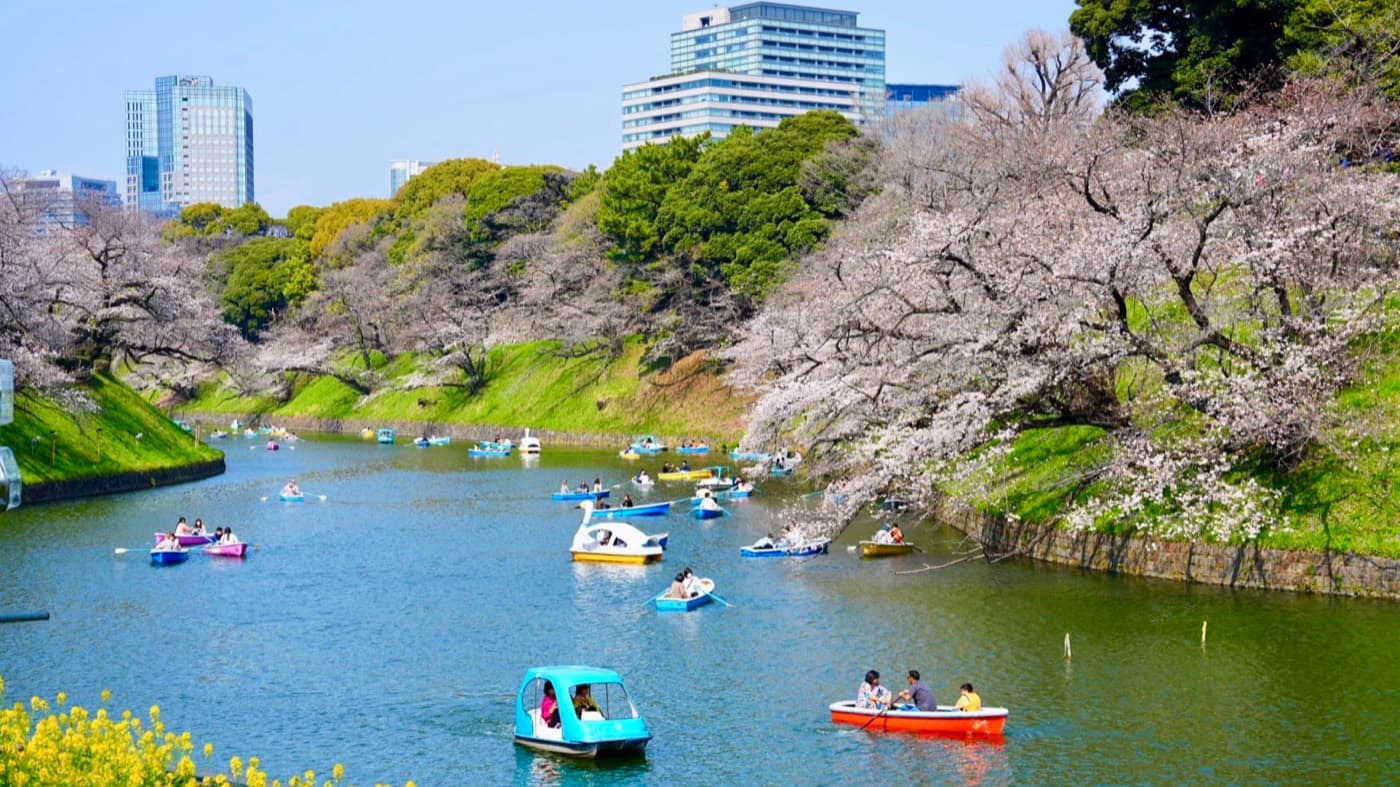
The Imperial Palace moat, and probably the most photographed cherry blossom experience in Tokyo. You can walk the waterfront with rows of trees on both sides, but the best view is from a rented rowboat on the water.
Fair warning about the boats: the queue regularly runs 1–3 hours during blossom season. During the blossom period rental is ¥1,500 for 30 minutes or ¥3,000 per hour per boat (raised on 1 March 2026; the regular-season rate is lower), with ticket sales from 9 a.m. until 8 p.m., stopping once the day's allocation is gone. Expect an hour minimum in line, and get there before opening.
Meguro River (Nakameguro)
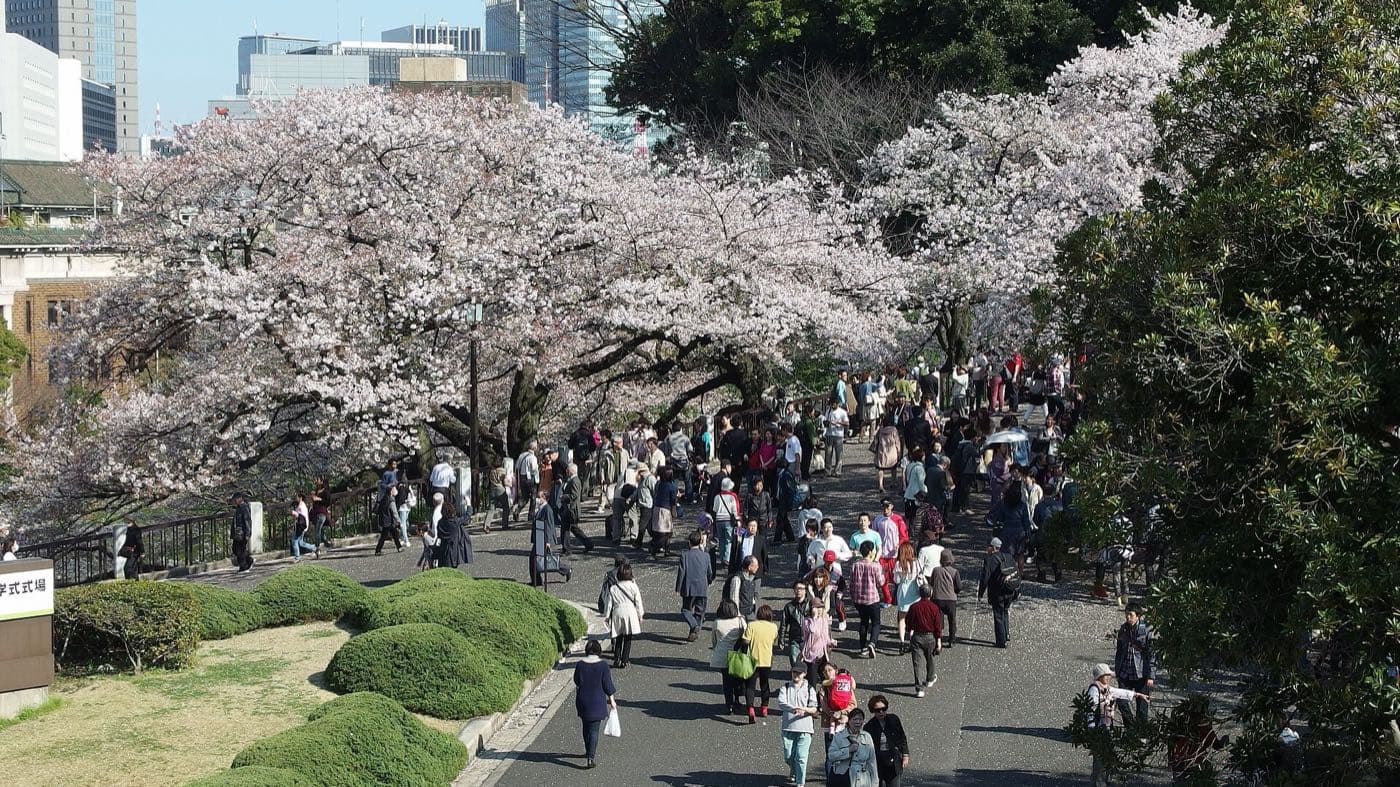
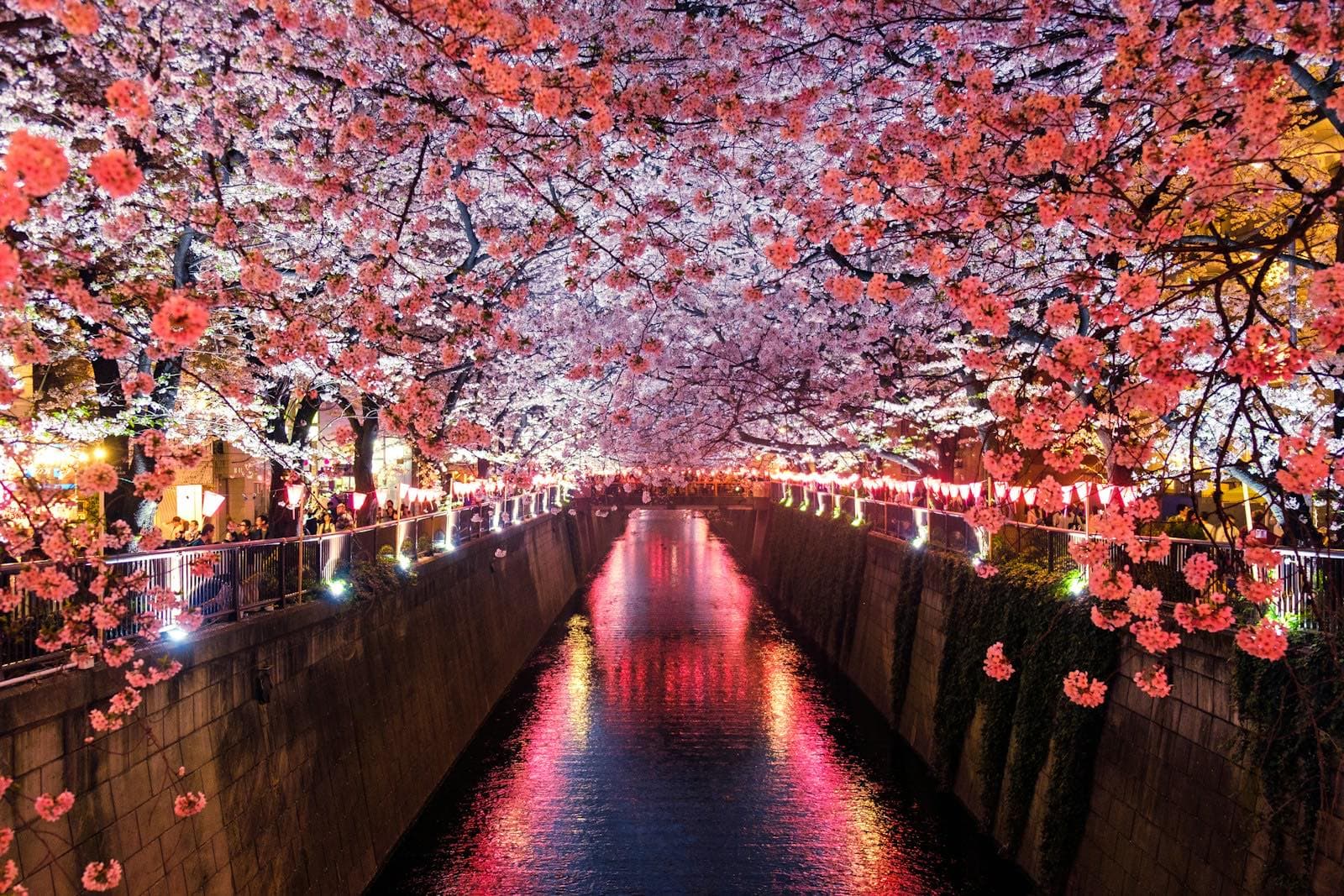
Some 800 trees line a 3.8-kilometre stretch of the Meguro River. Around Nakameguro station the canal narrows so the branches form a pale pink arch over the water. The Nakameguro Sakura Festival lights the canal with pink lanterns at night, with stalls selling street food and sakura-themed drinks. This is the evening-photo spot — and weeknights are noticeably calmer.
Shinjuku Gyoen
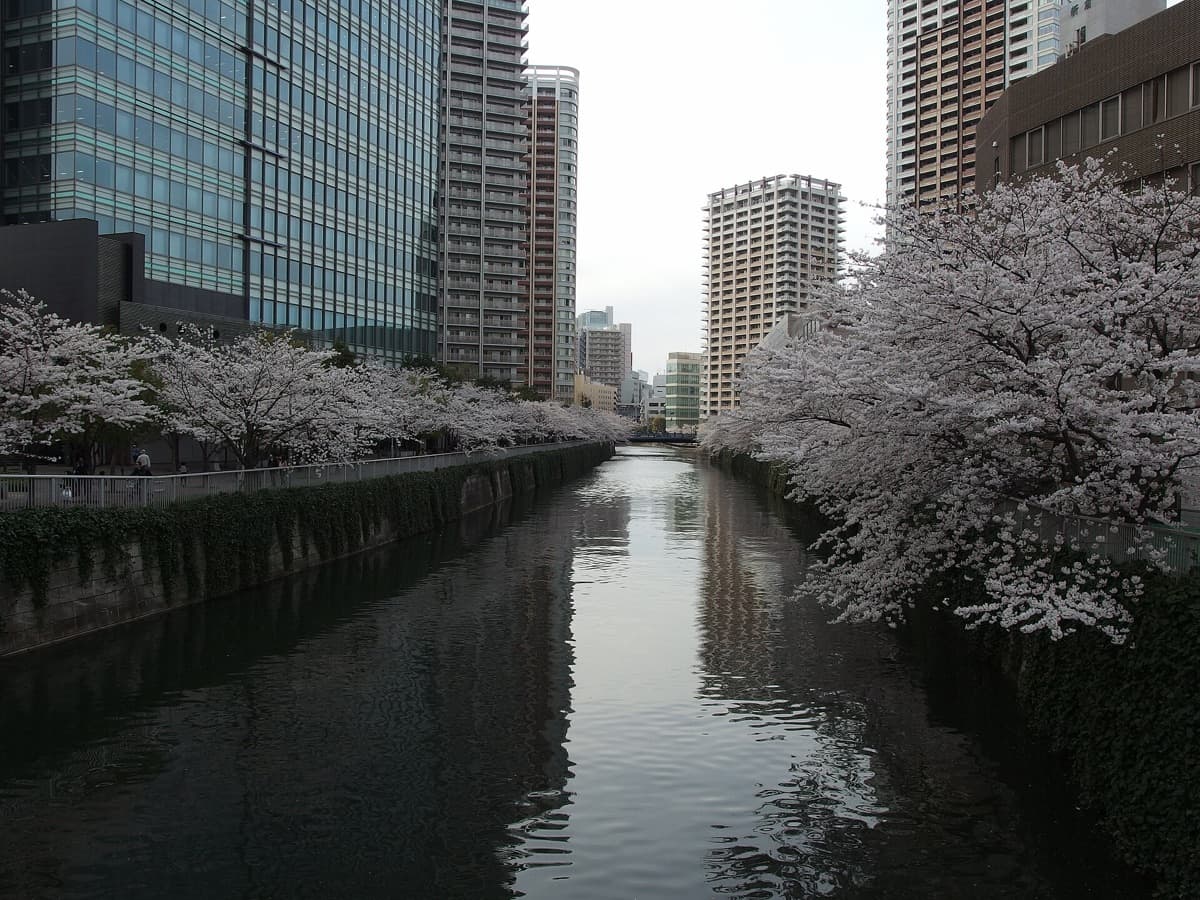
More than a thousand cherry trees across many varieties, including early and late bloomers, spread over spacious lawns — calm and peaceful by Tokyo standards, and a good fallback if you miss the main season by a week or two. Alcohol is prohibited. Note the reservation rule: you may need to pre-register to enter on Saturdays, Sundays and national holidays during March and April. Check the official site before you go.
Sumida Park
Best for the Tokyo Skytree backdrop and evening illumination — arrive after sunset during peak bloom. It sits close to Senso-ji, so it stitches naturally into an Asakusa day.
Kitanomaru Park
Hundreds of cherry trees around the moats of the former Edo Castle, making one of Tokyo's best sakura sights — and quieter than Chidorigafuchi, which is literally across the moat. A local trick.
Beyond Tokyo: Day Trips and Weekend Extensions
If you are already on a Japan cherry blossom trip, build in at least one day trip.
Kawazu (Izu Peninsula)
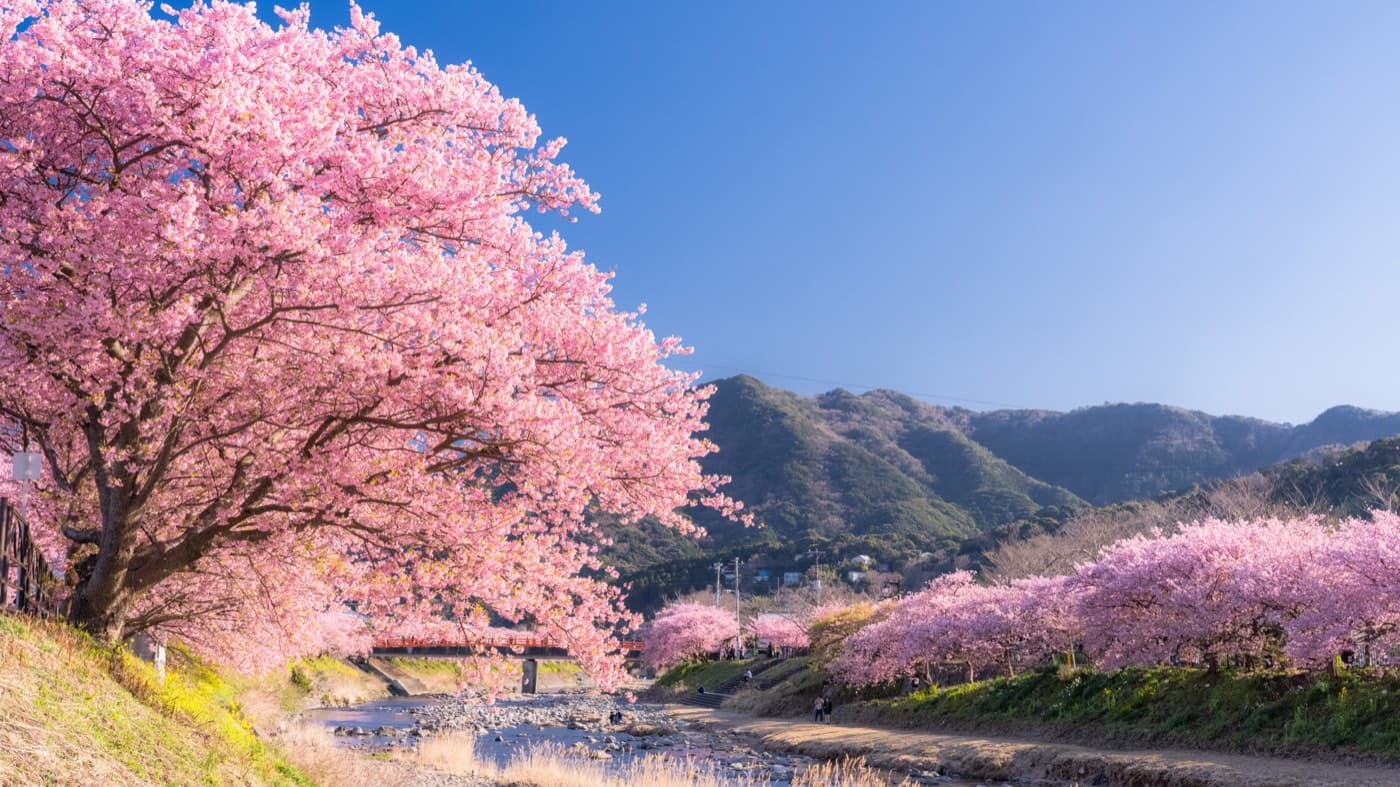
Your February target. In 2026 the Kawazu Cherry Blossom Festival ran February 7 to March 8; expect similar timing in 2027, but confirm on the official Kawazu Zakura site before booking — our dedicated Kawazu Cherry Blossom Festival 2027 guide covers the trains, the original tree and the illumination hours. The festival centres on the riverbanks, where a 4-kilometre tunnel of about 850 cherry trees combines pink blossom with yellow rapeseed flowers. From Tokyo, the JR Limited Express Odoriko runs directly from Tokyo Station to Kawazu in about 2.5 to 3 hours.
Fuji Five Lakes
The lakes around Kawaguchiko peak later than Tokyo because of elevation. This is where you get the blossom-plus-Mount-Fuji shot. Aim for early to mid April.
Mount Yoshino (Nara Prefecture)
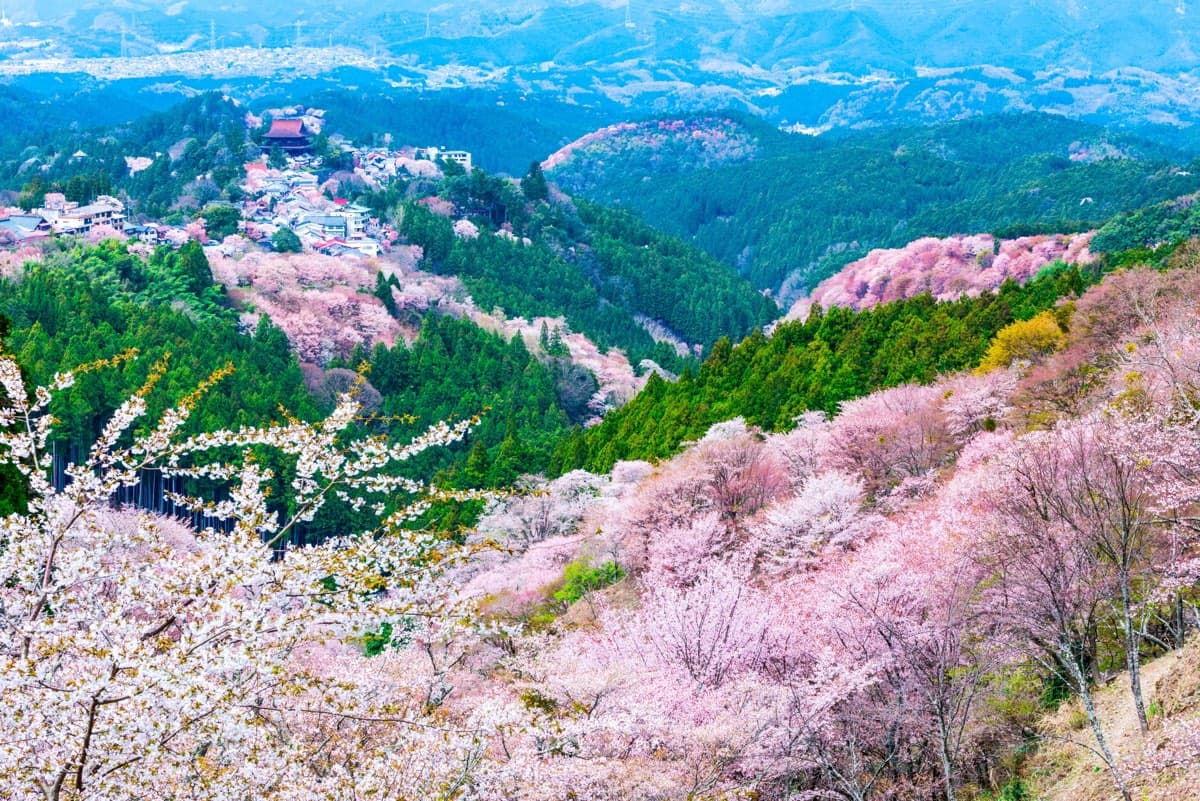
Central Japan's most famous mountainside sakura: thousands of trees across four staggered altitude zones, so the bloom rolls up the mountain over a couple of weeks, typically from late March to mid-April. Do it as an overnight from Kyoto or Osaka rather than a day trip — the last buses down are brutal.
Hirosaki (Aomori)
For a late-April trip, this is the pick. The trees at Hirosaki Park are said to produce more blossoms than elsewhere in Japan thanks to a pruning technique borrowed from apple growing. The festival runs day and night — daytime for the blossoms themselves, evening for the food stalls and illumination. In the last week of April, the castle's outer moat fills with so many fallen petals that they carpet the surface. Book Shinkansen seats well ahead: the festival window collides with Golden Week.
Philosopher's Path (Kyoto)
If you are pairing Tokyo and Kyoto in one trip, the Philosopher's Path in eastern Kyoto is the obvious sakura pilgrimage — a 2-kilometre canal walk lined with cherry trees, connecting Ginkaku-ji with Nanzen-ji. Go early; it is narrow and bottlenecks fast.
Building a Real 2027 Itinerary
Enough theory. Here is how to turn this into an actual booking.
🗓️ The Classic 10-Day Sakura Route
| Days 1–4 | Tokyo. Base near Shinjuku or Ueno. Ueno Park, Chidorigafuchi, Meguro River (evening), Shinjuku Gyoen. |
| Day 5 | Day trip to Kawaguchiko for blossoms with Mount Fuji. |
| Day 6 | Shinkansen to Kyoto. |
| Days 7–9 | Kyoto and Nara — Philosopher's Path, Maruyama Park, Mount Yoshino overnight. |
| Day 10 | Return via Osaka. |
The late-season alternative. If your dates fall in late April, swap Kyoto and Osaka for a northern route: Tokyo → Sendai → Hirosaki for the cherry blossom festival.
The early-bird trip. Coming in early March or even late February? Base in Tokyo and day-trip to Kawazu and Atami for the early bloomers, then extend south to Fukuoka for the first mainland peak.
Common Mistakes to Avoid
- Booking too rigidly. Locking one city per night with no wiggle room, then discovering the front shifted five days. Keep two flexible nights.
- Chasing peak bloom across three cities. You will spend more time on trains than under cherry trees. Pick one base and day-trip.
- Ignoring Golden Week. Late March to early April dodges the early-May holiday crush; if your dates spill into May, expect packed trains and doubled hotel prices.
- Showing up at Ueno at noon on a Saturday. Crowds at Ueno and the Meguro River become nearly immovable. Weekday mornings before 9 a.m., or late evening.
- Forgetting cash. IC cards cover transport, but festival food stalls — Kawazu, Yoshino, around Hirosaki Castle — still lean cash-heavy.
- Underestimating weather. Heavy rain or strong wind brings the petals down early as hanafubuki. One windy afternoon can end the show, so front-load your top-priority spots.
What to Pack for Cherry Blossom Season
Spring in Japan is not warm. Expect warm days and cool evenings, averaging around 10–18°C (50–64°F). Layers, a light waterproof jacket, and comfortable shoes — you will walk further between viewing spots than you expect. A power bank is a lifesaver on full photo days, and a small picnic mat is worth it if you plan a hanami sit-down in the parks.
Food, Drink, and Sakura Season Rituals
Half the fun is the seasonal food. Convenience stores go fully pink from mid-February: sakura mochi, sakura lattes, sakura Kit Kats. Every major brewery drops a sakura beer for the season — Asahi, Sapporo and the craft brewers all run limited editions.
The flowers are a national obsession, and people flock to the parks for hanami picnics. Grab a bento from a depachika (department store food hall), a can of sakura beer, and stake out a spot under the trees. That is the whole ritual — and the fact that it is gone in a week is precisely the point.
Where to Base Yourself
Two rules. Book early: the first official 2027 forecasts will not drop until December or January, but hotels in Tokyo, Kyoto and Osaka often fill 6–12 months ahead for peak sakura dates. If you are reading this in autumn 2026 without accommodation locked, move fast.
Choose a hanami-friendly base: in Tokyo that means Ueno, Nippori or Shinjuku for direct access to the top spots. In Kyoto, base near Gion or along the Keihan Line for the Philosopher's Path.
How to Read the Forecast Once You Are Here
Once blossoms start opening, the JMC updates daily. Watch two numbers:
- Days since kaika — full bloom typically hits 5–8 days after first bloom in Tokyo.
- Weather over the next 72 hours — rain and wind are the enemies of peak bloom.
Remember it is a forecast, not a schedule: individual trees, sub-regions and the weather all move the flowering date. If a heavy rain warning lands the day before your planned Chidorigafuchi visit, go that morning instead. Petals do not wait.
Turning This Into a Self-Guided Trip
Cherry blossom season rewards travelers who plan the frame, not every detail. Book flights and main hotels early, keep two flexible days, watch the forecast weekly from early March, and adjust one or two reservations if the front shifts. That is it.
If you would rather have that handled without joining a group tour, that is what selfguidejapan.com builds — pre-planned independent itineraries you can customize, with transport, timing and the less obvious hanami spots already mapped across Tokyo, Kyoto and beyond.
FAQ: Tokyo Cherry Blossom 2027
When will cherry blossoms bloom in Tokyo in 2027?
Based on JMA 1991–2020 averages and recent trends, expect first bloom around March 24 and full bloom around March 31, 2027. The official forecasts are published from around late January or February 2027.
How long does peak bloom last?
Roughly 5–7 days once full bloom is reached, though heavy rain or strong wind can shorten the window significantly.
Should I book Tokyo or Kyoto for cherry blossom season?
Tokyo peaks 3–5 days earlier than Kyoto. If you want both, base in Tokyo first, then take the Shinkansen to Kyoto to catch the later bloom — you can chase peak bloom across central Japan on one trip.
Is Golden Week a good time to see cherry blossoms?
Not in Tokyo — they are long gone by early May. But cherry trees are still blooming in Hokkaido and northern Tohoku, including the Hirosaki festival, which typically runs into early May.
Do I need to reserve to visit Shinjuku Gyoen during sakura season?
Yes — on weekends and national holidays during March and April, pre-registration is generally required. Check the official Shinjuku Gyoen website before your visit.
What is the best cherry blossom spot for photos in Tokyo?
Chidorigafuchi for daytime rowboat shots, the Meguro River for evening lantern-lit atmosphere, and Sumida Park for the Tokyo Skytree backdrop.
Can I see cherry blossoms in Japan in early February?
Yes, but not in Tokyo. Head to Kawazu on the Izu Peninsula, where kawazu-zakura bloom from early February to early March, or to Okinawa for late-January blossoms.
How early should I book hotels for a 2027 cherry blossom trip?
Six to twelve months ahead for peak dates in Tokyo and Kyoto. If you are inside three months and still unbooked, widen your search radius and consider staying one train stop outside the popular districts.
Ready to Lock In Your 2027 Sakura Dates?
The bloom window is 5–7 days and hotels fill 6–12 months out, so the booking decision comes long before the forecast does. Our self-guided itineraries keep the rail and hotels sorted while leaving you the flexible days you need when the front moves.
Bloom dates are expectations, not confirmations: the 2027 forecasts are published from around December 2026 to February 2027. Averages per Japan Meteorological Agency 1991–2020 normals for the Tokyo benchmark tree; 2026 actuals and the sakura front timing per JMA and Japan Meteorological Corporation reporting; Chidorigafuchi boat fares and hours, Shinjuku Gyoen reservation rules, and the Hirosaki and Kawazu festival dates per the venues' official announcements — all of which can change, so confirm before booking. Photos: Guilhem Vellut via Wikimedia Commons (CC BY 2.0). Last updated: August 2026.
Related Articles
Japan Cherry Blossom Forecast 2027: The Practical Planning Guide for Self-Guided Travelers
14 min read
Japan Cherry Blossom Tours 2027: Peak Dates, Real Prices and Self-Guided Routes From $900
19 min read
Kawazu Cherry Blossom Festival 2027: A Self-Guided Traveler's Complete Guide
10 min read