Things to Do in Kyoto: What’s Worth It, What It Costs, and a 3-Day Kyoto Itinerary
Kyoto’s essential temples and shrines with this year’s fees and hours — including Ginkaku-ji’s new price and the 2026 accommodation tax — how to get around now the bus pass is gone, the day-by-day plan our routes use, and the self-guided routes that stay here.
Kyoto was Japan's capital for more than a thousand years, and it shows: some 1,600 Buddhist temples and hundreds of shrines, seventeen UNESCO World Heritage sites, wooden townhouses, geisha districts, and gardens designed to be looked at for a lifetime. The problem with a list of things to do in Kyoto is not finding enough — it is choosing, and then getting to them before everyone else does.
This guide is built the way we plan it for travelers. Fifty-seven of our self-guided routes stay in Kyoto, most for three nights, and over the years we have learned which sights earn their place, which order works, and what the city actually costs now — Kyoto changed several prices and rules in 2026. Everything below is checked against the temples' and the city's own pages.
Quick Answer: Kyoto
- How long: three nights — two full days for the essentials and a third for Nara, Osaka or a slower Kyoto day. Two nights is the minimum.
- The essentials: Fushimi Inari (free, never closes), Kiyomizu-dera and the Higashiyama slopes, Kinkaku-ji, Arashiyama, and Nijo Castle or Nishiki Market.
- What changed in 2026: Ginkaku-ji is now ¥1,000; the accommodation tax rose from 1 March to up to ¥10,000 per person per night at the top end (¥200–400 for most hotels under ¥20,000).
- Getting around: the city bus is ¥230 a ride; the bus-only day pass is gone, and the Subway & Bus 1-Day Pass is ¥1,100.
- On our routes: 57 routes stay in Kyoto, from the 6-day Kansai Essentials (KA001, from $1,000) to the luxury LX003; most give it three nights, with luggage sent ahead from Tokyo.
Stay
3 nights
Bus fare
¥230 flat
Day pass
¥1,100
Our routes
57 stay here
The Kyoto Essentials, With This Year's Fees and Hours
Kyoto's famous sights fall into five clusters, and planning by cluster is the single biggest time-saver: the south (Fushimi Inari), the east (Higashiyama, Gion and the Philosopher's Path), the northwest (Kinkaku-ji and Ryoan-ji), the west (Arashiyama), and the center (Nijo Castle, the Imperial Palace, Nishiki Market and downtown). Crossing the city between clusters eats time — Kyoto Station to Ginkaku-ji is 30 minutes even on the weekend express bus — so do one or two clusters a day, not five.
| Place | Admission | Hours | Notes |
|---|---|---|---|
| Fushimi Inari Taisha | Free | Never closes | Beside JR Inari station, two stops from Kyoto Station. The full mountain loop is about 4 km and 2 hours |
| Kiyomizu-dera | ¥500 adult · ¥200 elementary/junior high | From 6:00; closes 18:00 (18:30 in July–August) | Autumn night viewing 21–30 November 2026, until 21:30 |
| Kinkaku-ji (Golden Pavilion) | ¥500 adult · ¥300 elementary/junior high | 9:00–17:00, every day | Northwest Kyoto; pair it with Ryoan-ji |
| Ryoan-ji | ¥600 adult · ¥500 high school · ¥300 elementary/junior high | Mar–Nov 8:00–17:00; Dec–Feb 8:30–16:30 | The famous Zen rock garden |
| Ginkaku-ji (Silver Pavilion) | ¥1,000 adult · ¥500 elementary/junior high (raised April 2026) | Mar–Nov 8:30–17:00; Dec–Feb 9:00–16:30 | At the north end of the Philosopher’s Path |
| Nijo Castle | ¥1,300 with Ninomaru Palace (¥800 grounds only) · ¥400 junior/senior high · ¥300 elementary | Entry 8:45–16:00; castle closes 17:00; closed 29–31 Dec | No photos inside the palaces. Ninomaru is closed on Tuesdays in Jan, Jul, Aug and Dec |
| Sanjusangen-do | ¥600 adult · ¥400 · ¥300 | 8:30–17:00 (16 Nov–31 Mar 9:00–16:00); last entry 30 min before | A thousand and one standing Kannon statues in one long hall |
| Tenryu-ji | Garden ¥500 (halls +¥300) | 8:30–17:00; last entry 16:50 | Arashiyama; the garden opens at 7:30 from 14 to 30 November 2026 |
| Arashiyama Bamboo Grove | Free | A public road — any time | About 400 m; go before 8:00 or you will share it with everyone |
| Kyoto Imperial Palace | Free, no booking | Entry 9:00–15:50 in September (seasonal); closed Mondays and 28 Dec–4 Jan | Sento Imperial Palace next door needs a reservation or a same-day ticket |
Fushimi Inari Shrine: Go Early, Go Up
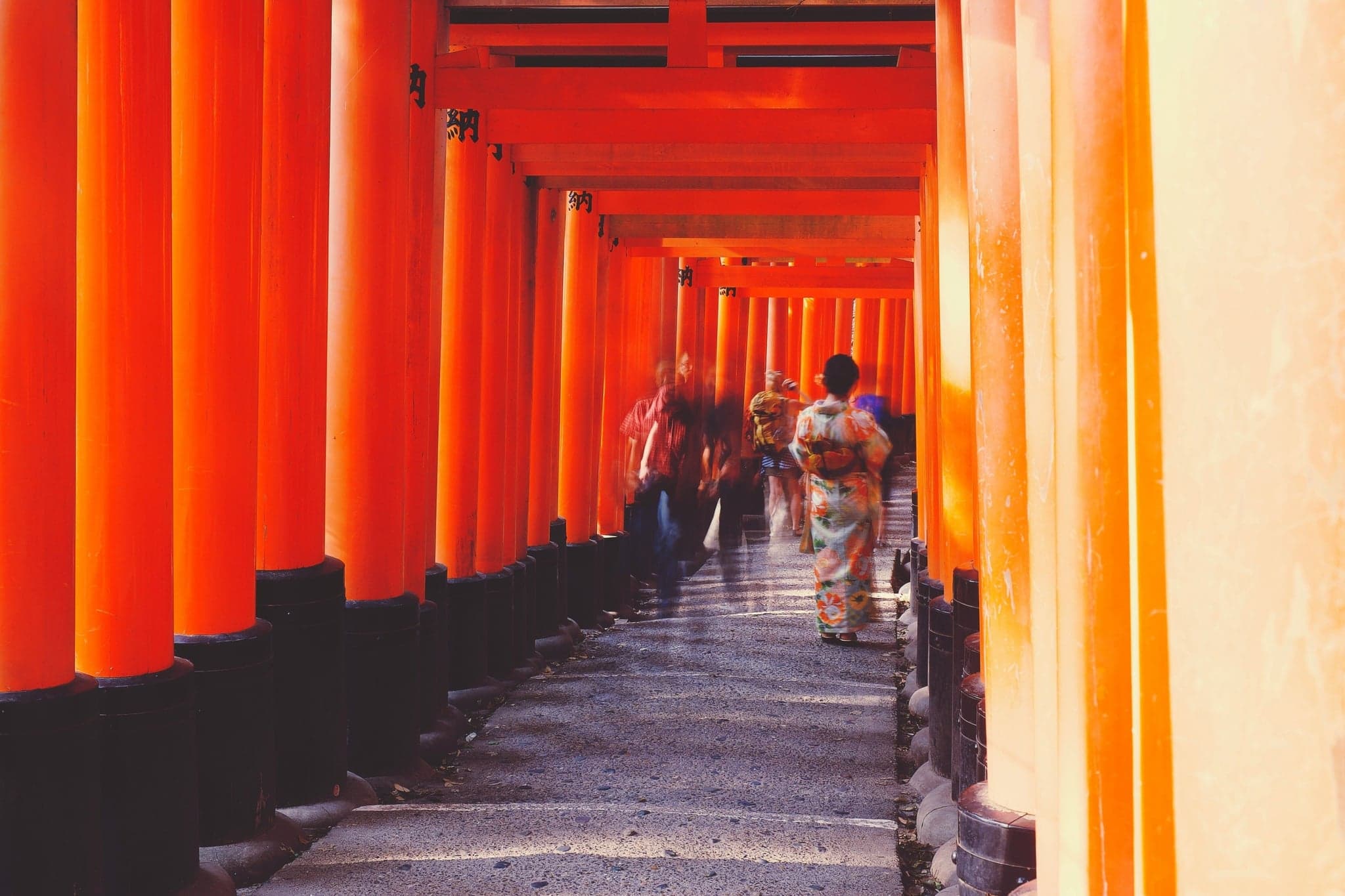
Fushimi Inari Taisha Shrine is the head of Japan's roughly 30,000 Inari shrines and the one image of Kyoto everyone knows: thousands of red torii gates, each donated by a business or a family, forming tunnels that climb the wooded slopes of Mount Inari. It is free and it never closes, which is its great advantage — you can be there in the early morning, before the tour groups, or at dusk when the lanterns come on.
The shrine entrance is right beside JR Inari station on the Nara Line, two stops and about five minutes from Kyoto Station, or a five-minute walk from Fushimi-Inari station on the Keihan Line (about 22 minutes from Gion-Shijo; Keihan's limited expresses do not stop there). Most visitors walk through the famous double row of gates, the Senbon Torii, and turn back. Keep going: the crowds thin out with every flight of steps, and the full loop over the mountain is about 4 km and two hours. The shrine asks visitors not to eat or drink while walking, except in the marked areas.
Higashiyama, Gion and the Kamo River
Kiyomizu-dera and the slopes below it
Kiyomizu-dera Temple, the "pure water temple", stands on the hillside of eastern Kyoto with its great wooden stage built out over the trees on a frame of pillars joined without nails. It is a UNESCO World Heritage site and one of the most visited temples in the country. It opens at 6:00 — the hour to go — and closes at 18:00 (18:30 in July and August); admission is ¥500. From 21 to 30 November 2026 it holds its autumn night viewing, with the maples lit until 21:30 and no reservation needed.
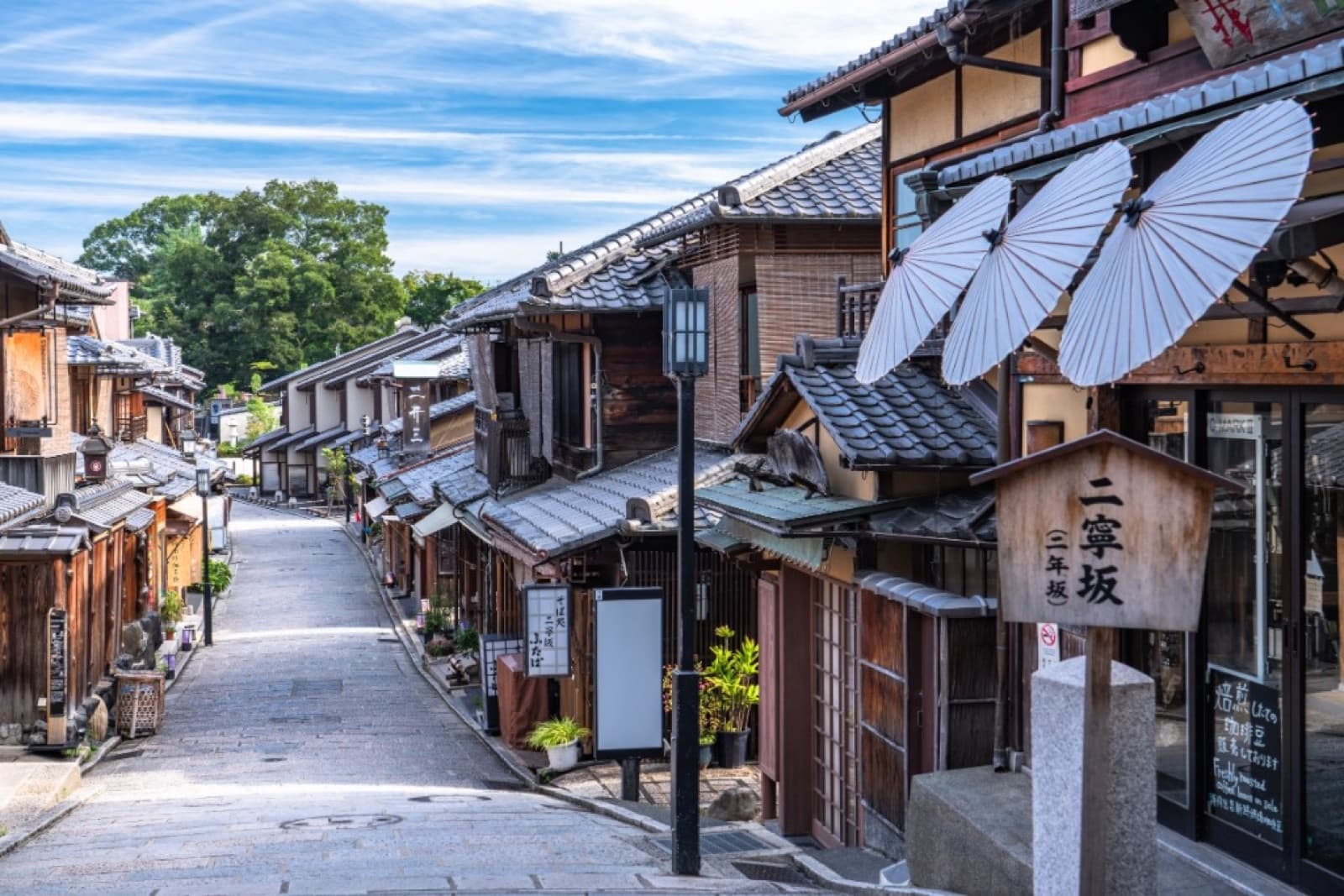
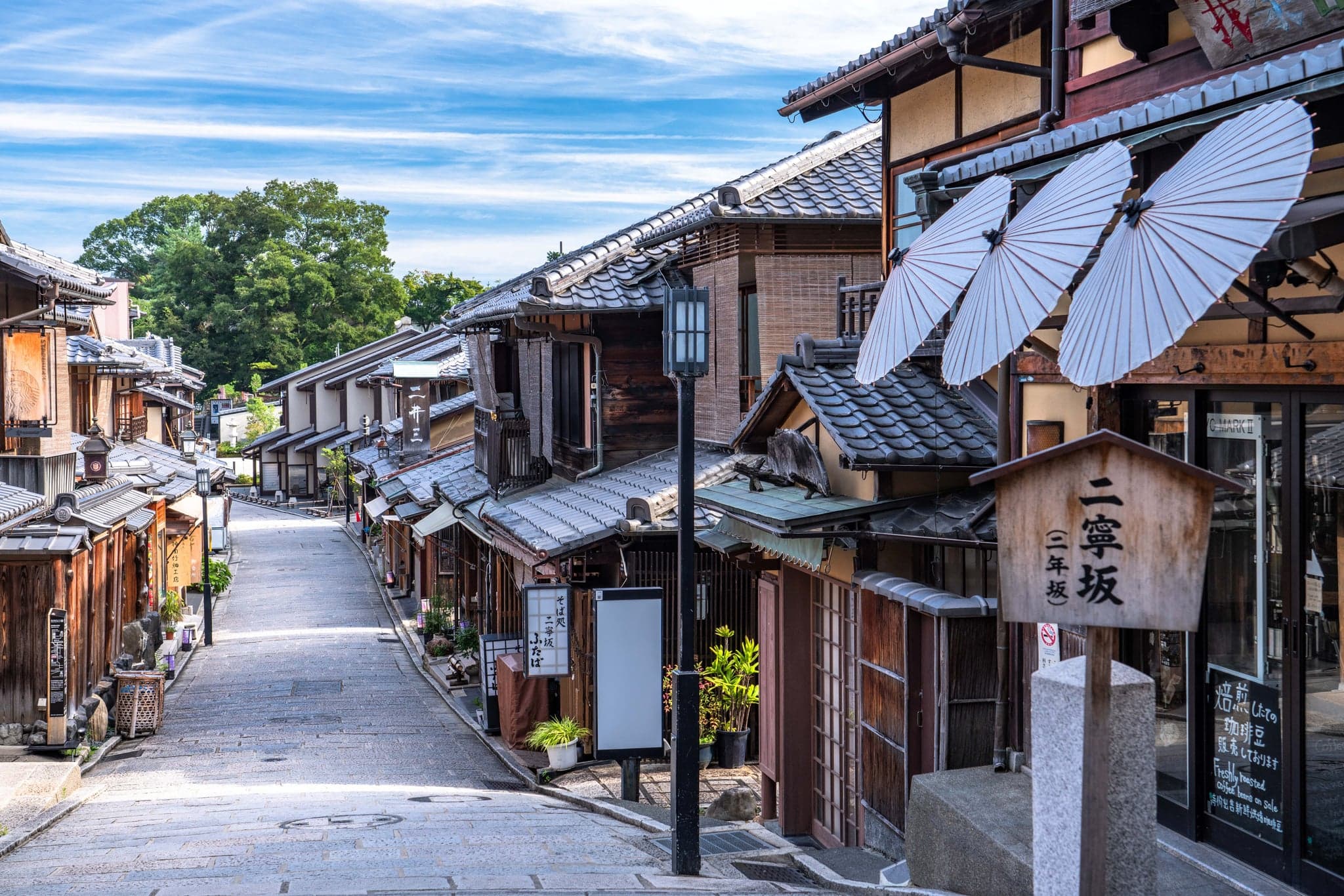
Below the temple, the stone-paved slopes of Sannenzaka and Ninenzaka wind down through preserved wooden townhouses and tea houses toward Kodai-ji Temple and Yasaka Shrine. Kodai-ji was founded by Nene, the widow of the warlord Toyotomi Hideyoshi, and its gardens and bamboo walk are a quieter version of Arashiyama's, a short walk from the crowds. This is the Kyoto of the postcards, and between ten and four it is shoulder to shoulder. Walk it early, or in the evening after the shops close, when it is empty and quietly lit.
Gion, Yasaka Shrine and Pontocho
At the bottom of the slopes, Yasaka Shrine faces down Shijo-dori into Gion, Kyoto's most famous geisha district. The streets of Hanamikoji and the canal-side lanes of Shirakawa are where you may see a geiko or an apprentice geisha (maiko) on her way to an appointment in the early evening. Gion is a working neighborhood, and the rules are the ones the Kyoto City Tourism Association sets out: do not enter private property, photograph only where it is allowed, and do not follow or photograph maiko — the local district council has put up signs banning photography on its private lanes.
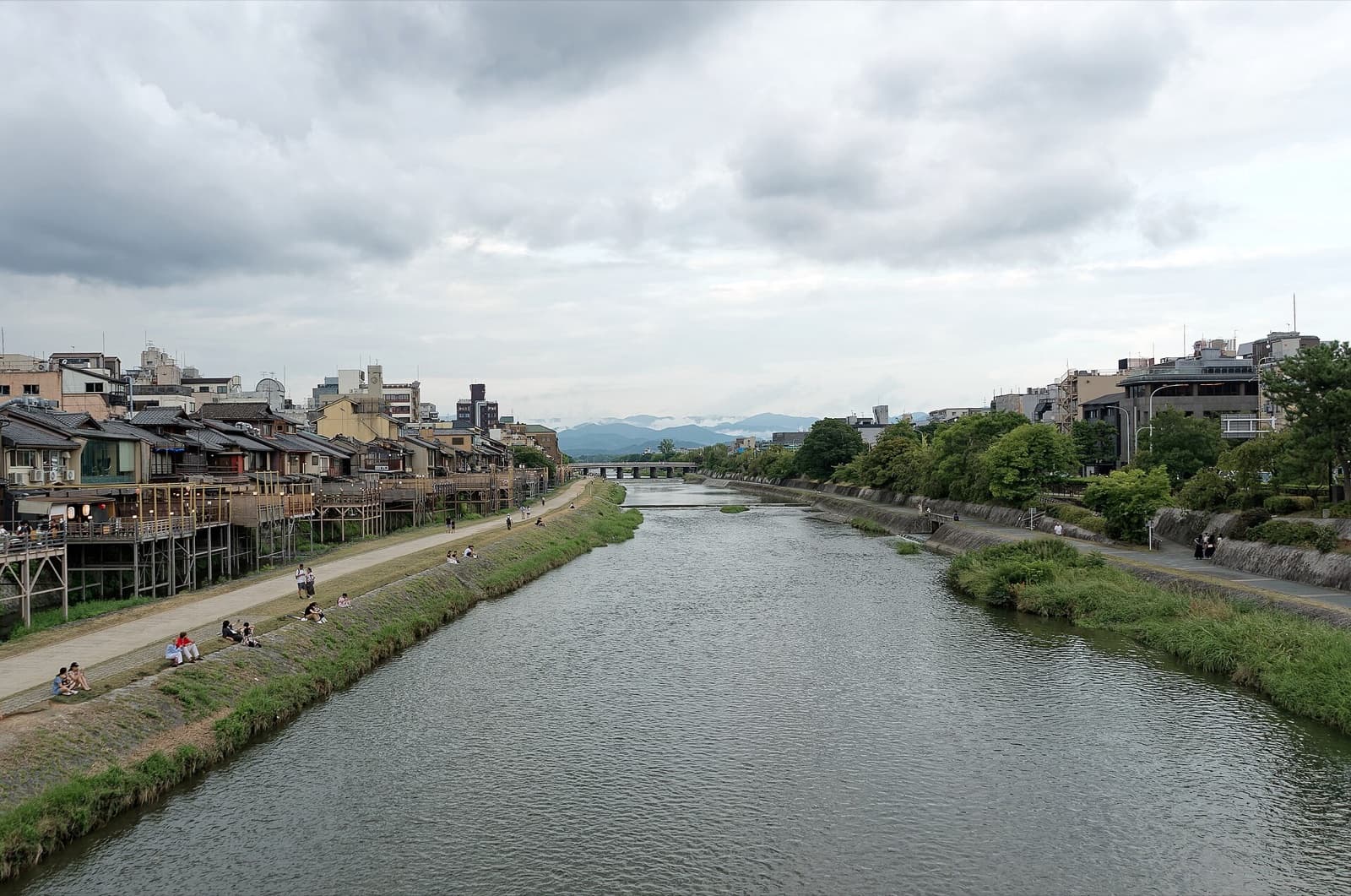
Across the Kamo River, Pontocho is a lantern-lit alley about 500 m long running from Sanjo to Shijo, packed with restaurants, many with riverside terraces in summer. The riverbanks of the Kamo River themselves are where Kyoto goes to sit in the evening: a walk from Shijo up to Sanjo at dusk is one of the best free things to do in Kyoto. The prefecture bans fireworks along the city stretch of the river and barbecues near Demachiyanagi.
The Philosopher's Path and Ginkaku-ji
North of Gion, the Philosopher's Path follows a canal for about 2 km at the foot of the eastern hills, lined with cherry trees that make it one of Kyoto's great cherry blossom walks in early April. At the south end is Nanzen-ji Temple, a great Zen temple complex with a brick aqueduct running through its grounds; at the north end is Ginkaku-ji Temple, the Silver Pavilion — never silvered, but with a raked-sand garden and a moss garden that are among the most beautiful Japanese gardens anywhere. Its admission doubled in April 2026, to ¥1,000; many guides still say ¥500.
Sanjusangen-do
South of Gion, near the National Museum, Sanjusangen-do is one of the most striking interiors in Kyoto: a hall about 120 m long holding 1,001 standing statues of the Buddhist goddess Kannon, rank upon rank in gold. It is ¥600, and a short bus ride from Kyoto Station — the easiest sight to fit into an arrival afternoon.
Kinkaku-ji, Ryoan-ji and Northwest Kyoto
Kinkaku-ji, the Golden Pavilion, is exactly what the photos promise: a three-storey pavilion covered in gold leaf, reflected in its pond. The visit is a fixed one-way path and takes under an hour; admission is ¥500 and it is open 9:00–17:00 every day. It is busiest from late morning, so be at the gate for opening.
Twenty minutes' walk away, Ryoan-ji has the most famous Zen rock garden in the world — fifteen stones in raked white gravel, arranged so that from any seat on the veranda one is always hidden. It is ¥600 and opens at 8:00 from March to November. Between the two, Kitano Tenmangu shrine is known for its plum blossom in February and its flea market on the 25th of each month.
Arashiyama and the Bamboo Grove
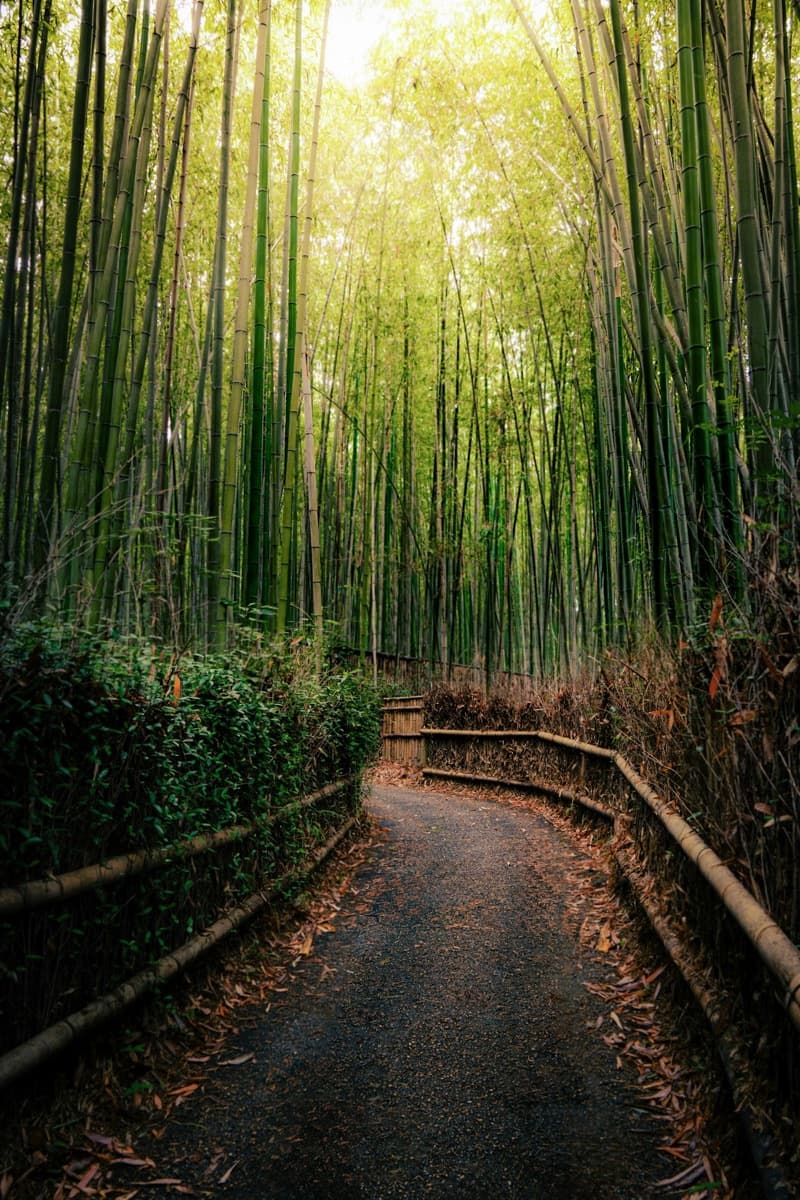
Arashiyama, on the western edge of the city, is Kyoto's riverside resort: the Togetsukyo Bridge across the Katsura River, forested hills behind, and the Arashiyama Bamboo Grove (often called the Arashiyama bamboo forest) — a bamboo path of about 400 m between towering stalks. The truth about the bamboo forest is that it is short and, after about nine, crowded; it is a public road with no gate, so go before eight and it is yours. The city also opens a bamboo walk next to it from 9:00 to 17:00.
Beside the grove, Tenryu-ji Temple is the great Zen temple of Arashiyama, with a 14th-century pond garden that borrows the hills behind as scenery. The garden is ¥500 (the halls ¥300 more), open 8:30–17:00, and from 14 to 30 November 2026 it opens at 7:30 for the autumn leaves. At the top of the grove, the villa garden of Okochi Sanso (9:00–17:00) has views back over the city. Arashiyama is a half-day on its own; our routes usually pair it with Kinkaku-ji on the same side of town.
Nijo Castle, the Imperial Palace and Nishiki Market
Nijo Castle was the Kyoto residence of the Tokugawa shoguns, and its Ninomaru Palace is the finest surviving palace of the samurai age: room after room of painted screens, and the "nightingale floors" that chirp underfoot to announce intruders. It is ¥1,300 including the palace, with entry from 8:45 to 16:00. Photography is not allowed inside the palaces, and the Ninomaru Palace closes on Tuesdays in January, July, August and December.
The Kyoto Imperial Palace, home of the emperors until 1869, is free to visit without booking; entry closes at 15:50 in September and earlier in winter, and it is closed on Mondays. The neighboring Sento Imperial Palace garden needs a reservation or a same-day timed ticket, handed out from 8:40, and is for visitors 18 and over.
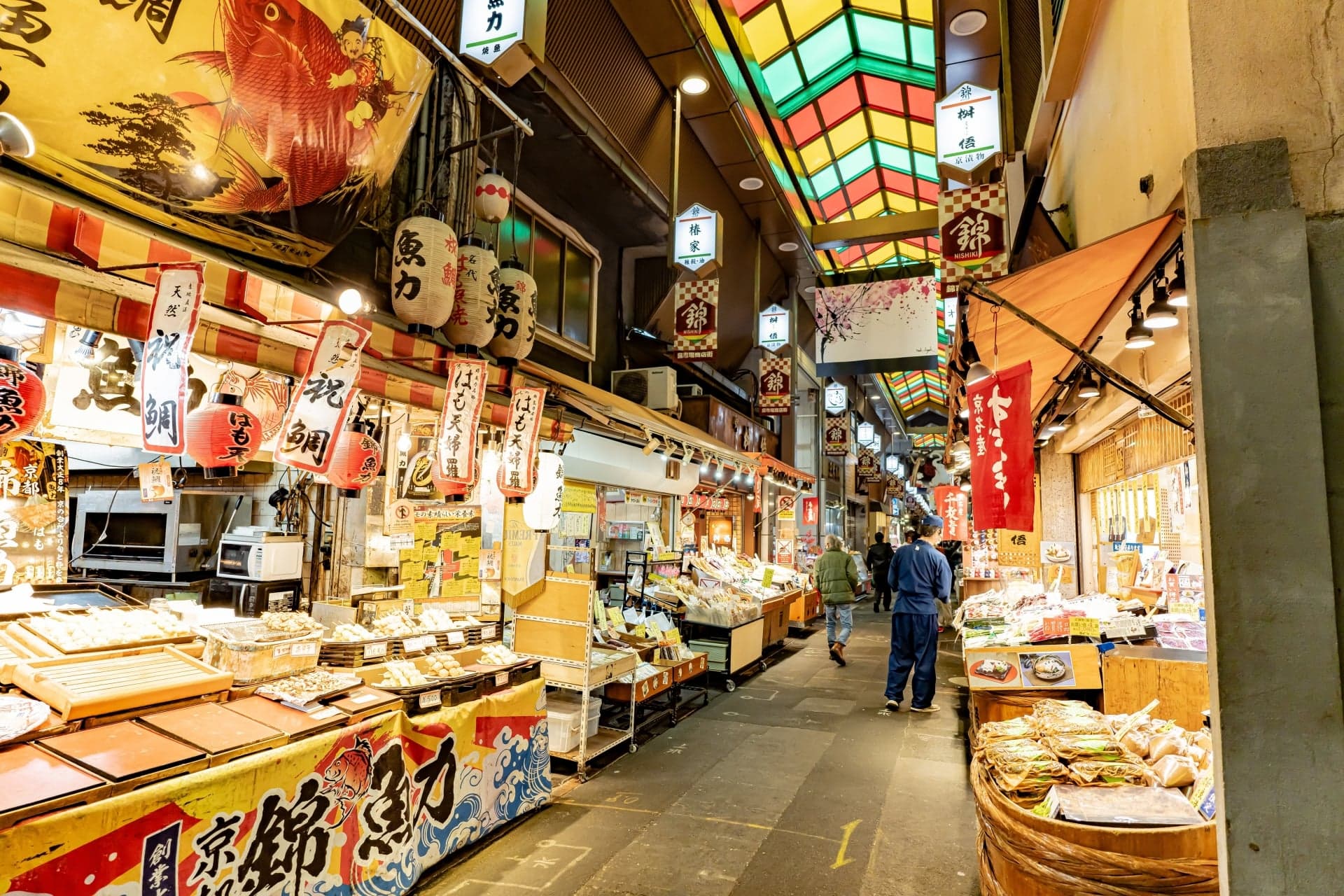
Nishiki Market, a covered street about five blocks long in the heart of downtown Kyoto, has been called Kyoto's kitchen for four centuries: pickles, tofu, sweets, knives, fresh fish and small plates to try. Its association asks you not to eat while walking — buy, then eat at the stall. Each shop keeps its own hours, so go in the late morning when everything is open. The shopping streets of Kawaramachi and Teramachi run off it.
Near Kyoto Station, the five-storey pagoda of To-ji Temple (the tallest wooden pagoda in Japan) and the vast halls of Higashi Hongan-ji Temple, within walking distance of the station, are worth an hour before a train, and Kyoto Tower — officially Nidec Kyoto Tower — has an observation deck right opposite the train station.
Getting Around Kyoto
Kyoto is a bus city with two short subway lines, and the buses are its weak point: the routes that pass the famous sights are full for much of the day. Use trains where they exist — the JR Nara Line for Fushimi Inari, the Keihan Line along the river, the JR Sagano Line or the Randen tram to Arashiyama — and buses for the rest.
| Ticket | Price | Notes |
|---|---|---|
| City bus, single ride | ¥230 adult · ¥120 child | Flat fare in the city area; pay as you get off |
| Subway & Bus 1-Day Pass | ¥1,100 adult · ¥550 child | The only all-day pass that covers buses now; the bus-only pass was withdrawn in 2024 |
| Subway 1-Day Pass | ¥800 adult · ¥400 child | Two lines only; useful for Nijo Castle and downtown |
| Tourist express buses EX100 / EX101 | ¥500 adult · ¥250 child (1-Day Pass accepted) | Weekends and holidays from Kyoto Station: Gojozaka about 10 min, Gion 17 min, Ginkaku-ji 30 min |
Kyoto has announced plans to charge non-residents more than residents on the city buses — around ¥350–400 against ¥200 — during fiscal 2027, subject to national approval. It is not in force yet. Every one of our Kyoto routes includes a prepaid IC card for trains and buses, so you simply tap on and off.
Luggage. Kyoto's buses are no place for a suitcase. On most of our routes the big bags are sent ahead from your Tokyo hotel and are waiting in Kyoto. Traveling independently, the Crosta Kyoto counter under the JR central gate at Kyoto Station delivers to Kyoto hotels for ¥1,500 per item if you drop it off by 14:00 — it arrives after 17:00. Getting here from Tokyo is covered in our Tokyo to Kyoto guide, and choosing a base in our guide to where to stay in Kyoto, which lists the hotels our routes book area by area.
A 3-Day Kyoto Itinerary: The Way Our Routes Do It
Most of our routes give Kyoto three nights, and the 3 days in Kyoto follow the clusters. This is the plan we suggest to travelers; every day works on public transport and a day pass.
- Day 1 (arrival afternoon) — Higashiyama and Gion. Drop your bags and go straight to Sanjusangen-do, then up to Kiyomizu-dera for the late afternoon light, down Sannenzaka and Ninenzaka as the shops close, through Yasaka Shrine into Gion at dusk, and dinner in Pontocho or along the Kamo River.
- Day 2 — the icons. Fushimi Inari at seven, before breakfast crowds; back through Kyoto Station and across to Kinkaku-ji for mid-morning and Ryoan-ji after it; lunch, then Arashiyama in the afternoon — Tenryu-ji before it closes at 17:00, the bamboo grove as the day-trippers leave.
- Day 3 — your choice. Nijo Castle, Nishiki Market and the Imperial Palace; or the Philosopher's Path from Ginkaku-ji to Nanzen-ji; or a day trip — Nara is 45–50 minutes on the JR Miyakoji Rapid (see our Nara day trip guide) and Osaka about 28 minutes on the JR Special Rapid.
With two days, fold Day 3 away and keep Days 1 and 2. With four, do both halves of Day 3, or add Uji, the tea town south of the city with the Phoenix Hall of Byodo-in. A tea ceremony or a kimono rental fits best into the Higashiyama afternoon.
From our Japan travel team
The one change that improves almost every Kyoto stay is starting early. Fushimi Inari at seven, the bamboo grove at eight, Kiyomizu-dera at six if you can face it — the same places are a different experience before the tour groups arrive, and afternoons are for the museums, gardens and markets that handle crowds better. Ask us before you travel and we will suggest the order for your dates.
Day Trips From Kyoto: Nara and Osaka
Nara
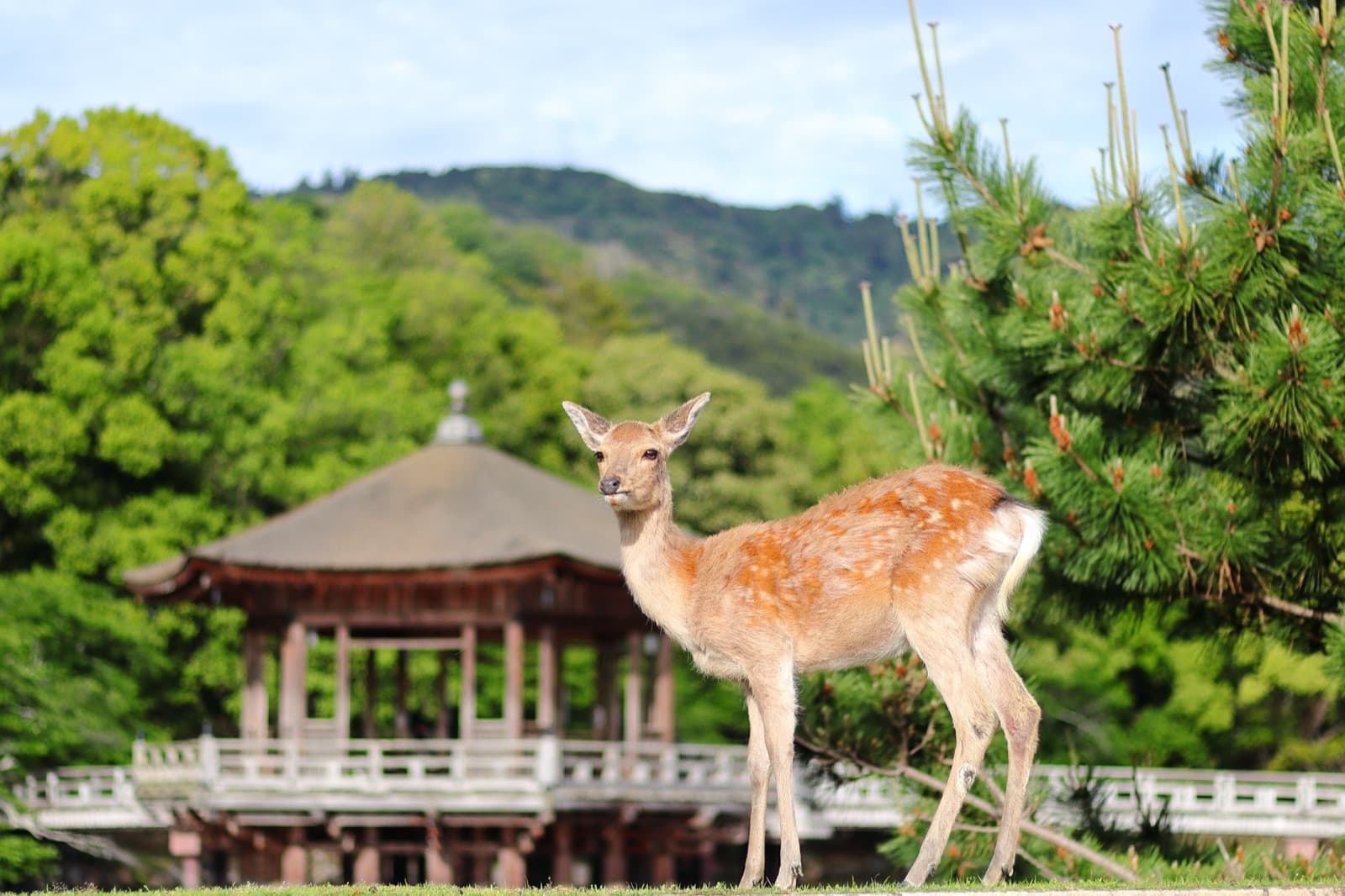
Nara, Japan's capital before Kyoto, is 45–50 minutes away on the JR Miyakoji Rapid and is the best day trip from the city. Almost everything is in or around Nara Park, where some thousand deer wander freely and bow for crackers: Todai-ji Temple and its Great Buddha in one of the largest wooden buildings in the world, the five-storey pagoda of Kofuku-ji Temple, and the lantern-lined paths up to Kasuga Taisha. Half a day covers the park; a full day adds the old Naramachi merchant quarter. Our Nara day trip guide has the details, and one of our twelve-day routes (GR002) gives Nara two nights of its own.
Osaka
Osaka is 28 minutes away on the JR Special Rapid and is everything Kyoto is not: neon, street food and noise. A day is enough for Osaka Castle in the morning and Dotonbori's food stalls at night — see what to do in Osaka. Many of our routes stay in Osaka anyway, in which case keep your Kyoto days for Kyoto.
Kyoto Travel Tips
- Start early. The famous temples open between 6:00 and 9:00, and the first two hours are the best of the day. Afternoons suit gardens, museums and markets.
- Use Google Maps for the buses. It shows Kyoto City Bus routes and times, and which stop to use for each sight.
- Check closing times, not just opening times. Many sights stop admitting visitors 30 minutes or more before closing — Nijo Castle a full hour — and winter hours are shorter.
- Respect the rules in Gion and at Nishiki Market. No entering private lanes, no photographing maiko, no eating while walking.
- Don't try to see all the temples. Pick one or two clusters a day. Kyoto rewards the traveler who leaves time to sit in a garden.
What Kyoto Costs in 2026
The three-day plan above comes to about ¥5,000 per adult in admissions — Kiyomizu-dera ¥500, Kinkaku-ji ¥500, Ryoan-ji ¥600, Tenryu-ji ¥500, Sanjusangen-do ¥600, Nijo Castle ¥1,300 and Ginkaku-ji ¥1,000 — plus ¥1,100 a day if you use the Subway & Bus 1-Day Pass. Fushimi Inari, the bamboo grove, Gion, the Philosopher's Path and the Imperial Palace are free.
The other number to know is Kyoto's accommodation tax, which went up on 1 March 2026. It is charged per person per night on the room-only rate, excluding meals and consumption tax:
| Room rate per person per night | Accommodation tax |
|---|---|
| Under ¥6,000 | ¥200 |
| ¥6,000–19,999 | ¥400 |
| ¥20,000–49,999 | ¥1,000 |
| ¥50,000–99,999 | ¥4,000 |
| ¥100,000 and over | ¥10,000 |
For a trip-level budget — hotels, food and trains together — our Japan trip cost guide has a calculator.
Kyoto by Season
- Cherry blossom season (late March–early April): the Philosopher's Path, Maruyama Park and the Kamo River at their best — and hotel prices at their highest. Our 2027 cherry blossom forecast has the likely dates.
- Summer (June–August): the rainy season, then heat. July is the Gion Matsuri, Kyoto's great festival; Kiyomizu-dera stays open to 18:30.
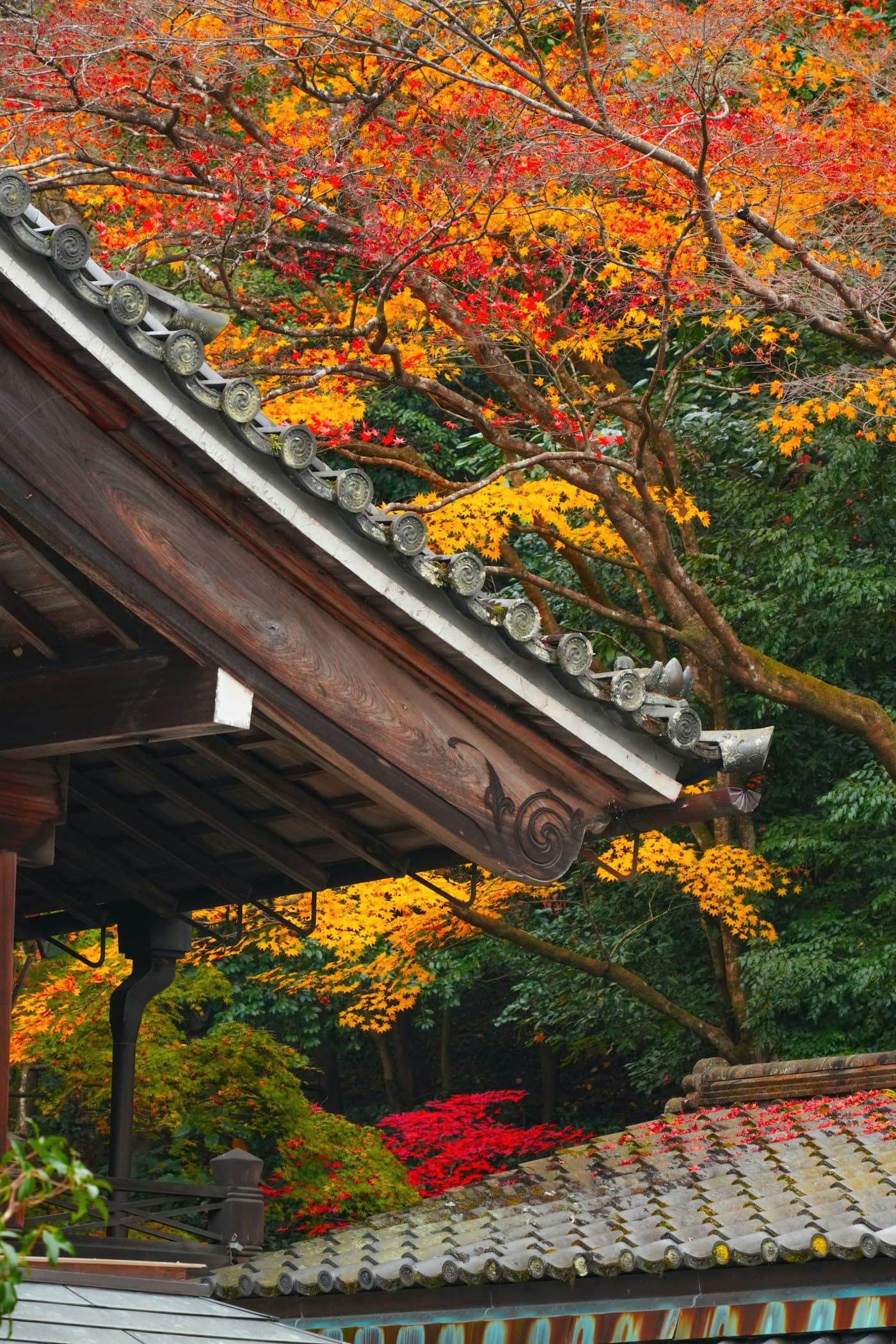
- Autumn (November): the fall foliage season and the busiest weeks of the year, with evening illuminations at the temples. See our Kyoto autumn leaves 2026 guide and the illuminations.
- Winter (December–February): cold, clear and the quietest time for the famous sights; opening hours are shorter, and a dusting of snow on Kinkaku-ji is the photograph of the year.
Self-Guided Routes With Kyoto Nights
Fifty-seven of our routes stay in Kyoto: twenty-two for two nights, thirty-two for three and three for four. These seven cover the range — a Kansai-only week, the budget golden route, the classic twelve days, a family version, a temple-stay route and a luxury trip. Prices are per person from the current price list and move with season and room type. Entrance fees are not included on any route.
| Route | Length | From (per person) | Shape |
|---|---|---|---|
| Kansai Essentials: Osaka, Nara, and Kyoto (KA001) | 6 days | $1,000–1,500 | Osaka, a night in Nara, two nights in Kyoto. Starts and ends in Kansai — the shortest way in. |
| Japan Golden Route Highlights (BF001) | 7 days | $1,200–1,800 | Tokyo, two nights in Kyoto, Osaka. The budget classic. |
| Cultural Essence: Kyoto & Kanazawa Short Escape (GR006) | 12 days | $2,800–4,200 | Tokyo, Osaka, three nights in Kyoto, then Kanazawa. |
| Japan Highlights & World Heritage (GR002) | 12 days | $3,300–4,800 | Tokyo, Takayama, three nights in Kyoto and two in Nara. |
| Family Holidays: Shared Journey Through Japan’s Classics (FG001) | 13 days | $2,700–4,100 | Four nights in a Kyoto apartment hotel with family rooms, plus Hiroshima and Hakone. |
| Koyasan: Sacred Sites and Quiet Beauty (KM003) | 12 days | $3,500–5,200 | Two nights on Koyasan, three in Kyoto, then Takayama. |
| Luxury Journey, Your Way: Hiroshima & Kyoto (LX003) | 10 days | $6,900–8,400 | Two nights in Kyoto and one in Arashiyama, with chartered-taxi days to Mount Hiei and Ohara, and to Uji and Fushimi. |
If you are still deciding how Kyoto fits a whole trip, our 10-day and two-week itineraries show where it sits between Tokyo and the west.
From our Japan travel team
If you are torn between two and three nights in Kyoto, take three. The second full day is the one that lets you see the city at its quiet hours instead of rushing between clusters, and it gives you the option of Nara or Osaka without giving anything up. Tell us how many days you have in total and we will say where the Kyoto nights should go.
FAQ: Things to Do in Kyoto
How many days do you need in Kyoto?
Three nights is right for most travelers: one full day for Fushimi Inari, Kinkaku-ji and Arashiyama, an arrival afternoon for Kiyomizu-dera and Gion, and a third day for Nijo Castle and Nishiki Market or a day trip to Nara or Osaka. Two nights covers the essentials at a rush.
Is Fushimi Inari free, and is it open 24 hours?
Yes to both. The shrine has no admission fee and never closes, so you can visit at dawn or after dark. It is beside JR Inari station, two stops from Kyoto Station. The full walk over Mount Inari is about 4 km and takes around two hours.
How much are Kinkaku-ji and Ginkaku-ji?
Kinkaku-ji, the Golden Pavilion, is ¥500 for adults and open 9:00–17:00 every day. Ginkaku-ji, the Silver Pavilion, rose to ¥1,000 in April 2026 and is open 8:30–17:00 from March to November and 9:00–16:30 in winter.
What is the best way to get around Kyoto?
Trains where they exist — the JR Nara Line to Fushimi Inari, the Keihan Line along the river, the JR Sagano Line or Randen tram to Arashiyama — and city buses for the rest, at ¥230 a ride. The bus-only day pass has been withdrawn; the Subway & Bus 1-Day Pass is ¥1,100.
How much is the Kyoto accommodation tax?
Since 1 March 2026 it is charged per person per night on the room-only rate: ¥200 under ¥6,000, ¥400 from ¥6,000 to ¥19,999, ¥1,000 from ¥20,000 to ¥49,999, ¥4,000 from ¥50,000 to ¥99,999, and ¥10,000 at ¥100,000 and over.
What are the rules in Gion?
Do not enter private property, take photos only where it is allowed, and do not follow or photograph maiko and geiko. The local district council has banned photography on its private lanes, and the Kyoto City Tourism Association asks visitors to respect these rules.
Which of your routes stay in Kyoto?
Fifty-seven of them, most for three nights. The shortest are the 6-day Kansai Essentials (KA001, from $1,000) and the 7-day Japan Golden Route Highlights (BF001, from $1,200); the classic twelve-day routes include Japan Highlights & World Heritage (GR002) and Cultural Essence: Kyoto & Kanazawa (GR006); the luxury option is LX003.
Admission fees and hours were checked against each temple's, shrine's and castle's own site, Kyoto City Bus & Subway, the Imperial Household Agency and Kyoto City on 23 September 2026 (Kiyomizu-dera's fee from Kyoto City's official tourism site). Hotels and prices are from our catalogue on the same date.
Three Nights in Kyoto, Arranged
Our self-guided routes put you in Kyoto with the Shinkansen tickets, the hotel, an IC card for the buses and trains, and your big luggage sent ahead from Tokyo — and our team in Japan on call throughout.