
Takayama, Japan: The Hida Old Town, Its Morning Markets, and How to Fit It Into a Trip
What to see in Takayama’s preserved merchant quarter, when the two festivals fall, how the morning markets and the Jinya actually run, the Shirakawa-go day, and the self-guided routes that spend two nights here — with the hotels they book.
There are several places named Takayama in Japan, and the one travelers mean by "Takayama Japan" is Hida Takayama in Gifu Prefecture — the name on the signs and timetables. It is the town people mean when they say they want to see "old Japan" without the Kyoto crowds: a compact grid of dark-timber merchant houses in a basin in the mountainous Hida region, on the western side of the Japanese Alps, two morning markets that have run for centuries, and a festival so famous that its floats have their own exhibition hall.
It is also the town more of our self-guided routes sleep in than almost any other outside the big three cities — thirty of them stop here, most for two nights, because it is the natural base for the Shirakawa-go day and the hinge between Tokyo and Kyoto through the Alps. This guide covers what is worth your time, what things cost and when they open (from the operators' own pages), how the trains work, and which routes put you here.
Quick Answer: Takayama
- Where: Gifu Prefecture, in the Hida mountains. From Tokyo it is the Shinkansen to Nagoya (about 100 minutes) and the Hida limited express on to Takayama (about two and a half hours); the route most of our trips use.
- How long: two nights. One full day for the old town, the markets and the Jinya; one for Shirakawa-go, 50 minutes away by bus or, on our routes, by chartered taxi.
- The dates that matter: the Takayama Festival on 14–15 April and 9–10 October. Beds for those nights go a year ahead.
- What it costs on the ground: the markets and old town are free; Takayama Jinya is ¥500; Hida Folk Village ¥700.
- On our routes: the 7-day budget trip (BF003, from $1,300) to the 14-day Shirakawa-go route (GR009); two nights here, trains and luggage forwarding included.
From Tokyo
≈ 4 h by rail
Stay
2 nights
Festival
Apr 14–15 · Oct 9–10
Our routes
30 stop here
Why Takayama Is on So Many Itineraries
Three reasons, and they compound. First, the old town is genuinely intact: the Sanmachi Suji streets kept their Edo-period merchant houses, sake breweries and latticed fronts through the twentieth century, so you walk it rather than look at it across a rope. Second, the town is small enough that everything below is on foot from the station in ten to twenty minutes, which makes a two-night stop efficient rather than rushed. Third, geography: Takayama sits between Tokyo and Kyoto on the mountain route, so a stop here costs a trip almost nothing in extra travel, and it puts Shirakawa-go within a morning's reach.
The honest downside is the same as the upside. Because it is on so many itineraries, the old town is busy between about ten and three. The fix is the one the town itself offers: the markets open at seven, and the streets are yours before the day-trip buses arrive.
What to See in Takayama, With Prices and Hours
| Place | Admission | Hours | What it is |
|---|---|---|---|
| Sanmachi Suji (the old town) | Free to walk | Shops roughly 9:00–17:00 | Three parallel streets of Edo-period merchant houses; sake breweries hang a cedar ball over the door |
| Miyagawa Morning Market | Free | Apr–Nov 7:00–noon; Dec–Mar 8:00–noon | About 60 stalls along 350 m of the Miyagawa River bank between the Kajibashi and Yayoibashi bridges |
| Jinya-mae Morning Market | Free | Every morning | In front of the Jinya; more than 300 years old, and only farmers may set up a stall |
| Takayama Jinya | ¥500 (18 and under free) | Apr–Oct 8:45–17:00; Nov–Mar 8:45–16:30; ticket window closes 30 min before; closed Dec 29–Jan 3 | The local government office from which the shogunate ran Hida under its direct control from 1692 — the only one of its kind still standing, and a National Historic Site |
| Hida Folk Village (Hida no Sato) | ¥700 adult / ¥200 child | 8:30–17:00 year round | An open-air museum of more than 30 relocated farmhouses on a hillside — the farm architecture of rural Japan in one walk; 10 min on the Sarubobo bus (¥210) from the station |
The morning markets: start here, and start early
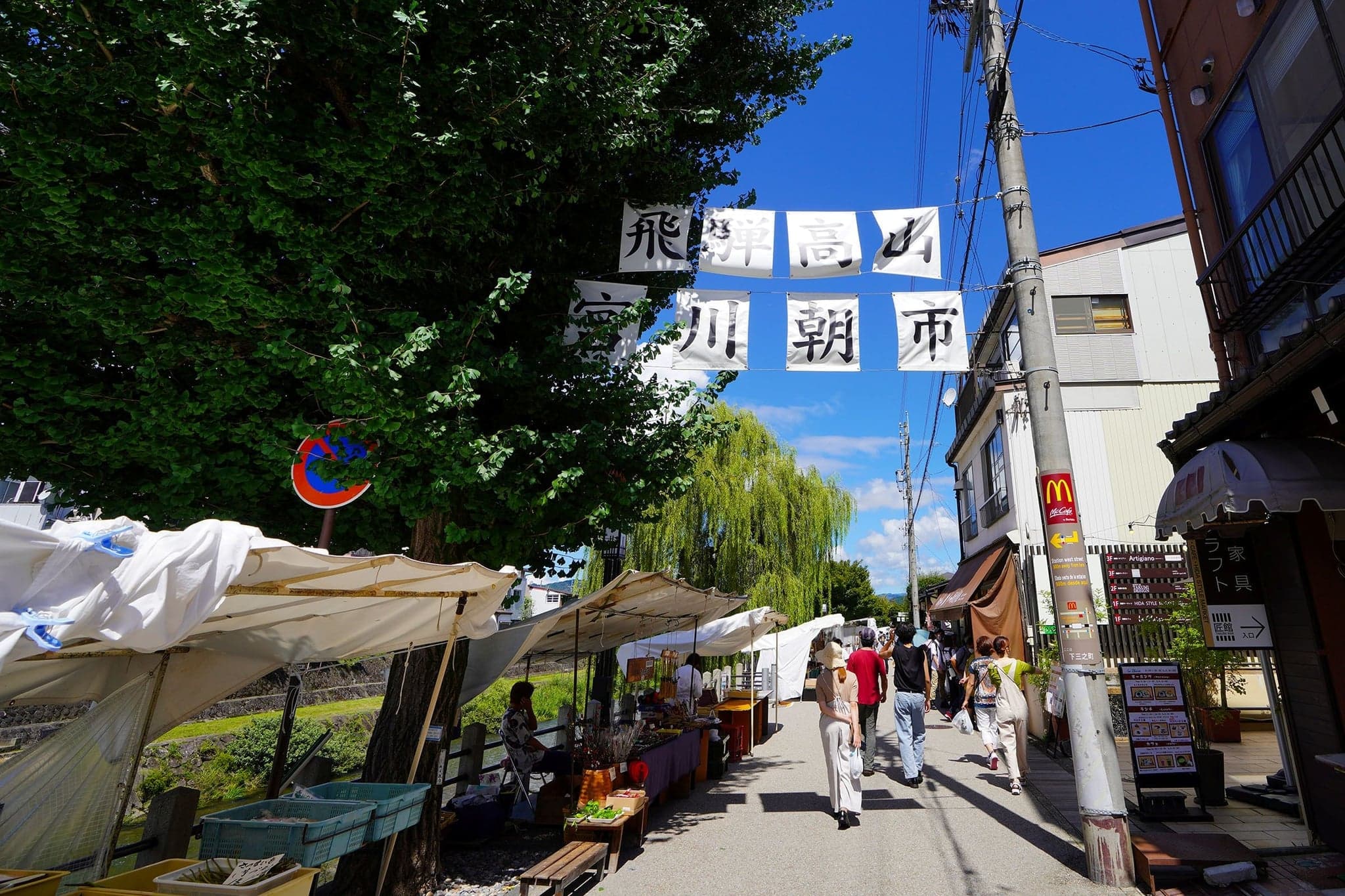
Takayama has two, and they are different. The Miyagawa Morning Market runs along about 350 metres of the Miyagawa riverbank between the Kajibashi and Yayoibashi bridges, with around sixty stalls: vegetables and pickles, local crafts, the town's sweets. From April to November it opens at 7:00 and packs up at noon; from December to March it starts at 8:00. The Jinya-mae Morning Market in front of the Jinya is the older and stricter one — it has run for more than 300 years and only farmers are allowed to set up a stall, so what you see is what was grown around the town.
Sanmachi Suji: the streets themselves
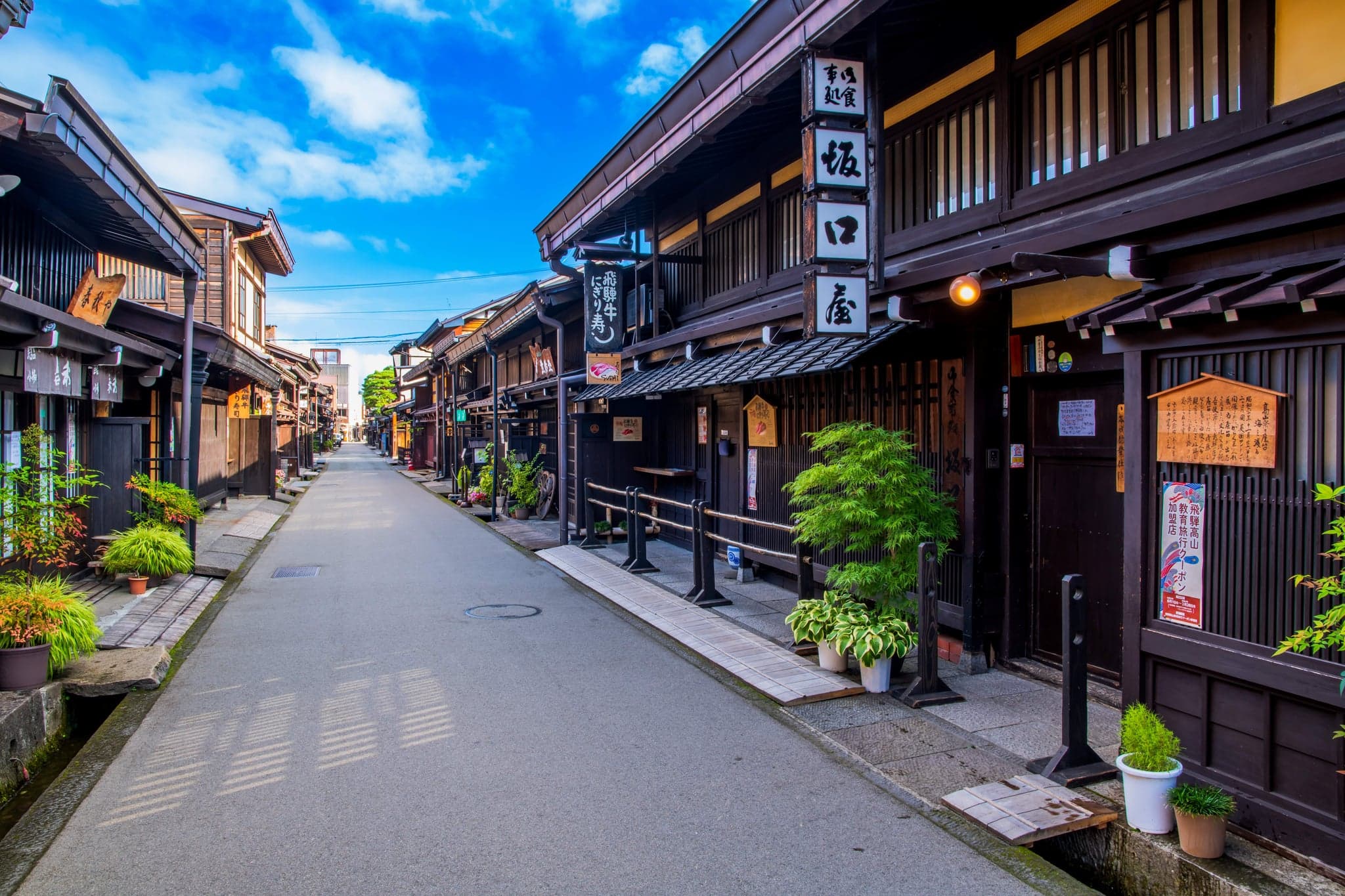
Three parallel lanes — Ichinomachi, Ninomachi and Sannomachi — make up the preserved quarter, and the point is the whole ensemble rather than any one building: low eaves, dark-stained timber, water running in stone channels along the street, and the cedar balls hanging over the doors of the sake breweries, which turn from green to brown as the year's brew ages. Tasting is the natural way to spend the middle of the day here — most breweries pour a sake cup or two for a few hundred yen, and the same streets sell the region's soy sauce, miso and pickled mountain vegetables. Hida beef, grilled on skewers or as sushi at the counter windows, is the street food the town is known for; a sit-down Hida beef dinner is the splurge.

Takayama Jinya
The Jinya was the Hida region's provincial government office under the Tokugawa shogunate, and it is the only one of its kind still standing. Admission is ¥500, free for anyone 18 and under; it opens at 8:45 and closes at 17:00 from April to October and 16:30 from November to March, with the ticket window shutting 30 minutes before. It is closed from 29 December to 3 January. Allow an hour; the tatami offices and the rice storehouse are the interest, and a free English guided tour is available on request.
Hida Folk Village
Hida no Sato is an open-air museum on the hill west of town: more than thirty farmhouses relocated from across the region, including the steep thatched roofs you will see for real in Shirakawa-go the next day. Admission is ¥700 for adults and ¥200 for children, open 8:30–17:00 all year. The Sarubobo bus from the Nohi bus centre beside the station takes ten minutes and costs ¥210. If your route includes Shirakawa-go, this is optional; if it does not, it is the best substitute.
Beyond the three streets: the temple slope, the castle hill and the floats
East of the old town the ground rises into the Higashiyama temple area, where one Buddhist temple after another sits along the hillside with shrines between them, joined by the city into the Higashiyama Walking Course — about 5.5 km and two hours if you complete all of it, from the Higashiyama temples round to Shiroyama Park, the wooded hill where Takayama Castle stood until the castle was pulled down in the 1690s. It is the quiet half of the town, and the place to wander when the streets below fill up after ten and Sanmachi turns touristy; the tourists thin out again after four.
Back in the north of the old town, beside Sakurayama Hachimangu Shrine, the Takayama Festival Floats Exhibition Hall (Takayama Yatai Kaikan) shows four of the autumn festival's eleven yatai at a time, rotating them three times a year in March, July and November. Admission is ¥900 for adults, ¥550 for senior high school students and ¥450 for junior high school students; it opens daily 9:00–17:00 from March to November and 9:00–16:30 from December to February. If your dates miss the festival, this is where you see what the fuss is about.
The Takayama Festival: Two Dates a Year
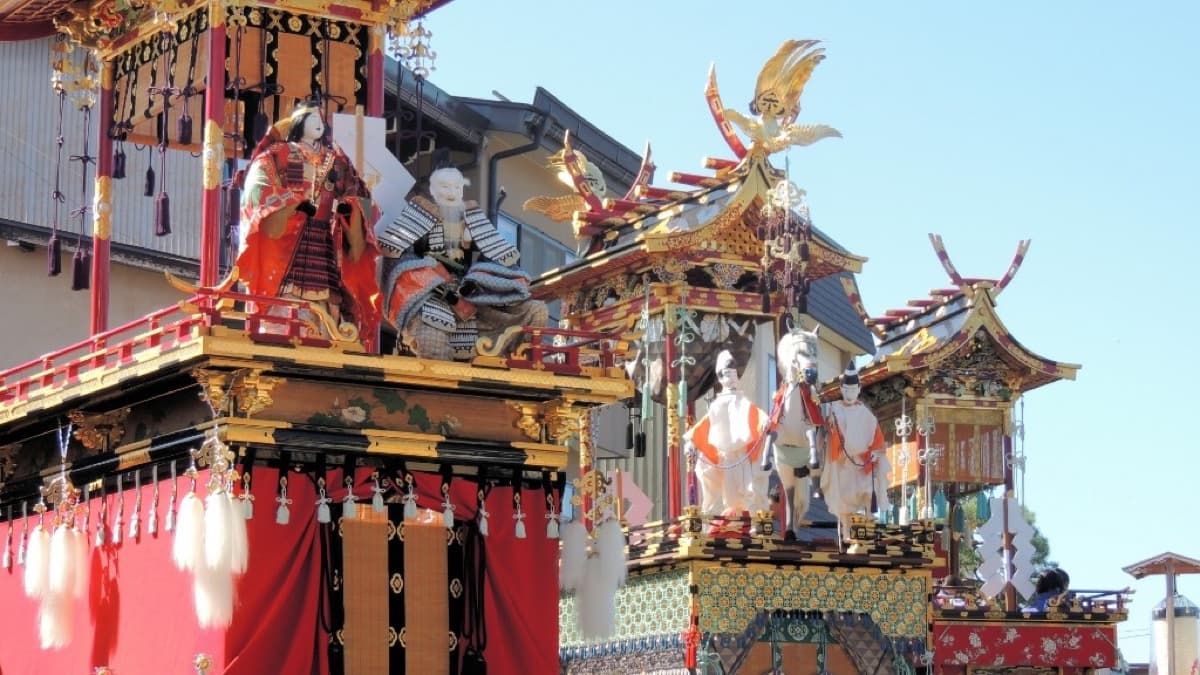
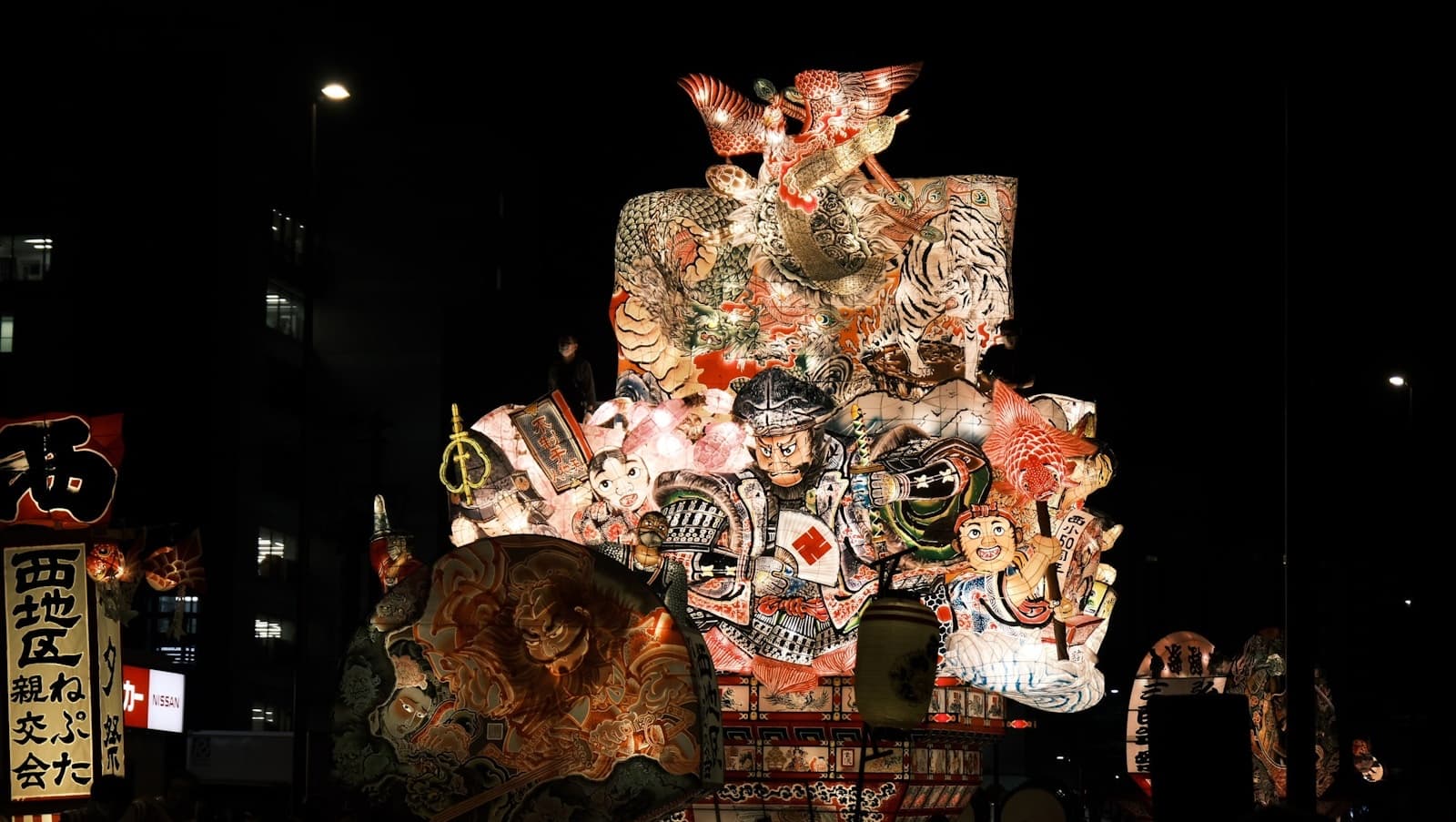
The Takayama Festival is two festivals. The Spring Takayama Festival (Sanno Matsuri), the annual festival of Hie Shrine, is held on 14 and 15 April. The Autumn Takayama Festival (Hachiman Matsuri), for Sakurayama Hachimangu Shrine, is on 9 and 10 October. The dates are fixed, not moved to weekends, and the ornate yatai floats — lacquer, carving, marionettes worked by strings from inside — are paraded through the old town on both.
The practical point is the beds. Takayama is a small town and the festival nights sell out about a year ahead, at festival prices. If you want to be here on those dates, book the hotel before anything else in the trip; if you cannot, the week either side has the same town without the floats and without the premium. Our Takayama Autumn Festival guide covers the October event in detail.
The Shirakawa-go Day
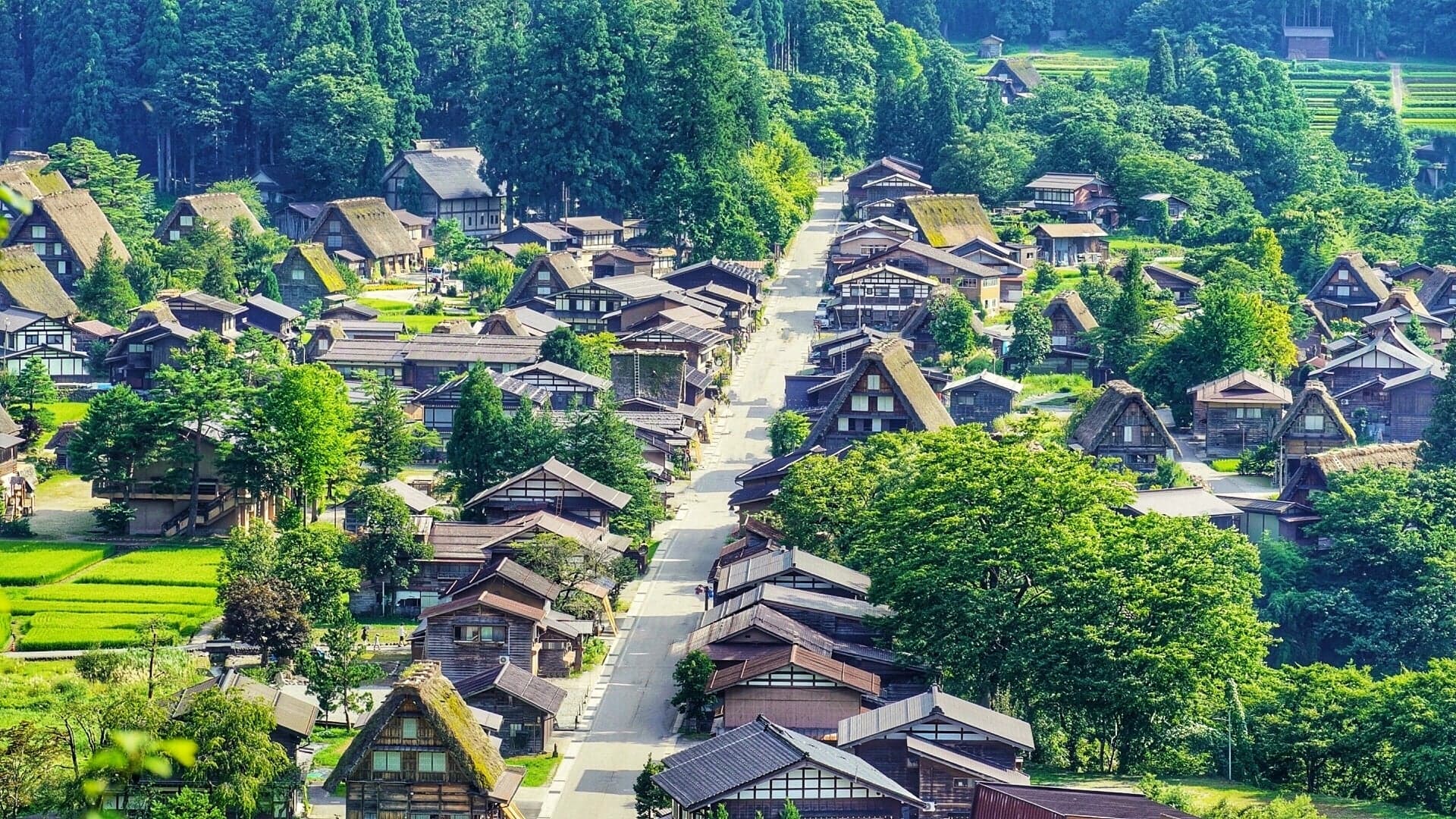
Most visitors come to Takayama at least partly for what is fifty minutes away. Shirakawa-go (also written Shirakawa go or Shirakawago), the UNESCO-listed village of steep-roofed gassho-zukuri farmhouses, is served from the Nohi bus centre beside Takayama Station by buses that take about 50 minutes and continue on to Kanazawa, Toyama and Takaoka — which is why Takayama–Shirakawa-go–Kanazawa is one of the classic self-guided sequences.
On our Takayama routes the Shirakawa-go day is done by chartered taxi rather than the public bus: it is listed in what is included on GR002, GR003, GR009, the Koyasan routes and their deluxe versions. The difference is the timetable — you leave when you have finished breakfast and come back when you have seen enough, rather than around the bus. On the 7-day Historic Towns route (BF003) the Shirakawa-go taxi is optional and not in the price: the Nohi bus from the bus station beside Takayama Station is the way there (about 50 minutes, ¥2,800 one way; reserve a seat ahead in busy seasons) and is an extra cost paid locally — or ask us to add the taxi day when you book. Everything about the village itself, from the viewpoint to the winter light-ups and how the lottery for them works, is in our Shirakawa-go guide.
From our Japan travel team
Two nights in Takayama is the right number for almost everyone: one day for the town and one for Shirakawa-go. If you are arriving from Tokyo, the morning market works best on your second morning, before the taxi to the village — arrive on day one in the early afternoon, walk the old town when it has quietened, and keep the seven o'clock market for the next day. Ask us if you would like the Shirakawa-go day swapped for a slower second day in town instead.
Day Trips From Takayama
Shirakawa-go is the day trip everyone takes, and the previous section is about it. Two other nearby attractions in the Hida area are worth knowing if you have a third day or want a quieter one.
- Hida Furukawa — 20 minutes north by JR train, a small canal town in the countryside north of Takayama, white-walled storehouses and carp-filled channels, that feels like Takayama did before the buses — the hidden gem of the Takayama area. Its own festival, the Furukawa Matsuri, is in April.
- Hirayu Onsen and the Okuhida hot spring villages — about 55 minutes east by Nohi bus, in the mountains toward Kamikochi and the Shinhotaka Ropeway. An open-air bath with the Alps in view is the point. The buses continue to Kamikochi in season and to Matsumoto, and in the warm months shuttle buses climb the Norikura Skyline from Hirayu to about 2,700 m on Mount Norikura (the road is closed in winter). Our Alpine route (NT004) approaches Takayama from this side.
Getting to Takayama
Takayama has no Shinkansen station; the mountains are the point. From Tokyo, the standard route — and the one our routes use — is the Tokaido Shinkansen to Nagoya, about 100 minutes on a Nozomi, then the Limited Express Hida up the Hida river valley, roughly two and a half hours with hourly departures. Change at Nagoya, and sit on the right-hand side going north for the river. The whole journey is around four hours, and the second half is one of the better train rides in the country.
From Kyoto or Osaka the same Hida train applies from Nagoya. From Kanazawa, the highway bus through Shirakawa-go is the direct way, and it is how our Kanazawa & Hida route (GR003) is sequenced: Kanazawa first, Kyoto, then Takayama and Shirakawa-go on the way back toward Tokyo. Leaving Takayama, our routes send the large luggage ahead to the next hotel by courier — the Hida is a comfortable train but not a luggage-friendly one.
If you are travelling on a rail pass rather than one of our routes, Nagoya–Takayama is covered by the Japan Rail Pass; the buses to Shirakawa-go are not. Our guide to whether the JR Pass is worth it works through the mountain route as one of its examples.
When to Go
- April: the spring festival on the 14th and 15th, and cherry blossom along the Miyagawa about the same time. The busiest week of the year and the most expensive.
- May to September: green and cooler than the cities; the mountain basin takes the edge off summer, and the markets are at their fullest. Our Alpine route (NT004, departures June to October) uses this window.
- October and early November: the autumn festival on the 9th and 10th, then the colour, which reaches the town itself in late October and early November — see Japan in October and November.
- December to March: snow. The old town under snow is the postcard, the market moves to an 8:00 start, and Shirakawa-go's light-ups are in January. Our ski-and-cities route (SK010) comes here from Shiga Kogen for exactly this.
Where Our Routes Stay in Takayama
Every route below spends two nights here, and the catalogue names the accommodations for each. All three are located within a walk of the station and the old town, with comfortable rooms of the Western hotel kind — the Tokyu Stay has a hot-spring bath on site; where the catalogue says "or similar", an equivalent property may be substituted for your dates.
| Hotel | Tier | Routes | Nights |
|---|---|---|---|
| Tokyu Stay Hida-Takayama Musubi-no-Yu (or similar) | Standard | GR002, GR004, GR010, KM001, KM002 | 2 nights |
| Mercure Hida Takayama (or similar) | Standard | GR003, GR009, KM003 | 2 nights |
| Hida Hotel Plaza | Deluxe / family | GR102, GR103, GR104, GR109, GR110, KM101, FG002 | 2 nights |
Self-Guided Routes With Takayama Nights
Thirty of our routes stop in Takayama. These seven cover the range — a week on a budget, the classic twelve days, a family version, a winter one and the alpine summer route. Prices are per person from the current price list and move with the departure date; every one includes the hotels, the Shinkansen and limited express legs, luggage forwarding between cities, a transport IC card, travel insurance and 24/7 support while you are in Japan.
| Route | Length | From (per person) | Shape |
|---|---|---|---|
| Historic Towns & Mountain Heritage (BF003) | 7 days | $1,300–1,900 | Tokyo, two nights in Takayama, Kyoto. Shirakawa-go is an optional day here (the taxi is not included). The budget way in. |
| Japan Highlights & World Heritage (GR002) | 12 days | $3,300–4,800 | Tokyo, Takayama with a chartered-taxi day to Shirakawa-go, Kyoto, Nara. |
| Timeless Traditions: Kanazawa & Hida (GR003) | 12 days | $3,200–4,700 | Kanazawa and Kyoto first, then Takayama and Shirakawa-go on the way back to Tokyo. |
| Spirit of Tradition: Shirakawa-go & Cultural Japan (GR009) | 14 days | $4,100–5,900 | Hakone, Takayama, Shirakawa-go, Kyoto, Nara and Miyajima. |
| Family Holidays: Family Journey to Japan’s Classics (FG002) | 13 days | $2,900–4,300 | Family rooms; Takayama and Shirakawa-go between Hakone and Osaka. |
| Japan Winter Journey with Ski and Cities (SK010) | 9 days | $3,100–3,900 | Shiga Kogen skiing, then Takayama and Shirakawa-go under snow. Gear included. |
| Alpine Wonders of Central Japan (NT004) | 12 days | $5,100–6,600 | Fuji, Utsukushigahara and Matsumoto before Takayama. Departures June to October. |
Entrance fees to the Jinya, the Folk Village and the sights in Shirakawa-go are not included on any route; they come to a few thousand yen for a two-day stay and are paid on the spot. If you are building your own itinerary instead, the 10-day Japan itinerary shows where a Takayama stop fits between Tokyo and Kyoto.
From our Japan travel team
If the festival dates are the reason for your trip, tell us before we quote: the hotels for 14–15 April and 9–10 October are booked a year out, and the honest answer some years is that the week before or after is the better trip. For every other week of the year, Takayama is one of the easiest stops in Japan to arrange, and it fits any of the routes above without changing the rest of the trip.
FAQ: Takayama
How many days do you need in Takayama?
Two nights. One full day covers the old town, both morning markets and Takayama Jinya at a comfortable pace, with the Hida Folk Village if you want it; the second day is for Shirakawa-go, 50 minutes away. A single night works only if you skip the village.
How do you get to Takayama from Tokyo?
Take the Tokaido Shinkansen to Nagoya (about 100 minutes on a Nozomi) and change to the Limited Express Hida, which runs roughly hourly and takes about two and a half hours to Takayama. Around four hours in all. This is the routing on our Tokyo–Takayama routes, with the large luggage sent ahead by courier.
When is the Takayama Festival?
Twice a year on fixed dates: the Spring Festival (Sanno Matsuri, for Hie Shrine) on 14–15 April and the Autumn Festival (Hachiman Matsuri, for Sakurayama Hachimangu) on 9–10 October. Hotels for those nights sell out about a year ahead.
What time does the Takayama morning market open?
The Miyagawa Morning Market runs from 7:00 to noon from April to November and from 8:00 to noon from December to March, along the river between the Kajibashi and Yayoibashi bridges. The Jinya-mae market in front of Takayama Jinya is held every morning; only farmers may sell there.
How much is Takayama Jinya, and when is it open?
¥500 for adults and free for anyone 18 or under. It opens at 8:45 and closes at 17:00 from April to October and at 16:30 from November to March; the ticket window closes 30 minutes before closing. It is closed from 29 December to 3 January.
Is Shirakawa-go a day trip from Takayama?
Yes — it is the standard one. Buses from the Nohi bus centre beside Takayama Station take about 50 minutes; on our routes the day is done by chartered taxi so you are not tied to the timetable. The buses continue to Kanazawa, which is why Takayama–Shirakawa-go–Kanazawa is a classic sequence.
Which of your routes stay in Takayama?
Thirty of them. The shortest is the 7-day Historic Towns & Mountain Heritage (BF003, from $1,300); the classic twelve-day routes are Japan Highlights & World Heritage (GR002) and Timeless Traditions: Kanazawa & Hida (GR003); there are family, winter-ski and alpine-summer versions. All spend two nights in Takayama at a named hotel near the station and the old town.
Admission fees, opening hours and festival dates were checked against the Takayama city tourism site, Takayama Jinya and Hida Folk Village on 22 September 2026. Hotels and prices are from our catalogue on the same date.
Two Nights in the Hida Mountains, Arranged
Our self-guided routes put you in Takayama for two nights with the Shinkansen and Hida limited express tickets, the hotel, a chartered taxi for the Shirakawa-go day and your luggage sent ahead — and our team in Japan on call throughout.
Related Articles
Shirakawago (Shirakawa-go) Guide: Getting There, the 2027 Winter Light-Up and What to See
14 min read
Takayama Autumn Festival 2026: A Self-Guided Traveler's Playbook
11 min read
Kanazawa Autumn Leaves 2026: The Self-Guided Traveler's Guide to Kenrokuen and Beyond
12 min read