
Things to Do in Nara, Japan: A Practical Guide for Self-Guided Travelers
The best things to do in Nara with fees and hours checked in October 2026 — Todai-ji, the deer, Kasuga Taisha, Kofuku-ji, Isuien and Yoshikien, Naramachi — what's closed (the National Museum's sculpture hall, Kofuku-ji's pagoda), which train to take, a one-day plan and the routes that stay here.
Nara is the easiest high-reward day out in Kansai. It's under an hour by train from Kyoto or Osaka. In an area you can cover on foot, it packs a 15-meter bronze Buddha, more than a thousand free-roaming sika deer, a shrine lined with around 3,000 lanterns and some of Japan's calmest gardens.
So, the short answer. The best things to do in Nara are seeing the Great Buddha at Todai-ji, walking through Nara Park with the deer, following the lantern-lined approach to Kasuga Taisha Shrine, visiting the golden halls of Kofuku-ji and slowing down in Isuien or Yoshikien Garden. If you can, add a fresh mochi on Higashimuki Shopping Street and an hour in the old Naramachi lanes. That's a full, very satisfying day.
The rest of this guide covers how to pull it off: which train line to take, which station to aim for, what each sight costs (checked on each site's own pages on October 2, 2026), what's closed right now and where a Nara day trip itinerary usually goes wrong.
Quick Answer: Things to Do in Nara
- How long: one full day covers the main sights; two days adds the gardens, Naramachi and Yakushi-ji.
- Don't miss: Todai-ji's Great Buddha (¥800), the deer in Nara Park, Kasuga Taisha's lantern paths (free) and Yoshikien Garden (free).
- Closed right now: the Nara National Museum's Buddhist sculpture hall (until about spring 2028); Kofuku-ji's five-story pagoda is hidden inside a restoration enclosure until 2034.
- Getting there: about 35–40 minutes from Osaka-Namba by Kintetsu (¥680); 47 minutes from Kyoto by JR (¥720).
- Book ahead: only the Shoso-in exhibition (Oct 24–Nov 9, 2026), which sells timed tickets.
Time
1 full day
Great Buddha
¥800
City bus
¥250 a ride
Our routes
9 stay here
Is Nara Worth Visiting? The Short Answer
Yes. And not only for the deer.
Nara was the country's first permanent capital, Heijo-kyo, from 710 to 784, and that short period left an outsized mark. Eight sites in and around the city are inscribed together on the UNESCO World Heritage list as the "Historic Monuments of Ancient Nara." They include Todai-ji, Kofuku-ji, Kasuga Taisha, the Kasugayama Primeval Forest and Gango-ji.
Nara is so good on a first trip to Japan because it's compact. In Kyoto you can lose half a day on buses. In Nara, most of the main sights sit in or around one large park. You can walk between some of the country's most important UNESCO World Heritage sites in ten or fifteen minutes, with deer wandering across the path.
Already seen plenty of temples? Honestly, it's still worth it. The Great Buddha Hall is on a different scale from anything in Kyoto, and the city's historical importance shows in the cultural treasures kept in its temples and museums.
Getting to Nara: Which Train Line to Take
Nara has two main stations run by two different railway companies, and the station you arrive at shapes your whole day. From either city it's a short train ride, and IC cards such as ICOCA or Suica work on both railways and on the local buses. Our Nara day trip guide compares every train in detail; here's the short version.
From Osaka: Kintetsu Nara Line or JR Yamatoji Line
From Osaka-Namba, the Kintetsu Nara Line runs direct to Kintetsu Nara Station. Rapid express trains take about 35–40 minutes and cost ¥680 one way, with no seat reservation needed. If you're staying around Namba or Dotonbori, this is the route I usually suggest.
From Osaka Station or Tennoji, the JR Yamatoji Line runs to JR Nara Station. The Yamatoji Rapid takes about 50 minutes from Osaka Station and the fare is ¥840. If you're traveling on a Japan Rail Pass, use this route, because the pass doesn't cover Kintetsu trains.
From Kyoto: JR Nara Line or Kintetsu
From Kyoto Station, the Miyakoji Rapid on the JR Nara Line reaches JR Nara Station in about 47 minutes for ¥720. Simple and cheap.
Kintetsu also runs from its own platforms at Kyoto Station to Kintetsu Nara. Express trains need no extra ticket (¥760), though some involve a change at Yamato-Saidaiji and take around 50 minutes. Limited express trains take about 35 minutes and add a ¥520 reserved-seat charge. The sightseeing limited express "Aoniyoshi" is a fun splurge if its timetable suits you.
Kintetsu Nara Station vs JR Nara Station (Plus Luggage Storage)
If you have the choice, pick Kintetsu Nara Station. It sits at the western edge of Nara Park. Kofuku-ji is about five minutes away on foot and Todai-ji roughly 15 to 20. JR Nara Station is farther west, around 15 minutes' walk from Kintetsu Nara. Add that walk at both ends of the day, or take a city bus toward the park (¥250 a ride).
On luggage storage: both stations have coin lockers, but the large ones fill up early on weekends and holidays. If you're switching hotels on the day of your trip to Nara, send big bags ahead with a delivery service or arrive before mid-morning. Don't drag a suitcase through the park. The paths are gravel, and the deer will check out anything that rustles.
The Best Things to Do in Nara
Here are the main things to see in Nara, roughly in order of importance. A few hidden gems at the end fit easily into any day. Almost everything is within walking distance of Kintetsu Nara, and that easy access is a big part of the appeal.
1. Todai-ji Temple and the Great Buddha Hall
Todai-ji Temple (also written Todaiji Temple) is the reason most people make the trip to Nara. The name means "Great Eastern Temple." It was founded in the 8th century as the head of a nationwide network of provincial temples. Its Great Buddha Hall, the Daibutsuden, houses a seated bronze Buddha statue about 15 meters tall. The current hall was rebuilt in 1709 and is smaller than the original, but it's still one of the largest wooden buildings in the world.
According to the temple's official site, the Great Buddha Hall opens 7:30–17:30 from April to October and 8:00–17:00 from November to March. Adult admission is ¥800 (cash only), or ¥1,200 for a combined ticket with the Todai-ji Museum. The rest of the temple grounds are free to walk.
Go early. Once school groups and coaches arrive mid-morning, the approach fills fast. If you enter Todai-ji right at opening, you get a few minutes with the Buddha in near-silence, and that's worth the early alarm.
Walking through the Grand South Gate. Before you pay for anything, stop at Nandaimon, the Grand South Gate. It's free and it's enormous. Inside stand two fierce wooden guardian kings, each over 8 meters tall, carved in the early 1200s by a workshop led by the sculptors Unkei and Kaikei. Most people walk straight through. Don't. Step back and look up.
Squeezing through the Buddha's nostril. Behind the Great Buddha, one of the hall's wooden pillars has a rectangular hole cut through its base. The hole is said to be the same size as one of the Buddha's nostrils, and crawling through is supposed to bring good luck. Kids slide through in seconds. Adults with broad shoulders? Less so. There's often a queue, so be honest about whether you'll fit before you join it.
Nigatsu-do: the quiet side of Todai-ji. Most groups leave after the Great Buddha. Instead, walk ten minutes uphill to the east to Nigatsu-do, a hall set into the hillside with a wide wooden veranda overlooking the city. It's open around the clock and free, and the view in late-afternoon light is hard to beat. Next door, Hokke-do (Sangatsu-do) is one of the oldest buildings in the complex and holds a remarkable group of statues (¥800). It closes at 16:00, earlier than the main hall.
2. Nara Park: Meeting the Sika Deer
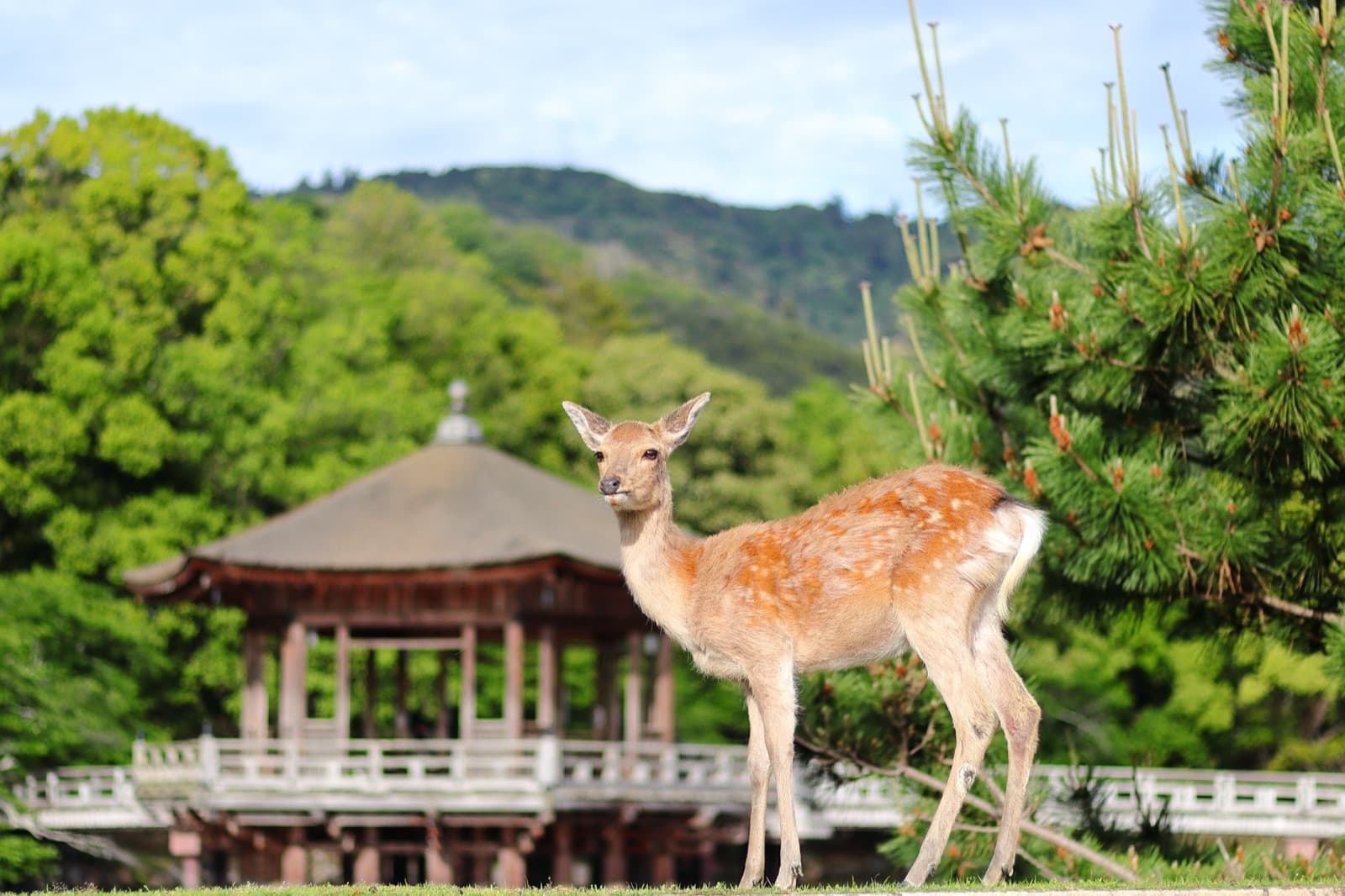
Strictly speaking, Nara Park isn't a deer park. It's a big public park of lawns, woods and temples. But everyone calls it the Nara Deer Park, and you'll see why within thirty seconds. More than a thousand sika deer live here. They're protected as a national natural monument and, by local tradition, seen as messengers of the gods of Kasuga Taisha.
They are also wild animals. That's the bit people forget.
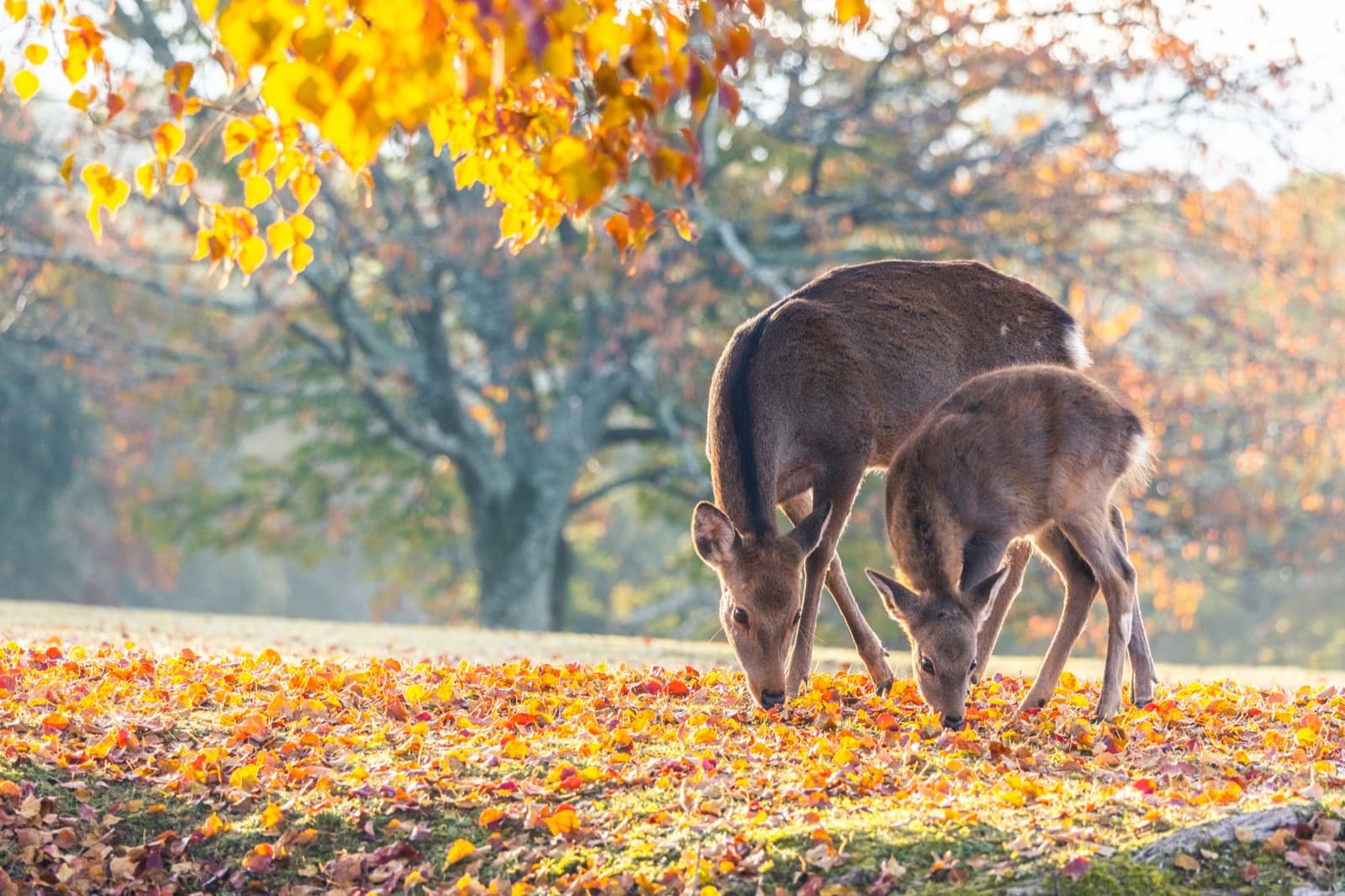
Deer crackers, bowing deer and the rules nobody reads. Stalls around Nara Park sell shika senbei, the official deer crackers, made from rice bran and wheat flour; a bundle costs a couple of hundred yen. Many deer have learned to bow before they're fed, and the bowing deer really are as charming as the videos. They've also learned that anyone holding crackers is fair game. A few habits save a lot of grief:
- Feed only the official crackers, never your own snacks.
- Hand crackers out quickly, then show both empty hands. The deer get it.
- Keep tickets, paper and plastic bags zipped away. Deer eat paper.
- Never tease a deer by holding food out of reach. That's how people get nipped or butted.
Treat them as you'd treat any large animal on a country walk. Do that, and the deer will probably be the part of the day you talk about most.
From our Japan travel team
Nara's deer are protected wild animals, and injuries to visitors have risen as their numbers have grown. Buy crackers only when you're ready to hand them all out, keep tickets and snacks zipped inside your bag, give stags plenty of room in autumn and keep clear of mothers with young fawns in early summer. If you're traveling with small children and would like tips on a calmer route through the park, feel free to get in touch.
3. Kasuga Taisha Shrine and Its 3,000 Lanterns
From the deer lawns, follow the forested approach east to Kasuga Taisha Shrine. Founded in 768, it's Nara's most important Shinto shrine, and the walk in is half the experience. Around 2,000 moss-covered stone lanterns, donated by worshippers over the centuries, line the paths, and roughly 1,000 bronze lanterns hang from the eaves of the vermilion buildings.
Every lantern is lit twice a year for the Mantoro festivals: on Setsubun in early February (February 3 in 2027) and on August 14–15. On a normal day, Fujinami-no-ya, a small darkened hall hung with glowing bronze lanterns, gives you a taste of those nights.
Behind the shrine is the Kasugayama Primeval Forest, also part of the UNESCO World Heritage listing. Hunting and logging have been banned there for more than a thousand years, and the forest is as much a reason to come as the shrine itself.
Kasuga Taisha practicalities. The shrine's own English website spells the name "Kasugataisha," which is worth knowing when you search for official information. The outer grounds, the main worship hall and the lantern paths are free. The special worship area around the main sanctuary costs ¥700 and is open 9:00–16:00, though it closes on many days and mornings for ceremonies. Beside the approach, the Manyo Botanical Garden (¥700) grows around 300 plants mentioned in the Manyoshu, Japan's oldest anthology of poetry. Kasuga Taisha is roughly a 25-minute walk from Kintetsu Nara and farther from JR; city buses run toward the shrine if your legs are fading.
4. Kofuku-ji Temple: The Golden Halls (and a Hidden Pagoda)
Kofuku-ji Temple is the first big sight you reach walking from Kintetsu Nara, and its grounds are open and free to wander. It was the family temple of the powerful Fujiwara clan.
A heads-up: the famous five-story pagoda, at about 50 meters one of the tallest wooden pagodas in Japan, is under a major restoration due to finish in March 2034. Since March 2025 it has been completely enclosed inside a steel shelter about 60 meters tall, so you won't see it at all.
What you can see is still excellent. The Central Golden Hall was rebuilt and reopened in 2018 after some three centuries without a proper main hall. The Eastern Golden Hall is a National Treasure rebuilt in 1415. Each costs ¥500. The National Treasure Museum (¥900) holds the slender, three-faced Ashura statue, one of the best-loved pieces of Japanese Buddhist art in the country. A ticket for all three is ¥1,600; prices rose in April 2025, so older guides quote less.
5. Isuien Garden: Borrowed Views
Isuien Garden sits just off the main road between Kofuku-ji and Todai-ji. In my experience, it's the best place in Nara to sit and do nothing for twenty minutes. It's two gardens joined together: a front garden from the 17th century and a larger rear garden from the Meiji era. The rear garden "borrows" the view beyond its walls, so the roof of Todai-ji's Grand South Gate and the slopes of Mount Wakakusa look like part of the design.
Admission is ¥1,200 for adults and includes the small Neiraku Museum of Chinese, Korean and Japanese ceramics. The garden is open 9:30 to 16:30 (last entry 16:00; to 17:00 in April and May) and is closed on Tuesdays, so plan your day around that. Several tea house buildings sit around the ponds. The garden rewards a slow lap rather than a quick photo.
6. Yoshikien Garden: Pond, Moss and Tea Ceremony Garden
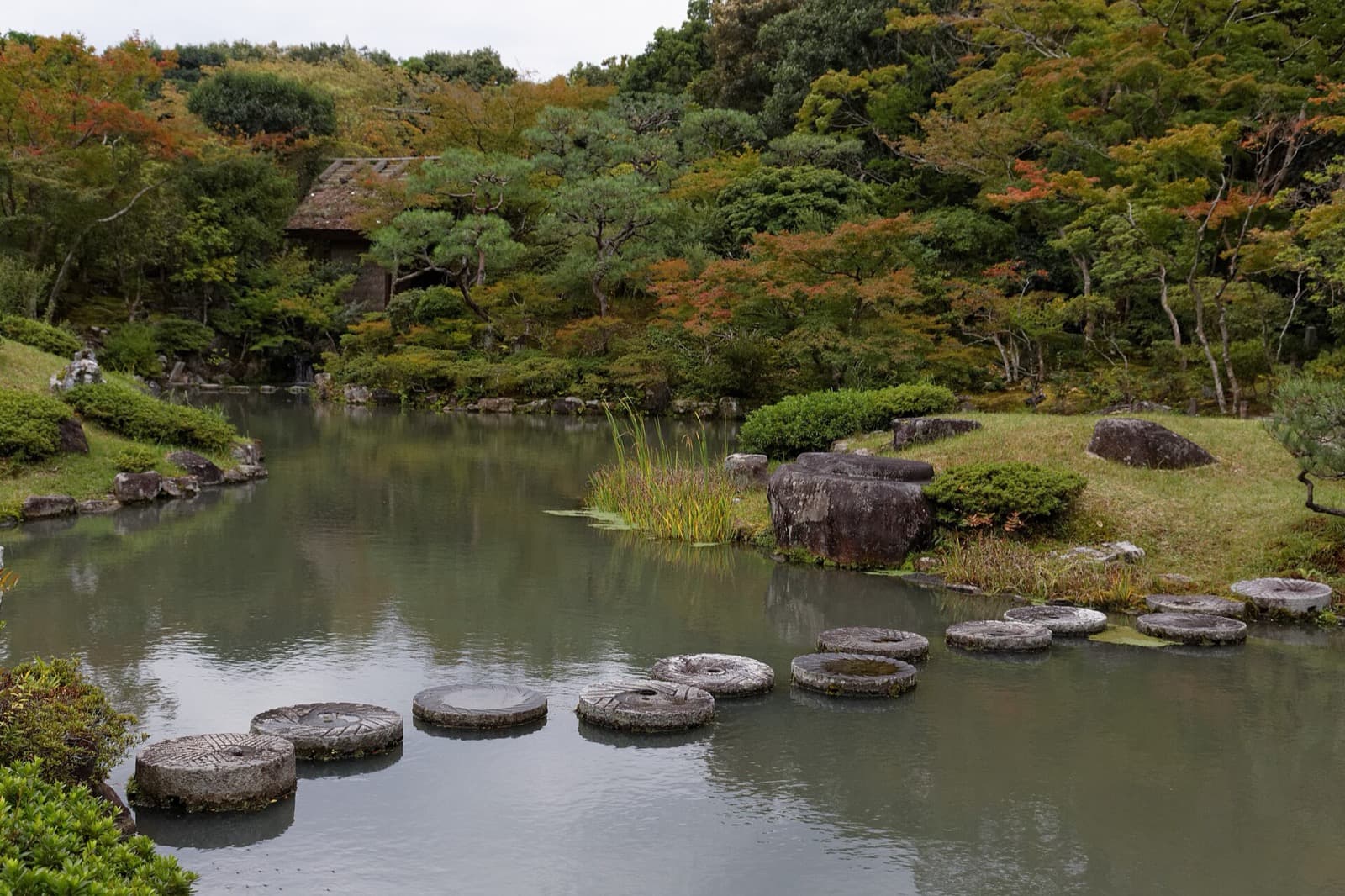
Right next door, Yoshikien Garden is the better-value pick and one of Nara's best hidden gems. It stands on the site of a former Kofuku-ji sub-temple and has three distinct sections: a pond garden, a moss garden that glows green after rain, and a tea ceremony garden around a small tea house.
Entry is free for everyone, and has been since April 2020; older guides still say it's free only for overseas visitors with a passport. It's open 9:00 to 17:00, with last entry at 16:30. See both gardens if you can. Isuien is the grand showpiece. Yoshikien is the quiet one you'll still be thinking about when you plan your next trip.
7. Nara National Museum: Check What's Open
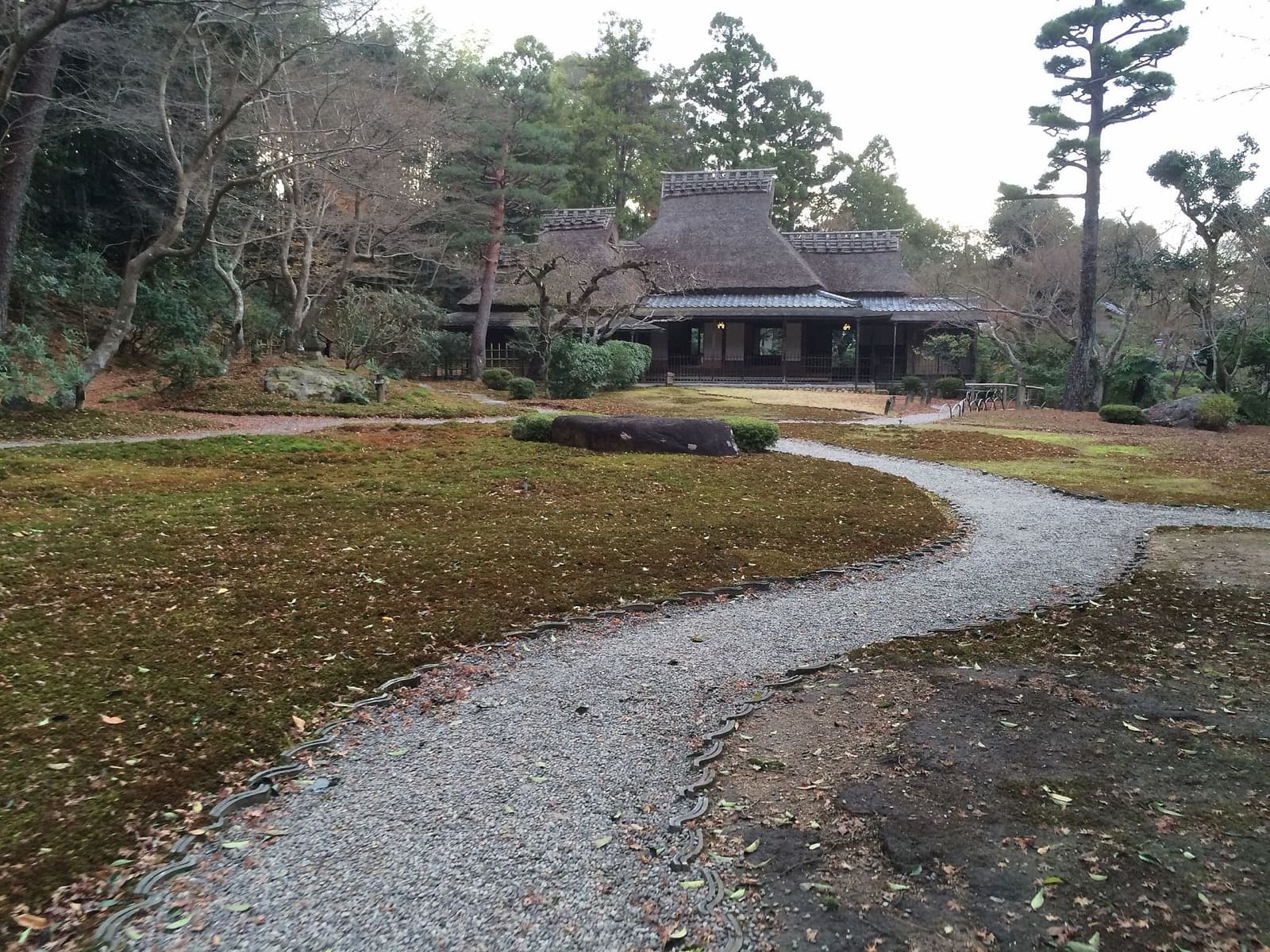
If the Great Buddha leaves you wanting to understand what you've just seen, the Nara National Museum is the place — but check what's open. Its Nara Buddhist Sculpture Hall, the Meiji-era building that usually displays around 100 statues, closed for renovation on September 14, 2026 and is due to reopen around spring 2028. Until then a selection of statues is shown, free, in the Bronze Gallery. The museum is closed on Mondays, or on the following weekday when Monday is a public holiday.
Is your trip to Nara in late October or early November? The 78th Annual Exhibition of Shoso-in Treasures runs from October 24 to November 9, 2026 (8:00–18:00, to 20:00 on Fridays, weekends and holidays). It shows objects from the imperial Shoso-in storehouse that are rarely on display outside this short window. Tickets are ¥2,000 and are sold in advance for a set date and time; walk-up tickets are sold at the museum only when slots remain.
8. Higashimuki Shopping Street and the Mochi Pounding Shop
Walk out of Kintetsu Nara Station and you're practically in Higashimuki Shopping Street, a covered arcade of snack stands, souvenir shops and cafés. It isn't ancient and doesn't pretend to be. It's just handy for lunch, coffee or a dry wander when it's pouring.
A few minutes south, near where the arcade meets Sanjo-dori, is Nakatanidou, the mochi pounding shop you've probably seen online. Staff pound yomogi (mugwort) mochi at high speed with wooden mallets, shouting out the rhythm, several times a day. The result is a warm, soft green mochi filled with red bean paste and dusted with roasted soybean flour, for a couple of hundred yen. Honestly, one of the best snacks in Nara.
9. Naramachi and Gango-ji
South of Sanjo-dori, the lanes of Naramachi keep the low wooden townhouses of Nara's old merchant quarter. It's quieter than the park and full of small cafés and craft shops. Naramachi Koshi-no-Ie, a restored townhouse you can walk through, is free (closed Mondays). This is where Nara feels like a lived-in town rather than a heritage site.
In the middle sits Gango-ji (¥700), another of the city's UNESCO World Heritage sites. Its roots go back to Asuka-dera, regarded as Japan's first full-scale Buddhist temple. Some of the roof tiles on its main hall have been in use since the Asuka period, about 1,400 years ago, and are often described as Japan's oldest roof tiles.
10. Mount Wakakusa and Other Hidden Gems
Mount Wakakusa rises behind Todai-ji and Kasuga Taisha. It's a grassy hill about 342 meters high, with one of the best views over the city. Its slopes are open to walkers from the third Saturday of March to the second Sunday of December (¥150, 9:00–17:00). On the fourth Saturday of January — January 23 in 2027 — the grass on the whole hill is set alight in the Yamayaki festival, with fireworks beforehand.
If you have more time, head to Yakushi-ji and Toshodai-ji (¥1,000 each) in the Nishinokyo area, west of the center. Both are UNESCO World Heritage sites and a short train ride away on Kintetsu via Yamato-Saidaiji. They're far calmer than Todai-ji, with a lovely mix of natural beauty and old wooden halls. Horyu-ji, the world's oldest surviving wooden buildings, is a half day on its own by JR (¥2,000 since March 2025).
Nara Fees and Opening Hours (2026)
Adult prices, from each site's own pages on October 2, 2026. Temples take cash only.
| Place | Admission | Hours |
|---|---|---|
| Todai-ji Great Buddha Hall | ¥800 (elementary ¥400); ¥1,200 with the Todai-ji Museum | 7:30–17:30 Apr–Oct; 8:00–17:00 Nov–Mar |
| Todai-ji Hokke-do and Kaidan-do | ¥800 each | 8:30–16:00 |
| Kasuga Taisha | Grounds free; inner sanctuary special worship ¥700 | Gates 6:30–17:30 Mar–Oct, 7:00–17:00 Nov–Feb; special worship 9:00–16:00 |
| Manyo Botanical Garden (Kasuga Taisha) | ¥700 | 9:00–16:30; closed Tuesdays except April and May |
| Kofuku-ji | Grounds free; National Treasure Museum ¥900; Central and Eastern Golden Halls ¥500 each; all three ¥1,600 | 9:00–17:00, daily; cash only |
| Isuien Garden | ¥1,200 (includes the Neiraku Museum) | 9:30–16:30 (to 17:00 in April–May); closed Tuesdays |
| Yoshikien Garden | Free | 9:00–17:00; closed Feb 24–28 |
| Nara National Museum | Bronze Gallery free (Buddhist sculpture hall closed until about spring 2028) | 9:30–17:00; closed Mondays |
| Mount Wakakusa | ¥150 | Third Saturday of March to second Sunday of December, 9:00–17:00 |
| Gango-ji | ¥700 (¥800 during the autumn exhibition) | 9:00–17:00 |
| Yakushi-ji / Toshodai-ji | ¥1,000 each | 9:00–17:00 / 8:30–17:00 |
| Horyu-ji | ¥2,000 (since March 2025) | 8:00–17:00; to 16:30 from Nov 4 to Feb 21 |
Perfect Nara Day Trip: A Realistic One-Day Itinerary
Here's the Nara day trip itinerary I'd give a friend. It assumes you reach Kintetsu Nara around 8:45. It keeps backtracking to a minimum and puts the most crowded sight first.
Morning: straight to Todai-ji before the crowds. Walk east from Kintetsu Nara through the Kofuku-ji temple grounds and into Nara Park. You'll meet your first deer within minutes, but hold off on crackers for now. Aim to reach the Grand South Gate by about 9:15. Give the Great Buddha Hall an hour or so, then climb to Nigatsu-do for the view.
Midday: the forest path to Kasuga Taisha. From Nigatsu-do, follow the hillside paths south past the foot of Mount Wakakusa toward Kasuga Taisha. It's the most atmospheric stretch of the day: quiet woods, stone lanterns and the odd deer napping in the moss. Allow 45 to 60 minutes at the shrine. Then walk back west along the main approach and stop for lunch near the park or in Naramachi.
Afternoon: gardens, Kofuku-ji and mochi on the way out. After lunch, choose the two gardens or the museum's free Bronze Gallery; you probably won't have time to do the gardens and much else well. Then stop at Kofuku-ji's golden halls before they close, grab a mochi at Nakatanidou and browse Higashimuki. Catch your train around 17:00 to 17:30, tired and happy.
That's the perfect Nara day trip for most people: the big sights, the deer, one garden or museum, and no rushing.
Only have half a day? Keep it tight. Start at Kintetsu Nara, then see Kofuku-ji, the deer in Nara Park and Todai-ji. Walk back through Higashimuki for mochi. That's about four hours at a relaxed pace. You'll miss Kasuga Taisha and the gardens, but a short day done well beats a rushed long one.
From our Japan travel team
Nara is under an hour by train from both Kyoto and Osaka, so it fits into a single free day without changing hotels. Several of our self-guided tours include free days in Kyoto or Osaka, so if your dates line up you can slot Nara in without rebuilding the itinerary, and the IC card we load for you works on both JR and Kintetsu trains. Just ask and we'll help you fit it into your route.
Best Time to Visit Nara: Seasons Compared
Nara is good year-round. Each season changes the crowds, the light and what's on.
Spring: cherry blossoms and Golden Week crowds. Nara Park's cherry blossoms usually peak from late March into early April. Blossoms, deer and temple roofs together are hard to beat. Crowds peak too. Golden Week, from late April into early May, brings heavy domestic travel, so book early if you plan to visit Nara then. Our spring in Japan guide has the wider picture.
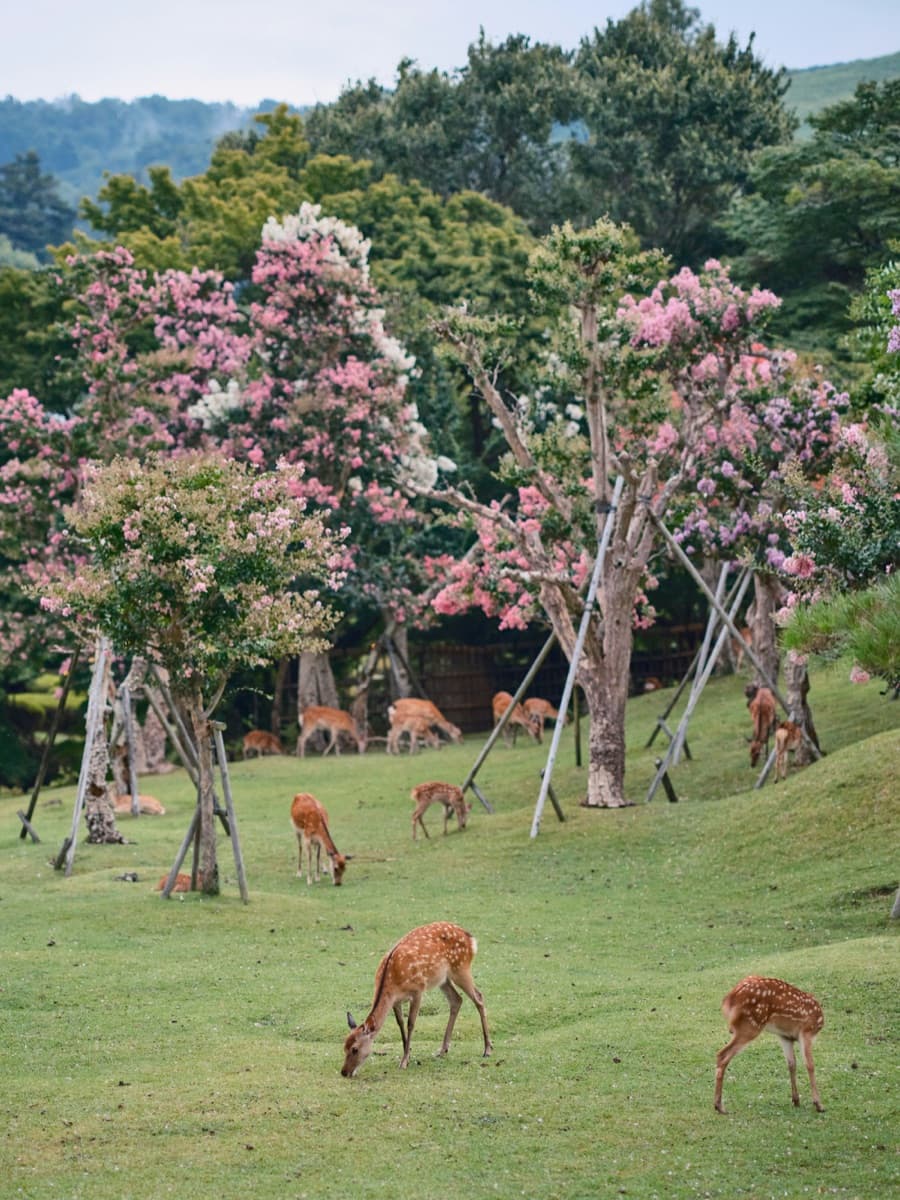
Summer and the rainy season. The rainy season usually runs from early June to mid-July. That's no reason to stay away: the moss at Yoshikien looks its best and crowds thin out. The summer months that follow are hot and humid, so start early and save indoor stops for midday. On August 14–15, the Mantoro festival lights up Kasuga Taisha's lanterns.
Autumn: Shoso-in treasures and fall colors. Autumn is arguably the best season for a Nara day trip. Leaves in the park and gardens usually change color from mid to late November. The Shoso-in exhibition runs October 24 to November 9 in 2026, and the deer antler-cutting ceremony has moved from October to November (November 7–8 in 2026). Expect busier weekends and grumpier stags. More in our Nara autumn leaves guide.
Winter: fewer crowds and a burning mountain. A winter trip to Nara means fewer crowds and crisp, clear days. The Yamayaki is on the fourth Saturday of January, and the Mantoro lanterns are lit again on Setsubun in early February. From March 1 to 14, the Omizutori fire rituals light up Nigatsu-do every evening. Wear layers for the open lawns.
Common Mistakes First-Time Visitors Make in Nara
Most mistakes in a Nara day come down to timing.
- Giving it half a day by default. If you add Nara onto a Kyoto morning, you'll see Todai-ji but miss the shrine, the gardens and the quiet corners that make it special.
- Arriving at the wrong station without a plan. JR Nara is fine, but add 15 minutes each way or work out your bus first.
- Ignoring closing days. The Nara National Museum closes on Mondays and Isuien on Tuesdays.
- Reaching Kasuga Taisha too late. The special worship area closes at 16:00.
- Expecting the classic pagoda shot. Kofuku-ji's pagoda is enclosed until 2034, and the museum's sculpture hall is closed until about spring 2028.
- Treating Nara as "just deer and a Buddha." For its size, Nara offers more to see than almost anywhere in Kansai. Give it time.
Useful Tools and Resources for Planning Your Trip to Nara
- Official websites. Todai-ji, Kasugataisha and the Nara National Museum publish English pages with current hours and fees, and the Nara City Tourism Association site covers events.
- A route planner. Google Maps is fine for walking. For trains, apps such as NAVITIME or Jorudan's Japan Transit Planner show departures, platforms and fares.
- An IC card. ICOCA, Suica and similar cards work on JR, Kintetsu and Nara's buses.
- Cash. Temple ticket windows, cracker stalls and food stands mostly take cash.
How to Fit Nara Into Your Japan Itinerary: Day Trip or Overnight?
Most people visit Nara as a day trip from Kyoto or Osaka, and it works well: trains are cheap, the sights are close together and you sleep in the same hotel. If your Japan itinerary includes a free day in either city, you can use the plan above as it is. Outside special exhibitions and peak holidays, a Nara day needs very little booked in advance.
An overnight stay is worth considering, though. Once the day-trippers leave, the park goes quiet, and early the next morning you can have the deer and the temple approaches almost to yourself. Staying overnight also splits Osaka and Kyoto neatly. These are the hotels our routes use in Nara:
| Hotel | Routes | Notes |
|---|---|---|
| Manyo Wakakusa no Yado Mikasa | GR002, GR102, GR009, GR109, KM001, KM101, TP001, TP101 | Hillside inn below Mount Wakakusa; dinner included on GR009, KM001 and TP001; free shuttle to the hotel on GR002 and KM001 |
| Hotel Nikko Nara (or similar) | KA001 | Beside JR Nara Station; one night between Osaka and Kyoto |
Interested in a tour? Click a route code above, or search for it in the top-right Search bar.
Self-Guided Routes With Nara Nights
Our 6-day Kansai Essentials route works the short way: you start in Osaka, spend a night in Nara to explore Todai-ji, Kasuga Taisha, Kofuku-ji and the park at your own pace, then go on to Kyoto. For a longer first trip, the 12-day Japan Highlights & World Heritage route gives Nara two nights between Kyoto and Tokyo. Prices are per person and move with the departure date and room type.
| Route | Length | From (USD per person) | Shape |
|---|---|---|---|
| Kansai Essentials: Osaka, Nara, and Kyoto (KA001) | 6 days | $1,000–1,500 | Starts in Osaka, one night in Nara, then Kyoto — the short Kansai loop. |
| Japan Highlights & World Heritage (GR002) | 12 days | $3,300–4,800 | Tokyo, Takayama, Shirakawa-go and Kyoto, then two nights in Nara. |
| Spirit of Tradition: Shirakawa-go & Cultural Japan (GR009) | 14 days | $4,100–5,900 | Hakone, Takayama and Kyoto, a night in Nara with dinner, then on to Hiroshima. |
| From Sacred Mountains to Coastal Calm (KM001) | 15 days | $4,400–6,300 | Ise-Shima, a night in Nara with dinner, then Koyasan. |
| 15 Days Through Japan & Universal City (TP001) | 15 days | $4,000–5,900 | A night in Nara before the theme park hotel in Osaka. |
| Hidden Cherry Blossom & Ancient Temple of Nara (KR003) | 4 days | $900–1,500 | April 8–17, 2027 only: from an Osaka base, Takami-no-Sato’s weeping cherries, Hasedera and a free day in Nara. |
Interested in a tour? Click the route name above, or search by route code in the top-right Search bar.
All of these are self-guided, so there's no guide walking you around, though a local guide can be arranged as an option if you'd like one for Nara. You get your trip documents and a loaded IC card that works on JR, Kintetsu and Nara's buses, and our team in Japan is on call 24/7. After that, the day is yours.
Interested in adding Nara to your Japan trip? Get in touch through Plan My Trip on our self-guided tours site, and we'll suggest the tours that best fit your dates and plans.
FAQ: Things to Do in Nara
How many days do you need in Nara, Japan?
One full day is enough for the main sights. With two days you can add Naramachi, both gardens, Mount Wakakusa and the Yakushi-ji and Toshodai-ji temples without rushing.
Is it better to visit Nara from Kyoto or Osaka?
Both are easy. From Kyoto, the JR Nara Line takes about 47 minutes (¥720) and Kintetsu 35 to 50 minutes. From Osaka-Namba, the Kintetsu Nara Line reaches Kintetsu Nara Station, the closest station to the park, in about 35 to 40 minutes (¥680). The same plan works from either city.
How much does a day in Nara cost?
Regular trains from Kyoto or Osaka cost under ¥1,000 each way. Entry to the Great Buddha Hall at Todai-ji is ¥800, Kasuga Taisha's inner sanctuary ¥700, Kofuku-ji's golden halls ¥500 each and Isuien ¥1,200; Yoshikien and the lantern paths are free. Add food and deer crackers on top.
Are the deer in Nara dangerous?
Mostly they're calm, but they're wild animals and can bite, kick or headbutt, especially stags in autumn. Feed them only the official crackers, don't tease them, and give them space.
Fees, hours and rules were checked on October 2, 2026 against Todai-ji, Kasuga Taisha, Kofuku-ji, the Nara National Museum, Isuien, Nara Prefecture (Yoshikien and Mount Wakakusa), Nara City, Gango-ji, Yakushi-ji, Toshodai-ji, Horyu-ji, Kintetsu, JR West and Nara Kotsu. Routes and prices are from our catalogue on the same date.
Related Articles
Nara Day Trip: How to Get There from Kyoto or Osaka — Trains, Times and Fares
13 min read
Things to Do in Kyoto: What’s Worth It, What It Costs, and a 3-Day Kyoto Itinerary
13 min read
Things to Do in Osaka: Dotonbori, Osaka Castle, Street Food and a 3-Day Osaka Itinerary
13 min read