Japan Itinerary With Kids: A Two-Week Family Plan, Day by Day, Plus 7- and 10-Day Versions
A realistic two-week Japan itinerary with kids — Tokyo, Hakone and Mount Fuji, Kyoto, Nara and Osaka — with children's fares and prices checked this month, the bookings that sell out, bullet-train rules for strollers and suitcases, and shorter versions for one week or ten days.
A good Japan itinerary with kids depends mostly on what you leave out. For a first family trip, this plan works for most families: five nights in Tokyo, two in Hakone near Mount Fuji, four in Kyoto with a day trip to Nara, and two in Osaka, then home from Kansai. That's two weeks and four hotels, with only three days spent properly moving between cities.
This shape keeps the train rides short, puts theme parks within reach at both ends of the trip, and leaves real downtime between the big days — which matters more than any single sight. Honestly, traveling Japan with kids is easier than most parents expect — it's one of the easiest countries in the world for families: public toilets are spotless, trains leave on the minute, and there are convenience stores on nearly every corner. It's also dense and busy, and very easy to overdo.
Below you'll find the day-by-day plan and how each stop works for little kids and older kids, the children's fares and prices we checked on each operator's own site on September 28, 2026, the bullet train rules for strollers and suitcases, what to feed everyone, and the mistakes families keep making. Prices change, so confirm anything you need to book before you pay.
Quick Answer: A Japan Itinerary With Kids
- Best length: two weeks — Tokyo 5 nights, Hakone 2, Kyoto 4, Osaka 2. With one week, do Tokyo and Kyoto only.
- Kids on trains: under 6 ride free (up to two per paying passenger); ages 6–11 pay half; 12 and over pay the adult fare.
- Book early: Disney and Universal Studios Japan tickets (about two months ahead), the Ghibli Museum (the 10th of the month before) and the Pokémon Cafe (a month at a time — November dates open on October 1 at 6 p.m. Japan time).
- Luggage: send the big suitcases ahead. On the Tokaido Shinkansen, bags over 160 cm in total need a reserved oversized-baggage seat, or you pay ¥1,000 on board.
- Our family routes: 9 or 13 days with four-bed or connecting rooms, from $2,000 per person.
Length
Two weeks
Hotels
Four
Under 6
Ride free
Ages 6–11
Half fare
The Short Version: A Japan Itinerary With Kids That Actually Works
If you only read one section, make it this one. The plan covers Japan's main cities without rushing any of them.
- Days 1–5, Tokyo: Ueno Park and the zoo, a street food breakfast at the old Tsukiji fish market, Harajuku and Shibuya, and one theme park day.
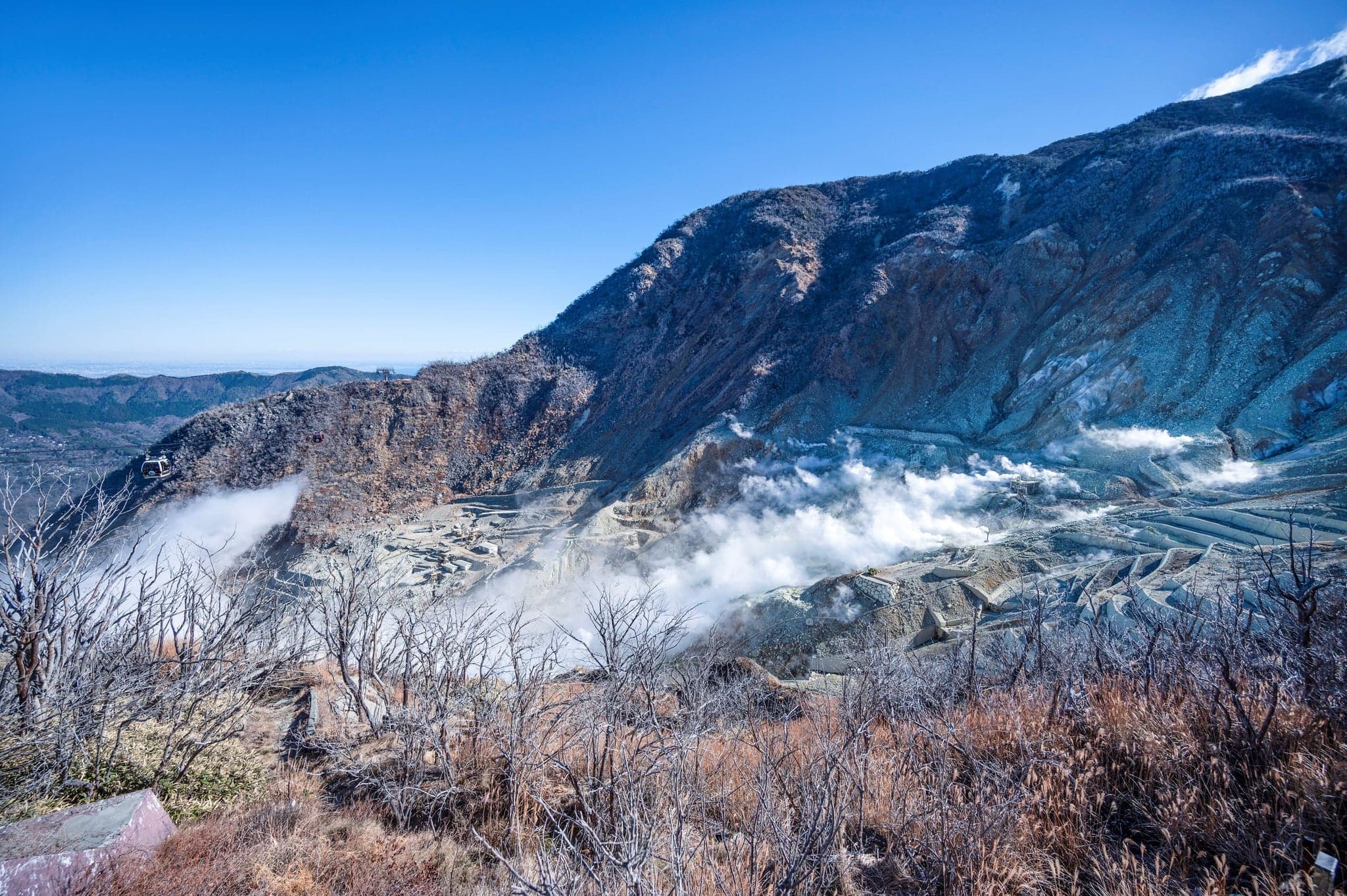
- Days 6–7, Hakone: hot springs, a ropeway over steaming volcanic vents and a pirate ship across Lake Ashi, with Mount Fuji views if the weather plays along.
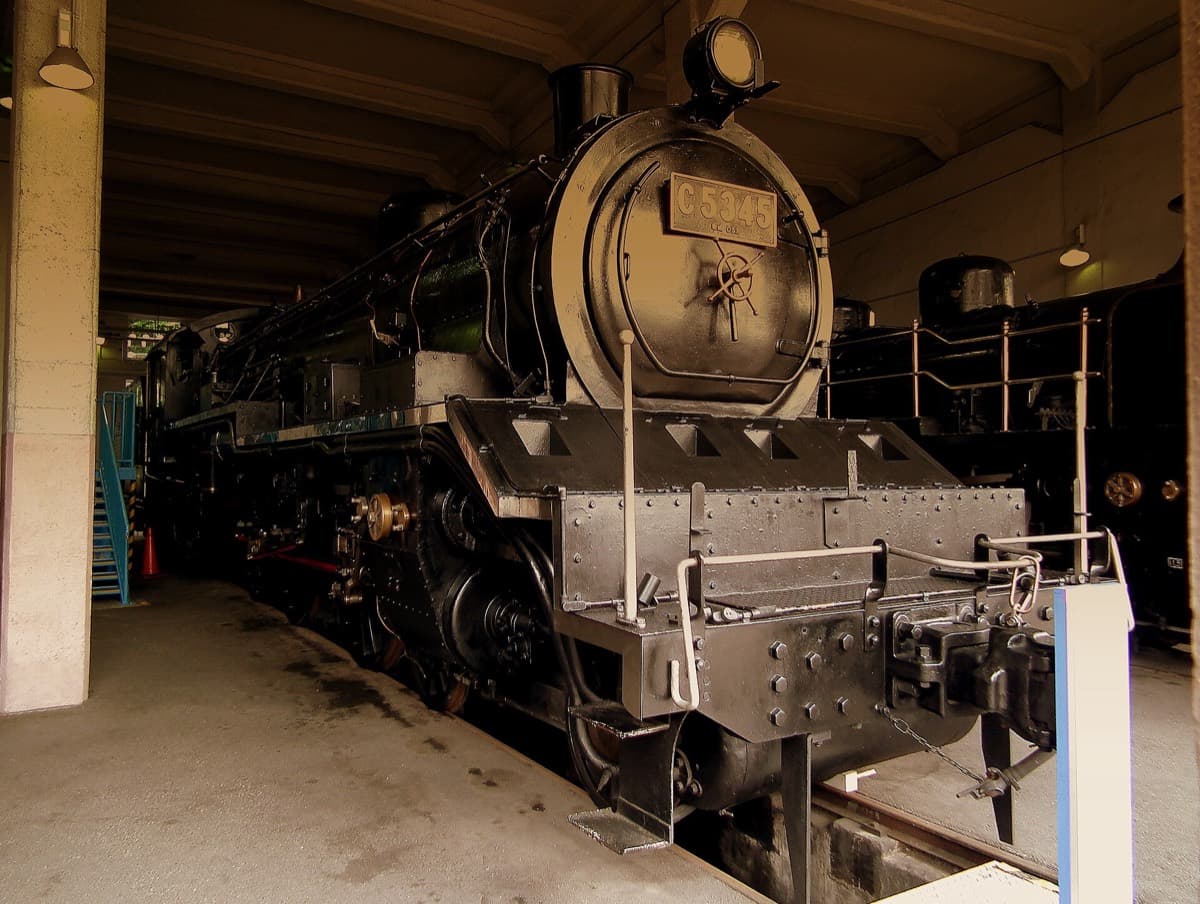
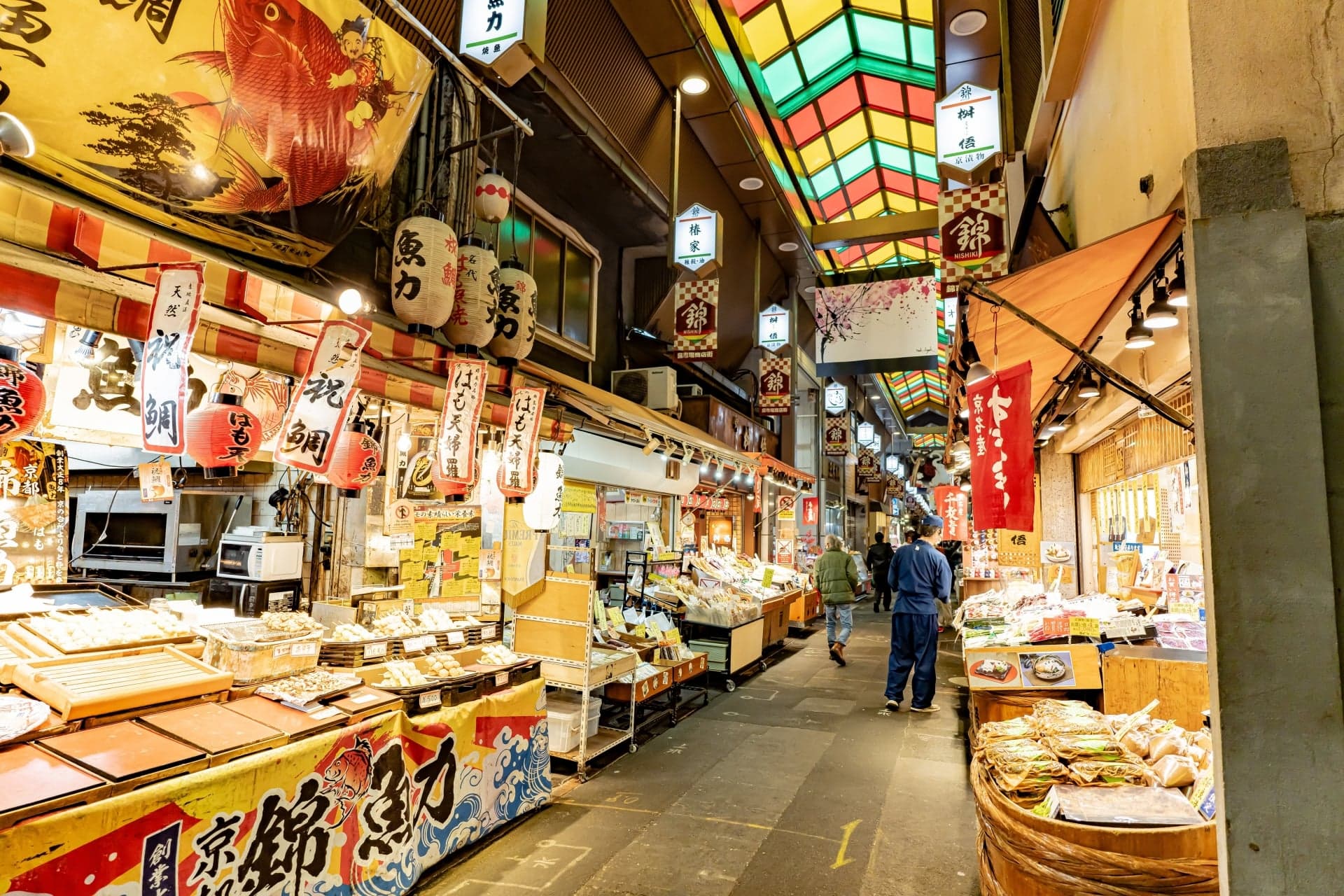
- Days 8–11, Kyoto: Fushimi Inari Shrine, the Arashiyama monkey park, a short tea ceremony, the Kyoto Railway Museum and a day trip to see Nara's deer.
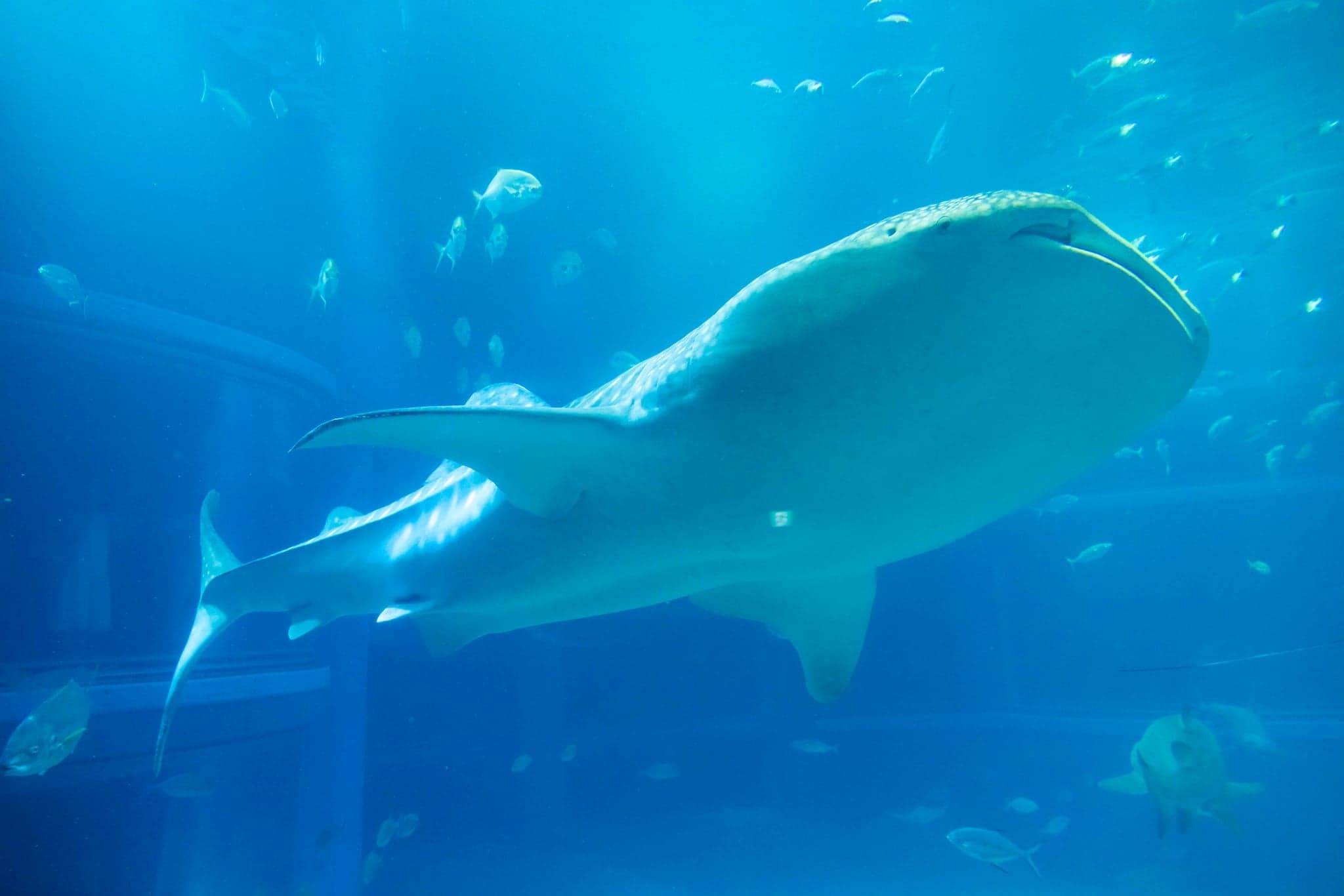
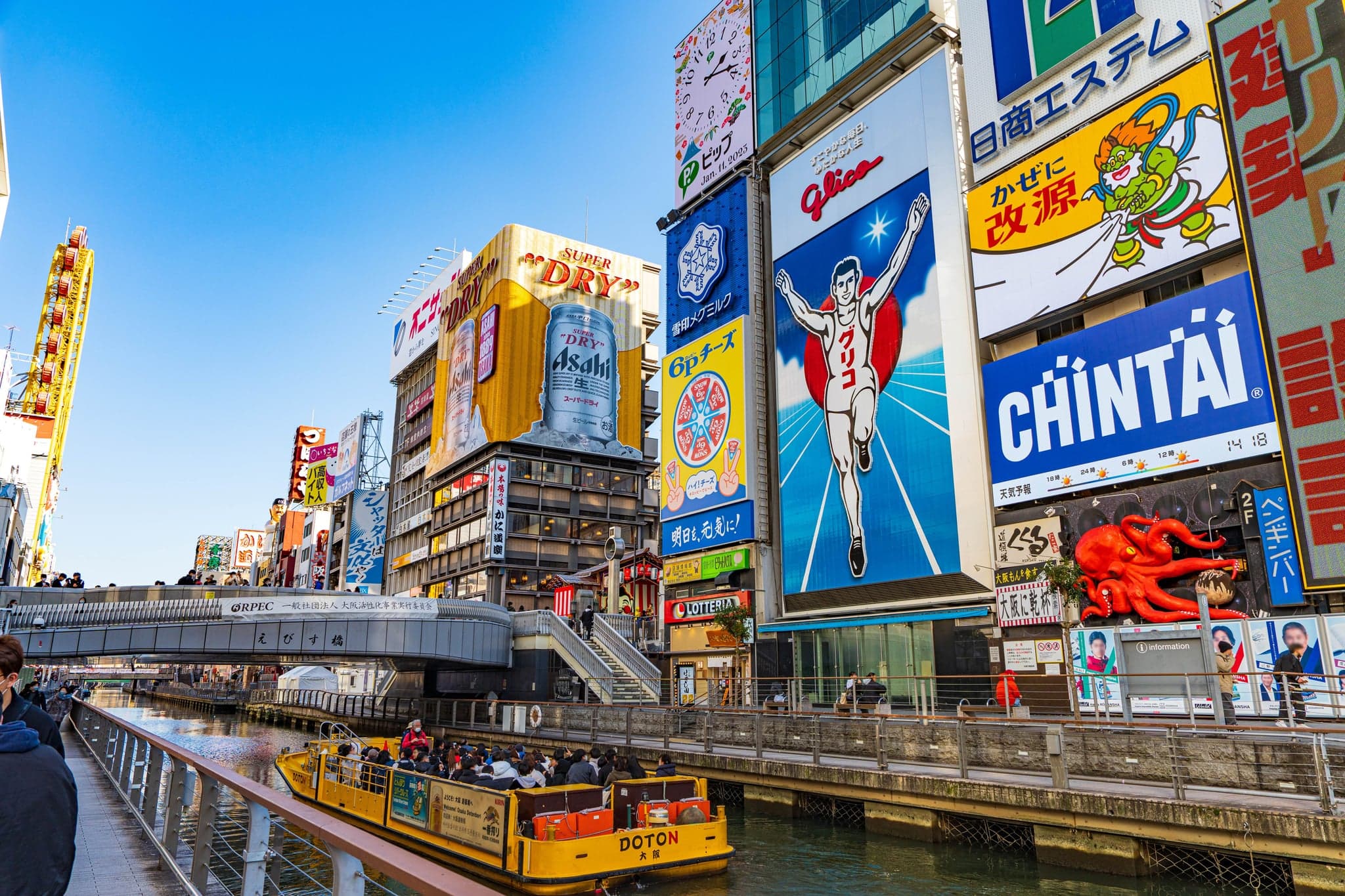
- Days 12–13, Osaka: the aquarium, Dotonbori at night, and Universal Studios Japan if you skipped Disney.
- Day 14: fly home from Kansai International Airport.
If you can, book open-jaw flights — into Tokyo, out of Osaka. That saves half a day of backtracking at the end of the whole trip, when everyone is tired and the suitcases are heavier than when you arrived.
Plan the Family Trip Before You Plan the Sights
Three decisions shape everything else: when you go, how long you stay, and how you'll get through the first days of jet lag. Get those right and the rest of the planning is surprisingly easy.
Cherry Blossoms, Golden Week, Rainy Season or Summer Months?
Every season works with kids. Some just take more effort.
- Spring (late March to early April) is cherry blossom season, and it's gorgeous. It's also the most expensive time of year and super crowded — if the cherry blossoms are the point of your trip, book hotels as early as you possibly can.
- Golden Week (late April to early May) is a run of public holidays when Japanese families all travel at once, so trains, theme parks and hotels fill up and prices climb. Avoid it if your school calendar allows.
- Rainy season (roughly early June to mid-July) doesn't mean constant rain, but expect muggy, grey days. Plan around indoor options like aquariums, museums and game centers.
- The summer months (late July and August) match everyone's school holidays, Japan's included. For young children the real problem is the heat: start early, retreat somewhere air-conditioned after lunch, and head back out at dusk.
- Autumn (October to early December) is our favorite season for a family trip: comfortable temperatures, and the leaves in Kyoto turn from late November. Early autumn can still bring typhoons, so keep plans flexible.
- Winter (December to February) is cold but often crystal clear, and that's when Mount Fuji shows itself most. Skip the New Year holiday itself, when many attractions and restaurants close for several days.
Why Two Weeks Is the Sweet Spot
Two weeks gives you enough slack to absorb a sick day, a rained-out plan or a toddler who simply refuses. That's the real reason we push families toward it. In two weeks you can cover Tokyo, Hakone, Kyoto, Nara and Osaka and still have afternoons with nothing booked.
With one week, cut the plan to two destinations: Tokyo and Kyoto, with Nara as a day trip from Kyoto. With three weeks, don't add more big cities; add slower places — a couple of nights somewhere quiet, or more free time in Kyoto. Rule of thumb: change hotels no more than once every three or four nights. Packing and unpacking with kids eats half a day every time.
Beating Jet Lag After a Long Flight
After a long flight from Europe or North America, jet lag usually hits kids harder than adults. It tends to look like a 4 a.m. wake-up and a meltdown at 3 p.m. Make day one a nothing day: check in, walk around the neighborhood, eat early and sleep.
After that, use the early mornings instead of fighting them. Senso-ji in Asakusa is almost empty at 7 a.m., and Ueno Park at dawn is full of joggers and locals doing their stretches. Kids who are into big, strong humans can watch sumo morning practice on a guided visit to a stable outside tournament weeks. For your first 48 hours, don't book anything you can't afford to miss — no character cafe, no Disney, no timed rooftop slot.
The Two-Week Japan Itinerary at a Glance
| Day | Base | Plan | Best for |
|---|---|---|---|
| 1 | Tokyo | Arrive, check in, short walk, early night | Recovery |
| 2 | Tokyo | Ueno Park, the zoo and museums | All ages |
| 3 | Tokyo | Tsukiji Outer Market, the Imperial Palace gardens, the station area | All ages |
| 4 | Tokyo | Harajuku, Meiji Jingu, Shibuya | Ages 8+ |
| 5 | Tokyo | Tokyo Disneyland or DisneySea, or a free day | Theme park fans |
| 6 | Hakone | Travel to Hakone, big bags sent to Kyoto, hot spring evening | Downtime |
| 7 | Hakone | The loop: mountain train, ropeway, pirate ship on Lake Ashi | All ages |
| 8 | Kyoto | Bullet train to Kyoto, Fushimi Inari late afternoon | All ages |
| 9 | Kyoto | Arashiyama bamboo grove and the monkeys | Good walkers |
| 10 | Kyoto | Day trip to Nara | All ages |
| 11 | Kyoto | Kyoto Railway Museum, tea ceremony, Nishiki Market | Train fans |
| 12 | Osaka | Move to Osaka, Kaiyukan aquarium, Dotonbori at night | All ages |
| 13 | Osaka | Universal Studios Japan or Osaka Castle Park | Theme park fans |
| 14 | — | Fly home from Kansai International Airport | — |
Only three days involve changing hotels, and each is paired with something light. You can swap days freely — just check closing days before you shuffle anything: the Ueno zoo and museums close on Mondays, the palace gardens on Mondays and Fridays, and the Kyoto Railway Museum on Wednesdays. One wrong swap can knock out a whole morning.
Days 1–5: Central Tokyo With Kids
Tokyo is the biggest of Japan's major cities, and it's where your base matters most. Stay within walking distance of a main train station on the JR Yamanote Line — the Tokyo Station and Nihonbashi area, Ueno or Shinagawa — so each morning starts with one train rather than three. Tokyo and Shinagawa both have bullet train platforms, which makes the day 6 departure easy.
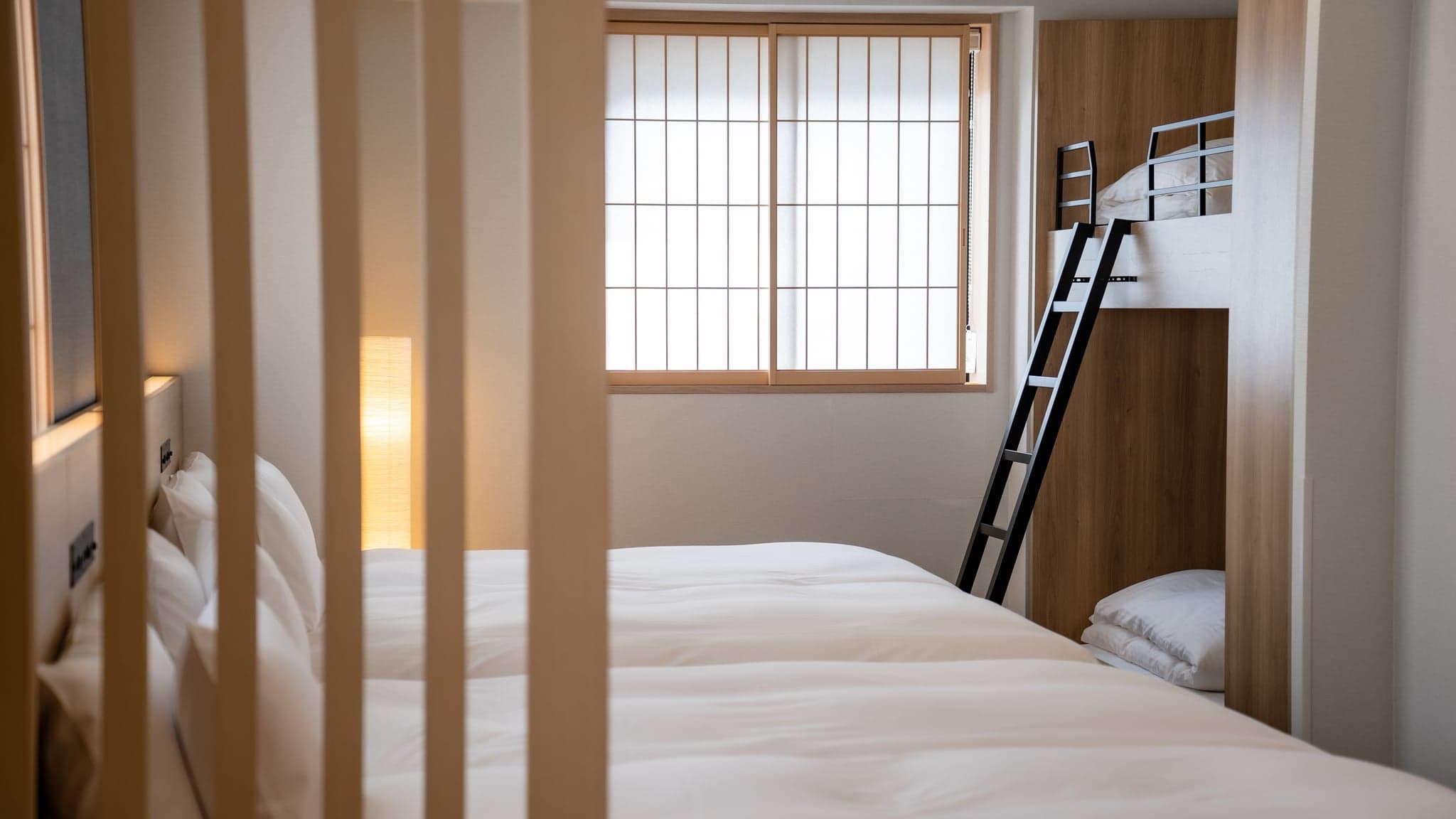
Rooms are small. Check how the hotel counts children and whether kids can share a bed, because policies vary a lot. On a two-week trip, an apartment-style place with a washing machine is a lifesaver. On our family routes, the Tokyo nights are in MIMARU apartment hotels with four beds in the room.
Ueno Park, the Zoo and the Tokyo National Museum
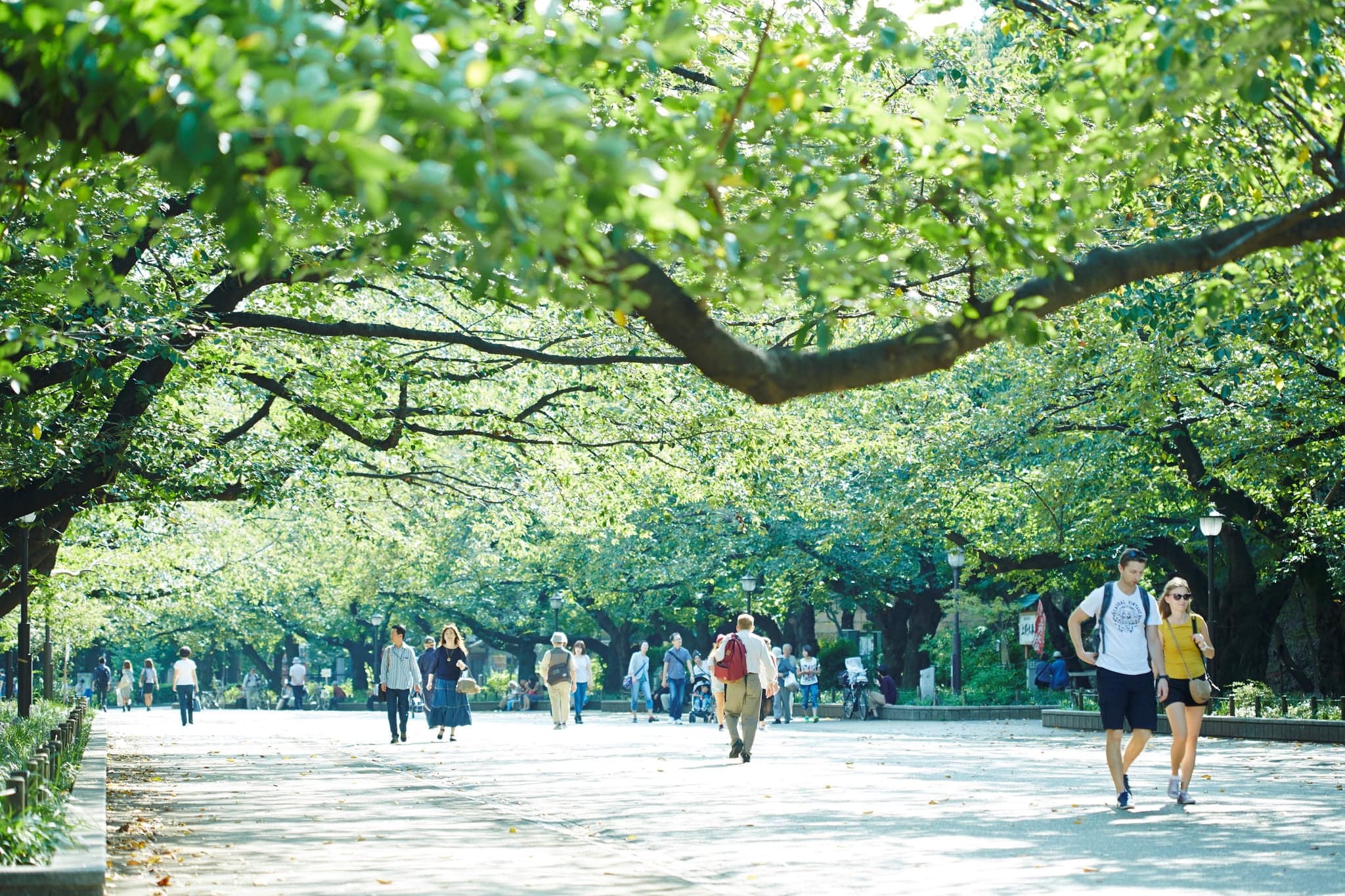
Ueno Park is the easiest first outing in Tokyo: a short walk from JR Ueno Station and free to enter, with a zoo, several museums, a pond with swan boats and plenty of space to run.
Ueno Zoo costs ¥600 for adults and ¥200 for junior high school students, and younger children go free. It's closed on Mondays. One heads-up: the giant pandas went back to China in January 2026, so if your kids have seen old photos, set expectations before you go.
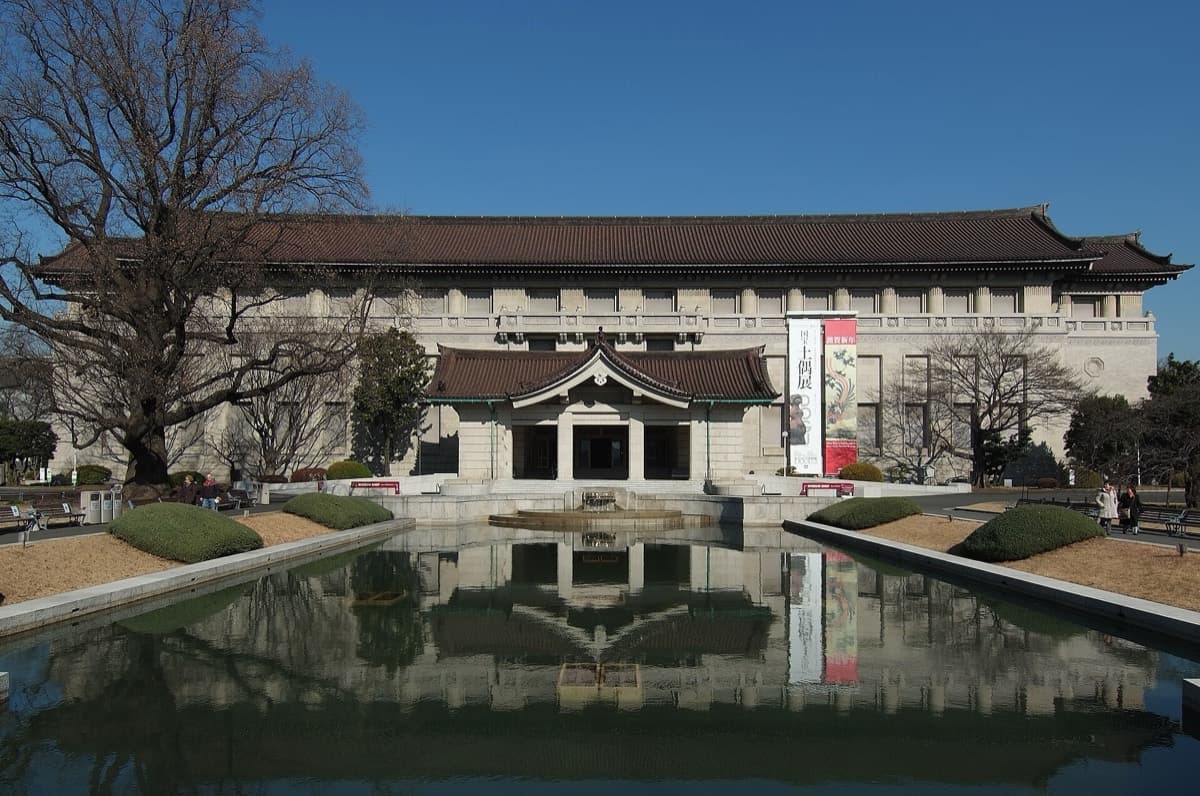
The Tokyo National Museum sits at the north end of the park. Adults pay ¥1,000, and the collection galleries are free for under-18s — bring passports as proof of age. It's closed on Mondays, and suitcases aren't allowed inside. Teenagers tend to love the samurai armor and swords; aim for an hour, not a whole afternoon. Next door, the National Museum of Nature and Science has dinosaur skeletons and is usually an easier sell for younger kids. On weekends you may catch street performers along the park's main paths, and Ameyoko, the market street south of the station, is great for people watching and cheap snacks.
Imperial Palace East Gardens and Tokyo Station
The Imperial Palace East Gardens are free, within walking distance of the Marunouchi side of Tokyo Station, and open from 9:00 (to 16:30 in October, 16:00 from November to February). They close on Mondays and Fridays. The gardens sit on the grounds of old Edo Castle, with massive stone walls, moats and wide lawns, and kids can climb the stone base of the old castle keep for a view. After a morning of trains, it's a good place to let them run.
The station itself is worth an hour. The red-brick Marunouchi building is lovely, and the underground shopping streets include a row of character shops that small children won't want to leave.
Harajuku, Takeshita Street and Shibuya
Takeshita Street in Harajuku is about 350 meters of crepes, candy and cheap accessories, loud, sugary and packed. Kids from about 8 to 14 usually love it. Go on a weekday morning if you can: on weekend afternoons it's shoulder to shoulder, and small children at waist height get squashed. Balance it with a walk through the forest at Meiji Jingu right next door, which is free.
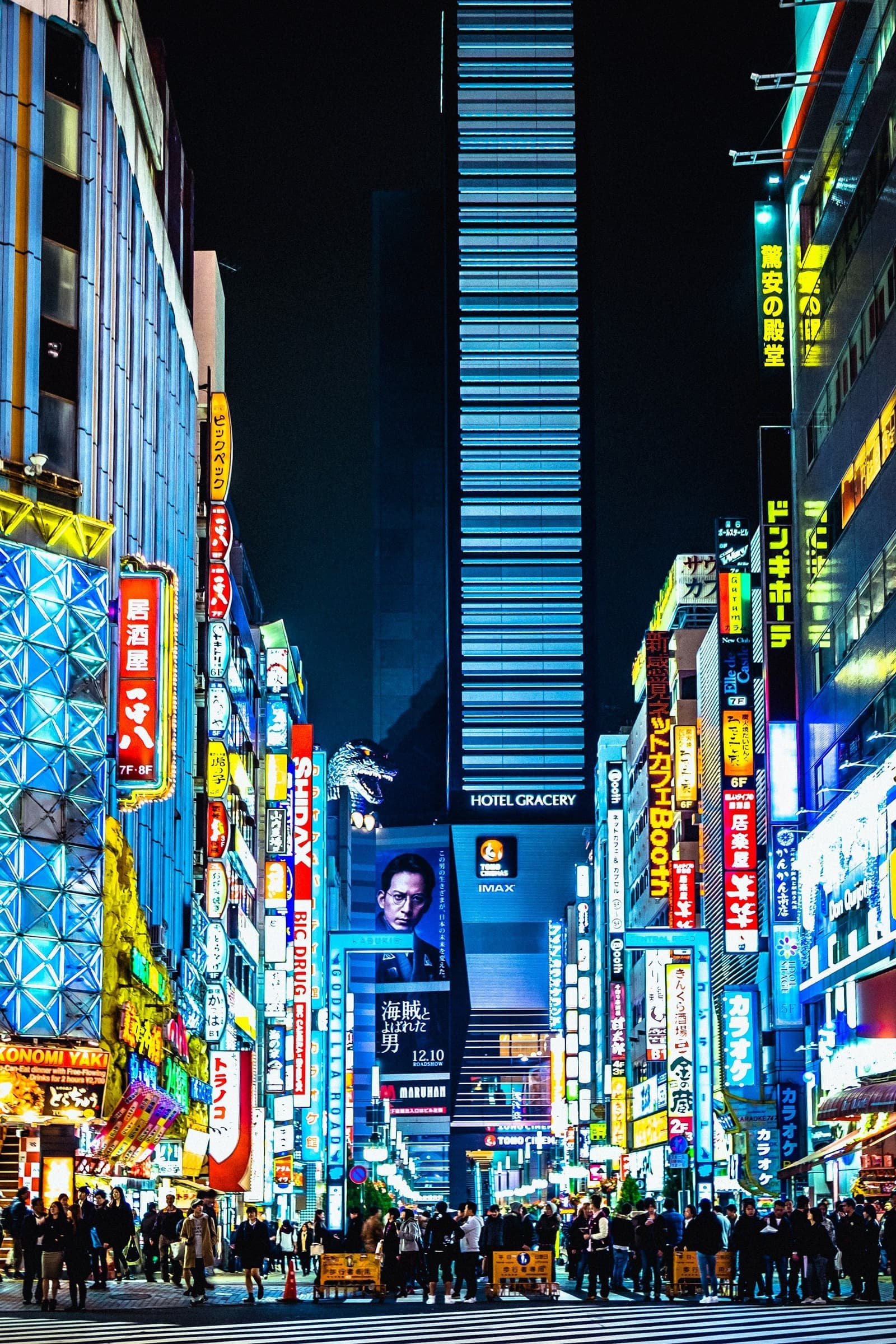
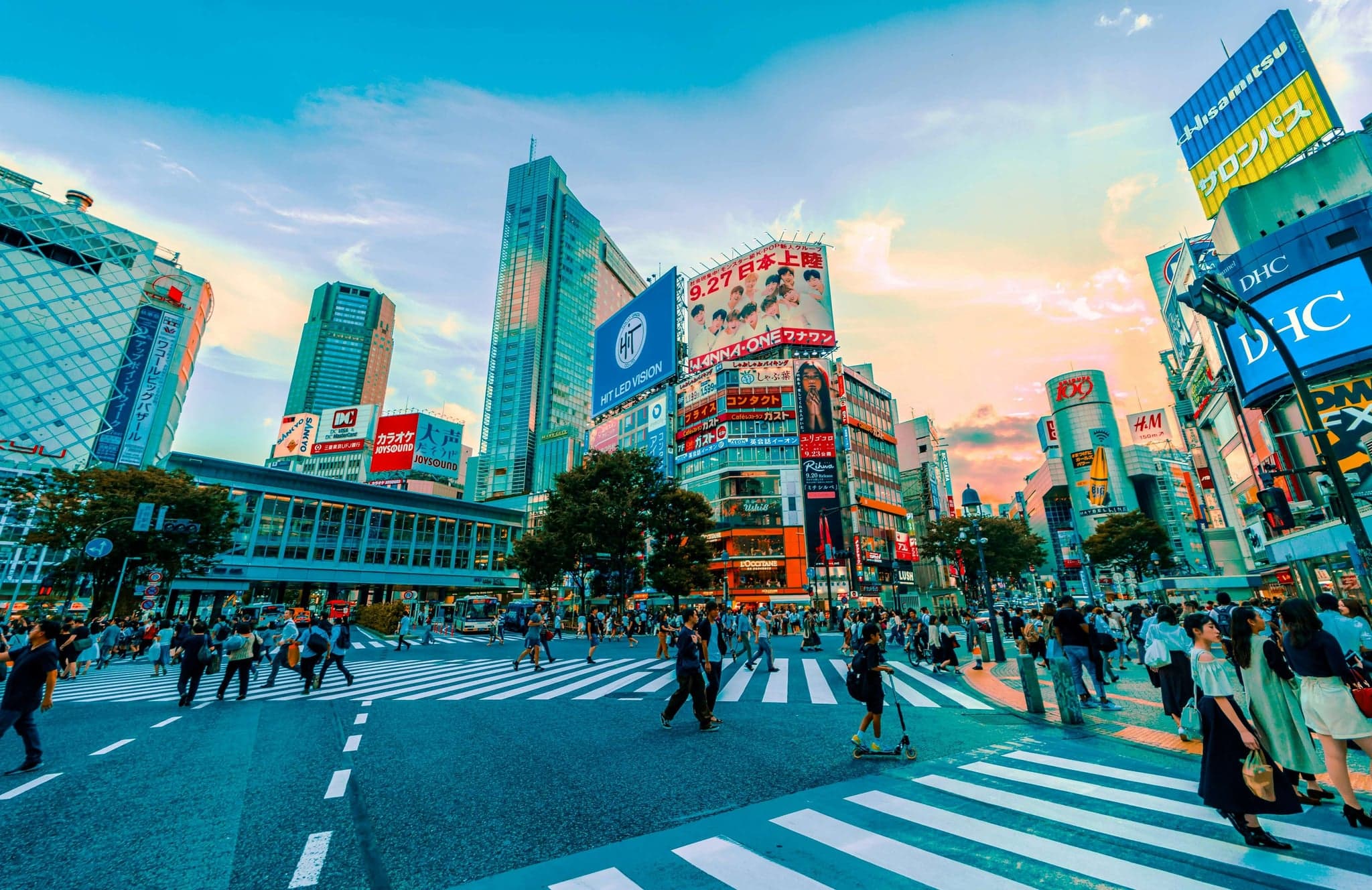
Then head to Shibuya. Watch the scramble crossing from street level, then go up to the sixth floor of Shibuya PARCO, where Nintendo TOKYO and the Pokémon Center share a floor. For the view from above, Shibuya Sky is the one kids remember: an open-air rooftop over the crossing. Adult tickets (12 and over) are sold online two weeks ahead — ¥2,700 before 15:00 and ¥3,400 from 15:00 — but tickets for elementary school kids and ages 3 to 5 are currently sold only at the 14th-floor counter on the day, with the child there. Even on sold-out days those children's tickets are sold at the counter, so buy the adults' online and the kids' when you arrive.
Tsukiji Fish Market for a Street Food Breakfast
A quick clarification, because it confuses a lot of people: the wholesale Tsukiji fish market and its tuna auctions moved to Toyosu in 2018. What remains in Tsukiji is the outer market, hundreds of shops, stalls and small restaurants, and it's still one of the best street food breakfasts in central Tokyo.
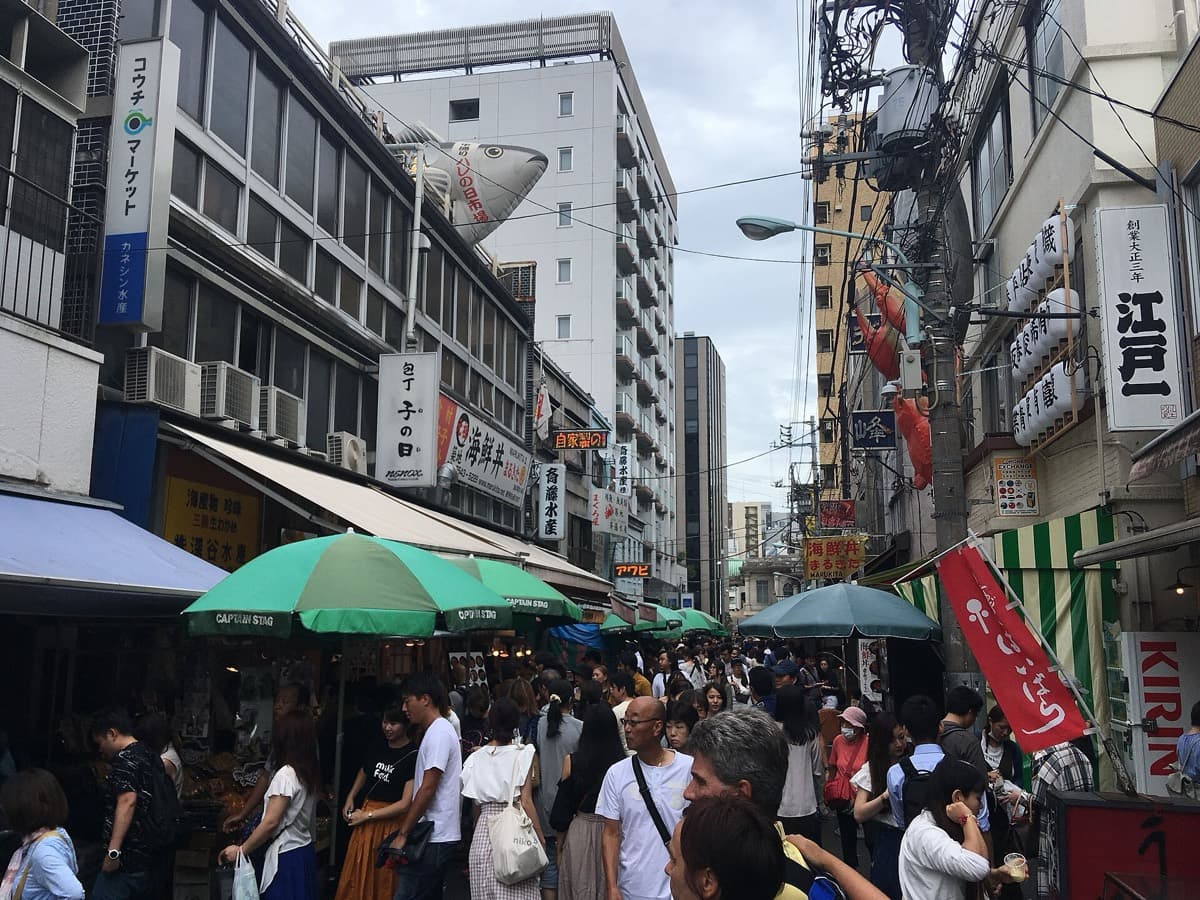
Kids usually go straight for the sweet rolled omelet on a stick, grilled seafood skewers and fruit. The market's retail hours for the public are about 9:00 to 14:00, and it's closed on Sundays, national holidays and most Wednesdays. Leave the stroller at the hotel if you can — a baby carrier is far easier in the narrow lanes — and eat beside the stall where you bought the food.
Booking the Pokémon Cafe in Tokyo or Osaka
For Pokémon fans, this is the reservation that causes the most stress. There are two cafes: Tokyo's on the 5th floor of the Nihombashi Takashimaya S.C. East Building, five minutes on foot from the station's Yaesu North Exit, and Osaka's in Shinsaibashi, with direct underground access from Shinsaibashi Station.
- Reservations open a month at a time. Dates in November 2026 open at 6:00 p.m. Japan time on October 1, 2026; the date for December will be announced separately. Watch the cafe's news page.
- Online only. No phone or email bookings.
- Split the job. One parent tries Tokyo while the other tries Osaka, and keep checking for cancellations.
- Missed out? The merchandise can be bought without a reservation.
teamLab With Kids
At teamLab Planets in Toyosu you walk barefoot through water and rooms full of light, from ¥4,200 for an adult depending on the date. Kids under 13 must be with a parent or guardian over 18, there must be one adult for every three children, and small children should wear clothes they don't mind getting wet. It's a great rainy-day plan for the whole family.
Theme Parks: Tokyo Disneyland, DisneySea or Universal Studios Japan?
Most families have room for one theme park day in two weeks, or two if the kids are obsessed. Here's how to choose between the theme parks.
Tokyo Disneyland or Tokyo DisneySea
Tokyo Disneyland is the classic castle park and the better pick for little kids: gentler rides, parades and characters everywhere. Tokyo DisneySea has more atmosphere and more thrill rides, so it suits older kids better. Its Fantasy Springs area is open with a park ticket, but expect long waits for its rides without a free Standby Pass or paid Premier Access, both used through the Tokyo Disney Resort app.
Tickets go on sale at 2:00 p.m. Japan time, two months before the date, and prices change by day. An adult 1-Day Passport for October 2026 costs ¥9,900 to ¥12,400; a child (4 to 11) from ¥5,300 and a junior (12 to 17) from ¥7,400, and children 3 and under go free. Is Tokyo Disneyland worth visiting if you have a Disney park at home? Honestly, yes — the parks are immaculate, the snacks are half the fun, and DisneySea has no real equivalent anywhere else.
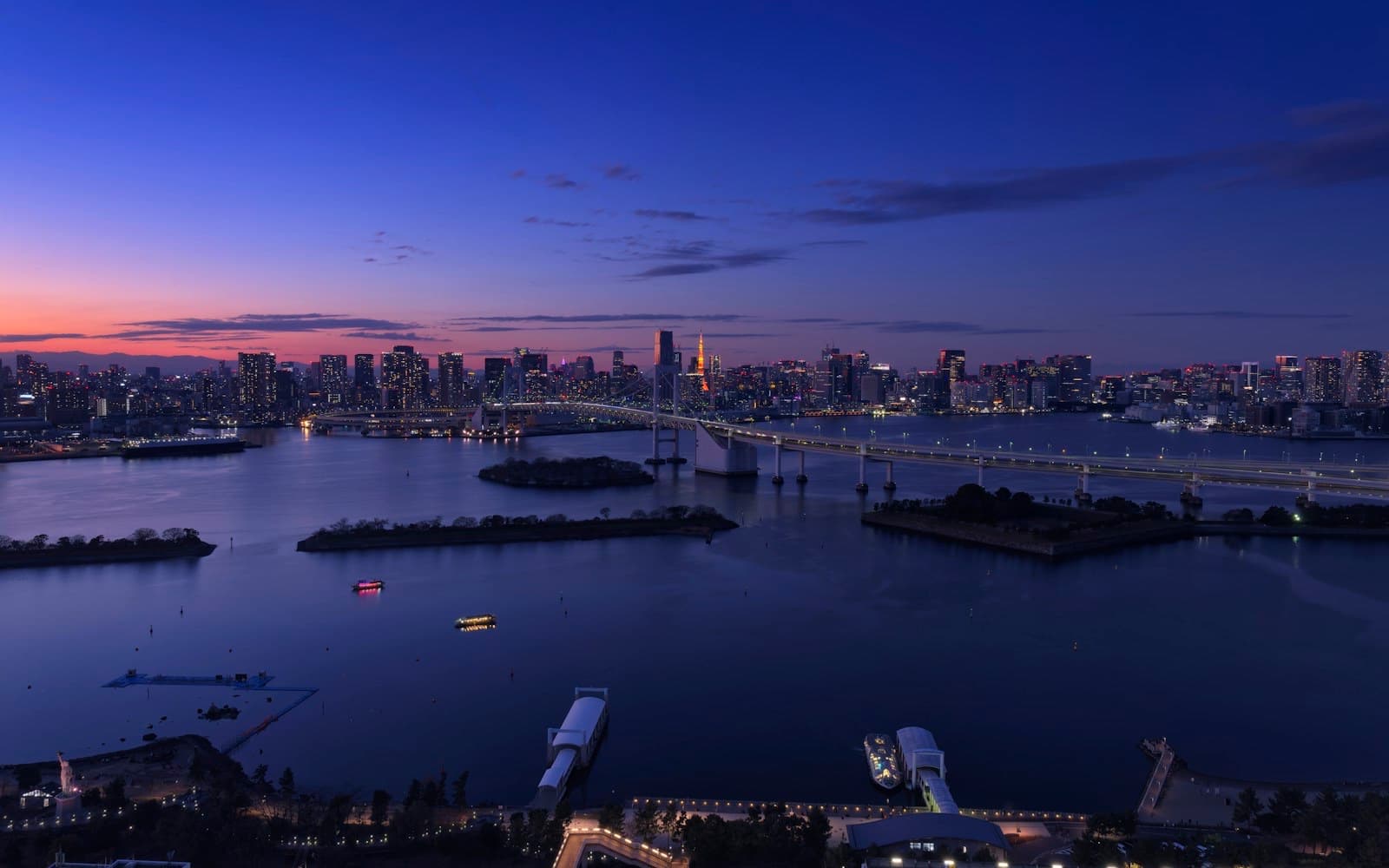
Universal Studios Japan and Super Nintendo World
Universal Studios Japan in Osaka is the other big name, and the draw is Super Nintendo World and its Donkey Kong Country expansion — a cool experience even for parents who've never held a controller. Buy tickets in advance: the gate ticket booths closed in May 2025. Adult 1-Day Studio Passes ran ¥8,400 to ¥11,900 on the dates on sale in late September 2026, and child tickets start at ¥5,500. Entry to the Nintendo area is controlled: take an area timed entry ticket in the official app as soon as you're inside the park, or buy an Express Pass that includes it. Our Japan theme parks guide has the full ticket rules.
Our rule: one park per city, never two park days back to back, and a slow day afterwards. Tokyo Disneyland at 9 p.m. with an exhausted five-year-old is nobody's idea of a fun place.

From our Japan travel team
Park days go wrong in two ways: the tickets for your date aren't on sale yet when you book the trip, and the hotel is an hour from the gate. On our theme-park routes the hotels are next to the parks — three nights at Maihama and three at Universal City — and we tell you the exact day the park tickets for your dates go on sale. The park tickets themselves you buy yourself.
Days 6–7: Mount Fuji and Hakone Without the Stress
Hakone is where the trip slows down: a hot springs area in the mountains southwest of Tokyo, with views toward Mount Fuji, and a natural halfway stop on the way to Kyoto.
There are two easy ways in. The Odakyu Romancecar runs from Shinjuku straight to Hakone-Yumoto in about 80 minutes; or take the bullet train from Tokyo or Shinagawa to Odawara on a Kodama or Hikari, because the Nozomi doesn't stop there. Most families buy the Hakone Freepass, one ticket for the local trains, cable car, ropeway, buses and Lake Ashi boats: the 2-day version from Shinjuku costs ¥7,100 for adults and ¥1,600 for children aged 6 to 11, and the version from Odawara ¥6,000 for adults. The Romancecar seat costs extra.
This tip is what makes Hakone doable with kids: leave the big suitcases behind. Send them from your Tokyo hotel straight to your Kyoto hotel with a luggage forwarding service; most hotel front desks can arrange it, and it normally arrives the next day. It's super convenient. Pack one small bag for your two nights — Hakone's trains and buses get crowded, and there are stairs at almost every train station. See our luggage forwarding guide.
Hakone: Hot Springs, a Ropeway and a Pirate Ship
The classic Hakone loop is a small adventure in itself, and kids love the variety. From Hakone-Yumoto, the Hakone Tozan train zigzags up the mountain on switchbacks. At Gora you change to a cable car and then the ropeway, which floats over Owakudani, a steaming volcanic valley where eggs boiled in the hot springs come out black (four for ¥500). The sulfur smell gets strong reactions, and that's half the fun.
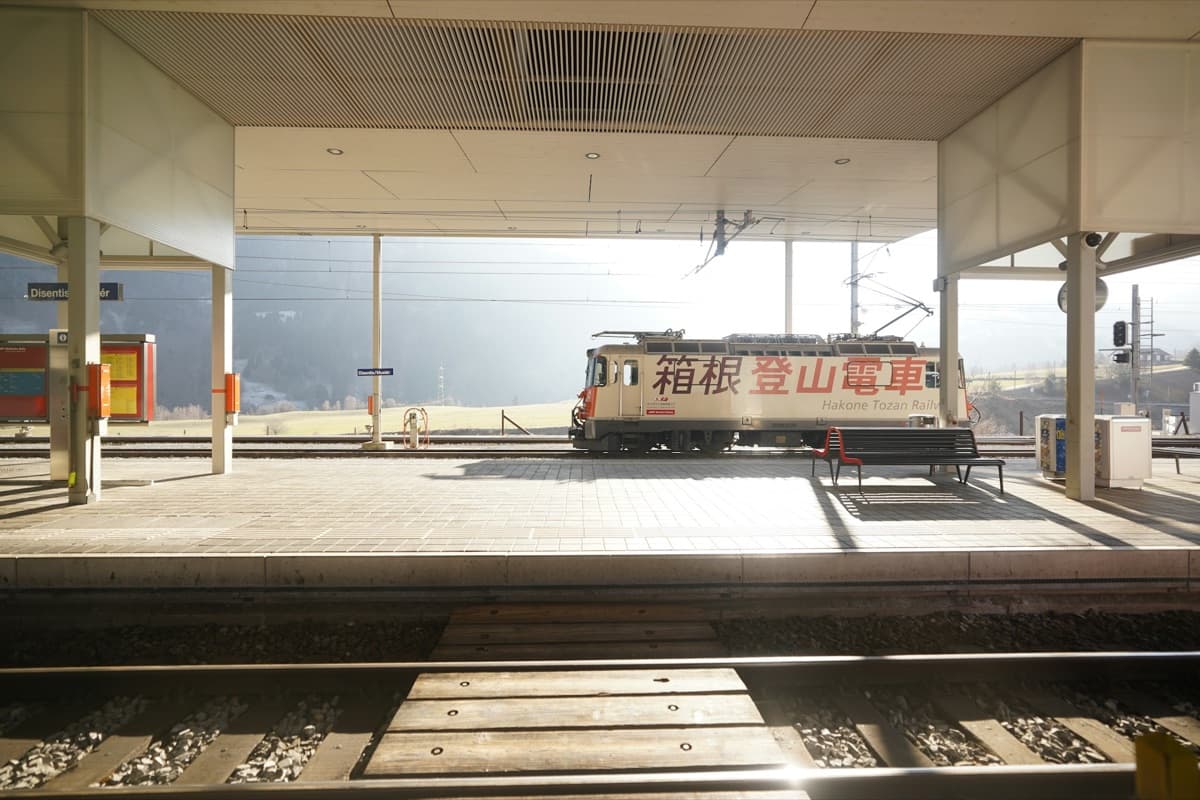
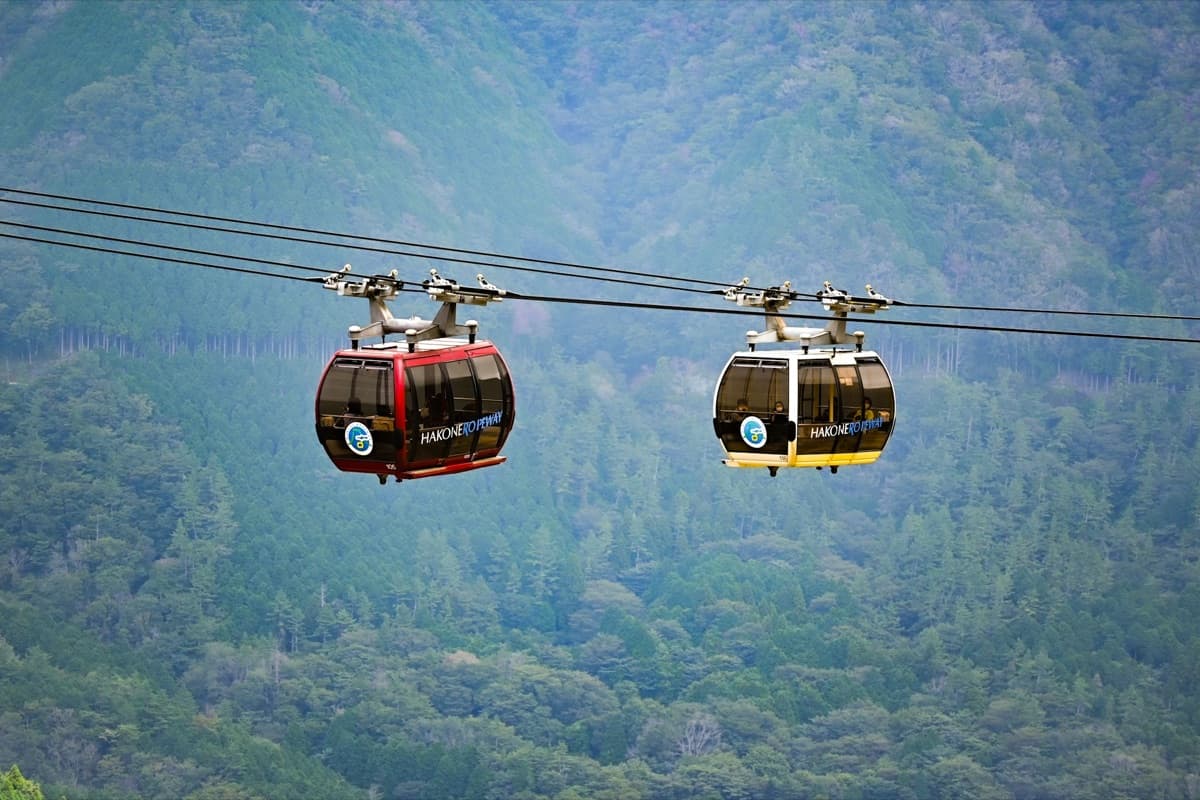
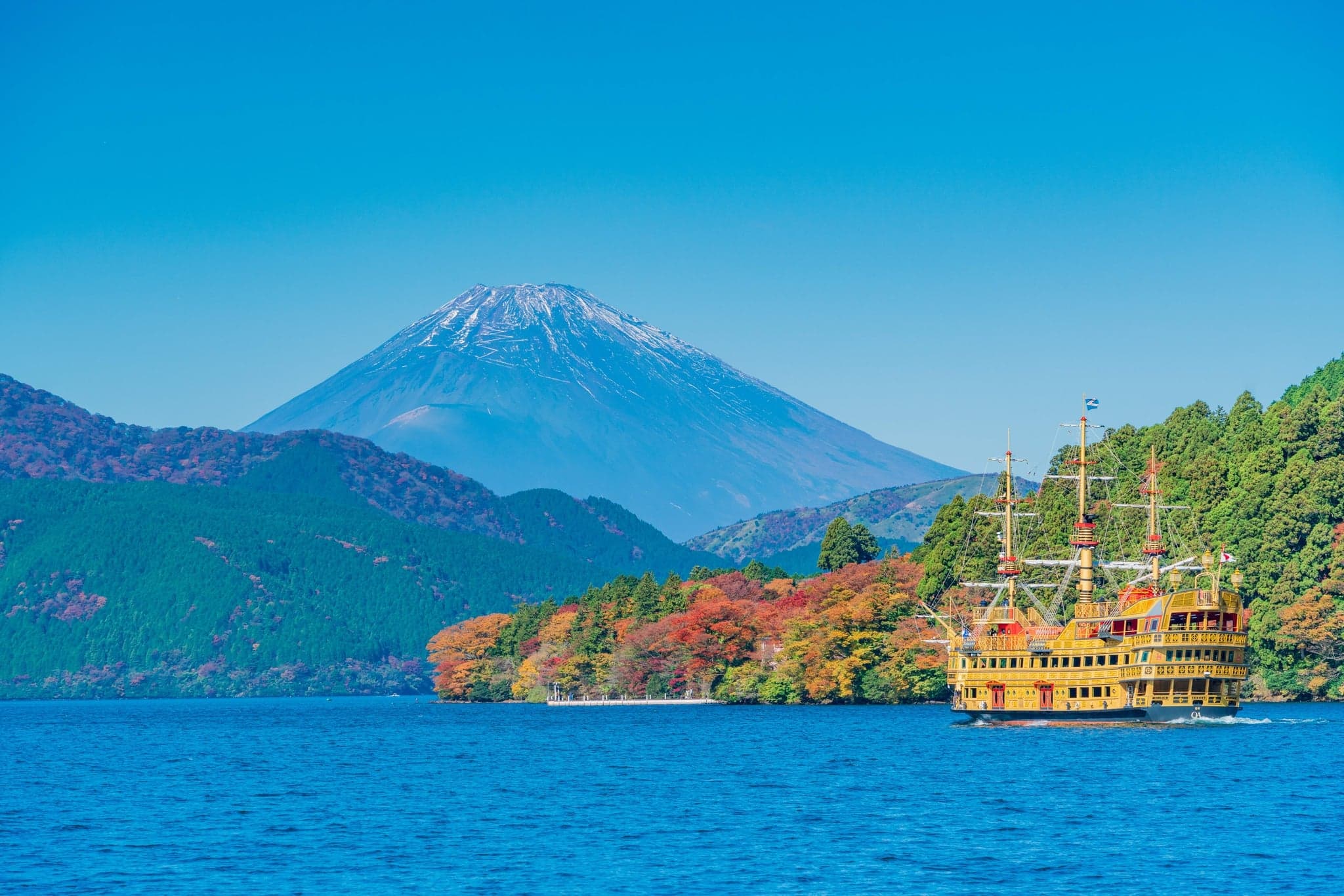
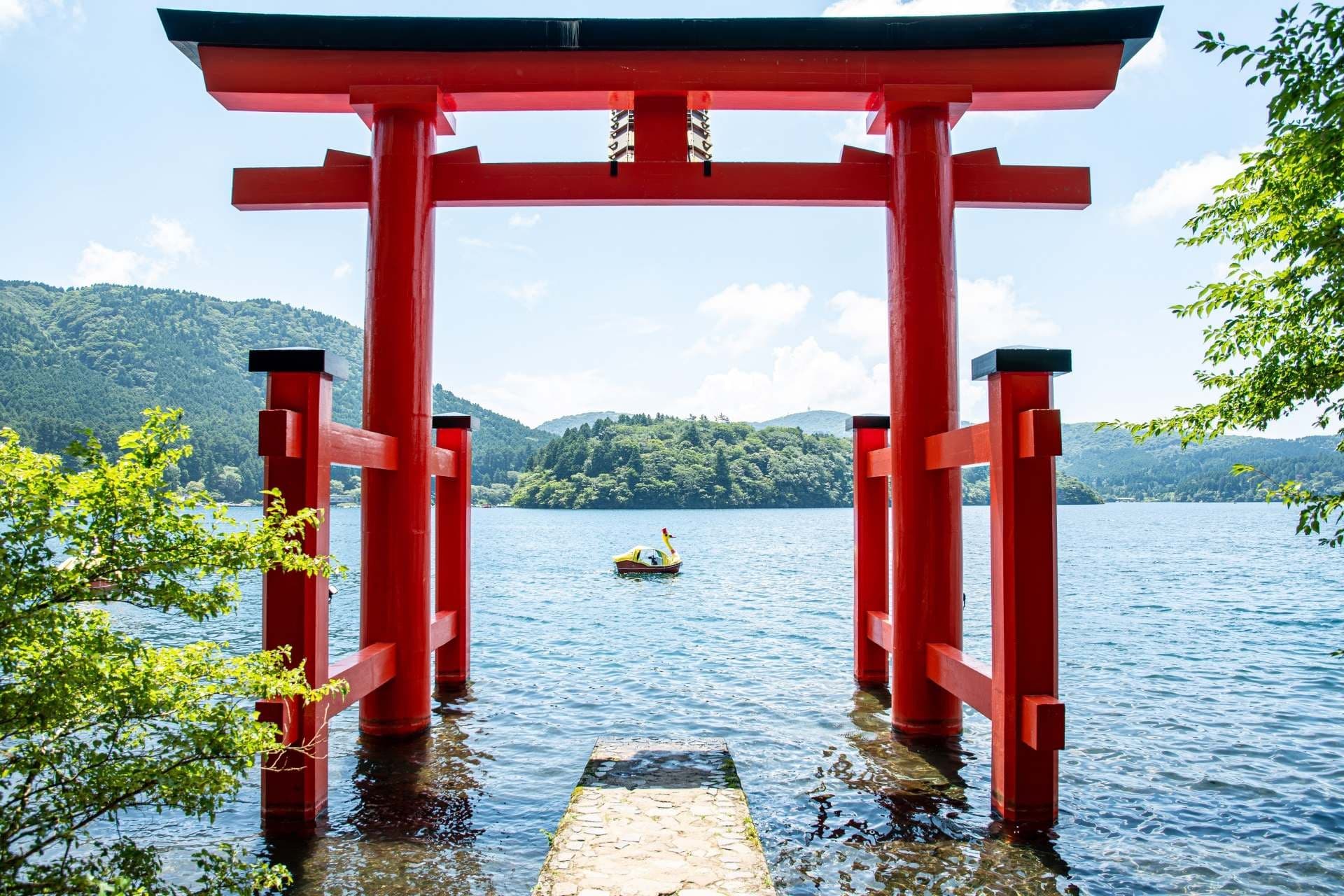
At Togendai, board the pirate ship across Lake Ashi; the crossing takes about 25 to 40 minutes depending on the port. On a clear day you'll see Mount Fuji over the water and the red torii of Hakone Shrine standing in the lake. A pirate ship with a volcano behind you and Fuji ahead is pretty cool, even for teenagers pretending not to care. Our Hakone guide has the timings.
Then there's the onsen. Children are welcome in most public baths, as long as everyone washes thoroughly first and nobody swims. If your kids are different genders or very young, or anyone in the family has tattoos, look for a room with a private onsen or a bath you book by time slot. On FG001 and FG002, the Hakone night is at Hotel Nanpuso in a Japanese-style room with beds and its own private open-air bath — the easiest way to do onsen as a whole family. Our onsen etiquette guide explains the rules.
The Fuji Five Lakes Region Alternative
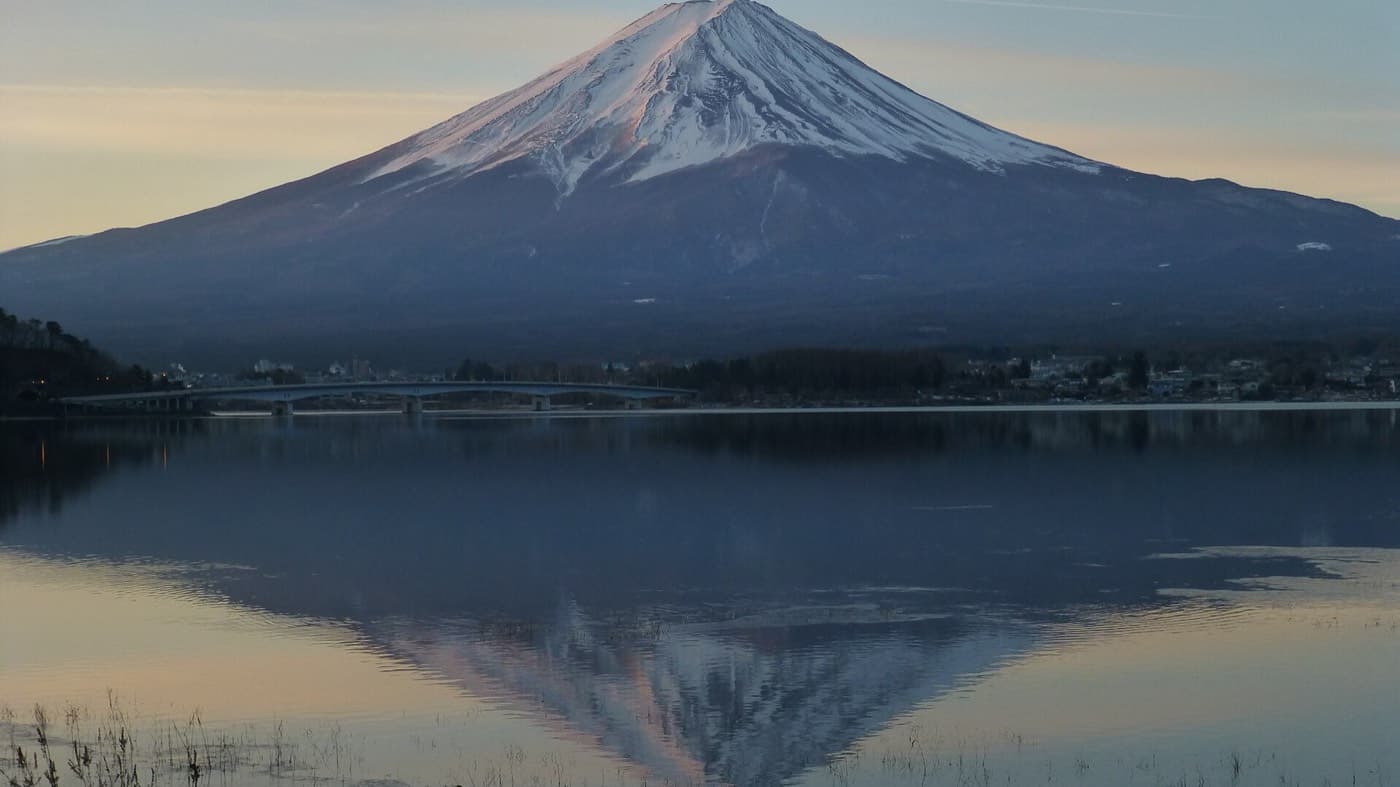
If getting close to Mount Fuji matters more to you than hot springs, swap Hakone for the Fuji Five Lakes region and base yourself around Lake Kawaguchi. The Fuji Excursion limited express runs directly from Shinjuku in just under two hours on the fastest trains; a Japan Rail Pass covers only the JR section, as far as Otsuki. Highway buses from Shinjuku are the cheaper option. Fuji-Q Highland, a stop from Kawaguchiko, has famously intense roller coasters for older kids and Thomas Land for little ones. See our Kawaguchiko guide.
From our Japan travel team
The Hakone Ropeway and the Lake Ashi boats can stop in strong wind, and late summer into autumn is typhoon season. Every one of our routes comes with 24/7 support from our team in Japan and travel insurance, so if a closure or a sick child changes the day, you get practical help quickly. Ask us and we will build a rainy-day backup into the Hakone part of your route.
Days 8–11: Kyoto With Kids (Even the Temple-Averse Ones)
Kyoto is where parents worry their kids will get bored. The trick is to treat temples as the setting for something active — climbing, animals or hands-on activities — rather than as the main event.
Stay near Kyoto Station if day trips are a big part of your plan: it's the hub for Nara, Osaka and the airport, with everything from pharmacies to food halls. City buses get very crowded, so use trains and the subway where you can, and a taxi for short hops when little legs give up.
Fushimi Inari Shrine and the Arashiyama Monkey Park
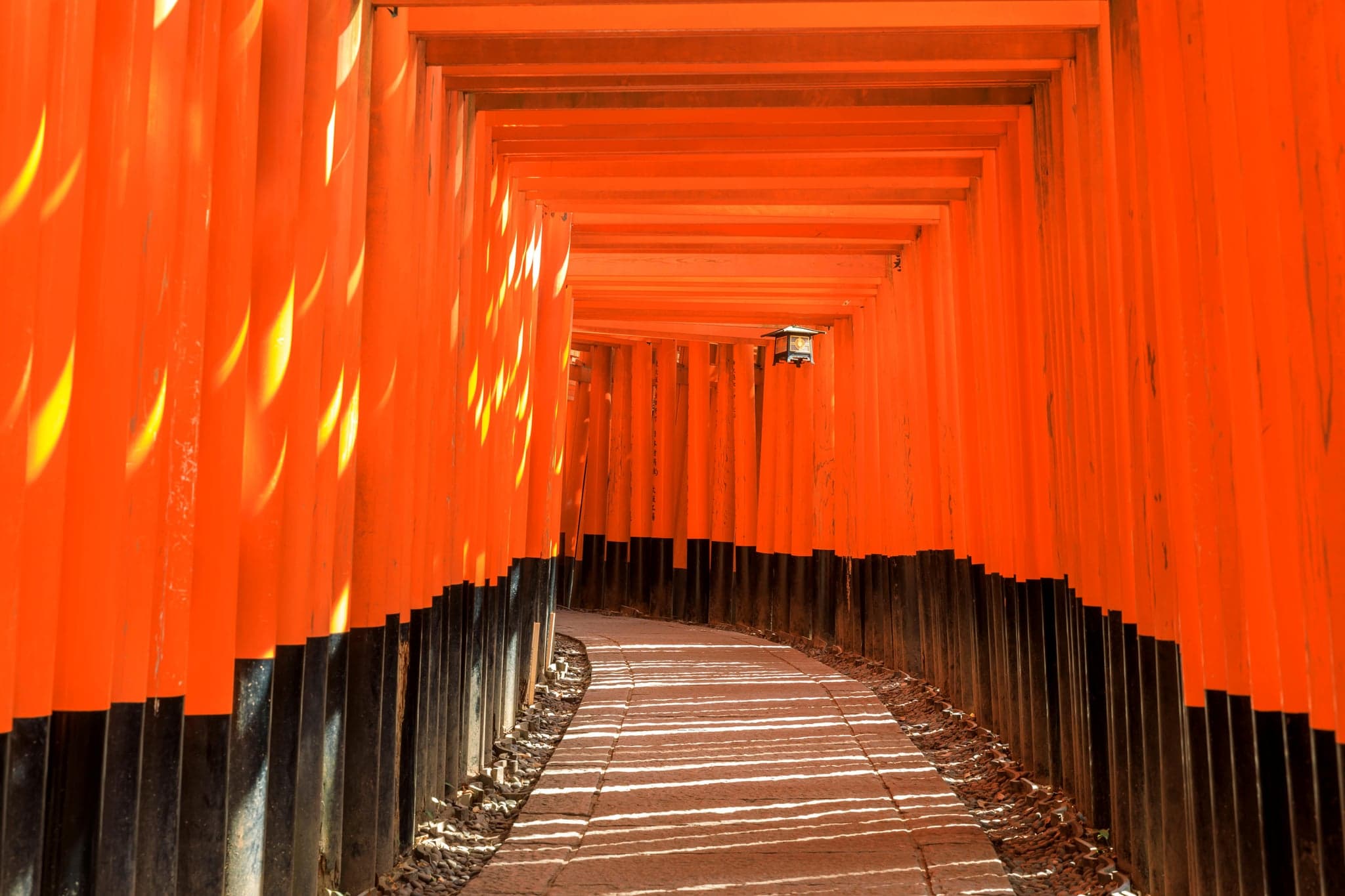
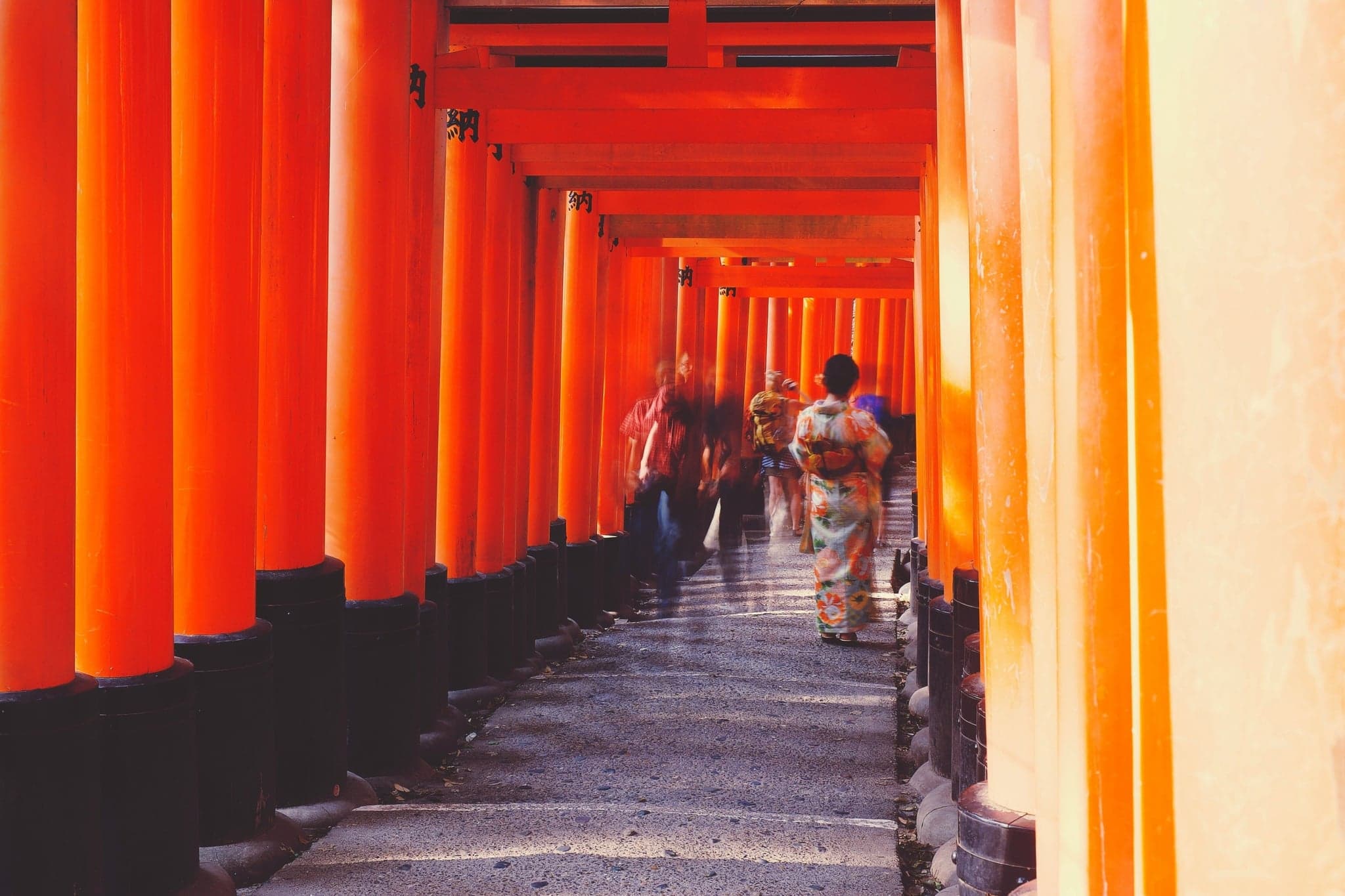
Fushimi Inari Shrine is free, never closes, and sits right outside JR Inari Station, two stops from Kyoto Station on the JR Nara Line. Thousands of orange torii climb the mountain behind it, and kids treat it like a maze. The full loop takes two to three hours; with young kids, go as far as the Yotsutsuji intersection for the view, then head back down. Go early in the morning or late in the afternoon — midday is packed.
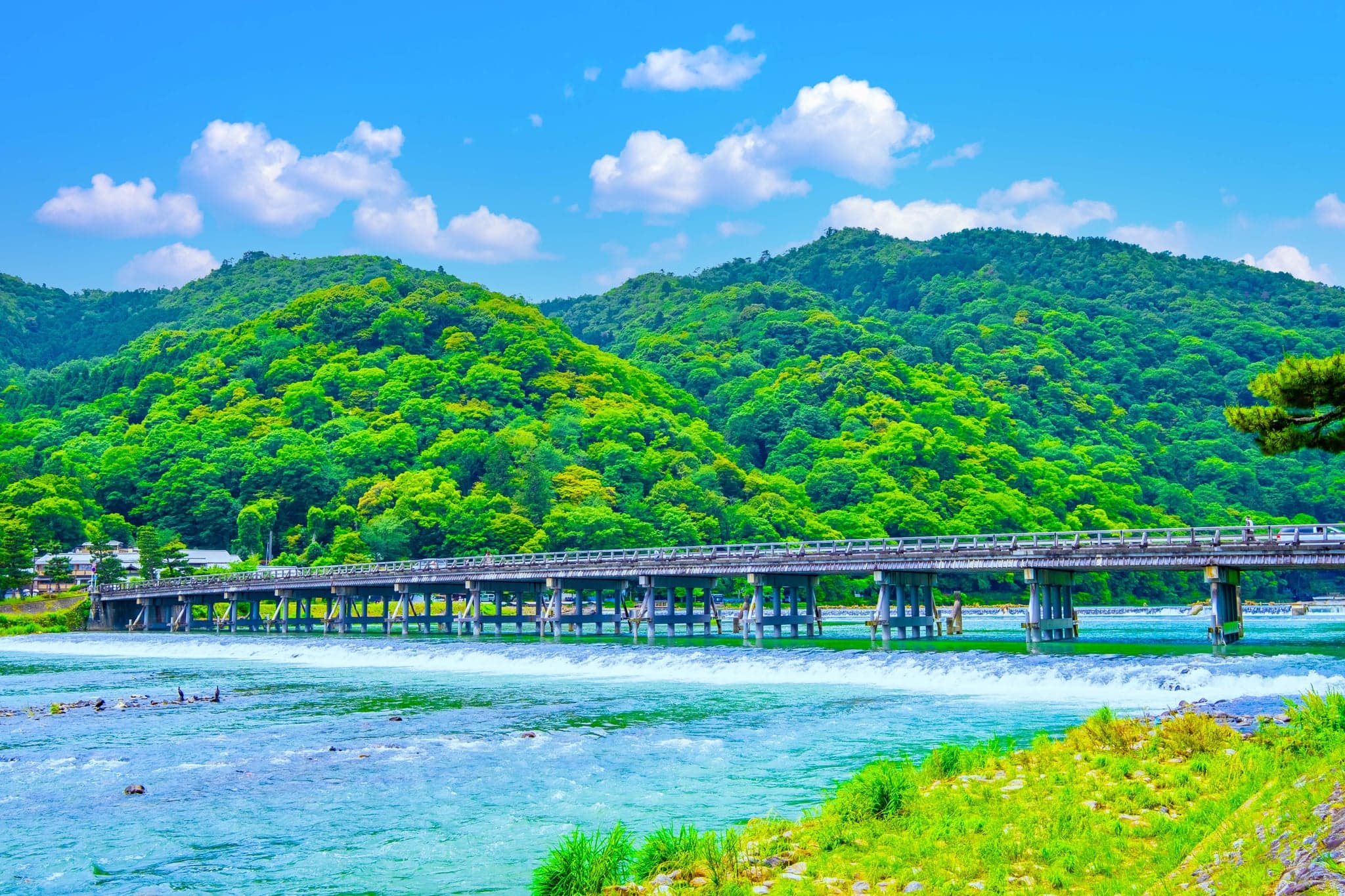
Arashiyama works best as a morning trip. Walk the bamboo grove first thing, then cross the river to the Monkey Park Iwatayama: about 20 minutes uphill on a path where strollers are useless. At the top, free-roaming Japanese macaques wander around with the whole city spread out below, and visitors feed them from inside a hut, which kids find hilarious. Entry is ¥800 for adults and ¥400 for ages 4 to 15, from 9:00 to 16:30. Ask parents what their kids enjoyed most about Kyoto, and the monkeys come up again and again.
A Tea Ceremony Kids Can Actually Sit Through
A tea ceremony sounds like the least child-friendly activity in Japan. Done right, it can be a highlight. The best family sessions are short and hands-on: a host explains each step, the kids whisk their own matcha, and everyone gets a traditional sweet.
A few practical points. Many tea ceremony studios set a minimum age, while others welcome toddlers, so check before you book. Matcha is bitter, and some hosts offer another drink to young kids. Nobody expects children to kneel formally for an hour; sitting cross-legged is usually fine, but ask. Some places bundle in kimono rental, which teenagers often love.
If your kids have never sat still through anything longer than a cartoon, 45 minutes is the right length for a tea ceremony. Book it for a quiet afternoon after an active morning, not before one. Kids tend to remember a tea ceremony much longer than yet another temple.
The Kyoto Railway Museum
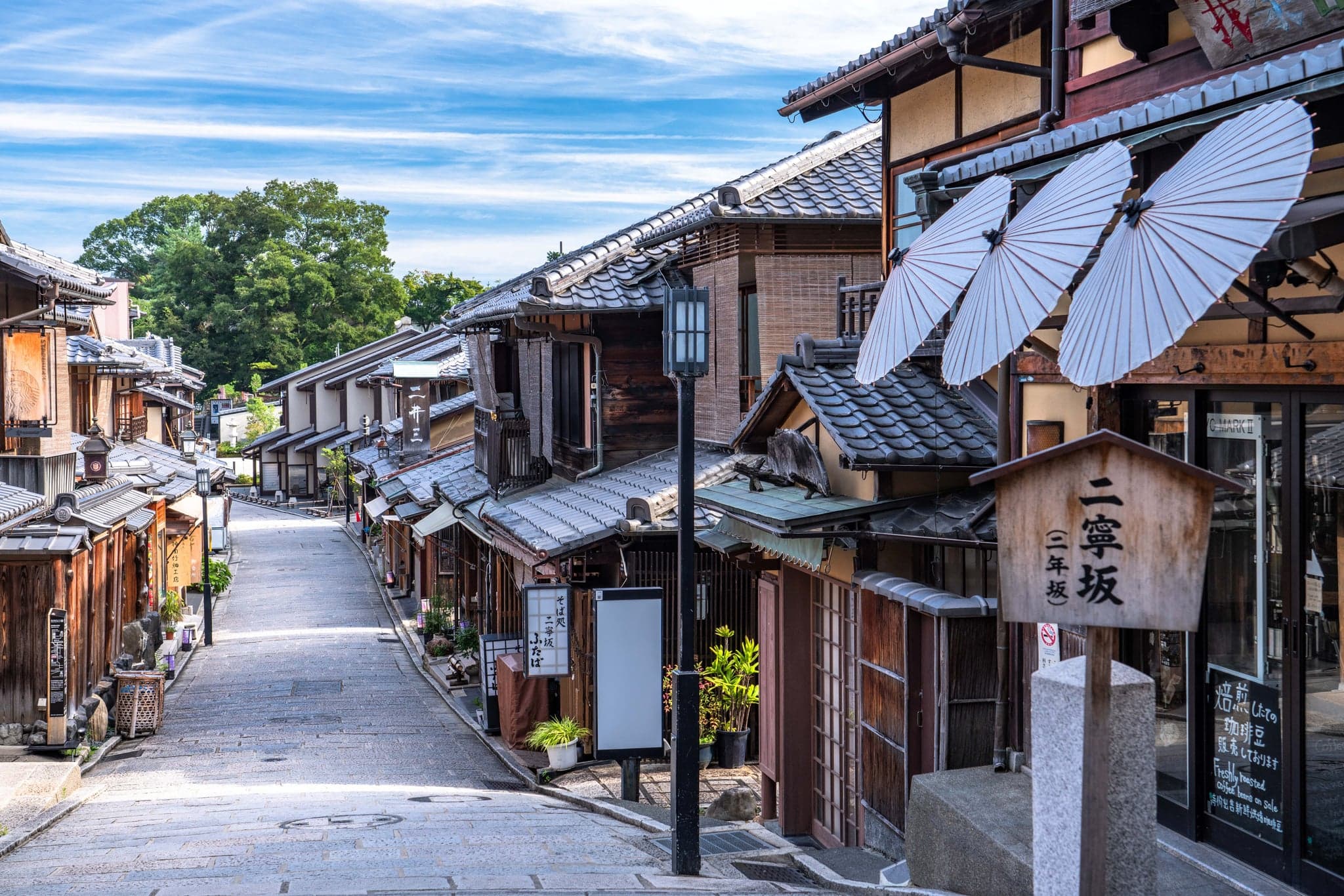
For train fans, this is the best day in Kyoto. The Kyoto Railway Museum is next to Umekoji Park, a walk or one stop from the main station (Umekoji-Kyotonishi on the JR Sagano Line). It has real bullet train cars, a roundhouse of steam locomotives around a working turntable, a big model railway that runs several times a day, and a short steam-hauled ride.
- Admission: ¥1,500 for adults (18 and over), ¥1,300 for high school and university students, ¥500 for elementary and junior high school students and ¥200 for children 3 and over.
- Hours: 10:00 to 17:00, last entry 16:30.
- Closed: Wednesdays and December 30 to January 1 — but it opens on national holidays and in spring and summer school breaks.
- Driving simulators: about 10 minutes for ¥100, sold only in advance as e-tickets (credit card) or at 7-Eleven, not inside the museum.
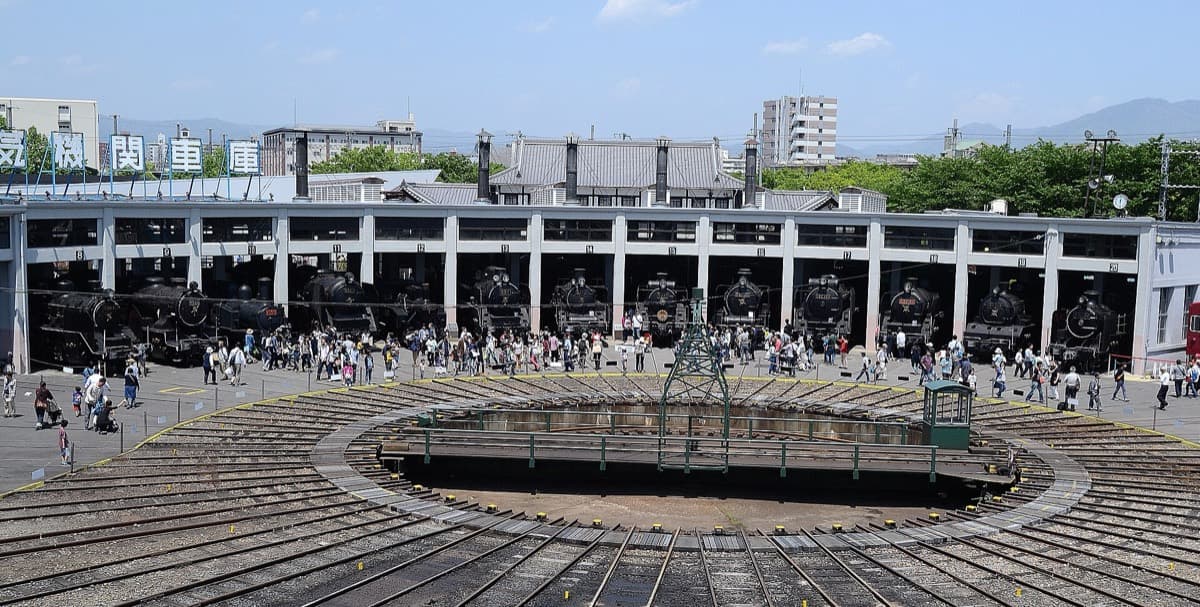
Round the day off at Nishiki Market, a covered food street in central Kyoto where kids can graze on skewers and sweets. Our things to do in Kyoto guide has more.
Nara Day Trip: Bowing Deer and a Giant Buddha
Nara is the easiest day trip from Kyoto, and for plenty of kids it's the best day of the trip. Kintetsu limited express trains reach Kintetsu-Nara Station in about 35 minutes, a few minutes' walk from the park; the JR Nara Line takes about 45 minutes for ¥720 and is covered by the Japan Rail Pass. See our Nara day trip guide.
The deer roam freely, and many have learned to bow for crackers, which vendors sell for about ¥200 for a pack of 10. Show your kids how it works: bow, hand over a cracker quickly, then show empty palms when you're done. Deer can nip, butt and tug at maps and bags, so keep crackers out of toddlers' reach and never tease them. Afterwards, walk to Todai-ji to see the Great Buddha inside its enormous wooden hall. Half a day is plenty, and you'll be back in Kyoto for dinner.
Days 12–13: Osaka for Takoyaki, Sharks and Super Nintendo World
Getting from Kyoto to Osaka is simple — about half an hour on the JR Special Rapid. Osaka is louder, cheaper and more obsessed with food than Kyoto, and kids generally approve.
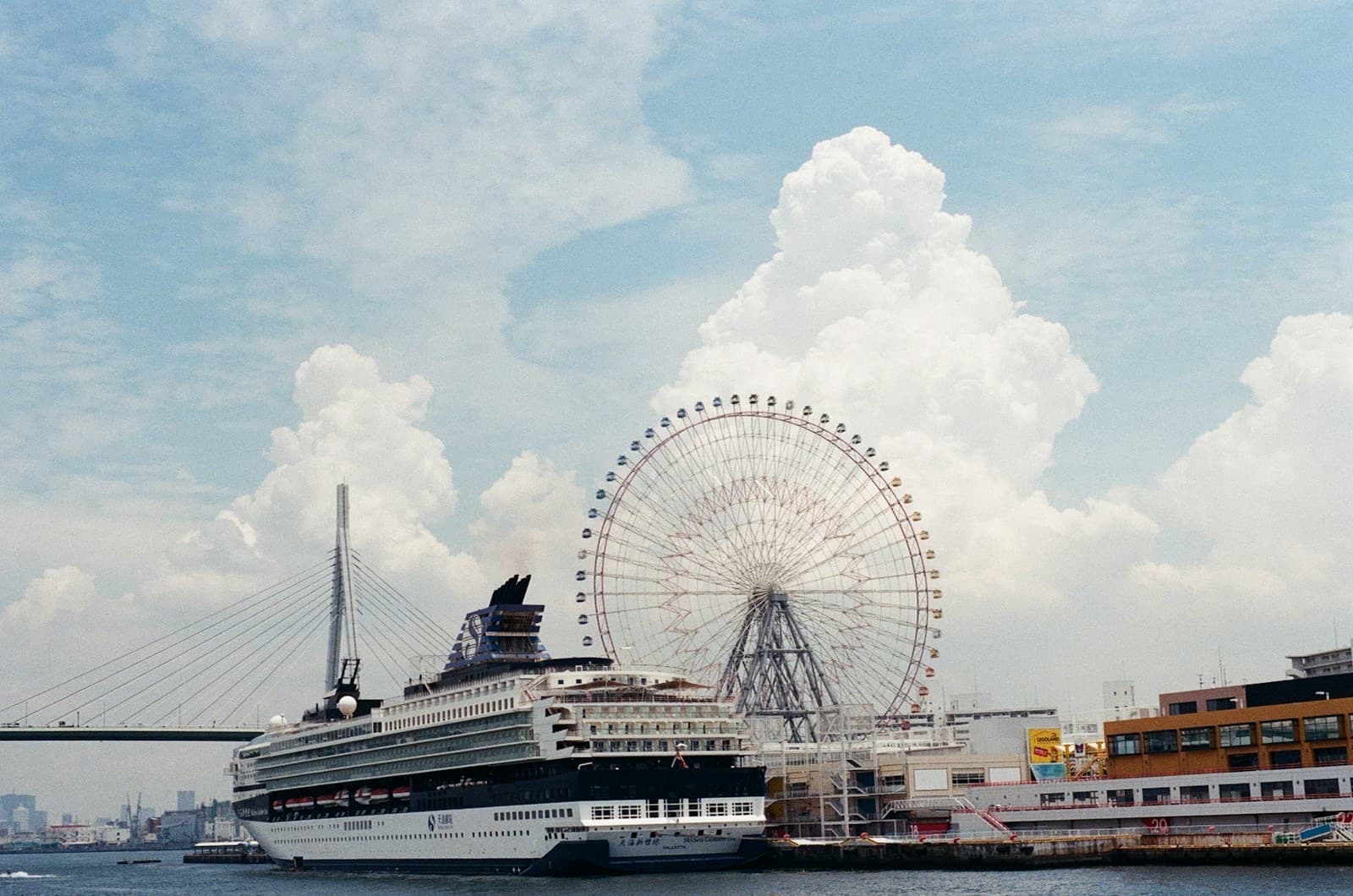
Spend your first afternoon at the Osaka Aquarium Kaiyukan, where whale sharks circle a huge central tank. Prices change by date: on a standard day it's ¥2,800 for adults (16 and over), ¥1,400 for elementary and junior high students and ¥700 for children 3 and over, rising on busy dates. It's open 10:00 to 20:00 on most days; buy tickets online for a timed slot to skip the queue.
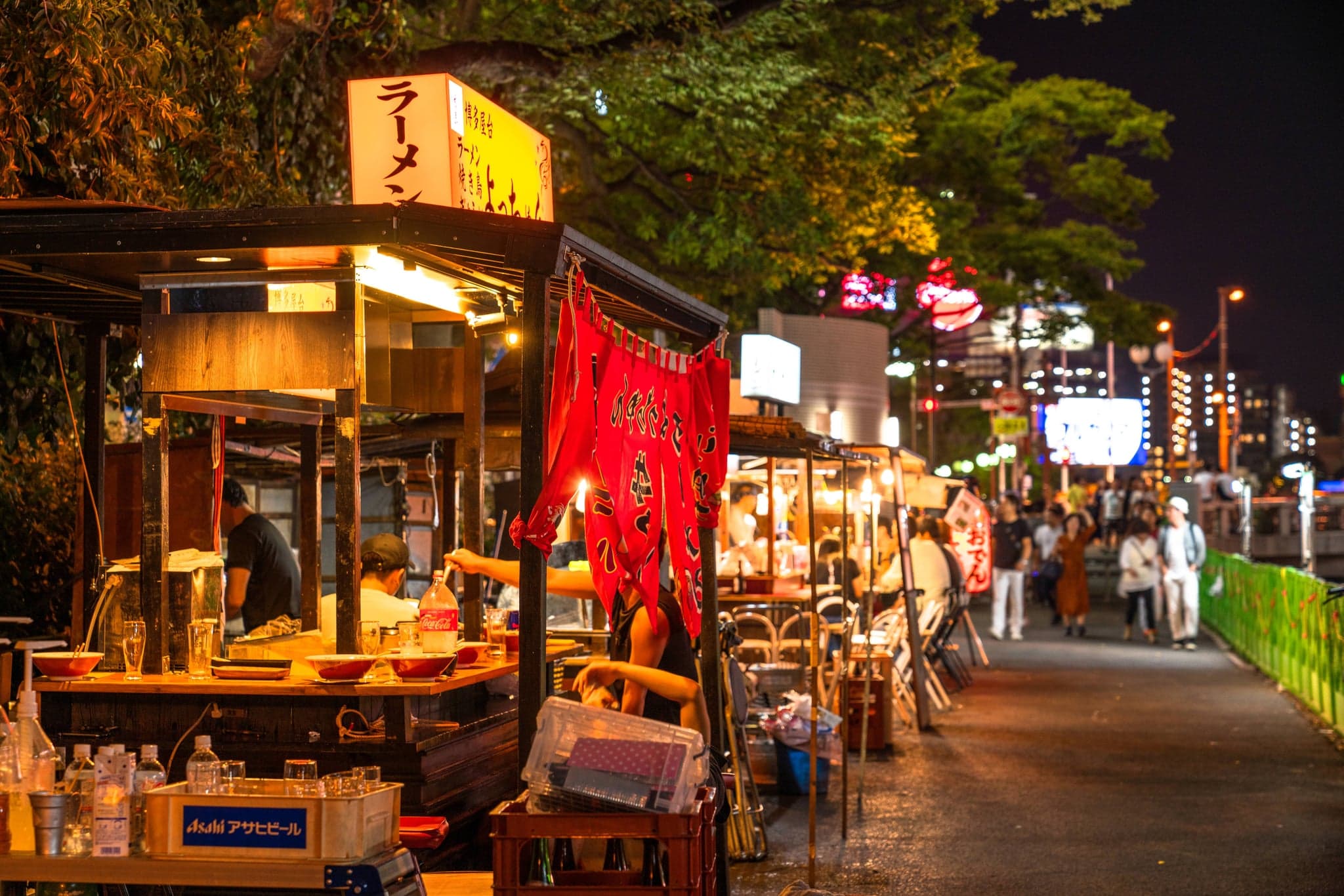
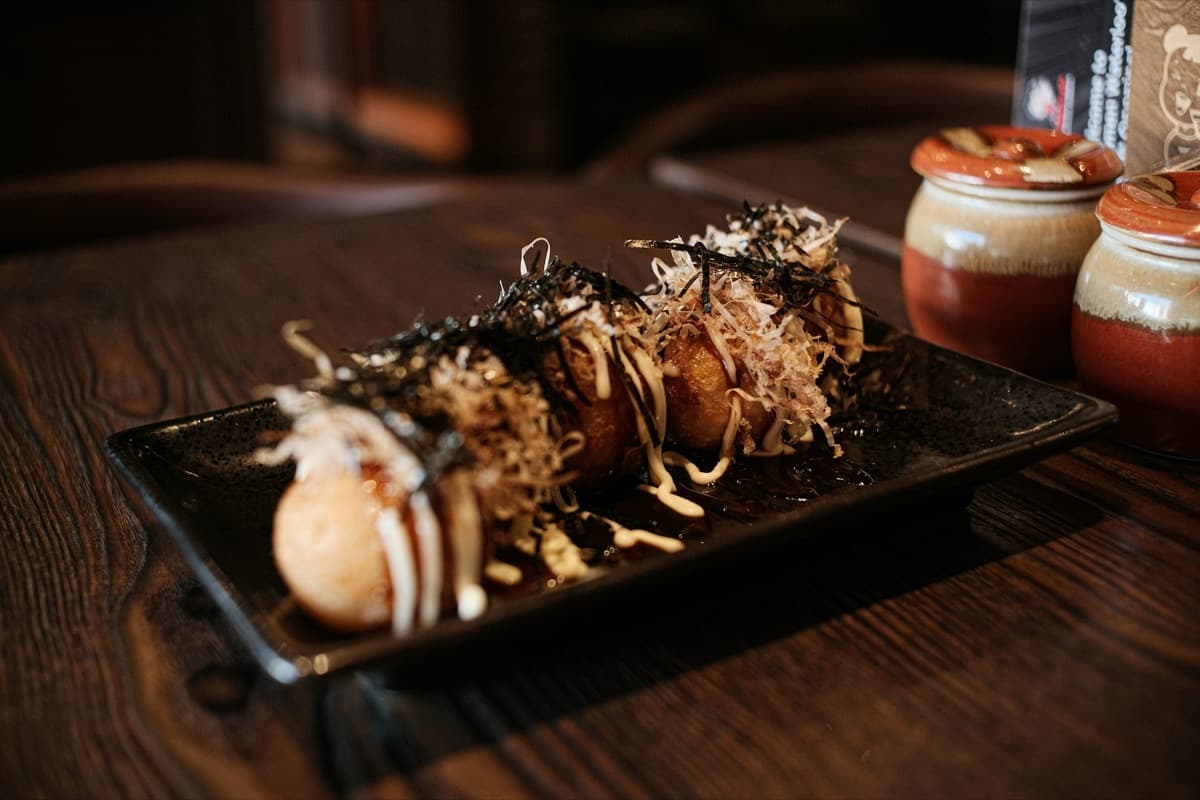
In the evening, walk Dotonbori under the neon signs and let the kids try all the food: takoyaki, okonomiyaki, skewers, small plates eaten standing up. Portions are small and cheap, which suits children perfectly.
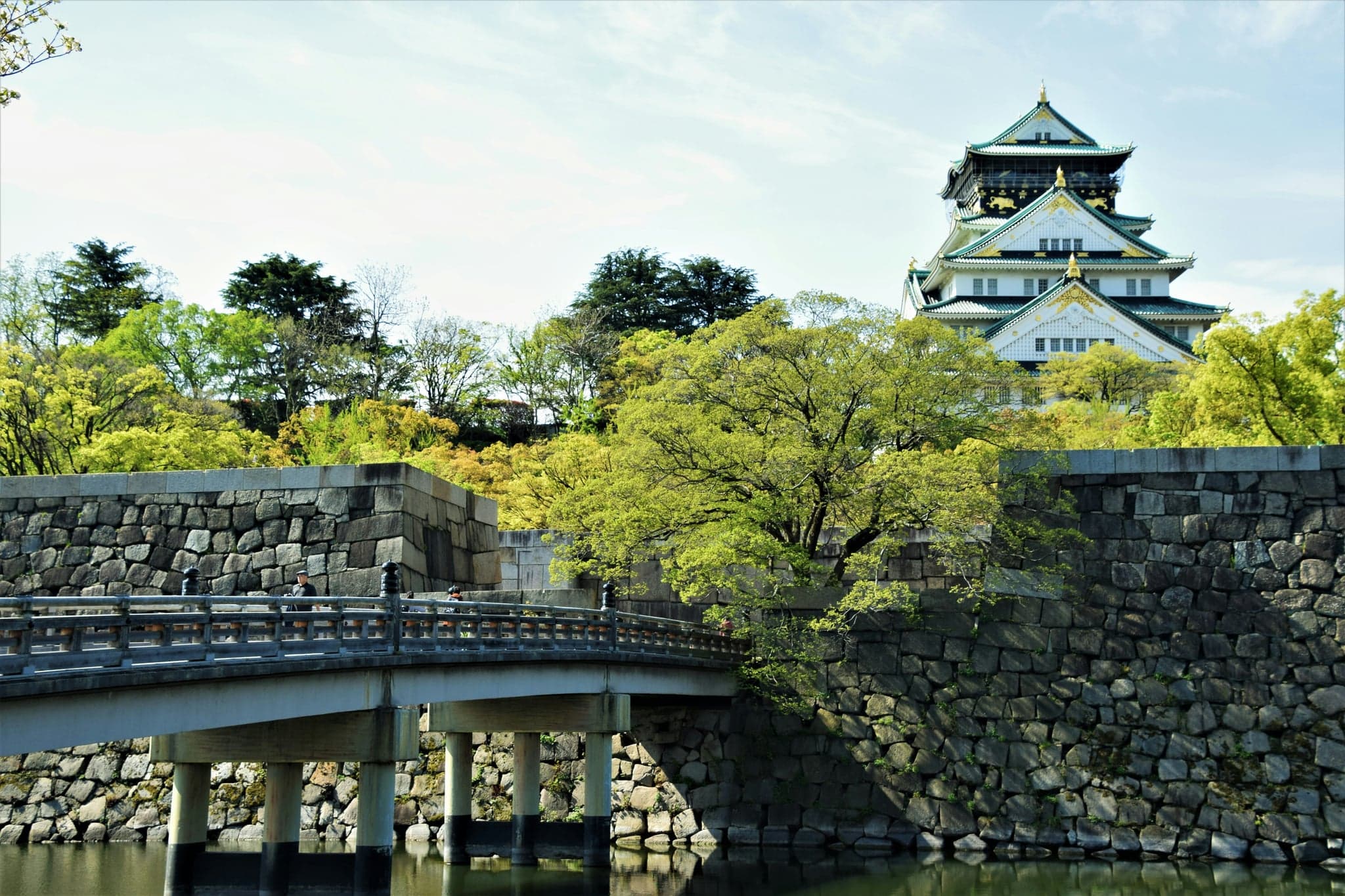
On day 13, go to Universal Studios Japan — or, if you already did Disney in Tokyo, Osaka Castle Park, with its lawns, moats and castle museum. The Osaka cafe in Shinsaibashi is within easy reach of Dotonbori, which makes it a good backup booking. On day 14, allow more time than you think to reach Kansai International Airport on the JR Haruka or Nankai's airport trains. Our Osaka guide has more ideas.
Shorter Versions: A One-Week or 10-Day Japan Itinerary With Kids
One Week: Two Destinations
Four nights in Tokyo and three in Kyoto, with Nara as a day trip, then fly home from Osaka's airport. Drop Hakone and the theme parks unless one of them is the reason for the trip; one week is about two destinations, not five.
Ten Days: Add Hakone or Hiroshima
Tokyo 4, Hakone 1, Kyoto 3, Osaka 2 keeps the shape of the two-week plan with less slack. Or swap Hakone for two nights in Hiroshima: the Peace Memorial Park is a powerful visit for older kids, and the ferry to Miyajima takes about 10 minutes, at ¥200 one way for adults and ¥100 for elementary school kids, plus the ¥100 Miyajima visitor tax (preschool children are exempt). FG001 and FG003 both include Hiroshima and the ferry.
Getting Around: Bullet Train, JR Pass and Public Transport
Japan's public transport is a big part of why family travel here works so well: trains are frequent, clean and safe, major stations have lifts, and station staff go out of their way to help.
How Children's Fares Work
- 12 and over pay the adult fare — but a 12-year-old still in elementary school counts as a child.
- Ages 6 to 11 pay half the adult fare for tickets, limited express tickets and reserved seats.
- Ages 1 to 5 ride free, up to two per paying adult or child; a third pays the child fare.
- A small child in their own reserved seat needs a child ticket. On a lap, they're free.
Is the Japan Rail Pass Worth It for a Family?
For this itinerary, usually no. Bought on the official online site, a 7-day ordinary Japan Rail Pass costs ¥50,000 for adults and ¥25,000 for children aged 6 to 11. From October 1, 2026, the same pass bought through an overseas JR-designated travel agency costs ¥53,000 (¥27,000 for a child), and the 14-day pass ¥84,000.
Now compare. The longest leg on this route, Tokyo to Kyoto, is ¥14,170 for an adult in a reserved Nozomi seat. Add the legs to Hakone, Osaka and the airport, and you still land well under the price of a 7-day pass per person — before counting what the pass doesn't cover here, like the Hakone Freepass and Kintetsu trains to Nara. Pass holders also pay a supplement to ride the Nozomi: ¥4,960 for an adult and ¥2,480 for a child between Tokyo and Kyoto. The pass starts to pay off when you pack several long rides into seven days, such as adding Hiroshima. Our JR Pass guide does the sums.
Riding the Bullet Train With Kids, Strollers and Suitcases
The bullet train is often the thing kids are most excited about, and it's easy with a bit of preparation.
- Mount Fuji: heading west from Tokyo, book the E seats — the window side of the two-seat row — for the best chance of seeing Fuji, weather permitting.
- Big suitcases: on the Tokaido, Sanyo and Kyushu Shinkansen, bags whose length, width and height add up to more than 160 cm (up to 250 cm) need a reserved "seat with an oversized baggage area". Board without one and you pay a ¥1,000 fee.
- Strollers can go in the overhead racks, the luggage areas or the oversized baggage spaces.
- Boarding: trains stop only briefly. Stand at your car number on the platform; one parent gets the kids on while the other handles the bags.
- Food: buy an ekiben (station bento) at the station before boarding. Some come in bullet-train-shaped boxes, which is basically a toy with lunch inside.
Our Tokyo to Kyoto guide covers the train choices.
IC Cards, Apple Wallet and Google Maps
IC cards like Suica, PASMO and ICOCA cover local trains, subways, buses and convenience store purchases. Adults with an iPhone can add Suica to Apple Wallet in a few taps. For kids, the simple way to get child fares is a physical Welcome Suica (Child):
- Where: Welcome Suica machines at Narita Airport and Haneda Airport (Terminal 3, Tokyo Monorail), or JR East Travel Service Centers at stations such as Tokyo, Shinjuku, Shibuya and Ueno.
- Bring: the child's passport; a parent can buy it for them.
- Rules: no deposit, valid for 28 days, usable until the March 31 after the child's 12th birthday. Don't overload it — the leftover balance isn't refunded.
Children under 6 don't need a card; they ride free with a paying adult. See our Welcome Suica guide. Google Maps handles train routes in Japan extremely well, including platforms and exits. If it sends you down a staircase with a stroller, look for the elevator signs — they're almost always there, sometimes at the far end of the platform.
If Something Goes Wrong
Call 119 for an ambulance or fire and 110 for the police. The Japan National Tourism Organization's Japan Visitor Hotline, 050-3816-2787, answers 24 hours a day in English, Chinese and Korean for accidents, emergencies and tourist information.
What Kids Pay: Children's Prices on This Itinerary
Age bands differ from place to place, which is why a family of four can pay four different prices at one gate. These are the figures we checked on September 28, 2026:
| Where | Prices | Good to know |
|---|---|---|
| JR trains and the shinkansen | Half the adult fare for ages 6–11; under 6 free (up to two per paying passenger) | A small child who takes their own reserved seat needs a child ticket |
| Hakone Freepass (2 days from Shinjuku) | ¥7,100 adult / ¥1,600 child (6–11) | Romancecar seat extra |
| Ueno Zoo | ¥600 adult / ¥200 junior high / younger children free | Closed Mondays |
| Tokyo National Museum | ¥1,000 adult; collection galleries free under 18 | Bring passports as proof of age |
| Ghibli Museum | ¥1,000 (19+), ¥700 (13–18), ¥400 (7–12), ¥100 (4–6), 3 and under free | Advance tickets only |
| Kyoto Railway Museum | ¥1,500 adult, ¥500 elementary and junior high, ¥200 ages 3+ | Closed Wednesdays (open in school holidays) |
| Monkey Park Iwatayama | ¥800 adult / ¥400 ages 4–15 | 9:00–16:30 |
| Osaka Aquarium Kaiyukan | Standard days: ¥2,800 adult (16+), ¥1,400 elementary and junior high, ¥700 ages 3+ | Prices change by date |
| Cup Noodles Museum Yokohama | ¥500 adult; high school age and younger free; ¥500 per cup to make your own | Closed Tuesdays |
| Tokyo Disney Resort 1-Day Passport | Child (4–11) from ¥5,300; junior (12–17) from ¥7,400; 3 and under free | Adults ¥9,900–12,400 in October 2026 |
| Universal Studios Japan 1-Day Studio Pass | Child from ¥5,500 | Adults ¥8,400–11,900 on the dates on sale |
Family Friendly Places Off the Beaten Path
Once the headline sights are done, some of the best family memories come from places that never top the rankings:
- Cup Noodles Museum Yokohama: kids design their own cup and choose the soup and toppings at the My CUPNOODLES Factory (¥500 per cup, by numbered ticket on the day — no advance booking). It's super fun, and they take the cup home. Admission is ¥500 for adults and free for high school age and younger; it's open 10:00 to 18:00 and closed on Tuesdays. There's a second museum in Ikeda, near Osaka.
- Kamakura: an easy day trip from Tokyo, with the Great Buddha, a beach and the little Enoden train along the coast.
- Ninja experiences: Iga, between Kyoto and Ise, is the home of ninja training for kids — see our ninja experience guide. FG005 builds a day around it with an English-speaking guide.
- Game centers and capsule toys: crane games full of little prizes, and walls of gachapon machines at a few hundred yen a go. Set a budget before you walk in.
- Neighborhood playgrounds: any local park is a chance to watch Japanese kids play and let yours burn off energy for free.
Trips out to smaller towns are rewarding, but plan a little more: fewer people speak English, fewer shops take cards, and trains run less often than in the larger cities.
Feeding Kids in Japan: Convenience Stores, Grocery Stores and Street Food
Picky eaters get through Japan just fine. Convenience stores such as 7-Eleven, FamilyMart and Lawson are a parent's best friend: onigiri (tuna mayo is a safe first try), sandwiches, fried chicken, yogurt, cut fruit, milk, and hot meals the staff will microwave for you. A convenience store breakfast in the hotel room saves a lot of morning stress.
Grocery stores and supermarkets are underrated. In the evening, bento boxes and sushi packs often get discount stickers, which makes them some of the best deals in the country for a picnic dinner. Department store food halls (depachika) are great for treats. For sit-down meals, conveyor-belt sushi with touchscreen ordering is a guaranteed hit, and family restaurants have picture menus and kids' sets. If anyone has a food allergy, carry a written allergy card in Japanese, because ingredient labels are mostly in Japanese only.
Market food is a highlight at Tsukiji, Nishiki Market and Dotonbori. The etiquette is simple: eat beside the stall, don't walk and eat where you're asked not to, and carry a small bag for rubbish, because public bins are rare.
Our Family Routes: This Itinerary, Already Booked
If you'd rather not assemble your trip to Japan yourself, our family routes are built on the same shape, and they're how most families we work with do Japan with kids: few hotel changes, rooms that fit a family of four, luggage sent ahead on the travel days, and free time for parks and Pokémon hunts.
| Route | Length | From (per person) | Nights and extras |
|---|---|---|---|
| Family Holidays: Shared Journey Through Japan’s Classics (FG001) | 13 days | $2,700–4,100 | Tokyo 3, Hiroshima 2, Kyoto 4, Hakone 1, Tokyo 2. Hakone Freepass and the Miyajima ferry included. |
| Family Holidays: Family Journey to Japan’s Classics (FG002) | 13 days | $2,900–4,300 | Tokyo 3, Hakone 1, Osaka 4, Takayama 2, Tokyo 2. Chartered taxi for Shirakawa-go. |
| Family Holidays: Castles, Villages & Sacred Shrines Together (FG003) | 13 days | $2,800–4,300 | Tokyo 2, Takayama 2, Kyoto 4, Hiroshima 2, Tokyo 2. Shirakawa-go taxi and Miyajima ferry. |
| Family Holidays: Tokyo Bay, Creative Parks & Osaka Thrills (FG004) | 9 days | $2,000–3,500 | Maihama 3, Nagoya 2, Universal City 3, breakfast daily. Park tickets not included. |
| Family-Friendly Japan Holiday: Ninja Adventure (FG005) | 9 days | $3,200–4,200 | Tokyo 2, Ise-Shima 2, Kyoto 4. Guided Tokyo day and two days with an English-speaking guide and driver. |
Every family route includes the shinkansen and limited express trains between cities, an IC card loaded with ¥4,000 to ¥10,000 depending on the route, luggage delivery on the travel days, travel insurance and 24/7 support from our team in Japan. The rooms have four beds or are connecting rooms; in Takayama it's a Japanese-style room with two beds and two futons. Park tickets and most entrance fees are paid on the spot. Our family vacation packages page compares them in more detail.
From our Japan travel team
The question families ask us most is whether 13 days is too long with young children. In our experience it is the length that works, as long as the hotel changes are few — our 13-day routes change hotels only four times, and on two of those days the luggage is sent ahead. Tell us your children's ages and what they are into, and we will suggest which route fits and where to put the free days.
Common Mistakes Families Make in Japan
- Too many hotel changes. Five bases in two weeks sounds fine on paper; in practice it's exhausting.
- Big days back to back. A theme park, then Shibuya, then a travel day is how meltdowns happen, and not only the kids'.
- Ignoring closing days. Monday closures in Tokyo catch out a lot of families, and so does the Kyoto Railway Museum on Wednesdays.
- Missing booking windows. Character cafe bookings, the Ghibli Museum and park tickets for busy dates won't wait for you.
- Buying the JR Pass automatically. Do the sums first. For a Tokyo–Kyoto–Osaka route it rarely wins.
- Dragging suitcases everywhere. Forward the big bags, and remember the 160 cm rule on the bullet train.
- Carrying no cash. Shrine stalls, deer cracker vendors and small shops may only take cash.
- Building a day around seeing Mount Fuji. Clouds win often. Plan the Hakone loop to be fun either way.
- Booking late for Japanese holidays. Golden Week, Obon and New Year fill up months ahead.
How to Turn This Into Your Own Trip to Japan
Here's the order we'd plan things in:
- Fix your dates and check them against Japanese public holidays and school breaks.
- Book flights, ideally open-jaw: into Tokyo, out of Osaka.
- Book hotels next. Rooms that fit a family of four are scarce, so book them early.
- Put the booking windows in your calendar: Disney at 2 p.m. Japan time two months ahead, USJ about two months ahead, the Ghibli Museum on the 10th of the month before at 10 a.m. Japan time, Pokémon bookings on their monthly release date, and adult Shibuya Sky tickets two weeks ahead.
- Check closing days for every place you care about, then shuffle days as needed.
- Decide on transport — point-to-point tickets or a rail pass — and buy the Hakone Freepass and park tickets separately.
- Add slack: keep at least one free half-day in every three.
Useful tools: Google Maps for routes, the Tokyo Disney Resort app, the official USJ app, a camera translation app for menus and labels, and an eSIM or pocket Wi-Fi so the maps keep working. For the wider picture — ages, safety and what to pack — see our guide to traveling to Japan with family and things to do in Tokyo.
FAQ: Japan Itinerary With Kids
How many days do you need for a Japan itinerary with kids?
Two weeks is ideal for a first trip to Japan: Tokyo, Hakone, Kyoto, Nara and Osaka with real downtime built in. With one week, stick to Tokyo and Kyoto; with ten days, add Hakone or Hiroshima.
Do children ride trains free in Japan?
Children under 6 ride free with a paying adult or child, up to two each, as long as they don't take a reserved seat of their own. Ages 6 to 11 pay half the adult fare, and from 12 they pay the adult fare (a 12-year-old still in elementary school counts as a child).
Is the JR Pass worth it for a family?
Usually not for a Tokyo–Kyoto–Osaka route: point-to-point tickets add up to less than the ¥50,000 adult and ¥25,000 child 7-day pass. It can pay off if you add several long rides, such as Hiroshima, within seven days.
Can you take a stroller on the bullet train?
Yes. Strollers can go in the overhead racks, the luggage areas or the oversized baggage spaces. Suitcases over 160 cm in total dimensions need a reserved seat with an oversized baggage area on the Tokaido, Sanyo and Kyushu Shinkansen, or a ¥1,000 fee applies.
How do you book the Pokémon Cafe?
Online only, a month at a time. Dates in November 2026 open at 6:00 p.m. Japan time on October 1, 2026, at the Tokyo (Nihombashi) and Osaka (Shinsaibashi) cafes. Popular slots go fast, so be ready when bookings open.
Is Japan good for toddlers and little kids?
Very. Stations and department stores have lifts, baby-changing rooms and nursing rooms, the streets are safe, and people are patient with small children. The challenges are crowds, stairs at smaller stations and summer heat, so bring a lightweight stroller and a baby carrier.
Do you have family tours of Japan?
Yes. Our self-guided family routes run 9 or 13 days with four-bed or connecting rooms, trains between cities, luggage delivery, travel insurance and 24/7 support, from $2,000 per person. FG001 follows Tokyo, Hiroshima, Kyoto and Hakone; FG004 is built around the Tokyo and Osaka theme parks.
Fares, prices and rules were checked on September 28, 2026 against JR East, JR Central, Odakyu, Tokyo Disney Resort, Universal Studios Japan, the Ghibli Museum, the Kyoto Railway Museum, the Osaka Aquarium Kaiyukan, the Cup Noodles Museum, the Pokémon Cafe, Hatsukaichi City (Miyajima visitor tax), the Nara tourism office and JNTO. Routes and prices are from our catalogue on the same date.
Planning Japan With Kids? Let Us Take the Logistics
With kids, the hard part isn't the sightseeing; it's rooms that fit everyone, trains that match their energy, and help when something goes wrong halfway through. Our family routes arrange all three, and you travel at your own family's pace — the recipe for a great trip for the whole family.