Japan Theme Parks: Tickets, Timing, and What a Park Day Really Costs
Which Japan theme parks are worth a day, the two-month booking window that catches most visitors out, what tickets and skip-the-line passes actually cost, and how to fit a park day into a longer Japan trip without losing Kyoto.
Japan theme parks are not a hard thing to visit. They are a hard thing to book. Both of the big ones sell tickets for a fixed date, both release those dates only about two months ahead, and both put their most wanted areas behind a separate entry system you can only use once you are already inside the gates.
That gap — between booking a trip six months out and buying a park ticket two months out — is where most park days go wrong. This guide is written from the operator's side of it. We run self-guided trips that put travellers in Universal City and Maihama hotels several times a week, and the questions below are the ones our travellers actually ask.
Quick Answer: Planning a Japan Theme Park Day
- Tickets go on sale roughly two months ahead. Tokyo Disney Resort releases them daily at 2:00 p.m. for the same date two months later. Universal Studios Japan sells about two months out since its Expo-period three-month window ended.
- Prices move with the date. A 1-Day Studio Pass at USJ ran from ¥8,400 to ¥11,900 for an adult across the dates on sale in late September 2026. A Tokyo Disney 1-Day Passport ran ¥9,900 to ¥12,400 through October.
- You cannot buy at the gate at USJ. On-site ticket booths closed in May 2025. It is the web store, Lawson, a partner hotel, or a contracted travel agency.
- The headline lands need a second ticket. Super Nintendo World needs an area timed entry ticket; Fantasy Springs at Tokyo DisneySea needs a Standby Pass or paid Premier Access.
- Skip-the-line is sold separately. Universal Express Pass starts around ¥13,800 per person on top of admission; Disney Premier Access is ¥1,500–¥2,500 per attraction.
Booking window
~2 months
USJ adult
¥8,400–11,900
Disney adult
¥8,900 and up
Time needed
One full day each
Which Japan Theme Parks Are Worth a Day of Your Trip
Japan has dozens of amusement parks. Seven of them come up often enough with visiting travellers to be worth sorting out, and they divide neatly by where they sit on the map.
| Park | Where it is | What kind of day it is |
|---|---|---|
| Universal Studios Japan | Universal City, Osaka Bay — 1 station area west of central Osaka | Movie and game worlds, thrill rides, the busiest single park day in western Japan |
| Tokyo Disneyland | Maihama, Chiba — on the JR Keiyo Line from Tokyo Station | Classic Disney park, the gentlest option for younger children |
| Tokyo DisneySea | Maihama, Chiba — next door to Tokyo Disneyland | Harbours, volcano and the Fantasy Springs area; the one adults tend to rate highest |
| Fuji-Q Highland | Fujiyoshida, Yamanashi — near Lake Kawaguchi | Record-setting roller coasters with Mount Fuji behind them |
| Ghibli Park | Nagakute, Aichi — outside Nagoya | Walk-through film worlds, timed tickets, no rides in the theme-park sense |
| Sanrio Puroland | Tama, western Tokyo | Indoor Hello Kitty and Sanrio park; shows and characters rather than coasters |
| Nagashima Spa Land | Kuwana, Mie — between Nagoya and Osaka | Large coaster park attached to an outlet mall and hot spring |
For a first trip, the practical choice is between the Osaka park and the two Tokyo Bay parks, because those are the ones that sit beside a city you were already going to visit. Fuji-Q suits a Mount Fuji leg, Ghibli Park suits a Nagoya stop, and Nagashima Spa Land suits nobody who is not already driving past Kuwana.
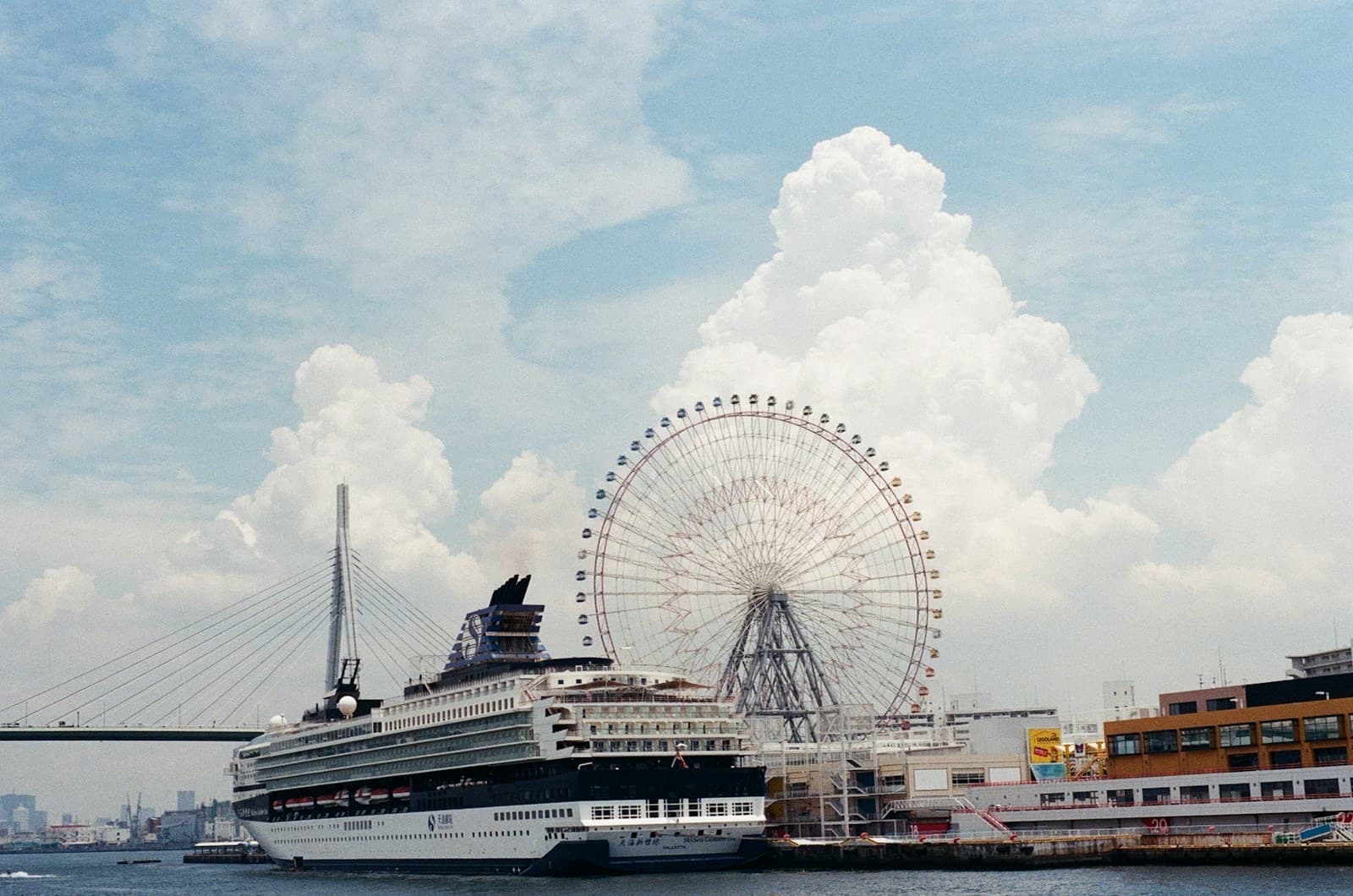
A note on how these parks work geographically, since it decides your hotel: the Osaka park sits at Universal City on Osaka Bay, a short local train ride from central Osaka, with its own cluster of hotels outside the gate. Tokyo Disneyland and Tokyo DisneySea share one resort at Maihama in Chiba, reached on the JR Keiyo or Musashino Line and linked internally by the Disney Resort Line monorail — ¥300 for an adult single, ¥150 for a child, with the loop of four stations taking about 13 minutes.
What Is Actually Inside the Osaka Park
It helps to know what you are queuing for before you decide how much a day is worth. The clearest public list of what Universal Studios Japan contains is the one the operator sells against: the attractions named on each Universal Express Pass tier. As of September 2026 those passes cover, between them, Mario Kart: Koopa's Challenge, Yoshi's Adventure and Mine-Cart Madness in Super Nintendo World; Harry Potter and the Forbidden Journey and Flight of the Hippogriff in The Wizarding World of Harry Potter; and then The Flying Dinosaur, Jurassic Park – The Ride, JAWS, Despicable Me: Minion Mayhem, Illumination's Villain-Con Minion Blast and Hollywood Dream – The Ride: Backdrop.
Two of those are why people fly here.
Super Nintendo World and Donkey Kong Country
This is the reason the Osaka park is insanely busy on a Saturday, and the reason the entry system in the section below exists at all. Super Nintendo World is the Mario land; Donkey Kong Country is the expansion attached to it, and Mine-Cart Madness is its headline ride. Mario Kart: Koopa's Challenge is the other queue that does not shorten all day. If these are the point of the visit for someone in your party, treat the area entry ticket as the first task of the morning rather than something to sort out after lunch.
The Wizarding World of Harry Potter
The other immersive world, and the one that rewards slow walking rather than ride-chasing: the village, the castle and the shop interiors are the experience as much as Forbidden Journey is. Budget a couple of hours here if anyone in the group cares about it, and do not schedule it against the Nintendo entry window.
The rest of the park
Beyond the two headline worlds, the major attractions are spread across movie-themed streets: the dinosaurs, the shark, the minions, the coasters and a stunt show. It is a lot for one day, which is the honest argument for the 1.5 Day pass if you have the time to give it. Families with younger children should know that the gentlest rides are grouped together away from the thrill rides, so a party can reasonably split for an hour and meet again.
One practical note that costs people rides: the official app shows live wait times for every attraction, and it is the same app you need for timed entry. Check it while you are queueing for something else rather than walking the length of the park to find a 120-minute line.
The Two-Month Booking Window Nobody Warns You About
This is the single thing most trip-planning articles leave out, and it is the one that costs people their park day.
Tokyo Disney Resort states the rule plainly: tickets are sold daily from 2:00 p.m. for admissions on the same date two months later. Book a trip for 10 April and the tickets for that day appear at 2:00 p.m. on 10 February — not before.
Universal Studios Japan temporarily stretched its window to three months during the Osaka Expo in 2025, and said at the time that it planned to revert to selling roughly two months ahead once the Expo closed. That is what the store looks like now: checked on 21 September 2026, the official web ticket store was selling dates through 22 November and no further.
For anyone booking a Japan trip half a year in advance, the practical consequences are worth writing in your calendar:
- Your park ticket is a separate errand from your trip booking. Set a reminder for the day the dates open, not for the week before you fly.
- Fix the park day early anyway. Even though you cannot buy yet, you need to know which day it is, because the hotel beside the park and the train legs around it get booked on the trip timeline, not the ticket timeline.
- Popular dates do sell out. Tokyo Disney notes that sales may be suspended without notice when a day's limit is reached, and that sold-out days can quietly come back.
- Dates are not always locked forever. USJ allows the admission date to be changed on some tickets; the rules depend on when you bought and when you are visiting, so check before you assume either way.
From our Japan travel team
When a trip includes a park day, we fix the date at the planning stage and tell you the exact day the park's tickets open for it. You buy the admission yourself — it is not included in our routes — but the hotel, the trains around the park day and the luggage transfer are all arranged before you arrive, so the only thing left on your list is the ticket.
What a Park Day Actually Costs
Both operators use variable pricing, so there is no single right answer — but there is a range, and the spread between the cheapest and dearest dates is big enough to plan around.
Universal Studios Japan: 1-Day Studio Pass
These are adult prices read off the official web ticket store's calendar on 21 September 2026, for the dates then on sale.
| Band | Adult price | When |
|---|---|---|
| Cheapest dates on sale | ¥8,400 – ¥8,900 | Mid-November weekdays (Nov 16–18) |
| Ordinary weekdays | ¥9,400 – ¥10,900 | Most Mondays to Thursdays through October and November |
| Weekends and holiday runs | ¥11,900 | Saturdays, Sundays and the late-September Halloween dates |
| Floor price quoted by the store | ¥8,400 adult / ¥5,500 child / ¥7,600 senior | The "from" price; the calendar date decides what you actually pay |
Multi-day options exist and are cheaper per day: a 1.5 Day Studio Pass starts at ¥13,600 and lets you in from 3:00 p.m. on the first day, and a 2 Day Studio Pass starts at ¥16,000. If you are travelling with children who will want to redo the same three rides, the 1.5 Day is the one that quietly saves the day.
Moving a park day from Saturday to a Tuesday in the same week was worth ¥3,500 per adult on the dates we checked. On a family of four that is a night in a hotel.
Tokyo Disney Resort: passport prices
Tokyo Disney publishes the lowest price for each ticket type and then varies the actual price by date. Adult means 18 and over here, which is different from Osaka; junior covers 12–17, child covers 4–11, and under-3s go free.
| Ticket | Adult | Junior | Child |
|---|---|---|---|
| 1-Day Passport | ¥8,900 – | ¥7,400 – | ¥5,300 – |
| After 3 Passport (weekends and holidays) | ¥7,900 – | ¥6,600 – | ¥4,400 – |
| After 5 Passport (weekdays) | ¥6,000 – | ¥5,200 – | ¥3,800 |
On the October 2026 calendar, the adult 1-Day Passport was ¥9,900 on the quietest weekdays, ¥10,900 on ordinary ones, ¥11,900 on Sundays and ¥12,400 on Saturdays. The afternoon passports are the underrated ticket here: an After 5 Passport on a weekday costs an adult ¥6,000 and a child ¥3,800, which turns an arrival day into a half park day rather than a lost one.
Skip-the-line passes, which are not optional in peak season
Universal Express Pass is sold separately from admission and is where a park day gets expensive. The prices below are the store's "from" figures on 21 September 2026; like admission they rise on busy dates.
| Pass | From | What it covers |
|---|---|---|
| Universal Express Pass 4 | from ¥13,800 | Four attractions, plus guaranteed timed entry to Super Nintendo World |
| Universal Express Pass 5 | from ¥14,700 | Five attractions; a second version at ¥18,900 swaps in different rides |
| Universal Express Pass 8 | from ¥23,900 | Eight attractions including both Mario Kart and Mine-Cart Madness |
| Express Pass Premium | from ¥41,000 | Every attraction once, with timed entry included |
| Express Pass Premium Unlimited | from ¥99,000 | Unlimited repeat rides; sold in small numbers |
Tokyo Disney does it differently. There is no all-day pass; instead you buy Disney Premier Access inside the app, per experience, at ¥1,500–¥2,500 for an attraction and ¥2,500–¥3,500 for a parade or show. Each park ticket can hold one Premier Access at a time, and they sell out. Cheaper per use than an Express Pass, more work during the day.
The honest budget, for two adults and two children aged 4 to 11 on an ordinary weekday at the Osaka park: admission is roughly ¥33,000 at the floor prices and closer to ¥37,000 on a typical date, and adding the cheapest Express Pass for all four adds more than ¥55,000 on top. Express Passes are worth it on weekends, Japanese school holidays, Golden Week and the New Year run. On a quiet weekday with an early arrival, most families do fine without one.
Getting Into the Headline Lands Is a Second Ticket
This trips up more first-time visitors than anything else on this page, and it applies at both resorts.
Super Nintendo World at the Osaka park
Your Studio Pass gets you into the park, not into this area. To enter you need one of these: an Area Timed Entry Ticket: Advance Booking, which comes bundled with certain Universal Express Passes or through selected travel agencies; an Area Timed Entry Ticket or Standby Entry Ticket, which you take in the official app once you are inside the park; or a VIP Tour reservation. On quieter days entry is sometimes open without any of them, but that is not something to plan around.
The app procedure matters because it has a step you can do the night before:
- Register your Studio Pass QR code in the official app in advance. The operator explicitly recommends doing this before you reach the gates, and you can register the whole party's passes together.
- Register everyone in one go. If standby tickets end up being issued separately, only the number of people on the winning ticket gets in — which is how families get split up.
- Take the timed entry ticket as soon as you are through the gates. They are only available inside the park, only valid on the day, and distribution can end early.
- Check your phone can run the app. It needs iOS 17.0 or later, or Android 9.0 or later, in a current version.
Once issued, the time, the number of people and the area cannot be changed, and the ticket cannot be transferred or resold.
Fantasy Springs at Tokyo DisneySea
Same shape, different names. Entry to Fantasy Springs requires a Standby Pass, which is free, or Disney Premier Access, which is paid, for one of the eligible attractions — in addition to a valid DisneySea park ticket. Both are handled in the Tokyo Disney Resort app. If Fantasy Springs is the reason someone in your party wants to go, plan the morning around getting that pass first.
The Other Theme Parks Japan Is Worth Knowing About
The two big resorts dominate the question, but a few of the others solve problems the big parks do not — and one of them has a stricter ticket rule than either.
Ghibli Park and the Ghibli Museum are not the same place
This confusion costs people a day. Ghibli Park is in Nagakute, outside Nagoya, and is a set of walk-through film worlds rather than a ride park. The Ghibli Museum is in Mitaka in western Tokyo, and it is small, indoor and completely reservation-based: admission is by advance reservation only, no tickets are sold at the museum, each ticket is valid for a specified date and entry time, and tickets go on sale at 10 a.m. Japan time on the 10th of each month for the following month. Overseas visitors buy through the Lawson ticket site or a tour package.
That is a tighter window than the theme parks: if you want the museum in April, you are buying on 10 March. Decide early whether it matters to you, because there is no way to fix it later.
Fuji-Q Highland, Sanrio Puroland and Huis Ten Bosch
Fuji-Q Highland only makes sense if you are already spending a night around Lake Kawaguchi — the coasters are the draw and Mount Fuji is the backdrop, and our Kawaguchiko guide covers that area. Sanrio Puroland is the indoor theme park dedicated to Hello Kitty and the other Sanrio characters, out in western Tokyo: shows, parades and character meetings rather than rides, and a genuinely good rainy-afternoon answer for small children. Huis Ten Bosch in Nagasaki Prefecture is a Dutch-themed town best known for its night illuminations, and it is the one of these we actually route through — it is an overnight stop on our Kyushu food journey (KY002).
Also worth knowing if you are heading through Aichi: Inuyama is a stop on several of our family and onsen routes for Inuyama Castle, a National Treasure and one of Japan's oldest original keeps — a completely different kind of day out, in the same region as Ghibli Park, if a park day is not what a rest day needs.
A Park Day With Kids: Walking, Waiting and Food
The three things that decide whether a park day with children is a good memory or an expensive argument are not on any ticket page.
- Walking. A full day is a long way on foot, on top of whatever walking your itinerary already has. If your Japan trip is built on temples and train stations, the park day is not a rest day — plan the rest day after it, not before.
- Waiting. Queue time is the real currency. This is what the Express Pass and the app's wait times exist to manage, and it is why a weekday visit is worth more than any single trick: the same rides, less of your day spent standing.
- Food. Themed food is part of the experience and part of the budget. Eat early — the restaurants fill on the same curve the rides do — and keep something in the bag for the 3 p.m. slump, because that is when small children stop negotiating.
One more thing worth knowing before you spend the money: at the Osaka park, admission does not let you back in once you leave. A mid-day nap means the hotel has to be inside walking distance, which is exactly why the park-side hotels cost what they do.
Is Universal Studios Japan Worth It?
Worth it compared with what, is the real question. A park day costs you the ticket, the passes, and — more expensively — a whole day of a trip that probably has ten to fourteen of them. Here is how we answer it when travellers ask.
- Worth it if someone in the party specifically wants it. Nintendo, Harry Potter and the thrill rides are the draw, and a park day built around a genuine want is never the day people regret.
- Worth it with children roughly 5 to 14. This is the age band where a park day carries the rest of a temple-heavy itinerary. Our family routes are built on exactly that trade.
- Think twice on a seven-day trip. With a week in Japan, a park day is a seventh of everything, and it competes directly with Kyoto. Our shorter itineraries put the park at the start or end for this reason.
- Not worth it as a rainy-day backup. It is the most weather-exposed, most queue-exposed day you can book, and it needs a ticket bought weeks earlier. It is a plan, not a fallback.
- Not worth it if crowds are the thing you dislike. There is no version of this day that is quiet.
And the underrated answer: for many families the best solution is not one park at all. Two half-days — an After 5 Passport at Tokyo Disney on an arrival evening, then a full day in Osaka later in the trip — gives you both resorts and costs less than one peak-date ticket with an Express Pass.
Where You Sleep Is Also a Ticket Channel
This is the part that changes the maths, and almost nobody writes it down.
At Tokyo Disney Resort, guests of the Official Hotels who contact their hotel in advance can buy park tickets at the hotel for the nights of their stay even when tickets are unavailable on the official website. That is the resort's own published guest benefit. The Official Hotels also get a free Disney Resort Cruiser shuttle to Bayside Station on the monorail, and a baggage service between the hotel and the counter next to JR Maihama Station.
At the Osaka park, on-site ticket booths closed for good in May 2025, and the operator lists partner hotels as one of the remaining channels — guests only. The official ticket page adds that if you are staying at a partner hotel you may buy tickets on the day of your check-in and the following day.
In other words, the hotel you book is not just a bed near the gate. It is a fallback for the exact failure mode — sold-out dates — that the two-month window creates. Our theme park routes use the Universal City hotels that sit right by the park entrance, and on the Tokyo Bay side they use Tokyo Disney Resort Official Hotels. That is deliberate.
For the alternative — staying in central Osaka and commuting in — see our guide to where to stay in Osaka, which lays out the areas and the hotels our routes book in each of them. Central Osaka is cheaper, has far better food, and costs you a short train ride each way; the park-side hotels buy you the early start and the mid-afternoon nap.
Either way the commute is public transport, not a shuttle. The park has its own station, Universal City, on the JR Yumesaki Line — the operator's own access page lists routes from Osaka Station and Umeda, Shin-Osaka, both Namba stations, Tennoji and both airports, with Nishikujo as the interchange for most of them. Our routes include a transport IC card loaded with credit, which covers this hop and everything else local you do that week. If you are travelling on a rail pass, our guide to whether the JR Pass is worth it explains what these short JR rides do and do not justify.
Self-Guided Routes With Park Days Built In
We are a Japan-based operator, and these are the routes where a park day is part of the plan rather than an add-on. Every one of them includes the hotels, the Shinkansen and limited express legs between cities, a transport IC card loaded with credit, travel insurance and 24/7 support while you are here.
Park admission is not included on any of them. Each route says so in its own terms, and this guide exists partly because of it: you buy the park ticket, so you should know exactly how and when.
| Route | Park-side nights | Length | From |
|---|---|---|---|
| Tokyo Bay, Creative Parks & Osaka Thrills (TP004) | 3 nights Maihama + 3 nights Universal City | 9 days | $2,200–$3,500 |
| Family Holidays: Tokyo Bay, Creative Parks & Osaka Thrills (FG004) | 3 nights Maihama + 3 nights Universal City, family rooms | 9 days | $2,000–$3,500 |
| Japan’s Thrilling Theme Parks & Kyoto (TP005) | 3 nights Maihama + 3 nights Universal City, 2 in Kyoto | 9 days | $2,400–$4,200 |
| From Fantasy Rides to Classic Towns (TP006) | 3 nights Maihama + 2 nights Universal City, via Kanazawa and Kyoto | 12 days | $3,500–$5,900 |
| Japan Highlights & Theme Park in Osaka (TP003 / TP103) | 2 nights Universal City, with Tokyo, Kyoto, Takayama and Shirakawa-go | 12 days | $3,200–$4,900 |
| Culture, Nature and Universal City Adventure (TP002 / TP102) | 3 nights Universal City, with Tokyo, Hiroshima and Kyoto | 12 days | $3,000–$4,800 |
| 15 Days Through Japan & Universal City (TP001 / TP101) | 3 nights Universal City, with Tokyo, Kyoto, Nara and Shirakawa-go | 15 days | $4,000–$6,500 |
Two details worth knowing. The four routes that visit both resorts include luggage delivery from Maihama to Universal City, so you travel between Tokyo Bay and Osaka Bay with a day bag while the suitcases go ahead — and on one of them the bags come back to Tokyo at the end as well. And the deluxe versions (TP101, TP102, TP103) are the same itineraries with upgraded hotels, including the hotel directly outside the Osaka park gate.
If you would rather base a family in the middle of the city and treat the park as a day out, the family route FG002 does that instead: four nights in apartment-style family rooms around Namba or Shinsaibashi, with a park day on day six. For the wider range, see our family vacation packages and the practical advice in travelling to Japan with family.
From our Japan travel team
Tell us which park matters most to your group and we will build the route around that day rather than squeezing it in. We can also tell you honestly when a park day is the wrong call for the length of trip you have — on a seven-day first visit it usually is, and we would rather say so before you book than after.
Fitting a Park Day Into a Real Japan Itinerary
A park day is a full day plus the travel around it. The trick is to put it where it does the least damage to the rest of the trip.
- Put it next to the city it belongs to, not between two cities. A park day in Osaka works because Osaka is already a two- or three-night stop. A park day wedged between Kyoto and Hiroshima costs you a travel day as well.
- Use the jet-lagged day. Arriving families are awake at 5 a.m. anyway for the first two mornings. That is the best possible rope-drop day, and it is when an afternoon passport also earns its keep.
- Avoid the third day after a long flight. That is the day the tiredness lands. Queues and tiredness together are how park days turn into arguments.
- Keep the day after light. Schedule a Nara day trip or a slow Osaka morning rather than a 7 a.m. train.
- Watch the Japanese calendar, not just yours. Golden Week, the mid-August Obon week, and the New Year period are the three most expensive and most crowded windows. Our public holidays guide has the dates.
For the shape of a whole trip with a park day in it, our 10-day itinerary and two-week itinerary are the two we point people at most. If you are moving between the two park cities under your own steam, Tokyo to Osaka covers the options and what each one costs.
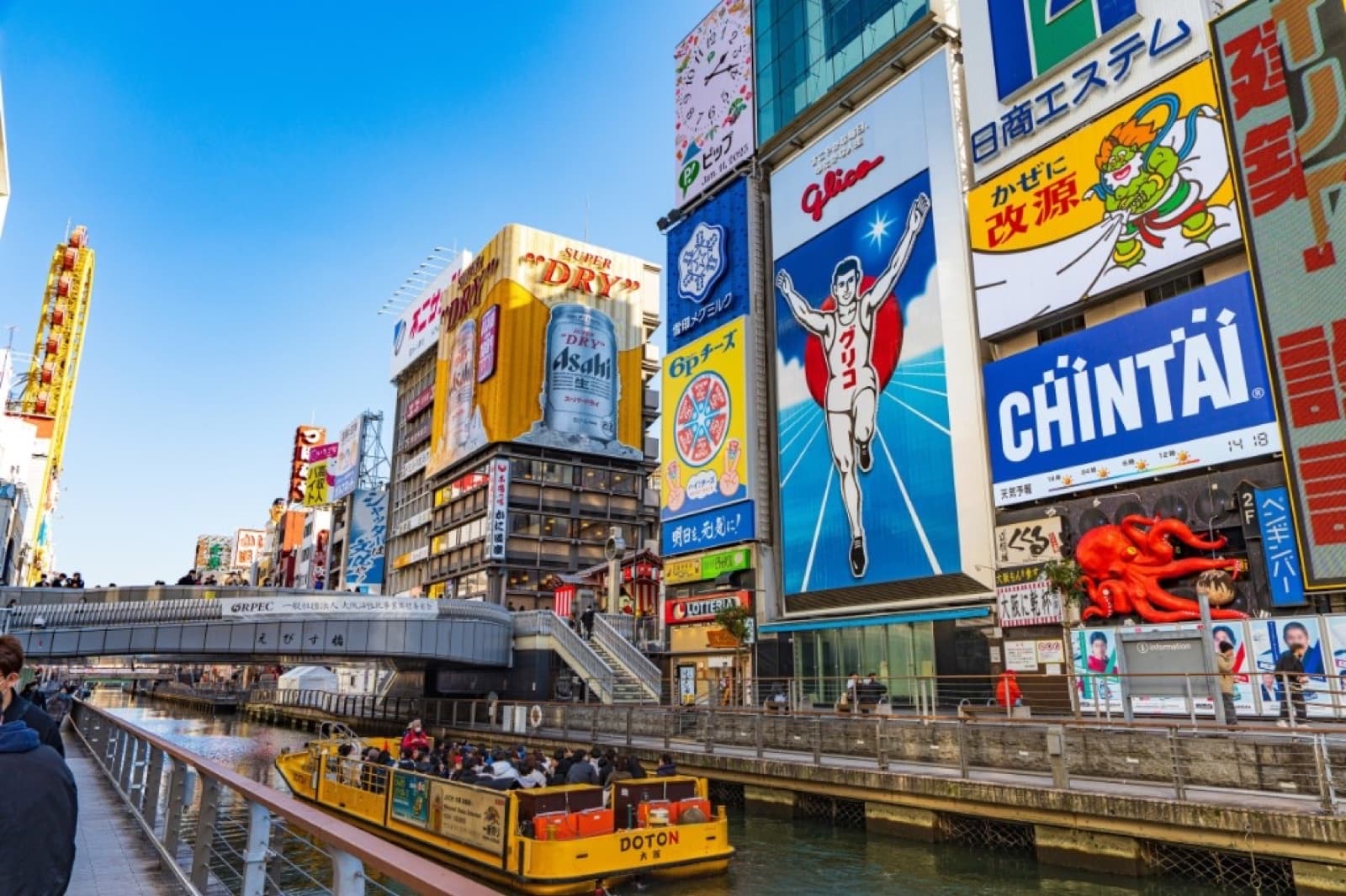
And do plan that evening. The single best thing about the Osaka park's location is that the city behind it is the best eating city in Japan — see what to do in Osaka for where to point tired legs after the gates close.
FAQ: Japan Theme Parks
How far in advance can I buy Japan theme park tickets?
About two months for both of the big resorts. Tokyo Disney Resort sells tickets daily from 2:00 p.m. for admissions on the same date two months later. Universal Studios Japan reverted to roughly two months after its Expo-period three-month window ended; on 21 September 2026 its store was selling dates up to 22 November. Book the trip first, then set a reminder for the day your park date opens.
Can I buy Universal Studios Japan tickets at the gate?
No. On-site ticket sales at the entrance ended on 6 May 2025. Tickets now come from the official web ticket store, Lawson Ticket, a partner hotel if you are staying there, or a contracted travel agency. Same-day tickets sometimes exist online, but popular dates sell out.
How much is a ticket to Universal Studios Japan?
A 1-Day Studio Pass starts at ¥8,400 for an adult, ¥5,500 for a child aged 4–11 and ¥7,600 for a senior, and the actual price depends on the date. Across the dates on sale on 21 September 2026 the adult price ran from ¥8,400 on quiet mid-November weekdays to ¥11,900 on weekends and the Halloween run. A 1.5 Day pass starts at ¥13,600 and a 2 Day pass at ¥16,000.
Do I need an Express Pass at Universal Studios Japan?
On weekends, Japanese school holidays, Golden Week and the New Year period it is the difference between a handful of rides and a full day. On an ordinary weekday, arriving before opening and using the app for timed entry usually does the job. It is sold separately from admission and starts around ¥13,800 per person, so for a family it is a significant second decision rather than an afterthought.
How do I get into Super Nintendo World?
Your park ticket alone is not enough on busy days. You need an Area Timed Entry Ticket, taken in the official app once you are inside the park, or a Standby Entry Ticket if the timed ones have gone, or an advance-booking area ticket bundled with certain Universal Express Passes, or a VIP Tour. Register everyone's park tickets in the app before you arrive so the group is issued one entry time together.
Do I need a separate ticket for Fantasy Springs at Tokyo DisneySea?
Yes. Entry to Fantasy Springs needs a free Standby Pass or a paid Disney Premier Access for one of its eligible attractions, on top of a valid DisneySea park ticket. Both are obtained in the Tokyo Disney Resort app.
Tokyo Disney or Universal Studios Japan — which should I choose?
Choose by where your trip already goes and who you are travelling with. The Tokyo Bay parks suit younger children and anyone spending several nights in Tokyo; DisneySea is the one adults rate highest. The Osaka park suits Nintendo and Harry Potter fans and anyone with thrill-ride teenagers. If the trip covers both cities, four of our routes give you a day at each.
Are park tickets included in your self-guided tours?
No. Theme park admission is excluded on every route, and each route lists it explicitly. What is included is the hotel beside the park, the trains between cities, luggage delivery between the two park areas on the routes that visit both, an IC card for local transport, insurance and 24/7 support. We will also tell you the date your park tickets go on sale.
Prices, sales windows and entry systems in this guide were checked against the parks' official ticket stores and guest information pages on 21 September 2026. All of them change — confirm your own dates on the official sites before you book.
Build the Trip Around the Park Day
Our self-guided routes put you in a hotel by the gates at Universal City or on Tokyo Bay, move your luggage between them, and handle every train in between — so the only booking left on your list is the park ticket itself, and we will tell you the day it goes on sale.