
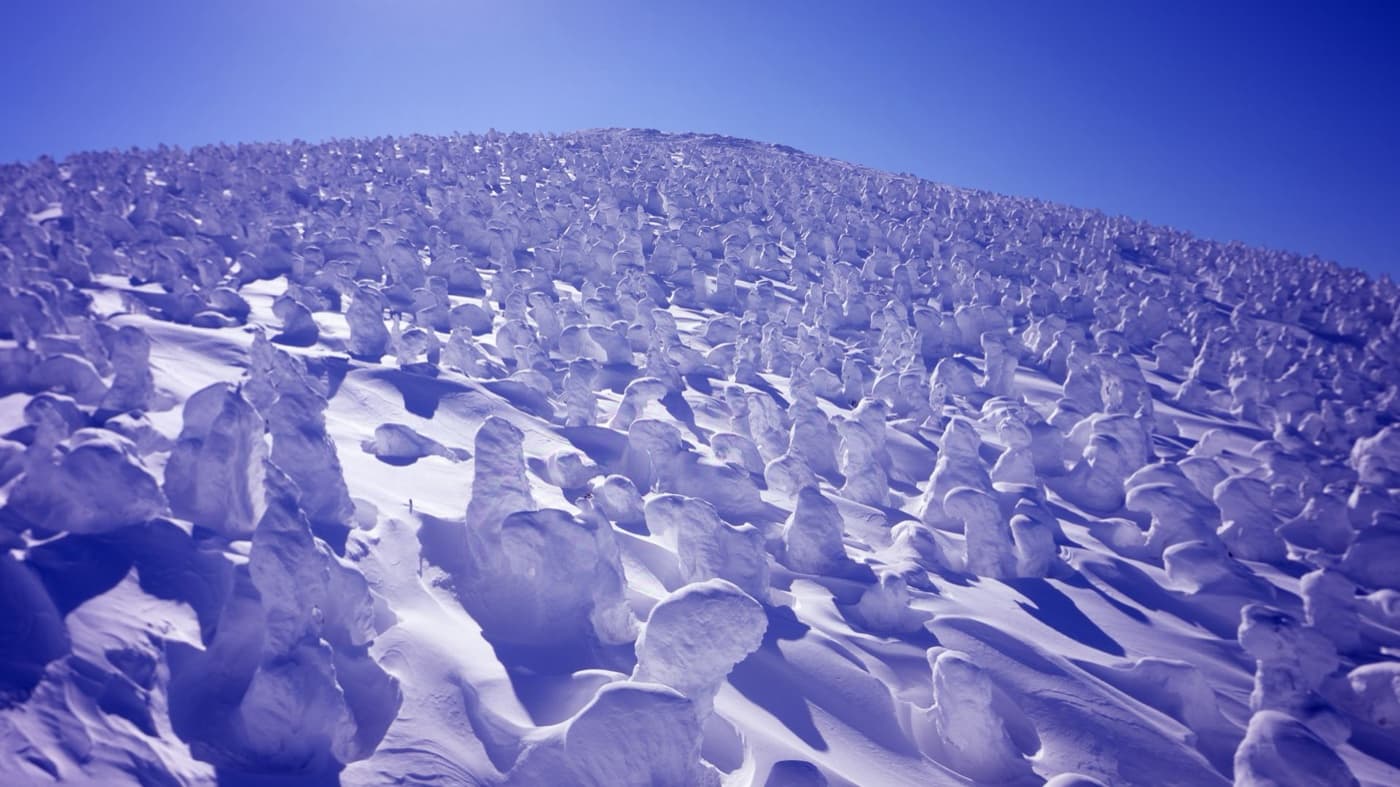
 Photo: ZAO Ropeway via Wikimedia Commons (CC BY 4.0)
Zao Onsen: How to Plan a Real Trip to Japan's Snow Monster Mountain
Ski through a forest of ice-encased firs, ride the ropeway into the clouds, then soak in one of Japan's most acidic hot springs — all in the same day. When the juhyo actually form, how to get there, and what to book.
Zao Onsen sits high in the mountains of Yamagata Prefecture, and it's the one place in Japan where you can ski through a forest of ice-encased fir trees, ride a ropeway into the clouds, and soak in sulfur-heavy hot springs the same day. If you're weighing whether to build it into a self-guided Japan itinerary, the short answer is: yes, if you can spare two nights in winter. A rushed day trip from Tokyo doesn't do it justice.
This guide walks through how to actually get there, when to go, what to book, and the small mistakes that eat up a Zao trip if you're not careful.
📅 A note on 2026–27 dates
Zao publishes its snow-monster light-up calendar and winter ropeway timetable each autumn — usually October or November. The 2025–26 light-up ran 27 December to 22 February; the 2026–27 dates were not out as of August 2026. Treat the windows below as the pattern, confirm on the official Zao Ropeway site before booking anything non-refundable, and check back here — we update this page when the calendar lands.
Why Zao Onsen Belongs on a Winter Japan Itinerary
Most first-time visitors to Japan default to Hakuba or Niseko for snow. Zao is different. It's a working village that sits at the base of the ski resort and is one of Japan's oldest hot spring areas, with narrow lanes, steam drifting out of drains, and small ryokan you can walk between in a yukata.
Then there's the resort itself. Yamagata Zao Onsen Ski Resort is the largest ski resort in the Tōhoku region, with the winter sports area spanning elevations from 780 to 1,661 m. That vertical is what makes the juhyo — the snow monsters — possible.
Honestly, if you like your ski holidays with a strong cultural side, this is the one.
Zao Snow Monsters: What They Actually Are
The "monsters" aren't a marketing gimmick — they're a genuine weather phenomenon. Strong Siberian winds, super-cooled water droplets and heavy snowfall combine across the winter months to smother the fir trees near the top of the range until each one looks like a hunched creature. Locals call the icy shapes ebi no shippo — "shrimp tails" — for the way the rime grows sideways off the branches.
You'll see them best from the upper slopes. Below the tree line, the snow and ice just look like ordinary winter forest.
Juhyo Season: Best Time to Visit
Timing matters more here than at most ski resorts. Go too early and the ice hasn't formed. Go too late and it's melting.
❄️ The juhyo calendar
- Late December: the juhyo begin forming. December visitors sometimes see little more than bare trees dusted in snow.
- January–February: peak. Early to mid-February is especially good — the shapes are largest and most dramatic.
- Early March onwards: the juhyo gradually collapse as temperatures rise. You can still ski in mid-March, but don't expect monsters at full size.
For the wider season, our Japan ski season 2026–27 guide covers how Tohoku compares with Nagano and Hokkaido, and Japan in January sets the month in context.
Getting to Zao Onsen from Tokyo
The route is simpler than it looks on a map. From Tokyo, take the JR Yamagata Shinkansen (Tsubasa) direct to Yamagata Station — about 2.5 hours, roughly ¥11,500, around one train per hour — then transfer to the bus for Zao Onsen: about 40–45 minutes, about one bus per hour. The train is covered by the Japan Rail Pass and the JR East passes; the bus is not. (Weighing a pass? See our JR Pass breakdown.)
The bus stop is easy to find: services depart from Bus Stop No. 1 outside the station's East Exit. No advance booking required — you pay the driver when you get off, cash only. You arrive at the Zao Onsen Bus Terminal in the middle of the village, and most inns are within walking distance.
Coming from Sendai instead? Take the Senzan Line (about 1 hour 15 minutes) to Yamagata Station and board the same bus. Zao spans Yamagata and Miyagi prefectures, but the Yamagata side is the practical base for international travellers.
Zao Onsen Ski Resort: Slopes and Lifts
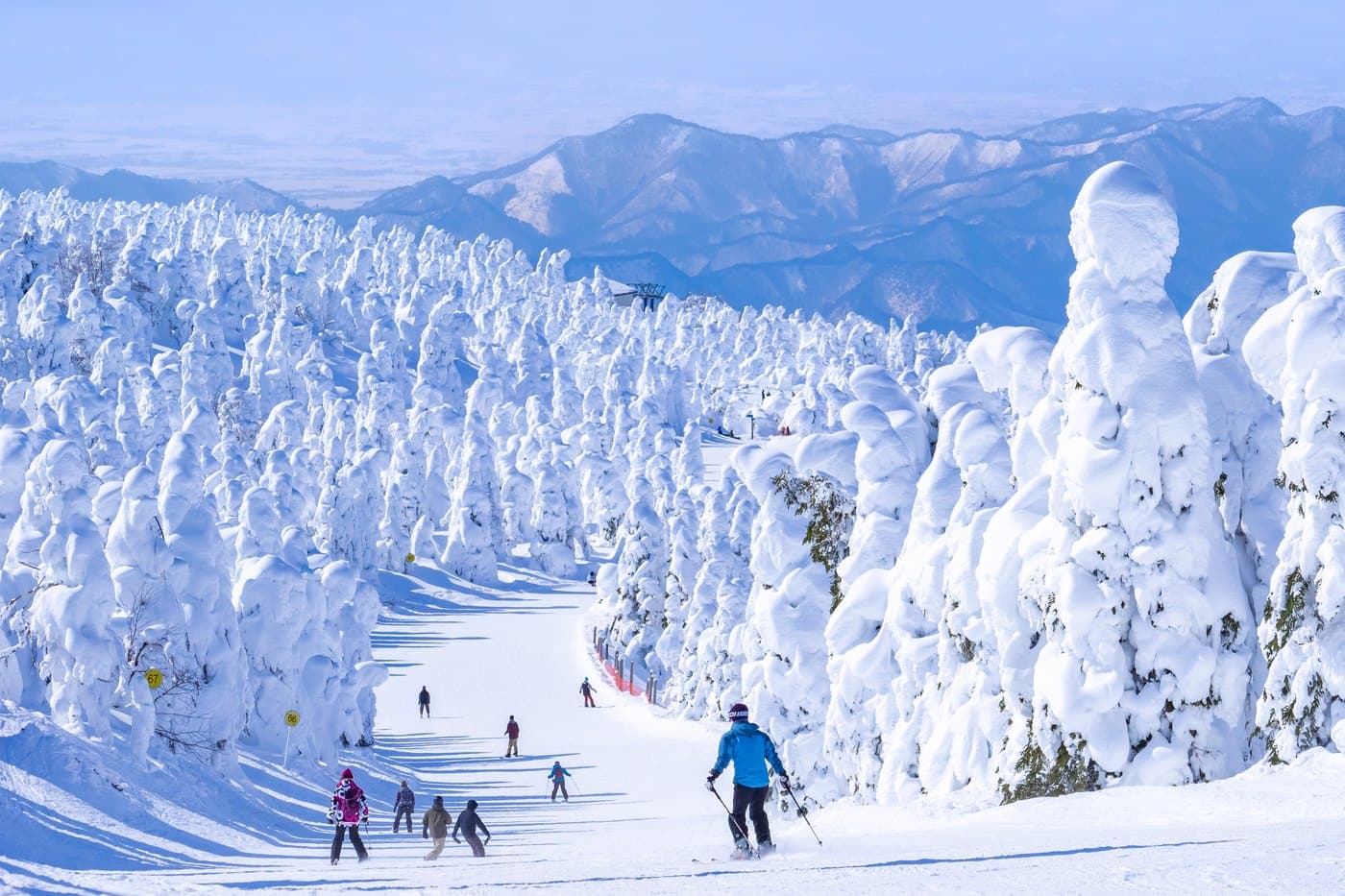
The resort has something for almost every level: 14 slopes linked by 12 named courses, served by 30 lifts — three ropeways, the Zao Sky Cable and 26 chairlifts — from about 780 m in the village to 1,661 m at Jizo Sancho. The longest run is about 10 km, from the top station down through the juhyo. Most courses are geared toward the adult leisure skier at beginner-to-intermediate level, and the ropeways mean non-skiers can ride up for the views.
For snowboarding, terrain parks exist but they're modest. Come here for cruisy runs and scenery, not park laps.
Lift tickets for 2026–27: the all-mountain one-day ticket is ¥8,000 in the regular season and ¥9,000 at peak (December 26 to January 3 and January 30 to February 28), with ¥7,000 in spring (March 15–31). That is ¥500–1,000 more than last winter. Zao Onsen is also on the Ikon Pass — 7 days on the full pass, 5 on the Base Pass. Opening and closing dates for 2026–27 had not been published in early October; last season closed on April 24.
The Zao Ropeway: Getting Up to the Snow Monsters
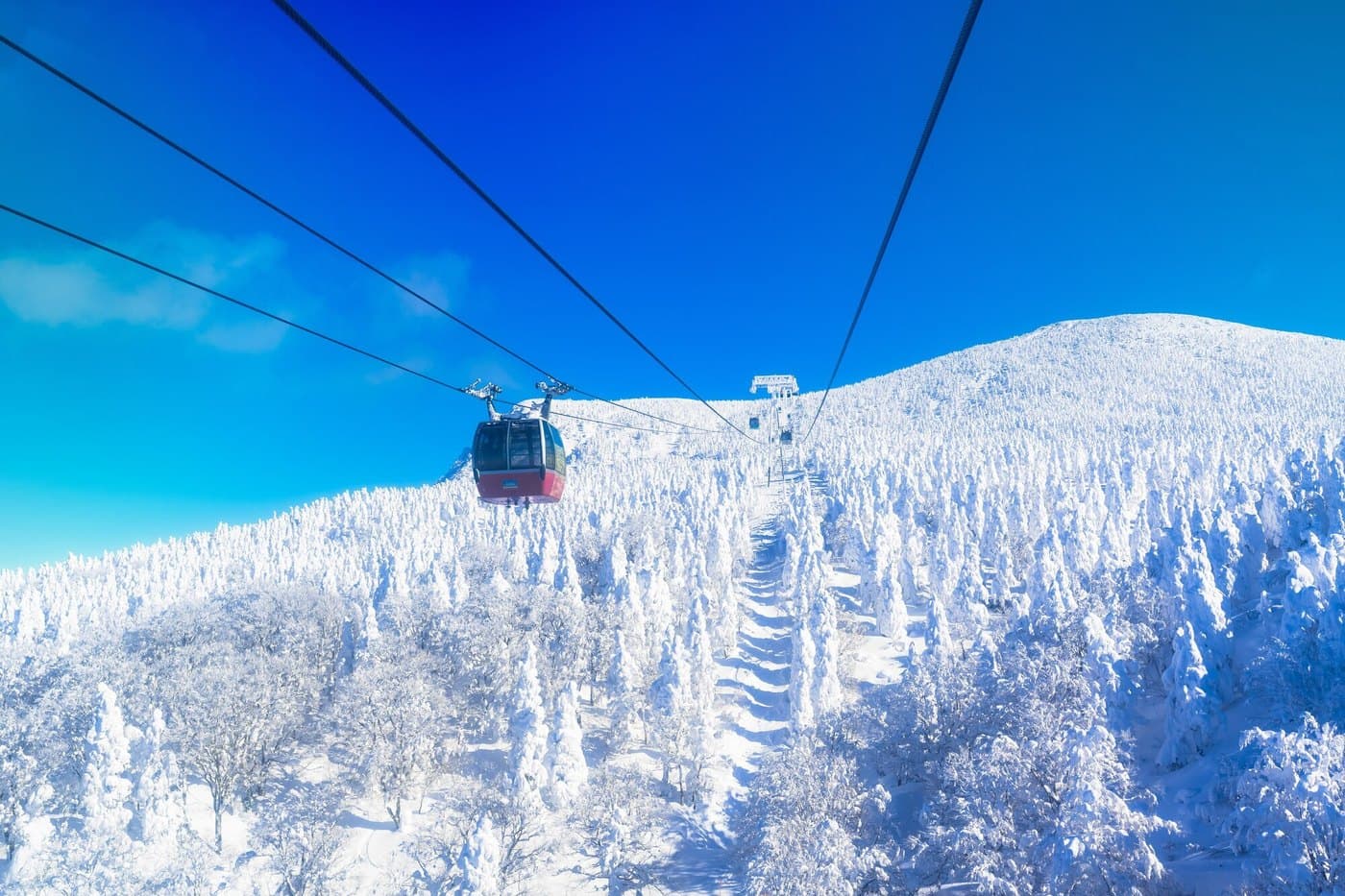
This is the bit most visitors care about, so plan it properly. The Zao Ropeway runs in two segments, and you need both to reach the dense juhyo field: Zao Sanroku Station → Juhyo Kogen Station (about 7 minutes on the Sanroku Line) → Jizo Sancho Station (about 10 minutes on the Sancho Line).
🚡 Ropeway essentials
- Fare: around ¥4,400 adult return to the summit (Sanroku + Sancho lines).
- Hours: Sanroku Line 8:30–17:00, Sancho Line 8:45–16:45 — subject to change, and services stop in bad weather.
- Buy ahead: tickets are sold at the station but sell out on peak February weekends; online purchase saves queueing.
- Ski combo: if you're skiing anyway, combined lift-and-ropeway tickets work out cheaper.
One thing to know: the ropeway can be suspended without warning. Build a spare morning into your itinerary if the juhyo are the whole reason you're going.
Jizo Sancho Station and the Best Photo Spots
The upper station sits just below the peak of Mt. Jizo (1,736 m). Step outside and the snow monsters are right there. A large stone Jizo statue stands nearby, mostly buried by February — when its head pokes above the drift it makes a striking photo. The station has a rooftop deck and a restaurant with big windows if the wind is brutal outside.
Intermediate skiers can ski straight down from Jizo Sancho through the juhyo on the Zangezaka Juhyogen course. It's the closest anyone gets to weaving between the monsters at speed, and the view keeps changing as you drop through the cloud layer.
Night Illumination and Night Skiing
The evening version of Zao is worth planning around. On selected nights both ropeway lines run late and coloured lights transform the frost-covered trees — you ride from Juhyo Kogen up to Jizo Sancho to watch the illuminated monsters. There's also the Night Cruiser, a heated 36-person snow tractor that ferries visitors through the illuminated forest.
Separately from the illumination, night skiing for 2026–27 runs on the lower Uwanodai slope only, 17:00–21:00 every night from December 19 to February 28 plus March 6 and 7, on a ¥3,000 night ticket. Note the important distinction: while the ropeways and stations open at night, night skiing is only available on slopes below the juhyo area. You can't actually ski among lit-up monsters at night — you look at them, then ski elsewhere.
The Village and Its Hot Springs
Come off the mountain cold and knackered, and this is where Zao earns its name. The village has three small public bathhouses — Kami no Yu, Shimo no Yu and Kawarayu — that cost only a couple of hundred yen, plus several larger facilities.
Zao's sulphuric waters are among the most acidic in the country, at roughly pH 1.3. Your skin tingles. It's supposed to. First onsen of the trip? Two minutes with our onsen etiquette guide and you're set.
⚠️ The famous open-air bath is closed all winter
The Zao Dai-Rotenburo — the huge forest riverside bath in every photo of Zao — operates from roughly mid-April to late November and is shut for the entire snow-monster season. Ski-season visitors miss it. If open-air bathing in the forest is your priority, plan for autumn instead; winter visitors should aim for indoor baths at their ryokan or a larger facility like Genshichi Rotenburo, which stays open.
Bring a small towel — most public baths don't hand them out.
Where to Stay: Ryokan over Resort Towers
Zao Onsen village runs on small ryokan and family-run hotels rather than big resort blocks. Ski-in/ski-out properties exist, meaning you can step out of your ryokan directly onto the lower slopes — that combination of traditional hospitality with direct ski access is one of Zao's strongest selling points. New to ryokan? Our ryokan guide explains how meals and baths work.
Prices are lower than Niseko for equivalent quality. Two-meal plans are common and worth taking — dinner is usually local Yamagata beef and mountain vegetables. Book early for February weekends: that's peak juhyo season and village rooms go quickly.
Winter vs Other Seasons
Winter is the headline act, but Zao offers more year-round than most ski towns. In the green season there's hiking, cycling, trekking, mountain climbing and forest bathing; autumn brings strong colour to the Zao mountains and nearby Yamagata city — and the Dai-Rotenburo is at its best. See our Tohoku autumn leaves guide for the timing.
One seasonal caveat worth knowing: the Okama crater, Zao's famous emerald caldera lake, is reached via the Zao Echo Line and Zao High Line — and both roads close through winter under heavy snow. Okama is a green-season sight, not a ski-trip add-on.
Common Mistakes to Avoid
- Trying to do Zao as a Tokyo day trip. The travel time eats the day. Stay at least one night, ideally two.
- Skipping the ropeway ticket combo. If you're skiing anyway, combined tickets save yen.
- Assuming the Dai-Rotenburo is open in ski season. It isn't. Adjust expectations.
- Under-dressing for Jizo Sancho. It's often −15°C at the top with wind. Ski gear, not a puffer and jeans.
- Not checking ropeway status before heading up. Weather closures are common.
💬 From our Japan travel team
Zao is somewhere we recommend coming to ski — that is what our self-guided plans here are built around. Book several nights rather than passing through, take it slowly, and let the scenery and the hot springs fill the hours off the mountain. The season gets crowded, so book early.
How to Slot Zao Into a Self-Guided Itinerary
A workable two-night pattern: Shinkansen from Tokyo to Yamagata Station in the morning, bus to the village by lunchtime, half a day of skiing or a village walk, ryokan dinner. Day two: a full day skiing plus the ropeway to the summit for the snow monsters, evening onsen soak. Day three: morning bus back, then continue north to Sendai or south to Tokyo.
If you're already planning a wider Tohoku route — Ginzan Onsen, Yamadera temple, Sendai — Zao stitches into it without backtracking. For the broader winter picture, see winter in Japan.
Planning a ski trip to Zao? Get in touch through Plan My Trip on our self-guided tours site, and we'll suggest the tours that best fit your dates and plans.
FAQ: Zao Onsen
When is the best time to see the Zao snow monsters?
The juhyo form from late December, peak through January and February — early to mid-February is best — and start collapsing in early March. Mid-March visitors can still ski but shouldn't expect monsters at full size.
How much is the Zao Ropeway?
Around ¥4,400 adult return to the summit across both lines. Hours are roughly 8:30–17:00 (Sanroku) and 8:45–16:45 (Sancho), weather permitting. Combined lift-and-ropeway tickets are cheaper if you're skiing too.
Can non-skiers see the snow monsters?
Yes. The ropeway ride alone is enough for the view, and Jizo Sancho Station has a rooftop deck and a restaurant. Non-skiers who want to walk out among the trees are encouraged to hire a guide.
How do I get to Zao Onsen from Tokyo?
Yamagata Shinkansen (Tsubasa) to Yamagata Station, about 2.5 hours and roughly ¥11,500, then the bus from Bus Stop No. 1 at the East Exit — about 40–45 minutes, paid on board. No reservation needed.
Is the Zao Dai-Rotenburo open in winter?
No. The big open-air bath runs roughly mid-April to late November and is closed for the whole snow-monster season. Use your ryokan's indoor baths or a year-round facility like Genshichi Rotenburo instead.
Can I ski through the snow monsters?
Yes — from Jizo Sancho Station down the Zangezaka Juhyogen course. It's intermediate level.
When is the illuminated juhyo light-up?
Roughly late December through late February on selected nights — the 2025–26 season ran 27 December to 22 February. The 2026–27 calendar is published in autumn, so check the official Zao Ropeway site before you fix dates.
Can I visit the Okama crater on a winter trip?
Not by road. The Zao Echo Line and Zao High Line close for winter, so Okama is a green-season sight. Experienced, properly equipped hikers reach it on foot year-round, but that's a mountaineering trip, not a detour.
Build Zao Into Your Winter Route
Zao, Ginzan Onsen, Yamadera and the Shinkansen legs that tie them together — that's exactly the kind of route selfguidejapan.com builds. We handle the trains, hotels and timing, including the reservation windows that catch first-timers out; you travel at your own pace with 24-hour support behind you.
Ropeway fare (around ¥4,400 return), station structure and operating hours per Zao Ropeway official information; hours and services change with weather. Light-up dates shown are the 2025–26 season (27 December – 22 February); the 2026–27 calendar is published in autumn and this page will be updated when it lands. Resort figures (14 slopes, 12 courses, 30 lifts, longest run about 10 km, 780–1,661 m), the 2026–27 lift ticket price list (dated September 1, 2026) and night-skiing dates per Zao Mountain Resort, checked October 3, 2026. Dai-Rotenburo operating season and the winter closure of the Zao Echo Line / High Line to Okama per Yamagata prefectural tourism information. Access times and fares per JR East and local bus operators — confirm before travel. Hero photo: ZAO Ropeway via Wikimedia Commons (CC BY 4.0). Last updated: October 3, 2026.
Related Articles
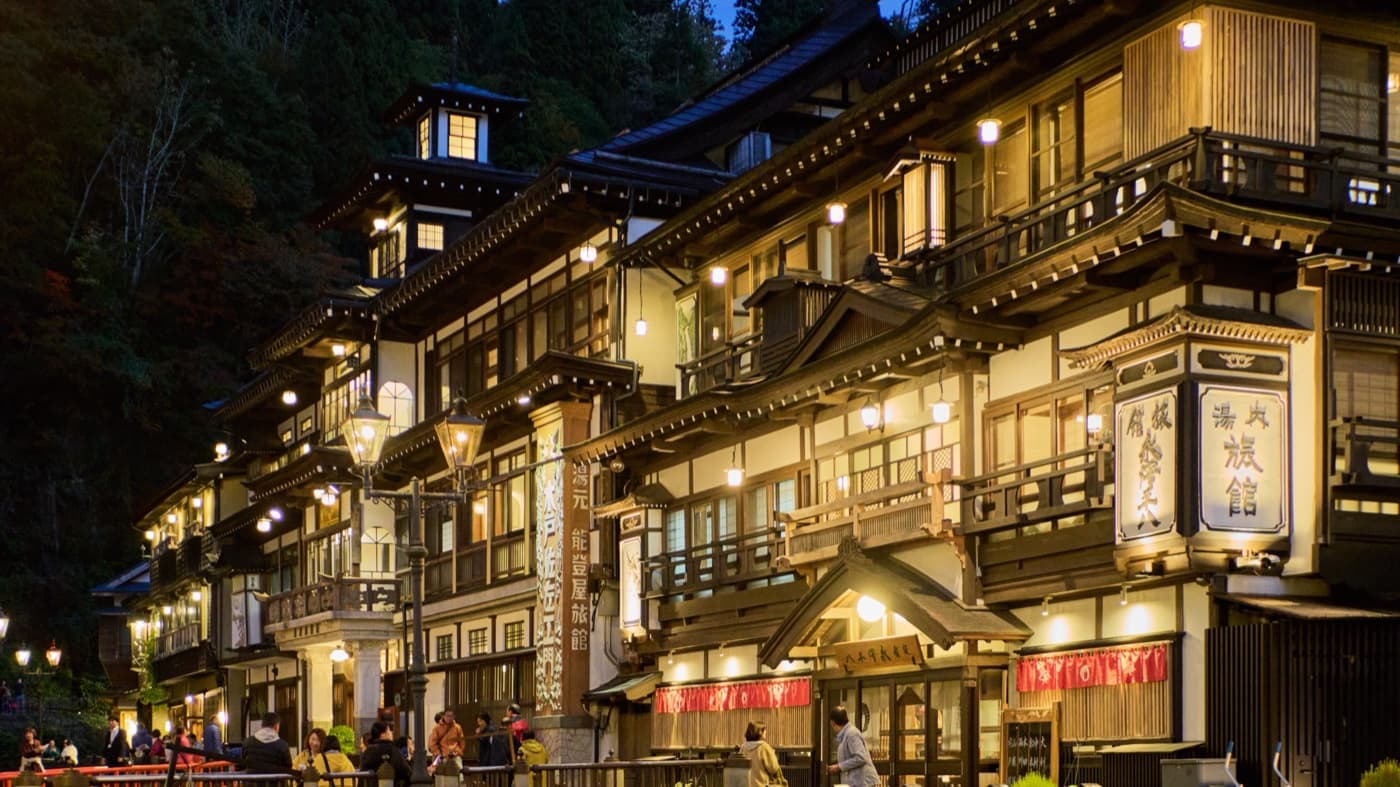
Ginzan Onsen: A Practical Guide for Self-Guided Travelers
12 min read
Japan Ski Season 2026-27: A Practical Niseko & Hakuba Powder Guide for Self-Guided Travelers
13 min read
Jigokudani Monkey Park: The Honest, Practical Guide to Seeing Japan's Snow Monkeys
16 min read