
Jigokudani Monkey Park: The Honest, Practical Guide to Seeing Japan's Snow Monkeys
How to reach the snow monkeys from Tokyo in half a day, when the bathing actually happens, where to stay — and the new dated online ticket system the park introduced in August 2026.
If you're planning a self-guided Japan trip and wondering whether the Jigokudani Monkey Park is worth the detour from Tokyo or Kyoto, the short answer is: yes, if you go with the right expectations. This is the place where wild Japanese macaques climb into a hot pool in the middle of a snowy gorge and just… sit there, steaming, watching you back. It's the only place on Earth where you'll reliably see that behaviour.
The park sits in Yamanouchi, in northern Nagano Prefecture, and it's open every day of the year. You can reach it in half a day from Tokyo using the Hokuriku Shinkansen and a single express bus from Nagano Station. Entry is cheap. The walk in is easy. The catch: what you see depends heavily on the weather, the season, and whether you show up prepared. This guide covers how to get there, when to go, what to pack, where to stay, and how to slot the visit into a real Japan itinerary without wasting a day.
New from August 2026: Dated Online Tickets
Here's the change most English-language guides haven't caught up with yet. For years, Jigokudani was a walk-up park — no timed entry, pay at the kiosk. That changed in August 2026, when the park introduced dated online tickets to deal with winter crowding that had visitors queuing far beyond the park's comfortable capacity.
🎫 How the new system works
- Tickets are date-specific and go on sale 3 months before the visit date on the park's official site.
- On busy days, visitors without an online ticket may not get in — the park now caps entries to protect the queue times and the monkeys' environment.
- The winter 2026–27 season — peak snow-monkey season — will be the first winter under the new system. If you're coming in January or February, buy the dated ticket the moment your dates are fixed.
- Quieter green-season days are less likely to hit the cap, but the online ticket removes the risk entirely.
We'll keep this page updated as the park publishes detail for the winter season. The practical takeaway is simple: the era of just turning up is over for peak dates. Plan the ticket alongside your train seats.
What Is the Jigokudani Snow Monkey Park?
The park is inhabited by Japanese macaques — the animals the world knows as snow monkeys. It sits in the monkeys' natural habitat, in the forests of the Jigokudani valley in Yamanouchi, close to the onsen towns of Shibu and Yudanaka. The park has one man-made pool around which the monkeys gather, a few minutes' walk from the park entrance.
The official Japanese name is Jigokudani Yaen Koen. When people first entered the valley, they called it Jigokudani — "hell's valley" — for the volcanic activity that produces its hot springs. The geothermal activity is what keeps the pool warm even in a blizzard. Steep cliffs, rising steam, a river running through the gorge, black-forested slopes above: it earns the name. The whole valley sits inside the Joshinetsu Kogen National Park, and the park itself is a working conservation project.
Why the Macaques Bathe
The famous bathing isn't a stunt. Some troops visit hot springs in winter to warm themselves, and Jigokudani's is the textbook case. The behaviour was first noticed at a nearby ryokan decades ago; park rangers eventually built a dedicated pool so the macaques would stop wandering into human baths.
The Japanese macaque (Macaca fuscata) is native to Japan's main islands except Hokkaido, and it is the most northerly living non-human primate — built for cold, with thick winter coats, short tails and dense underfur. You'll find macaque populations on smaller islands like Awaji in Hyogo, but Jigokudani is where the hot-spring bathing happens.
Why Visit at All?
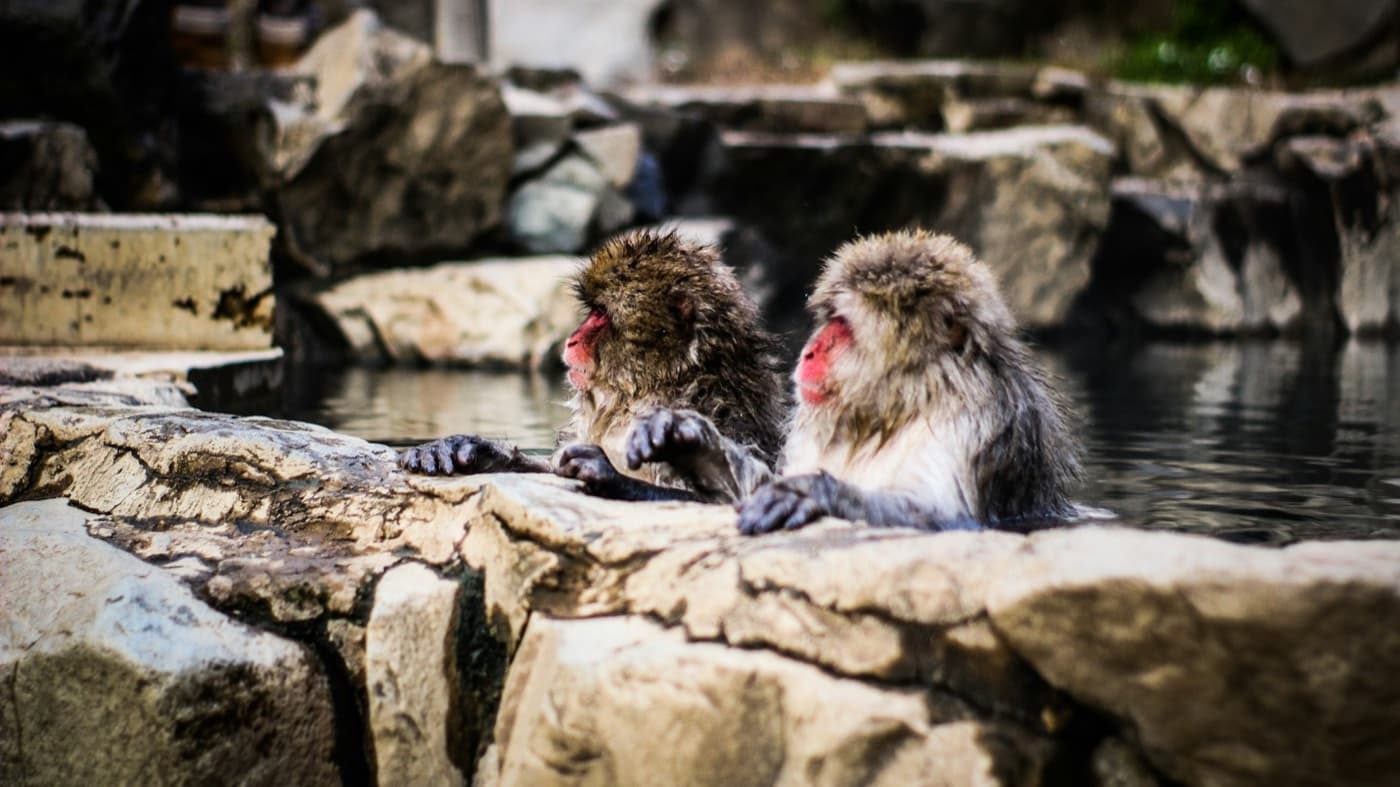
Honestly, most people come for one photo. It's a good photo. Two adults soaking, eyes half-closed, snow on their heads. But there's more going on if you slow down. The troop has real structure: the park's small information centre explains the alpha-male system and displays portraits of present and former alphas going back decades. Ask the rangers who the current alpha is and you'll get a real answer, name and all.
Watching the monkeys interact — grooming, squabbling, chasing juveniles off the rocks — is the actual attraction. The bath is the postcard. The behaviour is the experience.
Where the Park Sits
Jigokudani is in Nagano Prefecture, in the mountains of central Honshu, roughly 225 kilometres northwest of Tokyo. The park itself is about 34 km from Nagano City — an hour's drive, or the Nagaden express bus from Nagano Station. It's not remote in the hard-to-reach sense; it's remote in the "one path in, on foot" sense.
Think of Nagano City as your gateway. Zenkoji Temple sits in the same city and pairs naturally with a monkey visit. From Nagano the mountains rise fast: Shiga Kogen, Nozawa Onsen and the Yamanouchi hot-spring towns are all within an hour.
How to Get to Jigokudani Monkey Park
From Tokyo by Bullet Train
Planning a longer winter trip around the monkeys? Our Japan winter itinerary adds Nozawa Onsen, Kanazawa and Shirakawa-go. The Hokuriku Shinkansen runs from Tokyo Station direct to Nagano in about 90 minutes, and it's covered by the JR Pass — our JR Pass breakdown covers whether the pass makes sense for your route. Budget around ¥10,500 one-way without a pass: roughly ¥8,500 for the Shinkansen plus about ¥2,000 for the local legs.
From Nagano Station: Express Bus or Train
Two clean public-transport options, both taking roughly the same time. The direct express bus departs from Bus Stop No. 23 outside Nagano Station's East Exit and takes around 40–45 minutes to the Snow Monkey Park stop. It operates year-round with extra winter frequency, and most (but not all) buses continue to the Shiga Kogen ski areas.
The train route: Nagano Dentetsu from Nagano to Yudanaka Station, then a short local bus to the Kanbayashi Onsen trailhead — about 45–55 minutes all in. If you're staying overnight in Shibu Onsen or Yudanaka, the train is often the smarter choice, since your ryokan is right there.
The Snow Monkey Pass
Nagaden sells two bundles worth knowing about. The classic Snow Monkey 1-Day Pass (¥5,100 adults / ¥2,550 children) covers a day of unlimited Nagaden trains and local buses between Nagano and the park plus one park admission. A second option added for winter 2025/26, the express-bus version (¥6,800 / ¥3,400), bundles park admission with a round-trip express bus from Nagano Station East Exit. Both are sold at the Nagaden ticket window on Nagano Station's B1 floor.
If you're only going out and back on a single route, do the maths — sometimes it saves money, sometimes it's a wash. For a two-day visit using both the train and the express bus, it usually pays off.
The Walk from the Bus Stop
This is the part people underestimate. You don't step off the bus into the monkey park. You walk. From the Snow Monkey Resorts info shop near the bus stops and the free year-round parking lot, it's a 1.6-kilometre forest trail — about 30 minutes — along the valley.
In summer it's an easy stroll. In winter it can be icy, packed snow underfoot the whole way. Wear proper shoes; slip-on ice grips are a lifesaver in January and February. No, sneakers don't cut it.
Opening Hours, Entrance Fee, and Practical Info
🐒 Quick Answer: Jigokudani Monkey Park
- Hours: roughly 9:00–16:00 November–March, 8:30–17:00 April–October. Open year-round; heavy snow can close it on short notice.
- Admission: ¥800 adults, ¥400 children — plus, from August 2026, dated online tickets (on sale 3 months ahead) that take priority on busy days.
- Access: Tokyo → Nagano ~90 min by Shinkansen; Nagano → park bus stop ~45 min; then a 1.6 km / 30-min walk.
- Time needed: 1.5–2 hours in the park plus the walk — half a day from Nagano, a long day from Tokyo.
- Before you go: check the park's live camera and the rangers' daily monkey forecast on social media.
Facilities are thin by design: restrooms only at the start of the forest trail and in the visitor centre, none inside the monkey zone. Use the coin lockers at the main building for backpacks and plastic bags — monkeys grab plastic, and a dangling snack invites trouble. Feeding is prohibited. The visitor centre is worth ten minutes on the way out for real context on troop dynamics and park history.
Best Time to Visit the Snow Monkeys
Here's the honest trade-off. Despite the name, the monkeys are at Jigokudani all year round. But in summer there's no snow and the pool holds little appeal — it's simply too warm. To see the bathing, go between October and May, with December to March optimal and January–February the peak. If you want the image from the documentaries, go in deep winter — our Japan in January guide covers what that month is like across the country.
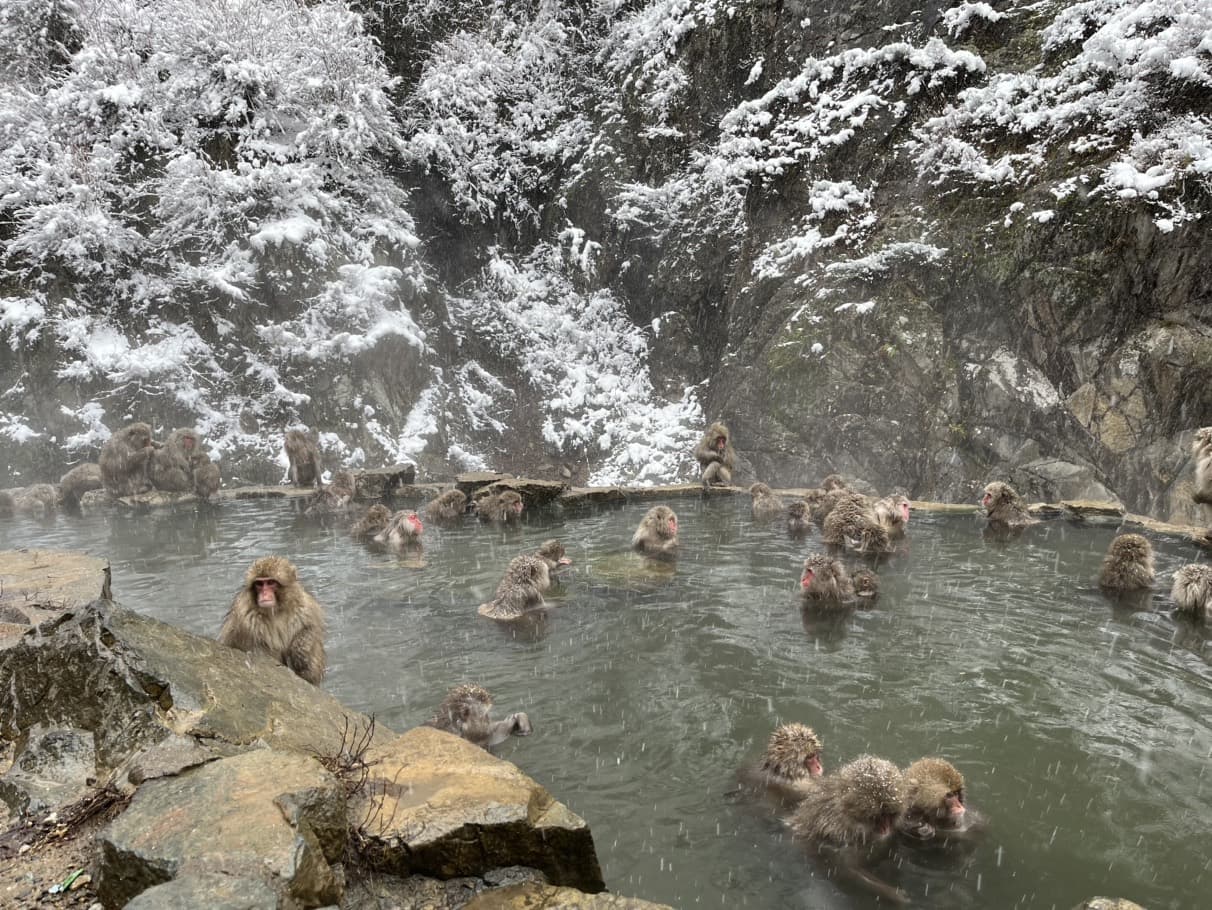
Outside winter, the scenery and behaviour change drastically. In spring and summer the surrounding mountains provide plenty of natural food; the macaques still come down for the rangers' controlled feeding, but once warm and full they often move back up into the forest, and on hot days they may not approach the pool at all. Spring and autumn still work — you'll see monkeys on the paths and around the pool, just usually not soaking — and the autumn foliage in the surrounding mountains is genuinely beautiful.
Check before you go: the park runs a live camera, and rangers post daily monkey forecasts on social media. If the forecast says the troop isn't coming down, spend the day in Shibu Onsen instead. It's not a wasted trip either way.
What the Experience Actually Feels Like
You'll pass the entrance kiosk near the pool, and then you're in. You may meet monkeys on the path before you even arrive. They live in large social groups, and watching the interactions is half the fun. Accustomed to humans, they can be observed from close range and almost completely ignore their guests. Naturally, touching and feeding are prohibited.
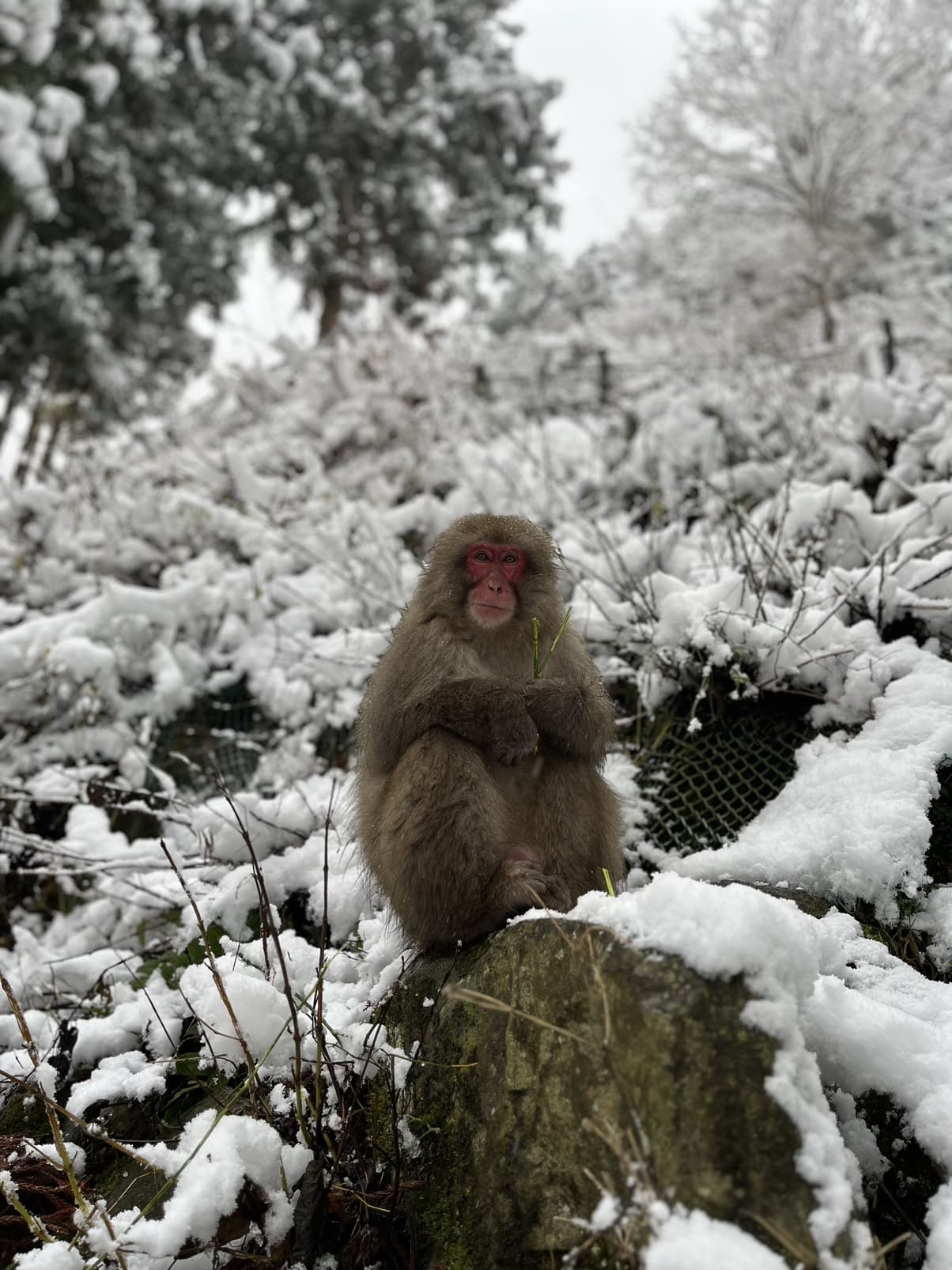
They're not tame. They're habituated. Big difference. Don't stare directly, don't crouch to their eye level, don't offer anything. Behave and they behave. Plan on 1.5 to 2 hours at the park including the walk in and out — enough to watch, photograph and visit the info centre without rushing.
Photography Tips
Bring a telephoto zoom if you have one — 70–200mm is ideal. You can get close, but a longer lens frames the face-in-the-water shot without crowding the animal. Flash is discouraged. In winter, cold drains batteries fast: pack a spare and keep it inside your jacket.
Where to Stay: Shibu Onsen, Yudanaka, and the Valley Itself
The single biggest itinerary upgrade you can make: don't day-trip. Stay overnight nearby.
Shibu Onsen
A 1,300-year-old onsen town nestled between the monkey park and Yudanaka. The reason to base yourself here is the nine-bath tour: Shibu has nine small public baths, all but one reserved for hotel guests and residents. Check in anywhere in town and you get a key that opens all nine, each with its own source and its own claimed medicinal properties. Doing the kyu-to-meguri — wandering bath to bath in geta and yukata — is an experience unique to Yamanouchi, and exactly the kind of thing photos don't do justice. First time in a Japanese bath? Our onsen etiquette guide covers the rules in two minutes.
Korakukan — the Inn Inside the Valley
If you want to go all-in, this is it. Korakukan is the only lodging in the Jigokudani gorge, 200 metres down the path from the park entrance, run by the same family since the closing years of the Edo period — over 150 years. When the last day-tripper leaves, the gorge empties out and you have it to yourself. The riverside open-air bath is sometimes visited by the wild macaques themselves (the inn asks you not to touch or feed them); there are two outdoor baths, two indoor baths and a family bath, all fed by a spring source so hot it must be cooled before anyone can get in.
Practical note: you carry your own bags in on foot. Pack a daypack and leave the suitcase in a Nagano Station locker. Rooms are traditional — futon on tatami, sliding paper doors, no elevator. If you want a ryokan experience with a real story behind it, Korakukan is unmatched.
Yudanaka and Nagano City
Yudanaka is cheaper, more modern, still charming — on the Nagaden line, a short local bus from the trailhead, with many family-run inns offering free station and trailhead shuttles. And if you're tight on time, base in Nagano City near the station and day-trip: you get Zenkoji Temple and easy Shinkansen access as a bonus.
Building It Into a Real Japan Itinerary
The Two-Day Version
Day 1: morning Shinkansen Tokyo → Nagano, Zenkoji Temple (a 25–30 minute walk from the station), lunch, afternoon bus or train to Shibu Onsen. Ryokan check-in, a few of the nine baths, dinner at the inn. Day 2: early bus or taxi to the Kanbayashi trailhead, two hours at the park, walk out, lunch, back to Nagano and onward.
The Three-Day Version
Add a ski day at Shiga Kogen or a night at Nozawa Onsen. Shiga Kogen is at the end of the same express bus line; Nozawa is a famous onsen-and-ski town just north. Winter traveller, even mildly into skiing? This is the combo — see our Japan ski season 2026–27 guide.
The Longer Detour
Nagano pairs well with a route onwards — Nagano → Matsumoto → Takayama, or up to the Sea of Japan coast. Obuse (chestnut sweets, the Hokusai museum) and the fruit farms around the valley make good half-day stops.
Common Mistakes to Avoid
- Day-tripping from Tokyo in winter on a tight schedule. Technically possible. You'll regret it — snow delays, an icy trail, a rushed hour at the park.
- Turning up on a peak date without the online ticket. From this winter, busy days are capped. Buy the dated ticket when you book your trains.
- Wrong shoes. The trail is unpaved and slippery in winter. Waterproof boots minimum, ice grips recommended.
- Skipping the live cam and forecast. The rangers publish daily updates. Use them.
- Bringing food onto the trail. Monkeys will investigate. Use the lockers.
- Assuming the monkeys will be in the bath. In summer they often aren't. You'll still see plenty of monkeys — just not bathing ones.
- Booking a guided tour you don't need. A Tokyo day tour can cost 3–4x the DIY price and buys you little beyond a bus seat. This is one of the most self-guide-friendly sights in Japan.
💬 From our Japan travel team
Yudanaka Onsen is our recommendation for the night. It sits right by the Jigokudani Monkey Park, and it has its own circuit of nine public bathhouses — the kuto-meguri — each with a different spring quality and its own traditional benefit, so an evening of bath-hopping is part of the stay. Our self-guided tours include itineraries that combine Yudanaka Onsen with the Monkey Park — feel free to get in touch.
A Few Facts Worth Knowing
- The valley sits inside the Joshinetsu Kogen National Park, on the edge of the Shiga Kogen highlands.
- Japanese macaques are the world's northernmost non-human primates — their range runs from Honshu to Kyushu, with the northern limit at the Shimokita Peninsula in Aomori.
- Macaques also live on smaller islands like Awaji, but Jigokudani is the only place they habitually use a hot bath.
- Troops are led by an alpha male in a clear hierarchy that shifts over the years — the info centre keeps the family history.
- These are true wild animals. Everything you see is voluntary on the monkeys' part.
For the wider season around a visit, our winter in Japan guide sets the scene — and if you're weighing a rail pass for the whole route, start with the JR Pass calculator.
FAQ: Jigokudani Monkey Park
Do I need to book Jigokudani tickets in advance now?
On peak dates, effectively yes. Since August 2026 the park sells dated online tickets, released 3 months before the visit date, and on busy days visitors without one may not get in. Standard admission is ¥800 for adults and ¥400 for children.
Is the park worth visiting in summer?
Yes, with different expectations. You won't see monkeys bathing the way you would in January, but you'll see plenty of macaques on the path and around the visitor area, the forest walk is beautiful, and the crowds are thinner.
How long should I spend at the park?
Plan on 1.5–2 hours inside plus about an hour of walking in and out. Allow half a day from Nagano, or a full day from Tokyo.
Can I bathe with the snow monkeys?
Not inside the park. But at Korakukan, the historic inn 200 m from the entrance, the riverside outdoor bath is sometimes visited by macaques. Real, not marketing — though not guaranteed. Book a night for the best odds.
Is it easy to visit from Tokyo in a single day?
Doable but tight: ~90 minutes on the Shinkansen, 45 on the express bus, then a 30-minute walk each way. Leave early, return late — and in winter, don't cut connections fine.
Do I need a guide or tour?
No. Nagano Station has English signage, the bus leaves from clearly marked Stop 23, and the trail is a single path. Independent travellers do this route every day.
What should I wear in winter?
Waterproof boots with grip, thermal layers, hat and gloves. Traction cleats are strongly recommended for the trail — snow lies deep and the wind funnels down the valley.
What is the Snow Monkey Pass?
A Nagaden bundle of transport plus park admission: the SNOW MONKEY PASS (¥4,800 adult / ¥2,400 child) covers trains and local buses, and an express-bus version (¥6,800) covers the direct bus from Nagano Station. Worth it if you use both legs or spread the visit over two days.
Can I combine the monkeys with skiing?
Absolutely. Shiga Kogen is at the far end of the same express bus route, and Nozawa Onsen is a short hop north — several of our self-guided ski tours pair Hakuba or Shiga Kogen with a snow-monkey day.
Are the monkeys dangerous?
They're wild and strong, but they mostly ignore people. No touching, no feeding, no direct eye contact, no dangling food or plastic — follow that and you'll be fine. Rangers are on-site.
Build the Snow Monkeys Into Your Own Route
Jigokudani is one of the most self-guide-friendly destinations in Japan — and it slots naturally into a winter route with Shiga Kogen or Hakuba skiing, an onsen night in Shibu, and the Shinkansen back to the Golden Route. Our self-guided tours handle the rail legs, hotels and timing; several pair the slopes with a snow-monkey day out of the box.
Admission, hours and the dated online-ticket system per the Jigokudani Yaen-Koen official site (online sales from August 2026, tickets released 3 months ahead; entry may be refused without one on crowded days, as reported by the Shinano Mainichi Shimbun). Snow Monkey Pass prices per Nagaden. Access times and fares per JR East and Nagaden; confirm current schedules before travel. Korakukan details per the inn's published information. Last updated: August 19, 2026.
Related Articles
Hakuba: A Practical Self-Guided Guide to Japan's Biggest Ski Valley
15 min read
Winter in Japan 2026: A Practical Guide to Planning a Self-Guided Trip
18 min read
Japan Ski Season 2026-27: A Practical Niseko & Hakuba Powder Guide for Self-Guided Travelers
13 min read