Skiing in Japan: A First-Timer's Guide to Where, When and What It Costs
Is skiing in Japan worth it? Where to go, the best months, what a day costs in 2026–27 (lift tickets, rentals, lessons, sending your skis), Ikon and Epic, the off-piste rules, onsen and tattoos — and the things first-timers wish they'd known.
Skiing in Japan is worth the long-haul flight, and you don't need a car, a guide or a word of Japanese to do it. The snow is light and deep, the trains run to the mountains, and most days end in a hot spring instead of a loud bar.
For a first trip, aim for mid-January to mid-February and base yourself somewhere you can reach without driving: Hakuba Valley or Shiga Kogen in Nagano, about three hours from Tokyo, or Rusutsu and Furano if you're flying into Hokkaido. Expect to pay roughly ¥8,000–13,500 a day for a lift ticket this winter, and plan one or two bases rather than five.
This guide covers the questions first-timers actually ask: whether it's worth it, where to go, when, what it costs (every price checked on the operator's own site on October 3, 2026), how to get your skis there, the rules that catch visitors out, and how to fit skiing into a wider Japan trip.
Quick Answer: Skiing in Japan
- Is it worth it? Yes — for the snow, the onsen and how easily skiing fits into a trip to Tokyo and Kyoto.
- Best month: mid-January to mid-February for powder; March for sunshine and value.
- Where: Hokkaido for the driest powder (Niseko, Rusutsu, Furano); Nagano for easy access from Tokyo (Hakuba, Shiga Kogen, Nozawa Onsen).
- Cost: lift tickets about ¥8,000–13,500 a day for 2026–27, rentals ¥5,800–10,800, an English group lesson from about ¥13,000.
- Language and car: neither needed at the big resorts; trains and buses reach them all.
Season
late Nov – early May
Best powder
mid-Jan – mid-Feb
Lift ticket
¥8,000–13,500/day
Tokyo–Hakuba
about 3 hours
Is Skiing in Japan Worth It?
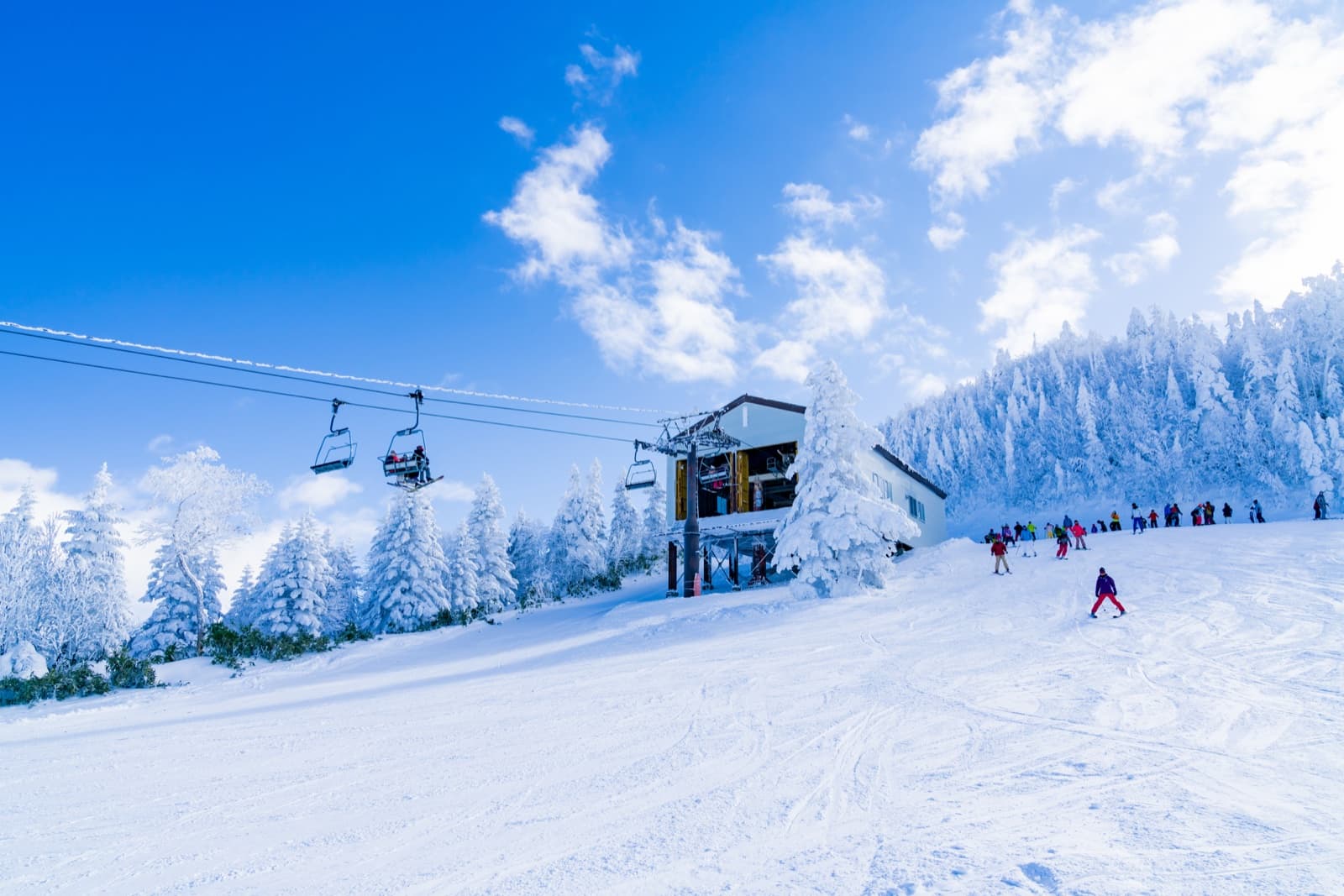
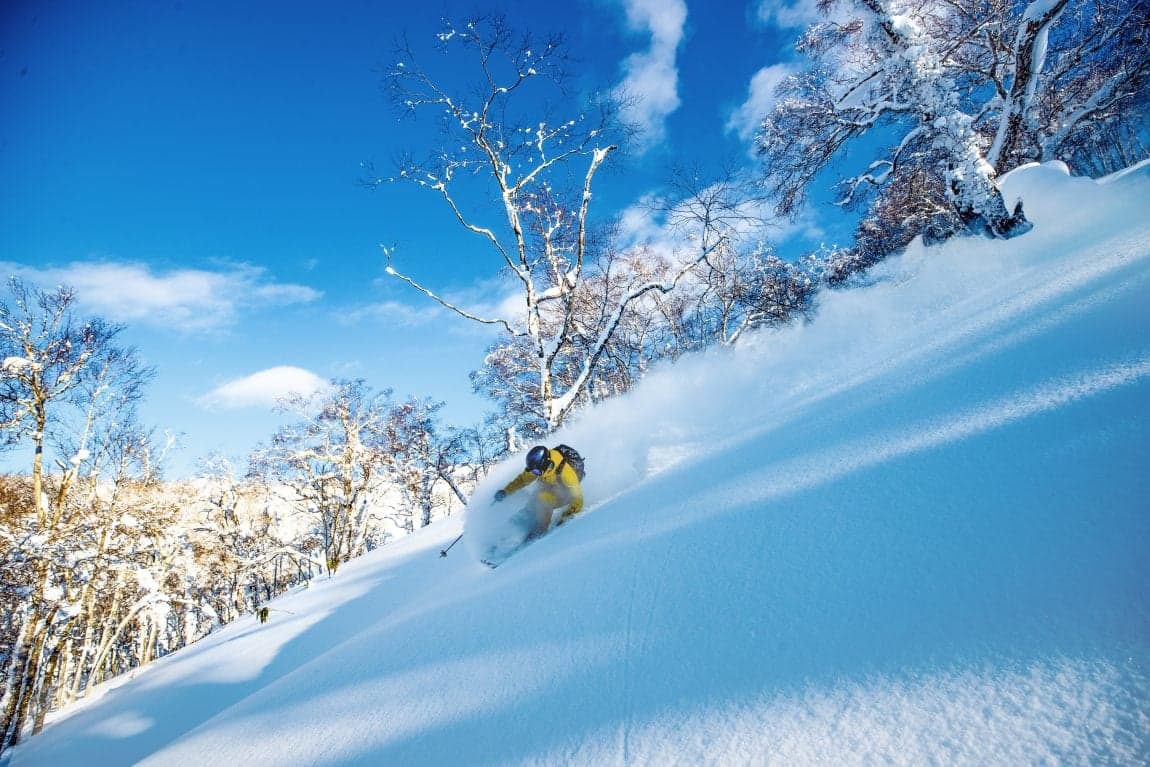
For most skiers, yes. In winter, cold air from Siberia picks up moisture over the Sea of Japan and drops it on Hokkaido and the mountains of Honshu as storm after storm of light, dry snow — the "Japow" skiers talk about. From January into February, fresh powder is normal rather than a lucky break, and tree skiing through birch and beech forest is a big part of the experience.
The bigger difference is everything around the skiing. Ski resorts here connect to the rail network, so a ski week can be part of a wider trip instead of replacing it: Tokyo one day, the slopes the next. Natural hot springs are everywhere in the mountains, and the food — ramen after a freezing afternoon, Hokkaido seafood, Nagano soba — is half the reason people come back.
The honest trade-offs: Japanese resorts are smaller than the giant linked areas of the Alps, most aren't connected to each other, the off-piste rules are stricter than many visitors expect, and prices have risen fast — almost every big resort charges more this winter than last. Christmas, New Year and early February are crowded.
Where to Ski in Japan
Japan's ski resorts fall into four regions. Pick the region first, then the resort.
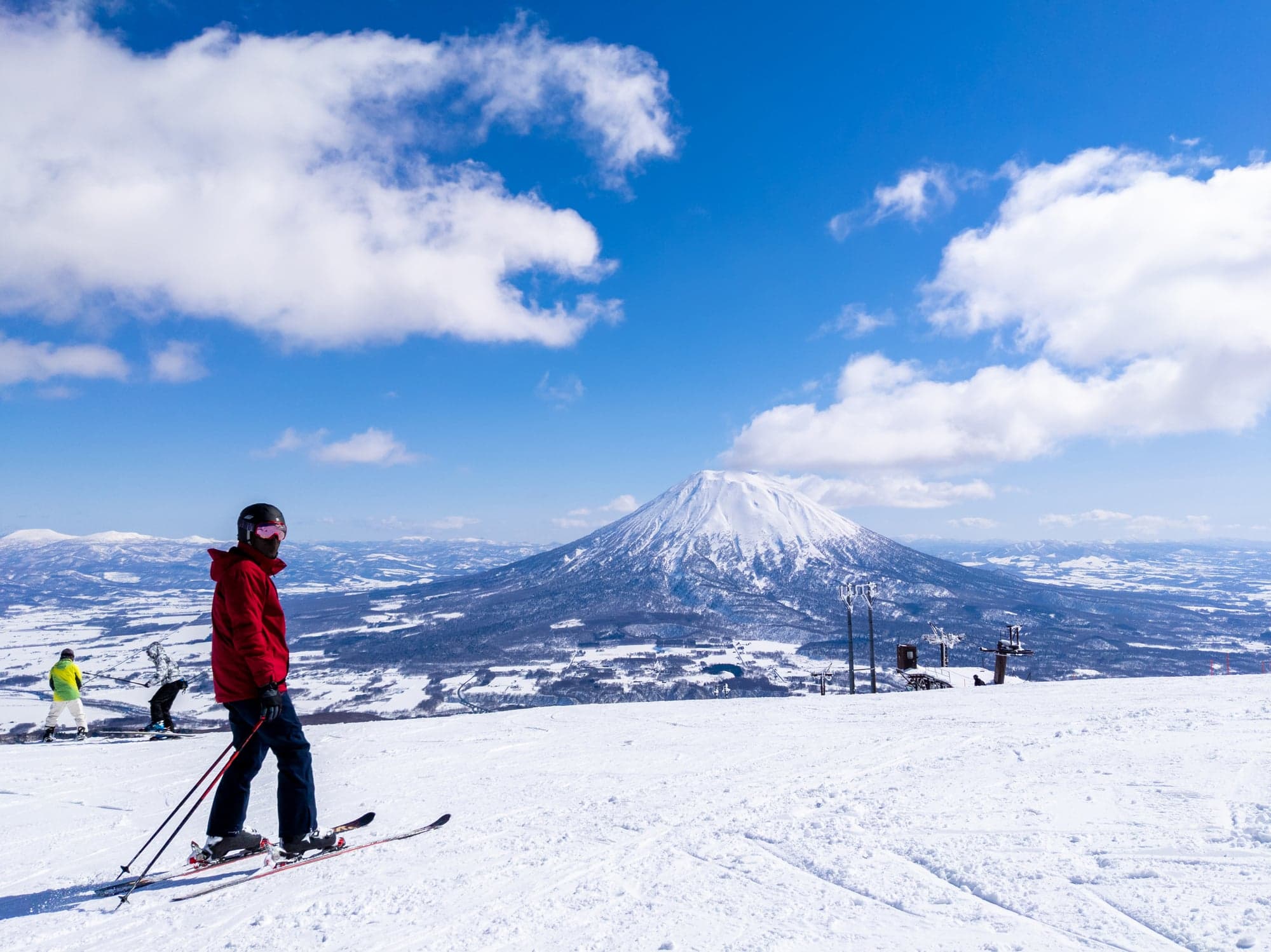
- Hokkaido: the lightest, driest powder and the most famous names — Niseko, Rusutsu, Kiroro, Furano, Tomamu, Sahoro. You fly to New Chitose Airport near Sapporo (about 90 minutes from Tokyo), then transfer by bus or taxi. See our Hokkaido ski resorts guide.
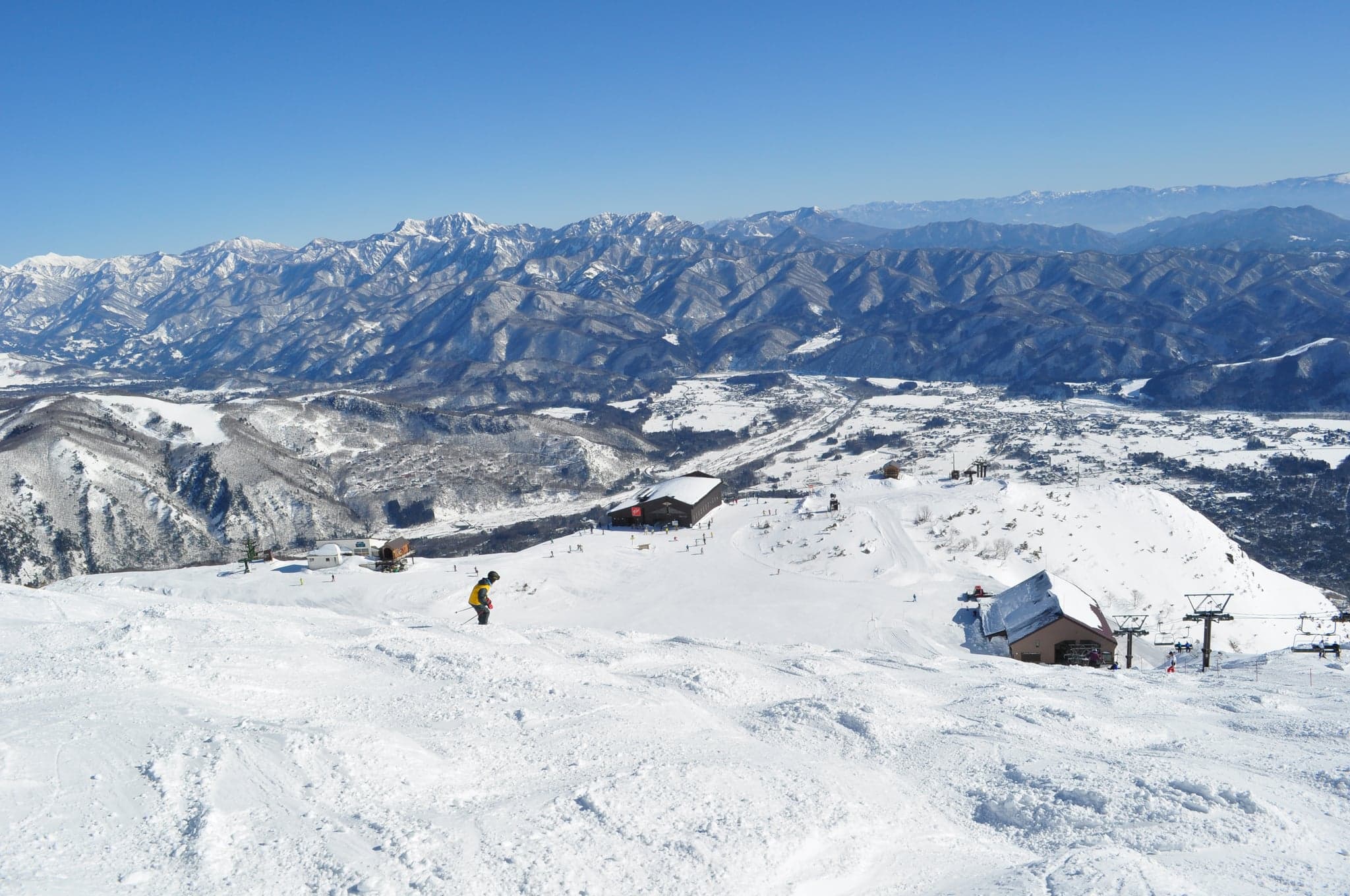
- Nagano: the easiest serious skiing from Tokyo — the fastest Shinkansen reaches Nagano in 77 minutes. Hakuba Valley's ten resorts, Shiga Kogen's 18 linked areas and the onsen village of Nozawa Onsen. See our Nagano ski resorts guide, Hakuba and Shiga Kogen.
- Niigata: heavy snowfall and old-school resorts — Myoko, Arai, Kagura and Naeba — on the Shinkansen lines from Tokyo.
- Tohoku: quieter resorts in the north of Honshu, including Zao Onsen and its snow monsters and APPI in Iwate. See our Zao Onsen guide.
For the resorts ranked against each other, with a map, see our best ski resorts in Japan. The short version: Niseko if powder and English matter most; Hakuba if you want Tokyo and Kyoto on the same trip.
When Is the Ski Season in Japan?
- Late November to mid-December: early season. Niseko, Furano and Nozawa Onsen open on November 28 for 2026–27, Shiga Kogen on December 5; lower slopes can be thin until late December.
- Mid-January to mid-February: the best powder, the coldest days — and the year-end holidays, Lunar New Year (February 6, 2027) and the Sapporo Snow Festival (February 4–11) make some weeks very busy.
- March: more bluebird days, softer afternoon snow, easier rooms.
- April to early May: spring skiing at the higher resorts; Niseko, Furano, Shiga Kogen and Nozawa run to May 5.
Opening dates and the best weeks region by region are in our Japan ski season 2026–27 guide.
From our Japan travel team
The New Year holidays and the week around Lunar New Year are the busiest stretches of the Japan ski season, and rooms in Hakuba and the Hokkaido resort towns book up early. Hotels and Shinkansen seats fill up fast, so start planning early; our self-guided ski tours handle the hotel, train and transfer bookings and support you through the trip. If you already have dates in mind, feel free to get in touch and we'll check what fits.
How Much Does Skiing in Japan Cost?
Less than Colorado or the big Alpine resorts, but no longer cheap. These are 2026–27 adult one-day lift tickets at the window:
| Resort | 1-day adult | Pass |
|---|---|---|
| Niseko United (Hokkaido) | ¥12,600; ¥13,500 Dec 24–Feb 28 | Ikon, Mountain Collective |
| Rusutsu (Hokkaido) | ¥16,700 at the window, ¥13,200 online | Epic |
| Hakuba Valley, 10 resorts (Nagano) | ¥11,100 | Epic |
| Shiga Kogen, 18 areas (Nagano) | ¥9,500 (¥8,500 online) | Ikon |
| Furano (Hokkaido) | ¥9,000 | Ikon |
| Zao Onsen (Yamagata) | ¥8,000; ¥9,000 at peak | Ikon |
| Nozawa Onsen (Nagano) | ¥7,800 | — |
| Kamui Ski Links (Hokkaido) | ¥5,300 | — |
And the other costs of a ski day:
| Ski or snowboard rental, 1 day | ¥5,800 (Nozawa Onsen) to ¥10,800 (Rusutsu standard set) |
| English group lesson | ¥13,000 for 2.5 hours (Evergreen, Hakuba); ¥16,500 for 4.5 hours (Nozawa Onsen) |
| Skis or board by courier, Tokyo area to Nagano / Hokkaido | ¥3,680 / ¥5,220 one way, plus a ¥400 ski or ¥600 board cover |
| Express bus, Nagano to Shiga Kogen | ¥3,000 (from December 5, 2026) |
| Night skiing | ¥3,000–4,000 for a night ticket at Zao, Rusutsu and Nozawa Onsen (¥2,850) |
Ignore older guides that quote ¥3,500–5,000 for a lift pass; those days are gone. For a whole trip, our self-guided ski packages run from about $2,400 to $6,600 per person for 8 to 14 days, covering hotels, intercity transport, transfers and luggage delivery — the breakdown is in our Japan ski packages guide.
Ikon, Epic and Mountain Collective in Japan
- Ikon Pass: ten Japanese resorts for 2026–27 — Niseko United, Furano, Shiga Kogen, Zao Onsen, APPI, Myoko Suginohara, Arai, NEKOMA, Mt. T and, new this winter, Madarao. 7 days at each on the full pass, 5 on the Base Pass. See our Ikon Pass Japan guide.
- Epic Pass: Hakuba Valley's ten resorts and Rusutsu — five consecutive days at each, no blackout dates. Bring the physical card; the My Epic mobile pass doesn't work at either.
- Mountain Collective: Niseko United, two days.
If you're buying a pass only for Japan, compare it with day tickets at the resorts you'll actually ski first.
Getting There, and Getting Your Skis There
Skip the rental car unless you're confident on snow and ice. Shinkansen lines run to Nagano, Iiyama, Joetsumyoko, Yamagata and Morioka, and buses or taxis cover the last stretch; in Hokkaido, airport buses and taxi transfers from New Chitose are the norm.
Send your skis ahead
Don't drag a ski bag through Tokyo Station at rush hour. Yamato's Ski TA-Q-BIN delivers skis and boards to your ski hotel:
- When: drop them off at least two days (in some areas three) before you arrive; they reach the resort a day ahead of you.
- Where: from a Yamato office, an agent or your hotel — not from convenience stores, which don't accept skis or boards (some older guides say they do).
- Cost: about ¥3,680 one way from the Tokyo area to Nagano or Niigata and ¥5,220 to Hokkaido, plus a required cover (¥400 for skis, ¥600 for a board). Up to two pairs per bag, 30 kg maximum; a round-trip booking saves ¥200.
Our guide to luggage forwarding in Japan covers suitcases too. Or just rent — every big resort rents full ski and snowboard sets, and snowboard sets usually cost the same as skis.
What First-Timers Wish They'd Known
- Buy lift tickets online. At Rusutsu the online price is ¥3,500 less than the window; at Shiga Kogen ¥1,000; at Sapporo Teine ¥1,000.
- Book English lessons ahead. The big resorts have English-speaking schools — Evergreen in Hakuba says all its instructors are fluent, and Rusutsu's international school teaches only in English — but peak weeks sell out. Childcare is mostly in Japanese.
- Kids' free tickets vary a lot. Under-6s ride free in Hakuba Valley, children 3 and under at Rusutsu, and children up to elementary school age at Furano; at Shiga Kogen, one preschooler skis free per paying adult.
- Big feet? Ask the rental shop before you go; large boot sizes run out.
- Snowboard leashes are compulsory in Hakuba Valley and at Shiga Kogen.
- Bring some cash. Cards and IC cards work at the big resorts — Rusutsu even takes Suica — but small restaurants, rural buses and onsen donation boxes are cash. Shiga Kogen has a single ATM and no convenience store.
- Night skiing is a thing. Niseko, Rusutsu, Zao and Hakuba's Goryu run floodlit slopes on winter evenings.
- Weekdays are quieter at resorts within reach of Tokyo, which fill with day-trippers on Saturdays.
- Leave a spare day before your flight home. Heavy snow delays buses and occasionally closes roads.
Off-Piste and Backcountry: Know the Rules
Japan's reputation for tree skiing and backcountry is deserved, but the rules are stricter than many visitors expect, and ducking a rope can cost you your lift pass.
- Niseko: under the Niseko Rules you enter the backcountry only through gates, never when they're closed, and with a helmet and avalanche beacon. Search and rescue costs at least ¥100,000.
- Hakuba Valley: backcountry gates exist only at Goryu, Happo-one, Tsugaike, Norikura and Cortina, and you file a mountain-climbing registration form before going out. Leaving the boundary elsewhere gets your ticket suspended.
- Shiga Kogen: roped areas are off-limits at all times, and rescues outside the ski area are billed to you.
For real backcountry skiing, hire a certified local guide and carry a transceiver, shovel and probe. The Japan Avalanche Network publishes daily bulletins for Hakuba, Myoko, Kagura and Niseko in season, with an English view.
From our Japan travel team
Heavy winter snow is the reason to come, but it can also delay buses, close mountain roads and occasionally hold up trains. Every self-guided tour comes with 24/7 support from our on-the-ground operators, plus travel insurance, so if a storm or an emergency forces a change of plan you get practical help quickly. Just ask and we'll help you build a spare day into your route.
Onsen, Tattoos and Rest Days
Most ski towns sit on hot springs, from the 13 free village baths of Nozawa Onsen to the acidic, sulfur-rich water at Zao. The etiquette is simple: wash before you get in, bathe without a swimsuit and keep your towel out of the water.
Tattoos are the common worry. As Japan's national tourism organization puts it, some traditional onsen don't accept tattoos, but that is slowly changing: look for tattoo-friendly baths, cover a small tattoo with a patch where that's allowed, or book a private bath (kashikiri-buro) for your group. Check with the place in advance.
For a rest day, the snow monkeys at Jigokudani are below Shiga Kogen — see our Jigokudani guide — and the snow monsters of Zao are worth seeing even if you don't ski.
Snowboarding in Japan
Snowboarders are welcome at every major resort in this guide; the few ski-only areas left in Japan are small regional hills. Terrain parks are best at Hakuba47, Tsugaike, Rusutsu, Nozawa Onsen and Kagura. Our snowboarding in Japan guide covers parks, powder boards and which resorts still ban boards.
Turning Skiing Into a Real Japan Trip
The pattern that works: one or two bases, not five, and a city or an onsen at either end. Our self-guided ski trips are built that way. Our staff meet you at the airport with your trip documents, the tickets for the legs we book and a loaded IC card; the hotels, Shinkansen seats or airport transfers and luggage delivery are arranged before you fly. There's no guide on the slopes, though a local guide can be arranged as an option. Lift tickets are extra on every route but one.
| Route | Length | From (USD per person) | Shape |
|---|---|---|---|
| Shiga Kogen with Snow Monkeys (SK006) | 11 days | $2,900–3,500 | Tokyo, a night at Yudanaka Onsen, six nights at Shiga Kogen. |
| Hakuba Tsugaike with Snow Monkeys (SK005) | 11 days | $3,100–3,600 | Tokyo, a night at Yudanaka Onsen, six nights in Hakuba. |
| Japan Winter Journey with Ski and Cities (SK010) | 9 days | $3,100–3,900 | Two ski days at Shiga Kogen, then Takayama and Shirakawa-go; rental included. |
| Hakuba Ski & Popular City Journey (SK009) | 13 days | $4,700–6,000 | Hakuba, then Kanazawa, Kyoto and Hakone; rental included. |
| Zao Snow Monsters – Two beds Resort Plan (SK008) | 11 days | $3,800–5,100 | Ski among the snow monsters at Zao Onsen. |
| Sapporo Discovery & Rusutsu Ski (HK005) | 8 days | $2,400–4,800 | Sapporo, then four nights at Rusutsu. |
| Rusutsu & Furano Ski Journey (HK007) | 8 days | $3,400–5,100 | Two Hokkaido resorts with chartered taxis between them. |
Interested in a tour? Click the route name above, or search by route code in the top-right Search bar.
Common Mistakes to Avoid
- Booking peak weeks late. Rooms at the big resorts go months ahead for New Year and February.
- Cramming in regions. Hokkaido plus Nagano works, but give it ten days or more.
- Budgeting with last year's prices. Lift tickets are up ¥300–1,600 a day at most big resorts.
- Renting a car without winter driving experience. Trains, buses and taxis reach all the main resorts.
- Ducking ropes. You risk your lift pass, a rescue bill, or worse.
Interested in skiing in Japan this winter? Get in touch through Plan My Trip on our self-guided tours site, and we'll suggest the tours that best fit your dates and plans.
Skiing in Japan FAQ
Is skiing in Japan worth it?
Yes, for most skiers. The snow is famously light and deep, the resorts connect to the rail network, and the onsen and food make the days off as good as the ski days. The trade-offs are smaller resorts than the Alps, strict off-piste rules and rising prices.
How much does it cost to go skiing in Japan?
For 2026–27, an adult day ticket at the big resorts is about ¥8,000–13,500 (Niseko ¥12,600–13,500, Hakuba Valley ¥11,100, Shiga Kogen ¥9,500, Nozawa Onsen ¥7,800). Add ¥5,800–10,800 a day for rentals and about ¥13,000 and up for an English group lesson.
What month is best to ski in Japan?
Mid-January to mid-February for the deepest, most reliable powder. March has more sunshine, softer snow and easier rooms.
Where is the best skiing in Japan?
Hokkaido for the driest powder — Niseko, Rusutsu and Furano. Nagano for variety and easy access from Tokyo — Hakuba Valley, Shiga Kogen and Nozawa Onsen.
Do I need to speak Japanese to ski in Japan?
No. Niseko, Hakuba, Rusutsu, Furano, Nozawa Onsen and Shiga Kogen all have ski schools that teach in English, and the big resorts publish information in English. A translation app helps in smaller towns.
Is skiing in Japan good for beginners?
Yes. Most big resorts have wide, gentle beginner slopes and English lessons, and Japanese powder is forgiving to fall in. Tsugaike in Hakuba and Shiga Kogen are good places to start.
Checked on October 3, 2026: lift prices on each resort's own site (Niseko United, Rusutsu, Hakuba Valley, Shiga Kogen, Furano, Zao Onsen, Nozawa Onsen and Kamui Ski Links); rentals from Nozawa Onsen, Sportpia Furano and Rusutsu; lessons from Evergreen International Ski School and Nozawa Onsen Ski School; Ski TA-Q-BIN rules and rates from Yamato Transport; pass access from Ikon, Epic, Mountain Collective, Hakuba Valley and Rusutsu; off-piste rules from Niseko United, Hakuba Valley and Shiga Kogen; onsen guidance from the Japan National Tourism Organization. Routes and prices are from our catalogue on the same date.