
Japan Ski Packages: Real Prices, What's Included, and Which Trip Actually Fits
The catalogue prices for all 24 of our self-guided winter trips, the line-by-line inclusions, and the one item almost every Japan ski holiday leaves out — with a like-for-like pair that shows exactly what bundling a lift pass costs.
Most pages about Japan ski packages describe the snow and then send you to an enquiry form. This one does the opposite. Below are the actual price bands we sell, the line-by-line inclusions, the one thing almost every Japan ski holiday leaves out, and which of our 24 self-guided winter trips fits which kind of skier.
If you want to compare the mountains themselves — Hakuba against Rusutsu against Zao Onsen — read our guide to the best ski resorts in Japan first and come back here for the booking side. This page is about what a package costs and what is inside it.
🎿 Quick Answer: What a Japan Ski Package Costs
Our self-guided Japan ski packages run 8 to 14 days and land between USD $2,400 and $6,600 per person, depending on length, accommodation tier and season — roughly AUD $3,900–$10,800 or EUR €2,100–€5,800.
Shortest & cheapest
8 days, Sapporo + Rusutsu — from $2,400
Most popular shape
11 days, Hakuba Valley + snow monkeys — $3,100–$3,600
Top of the range
14 days, Hakuba + Zao Onsen — $5,400–$6,600
All per person, excluding international flights. Lift passes are not included on 23 of the 24 — see below.
What Is Actually Included
Every one of our winter trips includes the same core, whether you ski Japan's northern island or the Japanese Alps.
✅ Booked before you land
- Accommodation for the whole stay with breakfast — 7 to 13 nights depending on the trip, some adding between 1 and 6 dinners
- Travel insurance
- 24/7 customer support while you are in Japan, staffed in Japan
- Intercity transport — the bullet train for the long legs on the Honshu trips; a chartered taxi round trip between New Chitose Airport and your hotel on the Hokkaido trips, plus a chartered hotel-to-hotel transfer on the resort-change day
- Luggage delivery on the Honshu trips and four of the Hokkaido trips — airport → ski resort → Tokyo hotel
✋ Not included
- Lift passes — on 23 of our 24 packages. Each one names the pass explicitly, by resort, so there is no ambiguity about which mountain it refers to
- International flights
- Ski gear and ski wear rentals
- Local trains and buses outside the itinerary
- Accommodation tax
- Admission to attractions not detailed in the itinerary — including the snow monkey park entrance fee on the trips that stop at Yudanaka Onsen. The stop is arranged; the ticket is yours
The luggage line matters more than it sounds. The reason travellers give up on a self-guided ski holiday in Japan is almost never the skiing. It is the transfer day — a ski bag, a suitcase, a rush-hour train and two changes. Sending the bags ahead removes that day from the trip entirely.
We would rather put the lift pass exclusion on a public page than have you discover it in the lift queue. It is also the single line most worth checking when you compare us with anyone else, because operators differ and the headline price rarely says.
The Same Trip, With and Without Lift Passes
There is exactly one package in the range that bundles the lift pass, and because we also sell the identical itinerary without it, you can see what bundling actually costs rather than guessing.
⛷️ HK002 vs HK102 — the same two mountains, priced both ways
| Sahoro & Furano Ski Journey (HK002) | Sahoro & Furano with Lift Tickets (HK102) | |
|---|---|---|
| Length | 11 days | 11 days |
| Ski resorts | Sahoro, Furano | Sahoro, Furano |
| Lift pass | Not included | Included |
| Meals | Breakfast only | Breakfast + 5 dinners |
| Transfers | Chartered taxi, both ways | Chartered taxi, both ways |
| Price per person | $4,200–$4,900 | $5,500–$6,200 |
Catalogue prices, 2026-27 season. Same route, same two mountains, same chartered transfers.
The bundled version costs roughly $1,300 more and adds both the lift pass and five dinners. Whether that is good value depends on how many full days you actually ski — which is precisely the calculation most Japan ski holiday pages hide from you. If you plan on eight days on snow it is usually worth it; if you are skiing four and spending the rest in the onsen, it is not.
From our Japan travel team
This pair is the honest way to think about lift passes on any Japan ski trip, not just ours. Work out how many days you will really ski — most people over-estimate by two — and price the pass locally before you decide to bundle. On the Honshu trips you buy passes at the resort anyway, and multi-day rates are usually better value than single days. If you tell us your dates and how many ski days you have in mind, we can tell you which of the two shapes fits.
Price by Trip Length
💴 Our 24 winter packages, by length (USD per person)
| Days | Example trips | Price |
|---|---|---|
| 8 | Sapporo + Rusutsu · Sapporo + Noboribetsu Onsen + Rusutsu · Rusutsu + Furano | $2,400–$5,100 |
| 9 | Shiga Kogen + Takayama + Shirakawa-go | $3,100–$3,900 |
| 10 | Asahikawa ski safari | $2,900–$3,300 |
| 11 | Hakuba Valley · Shiga Kogen · Zao Onsen · Sahoro + Furano · Rusutsu + Hakuba | $2,900–$6,200 |
| 12 | Rusutsu + Furano with Hokkaido highlights | $4,700–$6,400 |
| 13 | Appi + Zao · Hakuba + Kanazawa + Kyoto + Hakone | $4,000–$6,200 |
| 14 | Hakuba + Zao · Hakuba + Shiga Kogen · Shiga Kogen + Zao | $4,500–$6,600 |
The spread within a single length is the accommodation tier, not the itinerary. Our three Zao Onsen packages are the clearest case: the same mountain and the same number of nights, sold as a two-bed resort plan at $3,800–$5,100, a premium ryokan plan at $4,600–$6,000, and a suite resort plan at $4,400–$5,700. Nothing about the skiing changes between them.
Japan Ski Package Prices in Australian Dollars
Every package also has an Australian dollar price list, so travelers from Australia can compare in their own currency. These are the same 24 trips, per person, from the current price lists.
💴 The same 24 packages, by length (AUD per person)
| Days | Cheapest trip at this length | Price |
|---|---|---|
| 8 | Sapporo + Rusutsu (HK005) | A$3,900–A$8,400 |
| 9 | Shiga Kogen + Takayama + Shirakawa-go (SK010) | A$5,100–A$6,500 |
| 10 | Asahikawa ski safari (HK003) | A$4,800–A$5,400 |
| 11 | Shiga Kogen with Snow Monkeys (SK006) | A$4,700–A$10,200 |
| 12 | Rusutsu + Furano with Hokkaido highlights (HK006) | A$7,700–A$10,500 |
| 13 | Appi + Zao (SK001) | A$6,600–A$10,100 |
| 14 | Hakuba Wadano + Shiga Kogen (SK003) | A$7,400–A$10,800 |
The top of each range is the most expensive trip and accommodation tier at that length — at 11 days, that is the Sahoro and Furano package with the lift pass bundled (HK102, A$9,000–A$10,200). If you are comparing Japan ski package deals from Australian operators, line up three things before the price: whether lift passes are in, whether flights are in, and how many nights are actually at the mountain.
Self-Guided vs a Guided Tour vs a Club Med Week
A guided ski trip puts you in one of several small groups on somebody else's schedule. An all-inclusive resort week — Club Med being the obvious name in Japan — puts lift pass, meals and lessons on one bill but keeps you on one mountain for the whole stay.
A self-guided package sits between the two. The bookings, the transfers and the luggage are handled; the days are yours. You ski at your own pace, choose your own terrain, eat where you want, and can put two ski resorts and a hot spring town in a single trip. The trade is that you buy your own lift passes and arrange your own snowboard lessons or rentals at the resort.
If you want every cost on one invoice and never want to think again, Club Med offers exactly that and is genuinely the better product for some guests. If you want to ski Hakuba Valley for six days and finish in a Tokyo hotel without planning a single transfer, this is the shape that fits.
Lessons, Rentals and What You Arrange Locally
Because gear is not included, plan on renting at the ski resort. All the major Japan ski resorts we use rent skis, snowboards and ski wear on site, and the larger ones — Hakuba Valley, Rusutsu, Furano, Shiga Kogen — run English-language ski and snowboard lessons for both beginners and kids. Book lessons ahead in the mid-January to mid-February peak; walk-up availability disappears fast.
If you are snowboarding rather than skiing, nothing about these packages changes. Every resort in the range is snowboard-friendly with no terrain restrictions, and Japan's snowboarding scene is strong enough that lessons, rentals and park terrain are standard rather than an afterthought. Riding deep snow is the one thing worth preparing for: a wider board makes the first day far less tiring, and most rental shops at these ski resorts stock powder-specific gear if you ask when you book rather than on the morning.
Two practical points for families. First, most of these ski resorts have dedicated beginner slopes and snow play areas away from the main runs, so children who are not skiing still have a full day outside. Second, ski-in ski-out accommodation is worth paying for when kids are involved: it turns the walk to the lifts, which is where mornings fall apart, into nothing.
Off Piste, Backcountry and Ski Touring
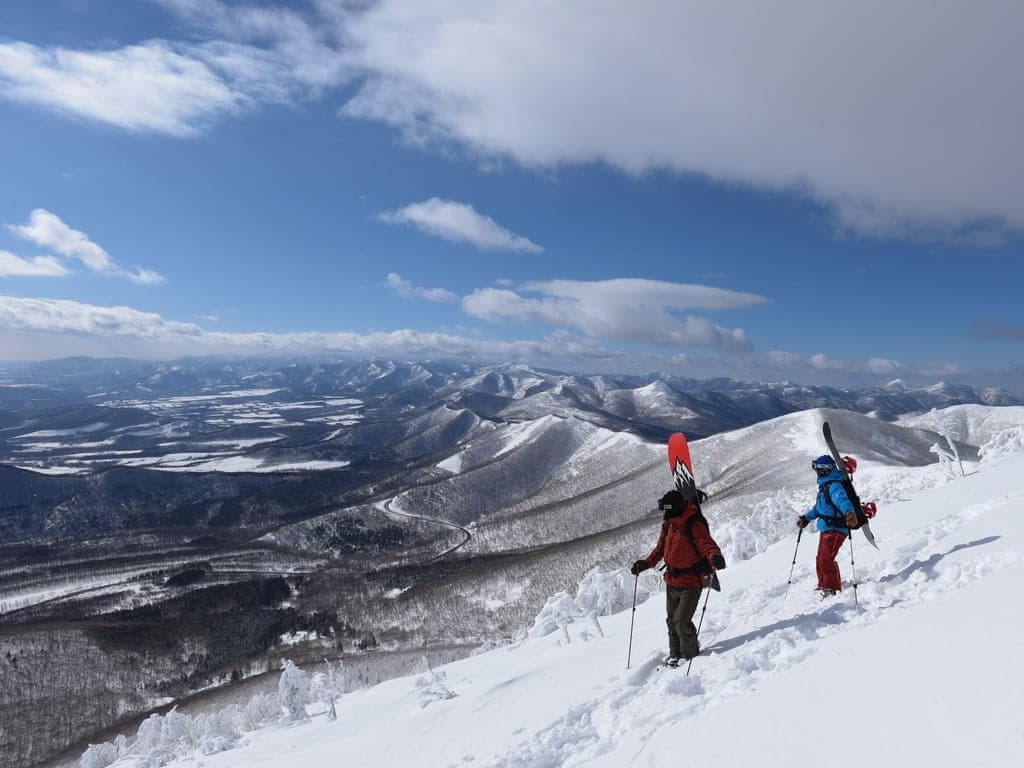
Be realistic about what "self-guided" means here. Our packages cover accommodation, transfers and logistics — they do not include a mountain guide. Lift-accessed terrain inside the resort boundary is yours to explore from day one, and on a powder day that is where most people spend their time enjoying the snow rather than hiking for it.
Serious backcountry is a different decision. If you want ski touring, backcountry touring or the well-known powder stashes outside the ropes, book a local guide directly for those days. Japan's avalanche terrain is real, resort boundary rules vary by mountain, and every ski resort we work with has guiding operations you can hire on the ground.
Strong intermediate skiers who have never skied deep snow should also budget a day inside the resort before going anywhere near off-piste terrain — Japan's powder conditions ski very differently from groomed piste at home. For advanced skiers, the Hokkaido trips make the most sense: the 10-day Asahikawa ski safari moves between three smaller mountains well off the beaten path, and the Rusutsu and Furano itineraries give you two very different snow aspects in one trip.
Which Package Fits Which Skier
First trip to Japan, mixed ability
The 11-day Hakuba Valley trips at $3,100–$3,600 are the default recommendation. Hakuba has beginner slopes and enough terrain for strong intermediate and advanced skiers in the same valley, so a mixed group does not split up, and the Jigokudani snow monkey stop gives non-skiers a reason to be there.
Families with children
Look at the Hokkaido trips with chartered transfers. The 8-day Sapporo and Rusutsu package from $2,400 keeps travel days short, which is usually the deciding factor with kids, and Rusutsu's easy access from New Chitose Airport means you are on snow the same day you land.
Powder-focused skiers
Deep snow and thin crowds point north — see our Hokkaido ski resorts guide for how the mountains there compare. The 10-day Asahikawa ski safari at $2,900–$3,300 is the hidden gem of the range, and the 12-day Rusutsu and Furano trip at $4,700–$6,400 adds Sapporo and an onsen night. These suit travellers who already know what powder skiing in Japan involves and want the driving solved rather than the skiing narrated.
Skiing plus cities and culture
Two packages deliberately mix the two: 13 days pairing Hakuba with Kanazawa, Kyoto and Hakone at $4,700–$6,000, and 9 days pairing Shiga Kogen with Takayama and Shirakawa-go at $3,100–$3,900. These are the ones to choose when only half the group skis, or when the cultural experiences matter as much as the mountain.
Zao Onsen and the snow monsters
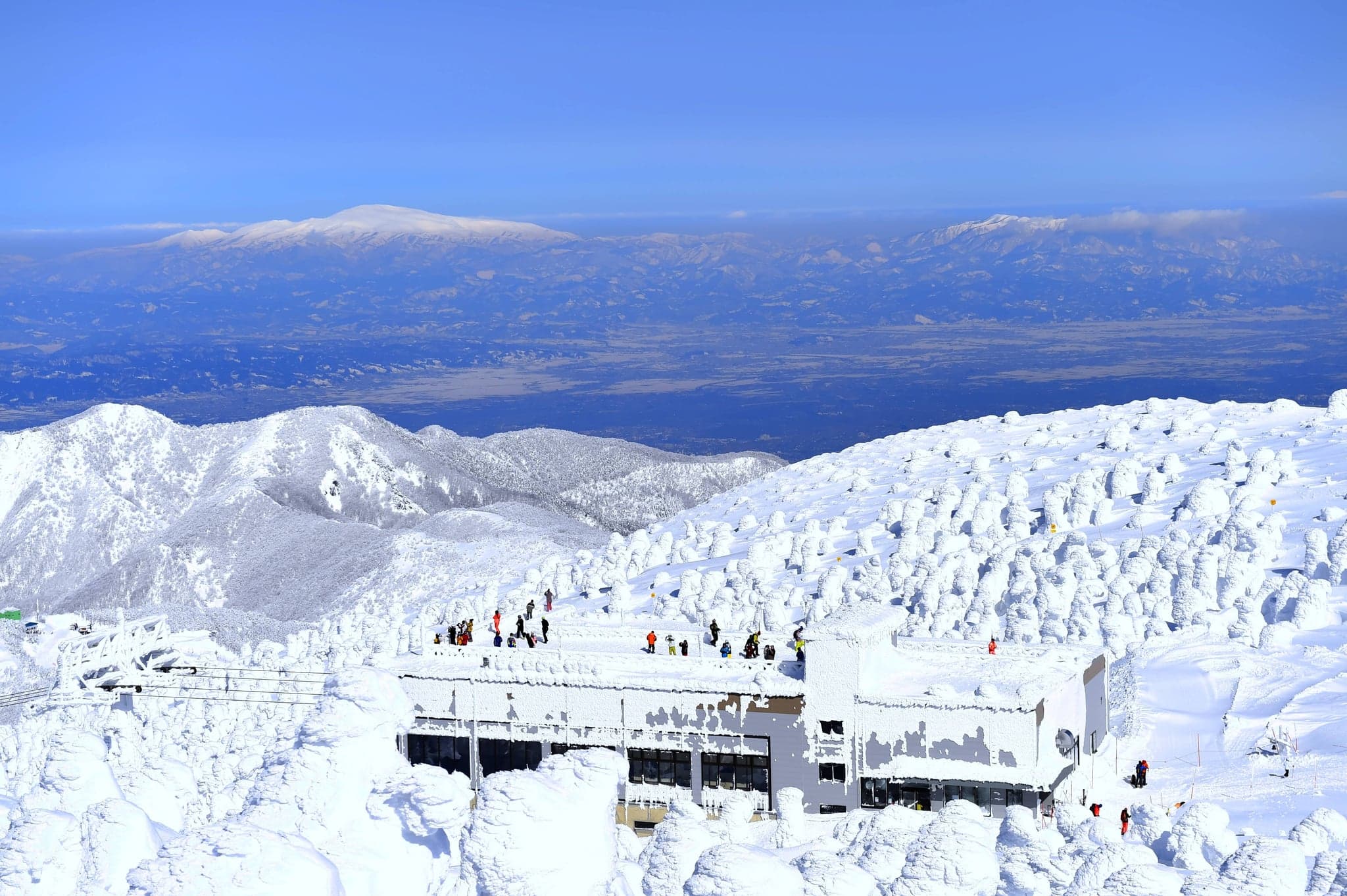
The three Zao packages are built around the frost-covered trees and the hot spring town rather than the vertical. Eleven days, three accommodation tiers, $3,800–$6,000. Zao also pairs with Appi in a 13-day Tohoku trip at $4,000–$6,200, and Appi has its own 11-day trip with Morioka at $3,300–$5,600.
The Days You Do Not Ski
This is where a Japan ski holiday separates itself from skiing anywhere else in the world. Ten of our winter trips stop at Yudanaka Onsen, a small hot spring town where the snow monkeys bathe in the valley below. The Hokkaido itineraries add Jozankei Onsen or Noboribetsu Onsen; the ski-and-city trips add Takayama, Shirakawa-go and Kanazawa.
On the 11-day Hakuba trips, for example, the shape is a night in Tokyo on arrival, a night in a ryokan at Yudanaka Onsen, then six nights at the ski resort. You get an onsen, great food and a genuine cultural stop without adding a day to the trip. Skiers who come back to Japan tend to say those days, not the powder, are what they discover they came for.
Getting There, and the Luggage Problem
Honshu trips start and finish in Tokyo. You spend the first night in a Tokyo hotel, take the bullet train out to Nagano or Tohoku, and come back to a Tokyo hotel at the end, which means your international flights only ever need to touch one airport. The bullet train leg is included, and it is the reason these trips work without a car: Tokyo to the Japanese Alps is a short ride on the bullet train, not a mountain drive in the snow.
Hokkaido trips are built differently. They start at New Chitose Airport with a chartered taxi straight to the hotel, which removes the part of a Hokkaido ski trip that goes wrong most often: a delayed flight, a missed bus, and two hours waiting in the cold. Rusutsu and Furano are located within easy access of the airport, so you can be riding on the day you land.
Luggage delivery runs airport → ski resort → Tokyo hotel on the Honshu packages, so you travel light on the bullet train and your suitcase meets you at the end. It is a small piece of logistics that changes how the whole adventure feels. If you want the detail on how forwarding works in Japan generally, our luggage forwarding guide covers it.
Do Japan Ski Packages Include Flights?
Ours do not. All 24 of our winter packages are land-only: international flights are excluded on every one, and seven of the nine Hokkaido trips also list the domestic flight into New Chitose as excluded, because the package starts when our staff meet you at the airport. Some operators do sell Japan ski packages including flights, so check that line before comparing two quotes — a land-only price and a flight-inclusive price are not the same product.
Booking the flights yourself is simple, because the trips start and end in one place. Honshu packages start and finish in Tokyo, so you need a return to Tokyo. Hokkaido packages start and finish at New Chitose Airport, so you fly to Sapporo — this winter that can be nonstop from Sydney on Qantas or from San Francisco on United, with the schedules in our Hokkaido ski resorts guide — or connect through Tokyo.
When to Book
Demand for Japan's ski season builds from September to November for a December-to-March trip, and accommodation in the small ski resort towns is the constraint, not the flights. The mid-January to mid-February window has the most reliable snowfall and books out first.
If you are still choosing between mountains rather than dates, start with our best ski resorts in Japan comparison and our Japan ski season guide, which covers when each region opens and where the snow lands first.
From our Japan travel team
Accommodation in Hakuba and the Hokkaido resort towns for January and February is often gone six months out, and it goes before the flights do. If your dates are firm, that is the moment to ask — we can tell you within a day what is still open for your window rather than after you have booked the flights. Feel free to get in touch with rough dates even if nothing else is decided yet.
What We Do Not Book
We do not sell Niseko or Nozawa Onsen packages. Niseko is the most famous ski resort in Japan and probably the most written-about ski town in the world, and Nozawa Onsen is the classic Japanese hot spring and ski village combination. Both are excellent, both are covered by every other guide to skiing in Japan, and both are well served by operators who specialise in them.
Our winter range covers Hakuba Valley, Shiga Kogen, Zao Onsen, Appi, Rusutsu, Furano, Sahoro and Asahikawa. Those are the mountains where we hold accommodation and can put a whole trip together. If Niseko is the reason you are going to Japan, book with someone who actually sells Niseko — you will get a better trip than we could build for you.
FAQ
How much does a ski trip to Japan cost?
Our Japan ski packages run $2,400 to $6,600 per person for 8 to 14 days, covering accommodation with breakfast, intercity transport, transfers, luggage delivery, travel insurance and 24/7 support. Add international flights, lift passes, rentals and meals outside the itinerary.
Are lift tickets included in a Japan ski package?
In ours, no — with one exception, the Sahoro and Furano package (HK102) that bundles the lift pass and five dinners for about $1,300 more than the same trip without it. All 23 others name the excluded pass explicitly, by resort. Always check this specific line when you compare operators.
Do Japan ski packages include flights?
Ours are land-only: international flights are not included in any of the 24, and most Hokkaido trips also exclude the domestic flight to New Chitose. Honshu trips start and end in Tokyo and Hokkaido trips at New Chitose Airport, so you book one return flight to match.
What is the best month to go skiing in Japan?
Mid-January to mid-February is the most reliable window for snowfall. December and March trade some snow certainty for lower prices and thinner crowds.
Can beginners do a self-guided ski trip in Japan?
Yes. The transfers, accommodation and luggage are arranged; lessons and rentals are booked at the resort, and the major Japan ski resorts have English-speaking instruction. Hakuba Valley and Shiga Kogen have the widest spread of beginner slopes.
Do I need to speak Japanese?
No. The itinerary is written for self-guided travel and support is available 24/7 in English while you are in Japan.
Planning a Japan Ski Trip
Every package on this page books the accommodation, the intercity transport and the transfers, sends your luggage ahead, and gives you a phone line in Japan for the days something goes wrong. Lift passes and gear you handle at the mountain — and we tell you that up front so the price you compare is the real one. Send us your dates and how many days you want on snow, and we will tell you which trips are open for your window and what they cost.
If you are thinking about a trip to one of the ski areas we cover, take a look at the ski tours on selfguidejapan.com. And if anything is unclear, or you would like to talk your trip through with someone, please feel free to get in touch.
Last updated: September 8, 2026. Prices, inclusions and exclusions are taken from the current catalogue itineraries and price sheets for all 24 winter products and can change by departure date. Lift pass availability and resort opening dates are set by each ski resort.
Related Articles
The Best Ski Resorts in Japan: 12 Ranked for 2026-27 (and Which Ones We Book)
19 min read
Japan Ski Season 2026-27: A Practical Niseko & Hakuba Powder Guide for Self-Guided Travelers
13 min read
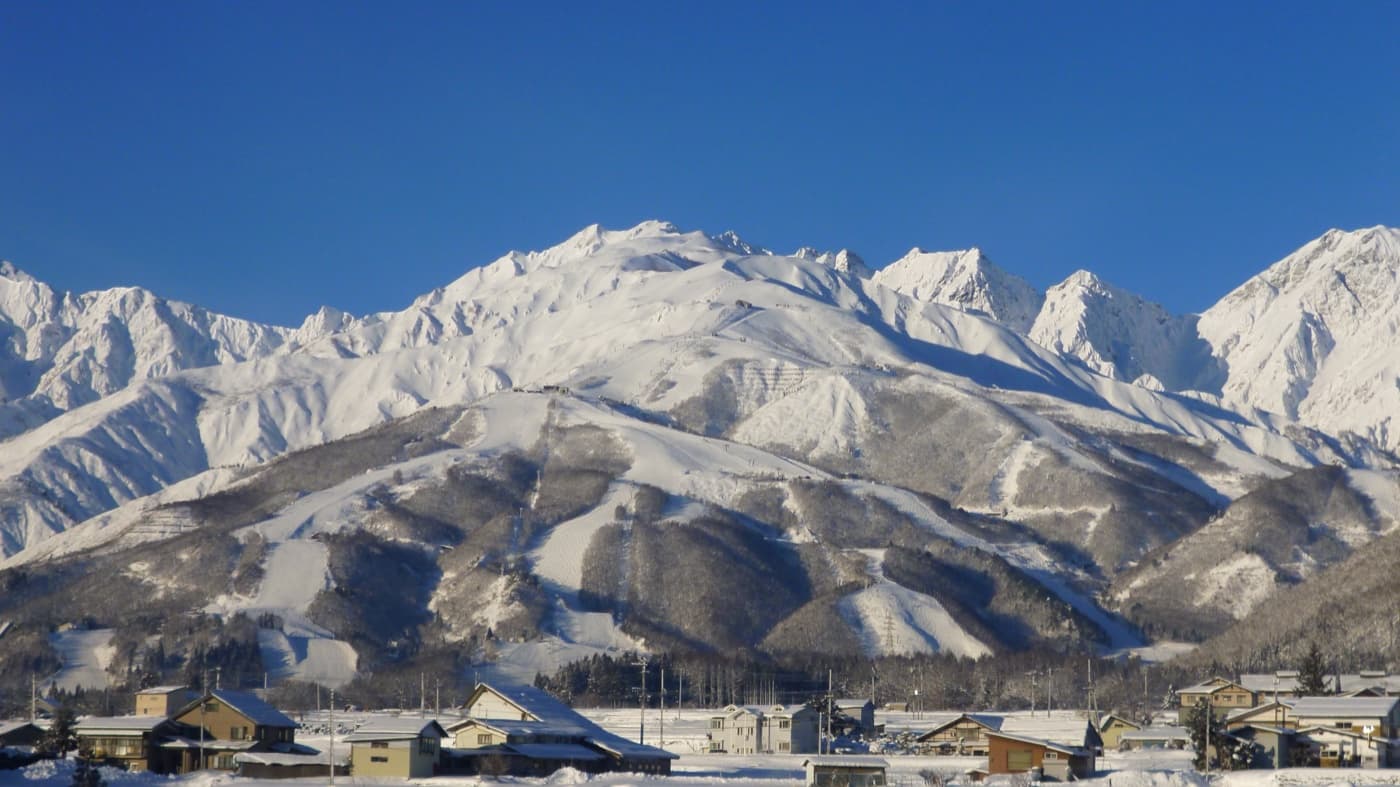
Hakuba: A Practical Self-Guided Guide to Japan's Biggest Ski Valley
15 min read