Day Trips From Tokyo: 12 Easy Trips by Train, With Times, Fares and Passes
The best day trips from Tokyo — Kamakura, Hakone, Mt Fuji at Kawaguchiko, Nikko, Kawagoe, Mt Takao, Yokohama, Hitachi Seaside Park and more — with train times, fares, passes and what's on in autumn and winter 2026–27.
Short answer first: for most travelers, the best day trips from Tokyo are Kamakura, Hakone, the Mt Fuji area around Lake Kawaguchi and Nikko, with Kawagoe, Mt Takao and Yokohama as easy half days. You can reach all of them by public transport and be back at your Tokyo hotel the same night.
Which ones suit your trip depends on your dates and your energy. Kamakura is about an hour from Tokyo Station on direct trains; Nikko is about two hours north of the city. Mount Fuji looks stunning when it's out and disappears completely when it isn't, so a Fuji trip works best when your plans can flex. This guide covers how to reach each place, realistic travel time and costs, which passes still pay, when a bus tour beats going alone, and what's on in autumn and winter 2026–27 — from the kochia turning red at Hitachi Seaside Park to the Hakone Ropeway's winter maintenance closures. Times, fares and fees were checked on October 7, 2026.
Quick Answer: The Best Day Trips From Tokyo
- First trip: Kamakura — an hour south of Tokyo on one direct JR train, about ¥1,040.
- Mountains and hot springs: Hakone, 80 minutes from Shinjuku on the Romancecar (¥2,470).
- Mt Fuji: Kawaguchiko by the Fuji Excursion train (¥4,200) or a highway bus (from ¥2,000) — go early, and in winter if you can.
- Shrines and waterfalls: Nikko, about 1 hour 50 minutes from Asakusa on Tobu.
- Easy half days: Kawagoe (30 minutes), Mt Takao (¥430) and Yokohama (¥310).
- Passes: the JR Pass alone rarely pays for day trips; compare the JR TOKYO Wide Pass (3 days, ¥16,000) with the individual fares for your covered trains; Fuji and Nikko do not automatically make it cheaper.
Kamakura
1 hr · ¥1,040
Hakone
80 min · ¥2,470
Mt Fuji
2 hr · from ¥2,000
Nikko
1 hr 50 · from ¥2,850
Tokyo Day Trips at a Glance
Here's a quick summary of the classic Tokyo day trips. Times and adult fares are one way from the usual Tokyo departure station on the most practical train, so double them for the round trip. If it's under an hour, it's an easy day; if it's two hours each way, you need an early start and a firm plan.
| Destination | From (train) | One-way time | One-way fare | Best for |
|---|---|---|---|---|
| Kamakura & Enoshima | Tokyo (JR Yokosuka Line) | about 1 hr | about ¥1,040 | The Great Buddha, temples, the coast |
| Hakone | Shinjuku (Odakyu Romancecar) | about 80 min | ¥2,470 | Hot springs, ropeway, Lake Ashi |
| Lake Kawaguchiko (Mt Fuji) | Shinjuku (Fuji Excursion / highway bus) | 1 hr 54–58 min / about 1 hr 45 min | ¥4,200 / ¥2,000–2,200 | Fuji views, Chureito Pagoda |
| Nikko | Asakusa (Tobu Spacia X or Revaty) | about 1 hr 50 min | ¥2,850–3,540 | Toshogu Shrine, Kegon Falls |
| Kawagoe | Ikebukuro (Tobu Tojo Line) | 26–30 min | about ¥490 | Edo-era warehouse streets |
| Mt Takao | Shinjuku (Keio Line) | 43–50 min | ¥430 | Easy hiking, autumn leaves |
| Yokohama | Shibuya (Tokyu Toyoko Line) | about 30 min | ¥310 | Harbor, Chinatown, Cup Noodles Museum |
| Hitachi Seaside Park | Tokyo or Ueno (JR Hitachi or Tokiwa trains to Katsuta, then bus) | about 1 hr 45 min | JR fare + bus | Kochia in October, nemophila in spring |
| Karuizawa | Tokyo (Hokuriku Shinkansen) | about 1 hr 5 min | JR fare (JR Pass covers it) | Forest walks, shopping, autumn leaves |
| Chichibu | Ikebukuro (Seibu Laview) | about 80 min | ¥1,700 | Mountains, shrines, the December Night Festival |
| Ashikaga Flower Park | Tokyo or Ueno (JR via Oyama) | 1.5–2 hr | JR fare (JR Pass covers it) | Winter illumination, wisteria |
| Narita & Sawara | Narita Airport (JR Narita Line from Narita) | Narita to Sawara 32–37 min | JR fare | Layover trips, canal town |
JR East raised its fares on March 14, 2026, so older guides quote less for the JR trips. If you only have room for one trip, pick from the top four rows — they're famous for good reason. The rest are worth a visit on a spare afternoon, as a backup when the weather turns, or in their season.
How to Choose the Best Day Trips From Tokyo
If you're visiting Japan for the first time, start with what Tokyo can't give you. The city has superb shrines and some of the best food in the world; a day trip adds seaside temples, a steaming volcanic valley or a closer view of Fuji by a lake. The mountain can also be visible from Tokyo on clear days. A good day trip should feel nothing like the day you just spent in Tokyo.
Then be honest about travel time on trains. The best Tokyo day trips are the ones where the getting there is part of the fun. Two hours each way means four hours of sitting, plus transfers. That's usually worth it for Nikko or Fuji; for a place you're only half-curious about, it's a long trip for not much. If the journey takes more than two hours each way, consider staying the night instead — waking up to Fuji over the lake is a beautiful experience that a day trip can't give you.
Finally, use the forecast to decide the order of your outings. Fuji and Hakone views depend on the clouds, while Kamakura and Kawagoe are perfectly pleasant in drizzle.
Which Day Trip Is Best for First Time Visitors?
For most first time visitors, Kamakura. It's close, it's on JR lines, so a JR Pass covers the fare, and the major sights are within walking distance or a short train ride of each other. Hakone comes a close second if you want mountains, a hot spring and a day of ropeways and boats. Save Fuji for when your dates have some wiggle room.
Kamakura Day Trip: The Great Buddha, Seaside Temples and Enoshima
Kamakura was the seat of Japan's first shogunate in the late 12th century. Today it's a relaxed coastal city of temples, wooded walking paths and surf shops, and the easiest day trip from Tokyo on this list.
Getting There by Train
From Tokyo Station, the JR Yokosuka Line runs straight to Kamakura Station with no transfers in about an hour, for about ¥1,040 each way after the March 2026 fare rise. The Yokosuka Line platforms are deep underground at Tokyo Station, so allow a few extra minutes of walking. Some Shonan-Shinjuku Line trains run direct from Shinjuku. Starting from west Tokyo, Odakyu's Enoshima-Kamakura Freepass (¥1,640 from Shinjuku) is great value: it gives you a round trip to Fujisawa plus unlimited rides on the Enoden coastal railway.
Kotoku-in Temple and Hase-dera Temple
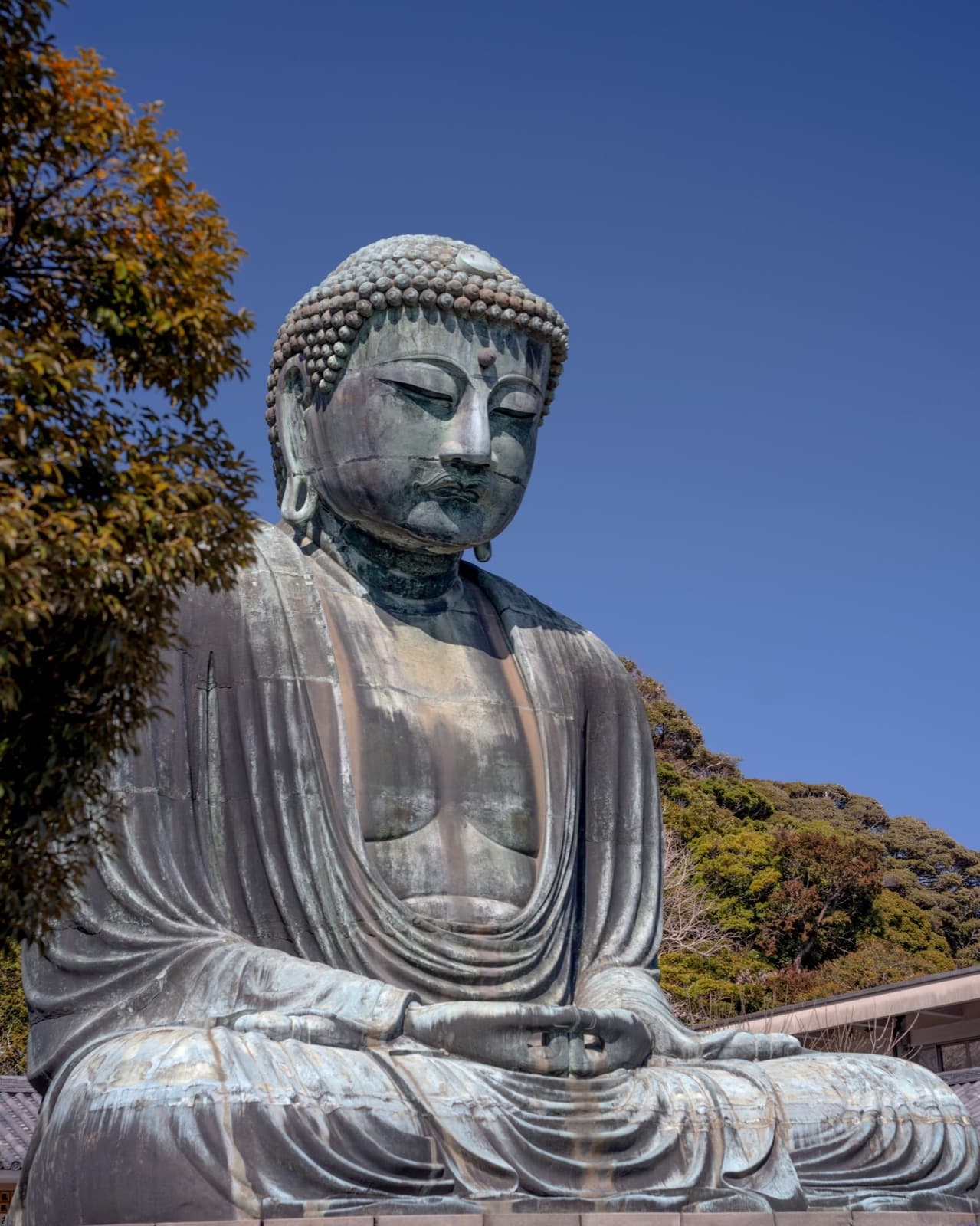
From Kamakura Station, ride the Enoden a few stops to Hase; the small, slow local trains on this line are completely charming (an Enoden day pass, Noriorikun, is ¥800). A short walk from Hase Station brings you to Kotoku-in Temple and the Great Buddha, a bronze statue more than 11 meters tall that has sat in the open air for centuries since its hall was lost. Admission is ¥300, plus ¥50 to step inside the hollow statue. The temple opens at 8:00 and closes at 17:00 from October to March (17:30 from April to September). Visit before 10 a.m. and you'll share the view with far fewer tour groups.
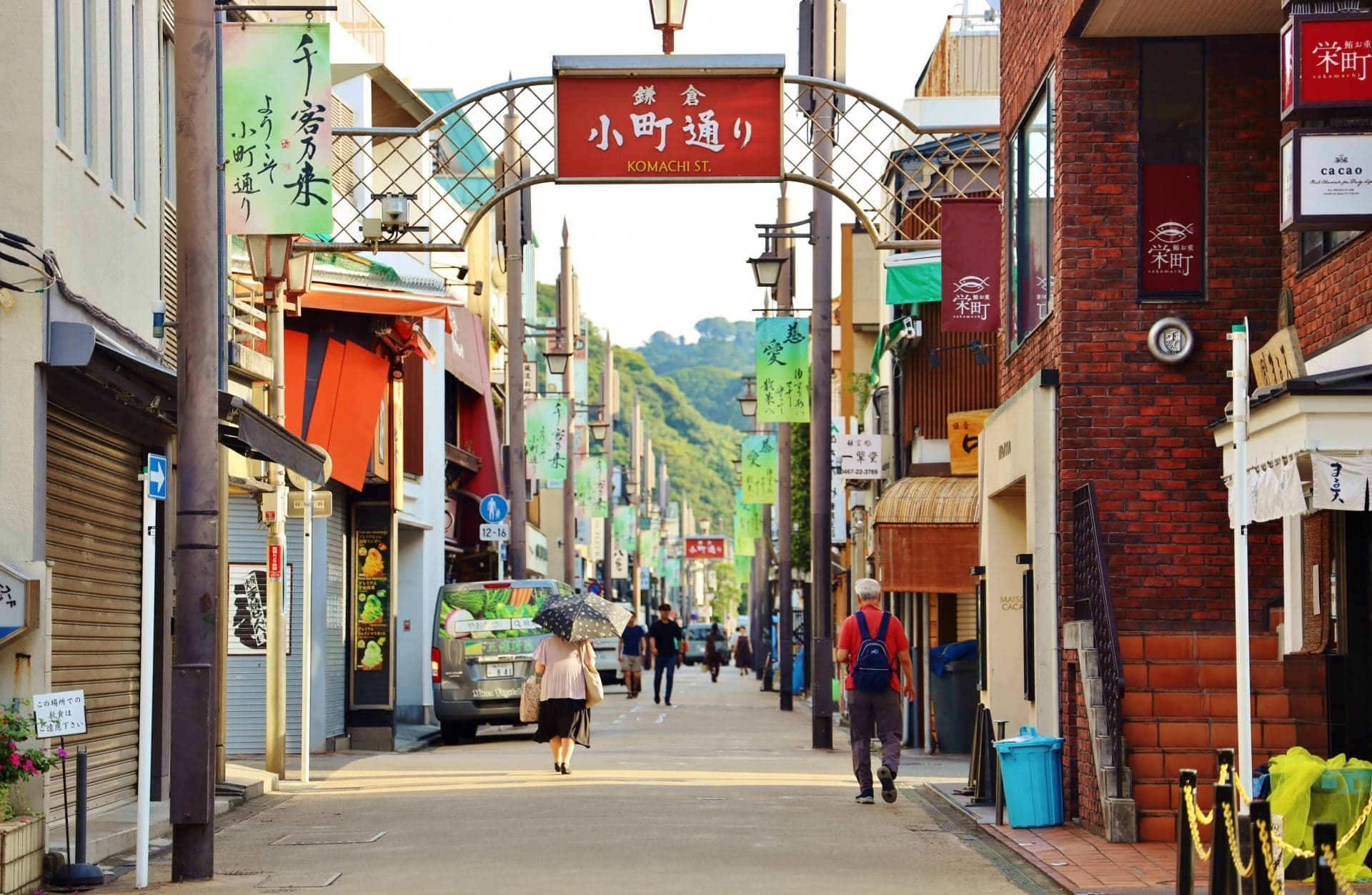
Hase-dera Temple is about five minutes on foot from Hase Station and costs ¥400. The grounds climb a hillside, with a small cave, a lookout over Sagami Bay and masses of hydrangeas in June. Then head back toward Komachi-dori near the station for lunch and street food — the local thing to eat is shirasu (tiny whitebait) on rice. Our Kamakura day trip guide has an hour-by-hour plan.
Add Enoshima Island by Enoden
Enoshima is a small island joined to the mainland by a bridge. From Hase, the Enoden runs on to Enoshima Station, and from there it's roughly 15 minutes on foot across the water. On the island you'll find shrines, sea caves and an observation tower, and on clear days you can see Fuji across the bay. Adding Enoshima turns the trip into a full day. Wear proper walking shoes — the island is steep — and head home from Katase-Enoshima on the Odakyu Line or from Fujisawa on JR.
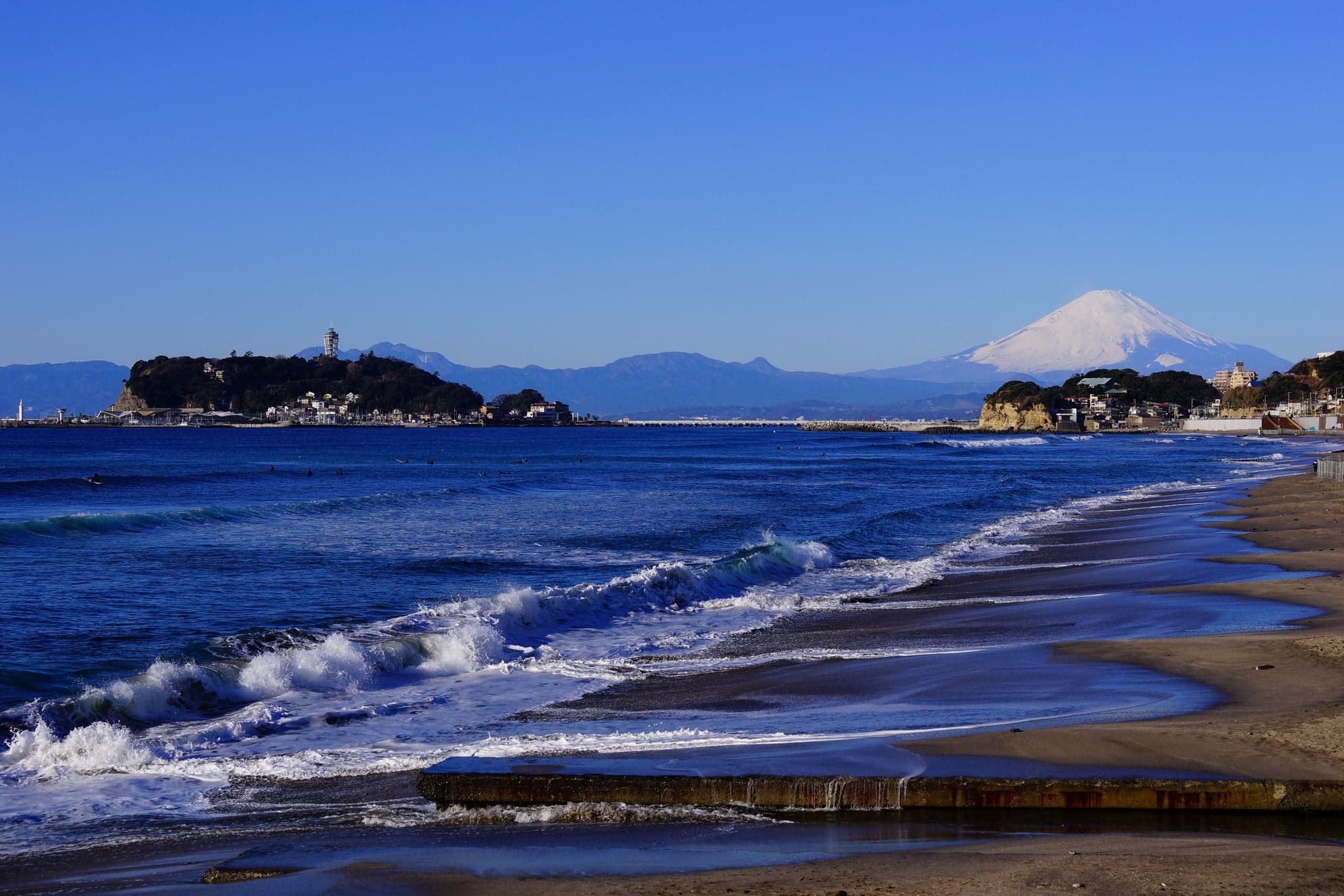
From our Japan travel team
Kamakura and Enoshima are around an hour from central Tokyo, and the Enoden links the Great Buddha, Hase-dera and the coast in one easy loop. Many of our self-guided routes end with a free day in Tokyo, so if your dates line up you can slot Kamakura in without rebuilding the itinerary — and weekdays there are noticeably calmer than weekends.
Hakone: Hot Springs, Open-Air Art and Lake Ashi
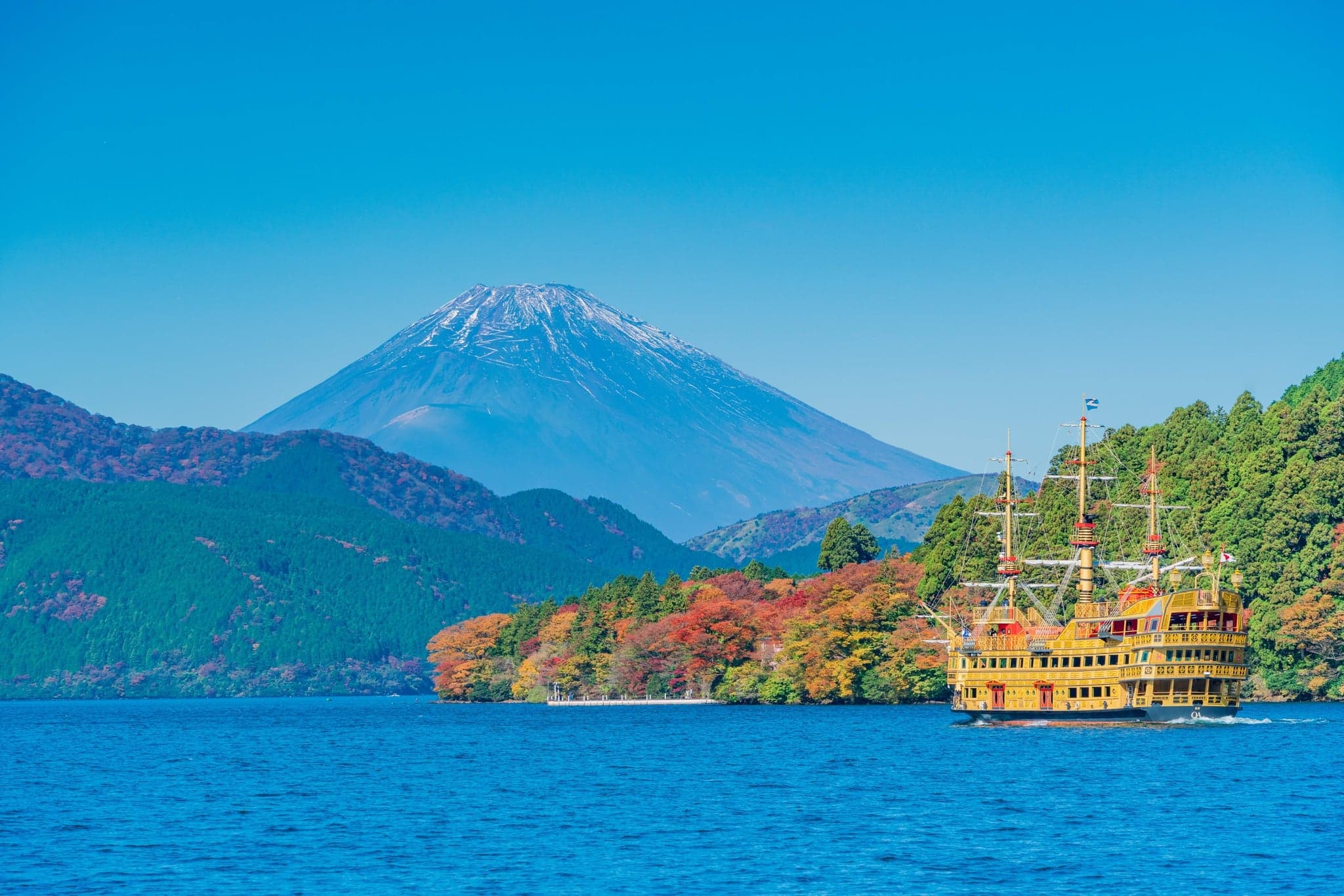
Hakone packs more variety into one day than anywhere else near Tokyo: a switchback mountain railway, a cable car, a ropeway over a volcanic valley, a boat across Lake Ashi and one of the best outdoor sculpture collections in the world. It works as a day trip, but a visit with an overnight onsen stay is even better — see our Hakone guide.
Getting There and Riding the Classic Loop
The comfortable option is the Odakyu Romancecar from Shinjuku to Hakone-Yumoto: about 80 minutes and ¥2,470 (¥1,270 fare plus the ¥1,200 limited express fee), with reserved seats. Ordinary Odakyu trains via Odawara are cheaper but slower. With a JR Pass, take the Tokaido Shinkansen to Odawara and change there. The classic loop:
- Hakone Tozan train from Hakone-Yumoto up to Chokoku-no-Mori.
- One more stop to Gora, then the cable car to Sounzan.
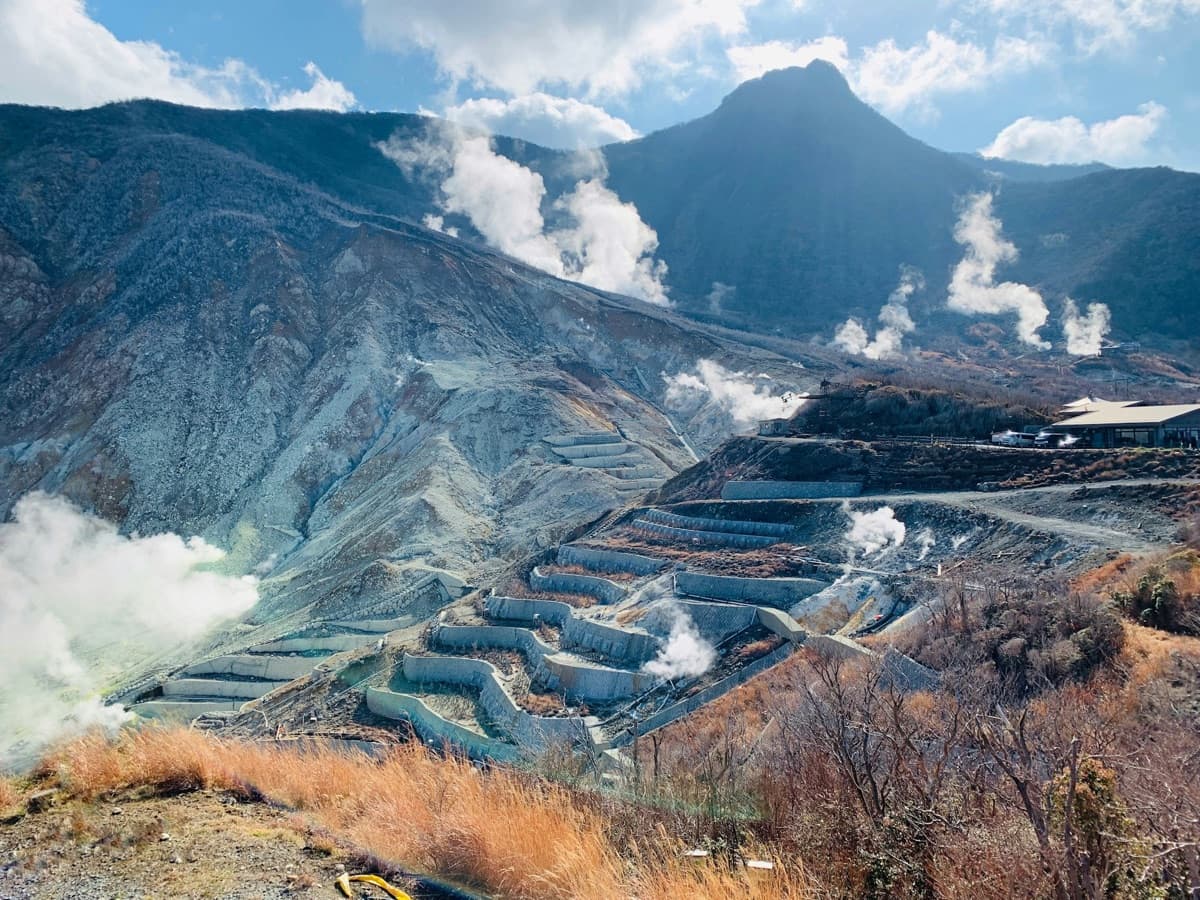
- Hakone Ropeway over Owakudani to Togendai (¥2,000 one way since October 2025).
- Sightseeing cruise across Lake Ashi to Moto-Hakone or Hakone-machi.
- Bus back down to Hakone-Yumoto.
That's a lot of transfers, but the loop works as a sightseeing tour you put together yourself, and honestly that's half the fun. Check the ropeway before you go: scheduled maintenance closes the Owakudani–Sounzan section from December 7 to 24, 2026 and Togendai–Owakudani from January 12 to February 26, 2027, with replacement buses running.
Hakone Open Air Museum, Owakudani and Lake Ashi
The Hakone Open-Air Museum is two minutes from Chokoku-no-Mori Station: sculptures on hillside lawns and a whole pavilion given over to Picasso, open 9:00–17:00, ¥2,000 at the gate or ¥1,800 online. At Owakudani valley the ropeway swings over steaming sulfur vents; the volcanic alert level was at 1, the lowest, in early October 2026, but the hiking trail from Komagatake through Owakudani remains closed, and the short nature trail needs an online booking and an ¥800 contribution. Most travelers grab a black egg boiled in the hot springs, snap a few photos and ride on. At Moto-Hakone, the shore path leads to Hakone Shrine and its torii in the lake — the photo stop everyone wants, with a long queue on autumn weekends.
Is the Hakone Freepass Worth It?
From Shinjuku, the Hakone Freepass costs ¥7,100 for two days or ¥7,500 for three. It covers the Odakyu round trip plus unlimited rides on the Tozan train, cable car, ropeway, Lake Ashi boats and buses in the area, with discounts at many sights; the Romancecar still needs its ¥1,200 Romancecar ticket. If you're riding the full loop, the pass usually pays for itself even in one day. If you only want an onsen in Hakone-Yumoto, skip it and use an IC card. More detail in our Hakone day trip guide.
Mount Fuji Day Trip: Lake Kawaguchi and Chureito Pagoda
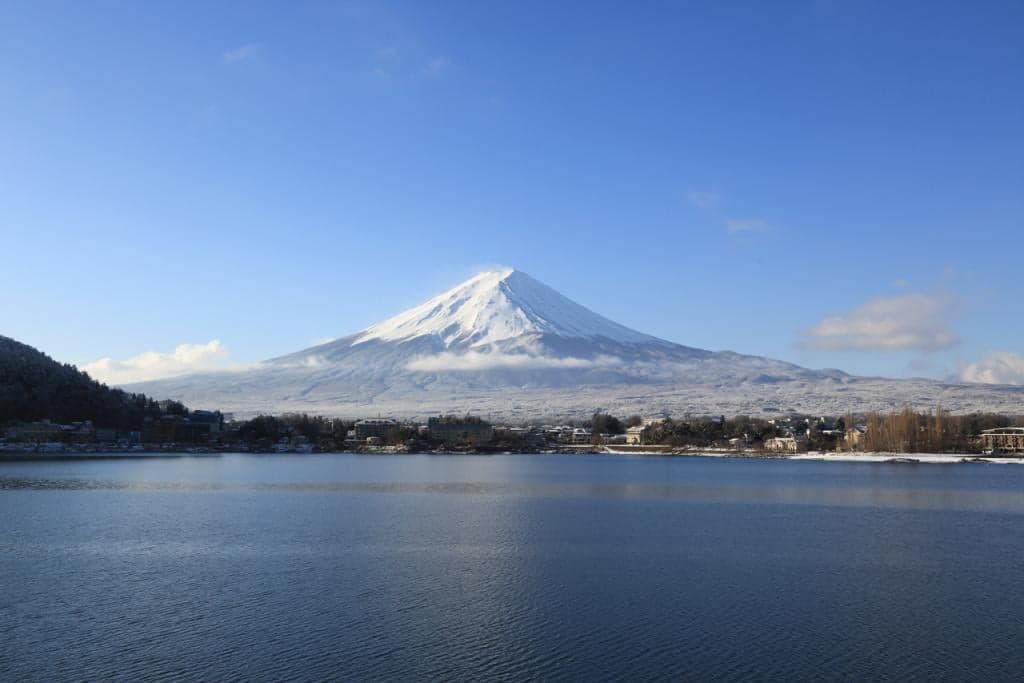
Lake Kawaguchi is the most accessible of the Fuji Five Lakes and the base for most day trips from Tokyo to see Japan's highest mountain. You won't climb anything: you'll look at Fuji across the water or from a pagoda hillside and eat a bowl of hoto, the thick miso noodle stew Yamanashi is famous for.
Getting to the Mt Fuji Area: Train or Highway Bus?
By train, the Fuji Excursion limited express runs direct from Shinjuku to Kawaguchiko Station in 1 hour 54–58 minutes, four round trips a day, for ¥4,200. There are no unreserved seats, and tickets go on sale a month ahead at 10:00. The catch for JR Pass holders is that the pass only covers the JR section as far as Otsuki, so the Fujikyu Railway part is an extra cost; the JR TOKYO Wide Pass covers the whole journey.
Highway buses leave from Busta Shinjuku, across from Shinjuku Station's South Exit, and take about 1 hour 45 minutes when traffic behaves, for ¥2,000 online or from ¥2,200 at the counter. Since October 1, 2026, the Fujikyu buses are booked on the "Fujiyama Connect" site and the Keio buses on highwaybus.com, so check which company runs your departure. Whichever you choose, take the earliest train or bus you can face, because clouds tend to build around Fuji as the morning goes on. If you arrive around 8:30 a.m., you have a fighting chance; arrive at noon and you may see nothing but cloud.
The Pagoda Viewpoint and the Lakeshore
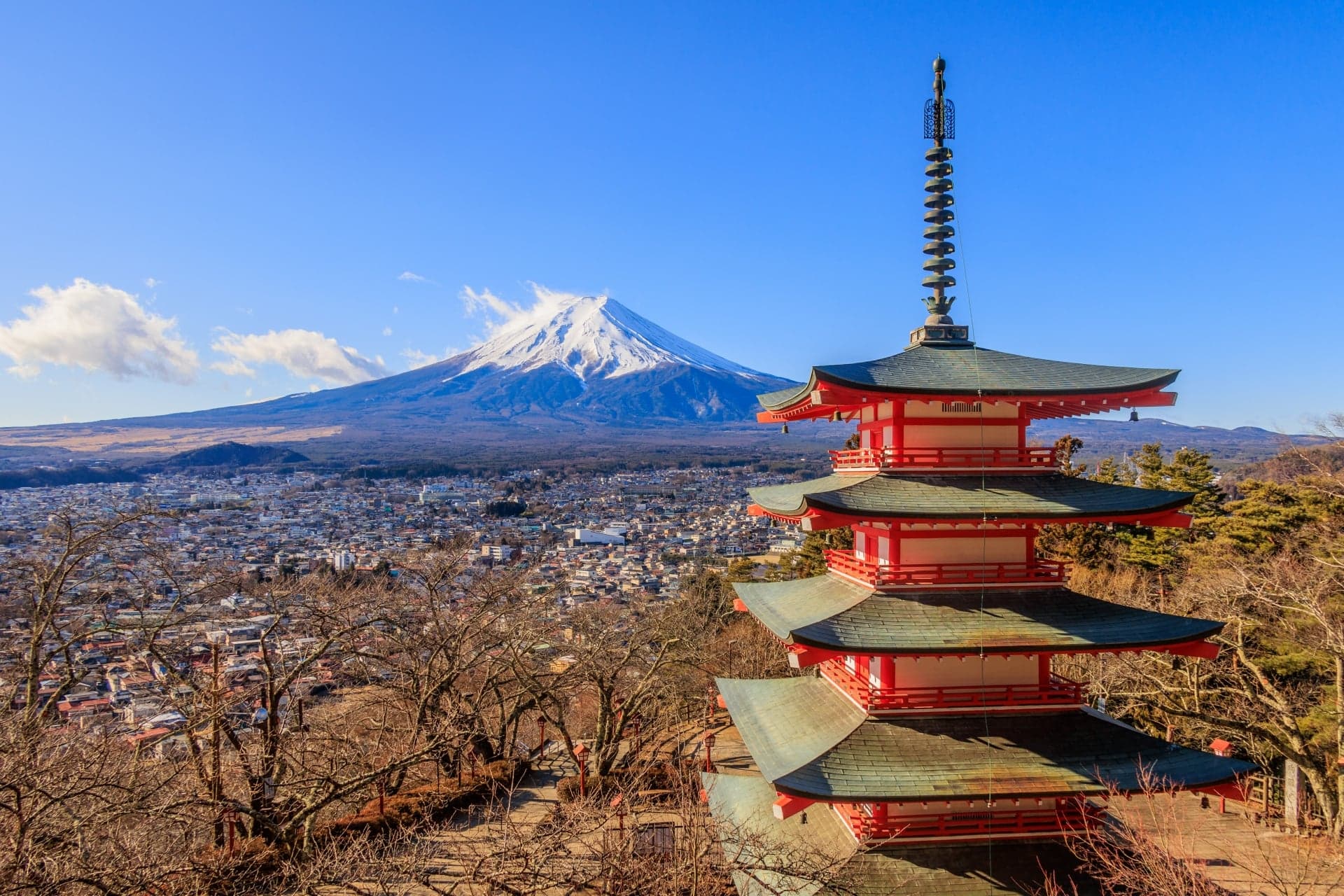
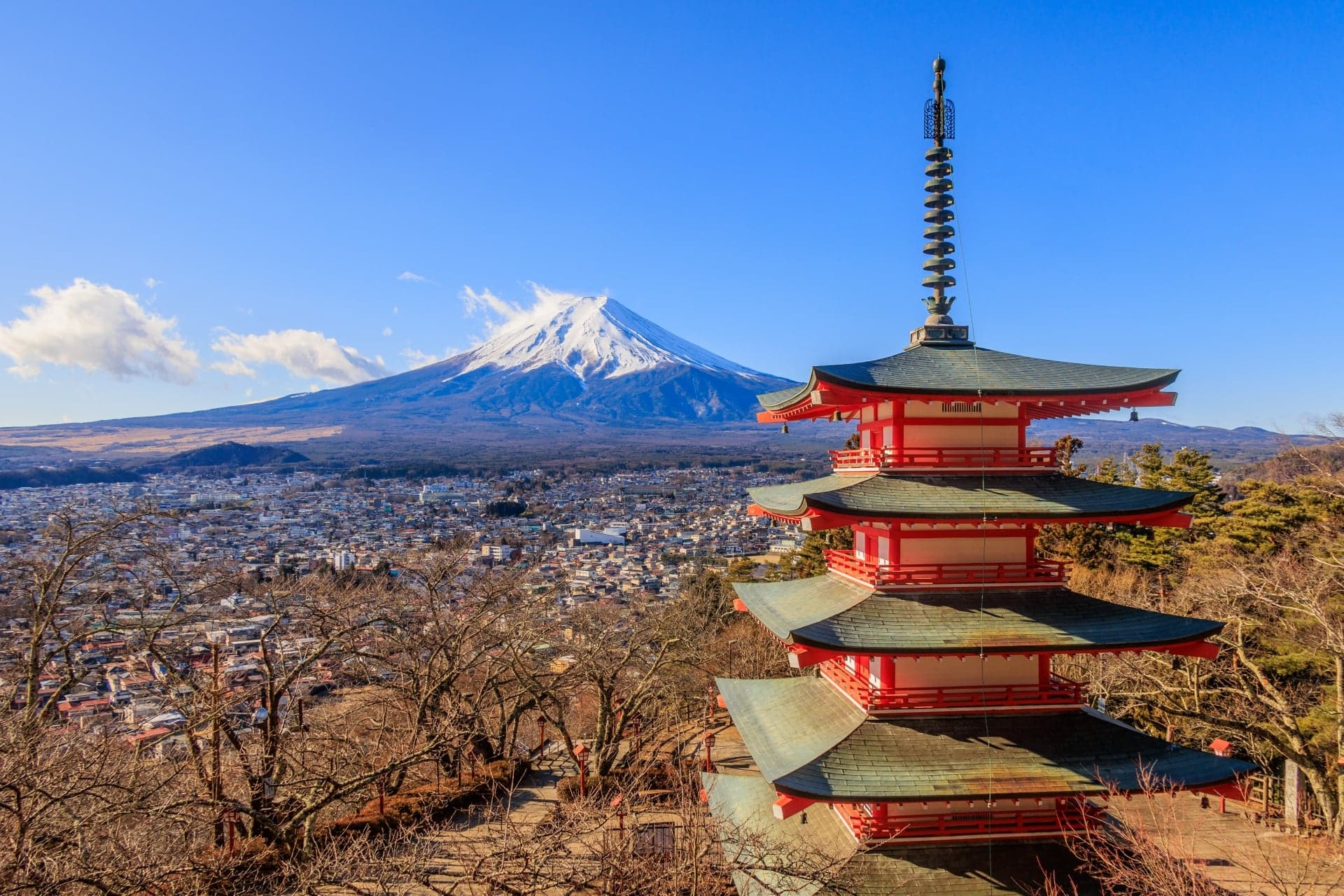
Chureito Pagoda is the red five-story pagoda with Fuji lined up behind it, the view on a thousand postcards. It stands in Arakurayama Sengen Park above Shimoyoshida Station on the Fujikyu Line, a few stops before Kawaguchiko: allow about 25 minutes on foot from the station, including the 398 steps (there's a gentler sloping path too). Cherry blossom season, usually early to mid April here, is the busiest time — go first thing. From Kawaguchiko Station, sightseeing buses on three lines loop the lakes; a one-day pass is ¥1,500 and two days ¥2,000. The north shore has the classic reflection view on calm mornings. Our Kawaguchiko guide covers the lake in detail.
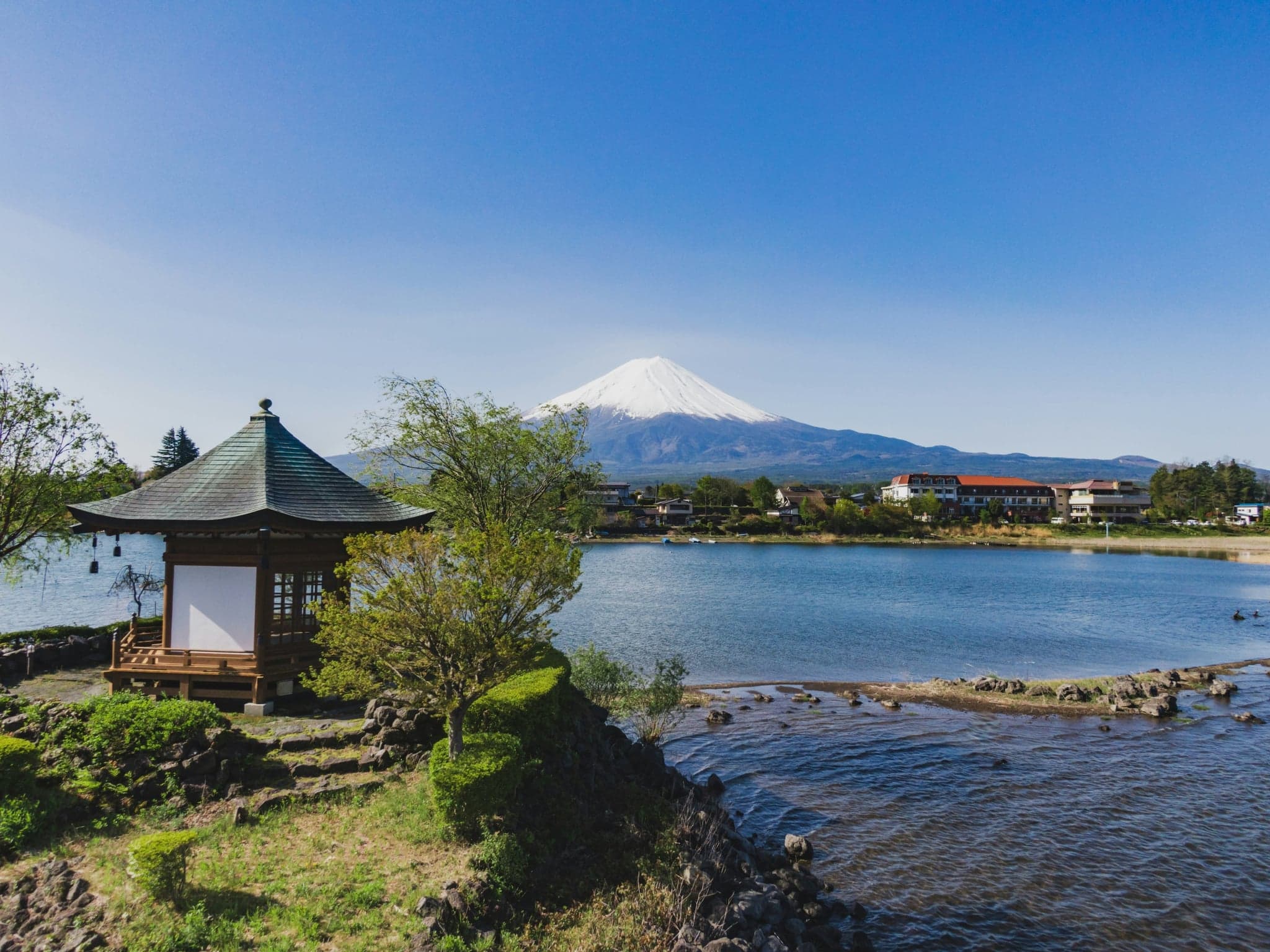
Plan Your Visit Around the Weather
Fuji is often hidden. The clearest views usually come from December to February, especially before 9 a.m.; in the summer months, haze and cloud mean plenty of visitors never see the summit. Check the weather forecast the night before, look at a live camera in daylight before setting out, and keep a backup plan — if the forecast is grim, swap Fuji with Kamakura. That flexibility is the whole point of a self-guided tour.
From our Japan travel team
The Fuji Five Lakes area is at its busiest in cherry blossom season and again when the autumn leaves turn, and reserved seats on the direct trains from Shinjuku can be hard to get on peak weekends. If you'd rather wake up to the view, routes such as our Zen & Mt. Fuji Experience stay overnight in Hakone and again facing Mt Fuji.
Nikko: Gilded Shrines and Mountain Waterfalls
With Nikko located about two hours north of Tokyo, this is the longest day trip on the list and the most rewarding if you love the ornate side of Japan's architecture. The Shrines and Temples of Nikko are a UNESCO World Heritage Site, set among huge cedars at the foot of the mountains. Plan a full day: it works as a one day trip if you leave early and keep the plan tight.
Tobu Train or Bullet Train?
Without a rail pass, Tobu Railway is simplest. The Spacia X and Revaty trains run from Asakusa to Tobu-Nikko in about 1 hour 50 minutes; the fare plus limited express fee is ¥2,850–3,250 on Revaty and ¥3,140–3,540 for a standard Spacia X seat, depending on the day (every weekend in October and November 2026 is a "busy day," ¥200 more). The NIKKO PASS World Heritage Area (2 days, ¥3,000 for overseas visitors) covers the round trip on ordinary Tobu trains plus local buses, with express fees extra.
With a JR Pass, take the Tohoku Shinkansen bullet train from Tokyo or Ueno to Utsunomiya (46–56 minutes) and change to local trains on the JR Nikko Line (42–46 minutes, about hourly) — allow about two hours. A few direct JR–Tobu trains also run from Shinjuku; the JR Pass doesn't cover their Tobu section, but the JR TOKYO Wide Pass does.
Toshogu Shrine and Kegon Falls in One Day
Toshogu Shrine is the lavish mausoleum of Tokugawa Ieyasu, founder of the shogunate that ruled Japan for more than 250 years — look for the three wise monkeys and the tiny carved sleeping cat. Admission is ¥1,600; it's open 9:00–17:00 from April to October and 9:00–16:00 from November to March, with last entry 30 minutes before closing. Rinnoji Temple and Futarasan Shrine are next door.
Kegon Falls drops 97 meters from Lake Chuzenji. Buses from Tobu-Nikko Station climb the hairpin bends of the Irohazaka road to Chuzenji Onsen, and the falls are a short walk from the stop; an elevator down to the lower viewing deck costs ¥600. In autumn, Tobu warns the bus can take more than two hours longer than usual at weekends, so go up to the falls first and leave the shrines for the afternoon. The Akechidaira Ropeway is closed until August 31, 2027. For the color forecast, see our Nikko autumn leaves guide.
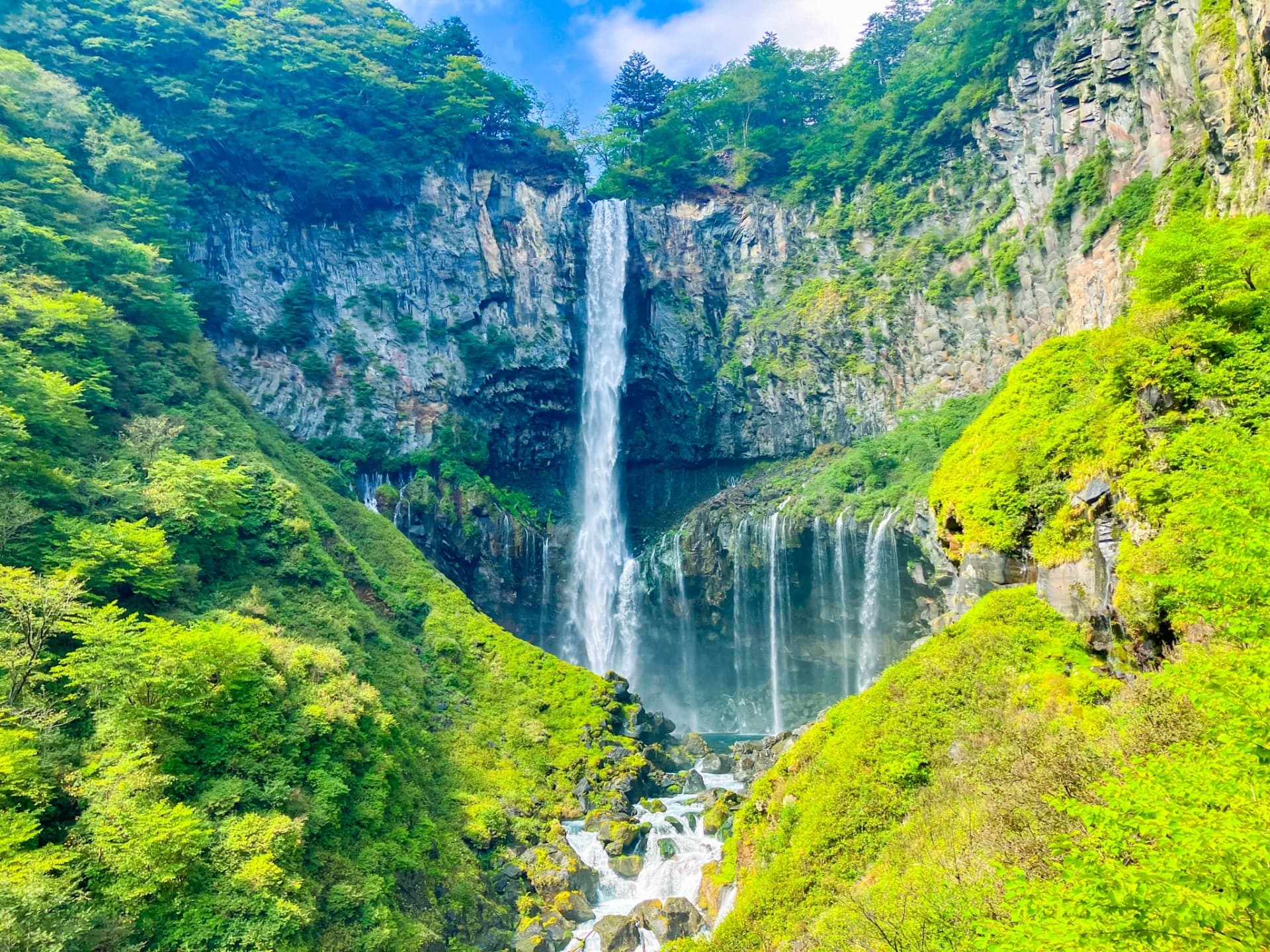
For a shrine-first schedule, current admission fees and a separate lake-day option, use our Nikko day trip from Tokyo guide. It explains which pass fits each plan and how much time to leave for the return train.
Kawagoe, Tokyo's "Little Edo"
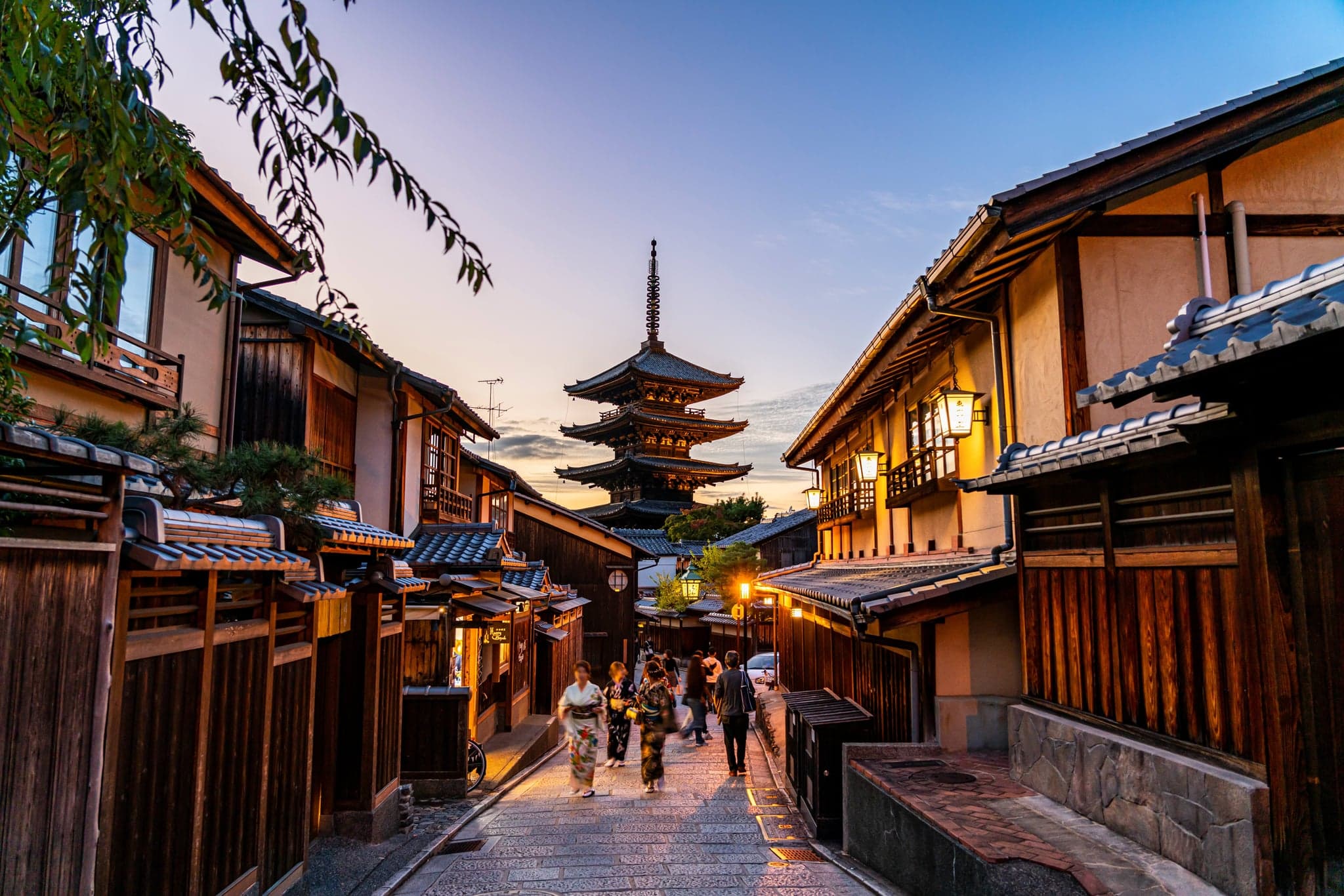
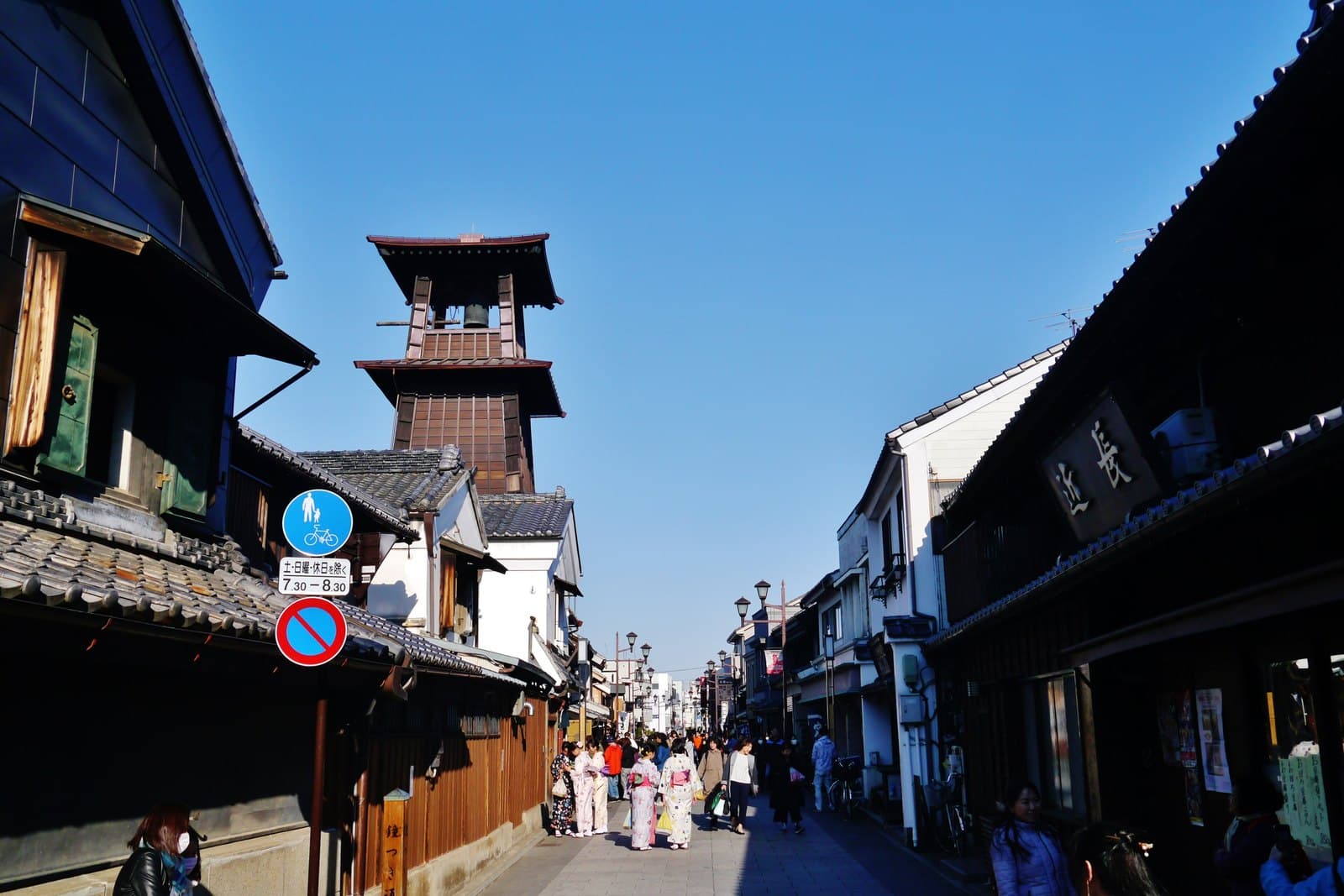
Not every outing needs a 6 a.m. alarm. Kawagoe is nicknamed Little Edo for its kurazukuri, clay-walled merchant warehouses from the city's trading heyday — a slice of old Japan half an hour from Ikebukuro. The wooden Toki no Kane bell tower, about 16 meters tall and rebuilt after a fire in 1893, still rings four times a day, at 6:00, 12:00, 15:00 and 18:00. Nearby Kashiya Yokocho, a lane of about 30 old-fashioned sweet shops, is where you'll eat your way through the afternoon; sweet potato snacks are the local specialty, and food stalls along the main street make lunch easy. It's one of the easiest day trips from Tokyo.
The Tobu Tojo Line from Ikebukuro reaches Kawagoe in 26–30 minutes for about ¥490, and the KAWAGOE DISCOUNT PASS Premium (¥1,200) adds the loop buses. From Kawagoe Station it's a 15–20 minute walk or a short bus ride to the old streets. In mid-October, the Kawagoe Festival fills them with towering floats.
Mt Takao: Hiking Trails Under an Hour From Shinjuku
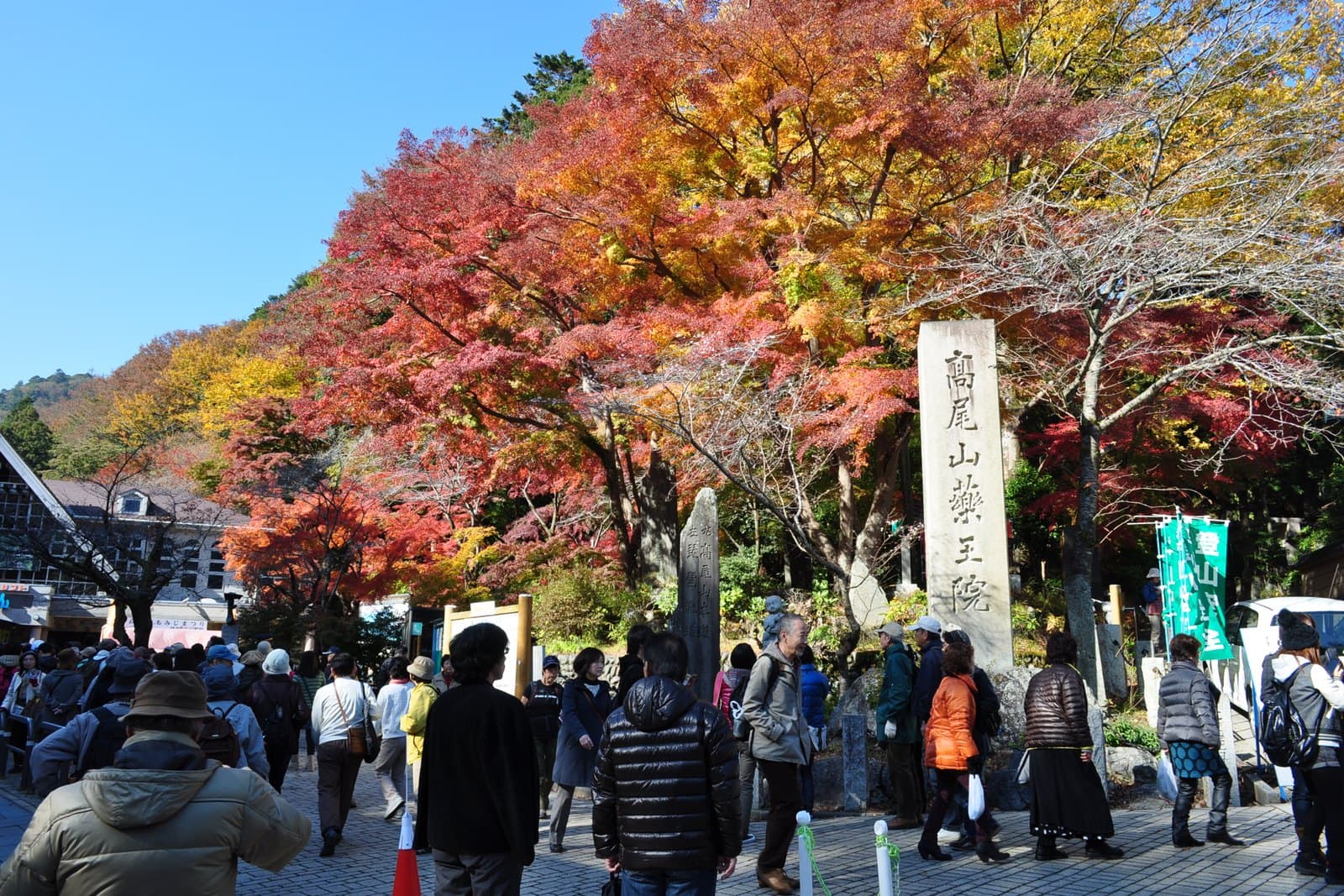
Mt Takao (Takao-san) is the easiest mountain escape from the city and the cheapest of the day trips from Tokyo in this guide. The Keio Line runs from Shinjuku to Takaosanguchi for ¥430, in 43 minutes on the fastest Mt.TAKAO trains and about 50 minutes otherwise. A cable car and a chairlift take you partway up (¥490 one way, ¥980 round trip), or you can walk the whole way on one of several marked walking and hiking trails; Trail 1 is the paved main route and passes Yakuoin temple on the way to the summit. The free Takao 599 Museum by the station explains the mountain's wildlife.
Autumn leaves usually peak from mid-November to early December, and on those weekends the trails are as crowded as a rush-hour train — go on a weekday if you can. Afterward, reward yourself with tororo soba (noodles with grated yam) at the bottom.
Yokohama: Harbor, Chinatown and Cup Noodles
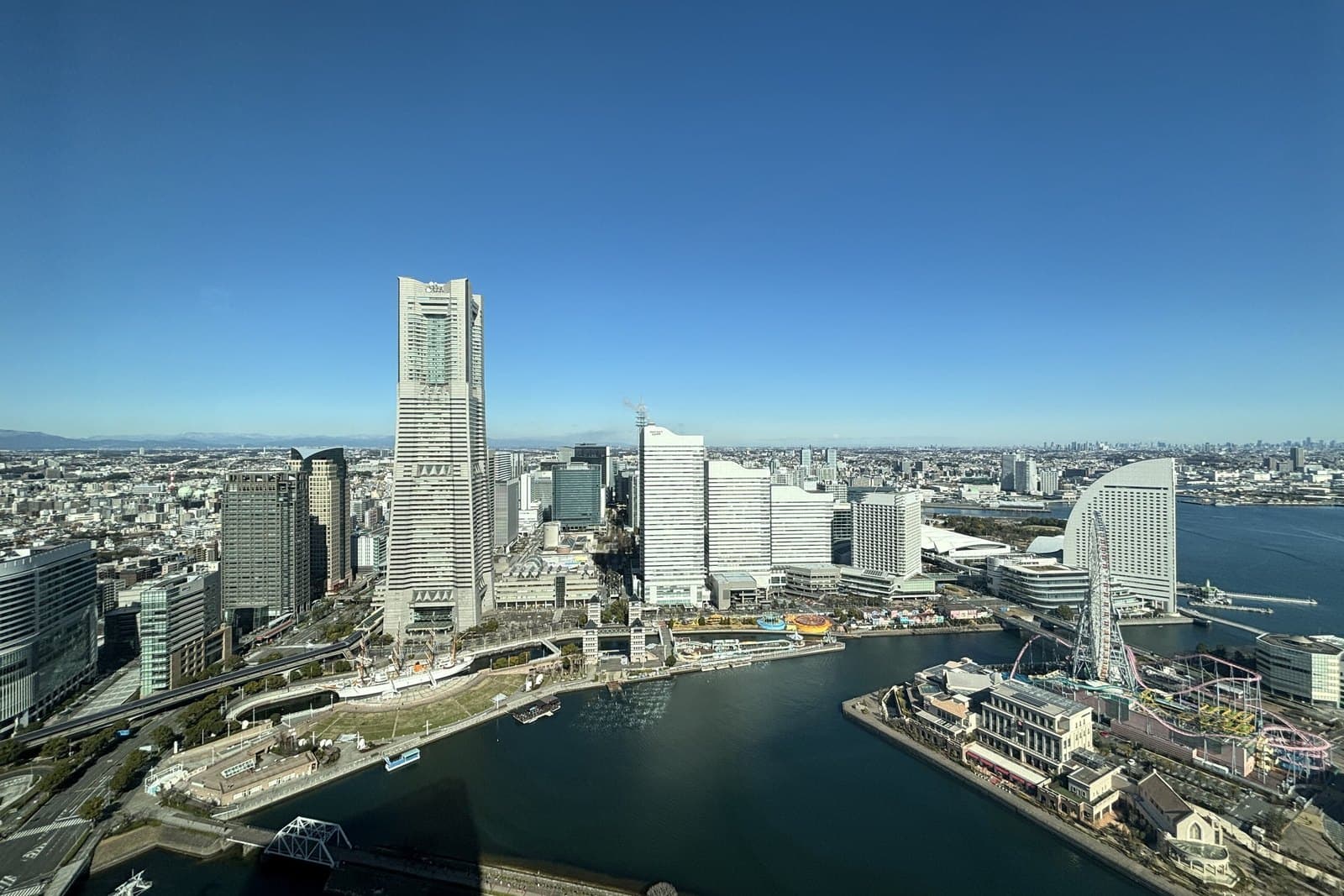
Yokohama is Japan's second city by population and barely feels like a day trip: the Tokyu Toyoko Line from Shibuya takes about 30 minutes to Yokohama (¥310) and runs straight on to Motomachi-Chukagai for Chinatown, about 35 minutes and ¥540. The Minatomirai Pass (¥920 from Shibuya) covers the round trip and a day on the Minatomirai Line.
Chinatown has hundreds of restaurants and food stalls; the waterfront has the Red Brick Warehouse and the Yokohama Air Cabin ropeway (¥1,000 one way). At the Cup Noodles Museum (¥500), you can design your own cup at the My CUPNOODLES Factory for ¥500 — no reservations, with numbered tickets handed out in order of arrival until they run out. Sankeien, a landscape garden with historic buildings, costs ¥900; its three-story pagoda goes under scaffolding for major repairs from April 2027.
More Day Trips: Hitachi Seaside Park, Karuizawa, Chichibu, Ashikaga and Narita
Hitachi Seaside Park (Ibaraki)
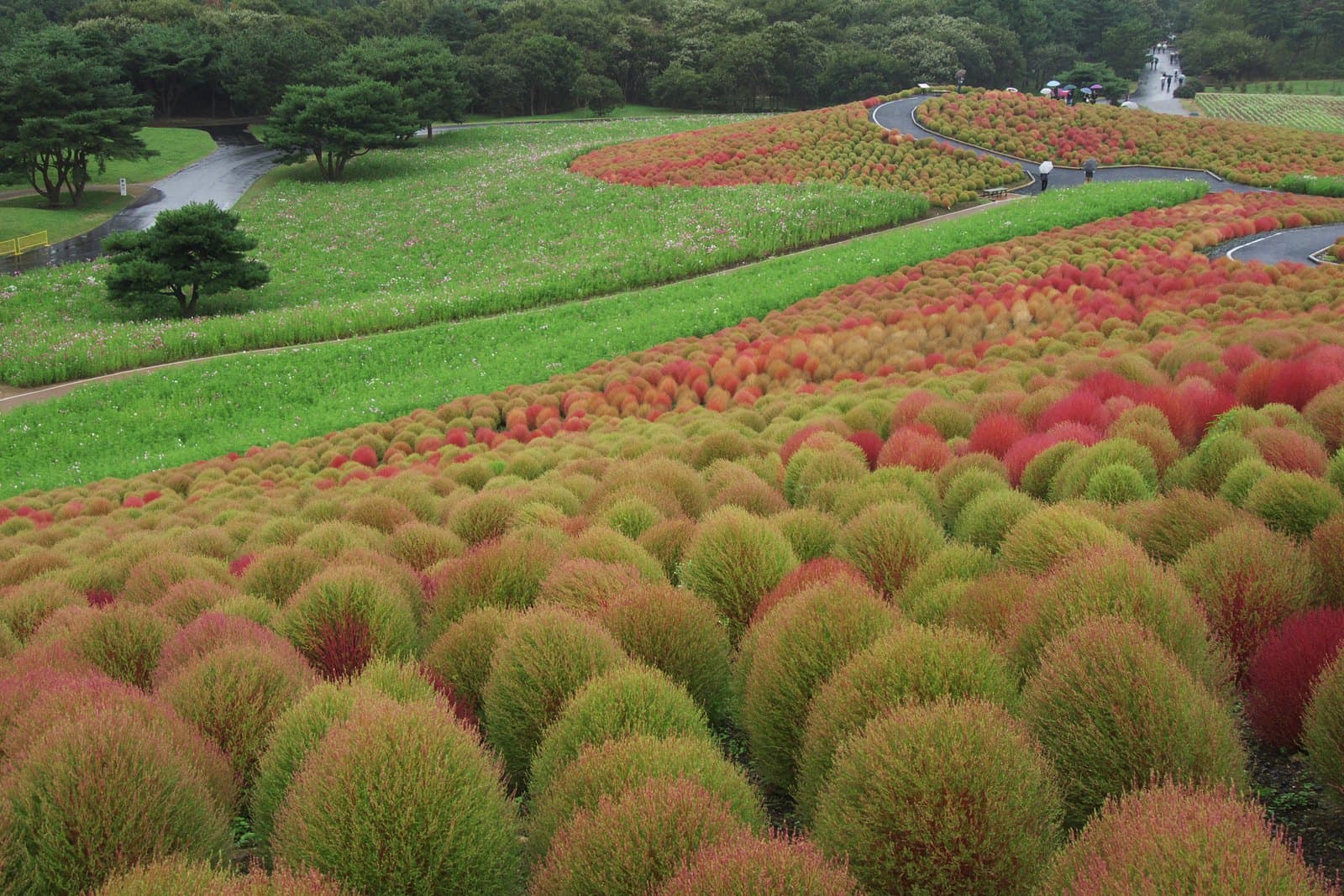
Hitachi Seaside Park is famous for two seasons: blue nemophila from mid-April to early May, and about 40,000 kochia bushes turning from green to red on Miharashi Hill in October. On October 7, 2026 the park reported them about 70% red, with the peak expected around October 10 and lasting 7–10 days. Entry is ¥450, plus a ¥350 seasonal fee from October 9 to November 3 (¥800 in total; junior high school age and under free), open 9:30–17:00 (16:30 from November). Take a JR limited express from Tokyo or Ueno to Katsuta (about 85 minutes), then a bus; from October 3 to November 3 a direct bus runs to the park in about 20 minutes (¥600). Northern Ibaraki is also home to the Hitachi-no-kuni Long Trail, a loop planned at about 320 km through six towns, which reports in early October 2026 said is now open end to end.
Karuizawa (Nagano)
A Hokuriku Shinkansen bullet train from Tokyo reaches Karuizawa in about an hour (usually 62–66 minutes), which makes it a quick hit of forest air: walk Kyu-Karuizawa Ginza, the old main street (about 750 meters), Kumoba Pond's loop path and Shiraito Falls, a 70-meter-wide curtain of water, then shop at the Karuizawa Prince Shopping Plaza (more than 200 stores) by the station. The JR Pass and the JR TOKYO Wide Pass both cover the Shinkansen.
Chichibu (Saitama)
Seibu's Laview express runs from Ikebukuro to Seibu-Chichibu in about 80 minutes for ¥1,700, into mountains, old shrines and sake breweries. On December 2–3 the town hosts the Chichibu Night Festival, with lantern-lit floats and winter fireworks.
Ashikaga Flower Park (Tochigi)
Famous for its giant wisteria in late April and May, Ashikaga Flower Park also runs one of the biggest winter illuminations in the Tokyo area, planned for October 17, 2026 to February 14, 2027 (15:30–20:30 on weekdays, to 21:00 at weekends; ¥1,500). Take JR to Oyama and change to the Ryomo Line to Ashikaga Flower Park Station (33–36 minutes). More winter lights in our winter illuminations guide.
Narita and Sawara (for a Layover)
Flying out of Narita? The Narita Transit & Stay Program, restarted in October 2026, offers volunteer-guided routes from the airport for travelers with at least 6.5 hours between flights — no tour or guide fee, you pay your own costs — to Naritasan Shinshoji temple (about 3 hours) or the canal town of Sawara (about 5 hours). Sawara is 32–37 minutes from Narita on the JR Narita Line, and its canal boat rides cost ¥1,300.
Is the JR Pass Worth It for Day Trips From Tokyo?
Short version: not on its own. The 7-day Japan Rail Pass costs ¥50,000 on the official site and ¥53,000 from overseas agents since October 1, 2026. A Kamakura round trip is about ¥2,080, Hakone is mostly Odakyu, and only part of the Fuji and Nikko routes is JR — day trips alone won't justify it. Long Shinkansen journeys within the same seven days may change the calculation, but even Tokyo to Kyoto and on to Hiroshima does not guarantee a saving; then JR day trips like Kamakura or Nikko via Utsunomiya come at no extra cost. Before you decide, price each leg on a route planner; our JR Pass guide does the math.
| Pass | Price | What it covers |
|---|---|---|
| Japan Rail Pass (7 days) | ¥50,000 on the official site; ¥53,000 from overseas agents since October 1, 2026 | JR trains to Kamakura, Nikko (via Utsunomiya), Karuizawa and Hitachi; JR only as far as Otsuki for Mt Fuji; not Odakyu, Tobu, Keio, Seibu or Fujikyu |
| JR TOKYO Wide Pass (3 days) | ¥16,000 (child ¥8,000) | JR East in the Tokyo region including bullet trains and express seats, the Fujikyu line to Kawaguchiko and the direct JR–Tobu trains to Nikko; non-Japanese passports only |
| Hakone Freepass from Shinjuku | 2 days ¥7,100 · 3 days ¥7,500 | The Odakyu round trip plus Hakone’s train, cable car, ropeway, boats and buses; the Romancecar fee (¥1,200) is extra |
| Enoshima-Kamakura Freepass | ¥1,640 from Shinjuku | Odakyu round trip to Fujisawa plus unlimited Enoden rides |
| NIKKO PASS World Heritage Area | 2 days ¥3,000 (child ¥1,500) | Tobu round trip from Asakusa plus local Tobu trains and buses around the shrines and Lake Chuzenji; express fees and entry extra; for overseas visitors |
| KAWAGOE DISCOUNT PASS Premium | ¥1,200 (child ¥600) | Tobu round trip from Ikebukuro plus Kawagoe’s loop buses |
| Minatomirai Pass (Tokyu) | ¥920 from Shibuya | Tokyu round trip to Yokohama plus a day on the Minatomirai Line |
The JR TOKYO Wide Pass costs ¥16,000 for three consecutive days. It includes ordinary reserved seats on covered JR trains and the Fuji Excursion through to Kawaguchiko. For Nikko, the covered JR–Tobu through trains must start or finish on a JR station; Spacia X and Revaty from Asakusa are not covered. The Tokaido Shinkansen and Hakone are outside the pass. Compare the exact covered journeys with individual tickets before buying. An IC card alone does not include limited-express supplements or reservations for the Romancecar, Fuji Excursion or Spacia X; a valid Wide Pass does include the ordinary reserved seat on the Fuji Excursion. Check JR East's coverage rules.
Bus Tour or Self-Guided: Which Makes More Sense?
A bus tour makes the most sense for the Fuji area, where the sights are spread out: a one-day tour from Shinjuku or Tokyo Station can link the pagoda, the lakes and other viewpoints without local timetables. The downsides are fixed times, the same photo stops as every other coach and expressway traffic that can add hours at weekends, so check how long the tour actually spends at each stop. For Kamakura, Nikko, Kawagoe and Mt Takao, skip the bus tour — the trains are fast, frequent and punctual, and going at your own pace is cheaper and calmer. Hakone sits in between.
What about a rental car? The documents you need depend on the country that issued your licence; check JAF's official guidance before booking. Weekend traffic out of Tokyo is heavy, and parking near Kamakura's temples is miserable. A car rarely saves time on day trips from Tokyo, and public transport wins almost every time, which is why a self-guided tour works so well in Japan. Ours don't include a guide day to day, but a local guide can be arranged as an option, for example for Nikko's shrines.
Best Time to Go: Seasons and What's On in 2026–27
- October: kochia at Hitachi Seaside Park (peak from about October 10), Nikko's leaves high up around Lake Chuzenji, and Ashikaga's illumination from October 17.
- November: leaves in Nikko town, Hakone, Kawaguchiko and finally Mt Takao (mid-November to early December); the Kegon waterfall is lit up from November 14 to 23. Expect big crowds on foliage weekends.
- December to February: the clearest Fuji views and the thinnest crowds, the Chichibu Night Festival (December 2–3) — and the Hakone Ropeway maintenance closures, with buses instead. Nikko gets cold, with snow possible around Lake Chuzenji.
- Cherry blossom season (late March to mid April): Tokyo blooms first and the Fuji area follows a week or two later; the busiest weeks of the year at the pagoda.
- Golden Week (late April to early May): half of Japan travels at once. Stick to weekdays and shorter outings, and book reserved seats early.
- Rainy season and summer (June to August): hydrangeas at Hase-dera and along Hakone's mountain railway, but Fuji rarely shows; Nikko and Mt Takao feel a bit cooler.
For the autumn color forecast across the region, see Tokyo autumn leaves 2026 and Hakone autumn leaves 2026.
Fitting Day Trips Into Your Tokyo Itinerary
When you fit day trips into your Japan itinerary, they work best at about one for every three or four days in the city; any more and you'll spend more of your stay commuting than seeing Tokyo. Don't schedule one on your arrival day or the day before you fly out — jet lag and early starts don't mix, and a delayed train is the last thing you need before an international flight.
- 4 days in Tokyo: one trip. Kamakura is the safe pick, or Hakone if you want mountains.
- 6–7 days in Tokyo: two trips with a city day in between. Kamakura plus Hakone or Nikko is a strong pair.
- 10 days around Tokyo: two or three trips plus an overnight in Hakone or by Kawaguchiko, Nikko as a long day, and Kawagoe or Mt Takao for an easy afternoon.
If you're traveling from Tokyo to Kyoto, Hakone doesn't have to be a day trip at all: Odawara is on the Tokaido Shinkansen, so you can stay overnight in Hakone and catch the bullet train west the next morning. Send your big suitcase ahead and carry an overnight bag — see our Tokyo to Kyoto guide. Heading west from Osaka instead? Our day trips from Osaka guide covers Kyoto, Nara and Himeji.
Common Mistakes to Avoid
- Doing Hakone and Fuji in one day. A bus tour can manage it; by train it's a very long trip. Pick one.
- Leaving late. For Fuji and Nikko, a 10 a.m. departure means you arrive just as clouds and crowds peak.
- Assuming the JR Pass covers everything. Odakyu, Tobu, Keio, Seibu, the Enoden and Fujikyu are private railways.
- Not reserving seats. Romancecar, Fuji Excursion and Spacia X seats can sell out at weekends and on holidays.
- Ignoring the last connection. The last trains and buses back from Kawaguchiko and Lake Chuzenji leave earlier than you'd think.
- Cramming the day. Plan to visit two or three major sights, not six, and leave extra time for lunch and wrong turns.
Self-Guided Routes With an Overnight in Hakone or a Free Tokyo Day
Booking day trips across five operators' websites gets complicated fast. These self-guided routes either stay overnight in Hakone or leave a free day in Tokyo whose suggested sights include Kamakura, Nikko and Mt Fuji. Our staff meet you at the airport with your trip documents, the tickets for the legs we book and a loaded IC card. No guide comes with you day to day, but a local guide can be arranged as an option. Prices are per person and move with the departure date and room type.
| Route | Length | From (USD per person) | Shape |
|---|---|---|---|
| Zen & Mt. Fuji Experience (EX003) | 7 days | $3,000–3,700 | Shinjuku (2 nights), the Fujiya Hotel in Hakone and Nihondaira facing Mt Fuji (1 each), then Kyoto. |
| Japan Highlights & World Heritage (GR002) | 12 days | $3,300–4,800 | Four Tokyo nights; the last full day is free, with Kamakura, Nikko and Mt Fuji suggested. |
| Sea of Serenity: Kashikojima & Cultural Japan (GR007) | 13 days | $3,700–5,200 | Overnight in Hakone, then Ise-Shima, Kyoto, Okayama and Hiroshima, with a free Tokyo day before you fly. |
| Spirit of Tradition: Shirakawa-go & Cultural Japan (GR009) | 14 days | $4,100–5,900 | Overnight in Hakone, then Takayama, Shirakawa-go, Kyoto, Nara and Hiroshima, and a free Tokyo day at the end. |
| Hop Through Japan’s Hot Springs & Highlights (HS002) | 14 days | $4,300–5,700 | Hakone, Kinosaki, Shirakawa-go and Gero hot springs, plus a free Tokyo day. |
| Family Holidays: Shared Journey Through Japan’s Classics (FG001) | 13 days | $2,700–4,100 | A family route with an overnight in Hakone near the end and a free day back in Tokyo. |
Interested in a tour? Click the route name above, or search by route code in the top-right Search bar.
Choosing a base? Our where to stay in Tokyo guide compares the neighborhoods, and things to do in Tokyo covers the city days in between.
Interested in adding a few day trips from Tokyo to your route? Get in touch through Plan My Trip on our self-guided tours site, and we’ll suggest the tours that best fit your dates and plans.
FAQ: Day Trips From Tokyo
What is the best day trip from Tokyo for first-time visitors?
Kamakura: one direct JR train from Tokyo Station, about an hour and about ¥1,040 each way, with the Great Buddha, Hase-dera and the coast a short Enoden ride apart. Hakone is a close second if you want mountains and a hot spring.
Can you see Mt Fuji on a day trip from Tokyo?
Often, but it's never guaranteed. Take the earliest train or bus to Kawaguchiko, try to go between December and February, and keep a backup day in case clouds roll in.
Is the JR Pass worth it for day trips from Tokyo?
Not on its own. The 7-day pass costs ¥50,000 (¥53,000 from overseas agents since October 1, 2026), while a Kamakura round trip is about ¥2,080 and Hakone, Kawagoe and Mt Takao are on private railways. The 3-day JR TOKYO Wide Pass (¥16,000) is usually the better buy if you do Fuji and Nikko.
Can I visit Hakone and Mount Fuji on the same day?
Not comfortably by public transport. Choose one, or stay overnight and do both properly on a two-day trip.
Do I need to book train tickets in advance?
Not for ordinary trains — just tap your IC card. Book reserved-seat trains like the Romancecar, the Fuji Excursion (on sale a month ahead) and Spacia X ahead, especially at weekends, on holidays and in cherry blossom and autumn leaf season.
How many day trips from Tokyo should I plan?
About one for every three or four days in the city. A few day trips add variety, but too many leave you tired and short on time for Tokyo itself — save the rest for your next trip.
What is a good day trip from Tokyo in October?
Hitachi Seaside Park, where the kochia turn red around mid-October (¥800 entry from October 9 to November 3), and Nikko, where the leaves start high up around Lake Chuzenji. Kawagoe's festival is in mid-October too.
Checked on October 7, 2026: Odakyu (Romancecar, Hakone and Enoshima-Kamakura Freepasses), Hakone Navi and the Hakone Ropeway, the Japan Meteorological Agency and Kanagawa Prefecture (Owakudani), Kotoku-in, Enoden, JR East (fare revision, timetables and the JR TOKYO Wide Pass), Fujikyu (Fuji Excursion, buses and the Kawaguchiko sightseeing buses), Fujiyoshida City (Chureito Pagoda), Tobu (fares, NIKKO PASS and Nikko buses), Nikko Toshogu, the Kegon Falls elevator, Kawagoe tourism and Tobu (KAWAGOE DISCOUNT PASS), Keio, Takao Tozan Railway and the Takao 599 Museum, Tokyu, the Minatomirai Line, the Cup Noodles Museum, Sankeien and the Yokohama Air Cabin, Hitachi Seaside Park, the Karuizawa Tourist Association, Seibu and Chichibu tourism, Ashikaga Flower Park, and Narita Airport's Transit & Stay Program; Japan Rail Pass prices from our JR Pass price guide (checked on the official site); Hase-dera from our Kamakura guide. JR fares to Karuizawa, Hitachi and Ashikaga could not be checked because JR East's fare search was unavailable. Routes and prices are from our catalog on the same date. Photos: our own and Wikimedia Commons, credited in the captions.
Self-Guided Routes With Hakone or a Free Tokyo Day
Hotels, intercity trains, luggage delivery on the routes that list it, and 24/7 support arranged by a Japan-based operator. Day-trip fares and entry fees are paid on the spot.
Black Friday Sale20% comes off these prices when you book online by November 30. The discount is already in the total shown on the tour page.See sale tours