
Tokyo Autumn Leaves 2026: Peak Dates, Best Spots & a Day-Trip Plan
Tokyo peaks later than almost every guide tells you — late November into early December. JMC's second 2026 forecast (October 1) puts Tokyo's peak from November 28 — what that means for your dates, the seven spots worth your time, and how to stack Nikko, Hakone and Lake Kawaguchi around the city.
If you're timing a trip around the Tokyo autumn leaves 2026 season, the short answer is this: aim for November 25 to December 10 — JMC's second 2026 forecast puts Tokyo's peak from November 28 — with late November into early December the sweet spot for the city's gardens and ginkgo avenues. Higher-altitude day trips near Tokyo — Nikko, Mt. Takao, Lake Kawaguchi, Hakone — peak earlier, so the smart move is to stack them into the front half of your trip and save central Tokyo for the tail end.
Now the honest caveat. The Tokyo fall foliage forecast 2026 is out but not final: the Japan Meteorological Corporation published its second 2026 forecast on October 1 (Tokyo: red maple from November 28, right on its average) and will refine it again in early November. The forecast can shift quickly depending on the weather — warmer autumns push everything later, while sudden cold snaps speed things up. Recent years have leaned warm: Tokyo, Nagoya and Osaka all saw their peak dates nudged later and later, and by the November update everything had slid into early December.
So plan for late November into early December, but build in flexibility. Below is how to turn that into a working self-guided itinerary. For the national picture, our Japan autumn leaves forecast 2026 tracks the whole koyo front.
🍁 Quick Answer: Tokyo Autumn Leaves 2026
Peak is late November to early December 2026 — JMC's second 2026 forecast: red maple from November 28 (average); yellow ginkgo a few days earlier. Book the city for the end of your trip and the mountains for the start.
🗓️ Best window
Nov 25 – Dec 10 (JMC: Nov 28)
🌳 Ginkgo
A few days before maple
🍁 Maple
Nov 28 (JMC)
⛰️ Day trips
Mid-Oct – mid-Nov
What the 2026 Forecast Says (JMC, October 1)
Tokyo's peak has been drifting into early December territory. The Japan Meteorological Corporation releases its predictions for peak autumn-leaf viewing — koyo — covering more than 3,500 locations across the country. In its November 4 release for the 2025 season, the best time to see fall foliage in Tokyo was expected around November 27 for yellow foliage and December 2 for red foliage.
JMC's second 2026 forecast, published on October 1, puts Tokyo's red-maple peak from November 28 — exactly its average of November 28. Nationally, JMC now rates red foliage average in every region; only Hokkaido and the mountains (Sapporo +7 days, Nagano +9), plus Kochi (+7), are labelled later than average. The next update comes in early October. For the city's parks and gardens, plan for November 25 to December 10.
How Japan's Autumn Foliage Sweeps South
Unlike cherry blossoms in spring, Japan's autumn colour moves in the opposite direction. The transformation spreads southward from Hokkaido, and from higher ground down to the cities below. That's why timing matters so much — Tokyo sits essentially at the tail of the wave.
🍂 The koyo front, region by region
| Timing | Where it's peaking |
|---|---|
| Late Sept – early Oct | Northern Hokkaido, Daisetsuzan National Park |
| Mid – late Oct | Central Hokkaido, Tohoku, the Japanese Alps, Nikko highlands |
| Early – mid Nov | Lower Nikko, Hakone highlands, Lake Kawaguchi |
| Late Nov – mid Dec | Central Tokyo (JMC 2026: Nov 28), Osaka (Dec 4), Kyoto (Dec 11) |
| Mid Dec | Southern Kyushu, Shikoku |
💡 Peak colour in any given area typically lasts from two weeks to more than a month.
The fall foliage season begins in mid-September on Hokkaido. In Tokyo and Kyoto, the best time to see colour runs from late November into mid-December (JMC 2026: Tokyo from November 28, Kyoto from December 11). If you're deciding between cities, our Kyoto autumn leaves 2026 and Hokkaido autumn leaves 2026 guides cover the two ends of the wave.
Reading the Fall Foliage Forecast Like a Local
The single most useful tool is the Japan Meteorological Corporation (JMC) forecast. Predictions for roughly 700 locations are published via its Otenki Navigator / Autumn Foliage Navigator, based on Japan Meteorological Agency sample trees — estimating the first day on which most of a tree's leaves have turned red or yellow.
A few things to know about how the forecast actually works. The first 2026 forecast came out on September 2 (Tokyo: November 29) and the second on October 1 (Tokyo: November 28), with another update due in early November. Don't book your trip around one prediction alone: peak foliage can shift by two to seven days on temperature changes.
🌳 Ginkgo (yellow)
- • Turns first — loses chlorophyll earlier
- • Tokyo peak ~late November
- • Star spot: Meiji Jingu Gaien
🍁 Maple / momiji (red)
- • Turns later — needs cooler temps for red pigment
- • Tokyo peak from Nov 28 (JMC 2026)
- • Star spot: Rikugien Garden
That gap matters. If you want the golden ginkgo tunnel at Meiji Jingu Gaien and intensely red maples at Rikugien, you may need a week or so between them.
When Should You Visit for Tokyo Autumn 2026?
For most first-time travellers focused on Tokyo and nearby day trips, the smartest window in 2026 is November 25 to December 10 — JMC's second forecast puts Tokyo's peak at November 28. Here's the logic:
- Too early (early–mid October): central Tokyo will still be green. Spend your time at high elevation — Nikko or the Alps.
- Getting there (late Oct – mid Nov): Hakone and Lake Kawaguchi start peaking. Nikko's higher elevations shine. Tokyo's parks are transitioning.
- Peak season (late Nov – early Dec): peak foliage hits the city. Ginkgo avenues glow, garden maples burn red, and evening illuminations kick in.
- Late window (mid December): some hardy trees at Rikugien and Yoyogi Park still hold colour, but you're rolling the dice.
Best Spots in Tokyo for Autumn Leaves 2026
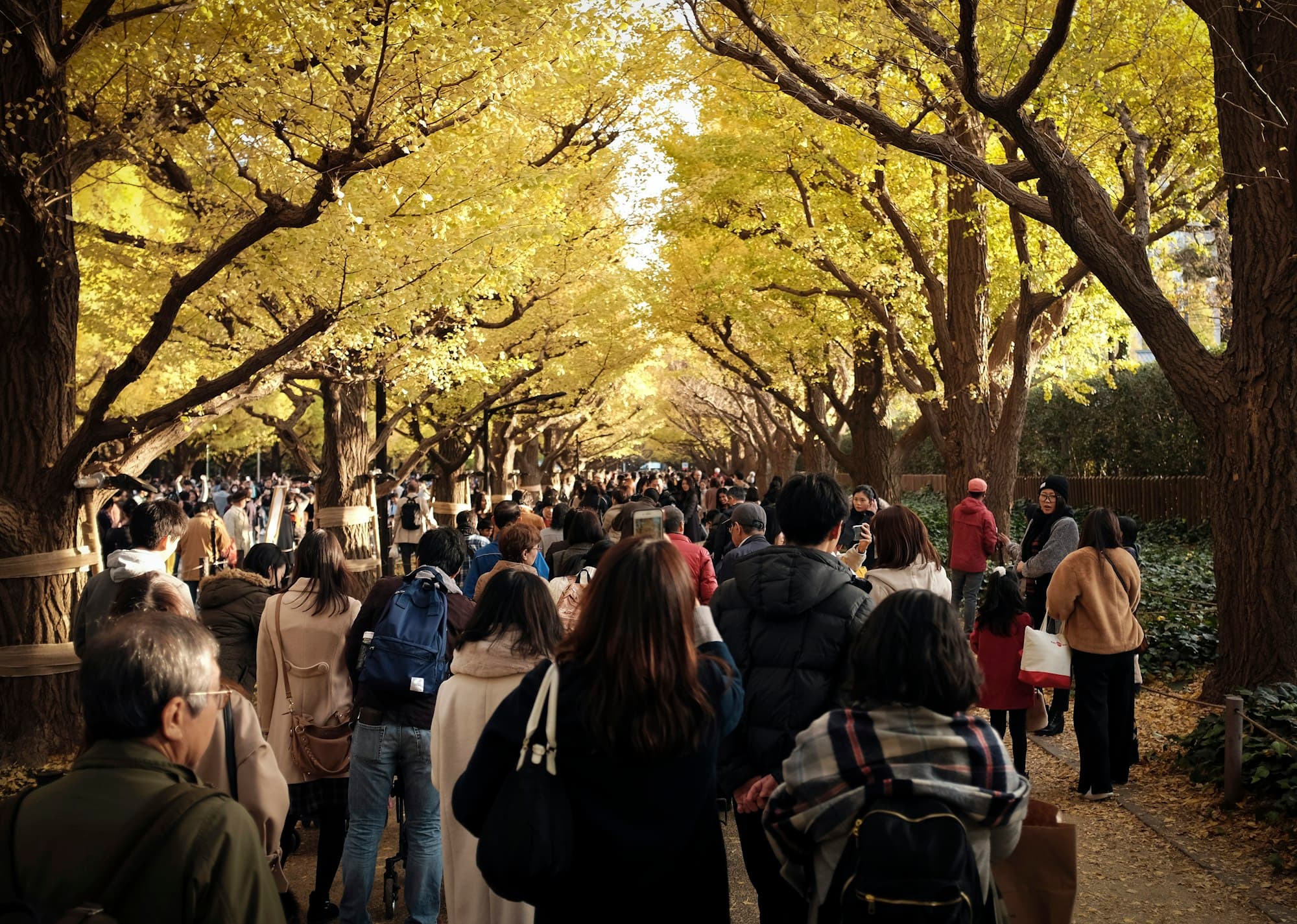
Meiji Jingu Gaien Ginkgo Avenue
The city's most photographed autumn spot: a 300-metre stretch of about 146 ginkgo trees forming a canopy of yellow between Harajuku and Aoyama. The Jingu Gaien Ginkgo Festival, held since 1997, brings food stalls, crowds and one seriously good picture. In 2025 the festival ran November 22–30 with illuminations from 4:30 to 7:30 p.m. — assume something similar for 2026 and confirm on the official Meiji Jingu Gaien site closer to your dates.
Rikugien Garden
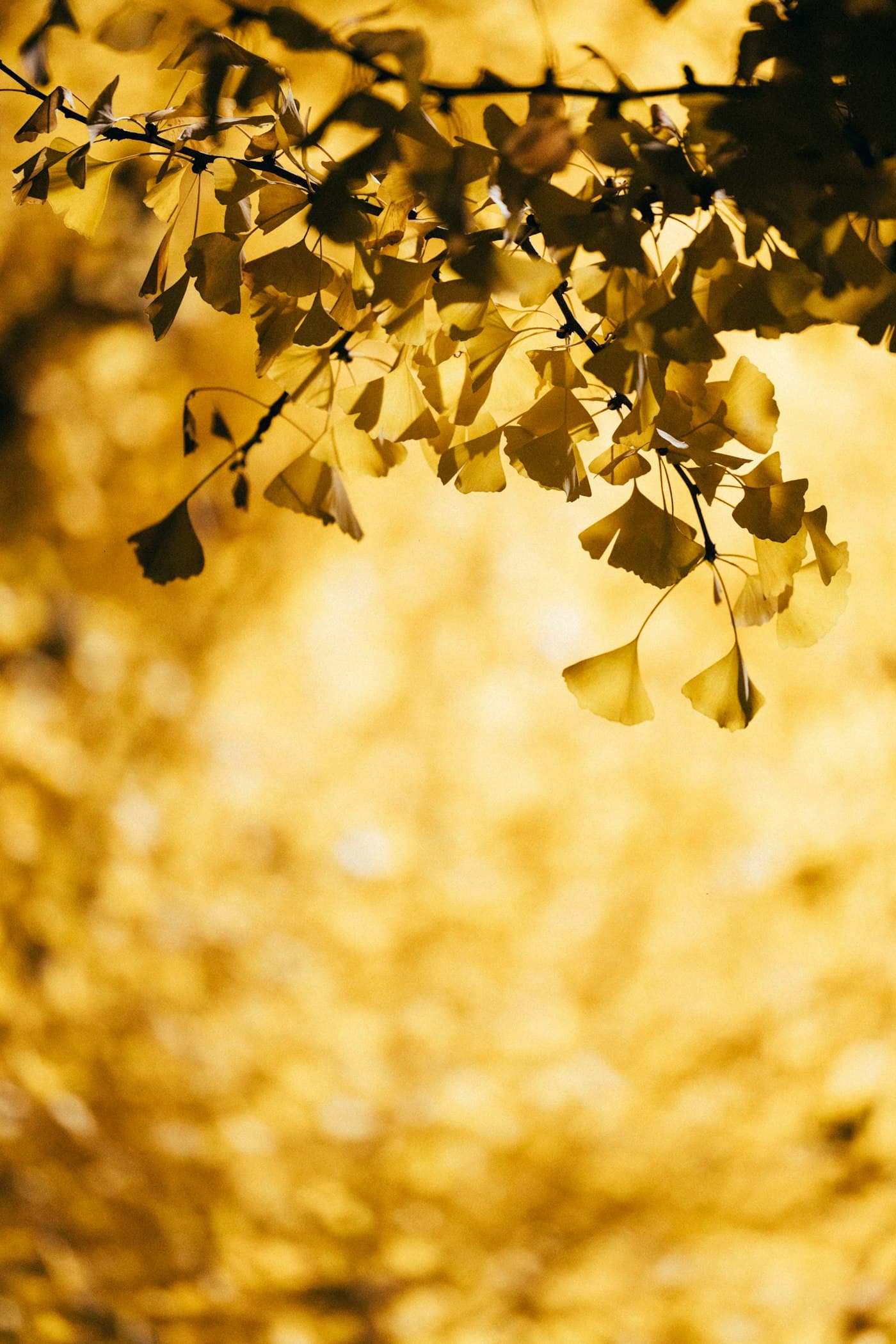
If you only visit one Japanese garden for red leaves in Tokyo, make it this one. Rikugien is among Tokyo's most beautiful landscape gardens, built around 1700 for the fifth Tokugawa shogun; it reproduces in miniature 88 scenes from famous poems, with a large central pond ringed by man-made hills, forest and a network of trails.
The evening light-up is worth the effort: the 2026 night viewing runs November 25 to December 6. During the illumination the garden stays open until 8:30 p.m., last admission 7:30 p.m., and needs a special nighttime ticket. Tickets run ¥1,200 on the day (counter is cash only, or buy online), with an advance rate of ¥1,000 until the day before — and a daily cap on how many are sold. Get there on the JR Yamanote Line to Komagome Station, about a 7-minute walk.
Shinjuku Gyoen
A big, mixed-tree park that holds colour late into the season. Good for families, and for anyone who wants maples and open lawns without temple crowds.
Yoyogi Park
Broad open lawns and a mix of red maple and yellow ginkgo. Not the flashiest, but a lifesaver on a busy Tokyo day when you just want to sit down.
Koishikawa Korakuen
Another Edo-era stroll garden, this one with a Chinese-inspired layout — and noticeably fewer tourists than Rikugien.
Todoroki Valley
Underrated. Todoroki is a rare natural gorge in central Tokyo where maples turn red along the stream, mixing with small bridges, bamboo and running water. A solid pick if you want something off the beaten path.
Shiba Park
Right next to Tokyo Tower, and famous for autumn leaves with the tower as a close backdrop — which makes it one of the most recognisable autumn photo spots in the city.
Day Trips From Tokyo for Bigger Foliage
Here's the trade-off. In the city, autumn colour framed against Tokyo's skyscrapers is a genuinely uniquely-Japanese sight — few places let you catch red maples and a glass-tower skyline in a single frame. Head into the countryside, though, and the foliage turns far more dramatic: whole mountainsides ablaze, gorges and waterfalls ringed in colour. For that, take the train. These day trips also sit in our wider day trips from Tokyo guide.
Nikko
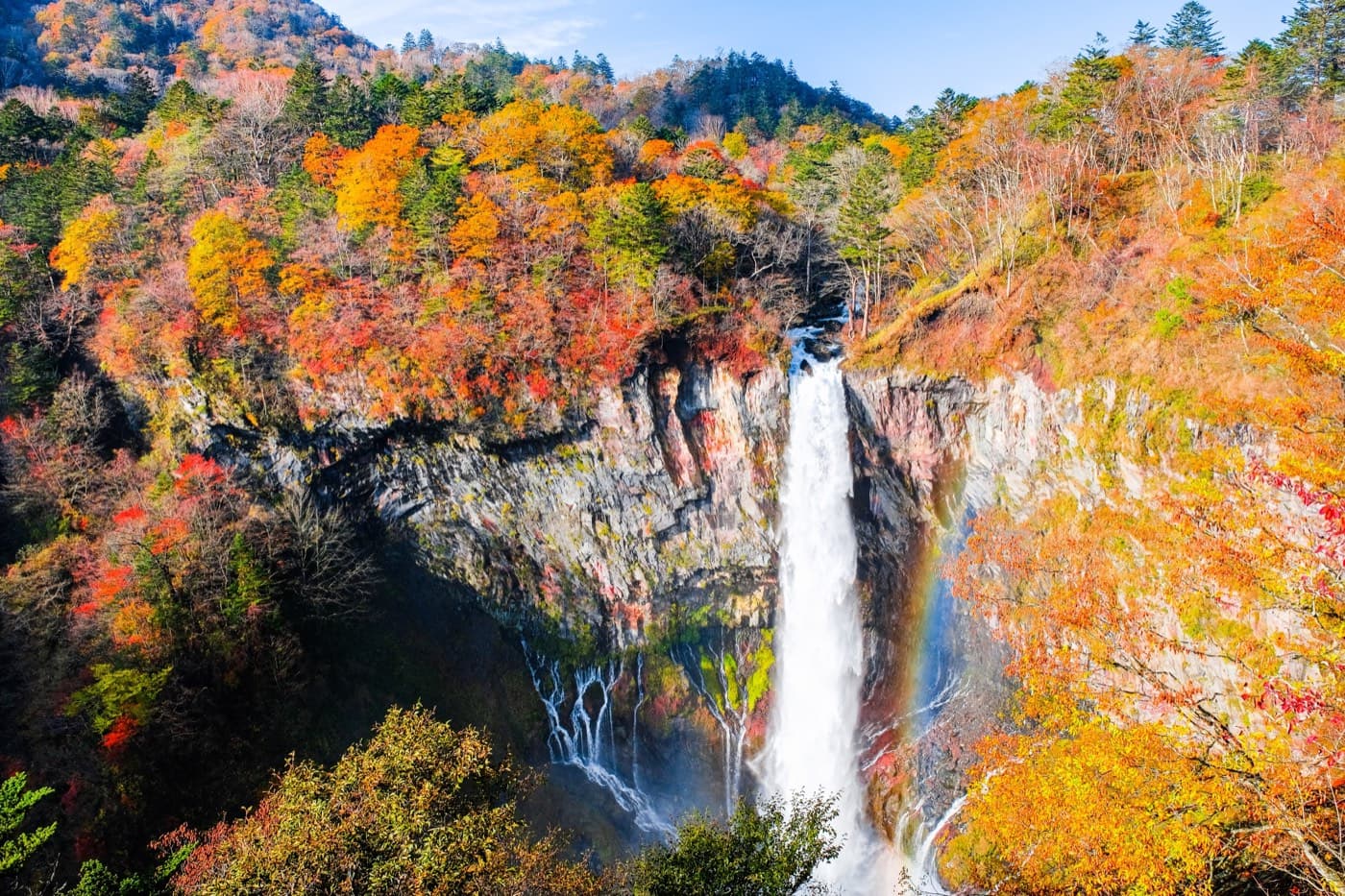
Most people visit Nikko — centred on the 17th-century Tosho-gu shrine — as a day trip from Tokyo. While Tokyo's leaves turn around or just before December 1, Nikko's, particularly near Kegon Falls and Lake Chuzenji, often turn a full month (or even six weeks) earlier.
The play here: hit Nikko in mid to late October, ideally staying overnight. Crowds get heavy on weekends during peak foliage, so arrive early or go on a weekday — and an overnight lets you enjoy the quieter evening atmosphere. Lake Chuzenji, Kegon Falls and the Irohazaka winding road are the classic trio.
Lake Kawaguchi
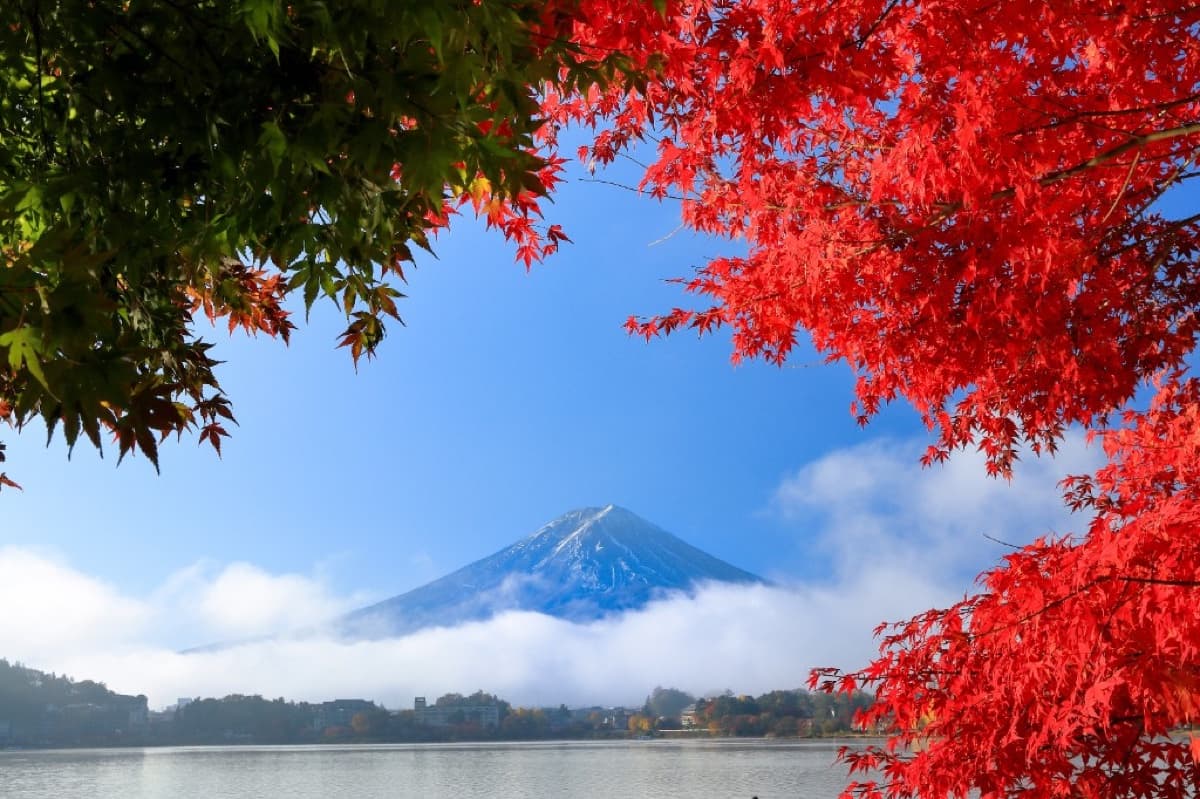
The maple corridor with Mount Fuji framed behind it is one of the great postcard shots of Japanese autumn. Peak is usually early to mid November. Along the lakeside, red and gold leaves reflect on the water and the Momiji Festival gets going. Autumn's clear air also brings better odds of actually seeing Fuji — especially early in the morning.
Hakone
Onsen, lake cruise, cable car, foliage. Hakone is built for a fall escape: soak in a hot spring, see colourful leaves, and get lake views with Fuji in the distance. Ride the ropeway across the valley for vivid colour, then take the pirate boat across Lake Ashi.
Mount Takao
A one-hour hop from Shinjuku, with real hiking trails, a cable car for lazy legs, and reliable red maple at higher elevations. Peaks mid-to-late November. Good if you want a nature day without booking a hotel.
A Sample 10-Day Self-Guided Itinerary
This is the shape we'd recommend for a first trip built around Japan's fall foliage from late November to mid-December 2026:
🗓️ Ten days, stacked by elevation
| Days | Where | What you're there for |
|---|---|---|
| 1–2 | Tokyo | Yoyogi Park, Meiji Shrine, ramen, shopping — ease in and beat jet lag |
| 3 | Nikko | Toshogu, Lake Chuzenji, Kegon Falls — two hours from Asakusa on the Tobu line |
| 4 | Lake Kawaguchi | Ryokan overnight, distant Fuji sunrise, walk the Momiji Corridor |
| 5 | Hakone | Ropeway, Lake Ashi cruise, onsen night |
| 6–8 | Kyoto | Kyoto peaks from December 11 in 2026 (JMC) — book early-morning temple visits |
| 9 | Back to Tokyo | Rikugien evening illumination, dinner in Yanaka |
| 10 | Tokyo | Meiji Jingu Gaien ginkgo in the morning, Shinjuku Gyoen in the afternoon |
💡 The structure catches the foliage season at multiple elevations without racing the calendar.
Tokyo Autumn vs Other Seasons
If you're weighing autumn against another season, here's the quick version:
- Cherry blossoms (late March – early April): higher hotel prices, similar crowds, and equally fickle timing.
- Rainy season (mid-June – mid-July): skip it if you can.
- Summer (August): hot and humid; festivals and fireworks are the draw.
- Golden Week (late April – early May): domestic travel chaos.
- Autumn foliage (October – December): arguably the best weather of the year — cool, dry and clear.
For most travellers, autumn beats spring on weather and food. Cherry blossoms may win on cultural weight, but Japan's autumn wins on reliability of blue skies. Our autumn in Japan 2026 guide has the wider seasonal picture, and Japan in November 2026 covers the month in detail.
Where Japan's Autumn Leaves Get Underrated
If you're returning to Japan, or you want fewer crowds, look further afield:
- Tohoku (Yamadera, Naruko Gorge, Oirase Stream) — peaks mid-October to early November.
- Northern Hokkaido — starts as early as late September.
- Kanazawa and the Alps — Shirakawa-go and Kenrokuen are stunning in early November.
- Southern Kyushu — the last stop of the koyo front, sometimes still colourful into mid-December.
Common Mistakes to Avoid
- Booking everything around the first forecast. The early prediction moves. Lock flights and one or two anchor hotels; keep the rest flexible.
- Assuming Tokyo peaks in mid-November. It doesn't anymore. Put central Tokyo at the end of your trip.
- Underestimating crowds at Meiji Jingu Gaien. Go on a weekday morning if you possibly can.
- Skipping Nikko. It's two hours away and often the best foliage day of the entire trip.
- Booking too late. For peak-season weekends in late November, book hotels 6–12 months out. If you want to experience momijigari properly, start planning around six months ahead — accommodation in Tokyo and Kyoto fills up as fast as it does in cherry blossom season.
Tools and Resources to Track the Forecast
A few sources worth bookmarking before you start planning:
- Japan Meteorological Corporation (n-kishou.com / Otenki Navigator) — the original forecast; 2026 releases September 2 and October 1, next update early November.
- tenki.jp (Japan Weather Association) — a second koyo forecast and in-season status reports, useful for cross-checking.
- JMA (Japan Meteorological Agency) — official current-conditions updates.
- Weathernews — good for real-time koyo status reports from citizen contributors.
- Local city tourism sites — Nikko, Hakone and Kawaguchiko all publish weekly foliage status maps in season.
Cross-check two sources. If both say "peak in seven days," trust it. If they disagree, wait a day and check again.
Practical Tips for a Self-Guided Autumn Trip
- Layer up. Late November mornings in Nikko can drop near freezing. Central Tokyo stays milder — around 10–15°C during the day.
- Ride early. Trains to Nikko and Kawaguchiko fill up fast on weekend mornings during peak.
- Buy garden tickets in advance where possible. Rikugien's evening light-up cap is real.
- Don't waste peak evenings on chain restaurants. Book a ryokan dinner or an izakaya with a foliage view.
- Give yourself a buffer day. If the forecast slides, you'll want to shuffle Kyoto and Tokyo without stress.
Self-Guided Routes for the 2026 Autumn Colour Season
The colour moves south for six weeks — Hokkaido in early October, the Japan Alps and Takayama in late October, Kyoto and Nara in the second half of November. These are the routes we run that follow it, with the month each one is built for.
| Route | Length | From (per person) | Why this autumn |
|---|---|---|---|
| Discover Hokkaido: Nature & Scenic Views (HD001) | 7 days | $3,700–4,300 | Sounkyo Gorge, Lake Akan and Shiretoko peak in early to mid October — the first colour of the season. |
| Spirit of Tradition: Shirakawa-go & Cultural Japan (GR009) | 14 days | $4,100–5,900 | Takayama for its Autumn Festival (9–10 October), Shirakawa-go in late October, Kyoto and Nara in November. |
| Japan Highlights & World Heritage (GR002) | 12 days | $3,300–4,800 | Kyoto and Nara at peak colour in the second half of November. |
| Cultural Essence: Kyoto & Kanazawa Short Escape (GR006) | 12 days | $2,800–4,200 | Kenrokuen and Kyoto within the same fortnight; the lowest-priced twelve-day route we run. |
| Koyasan: Sacred Sites and Quiet Beauty (KM003) | 12 days | $3,500–5,200 | Koyasan’s maples turn in early November. Departures run April to November. |
| Hot Springs & Highlights: Kinosaki & Gero (HS002) | 14 days | $4,300–5,700 | Kinosaki’s crab season opens on 7 November — colour by day, crab and the outdoor baths by night. |
Interested in a tour? Click the route name above, or search by route code in the top-right Search bar.
For the month itself, see Japan in October 2026 and Japan in November 2026; for the beds that sell out first in colour season, where to stay in Kyoto names the hotels our routes actually book.
Prices are per person on a twin-share basis from our current price list and move with the departure date; departure windows are as the catalogue listed them on 22 September 2026. Ask us for an exact quote for your dates.
Japan Trip Cost Calculator (2026)
Set your trip below — the estimate updates instantly. Yen prices are converted at a rounded ¥150 to the dollar; the market rate is about ¥157 in September 2026, which makes yen costs a few percent cheaper than shown.
Intercity is priced as point-to-point tickets unless you add the pass — on the Tokyo–Kyoto–Osaka route the pass usually costs more than the tickets.
Estimated total
$4,530
$2,265/person · $453/day · 2 travelers, 10 days
Your trip settings and estimate will be copied into an editable inquiry. Add your travel dates to ask for a free quote.
This is a DIY planning estimate, not a package price. Our tours have set itineraries and include the hotels and transport listed on each tour page. International flights are extra; meals, sightseeing and room arrangements vary by route.
Planning an autumn trip to Tokyo? Get in touch through Plan My Trip on our self-guided tours site, and we’ll suggest the tours that best fit your dates and plans.
FAQ: Tokyo Autumn Leaves 2026
When is the best time to visit Tokyo for autumn leaves in 2026?
For central Tokyo, aim for November 25 to December 10 — JMC's second 2026 forecast puts the peak from November 28. Higher-elevation day trips near Tokyo — Nikko, the Alps — peak in mid-to-late October. If you're combining Tokyo with Kyoto, plan for late November to mid-December (Kyoto peaks from December 11 in 2026).
Can I still see autumn leaves in Tokyo in December?
Yes, in most years. In early December you can still enjoy strong colour in Tokyo, especially at Shinjuku Gyoen, Rikugien Garden and Yoyogi Park, where leaves often last into mid-December.
How reliable is the Japan Meteorological Corporation forecast?
Fairly reliable within a 3–7 day window, but it updates as the season progresses. JMC's second 2026 forecast puts Tokyo right on its average (November 28); the cities JMC calls later than average are Sapporo, Nagano and Kochi. Check the early-November update before booking non-refundable stays.
Do I need a JR Pass for a Tokyo autumn trip?
Depends on your route. If you're doing Tokyo plus Nikko, Hakone and Kawaguchiko, individual tickets often work out cheaper than a JR Pass. If you're adding Kyoto or Kanazawa, run the maths both ways.
What's the difference between koyo and momiji?
Koyo is the general term for all changing leaf colours, while momiji refers specifically to the iconic red maple leaves. Think of koyo as the entire autumn season and momiji as the star performer.
Are the illuminations worth it?
Honestly, yes. Rikugien and Meiji Jingu Gaien after dark are completely different experiences from their daytime versions, and both are walkable in one evening. Just buy tickets ahead where required, and go on a weeknight if you can.
Is Tokyo too crowded for autumn leaves in peak season?
Crowded, yes. Unbearable, no. Weekdays and early mornings are your friends — and unlike Kyoto's temples, Tokyo's parks are big enough to absorb the crowds without ruining the view.
Turn This Into a Real Itinerary
Reading forecasts is one thing. Building a working itinerary with trains, ryokan, restaurant reservations and backup plans is another entirely. That's what we do: match your travel dates to the regions most likely to be peaking, lay out a self-guided route with the trains and passes that make sense, and flag the crowd traps so you don't end up shoulder-to-shoulder at 11 a.m.
💬 From our Japan travel team
Japan's autumn is genuinely spectacular — but the foliage season is also one of the most crowded times of year, and peak-weekend hotels in Tokyo and Kyoto go 6–12 months out. If you're eyeing late November 2026, book your self-guided tour early — talk to us now and we'll build the route with room to move if the forecast shifts.
Peak-foliage dates per the Japan Meteorological Corporation's koyo forecast (second 2026 release October 1, updated through November, covering 3,500+ locations) and Japan Meteorological Agency sample-tree observations; Rikugien illumination hours and ticket prices per Tokyo Metropolitan Parks Association; Jingu Gaien Ginkgo Festival dates per the 2025 event. Forecast dates shift with temperature — confirm the current-year forecast and garden opening hours before booking non-refundable travel. Last updated: October 3, 2026.
Related Articles
Osaka Autumn Leaves 2026: Peak Dates, Minoo Park & Why It Beats Kyoto as a Base
15 min read
Japan Autumn Leaves Forecast 2026: Latest Dates City by City, and Where the Colors Are Now
14 min read
Kamakura Autumn Leaves 2026: A Self-Guided Guide to Fall Foliage in the Ancient Capital
14 min read