
Chichibu Night Festival 2026: Dates, Winter Fireworks & a Tokyo Day-Trip Plan
December 2–3, 2026 — one of Japan's three great float festivals and its rare winter fireworks show, about 80 minutes from Ikebukuro. What happens each night, how to get there, and how to do it as a Tokyo day trip.
The Chichibu Night Festival 2026 runs on December 2 and 3, and it is one of the strangest, most rewarding things you can build a winter Japan trip around: a 300-year-old float festival that ends with roughly two hours of fireworks over a freezing December sky. Entry is free, the main night is December 3, and — because Chichibu sits about 80 minutes from Ikebukuro — you really can do it as a day trip from Tokyo, though an overnight is the smarter play if you can get a room.
This guide covers the dates and what actually happens on each of the two days, why a small mountain town in Saitama pulls in hundreds of thousands of visitors, how to get there, and — the part most write-ups skip — how to get home again. For the wider month, our Japan in December 2026 guide sets the season in context.
🎆 Quick Answer: Chichibu Night Festival 2026
- Dates: December 2–3, 2026, at Chichibu Shrine in Saitama — the same two dates every year. December 2 is the eve (yoimiya), December 3 is the main day (taisai). Free to attend.
- The hook: one of very few Japanese festivals with a major fireworks display in winter — roughly two hours of hanabi on the night of December 3.
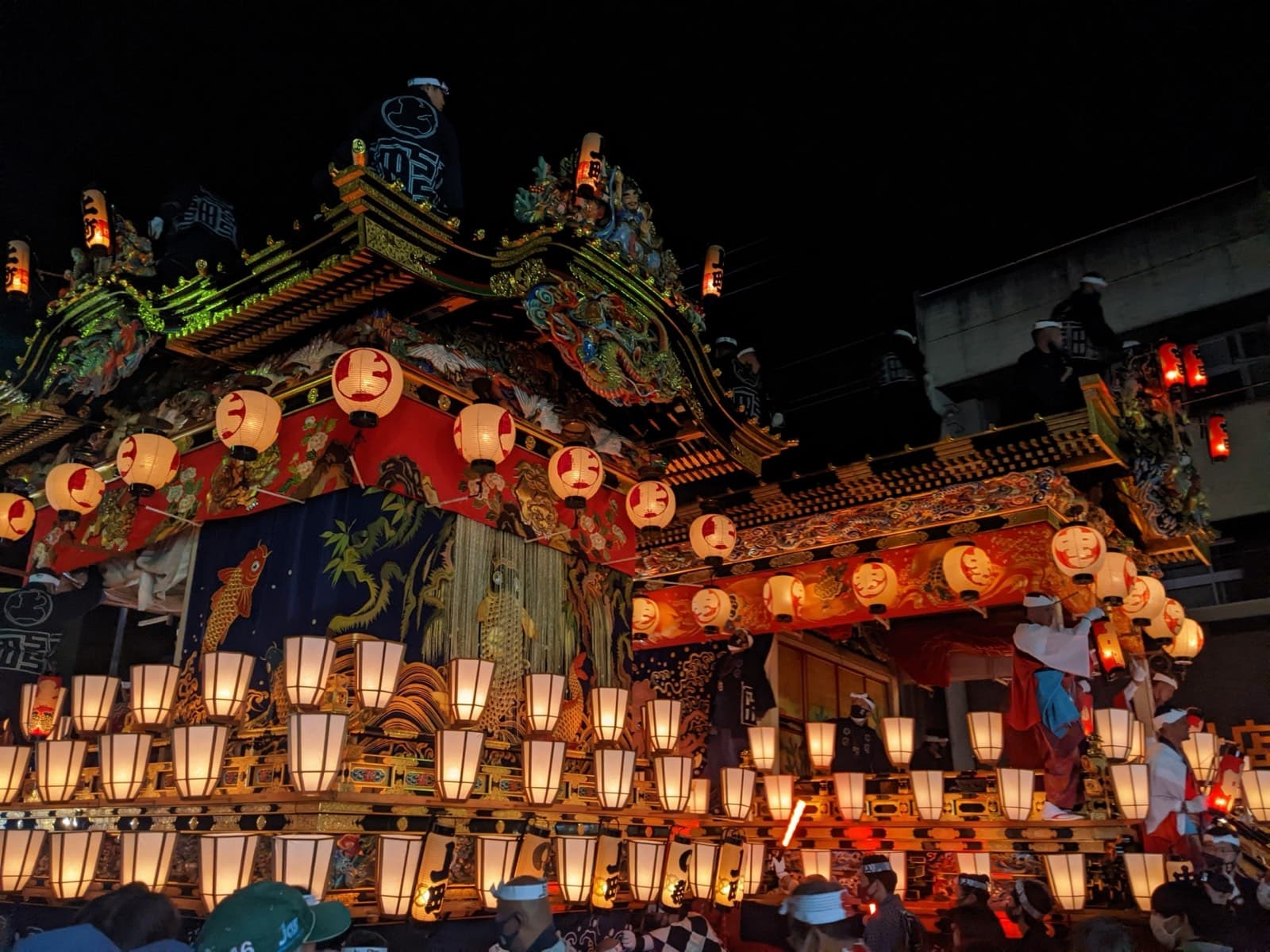
- What you see: six illuminated floats — two kasaboko parasol floats and four yatai, weighing up to around 20 tons — hauled up the Dango-zaka slope to drum and flute music.
- Access: about 80 minutes from Ikebukuro on the Seibu Ikebukuro Line (Laview limited express) to Seibu-Chichibu, then a short walk. Book reserved seats early — trains sell out.
Dates & Daily Rundown
The Chichibu Night Festival always lands on the same two calendar dates: December 2 and December 3. In 2026 that falls on a Wednesday and Thursday. The two days are not repeats of each other — they build toward the finale.
December 2 (yoimiya, the eve) is the warm-up. Floats are out around the streets from around midday until late afternoon, then take a second turn in the evening, roughly 6 to 8 p.m. Crowds are thinner, photos are easier, and it is honestly a lovely, unhurried way to see the floats up close before the crush of the main night.
December 3 (taisai, the main day) is the climax. Float music and dancing run from the morning and build through the day, with the peak from roughly 7 to 10 p.m. — the floats hauled up Dango-zaka and the fireworks going up overhead. Treat any specific hour as provisional and confirm the current schedule on the official site before you lock in trains.
Why It's a Big Deal
This is not a small local affair. The Chichibu Yomatsuri stands alongside Kyoto's Gion Matsuri and the Takayama Autumn Festival as one of Japan's three great float festivals, and in December 2016 UNESCO added it to its Intangible Cultural Heritage list as part of a group of thirty-three Japanese "Yama, Hoko, Yatai" float festivals.
What sets it apart from the other two is the calendar. Gion is high summer; Takayama runs in spring and autumn. Chichibu is the one that happens in the dead of winter — and that single fact changes everything about it: the cold, clear air, the way the lanterns and fireworks read against a black December sky, the cups of amazake (warm, sweet rice drink) sold along the streets to keep the chill off. If you are chasing the season more broadly, our Japan winter illuminations 2026 guide covers what else lights up the country in December.
The Six Floats
Six floats take part, each belonging to a different Chichibu neighbourhood. Two are kasaboko — tall parasol floats topped with halberds that stand in for the festival's deities — and the other four are yatai, which double as mobile stages.
They are enormous. Each float weighs somewhere between roughly 10 and 20 tons and is smothered in lanterns, hanging tapestries and gilded woodwork, and it takes teams of haulers to move them down Chichibu's main avenue to the beat of drums and flutes.
The yatai are more than rolling sculpture, either. During the festival their sides open out into stages for live music, dance and even short kabuki performances staged inside the floats themselves — one of those "wait, this is really happening" moments that make the trip worth the cold.
Dango-zaka & the Fireworks
Everything builds to one place. On the night of December 3, the floats are pulled one after another up Dango-zaka — the steep slope leading to the plaza by the city hall — where they line up together. It is the single most dramatic image of the festival, and the reason the crowds come.
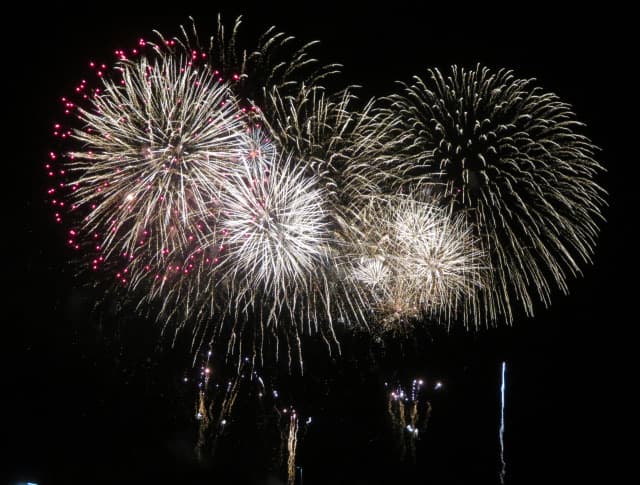
Overhead, the fireworks run roughly from 7:30 to 10 p.m., launched from around Hitsujiyama Park and visible from much of the town. Somewhere around 5,000 shells go up across the display. That is unusual enough on its own — Japan treats fireworks as a summer thing — but combined with the illuminated floats below and the freezing air, it becomes genuinely singular. Floats and fireworks, at the same time, under a winter sky: it is why people brave the cold and the packed trains.
The Two-Day Schedule at a Glance
Here is the shape of the two days and how you reach them. The times below are the usual pattern rather than a locked schedule — the festival publishes exact timings each year, so confirm before you commit to trains.
🗓️ Chichibu Yomatsuri, December 2–3, 2026
| Day | Daytime | Evening (floats + fireworks) | Getting there |
|---|---|---|---|
| Wed Dec 2 yoimiya / eve | Floats paraded around the streets, roughly midday to late afternoon | A second float turn, about 6–8 p.m.; smaller crowds, easier viewing. A smaller fireworks display runs until about 8 p.m. tonight as well | Laview limited express, Ikebukuro → Seibu-Chichibu, about 80 min |
| Thu Dec 3 taisai / main day | Float music and dancing from the morning, building through the day | Peak roughly 7–10 p.m. — floats hauled up Dango-zaka; fireworks about 7:30–10 p.m. | Same line; extra trains run, most all-reserved — book ahead |
Approximate pattern only — the festival publishes exact float and fireworks timings each year. Confirm the official 2026 schedule and last-train times before you travel.
Getting There from Tokyo
Reaching Chichibu is straightforward, but the operative word is book. The fastest and most comfortable route is the Seibu Ikebukuro Line: the Laview limited express runs from Ikebukuro to Seibu-Chichibu in roughly 80 minutes, and from there the festival is a short walk into the middle of the action. Seibu-Chichibu, the neighbouring Ohanabatake Station and Chichibu Station all drop you close to the route.
- Laview limited express (fastest): Ikebukuro → Seibu-Chichibu in about 80 minutes. It is all-reserved — you cannot board without a seat reservation, and festival dates sell out.
- Local / semi-express (cheaper): ride to Hanno and change to the Seibu Chichibu Line — roughly 1 hour 50 minutes end to end, with no compulsory reservation.
- Extra festival services: more trains than usual run on the two days, but many still require an advance reservation, so book the moment you can.
Go by train, not by car. It is tempting to think a rental car or taxi gives you flexibility, but the area around the festival gets extremely congested: streets close for the float route, parking near the centre fills or shuts, and after the fireworks the roads out of town clog badly — a drive or cab back can crawl for hours. The Seibu Ikebukuro Line drops you straight into the action and, crucially, gets you home without sitting in gridlock. For a Tokyo day trip especially, the train is the only sensible way in and out.
It is one of the more atmospheric entries in our day trips from Tokyo guide — just a good deal colder than most.
The Return-Journey Trap
Here is the thing nobody warns you about until it is too late. The main action wraps around 10 p.m., which is deliberately timed so visitors can still catch trains back toward Tokyo — but those last services fill fast, and the late Seibu limited expresses are all-reserved. No reservation, no ride.
If you are doing December 3 as a same-day round trip, buy your return ticket at the same moment you buy your outbound. Do not leave it to the night itself. This one detail is the difference between a great day and a very cold, very long wait on a platform.
Best Viewing Spots
The good spots go early. The plaza by the city hall, where the floats line up after the Dango-zaka haul, is the prime location and the most contested — so either arrive very early to stake out a place, buy a paid grandstand or reserved seat in advance, or watch on the big screen set up near Seibu-Chichibu Station.
For the fireworks you have more freedom. Because the display spreads across the sky and the town, spots a little away from the crush — around Ohanabatake Station or the observation area at Chichibu Muse Park — give you room to breathe and a wide view. And dress as if you mean it: this is a mountain town in December, and you will be standing still outdoors for hours. Our winter in Japan 2026 guide has more on what that actually means for packing.
Fitting It Into a Real Itinerary
For most independent travellers, Chichibu works best as a side trip hung off a Tokyo base. Three patterns cover most people:
- Option 1 — the day trip: base in Ikebukuro, take an early Laview on December 3, catch the afternoon float performances, stay for the fireworks, and ride an all-reserved limited express back before the post-10 p.m. rush. Tight, but doable.
- Option 2 — the overnight: book a room in Chichibu or Nagatoro months out. See the quieter eve festival on the 2nd, spend the morning at Chichibu Shrine or Mitsumine Shrine, then get into position for the main day on the 3rd.
- Option 3 — the two-town combo: pair Chichibu with Kawagoe on the way back. Both sit in Saitama, both keep a genuine old-Japan feel, and they slot together neatly on a winter loop.
Building a winter itinerary around a fixed date like this is exactly what selfguidejapan.com is for — real routes, real trains, real timing, with the festival night and the return trains already worked in. If you want Chichibu stitched into a broader Tokyo, Nikko or Kawagoe loop, our self-guided planning tools save a lot of second-guessing.
💬 From our Japan travel team
Our self-guided tours don't include overnight stays in Chichibu or elsewhere in Saitama — but we run plenty of itineraries that base you in Tokyo for several days, and Chichibu slots in perfectly as a day trip from there. Yes, the festival grounds get seriously crowded — but it is absolutely worth going out for the day to see it. Just make it a train day trip, not a Saitama overnight, and you get the whole spectacle without the hardest-to-book rooms.
Common Mistakes to Avoid
- Assuming you can turn up on December 3 and find a hotel. You cannot — Chichibu's rooms book out months ahead.
- Skipping the seat reservation on the return Seibu limited express. The last trains are all-reserved, and there is no standby.
- Turning up in a light jacket. It is a cold December night in the mountains — layers, warm socks, gloves and a hat are not optional.
- Watching the parade and leaving before the fireworks finale. The 7:30–10 p.m. window on the 3rd is the whole point.
- Driving or taking a taxi in. Roads around the venue close and jam solid — especially on the way out after the fireworks. Take the train; it is faster and far less stressful.
- Bringing only a card. Many festival stalls are cash-only.
Planning a December trip to Tokyo with the Chichibu Night Festival as a day trip? Get in touch through Plan My Trip on our self-guided tours site, and we’ll suggest the tours that best fit your dates and plans.
FAQ: Chichibu Night Festival 2026
When is the Chichibu Night Festival 2026?
December 2 and 3, 2026, at Chichibu Shrine in Saitama Prefecture. The dates are fixed every year; the main night — with the Dango-zaka float haul and the fireworks — is December 3.
Is there an entry fee?
No. The festival runs on public streets and shrine grounds, so it is free to attend. You only pay for food, any paid grandstand seats and your transport.
How long is the fireworks display, and how many fireworks?
The fireworks run roughly from 7:30 to 10 p.m. on December 3 — about two to two and a half hours — with somewhere around 5,000 shells. Confirm the exact timing on the official site closer to your visit.
Can I do it as a day trip from Tokyo?
Yes. Chichibu is about 80 minutes from Ikebukuro on the Laview limited express, so a same-day return works. Book reserved seats on the return train in advance — the late services are all-reserved and sell out.
What should I wear?
Layers. Temperatures often drop near freezing and you will be outdoors for hours, so warm socks, gloves and a hat make a real difference. This is a mountain town in December, not central Tokyo.
What's the difference between December 2 and December 3?
December 2 is the eve festival (yoimiya) — calmer, with smaller crowds. December 3 is the main day (taisai), the climax, with the float hill-climb up Dango-zaka and the full fireworks display.
Plan Your Self-Guided Chichibu Winter Trip
Chichibu is one of the few Japanese festivals you really can do as a day trip — but the timing is everything: the afternoon float performances, the 7:30 p.m. fireworks, and last trains back to Tokyo that are all-reserved and fill fast. We build independent Japan itineraries with real timings, verified openings and fixed-date events already worked in, whether Chichibu is a single winter night out of Tokyo or one beat in a longer loop.
💬 From our Japan travel team
Trains and hotels around December 2–3 sell out early — book ahead. For Chichibu Night Festival 2026, or if you are already eyeing 2027, get in touch and we will help you build a self-guided route that fits the dates.
Festival dates and the fixed December 2–3 formula per the Chichibu Night Festival organisers and Chichibu City tourism; UNESCO Intangible Cultural Heritage inscription December 2016; access times and fares per Seibu Railway. Float performance times, fireworks timing and event details change year to year — confirm on the official Chichibu Yomatsuri site before booking travel. Last updated: July 2026.
Related Articles
Kawagoe Matsuri 2026: A Practical Guide to the Perfect Tokyo Day Trip
9 min read
Japan in December 2026: A Practical Guide for Self-Guided Travelers
13 min read
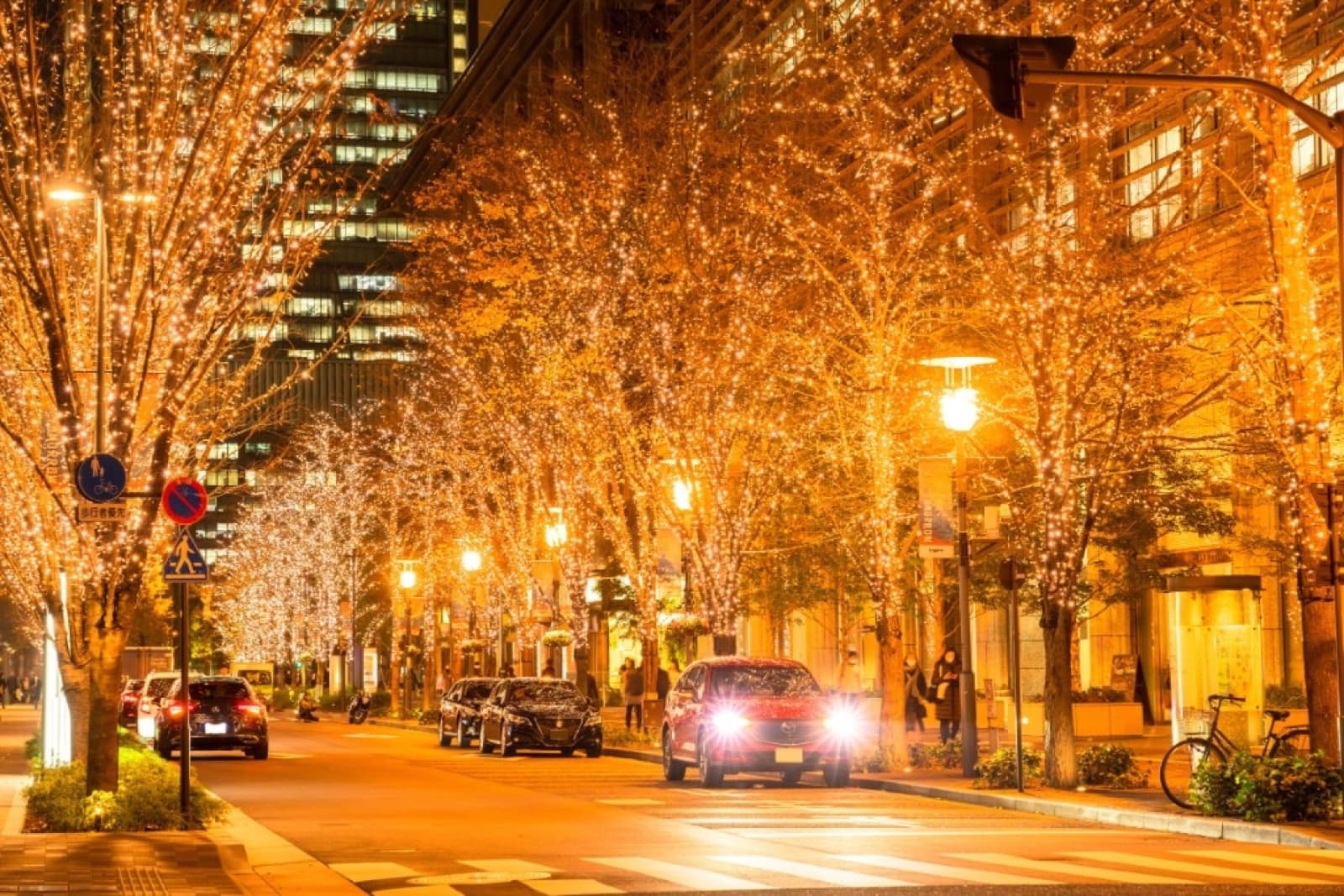
Japan Winter Illuminations 2026-27: Nabana no Sato Dates, Huis Ten Bosch's New Show and the Best Displays Nationwide
10 min read