Kamakura Day Trip from Tokyo 2026: Great Buddha + Beach Walk
Hour-by-hour Kamakura day trip itinerary: Engaku-ji, Tsurugaoka Hachimangu, Komachi-dori, the Enoden, Hasedera, the Great Buddha, and a Yuigahama beach walk back to Tokyo by 7 PM.
A Kamakura day trip is one of the most rewarding excursions you can take from Tokyo — a single, well-paced day that combines the iconic Great Buddha, ancient Zen temples, a coastal town atmosphere, the classic Enoden train along the sea, and a beach walk along Yuigahama. Kamakura packs over 800 years of samurai culture, religious history, and natural beauty into a compact area you can comfortably explore on foot.
This guide gives you a complete hour-by-hour Kamakura day trip itinerary for 2026, including how to get there from Tokyo, which temples to prioritize, where to find the best lunch options, and how to time your beach walk for sunset views with Mount Fuji on the horizon. For other day trip ideas, see our best day trips from Tokyo guide and the Hakone day trip itinerary.
Quick Answer: Kamakura Day Trip in One Box
Travel time
~1 hour from Tokyo
Total cost
¥3,500-5,500/person
Day length
8 AM - 7 PM
Highlight
Great Buddha (Daibutsu)
Why Kamakura Is a Fantastic Day Trip from Tokyo
Kamakura sits about an hour south of Tokyo on the Pacific coast, in Kanagawa Prefecture. From 1185 to 1333, it served as Japan's de facto capital under the Kamakura shogunate, making it the country's first samurai-ruled city.
That history left Kamakura with an extraordinary concentration of historic buildings, historically significant temples, and important Shinto shrines — many of which would be UNESCO World Heritage Site candidates if Japan grouped them together. Today, Kamakura is one of the most popular day trips from Tokyo, particularly for travelers wanting Japanese history without the long shinkansen ride to Kyoto.
For a fantastic day trip that combines temples, shrines, samurai culture, beaches, and a scenic local train, Kamakura is almost impossible to beat.
Quick Summary: Kamakura Day Trip Itinerary
This Kamakura day trip itinerary covers:
- Train: Round-trip from Tokyo Station via the Yokosuka line (about an hour each way)
- Morning: Kita Kamakura Station, Engaku-ji Temple, Tsurugaoka Hachimangu Shrine
- Lunch: Komachi-dori shopping street
- Afternoon: Enoden train to Hase, Hasedera Temple, Kamakura Great Buddha at Kotoku-in
- Evening: Yuigahama beach walk and return to Tokyo
- Total cost: ¥3,500-5,500 per person including transportation, temple admissions, and lunch
The day runs from an 8:00 AM Tokyo departure to a 7:00 PM return — a comfortable pace with time to linger at temples and the beach.
Getting from Tokyo to Kamakura
Kamakura is one of the easiest day trips from Tokyo logistically.
From Tokyo Station via Yokosuka Line
The most direct route is the JR Yokosuka line from Tokyo Station to Kamakura Station. The express service takes about 55 minutes; local trains take 60-65 minutes. Trains run every 10-15 minutes throughout the day.
For travelers with a JR Pass, the Yokosuka line is free. Without a pass, the one-way fare is ¥940 from Tokyo Station — under ¥2,000 round trip, making this one of the most affordable day trips you can take. See our JR Pass 2026 worth-it guide if you are deciding on the rail pass.
For this itinerary, get off one stop before Kamakura at Kita Kamakura Station. This lets you walk south through the temple cluster toward central Kamakura, ending the day at the beach.
From Shinjuku Station
From Shinjuku Station, the JR Shonan-Shinjuku line connects directly to Kamakura in about an hour. Trains run roughly every 15-20 minutes. The fare is similar to the Yokosuka line.
The Shonan-Shinjuku line is convenient for travelers staying in Shinjuku, Shibuya, or Yokohama hotels. Both routes converge at Ofuna Station, where local Yokosuka line trains continue to Kamakura.
A Brief History: Kamakura Period and Japan's Samurai Capital
Understanding the Kamakura period adds depth to everything you see during the day.
In 1185, Minamoto no Yoritomo defeated the Taira clan in the Genpei War and established Japan's first military government — the Kamakura shogunate — with Kamakura as his capital. This Kamakura period (1185-1333) marked the beginning of nearly 700 years of samurai rule in Japanese history.
The shogunate built temples, shrines, and historic buildings across the city. Many of Kamakura's great Zen temples, including Engaku-ji and Kencho-ji, were founded during this period. The Kamakura Great Buddha — cast in 1252 — also dates from this golden era.
When the shogunate fell in 1333, the political center shifted away from Kamakura, but the city's temples, shrines, and samurai-era atmosphere remained largely intact through the centuries.
Today, more than 65 temples and 19 Shinto shrines from the Kamakura period and Edo era still stand within the city limits. While Kamakura was nominated for UNESCO World Heritage Site status in 2013, it did not ultimately make the list — but Kamakura's concentration of historically significant temples remains exceptional, comparable to (and arguably more accessible than) Kyoto's headline sites.
Hour-by-Hour Kamakura Day Trip Itinerary
Here is the complete hour-by-hour itinerary for your Kamakura day trip.
9:00 AM - Kita Kamakura Station: Engaku-ji Temple
Take the 8:00 AM Yokosuka line from Tokyo Station, arriving at Kita Kamakura Station around 9:00 AM. The station is small and unstaffed for tickets, so check in via your IC card or buy tickets in advance.
Engaku-ji Temple sits directly across from the station. Founded in 1282 by the Hojo regent Tokimune to commemorate Japanese soldiers killed during the Mongol invasions, it is one of Kamakura's Five Great Zen Temples and remains an active Zen training monastery. The temple complex spreads up a forested hillside with multiple buildings, gardens, and meditation halls.
Allow 45 minutes here. Do not miss the giant temple bell (Ogane), one of the largest in Japan and a designated National Treasure, and the small ceremonial gardens behind the main buildings. The temple's main hall (Butsuden) houses a large seated wooden Buddha, while the inner Shariden — said to enshrine a tooth of the historical Buddha — is one of Japan's oldest Zen architectural treasures.
If your day-trip schedule allows extra time, walk 10 minutes south to nearby Kencho-ji Temple, founded in 1253 and the oldest Zen temple in Japan. Both temples can be combined into the morning if you arrive at Kita Kamakura by 8:30 AM. Admission to Engaku-ji is ¥500.
10:00 AM - Tsurugaoka Hachimangu Shrine
Walk south from Engaku-ji along the main road. After about 25 minutes — passing through Kencho-ji Temple grounds (an optional stop) — you arrive at Tsurugaoka Hachimangu Shrine, Kamakura's most important Shinto shrine.
Founded in 1063 and moved to its current site in 1180 by Yoritomo, Tsurugaoka Hachimangu has been the spiritual heart of Kamakura for over 900 years. The shrine sits at the end of a long ceremonial avenue (Wakamiya Oji) that runs all the way to the sea.
Wander the grounds, climb the main staircase to the upper shrine, and watch for traditional weddings and rituals that frequently take place here. Admission is free; allow 45 minutes.
11:30 AM - Komachi-dori Shopping Street
A 5-minute walk south of Tsurugaoka Hachimangu brings you to Komachi-dori, Kamakura's main shopping street. The street stretches several hundred meters and is packed with traditional snack shops, gift shops, small restaurants, and craft stores.
This is the place to try Kamakura's local street snacks: shirasu (whitebait) on toast, dango (sweet rice dumplings on skewers), matcha soft serve, and small statues of Jizo Bodhisattva sold as good-luck charms. Several shops specialize in Kamakura-bori, a traditional carved lacquerware craft unique to the city, and old-style sweet shops sell senbei (rice crackers) grilled to order.
For lunch, you can either eat street snacks here or sit down for a proper Japanese meal at one of the side-street restaurants. The Tourist Information Office near Kamakura Station — at the south end of Komachi-dori — has free maps and English-language guides if you need orientation help. They also offer luggage storage for travelers carrying day bags.
12:30 PM - Lunch and Hokoku-ji Bamboo Forest (Optional)
Lunch options near Komachi-dori range from cheap noodle stands (¥800-1,200) to traditional kaiseki sets (¥3,000-5,000). For Kamakura specialties, try shirasu-don (rice topped with whitebait) or local soba noodles.
If you have an extra hour, take a 10-minute taxi ride or 25-minute bus to Hokoku-ji Temple, often called the "Bamboo Forest Temple." A small Zen temple founded in 1334, it is famous for a dense bamboo grove that you can walk through while sipping matcha at the temple's tea house. Admission is ¥400; matcha is an additional ¥600.
If you skip Hokoku-ji, head straight back to Kamakura Station for the next leg.
1:30 PM - Enoden Train to Hase Station
From Kamakura Station, transfer to the Enoden train (Enoshima Electric Railway) — a small classic electric train that runs along the coast between Kamakura and Enoshima. The train arrives every 12 minutes and feels like stepping into a 1950s coastal town.
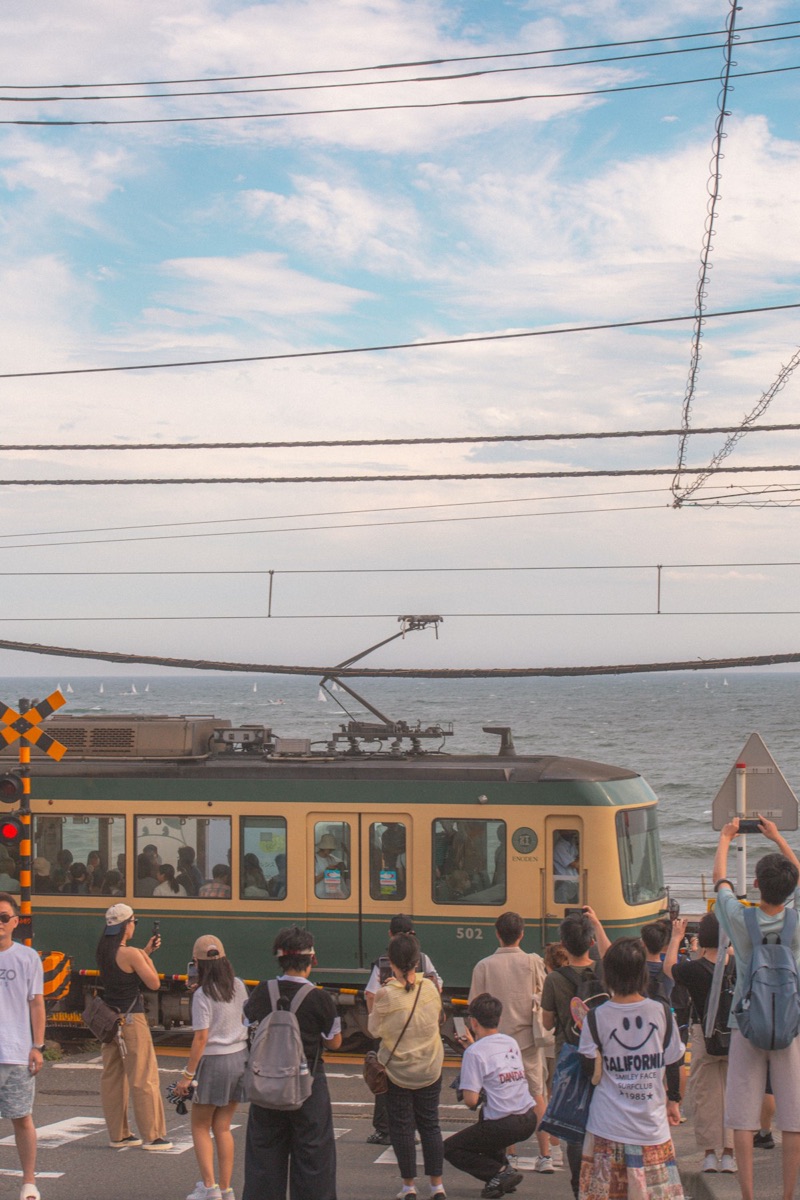
Take the Enoden one stop to Hase Station (about 5 minutes). The ride passes through residential neighborhoods, with the train tracks running so close to houses that you can see into people's gardens.
Hase is the gateway to two of Kamakura's most famous attractions. For more on Enoden's anime and manga ties, see our anime pilgrimage Japan guide.
2:00 PM - Hasedera Temple
A 5-minute walk uphill from Hase Station brings you to Hasedera Temple, one of Kamakura's most beautiful temple complexes. Founded in 736 (predating even the Kamakura period), it is one of the city's oldest sites of worship.
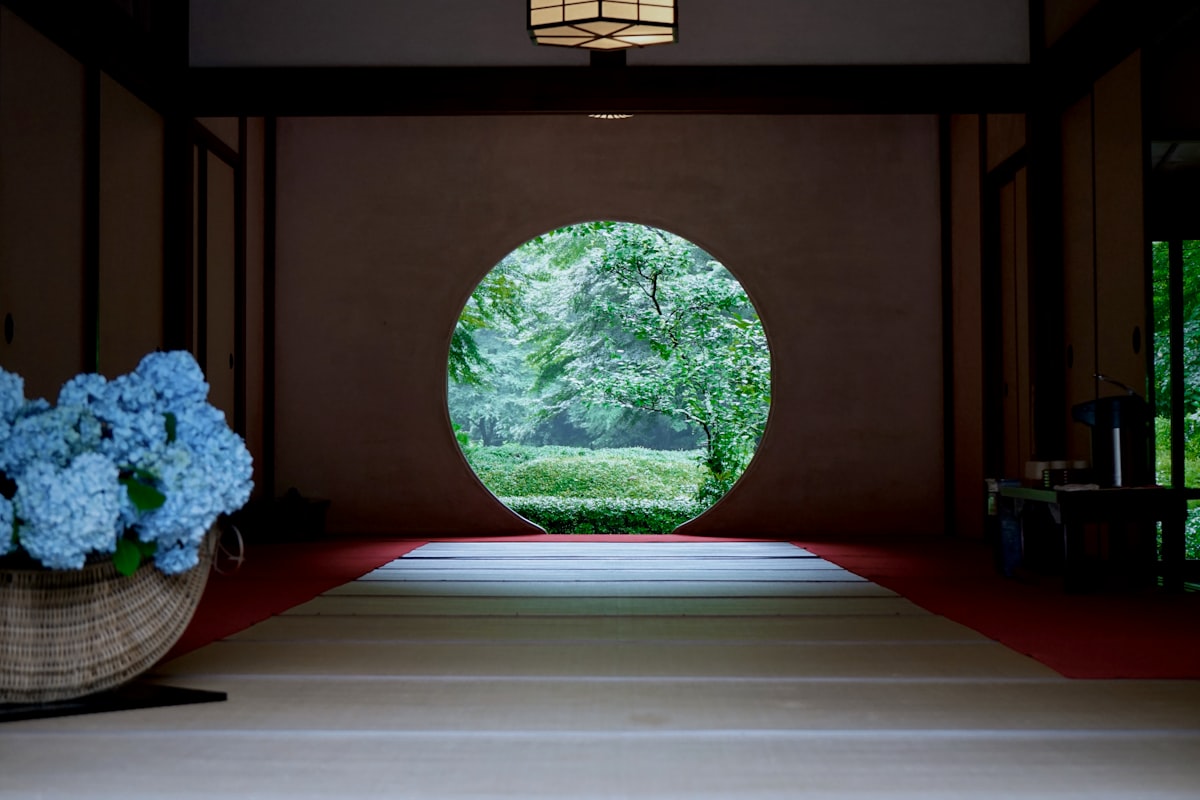
The temple's main hall houses a 9.18-meter wooden statue of the Eleven-Headed Kannon — one of Japan's largest wooden Buddhist statues. The grounds spread up a forested hillside with multiple smaller temples, prayer wheels, gardens, and an observation point with sweeping views over Kamakura's coast and Yuigahama beach.
Do not miss the cave temple (Benten-kutsu) at the lower level, with small statues of various deities carved into the rock walls. Allow 60 minutes total. Admission is ¥400.
3:00 PM - Kamakura Great Buddha (Daibutsu at Kotoku-in)
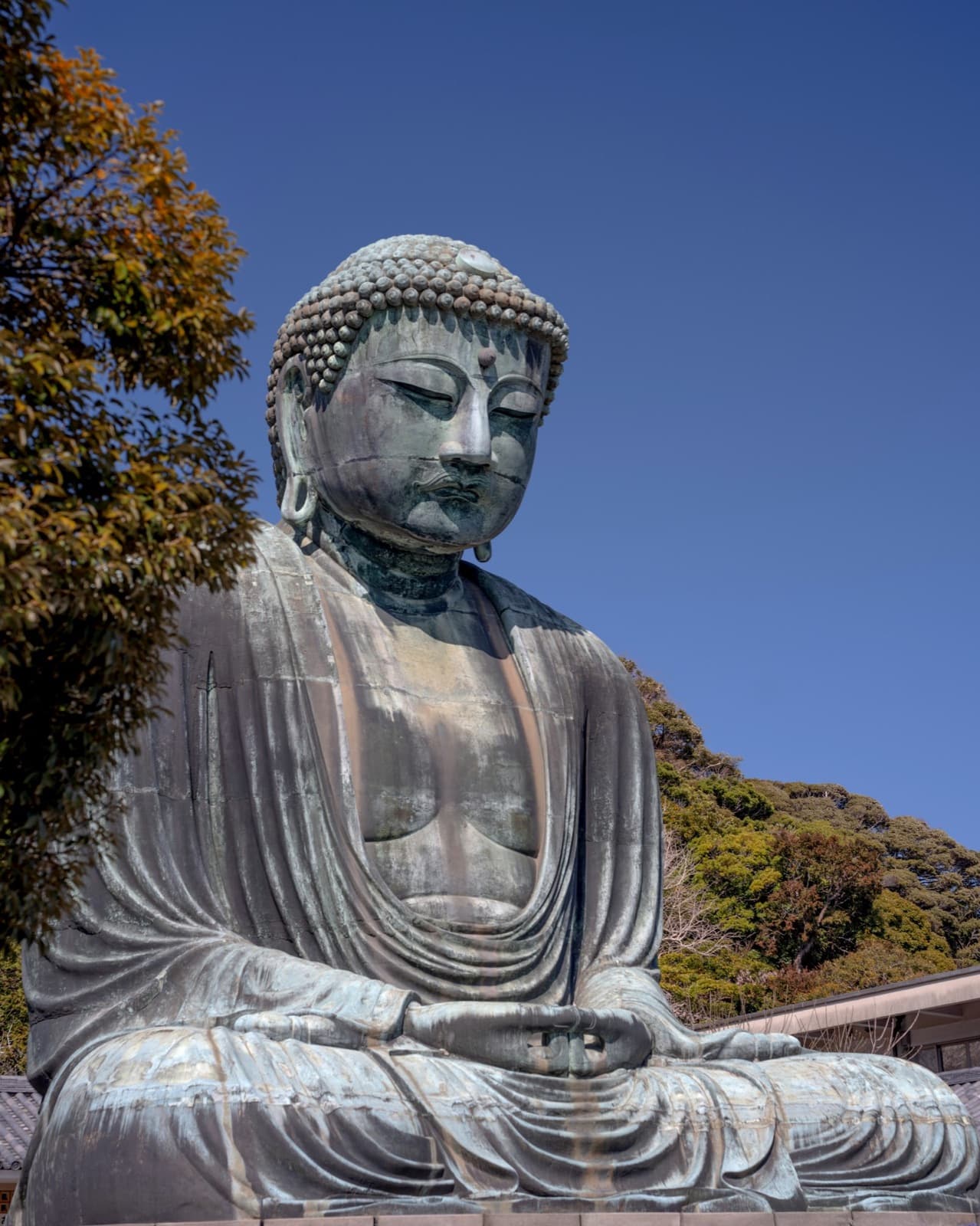
A 5-minute walk from Hasedera leads to Kotoku-in Temple, home of the Kamakura Great Buddha — also known simply as the Big Buddha or Daibutsu.
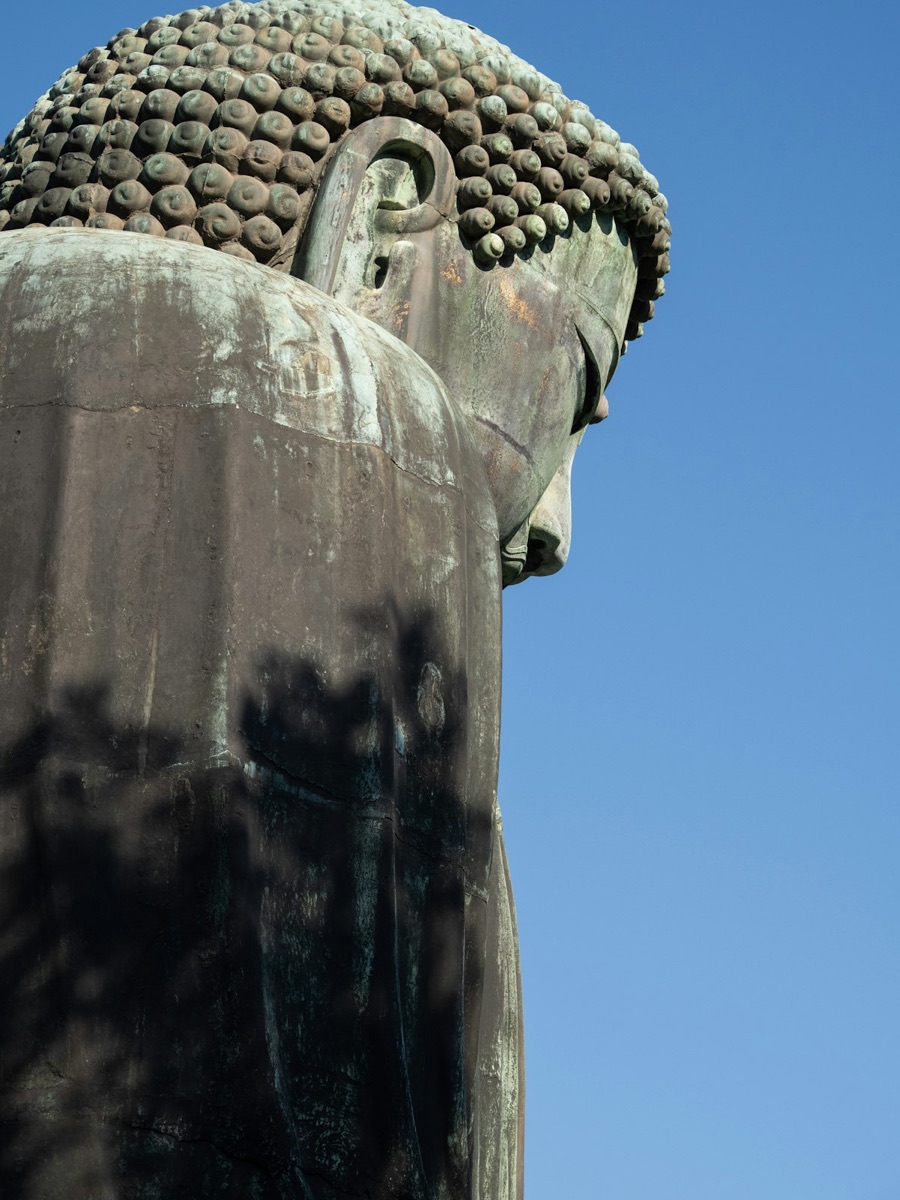
The bronze statue stands 11.4 meters tall (about 13.4m including the base) and has sat in this exact spot since 1252. It was originally housed inside a wooden temple hall, but typhoons in the 14th and 15th centuries and a tsunami in 1498 destroyed the building — leaving the Great Buddha exposed to the elements ever since.
The statue is one of Japan's most iconic images and a designated National Treasure. Unlike the larger Great Buddha at Todai-ji in Nara, the Kamakura Great Buddha sits outdoors, surrounded by trees and open sky — making it visually distinct and far more atmospheric on overcast or rainy days.
For ¥50 extra, you can enter the hollow interior of the statue. A narrow staircase leads inside the bronze form, where you can see the construction technique used over 770 years ago — the bronze was cast in stages and assembled in place, with the seams visible from inside.
Allow 30 minutes. Admission to Kotoku-in Temple is ¥300; interior access is an additional ¥50. Cherry trees flank the statue in spring, and autumn leaves frame it red and gold from late November through early December — both photogenic seasons for a Daibutsu photo. See our Japan in May 2026 guide for the post-cherry-blossom sweet spot.
4:00 PM - Yuigahama Beach Walk
From Kotoku-in, walk 15 minutes south through small streets toward the coast. Yuigahama Beach is Kamakura's main beach — a wide sandy stretch popular with surfers, families, and locals walking dogs in the late afternoon.
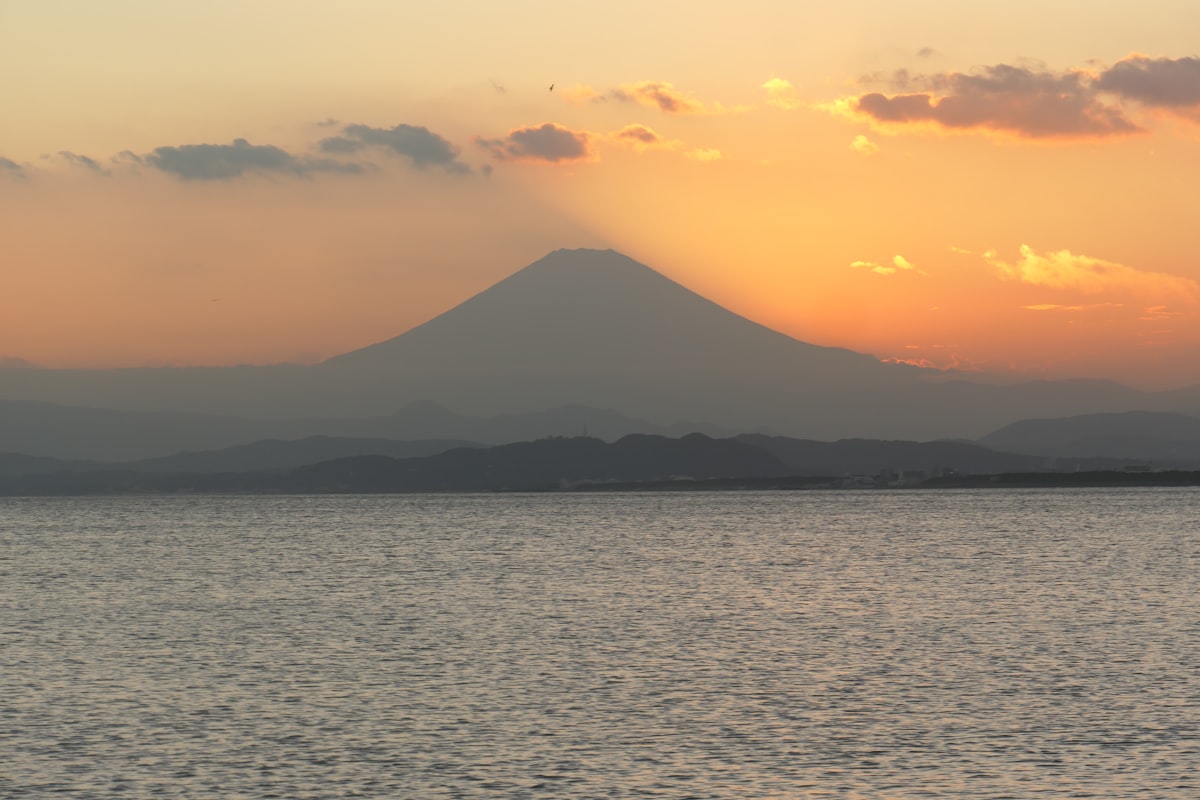
Walk east along the beach toward Kamakura Station (about 25 minutes). On clear days, Mount Fuji is visible across Sagami Bay, especially around sunset. The beach is also where you can see Enoshima Island and the Sea Candle observation tower from a distance.
Yuigahama doubles as a swimming beach in July and August, when small beach huts (umi-no-ie) sell snacks and rent umbrellas. Outside summer, it is quiet and atmospheric. For solo travelers, this is a uniquely safe stretch of coast to walk in the late afternoon — see our solo female travel guide.
5:30 PM - Return to Tokyo
After the beach walk, you can either continue back to Kamakura Station for the train, or stop at one of the casual restaurants and bars along the coast for an early dinner.
Take the Yokosuka line back to Tokyo Station, arriving around 7:00 PM. If you have timed the day well, you will catch sunset over the Pacific from the train window as it crosses the Kamakura coastline.
Hiking Trails in Kamakura (Optional Add-On)
For travelers with extra time or energy, Kamakura has several excellent hiking trails connecting the temples and shrines.
The most popular is the Daibutsu Hiking Trail, which runs from near Kotoku-in (the Great Buddha) to Zeniarai Benzaiten Shrine and onward to Kita Kamakura. The trail is about 3 km long, takes 90 minutes at a relaxed pace, and passes through bamboo groves, small forest shrines, and quiet hillside paths.
The Tenen Hiking Trail (Heaven's Garden Trail) is a longer alternative, running from Kencho-ji over hilltops with sea views. About 4 km, takes 2 hours.
These hiking trails are ideal for travelers who want to experience local Kamakura beyond the popular temples — and they are rarely crowded even during peak seasons. The Daibutsu trail in particular offers excellent views over Kamakura's red rooftops down to Yuigahama Beach and the Pacific. For more walking-focused trips, see our walking Japan guide.
If you want to add a hiking trail, do it in place of one of the lunch-area stops (skip Hokoku-ji and head straight from Komachi-dori to the trailhead).
Kamakura + Hakone in the Same Trip?
Many travelers combine Kamakura (one day) and Hakone (one or two days) into the same Tokyo stay. We can recommend whether to do them back-to-back or split them around your Kyoto leg, and slot them into a self-guided itinerary.
Best Time for a Day Trip to Kamakura
Kamakura works year-round but has distinct peak seasons.
Cherry blossoms peak in late March to early April. The Dankazura walkway leading to Tsurugaoka Hachimangu Shrine becomes a tunnel of pink, while the temple grounds across the city offer endless photo opportunities.
Hydrangeas at Hasedera and Meigetsu-in (the "Hydrangea Temple") bloom in mid-June. This is one of Kamakura's most photographed seasons, drawing serious crowds — visit early in the morning to avoid the worst. See our Japan in June 2026 guide for hydrangea timing.
Autumn foliage peaks in late November to early December. The temple grounds at Engaku-ji, Kencho-ji, and Hokoku-ji explode with red and gold maple leaves.
Summer (July-August) is beach season at Yuigahama. The beach gets busy on weekends but quieter weekdays remain pleasant. Combine temple visits in the morning with a beach swim in the afternoon. See our Japan in August 2026 guide for festival timing.
Winter (January-February) is the quietest time for a day trip to Kamakura. Crisp air often produces the clearest Mount Fuji views from Yuigahama, and temple grounds are uncrowded.
Final Thoughts: Is Kamakura Worth Visiting?
Kamakura is genuinely one of the best day trips from Tokyo. In a single day, you cover Japan's first samurai capital, two of its most beautiful temple complexes, the Kamakura Great Buddha, a classic coastal train ride, and a beach walk that ends with potential Mount Fuji views.
For first-time visitors to Tokyo, a Kamakura day trip delivers the temples, shrines, and history that Kyoto is famous for — without the long, expensive shinkansen ride. For returning travelers, Kamakura's Zen atmosphere, hiking trails, and small-street neighborhoods reveal a quieter, more local Japan.
Whether your next destination after Tokyo is Kyoto, Hakone, or onward to other parts of Japan, slipping in a Kamakura day trip is one of the easiest ways to add real depth to your itinerary. With trains running about an hour each way, temple admissions under ¥500 each, and a packed but unhurried agenda, this trip to Kamakura punches well above its size — and is easily worth visiting on any Japan trip with at least four full days in the Tokyo area.