
Kawagoe Matsuri 2026: A Practical Guide to the Perfect Tokyo Day Trip
October 17–18, 2026 — a UNESCO-listed float festival barely 30 minutes from Ikebukuro. Edo-style dashi floats by day, the hikkawase face-offs after dark, and how to do the whole thing as a Tokyo day trip.
Kawagoe Matsuri 2026 runs Saturday, October 17 and Sunday, October 18 — a UNESCO-listed float festival barely 30 minutes from Ikebukuro, and one of the last places you can watch Edo-style festival floats work a real street. If you are in Tokyo in mid-October and wondering whether to slot in a genuine matsuri, this is the day trip to build a weekend around.
This guide covers the dates, the access from central Tokyo, the day-versus-night question, the food, and the part most write-ups skip: how to fit Kawagoe into a real itinerary without burning a whole day. The draw is twofold — towering ornate floats topped with historical figures during daylight, and the hikkawase float face-offs after dark, when two floats meet at an intersection and their musicians try to out-play each other. For the wider month, our Japan in October 2026 guide sets the season in context.
🏮 Quick Answer: Kawagoe Matsuri 2026
- Dates: October 17–18, 2026 (Sat–Sun) — the third Saturday and Sunday of October, the formula the festival follows every year. Confirm exact times on the official site.
- What it is: the Kawagoe Hikawa Festival, more than 360 years old, a UNESCO Intangible Cultural Heritage float festival in Saitama's "Little Edo."
- The draw: up to around 20 tall wooden dashi floats pulled through the old town by day, and the hikkawase face-offs — floats turning to challenge each other with drums and flutes — after dark.
- Access: about 30 minutes from Ikebukuro on the Tobu Tojo Line (roughly ¥481), then a 13-minute walk to the Kurazukuri district. Free to attend.
The 2026 Dates
Kawagoe Matsuri 2026 falls on Saturday, October 17 and Sunday, October 18. Those are the third Saturday and Sunday of October — the fixed formula the festival follows year after year. Both days run a full daytime-into-evening program, so a single afternoon-to-night visit covers the highlights; you do not need to come both days.
Start times for the individual processions and the evening hikkawase shift a little from one year to the next, so treat any specific hour as provisional and confirm the current schedule on the official festival site before you lock in trains.
What the Kawagoe Festival Is
The Kawagoe Festival — formally the Kawagoe Hikawa Festival — is the autumn festival of Hikawa Shrine in Kawagoe City, Saitama Prefecture, held every year on the third Saturday and Sunday of October. It has more than 360 years of history and draws around one million visitors across the two days.
The origin dates to 1648, when the lord of Kawagoe Castle, Matsudaira Nobutsuna, gave Hikawa Shrine a portable shrine (mikoshi), a lion mask and taiko drums to lift the local economy. Processions through the shrine's parishes began in 1651, and those rituals grew into the float festival that runs today. In 2005 it was designated a National Important Intangible Folk Cultural Property, and in 2016 it joined UNESCO's Intangible Cultural Heritage list as one of Japan's "Yama, Hoko, Yatai" float festivals — the same grouping that includes the Takayama Autumn Festival.
The Floats & the Hikkawase
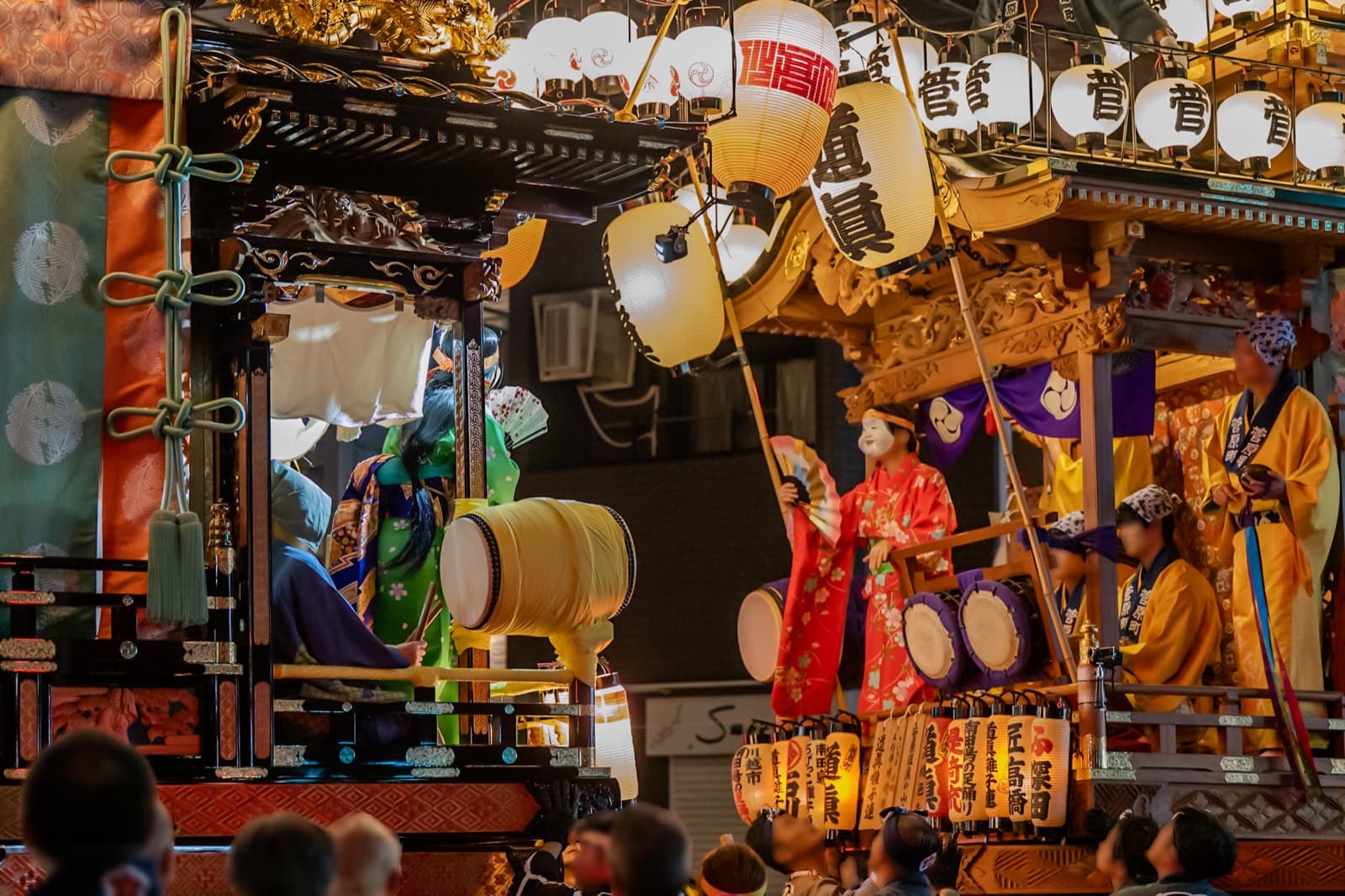
The stars of Kawagoe Matsuri are the dashi — the floats. They are built in the Edo style: two tiers, with a large doll on top, usually a historical figure, a Noh character or a folk-tale hero. The sides carry delicate carvings and embroidered curtains, and the upper platform works like a hand-cranked elevator, so a float can drop from around 8 metres to 4 metres to clear obstacles overhead.
Twenty-nine floats are kept in the town, with roughly 20 taking part on any given festival day. Each belongs to a specific neighbourhood, and each has its own character.
The moment to wait for is the hikkawase. When two floats meet at an intersection, they turn to face each other, the music swells, and it becomes an open musical duel — flutes, drums and dancers going head to head while the crowd eggs them on. Honestly, if you catch only one thing at Kawagoe, catch this. If you like festivals built around floats and crowd energy, it sits in the same autumn cluster as Nagasaki Kunchi down in Kyushu.
Day vs Night: When to Show Up
Both timings are worth it, and they feel like two different festivals.
By day you can actually read the carving on the floats and wander the old town before the crush sets in. A ritual procession with floats typically heads toward Kawagoe Hikawa Shrine in the early afternoon, and floats are lined up for viewing in front of City Hall in the mid-afternoon — your best window for seeing the detail up close.
After sunset the whole thing changes gear. The lanterns on the floats are lit, the music picks up, and the streets fill. Roughly 6 to 7 p.m. is the usual window for the illuminated floats and the hikkawase, though exact times move each year, so always check the official page before you go.
💬 From our Japan travel team
Whether you come for the daytime floats or the after-dark hikkawase, treat Kawagoe as a full day out rather than a single event. It is a genuinely rewarding town in its own right — the food, the shops along the old streets, and Hikawa Shrine are all worth unhurried time. We tell travellers to arrive in the morning, wander and eat first, then settle in for whichever half of the festival you have come to see.
The Two-Day Schedule at a Glance
Both days follow a similar rhythm: floats through the old town by day, lanterns and hikkawase after dark. Here is the shape of the weekend and how you reach it.
🗓️ Kawagoe Matsuri, October 17–18, 2026
| Day | Daytime (float pulling) | Evening (hikkawase) | Getting there |
|---|---|---|---|
| Sat Oct 17 | Floats pulled through the Kurazukuri district; afternoon procession toward Hikawa Shrine and float viewing at City Hall | Lanterns lit; hikkawase face-offs at the main intersections, roughly 6–7 p.m. onward. The densest slot of the weekend | Tobu Tojo Line, Ikebukuro → Kawagoe, about 30 min |
| Sun Oct 18 | Same daytime pattern — floats through the old town, close-up viewing at City Hall in mid-afternoon | Hikkawase again after sunset, often a touch calmer than Saturday night | Same line; or Seibu Shinjuku Line → Hon-Kawagoe, about 1 hr |
Both days follow a similar daytime-into-evening pattern; the festival publishes exact procession and hikkawase times each year, so confirm on the official Kawagoe Matsuri site before you travel.
Getting There from Tokyo
Kawagoe is genuinely easy to reach from central Tokyo, which is exactly what makes it such a clean day trip.
- Tobu Tojo Line: direct from Ikebukuro Station to Kawagoe Station in about 30 minutes, roughly ¥481 one way. The fastest option.
- Seibu Shinjuku Line: from Seibu-Shinjuku to Hon-Kawagoe Station in about an hour, roughly ¥513.
- Seibu Kawagoe Pass: a round-trip discount pass for around ¥700 from Seibu-Shinjuku, Ikebukuro or Takadanobaba.
From Kawagoe Station it is about a 13-minute walk to the Ichibangai (Kurazukuri) area, where most of the action happens. It is one of the easiest entries in our day trips from Tokyo guide.
Food, Drink & Little Edo Atmosphere
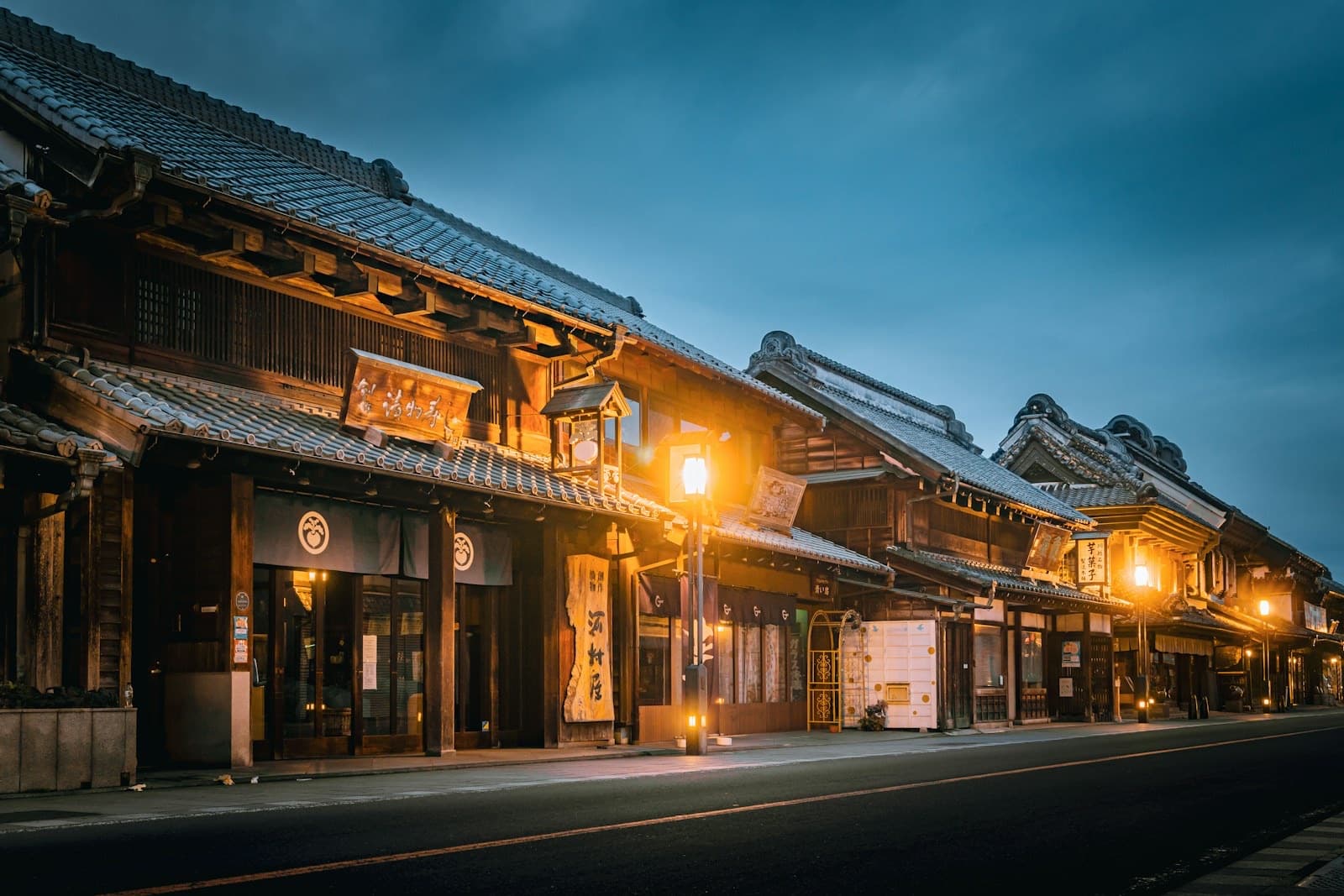
Kawagoe earns its "Little Edo" nickname. The preserved kurazukuri warehouse buildings — and the fact that the main Kurazukuri Street has no overhead utility poles — mean the lantern-lit floats pass in front of genuine Edo-period architecture. It photographs beautifully.
Around Renkeiji Temple you will find rows of stalls: takoyaki, a grilled skewer, a cup of sake at the temple. There are traditional games like goldfish scooping, and past festivals have even run a haunted-house maze, a fairground fixture that has become rare in Japan.
Two local specialities are worth seeking out while the floats roll past. Kawagoe is famous for satsumaimo (sweet potato) — you will find it turned into everything from soft-serve and tarts to chips and warm imo-based sweets, sold all through the old town. And for a drink, reach for Saitama's own craft beer: Kawagoe is the home of the well-known COEDO brewery, and a local pint pairs perfectly with a festival evening. Grab both and make them part of the day.
Plenty of visitors rent a kimono for the day from a shop near the station. It suits the setting and makes for good photos.
Doing It as a Real Day Trip
If you are building a two-week trip, the weekend of October 17–18 is a natural pivot. One workable pattern: Tokyo through Friday, Kawagoe on Saturday — arrive around 2 p.m., stay through the hikkawase, head back late — a relaxed Sunday morning in Tokyo, then the bullet train onward to Kyoto or Kanazawa.
If you would rather stay dry and unhurried, flip it: do Kawagoe on Sunday afternoon, catch the daytime floats and the early hikkawase, and be back in Tokyo before the last event wraps. Here is roughly how a Saturday visit plays out.
⏱️ A sample Kawagoe day-trip plan
| Time | Do this | Where |
|---|---|---|
| ~13:30 | Board the Tobu Tojo Line | Ikebukuro Station |
| ~14:15 | Arrive and walk into the old town | Kawagoe Stn → Ichibangai |
| Mid-afternoon | Daytime floats and close-up viewing at City Hall | City Hall / Naka-cho |
| ~17:00 | Early street food before the evening crush | Renkeiji stalls / Kurazukuri |
| ~18:00–19:30 | Lanterns lit; hikkawase face-offs at the intersections | Naka-cho / Ichibangai |
| ~20:30 | Head back before the last trains fill | Kawagoe → Ikebukuro |
A sample self-guided plan — adjust to the official 2026 schedule and double-check last-train times before you set out.
Either way, October is a strong month to be moving around Japan — our autumn in Japan 2026 guide covers what else is on, and if you want a second festival in the same trip, the fire-and-procession pairing of Jidai Matsuri and the Kurama Fire Festival lands the following week in Kyoto.
Planning a self-guided Japan trip around a fixed event like this? Selfguidejapan.com builds custom day-by-day itineraries that lock in your festival timing, book your trains and leave room to explore on your own — worth a look before you finalise dates.
Common Mistakes to Avoid
- Arriving after dark on Saturday with no plan. Saturday night is the densest slot of the weekend, and the crowds are serious.
- Trying to eat a sit-down dinner at peak evening hours. Eat early, graze the stalls, or save a proper dinner for back in Tokyo.
- Skipping the daytime City Hall float viewing. It is your best chance to see the carvings up close.
- Ignoring the official festival map. Routes and the fire-brigade ladder-performance spots change each year.
Planning a Tokyo stay with a day at the Kawagoe Matsuri? Get in touch through Plan My Trip on our self-guided tours site, and we’ll suggest the tours that best fit your dates and plans.
FAQ: Kawagoe Matsuri 2026
When is Kawagoe Matsuri 2026?
Saturday, October 17 and Sunday, October 18, 2026 — following the festival's fixed formula of the third Saturday and Sunday of October. Confirm the exact procession and hikkawase times on the official site closer to your visit.
Is the festival free?
Yes, entry is free. You only pay for food, drinks and any museum tickets you choose to add.
Is it worth going both days?
Not really. One full afternoon into the evening covers the highlights for most travellers — the daytime float viewing plus the after-dark hikkawase.
Where do the floats gather?
Around the Kurazukuri warehouse district, the Naka-cho intersection, City Hall and near Kawagoe Hikawa Shrine. The hikkawase face-offs happen where the routes cross.
Can I see it as a day trip from Tokyo?
Absolutely — it is the classic Kawagoe day trip. The Tobu Tojo Line from Ikebukuro reaches Kawagoe in about 30 minutes, so you can arrive in the afternoon, stay for the evening hikkawase and still get back the same night.
What if it rains?
The festival generally goes ahead in the rain, but details can shift — check the official page on the morning of your visit for any schedule changes.
Plan Your Self-Guided Kawagoe Day Trip
Kawagoe is the rare festival you really can do as a day trip — but the timing is everything: the daytime City Hall viewing, the early-evening hikkawase, and last trains back to Tokyo that fill up fast on a Saturday night. We build independent Japan itineraries with real timings, verified openings and fixed-date events already worked in, whether Kawagoe is a single afternoon out of Tokyo or one beat in a two-week autumn loop.
💬 From our Japan travel team
Transport and hotels fill quickly around festival weekends — book early. For Kawagoe Matsuri 2026, or if you are already looking at 2027, get in touch and we will help you build a self-guided route that fits the dates.
Dates and the third-Saturday-and-Sunday formula per the Kawagoe Hikawa Festival organisers; access times and fares per Tobu Railway and Seibu Railway. Procession times, hikkawase timings and event details change year to year — confirm on the official Kawagoe Matsuri site before booking travel. Last updated: July 2026.
Related Articles
Best Day Trips From Tokyo (2026): 12 Easy Trips by Train With Times, Fares & Passes
18 min read
Chichibu Night Festival 2026: Dates, Winter Fireworks & a Tokyo Day-Trip Plan
11 min read
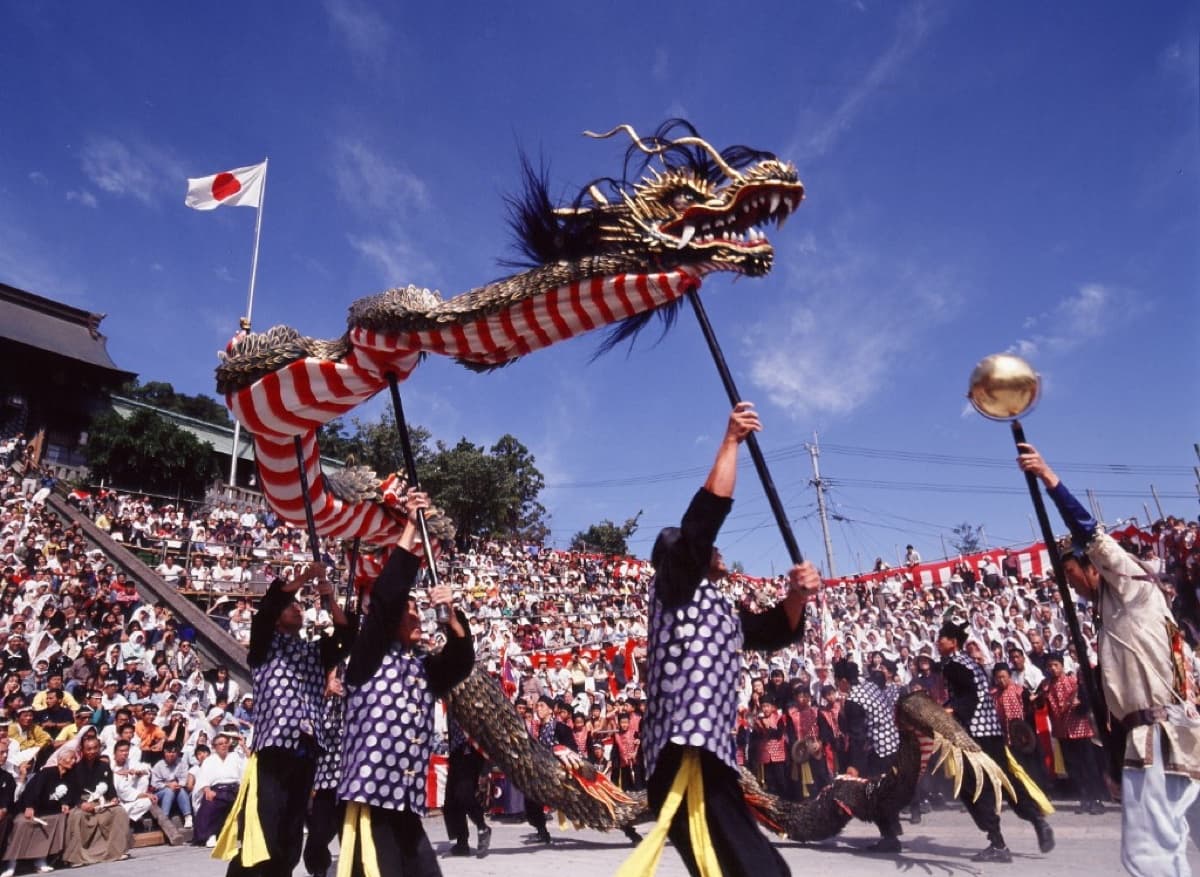
Nagasaki Kunchi 2026: How to Actually See Kyushu's Wildest Autumn Festival
12 min read