Where to Stay in Kyoto 2026: Best Areas, and the Hotels Our Tours Actually Book
An honest area-by-area guide to where to stay in Kyoto — Kyoto Station, downtown Kyoto, southern and northern Higashiyama, Arashiyama — followed by the actual hotels we reserve on our self-guided routes, with the route codes and prices.
Kyoto is not a city you conquer from one central location. The famous temples sit on the eastern and western hills, the restaurants sit in the middle, and the trains sit in the south. Where to stay in Kyoto is really a question about which two hours of your day you want to spend walking instead of waiting for a bus.
Most guides to visiting Kyoto stop at the neighborhood level. This one goes one step further: after the area-by-area breakdown, we list the actual hotels our own self-guided tours reserve in Kyoto — by tier, with the route codes and what each route costs. We are a Japan-based operator, so these are rooms we hold every week, not a list scraped from a booking site.
Quick Answer: Where to Stay in Kyoto
First time → the Kyoto Station area (the most convenient location for day trips and the Shinkansen). Food and evenings → downtown Kyoto around Shijo-Kawaramachi. Traditional atmosphere → southern Higashiyama or Gion. Quiet and green → northern Higashiyama. Second visit → Arashiyama. Pick one base. Kyoto is small enough that moving hotels mid-trip usually costs you more time than it saves.
First time
Kyoto Station
Food
Downtown
Atmosphere
Gion
Quiet
N. Higashiyama
How to Decide Where to Stay in Kyoto
Start with the thing that surprises most first-time visitors: Kyoto has only two subway lines. The Karasuma Line runs north–south, the Tozai Line runs east–west, and they cross once, at Karasuma-Oike. Everything else is buses, and Kyoto city buses are slow and crowded in every peak season. That single fact shapes the whole decision.
Three questions settle it:
- Are you taking day trips? Nara, Osaka, Hiroshima and Kanazawa all leave from Kyoto Station. If two or more of your days are out of town, stay close to the train station and stop thinking about it.
- Do you want to be out in the evening? Then you want the city center — restaurants cluster densely around Shijo and Pontocho, and they thin out fast as you move away.
- Which temple do you most want to yourself? Kyoto's famous temples are wonderful at 7am and grim at 11am. Sleeping inside a temple district buys you that morning.
One more practical note: Kyoto is a machine for eating your walking distance. A hotel described as "10 minutes from Gion" may mean 10 minutes to the edge of the district and another 25 uphill to Kiyomizu-dera. Check the walk to the specific place you care about, not to the district name.
From our Japan travel team
The single most common change we make to a customer's own plan is reducing the number of hotels. Kyoto rewards one steady base — you lose the better part of a morning every time you re-pack, check out and check in, and Kyoto's check-in times are typically 15:00. On our routes, Kyoto is usually two or three consecutive nights in one place, with luggage forwarding arranged for the move to the next city.
The Best Areas at a Glance
| Area | Best for | The trade-off | Price |
|---|---|---|---|
| Kyoto Station | First trips, Shinkansen days, big luggage | Every bus and train starts here; not atmospheric | Mid to high |
| Downtown (Kawaramachi / Karasuma / Shijo) | Food, shopping, evenings out | Best restaurant density; subway on both axes | Mid to high |
| Central Kyoto (Imperial Palace / Nijo) | Quiet streets, second visits, new luxury hotels | Both subway lines cross here; fewer restaurants than downtown | Mid to high |
| Southern Higashiyama / Gion | Atmosphere, couples, temple mornings | Walk to Kiyomizu-dera before the crowds; few stations | High |
| Northern Higashiyama | Quiet, gardens, repeat visitors | Green and calm; one subway stop to downtown | Mid to high |
| Arashiyama | Second visits, slow mornings | Famous bamboo forest at dawn; far from the nightlife | Mid to high |
| Northern Kyoto (Takaragaike / Iwakura) | Seclusion, gardens, luxury stays | Resort calm, 20 minutes by subway to the city center | High |
Pick one and commit. The differences between these areas are 15–25 minutes of travel, not hours — which is why first time visitors should optimise for the train station and repeat visitors for the street.
Kyoto Station: The Most Convenient Location
The Kyoto Station area is where we place more of our travelers than anywhere else in the city, and the reason is unglamorous but decisive: every bus route, both subway lines, the Shinkansen, the Nara line, the airport bus and the Kansai Airport limousine all converge here. If your Kyoto hotel is within a few minutes of the train station, you never have to think about logistics again.
The station itself is a piece of architecture worth ten minutes — Hiroshi Hara's 1997 building is a canyon of glass and steel with a free rooftop terrace at the top of the Grand Stairway. Underneath it, Porta and The Cube give you a department-store basement food hall for breakfast supplies and late-night dinners.
The honest downside: this is not traditional Kyoto. You are staying in a modern hotel in a transport district, and you have to travel to reach the atmosphere. The compensation is that you travel to all of it equally easily, including Nara and Osaka.
Suits: first-time visitors, anyone with a JR Pass, travelers with spacious rooms and big suitcases in mind, families, and anyone arriving late from Tokyo.
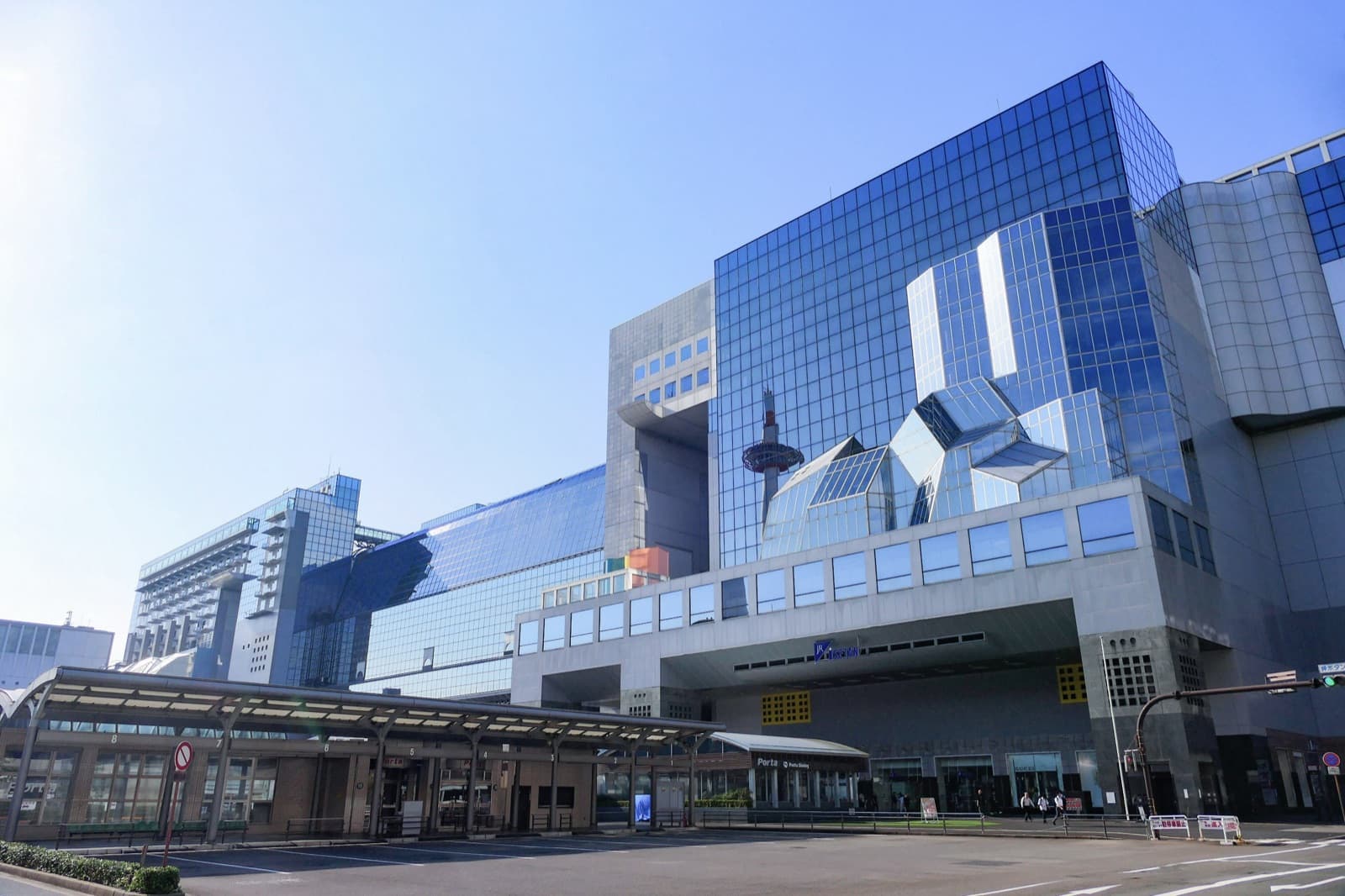
A practical distinction inside the area: the Karasuma (north) side faces the city and puts you a 10-minute walk from the Higashi-Honganji temple grounds; the Hachijo (south) side is quieter, cheaper, and sits directly under the Shinkansen platforms. For a 7am departure to Hiroshima, the Hachijo side is worth more than a view.
Downtown Kyoto: Kawaramachi, Karasuma & Shijo
Downtown Kyoto is the rectangle between Karasuma and the Kamo River, with Shijo-dori running through the middle. This is central Kyoto in the way locals mean it: Nishiki Market and its 400 metres of covered food stalls, the Pontocho lantern alley along the river, the Takashimaya and Daimaru department stores, and several hundred restaurants within a ten-minute walk.
It is also the one part of Kyoto with genuinely good transport in two directions — the Karasuma subway line north to the Imperial Palace and south to Kyoto Station, the Tozai line east toward Higashiyama, and the Hankyu and Keihan lines to Osaka. Gion is a 15-minute walk across the river, which means you can have an atmospheric evening and a short walk home.
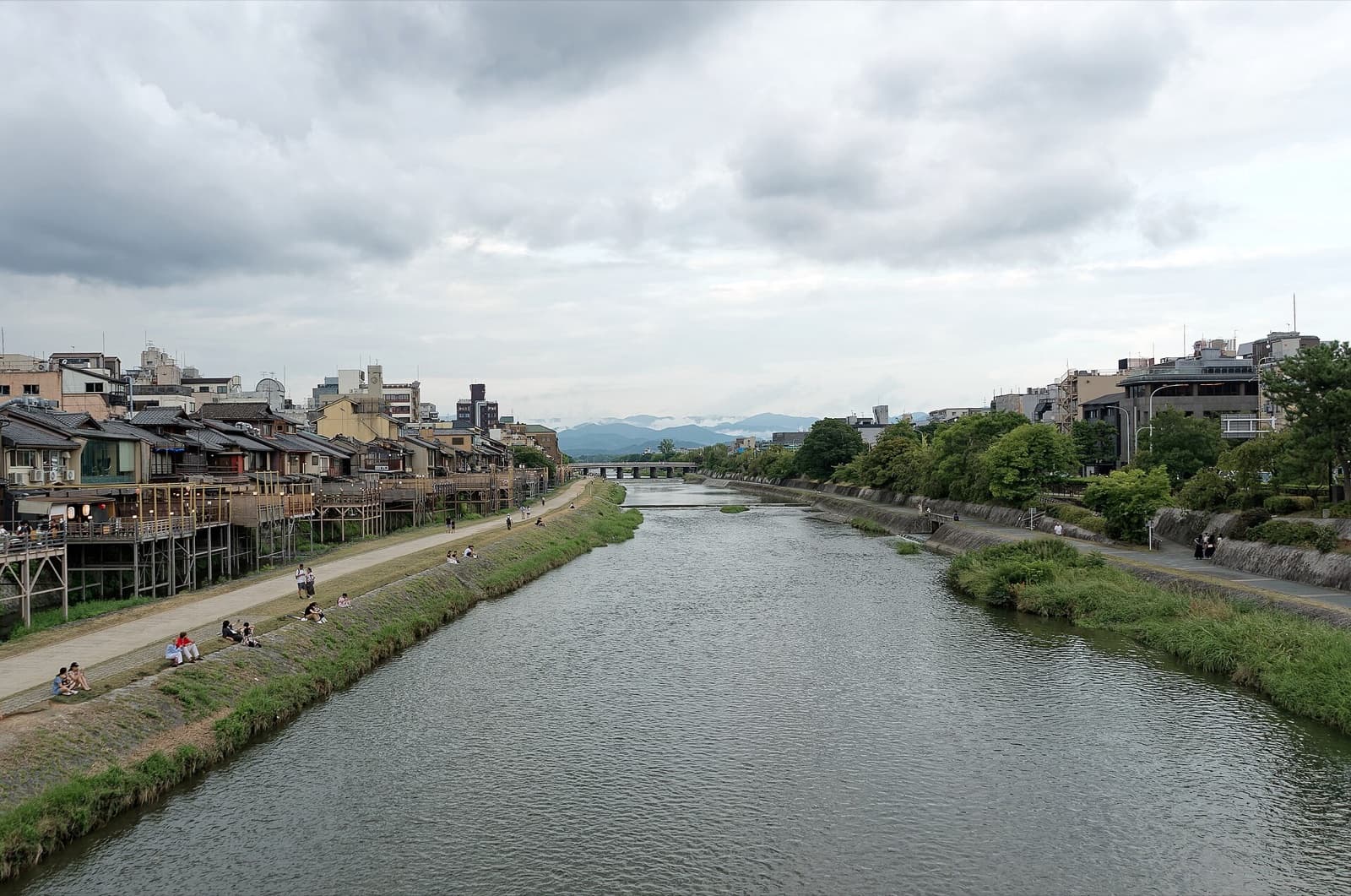
Where the quiet is: Kawaramachi itself is busy into the night. A block or two west, toward Karasuma, you get the same access on a much quieter street — which is why most of the downtown hotels we use sit on the Karasuma side rather than facing the main crossing.
Suits: food-focused travelers, couples, second-time visitors, anyone who wants to walk home from dinner.
Central Kyoto: The Imperial Palace, Nijo Castle & Karasuma-Oike
North of the shops, central Kyoto turns quiet. The Kyoto Imperial Palace stands inside Kyoto Gyoen National Garden, a walled park of gravel avenues and old pines roughly 1.3 km long, open to the public and free to walk from dawn. Nijo Castle, the shogun's Kyoto residence with its nightingale floors, sits a short walk southwest. Karasuma-Oike, the one point where the two subway lines cross, is in the middle of it.
As a base this is the compromise between atmosphere and function: modern hotels on wide, quiet streets, a walking distance of five to ten minutes to the restaurants of downtown Kyoto, and a subway station that makes Kyoto's bus routes optional. Several of Kyoto's newest luxury hotels have opened along this axis, facing Nijo Castle and the Horikawa canal, which has pulled the upper end of the market north out of the temple districts.
Suits: second visits, travelers who want a quiet street without leaving central Kyoto, anyone who wants to be centrally located but away from the crowds.
Southern Higashiyama & Gion: The Traditional Atmosphere
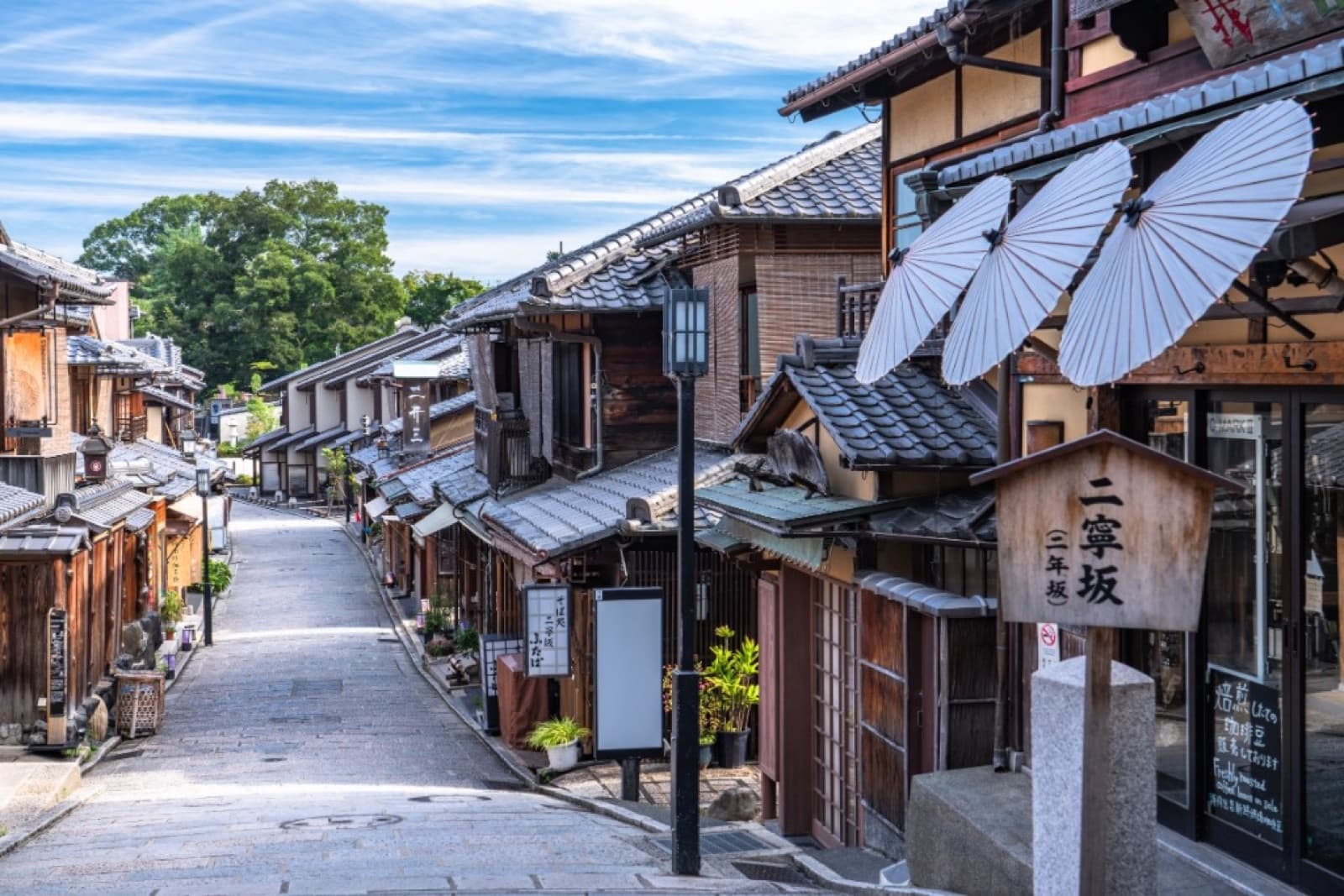
Southern Higashiyama is the Kyoto on the postcards — the historic streets of Ninenzaka and Sannenzaka climbing toward Kiyomizu-dera, the wooden machiya facades of Hanamikoji in Gion — still a working geisha district — Yasaka Shrine at the end of Shijo, and Kodai-ji and Chion-in in between. Staying here is the one way to see these lanes empty, because emptiness is entirely a function of the hour.
Be clear-eyed about the trade-offs. There is no subway station in the heart of it (Gion-Shijo on the Keihan line and Higashiyama on the Tozai line sit at the edges), the streets are steep, and Gion has a serious crowding problem — some of the private lanes off Hanamikoji now carry ¥10,000 fines for entering, and photographing maiko and geiko on the street is prohibited. Follow the signs; local residents live there.
Suits: couples, honeymooners, photographers, repeat visitors who have already done the logistics-first trip.
From our Japan travel team
If the traditional atmosphere is what you came for, the trick is not necessarily to sleep in Higashiyama — it is to be able to get there at 7am. From the Kyoto Station area a taxi to Kiyomizu-dera takes about 15 minutes and costs roughly ¥1,500 before the traffic builds up. Travelers who plan one early start usually get more out of it than travelers who pay a premium for the address and then sleep in.
Northern Higashiyama: Gardens, Quiet and the Philosopher's Path
Northern Higashiyama is the calmer half of the eastern hills: Nanzen-ji and its Meiji-era brick aqueduct, Eikan-do, Ginkaku-ji at the top, and the Philosopher's Path running two kilometres along a cherry-lined canal between them. Heian Shrine and the Okazaki museum district sit at the bottom of the hill.
This is the quiet, green, grown-up part of the city, and it has one very useful piece of infrastructure: Keage station on the Tozai subway line, which is three stops from the downtown crossing and connects through to Kyoto Station in about 15 minutes. You get seclusion without being stranded.
Suits: returning visitors, garden people, travelers who want a quiet street and a hotel with grounds, autumn-foliage trips.
Arashiyama & Northern Kyoto: The Slow Bases
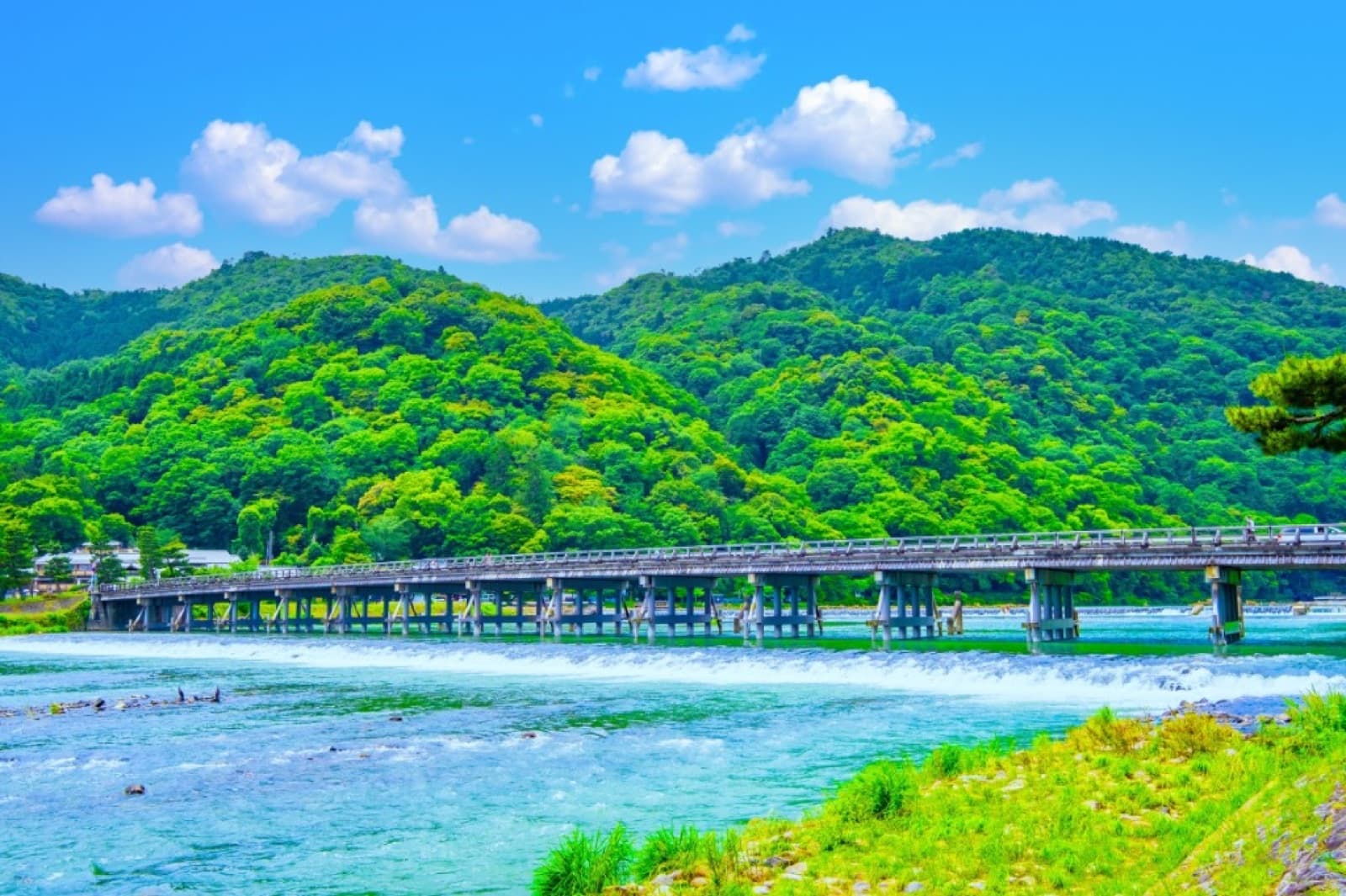
Arashiyama sits on the western edge of the city, where the Hozu River comes out of the mountains under the Togetsukyo bridge. The famous bamboo forest is a five-minute walk from the station and is genuinely transformed by being there before 8am — after that it is a queue. Tenryu-ji's garden, the Sagano scenic railway and the monkey park fill an unhurried day.
Staying overnight in Arashiyama means a quiet evening and a perfect morning, at the cost of being 20–30 minutes from the restaurants downtown. It works beautifully on a second visit and less well on a first one.
Further north, Takaragaike and Iwakura are a different proposition again: residential, wooded, with the Kokusaikaikan subway terminus putting the city center 20 minutes away on a single train. This is where Kyoto's resort-style hotels sit, and where we place our luxury routes when the point of the stay is grounds, garden and silence rather than stepping out into the street.
Other Areas Worth Considering
- Northwest Kyoto (the Golden Pavilion). Kinkaku-ji, Ryoan-ji's rock garden and Ninna-ji sit in a line across the northwest. There are few hotels, no subway station, and bus routes that clog solid in peak season. Visit in the morning; do not sleep here.
- Fushimi. South of the station, with Fushimi Inari's torii tunnels and a sake brewing district around the canal. Affordable hotels, good access on the Keihan and JR Nara lines, and the right base if the torii gates at sunrise are the thing you most want.
- Machiya vacation rentals. Restored wooden townhouses let by the night, mostly downtown and around the temple districts — space, a kitchen and traditional Kyoto joinery, which suits families. Japan's rules cap many private lets at 180 nights a year and licensed operators must display a registration number; our guide to Japan's minpaku rules explains what to check. There is usually no hotel reception, so late arrivals need arranging in advance.
- Not Kyoto at all. Kyoto has no hot spring district of its own. If hot spring baths and traditional futon beds are what you are picturing, the ryokan towns are one to three hours away and cost far less than a luxury ryokan inside the city.
The Kyoto Hotels Our Self-Guided Tours Actually Book
Everything above is advice. This section is inventory. Below are the hotels we reserve in Kyoto on our own self-guided routes, grouped by tier, with the routes they appear on, how many nights you get, and what the whole route costs per person.
Two things to read carefully. First, most of these are contracted as "or similar" — if a property is full on your dates we substitute an equivalent hotel in the same class and area, so treat the name as the standard we book to rather than a guarantee. Second, the prices are for the complete route — every hotel night in every city, the rail tickets between them, luggage transfers and the documentation — not for the Kyoto hotel on its own. We do not sell the rooms separately.
Standard tier
Well-located, comfortable western style rooms — the workhorses of a first trip. Most sit at or beside Kyoto Station. Unless you ask otherwise, these are booked as twin rooms; a double, a triple or a deluxe room can usually be arranged at a supplement, and every hotel below is within easy walking distance of a train station or a subway station.
| Hotel | Where it is | Nights | Routes | Route price |
|---|---|---|---|---|
| Miyako Hotel Kyoto Hachijo | A two minute walk from the Hachijo (south) exit of Kyoto Station | 2–3 | GR001, GR002, GR007, SL001, TP001 + 11 more | $2,800–6,200 |
| Hotel Granvia Kyoto | Inside the Kyoto Station building | 2–3 | GR003, GR009, KM001, KM002, TP002, TP003, SK009, HS002 | $3,000–6,300 |
| Kyoto Tokyu Hotel | Horikawa-Gojo, between the station and downtown | 2–3 | EX003, NT005, NT105 (plus three deluxe routes) | $2,800–4,000 |
| THE THOUSAND KYOTO | A two minute walk from the Karasuma (north) exit of Kyoto Station | 2 | TP005 | $2,400–4,200 |
| Urban Hotel Kyoto Shijo Premium | Shijo-Horikawa, a five minute walk from Hankyu Omiya station | 2 | BF001, BF002, BF003 | $1,200–1,900 |
| Mitsui Garden Hotel Kyoto Shijo | Shijo-Karasuma, central Kyoto | 2 | KA001 | $1,000–1,500 |
| MIMARU (one of the Kyoto apartment hotels) | Central Kyoto, apartment-style rooms for 4 | 4 | FG001, FG003, FG005 | $2,700–4,300 |
The one to understand is Miyako Hotel Kyoto Hachijo, which appears on sixteen of our routes. It is directly at the Hachijo exit of Kyoto Station, which is the reason: on a route that arrives from Kanazawa at 19:00 and leaves for Hiroshima at 08:00, the walk from the platform matters more than the lobby. Hotel Granvia Kyoto is inside the station building itself. Urban Hotel Kyoto Shijo Premium and Mitsui Garden Hotel Kyoto Shijo are the value picks on our budget routes, both in the Shijo corridor with the subway and the Hankyu line to hand.
Deluxe tier
Larger rooms, full-service hotels, and in two cases a genuine Kyoto address rather than a convenient one.
| Hotel | Where it is | Nights | Routes | Route price |
|---|---|---|---|---|
| RIHGA Royal Hotel Kyoto | Horikawa-Shiokoji, 7 minutes on foot from Kyoto Station | 2–3 | GR108, GR109, GR110, KM101–KM104, TP101–TP103, HS001 | $3,300–7,300 |
| The Westin Miyako Kyoto | Northern Higashiyama, a two minute walk from Keage subway station | 2 | GR101 | $5,900–7,600 |
| The Celestine Kyoto Gion | Gion, a short walk from Gion-Shijo station | 2–3 | GR103, TP006 | $3,500–6,800 |
| Mitsui Garden Hotel Kyoto Sanjo Premier | Sanjo, a short walk from Karasuma-Oike in central Kyoto | 3 | GR106 | $4,300–6,400 |
| Kyoto Tokyu Hotel | Horikawa-Gojo, central Kyoto | 3 | GR102, GR105, GR107 | $4,200–6,400 |
RIHGA Royal Hotel Kyoto carries most of our deluxe volume. It stands at Horikawa-Shiokoji, about seven minutes on foot from Kyoto Station, and runs a free shuttle bus from the Hachijo exit roughly every 20 minutes through the day — so it behaves like a station hotel while sitting on a quiet street, with an indoor swimming pool and the only revolving observation restaurant in Kyoto on its top floor. The Celestine Kyoto Gion puts you inside southern Higashiyama. The Westin Miyako Kyoto, on the hillside above Keage station, is the outlier: founded in 1890, with its own woodland trail behind the building and one of the few hotel gardens in the city you would visit on its own merits.
Luxury tier
Our luxury routes are built the other way around: the hotel is the reason for the itinerary, not a place to sleep between trains.
| Hotel | Where it is | Nights | Route | Route price |
|---|---|---|---|---|
| THE WESTIN MIYAKO KYOTO | Northern Higashiyama, a hillside garden hotel founded in 1890 | 2 | LX001 — Luxury Japan Journey: Ise-Shima Escape (12 days) | $8,100–11,700 |
| The Prince Kyoto Takaragaike | Takaragaike, a three minute walk from Kokusaikaikan station | 2 | LX002 — Refined Kansai Journey: Lake Biwa & Castles (11 days) | $6,500–9,400 |
| THE THOUSAND KYOTO | Kyoto Station, Karasuma side | 2 | LX003 — Luxury Journey, Your Way: Hiroshima & Kyoto (10 days) | $6,900–8,400 |
| THE THOUSAND KYOTO | Kyoto Station, Karasuma side | 2 | HS003 — The Art of Onsen: A Premium Japan Experience (11 days) | $5,500–7,600 |
The Prince Kyoto Takaragaike is the most distinctive of the three — a circular Togo Murano building in the wooded north of the city, wrapped around a garden and a lake, about 20 minutes from the city center by subway from Kokusaikaikan. THE THOUSAND KYOTO is the opposite instinct: a low, quiet, minimalist hotel two minutes from Kyoto Station that treats the transport convenience as a feature rather than a compromise. And The Westin Miyako Kyoto appears again at the top of the range on LX001, with more nights and more included than its deluxe counterpart.
From our Japan travel team
The practical difference between our tiers in Kyoto is less about thread count than about where the hotel sits and how much of your day it gives back. On the standard routes the hotels are chosen around realistic transfer times, so the travel days are painless. On the deluxe and luxury routes we can move you into a garden hotel or a Higashiyama address, because those itineraries have the extra nights to absorb the longer transfers. If you are deciding between tiers, tell us which of those two things you value and we will point you at the right route.
Cost Expectations by Area
Rough nightly rates for a double room in normal season. Cherry blossom season, the November foliage weeks and Gion Matsuri push all of these up sharply, and the best rooms sell out six to nine months ahead:
- Budget hotels (under ¥15,000): the Hachijo side of Kyoto Station, the Shijo-Omiya corridor, and business hotels along Horikawa. A budget hotel here still means a clean twin room with a private bathroom.
- Mid range hotels (¥15,000–¥40,000): most of downtown Kyoto, the Karasuma side of the station, and Okazaki. This is where the best hotels for a first trip sit — western style rooms, a convenient location, breakfast included.
- Luxury hotels (¥40,000+): Gion and southern Higashiyama, the garden hotels in northern Higashiyama and Takaragaike, and the newer openings near Nijo Castle.
For the wider picture — how the weak yen, the new accommodation tax and peak-season pricing interact — see our guides to Japan hotel prices in 2026 and how much a trip to Japan costs.
A note on traditional Japanese inns: travelers often arrive expecting to book a ryokan in Kyoto and find that the city's options are either extremely expensive or far from the center. Kyoto is a city of hotels; the ryokan experience with futon beds, kaiseki dinner and an open-air bath is much better value an hour or two away, in Kinosaki, Hakone or Kurokawa. Our guide to ryokan with a private onsen covers where we actually book them.
Where to Stay in Kyoto by Trip Length
- 2 nights: Kyoto Station or downtown. Do not split. Two nights is one full day of sightseeing.
- 3 nights (the most common): one base downtown or at the station, with one early start in Higashiyama and one half-day in Arashiyama.
- 4–5 nights: now a split makes sense — two nights central, two in Higashiyama or Arashiyama, and a day trip to Nara.
- Kyoto plus Osaka: keep them as separate bases. They are 30 minutes apart, and commuting daily wastes an hour each way. See where to stay in Osaka.
- First trip to Japan overall: three Kyoto nights inside a two-week route is the pattern almost all of our itineraries settle on.
For getting there and moving on, see our Tokyo to Kyoto and Kyoto to Osaka transport guides, and our where to stay in Tokyo guide for the other half of a classic two-city trip.
Common Mistakes When Booking a Kyoto Hotel
- Booking by the district name. "Higashiyama" covers five kilometres of hillside. Check the walk to the actual temple you want.
- Assuming there is a subway station nearby. Two lines, one crossing. Look up the nearest station before you book, not after.
- Splitting three nights across two hotels. You lose a morning to the move and gain almost nothing.
- Booking late for the peak weeks. Late March to mid-April and the second half of November are sold out months ahead at every level, and rates roughly double.
- Expecting a traditional ryokan in the center. Kyoto's inventory is overwhelmingly Western-style hotels with western style beds.
- Choosing Arashiyama for a first visit. Beautiful, but you will spend your evenings on a train back into town.
FAQ: Where to Stay in Kyoto
What is the best area to stay in Kyoto for first-time visitors?
The Kyoto Station area. It is the most convenient location in the city — both subway lines, every bus route, the Shinkansen and the airport buses start there, and day trips to Nara, Osaka and Hiroshima all leave from the same platforms. Downtown Kyoto around Shijo-Karasuma is the close second if evenings out matter more to you than day trips.
Is it better to stay in downtown Kyoto or near Kyoto Station?
Downtown Kyoto for restaurants, shopping and walking home after dinner; the Kyoto Station area for day trips, early departures and heavy luggage. They are only about ten minutes apart by subway, so neither choice is a mistake — pick the one that matches how you will spend your evenings.
Where should I stay in Kyoto for the traditional atmosphere?
Southern Higashiyama, around Gion, Ninenzaka and Kodai-ji. Staying inside the temple district is the only reliable way to walk those historic streets before the day crowds arrive. Northern Higashiyama, near Nanzen-ji and the Philosopher's Path, offers the same atmosphere with more quiet and fewer people.
How many nights should I stay in Kyoto?
Three is the sweet spot and the number most of our routes use. Two nights gives you one real day of sightseeing; four or five lets you add Nara, Arashiyama and a slower pace without ever feeling rushed.
Can I stay in a traditional ryokan in Kyoto?
You can, but the city's traditional Japanese inns are either very expensive or well outside the center, and Kyoto accommodation is overwhelmingly Western-style hotels. For the full ryokan experience — futon beds, kaiseki dinner, an open-air bath — we book our travelers into onsen towns such as Kinosaki or Hakone instead, where the same budget buys far more.
Which hotels do your self-guided tours use in Kyoto?
Most often Miyako Hotel Kyoto Hachijo and Hotel Granvia Kyoto at the station on our standard routes, RIHGA Royal Hotel Kyoto and The Celestine Kyoto Gion on the deluxe routes, and The Westin Miyako Kyoto, The Prince Kyoto Takaragaike and THE THOUSAND KYOTO on the luxury routes. Almost all are contracted as "or similar", so an equivalent hotel in the same class and area may be substituted if a property is full on your dates.
When do Kyoto hotels sell out?
Late March to mid-April for cherry blossom season and the second half of November for autumn foliage are effectively sold out six to nine months ahead, and rates roughly double. Gion Matsuri in July and the New Year period are the next tightest. Outside those windows you can usually book a few months out.
Is Arashiyama a good place to stay in Kyoto?
On a second visit, yes — you get the famous bamboo forest to yourself before 8am and a genuinely quiet evening by the river. On a first visit it is the wrong choice, because you will be 20–30 minutes from the restaurants and the central sights every night.
Where Our Self-Guided Tours Put You in Kyoto
On our routes, Kyoto is two or three consecutive nights in one base — most often beside Kyoto Station, and on the deluxe and luxury routes in Higashiyama, downtown Kyoto or the garden district of Takaragaike. Rooms, rail tickets, seat reservations and luggage transfers between cities are all arranged before you fly, and the hotels are chosen around realistic transfer times, so the travel days do not eat your sightseeing.