Ryokan With a Private Onsen: What It Costs, How It Works, and the Rooms We Actually Book
The three kinds of private onsen, what a night with dinner and breakfast really costs, how tattoos change the plan — and the exact rooms with their own open-air bath on our self-guided routes.
Soaking in a steaming tub on your own balcony, with the garden going dark and nobody else in the water — that is what most people picture when they search for a ryokan with private onsen. It is a real, bookable thing, and it slots into an ordinary Japan itinerary more easily than you would think. The catch is that "private onsen" covers three different setups at three very different prices.
This guide explains those three, what a night with dinner and breakfast actually costs, how tattoos change the plan, and which rooms with their own open-air bath are already built into our self-guided routes — so you can see what a private onsen night looks like when someone else books it.
♨️ Quick Answer: Booking a Private Onsen
A room with its own open-air bath is the priciest option; a reservable (kashikiri) bath you rent by the hour is the cheaper middle path. Both give you a private soak with no other guests around, and both work if you have tattoos. Book three to six months ahead for weekends, autumn foliage and crab season.
🛁 In-room private onsen
Your own tub on a balcony or garden; use it at 2am if you like
⏱️ Kashikiri bath
Rented by the hour — sometimes free, sometimes an additional cost
🍽️ What a night includes
Dinner and breakfast, fixed meal times, tatami rooms or Western beds
🗾 Easiest bases
Hakone from Tokyo, Kinosaki Onsen from Kyoto
What "Private Onsen" Actually Means
The phrase gets used loosely, so pin it down before you book. There are three setups, and the price gap between them is large.
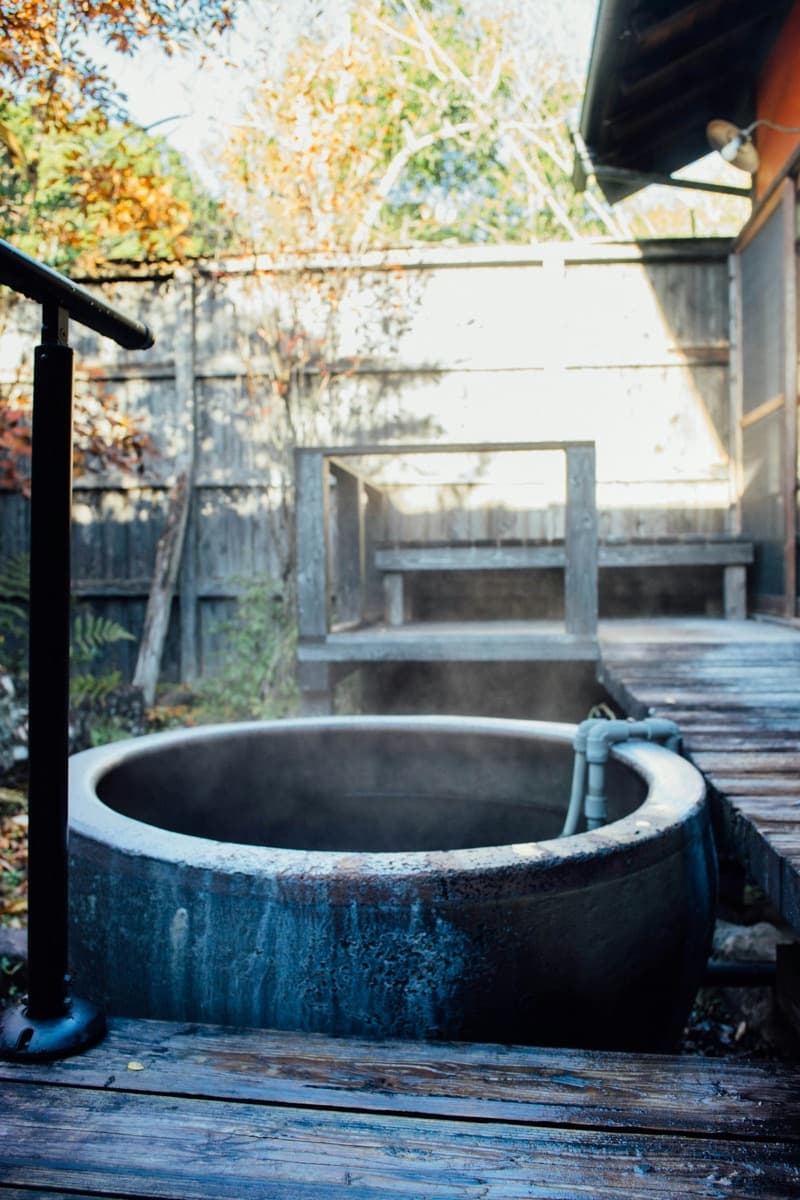
- An in-room private onsen. The guest room has its own hot spring tub — on a balcony, a terrace, or in a small garden alcove. You use it whenever you like, with no other guests anywhere near. These rooms cost the most, and they are usually what people mean by a luxury ryokan. A private onsen tub on a balcony, with a beautiful view of the garden and the mountains behind it, is the version people picture — and a few newer properties go further and rent what is effectively a private villa with its own bath.
- A kashikiri (reservable) private bath. The property has one or more private open-air baths you rent by the hour. Some are free for guests; others carry an additional cost. At Nishimuraya Hotel Shogetsutei in Kinosaki — where two of our routes stay — there are three of them, and a 70-minute session is ¥8,800 for up to four people, with ¥1,100 per extra person up to six.
- Public onsen only. Shared baths split by gender. Cheaper, often more dramatic architecture, and in a town like Kinosaki the public baths are the whole point of the evening — but they are not private.
The water is the same either way: an onsen has to draw naturally heated spring water with a defined mineral content, so the onsen water in a small private open air onsen comes from the same source as the big public bath downstairs. Japan has more hot springs than any other country in the world; what changes between a private tub and a public bath is the surroundings, not the water.
Where to Stay for a Private Onsen
You can find a ryokan with private onsen baths in almost every prefecture. Three areas do it best for a first trip, because the scenery, the food and the train access all line up.
Kinosaki Onsen: the town you walk in a yukata
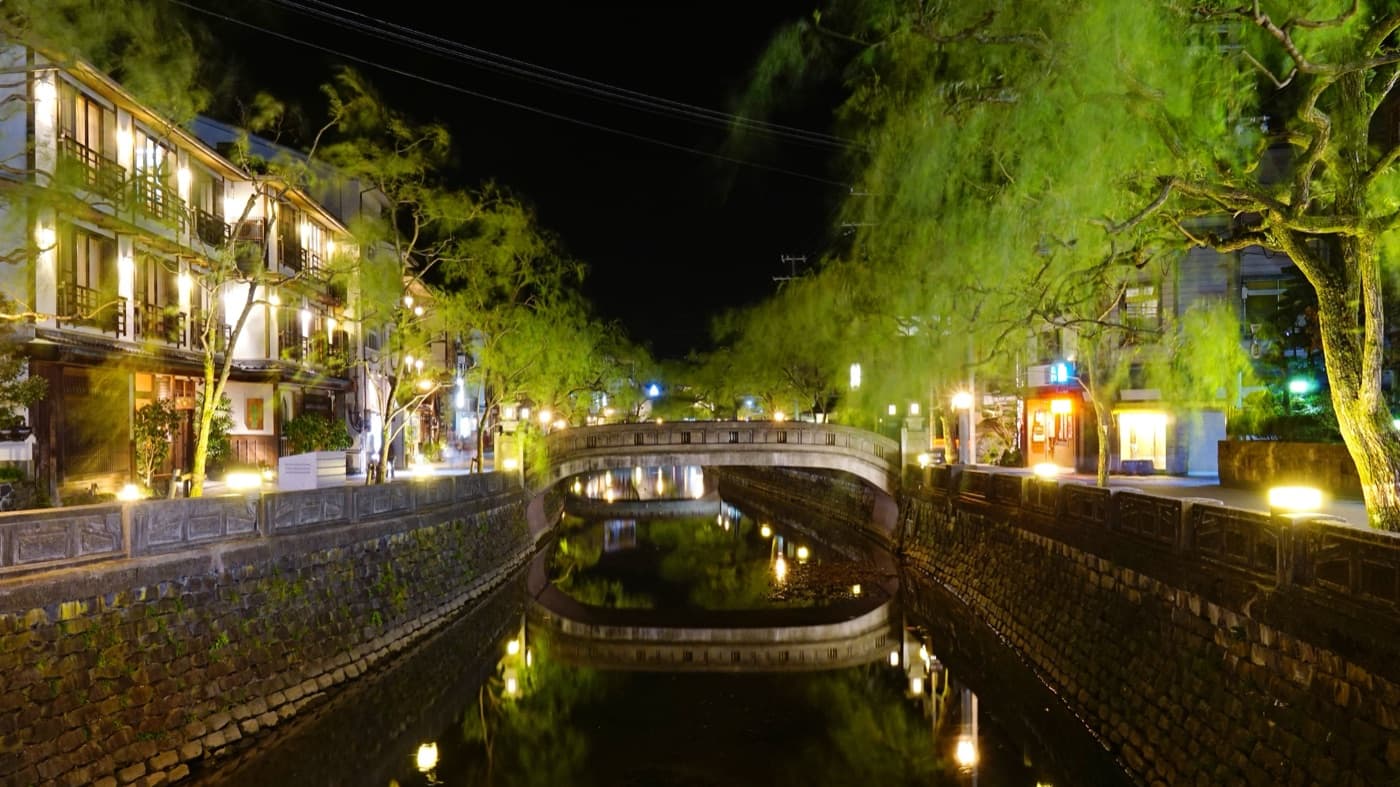
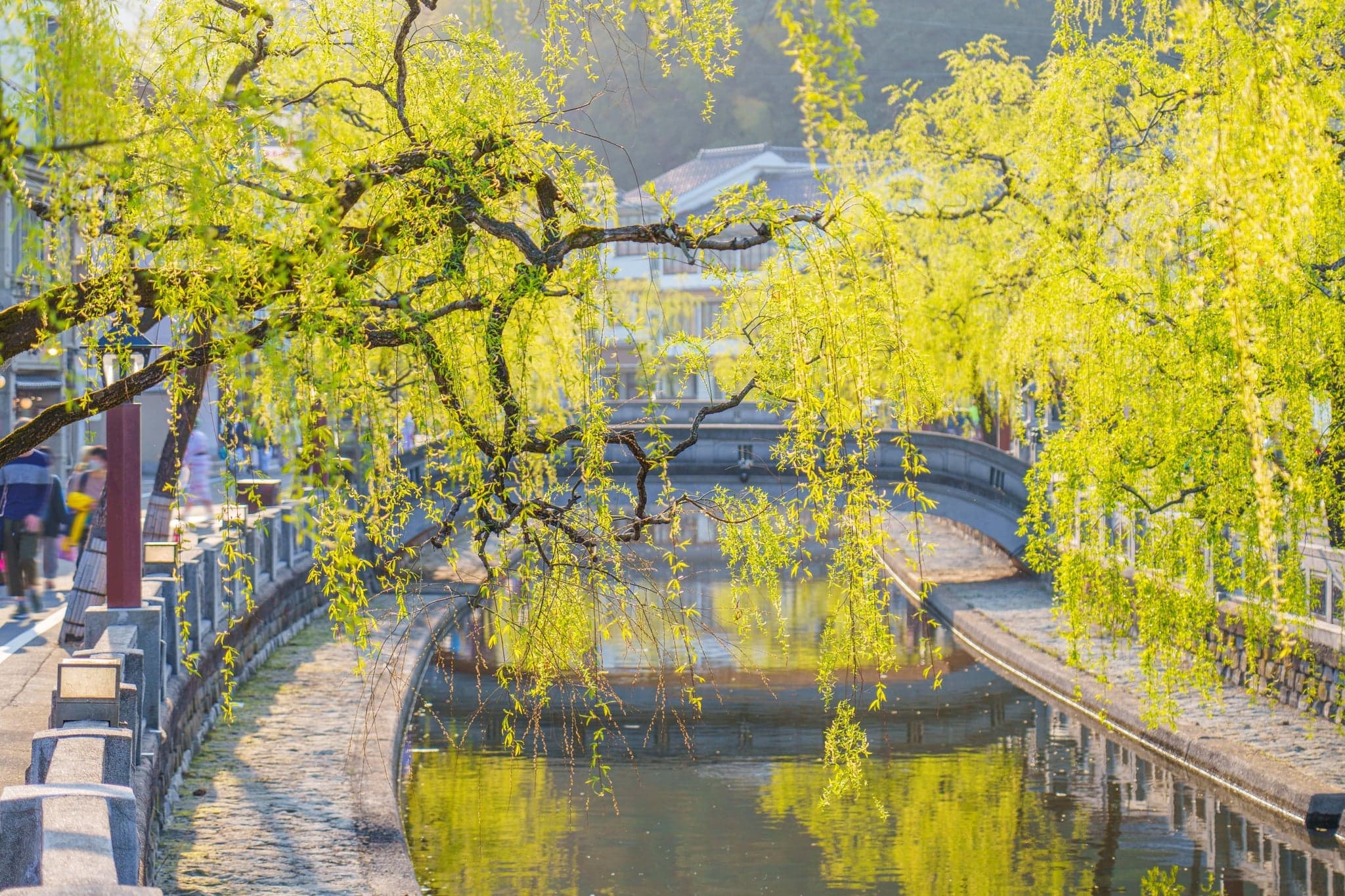
Kinosaki Onsen, on the Sea of Japan coast of Hyogo, is about 2.5 hours from Kyoto by limited express and acts like one big ryokan. Guests change into a yukata and wooden geta and clack between seven public bathhouses, which are free with the pass your inn gives you. Roughly 80 inns line the willow-lined canal, so the move is to book a beautiful ryokan with its own private onsen bath as a base, then go out to the public baths after dinner. Once you have visited two or three of them, the evening walk back along the canal in a yukata is the part people remember. Our Kinosaki Onsen guide covers the town, the crab season and the bath-hopping rules in detail.
Hakone: the one with the Mount Fuji view
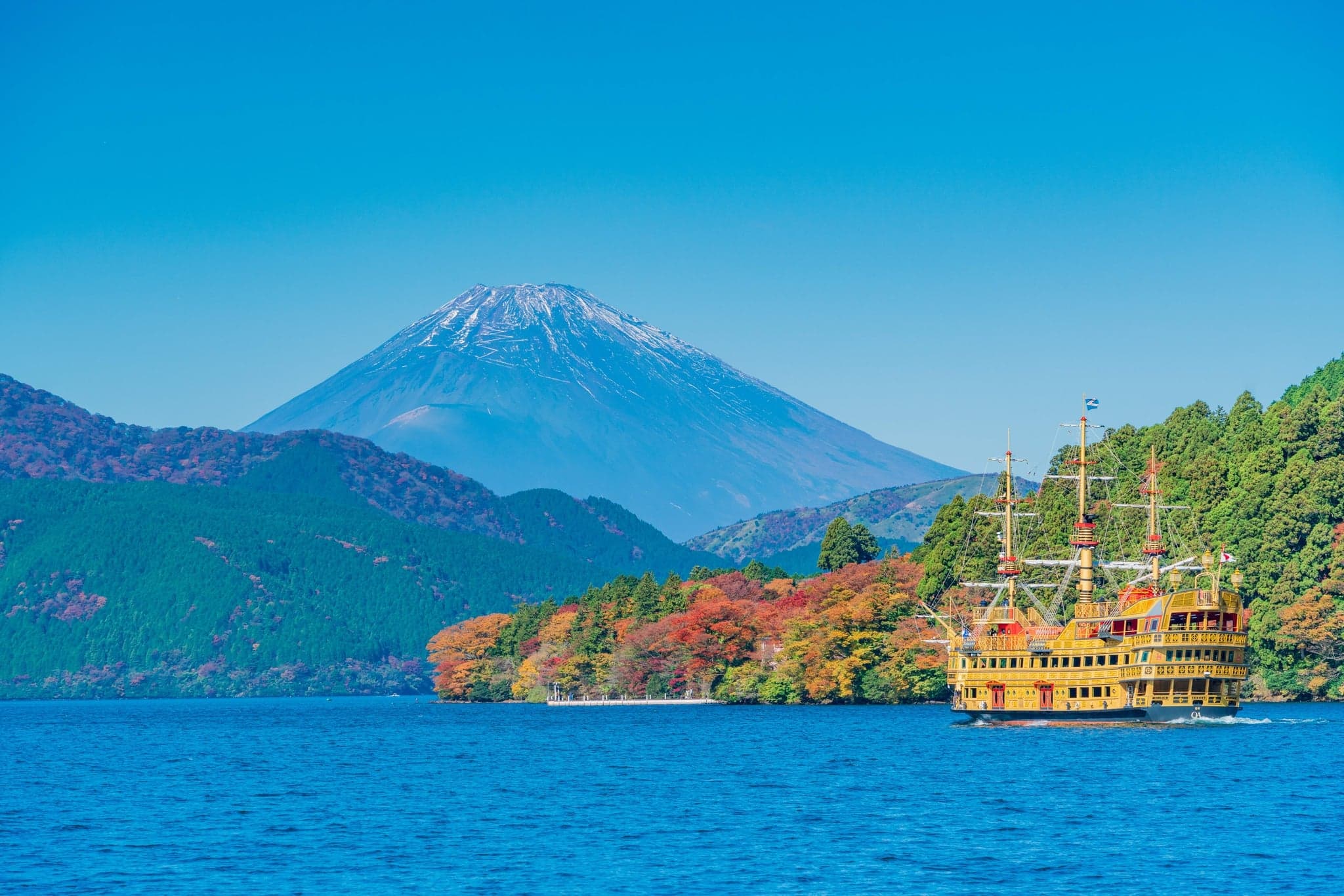
Hakone is the closest serious onsen area to Tokyo — under two hours from Shinjuku on the Odakyu Romancecar — and it is where a private open air bath with a Mt Fuji or lake view is most likely. If you are hoping for that view from your own tub, this is the area to look at first. It also pairs with Lake Ashi, the open-air museum and the ropeway, so a night there does not feel like a detour. Our Hakone guide has the loop in order.
Further afield: Nara, the Kii coast, Kyushu and Shikoku
Away from the two obvious bases, rooms with their own bath turn up in quieter places: the hills above Nara, the fishing town of Toba on the Ise-Shima coast, Hita in the Kyushu countryside, and Dogo Onsen in Matsuyama, one of the oldest hot springs in the country. Travelers also ask about the Izu Peninsula south of Tokyo and about Beppu and Kusatsu; they are good onsen regions, but none of our routes run there, so we would rather point you at the ones we know.
The Rooms With a Private Open-Air Bath We Actually Book
This is the part most guides leave out. Below are the rooms on our self-guided routes that come with their own open-air bath — not a recommendation list, but the beds our travelers actually sleep in.
🛁 Private open-air bath rooms in our catalog
| Where you sleep | Town | Room | On these routes |
|---|---|---|---|
| Hotel Nanpuso | Hakone | Japanese-style room with beds and a private open-air bath | GR007, GR009, HS002, FG001, FG002, SK009, SL007 |
| Manyo Wakakusa no Yado Mikasa | Nara | Japanese-style room with a private open-air bath | GR102, GR109, KM101, TP101 |
| Hita Kotohira Onsen Kaya-Usagi | Hita, Kyushu | Japanese-style room with a private open-air bath | KY004 |
| Toba Seaside Hotel | Toba, Ise-Shima | Japanese-style room with a private open-air bath | NT009 |
| Shikishimakan | Kotohira, Shikoku | Japanese-style room with beds and a private open-air bath | SE002 |
| Dogo Onsen Yachiyo | Dogo Onsen, Matsuyama | Japanese-style room with beds and a private open-air bath | SE003 |
💡 Room types are as listed in each tour's current itinerary and can change for a given departure. Kinosaki adds a fourth option: Nishimuraya Hotel Shogetsutei's reservable baths, on HS003 and KM104.
If you would rather have the whole trip built around hot springs than have one ryokan night dropped into a city route, these are the routes to start from:
♨️ Self-guided routes with onsen nights (per person)
| Route | Length | The onsen nights | Price range |
|---|---|---|---|
| The Art of Onsen: A Premium Japan Experience (HS003) | 11 days | Two nights in Hakone and two in Kinosaki at Nishimuraya Hotel Shogetsutei, with dinner both nights in each | $5,500–$7,600 |
| Hop Through Japan's Hot Springs & Highlights (HS002) | 14 days | A Hakone room with its own open-air bath, plus Kinosaki, Shirakawa-go and Gero with ryokan dinners | $4,300–$5,700 |
| Healing Waters & Timeless Towns (HS001) | 14 days | Kanazawa, Shirakawa-go and Gero, with the onsen nights on the mountain leg | $4,400–$5,900 |
| From Urban Energy to the Soul of Koyasan – Deluxe (KM104) | 12 days | Two nights in a temple lodging at Koyasan and a night at Nishimuraya Hotel Shogetsutei in Kinosaki | $3,800–$5,100 |
| Spirit of Tradition: Shirakawa-go & Cultural Japan (GR009) | 14 days | A Hakone room with a private open-air bath on night three, then Takayama, Kyoto and Nara | $4,100–$5,900 |
| Premium Kyushu: Serenity, Onsen & Coastal Heritage (KY004) | 13 days | A private open-air bath room in Hita, the hot springs of Unzen and Beppu, with a private taxi on five days | $6,600–$8,900 |
💡 Prices are per person from the current catalog and vary by departure date. Hotels, trains and luggage delivery are arranged on every route.
From our Japan travel team
Rooms with their own open-air bath are the first thing to sell out — they are a handful of rooms in each property, and autumn foliage weekends and the winter crab season in Kinosaki go three to six months ahead. If a private onsen is the reason for the trip, book that night first and build the rest of the route around it. Our self-guided tours handle the bookings and support you through the trip, so feel free to get in touch with your dates.
How to Choose the Right Ryokan
- Where it is located. A ryokan located a few minutes from the station is easier than a spectacular one at the end of a mountain road — especially in winter. Room style. Traditional Japanese means tatami and futons laid out after dinner. Many properties also let you choose Western beds, or a hybrid room with both — easier for families and for anyone who struggles getting up off the floor.
- Meal times. Dinner is usually served around 18:00 and breakfast between 07:30 and 08:30, in a private dining room or in your room. Dinner is a multi-course kaiseki rather than a hotel restaurant menu, and the courses arrive in order, so the timing is not flexible. If you want to arrive late or eat out, say so when you book. Keep the morning free too: the bath before breakfast is the quietest soak of the stay.
- Which bath you are getting. An in-room tub, a kashikiri bath you rent, or public baths only — properties advertise all three as "private onsen". Ask which one your rate includes, whether the private bath carries an additional cost, and whether the reservation is made at check-in or in advance. For most travelers the best ryokan is simply the one where that answer is clear.
- Access. A beautiful ryokan 30 minutes from the station sounds romantic until you are hauling a suitcase through the countryside. Check for a free shuttle from the station — many run one — or send the big bag ahead.
- The view. Rooms in the same property differ. A garden or river view is worth the upgrade; a car-park view is not.
What a Private Onsen Night Costs
Booked on your own, a ryokan night with dinner and breakfast generally starts around ¥20,000 per person at a simple property with a reservable bath, and rooms with their own onsen tub sit well above that — more again in Kinosaki during crab season or in peak foliage weeks. A rented kashikiri bath, where it is not free, is typically a few thousand yen per session; Nishimuraya Hotel Shogetsutei's is ¥8,800 for 70 minutes for up to four people.
On our routes the ryokan nights are already inside the tour price — the two-night Kinosaki stay on HS003, the Hakone room with its own bath on GR009, the Koyasan temple lodging and Kinosaki night on KM104. That is usually the cheaper way to get one, because the rate is contracted in advance rather than bought in the peak week. If a private bath matters to you, we recommend booking that night before anything else in the trip.
Tattoos: the Private Route Is the Workaround
Plenty of onsen still turn away guests with visible tattoos, and rules vary by property rather than by region. A private bath removes the problem entirely: in your own tub, or in a kashikiri bath booked for your group, nobody else is in the water.
If you want to use the public baths too, email before booking and ask plainly — something like "I have a tattoo on my shoulder; is it allowed in your baths, and do you have a private bath available?" Most properties answer honestly. Our onsen etiquette guide covers covering-up stickers, washing before you get in, and what to do with the small towel.
Fitting a Ryokan Night Into a Real Itinerary
The most common mistake is jamming the ryokan into a day already full of sightseeing. Check-in is usually 15:00, dinner is early, and the point is to stop moving. Give it an afternoon and an evening. Three pairings that work:
- Tokyo plus Hakone. One night, under two hours from Shinjuku, and back in the city by lunchtime the next day.
- Kyoto or Osaka plus Kinosaki Onsen. Two nights on the coast after the temples, direct by limited express from Kyoto.
- A mountain leg. Takayama, Shirakawa-go and Gero strung together, which is how our onsen routes handle it.
One or two nights is usually enough. By the third, most people are ready to move again — unless the point of the trip is precisely not to. Give yourself one slow afternoon to relax with nothing booked: it is an amazing contrast to a week of trains and temples.
From our Japan travel team
Our self-guided tours include free days in Tokyo, Kyoto and Osaka, so a ryokan night can often be added without rebuilding the itinerary — Hakone from Tokyo, Kinosaki from Kyoto. Every tour comes with 24/7 support from our team in Japan and your large luggage is sent ahead, so you travel to the onsen with a small bag. If you'd like us to slot a private onsen night into your route, just ask.
Common Mistakes
- Booking a room-only rate. The kaiseki dinner is half the reason to be there. Without it you have paid ryokan money for a hotel with a bath.
- Arriving at 20:00. You will miss dinner service and the reserved bath slots. Aim to check in by 16:00.
- Assuming every onsen is the same water. Sulphur, iron and sodium bicarbonate springs feel — and smell — completely different.
- Wearing the yukata right over left. Left side over right. The other way is for funerals.
- Leaving it late. The rooms with their own bath are the few rooms everyone wants.
FAQ: Ryokan With a Private Onsen
What is the difference between a private onsen and a kashikiri bath?
A private onsen usually means a tub attached to your guest room, which you can use at any hour. A kashikiri bath is a private bath the whole property shares: you reserve it for a session — 70 minutes at Nishimuraya Hotel Shogetsutei in Kinosaki, for example, at ¥8,800 for up to four people. Both keep other guests out of the water.
How much does a ryokan with a private onsen cost per night?
Booked independently, expect from roughly ¥20,000 per person with dinner and breakfast at a simple property, and noticeably more for a room with its own open-air bath, especially in foliage season or Kinosaki's winter crab season. On our routes the ryokan nights are included in the tour price.
Can I use a private onsen if I have tattoos?
Yes. That is the main reason travelers with tattoos book one. In an in-room bath or a reserved kashikiri bath you are the only person in the water. For the public baths, ask the property directly before you book.
Which of your tours include a room with a private open-air bath?
GR007, GR009, HS002, FG001, FG002, SK009 and SL007 stay at Hotel Nanpuso in Hakone; GR102, GR109, KM101 and TP101 use Manyo Wakakusa no Yado Mikasa in Nara; KY004 has one in Hita; NT009 in Toba; SE002 in Kotohira; SE003 at Dogo Onsen. HS003 and KM104 stay at Nishimuraya Hotel Shogetsutei in Kinosaki, which has reservable private baths.
Can two people use the bath together?
Yes — an in-room tub or a kashikiri bath is booked for your group, so couples and families bathe together. That is the difference from the public baths, which are split by gender.
Is a private bath better than the public onsen?
Different rather than better. Private means privacy and no clock-watching; the public baths are bigger, often more beautiful, and in a town like Kinosaki they are the evening's entertainment. Staying somewhere with a private bath and using the public baths too is the ideal.
How far ahead should I book?
Three to six months for weekends, autumn foliage, cherry blossom season and crab season. Rooms with their own bath are a small part of each property's inventory.
Do I need to speak Japanese?
No. Properties that take international guests have English-speaking staff or written instructions, and our routes come with day-by-day notes and a phone line to our team in Japan.
Want a Private Onsen Night in Your Trip?
Tell us your dates and which part of Japan you want to see, and we'll tell you which routes have a room with its own open-air bath open on those days, what they cost, and where a second onsen night would fit. We book the trains, the hotels and the ryokan, send your luggage ahead, and support you around the clock while you travel.
Last updated: September 16, 2026. Room types, nights and prices are from our current published tours; the Nishimuraya Hotel Shogetsutei private-bath session (70 minutes, ¥8,800 for up to four people, ¥1,100 per extra person up to six) is from the ryokan's own site. Independent ryokan prices are general ranges, not quotes.