
Kyoto to Osaka: The Practical Guide for Self-Guided Travelers
JR Special Rapid in 28 minutes for ¥580, the shinkansen in 12 minutes for ¥1,450, or Hankyu and Keihan straight into Gion for ¥410–430. Which train fits which neighbourhood, the reverse trip from Umeda or Namba, Universal Studios, passes and IC cards — and the mistakes that cost first-timers an hour.
The trip between Japan's old imperial capital and its scrappy food capital is one of the easiest legs you'll do in the whole country. Trains leave constantly. The two cities sit only about 50 km apart. And honestly, most first-timers overthink it.
🚆 Quick Answer: Kyoto to Osaka
If you're going from Kyoto to Osaka, the JR Special Rapid on the JR Kyoto Line covers Kyoto Station to Osaka Station in about 28–29 minutes for ¥580. The bullet train from Kyoto to Shin-Osaka takes 12–15 minutes but costs ¥1,450 and only makes sense if you already hold a Japan Rail Pass or you're carrying on further west. If you're staying in central Kyoto (Gion, Kawaramachi, Karasuma), the Hankyu or Keihan private lines will often beat the JR route door to door.
JR Special Rapid
28 min · ¥580 · JR Pass ✓
Shinkansen
12–15 min · ¥1,450 · to Shin-Osaka
Hankyu
40–45 min · ¥410 · Kawaramachi ↔ Umeda
Keihan
~50 min · ¥430 · Sanjo/Gion ↔ Yodoyabashi
That's the answer in one paragraph. The rest of this guide walks through the choices in more detail so you can actually plan a real day around it — including the reverse trip, Osaka to Kyoto, which has its own quirks depending on which Umeda station or Namba hotel you're leaving from. Arriving from Tokyo first? Start with our Tokyo to Osaka guide.
🧭 Kyoto ↔ Osaka: every option side by side
| Train | Between | Time | Fare | JR Pass | Best for |
|---|---|---|---|---|---|
| JR Special Rapid | Kyoto Station ↔ Osaka Station (via Shin-Osaka) | 28–29 min | ¥580 | Yes | Almost everyone |
| Shinkansen (Hikari/Kodama) | Kyoto ↔ Shin-Osaka | 12–15 min | ¥1,450 non-reserved | Yes (not Nozomi) | JR Pass holders, onward to Hiroshima |
| Hankyu limited express | Kyoto-Kawaramachi / Karasuma ↔ Osaka-Umeda | 40–45 min | ¥410 | No | Central Kyoto, Nishiki, Gion |
| Keihan limited express | Sanjo / Gion-Shijo ↔ Yodoyabashi | ~50 min | ¥430 | No | Gion, Fushimi Inari, east Kyoto |
| Taxi | Door to door | ~1 h | from ~¥20,000 | — | Almost never |
💡 Fares are 2026 adult one-way prices. The three conventional lines — JR Special Rapid, Hankyu and Keihan — take ICOCA, Suica and Pasmo; tap in, tap out. The shinkansen needs its own ticket (or a Smart EX booking linked to your IC card). A reserved shinkansen seat adds a few hundred yen on this hop; the JR Pass covers the Special Rapid and Hikari/Kodama non-reserved cars.
Why the Route Matters for Your Itinerary
Kyoto and Osaka are the two anchors of most Kansai region trips. You can base in one and day-trip to the other, or split nights between them. Both approaches work.
The 30-minute rail hop makes the two cities function almost like neighborhoods of the same metropolis. That's useful when you're planning a self-guided trip and don't want to check out of your hotel just to see the other city for a day — and it is why basing in Osaka during Kyoto's autumn-leaves peak, when Kyoto hotels double in price, is the move we recommend most.
The Main Rail Services Between Kyoto and Osaka
Three railway companies run four services on this corridor: JR West (both the shinkansen and the conventional JR Kyoto Line), Hankyu Railway, and Keihan Railway. Each one lands you in a different part of Osaka or Kyoto, and that's the single biggest decision you'll make.
💬 From our Japan travel team
Japan's rail network is one of the most developed in the world, and that is exactly why even Japanese travellers find it hard to judge which train to get on. Lean on a transfer app or Google Maps to work out the best route for the trip you are actually making. On our self-guided tours we go one step further: we name the specific train you need and tell you plainly, so there is nothing left to decide on the platform. Ask us if that sounds easier.
Kyoto Station is best for JR trains and the shinkansen. Central Kyoto — the temple and shopping district around Shijo — is better served by the Hankyu Line or Keihan Line. On the Osaka side, Shin-Osaka, Osaka/Umeda, Yodoyabashi, Namba, Tennoji, and the Osaka Bay area are all in different parts of the city, so where you're sleeping matters more than which train is fastest on paper.
Option 1: JR Special Rapid on the JR Kyoto Line
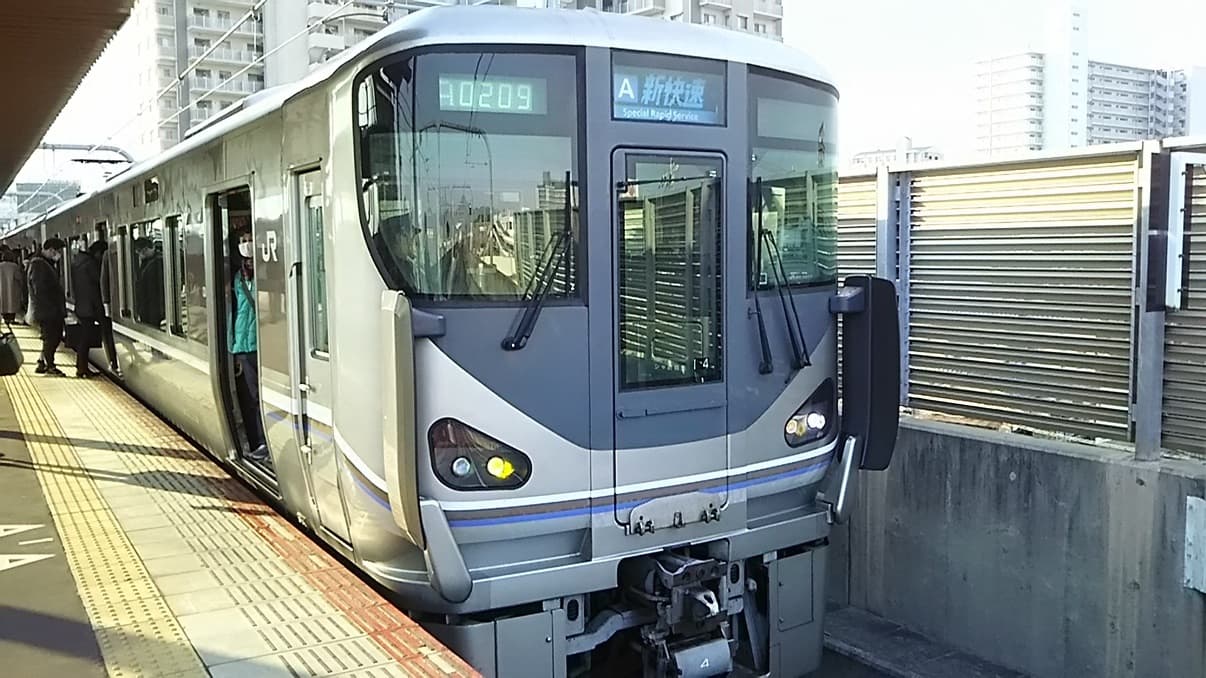
This is the workhorse. The JR Special Rapid (shinkaisoku) covers Kyoto Station to Osaka Station in around 28 minutes for ¥580, and it's covered by the Japan Rail Pass. It also stops at Shin-Osaka along the way (about 23 minutes from Kyoto).
Trains for the JR Kyoto Line usually depart from platforms 4–7 at Kyoto Station, but platform assignments can shift, so check the departure boards. Make sure you board the Special Rapid and not the Rapid or Local trains — those stop at far more stations and take significantly longer for the same fare.
In the morning peak (roughly 7:30–9:00), Special Rapid trains run about every 10 minutes. On Sundays and holidays there's still at least one train every 15 minutes across categories, so you rarely wait long.
This is the train most self-guided travelers should default to.
Option 2: The Bullet Train (Tokaido Shinkansen)
The Tokaido Shinkansen from Tokyo stops at Kyoto Station and then at Shin-Osaka. A non-reserved seat between Kyoto and Shin-Osaka takes 12–15 minutes and costs ¥1,450 (the ¥580 base fare plus an ¥870 non-reserved express charge). A reserved seat adds a few hundred yen more.
Nozomi is the fastest (about 13 minutes) but is not covered by the standard Japan Rail Pass unless you buy the separate NOZOMI MIZUHO supplement ticket. Hikari and Kodama services are covered by the pass without extra fees.
Kodama services are slower than Hikari on longer routes, but on this short hop the difference is negligible. So if you're on a JR Pass, just grab whichever Hikari or Kodama shows up first.
One warning: unless your hotel is right on the Osaka Metro Midosuji Line near Shin-Osaka, you'll still need to transfer to reach Osaka Station or central Osaka. That kills most of the time savings versus the Special Rapid.
💬 From our Japan travel team
The 12-minute shinkansen ride sounds appealing, but Shin-Osaka is a transfer hub, not a destination — most travelers still need the Osaka Metro Midosuji Line to reach their hotel. Our self-guided tours include free days in Kyoto and Osaka, so if your dates line up you can slot the day trip in without rebuilding the itinerary. Feel free to get in touch and we'll help you pick the right base city.
Option 3: The Private Hankyu Line
Hankyu Railway is a private company not covered by the Japan Rail Pass, and that's actually part of its appeal — it delivers you deeper into central Kyoto than JR does.
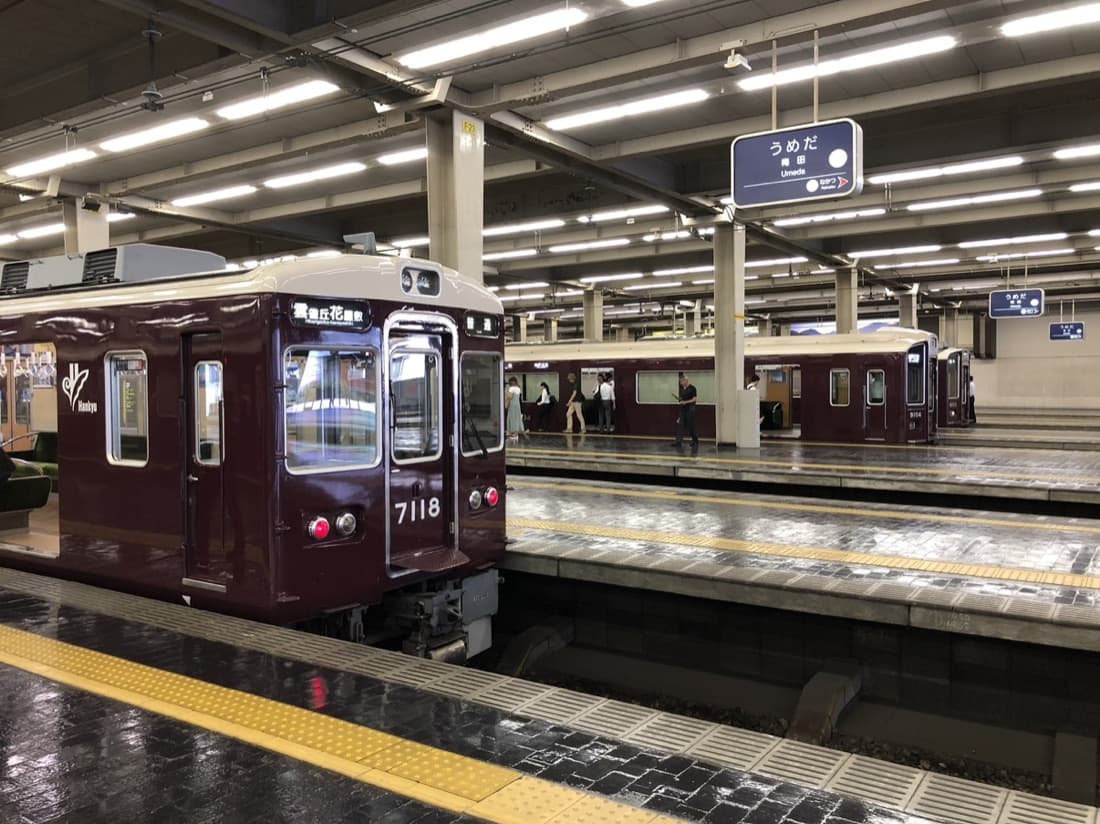
Limited express trains on the Hankyu Kyoto Line get you from Osaka-Umeda Station (right next to JR Osaka Station) to Karasuma Station and Kyoto-Kawaramachi Station in central Kyoto in roughly 40–45 minutes for ¥410. Kyoto-Kawaramachi puts you a two-minute walk from Nishiki Market and a short stroll to Gion. That's a big deal if temples and old streets are your reason for coming.
The Hankyu line is also useful for western Kyoto — from Katsura you can branch off to Arashiyama on the connecting Hankyu Arashiyama Line.
Option 4: The Keihan Main Line
A limited express on the Keihan Main Line runs from Yodoyabashi Station in central Osaka to Sanjo Station in central Kyoto in roughly 50 minutes for ¥430. Yodoyabashi sits on the Osaka Metro Midosuji Line, one stop south of Umeda.
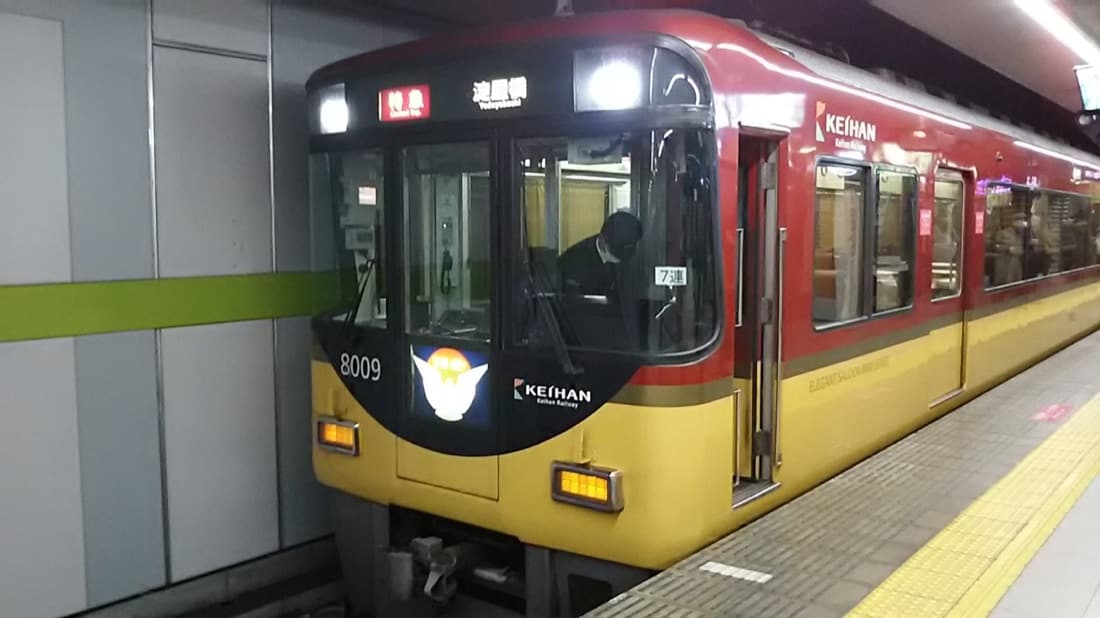
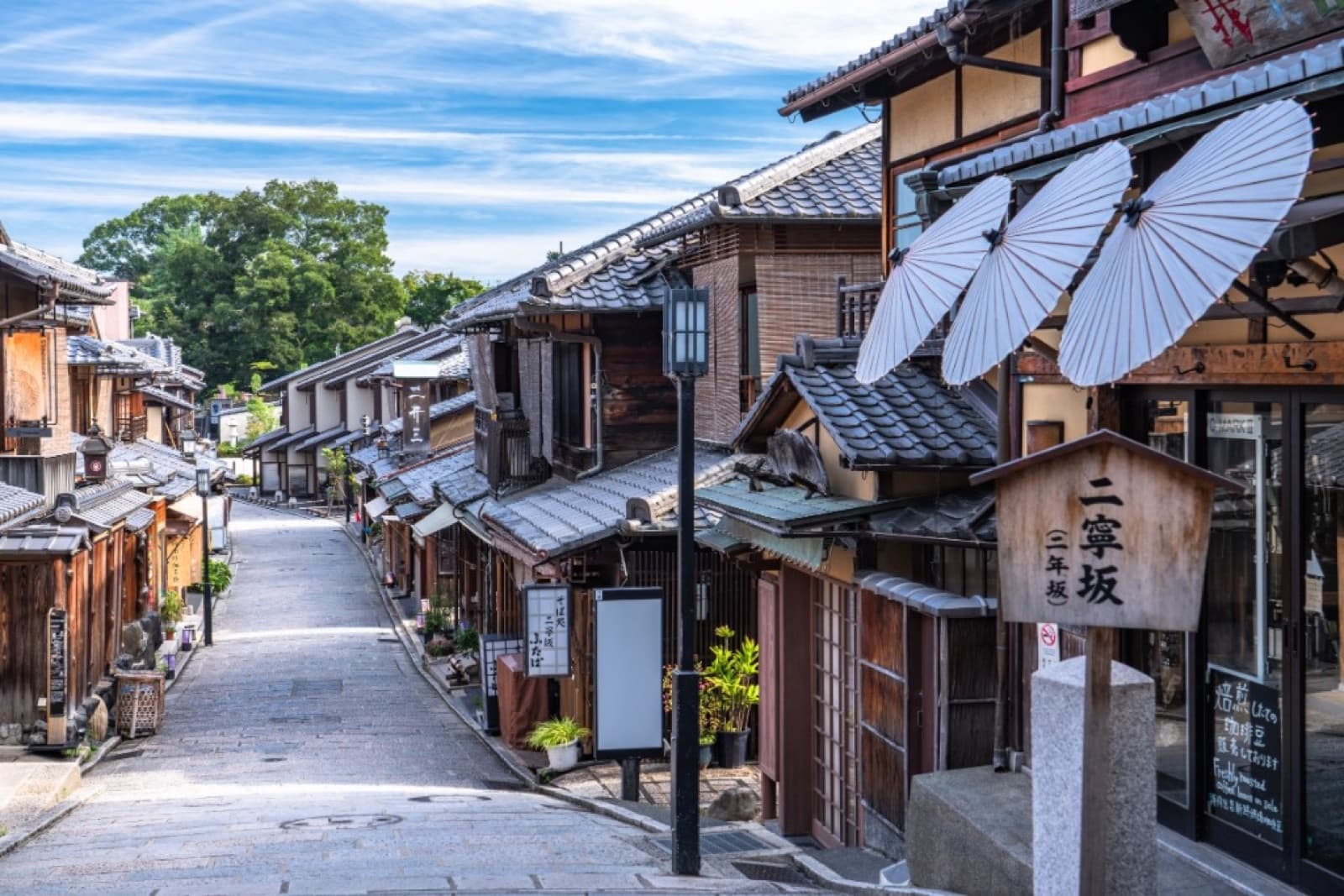
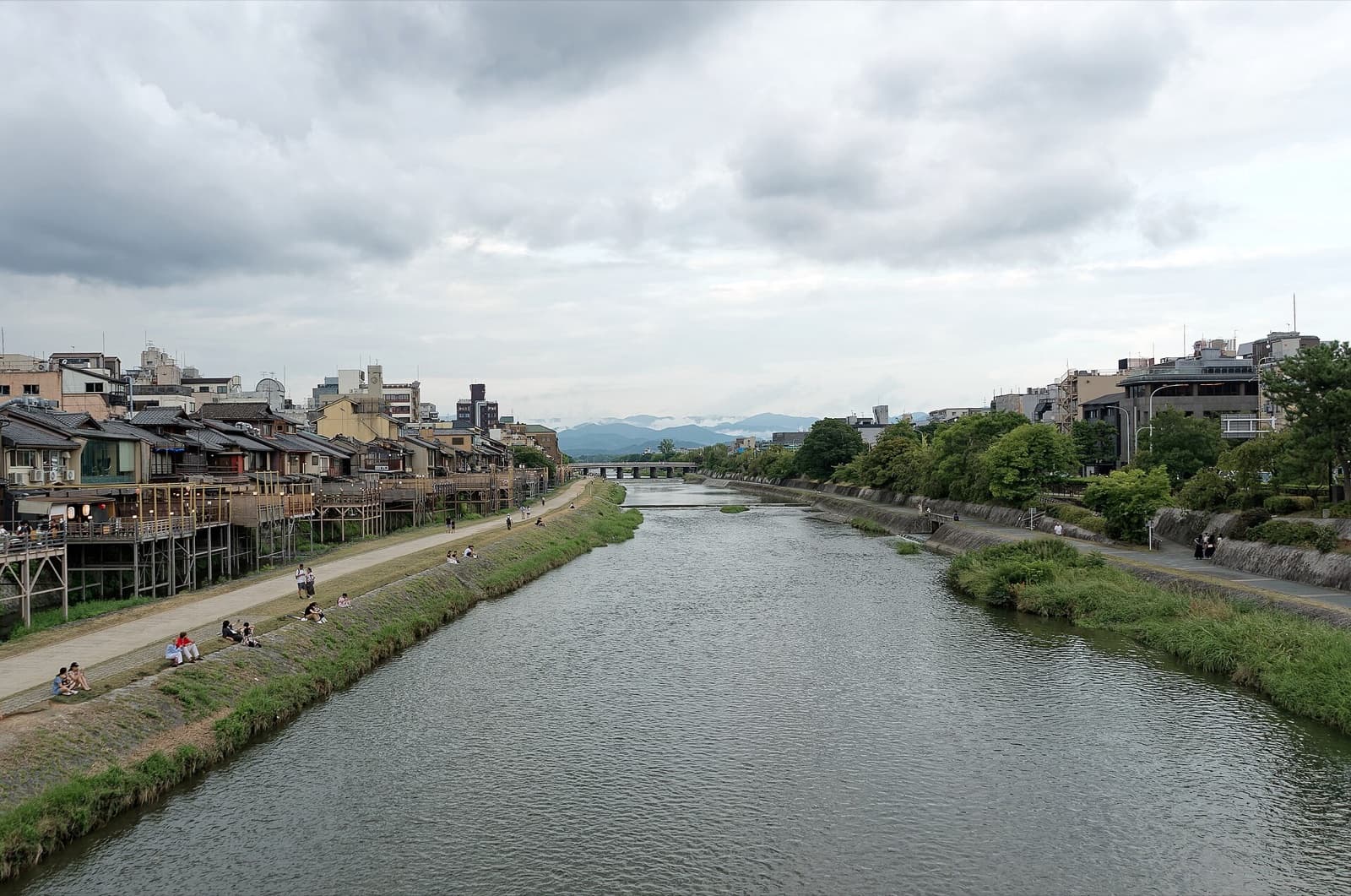
Keihan isn't covered by the JR Pass either, but it stops close to many of Kyoto's most iconic sights — Gion-Shijo Station drops you at the edge of the geisha district, and other stops reach Fushimi Inari and the temples of eastern Kyoto. If you're heading to Gion, Keihan often beats every other option end to end.
Choosing by Where You're Staying in Osaka
Your departure station in Osaka depends entirely on your neighborhood. This is the part first-timers get wrong.
From Umeda / JR Osaka Station
Take the JR Special Rapid from Osaka Station, or the Hankyu limited express from Osaka-Umeda. Both leave from the same station complex — Osaka Station connects directly with Osaka-Umeda, Higashi-Umeda and Nishi-Umeda stations, plus Grand Front Osaka above ground. Effectively it's one huge interchange with several names. Osaka-Umeda is the most important of the private-rail terminals here because it connects with Hankyu, Hanshin, and the Osaka Metro Midosuji Line.
From Namba, Shinsaibashi, or Dotonbori
Take the Osaka Metro Midosuji Line north. Get off at Umeda for JR or Hankyu, or get off one stop earlier at Yodoyabashi and transfer to Keihan. From Shinsaibashi it's three stops north to Umeda on the Midosuji Line.
From Shin-Osaka
You've got the shinkansen or the JR Special Rapid, both direct. If you don't have a pass, take the Special Rapid — same station, a third of the price.
From Tennoji Station
Take the JR Kyoto Line via Osaka Station, or ride the Midosuji Line north to Umeda or Yodoyabashi.
Choosing by Where You're Going in Kyoto
Kyoto Station and Southern Kyoto
JR wins. The Special Rapid or shinkansen both land at JR Kyoto Station directly, and southern Kyoto sights like Tofuku-ji and Fushimi Inari are on JR or Keihan lines running out of the station area.
Central Kyoto (Gion, Kawaramachi, Nishiki Market)
Hankyu to Kyoto-Kawaramachi or Keihan to Gion-Shijo or Sanjo will beat JR every time. You skip the awkward Kyoto Station transfer to a bus or the Kyoto City subway.
Western Kyoto (Arashiyama area)
The Hankyu Kyoto Line, then transfer at Katsura for the branch line, is a quiet way in. Or take JR to Kyoto Station and switch to the JR Sagano Line.
The Reverse: Osaka to Kyoto
Going Osaka to Kyoto works the same way in reverse but with two small twists worth knowing.
From Shin-Osaka, the Special Rapid reaches Kyoto Station in 24 minutes for ¥580. From Osaka Station, it's about 28 minutes for the same fare. The Special Rapid is the sensible default in both cases.
If you plan on multiple Hankyu or Hanshin trips within the day, a Hankyu 1-Day Pass or the Hankyu-Hanshin One-Day Pass may work out cheaper than paying per ride. Keihan also offers visitor passes covering Osaka and Kyoto. These aren't game-changers for a single one-way trip, but they add up if you're bouncing around.
💬 From our Japan travel team
Hotels in Kyoto during cherry blossom season and autumn foliage fill up fast, and trains to and from Osaka during those weeks are much busier around midday. Start planning early, and if you can, travel between the two cities before 10 a.m. or after 7 p.m. to dodge the crush. Our self-guided tours handle the hotel and train bookings and support you through the trip — just ask and we'll help you slot the Osaka–Kyoto leg in cleanly.
Universal Studios Japan, and Why It Matters Here
If Universal Studios Japan is on your list, plan the transfer carefully. The park entrance is a five-minute walk from Universal City Station on the JR Yumesaki Line (also called the JR Sakurajima Line).
From Kyoto: take the JR Kyoto Line Special Rapid to Osaka Station (about 28 minutes), transfer to the Osaka Loop Line to Nishikujo, then switch to the JR Yumesaki Line one stop to Universal City. Some direct through-trains from Osaka Station skip the Nishikujo transfer entirely — look for trains labelled "Universal City" or "Sakurajima" on platform 1. The fare from Osaka Station to Universal City is about ¥190 and takes around 12–15 minutes.
You do not need the shinkansen for this. The JR Special Rapid plus loop transfer is cheaper and just as fast for this specific trip.
Osaka Castle and the Bay Area
If you're combining a Kyoto day trip with Osaka Castle or the Osaka Bay area, use the Osaka Metro Chuo Line. It runs east–west and connects the castle area (Tanimachi 4-chome or Morinomiya) with the bay at Osakako Station, right next to the Kaiyukan aquarium. The Chuo Line is the only Osaka Metro line that connects to every other Osaka Metro line, which makes it a useful backbone for a single big Osaka day — the rest is in our what to do in Osaka guide.
Buses, Taxis, Tickets, Passes and IC Cards
There are limited direct bus services between the two cities, mainly the Kyoto Express New Star and JR buses. Highway buses are cheaper than trains but massively slower, and honestly, on a corridor this well served by rail, buses aren't worth the trade-off unless you're heading to a specific hotel with a direct stop. Taxis and rental cars? The distance is around 50 km and the fare starts around ¥20,000. Skip it unless you have a very specific reason.
For a single one-way trip, don't buy a Japan Rail Pass just to cover Kyoto to Osaka. It won't pay off. Use an IC card (Suica, ICOCA, PASMO) — it works on JR lines, Hankyu, Keihan, Osaka Metro, and the Kyoto City subway. Tap in, tap out.
If you're already holding a nationwide Japan Rail Pass for a longer trip, it covers the JR Special Rapid and non-reserved Hikari/Kodama shinkansen services. It does not cover private rail lines like Hankyu or Keihan, or Nozomi trains. Whether the pass is worth it at all for your route is a separate question — run it through our JR Pass calculator or read when the pass pays.
Regional options like the Kansai Railway Pass cover the private lines including Hankyu and Keihan if you plan several trips across the Kansai region. Check current pricing before you buy. And if you are moving hotels rather than day-tripping, send the big suitcase ahead — our luggage forwarding guide explains how.
Common Mistakes First-Timers Make
- Buying a shinkansen ticket when you don't need to. The Special Rapid gets you there for a third of the price.
- Boarding a Local train instead of the Special Rapid. Same fare, twice the journey time.
- Using JR gates for a Keihan or Hankyu train. These are different railway companies with separate gates. Look at your ticket before you tap.
- Assuming Osaka Station and Shin-Osaka are the same place. They are not. Shin-Osaka is the shinkansen station north of the center; Osaka Station is the commercial and shopping hub in Umeda.
- Ignoring which Kyoto neighborhood you're actually going to. If your hotel is in Gion, Keihan is faster door to door. If it's near JR Kyoto Station, JR wins.
Turning This Into a Real Itinerary
A workable pattern for a first-time trip: base in Kyoto for three or four nights, day-trip to Osaka for a night market and street-food evening in Dotonbori, then move to Osaka for two nights and use one day for Universal Studios or Nara. The Osaka to Kyoto leg (or the reverse) is short enough that a late return the same night is very doable — this is how our 10-day itinerary is built.
Kyoto's UNESCO World Heritage listing covers 17 temples, shrines and castles, and it deserves the extra nights. Osaka's entertainment districts — Dotonbori, Namba, Shinsekai — reward evening visits more than daytime ones.
If you're building this yourself, we'd rather help you avoid the classic mistakes than sell you something you don't need. selfguidejapan.com puts together self-guided Kansai itineraries with pre-booked hotels, train tickets, and 24/7 on-the-ground support, while leaving you free days to explore at your own pace. If you'd rather DIY, this article should be enough to plan the Osaka–Kyoto leg confidently.
Would you rather have your trains between cities arranged for you? Get in touch through Plan My Trip on our self-guided tours site, and we'll suggest the tours that best fit your dates and plans.
FAQ: Kyoto to Osaka
How long does it take to get from Kyoto to Osaka?
The JR Special Rapid takes about 28 minutes from Kyoto Station to Osaka Station. The shinkansen from Kyoto to Shin-Osaka takes 12–15 minutes. Hankyu limited express from Kyoto-Kawaramachi to Osaka-Umeda takes around 40–45 minutes. Keihan limited express from Sanjo to Yodoyabashi takes about 50 minutes.
How much is the train from Kyoto to Osaka?
¥580 on the JR Special Rapid, ¥410 on Hankyu, ¥430 on Keihan, and ¥1,450 for a non-reserved shinkansen seat to Shin-Osaka. All accept ICOCA, Suica and Pasmo.
Is the Japan Rail Pass worth it just for Kyoto to Osaka?
No. A one-way JR Special Rapid ticket is ¥580. You'd need many long-distance JR trips to make a nationwide pass worthwhile.
Can I use my Suica or ICOCA card on all these trains?
Yes for JR local trains, Hankyu, Keihan, Osaka Metro, and the Kyoto City subway. The shinkansen requires a separate shinkansen ticket (or a Smart EX booking linked to your card).
Do I need to reserve a seat?
No. The Special Rapid is entirely non-reserved, and so are the ordinary cars on Hankyu and Keihan limited expresses. Both private lines add one optional reserved car — Hankyu's PRiVACE and Keihan's Premium Car, around ¥500 extra — so avoid those cars unless you have bought the seat. Shinkansen non-reserved seats are fine on this short hop.
Which train is best for Universal Studios Japan from Kyoto?
Take the JR Special Rapid to Osaka Station, then the Osaka Loop Line to Nishikujo, then the JR Yumesaki Line to Universal City. Watch for through-trains that skip the Nishikujo transfer.
Kyoto to Osaka or Osaka to Kyoto — does the direction matter?
The trains, fares, and times are essentially identical in both directions. Choose your base city based on where you'd rather spend evenings: Kyoto for temples and quiet, Osaka for food and nightlife — and Osaka for value during Kyoto's cherry blossom and autumn peaks.
Kyoto, Osaka and Nara — Booked, With the Days Left to You
Hotels, train seats and luggage transfers handled, free days in each city for the hops in between, and someone to call at 11 pm. Tell us your dates and we'll build the Kansai leg.
Fares are 2026 adult one-way prices from the operators; journey times are timetabled limited-express / Special Rapid times and vary by service. Last updated: August 31, 2026.
Related Articles
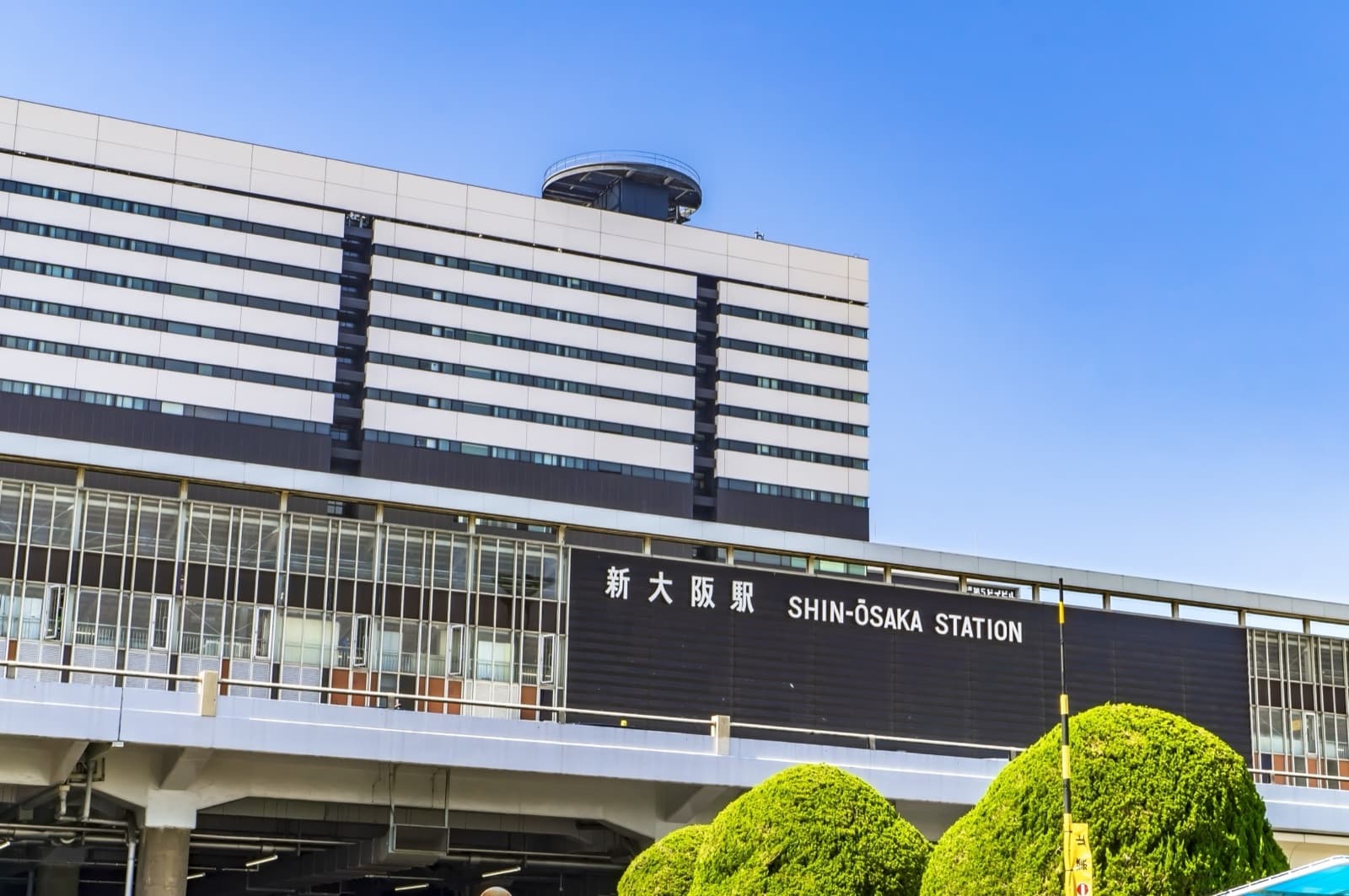
Tokyo to Osaka (and Back): Shinkansen vs Flight vs Bus — Times, 2026 Prices & When the JR Pass Pays
18 min read
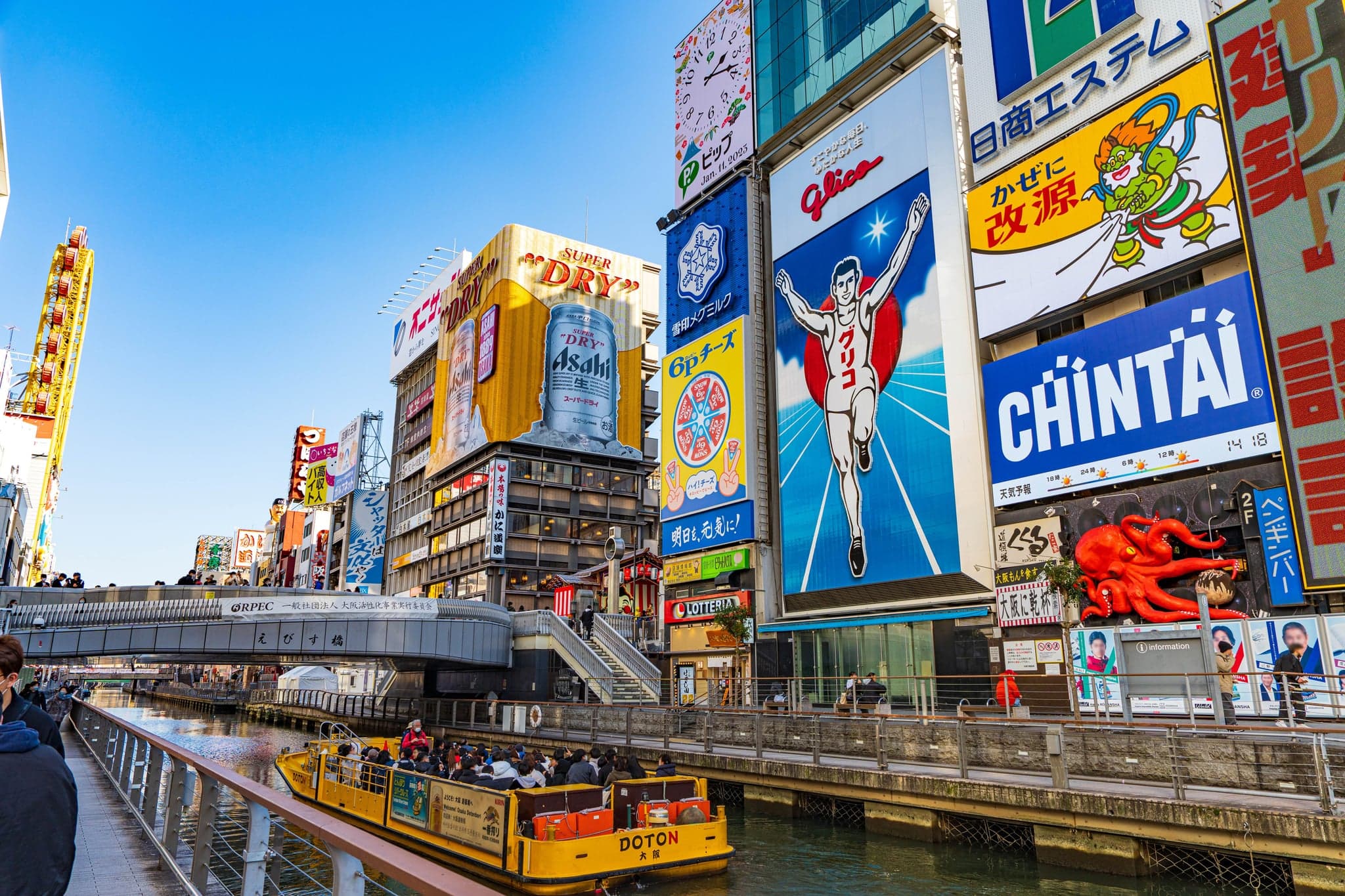
Things to Do in Osaka: Dotonbori, Osaka Castle, Street Food and a 3-Day Osaka Itinerary
13 min read
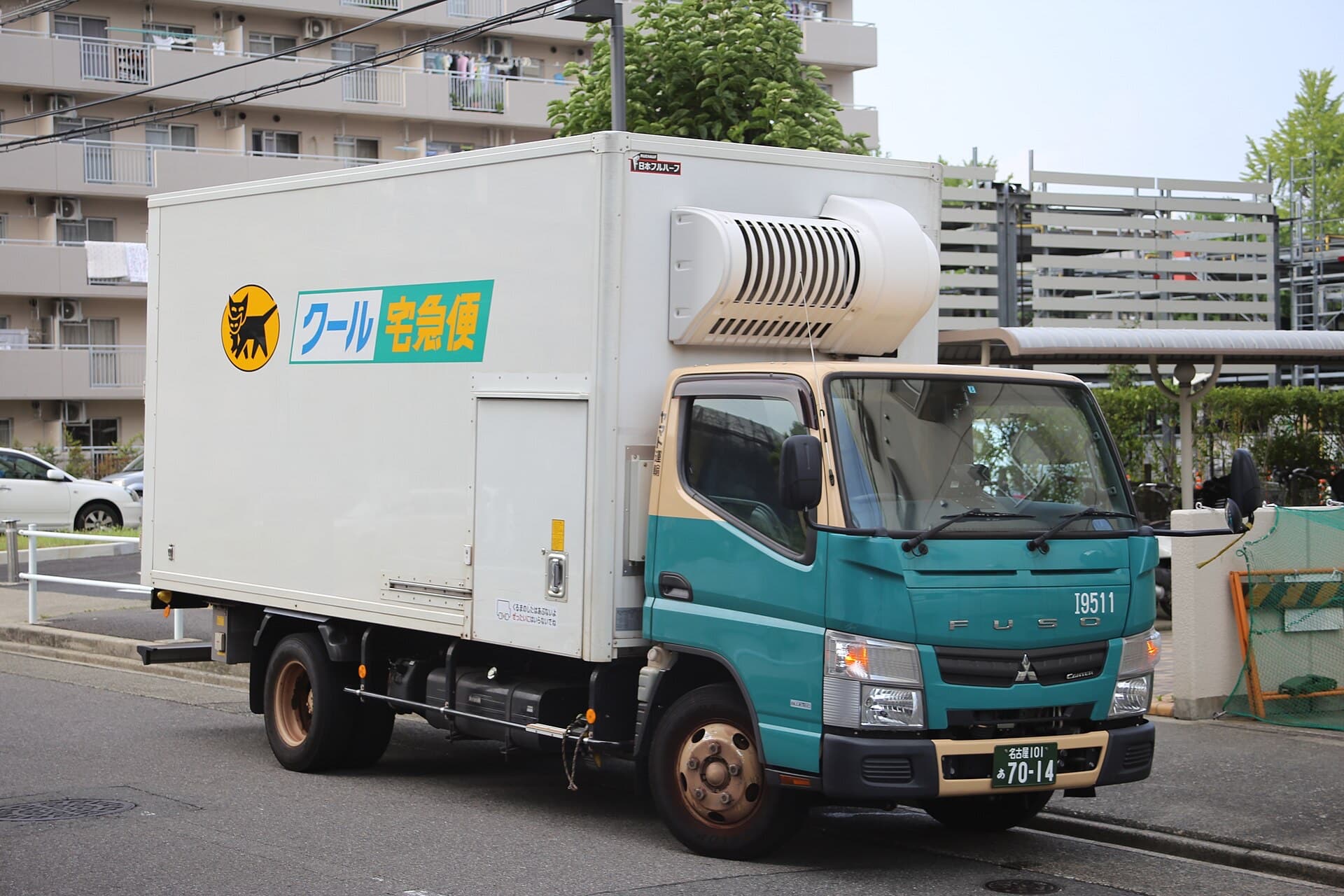
Luggage Forwarding Japan: The Practical Guide to Takkyubin for Self-Guided Travelers
14 min read