Shirakawago (Shirakawa-go) Guide: Getting There, the 2027 Winter Light-Up and What to See
How to reach Japan's thatched-roof village by bus from Kanazawa or Takayama, how the reservation-only light-up works on its four January 2027 evenings, and what to see in half a day.
Shirakawago — written Shirakawa-go on most maps — is the mountain village in Gifu Prefecture with the steep thatched roofs you have probably seen glowing under snow. It is a UNESCO World Heritage Site, it is genuinely worth the detour, and it slots neatly into a Japan itinerary between Kanazawa and Takayama. The catch: there is no train station, the buses need booking, and the famous winter light-up is reservation-only on just four evenings.
This guide covers how to get there from Kanazawa and Takayama, what to see once you arrive, how the January 2027 light-up reservations work, the best time to visit in each of the four seasons, and the sightseeing manners every visitor is asked to follow. Fares, hours and dates below are from the village, its tourist association and the bus operators, checked in September 2026.
🏡 Quick Answer: Visiting Shirakawago
Take the highway bus from Kanazawa (about 75 minutes) or Takayama (about 50 minutes), ¥2,800 one way, and reserve your seat. Allow half a day to walk Ogimachi village, go inside Wada House and climb to the observation deck. The 2027 winter light-up is on January 11, 17, 24 and 31, 17:30–19:30, and entry is by advance reservation only.
🚌 Getting there
No train. Bus from Kanazawa or Takayama, ¥2,800 one way
⏱️ Time needed
Half a day; stay overnight to see the village after dark
❄️ Light-up 2027
Jan 11, 17, 24, 31 — no tickets on the day
🎟️ Entrance fee
None for the village; houses and the museum charge ¥400–¥800
Why Shirakawago Belongs on Your Japan Itinerary
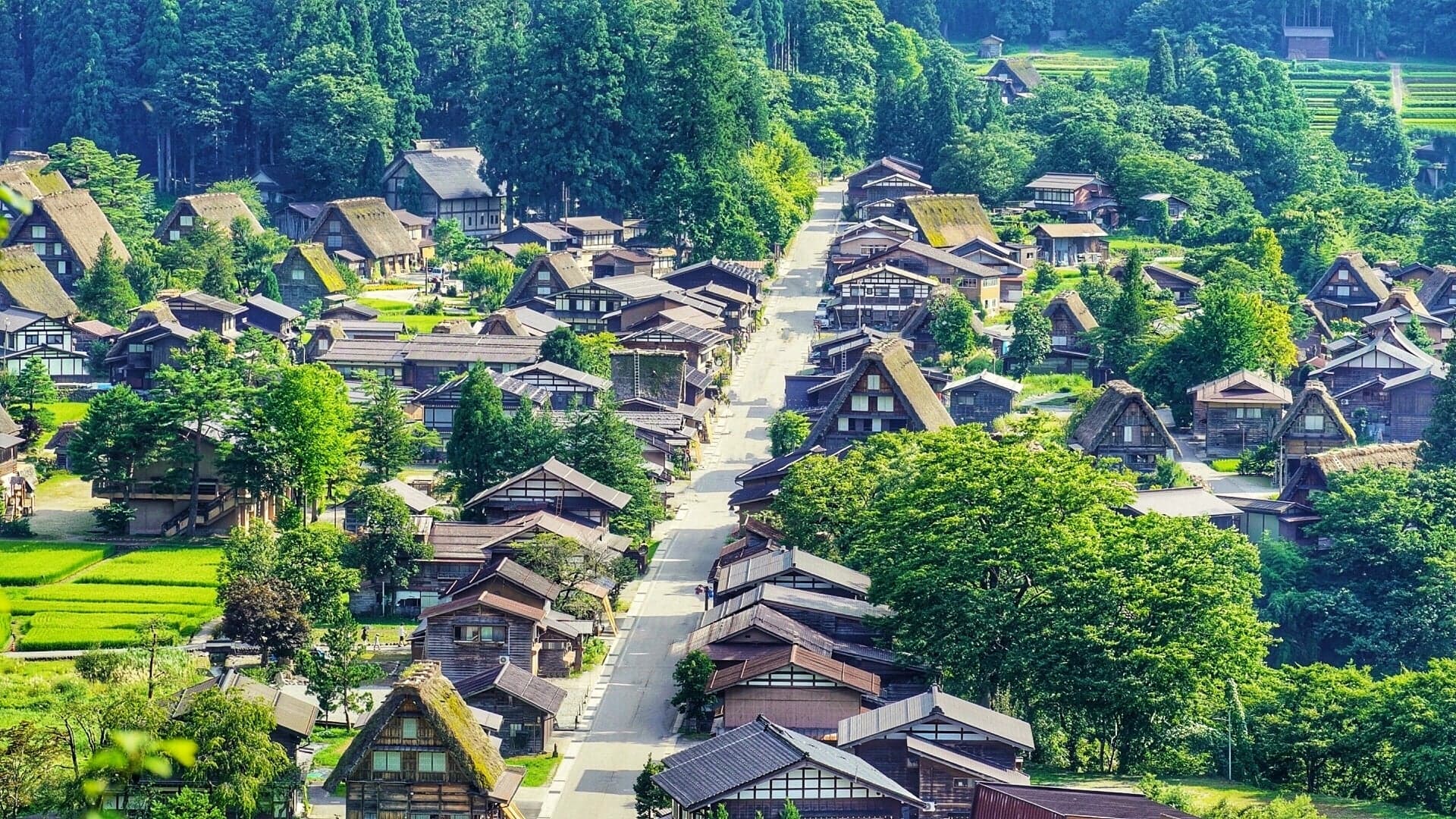
Shirakawa-go sits in the valley of the Sho River, ringed by surrounding mountains that hold snow for months. What makes it famous is the village's gassho zukuri farmhouses. Gassho-zukuri means "built like hands pressed together in prayer", and the steep thatched roofs are exactly that shape — angled so that heavy snow slides off rather than crushing the house. Inside, the big attic floors were used for raising silkworms, the village's income for generations.
The "Historic Villages of Shirakawa-go and Gokayama" were inscribed as a UNESCO World Heritage Site in 1995. The listing covers three villages: Ogimachi in Shirakawa, and Ainokura and Suganuma in Gokayama, across the border in Toyama Prefecture. Ogimachi is by far the largest, and it is what nearly everyone means by "Shirakawago".
It is not a museum village. People live and farm in most of these traditional gassho zukuri houses, which is why the sightseeing manners later in this guide matter, and why the village feels so different from the open-air museums you can find elsewhere in Japan.
Visiting Shirakawa-go: Getting There From Kanazawa and Takayama
Shirakawa-go has no rail access, so every public route ends on a bus. The two gateways are Kanazawa, on the Hokuriku Shinkansen, and Takayama, on the JR line from Nagoya. Most visitors travel one way between them and stop at the village on the way.
🚌 Highway buses to Shirakawa-go (adult, one way)
| From | Time | Fare | Booking |
|---|---|---|---|
| Kanazawa Station | About 75 minutes | ¥2,800 | Seat reservation required |
| Takayama (Nohi Bus Center) | About 50 minutes | ¥2,800 | Some departures are reservation-only — book ahead |
| Toyama and Takaoka | Via the Gokayama villages | Varies | Covered by the Takayama-Hokuriku pass |
💡 Kanazawa services are run by Nohi Bus and Hokutetsu; Takayama services by Nohi Bus. Reserved seats can be booked online through Japan Bus Online or by phone.
The bus from Kanazawa Station
This is the most popular approach. Buses leave from Kanazawa Station's west side and take about 75 minutes to the Shirakawa-go bus terminal in Ogimachi. Seats must be reserved, and on winter weekends, national holidays and in the autumn foliage weeks they sell out, so book as soon as your dates are fixed. If Kanazawa is on your route anyway, our Kanazawa autumn leaves guide covers the city itself.
The Nohi Bus from Takayama
From the Nohi Bus Center next to Takayama Station, the ride is about 50 minutes and ¥2,800 one way. Some departures are reservation-only and others are not, so check the timetable and reserve where you can. Takayama is the more convenient base for a day trip, and it has the train link back to Nagoya and Kyoto, so you don't need to backtrack.
Rail passes
The nationwide Japan Rail Pass doesn't cover these buses. The Takayama-Hokuriku Area Tourist Pass (¥19,800, five consecutive days, for visitors on temporary visitor status) does: it includes the highway buses between Kanazawa or Toyama, Shirakawa-go and Takayama, plus JR trains in the area. You still need to reserve bus seats.
Driving: parking, winter tires and traffic jams
There is no parking inside the village. Day visitors use the village-run Seseragi Park parking lot, the car park on the far side of the river: ¥2,000 per car, open 8:00–17:00 with last entry at 16:30, and 30% of the fee goes to preserving the gassho zukuri houses. From the lot, you walk into Ogimachi over the Deai suspension bridge.
In the colder months, winter tires are not optional — this is heavy snowfall country and the road conditions change by the hour. On weekends and holidays, expect heavy traffic congestion on the single road into the village; traffic jams around the parking lot are common on peak days. If you have never driven on snow, take the bus.
From our Japan travel team
Shirakawa-go has no train station, and the highway buses from Kanazawa and Takayama need seat reservations, so seats can run out on busy days. On our self-guided tours that include Shirakawa-go, a chartered taxi takes you to the village and on to your hotel, so there is no bus to book. If you'd like to add Shirakawa-go to your route, just ask and we'll help you slot it in.
Ogimachi Village: What to See
Ogimachi is a small village, and all of it can be explored on foot. The main street runs through the middle, with farmhouses, rice paddies and narrow lanes on either side. Plan to spend two to four hours on the essentials at an easy pace; more if you want to go inside several houses or linger over lunch.
Wada House: inside the largest farmhouse
Walking past thatched roofs is lovely, but going inside one changes the trip. Wada House is the largest gassho style house in the village and a National Important Cultural Property. You can climb into the upper floors where silkworms were raised and see how the roof structure is lashed together without nails. Admission is ¥400 for adults and ¥200 for children, 9:00–17:00, with irregular closing days. It is also where the observation-deck shuttle leaves from.
Kanda House, Nagase House and Myozen-ji
If you want to compare, Kanda House and Nagase House are also open to visitors for a small entrance fee, each with its own layout and family history. Myozen-ji, the village temple, is worth a look for its thatched bell-tower gate and gassho-style priests' quarters — proof that the same building method served the whole community, not just its farmers.
Shirakawa Hachiman Shrine and the Doburoku Festival
Shirakawa Hachiman Shrine is the guardian shrine of Ogimachi, set among old cedars. Every October 14–15 it holds the Doburoku Festival, the village's thanksgiving for the harvest: after the morning rites and a procession, doburoku — a milky, unfiltered sake — is poured for visitors in the afternoon, with lion dances and folk songs. Two other shrines in the village hold their own festivals over the following days (Hatogaya Hachiman on October 16–17 and Iijima Hachiman on October 18–19).
The open-air museum across the river
If it is raining or you have extra time, the Gassho-zukuri Minkaen open air museum, near the parking lot, gathers some 25 relocated buildings in one walkable setting, with space to go inside at your own pace.
- Entrance fee: ¥800 for adults and ¥400 for children (school age), since October 1, 2025.
- Hours: 8:40–17:00 from March to November; 9:00–16:00 from December to February. Last entry 20 minutes before closing.
- Closed: Thursdays from December to March (the day before, when Thursday is a holiday), and in strong winds or heavy snow.
Food and local souvenirs
Along the main street you'll find stalls with Hida beef skewers and gohei mochi (grilled rice cakes brushed with sweet miso), cafés inside old farmhouses, and local souvenirs from lacquerware to sarubobo, the faceless good-luck dolls of the Hida region. Don't forget some cash, as small shops don't always take cards.
The Shiroyama Tenshukaku Observation Deck
The photo you have seen — the whole village laid out below, roofs in rows — is taken from the hillside on the north side of Ogimachi. There are actually two viewpoints next to each other:
- The Ogimachi Castle Ruins Observatory, a public viewpoint on the site of the old castle, free for everyone.
- The Shiroyama Tenshukaku Observation Deck, a privately run spot beside it with a souvenir shop and a café.
You can walk up in roughly 15–20 minutes on a steep path, or take the shuttle bus from in front of Wada House: ¥200 one way, cash only, every 20 minutes from 10:00 to 14:40, with a break between 12:00 and 13:00. Walking up and taking the bus down is a good compromise. Note that in heavy snow the walking path can close, leaving the shuttle as the only way up — so in winter, go before it stops for the day.
Shirakawago in Winter
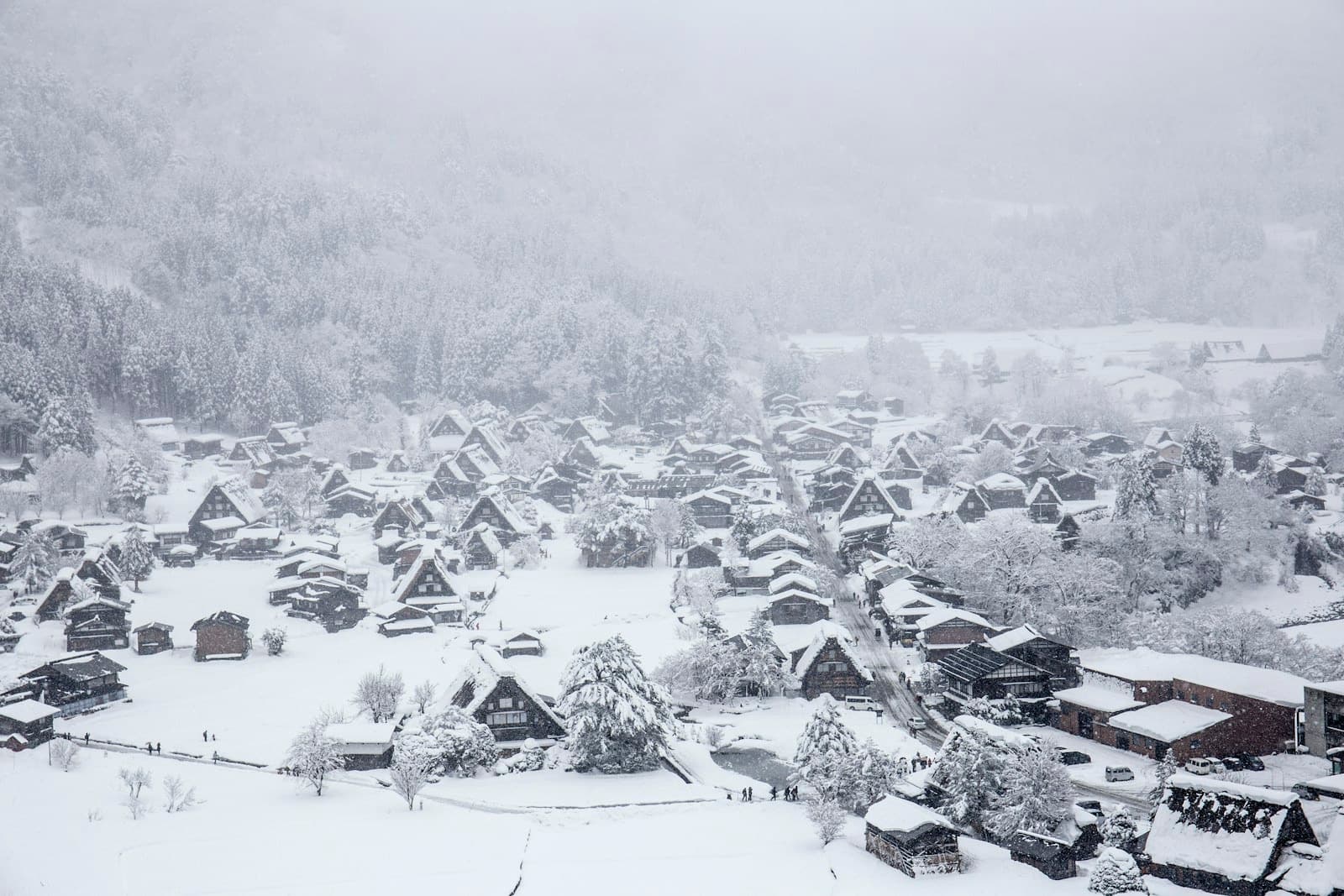
Winter is the reason most international visitors come. From December into March the village is usually under deep snow, the roofs carry thick white caps, and the valley goes quiet. It is also the season when planning matters most.
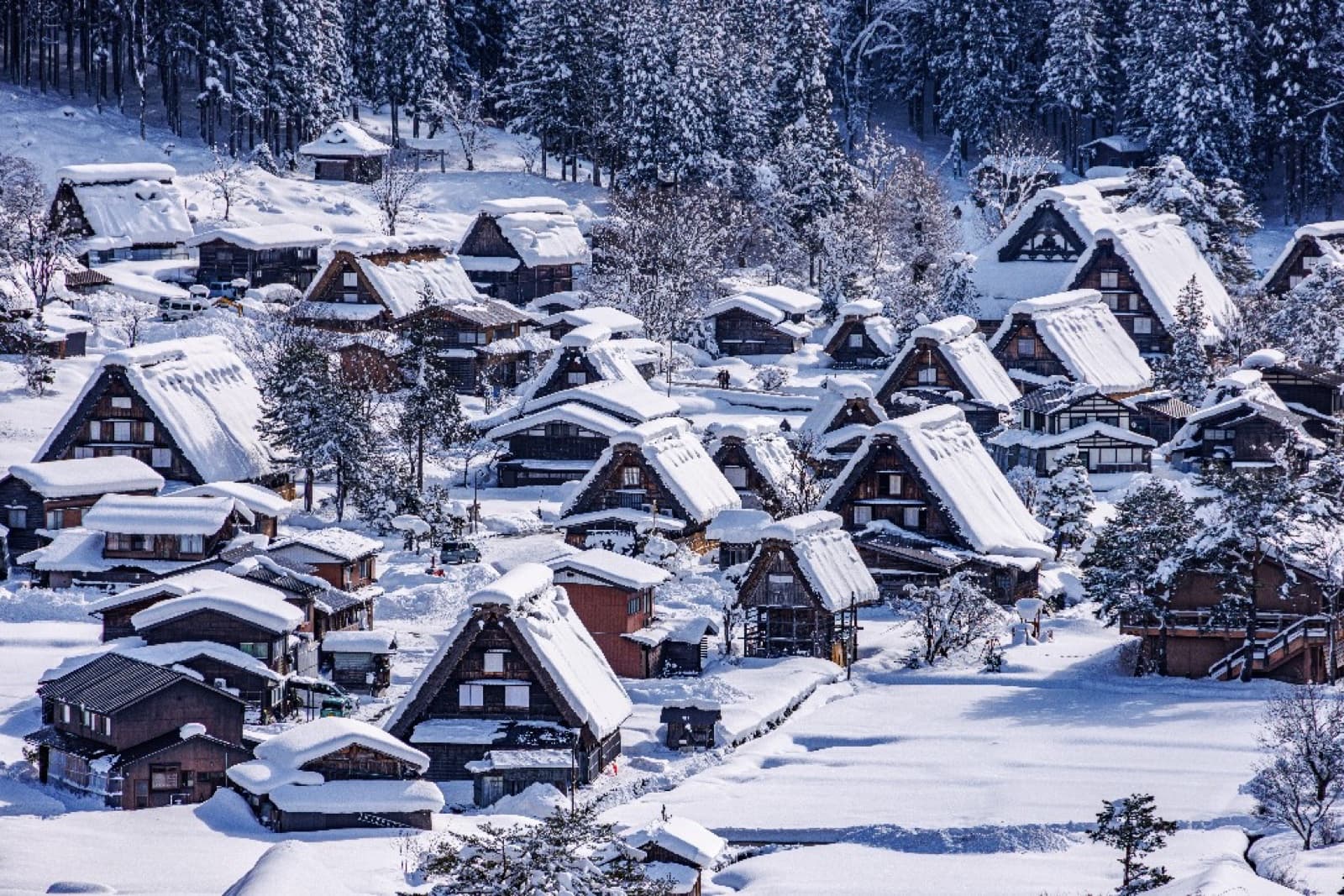
- Dress for heavy snow. Waterproof boots with grip matter more than a heavy coat; paths are cleared but icy. Thick socks help when you take your shoes off inside the farmhouses.
- Start early. We strongly recommend visiting in the morning, before most day tourists arrive: the open-air museum closes at 16:00 in winter (and on Thursdays), and the light fades by late afternoon.
- Book buses early. Winter weekends and the light-up period are the busiest times for the Kanazawa and Takayama buses.
- Leave the car. If you do drive, studless winter tires are essential and the road can close in heavy snow.
If you're planning a whole winter trip, our Japan in January 2027 guide puts Shirakawa-go alongside the rest of the country's snow season.
The 2027 Shirakawago Winter Light-Up: How Reservations Work
For a few evenings each winter, the village lights up its farmhouses against the snow. It is not an all-winter event, and you cannot just turn up. The 41st Shirakawa-go Light-Up runs on four evenings only: Monday January 11 (a national holiday), and Sundays January 17, 24 and 31, 2027, from 17:30 to 19:30.
⚠️ Reservation only — no tickets on the day
Visitors who arrive without an advance reservation are not admitted, and admission tickets are not sold on the day. From 15:30 an entrance gate is set up around the village. Drones are prohibited, and every vehicle must have studless winter tires.
The system exists to avoid overcrowding, and the light up event gives you five ways in. Only overnight guests and some bus tours get the observation deck, which is the classic view of the lit village from above.
🎟️ Five ways to attend the 2027 light-up
| Option | How | When to book | Observation deck |
|---|---|---|---|
| Stay overnight in the village | Lottery | Apply October 1 (13:00 JST) – October 31, 2026; winners notified by November 10 | Included |
| Drive, with a parking reservation | First come, first served | Round 1 from September 10, 2026: ¥6,000 (1–5 people) or ¥9,000 (6–10). Round 2 from December 1: ¥7,000 or ¥10,000 | Not included |
| Arrive by taxi | Needs the same parking reservation | As above | Not included |
| Highway bus tour | Five operators, including Nohi Bus | Sales staggered between October 13 and November 2, 2026 | Some tours only |
| Travel agency tour | Through the agency | Details published December 2, 2026 | Not included |
💡 Parking-lot entry from 15:00; all vehicles must leave by 20:00. Source: Shirakawa-go Tourist Association, 41st Light-Up overview.
For most overseas visitors the realistic choices are the overnight lottery (apply in October) or a highway bus tour from Kanazawa, Takayama or Toyama (on sale from mid-October). Rooms in the village are few, so the lottery is competitive; tours with the observation deck go first.
From our Japan travel team
The Shirakawa-go light-up only happens on four evenings in January, and every place is by reservation, so if it's the reason for your trip, it's well worth planning around it early. Our self-guided tours visit the village by day on a chartered taxi; the light-up itself needs its own reservation. If you'd like help building a winter itinerary around one of the dates, feel free to get in touch.
Winter illuminations elsewhere in Japan are far easier to see on the spur of the moment — our Christmas in Japan guide covers the city light displays that run from November.
Best Time to Visit Shirakawago
Shirakawa-go looks different in all four seasons. Winter is the most dramatic, but the other seasons are far easier to plan.
📅 Shirakawago by season
| Season | What you see | Worth knowing |
|---|---|---|
| Winter (Dec–Mar) | Deep snow on the roofs | Busiest on light-up dates; book buses early |
| Spring (Apr–May) | Snowmelt, cherry blossoms usually in late April, flooded paddies | Blossoms come later than in Tokyo or Kyoto |
| Summer (Jun–Aug) | Green rice fields and forest | Cooler than the cities; rainy season in June |
| Autumn (Sep–Nov) | Golden rice, then autumn foliage from late October | Doburoku Festival (Oct 14–15); Takayama Autumn Festival (Oct 9–10) |
Whatever the season, weekdays and early mornings are quietest, before the tour buses and day tourists arrive. If your trip falls in October, the Takayama Autumn Festival on October 9–10 is 50 minutes away by bus, and the Doburoku Festival follows a few days later.
Should You Stay Overnight?
A handful of gassho farmhouses take overnight guests, and staying in one is the only way to see the village after dark outside the light-up: Shirakawa-go does not accept night-time sightseers, only people staying in the village. After the day visitors leave, Ogimachi is at its most peaceful, and breakfast in a farmhouse is a memorable way to start a day.
Expect simple rooms with futons, shared bathrooms in many places, and a set dinner. Accommodation in the village is limited and goes early, especially in winter and autumn. If the village is full, nearby Hirase Onsen has hot spring inns for a hot spring bath after a cold day, or you can base yourself in Takayama or Kanazawa and visit by day.
Fitting Shirakawago Into Your Japan Itinerary
The most efficient way to visit is as a stop between Kanazawa and Takayama rather than a return day trip:
- Night 1 — Kanazawa. Kenroku-en, the Higashi Chaya teahouse district and Omicho Market.
- Day 2 — Shirakawa-go. Morning bus, spend half a day in the village, afternoon bus on to Takayama.
- Night 2 — Takayama. Hida beef for dinner, the morning market the next day, then the train towards Nagoya or Kyoto.
Big luggage is the practical problem on buses, so send suitcases ahead by courier and travel with a day bag. For the full route through Tokyo, Kanazawa, Takayama and Kyoto, see our two-week Japan itinerary.
Our routes that include Shirakawa-go
Several of our self-guided tours build in a Shirakawa-go day with transport arranged. Most use a chartered taxi, and in each case entrance fees are paid on the day.
🗺️ Self-guided tours with a Shirakawa-go day (per person)
| Tour | Length | How you reach the village | Price range |
|---|---|---|---|
| Beyond Kansai: Villages & Timeless Japan (KA002) | 7 days from Osaka | Chartered taxi Kanazawa → Shirakawa-go → Takayama, fares included | $2,000–$3,000 |
| Historic Towns & Mountain Heritage (BF003) | 7 days | Two nights in Takayama; optional taxi tour to Shirakawa-go (10:00–16:00) | $1,300–$1,900 |
| Japan Highlights & World Heritage (GR002) | 12 days | Chartered taxi from Takayama and back, then Kyoto and Nara | $3,300–$4,800 |
| Timeless Traditions: Kanazawa & Hida (GR003) | 12 days | Kanazawa, Kyoto and Nara, then a chartered taxi day from Takayama | $3,200–$4,700 |
| Spirit of Tradition: Shirakawa-go & Cultural Japan (GR009) | 14 days | Hakone, Takayama and a chartered taxi day, then Kyoto, Nara and Hiroshima | $4,100–$5,900 |
💡 Price ranges cover every departure in the current catalog and vary by date. Hotels, trains and luggage delivery are arranged on every route.
Sightseeing Manners: Visiting Responsibly
Shirakawa Village asks every visitor to follow five rules, published in its Sightseeing & Manners Handbook and — in manga form — on its responsible-tourism website. They exist because the houses are homes, and because a thatched village burns easily:
- Park only in the designated lot. There is no parking in the village itself.
- No smoking except in designated spots, and no fireworks. Smoking is allowed only at the parking lot and three spots in the village.
- Take your trash home. There are no bins in the village.
- Sightseeing is from 8:00 to 17:00. After dark the village is for overnight guests only.
- No drones anywhere in the village.
The manga guide takes a few minutes to read and is worth it before you go. Beyond the five rules, treat Shirakawa-go as the lived-in place it is: stay out of yards and gardens that are not marked as open, don't photograph residents without asking, and keep your voice down in the lanes in the early morning.
FAQ: Shirakawago
How do I get to Shirakawago?
There is no train. Take the highway bus from Kanazawa Station (about 75 minutes, ¥2,800 one way, seat reservation required) or from the Nohi Bus Center in Takayama (about 50 minutes, ¥2,800). Buses also run from Toyama and Takaoka via Gokayama. Driving is possible, but you must use the Seseragi Park parking lot (¥2,000 per car).
How long should I spend in Shirakawago?
Half a day is enough for the village, Wada House and the observation deck. Stay overnight in a farmhouse if you want to see the village after dark, because the village doesn't accept night-time sightseers except its overnight guests.
When is the Shirakawago winter light-up in 2027?
The 41st Shirakawa-go Light-Up is on January 11, 17, 24 and 31, 2027, from 17:30 to 19:30. It is reservation-only: the overnight-stay lottery takes applications from October 1 to 31, 2026, parking reservations open on September 10 and December 1, and highway bus tours go on sale between October 13 and November 2.
Can I just turn up for the light-up?
No. Visitors without an advance reservation are not admitted, admission tickets are not sold on the day, and an entrance gate is set up from 15:30. You need an overnight stay, a parking reservation, a bus tour or a travel agency tour.
Is there an entrance fee for Shirakawa-go?
There is no fee to enter the village. Drivers pay ¥2,000 to park, and 30% of that goes to preserving the houses. Wada House charges ¥400 for adults, and the Gassho-zukuri Minkaen open-air museum ¥800.
Does the Japan Rail Pass cover the bus to Shirakawago?
No. The Takayama-Hokuriku Area Tourist Pass (¥19,800 for five consecutive days) covers the highway buses between Kanazawa or Toyama, Shirakawa-go and Takayama, as well as JR trains in the area. You still need to reserve bus seats.
Is Shirakawago worth visiting in winter?
Yes — it is the most striking season, with deep snow on the roofs from December into March. Plan around shorter hours and shorter days, wear boots with grip, and don't drive unless you have winter tires and snow experience.
When is the Doburoku Festival in Shirakawa-go?
At Shirakawa Hachiman Shrine in Ogimachi on October 14–15 every year, with unfiltered doburoku sake poured for visitors in the afternoon. Other shrines in the village follow on October 16–17 and 18–19.
What is the difference between Shirakawa-go and Gokayama?
Both are part of the same UNESCO World Heritage listing. Ogimachi in Shirakawa-go is the largest village and the easiest to reach; Ainokura and Suganuma in Gokayama, in Toyama Prefecture, are much smaller and quieter, on the bus route towards Takaoka.
Which tours include Shirakawa-go?
Our self-guided routes GR002, GR003, GR009 and KA002 include a Shirakawa-go day with a chartered taxi, and BF003 offers an optional taxi tour from Takayama. Prices range from $1,300 to $5,900 per person depending on the route and date.
Adding Shirakawa-go to Your Trip?
We hope this guide makes the village easier to plan. Tell us your dates and where else you want to go, and we'll suggest the route that fits — with the Shirakawa-go day, hotels, trains and luggage delivery arranged, 24/7 support while you travel, and your days in the village left to your own pace. If anything is unclear, please feel free to get in touch at any time.
Last updated: September 15, 2026. Light-up dates and reservation rules are from the Shirakawa-go Tourist Association (41st Light-Up, 2027); parking, festival dates and village rules from Shirakawa Village; bus times and fares from Nohi Bus; museum fees and hours from the Gassho-zukuri Minkaen. Tour prices are per person from our current catalog and vary by departure date.