
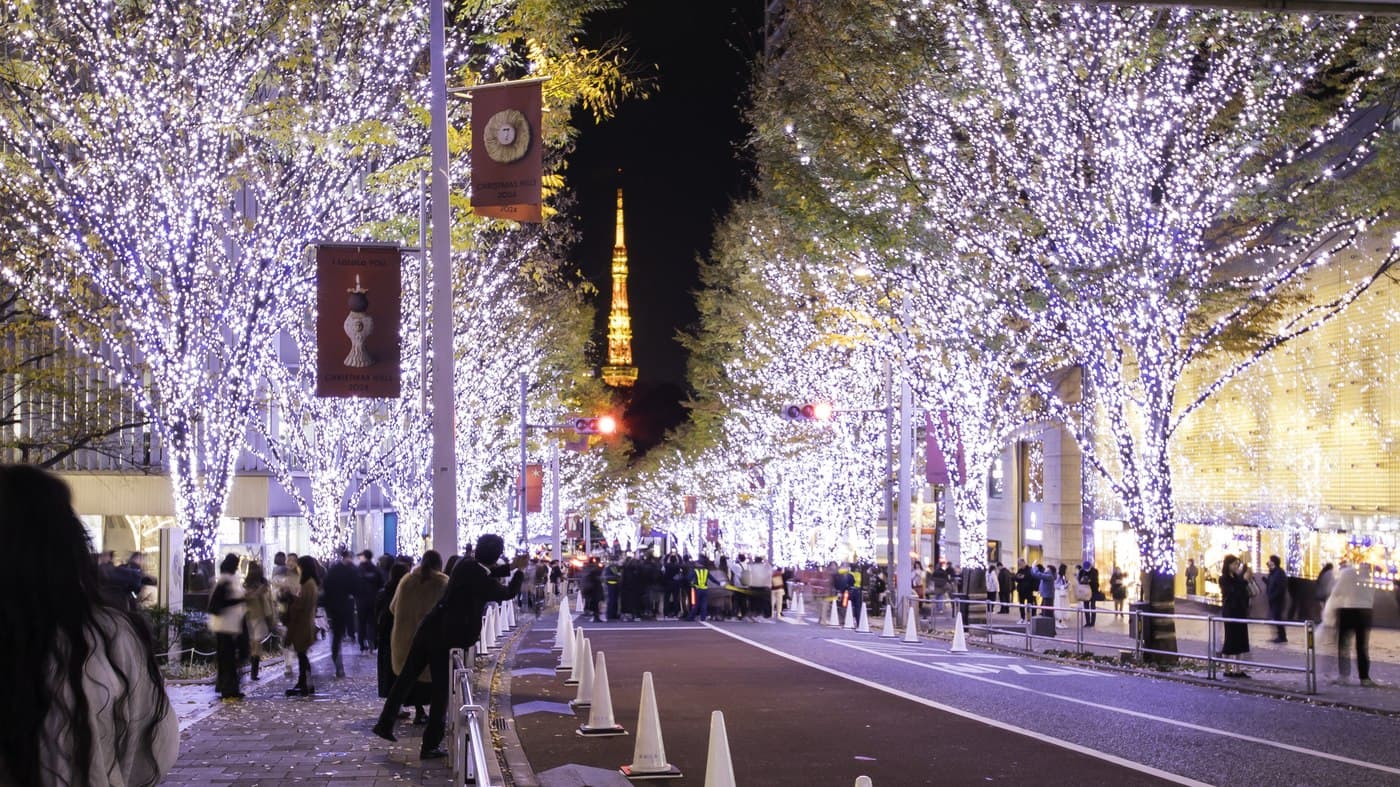
 Photo: Kakidai via Wikimedia Commons (CC BY-SA 4.0)
Christmas in Japan 2026: What It's Really Like — Traditions, Food & Trip Planning
Christmas in Japan is romance and fried chicken, not a religious holiday — shops stay open, trains run, and Christmas Eve is date night. What the season actually feels like, the food traditions, and how to build a real December trip around it.
Planning Christmas in Japan 2026 is different from planning it almost anywhere else. It's not a public holiday — shops stay open, trains run normally. But from mid-November through late December, cities dress up in some of the world's most ambitious light displays, and the season turns genuinely magical.
Christmas here is romantic and commercial, not religious: Christmas Eve feels like Valentine's Day, illuminations are everywhere (and mostly free), and hotels are cheaper than in cherry-blossom season. This guide covers what the season is really like — the traditions, the food, what's open — and how to build a real self-guided December trip. For venue-by-venue light displays, our dedicated guides go deeper. For the full winter picture see our Japan winter illuminations 2026 and winter in Japan 2026 guides, and if you're in Kansai in late January, the Kobe Luminarie.
🎄 Quick Answer: Christmas in Japan 2026
December 25 is a normal working day — no closures. The magic is the illuminations (mid-Nov to early Jan, mostly free) and the food traditions (KFC and strawberry Christmas cake). Aim for Dec 15–25 for peak atmosphere; the second week of December is quieter. Book Christmas Eve dinner early — restaurants sell out.
✨ Lights
Mid-Nov–early Jan
🍗 Eve
KFC & cake
💴 Cost
Most lights free
📅 Not a holiday
Everything runs
💬 From our Japan travel team
It's not just the town illuminations — restaurants and cafés roll out Christmas-only menus too. Soaking up the seasonal atmosphere and those limited-time flavours is a big part of the charm of a Japanese Christmas.
What Christmas in Japan Actually Feels Like
Think of it as a two-week glow rather than one big day. From early November department stores switch on their trees; by early December nearly every avenue in central Tokyo is wrapped in lights. Christmas is not a public holiday and fewer than 1% of the population is Christian, so the day is stripped of religious weight and rebuilt around dining, dating and displays. Christmas Eve is the peak — restaurants sell out, cake shops queue around the block, and yes, KFC is a genuine tradition.
When to Go: Timing Your Trip
Most Tokyo illuminations start in mid-October or early November and run through early January; a few of the biggest stretch into February. For peak Christmas atmosphere, aim for December 15–25. For the lights minus the crowds, try the second week of December, or the first week of January once New Year decorations replace the Christmas ones — the crisp, dry winter air is great for photos. Snow in Tokyo is rare; snow in Shirakawa-go is almost guaranteed.
🎇 Christmas-season timing cheat sheet
| Window | What's happening |
|---|---|
| Mid Nov – early Dec | Illuminations switch on; fewer crowds, full lights. |
| Dec 15 – 25 | Peak atmosphere. Christmas markets, Eve dining. |
| Dec 26 – early Jan | Christmas lights end ~Dec 25; New Year mood takes over (quiet, temple visits). |
| Jan – Feb | Non-Christmas winter illuminations continue (Nabana no Sato into May). |
💡 Sunset is around 16:30 in late December — short days, but that's exactly what makes the illuminations shine.
Tokyo: The Core of the Season
Tokyo has the highest concentration of illuminations in the country, and nearly all are free — you can plan a whole evening just walking a loop. The classic start is Marunouchi, one minute from Tokyo Station: the 1.2 km Nakadori Avenue glows with over a million champagne-gold lights, with a German-style Christmas market on Nakadori that usually closes December 25. Then Roppongi Hills — the 400 m Keyakizaka avenue lit in signature "SNOW & BLUE" with Tokyo Tower behind, plus the long-running Roppongi Hills Christmas market (German goods, mulled wine, pretzels). Venue-by-venue detail — tickets, stations, hours for every Tokyo market and light display — lives in our Tokyo Christmas Market 2026 guide.
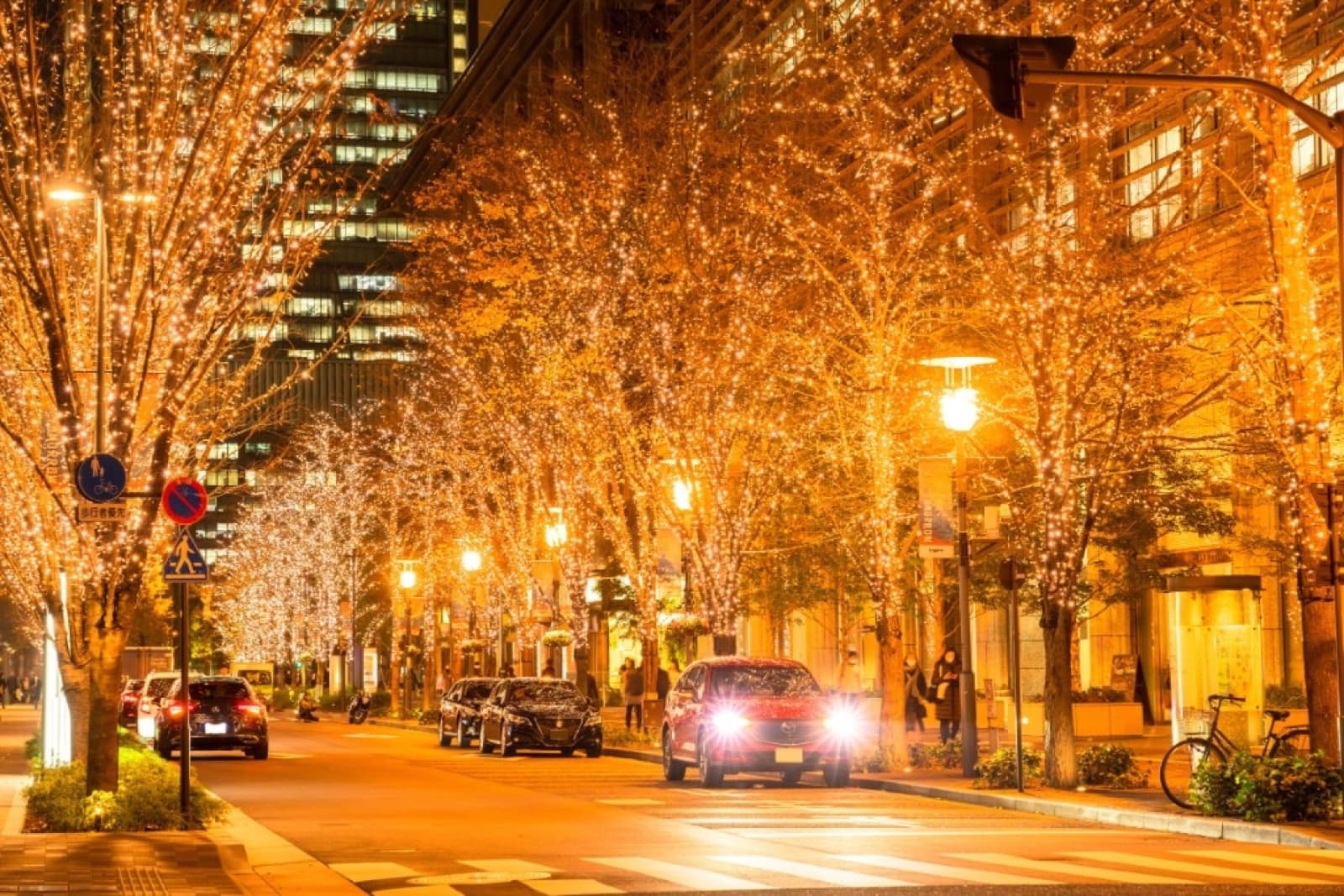
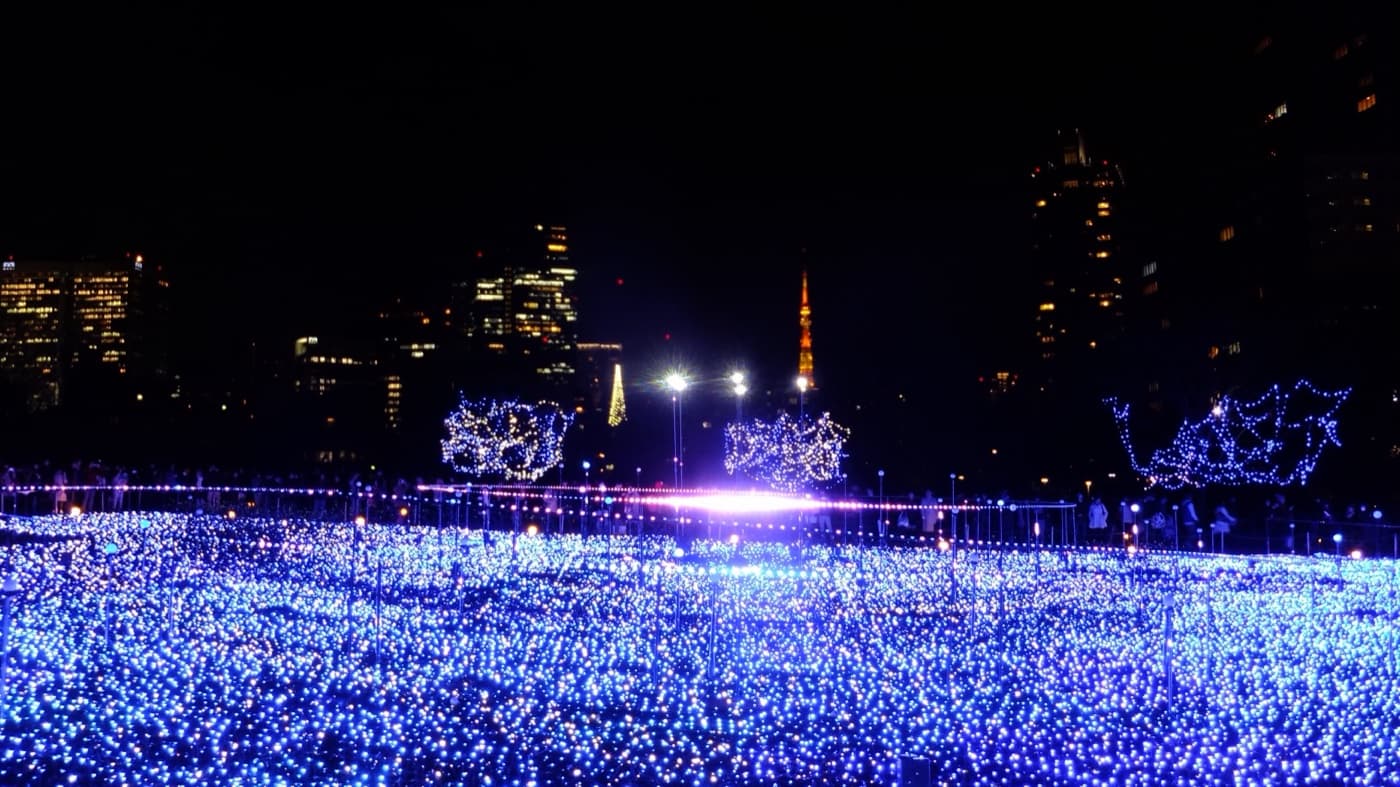
Elsewhere: Tokyo Tower's "Winter Fantasy" and Tokyo Skytree's special lighting (pick one tower per evening — both in one night is a slog); Tokyo Midtown's garden illumination and paid ice rink; and the ginkgo-gold and blue displays around Ebisu, Omotesando and Shibuya. All within an easy evening's walking-and-metro loop.
Beyond Tokyo: Worth a Day Trip or Detour
Nabana no Sato (near Nagoya)
If you're serious about lights, build around this one. The Kuwana (Mie) park — 30 minutes from Nagoya — runs one of Japan's longest illumination seasons (mid-October into late May), powered by over 8 million LEDs, with a rotating headline theme, a famous tunnel of lights, and mirror-pond water effects. Easy as a long day trip from Kyoto or Osaka via a Nagoya shinkansen stop.
Shirakawa-go Winter Light-Up
For a snow-bound, reflective alternative, the light-up of Shirakawa-go's UNESCO gassho-zukuri village is unmatched — but tightly controlled. In 2027 it runs on just four evenings (January 11, 17, 24 and 31), and advance reservation and a ticket are mandatory for everyone. No walk-ins: the overnight-stay lottery opens October 1 and bus tours go on sale from mid-October. Our Shirakawa-go guide explains each way in.
Kyoto & Osaka
Kyoto is subtler — Kyoto Station's giant illuminated staircase, Heian Shrine's digital-art night visit, and the torii of Fushimi Inari after dusk (note the Arashiyama Hanatouro lantern path has been discontinued in recent years). In Osaka, Midosuji Avenue runs a champagne-gold display and the Festival of the Lights combines projection mapping with the historic Nakanoshima district.
The Food Traditions You Shouldn't Skip
KFC on Christmas Eve is real: since the 1970s it's been a national tradition, and December 24 is KFC Japan's busiest day of the year — ten times its average, with hour-long queues for those who didn't pre-order. And the Japanese Christmas cake — a light vanilla sponge with whipped cream and strawberries (red and white, like the flag) — is sold by every conbini, bakery and department store, with pre-orders at Lawson, Family Mart and 7-Eleven.
💬 From our Japan travel team
Two bookings make or break a Japan Christmas: Christmas Eve dinner (restaurants sell out weeks ahead — reserve anywhere with a view early) and, if the January dates align, Shirakawa-go's light-up ticket (mandatory, no walk-ins). Want the KFC experience without the queue? Pre-order online, or just grab a bucket at 11am.
A 7-Day Christmas Trip Itinerary
🗓️ Seven days built around the lights
| Day 1–2 | Arrive Tokyo → Asakusa/Meiji Shrine by day, Marunouchi walking loop by night |
| Day 3 | Ginza/Omotesando shopping → Roppongi Hills illuminations + Christmas market |
| Day 4 | Day trip to Nikko or Kamakura → Tokyo Tower or Shibuya by night |
| Day 5 | Shinkansen to Nagoya → Nabana no Sato in the evening → on to Kyoto |
| Day 6–7 | Kyoto temples & Fushimi Inari → Osaka lights / Universal Studios Christmas → depart |
💡 More time? Add Shirakawa-go if the January light-up dates align, or a clear-day Mt Fuji trip to Lake Kawaguchiko — December has the year's sharpest Fuji views.
Common Mistakes to Avoid
- Assuming December 25 is a holiday. It's a normal working day — everything runs.
- Not booking Christmas Eve dinner. Restaurants sell out for the 24th, sometimes weeks ahead.
- Trying Shirakawa-go without a reservation. You'll be turned away — the light-up is ticketed.
- Underdressing for Nabana no Sato. It gets cold — bring gloves; hand warmers are cheap at any conbini.
- Confusing Christmas and New Year. Christmas is loud and commercial; New Year (from ~Dec 29) is quiet and family-focused, with many restaurants closed.
After Christmas: New Year Is the Holiday That Actually Closes Japan
This is the single most useful thing to understand about late December in Japan: Christmas is a normal working day, and New Year is not. Shops open on 25 December and the decorations come down overnight on the 26th, replaced by pine-and-bamboo kadomatsu. From roughly 29 December to 3 January, museums, many restaurants and most small businesses genuinely close, trains run at holiday capacity, and domestic travel peaks.
- Plan the New Year period deliberately. Japanese New Year 2027 covers what closes, what stays open, and how hatsumode works.
- The lights continue. Christmas markets close on the 25th, but winter illuminations run well into the new year — Nabana no Sato through to May 2027.
- Winter travel generally. winter in Japan and Japan ski season 2026-27 cover the rest of the season.
Pricing a future December trip? how much a trip to Japan costs shows how much the year-end week adds, and best time to visit Japan compares December against the rest of the year.
FAQ: Christmas in Japan 2026
Is Christmas Day a public holiday in Japan?
No. It's a regular working day — trains, offices and most shops operate normally.
When do most Tokyo Christmas illuminations end?
Christmas-themed illuminations usually wrap on December 25. Non-Christmas winter illuminations often run to mid-February or later, with some — like Nabana no Sato — extending into late May.
Is it worth going to Japan just for Christmas?
If lights, food and mild-but-clear weather appeal, yes. For snow scenes and traditional New Year atmosphere, aim for late December into early January and combine both.
How far in advance should I book?
Hotels 3–6 months out for Dec 22–25, Christmas Eve restaurants 1–2 months out, and Shirakawa-go / Nabana no Sato special-event tickets as soon as they open.
Are the illuminations free?
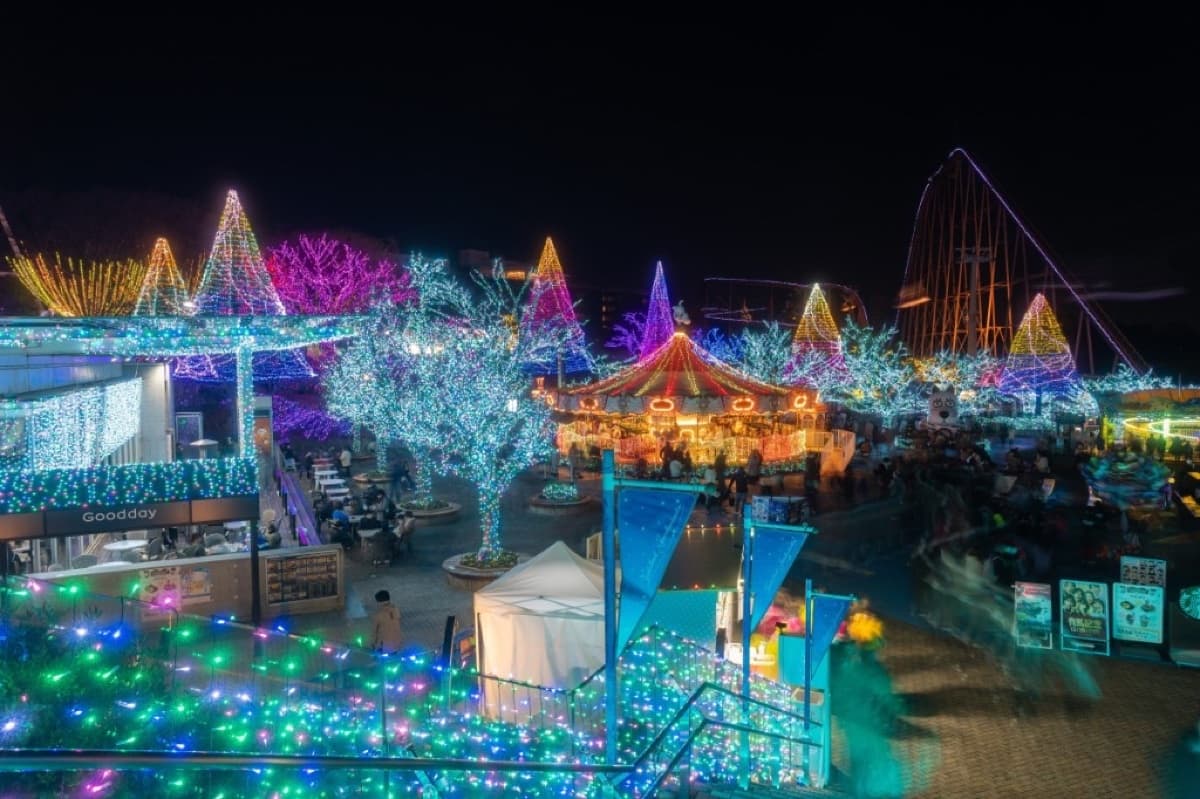
Most Tokyo displays — Marunouchi, Roppongi Hills, Omotesando, Shibuya — are free to walk through. Ticketed venues include Yomiuriland, Nabana no Sato and Tokyo Midtown's ice rink.
Can I see Mt Fuji during a Christmas trip?
Yes — December often has the year's clearest views. Day trips from Tokyo to Lake Kawaguchiko or Hakone work well.
What should I pack?
Layers, a proper coat for evenings, comfortable walking shoes and gloves. Tokyo hovers around 5–10°C in late December; Shirakawa-go drops well below freezing.
Turn This Into a Real Itinerary
A Japan Christmas rewards planning — the lights are free and easy, but the good Christmas Eve tables and the special-event tickets (Shirakawa-go, Nabana no Sato) book out early, and some reservations only open in Japanese.
💬 From our Japan travel team
Winter is the underrated season — clean weather, short queues, and prices that don't spike the way they do for sakura. We'll thread Tokyo, Nagoya, Kyoto and Osaka so you're in front of the right lights on the right night, with the trickier reservations handled.
Illumination dates, hours and market details per the respective official operators (Marunouchi, Roppongi Hills, Tokyo Midtown, Nabana no Sato, Shirakawa-go Tourism Association); dates and themes shift year to year — confirm on official sites before booking non-refundable travel. Hero photo: Roppongi Hills Keyakizaka illumination by Kakidai via Wikimedia Commons (CC BY-SA 4.0). Last updated: September 15, 2026 (Shirakawa-go 2027 light-up dates added).
Related Articles
Tokyo Christmas Market 2026: A Practical Planning Guide for Self-Guided Travellers
14 min read
Japan Winter Illuminations 2026-27: Nabana no Sato Dates, Huis Ten Bosch's New Show and the Best Displays Nationwide
10 min read
Kobe Luminarie 2026: A Self-Guided Traveler's Guide to Kobe's Winter Illuminations
8 min read