
Takayama Autumn Festival 2026: A Self-Guided Traveler's Playbook
Held October 9–10, 2026 in Hida-Takayama's old town — the Hachiman Matsuri. Ornate yatai floats, karakuri marionettes, and a lantern-lit night procession, plus where to stand, how to get there, and where to stay.
If you're weighing up the Takayama Autumn Festival 2026 for your Japan itinerary, here's the short answer: it's held on October 9 and 10, both days, in the old town of Takayama in Gifu Prefecture. Yes, it's worth building a trip around. And yes, you can absolutely do it self-guided.
The festival is the annual event of Sakurayama Hachiman Shrine in the northern half of Takayama's old town, which is why it's also called the Hachiman Matsuri. It's ranked alongside Kyoto's Gion Matsuri and the Chichibu Night Festival as one of Japan's three most beautiful festivals. If you only have room for one big matsuri on your trip, this is a strong pick, especially if you're already routing through central Japan. This guide walks you through dates, transport, what to actually see, common mistakes, and how to slot it into a real itinerary.
🏮 Quick Answer: Takayama Autumn Festival 2026
- Dates: October 9 (Fri) & 10 (Sat), 2026, in Takayama's old town, Gifu — the Sakurayama Hachiman Shrine autumn festival (Hachiman Matsuri).
- Floats: 11 ornate yatai roll out; the Oct 9 afternoon parade and evening yomatsuri (each float carries ~100 lanterns) are the highlights.
- Karakuri: marionette performances on the Hotei-tai float at Sakurayama Hachimangu Shrine.
- Cost & booking: free to watch; book Takayama hotels and Hida Limited Express seats many months ahead.
Takayama Matsuri October 2026: The Core Dates
The autumn festival runs October 9 (Friday) and October 10 (Saturday) in 2026. Because the second day falls on a Saturday, expect big domestic crowds. Book accommodation early. Really early.
The spring counterpart, the Takayama Spring Festival (also called Sanno Matsuri), takes place on April 14–15 at Hie Shrine in the southern half of Takayama's old town. If autumn dates don't line up with your holiday, mid-April is a solid plan B. For the wider month, see our guide to Japan in October 2026.
Why This Festival Is Worth the Detour
Takayama isn't on the Shinkansen line. It takes effort to get there. So what makes it worth it?
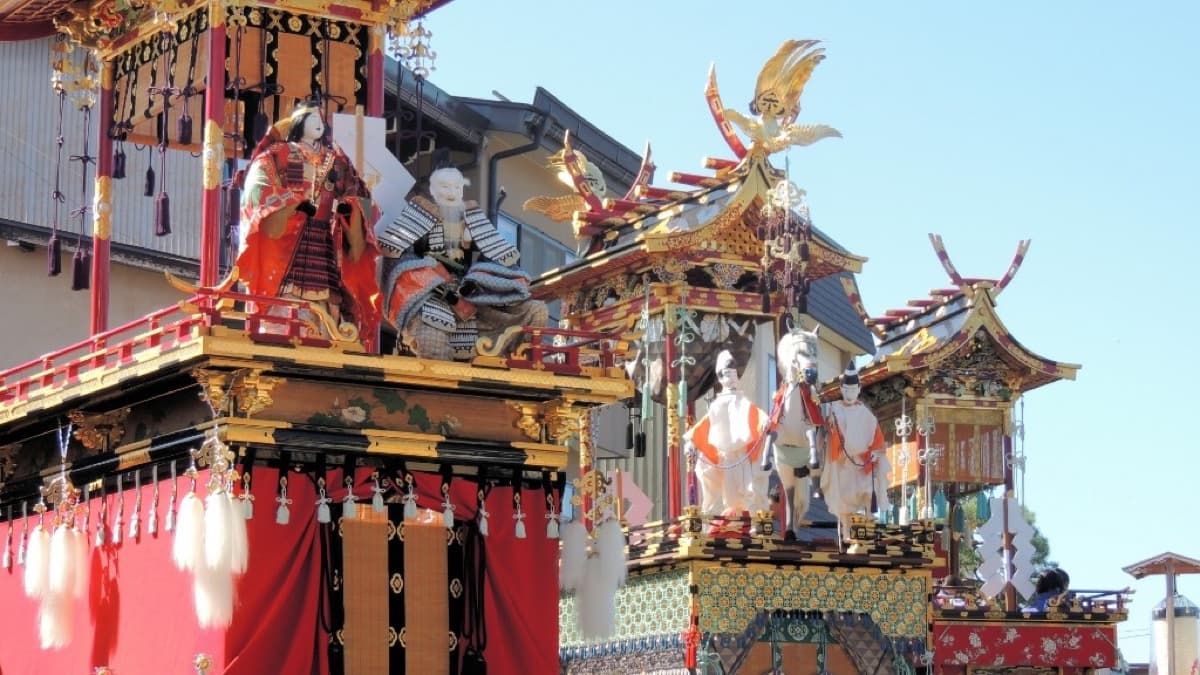
The yatai floats. Clad in gold decorations of phoenixes, gorgeous carvings and embroidery, these floats have been recognized as national important tangible folk-cultural properties. Some were built in the 1700s. They're rolled out of their storehouses only twice a year, and the autumn festival features 11 of them.
💬 From our Japan travel team
The Takayama Autumn Festival (Hachiman Matsuri) is one of Japan's great yama, hoko and yatai float festivals — part of a tradition inscribed on UNESCO's Intangible Cultural Heritage list. It runs only twice a year (spring and autumn), so visiting in October is a genuinely rare chance to see these floats in the streets.
Then there's the evening festival. In the evening of the first day, the festival floats are pulled through the streets of Takayama's old town for 2–3 hours. The evening festival (yomatsuri) is considered the festival's highlight by many visitors. Each float carries around a hundred paper lanterns. It creates a magical atmosphere you don't get from photos. It's one of the standout events in our autumn in Japan 2026 roundup.
What Happens on Each Day
Here's the two-day rhythm at a glance — day one is the big one, with the autumn-exclusive daytime parade and the lantern-lit evening festival.
🗓️ October 9–10 festival schedule
| When | October 9 (Day 1) | October 10 (Day 2) |
|---|---|---|
| Morning | Karakuri (marionette) performance at Sakurayama Hachimangu on the Hotei-tai float | More marionette (karakuri) performances |
| Afternoon | Autumn-exclusive yatai parade (four floats) + portable-shrine (mikoshi) procession with hundreds in kamishimo, plus lion dancers | Portable-shrine (mikoshi) parade back to the shrine |
| Evening | Yoimatsuri: floats pulled through the old town for 2–3 hours, ~100 lanterns each — the highlight | Quiet; no evening float parade |
October 9 (Day One)
The daytime float procession is unique to autumn. The yatai parade on the afternoon of the 9th is only held at the Autumn Takayama Festival — you can see four yatai floats being paraded through the city.
Alongside that, there's the portable shrine procession. A line of several hundred people dressed in traditional costumes such as kamishimo (samurai costume) walk around the festival area with a portable shrine which carries the deity. You'll also spot lion dance performers moving through the crowds.
The marionette performance at Sakurayama Hachimangu Shrine is a highlight. A marionette performance on one of the floats — Hotei-tai — is held. Six to eight masters called tsunakata move many strings of the marionettes. The audience will be overwhelmed by the detailed and bold movements of the marionettes, as if they were alive.
After sunset, the yoimatsuri begins. Lanterns lit, floats moving slowly through historic streets. This is the moment most visitors remember.
October 10 (Day Two)
Day two is quieter but still worth showing up for. There are more marionette performances and a portable shrine parade back to the shrine. A portable shrine (mikoshi) is carried around the town in a parade during the two days of the festival, starting and ending at the respective festival's shrine. If you can only make one day, most travelers pick October 9 for the evening festival.
Getting to Takayama
From Tokyo
The most common self-guided route: Shinkansen to Nagoya, then transfer. From Tokyo Station, take the Tokaido Shinkansen headed for Hiroshima. Alight at Nagoya Station, then transfer to the JR Hida Limited Express for Takayama. Alight at Takayama Station. The entire journey takes around 4.5 hours.
Highway buses from Shinjuku are cheaper. Direct highway buses, both during the day and at night, operate from Shinjuku. These take around 5.5 to 6 hours.
From Nagoya, Kyoto, or Osaka
The Hida Limited Express leaves from Nagoya every hour, taking about two hours and 20 minutes. From Kyoto or Osaka, connect via Nagoya. Reserve seats in advance for the Hida Limited Express during the festival period — it fills up.
Where to Stay
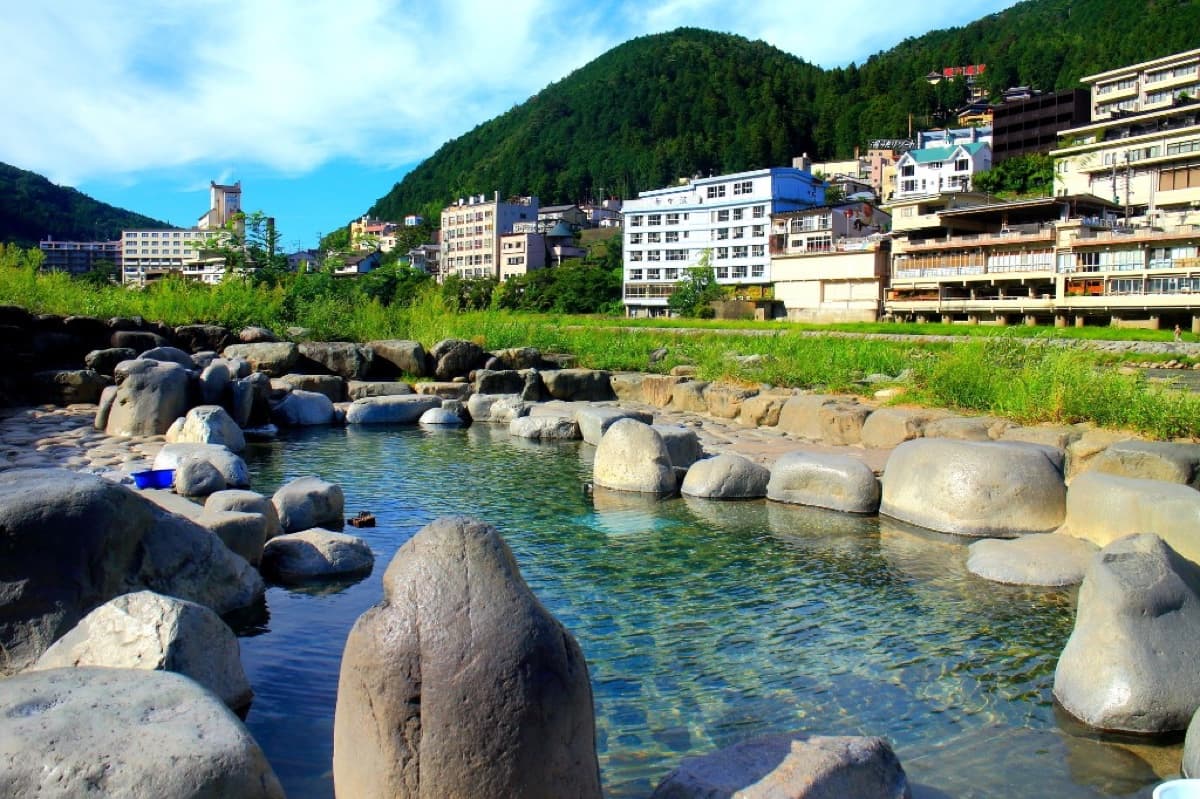
Book months out. Seriously. It gets especially crowded if one or both festival days fall on a weekend or national holiday. As a result, hotels in Takayama get booked out many months in advance, and it's recommended to make hotel bookings as early as possible. Neighboring towns, such as Furukawa and Gero Onsen, can also be used as a base for seeing the festival, but going further than that will make it difficult to see the evening festival.
If Takayama city is fully booked (likely by early 2026), look at Hida-Furukawa — it's one stop north — or Gero Onsen for a hot-spring base.
💬 From our Japan travel team
Festival season is one of the busiest windows in central Japan — hotels and trains fill up fast, so start planning early. Our self-guided tours handle bookings and support you from reservation through the trip itself, so you can focus on the festival.
Best Viewing Spots
For the daytime action, station yourself near Sakurayama Hachimangu Shrine or along the parade route on the north side of Yasugawa Street. The festival parade is held in the Shimomachi area, on the north side of Yasugawa Street.
For the evening festival, get into position early. Around Omotesando Street and the streets leading to the shrine tend to give you the classic lantern-lit shot. Locals line up hours ahead. If you want to catch a good angle, arrive before 6pm.
For crowd management and orientation, the area around Takayama Police Station and the tourist info office near Takayama Station are useful reference points on the map.
What About the Rain?
This is the big gotcha. In case of bad weather, the evening festival may have to be canceled. The official information notes that outdoor events such as marionette performances, parades, and Yoimatsuri may be cancelled in rain, and there is no postponement.
If it rains, the floats stay in their storehouses. Honestly, this is the single biggest risk for any date-time-specific festival trip. Build a buffer day into your itinerary if you can, and check the Hida Takayama official site closer to your travel date for real-time updates.
A Sample 7-Day Self-Guided Autumn Itinerary
Here's how to slot the festival into a real trip:
- Day 1–2: Arrive Tokyo, ease into the time zone, catch a few Tokyo attractions.
- Day 3: Shinkansen to Nagoya, transfer to Hida Limited Express, arrive Takayama by mid-afternoon. Walk the old town.
- Day 4 (Oct 9): Full festival day. Marionette performance in the morning, afternoon float procession, evening festival after sunset.
- Day 5 (Oct 10): Second festival day, then afternoon trip to Shirakawa-go (about 50 minutes by bus).
- Day 6: Train to Kanazawa or Kyoto.
- Day 7: Kyoto sightseeing, back to Tokyo or fly out from Osaka.
This slots the autumn Takayama festival naturally between Tokyo and Kansai, which is how most self-guided travelers already move.
Common Mistakes to Avoid
- Turning up on the day without a hotel booked. Don't. Even guesthouses fill up.
- Assuming autumn colors will frame the floats. Because the name includes "Autumn Festival," it's easy to imagine the whole town glowing with red and gold leaves. Some years, early October is still a little early for peak foliage in central Takayama. If you want peak leaves, that's late October to November in Hida — see our autumn leaves forecast and our roundup of the best autumn-leaves spots.
- Only allowing one day. If it rains on your one day, you've lost the festival. Two nights in Takayama gives you a safety net.
- Skipping the daytime for the evening. The daytime yatai parade on October 9 is autumn-exclusive. Don't miss it.
- Not reserving Hida Limited Express seats. Trains around the festival period sell out.
Takayama Through the Seasons
Takayama is beautiful year round, but the festival dates are what give autumn its edge. In the summer months you get outdoor activities in the nearby Alps but no float parade. Winter brings snow-blanketed Shirakawa-go but far shorter daylight. Spring — mid-April — trades autumn colors for cherry blossoms during the Takayama Spring Festival. If your dates are flexible, mid-April and early October are the two windows locals themselves recommend.
Self-Guided Routes for the 2026 Autumn Colour Season
The colour moves south for six weeks — Hokkaido in early October, the Japan Alps and Takayama in late October, Kyoto and Nara in the second half of November. These are the routes we run that follow it, with the month each one is built for.
| Route | Length | From (per person) | Why this autumn |
|---|---|---|---|
| Discover Hokkaido: Nature & Scenic Views (HD001) | 7 days | $3,700–4,300 | Sounkyo Gorge, Lake Akan and Shiretoko peak in early to mid October — the first colour of the season. |
| Scenic Southern Hokkaido Escape (HD002) | 7 days | $2,200–2,700 | Sapporo, Lake Toya and Hakodate in October, at the lowest price here. |
| Spirit of Tradition: Shirakawa-go & Cultural Japan (GR009) | 14 days | $4,100–5,900 | Takayama for its Autumn Festival (9–10 October), Shirakawa-go in late October, Kyoto and Nara in November. |
| Japan Highlights & World Heritage (GR002) | 12 days | $3,300–4,800 | Kyoto and Nara at peak colour in the second half of November. |
| Cultural Essence: Kyoto & Kanazawa Short Escape (GR006) | 12 days | $2,800–4,200 | Kenrokuen and Kyoto within the same fortnight; the lowest-priced twelve-day route we run. |
| Koyasan: Sacred Sites and Quiet Beauty (KM003) | 12 days | $3,500–5,200 | Koyasan’s maples turn in early November. Departures run April to November. |
| Hot Springs & Highlights: Kinosaki & Gero (HS002) | 14 days | $4,300–5,700 | Kinosaki’s crab season opens on 7 November — colour by day, crab and the outdoor baths by night. |
Interested in a tour? Click the route name above, or search by route code in the top-right Search bar.
For the month itself, see Japan in October 2026 and Japan in November 2026; for the beds that sell out first in colour season, where to stay in Kyoto names the hotels our routes actually book.
Prices are per person on a twin-share basis from our current price list and move with the departure date; departure windows are as the catalogue listed them on 22 September 2026. Ask us for an exact quote for your dates.
Japan Trip Cost Calculator (2026)
Set your trip below — the estimate updates instantly. Yen prices are converted at a rounded ¥150 to the dollar; the market rate is about ¥157 in September 2026, which makes yen costs a few percent cheaper than shown.
Intercity is priced as point-to-point tickets unless you add the pass — on the Tokyo–Kyoto–Osaka route the pass usually costs more than the tickets.
Estimated total
$4,530
$2,265/person · $453/day · 2 travelers, 10 days
Estimate only — a mid-range guide, not a binding quote. Peak season & specific hotels shift the total.
For comparison, our self-guided routes run about $270–390 per person per day with hotels, trains, luggage delivery and 24/7 support included — the difference from a DIY estimate is the hotel class and having it all arranged.
Planning a trip to Takayama for the autumn festival, when its hotels book out early? Get in touch through Plan My Trip on our self-guided tours site, and we'll suggest the tours that best fit your dates and plans.
FAQ: Takayama Autumn Festival 2026
Is the Takayama Autumn Festival free?
Yes, watching the festival is free. You just show up in town.
Which day should I go — October 9 or 10?
If you can only make one day, most travelers pick October 9. It has the autumn-exclusive daytime yatai parade and the lantern-lit evening festival (yomatsuri). October 10 is quieter, with more marionette performances and the return mikoshi parade.
How does it compare to Chichibu Night Festival or Gion Matsuri?
Gion Matsuri (Kyoto, July) is longer and bigger. Chichibu Night Festival (December) is more compact with fireworks. Takayama sits between — beautiful festivals with smaller crowds than Gion and better weather than Chichibu. For the wider matsuri calendar, see our Japanese festivals guide.
Can I see the floats if it rains?
Yes, but not in parade. If it rains the paper-lantern parade is cancelled since the yatai cannot get wet — but you can still see them in their individual storehouses, and the Yatai Kaikan next to Hachiman Shrine displays rotating floats year round.
Do I need to speak Japanese?
No. Signage around Takayama Station and the old town has English, and tourist information near the station is helpful.
When should I book everything?
For a normal year, by early summer at the latest — earlier for a central Takayama hotel. For 2026 (9–10 October) that window has passed: central hotels are likely gone, so check remaining availability now or base yourself in Hida-Furukawa, Gero or Nagoya and come in by train.
Plan Your Self-Guided Takayama Festival Trip
The hard part isn't deciding to go — it's stitching the festival into the rest of Japan without burning out. We turn fixed-date events like the Takayama Autumn Festival into full self-guided itineraries: Hida Limited Express seats, hotel timing in Takayama and Hida-Furukawa, and the day-by-day logistics that make a central Japan trip fun instead of stressful.
Dates, routes and event details per Sakurayama Hachimangu Shrine and the Hida Takayama official tourism information; outdoor events may be cancelled in rain with no postponement, so confirm on the official site before you travel. Last updated: July 10, 2026.
Related Articles
Shirakawago (Shirakawa-go) Guide: Getting There, the 2027 Winter Light-Up and What to See
14 min read
Jidai Matsuri 2026 and Kurama Fire Festival 2026: A Practical Guide to Kyoto's October 22 Double Bill
15 min read
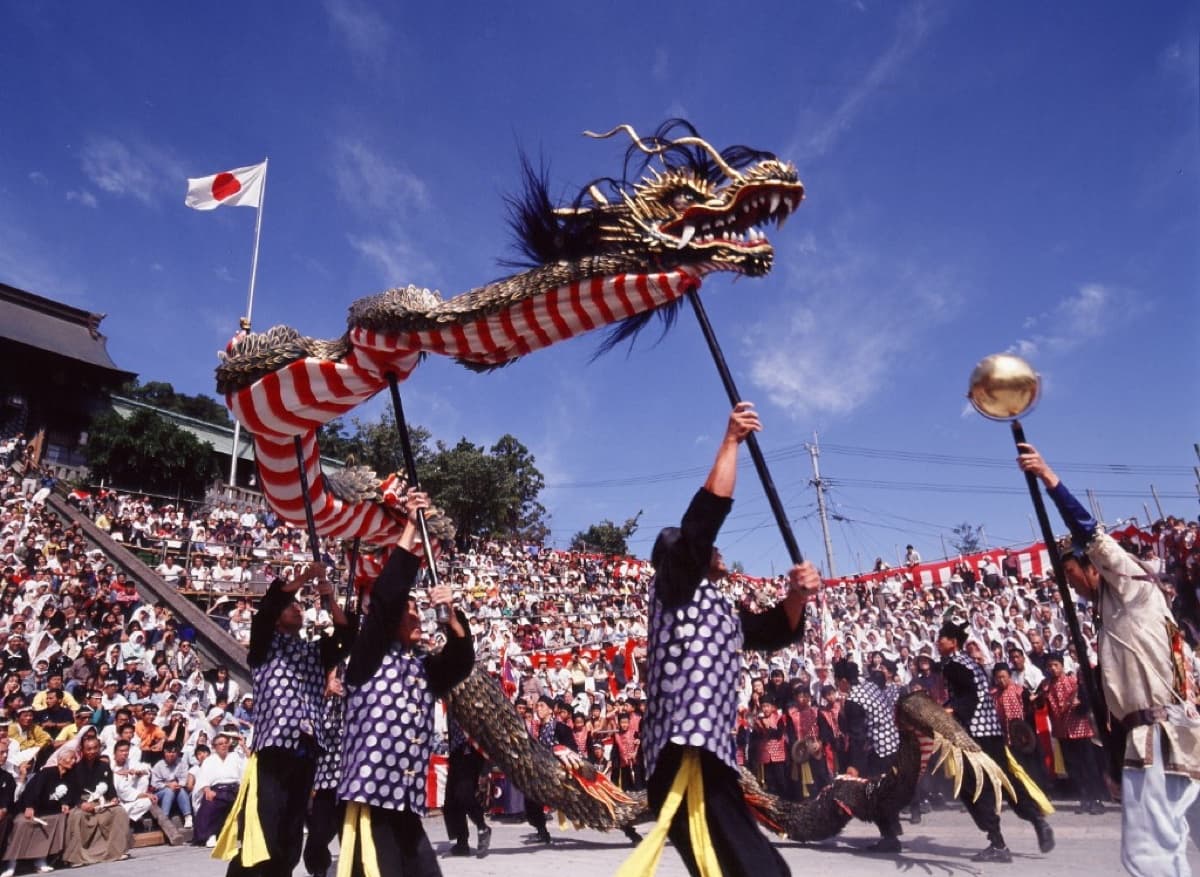
Nagasaki Kunchi 2026: How to Actually See Kyushu's Wildest Autumn Festival
12 min read