Gozan no Okuribi 2026: How to Experience Kyoto's Five Mountain Bonfires
Every August 16, five giant bonfires blaze across the mountains ringing Kyoto to close the Obon holiday. Here's what actually happens, where to stand, and how to build the evening into a self-guided itinerary that works.
Every August 16, five giant bonfires blaze across the mountains ringing Kyoto. It's called Gozan no Okuribi, and it closes the Obon holiday with one of the most moving public rituals in Japan. Gozan no Okuribi is held on August 16 every year — the 2026 fires (Sunday) have just burned, and the next edition is Monday, August 16, 2027; the fires begin at 8:00 p.m. sharp and the whole spectacle wraps before 9:00 p.m.
Short answer up front: yes, it's worth planning your Kansai trip around — just do it early. Below is what actually happens, where to stand, and how to build the evening into a working self-guided itinerary. It falls at the tail of the Obon week, so pair it with our Obon 2026 guide for the holiday context and shinkansen during Obon for the travel surge.
🔥 Quick Answer: Gozan no Okuribi 2026
Sunday, August 16, 2026. Fires light from 8:00 p.m. at five-minute intervals (Daimonji first), each burning ~30 minutes; the last, Toriigata, fades by ~8:50 p.m. Best single view: Daimonji from the Kamo River near Demachiyanagi. It's a solemn send-off for ancestors — match the mood. Book hotels months ahead.
📅 Date
Sun Aug 16
🕗 Start
8:00 p.m.
🎟️ Cost
Free to view
📍 Best spot
Demachiyanagi
What Gozan no Okuribi Actually Is
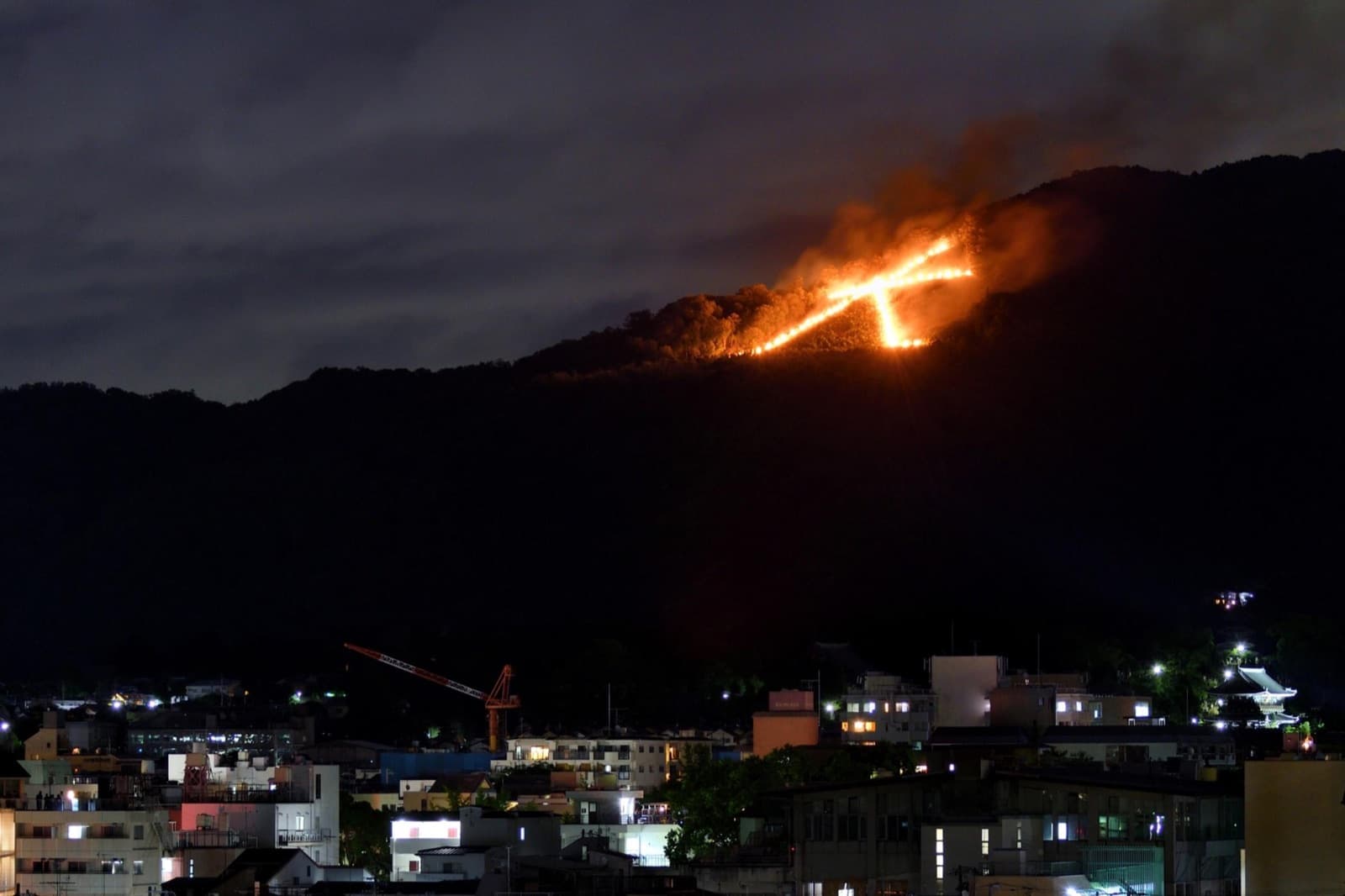
Gozan no Okuribi is the culmination of the Obon festival on August 16, when five giant bonfires are lit on the mountains surrounding the city. It marks the moment the spirits of deceased family members — said to visit during Obon — are believed to return to the spirit world; hence okuribi, roughly "send-off fire." The name translates as "five mountain send-off fires," though locals often just call it Daimonji, after the most famous of the five. Believed to date back to the 13th century, it has been part of Kyoto's summer for centuries.
This isn't a party. It's a farewell. Locals stop, look up, and quietly say goodbye to their ancestors for another year. If you go, match the mood.
The Five Mountain Bonfires, In Order
The lighting sequence follows the compass, counter-clockwise from the east:
🔥 Lighting sequence
| Time | Fire | Where |
|---|---|---|
| 20:00 | Daimonji (大) | Nyoigatake, Higashiyama — the icon |
| 20:05 | Myōhō (妙法) | Matsugasaki — "wondrous dharma" |
| 20:10 | Funagata (船形) | Nishigamo — a boat to ferry souls |
| 20:15 | Hidari Daimonji (左大文字) | Kinugasa, near Kinkaku-ji |
| 20:20 | Toriigata (鳥居形) | Sagano — the torii shape, finale |
💡 Each fire burns ~30 minutes. The original Daimonji is three strokes of 80 m, 160 m and 120 m, facing the city centre.
The Timeline You'll Actually Use
Here's how the night realistically unfolds. By 6:30 p.m. prime spots along the Kamo River start filling; by 7:00 p.m. riverside benches are gone; by 7:45 p.m. convenience stores near the river run low on cold drinks. At 8:00 p.m. sharp, the first flames appear on Daimonji. You then get twenty minutes of pure atmosphere — fire after fire — and, just as fast, it's over. From the city centre you can catch several vantage points showing all five around 8:25 p.m.; the final Toriigata fire lasts until about 8:50 p.m.
Weather can shift things: in principle Okuribi is held rain or shine, but the ignition time is subject to change depending on conditions.
Best Viewing Spots for the Bonfires
No single spot shows you all five clearly — that's the honest truth. Pick your priority.
For Daimonji Only (The Icon)
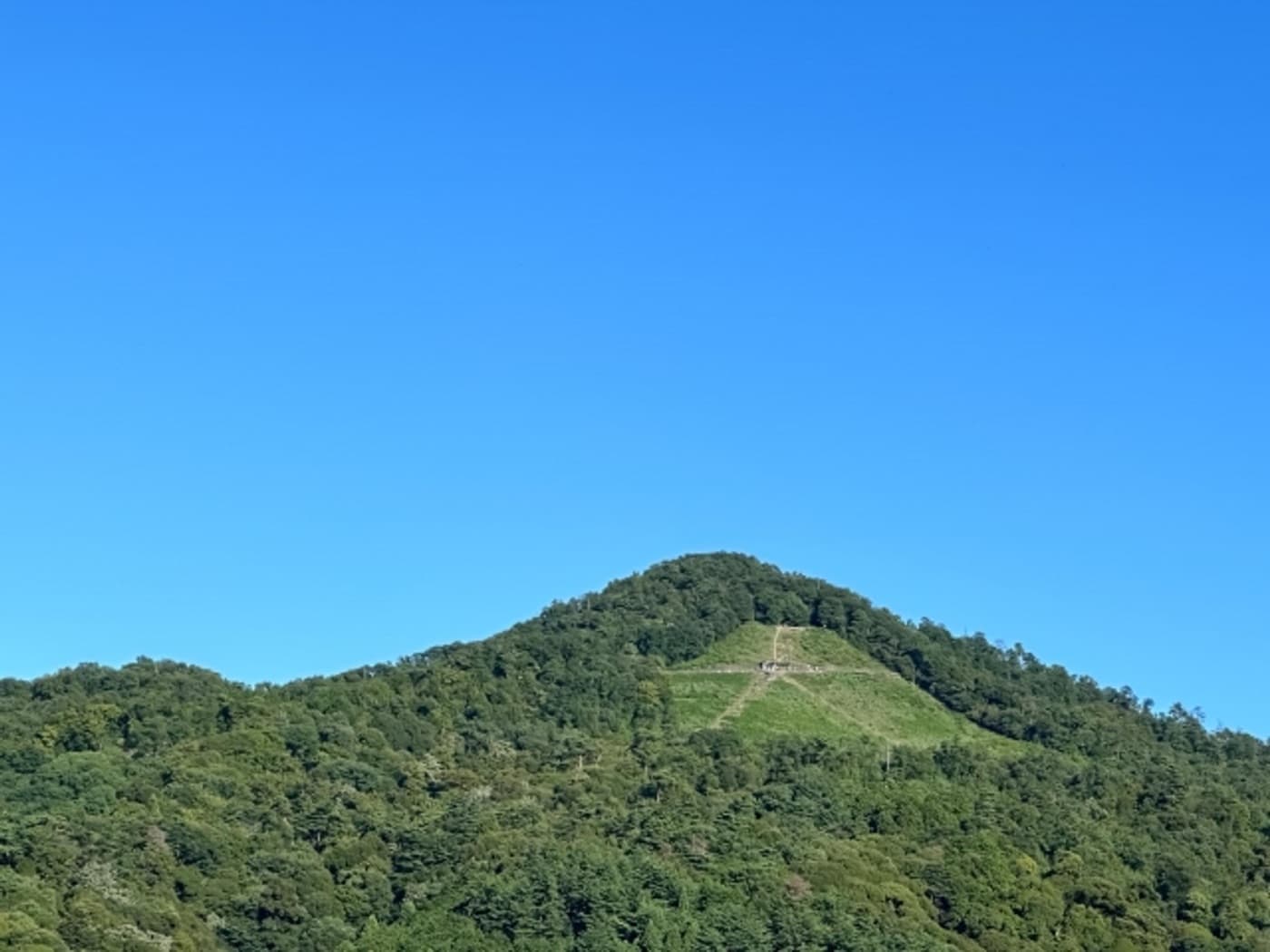
Head to Demachiyanagi. The bridge outside Demachiyanagi Station (Keihan line) gives a clear view of the first and most celebrated fire, and it's one of the easiest points to reach from Osaka or Gion for the evening. If it's your first time, this is the most emotionally satisfying view and the simplest to reach.
For Multiple Fires
Funaokayama Park, from its highest point, gives a panoramic view of four of the five (all but Toriigata) without changing location. Other good spots: Demachimasugata, the Kamogawa and Takanogawa embankments, and the Skyway at the Kyoto Station Building.
For the Torii Gate Fire
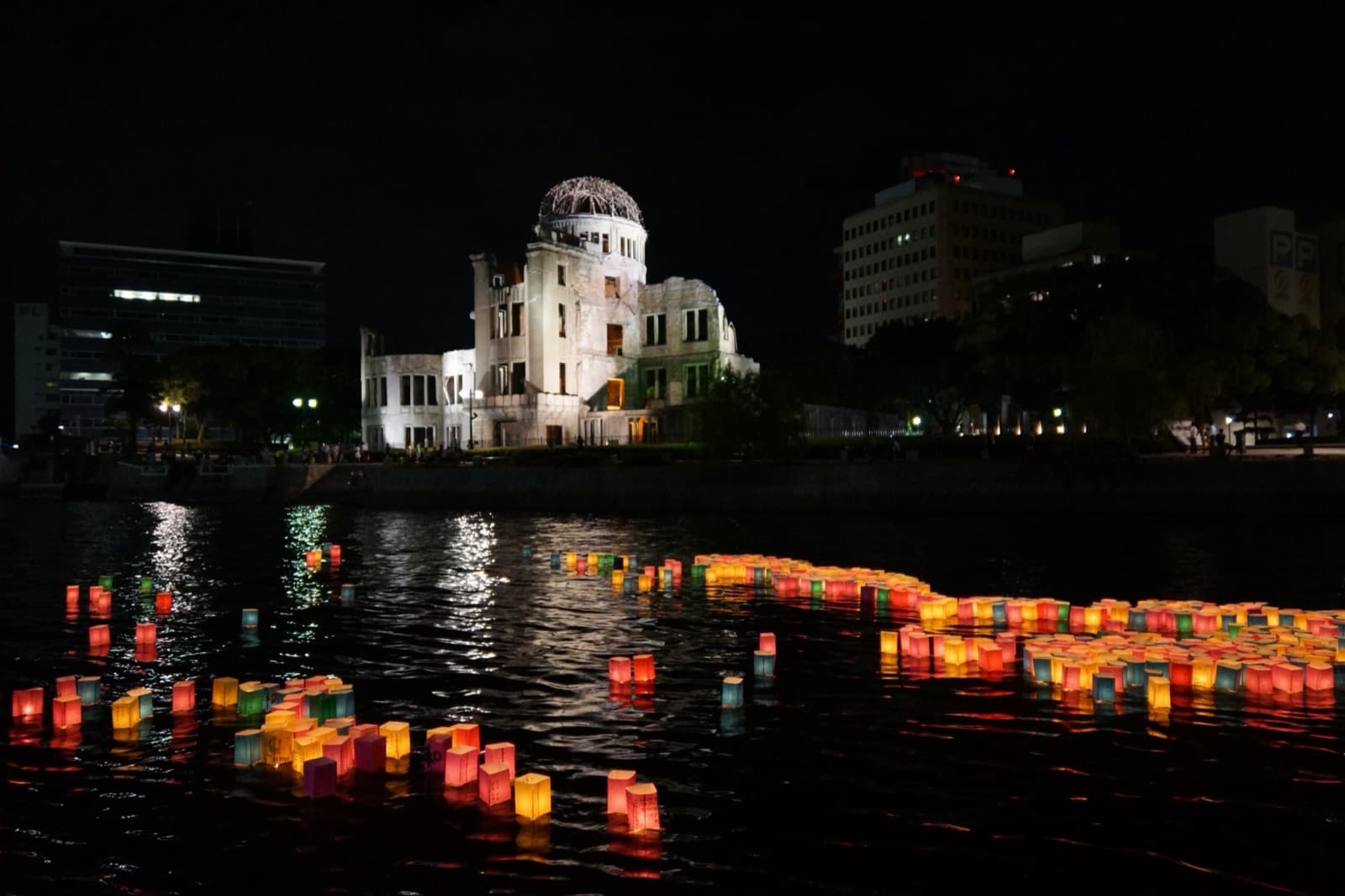
Go west to Arashiyama. Around Togetsukyo Bridge and Nakanoshima Island, floating lanterns are released from the bridge between 19:00 and 21:00 in a Tōrō Nagashi ceremony for the souls of the dead — you get fine views of the Toriigata fire as lanterns drift down the Katsura River. (See our Arashiyama guide for getting around the district.)
How to Get There: Trains, Timing, Crowds
Reach Sanjo Keihan via the Tozai subway, then hop up the Keihan Main Line to Demachiyanagi (it runs late into the evening). For Arashiyama viewing, take the JR Sagano Line or the Randen tram in the afternoon. Don't try to cross the city between 7:30 and 9:00 p.m. — you won't make it.
The Obon transport surge runs roughly Aug 8–16, when all Nozomi shinkansen seats become reserved-only — book 3–4 months ahead for hotels. Kyoto rooms sell out early for August 16; if you're already inside 60 days, look at Osaka and commute in.
💬 From our Japan travel team
Please note: our self-guided packages that include this year's date — August 16, 2026 — are now sold out. If you'd like to experience Gozan no Okuribi in a future year, please get in touch early — August 16 is one of the hardest nights in Kyoto to book, so the sooner we start planning, the better.
Building It Into a Real Kyoto Itinerary
A two-day plan that treats the festival as the anchor:
🗓️ Festival-anchored two days
| Aug 16 — morning | Ginkaku-ji & the Philosopher's Path, then coffee somewhere with air-con (August highs run 27–34°C). |
| Aug 16 — afternoon | Long lunch, then back to the hotel for a nap and shower. |
| Aug 16 — 5:30 p.m. | Kamo River near Demachiyanagi; grab an onigiri and cold drink, find a spot. Seated by 7:00. |
| Aug 16 — 8:00 p.m. | Daimonji lights. Walk back through quiet streets by 8:30. |
| Aug 17 | Bamboo grove early (before the heat), Tenryu-ji, late lunch, train back. Add Fushimi Inari at sunrise on a third day. |
Common Mistakes to Avoid
- Trying to see all five. You really can't — pick one or two vantage points.
- Booking too late. Central Kyoto rooms for August 16 disappear months out.
- Treating it like Gion Matsuri. It's not a parade with food stalls on every corner — it's a quiet, reflective ritual.
- Hiking Daimonji on the day. Hiking the fire mountains is prohibited on August 16 for safety. Do the hike another day.
- Standing in the middle of a bridge. Police move you along — get to a spot early and stake it out.
Etiquette: What Locals Actually Do
Okuribi is a solemn ceremony bidding farewell to ancestral spirits welcomed during Obon. Some people offer silent prayers; some just watch. Loud cheering or clapping when the fires light isn't the vibe — talk quietly and keep flash photography to a minimum. Even if you're not Buddhist, showing respect goes a long way. Bring a small towel for the sweat, bring water, and skip the tripod unless you know the local rules for your specific spot.
After the Fires: Kyoto Through the Rest of the Year
Gozan no Okuribi lasts about thirty minutes on one night a year, 16 August. If you have missed it, the good news is that the fires mark the end of Kyoto's hardest month rather than the end of anything worth seeing — the city's two best seasons both come afterwards.
- Autumn colour, mid-November to early December. Kyoto's single biggest draw. See Kyoto autumn leaves, the national forecast for timing, and Kyoto's autumn illuminations for the temples that light up after dark.
- 22 October. Jidai Matsuri and the Kurama Fire Festival — a thousand-year costume procession by day and a mountain village lit by giant torches at night, both on the same date.
- Kyoto without the crush. Is Kyoto safe to visit and beyond the crowds cover timing and alternatives.
Coming back for the fires themselves? They fall on 16 August every year without exception, so you can book a year ahead with confidence.
Thinking of seeing Kyoto's mountain bonfires next August, during the busy Obon week? Get in touch through Plan My Trip on our self-guided tours site, and we’ll suggest the tours that best fit your dates and plans.
FAQ: Gozan no Okuribi 2026
When is Gozan no Okuribi 2026?
Sunday, August 16, 2026. Fires begin at 8:00 p.m. and the final one wraps around 8:50 p.m.
Is Gozan no Okuribi free to attend?
Yes. Public viewing along the Kamo River, at Funaokayama Park and in Arashiyama is free. Rooftop hotel viewing plans cost anywhere from a few thousand yen to well over ¥30,000 per person.
Can I see all five bonfires from one spot?
Not really. Central-city rooftops claim to show all five, but ground-level viewers usually see two or three at most. Funaokayama Park gets you four.
How early should I arrive?
For popular Kamo River spots, be in place by 7:00 p.m. For quieter locations north or west of the city, 7:30 p.m. is usually fine.
Are trains running late that night?
The Keihan Main Line and Kyoto's subway run past 10:00 p.m., but they're packed right after 8:30 p.m. Wait 30 minutes if you can, or walk.
Is it cancelled if it rains?
In principle it's held rain or shine, but the ignition time can change depending on weather conditions.
Can I participate directly?
Members of the public can sometimes write prayers on gomagi (cedar prayer sticks) that are burned in the bonfires. Availability varies by mountain and year — check locally at temples near each site on August 15 or 16.
Turn This Into a Real Itinerary
Building a self-guided trip around a fixed-date festival is a puzzle — trains, hotels, temples, timing and cool-down breaks all have to line up. That's exactly what we help with: route notes, timing tips and station-by-station guides for people who want the confidence they've planned it right, without a group tour.
💬 From our Japan travel team
August 16 is one of the hardest Kyoto nights of the year to book — rooms go months out and the Obon shinkansen surge (Aug 8–16) makes seats reserved-only. Lock accommodation early, or base in Osaka and commute. Tell us your dates and we'll build the evening around Demachiyanagi so you're seated before the crowds.
Lighting sequence, viewing spots and Tōrō Nagashi timing per Kyoto City tourism information and contemporaneous event listings; Obon shinkansen surge dates per JR seasonal operations. Ignition times are held rain or shine but subject to weather — confirm the current-year schedule locally before you travel. Last updated: July 2026.