
Obon 2026 in Japan (Aug 13–16): What Closes, What Sells Out, Should You Go?
Obon 2026 dates by region, what happens during Obon week, bon odori and toro nagashi, the best festivals, and how to plan around one of Japan's three biggest domestic travel rushes.
TL;DR: Obon 2026 Runs August 13–16
Obon 2026 runs August 13–16 for most of Japan, with the core three-day observance on August 13–15. Tokyo, Yokohama, and parts of northern Japan celebrate July 13–16. Okinawa follows the lunar calendar (around August 26–28). It's not an official public holiday, but it functions like one — and it's one of Japan's three biggest domestic travel peaks. For the full month around Obon 2027 — festivals, heat and typhoons — see Japan in August 2027.
Most of Japan
Aug 13–16
Tokyo
Jul 13–16
Okinawa
~Aug 26–28
Travel peak
Aug 8–16
- Crowds: one of Japan's three biggest domestic travel peaks — busiest around August 8 and 11–13 (leaving the big cities) and August 15–16 (returning).
- What closes: offices, family-run shops and ryokan, small restaurants, and independent shops often shut for several days.
- Trains: every Nozomi ran reserved-seats-only from Aug 7–16, 2026 — no unreserved cars to fall back on. The same all-reserved rule applies to the next peaks (Silver Week 18–23 Sept, then New Year), so reserve the moment bookings open, one month ahead. See how to actually get a Shinkansen seat during Obon.
Planning to visit Japan in the middle of summer? You'll want to know about Obon before you book anything. For most of the country, Japan Obon 2026 falls from Thursday, August 13 to Sunday, August 16, with the core three-day observance running August 13–15.
Tokyo and parts of northern Japan are the main exception — many neighborhoods there celebrate in mid-July instead. This guide walks you through the Obon 2026 dates, what actually happens during Obon week, and how to fold the festival into a self-guided itinerary without getting steamrolled by the holiday travel rush.
What Is Obon, In Plain English?
Obon is Japan's summer festival for ancestors — an annual Buddhist event for commemorating relatives, whose spirits are believed to temporarily return to this world to visit during Obon. It's solemn and joyful at the same time. Families pay respects to deceased relatives, clean graves, and leave food offerings at home altars, then head out at night to dance under paper lanterns.
Think of it as a family reunion crossed with a neighborhood street party. With taiko drums.
Obon 2026 Dates: The Quick Answer
- Most of Japan (Kyoto, Osaka, Nara, and most regions): August 13–16, 2026
- Tokyo and Yokohama (and parts of northern Japan): July 13–16, 2026
- Okinawa (follows the lunar calendar): around August 26–28, 2026
Why the split? Obon is observed around the 15th day of the 7th month — July on the solar calendar, but roughly August on the formerly used lunar calendar. Different regions kept different calendars after Japan switched systems in the Meiji era, and the dates stuck. For the full national holiday picture, see our Japan public holidays 2026 guide.
Obon Yasumi (Obon Holiday): Is It an Official Public Holiday?
This trips up a lot of first-time visitors. Obon is not an official holiday on the national calendar. But in practice it functions like one — it's customary for people to be given leave, usually 7–15 days, known as obon yasumi (the Obon holiday) or "Obon week."
So offices close. Family-run shops shutter. Many Japanese people travel back to their hometowns. It's roughly equivalent to a Western country during the week between Christmas and New Year — technically not a single block of holidays, but everyone behaves as if it is.
Why This Matters for Self-Guided Travelers
Honestly, this is the part you can't skip. Obon week is one of the three big domestic travel peaks in Japan, along with Golden Week and New Year. Shinkansen seats sell out. Hotel rates spike. Airport queues balloon. The single biggest trap: from August 7–16 every Nozomi is reserved-seats-only, so there is no unreserved car to squeeze into — our Shinkansen during Obon guide covers exactly when seats open and what to ride if you miss out.
In 2026, the peak of the Obon travel season is anticipated between August 8 and August 16. The busiest days were August 8 and 11–13 (people leaving big cities) and August 15–16 (people returning) — the same pattern repeats every year, so use it to plan 2027. Plan your transport in advance, or you'll be standing. Our is Japan crowded in 2026 guide has the full crowd calendar.
During Obon, everywhere fills up
Obon season is when the whole country travels — for hometown visits and holidays alike — so everything gets crowded. Shinkansen trains can switch to all-reserved seating, and hotel rooms sell out entirely in popular areas. With a self-guided tour, a Japan-based operator handles all of it for you: trains, reserved seats, and accommodation are locked in ahead of time, so you can plan your trip stress-free and know your seats and rooms are secured.
The Heart of Obon: Bon Odori
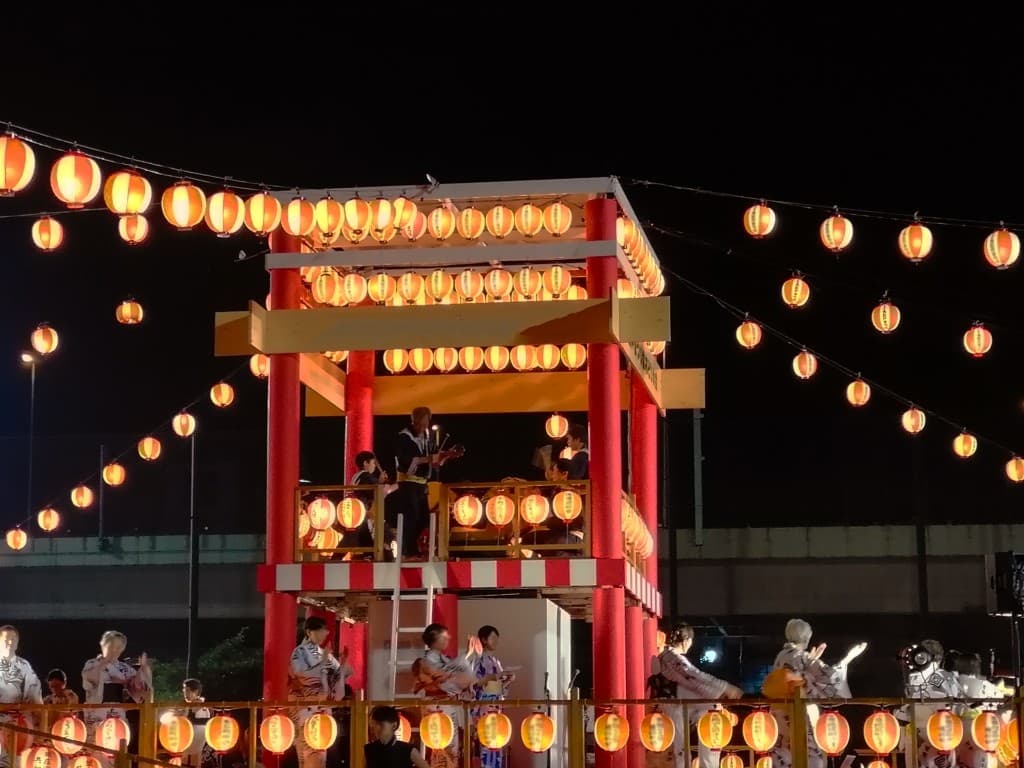
Bon Odori is a traditional community dance often performed at local summer festivals held during the Obon season — circular in formation, performed around a central raised platform (yagura) where musicians and singers perform. Some are slow and meditative; others fast and energetic.
The good news for visitors: you can join. You don't need a costume or experience. Most bon odori are designed to be learned on the spot — step into the circle, copy the movements of the people around you. Wear a yukata if you have one; if not, comfy clothes and shoes you can dance in.
Bon odori really is a dance for everyone, from small children to grandparents — nobody is too young or too old to join the circle. The easiest way to experience it is simple: look up the Japanese summer festivals happening in whichever city you're staying in, and check whether any of them include a bon odori. Chances are good that one is happening within walking distance of your hotel.
Toro Nagashi: Floating Lanterns
If you only see one Obon ritual, make it toro nagashi. At the end of Obon, floating lanterns are put into rivers, lakes, and seas to guide the spirits back. Hundreds — sometimes thousands — of candle-lit paper lanterns drift downstream after dark. It's quiet, slow, and genuinely beautiful in a way photos don't capture.
The Best Places to Experience Obon Festival Japan 2026
You don't need to chase the most famous events — a neighborhood Obon celebration in Kyoto can be just as memorable. But if you want headline experiences, here are the ones worth building an itinerary around. And if you'd like to add a hanabi night to the same trip, our Japan fireworks 2026 guide covers the summer displays.
Awa Odori (Tokushima)
The big one. Held annually August 12–15, Awa Odori is Japan's most iconic traditional dance festival. Originating over 400 years ago, it fills the streets of Tokushima with thousands of dancers (ren) in straw hats performing coordinated moves to taiko drums and flutes. Book accommodation in Tokushima months out. Seriously.
Kyoto Gozan no Okuribi (Daimonji)
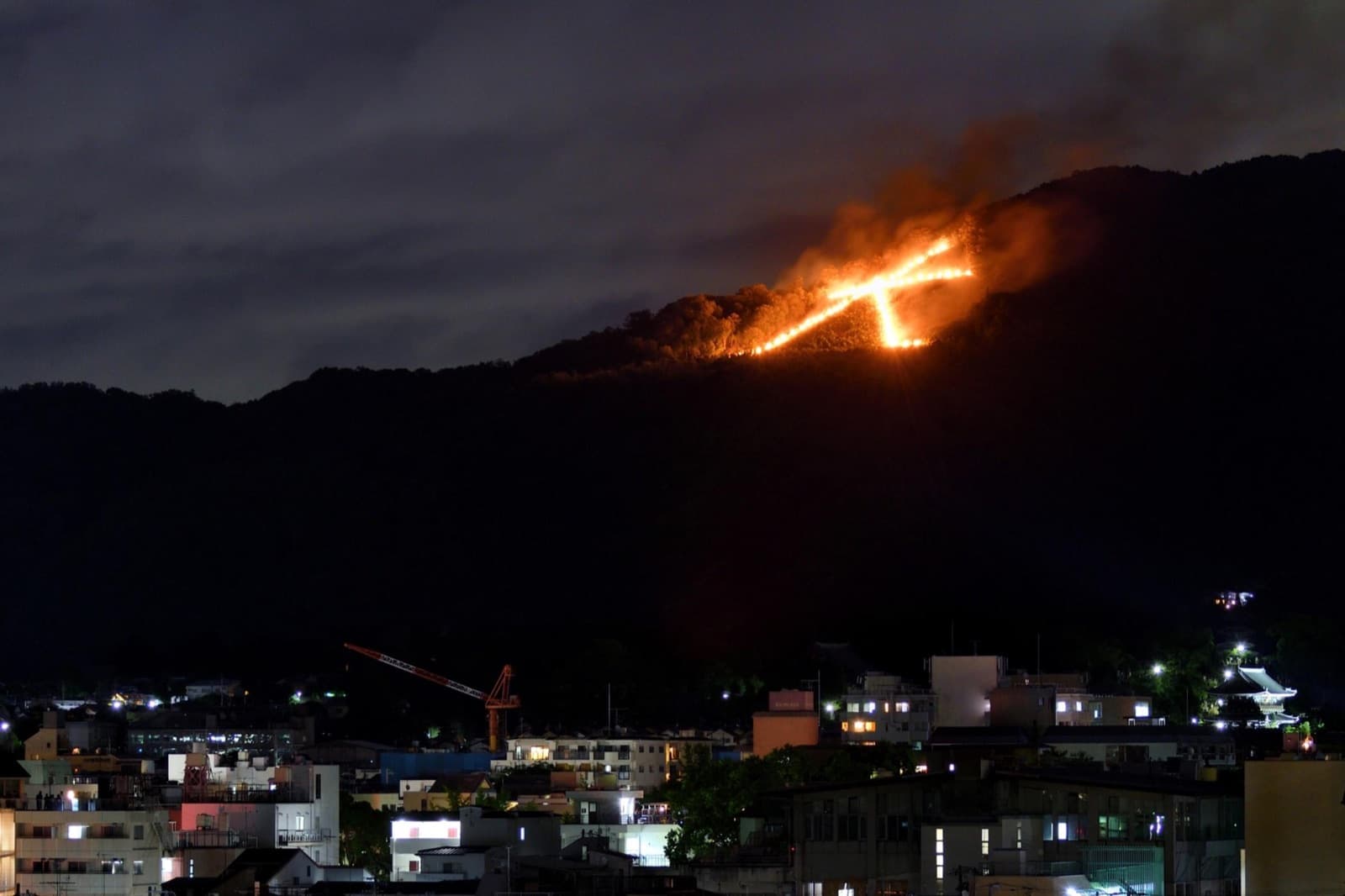
The send-off fires of Kyoto. On the evening of August 16, five enormous bonfires are lit on five mountains surrounding the city, each in the shape of a kanji character or symbol. The most famous is the Daimonji fire — the character 大 ("large") blazing on Daimonji-yama. Watch from rooftop bars, riverbanks, or anywhere with a clear view of the hills.
Gujo Odori (Gifu)
In the riverside town of Gujo Hachiman, Obon is celebrated with one of the longest, most participatory dance festivals in Japan. Gujo Odori runs for over 30 nights during summer, peaking in mid-August during Obon, when dances continue all night until dawn. Locals and tourists dance side by side in wooden sandals. Pace yourself.
Toro Nagashi in Tokyo and Hiroshima
For a contemplative experience, Tokyo's toro nagashi in Sumida Park releases prayer-inscribed lanterns onto the Sumida River at twilight. Hiroshima's lantern-floating, held August 6 alongside the Peace Memorial, layers Obon with the memory of the atomic bomb. It's heavy — and unforgettable.
How to Build Obon Into a Real Itinerary
Option 1: Anchor Around One Big Festival
Pick a headline event — Awa Odori, Daimonji, or Gujo Odori — and build a 5–7 day trip around it. Arrive a day or two early. Book your hotel by April at the latest. Reserve Shinkansen seats the moment they open (10:00 Japan time, one month before the departure date).
Option 2: Stay Put, Sample Local Bon Odori
If you'd rather skip the chaos, base yourself in one city and walk to neighborhood Obon celebrations in the evening. Tokyo, Kyoto, and Osaka all have dozens of small bon odori events in temples and parks. Less crowded, more local feel.
Option 3: Use the July Window
Because Tokyo celebrates Obon in July, you can experience the festival before the August crush. Visit Tokyo July 13–16, then continue in late July or early August when domestic travel calms down. A genuine lifesaver if you're price-sensitive. Pair with our Japan weather in August 2026 guide.
Common Mistakes to Avoid
- Booking too late. Bullet trains, flights, and highways get heavily congested, especially in the days leading up to Obon. Accommodation near major festivals books out well in advance. Reserved Shinkansen seats open exactly one month before departure and the Obon peak dates go fast — see the Obon Shinkansen booking timeline.
- Turning up for an unreserved seat on a Nozomi. There are none from Aug 7–16. Hikari and Kodama still run unreserved cars — and they are what the Japan Rail Pass covers anyway.
- Assuming everything stays open. Small restaurants, family-run ryokan, and independent shops often close for several days. Check before you go.
- Confusing Obon with the Chinese Ghost Festival. They share roots but are different events on different dates.
- Underestimating the heat. Mid-August in Tokyo, Kyoto, and Osaka is brutally hot and humid — see our Japan heatwave 2026 guide. Drink water, carry a hand fan, travel early or after sunset.
Thinking of traveling to Japan in mid-August, around Obon week? Get in touch through Plan My Trip on our self-guided tours site, and we’ll suggest the tours that best fit your dates and plans.
FAQ: Japan Obon 2026
When exactly is Japan Obon 2026?
For most of Japan, August 13–16, 2026. Tokyo and parts of northern Japan celebrate July 13–16. Okinawa follows the lunar calendar and observes Obon around August 26–28, 2026.
Is Obon a public holiday?
No. Although Obon is not an official public holiday in Japan, most people take a few days off to celebrate, and most businesses and offices effectively close.
Can foreign tourists join Bon Odori dances?
Absolutely. The dances are designed for beginners. Step into the circle, copy what others are doing, and you'll pick it up within a few minutes.
Should I avoid traveling during Obon week?
Only if you hate crowds and want to save money. Book everything early — flights, Shinkansen seats, hotels — and you'll be fine. The festival experience itself is worth the hassle.
What's the difference between Obon and the Chinese Ghost Festival?
The Japanese Obon is influenced by Buddhism and focuses on ancestor commemoration. The Chinese Ghost Festival is more influenced by Taoism and focused on the worship of ghosts. They share Buddhist roots but feel very different in practice.
Where can I see the best floating lanterns (toro nagashi)?
Tokyo's Sumida Park, Hiroshima on August 6, and many riverside towns across Kyoto and Nagasaki. Smaller local events can be just as moving as the famous ones.
Do I need to dress up for Obon?
Not required, but wearing a yukata at evening Obon celebrations is fun and fits the vibe. You can rent one in most tourist cities.
Related Articles
Seasons in Japan: What Season It Is Right Now, Month-by-Month Weather & the Best Time for Each Trip
16 min read
Gozan no Okuribi 2026: How to Experience Kyoto's Five Mountain Bonfires
10 min read
Bon Odori 2026: A Practical Guide to Tokyo's Best Summer Dance Festivals
13 min read