Jidai Matsuri 2026 and Kurama Fire Festival 2026: A Practical Guide to Kyoto's October 22 Double Bill
Both festivals fall on October 22, 2026 — the Heian-era Jidai Matsuri procession by day, the torch-lit Kurama Fire Festival by night. How to see both in one day, where to stand, and the trains that make or break the plan.
Every year on October 22, Kyoto pulls off something few other cities can match. In the middle of the day, a two-thousand-person parade in period costume walks from the Imperial Palace to Heian Shrine. By nightfall, in a mountain village to the north, huge pine torches are lit and carried through narrow streets. Same date. Same city. Two utterly different Japanese festivals.
If you're planning a trip and searching for Jidai Matsuri 2026, here's the short answer: the parade is scheduled for Thursday, October 22, 2026, departing Kyoto Imperial Palace around noon and arriving at Heian Jingu Shrine around 2:30 PM. And yes — the Kurama Fire Festival 2026 falls on the same evening, starting at roughly 6:00 PM in Kurama town, north of Kyoto city. It's completely doable to see both in one day, and this guide — part of our Japan in October 2026 series — is built around exactly that. Below you'll find how to plan the day, where to stand, what to book, the trains that will save you, and the classic mistakes that ruin the trip for first-timers.
🔥 Quick Answer: October 22, 2026 Double Bill
- Both on one day: Jidai Matsuri (daytime costume procession) and the Kurama Fire Festival (torch-lit night ritual) both fall on Thursday, October 22, 2026 in Kyoto.
- Jidai Matsuri: a ~2,000-person parade departs Kyoto Imperial Palace at 12:00 PM and reaches Heian Jingu Shrine around 2:30 PM. Free from the roadside; 2026 paid seats are ¥5,000 (second row back) or ¥7,500 (front row) at Kyoto Gyoen, Oike-dori and Jingu-michi, guidebook and audio guide included.
- Kurama Fire Festival: kagaribi bonfires light at 6:00 PM, torches converge at the Sanmon Gate around 8:00 PM, and the mikoshi descend past 10:00 PM. Free to watch.
- Doing both: watch Jidai until about 2 PM, then take the Keihan Line and Eizan Kurama Line north to reach Kurama by 4 PM. The last Eizan train home is roughly 11:25 PM.
Quick Facts: The Two Festivals at a Glance
Jidai Matsuri 2026 — Key Details
- Date: Thursday, October 22, 2026 (rain contingency: October 23)
- Parade time: 12:00 PM departure, arriving Heian Shrine ~2:30 PM
- Route: Kyoto Imperial Palace → central Kyoto → Heian Jingu Shrine (~5 km)
- Cost to watch: Free from the roadside; paid seats available
- Best for: History nerds, photographers, families with older children
Kurama Fire Festival 2026 — Key Details
- Date: Thursday, October 22, 2026 (held rain or shine)
- Main torch procession: From about 6:00 PM until past midnight
- Location: Kurama town, Sakyo Ward, centred on Yuki Shrine
- Cost: Free viewing along the streets
- Best for: Travellers who want raw, loud, ancient ritual — not a polished tourist show
What Is Jidai Matsuri?
The Jidai Matsuri — the "Festival of the Ages" — is one of Kyoto's three major festivals, alongside Gion Matsuri in July and Aoi Matsuri in May. It's held annually on October 22 in Kyoto, Japan, and it's built around a parade that reenacts more than a thousand years of Kyoto's history.
The origin is actually pretty recent by Japanese standards. The Jidai Matsuri is held by Heian Shrine, and both the festival and the shrine were established in 1895 to celebrate Kyoto's history and culture. A few years before, in 1868, the capital was moved to Tokyo after having been in Kyoto for over a thousand years. Locals worried Kyoto would fade. The festival was one answer.
The Meaning Behind the Parade
Two emperors sit at the spiritual centre of the day. A large number of attendants accompany and carry two mikoshi (portable shrines) that contain the spirits of Emperor Kammu and Emperor Komei, respectively the first and last emperors to reign from Kyoto. Heian Shrine is dedicated to the spirits of the two emperors, who normally reside in the shrine. However, during the Jidai Matsuri they are able to travel through the city in the mikoshi.
So the whole procession — geisha in twelve-layer kimono, samurai in armour, Meiji-era warriors with rifles, Heian nobles — is essentially the escort for the two emperor spirits as they go out into the city and come home again.
What You'll Actually See
There are about 2,000 participants, and it takes two hours to watch the entire procession pass by. The parade moves in reverse chronological order: it starts with Meiji Restoration figures from 1868 and works backwards to the Heian court of Emperor Kanmu. Expect traditional costumes, oxen-drawn carriages, palanquins, and horseback-archery-style outriders leading period military units.
Honestly, the level of detail is what makes it. Fabrics, weapons, hairstyles — this festival, established in 1895, is all about authenticity: the costumes, music, and symbolism are all historically accurate.
What Is the Kurama Fire Festival?
The Kurama Fire Festival (Kurama no Hi-matsuri) is a completely different animal. It's older, wilder, and takes place in Kurama town — a small mountain village about an hour north of central Kyoto by train.
The Kurama Fire Festival is one of the most famous fire-based festivals in Kyoto and is also considered one of its most eccentric. It is based on the journey of the god Yuki Daimyojin to Yuki Shrine on the slopes of Mount Kurama in 940 after a series of disasters in the capital, and the main draw of the festival is the procession of local men bearing huge flaming torches through the village of Kurama.
The Origin Story
In 940, Kyoto was struggling with earthquakes and unrest. To protect the capital, Emperor Suzaku ordered the Yuki Myojin deity to be moved from the Imperial Palace to Kurama, which is believed to be a northern spiritual gateway. The villagers of Kurama lit fires along the road to welcome kami (spirits). That torchlit welcome is what the modern fire festival reenacts, every year, on the anniversary.
The Night Itself
The rhythm of the evening is very specific. Small bonfires on stands called kagaribi are lit at 6:00 PM in front of the town's traditional buildings, after which the pine torches are set alight and the procession begins with cries of "saireiya, sairyo" to wish for a successful festival. This fire-wielding parade moves toward Kurama Temple around 8:00 PM before two mikoshi (portable shrines) are carried down from Yuki Shrine and paraded through the town.
When the sun sets, watch fires are lit in front of homes and torches are readied, with the large taimatsu weighing up to 80 kg carried by adult men. The torch bearers gather at the steps leading up to the Sanmon Gate, and when the festival reaches its peak more than a hundred are assembled. Once the sacred rope is cut, select men make their way up the mountain to bring down two portable shrines, which are then paraded around the village with the bearers showing their strength along the way.
Children carry small "sake-flask" torches earlier in the evening. Adults handle the giants. It's smoky, loud, and disorienting in the best way.
Yuki Shrine: Why the Fire Festival Exists
The whole night revolves around Yuki Shrine (由岐神社), which sits partway up the slope inside the Kurama-dera temple complex.
The shrine has a second life beyond fire. On its grounds are the Great Sugi, a sacred cryptomeria tree about 800 years old, as well as koma-inu depicted holding babies. The deity here is worshiped as the guardian of conception and safe birth.
That's why, during the mikoshi procession, portable shrines (mikoshi) are carried down steep slopes. Women pull ropes attached to the mikoshi, believed to ensure safe childbirth. It's a small ritual you might miss if you don't know to look for it.
Why October 22 for Both?
This isn't a coincidence, but it's also not a shared origin. Jidai Matsuri picked the date to honour Emperor Kanmu's 794 entry into Heian-kyo. Kurama's festival used to run on the 9th day of the 9th lunar month; around 1873, it shifted to October 22 in the modern calendar. The overlap now feels almost engineered for travellers.
There are plenty of hardy souls who watch the Jidai Festival during the day and then head to Kurama at night to view the Fire Festival. By day, a procession in splendid historical costumes parades through the streets of Kyoto; in contrast, at night a heroic festival of flame is held in Kurama.
The One-Day Combined Itinerary
Here's a realistic plan if you want to do both. Trust me on the timing — cutting it close is a bad idea. The single biggest logistical fact to internalise is this: you cannot linger at Heian Shrine for the tail of the parade and still get a good spot at Kurama. Watch Jidai through the early afternoon, then move north while the trains are still manageable.
🗓️ October 22, 2026 — hour-by-hour double-bill timeline
| Time | Where | What happens |
|---|---|---|
| 10:00 AM | Kyoto Imperial Palace (Kyoto Gyoen) | Arrive with water and a hat; claim a spot along the palace edge or head to your paid seat |
| 12:00 PM | Kenreimon Gate, Kyoto Gyoen | Jidai Matsuri parade departs; the escort of the two emperor spirits sets off |
| 12:30–1:00 PM | Gyoen / Oike-dori (Karasuma Oike) | Watch the first half, or reposition south via the Karasuma or Tozai subway lines |
| ~2:00 PM | Higashiyama / Sanjo | Grab a late lunch and fuel up before Kurama — skip the parade's tail end at Heian Shrine |
| 3:00 PM | Sanjo Keihan → Demachiyanagi | Take the Keihan Main Line north |
| 3:30 PM | Demachiyanagi Station | Transfer to the Eizan Electric Railway Kurama Line |
| 4:15 PM | Kurama Station | Arrive and walk about 10 minutes uphill to Yuki Shrine; secure a viewing spot |
| 6:00 PM | Kurama town | Kagaribi bonfires are lit in front of houses; pine torches ignite |
| 7:00–8:00 PM | Sanmon Gate steps, Kurama-dera | Torches converge — more than a hundred assemble; the visual peak |
| 8:00–10:00 PM | Kurama town | Sacred rope cutting, then the mikoshi procession down the steep steps |
| After 10:00 PM | Kurama Station | Head back and expect a long queue; the last Eizan train is around 11:25 PM |
Morning: Set Up for the Parade
- 9:00 AM — Breakfast near your hotel. Eat properly; food options thin out later.
- 10:00 AM — Arrive at Kyoto Imperial Palace grounds (Kyoto Gyoen). Bring water and a hat; October in Kyoto can still be warm.
- 10:30 AM — Claim a spot along the palace edge, or head to your paid seat if you booked one.
- 12:00 PM — Parade departs Kenreimon Gate.
Midday: Follow or Reposition
- 12:30 PM — Watch the first half from inside the Gyoen, or walk south along the sidewalk to see the procession from a different angle.
- 1:00 PM — If you didn't book seats and the palace area is packed, reposition to Oike-dori (subway to Karasuma Oike station, Tozai or Karasuma Line).
- 2:00 PM — Grab a late lunch near Higashiyama or Sanjo. You want fuel before Kurama.
Late Afternoon: Get to Kurama Early
Trains may be overloaded, so plan to arrive well before 5 PM. Arrive early (by 3–4 PM) to secure good viewing spots. Don't wait for the parade to end at Heian Shrine — skip the tail end and go.
- 3:00 PM — Walk to Sanjo Keihan Station, take the Keihan Main Line north to Demachiyanagi.
- 3:30 PM — Transfer to the Eizan Electric Railway Kurama Line.
- 4:15 PM — Arrive Kurama Station. Walk to Yuki Shrine (about 10 minutes uphill).
Evening: The Fire
- 6:00 PM — Bonfires are lit in front of houses. Torches ignite.
- 7:00–8:00 PM — Torches converge at the Sanmon Gate steps.
- 8:00–10:00 PM — Sacred rope cutting, then the mikoshi procession down the steep steps.
- After 10:00 PM — Head back to Kurama Station. Expect a long queue.
Getting to Kurama on Festival Night
This is where a lot of trips fall apart. Transport to Kurama is the single biggest planning problem for the day.
The Route
From Kyoto Station, the standard path is: JR Nara Line to Tofukuji Station and change to the Keihan Line bound for Demachiyanagi Station. Transfer to the Eizan Kurama Line and get off at Kurama Station. Total travel time is around an hour when things run normally. On October 22, add a buffer.
Why Cars Are a Bad Idea
Do not drive. On the day of the festival, from 3:00 PM to 1:00 AM the following day, vehicle traffic is restricted between Kibuneguchi and in front of Kurama Onsen, and the use of public transportation is recommended. Taxis can't get you close either.
Eizan Railway: Know Before You Board
The Eizan Kurama Line is the only rail access on festival night, and it's small. The only access on the day is the Eizan Electric Railway Kurama Line. Trains are just two cars and often extremely crowded. Tickets for Kurama-bound trains stop being sold once capacity is reached.
Two useful passes exist. The Eizan 1-Day Ticket "Ee Kippu" costs 1,200 yen for adults and 600 yen for children and covers all Eizan Railway lines. There's also a subway-plus-Eiden Kurama/Kibune day ticket sold for the 2026 fiscal year. One caveat: as a private company it is not covered by the Japan Rail Pass.
Getting Back After the Festival
This trips up almost every first-time visitor. Although the Kurama Fire Festival ends after midnight, the last Eizan Electric Railway train is at 11:25 p.m., leaving no way to get back to the city from Kurama. To make the last train, you have to cut your viewing short, and even then the trains are packed to the gills.
Special extra services do sometimes run on festival night, but plan around the standard last train and treat anything later as a bonus.
Where to Watch Jidai Matsuri
The full route stretches roughly five kilometres, so you have options. Three main paid seating zones exist, totalling around 6,050 seats:
🎟️ Jidai Matsuri paid seating zones
| Zone | Approx. seats | Notes |
|---|---|---|
| Kyoto Gyoen National Garden | ~3,500 | At the very start of the procession |
| Oike-dori street | ~1,350 | From Kawaramachi-dori to Gokomachi-dori |
| Heian Jingu-michi street | ~1,200 | Near the parade's end; some seats include English audio guides |
| Total | ~6,050 | Front-row and second-row seating are sold separately |
Paid Seats: Are They Worth It?
Prices sit in a range from around ¥4,500 up to around ¥15,000 for premium options depending on location and year, with sales typically opening in early September on the Kyoto City Tourism Association platform. Front-row and second-row seating are sold separately. Every ticket comes with a guidebook, and some special seats near Heian Shrine include audio guides in English and Japanese.
Practical take: if you want a guaranteed spot and clear photos, book. If you're happy to stand and move with the parade, save the money.
Free Viewing Spots I'd Recommend
- Inside Kyoto Gyoen — Free, roomy, and you see the very start.
- Karasuma Oike area — Wide sidewalks, easy subway access.
- Sanjo Ohashi Bridge — Nice photo backdrop as the procession crosses.
- Heian Jingu-michi approach — Being the end of the procession, it is easier there to get close to the participants, and even ask them to pose for a picture. Moreover, spectators tend to quickly leave, as many of them usually go to Kurama, at the north of the city, to attend the fire festival also held on October 22 in the evening.
One Bus Warning
Many major bus routes through central Kyoto are diverted or suspended between 11:30 AM and 4:00 PM, making the Karasuma and Tozai subway lines the most reliable transit options during the parade.
Where to Watch the Kurama Fire Festival
Kurama is tiny. There's no grandstand. You watch from the street, behind barriers, following the crowd flow that police and volunteers set up.
The Best Vantage Points
- In front of Kurama-dera's Sanmon Gate — The peak visual moment, when dozens of large torches cluster on the steps.
- The main road (Kurama-kaido) — Where the procession moves; earlier positions get you the child torch bearers.
- Near the Otabisho — The temporary shrine where kagura torches perform the closing ritual.
Get there by 4 PM at the latest. Later than that, you're gambling on train capacity and open spots along the road.
What to Bring
- Cash. Small shops don't take cards.
- A small flashlight or phone light — the area is quite dark after sunset.
- A snack. Some food stalls will be open, but limited — eat beforehand.
- Comfortable walking shoes for stone steps and slopes.
- A jacket. October evenings in the mountains are colder than in central Kyoto.
Common Mistakes to Avoid
I've watched foreign visitors make the same errors year after year. Skip these.
Trying to Stay for the Very End of Jidai Matsuri
If you're doing both festivals, don't. You'll miss the last comfortable train to Kurama and end up standing behind a wall of people who arrived earlier.
Assuming Kurama Has Food
The village has a handful of cafes and stalls, and they get slammed. Locals live here; this isn't a food-truck event.
Booking a Hotel in Kurama for October 22
Unless you snap up a room a year in advance, this rarely works. Kurama has very limited accommodation. Base yourself in central Kyoto and treat Kurama as an evening excursion.
Bringing Small Children Right Up to the Torches
The pine flaming torches are real, heavy, and hot. Sparks fly. Keep kids well back and follow the volunteer barriers.
Expecting Photos to Come Out Easily
Photography is difficult because of the darkness; only the flames stand out clearly at night. A modern phone camera with night mode works better than a beginner DSLR unless you know your gear.
How to Fit This Into a Real Japan Itinerary
For a 10–14 day Japan trip built around late October, this festival day slots in beautifully. It pairs naturally with the wider colour season — see our guide to autumn in Japan 2026 for the full picture.
Sample Framework
- Days 1–3: Tokyo (Asakusa, Shibuya, day trip to Nikko or Kamakura)
- Day 4: Shinkansen to Kyoto
- Days 5–6: Central Kyoto sights (Kinkaku-ji, Fushimi Inari, Arashiyama)
- Day 7 — October 22: Jidai Matsuri + Kurama Fire Festival
- Day 8: Rest day in Kyoto (Nishiki Market, tea ceremony)
- Day 9: Nara or Osaka day trip
- Day 10: Return to Tokyo or fly out of Kansai
If You Only Have Two Days in Kyoto
Prioritise arriving by October 21. Use the 21st for a quiet Kyoto morning, then Jidai Matsuri and Kurama on the 22nd. It's a hard day, but it's the payoff of the whole trip.
Kyoto's Three Major Festivals Compared
Understanding where Jidai Matsuri sits in the calendar helps you decide.
Gion Matsuri (July)
Gion Matsuri is the giant one. It runs across most of July with float parades on the 17th and 24th. Crowds are enormous, and the evening yoiyama nights are festive with food stalls and portable snack vendors.
Aoi Matsuri (May)
Held on May 15, this is the courtly one, with an ox-drawn cart and Heian-period nobles. Quieter than Gion, more elegant.
Jidai Matsuri (October)
The historical variety show. Less crowded than Gion, more accessible than Aoi, and paired with Kurama's fire drama.
When Else Should You Consider Visiting Kyoto?
Late October is one of the sweet spots. But it's worth knowing the alternatives.
- Cherry blossoms (late March–early April): Peak beauty, peak crowds, peak prices.
- Rainy season (mid-June–mid-July): Cheaper, wetter, hydrangeas are excellent.
- Summer months (July–August): Hot and humid, but Gion Matsuri is on.
- Golden Week (late April–early May): Domestic travel peak; avoid unless you have to.
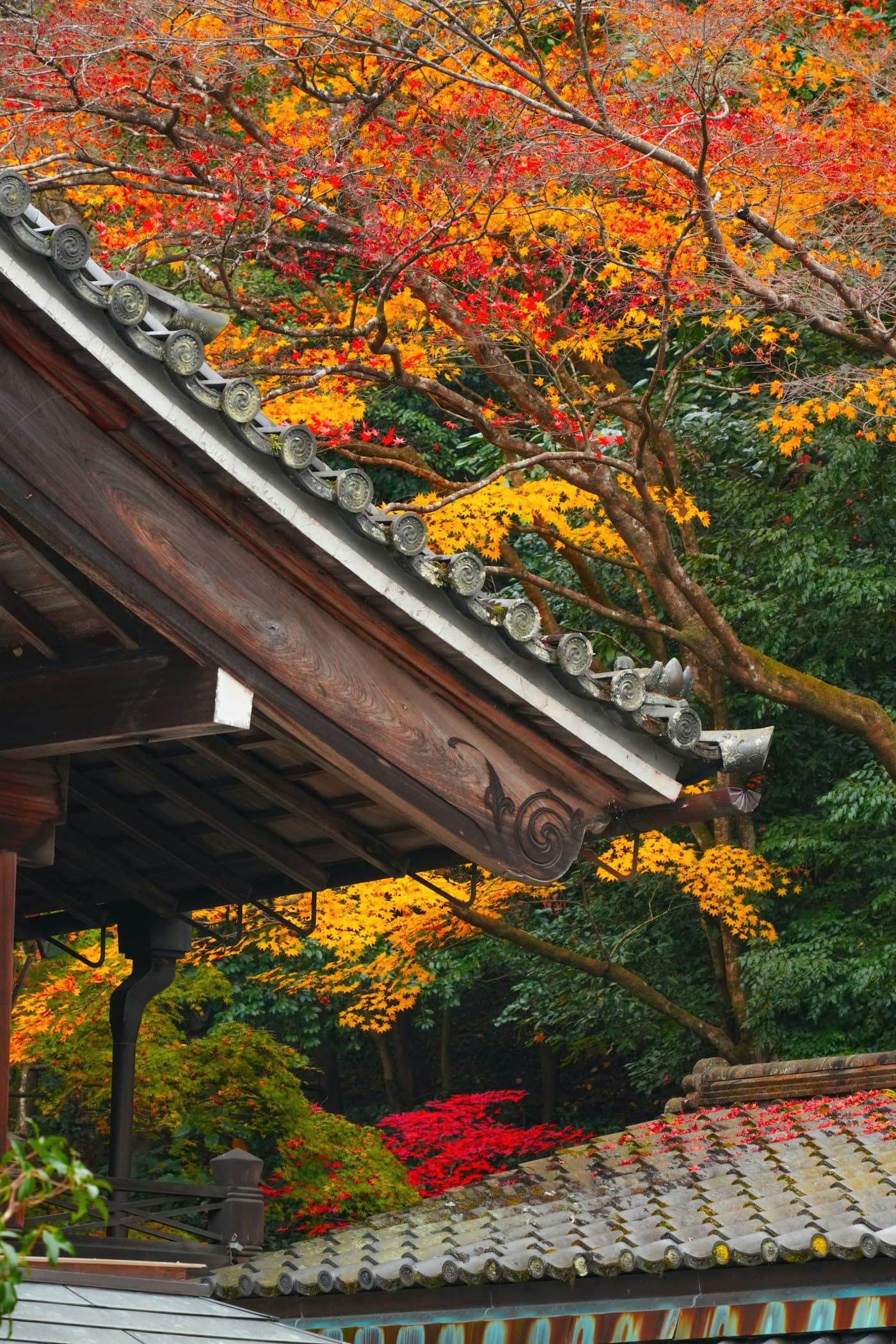
- Autumn (October–November): Comfortable temperatures, festivals, autumn colour building — see our Kyoto autumn leaves 2026 guide and the roundup of the best autumn-leaves spots.
- Winter (December–February): Fewer tourists, occasional snow at temples, deep quiet.
If your priority is cultural experiences — real ones, with community and ritual — the late October window around Jidai Matsuri 2026 is honestly hard to beat.
Other Japanese Festivals to Pair With Your Kyoto Trip
If you're already thinking in festival mode, a few other major festivals are worth checking against your dates — our Japanese festivals guide has the wider calendar:
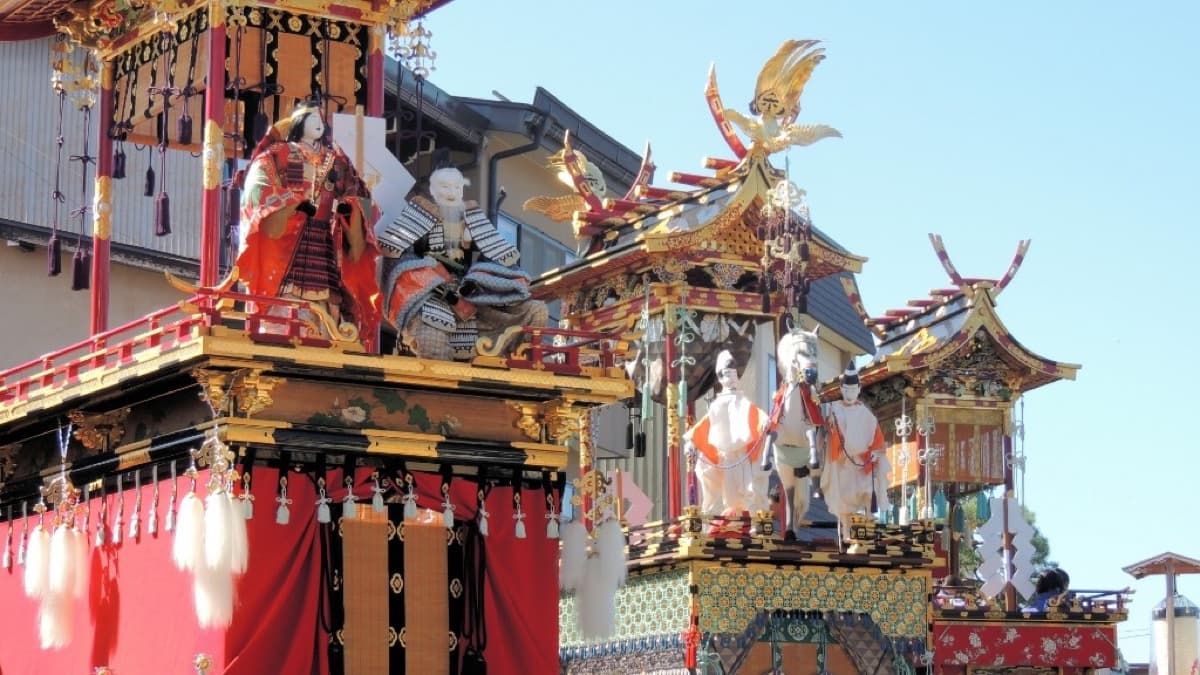
- Takayama Autumn Festival (October 9–10): Beautiful floats in the Japanese Alps.
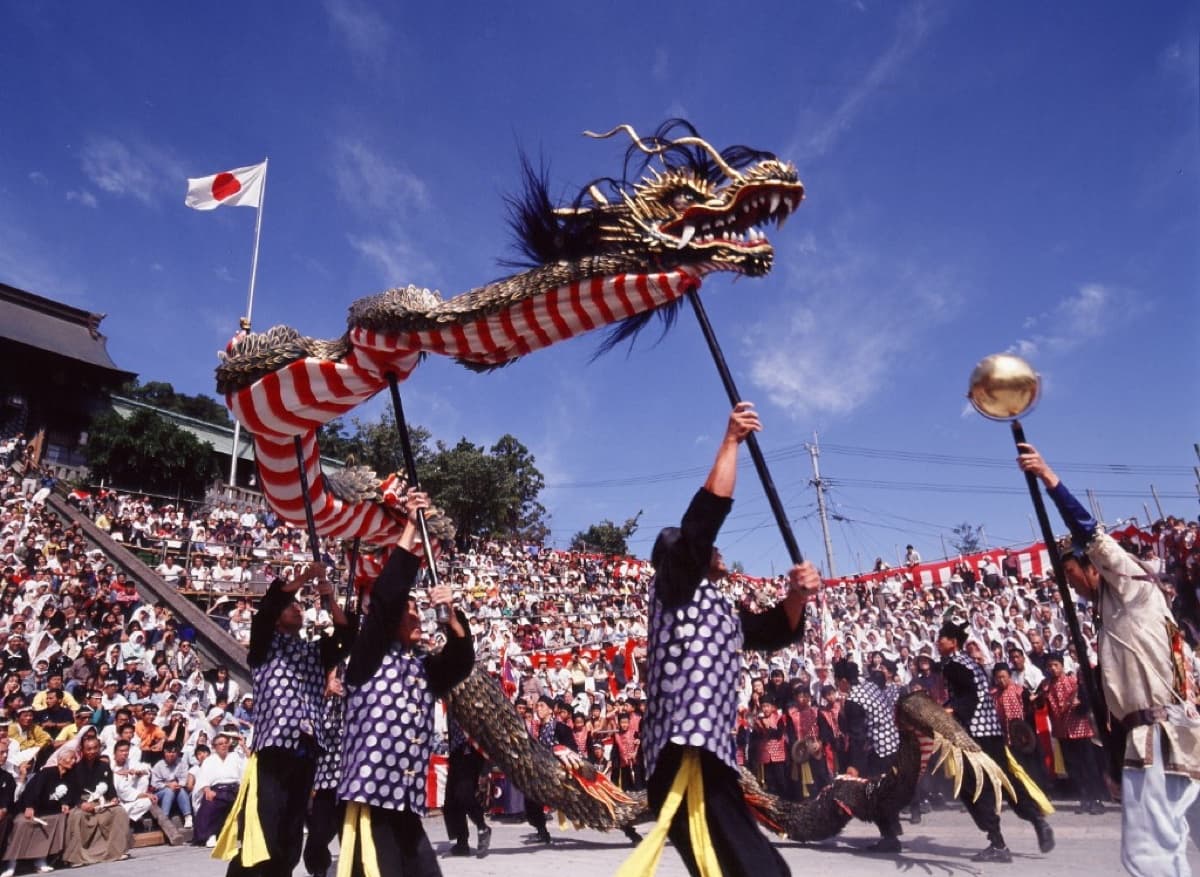
- Nada no Kenka Matsuri (mid-October): Famous fighting-shrine festival near Himeji.
- Jidai Gyoretsu-style events in smaller towns: many festivals across the country mimic historical parades on a smaller scale.
Cultural Etiquette: Small Things That Matter
Kurama is a residential mountain town. Treat it that way.
- Don't step over rope barriers.
- Don't touch torches or any festival equipment. All festival items — drums, torches, mikoshi — are considered sacred. Visitors must not touch them.
- Don't block driveways or private paths.
- Keep voices low near shrine buildings.
- Take rubbish with you.
At Jidai Matsuri, don't run out into the road to photograph. Volunteers police the route; respect the barriers.
Booking Resources
For Jidai Matsuri 2026 paid seats, the official channel is the Kyoto City Tourism Association (DMO KYOTO). Tickets usually open for sale in early to mid-September. Convenience store payment options are available; some seats sell through JTB and other travel agencies.
For Kurama, no ticket is needed for viewing. But you should:
- Book accommodation well in advance — central Kyoto fills up fast, and nearby cities such as Osaka, Nara or Kobe are worth considering thanks to the excellent rail network.
- Consider the Eizan "Ee Kippu" or the greater Kurama/Kibune sightseeing pass for transport.
- Download offline maps — signal in the mountains is spotty.
💬 From our Japan travel team
Jidai Matsuri season is one of the busiest times of the year in Kyoto. Hotels in the city are genuinely hard to find and prices run high. The good news: the area around Kyoto has an excellent transport network, so staying in a nearby city — Osaka, Nara or Kobe — is a practical option worth considering.
We offer many self-guided tours with Kyoto stays, but Jidai Matsuri season products are expected to sell out early. If you're planning to attend this year, we strongly recommend booking with us as soon as you can.
Making It a Self-Guided Trip
You don't need a bus tour to see this. In fact, group tours often don't cover both events well because of the timing. A self-guided approach gives you flexibility to reposition during the parade, catch the earlier train to Kurama, and stay for the mikoshi ritual as long as you're willing to.
At selfguidejapan.com, we build day-by-day itineraries that plug festival dates like October 22 straight into a coherent 7–14 day plan — the train legs, the reservations you actually need, and the practical details for arrival buffers, seat bookings, and hotel choice near the right subway lines. If you want a tour-quality plan without the coach bus, that's what we do. Start with your travel window and we'll fit the festivities around it.
Planning a trip to Kyoto in October, one of its busiest months? Get in touch through Plan My Trip on our self-guided tours site, and we'll suggest the tours that best fit your dates and plans.
FAQ: Jidai Matsuri & Kurama Fire Festival 2026
Is Jidai Matsuri held every year?
Yes. The Jidai Matsuri is a traditional Japanese festival held annually on October 22 in Kyoto, Japan. The only exceptions are rain postponements to October 23, or wider disruptions (as happened during the pandemic).
Do I need to book anything for the Kurama Fire Festival?
No. Admission is free and no advance registration is required. But you should plan train tickets and arrive by mid-afternoon. Note that once trains hit capacity, they stop selling tickets to Kurama.
What if it rains on October 22, 2026?
In the event of rain, Jidai Matsuri is typically postponed to the following day; a final decision is usually announced by 7:00 AM on the morning of the 22nd. The Kurama Fire Festival, by contrast, generally proceeds regardless of weather unless conditions are hazardous.
Can children attend?
Yes — with care. Children are part of the Kurama tradition (small torches are literally designed for them). Just keep close, avoid the peak crush around Sanmon Gate at 8 PM, and consider leaving before the mikoshi descent if kids are tired.
How does Jidai Matsuri compare to Gion Matsuri?
Gion Matsuri is bigger, louder, more chaotic, and stretches across July. Jidai is a single-day historical parade — calmer, more like a moving museum. Both are worth seeing at least once.
Can I do both festivals if I'm staying in Osaka?
Technically yes, but it's tight. You'd finish Kurama past 10 PM and be racing for the last trains back to Osaka. Staying in Kyoto for the night of October 22 is strongly recommended.
Plan Your October 22 Double-Bill Day
October 22, 2026 is a point on the calendar worth planning your Japan trip around: two ancient traditions, one exciting day, and a genuine celebration of what makes Kyoto different from anywhere else. We turn fixed-date events like Jidai Matsuri and the Kurama Fire Festival into full self-guided itineraries — where to base yourself, which passes to buy, the train legs that make or break the night, and how to pace the days on either side.
Dates, routes and event details per Heian Shrine, the Kyoto City Tourism Association, Yuki Shrine and Eizan Electric Railway information; Jidai Matsuri may be postponed to October 23 in rain and train capacity to Kurama is limited, so confirm on the official channels before you travel. Last updated: July 11, 2026.