
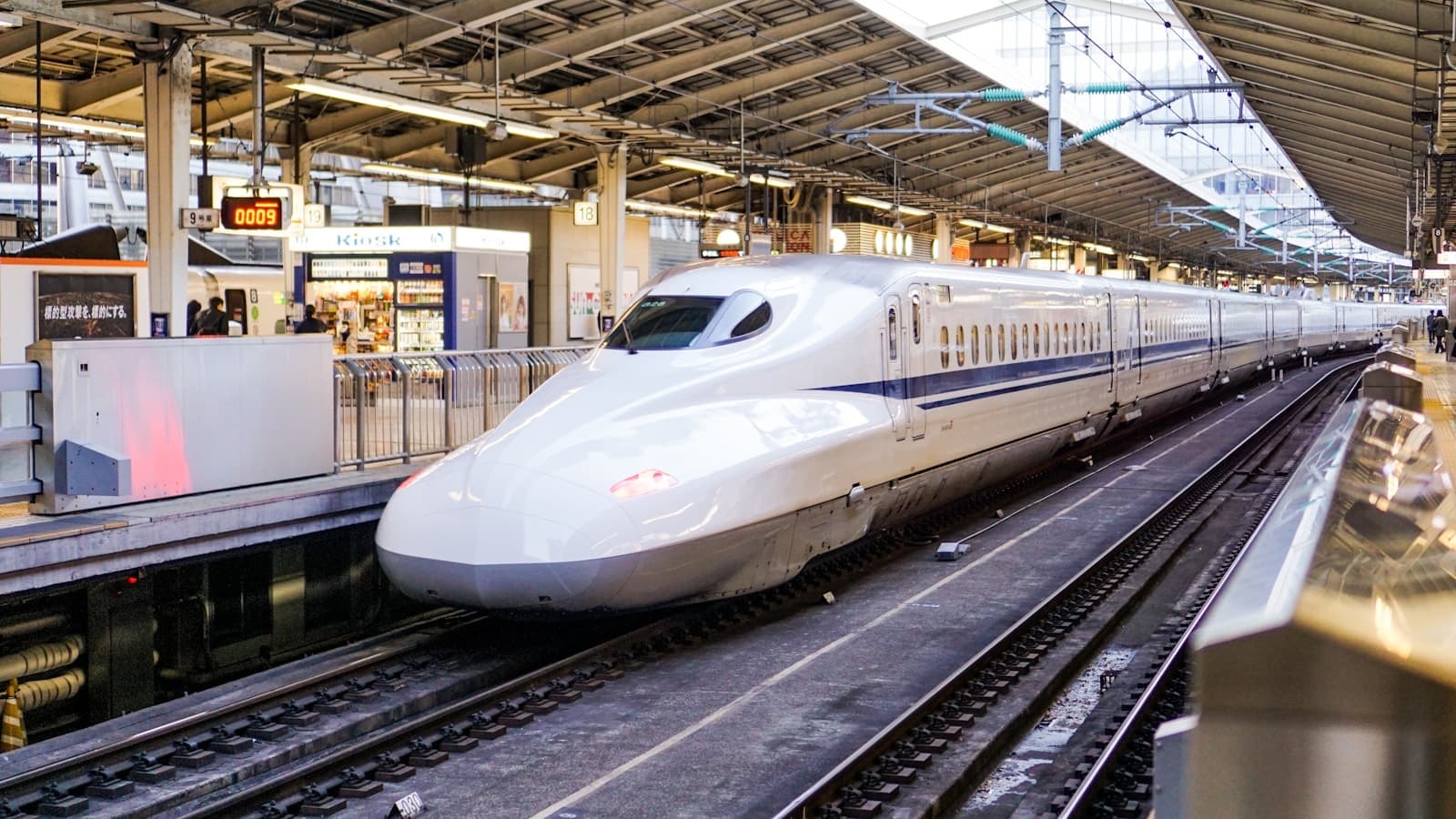
Shinkansen Obon 2026: Nozomi Has No Unreserved Seats Aug 7–16
During Obon 2026, every Nozomi shinkansen on the Tokaido and Sanyo lines runs reserved-seats-only from August 7 to 16. Here is the practical playbook: when reservations open, how to book, and what to do if you cannot get a Nozomi seat.
If you're planning to visit Japan around Obon, there's one operational rule you cannot afford to miss: during Obon 2026 (7–16 August, now over), every Nozomi shinkansen on the Tokaido and Sanyo Shinkansen ran as reserved-seats-only — and the same applies to every remaining peak this year and to Obon 2027. No non-reserved cars. No walking up to the platform, joining a queue, and hoping. If you don't hold a reserved seat ticket, you don't sit on a Nozomi.
The Obon period is one of Japan's three major holiday seasons (alongside New Year and Golden Week), and the trains fill up fast. In 2026, most of Japan observes Obon from August 13 to 16, with the peak travel window running roughly August 7 to 16 as workers stretch their leave. For Nozomi services, the reserved-seat-only operation will be in effect from August 7 through August 16, 2026. For a wider look at the crowds, weather, and festival calendar, pair this guide with our Obon 2026 dates and crowds guide and our overview of Japan in August 2026.
So here's the short version: book your reserved seat ticket the moment reservations open, use smart EX or a JR ticket office, and if you can't get a Nozomi, fall back to Hikari or Kodama trains. Below is the practical playbook.
Nozomi is the fastest service on the Tokaido Shinkansen — it links major cities such as Tokyo, Kyoto, and Shin-Osaka with fewer stops than Hikari or Kodama, so city-to-city runs take less time. That speed is exactly why it sells out first during Obon.
Quick Answer: Nozomi Reserved Seats for Obon 2026
- All Nozomi ran reserved-only August 7–16, 2026 on the Tokaido and Sanyo Shinkansen between Tokyo and Hakata — no non-reserved cars. The next all-reserved windows are Silver Week Sept 18–23, Oct 10–12, Nov 21–23, and Dec 25 – Jan 5.
- Book the instant reservations open: 10:00 AM Japan time, exactly one month before your departure date, via smart EX or a JR ticket office.
- A Japan Rail Pass alone does not cover Nozomi (or Mizuho) at any time — buy the NOZOMI/MIZUHO ticket (¥4,960 each way between Tokyo and Kyoto or Shin-Osaka), or switch to Hikari or Kodama, which are fully covered.
- Oversized luggage (over 160cm total) needs its own reserved seat — book that the same day the window opens, because those go first.
What "All Reserved" Actually Means on Nozomi Trains
For the everyday version of this route — fares, seat classes, Smart EX and the bus and flight alternatives — see our Tokyo to Osaka guide.
On a normal day, a Nozomi has a couple of non-reserved cars near the front. During Obon, those disappear. Passengers with unreserved seat tickets may stand in the regular car decks but cannot sit even if seats are vacant. That means if you turn up with just a base fare and an unreserved limited express ticket, you're standing in the vestibule between cars for the whole ride. From Tokyo to Osaka, that's about two and a half hours on your feet with your luggage.
Honestly, don't do that to yourself.
During these times, bullet trains can end up at around 200% capacity. This means passengers can be stuck standing in aisles or sitting on their luggage in the passageways between seating areas. The all-reserved rule is designed to prevent that mess — but it only works if you plan ahead.
Why JR Made This Change
The policy started in late 2023 as JR Central and JR West tried to manage the crush at major stations. All seats of Nozomi trains will be reserved seats (no non-reserved seats) on Tokaido and Sanyo Shinkansen during peak periods. For FY2026 that is eight windows, not the original three: Golden Week (Apr 24 – May 6), Obon (Aug 7–16), Silver Week (Sept 18–23), Sports Day weekend (Oct 10–12), Labor Thanksgiving weekend (Nov 21–23), year-end/New Year (Dec 25 – Jan 5), Coming-of-Age Day weekend (Jan 9–11, 2027) and the Vernal Equinox weekend (Mar 20–22, 2027), per JR Central's January and May 2026 releases. It applies to every Nozomi running between Tokyo and Hakata during those windows; Hikari, Kodama, Mizuho and Sakura keep their non-reserved cars.
Nozomi Reserved Seats Obon: The Exact 2026 Dates to Know
Mark these in your calendar:
- Nozomi all-reserved period: August 7 – August 16, 2026
- Core Obon observance: August 13 – August 16, 2026
- Peak crowd days: August 8 and 11–13 with people leaving big cities, and August 15 and 16 with people returning to the big cities
Obon 2026 peak-travel timeline (Tokaido & Sanyo Shinkansen)
| Dates | What's happening | Crowd level |
|---|---|---|
| Aug 7 | Nozomi all-reserved period begins | Building |
| Aug 8, 11–13 | Outbound rush — leaving the big cities | Peak |
| Aug 13–16 | Core Obon observance | High |
| Aug 15–16 | Return rush — back to the big cities | Peak |
| Aug 17 onward | Nozomi returns to its usual reserved / non-reserved mix | Easing |
If your travel dates fall outside the August 7–16 band, Nozomi shinkansen services return to their usual mix of reserved and non-reserved seating. But rooms and seats still get scarce in the shoulder days, so don't assume a mid-August 17 Tokyo–Kyoto trip will be quiet.
How to Book Reserved Seats for the Obon Period
Option 1: smart EX (recommended for most international travelers)
Smart EX is JR Central's English-language online reservation system for the Tokaido, Sanyo, and Kyushu Shinkansen. With "Express Reservation" (annual fee: 1,100 yen including tax) and "smartEX" (no annual fee), which are online reservation and ticketless boarding services for the Tokaido, Sanyo, and Kyushu Shinkansen, you can book a reserved seat up to one year in advance.
Here's the catch: one year in advance, you can select your desired train from the tentative train service schedule, and the train, time, and seats are confirmed after 8:00 a.m. one month prior to your boarding date. So you can lock in the intention early, but actual seat assignments only get finalised one month out.
For most travelers, the practical move is this: set an alarm for 10:00 AM Japan time exactly one month before your departure date and book then. Reserved seat tickets can be purchased up to 1 month in advance from the departure date at 10:00 AM Japan time. Popular routes and peak periods sell out fast, so booking the moment reservations open is recommended — and if you're on normal (non–JR Pass) tickets for a major-city Nozomi run during Obon, start your planning at least two weeks before that window opens so you know exactly which train and date to grab.
Reserved-seat booking timeline for Obon 2026
| When | Action |
|---|---|
| Up to 1 year before | Queue a request on smart EX from the tentative service schedule |
| 1 month before, 10:00 AM JST | Seats confirmed — book the instant the window opens |
| Same moment the window opens | Reserve any oversized-luggage seat (they go first) |
| Day of travel | Green window or ticket machine — risky during Obon; may be sold out |
Option 2: JR ticket offices in Japan
You can also book at any Midori-no-Madoguchi (green window) ticket office or ticket machine. This works fine outside peak periods. During Obon 2026? Riskier. Popular routes may already be booked out by the time you arrive.
Option 3: Japan Rail Pass — with a big caveat
This trips up so many first-time visitors. The Japan Rail Pass on its own does not cover "NOZOMI" and "MIZUHO" trains on the Tokaido, Sanyo and Kyushu Shinkansen. Pass holders can ride them only by buying a special NOZOMI/MIZUHO ticket for each journey — ¥4,960 between Tokyo and Kyoto or Shin-Osaka — and the price is the same for Green Car, reserved and non-reserved seats.
So a Japan Rail Pass alone will not put you on a Nozomi during Obon. You'd need to either buy the NOZOMI/MIZUHO ticket or, more commonly, switch to Hikari or Kodama shinkansen services, which are fully covered by the pass. If you're traveling on a JR Pass, the Nozomi all-reserved period is not something you need to stress about — you're on Hikari or Kodama anyway. If you're still weighing whether to buy one at all, see our Is the JR Pass worth it in 2026 breakdown, the current Japan Rail Pass price for 2026, or run your route through our JR Pass calculator.
💬 From our Japan travel team
Nozomi is the fastest train on the Tokaido Shinkansen — it connects major cities such as Tokyo, Kyoto, and Shin-Osaka with fewer stops, so you reach your next city faster than on Hikari or Kodama.
If you're on a Japan Rail Pass, Nozomi is never covered, so the all-reserved Nozomi period during Obon is not something you need to worry about. Plan around Hikari or Kodama instead.
If you're buying normal tickets and moving between major cities on Nozomi during Obon, we recommend starting your booking plan at least two weeks before reservations open. Seats go on sale at 10:00 AM Japan time, exactly one month before your travel date.
With our self-guided tours, we arrange accommodation, transport, and recommended sightseeing routes for your dates. If you're planning summer or Obon travel, get in touch — we can build the itinerary and handle the logistics for you.
What If You Can't Get a Nozomi Reserved Seat Ticket?
Don't panic. Several shinkansen services still offer non-reserved seating during the Obon period. The following Shinkansen services will continue to offer non-reserved seating during the Obon period: Hikari, Kodama, Mizuho, Sakura, Tsubame. These services make more stops than Nozomi and generally require a longer travel time. However, they remain good alternatives for travelers who prefer or need to use non-reserved seating.
The trade-off is time. Hikari stops at more stations than Nozomi, including Shizuoka, Hamamatsu, and Okayama, but is faster than Kodama. Travel time is approximately 3 hours between Tokyo and Shin-Osaka. Kodama trains stop everywhere and take roughly four hours on the same route.
If you have a JR Pass, Hikari is basically your default anyway. Board early at Tokyo or Shin-Osaka for the best chance of a non-reserved seat, or reserve one — it's free with the pass on Hikari and Kodama.
Price Difference Between Reserved and Non-Reserved
The gap isn't huge but it isn't nothing either. For the Nozomi, reserved seats are usually around 720 to 1,200 yen more expensive than non-reserved. This can represent around an extra 7% cost. During Obon, since non-reserved isn't even an option on Nozomi trains, you're paying the reserved fare regardless.
Oversized Luggage Seats: Book These Even Earlier
If you're hauling a big suitcase, this matters. If your luggage measures over 160cm total (length + width + height), you must reserve a seat with an oversized baggage area in advance. There's no fee for the space itself, but the number of seats with luggage access is limited, and during Obon they go first.
International travelers with two-week Japan trips almost always fall into this category. Book the oversized luggage seats the same day reservations open.
Building Obon Into a Real Self-Guided Itinerary
Here's how we'd sequence a typical Tokyo–Kyoto–Osaka–Hiroshima trip around Obon 2026:
Arrive before August 7
Base yourself in Tokyo, do the city, and travel outbound on the shinkansen before the all-reserved period starts. Cheaper, quieter.
Travel westward on August 8 or 9
If you must move during the peak, pick a morning departure and book the reserved seat ticket the day reservations open. Tokyo to Kyoto on a Nozomi takes just over two hours.
Stay put August 11–13
These are the worst outbound days. Explore Kyoto and Nara on foot or by local train. Skip long-distance rides.
Catch Gozan no Okuribi on August 16
Gozan no Okuribi is Kyoto's spectacular Obon finale on August 16 at 8 PM, where five massive bonfires are lit on surrounding mountains in distinct shapes including the famous "Dai" character. It's genuinely worth staying for.
Return east on August 17 or later
The 15th and 16th are return-crush days. If you can flex, do.
Common Mistakes International Travelers Make
- Assuming the JR Pass covers Nozomi. It doesn't, and never has.
- Waiting until arrival to book. By early August, Tokyo–Kyoto and Tokyo–Hiroshima reserved seats sell out well before departure.
- Ignoring the July "Tokyo Obon." Parts of Tokyo and Yokohama observe Obon in mid-July, but the national travel rush is still August.
- Forgetting oversized luggage seats. You'll be forced to move your suitcase mid-journey, or worse, be denied boarding.
- Trying to ride Nozomi on a non-reserved ticket during Obon. You'll stand the whole way.
Planning Your Trip with selfguidejapan.com
Booking shinkansen seats during Obon is doable on your own, but it's the sort of thing where one missed step cascades into a bad day. If you'd rather not gamble with reservations opening at 10 AM Japan time while you're asleep on the other side of the world, this is exactly what selfguidejapan.com handles. We build self-guided Japan itineraries with your shinkansen tickets, reserved seats, hotels, and day-by-day sightseeing routes locked in before you land — no queueing, no panic-refreshing smart EX, no standing in the deck of a Nozomi with your suitcase.
Have a look at our Obon-window itineraries if you want the festival experience without the transport headache.
Want your Obon shinkansen seats sorted before you fly?
We can time the reservations, secure oversized-luggage seats, and sequence Tokyo, Kyoto, Osaka, and Hiroshima around the August 7–16 crush so the whole trip flows without a single 10 AM alarm.
Would you rather have your shinkansen seats booked for you in the busy weeks? Get in touch through Plan My Trip on our self-guided tours site, and we'll suggest the tours that best fit your dates and plans.
FAQ
When exactly is Nozomi all-reserved for Obon 2026?
August 7 through August 16, 2026, on all Nozomi services between Tokyo and Hakata on the Tokaido and Sanyo Shinkansen.
Can I ride a Nozomi with a Japan Rail Pass during Obon?
Only with an extra ticket. The JR Pass alone does not cover Nozomi or Mizuho trains at any time of year; pass holders must buy a NOZOMI/MIZUHO ticket, which costs ¥4,960 each way between Tokyo and Kyoto or Shin-Osaka. Otherwise use Hikari or Kodama.
How far in advance can I book reserved seats?
Seats are confirmed one month before your departure date. Smart EX lets you queue a request up to a year ahead, but the seat assignment happens at the one-month mark, at 10:00 AM Japan time.
Are Hikari and Kodama trains also all-reserved during Obon?
No. Hikari, Kodama, Mizuho, Sakura, and Tsubame continue to offer non-reserved seating during the Obon period.
What if I miss my reserved Nozomi train?
In the event that you are late for boarding your reserved train, you may board a Shinkansen leaving later on the same date, using a non-reserved seat in an Ordinary Car. During Obon, that means Hikari or Kodama — not another Nozomi.
Is it worth traveling to Japan during Obon at all?
If you want to see Bon Odori, Gozan no Okuribi, and summer festivals — yes, absolutely. Just book everything early. Trains, hotels, and reserved seat tickets all sell out on popular routes, and last-minute planning during peak periods rarely ends well.
Plan Your Obon 2026 Trip the Easy Way
Skip the reservation scramble. We arrange your Nozomi or Hikari reserved seats, oversized-luggage spots, and hotels around the August 7–16 peak — so you experience Bon Odori and Gozan no Okuribi without the transport stress.
Nozomi all-reserved dates, booking windows, and fares reflect JR Central and JR West Obon 2026 operations and are subject to change — always confirm on smart EX or the official JR sites before booking. Last updated: July 7, 2026.
Related Articles
Luggage Forwarding Japan: The Practical Guide to Takkyubin for Self-Guided Travelers
14 min read
Tokyo to Osaka (and Back): Shinkansen vs Flight vs Bus — Times, 2026 Prices & When the JR Pass Pays
18 min read
Obon 2026 in Japan (Aug 13–16): What Closes, What Sells Out, Should You Go?
14 min read