
Things to Do in Hiroshima: The Peace Park, Castle, Okonomiyaki and Miyajima
The best things to do in Hiroshima with current prices and hours: the Peace Memorial Park and Museum (and how to book a timed ticket), what's still open at Hiroshima Castle after the keep closed, Shukkeien, okonomiyaki, kagura, Miyajima and the best day trips — plus how to get around and how many days you need.
Most people come to Hiroshima for one reason and leave having found four or five more. Hiroshima offers two very different experiences: a city that makes you think hard about history, and, a short ferry ride away, Miyajima island, built for slow wandering.
Here's the short answer to what to do in Hiroshima: spend a morning at Peace Memorial Park and the Peace Memorial Museum, walk to the castle grounds and Shukkeien Garden, eat okonomiyaki for dinner, and give a full day to Miyajima and Itsukushima Shrine. Those are the best things to do in Hiroshima; everything else is a bonus. Two days covers it comfortably. Below are the highlights and local attractions with current prices and hours (checked on each official site on October 6, 2026), what has changed this year — Hiroshima Castle's keep is now closed — and how to fit it all into a wider Japan trip.
Quick Answer: Things to Do in Hiroshima
- Must do: Peace Memorial Park and the Atomic Bomb Dome (free), and the Peace Memorial Museum (¥200 — book a timed ticket online).
- Changed in 2026: Hiroshima Castle's keep closed on March 22, 2026; the grounds and the Ninomaru buildings are still open and free.
- Eat: Hiroshima-style okonomiyaki — Okonomimura has 25 counters on three floors.
- Miyajima: a ¥200 ferry ride plus a ¥100 visitor tax; Itsukushima Shrine ¥300.
- How long: two days — one for the city, one for Miyajima.
- Getting there: about 3 hours 50 minutes from Tokyo by Nozomi, about 1 hour 25 minutes from Shin-Osaka.
Museum
¥200 · from 7:30
Streetcar
¥240 flat
Miyajima ferry
¥200 + ¥100 tax
Ideal stay
2 nights
The Best Things to Do in Hiroshima: Peace Memorial Park and the Atomic Bomb Dome
At 8:15 a.m. on August 6, 1945, an atomic bomb exploded over central Hiroshima — the first used in war. Peace Memorial Park was laid out over what had been one of the city's liveliest districts, and walking through it is the clearest way to understand Hiroshima's history and its place in World War II.
Start at the Atomic Bomb Dome on the riverbank: the gutted shell of a prewar exhibition hall, listed as a UNESCO World Heritage Site in December 1996. It's fenced off, but you can look at it from outside at any time. Then walk south. You'll pass the Children's Peace Monument, completed in 1958 in memory of Sadako Sasaki and hung with paper cranes — about ten million are offered every year — and the Peace Flame. At the Cenotaph, unveiled on August 6, 1952, the flame and the Dome line up exactly through the arch. Its inscription reads: "Let all the souls here rest in peace, for we shall not repeat the evil." Anyone may lay flowers.
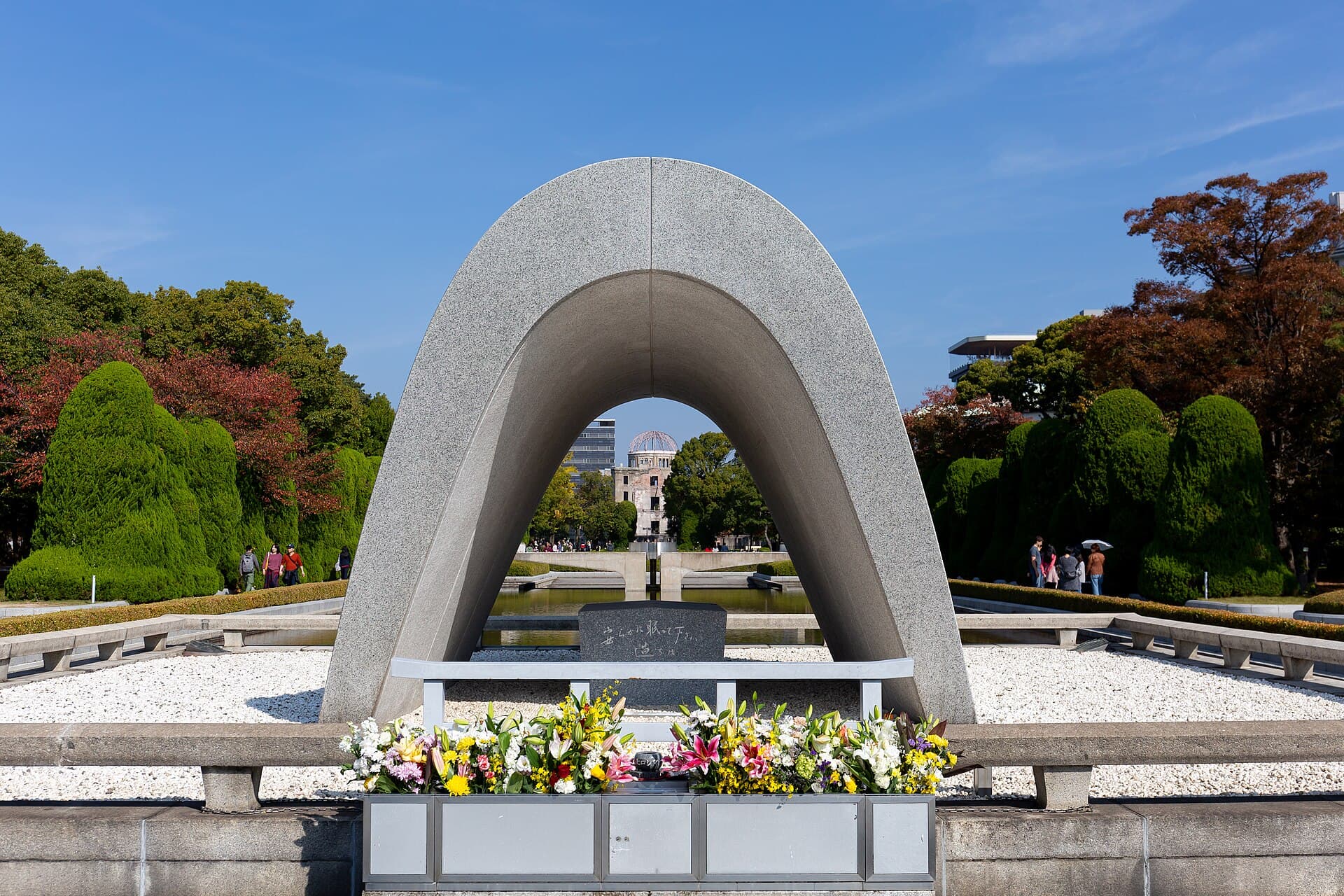
The park is free and open around the clock. Come back in the evening too, when the tour groups and most tourists have gone and the Dome is lit. And don't skip the Hiroshima National Peace Memorial Hall for the Atomic Bomb Victims next to the museum: entry is free, it's far calmer, and its survivors' memoirs and video testimony put names and faces to the victims of the bombing, so you learn about the people as well as the past. Every year on August 6 the city holds the Peace Memorial Ceremony in the park, with a minute's silence at 8:15.
Hiroshima Peace Memorial Museum: Tickets, Timing and What to Expect
If you only do one thing in Hiroshima, make it this. Admission is ¥200 for adults and ¥100 for high school students, and free for younger children. Since its renewal the main building centers on real artifacts — clothing, notes, photos — and the personal stories of the people they belonged to. You'll learn more here in two hours than from any textbook. Most people leave with a heavy feeling, and that's the point.
Crowds are the real issue: the museum itself says it gets very crowded during the day and recommends buying a web ticket in advance, because same-day ticket lines can be long. A few things to know:
- Hours: 7:30–18:00 from December to February, 7:30–19:00 from March to July and September to November, and to 20:00 in August. Last entry is 30 minutes before closing.
- Early and late slots are online only: from 7:30 to 8:30 and in the last part of the day (16:30 onward in winter) you can only get in with a web reservation; the ticket counter and machines don't sell those slots.
- Booking: web tickets go on sale 90 days ahead, with a timed entry; overseas visitors book through Klook.
- Closures: December 30–31, and February 15–20, 2027 for exhibit changes.
- Free programs: a guided tour by Hiroshima Peace Volunteers and a daily talk by A-bomb Legacy Successors, who present survivors' testimony — a good way to learn the background before you walk the halls.
Our tip: take the 7:30 slot. You get the quietest rooms of the day and the rest of the morning for the park.
From our Japan travel team
Walk-up queues at the Hiroshima Peace Memorial Museum can run long, especially in busy months. Booking an early-morning slot online is the simplest fix, and hotels and shinkansen seats also fill up fast at busy times, so start planning early. Our self-guided tours handle the bookings and support you through the trip, so feel free to get in touch if you'd like help with the timing.
Hiroshima Castle: What You Can Still See After the 2026 Closure
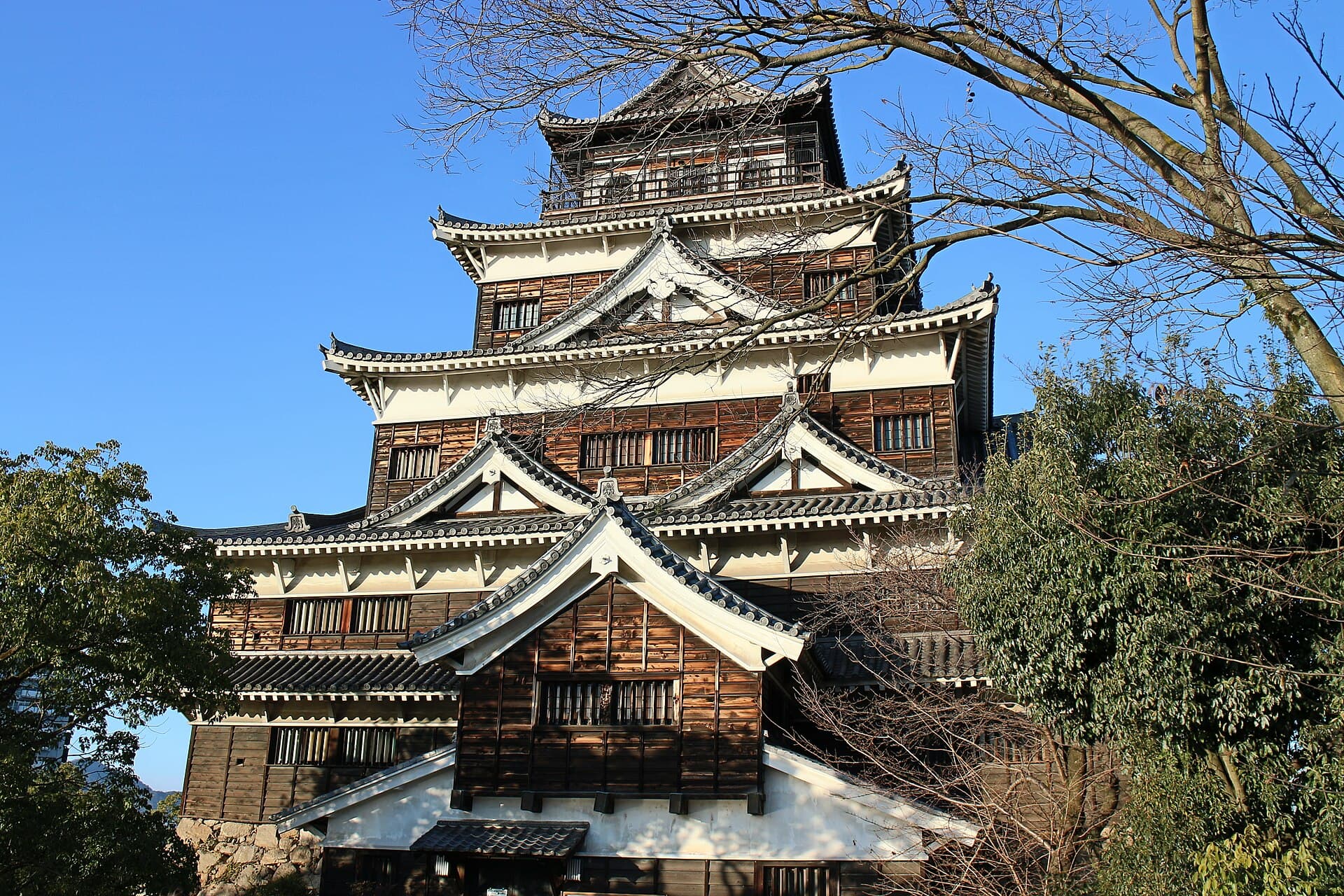
Hiroshima Castle was founded in the late 16th century and destroyed by the atomic bombing. Its keep was rebuilt in reinforced concrete in 1958 and ran as a history museum for about 68 years — until March 22, 2026, when the city closed it for safety, citing deteriorating concrete and aging equipment. The building is still standing and you can admire it from outside, but you can't go in. A rebuild in wood has been studied, but the city says nothing has been decided.
Still worth the walk? Yes, if you know what to expect. The moats, stone walls and grounds are free to wander, and the reconstructed Ninomaru buildings by the main gate are open, also free (9:00–16:30 from October to March). On weekends and holidays a small wooden boat takes you around the moat in about 20 minutes (¥1,000). Coming later? A new Sannomaru History Museum opens on June 1, 2027, with its main gallery — including objects moved out of the keep — from October 1, 2027. Pair the castle with Shukkeien on one walking loop, and don't pay for a tour that promises the castle interior.
More Things to Do in Hiroshima City
Shukkeien Garden
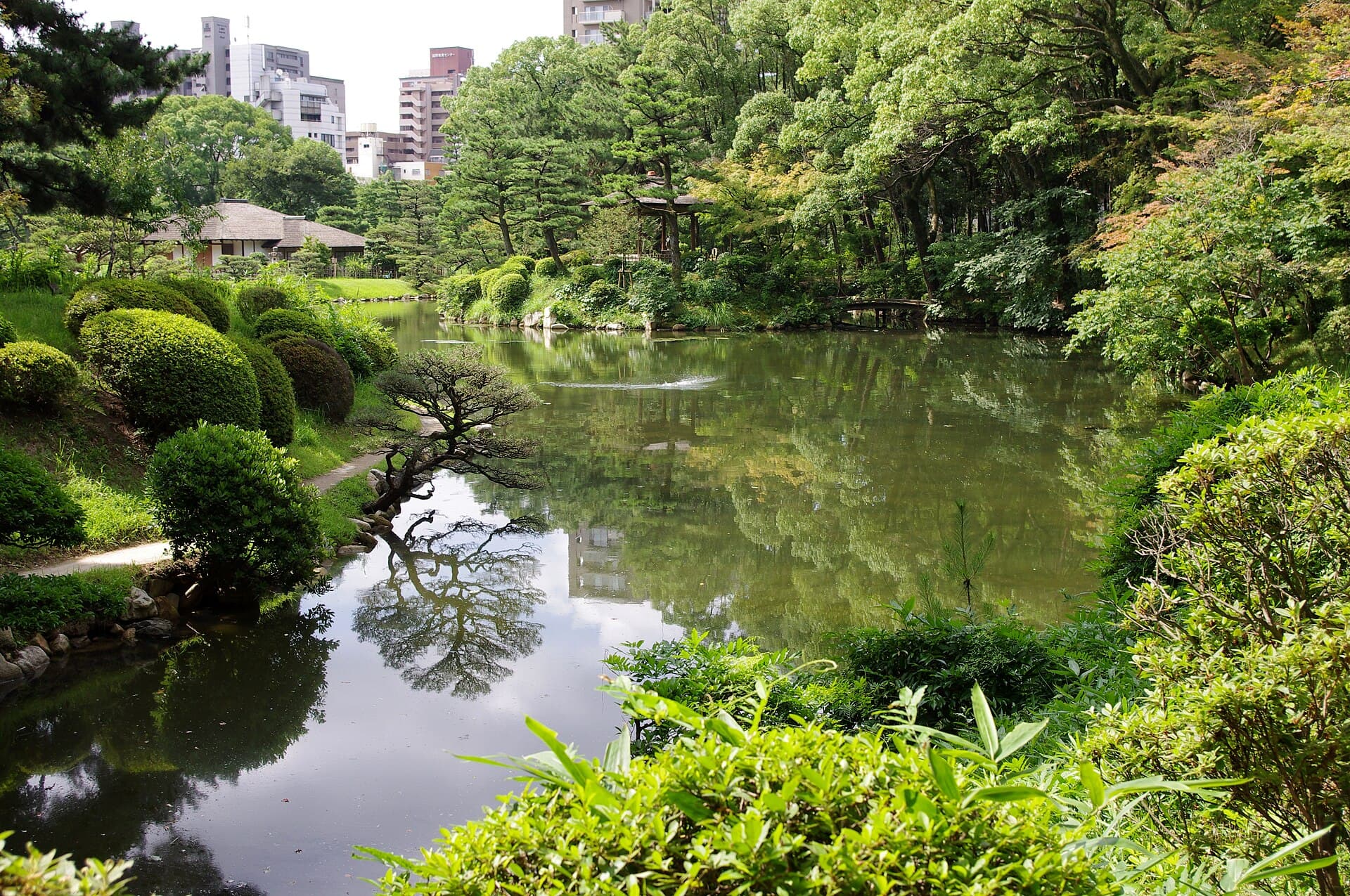
Shukkeien was laid out in 1620, and its history mirrors the city's: wrecked in 1945, restored afterwards. Today it's a strolling garden of ponds, little bridges and teahouses, a great place to slow down after the museum, and a gentle introduction to Japanese culture if Hiroshima is your first stop in Japan. Entry is ¥350 (free for over-65s with ID), open 9:00–17:00 from mid-September to mid-March, closed December 29–31. A combined ticket with the Hiroshima Prefectural Art Museum next door costs ¥660.
Orizuru Tower
Right nearby, next to the Atomic Bomb Dome, Orizuru Tower has an open-air rooftop deck looking straight down on the Dome and the park (10:00–18:00, ¥2,200). For ¥100 more you can fold a paper crane and drop it into the "Orizuru Wall" that runs down the building.
Museums, and Mazda for car fans
The Hiroshima Museum of Art, near the castle, is a small museum of mainly French and Japanese modern art; its special exhibition on artists and cafés runs until January 11, 2027 (¥2,200, which also covers the collection). Car fans can tour the Mazda Museum for free, but only by reservation: the English tour leaves the Mazda head-office lobby at 14:15 on weekdays, and bookings open three months ahead. It's closed over New Year (December 26 to the morning of January 5) and from February 8 to 26, 2027.
Okonomiyaki, Oysters and Where to Eat
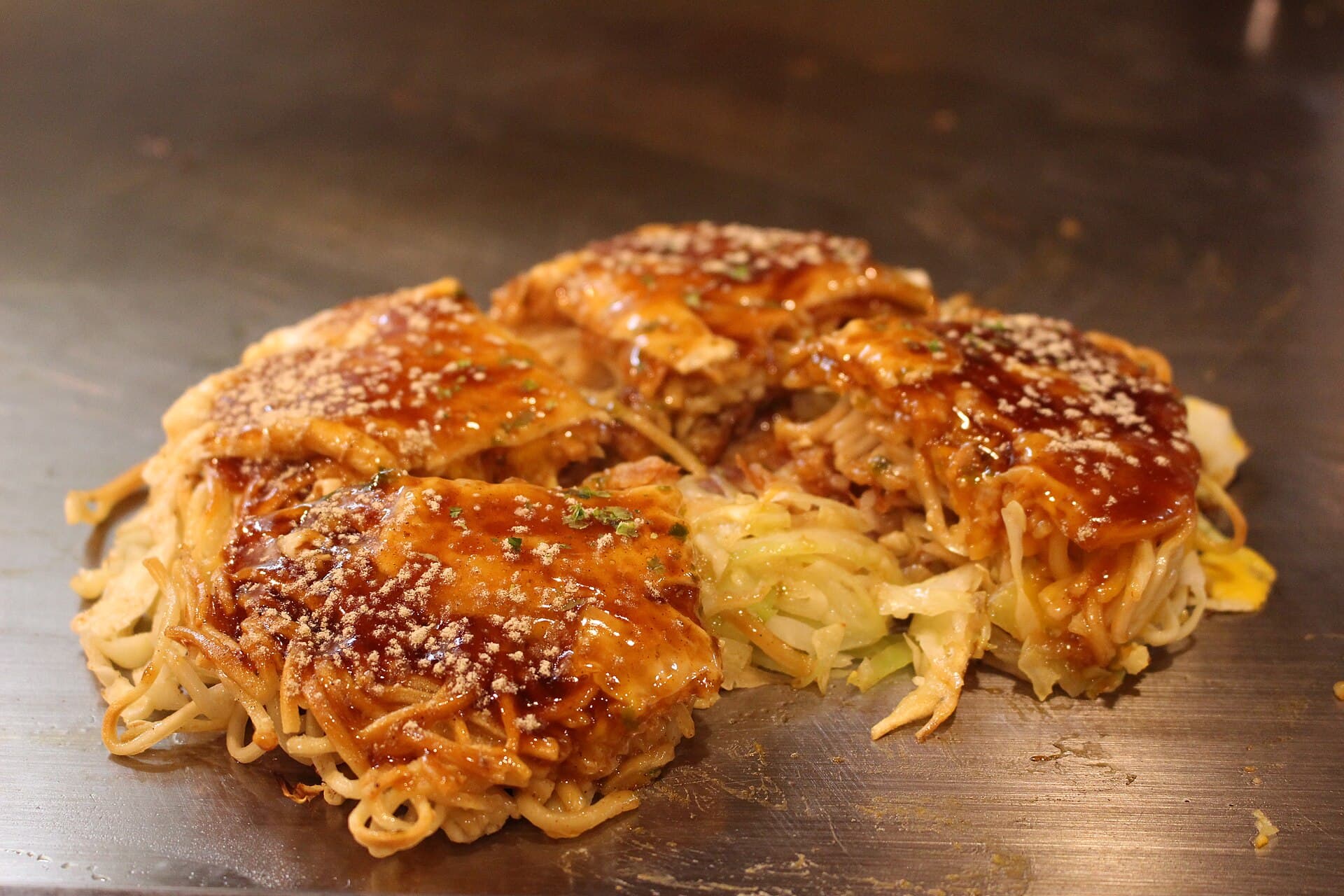
Hiroshima-style okonomiyaki is the local food everyone should try, and it's layered, not mixed: a thin crepe, a mountain of cabbage, pork, noodles and egg, all cooked on the griddle in front of you. Okonomimura, near the Hondori arcade, packs 25 independent counters onto three floors of one building. Pick a floor, walk the corridor and sit wherever there's a free stool — it's fun, and easy on your own or with friends. Can't decide on a shop? Check a few more reviews on Google Maps. Every shop sets its own hours, all the seats are counter seats around the griddle, and there's nowhere to leave luggage, so drop your bags first.
Oysters are the other local obsession: Hiroshima grows more than 60% of Japan's farmed oysters, and they're a cold-weather food, grilled on Miyajima's main street or fried and in hot pots across the city. A caution for this winter: last season was hit by heavy oyster die-offs after long spells of high sea temperature, and the Miyajima Oyster Festival in February 2026 was cancelled. No outlook for the 2026–27 season had been published in early October. And try momiji manju, the maple-leaf cakes filled with bean paste that were first made on Miyajima.
Kagura and Evenings Out
Kagura is the region's energetic folk theater, with masks, drums, smoke and lightning-fast costume changes — loud, fun and a real slice of local culture. Each performance is given by a local troupe. Regular evening performances are held at the Hiroshima Prefectural Culture Center every Wednesday from April 1 to December 23, 2026, starting at 19:00 and lasting about 45 minutes. If you're in town on a Wednesday, it's a great way to spend an hour after dinner.
Afterwards, Nagarekawa, the city's main nightlife district, is full of small bars. In winter, Hiroshima Dreamination lights up Peace Boulevard and the city center from December 4, 2026 to January 24, 2027, 17:30–22:30 — later than usual this year. In baseball season, a Hiroshima Carp game with friends is a real taste of local life.
Miyajima Island and Itsukushima Shrine: The Classic Day Trip
Miyajima, officially Itsukushima, is the island everyone pictures when they think of Hiroshima: a vermilion torii gate standing in the sea. Itsukushima Shrine joined the World Heritage list in 1996, the same year as the Dome. The island's highlights fit into one relaxed day, and it's the one place on this list you shouldn't miss; for the full island guide — ferries, tides, the ropeway and a two-day plan — see our Hiroshima and Miyajima guide.
Getting there: train and ferry, or the sea route
From Hiroshima Station, take the JR Sanyo Line to Miyajimaguchi (about half an hour) and walk to the pier. The JR and Matsudai ferries both take about 10 minutes and cost ¥200 each way, plus the ¥100 Miyajima Visitor Tax, which is added to the fare. The Japan Rail Pass covers the JR ferry. The Hiroden streetcar also runs all the way to Miyajimaguchi for the flat ¥240 fare, but takes over an hour.
Prefer to skip the train? The World Heritage Sea Route boat runs from Peace Memorial Park straight to Miyajima island in about 45 minutes, down the city's rivers and across the bay — a memorable way to get between the two World Heritage sites: ¥2,400 one way or ¥4,400 return, plus the tax. Some sailings can't run at certain tides, so check the timetable.
Itsukushima Shrine: tides, tickets and timing
Shrine admission is ¥300. It opens at 6:30 and closes at 17:00 in December and 17:30 from January 4 to February. At high tide the shrine and torii seem to float; at low tide you can walk across the sand to the base of the gate. The Miyajima Tourist Association publishes the day's best times for both, so check before you pick your ferry. Early mornings are quietest, before the day-trippers from Osaka and Kyoto arrive. One thing you won't see this winter: the island's five-story pagoda is wrapped for restoration until November 2027.
Hike Mount Misen, or ride the ropeway
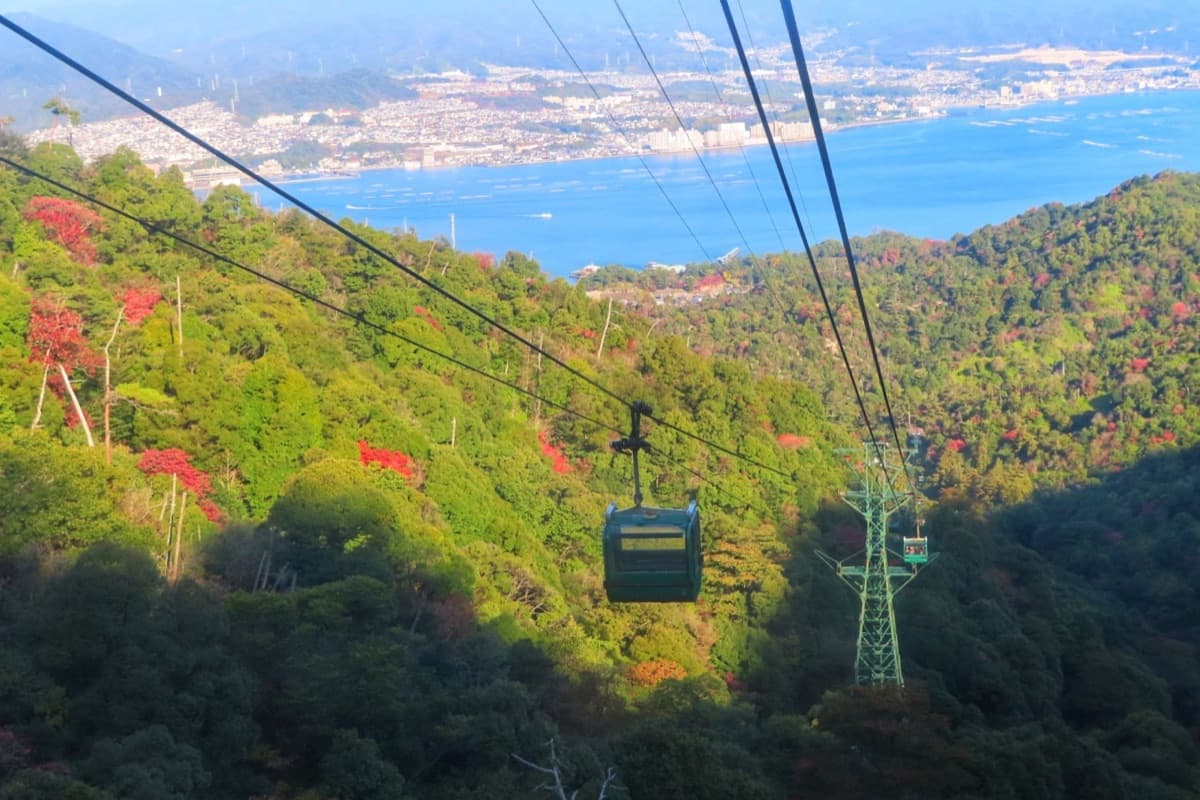
At 535 meters, Mount Misen is the island's highest point, with wide views over the Seto Inland Sea. Three trails lead up from the town, and the climb takes about one and a half to two hours. Not up for the full hike? The Miyajima Ropeway (¥2,000 return) runs uphill from 9:00 to 16:00, with the last car down at 16:30; from the top station it's about another hour's round trip on foot to the summit. On busy autumn days you need to reserve the ropeway in advance.
Omotesando: oysters, deer and souvenirs
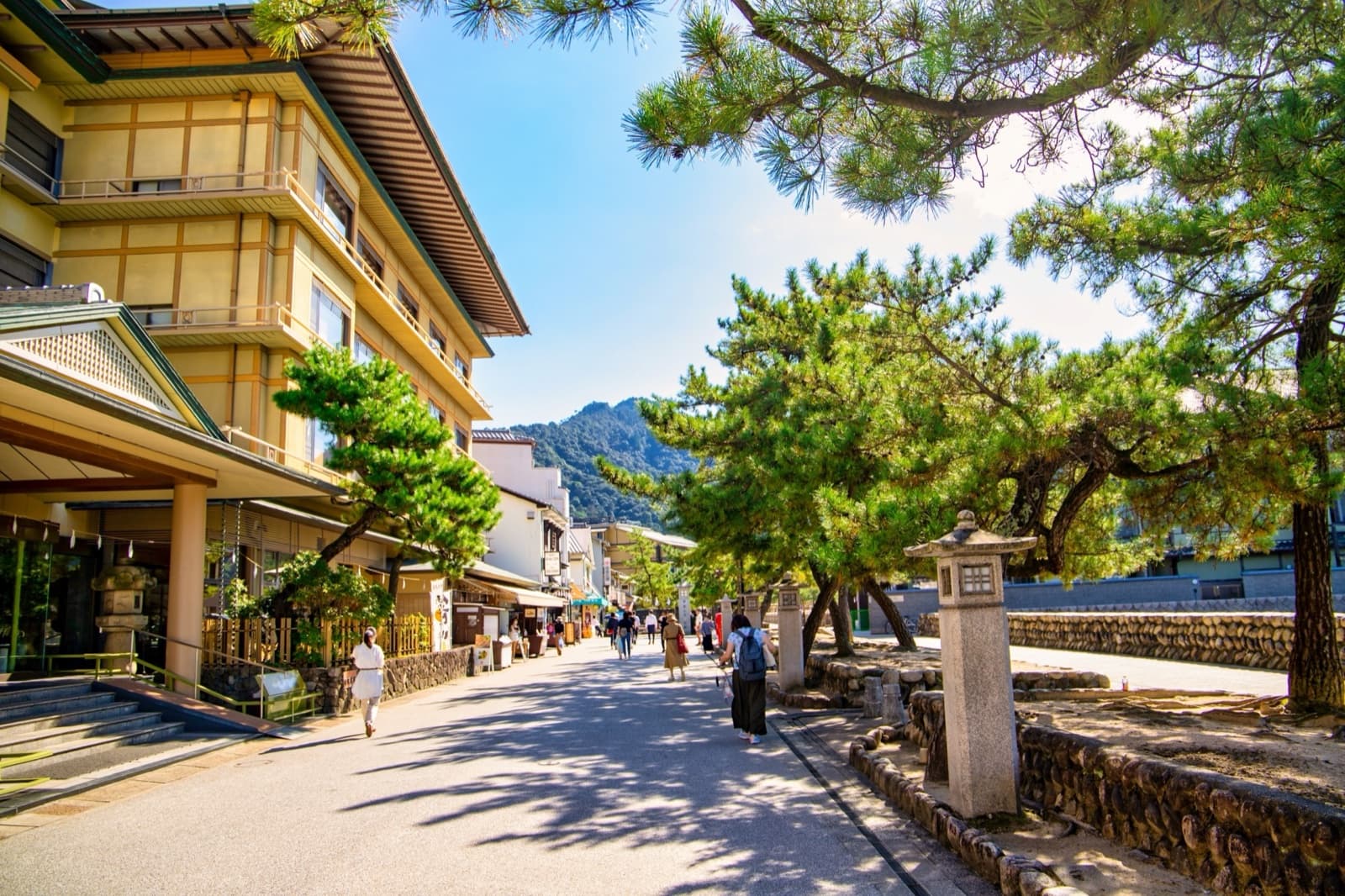
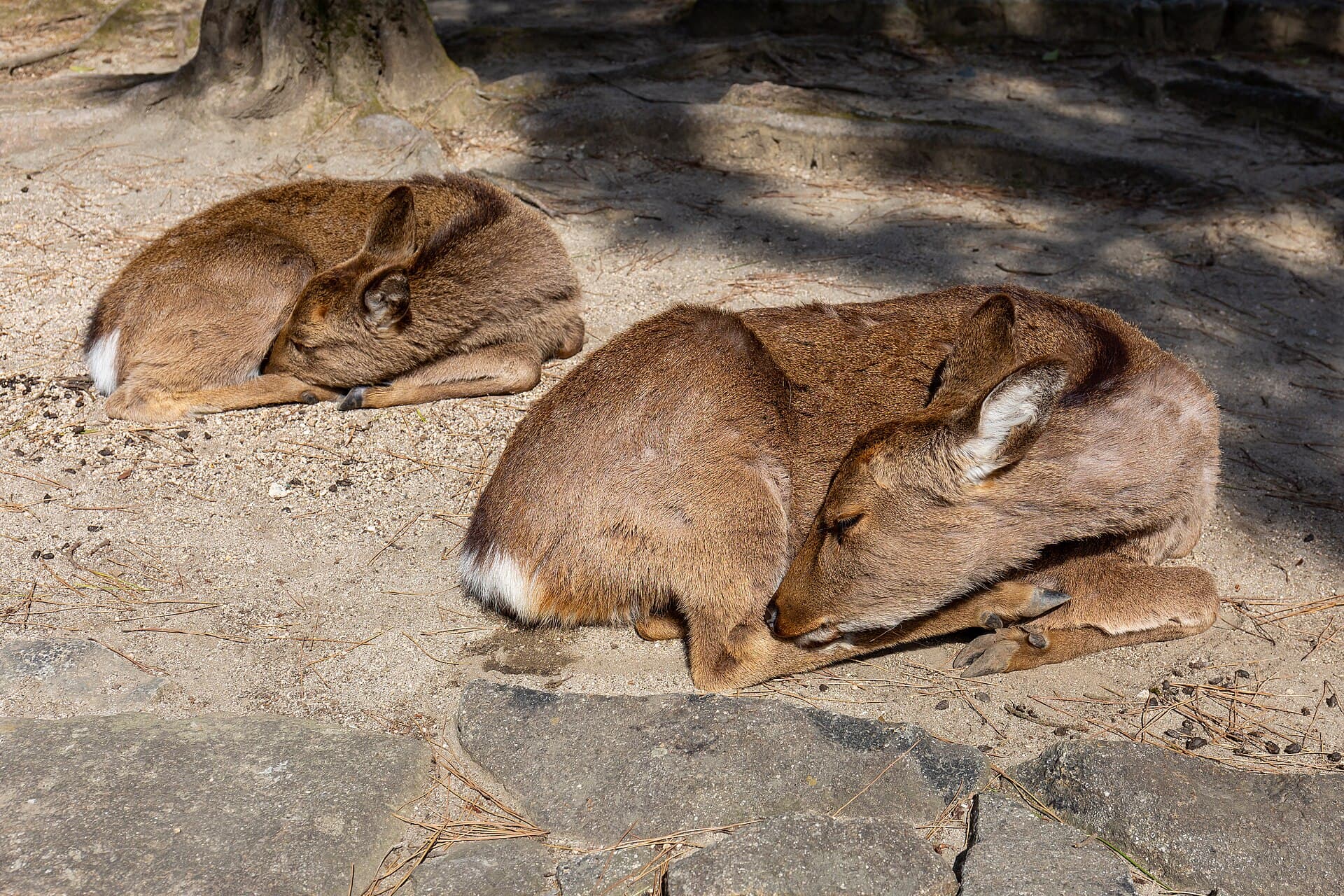
Omotesando, the shopping street a few minutes from the pier, is the island's food street, lined with stalls grilling local oysters and every kind of shop selling momiji manju. Deer wander freely; don't feed them, and keep paper and snacks out of reach. If you can, stay into the evening: once the day-trippers and tour groups leave, you get the lit-up shrine without the crowds, and the ferries run until late in the evening (the last JR boat from Miyajimaguchi leaves at 22:42).
From our Japan travel team
Hiroshima is about 1 hour 20 minutes from Shin-Osaka by Nozomi shinkansen, so the city and Miyajima can work as a long day trip from the Kansai area. Our self-guided tours include free days in Osaka and Kyoto, so if your dates line up you can fit Hiroshima in without rebuilding the itinerary. Just ask and we'll help you slot it into your route.
Day Trips From Hiroshima
- Iwakuni and the Kintaikyo Bridge: a five-arched wooden bridge over a clear river. The bridge fee rose to ¥500 on September 1, 2026; the toll booths are staffed from 8:00 (8:30 on the far side) to 17:00.
- Kure and the Yamato Museum: the naval museum is open again after its renovation (¥1,000, closed on Tuesdays), about 30 minutes from Hiroshima by JR rapid train plus a short walk.
- Onomichi: a hillside temple town on the Inland Sea, about 40 minutes by Kodama to Shin-Onomichi plus a 15-minute bus, or about an hour and a half by local train with a change at Mihara.
- Okunoshima: "rabbit island", home to around 600 tame rabbits, a 15-minute boat ride from the mainland.
Hiroshima Prices and Hours at a Glance
| Sight or ticket | Adult price | Hours and notes |
|---|---|---|
| Peace Memorial Park, Atomic Bomb Dome, Peace Memorial Hall | Free | Park open at all hours; the Dome is viewed from outside its fence |
| Peace Memorial Museum | ¥200 (high school ¥100; younger free) | 7:30–18:00 Dec–Feb, 7:30–19:00 Mar–Jul and Sep–Nov; closed Dec 30–31 and Feb 15–20, 2027 |
| Hiroshima Castle | Grounds and Ninomaru free | Keep closed since March 22, 2026; Ninomaru 9:00–16:30 Oct–Mar |
| Shukkeien Garden | ¥350 (65+ free with ID) | 9:00–17:00 mid-Sep to mid-Mar; closed Dec 29–31 |
| Orizuru Tower | ¥2,200 | 10:00–18:00 |
| Hiroden streetcar | ¥240 flat fare, any distance | Day pass ¥700; with the Matsudai ferry to Miyajima ¥1,000 |
| Meipuru-pu sightseeing loop bus | ¥240 a ride, ¥600 a day | Japan Rail Pass accepted |
| Miyajima ferry (JR or Matsudai) | ¥200 each way + ¥100 visitor tax | About 10 minutes; the JR ferry accepts the Japan Rail Pass |
| Itsukushima Shrine | ¥300 | 6:30–17:00 in December, to 17:30 from January 4 |
| Miyajima Ropeway | ¥2,000 return | Up 9:00–16:00, last car down 16:30 |
One more cost: since April 1, 2026, Hiroshima Prefecture charges an accommodation tax of ¥200 per person per night when the room rate is ¥6,000 or more, paid at your hotel.
Getting to Hiroshima and Getting Around
By shinkansen, Hiroshima is about 3 hours 50 minutes from Tokyo on the fastest Nozomi, about 1 hour 20–25 minutes from Shin-Osaka, about 1 hour 40 minutes from Kyoto and about an hour from Hakata in Fukuoka. From Hiroshima Airport, the limousine bus to the station takes about 50 minutes (¥1,500).
For local transport in town, the Hiroden streetcars charge a flat ¥240 per ride anywhere on the network (you pay when you get off; IC cards such as Suica and ICOCA work), and a one-day pass costs ¥700. Since August 2025 the trams run straight into the Hiroshima Station building, stopping on the second floor level with the JR central ticket gate, which makes the change from the shinkansen easy. The Meipuru-pu sightseeing loop bus (¥240 a ride, ¥600 a day) stops at the castle, the Dome and the Peace Park, and accepts the Japan Rail Pass. Most central sites and attractions are within walking distance of each other once you're there, so take the tram to the Peace Park and explore on foot.
How to Spend Two Days in Hiroshima
- Day 1 — the city: the 7:30 museum slot, then the Peace Park and the Dome, Orizuru Tower or the castle grounds and Shukkeien after lunch, okonomiyaki for dinner, and kagura if it's a Wednesday.
- Day 2 — Miyajima: an early train to Miyajimaguchi and the ferry, the shrine at a good tide, the ropeway and Misen, oysters on Omotesando, and back to Hiroshima in the evening — or the sea route straight back to the Peace Park.
Only one day, coming from Osaka or Kyoto? Stick to two highlights: the Peace Park and museum in the morning, Miyajima in the afternoon. Drop the castle, and start early. From Tokyo, don't try it as a day trip — that's nearly eight hours on trains for a day of sightseeing.
Common mistakes
- Turning up at the museum at midday in a busy season without a ticket. The museum itself warns that the halls get very crowded in the daytime; book a timed slot online.
- Expecting to go inside Hiroshima Castle. The keep is closed.
- Ignoring the tides on Miyajima.
- Missing the last ropeway at 16:30 and walking down at dusk.
- Trusting old fares. Many sites still quote ¥220 for the streetcar and the loop bus, and ¥310 for Kintaikyo.
- Rushing Peace Memorial Park on a tour-bus schedule. Give it time.
Self-Guided Routes With Two Nights in Hiroshima
28 of our self-guided routes stay two nights in Hiroshima — enough for the city and Miyajima — and combine it with Tokyo, Kyoto, Osaka or the Inland Sea. Our staff meet you at the airport with your trip documents, the tickets for the legs we book and a loaded IC card, and 24/7 support services come with every self-guided tour. There's no guide walking with you day to day, but a local guide can be arranged as an option if you'd like someone to share the history at the Peace Park. Entry fees and the Miyajima ferry are paid on the spot unless the route says otherwise. Prices are per person and move with the departure date and room type.
| Route | Length | From (USD per person) | Shape |
|---|---|---|---|
| Japan History & Modern Cities (BF004) | 7 days | $1,400–1,900 | Tokyo, Hiroshima and Osaka, two nights each — the shortest way to add Hiroshima. |
| From Tokyo to Kyushu Journey (BF005) | 7 days | $1,500–2,000 | Tokyo, Himeji on the way west, Hiroshima, then Fukuoka. |
| Kansai & Setouchi: History, Onsen & Island Beauty (KA003) | 8 days | $2,200–3,100 | Starts in Osaka: Kinosaki Onsen, Himeji, then two nights in Hiroshima. |
| Culture, Nature, and Universal City Adventure (TP002) | 12 days | $3,000–4,400 | Tokyo, Hiroshima and Miyajima, three nights by Universal Studios in Osaka, then Kyoto. |
| Family Holidays: Shared Journey Through Japan’s Classics (FG001) | 13 days | $2,700–4,100 | Family hotels; in Hiroshima the Grand Prince Hotel, with a ferry ticket from the hotel to Miyajima included. |
| Spirit of Tradition: Shirakawa-go & Cultural Japan (GR009) | 14 days | $4,100–5,900 | Hakone, Takayama, three nights in Kyoto, Nara, then Hiroshima. |
| Setouchi Sea Paths & Historic Port Towns (SE003) | 11 days | $3,400–4,900 | Onomichi and Tomonoura, Hiroshima, then the ferry across the Inland Sea to Dogo Onsen. |
| Luxury Journey, Your Way: Hiroshima & Kyoto (LX003) | 10 days | $6,900–8,400 | Green Car trains, chartered sightseeing taxis and a high-speed ferry to Miyajima. |
Interested in a tour? Click the route name above, or search by route code in the top-right Search bar.
Building a longer trip? Our two-week Japan itinerary and things to do in Kyoto guide pair well with Hiroshima, and Fukuoka is an hour further west.
Interested in adding Hiroshima and Miyajima to your Japan trip? Get in touch through Plan My Trip on our self-guided tours site, and we'll suggest the tours that best fit your dates and plans.
FAQ: Things to Do in Hiroshima
How many days do you need in Hiroshima?
Two days lets you cover the main highlights without rushing: one for the city, one for Miyajima. Add a third if you want a day trip to Iwakuni, Kure or Onomichi, or a slower island day.
Is Hiroshima worth visiting?
Yes. The Peace Memorial Park and Museum are among the most moving places in Japan, and Miyajima island is one of the country's most beautiful, a short ferry ride away. The park's message, symbolized by the Peace Flame, is one of hope as much as grief. Add okonomiyaki and an easy-going city, and two nights is well spent.
Do you need to book the Hiroshima Peace Memorial Museum?
It's strongly recommended. The museum gets very crowded in the daytime, and the early-morning (7:30–8:30) and late-afternoon slots can only be entered with a web reservation. Tickets go on sale 90 days ahead; overseas visitors book through Klook.
Is Hiroshima Castle open?
The grounds are, but the keep closed on March 22, 2026 because of deteriorating concrete and aging equipment. You can still see it from outside, and the Ninomaru buildings are open for free. A new history museum opens in the castle grounds on June 1, 2027.
Can you see Peace Memorial Park and Miyajima in one day?
Yes, if you start early: book a 7:30 museum slot, walk the park, then take the World Heritage Sea Route boat from the park or the JR train and ferry to Miyajima after lunch.
How much does it cost to visit Miyajima?
The ferry is ¥200 each way plus a ¥100 visitor tax, Itsukushima Shrine is ¥300 and the ropeway ¥2,000 return. The JR ferry is covered by the Japan Rail Pass.
Checked on October 6, 2026 on the official sites of the Hiroshima Peace Memorial Museum, Hiroshima City, Hiroshima Castle, Shukkeien, Orizuru Tower, the Hiroshima Museum of Art, the Mazda Museum, Okonomimura, the Miyajima Tourist Association, Itsukushima Shrine, the Miyajima Ropeway, JR West Miyajima Ferry, Miyajima Matsudai Kisen, Hatsukaichi City (visitor tax), Aqua Net Hiroshima (World Heritage Sea Route), Hiroden, Chugoku JR Bus, Hiroshima Prefecture (kagura and accommodation tax), Hiroshima Dreamination, Iwakuni City, the Yamato Museum, the Onomichi Tourist Association and Kyukamura Okunoshima; shinkansen times from JR Central's timetable; oyster data from Japan's Fisheries Agency. Routes and prices are from our catalog on the same date. Hero photo: our own.
Related Articles
Hiroshima and Miyajima: The Peace Park, the Shrine Island, and How to Do Both in Two Days
12 min read
Miyajima Autumn Leaves 2026: A Self-Guided Guide to Momijidani, Mt Misen and Beyond
11 min read
Things to Do in Kyoto: What’s Worth It, What It Costs, and a 3-Day Kyoto Itinerary
13 min read