
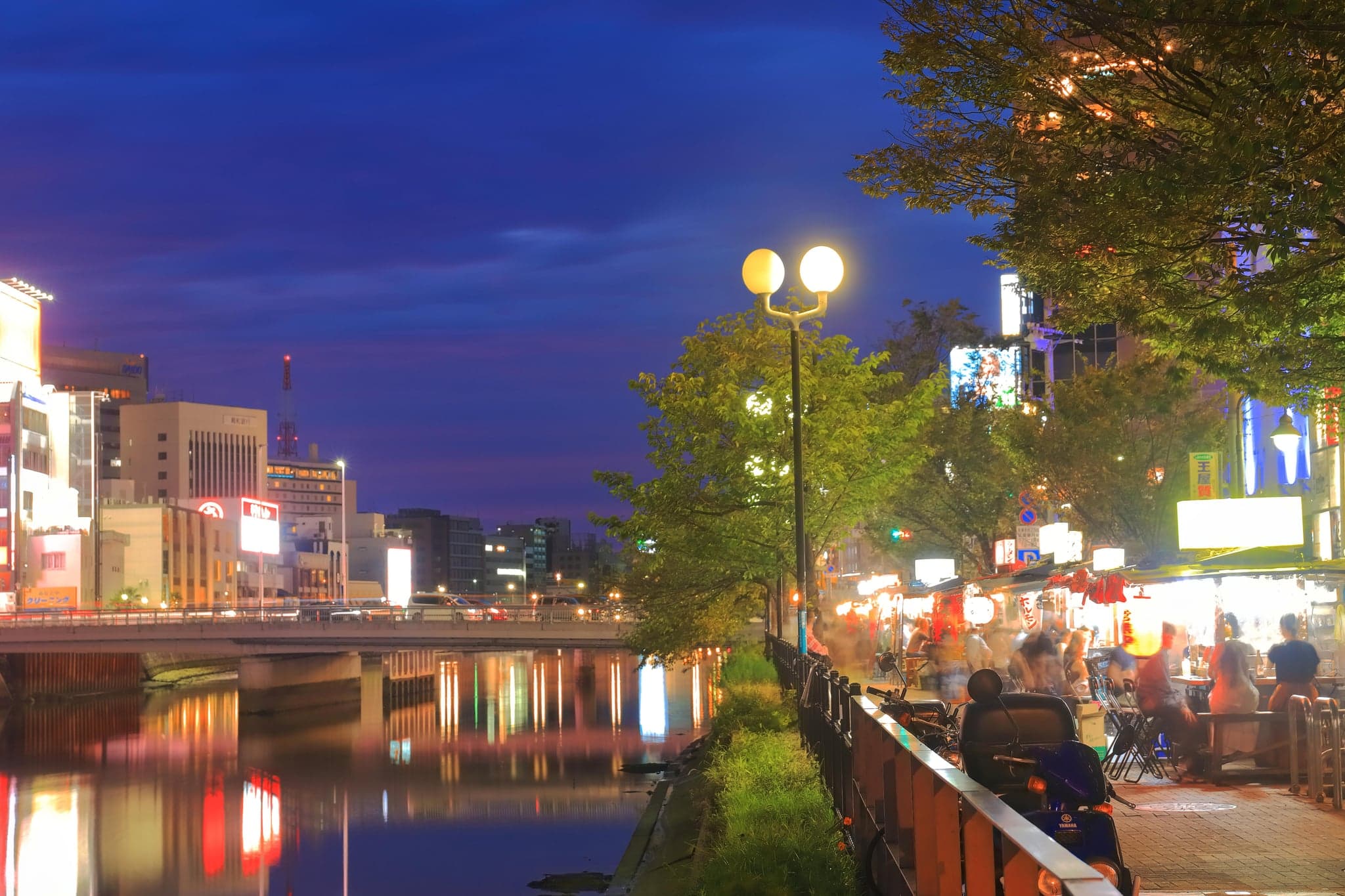
Things to Do in Fukuoka: Yatai Nights, Hakata Ramen, Dazaifu and the Gateway to Kyushu
Fukuoka's sights with 2026 fees and hours — the yatai food stalls, Hakata Old Town, Canal City, Ohori Park and the castle ruins — the day trips to Dazaifu, Nanzoin and Yanagawa, getting around, and the self-guided routes that stay two nights here.
Fukuoka is the big city of Kyushu, Japan's southern main island: easygoing, walkable, on the sea, and famous across the country for what it eats. It is where tonkotsu ramen comes from, where a hundred open-air food stalls set up along the river every evening, and where most trips into Kyushu begin.
It is also one of the easiest cities in Japan to arrive in. The airport is five minutes from Hakata, the city's main station, by subway, the Shinkansen reaches Hiroshima in about an hour, and the whole center is compact enough to walk.
Twelve of our self-guided routes stay in Fukuoka, all for two nights. This Fukuoka travel guide covers the things to do in Fukuoka with this year's fees and hours, the best day trips, how to plan a Fukuoka trip, and what those routes include.
Quick Answer: Fukuoka
- How long: two nights — one day for the city, one for Dazaifu or another day trip, and two evenings for the yatai.
- Don't miss: the yatai food stalls (most open 18:30–19:00, cash only at most), Hakata ramen, Kushida Shrine, Ohori Park and Dazaifu.
- Getting in: the airport to Hakata station is 5 minutes and ¥260 on the subway.
- Dates: the Grand Sumo Kyushu Basho runs 8–22 November 2026; the Hakata Gion Yamakasa festival is 1–15 July.
- On our routes: twelve routes stay two nights in Fukuoka, from the 7-day BF005 (from $1,500) to the Kyushu routes that start here.
Airport
5 min to Hakata
Stay
2 nights
Yatai
100 stalls
Our routes
12 stay here
Is Fukuoka Worth Visiting?
Yes — and more so than its place on most first-time itineraries suggests. Fukuoka is one of Japan's largest cities, on the sea, and it has what the bigger cities have without the crowds: shopping districts, good hotels, a lively nightlife and some of the best food in Japan.
Its history is older than Tokyo's. Hakata was a trading port with China and Korea for centuries — South Korea is closer than Tokyo — and the temples and shrines of Hakata Old Town date back to that time.
For first time visitors on a trip to Japan, Fukuoka works in two ways. It is the natural western end of a route along the Shinkansen from Tokyo via Kyoto and Hiroshima, and it is the gateway to Kyushu island: Nagasaki, Kumamoto, Beppu and the hot springs of northern Kyushu all start here.
Yatai Food Stalls and Hakata Ramen
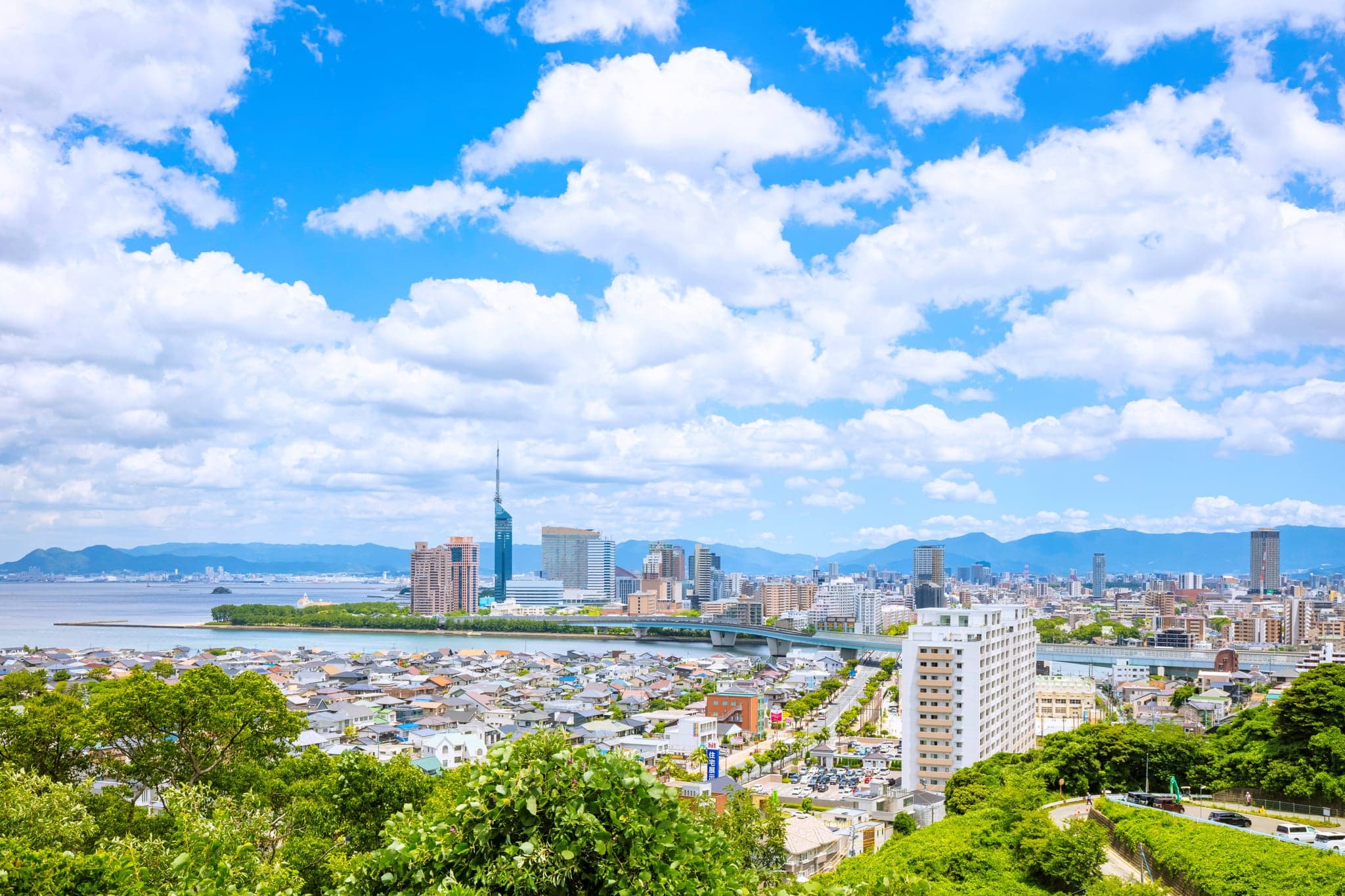
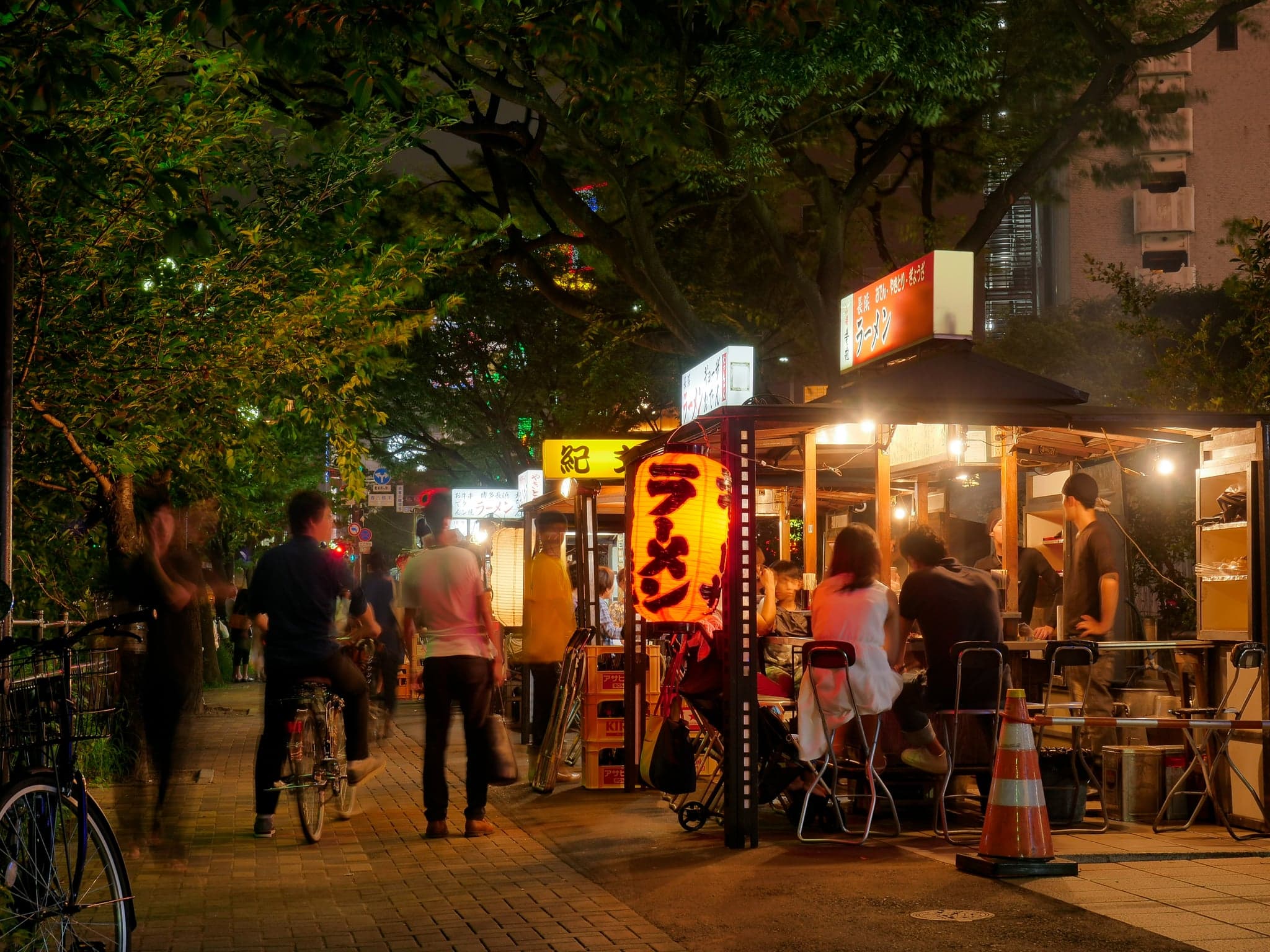
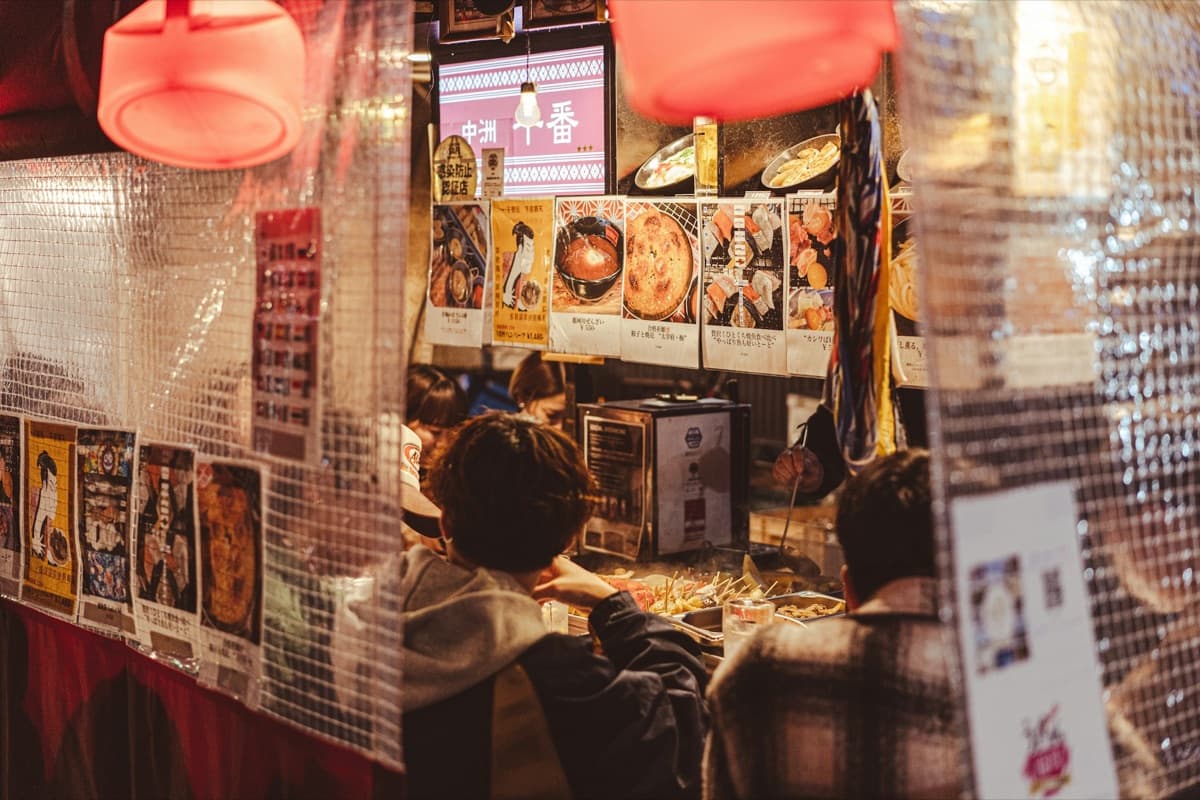
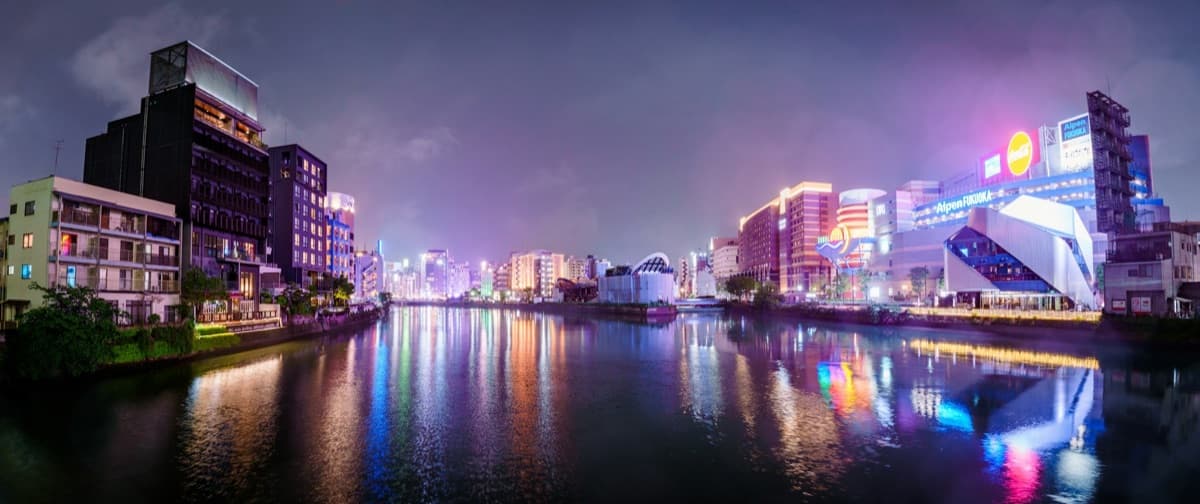
If you only do one of the things to do in Fukuoka, make it the yatai. These open-air food stalls — each a tiny kitchen with a counter and a handful of stools — are set up on the street every evening and taken down again before dawn. Fukuoka has about a hundred of them, more than any other city in Japan.
How the Yatai Stalls Work
City rules allow yatai to operate from 17:00 to 4:00, setup included. In practice most open between 18:30 and 19:00 and close around midnight.
There are three main clusters: Nakasu, along the Naka River, the most atmospheric and the most visited; Tenjin, among the office towers; and Nagahama, near the fish market.
Most stalls take cash only — the city's guide says only about one in ten accept cards. Share seats, order a drink and a few dishes, and don't linger once you have finished: the stools are for the next people in line.
Hakata Ramen
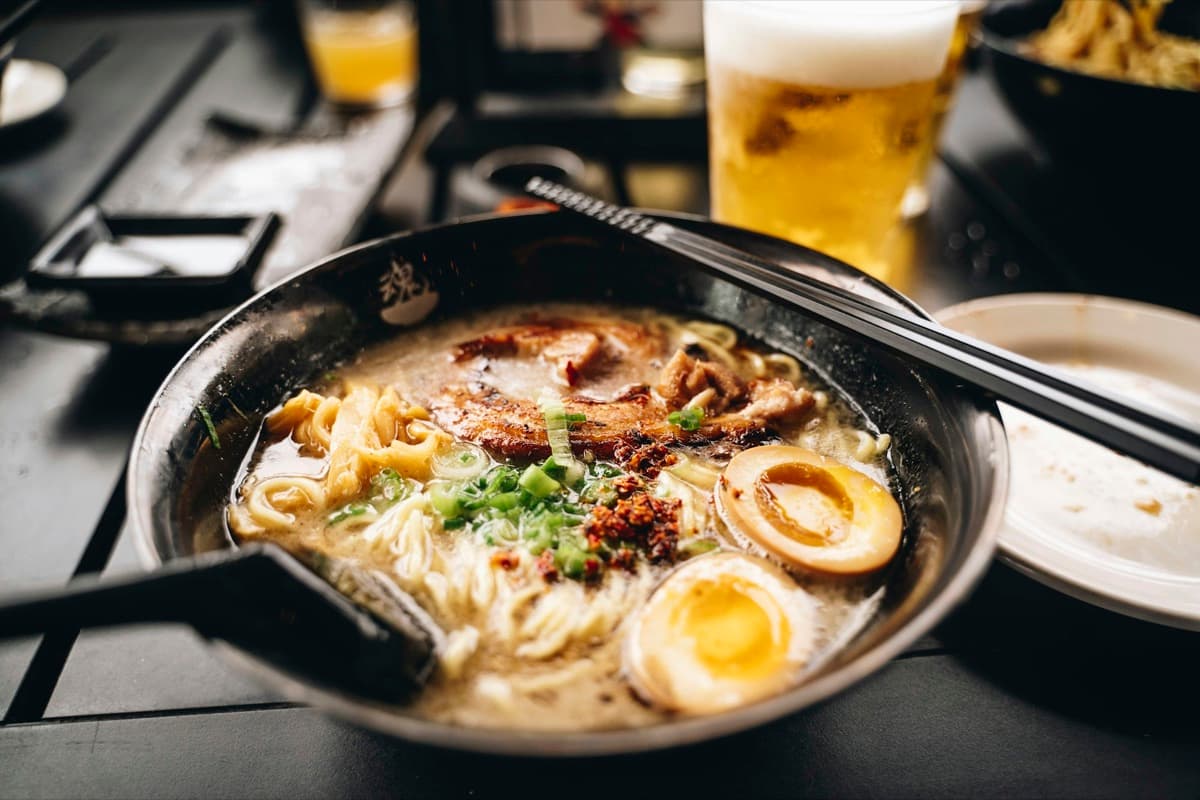
Hakata ramen is tonkotsu ramen: a cloudy, rich pork-bone broth with thin, firm noodles, and the city's tourism site calls it the local product of Hakata and Fukuoka. You order the noodles by firmness, and when you finish them you can ask for a second serving of noodles — kaedama — for the same broth.
You will find tonkotsu ramen at the yatai, in small shops all over the city, and at the Ramen Stadium in Canal City Hakata, which reopened in April 2026 with eight shops on the fifth floor, open 11:00–23:00.
Chicken Hot Pot and Other Fukuoka Food
The other dishes to look for are mizutaki, a chicken hot pot in a milky broth; motsunabe, a beef-offal hot pot with cabbage and garlic; and mentaiko, spicy pollock roe, which you will see in every souvenir shop. A sit-down mizutaki dinner is the Fukuoka splurge.
From our Japan travel team
Most travelers try the yatai on their first night and wish they had saved it for the second. On the first evening you are still finding your feet; by the second you know which stretch of the river you like and how the stalls work. If you are with us for two nights, keep one dinner free for the yatai and plan nothing after it.
Hakata Old Town and the Hakata Ward Sights
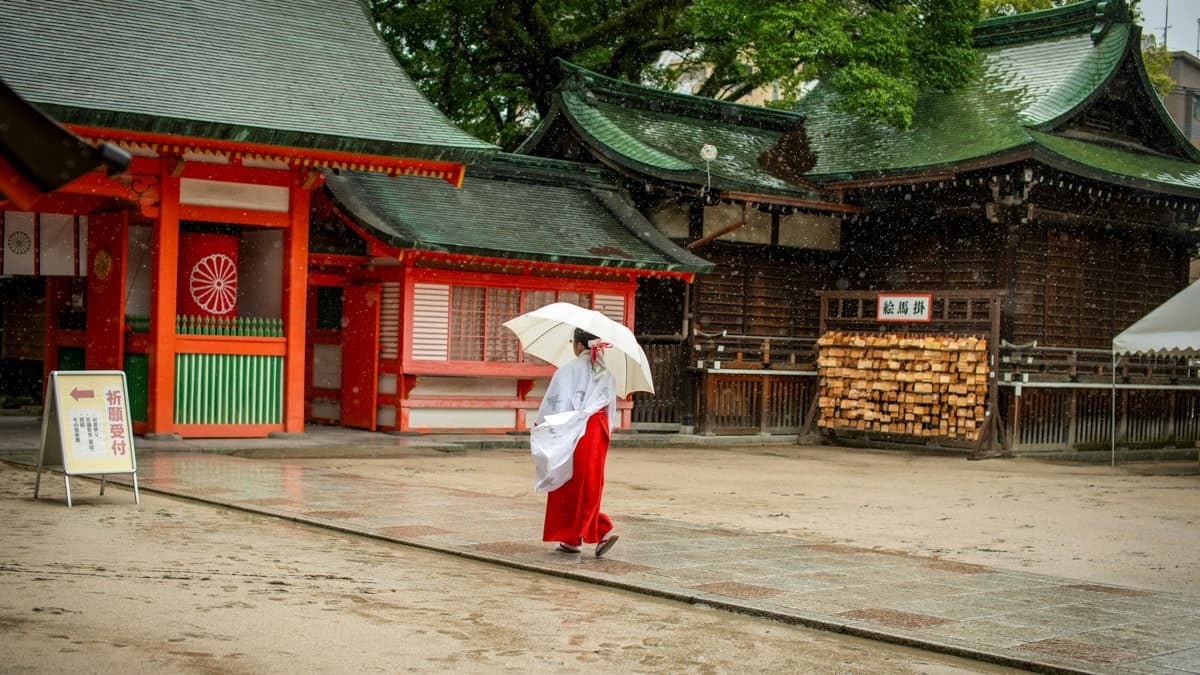
Hakata Ward is the old merchant half of the city, around Hakata station. Most people who visit Fukuoka stay in Hakata Ward or in Chuo Ward across the river. The Hakata Old Town area, just north-west of the station, is the historic trading-port district, where temples such as Shofukuji and Jotenji stand a short walk from Kushida Shrine.
Kushida Shrine
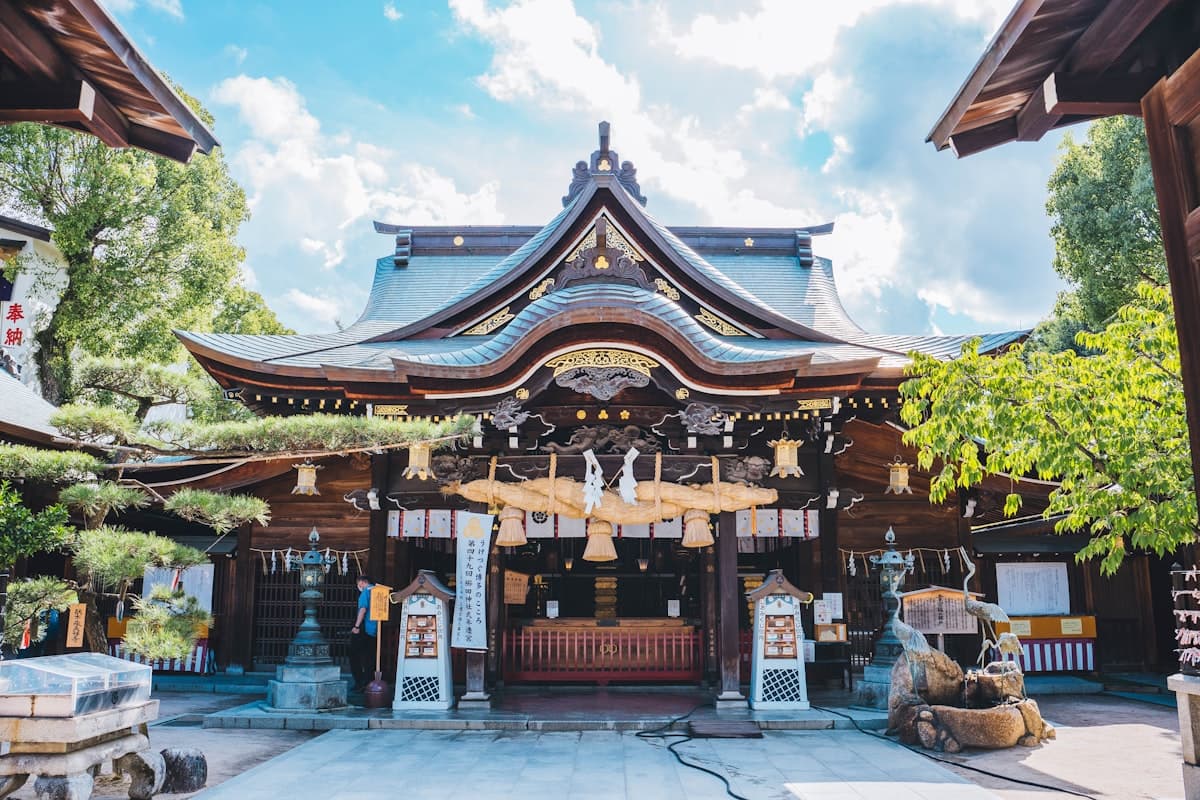
Kushida Shrine is the guardian shrine of Hakata and the home of the Hakata Gion Yamakasa festival, held every year from 1 to 15 July. The festival ends with the Oiyama race through the streets, which starts at 4:59 on the morning of 15 July.
Even if you miss the festival, you can see one of its decorative floats: a float about 13 m tall stands in the shrine grounds all year except June. The gates open 4:00–22:00, so you can visit early or after dinner.
Tochoji Temple and the Wooden Buddha
A few minutes away, Tochoji Temple was founded in 806 by Kukai, the monk who brought Shingon Buddhism to Japan. Its great hall holds the Fukuoka Daibutsu, a large wooden Buddha 10.8 m tall and weighing 30 tonnes, carved from cypress. The temple is open 9:00–17:00, the Buddha hall until 16:45.
Kawabata Shopping Arcade and Canal City Hakata
From Kushida Shrine, the covered Kawabata shopping arcade runs through Hakata Ward toward the river: two arcades, about 400 m, with more than 130 stores selling everything from festival goods to local sweets. The Kamikawabata festival float is usually on show in the arcade too.
At the other end is Canal City Hakata, a shopping and entertainment complex built around a curving indoor canal, with shops open 10:00–21:00 and restaurants until 23:00. Its fountain shows run through the day and into the evening — and the Ramen Stadium is on the fifth floor.
Hakata Station, KITTE Hakata and Hakata Ekimae
Hakata station is a destination in itself. The JR Hakata City building has department stores and restaurant floors, and a rooftop garden open 10:00–22:00, with KITTE Hakata next door and the office district of Hakata Ekimae around it. The Hakata Bus Terminal, for highway buses around Kyushu, is next to the station.
Tenjin and Chuo Ward: Ohori Park and Fukuoka Castle
Across the Naka River, Tenjin in Chuo Ward is the modern center, and Chuo Ward is also where the parks are: department stores, fashion, coffee shops and the city's biggest shopping areas.
Tenjin Underground Mall and Tenjin Central Park
The Tenjin underground mall (Tenjin Chikagai) runs for 590 m beneath the main street, with about 150 shops open 10:00–20:00 and restaurants until 21:00 — useful on hot or rainy days. Above ground, Tenjin Central Park is a small green space by the river.
Ohori Park
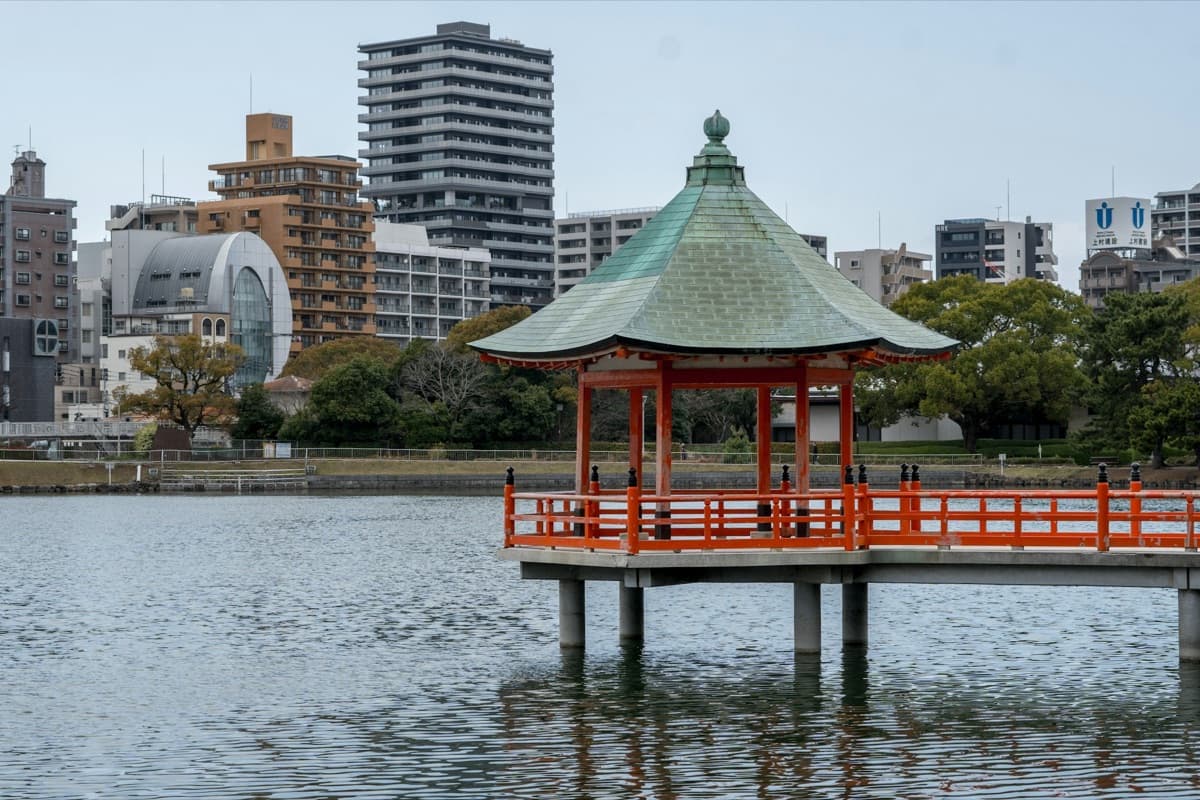
Two subway stops west, Ohori Park is Fukuoka's favorite green space: a large pond crossed by paths and stone bridges, with the Ukimido pavilion on the water, swan boat rentals and a loop path that locals walk and jog.
On its south side, the Ohori Park Japanese Garden is a quiet walled garden of ponds and raked gravel (¥250; 9:00–17:00 from October to April, until 18:00 from May to September; closed Mondays). The Fukuoka Art Museum is also in the park, with a collection that costs ¥200 to see.
Fukuoka Castle Ruins and Maizuru Park
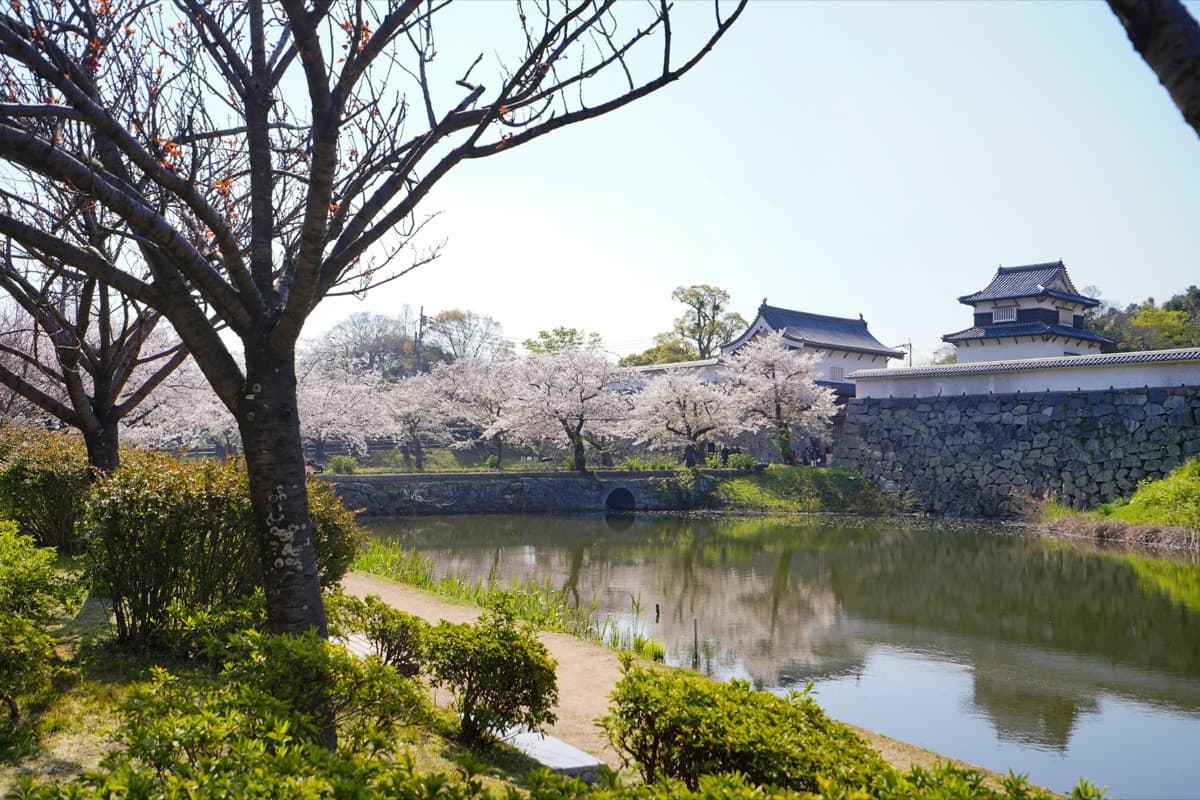
Next to Ohori Park, the Fukuoka Castle ruins sit inside Maizuru Park. The castle keep is gone, but its stone walls, a surviving turret and the keep base remain, and the base is free to climb for a view over the city.
In late March and early April the castle grounds are one of the city's best cherry blossom spots.
Fukuoka Tower and Momochi Seaside Park
Fukuoka Tower
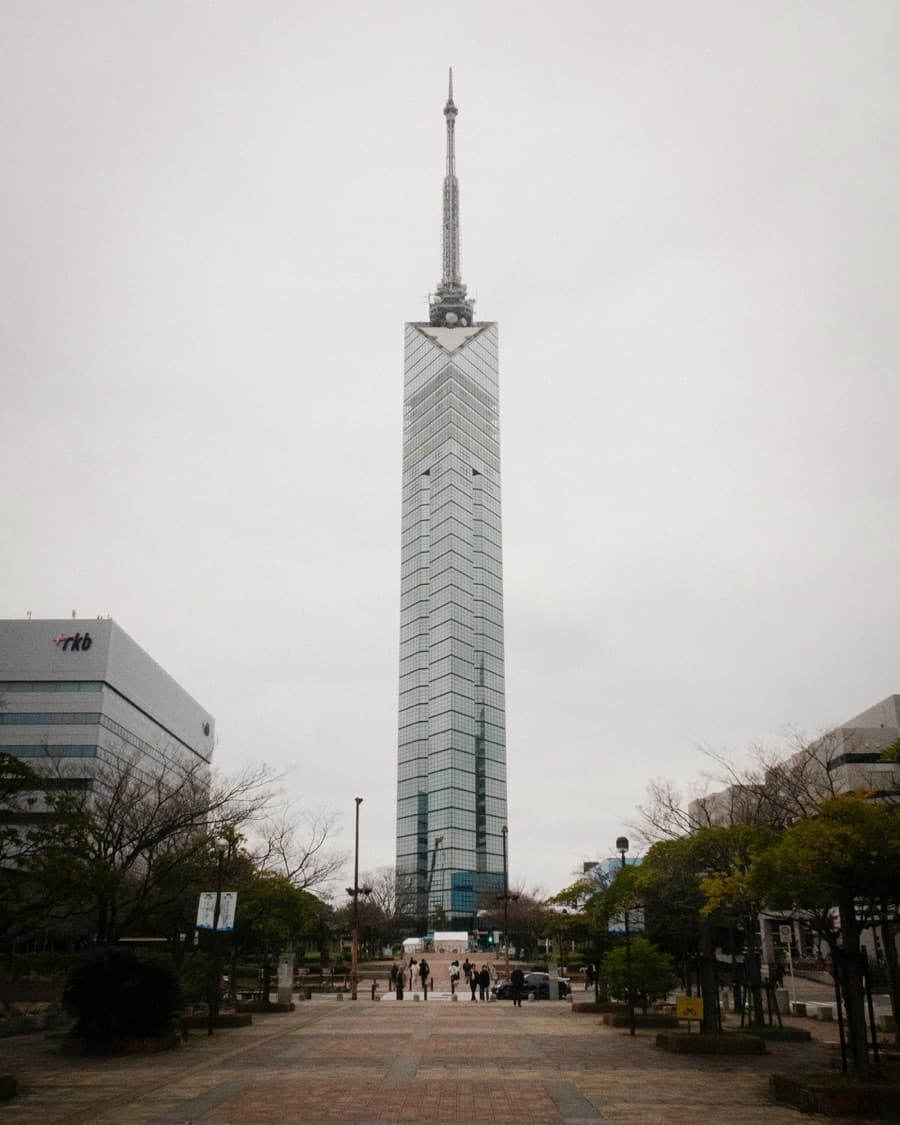
On the waterfront west of the center, Fukuoka Tower is the city's landmark: a slim glass tower with an observation deck looking over the bay. It is open 9:30–22:00 (last entry 21:30) and costs ¥1,000 — go at sunset and stay for the night view.
Momochi Seaside Park
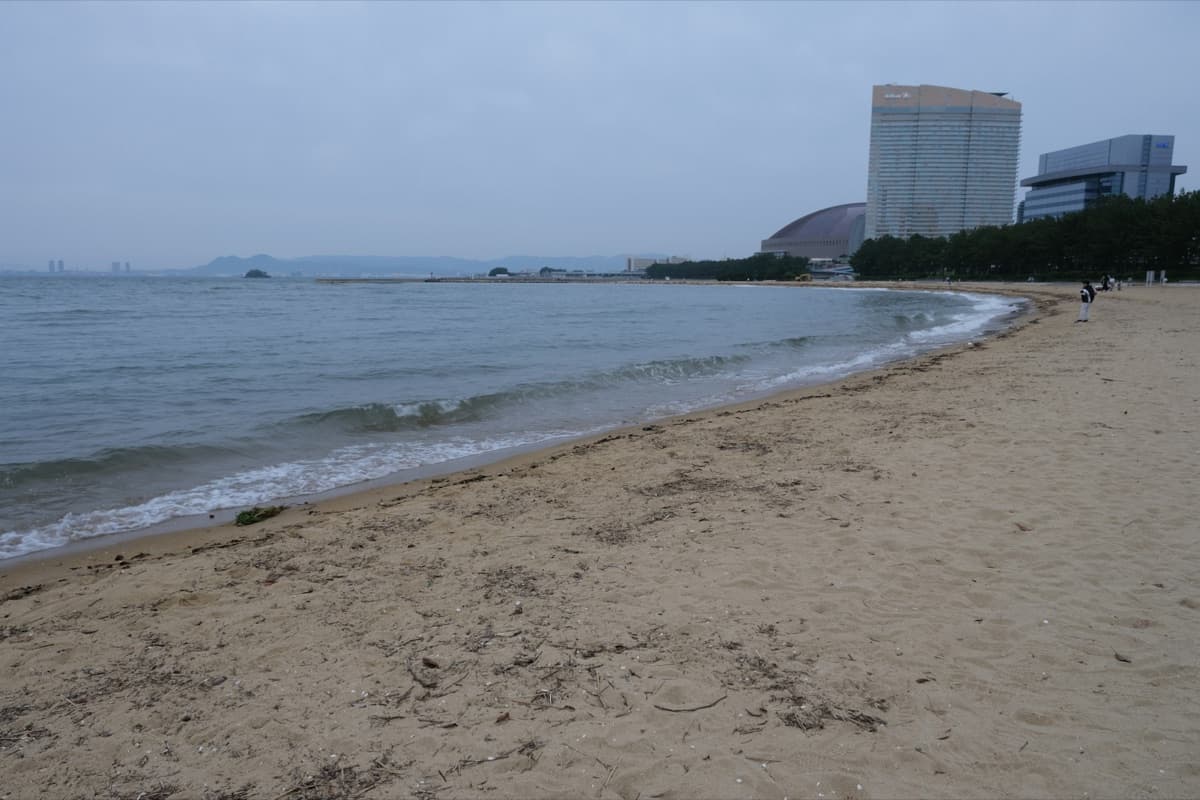
Directly in front of the tower, Momochi Seaside Park is a man-made sandy beach with Marizon, a small complex out on the water, in the middle. It is a pleasant place for an evening walk before or after the tower.
Fukuoka Attractions: Fees and Hours
The main Fukuoka attractions at a glance, with the fees and hours from each place's own site.
| Place | Admission (adult) | Hours |
|---|---|---|
| Kushida Shrine | Free to walk in | Gates 4:00–22:00, every day |
| Tochoji Temple | See the temple for the Buddha hall fee | 9:00–17:00; Buddha hall to 16:45 |
| Canal City Hakata | Free | Shops 10:00–21:00; restaurants 11:00–23:00 |
| Ohori Park Japanese Garden | ¥250 adult · ¥120 child | May–Sep 9:00–18:00; Oct–Apr 9:00–17:00; closed Mondays |
| Fukuoka Castle Ruins (keep base) | Free | Open grounds in Maizuru Park |
| Fukuoka Art Museum (collection) | ¥200 | 9:30–17:30; closed Mondays |
| Fukuoka Tower | ¥1,000 adult | 9:30–22:00; last entry 21:30 |
| Dazaifu Tenmangu | Free | From 6:30 (autumn) to 19:00; hours change with the season |
| Kyushu National Museum | ¥700 (collection) | 9:30–17:00; closed Mondays |
| Nanzoin Temple (reclining Buddha) | ¥500; free for under-19s and Japan residents | 9:00–17:00; last entry 16:45 |
Day Trips From Fukuoka
Fukuoka is the base for some of the best day trips in northern Kyushu, most within an hour from a Fukuoka train station. Day trips are also where the rest of Fukuoka Prefecture comes in: Dazaifu, Sasaguri and Yanagawa are all in it.
Dazaifu Tenmangu and the Kyushu National Museum
Dazaifu Tenmangu Shrine is one of Japan's great shrines, dedicated to the scholar Sugawara no Michizane, and students come from all over the country to pray for exam success. It has no entrance fee.
From the autumn equinox it opens at 6:30 and closes at 19:00 through November, then 18:30 from December. The approach street is lined with shops selling umegae mochi, grilled rice cakes filled with red bean.
Behind the shrine, the Kyushu National Museum tells the story of Japan's links with Asia (collection ¥700; 9:30–17:00; closed Mondays).
Getting there: the Nishitetsu train from Nishitetsu Fukuoka (Tenjin) station, changing at Futsukaichi, takes about 35 minutes. Nishitetsu raised its fares in April 2026, so older guides quote the wrong price.
Nanzoin Temple and the Reclining Buddha
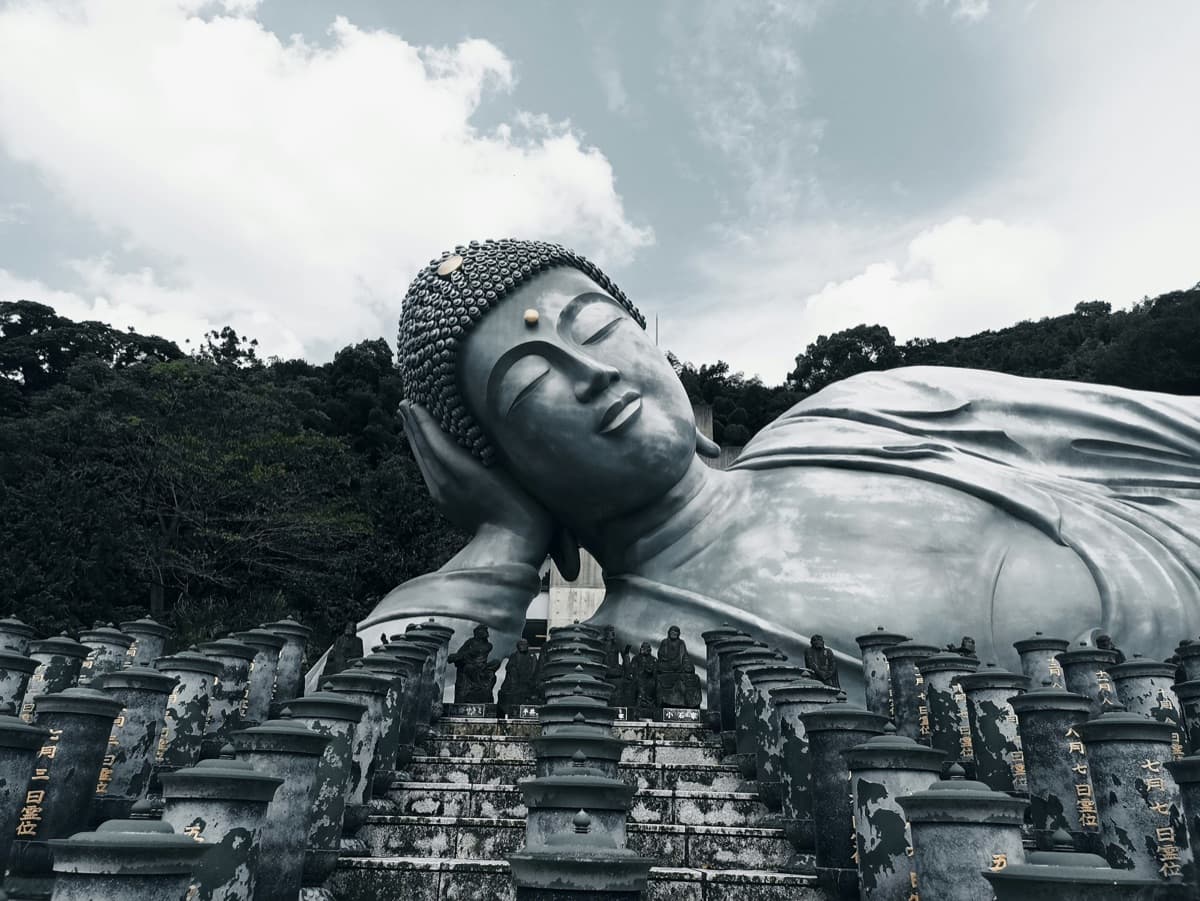
In the hills east of the city, Nanzoin Temple (also written Nanzo-in) in Sasaguri is home to a bronze reclining Buddha 41 m long and 11 m high, weighing about 300 tonnes. It is 20 minutes from Hakata by rapid train on the JR line and 3 minutes on foot from Kidonanzoin-mae station.
Since March 2026 the Buddha area charges ¥500 per person, free for visitors under 19 and residents of Japan; it is open 9:00–17:00 (last entry 16:45).
Yanagawa Boat Rides
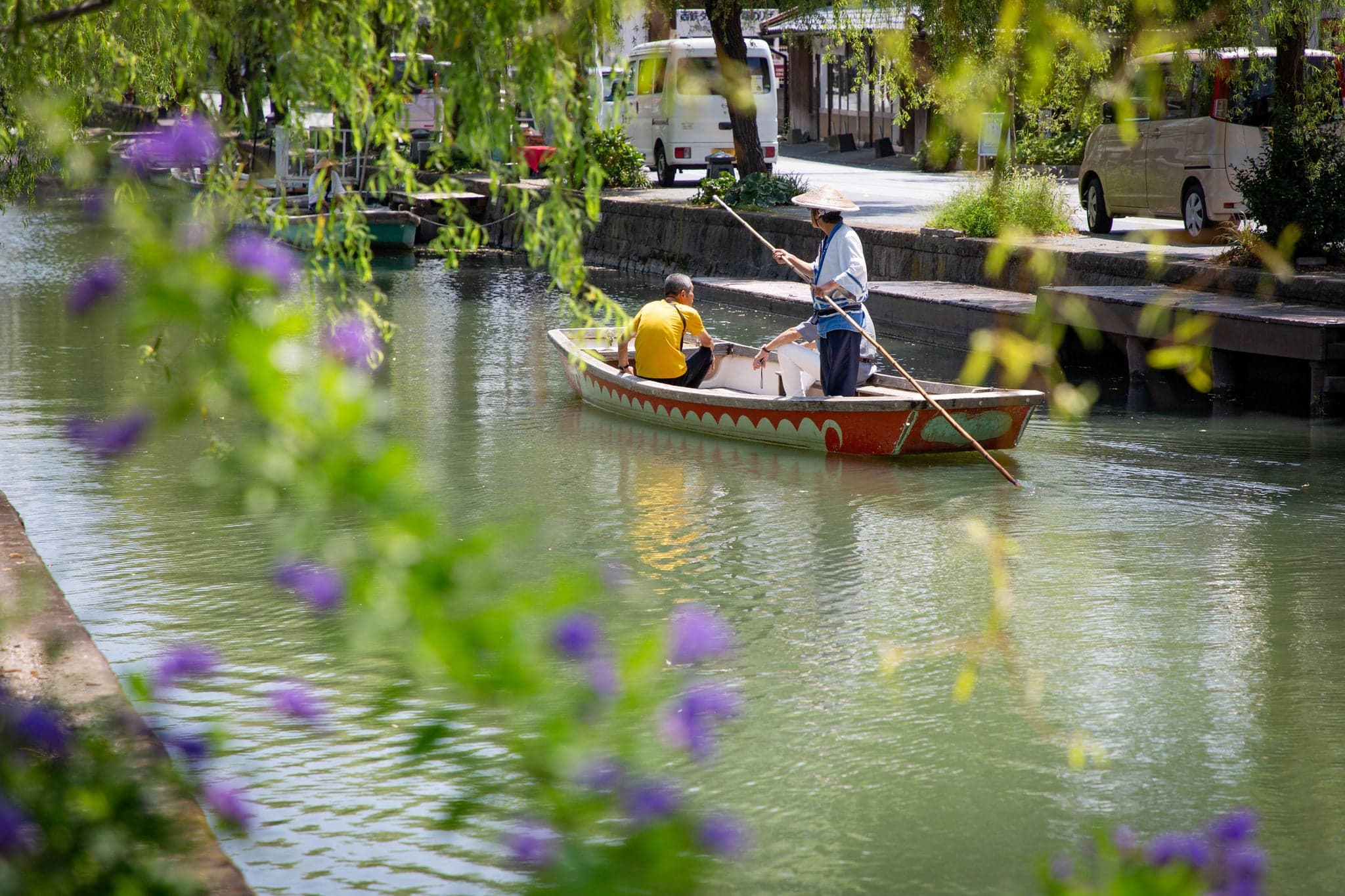
Yanagawa, 45 minutes from Tenjin by Nishitetsu limited express, is a small castle town laced with canals. The thing to do is a punt ride: a boatman poles you about 3 km through the town in about an hour, under willows and stone bridges. One operator charges ¥2,200 per adult. Several of our routes suggest Yanagawa for the Fukuoka day, and our Premium Kyushu routes stay there.
Nokonoshima Island and Uminonakamichi Seaside Park
For a green half day, the ferry from Meinohama crosses to Nokonoshima Island in 10 minutes for ¥230. Its Island Park, famous for its seasonal flower fields over the sea, is ¥1,500 and open 9:00–17:30 (to 18:30 on Sundays and holidays).
On the other side of Hakata Bay, Uminonakamichi Seaside Park is a huge flower and play park on a sandbar (¥450; 9:30–17:30 from March to October, to 17:00 in winter), right by JR Uminonakamichi station. Marine World aquarium is next to it.
Farther Afield: Beppu, Kumamoto and Nagasaki
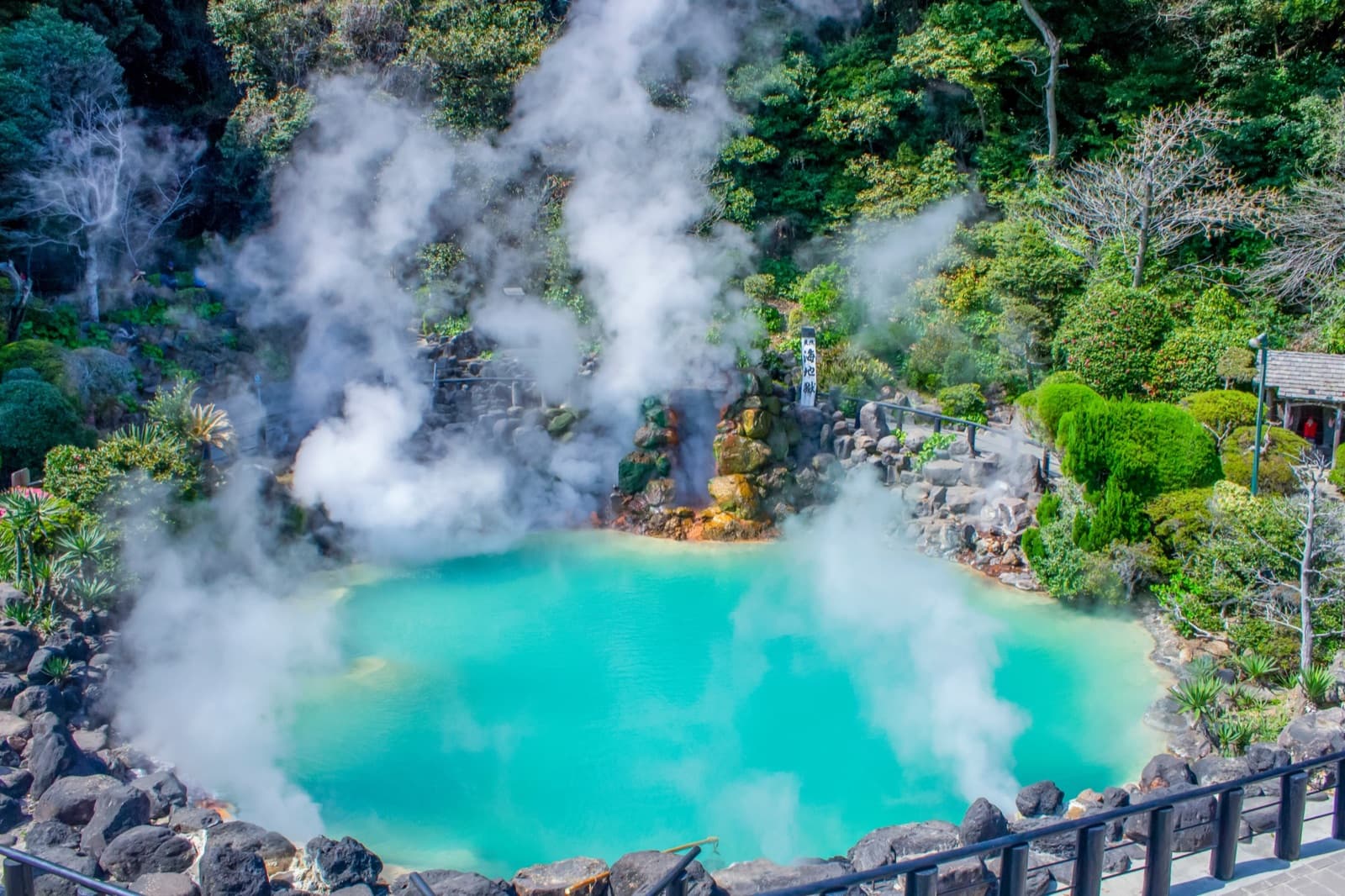
With more time, Fukuoka is the start of a Kyushu trip. The Shinkansen reaches Kumamoto in as little as 32 minutes and Kagoshima-Chuo in under an hour and a half; the limited express Sonic takes about two hours to Beppu, the hot spring town of steaming "hells". Our Kyushu routes all begin in Fukuoka.
Getting to Fukuoka and Getting Around
Fukuoka's airport has domestic flights from Tokyo and international flights across Asia, and it is famously close to town. The subway runs from the airport to Hakata station in 5 minutes and to Tenjin in 11.
| Journey | Time | Fare |
|---|---|---|
| Fukuoka Airport → Hakata station (subway) | About 5 min | ¥260 |
| Airport → Tenjin (subway) | About 11 min | Fare by zone |
| Hakata → Tenjin (subway) | About 6 min | ¥210 |
| Subway 1-Day Pass | All day | ¥640 adult · ¥320 child |
| Hakata → Hiroshima (Shinkansen) | About 1 hour | Included on our routes |
| Hakata → Kumamoto (Shinkansen) | From 32 min | |
| Hakata → Beppu (limited express Sonic) | About 2 hours |
By bullet train, Hakata is the western end of the Sanyo Shinkansen from Tokyo, Kyoto and Hiroshima, and the start of the Kyushu Shinkansen south. The train journey from Tokyo takes about five hours, which is why most of our routes reach Fukuoka from Hiroshima or Okayama rather than in one go.
Within the city, the subway and buses cover everything; Google Maps shows the bus routes and the right train station for each sight. On our routes you get a prepaid IC card for both, and your big luggage is forwarded to the Fukuoka hotel on the routes that list it.
Fukuoka City charges an accommodation tax of ¥200 per person per night on rooms under ¥20,000 and ¥500 above that; elsewhere in Fukuoka Prefecture it is a flat ¥200.
A Two-Day Fukuoka Itinerary
This is the Fukuoka itinerary we suggest for the two nights our routes spend here. It works for any two-day Fukuoka itinerary, with day trips on the second.
Day 1: Hakata Old Town, Canal City and the Yatai
- Arrive by Shinkansen at Hakata station; drop your bag at the hotel.
- Afternoon: Tochoji Temple, Kushida Shrine and the Kawabata shopping arcade, then Canal City for the fountain show.
- Evening: ramen at the Ramen Stadium, or straight to the Nakasu yatai along the Naka River.
Day 2: Dazaifu, Ohori Park and Fukuoka Tower
- Morning: the Dazaifu day trip — the shrine and the museum, about 35 minutes from Tenjin — or Yanagawa for the boat rides.
- Afternoon: Ohori Park, the Japanese garden and the Fukuoka Castle ruins.
- Sunset: Fukuoka Tower and the beach below it, then a mizutaki dinner or the Tenjin yatai.
With a third day, add one more of the day trips: Nanzoin Temple, Nokonoshima Island or a day in Beppu. Use Google Maps to check the next train.
When to Visit Fukuoka
- Spring: cherry blossoms at the Fukuoka Castle ruins and Maizuru Park from late March. Our 2027 cherry blossom forecast covers Fukuoka.
- July: the Hakata Gion Yamakasa festival, 1–15 July. Hot and humid, and the typhoon season starts — see our Kyushu typhoon guide.
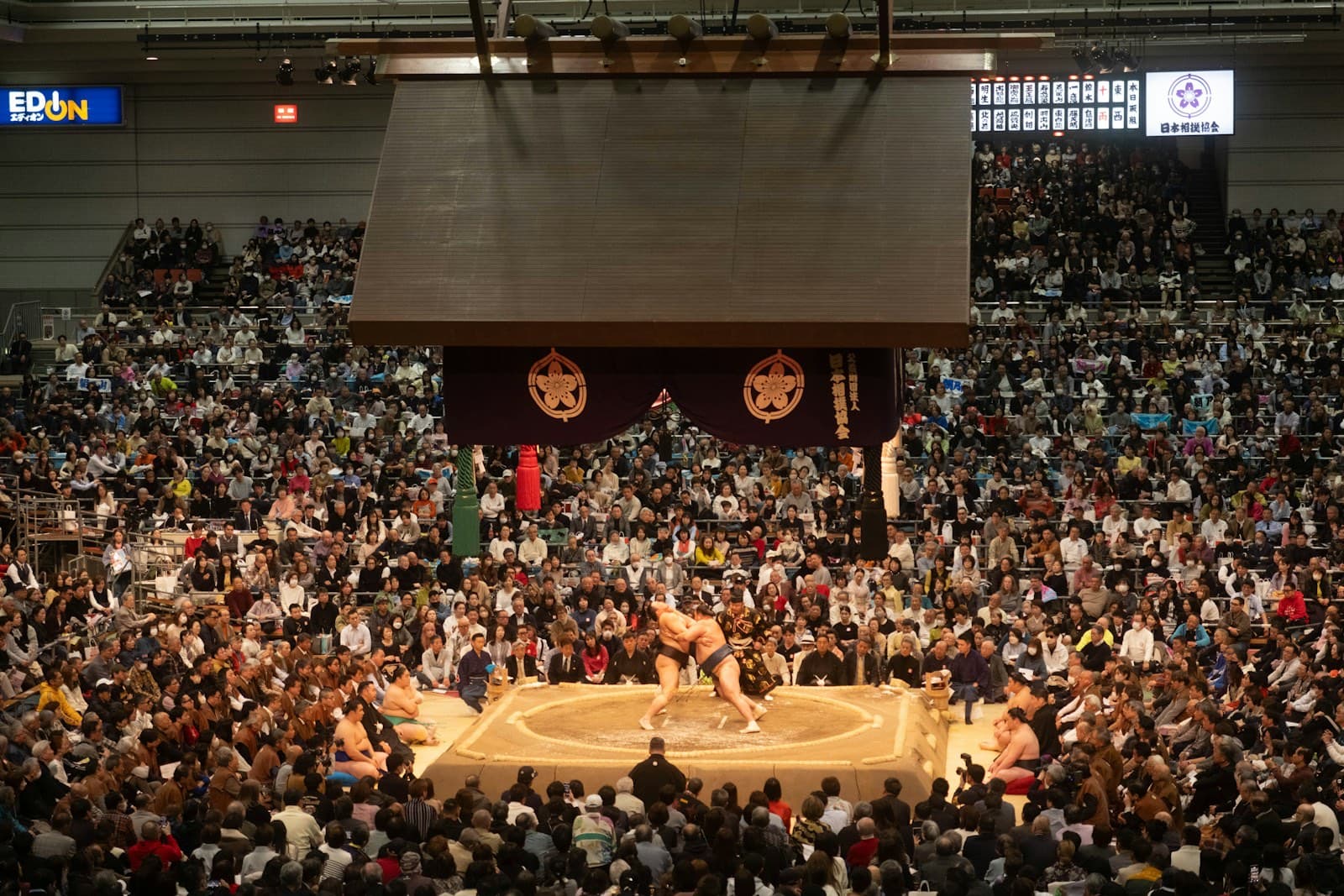
- November: if you visit Fukuoka in November, the Grand Sumo Kyushu Basho at the Fukuoka Kokusai Center, 8–22 November 2026 — our November sumo guide has the tickets — plus autumn colors at Dazaifu.
- Winter: mild by Japanese standards, and the best season for a hot pot at a yatai.
Where Our Routes Stay in Fukuoka
Every route below spends two nights in Fukuoka, and the catalogue names the hotel for each. Where it says "or similar", an equivalent property may be used for your dates.
| Hotel | Tier | Routes |
|---|---|---|
| ANA Crowne Plaza Fukuoka (or similar) | Standard | BF005, GR004, GR010, KY001, KY002, SL004 |
| Hotel New Otani Hakata (or similar) | Standard | GR008 |
| Miyako Hotel Hakata | Premium Kyushu | KY004, KY005 |
| Solaria Nishitetsu Hotel Fukuoka (or similar) | Deluxe | GR108, GR110 |
| Nishitetsu Grand Hotel Fukuoka (or similar) | Deluxe | GR104 |
Self-Guided Routes With Fukuoka Nights
Twelve of our routes stay in Fukuoka. These seven cover the range: a one-week trip that ends here, the Kyushu routes that start here, and the two-week routes that come this far west. Deluxe versions (GR104, GR108, GR110) and a solo version (SL004) also stop here. Prices are per person and move with season and room type; entrance fees are not included.
| Route | Length | From (per person) | Shape |
|---|---|---|---|
| From Tokyo to Kyushu Journey (BF005) | 7 days | $1,500–2,000 | Tokyo, Hiroshima, then two nights in Fukuoka to finish. Luggage sent from Tokyo to Fukuoka. |
| Hidden Kyushu: Nature, Onsen & Culture Adventure (KY001) | 9 days | $2,900–4,000 | Starts with our staff meeting you at the airport; Nagasaki, Kumamoto, Takachiho, Beppu. |
| Kyushu Pottery Towns & All of Nagasaki (KY002) | 9 days | $2,800–4,400 | Fukuoka, Ureshino, Huis Ten Bosch and three nights in Nagasaki. |
| Scenic Japan: Culture & Countryside (GR004) | 15 days | $4,200–5,900 | Okayama, Hiroshima, Fukuoka, Osaka and Takayama. |
| Taste Your Way through Japan (GR008) | 16 days | $4,400–6,100 | Ise-Shima, Kyoto, Hiroshima, Fukuoka and Osaka. |
| Cultural Odyssey: Tokyo to Fukuoka (GR010) | 16 days | $4,500–6,200 | Takayama, Kyoto, Okayama, Fukuoka, then Hiroshima on the way back. |
| Premium Kyushu: Serenity, Onsen & Coastal Heritage (KY004) | 13 days | $6,600–8,900 | Fukuoka, Nagasaki, Unzen, Yanagawa, Hita and Beppu, with chartered-taxi days. |
Coming from Hiroshima? Our Hiroshima and Miyajima guide covers the stop before Fukuoka on most of these routes.
From our Japan travel team
Fukuoka is where we start most Kyushu trips, and it is also a good place to end a longer one. The airport is five minutes from Hakata by subway and has international flights, so you may not need to go back to Tokyo at all. Ask us about flying out of Fukuoka when you plan the route.
FAQ: Things to Do in Fukuoka
Is Fukuoka worth visiting?
Yes. It has some of Japan's best food — Hakata ramen and the yatai — an easygoing center, historic temples and shrines, and it is the gateway to Kyushu. The airport is five minutes from Hakata station.
How many days do you need in Fukuoka?
Two nights: one day for Hakata, Canal City, Ohori Park and Fukuoka Tower, one for a day trip to Dazaifu or Yanagawa, and two evenings at the yatai. All our routes that stop here give it two nights.
When are the yatai open?
City rules allow the stalls to operate from 17:00 to 4:00; most open between 18:30 and 19:00 and close around midnight. There are about 100, mainly in Nakasu, Tenjin and Nagahama, and most take cash only.
How do you get from Fukuoka Airport to Hakata station?
By subway: about 5 minutes and ¥260. Tenjin is about 11 minutes from the airport. A 1-day subway pass is ¥640.
How do you get to Dazaifu from Fukuoka?
Take the Nishitetsu train from Nishitetsu Fukuoka (Tenjin) station and change at Futsukaichi; it takes about 35 minutes. The shrine is free to enter, and the national museum behind it is ¥700.
What are the best day trips from Fukuoka?
Dazaifu Tenmangu and the Kyushu National Museum (about 35 minutes), the Nanzoin reclining Buddha (20 minutes by rapid train from Hakata), the Yanagawa canal boat rides (45 minutes from Tenjin) and Nokonoshima Island (a 10-minute ferry). Beppu is about two hours away.
When is the sumo tournament in Fukuoka?
The Kyushu Basho, the November Grand Sumo Tournament, runs from 8 to 22 November 2026 at the Fukuoka Kokusai Center.
Which of your routes stay in Fukuoka?
Twelve, all for two nights. The shortest is the 7-day From Tokyo to Kyushu Journey (BF005, from $1,500); the Kyushu routes KY001, KY002, KY004 and KY005 start here; and the two-week routes GR004, GR008 and GR010 include Fukuoka.
Fees, hours and fares were checked on 23 September 2026 against Fukuoka City, Fukuoka City Subway, JR Kyushu, Nishitetsu, the Japan Sumo Association and each sight's own site. Hotels and prices are from our catalogue on the same date.
Two Nights in Fukuoka, Arranged
Our self-guided routes give you two nights in Fukuoka with the Shinkansen tickets, the hotel, an IC card for the subway and buses, and your luggage forwarded — with our team in Japan on call throughout.
Related Articles
Grand Sumo November 2026: Your Complete Guide to the Kyushu Basho in Fukuoka
13 min read
Hiroshima and Miyajima: The Peace Park, the Shrine Island, and How to Do Both in Two Days
12 min read
Kyushu Typhoon Season 2026: A Practical Planning Guide for Self-Guided Travelers
12 min read