Hiroshima and Miyajima: The Peace Park, the Shrine Island, and How to Do Both in Two Days
What the Peace Memorial Museum and the Miyajima ferry actually cost and when they run, how the island’s shrine and ropeway work, why two nights in Hiroshima is the right shape, and the self-guided routes that stay here — with the hotels they book.
Hiroshima is two places that most travellers try to fit into one day: the city with the Peace Memorial Park, and Miyajima, the shrine island forty minutes away across the bay. Done as a day trip from Kyoto or Osaka it is a long day of trains with an hour in each. Done as two nights, it is one of the best stops in the country.
Twenty-eight of our self-guided routes sleep in Hiroshima, and every one of them stays two nights for that reason. This guide gives you the prices and opening hours from the operators' own pages, the way the ferry and the visitor tax work, how the two days fall, and which routes put you here — with the hotels they actually book.
Quick Answer: Hiroshima and Miyajima
- Shape: two nights in Hiroshima. Day one, the Peace Memorial Park and the city; day two, Miyajima. Our routes are built this way; a day trip from Kyoto gives you an hour in each.
- Getting to the island: JR Sanyo Line from Hiroshima Station to Miyajimaguchi (about 30 minutes), then the JR ferry (about 10 minutes, ¥180 one way, Japan Rail Pass accepted) plus the ¥100 Miyajima Visitor Tax collected with the fare.
- What things cost: Peace Memorial Museum ¥200; Itsukushima Shrine ¥300 (¥500 with the Treasure Hall); the Mount Misen ropeway ¥1,800 return.
- The one rule: the shrine closes between 17:00 and 18:00 depending on the month, and the last ropeway down is 16:30 — build the island day around the afternoon, not the evening.
- On our routes: from the 7-day budget trip (BF004, from $1,400) to the 15-day West Japan route (GR005); two nights here with trains and luggage forwarding included.
Stay
2 nights
To Miyajima
≈ 40 min door to pier
Museum
¥200
Our routes
28 stay here
Why Two Nights, Not a Day Trip
The arithmetic is simple. Kyoto to Hiroshima is about 100 minutes on a Nozomi and Shin-Osaka to Hiroshima about 80, so a day trip spends three to four hours on trains before you add the forty minutes each way to the island. What is left is a museum visited at a jog and a ferry caught with one eye on the clock. The Peace Memorial Museum deserves two unhurried hours; Miyajima deserves a tide, a shrine, a walk up or a ride up Mount Misen and a slow lunch. That is two days.
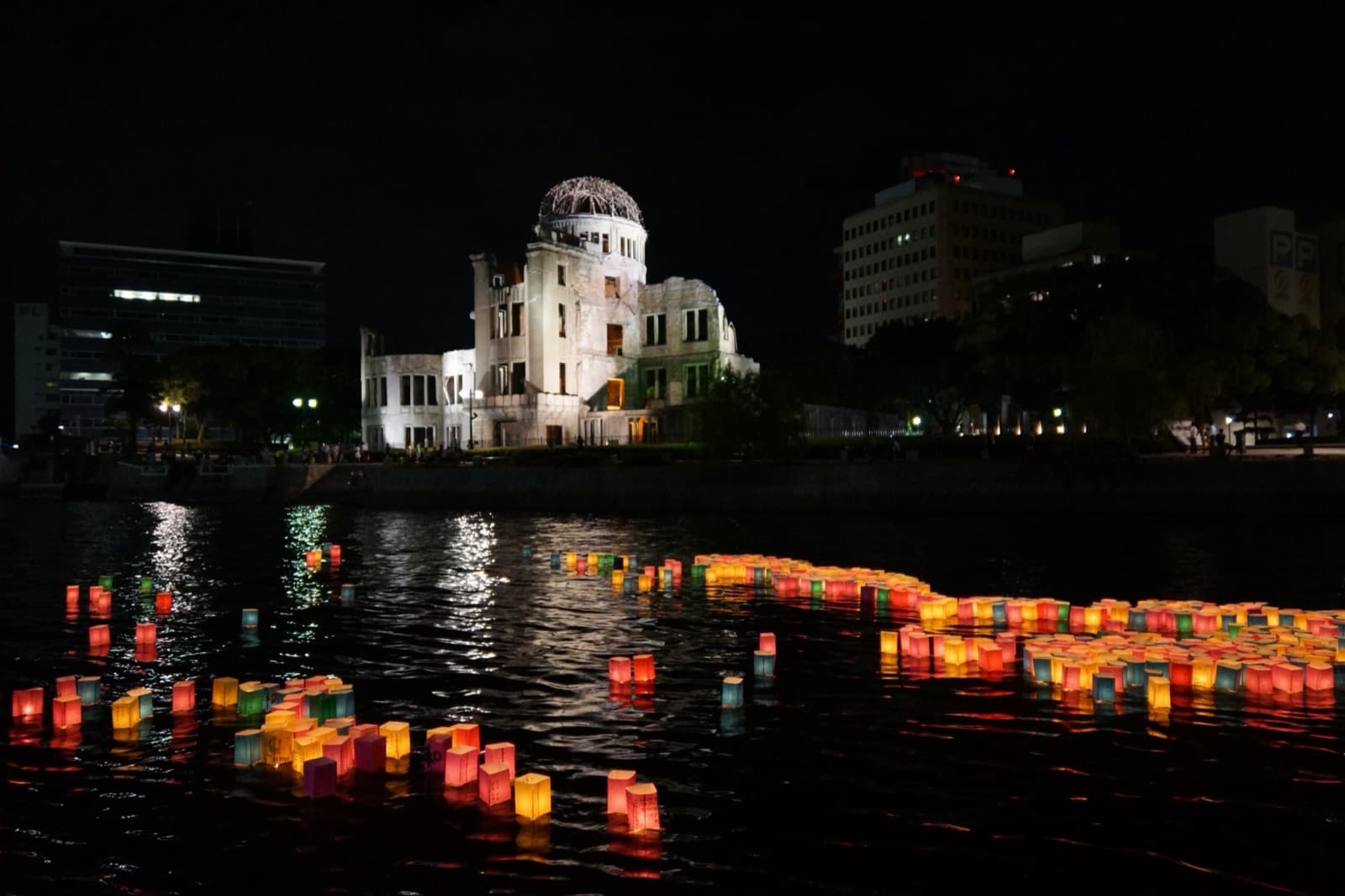
Two nights also puts you in Hiroshima in the evening, which is when the city is at its best: the okonomiyaki floors of the entertainment district, the riverside, and the Peace Park after dark, when the dome is lit and the crowds have gone. Every route of ours that stops here does it as two nights for these reasons, and forwards the big luggage to the next city so you carry a day bag onto the ferry.
Costs and Hours, From the Operators' Own Pages
| Item | Cost | Hours / notes |
|---|---|---|
| Peace Memorial Museum | ¥200 adult · ¥100 high school · free to junior high age | 7:30 to 19:00 Mar–Jul and Sep–Nov; to 20:00 in Aug; to 18:00 Dec–Feb. Closed 30–31 Dec and mid-Feb. Entry in the extended hours needs an online reservation |
| Atomic Bomb Dome | Free | Open air, any time |
| JR Sanyo Line, Hiroshima → Miyajimaguchi | Covered by the Japan Rail Pass | About 30 minutes; 5 minutes on foot to the pier |
| JR Miyajima Ferry | ¥180 adult · ¥90 child, one way; Japan Rail Pass accepted | About 10 minutes; roughly every 15 minutes |
| Miyajima Visitor Tax | ¥100 per entry, collected with the ferry fare | Preschool children exempt |
| Itsukushima Shrine | ¥300 adult (¥500 with the Treasure Hall) | 6:30 to 18:00 Mar–mid Oct; to 17:30 mid Oct–Nov; to 17:00 Dec; to 17:30 Jan–Feb |
| Miyajima Ropeway (Mount Misen) | ¥1,800 return · ¥1,000 one way | Up 9:00–16:00, last car down 16:30; free shuttle from Momijidani Park |
| Hiroden streetcar to Miyajimaguchi | ¥270 | About 70 minutes from Hiroshima Station — the slow, scenic alternative |
Two things in that table catch people out. The Peace Memorial Museum opens at 7:30 — earlier than almost any museum in Japan — but the extended-hour time slots at the start and end of the day require an online reservation, so a walk-up at 7:30 may be turned away. And the ¥100 visitor tax on Miyajima is not optional or hidden: Hatsukaichi City levies it on every entry to the island and the ferry companies collect it with the fare, so the crossing costs ¥280 each way in practice, not ¥180. Preschool children are exempt.
The Peace Memorial Park
The park occupies the ground beneath the hypocentre, on the island between two rivers where the city's busiest commercial district stood until 8:15 on 6 August 1945. The Atomic Bomb Dome — the shell of the Industrial Promotion Hall, left as it was and now a World Heritage Site — stands at the north end, free and open at all hours. The Cenotaph, the Children's Peace Monument with its paper cranes and the Flame of Peace lie along the axis to the south, and the Peace Memorial Museum closes the axis.
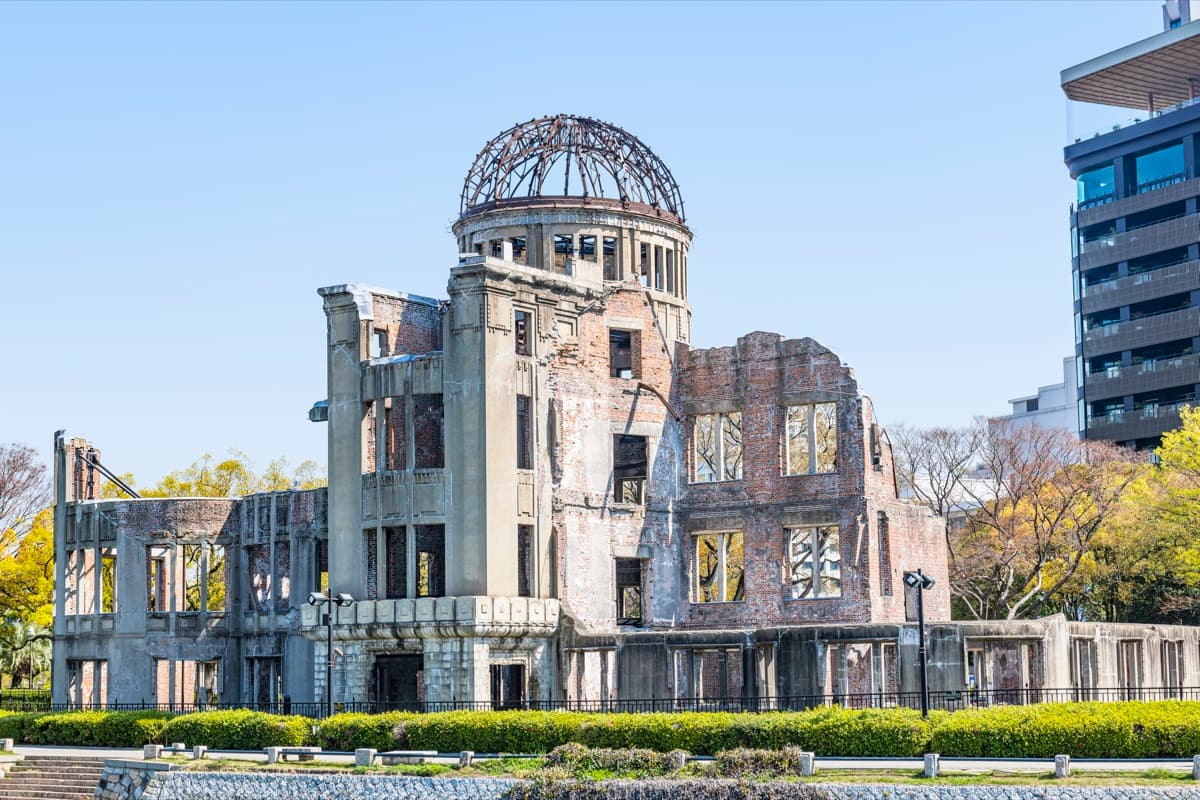
Admission to the museum is ¥200 for adults, ¥100 for high school students and free for junior high school age and under. It opens at 7:30 every day and closes at 19:00 from March to July and September to November, at 20:00 in August, and at 18:00 from December to February; it is closed on 30 and 31 December and for a few days in the middle of February. Allow two hours, go early or in the last two hours to avoid the tour groups, and do not schedule anything demanding immediately afterwards. Most people want a quiet walk, and the river banks either side of the park are where to take it.
In August the park holds the memorial ceremony on the 6th and the lantern-floating that evening; our toro nagashi guide covers what happens and how to be there respectfully.
Miyajima: The Island Day
Miyajima is the everyday name for Itsukushima, the island in Hiroshima Bay whose shrine stands on stilts over the water so that at high tide the buildings and the Great Torii appear to float. It has been a sacred island for centuries — the shrine is a World Heritage Site — and it is also a small working town with deer in the streets, oyster grills on the approach and a mountain behind.
Getting there
From Hiroshima Station take the JR Sanyo Line to Miyajimaguchi, about 30 minutes, then walk five minutes to the pier. Two ferry companies cross in about ten minutes; the JR Miyajima Ferry is ¥180 one way for adults and ¥90 for children, accepts the Japan Rail Pass, and runs roughly every 15 minutes, so there is rarely a wait. The ¥100 Miyajima Visitor Tax is added at the ferry. The alternative is the Hiroden streetcar all the way from the station to Miyajimaguchi for ¥270 — about 70 minutes, slow and rather lovely, and the way to go back if you are not in a hurry.
On our routes this is a day with the IC card or the included rail: the budget route (BF004) has you take the local train and ferry with the card in your pocket, and the routes that include the Japan Rail Pass or JR legs cover the train and the ferry both.
Itsukushima Shrine, and the tide
Admission to the shrine is ¥300 for adults, or ¥500 combined with the Treasure Hall; ¥200 and ¥300 for high school students; ¥100 and ¥150 for elementary and junior high school students. It opens at 6:30 all year and closes at 18:00 from March to mid-October, 17:30 from mid-October to the end of November, 17:00 in December and 17:30 in January and February. The shrine is a different building at high and low tide — floating at one, standing on the sand with the torii walkable at the other — so look up the tide table for your day before you decide when to cross. Seeing both, a few hours apart, is the argument for giving the island a whole day.
Mount Misen
The mountain behind the shrine is the other half of the island. The Miyajima Ropeway — two systems in series, a circulating gondola then a larger funicular car — runs from Momijidani Park, reached by a free shuttle bus from near the shrine approach. Fares are ¥1,800 return and ¥1,000 one way for adults; the ropeway runs up from 9:00 to 16:00 and the last car down is at 16:30. From the upper station it is about half an hour's walk each way to the summit and the view over the Seto Inland Sea, so the round trip from the shrine is about two hours. The trails down through the maples are a fine alternative to the return ticket if your knees agree.
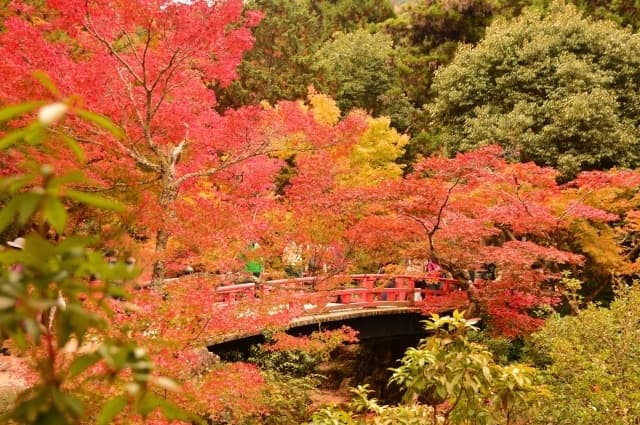
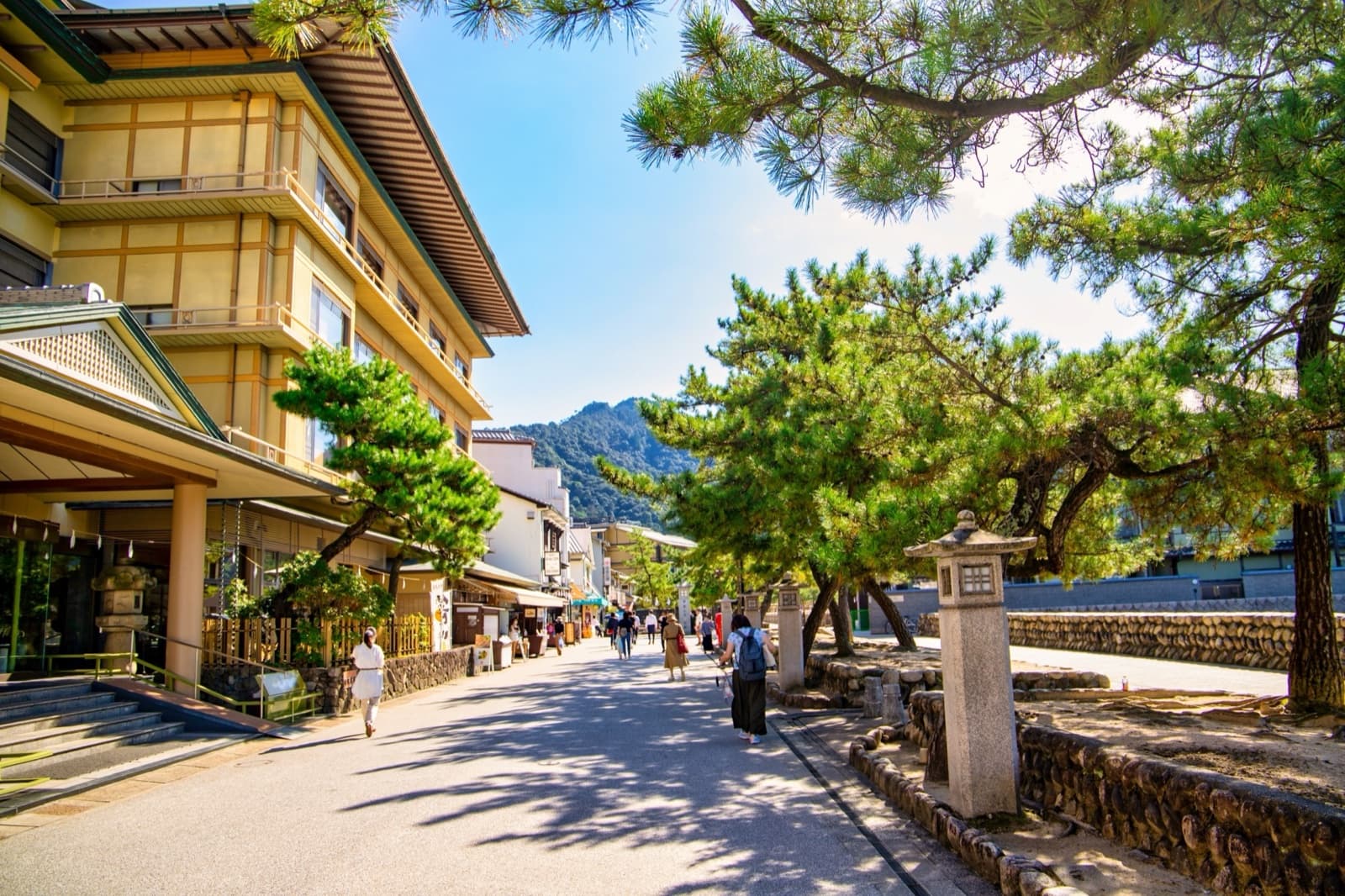
The approach street between the pier and the shrine is where the island eats: grilled oysters (the bay is Japan's biggest producer), momiji manju maple-leaf cakes, and conger eel over rice. In November the maples of Momijidani turn; our Miyajima autumn guide has the timing.
The rest of the island: Senjokaku, the pagoda and Daisho-in
On the hill directly above the shrine stand two buildings most day-trippers photograph and few enter. Senjokaku, the "Hall of a Thousand Tatami Mats", is the largest structure on Miyajima Island — a vast, unfinished timber hall begun in the 1580s and never completed, now Toyokuni Shrine, with a small admission fee and a floor you can sit on. Beside it the Five-storied Pagoda (Goju-no-to), built in 1407, is the vertical landmark you see from the ferry. Ten minutes' walk further, at the foot of Mount Misen, Daisho-in Temple is the island's great Buddhist temple: halls stacked up the hillside, hundreds of small statues, spinning sutra wheels on the stair rails, and gates open 8:00–17:00. It is the quietest serious sight on the island and the best place to be at four o'clock when the shrine crowds thicken.
The wild deer are everywhere between the pier and the shrine. They are used to people and will eat a map out of your hand; feeding them is discouraged, and on the streets you keep bags closed. In spring the cherry blossoms along the approach and around the pagoda hill make early April a second peak after autumn.
Staying overnight on Miyajima
The island has ryokan and small inns, most with Japanese-style rooms and dinner, and staying overnight has one great advantage: after the last ferries the day visitors are gone and the shrine approach is lit and empty. Our routes do not sleep on the island — they stay two nights in Hiroshima and give Miyajima a full day, which for most travellers is the better trade: the city's evening, the Peace Park after dark, and a station hotel for the next morning's Shinkansen. If a night on the island is the thing you want, tell us and we will price it as a change to any route below.
From our Japan travel team
Give Miyajima the whole of your second day and check the tide before you go: the shrine at high tide in the morning and the torii on the sand in the afternoon are two different visits, and the ropeway's 16:30 last car decides the order. If you would rather not climb, tell us and we will plan the day around the shrine, the streets and a long lunch instead.
The Rest of Hiroshima
Hiroshima is a big, comfortable city that runs on streetcars — the Hiroden tram network is one of the largest in Japan, and it is how you will move between the station, the Peace Park and the entertainment district. For first-time visitors it is also the easiest large Japanese city to read: flat, gridded, built around its rivers. Beyond the park, the rebuilt Hiroshima Castle — the 1958 reconstruction of the 1590s keep, with a museum inside and the moat and grounds free to walk — and the Shukkeien landscape garden of 1620 are the two classic sights, both an easy walk from the park's north end; the covered Hondori arcade and the lanes around Nagarekawa are the evening. The city's dish is its own version of okonomiyaki — layered rather than mixed, with noodles — and the multi-storey buildings of okonomiyaki counters are an experience in themselves.

Getting to Hiroshima
Hiroshima is on the Sanyo Shinkansen: about 80 minutes from Shin-Osaka and about 100 from Kyoto on a Nozomi, and roughly four hours from Tokyo. It is the westernmost point of the classic first-trip route, which is why it appears on so many of our itineraries as the leg after Kyoto or, going the other way, the stop before Himeji and Osaka. Our West Japan routes come at it from Okayama and the Setouchi islands; our Tokyo–Fukuoka route continues on to Kyushu.
For independent travellers, Hiroshima is also where the Japan Rail Pass arithmetic changes: the pass rarely pays on Tokyo–Kyoto–Osaka alone, but add the return to Hiroshima and it can. Our guide to whether the JR Pass is worth it works through exactly this case, and the two-week Japan itinerary shows where the two Hiroshima nights sit in a longer trip.
Where Our Routes Stay in Hiroshima
Every route below spends two nights here, and the catalogue names the hotel. The Granvia and Sheraton are at Hiroshima Station, which suits the ferry day (the Sanyo Line leaves from under your room); the RIHGA Royal is in the centre beside the castle and a short walk from the Peace Park. Where the catalogue says "or similar", an equivalent property may be substituted for your dates.
| Hotel | Tier | Routes | Nights |
|---|---|---|---|
| Hotel Granvia Hiroshima (or similar) | Standard | GR004, GR005, GR007, GR010, KM002 | 2 nights |
| RIHGA Royal Hotel Hiroshima (or similar) | Standard | TP002, GR008, GR009 | 2 nights |
| Hotel Granvia Hiroshima South Gate (or similar) | Deluxe | GR104, GR105, GR109, GR110 | 2 nights |
| Sheraton Grand Hiroshima Hotel (or similar) | Deluxe | GR107, GR108, TP102 | 2 nights |
Self-Guided Routes With Hiroshima Nights
Twenty-eight of our routes stop in Hiroshima. These seven cover the range — a week on a budget, the theme-park version, the West Japan and Setouchi routes, a family version, the Koyasan pilgrimage and the luxury private-guide trip. Prices are per person from the current price list and move with the departure date; every one includes the hotels, the Shinkansen legs, luggage forwarding between cities, a transport IC card, travel insurance and 24/7 support while you are in Japan.
| Route | Length | From (per person) | Shape |
|---|---|---|---|
| Japan History & Modern Cities (BF004) | 7 days | $1,400–1,900 | Tokyo, two nights in Hiroshima with the Miyajima day, Himeji, Osaka. The budget way in. |
| Culture, Nature and Universal City Adventure (TP002) | 12 days | $3,000–4,400 | Tokyo, Hiroshima and Miyajima, Kyoto, then two days at the Osaka theme park. |
| Castles & Heritage of West Japan (GR005) | 15 days | $3,700–5,400 | Okayama and the Setouchi islands, Hiroshima and Miyajima, Himeji Castle, Kyoto. |
| Sea of Serenity: Kashikojima & Cultural Japan (GR007) | 13 days | $3,700–5,200 | Hakone, Ise-Shima, Kyoto, Okayama and Miyajima. |
| Family Holidays: Shared Journey Through Japan’s Classics (FG001) | 13 days | $2,700–4,100 | Family rooms; Miyajima and four nights in Kyoto between Tokyo and Osaka. |
| A Journey of Culture, Peace and Spiritual Reflection (KM002) | 15 days | $4,400–6,300 | Himeji, Miyajima and the Peace Park, then a temple night on Koyasan. |
| Luxury Journey, Your Way: Hiroshima & Kyoto (LX003) | 10 days | $6,900–8,400 | Private tours in Hiroshima and Kyoto, Green Car rail throughout. |
Admission to the museum, the shrine and the ropeway is paid on the spot and is not included on any route — for the two days it comes to a little over ¥2,500 per adult with the ropeway, or about ¥600 without it. First trip and not sure whether Hiroshima fits? Our routes for first-time visitors explain when the western leg is worth the extra days.
From our Japan travel team
Hiroshima is the stop people are most likely to tell us they wish they had given more time. If your dates are tight, we would rather take a night from Osaka than from here; if they are not, the routes that continue west to Okayama, the islands or Kyushu are the ones that make the most of having come this far. Tell us how many days you have and we will say which fits.
FAQ: Hiroshima and Miyajima
How do I get from Hiroshima to Miyajima?
Take the JR Sanyo Line from Hiroshima Station to Miyajimaguchi, about 30 minutes, walk five minutes to the pier and take the ferry — about ten minutes, with the JR Miyajima Ferry at ¥180 one way for adults and ¥90 for children, Japan Rail Pass accepted, sailing roughly every 15 minutes. The ¥100 Miyajima Visitor Tax is collected with the fare. The Hiroden streetcar also runs from the station to Miyajimaguchi for ¥270 in about 70 minutes.
How much does Miyajima cost to visit?
The ferry is ¥180 each way plus the ¥100 visitor tax on entry; Itsukushima Shrine is ¥300, or ¥500 including the Treasure Hall; the Mount Misen ropeway is ¥1,800 return or ¥1,000 one way. Walking the island, the streets and the approach to the shrine is free.
Is one day enough for Hiroshima and Miyajima?
As a day trip from Kyoto or Osaka you get roughly an hour in the Peace Park and an hour on the island after three to four hours of trains. Two nights in Hiroshima — a day for the park and city, a day for Miyajima — is how all of our routes do it, and it is what we recommend.
What does the Hiroshima Peace Memorial Museum cost, and when is it open?
¥200 for adults, ¥100 for high school students and free for junior high school age and under. It opens at 7:30 every day and closes at 19:00 from March to July and September to November, at 20:00 in August, and at 18:00 from December to February. It is closed on 30 and 31 December and for several days in mid-February. Entry during the extended hours at the start and end of the day needs an online reservation.
When should I visit Itsukushima Shrine — high tide or low tide?
Both, if you can. At high tide the shrine and the Great Torii appear to float; at low tide you can walk out across the sand to the gate. The shrine opens at 6:30 and closes between 17:00 and 18:00 depending on the month, so check the tide table for your date and plan the two visits around it.
What is the Miyajima Visitor Tax?
A ¥100 tax levied by Hatsukaichi City on every entry to the island and collected by the ferry companies with the fare. Preschool children are exempt.
Which of your routes stay in Hiroshima?
Twenty-eight of them, always for two nights with the Miyajima day. The shortest is the 7-day Japan History & Modern Cities (BF004, from $1,400); the classic western routes are Castles & Heritage of West Japan (GR005) and Sea of Serenity (GR007); there are theme-park, family, Koyasan and luxury private-guide versions. Hotels are at the station or beside the castle and are named in the catalogue.
Admission fees, ferry fares, the visitor tax and opening hours were checked against the Peace Memorial Museum, JR Miyajima Ferry, Itsukushima Shrine, Miyajima Ropeway and the Hiroshima and Miyajima tourism sites on 22 September 2026. Hotels and prices are from our catalogue on the same date.
Two Nights in Hiroshima, Arranged
Our self-guided routes put you in Hiroshima for two nights with the Shinkansen tickets, a named hotel at the station or beside the castle, the IC card or rail for the Miyajima day and your luggage sent on to the next city — with our team in Japan on call throughout.