Things to Do in Kurashiki: A Practical Guide to the Bikan Historical Quarter
Walk the Bikan canal, plan around museum opening days, and choose one or two Kurashiki nights on a Japan trip you can book online.
Last updated: November 4, 2026. Attraction information and sample departure prices checked against the linked sources.
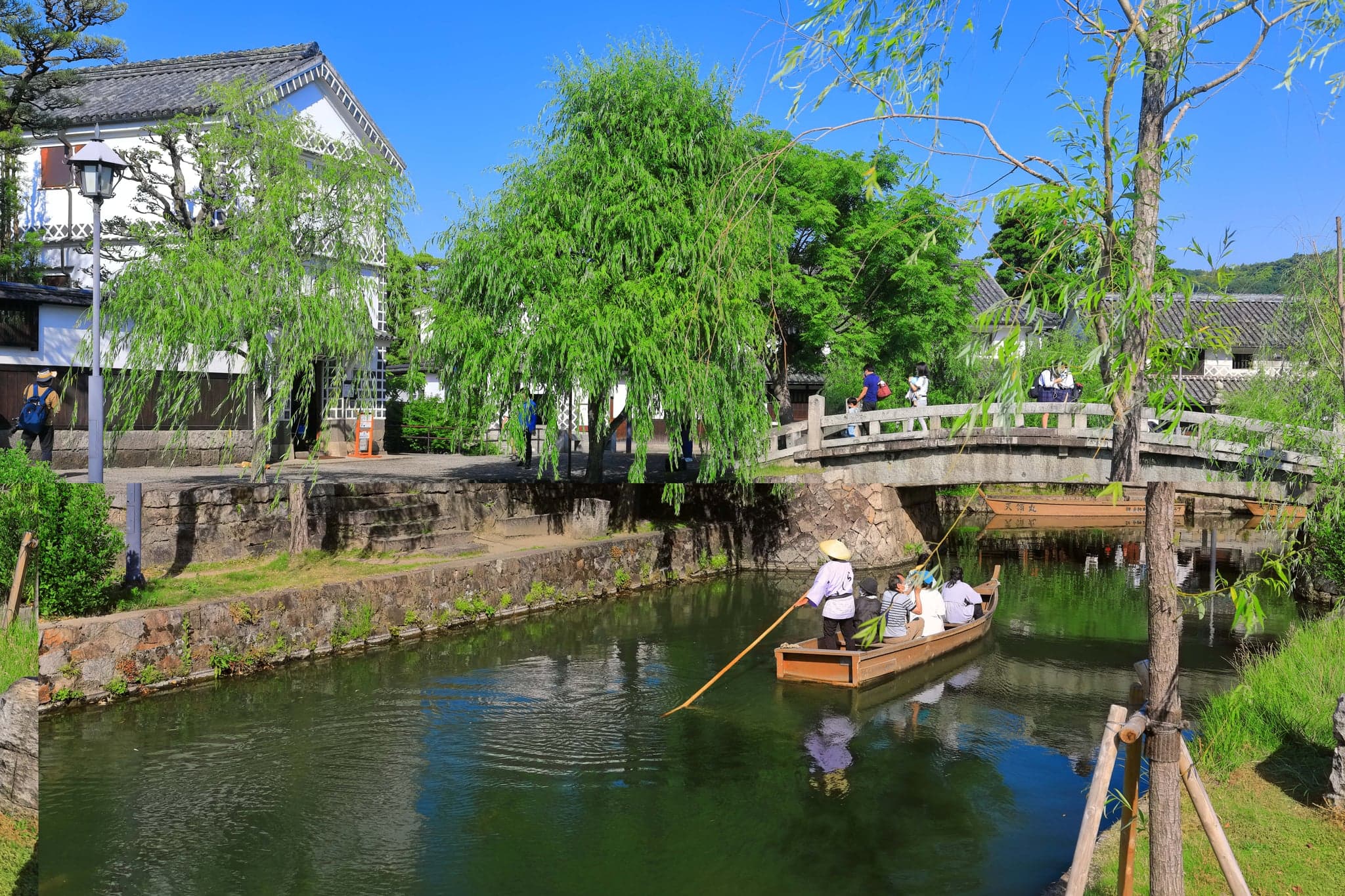
Short answer: nearly all the best things to do in Kurashiki are in one small area. That's the Kurashiki Bikan Historical Quarter, a canal district of white-walled storehouses about a 15-minute walk south of JR Kurashiki Station. Walk the canal under the willows and give the Ohara Museum of Art two unhurried hours. Ride the little canal boat, wander through Kurashiki Ivy Square, climb to Achi Shrine and stay until the lights come on.
For a half-day visit, choose the canal, the Ohara Museum and one other stop. Give the full walking route a day, or stay overnight for the evening lights and a quiet morning.
The catch is timing. Day-trippers fill the canal from mid-morning and drift off by late afternoon, so the Kurashiki Bikan area at 8 am or 8 pm feels like a different town. This guide covers a realistic walking route, the museums, the boat, shopping and Japanese denim, food, rainy days, evenings and access via Okayama. It also gives half-day, one-night and two-night plans, and shows exactly how Kurashiki fits two 15-day Self Guide Japan routes, GR503 and GR506.
Quick Answer: Give Kurashiki an Evening and a Morning
Start with the Bikan canal, the Ohara Museum of Art and Ivy Square. One night gives you the lit-up streets and a quiet morning; two nights give you a full day for museums, a boat ride or a separate Kojima trip. GR503: A Grand Journey Across Western Japan includes two Kurashiki nights in a 15-day Japan journey. GR506 includes one night before Himeji and Osaka. Museum and boat tickets cost extra.
Compare tours & check datesTwo Kurashiki nights on a 15-day Japan journey
A Grand Journey Across Western Japan
The Golden Route: Tokyo Round Trip
Ready to Book. Pay Within 7 Days to Confirm.
Black Friday Sale20% comes off these prices when you book online by November 30. The discount is already in the total shown on the tour page.See sale tours
Things to Do in Kurashiki at a Glance
- Walk the canal through the Kurashiki Bikan Historical Quarter, ideally early.
- See the Ohara Museum of Art, Kurashiki's showcase of Western art, with El Greco's Annunciation and Monet's Water Lilies.
- Take the canal boat, a gentle loop of about 20 minutes.
- Explore Kurashiki Ivy Square, a red-brick cotton mill completed in 1889.
- Climb to Achi Shrine for the view over the rooftops.
- Browse craft shops and denim stores, plus a small museum or two.
- Come back after dark, when the canal is lit and quiet.
These top attractions are only minutes apart. You don't need buses or transfers, just a leisurely stroll from one to the next. That makes it one of the easiest historic towns in Japan to see on foot.
Why the Kurashiki Bikan Historical Quarter Is Worth Your Time
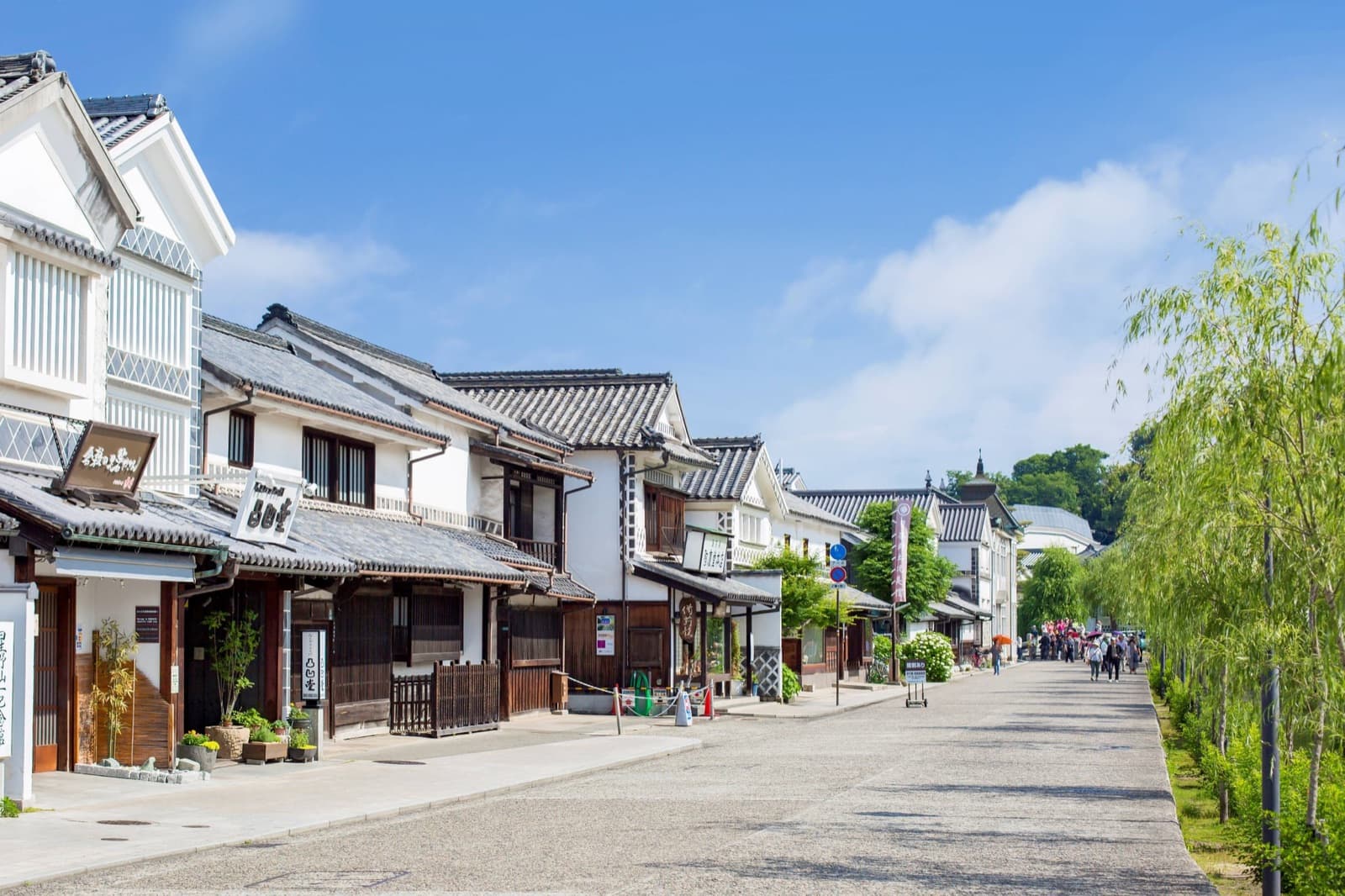
"Bikan", roughly translated, means "beautiful view", and the name isn't overselling it. In the Edo period, Kurashiki was ruled directly by the shogunate and grew into a trading hub. Rice and goods moved along the canal into merchants' storehouses. Those storehouses, or kura, give the area its look: white plaster, black tiles and namako walls, whose raised plaster joints are named after the sea cucumber they resemble.
Then came cotton. In 1889 the Kurashiki Spinning Works (today's Kurabo) completed a mill on the former site of the shogunate's local magistrate's office. Cotton money, through the Ohara family, later paid for an art museum. Edo-period warehouses, Meiji-era brick and European paintings: that layering is Kurashiki's historical importance in a nutshell.
Keep the scale in mind. Kurashiki City is a large modern city that reaches west across the Takahashi River and south to the Seto Inland Sea at Kojima. The old town is only its historic heart. People still live in this historical area, and you'll see them cycling past the traditional buildings. Kurashiki isn't off the beaten path anymore, but it's usually calmer than Kyoto's best-known districts, and that's a big part of why it's worth visiting.
Getting There via Okayama: JR Kurashiki and Shin-Kurashiki
From Okayama Station by local train
Most travelers arrive by Shinkansen at Okayama Station, one of western Japan's main rail hubs, where the fastest bullet trains on the Sanyo Shinkansen stop. From there, a JR Sanyo Line local train reaches Kurashiki Station in roughly 17 minutes. Ordinary local-train seats are unreserved. An IC card such as ICOCA is convenient for this short ride; check the current fare before you travel. A Japan Rail Pass (JR Pass) also covers this ride.
Kurashiki Station or Shin-Kurashiki Station?
There are two similarly named stations that visitors often confuse. Kurashiki Station, on the Sanyo Line, is the one for the Kurashiki Bikan Historical Quarter. Shin-Kurashiki Station is a Shinkansen stop further west, served mainly by slower Kodama bullet trains. From Shin-Kurashiki Station you'd still need a local train back to Kurashiki Station. A transfer at Shin-Kurashiki can work when arriving from the west, but it is a different station: allow another local-train ride. Both GR503 and GR506 specify the route through Okayama.
From JR Kurashiki Station to the canal on foot
Leave JR Kurashiki Station by the south exit and head down Chuo-dori. It's a 15-minute walk: put "Ohara Museum of Art" into Google Maps and follow it. Buses do run to the Ohara Bijutsukan bus stop beside the museum, but the walk is short enough that most people don't bother. Easy access is a real plus here. The real problem is luggage, because big suitcases and stone paving don't mix.
A Realistic Walking Route Through the Kurashiki Bikan Historical Quarter
Allow about two hours without going inside anywhere, or most of a day if you visit the museums.
- Station to canal (15 minutes). Walk south on Chuo-dori, then follow the signs to the Ohara Museum, which sits on the canal.
- Kurashikikan Tourist Information Centre. It's the Western-style wooden building by the canal. If you want a boat ride, buy your tickets here first.
- The canal, end to end (20–30 minutes). Walk both banks and cross on the stone bridges. Willow trees lean over the water.
- Ohara Museum of Art (about 2 hours). Morning visits are best.
- Honmachi and Higashimachi (30–45 minutes). Behind the canal, toward the hill, many narrow laneways hold lattice-fronted townhouses, some dating from the Edo period, plus local shops and quiet cafés.
- Achi Shrine (30–40 minutes up and back). Stone steps climb from the edge of the quarter.
- Kurashiki Ivy Square (30–60 minutes). It's a few minutes' walk from the canal.
- The canal at dusk. Finish once the lights are on.
Many stores here only open during the day, so do your shopping before late afternoon.
Ohara Museum of Art: Japan's First Museum of Western Art
The Ohara Museum of Art was founded in 1930 by Kurashiki businessman Ohara Magosaburo and is widely described as Japan's first private museum dedicated to Western art. Ohara set it up to honor the painter Kojima Torajiro, who had died the year before and had helped build the collection. The collection includes El Greco's Annunciation and Monet's Water Lilies. Individual works can be rotated or loaned, so check the current displays if a particular painting is your reason for visiting. There are also works by Gauguin and Renoir, along with modern Japanese art and Asian antiquities.
It's an impressive collection for a small-town art gallery, and a proper Western art museum by any standard. It's the reason many people come to the Kurashiki Bikan Historical Quarter in the first place. There's a gift shop too.
Before you go — checked against the museum's current visitor information and opening calendar:
- March–November: the Main Gallery and Craft Art/Eastern Art Gallery open 9:00–17:00, last entry 16:30. The Kojima Torajiro Memorial Hall opens 10:00–16:00.
- December–February: the Main Gallery and Craft Art/Eastern Art Gallery close at 15:00, with last entry 14:30. The Kojima Torajiro Memorial Hall opens 10:00–15:00.
- Closures: normally Mondays, except public/substitute holidays; the museum opens daily in August. Extra maintenance and display-change closures also apply. The published calendar shows closures on December 21–25, 2026 and January 12–15, 2027. Check your date rather than assuming every non-Monday is open.
- Tickets: adults ¥2,000; elementary, junior-high and high-school students under 18 ¥500; preschool children free. The common ticket covers the Main Gallery, Craft Art/Eastern Art Gallery and Kojima Torajiro Memorial Hall. The Annex remains closed long-term.
- Kojima Torajiro Memorial Hall: it shows Kojima's own work in a restored 1922 bank building and opened in April 2025. Its shorter hours matter if you are visiting late in the afternoon.
For a winter one-night stay, plan to reach the museum early in the afternoon. A 16:00 arrival is too late from December through February.
Choose one or two nights in Kurashiki
View all →Black Friday Sale20% off the tours marked “Book online” until November 30.See sale tours
The Canal Boat Ride: Seeing the Canal Area From the Water
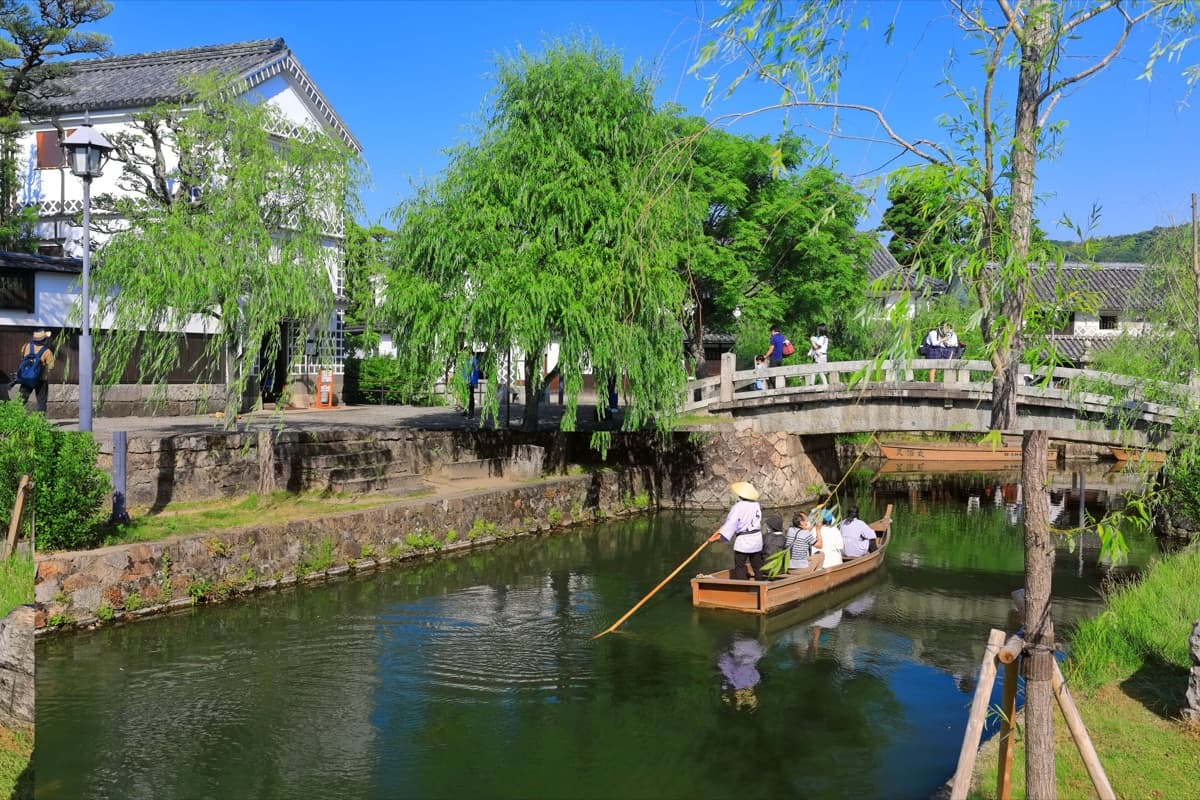
The Kurashiki River boat is short, slow and lovely. It's a loop of about 20 minutes in a small boat for up to six passengers, gliding under willows and bridges. From the water you see the Kurashiki Bikan Historical Quarter from a different angle than you get on the banks.
- Fare from October 1, 2026: ¥1,000 for adults, including junior-high students and older; ¥500 for children aged 5 through elementary school. Under-5s ride free with a guardian. The older ¥700/¥350 figures are no longer current.
- Advance booking: a portion of seats is available online from 00:00 Japan time, 30 days ahead, until 15:00 the day before. Start from the operator's current riverboat page, which links to its booking service.
- Same-day tickets: another allocation is sold at Kurashikikan from 9:00, by departure time. Online sold-out does not automatically mean there are no same-day seats, but popular slots can fill quickly.
- Times: usual departures are every 30 minutes from 9:30 to 17:00, for a ride of about 20 minutes. Heat, weather, water levels and events can change or cancel services. Do not plan around a last departure without checking that day.
- Days off: March–December normally excludes the second Monday, unless it is a holiday. January–February is weekends and public holidays only. The service closes December 29–January 3.
- Language: the boatmen do not provide a foreign-language commentary service. Enjoy the canal views without expecting an English-guided tour.
If the boat is important to you, reserve when the window opens or visit the ticket desk first. The canal walk is a good alternative if conditions stop the boats. Museum and boat tickets are separate from our multi-day Japan tours.
Kurashiki Ivy Square: From Cotton Mill to Red-Brick Courtyard
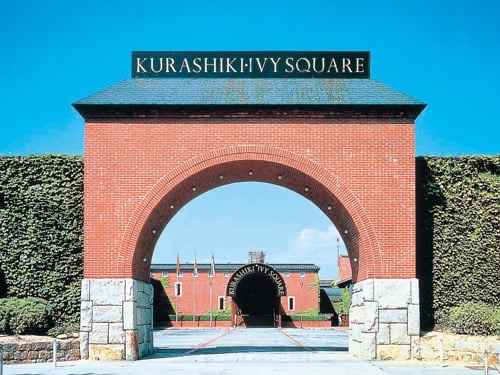
Ivy Square began as the main mill of the Kurashiki Spinning Works, completed in 1889, and was turned into today's complex from the 1970s. Kurashiki Ivy Square sits at the edge of the Kurashiki Bikan Historical Quarter. Its red-brick buildings surround a courtyard with restaurants, shops and the Kurabo Memorial Hall. In summer, ivy covers much of the red brick.
The Kurabo Memorial Hall is in the company's original raw-cotton warehouse. It tells the story of the cotton mill and cotton spinning in Japan. Its hours are 10:00–16:00, with last admission at 15:45; check the current admission charge and any closures. Allow 30–60 minutes for Ivy Square and longer if you visit the hall. It is also a useful indoor stop when it rains.
Achi Shrine and the View Over the Old Town
Achi Shrine sits on Tsurugatayama, the low hill behind the canal. Climb the stone steps for the classic view over the tiled roofs of the Kurashiki Bikan Historical Quarter. From up here you can see how tightly packed the historic buildings are. The shrine grounds include a Noh stage.
In late April or early May, look for the Akebono wisteria. This old wisteria is a designated natural monument of Okayama Prefecture; its pale pink flowers fade toward white. Bloom timing changes each year. The steps are steep in places, so skip the climb if stairs are hard for you.
Small Museums Worth Visiting: Japanese Folk Toy Museum, Folkcraft and Momotaro
For a district you can cross in 15 minutes, the Kurashiki Bikan Historical Quarter has many museums. Pick by interest.
Japanese Folk Toy Museum. The Nihon Kyodo Gangukan collects regional toys and folk figures from across Japan. Only the museum section charges admission, listed at ¥600 for adults. The shops on site are free to browse. The museum operator lists 10:00–17:00, with last entry at 16:40. It closes December 30–January 1 and on additional irregular days, so check its calendar before visiting. Kids tend to love it.
Kurashiki Museum of Folkcraft. This museum is in converted old storehouses near the canal. It shows ceramics, textiles, baskets and other mingei (folk craft). The operator's current visitor page lists 10:00–17:00, last entry 16:30; adult admission is ¥1,200. It normally closes Mondays, or the following day when Monday is a holiday, and December 29–January 1; check for display-change closures too. Older tourism listings that say 9:00 are out of date.
The Momotaro museum. Okayama is closely tied to Momotaro, the Peach Boy, from one of Japan's best-known folk tales, who sets off to fight ogres with a dog, a monkey and a pheasant. The Momotaro Karakuri Museum is small and playful, full of trick displays and illusions. Its official listing gives 10:00–17:00 daily and adult admission of ¥600; check the operator before a special trip.
Shops, Crafts and Japanese Denim in the Historic District
Shopping is half the fun of the Kurashiki Bikan Historical Quarter. The best finds are usually in small local shops rather than the souvenir shops right on the canal. Look for:
- Kurashiki canvas (hanpu) bags and pouches, which come out of the area's textile history
- Bizen ware, Okayama's unglazed, earthy pottery
- Japanese denim: jeans, bags and other denim products from Kojima makers
- Folk craft glass and ceramics in the craft shops around Honmachi
For everyday prices, try the covered shopping street arcades closer to the station, where many stores serve locals rather than visitors.
Kurashiki Denim Street vs Kojima Jeans Street
Kurashiki Denim Street, inside the Kurashiki Bikan Historical Quarter, is a small shopping street in an alley. It sells denim made in Kojima and is known for fun denim-blue snacks such as steamed buns and soft-serve. If you just want a quick taste of denim culture, it's enough.
Kojima Jeans Street is a separate trip. It's in Kojima, a different part of Kurashiki City on the Seto Inland Sea, and it is not a short walk from the canal. The usual route is a local train to Okayama, then the JR Seto-Ohashi Line to Kojima Station (about 25 minutes on the Marine Liner). From the station it's about 15 minutes on foot or a short bus ride. Allow roughly an hour each way, sometimes more. Okayama's tourism board has a Kojima Jeans Street guide.
What to Eat in the Kurashiki Bikan Historical Quarter
- Barazushi: Okayama's festive "scattered" sushi, with Seto Inland Sea seafood and seasonal vegetables over rice.
- Mamakari: small fish marinated in vinegar, often served as sushi. The name is usually explained as "borrowing rice": it's so good you'll finish your rice and need to borrow more.
- Fruit desserts: Okayama is known for white peaches in summer and grapes into autumn, so look for seasonal parfaits.
- Coffee in old buildings: many cafés are in converted townhouses and storehouses.
Lunch gets busy around noon on weekends, and there are fewer places for dinner in the Kurashiki Bikan area than for lunch. If you're staying overnight, book dinner ahead or eat near Kurashiki Station.
A Kurashiki night between Hiroshima and Himeji
Ready to experience Japan? These carefully selected tours match the destinations and experiences mentioned in this article.
Black Friday Sale20% comes off these prices when you book online by November 30. The discount is already in the total shown on the tour page.See sale tours
Rainy Days in Kurashiki
Rain doesn't ruin the Kurashiki Bikan Historical Quarter, and wet stone and willows look great in photos. Indoor options include the Ohara Museum and Kojima Torajiro Memorial Hall (2–3 hours together), the Kurashiki Museum of Folkcraft, the Japanese Folk Toy Museum, the Kurabo Memorial Hall and the Momotaro museum.
In bad weather, ask at the Kurashikikan Tourist Information Centre whether the boat is running. Japan's rainy season usually lasts from around June into July here. And don't plan a rainy day around a Monday, when several museums close.
Evenings in the Historic Quarter
By early evening the Kurashiki Bikan Historical Quarter empties out and the shops close. From sunset, lighting by designer Motoko Ishii lights up the white walls and willows and reflects them in the canal. The city's lighting schedule runs until 21:00 in October–March and 22:00 in April–September. Walking the public streets costs nothing; the lighting does not mean museums and shops remain open.
The operator lists evening boats on Saturdays in October and November 2026, at 18:00, 18:30 and 19:00. These are seasonal departures, not a year-round service; check the current operator page for your date and booking conditions.
Evenings here suit a slow walk more than bar-hopping. The quiet canal is a good reason to stay the night; for a busier evening later in your trip, see our Hiroshima guide.
Day Trips Around Kurashiki: Kojima Jeans Street and Okayama City
With two nights, the Kurashiki Bikan Historical Quarter makes an easy base for one extra outing:
- Okayama City (half a day): Okayama Castle, known for its black exterior, and Korakuen, one of Japan's Three Great Gardens.
- Kojima (half a day or more): for denim fans. Allow an hour each way.
- Naoshima (full day): this art island in the Seto Inland Sea is a longer day trip from Okayama. GR503 lists it as an alternative on Day 5, before the onward journey to Hiroshima. It is not a booked island excursion: ferries, museum reservations and the onward train need careful coordination. Choose Okayama if you want the simpler transfer day.
Pick one. Kurashiki is best when you leave some free time in the day.
Half Day, One Night or Two Nights? Sample Plans
Half day (about 5 hours)
If Kurashiki is a day trip, aim to reach Kurashiki Station by about 9:30. Check boat availability, spend around two hours in the Ohara Museum, walk the canal and have lunch. Choose the boat or Ivy Square as your final stop rather than rushing both. Add Honmachi and Achi Shrine only if you have more time. You will see the core of the quarter, but miss its quieter evening and early morning.
One night: the best balance
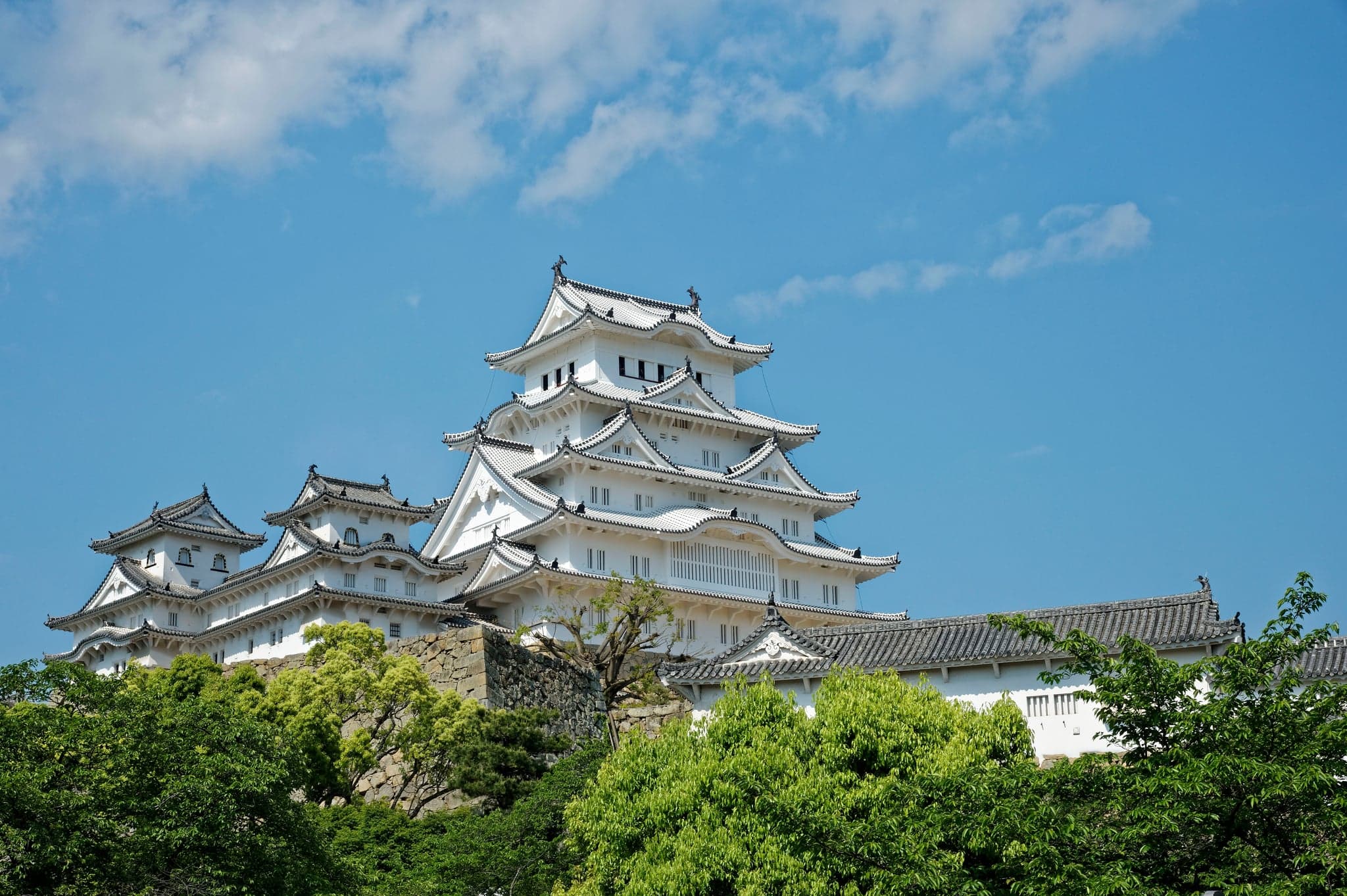
Arrive mid-afternoon. Visit Ivy Square and Achi Shrine, walk the canal as the lights come on, then have dinner. Next morning, walk the quiet canal at 8 am; if your onward schedule is flexible, visit the museum when it opens and leave after lunch. On GR506, visit the museum on your arrival day instead: Day 13 includes Himeji before Osaka, so a late Kurashiki departure squeezes the castle visit. In winter, arrive before the museum's 14:30 last entry. This is why your next destination matters as much as the number of nights.
Two nights: slow down, or add Kojima
A full middle day gives you time for your chosen museums without rushing; trying to visit every museum would still be a crowded day. Or split the day between the Kurashiki Bikan Historical Quarter and either Kojima Jeans Street or Okayama City. You also get a second evening on the canal.
How Kurashiki Fits a 15-Day Japan Itinerary: GR503 and GR506
Both routes are self-guided. We book the intercity trains and hotels, and you explore at your own pace. No guide comes with you by default, but a local guide can be arranged as an option. An arrival meeting at the airport, booked main train journeys and a loaded transport IC card help you get started. The local sightseeing remains yours to choose.
GR503: two nights with a full free Day 4
On A Grand Journey Across Western Japan (GR503), you spend the nights of Days 3 and 4 in Kurashiki.
- Day 3: Send your large luggage from Tokyo to Hiroshima. Take the Shinkansen to Himeji for Himeji Castle, then another Shinkansen to Okayama and a local train to Kurashiki.
- Day 4: A full free day. The itinerary suggests the Kurashiki Bikan Historical Quarter and the Ohara Museum of Art.
- Day 5: Take a local train to Okayama for Okayama Castle and Korakuen (or go to Naoshima instead), then the Shinkansen to Hiroshima, where your luggage will be waiting.
You arrive on Day 3 after Himeji, so keep that evening easy. Spend Day 4 on your chosen museums and the boat, or devote half the day to Kojima instead. Avoid trying to fit the full canal walking route and every museum around that separate outing. Pack an overnight bag for both nights.
GR506: one night on Day 12, then Himeji and Osaka
On From the Japanese Alps to Southern Kyushu (GR506), you spend one night in Kurashiki, on Day 12.
- Day 12: Check out in Hiroshima and send your luggage to Osaka. Take the Shinkansen to Okayama, then a local train to Kurashiki whenever you like. Suggested sights include Okayama Castle and Korakuen, the Kurashiki Bikan Historical Quarter and the Ohara Museum of Art.
- Day 13: Take a local train to Okayama and the Shinkansen to Himeji for the castle, then a rapid train to Osaka, where your luggage will be waiting.
One night is tight but workable. Choose between a substantial Okayama visit and more time in Kurashiki. In winter, going straight to Kurashiki is the easier way to protect museum time before its 14:30 last entry. In March–November, the 16:30 last entry gives more flexibility, but allow time inside rather than arriving at the cutoff. On Day 13, walk the canal early, because Himeji needs a good amount of time too. Our things to do in Himeji guide helps you plan the castle stop; the Osaka day-trip guide puts later options in context.
What's included, and what you pay locally
According to the current catalog, both routes include:
- Shinkansen and limited express trains for major intercity travel
- A transportation IC card (¥5,000)
- 14 nights with breakfast
- Three luggage deliveries
- 24/7 support during your stay in Japan
- Travel medical insurance in Japan
GR503 also includes a chartered taxi for Shirakawa-go.
You pay yourself for:
- Local trains and buses that aren't part of the ticketed legs. The IC card covers short rides like Okayama–Kurashiki until its balance runs out.
- Entrance fees
- Meals other than breakfast
- Accommodation tax
- International flights and personal expenses
The sights named in the itinerary are suggestions you visit on your own. Admission isn't included and there's no guided tour, so the Ohara Museum and the boat cost extra. Hotels are listed "or similar", so we can't guarantee a specific hotel in Kurashiki.
Check dates & prices on the GR503 page or the GR506 page. Prices depend on your dates and live availability. If you need a different trip length or group size, send us an inquiry instead.
Book Online: Example Japan Tour Prices With Kurashiki
These are prices for the whole 15-day / 14-night Japan trip, not a hotel-only booking in Kurashiki. The routes visit different places; the difference in price is not a charge for adding a second Kurashiki night.
| Route | Kurashiki stay | Catalog hotel example | Sample departure | Regular sample price per adult |
|---|---|---|---|---|
| GR503 — A Grand Journey Across Western Japan | Nights of Days 3 and 4; full free Day 4 | Kurashiki Royal Art Hotel or similar | January 13, 2027 | US$4,050 |
| GR506 — From the Japanese Alps to Southern Kyushu | Night of Day 12; Himeji on Day 13 | Kurashiki Ivy Square or similar | January 5, 2027 | US$3,490 |
Interested in a tour? Click a route code above, or search for it in the top-right Search bar.
Price basis: checked November 4, 2026; USD per adult, two adults sharing one twin room, Superior hotel grade. These are regular base fares before any active promotion. Departure date, room choice and availability change the price; the tour page shows the current total for your party. Accommodation tax, attraction admission, international flights and other exclusions listed above are additional. A sample price does not reserve a room or departure.
Both examples put the main Kurashiki sightseeing day on Saturday, January 16, 2027: Day 4 on GR503 and Day 12 on GR506. The museum's published calendar shows it open then, and winter boats normally operate on weekends, subject to weather and tickets. By contrast, the museum is closed January 12–15, so check your chosen trip's Kurashiki visit date, not just the tour departure date.
Choose GR503 if you want a full free day and two evenings in Kurashiki before continuing west, then returning through Takayama to Tokyo. Choose GR506 if you want Matsumoto and Kyoto earlier in the trip, then one Kurashiki night between Hiroshima and Himeji before finishing in Osaka. Check dates and prices for the complete itinerary that suits you.
Black Friday Sale20% comes off these prices when you book online by November 30. The discount is already in the total shown on the tour page.See sale tours
A Grand Journey Across Western Japan
15 days / 14 nights, starting and ending in Tokyo. Kurashiki on Days 3–4 gives you a full Day 4 for the Bikan quarter. Continue via Okayama to Hiroshima on Day 5; also visit Fukuoka, Osaka and Takayama.
Black Friday Sale20% comes off these prices when you book online by November 30. The discount is already in the total shown on the tour page.See sale tours
Check dates & prices — GR503These are multi-day Japan trips. Choose your departure date and room on the tour page to check the current price and availability. Optional day tours cost extra.
Common Mistakes and Useful Resources
- Visiting on a Monday: the Ohara Museum and several smaller museums close, and the boat doesn't run on some Mondays.
- Arriving at 4 pm in winter and hoping to see the Ohara Museum: December–February last entry is 14:30.
- Mistaking Shin-Kurashiki for the canal-side station. It needs a further local-train ride; these two tours route through Okayama.
- Thinking you can walk to Kojima Jeans Street from the Kurashiki Bikan Historical Quarter.
- Leaving boat tickets until the afternoon.
- Rolling suitcases through the lanes.
Useful resources for planning:
- The Kurashikikan Tourist Information Centre (1-4-8 Chuo), your tourist office once you're there
- The official sightseeing site's page on the Kurashiki Bikan Historical Quarter
- Okayama Prefecture's official tourism guide
- Current Kurashiki riverboat information and reservations
- Ohara Museum opening calendar
- JR West's Kurashiki page
- Google Maps for walking times
For these 15-day routes, start with the date and room choices on the product page. If you need a different trip length or party arrangement, use Plan My Trip to ask for a suitable alternative.
Want to include Kurashiki in your Japan trip? Get in touch through Plan My Trip on our self-guided tours site, and we’ll suggest the tours that best fit your dates and plans.
Frequently Asked Questions
Is Kurashiki worth a night on a two-week Japan trip?
Usually, yes. Okayama is on the Shinkansen line between Himeji and Hiroshima, so Kurashiki is easy to add. One night suits most travelers, and two nights suit slower trips.
How long do I need in the Kurashiki Bikan Historical Quarter?
Half a day covers the main sights. With one night you can see it early and late, when it's quietest.
Can I walk from the station?
Yes. It's a 15-minute walk from the south exit of JR Kurashiki Station.
Is Kojima Jeans Street near the Kurashiki Bikan Historical Quarter?
No. It's about an hour away by train via Okayama, plus a walk or short bus ride from Kojima Station.
Book a Japan journey with time in Kurashiki
Compare the complete itineraries, then choose your departure date and room. Local sightseeing admissions cost extra.
Black Friday Sale20% comes off these prices when you book online by November 30. The discount is already in the total shown on the tour page.See sale tours