Kyoto in Winter: Snow, Quiet Temples and the 2026–27 Dates
What Kyoto is really like from December to February: how often it snows and how to catch Kinkaku-ji in snow, what closes at New Year, Setsubun and the plum festivals, the Winter Special Openings, winter hours at the big temples — and how to fit it into a wider Japan trip.
Kyoto in winter is cold, calm and far less crowded than in the famous seasons. From December to February, daytime highs sit around 9–12°C, nights drop close to freezing, and outside the New Year rush the big temples feel like temples again instead of queues.
Is it worth it? For most travelers, yes. Winter is a smart choice for a first time in Japan if you'd rather have room to breathe than cherry blossoms, and a good reason to return if you've only seen Kyoto in spring or autumn. Just don't build the trip around snow. Snow that settles in central Kyoto comes only a few times a winter, and it's often gone by the afternoon.
This article goes month by month with the Japan Meteorological Agency's weather normals, the 2026–27 dates that are already out (checked on each organizer's site on October 4, 2026), the ones that aren't yet, and how to turn it into a plan within a wider Japan trip.
Quick Answer: Kyoto in Winter
- Weather: highs of 9–12°C (48–53°F), lows of 1.5–3.5°C (35–38°F). Grayer than Tokyo, with 122–134 hours of sun a month.
- Snow: about 1.6 days in January and 2.2 in February with 1 cm or more of new snow. February is your best bet; December rarely.
- December: quiet until the last week, then New Year closures (roughly December 28 to January 3–4) and the Okera-mairi fire at Yasaka Shrine on New Year's Eve.
- January: the quietest weeks of the year, and the Winter Special Openings of normally closed temples (2026 edition: January 9 to March 18).
- February: Setsubun (February 2–4, 2027), plum blossom at Kitano Tenmangu, and Jonangu's weeping plums from February 18, 2027.
- No Arashiyama light-up in December: the Hanatouro lantern event ended in 2021.
January high
9.1°C (48.4°F)
Snow days
~2 in February
Kinkaku-ji
9:00–17:00 · ¥500
Setsubun
Feb 3, 2027
Kyoto Weather in Winter
Kyoto sits in a basin ringed by mountains, and the cold settles in and stays. Locals call the damp chill that seems to rise from the ground sokobie. On paper the numbers look mild; on a stone temple path at 8 a.m., it feels a lot colder. These are the Japan Meteorological Agency's 30-year averages (1991–2020) for central Kyoto:
| Month | Average high | Average low | Rain and snow | Sunshine | Days with ≥1 cm new snow |
|---|---|---|---|---|---|
| December | 11.6°C (52.9°F) | 3.5°C (38.3°F) | 57.3 mm | 134 h | 0.6 |
| January | 9.1°C (48.4°F) | 1.5°C (34.7°F) | 53.3 mm | 124 h | 1.6 |
| February | 10.0°C (50.0°F) | 1.6°C (34.9°F) | 65.1 mm | 122 h | 2.2 |
Daytime highs almost never stay below freezing, but nights fall below freezing on about 7 days in January and February. Rain or snow falls on six or seven days a month, and Kyoto gets less sunshine than Tokyo (about 124 hours in January against Tokyo's 193). The reward is the light: on a clear day the low winter sun makes wooden halls and moss gardens glow, and photos come out crisp.
Does it snow in Kyoto?
Yes, but not much, and not for long. Flurries come and go, but snow that settles — 1 cm or more — falls on only about 1.6 days in January and 2.2 in February, and 0.6 in December. The deepest snow in a normal winter is 3–4 cm. So your best odds are from late January through February, and some winters barely see any. The northern hills around Kibune, Kurama and Ohara are colder, get snow more often and keep it longer.
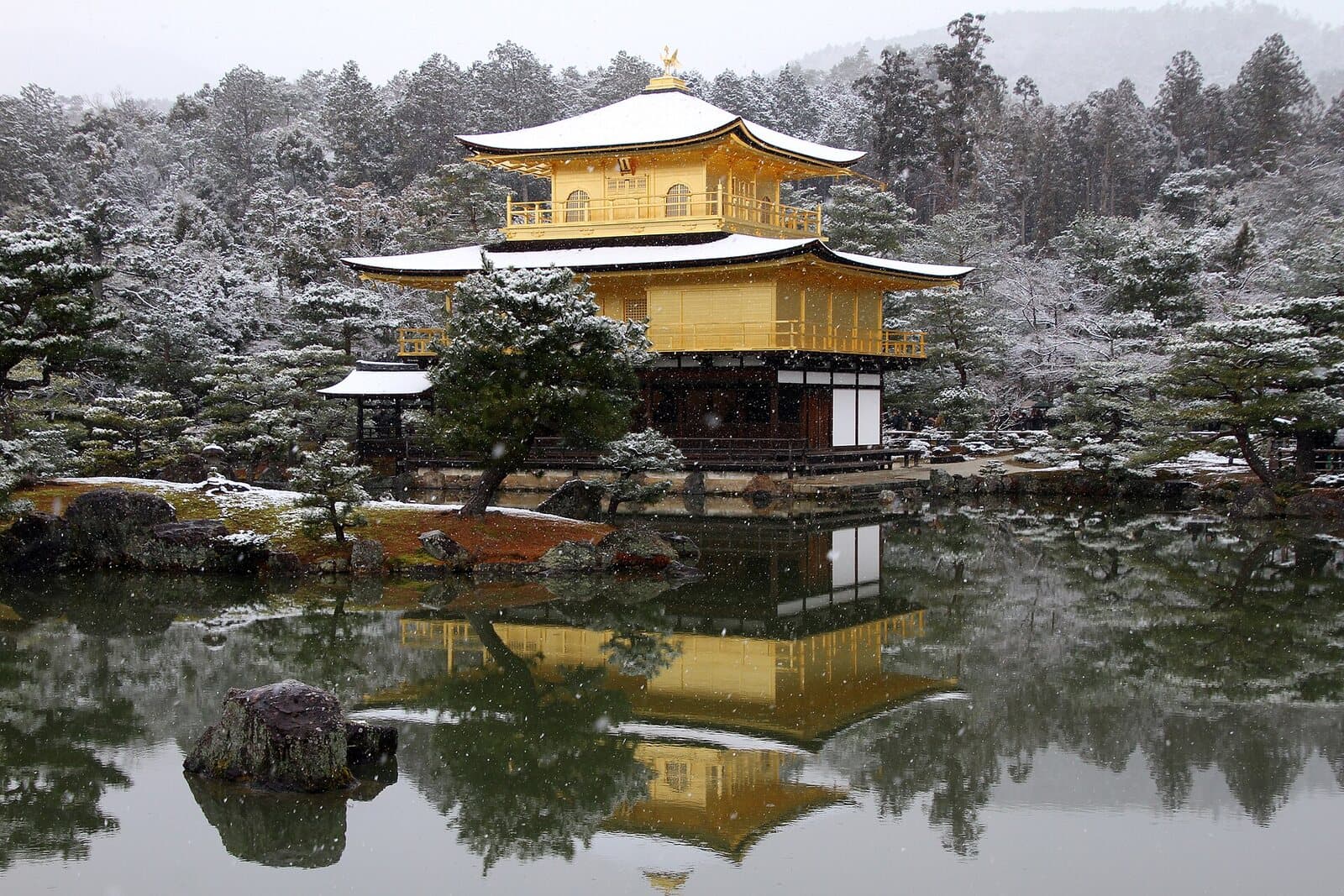
Snow on temple roofs at dawn is the magical part — the photos everyone hopes for — but by lunch it's often just wet paving. We recommend checking the forecast the night before, and if snow is due, set an alarm.
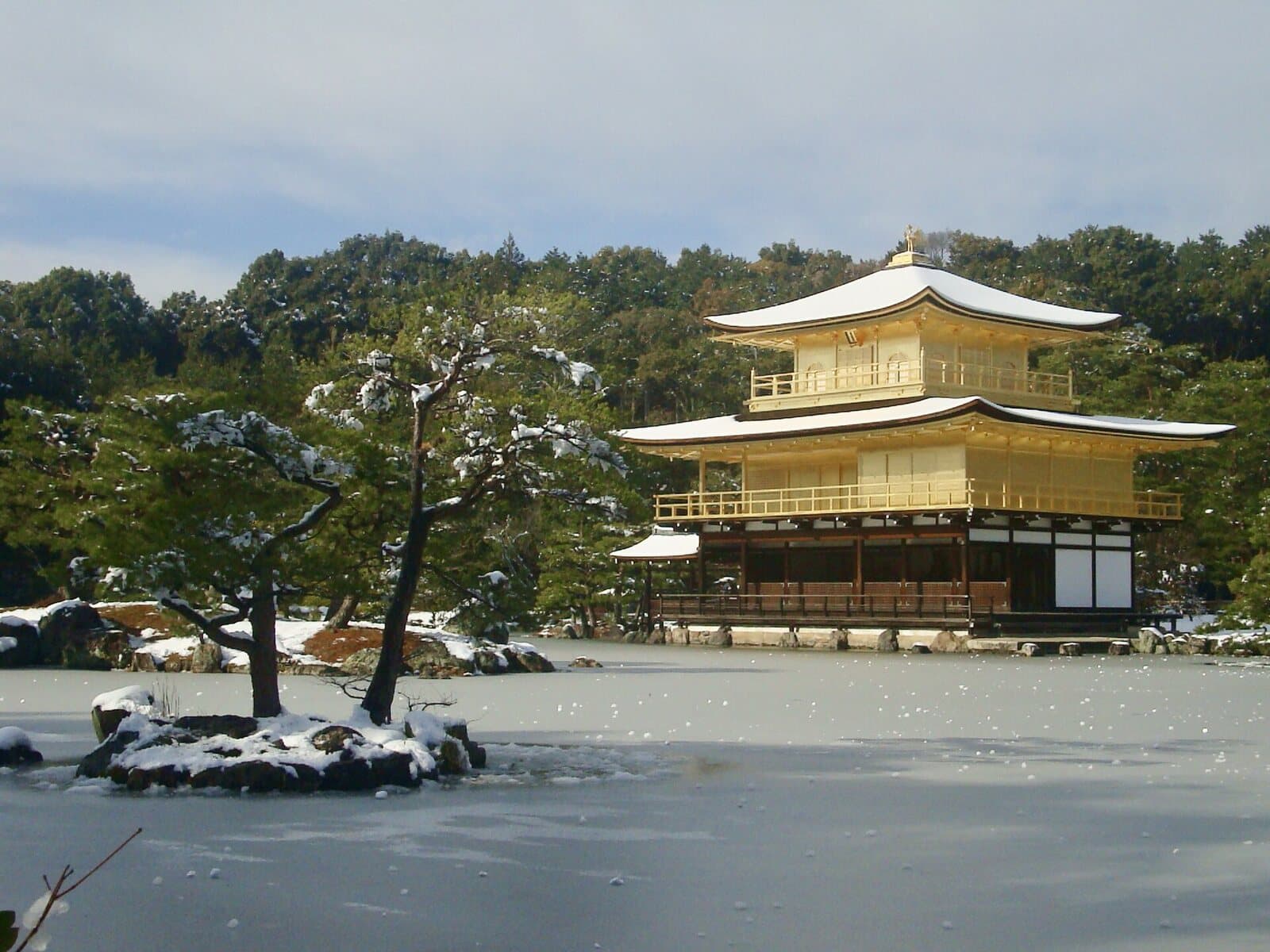
How to catch Kinkaku-ji in the snow
The golden pavilion under fresh snow is the photo every visitor hopes for. Kinkaku-ji opens at 9:00 every day (to 17:00, adults ¥500), and there are no special snow-day hours. The temple's own advice on when snow settles is simple: check the weather forecast, and watch its live camera, which updates every three minutes. On a snowy morning expect to wait in line before opening, and go straight there — the snow slides off the roof fast once the sun is up.
Short days
The sun sets before 5 p.m. through December, and in early January it doesn't rise until about 7 a.m. Several temples also close earlier in winter (see the opening-hours table below). Plan sightseeing for the morning and middle of the day, and save the evenings for food and onsen.
Kyoto in December: Quiet, Then the New Year Crunch
Early December can still have some autumn color. From mid-December the city goes quiet until the last week of the year. Kitano Tenmangu's last market of the year, Shimai-Tenjin, fills the shrine with stalls on December 25.
New Year's Eve: Okera-mairi at Yasaka Shrine
From about 7:30 p.m. on December 31 until about 5 a.m. on January 1, Yasaka Shrine keeps a sacred fire burning in lanterns around its grounds, lit from a flame kindled at an early-morning rite on December 28. Worshippers light a rope from it and carry the embers home — the fire rope costs ¥1,000. It's crowded, loud and a lot of fun. Kiyomizu-dera rings its temple bell on New Year's Eve, too, and you'll hear bells from temples across the city around midnight.
What closes over New Year
- Nijo Castle: closed December 29–31. The grounds reopen on January 1, but both palaces (Ninomaru and Honmaru) are closed December 26–28 and January 1–3, and Ninomaru Palace also closes on Tuesdays in December and January.
- Kyoto Imperial Palace: closed December 28 to January 4 (and on Mondays). Free, no booking needed the rest of the time.
- Kyoto National Museum: closed over New Year — December 29 to January 1 last season; the 2026–27 dates aren't posted yet.
- Open every day: Kinkaku-ji, Ginkaku-ji and Sanjusangen-do; Kiyomizu-dera keeps its 6:00–18:00 hours; Fushimi Inari's grounds are always open.
From our Japan travel team
The days around New Year are among the busiest travel times in Japan, and Kyoto hotels and trains from Tokyo fill up fast for those dates. If your trip includes the last week of December or the first days of January, start planning early, ideally several months ahead. Our self-guided tours handle the bookings and support you through the trip, so feel free to get in touch if you'd like help with the timing.
Kyoto in January: The Quietest Weeks of the Year
January 1–3 is hatsumode, the first shrine visit of the year, and the big shrines are packed. At Fushimi Inari, food stalls ran from December 31 to January 5 last season and the shrine closes its car parks from December 30 to January 6 — the atmosphere is great, but it's a bad time for clean photos. Then Kyoto slips into a post-New Year lull. We've found mid-January to be the calmest time of year at the famous temples. On January 25, Kitano Tenmangu's first market of the year, Hatsu-Tenjin, draws about 1,000 stalls and 150,000 people, by the shrine's own count.
Kyoto Winter Special Openings (Kyo no Fuyu no Tabi)
Every winter the city opens temple halls, gardens and treasures that are normally closed to the public. The 2027 program hadn't been announced in early October — last year's came out on November 21, so expect it in late November. The 2026 edition, for reference:
- Dates: January 9 to March 18, 2026, 10:00–16:30 (last entry 16:00); some sites had different dates.
- Sites: 15, themed that year around Toyotomi Hideyoshi and his brother Hidenaga — including Kodai-ji, Daitoku-ji's Daiko-in, To-ji's five-story pagoda, Ninna-ji's Kannon-do and Daigo-ji's Sanbo-in.
- Fees: ¥800 per site for adults at most sites; a few cost more (To-ji's pagoda ¥1,200).
- Booking: not needed for individual visitors, except at a few reservation-only sites such as the monk-guided visits at Nishi and Higashi Hongan-ji.
It's the best way to see places most visitors walk straight past, and to learn the history and stories behind them. The lineup changes every year, so check the official Kyoto tourism site (kyoto.travel) once the program is out.
Miyama's thatched village by lantern light
About 80 minutes north of the city by car, the thatched farmhouses of Miyama Kayabuki no Sato are lit with lanterns for one week: January 30 to February 6, 2027, 17:00–19:00. The event was renamed Fuyu Toro ("winter lanterns") in 2026 because of the lack of snow in recent years, so don't count on a snowy scene. The organizers are clear that you can't do it as a day trip by public transport — the last bus leaves before or during the light-up — so go with the official bus tour from Kyoto Station or stay overnight.
Kyoto in February: Setsubun, Plum Blossom and the Best Snow Odds
February gives you the best chance of a snowy morning and the busiest festival calendar of the winter. Many of these rituals follow the old calendar, and seeing them helps you understand how much of Japanese culture and daily life still turns on the change of seasons.
Setsubun, February 2–4, 2027
Setsubun, the day before the traditional first day of spring, falls on Wednesday, February 3, 2027, and Kyoto celebrates it across the city:
- Yoshida Shrine: the biggest, over three days (February 2–4), with a masked demon-chasing ritual on the afternoon of the eve, a huge fire for burning old charms on Setsubun day, and about 800 food stalls. The shrine counts about 500,000 visitors a year.
- Mibu-dera: free performances of the silent Mibu Kyogen play "Setsubun", on the hour from 17:00 to 20:00 on the eve and on the day — February 2 and 3, 2027.
- Heian Jingu: a re-enactment of the Heian court's demon-expulsion rite on February 3 (14:00 last year), then a great fire of some 40,000 prayer sticks.
- Yasaka Shrine: bean-throwing with dances by maiko and geiko of Kyoto's geisha districts, on February 2 and 3.
The 2027 clock times hadn't been posted in October, so check before you go.
Plum blossom
- Kitano Tenmangu: about 1,500 plum trees of 50 varieties. The shrine usually opens its plum garden in early February, and it's at its best from late February to mid-March. The 2027 garden dates and fee weren't posted yet (in 2026 the garden hosted a ticketed art installation, so last year's price isn't a guide).
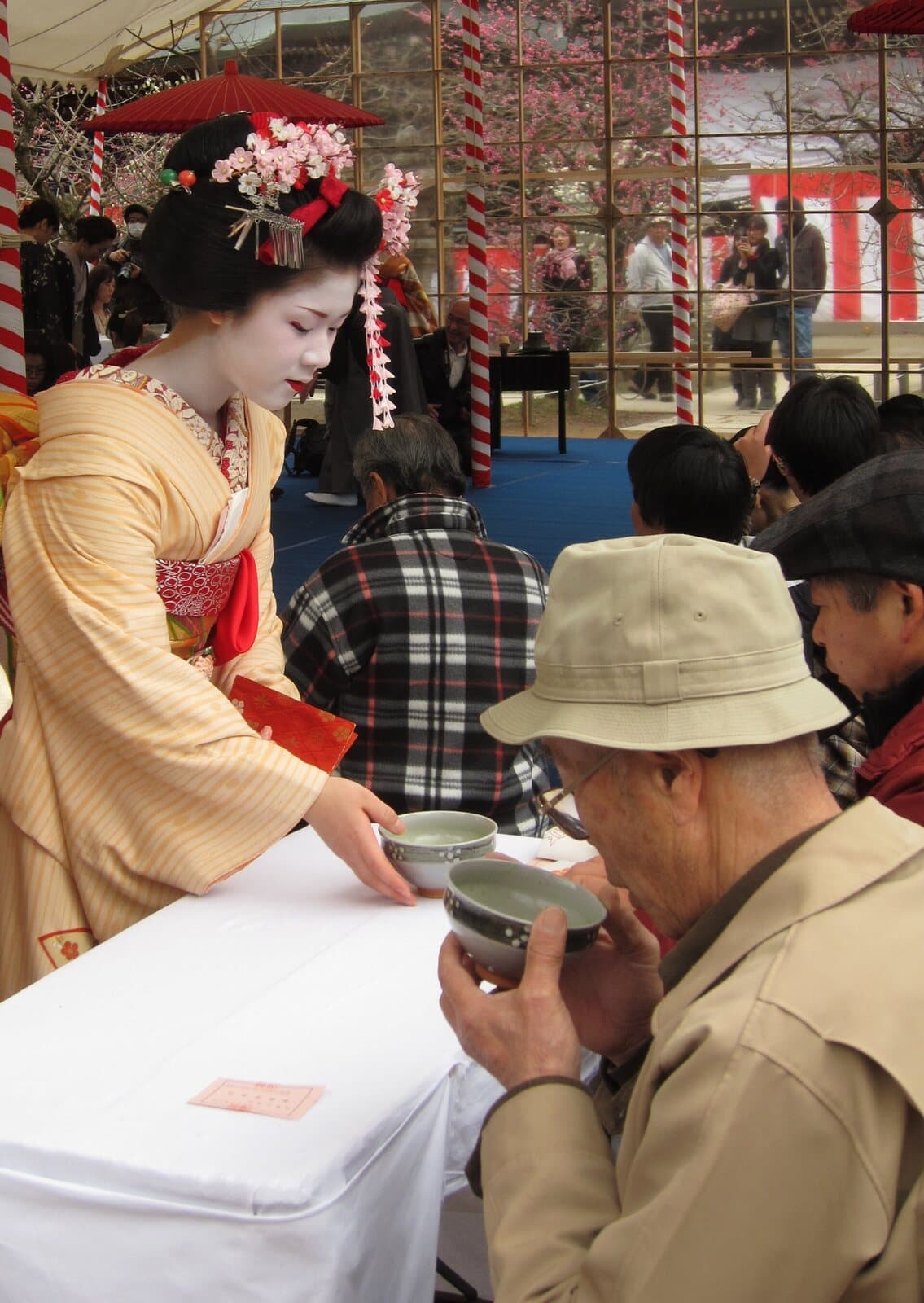
- Baikasai, February 25: Kitano Tenmangu's plum festival, with an open-air tea ceremony served by geiko and maiko from the nearby Kamishichiken district, 10:00–15:00, rain or shine. Last year the tea ticket was ¥3,000, available to purchase at the shrine from January 25. The tea ceremony gets busy, so arrive early.
- Jonangu: 150 weeping plums and about 400 camellias, festival February 18 to March 22, 2027 (already announced), 9:00–16:30, adults ¥1,000. Bloom varies a lot: in 2025 the peak didn't come until March 11.
Staying into March? 2027 is Kitano Tenmangu's 1,125th-anniversary year, with events from March 6 to April 4 and the main festival on March 25 — right at the end of plum season.
The Best Winter Spots for Beautiful Views
Kiyomizu-dera at opening time
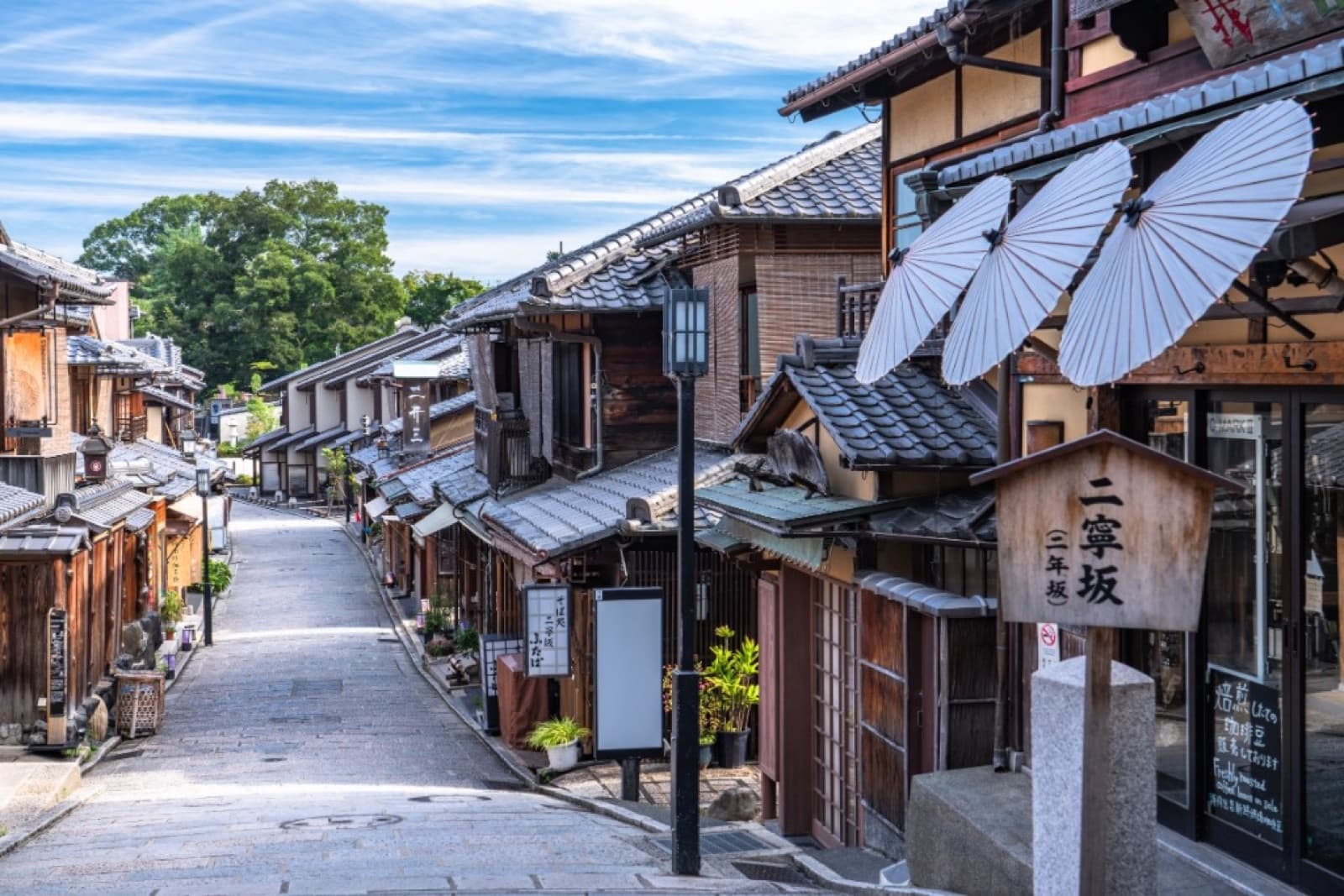
Kiyomizu-dera opens at 6:00 all winter. Stand on the wooden stage while the sky gets light over the city — a view most visitors never see — then walk down Sannenzaka and Ninenzaka before the shops open and the tour groups arrive.
Fushimi Inari at sunrise
Fushimi Inari Taisha is always open and free. The full loop up Mount Inari is a proper hike of two to three hours; plenty of people turn back at the Yotsutsuji intersection, roughly halfway, which has a wide view over southern Kyoto. If you're taking photos, come at sunrise and you'll have the gates almost to yourself. Bring gloves and wear shoes with good grip, because shaded steps can get icy. Avoid January 1–3 unless you want the crowds.
Zen gardens in the snow
Moss gardens and raked gravel look their best under a dusting of snow. Daitoku-ji's subtemples, Ryoan-ji and Ginkaku-ji are all good bets on a snowy morning — and on a dry one, the low winter light makes the wooden halls glow.
Kibune, Kurama and Ohara: where snow actually settles
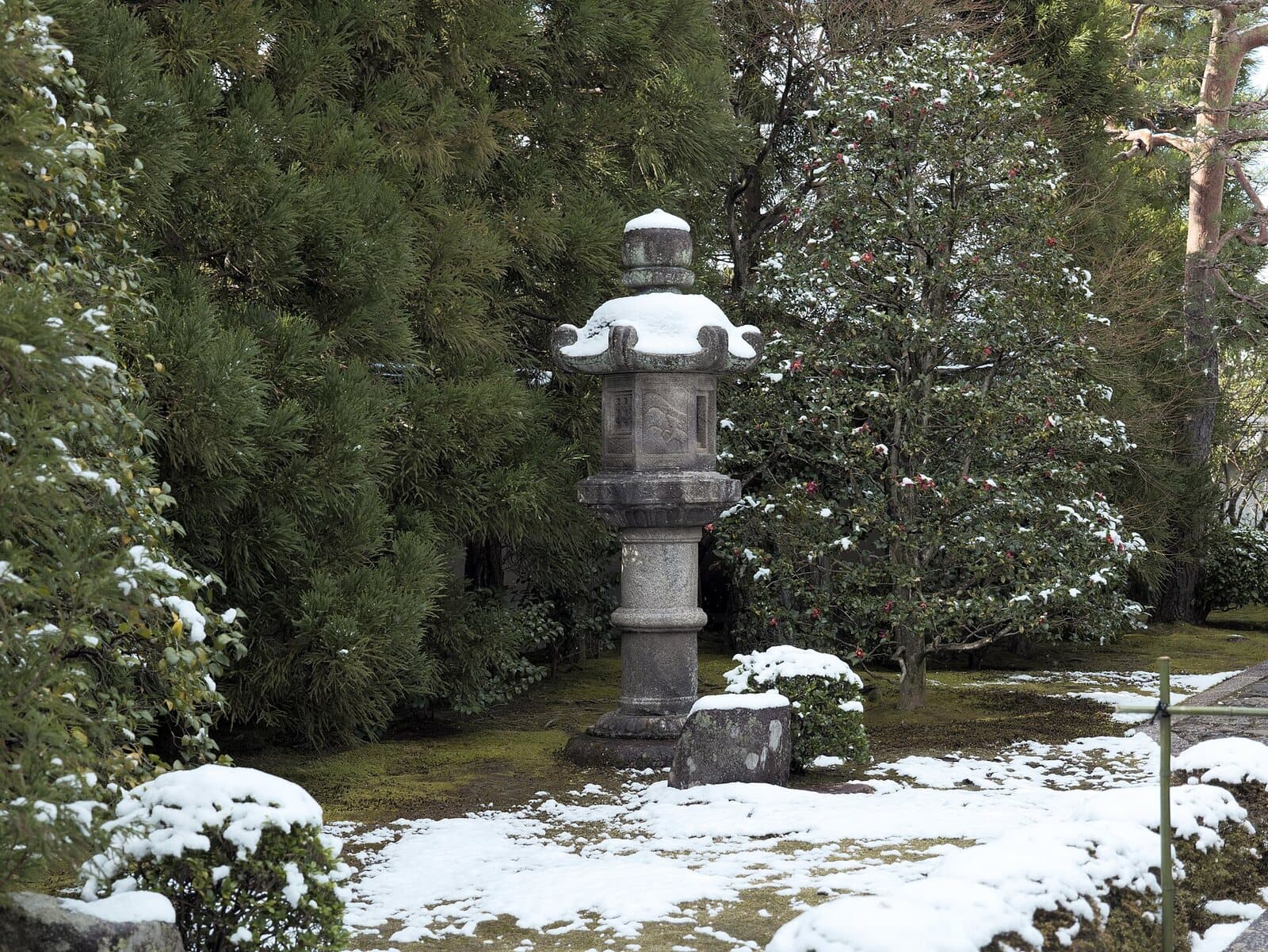
For real snow, head north. Kifune Shrine's stone steps, lined with red lanterns, are one of the most beautiful views in Kyoto under snow. Take the Eizan Railway from Demachiyanagi to Kibuneguchi (about 28 minutes), then Kyoto Bus 33 (about 4 minutes) or about 30 minutes on foot. In winter the shrine opens 6:00–18:00, and the lanterns on the approach are lit from dusk to 20:00 every day.
Last winter the shrine also ran a snow-day light-up — weekends from January 17 to February 28, 2026, only on days with snow, from sunset to 20:30, with a go/no-go posted on its social media account at 15:00 on the day. The 2027 edition hadn't been announced. Ohara, home to Sanzen-in, is further into the hills to the northeast. Both areas are colder than the city, so wear an extra layer.
What about an Arashiyama light-up?
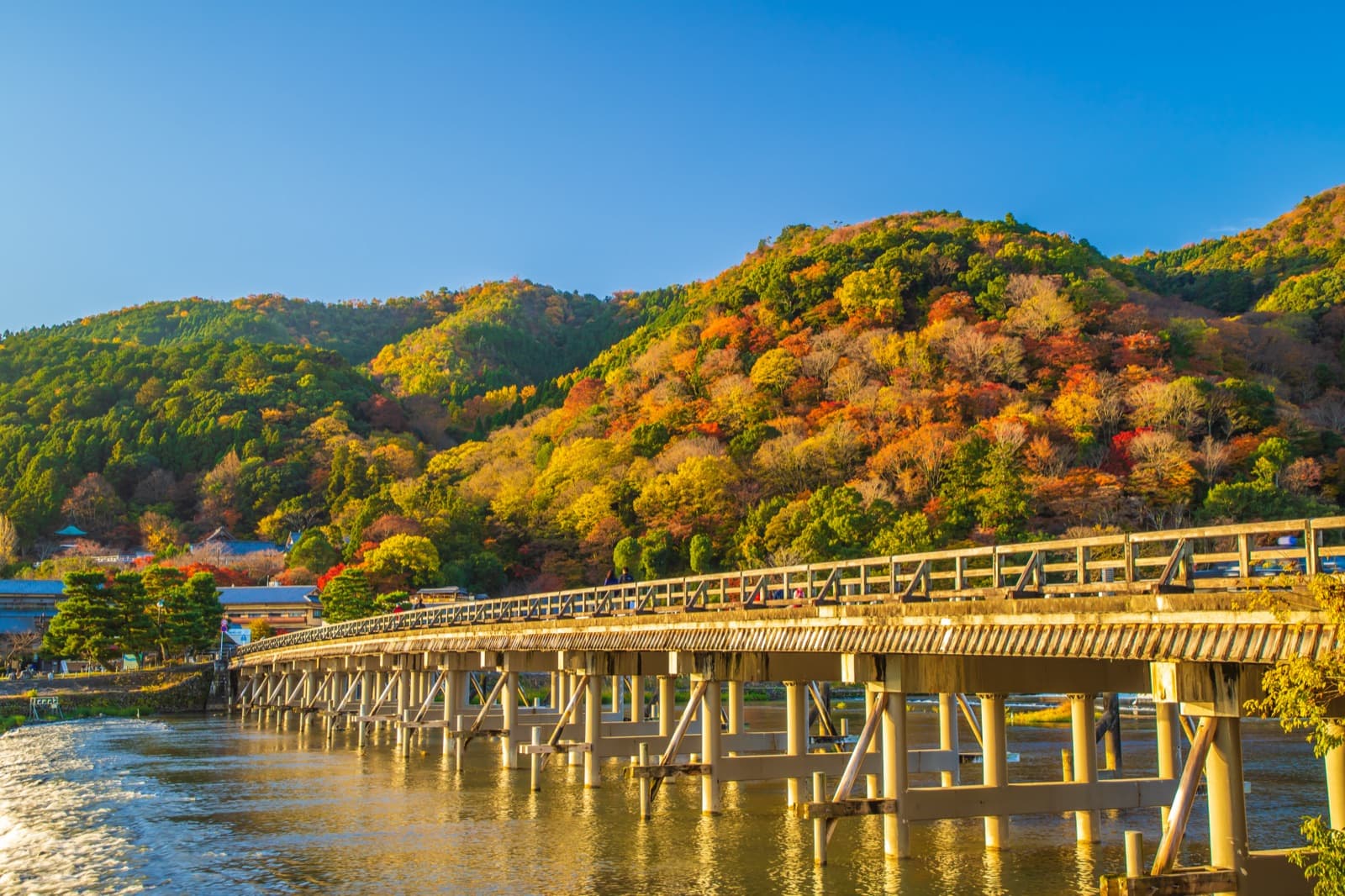
Many guides still list the Arashiyama Hanatouro lantern event in December. It ended after its 2021 edition. Its successor, the Arashiyama Bamboo Light-up, is an autumn event — September 30 to November 8 in 2026 — and is over before winter. In winter, visit Arashiyama in the morning instead, when the bamboo grove and the river give beautiful views without the crowds.
Winter Opening Hours at the Big Sights
| Sight | Winter hours | Adult entry |
|---|---|---|
| Kinkaku-ji | 9:00–17:00 every day, no separate winter hours | ¥500 |
| Ginkaku-ji | 9:00–16:30 from December 1 to the end of February | ¥1,000 |
| Kiyomizu-dera | 6:00–18:00 in December and from January 1 | ¥500 |
| Sanjusangen-do | 9:00–16:00 from November 16 to March 31 | ¥600 |
| Nijo Castle | 8:45–16:00 last entry; closed December 29–31 | ¥1,300 with Ninomaru Palace |
| Fushimi Inari Taisha | Grounds always open | Free |
| Kifune Shrine | 6:00–18:00 from December 1 to April 30 | Free |
For more on each sight, see our things to do in Kyoto guide.
Warm Food for Colder Days
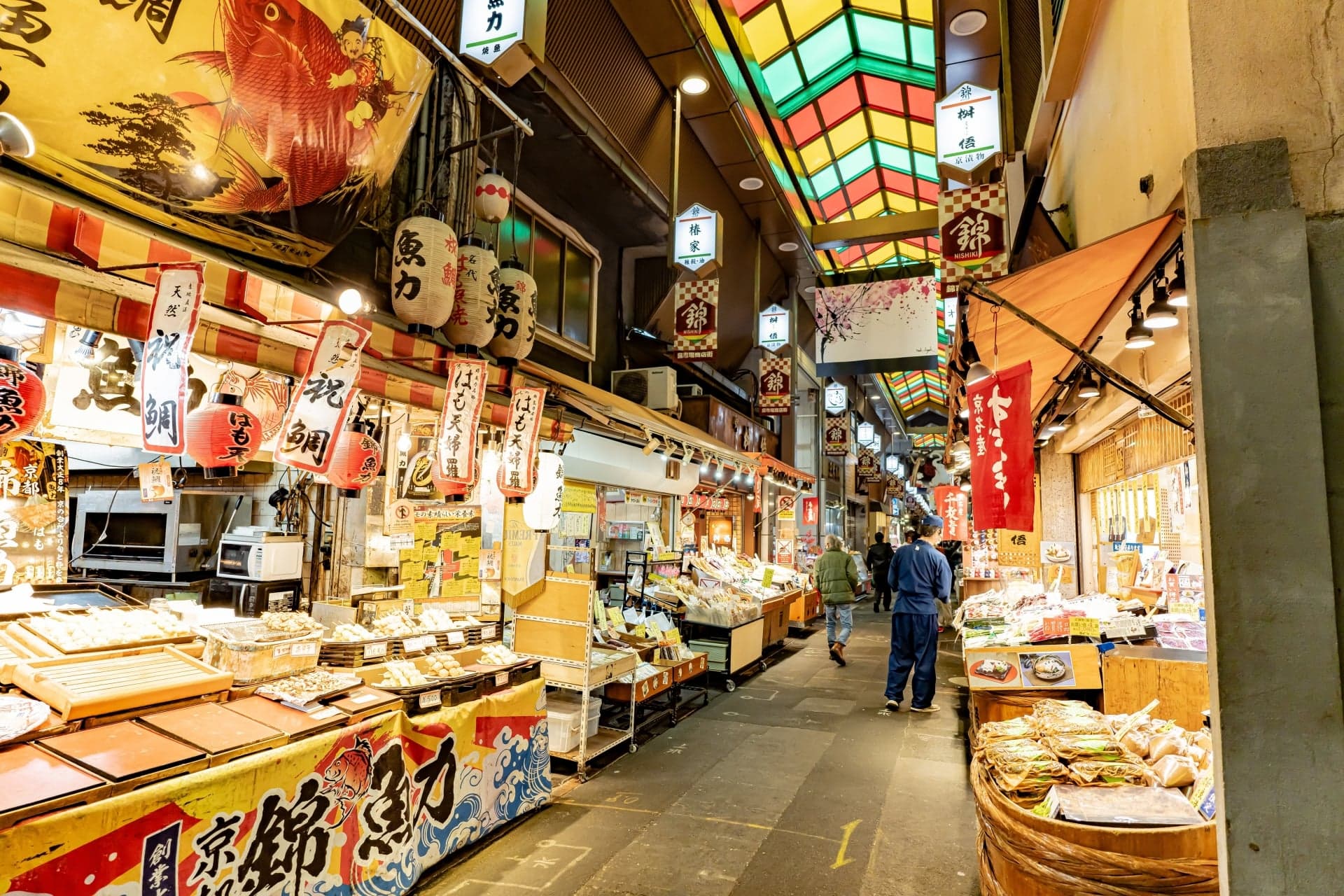
Kyoto's winter food is gentle and warming. Yudofu, tofu simmered in kelp broth, comes from the Zen temple kitchens around Nanzen-ji, and long-running restaurants near the temple still serve it as a set meal — after a frosty morning on the Philosopher's Path, it's pretty much perfect. Also try nishin soba (soba topped with sweet simmered herring), oden at a counter bar and hot amazake from a shrine stall. Nishiki Market's covered arcade is an easy food stop on a sleety day.
What to Wear in Kyoto in Winter
Dress in layers, because you'll go back and forth between icy gardens and heated trains all day.
- A thermal base layer, a fleece or wool mid layer and a windproof coat.
- A warm hat, gloves and a scarf. Temple gardens are cold places to stand still.
- Shoes you can slip on and off quickly — you'll take them off at many temple halls — and thick socks, because the wooden floors are freezing.
- Waterproof shoes with good grip if snow is forecast.
- Disposable heat packs (kairo), sold in pocket size at convenience stores all over Japan.
- Bring a compact umbrella: winter is mostly dry, but it does sometimes sleet.
Getting Around Kyoto in Winter
The city bus fare today is a flat ¥230 for adults, and the Subway & Bus 1-Day Pass costs ¥1,100 (the old bus-only pass is no longer sold). On buses alone the pass pays off from the fifth ride; otherwise an IC card such as ICOCA or Suica is simpler. When buses get stuck in traffic, take the subway: the Tozai Line stops at Keage (for Nanzen-ji) and Nijojo-mae.
One change to watch for: Kyoto City plans a higher bus fare for non-residents (about ¥350–400, with ¥200 for residents) during fiscal 2027, which runs from April 2027 to March 2028. It still needs national approval and won't affect this winter.
From Tokyo, the Nozomi Shinkansen reaches Kyoto in about 2 hours 15 minutes.
From our Japan travel team
Snow around Sekigahara, between Nagoya and Kyoto, can slow the Tokaido Shinkansen on winter days even when Tokyo and Kyoto are both dry. On a travel day, leave a buffer before any onward connection or dinner booking, and check JR Central's operation information before heading to the station. If you'd like help building sensible buffers into a winter route, just ask and we'll sort it out with you.
Common Winter Mistakes in Kyoto
- Betting everything on snow. Hope for it, but build a plan that also works on a dry, sunny day.
- Trusting old event lists. The December Arashiyama Hanatouro ended in 2021.
- Forgetting New Year closures. Check opening days for anything between December 28 and January 4.
- Planning afternoons like it's summer. The sun sets before 5 p.m. in December, and Ginkaku-ji and Sanjusangen-do close earlier in winter.
- Wearing lace-up boots. Taking your shoes off and on all day gets old fast.
- Leaving no buffer on travel days. Snow delays are uncommon, but they happen.
Three Days in Kyoto in Winter
For a first visit, as part of a 10–12 day Japan trip with Tokyo first and Osaka or the Japan Alps after:
- Day 1 — Arrive and warm up. Take a morning Shinkansen from Tokyo and arrive by lunchtime. Ride the Tozai Line to Keage, have yudofu near Nanzen-ji and walk the Philosopher's Path. Get to Gion before the light fades.
- Day 2 — Snow-watch day. If snow fell overnight, go straight to Kinkaku-ji for the 9:00 opening. If not, start at Kiyomizu-dera at 6:00 and wander Higashiyama before mid-morning. In the afternoon, visit a Winter Special Opening or Nijo Castle.
- Day 3 — North or south. Fushimi Inari at sunrise. If there's snow in the northern hills, head to Kibune or Ohara; if not, take it easy and move on.
We recommend at least three nights in Kyoto so you can swap days around with the weather — in winter, that flexibility matters most. For where to base yourself, see our where to stay in Kyoto guide; for the rest of the trip, our Japan winter itinerary and Tokyo in winter guide.
Self-Guided Routes With Nights in Kyoto
Over half of our routes include nights in Kyoto, and in winter several pair it with the season's other highlights — the snow at Shirakawa-go (see our Shirakawa-go guide), the hot springs of Kinosaki Onsen and skiing. If you'd rather not sort out every train and hotel yourself, a self-guided tour is the easy way to do it. Our staff meet you at the airport with your trip documents, the tickets for the legs we book and a loaded IC card. No guide walks with you day to day; if you'd like someone to share the history and stories behind Kyoto's temples, a local guide can be arranged as an option. Choose a tour with at least two or three nights in Kyoto so you can work around the weather. Prices are per person and move with the departure date and room type.
| Route | Length | From (USD per person) | Shape |
|---|---|---|---|
| Kansai Essentials: Osaka, Nara, and Kyoto (KA001) | 6 days | $1,000–1,500 | Starts in Osaka, then Nara and two nights in Kyoto — the short Kansai-only option. |
| Japan Highlights & World Heritage (GR002) | 12 days | $3,300–4,800 | Tokyo, Takayama with Shirakawa-go, three nights in Kyoto and two in Nara. |
| Timeless Traditions: Kanazawa & Hida Journey (GR003) | 12 days | $3,200–4,700 | Tokyo, Kanazawa, three nights in Kyoto, then Takayama and Shirakawa-go. |
| Spirit of Tradition: Shirakawa-go & Cultural Japan (GR009) | 14 days | $4,100–5,900 | Tokyo, Hakone, Takayama, three nights in Kyoto, Nara and Hiroshima. |
| Hop Through Japan’s Hot Springs & Highlights (HS002) | 14 days | $4,300–5,700 | Tokyo, Hakone, three nights in Kyoto, then Kinosaki Onsen, Kanazawa, a night in Shirakawa-go and Gero Onsen. |
| The Art of Onsen: A Premium Japan Experience (HS003) | 11 days | $5,500–7,600 | Tokyo, two nights in Hakone, two in Kyoto and two at Kinosaki Onsen. |
| Hakuba Ski & Popular City Journey (SK009) | 13 days | $4,700–6,000 | Tokyo and the snow monkeys, three nights at Hakuba (two ski days, gear rental included), then Kanazawa, two nights in Kyoto and Hakone. |
Interested in a tour? Click the route name above, or search by route code in the top-right Search bar.
Interested in Kyoto in winter? Get in touch through Plan My Trip on our self-guided tours site, and we'll suggest the tours that best fit your dates and plans.
FAQ: Kyoto in Winter
Is Kyoto worth visiting in winter?
Yes, especially from mid-January through February, when crowds are thin and the Winter Special Openings are on. Pack warm layers and keep your expectations about snow realistic.
Does it snow in Kyoto?
A little. Snow of 1 cm or more falls on about 1.6 days in January and 2.2 in February, and only 0.6 in December, and it often melts by the afternoon. The northern hills around Kibune and Ohara get more.
How cold is Kyoto in winter?
Average highs are 9–12°C (48–53°F) and lows 1.5–3.5°C (35–38°F); January is the coldest month. The damp basin air makes it feel colder than that, especially early in the morning.
When is the best time to see Kinkaku-ji in snow?
Late January and February, early in the morning after an overnight snowfall. The temple opens at 9:00 and has no special snow-day hours; it suggests checking the forecast and its live camera.
What is closed in Kyoto at New Year?
Nijo Castle closes December 29–31 and its palaces stay closed January 1–3; the Kyoto Imperial Palace closes December 28 to January 4; museums close for a few days. Kinkaku-ji, Ginkaku-ji, Kiyomizu-dera, Sanjusangen-do and Fushimi Inari stay open.
Is there an Arashiyama light-up in winter?
No. The December Arashiyama Hanatouro ended in 2021, and its successor, the Arashiyama Bamboo Light-up, runs in autumn (September 30 to November 8 in 2026).
When are the 2027 Kyoto Winter Special Openings?
Not announced as of early October 2026. Last year's program was published on November 21 and ran from January 9 to March 18, 2026, at ¥800 per site for most sites.
Checked on October 4, 2026: weather from the Japan Meteorological Agency's 1991–2020 normals for Kyoto; Setsubun date from the National Astronomical Observatory of Japan; hours, fees and event dates from Kinkaku-ji and Ginkaku-ji (Shokoku-ji), Kiyomizu-dera, Sanjusangen-do, Nijo Castle, the Kyoto Imperial Palace (Imperial Household Agency), the Kyoto National Museum, Yasaka Shrine, Fushimi Inari Taisha, Yoshida Shrine, Heian Jingu, Mibu-dera, Kitano Tenmangu, Jonangu, Kifune Shrine, the Miyama Fuyu Toro organizers, the Arashiyama Bamboo Light-up and the former Hanatouro council; Winter Special Openings from Kyoto City and the official Kyoto tourism site (2026 edition); bus fares and the planned fare change from the Kyoto City Transport Bureau. Routes and prices are from our catalog on the same date. Hero photo: Kinkaku-ji in falling snow, by Hyppolyte de Saint-Rambert, CC BY-SA 4.0, via Wikimedia Commons.