Japan Luxury Tours 2026–27: Self-Guided Routes With the Imperial Hotel, Green Car and Private Taxis (Real Prices)
What a luxury Japan tour actually buys — the hotels, first-class Shinkansen seats, private sightseeing taxis and signature meals — with the real prices for every date from October 2026 to September 2027.
"Luxury Japan tour" covers three very different products. Some are fully guided group journeys with a tour leader and fixed dates. Some are private, chauffeur-and-guide builds priced by the day. And some — which is what we do — are self-guided: the finest hotels on the route, first-class seats on the bullet train, private sightseeing taxis on the days that need them, and the freedom to spend each day at your own pace.
Whether you are visiting Japan for the first time or coming back, the aim is the same: a luxury tour of Japan that lets you explore Japan — and discover each city — at your own pace, from cutting edge cities to hot-spring villages. Our luxury routes cover two of Japan's four main islands, Honshu and Kyushu.
This guide is written from our own itineraries and price calendars, so every hotel, inclusion and price below is one you can actually book. It explains what each level of our catalog buys, walks through the three luxury routes day by day, shows how much the price moves across the year, and helps you decide whether a self-guided luxury trip suits you better than a guided one.
✨ Quick Answer: What a Luxury Japan Tour Costs
Our three luxury routes run 10–12 days and cost $6,500–$11,700 per person (two sharing, flights not included). For that you get named top hotels such as the Imperial Hotel Tokyo and Hotel Chinzanso Tokyo, Green Car (first-class) seats on the Shinkansen, private sightseeing taxis on one to four days, airport transfers at both ends, and 24/7 support in Japan.
🏯 Luxury (LX)
3 routes, 10–12 days, $6,500–$11,700
♨️ Premium onsen & Kyushu
11–13 days, $5,500–$8,900
🏨 Deluxe versions
Upgraded hotels on 17 classic routes, $3,300–$7,600
📅 Best value
January and June; spring and autumn cost up to $3,400 more
What "Luxury" Actually Means on a Japan Tour
Japan does luxury differently. The service standard in an ordinary business hotel is already higher than most travelers expect, trains run to the minute, and a convenience store sandwich is genuinely good. What money buys here is less about gold taps and more about three things: where you sleep, how you move, and how little friction there is in between.
- Where you sleep. A luxury hotel with history — the Imperial Hotel Tokyo opened in 1890 — gardens that change with the seasons, suites over a bay, and the traditional ryokan, or traditional Japanese inn, with natural hot springs, private baths and a kaiseki dining experience.
- How you move. Transportation in Japan is already excellent, so luxury here means comfort rather than speed. The Green Car is the first-class carriage on the Shinkansen bullet train: wider seats in rows of four rather than five, more legroom and a noticeably quieter cabin. On the days with the most ground to cover, a private sightseeing taxi replaces buses and crowded train stations.
- How little friction there is. A transfer from the airport straight to your hotel, luggage sent ahead so you travel with a day bag, and someone to call at any hour if a plan needs to change.
What luxury doesn't have to include is a guide at your elbow. Japan's fine dining is famous — Tokyo and Kyoto have some of the highest concentrations of Michelin-starred restaurants in the world — and an evening of kaiseki, a sake tasting or a traditional tea ceremony in Kyoto is easy to add on a free day. Those are the moments of Japanese culture most travelers remember, and they rarely need a tour leader to enjoy.
The three ways to buy that are worth separating clearly before you compare prices:
🧭 Three kinds of luxury Japan tour
| Type | How it works | Best for |
|---|---|---|
| Guided luxury group | Small group, tour leader, fixed dates and set meals | Travelers who want every decision made |
| Private guided (tailor-made) | Private guide and driver most days, bespoke itinerary | Deep interest in one subject; highest budgets |
| Self-guided luxury (ours) | Top hotels, Green Car, private taxi days, 24/7 support; you set the pace | Independent travelers who want comfort without a schedule |
✅ Why self-guided luxury works in Japan
- • Japan is one of the easiest countries to travel independently
- • Your own pace, restaurants and free days
- • Private taxis where the logistics are hardest
- • Hotels, trains and transfers booked for you
- • No daily guide fees on top of the hotels
⚠️ What it isn't
- • No private guide or tour leader included
- • Most dinners are your own choice and cost
- • Entrance fees paid as you go
- • International flights not included
Standard vs Deluxe vs Luxury: What Each Level Buys
Our catalog has three hotel levels, and the clearest way to see the difference is to put one 12-day journey through Tokyo, the mountains and Kyoto side by side at each level. The standard and deluxe versions follow exactly the same itinerary; the luxury route shares the Tokyo–Kyoto spine but swaps Takayama and Nara for Ise-Shima and Kanazawa.
🏨 One route, three levels (12 days, per person, two sharing)
| Level | Price range | Hotels | Trains | Private transport |
|---|---|---|---|---|
| Standard — GR002 | $3,300–$4,800 | Hotel Monterey La Soeur Ginza or similar (Tokyo); Tokyu Stay Hida-Takayama or similar; Miyako Hotel Kyoto Hachijo or similar; Manyo Wakakusa no Yado Mikasa (Nara) | Shinkansen and limited express | Chartered taxi to Shirakawa-go |
| Deluxe — GR102 | $4,200–$5,400 | Hotel New Otani Tokyo; Hida Hotel Plaza (Takayama); Kyoto Tokyu Hotel or similar; Manyo Wakakusa no Yado Mikasa (Nara) | Shinkansen and limited express | Chartered taxi to Shirakawa-go |
| Luxury — LX001 | $8,100–$11,700 | Imperial Hotel Tokyo; Shima Kanko Hotel The Bay Suites; The Westin Miyako Kyoto; The Hotel Sanraku Kanazawa | Green Car (first class) on the Shinkansen | Private sightseeing taxi at Ise; airport transfers both ends |
💡 Hotels are as named in each tour's current itinerary and can change for a given departure. Price ranges cover every date from August 2026 to September 2027.
Going from standard to deluxe changes the hotels and nothing else: same trains, same days, same luggage delivery. Going to luxury changes almost everything that touches your comfort — the class of train seat, private transport on the heaviest sightseeing day, airport transfers at both ends, and hotels chosen as destinations in themselves.
Luxury Japan Journey: Ise-Shima, Kyoto and Kanazawa (LX001)
12 days, $8,100–$11,700 per person. This is the most complete of the three luxury routes, and the one we would suggest to most first-time visitors who want the best of everything. It opens and closes at the Imperial Hotel Tokyo, the landmark hotel that opened in 1890.
- Days 1–2 — Tokyo. Our staff meet you at the airport and you transfer straight to the hotel. A day for Asakusa and Senso-ji, the Imperial Palace gardens, and the neon lit streets of Shibuya and Harajuku.
- Day 3 — Matsusaka beef and Ago Bay. Shinkansen to Nagoya and a limited express to Matsusaka for lunch at Wadakin, one of the best-known restaurants for Matsusaka wagyu. Then on to Kashikojima and two nights at Shima Kanko Hotel The Bay Suites, an all-suite resort over Ago Bay that hosted the G7 Ise-Shima Summit, with dinner at the hotel both nights.
- Day 4 — Pearls and the sea. A day to explore Ago Bay at your own pace: the Espana cruise around its islands, an ama diver's hut where the women divers grill fresh seafood such as spiny lobster and abalone (reserve ahead), and Mikimoto Pearl Island, where cultured pearls were first produced.
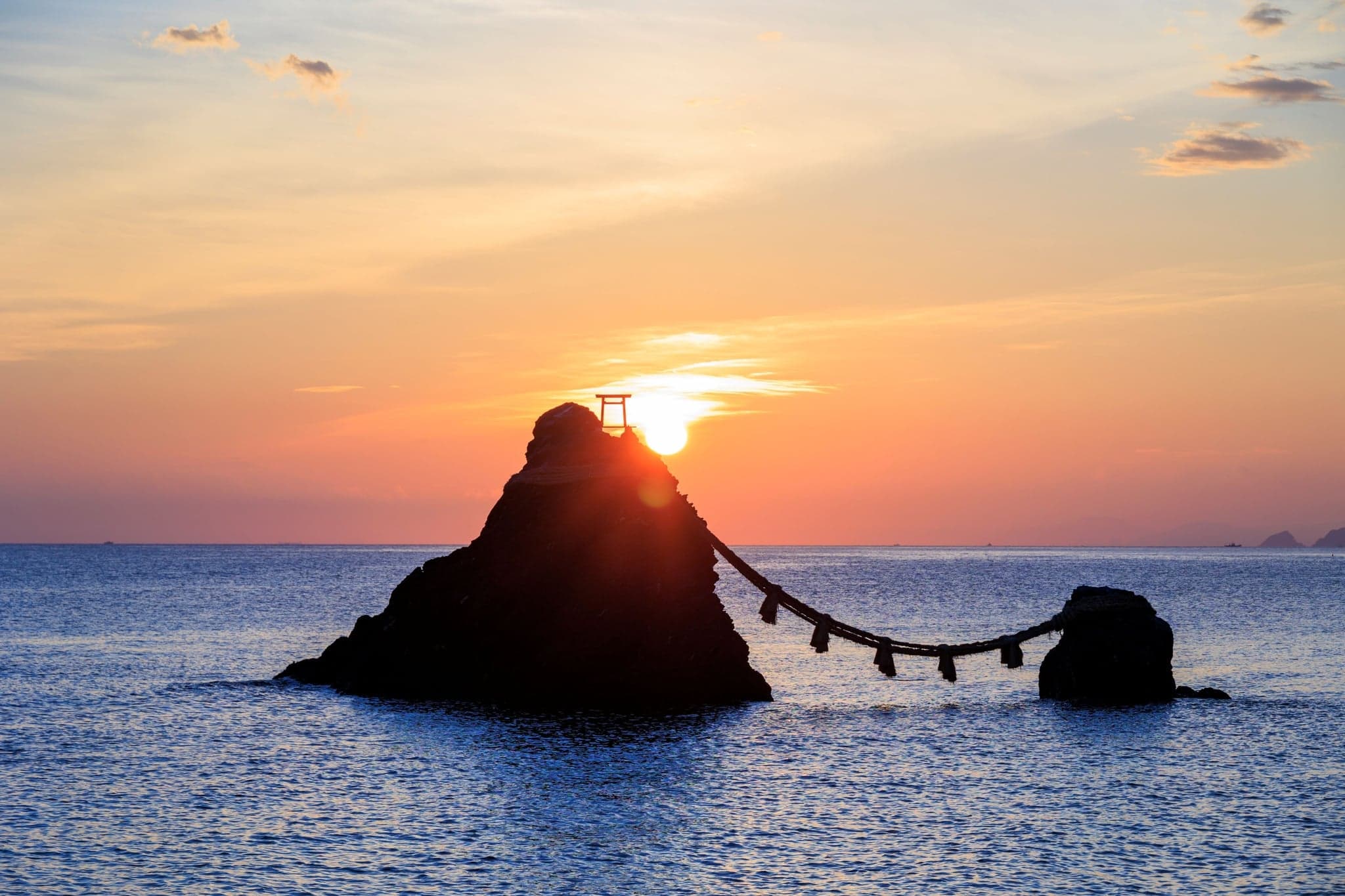
- Day 5 — Ise Grand Shrine by private taxi, then the Shimakaze. A chartered sightseeing taxi takes you to the Wedded Rocks at Futami and both the Outer and Inner Shrines of Ise Jingu, Japan's most revered shrine, before you ride the Shimakaze sightseeing limited express towards Kyoto.
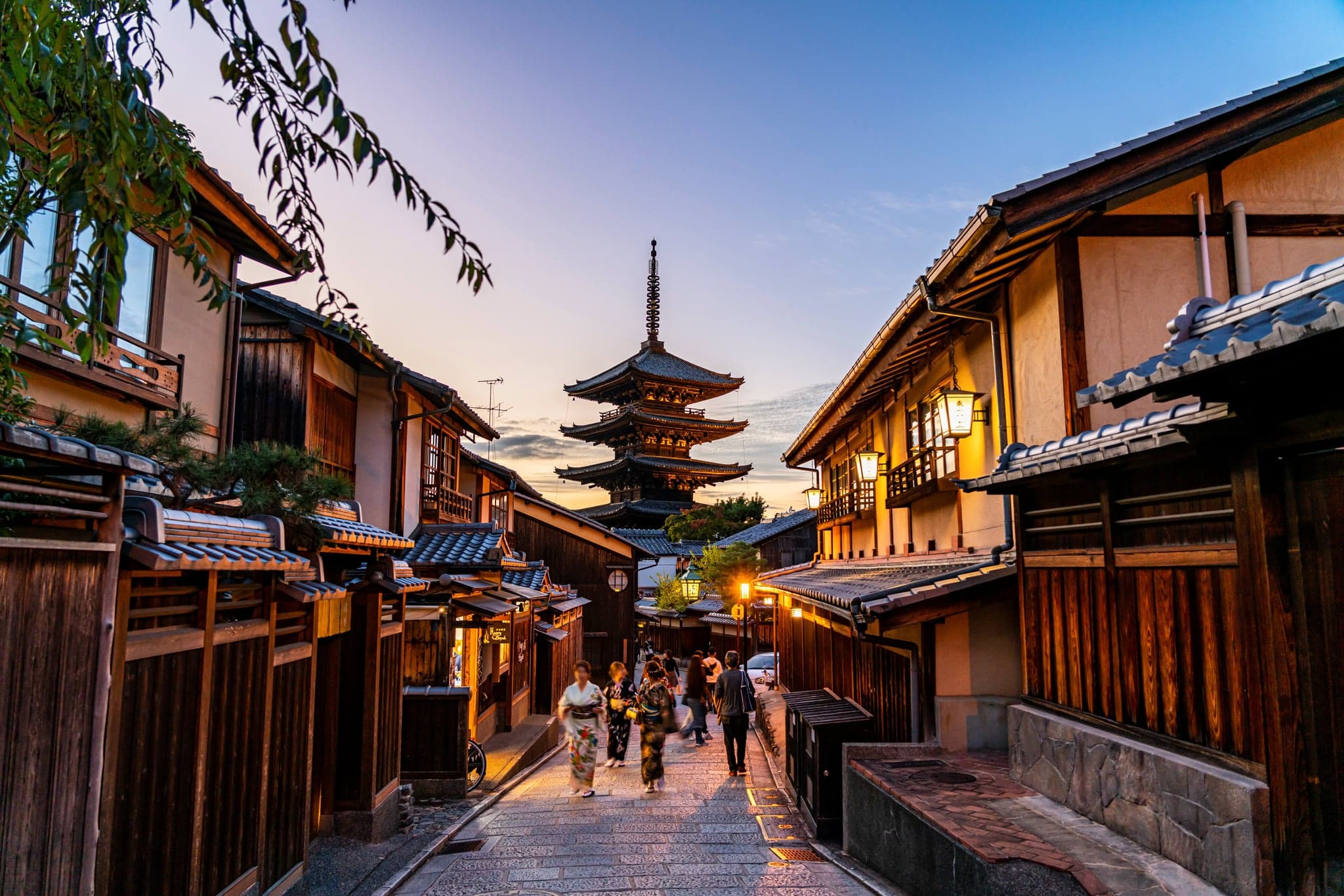
- Days 5–7 — Kyoto, Japan's cultural capital. Your base is The Westin Miyako Kyoto: Kiyomizu-dera and the Ninenzaka and Sannenzaka lanes, the Gion district, the Golden Pavilion (Kinkaku-ji), Arashiyama's bamboo grove, Fushimi Inari and Nishiki Market.
- Days 8–9 — Kanazawa, the cultural hub of the Japan Sea coast. Two nights at The Hotel Sanraku Kanazawa: the Higashi Chaya teahouse district, Omicho Market, Kenroku-en garden, the castle park and the 21st Century Museum of Contemporary Art. A private taxi to Shirakawa-go can be added.
- Days 10–12 — Tokyo again. Back at the Imperial Hotel: the National Museum of Modern Art, Ginza and a single act at the Kabuki-za, a free day for day trips to Kamakura, Nikko or Mount Fuji, and a transfer back to the airport.
Included on LX001
Green seats on the Shinkansen and limited express trains · airport transfer on day 1 with check-in assistance and on day 12 · 11 nights with breakfast · Matsusaka wagyu lunch on day 3 · two dinners at The Bay Suites · chartered sightseeing taxi on day 5 · luggage delivery Tokyo → Kyoto and Kyoto → Tokyo · ¥9,000 IC card · travel insurance · 24/7 support in Japan.
Not included: international flights, accommodation tax, other meals, entrance fees and the optional Shirakawa-go taxi (USD 490 per vehicle). Prices assume Haneda; Narita transfers add USD 300 per vehicle.
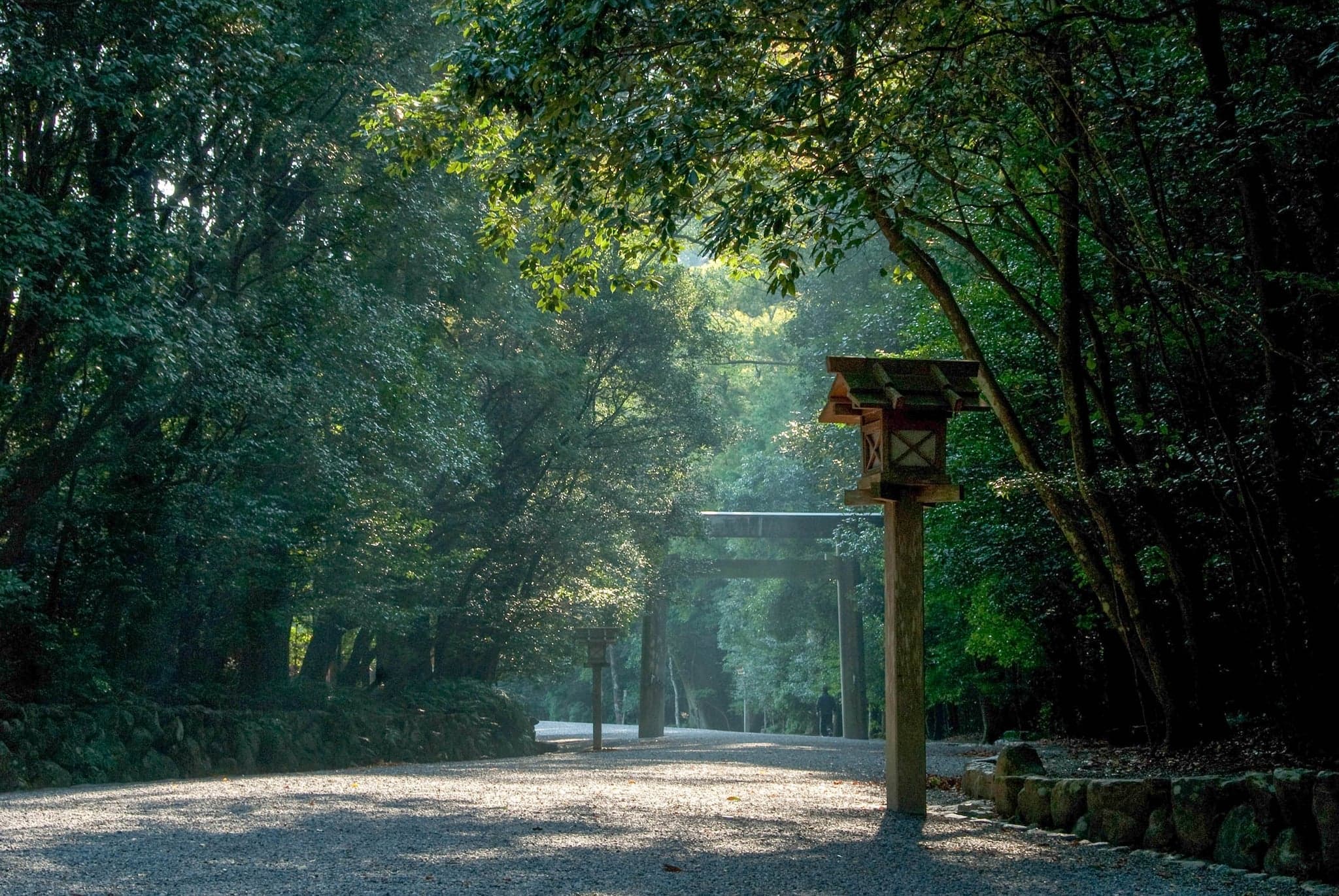
If Ise-Shima is what draws you, our Shimakaze and Ise-Shima guide covers the train and the coast in more depth.
Refined Kansai Journey: Lake Biwa and Castles (LX002)
11 days, $6,500–$9,400 per person. The quietest of the three, and the one with the most private transport: a chartered sightseeing taxi on four separate days. It suits returning visitors, or anyone who would rather see a National Treasure castle without a tour bus in the car park.
- Days 1–2 — Tokyo at Hotel Chinzanso Tokyo, set in Japanese gardens that change with the seasons.
- Day 3 — Hikone and the Omi towns. Shinkansen to Maibara, then a private taxi to Hikone Castle, whose keep has survived since the Edo period and is a National Treasure, and the white-walled canal town of Omihachiman. Dinner that night at the Prince Hotel Lake Biwa Otsu, your base for two nights.
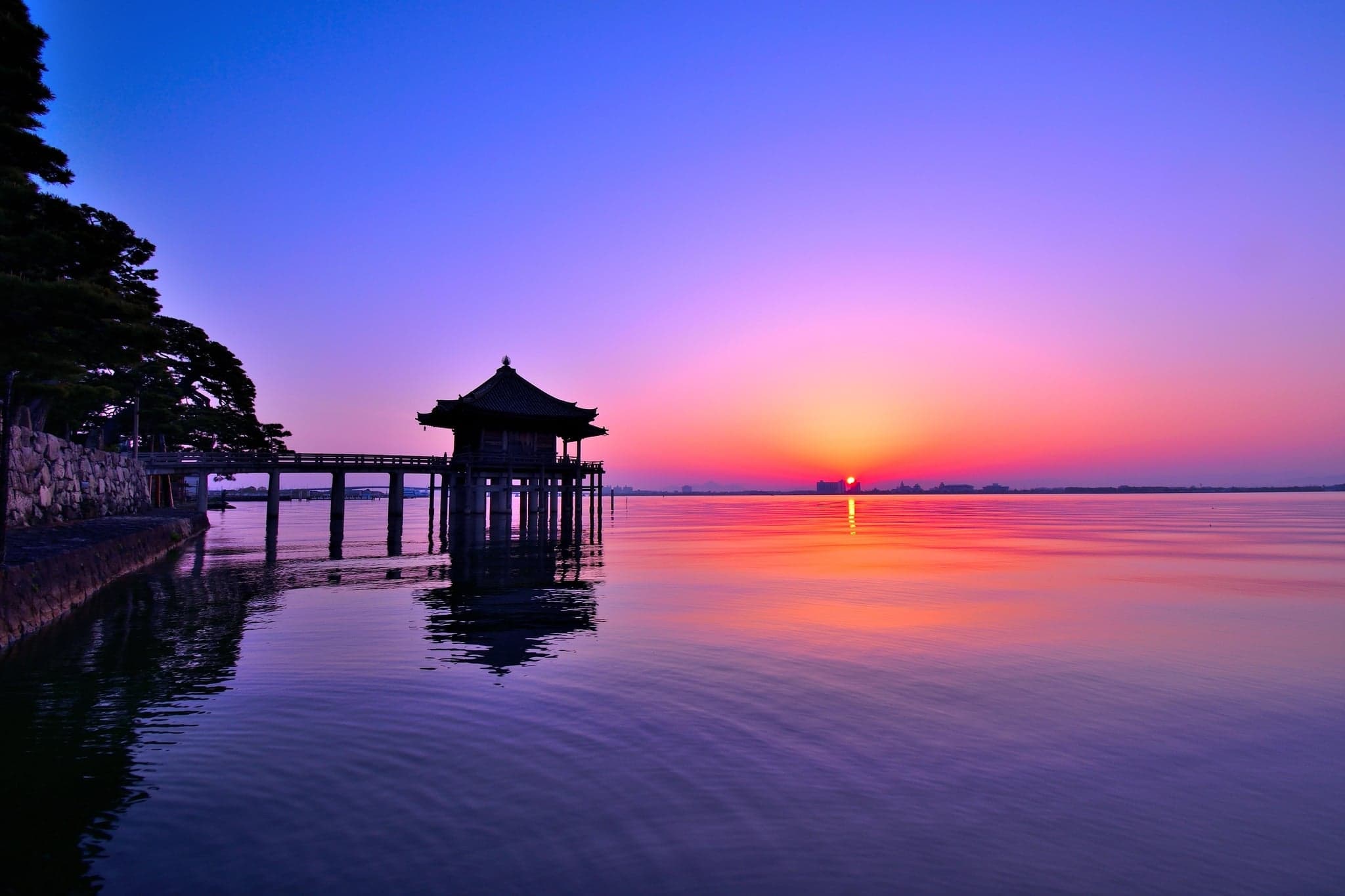
- Day 4 — Lake Biwa. A cruise on Japan's largest lake aboard the Michigan (a 60-minute sightseeing boat from December to February), then Ishiyama-dera, the 1,300-year-old temple said to have inspired The Tale of Genji — all by private taxi.
- Day 5 — Into Kyoto the slow way. The taxi takes you via Mii-dera and the moss garden of Sanzen-in in Ohara to two nights at The Prince Kyoto Takaragaike.
- Day 7 — Uji and Fushimi. By taxi to Byodo-in, the Phoenix Hall on the 10-yen coin, and Fushimi Inari, ending at the InterContinental Osaka in Umeda for two nights.
- Days 9–11 — Tokyo. Green Car back to Tokyo, the Kabuki-za and Ginza, a free day, and an airport transfer home.
Included: Green seats on the Shinkansen, the Michigan cruise, 10 nights with breakfast, one dinner, private taxi days 3, 4, 5 and 7, airport transfers on days 1 and 11, luggage delivery and a ¥3,000 IC card. Narita transfers add ¥40,000 per vehicle.
Luxury Journey, Your Way: Hiroshima and Kyoto (LX003)
10 days, $6,900–$8,400 per person. The shortest luxury route, and the one with the most history. It starts and ends at Hotel Chinzanso Tokyo and adds two nights at the Grand Prince Hotel Hiroshima, two at The Thousand Kyoto beside Kyoto Station, and a final night at Suiran, a Luxury Collection Hotel, on the river in Arashiyama.
- Day 3 — Hiroshima by private taxi: the Atomic Bomb Dome and Peace Memorial Park, then okonomiyaki near the station.
- Day 4 — Miyajima: a high-speed ferry (included) to the island of Itsukushima Shrine for a full day.
- Days 5–6 — Kyoto: Kiyomizu-dera, Gion, the Golden and Silver Pavilions and the rock garden at Ryoan-ji.
- Day 7 — Kyoto's quieter side by private taxi: Enryaku-ji on Mount Hiei, a World Heritage temple complex and the birthplace of several schools of Japanese Buddhism, then Sanzen-in in Ohara, and on to Arashiyama for the night at Suiran.
- Day 8 — Uji and Fushimi by private taxi, then Green Car to Tokyo.
Included: Green seats on the Shinkansen, 9 nights with breakfast, private taxi days 3, 7 and 8, the Miyajima ferry, airport transfers on days 1 and 10, luggage delivery and a ¥4,000 IC card.
From our Japan travel team
Luxury in Japan is often less about the room and more about never having to think about logistics. Every one of these routes comes with 24/7 support from our team in Japan, your large luggage is sent ahead on the long transfer days, and on the luxury routes the airport transfer is arranged for you on arrival. If you'd like to adjust a day or add something special to your trip, feel free to get in touch.
Free Days: How Luxury Travelers Spend Them
Every luxury route leaves free time in Tokyo and Kyoto, and how you use it is where the trip becomes your own. None of the following is part of the tour price — you book them as you go — but they are the ideas our guests come back to most often:
- Food: a sushi making class or a private cooking class in Tokyo, a counter-seat omakase lunch, or an evening in a local izakaya, where the friendly locals at the counter are often the most memorable experience of the day.
- Sumo: an early morning at one of Tokyo's sumo stables to watch the sumo wrestlers train, or a sumo tournament if your dates line up with one of the six held each year.
- Gardens: Shinjuku Gyoen, or a tea house in one of the serene gardens that luxury hotels in Tokyo are often built around.
- Quiet Kyoto: the tranquil temples of the northern and western hills. Kyoto temples such as Honen-in or the moss garden of Gio-ji feel a world away from the ancient temples and ancient shrines on every postcard.
The luxury routes stay on Honshu's classic corridor and in Kyushu. Northern Japan, the Japanese Alps and the snow monkeys of Jigokudani are covered by our standard alpine and winter routes rather than the luxury tier, so if one of those is on your list, feel free to ask us for ideas.
How Much Does a Luxury Trip to Japan Cost, Month by Month?
Luxury prices move more than any other part of the catalog, because top hotels price their peak weeks aggressively. Here is LX001's price calendar summarized by month, per person with two sharing.
💴 LX001, 12 days: price per person by departure month
| Departure month | Per person | Notes |
|---|---|---|
| October 2026 | $10,100–$10,800 | Autumn peak |
| November 2026 | $10,100–$10,800 | Autumn leaves |
| December 2026 | $9,700–$10,300 | No departures Dec 20–31 |
| January 2027 | $8,300–$8,900 | No departures Jan 1–3 or 14–20 |
| February 2027 | $8,400–$9,600 | Rises through the month |
| March 2027 | $9,900–$11,400 | Cherry blossom season |
| April 2027 | $10,300–$11,700 | Highest: April 28–29, start of Golden Week |
| May 2027 | $9,100–$11,100 | Falls after Golden Week |
| June 2027 | $8,600–$8,900 | Rainy season; lowest of the summer |
| July 2027 | $8,600–$10,000 | School holidays begin |
| August 2027 | $9,000–$10,900 | Obon week is the highest |
| September 2027 | $8,900–$11,200 | Silver Week and late-month peak |
💡 Two sharing. $200 off per child aged 11 and under; children 0–5 travel free when no train seat, meals or bed are needed. Read from the LX001 price calendar.
The spread is wide: $8,300 on the cheapest January dates against $11,700 on April 28–29, a difference of $3,400 per person — $6,800 for a couple — for the same hotels and the same itinerary. The cheapest windows are January outside the New Year and mid-month gaps, June, and early July. The most expensive are late March through Golden Week, and October through November. If you are flexible, moving a spring trip to June saves more than most hotel upgrades cost.
The same pattern holds on the other luxury routes, which is why cherry blossom and autumn departures — when the famous cherry blossom trees and maples of Kyoto and Tokyo are at their best — need booking furthest ahead. Our Japan cherry blossom tours guide shows how sharply prices climb in the peak sakura fortnight, and Japan hotel prices explains what drives it on the hotel side.
From our Japan travel team
The top hotels on these routes have a limited number of rooms, and in cherry blossom and autumn leaf season they fill months ahead — so if you have your heart set on spring or autumn, start planning early. Our self-guided tours handle the bookings and support you through the trip, so feel free to get in touch with your dates and we'll check what is still open.
The Deluxe Versions: Upgraded Hotels on Classic Routes
If you want better hotels without the luxury price, 17 of our classic routes come in a Deluxe version: the same itinerary, the same trains and luggage delivery, with the hotels upgraded. The premium over the standard version varies a lot by route — from the classic Golden Route trips to the temple-stay routes on Mount Koya — so it is worth comparing:
🏨 Standard vs Deluxe, same route (per person, two sharing)
| Route | Codes | Standard | Deluxe |
|---|---|---|---|
| Japan Highlights & World Heritage (12 days) | GR002 → GR102 | $3,300–$4,800 | $4,200–$5,400 |
| Timeless Traditions: Kanazawa & Hida (12 days) | GR003 → GR103 | $3,200–$4,700 | $4,500–$6,800 |
| Hidden Gems of Japan: Ise-Shima Escape (12 days) | GR001 → GR101 | $3,300–$4,400 | $5,900–$7,600 |
| Spirit of Tradition: Shirakawa-go (14 days) | GR009 → GR109 | $4,100–$5,900 | $5,000–$6,600 |
| Scenic Japan: Culture & Countryside (15 days) | GR004 → GR104 | $4,200–$5,900 | $5,100–$6,600 |
| Koyasan: Sacred Sites and Quiet Beauty (12 days) | KM003 → KM103 | $3,500–$5,200 | $4,000–$4,900 |
💡 Ranges cover every departure from August 2026 to September 2027. Deluxe versions are also available on theme-park, Koyasan and Shirakawa-go routes.
On GR002 the upgrade is modest — the Hotel New Otani in Tokyo and Hida Hotel Plaza in Takayama for roughly $600–$900 more. On the Ise-Shima route (GR001 → GR101) the jump is far bigger — around $2,600–$3,200 — so it pays to compare route by route. If what you want is a better room rather than first-class trains and private taxis, a Deluxe route is usually the smarter spend.
Guided Luxury vs Self-Guided Luxury
The honest question is whether you want a guide. Private guides and local guides sell insider access, and expert guides are wonderful at a temple whose story you want to understand in depth, or on a food crawl through a market you would never find alone. If a guide at your side every day is your idea of the ultimate luxury tour, a tailor-made operator is the right choice. A guide is less useful on a Shinkansen, in a hotel lobby, or on the third shrine of the day. That is why the self-guided model puts private transport where the logistics are hardest and leaves the rest of the day to you.
In practice, the self-guided luxury trip gives you a written day-by-day plan, a travel kit on arrival, private sightseeing taxis on the most complicated days, first-class trains, and a phone line to our team in Japan around the clock. It doesn't give you someone at your side from breakfast to dinner. Most of our guests find that Japan's signage, transport and safety make that trade easy — and prefer a slow morning and a restaurant they chose themselves to a set lunch with a group.
If you're traveling as a couple, the Japan honeymoon packages guide looks at the same routes from that angle, and self-guided Japan tours explains exactly what is and isn't booked on any of our trips.
Which Luxury Route Fits Which Traveler
- First trip, and you want the best of everything: LX001 — Tokyo, Ise-Shima, Kyoto and Kanazawa, with the Imperial Hotel at both ends.
- You have been to Japan before: LX002 — Lake Biwa, Hikone Castle and Ohara, with a private taxi on four days.
- History matters most, or time is short: LX003 — Hiroshima, Miyajima and a night on the river in Arashiyama, in 10 days.
- Hot springs are the point: HS003 — Hakone and Kinosaki in historic hotels and ryokan.
- You want somewhere few visitors go: KY004 — Kyushu's pottery towns, Nagasaki and Beppu, with dinners at the ryokan.
- Better hotels, standard budget: a Deluxe version of the classic route you like.
For the whole catalog side by side — from four-day regional trips to the luxury tier — see Japan travel packages: real prices for every self-guided trip, and for the full cost of a trip beyond the tour itself, how much a trip to Japan costs.
FAQ: Japan Luxury Tours
How much does a luxury tour of Japan cost?
Our three luxury routes cost $6,500–$11,700 per person for 10–12 days, based on two sharing and excluding flights. LX003 (10 days) is $6,900–$8,400, LX002 (11 days) is $6,500–$9,400 and LX001 (12 days) is $8,100–$11,700. The premium onsen and Kyushu routes are $5,500–$8,900, and Deluxe versions of our classic routes start at $3,300.
What is included in a luxury Japan tour?
On our luxury routes: named top hotels with breakfast, Green Car (first-class) seats on the Shinkansen, private sightseeing taxis on one to four days, airport transfers at both ends, luggage delivery, a loaded IC card, travel insurance and 24/7 support in Japan, plus some signature meals such as the Matsusaka wagyu lunch on LX001. Flights, most dinners, entrance fees and accommodation tax are not included.
Is a private guide included?
No. These are self-guided routes: you follow a detailed day-by-day plan at your own pace, and the chartered taxi days give you private transport between sights. If you would like a guide for a particular day, ask us what is possible for your dates.
What is the difference between Deluxe and Luxury?
Deluxe versions keep a classic route exactly as it is and upgrade the hotels. The luxury routes are designed differently: top hotels chosen as destinations in themselves, Green Car seats on the Shinkansen, private taxis on the heaviest sightseeing days and airport transfers at both ends.
Which hotels do the luxury routes use?
As currently listed: the Imperial Hotel Tokyo, Shima Kanko Hotel The Bay Suites, The Westin Miyako Kyoto and The Hotel Sanraku Kanazawa on LX001; Hotel Chinzanso Tokyo, Prince Hotel Lake Biwa Otsu, The Prince Kyoto Takaragaike and InterContinental Osaka on LX002; and Hotel Chinzanso Tokyo, Grand Prince Hotel Hiroshima, The Thousand Kyoto and Suiran, a Luxury Collection Hotel, Kyoto on LX003. Hotels can change for a given departure.
What is the Green Car on the Shinkansen?
The Green Car is the first-class carriage on Japan's bullet trains, with wider seats in rows of four instead of five, more legroom and a quieter cabin. All three luxury routes use Green seats for the main Shinkansen journeys.
When is the cheapest time for a luxury trip to Japan?
January (outside the New Year and mid-month gaps), June and early July. On LX001 the cheapest dates are $8,300 per person against $11,700 at the start of Golden Week, with cherry blossom season and October–November close to the top of the range.
Do the prices include flights?
No. None of our tours include international flights, so you can use your own airline, class of travel and points. Prices on the luxury routes assume arrival and departure at Haneda; Narita transfers carry a surcharge per vehicle.
Planning a Luxury Trip to Japan?
Send us your dates and roughly what you want the trip to feel like, and we'll tell you which luxury and Deluxe routes are open for your window, what they cost on those exact days, and where a private taxi day or an extra night would make the biggest difference. We book the hotels, trains and transfers and support you in Japan around the clock. If anything is unclear, please feel free to get in touch at any time.
Last updated: September 14, 2026. Hotels, inclusions and itineraries are from the current published tours; LX001 prices by month are from its price calendar for August 2026 – September 2027, and every other range covers the same period. Prices are per person, two sharing, and vary by departure date.