Ise Grand Shrine (Ise Jingu) Guide: Geku and Naiku, Hours, Etiquette and How to Get There
Japan's most sacred shrine in half a day or a full one: why you start at the Outer Shrine, the hours for every month, the photography rule, the trains from Nagoya, Osaka and Kyoto, and where the 20-year rebuilding stands.
Ise Jingu — the Ise Grand Shrine — in Ise City, Mie Prefecture, is the most sacred Shinto shrine in Japan. It is not flashy: no vermilion gates, no gold leaf, just plain cypress buildings deep in a cedar forest. It may also be the most quietly powerful place you visit in Japan, and it is easy to reach on a day trip from Nagoya or as a night away from Kyoto and Osaka.
This guide explains what the shrine actually is (it is not one building but many), why you visit the Outer Shrine before the Inner Shrine, the hours for every month, the etiquette and photography rules, how to get there, and where the famous 20-year rebuilding stands in 2026 and 2027.
⛩️ Quick Answer: Visiting Ise Grand Shrine
Entry is free. Visit the Outer Shrine (Geku) first, then take the 15-minute bus to the Inner Shrine (Naiku), and finish in Okage Yokocho — allow four to five hours. The shrines open at 5:00 and close at 17:00–19:00 depending on the month. From Nagoya, the Kintetsu Limited Express takes about 80 minutes (¥3,080).
🕔 Hours
From 5:00; closes 17:00 (Oct–Dec), 18:00 (Jan–Apr, Sep), 19:00 (May–Aug)
🧭 Order
Geku first, then Naiku — about 15 minutes apart by bus
🚆 From Nagoya
Kintetsu, about 80 min; from Osaka or Kyoto about 2 hours
📷 Photography
Fine on the paths; not at the main sanctuaries
What Ise Jingu Actually Is
Most first-timers expect a single temple-like building. Ise Jingu is a complex of 125 shrines spread across Ise City and the surrounding area, centered on two main shrines: the Inner Shrine (Naiku) and the Outer Shrine (Geku), about 5 kilometers apart. Most visitors see the two main shrines and one or two of the auxiliary shrines — not all the shrines — and that still fills a day.
You will see it called Ise Jingu, Ise Shrine or Ise Grand Shrine; all three mean the same complex. Its official name is simply "Jingu" — the shrine — people in Ise affectionately call it "Oise-san", and many Japanese people describe it as their spiritual home.
What makes it matter is who is enshrined here. The Inner Shrine is dedicated to the sun goddess Amaterasu Omikami, ancestral kami of the imperial family, which is why Naiku is regarded as the most sacred sanctuary in Japan. Its sacred object is the Yata no Kagami, the sacred mirror and one of the three imperial regalia. No visitor ever sees it. The Outer Shrine is dedicated to Toyouke Omikami, the deity of food, clothing and shelter, who provides the goddess Amaterasu's meals.
If you've been to Meiji Jingu in Tokyo or Fushimi Inari in Kyoto, expect something different. The shrine buildings are made of unpainted Japanese cypress in an ancient architectural style called shinmei-zukuri: thatched roofs, raised floors, no ornament. The forest, the gravel and the river do most of the work. That restraint is the point.
The Outer Shrine (Geku): Where to Start
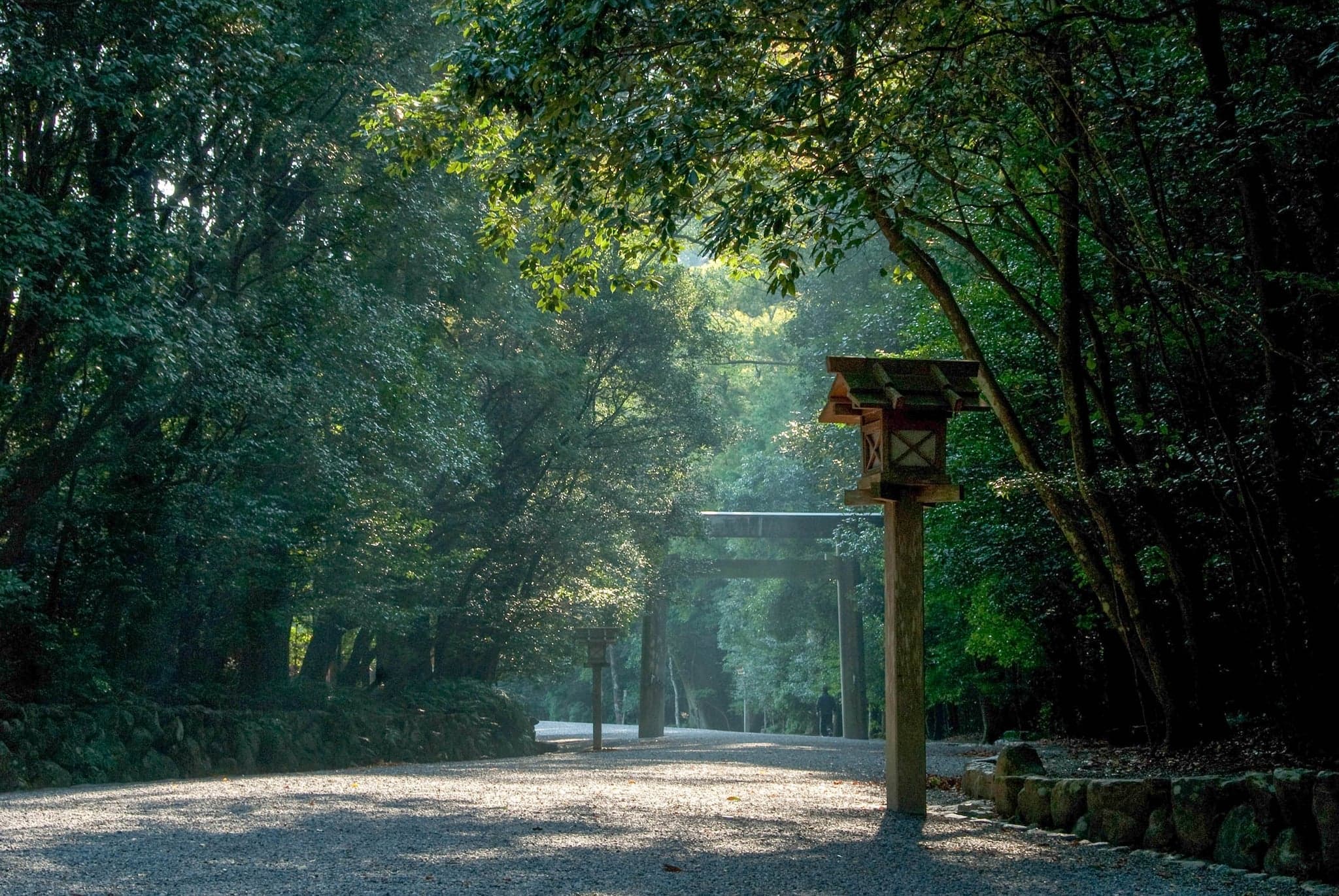
Tradition says you visit Geku first, then Naiku, and Ise Jingu still asks visitors to follow that order. It is also the practical order: Geku is about a ten-minute walk from Iseshi or Ujiyamada Station, so you can start straight off the train. Enter through the main torii gate, purify your hands at the temizuya (the purification hall), and follow the gravel path through tall trees to the main hall.
According to tradition, the Outer Shrine was established about 1,500 years ago, when Toyouke Omikami was brought from Tamba Province to prepare the sacred food offered to Amaterasu. That duty continues today: every morning and evening, Shinto priests make food offerings to the deities in a ritual that has been performed daily for around 1,500 years, with the food cooked over a sacred fire kindled by friction. It is an important ceremony that most visitors never see, because it takes place out of view. The grounds are quieter than Naiku's — allow about 30 to 60 minutes.
Next to the entrance, the Sengukan museum explains the 20-year rebuilding with a full-size model of part of the main sanctuary and the sacred treasures that are remade each cycle — worth half an hour before you walk in. Admission is ¥300, 9:00–16:30 (last entry 16:00), closed on the second and fourth Tuesday of each month.
The Inner Shrine (Naiku): The Main Shrine
From Geku, take the local bus to Naiku — about 15 minutes, with frequent services. A visit to the Inner Shrine takes 60 to 90 minutes and begins at the Uji Bridge (Ujibashi bridge), a wooden bridge about 100 meters long over the Isuzu River. The torii at each end are made from the pillars of the old sanctuary, so even the entrance is part of the rebuilding cycle.
Once across, the path follows the river through the forest. At the Mitarashi, stone steps lead down to the water, and many worshippers rinse their hands in the Isuzu River itself as pilgrims have since ancient times. The river's name is often translated as "fifty bells".
The main sanctuary stands at the top of a flight of stone steps, surrounded by four layers of wooden fences. Visitors pray in front of the outermost fence; the inner sanctum beyond it is only for Shinto priests and the imperial family. You will glimpse the thatched roof of the main sanctuary building, with its golden-tipped beams, through the trees, and that is all anyone sees. It is normal, and it is part of what makes the place feel the way it does.
On the way back, the path passes Aramatsuri-no-Miya, the most important of Naiku's auxiliary shrines, dedicated to Amaterasu's rough, active spirit. Take a few minutes here too; like the other shrine buildings in the forest, it is rebuilt on the same 20-year cycle.
Ise Shrine and the Imperial Family
The connection between Ise and the imperial family is foundational to Shinto belief. From ancient times until the 14th century, an unmarried imperial princess — the Saio, or sacred priestess — lived near Ise and served the shrine on the emperor's behalf. Today the shrine's chief priest is still a woman from the imperial family, and an imperial envoy attends the major ceremonies, such as the autumn Kannamesai.
For much of its history, private offerings by ordinary people were not permitted at the shrine. That changed in the Edo period, when pilgrimage to Ise — Oise-mairi — became one of the great journeys of ordinary life. Local residents along the pilgrim roads fed and housed travelers, whole villages pooled money to send representatives, and some servants and apprentices slipped away without permission, a practice known as nuke-mairi.
Etiquette and the Photography Rule
Ise Jingu is a working sacred sanctuary, not a museum. You don't need to follow Shinto religion to visit, but a few customs are expected, and Japanese people around you will be following them:
- Purify at the water basin. Take the ladle in your right hand and rinse your left hand, then switch, then pour a little water into your cupped left hand to rinse your mouth. Don't drink from the ladle.
- Bow before each torii gate, and step slightly to the side rather than walking down the center.
- Keep left at Geku and right at Naiku. Ise Jingu explains that visitors traditionally approach along the outer side of the path, out of respect.
- Pray with two bows, two claps and one bow (nihai nihakushu ippai) at the front of the sanctuary.
- No photography at the main sanctuaries. Photos are fine along the paths and bridges, but the area inside the stone steps in front of the outermost fence is off-limits for cameras and video.
There is no formal dress code. Modest, comfortable clothes and shoes for gravel paths are ideal — and leave rolling luggage in a station locker or send it ahead.
Ise Jingu Hours and Fees
There is no fee to visit either shrine. Both open at 5:00 year-round, and closing time depends on the month:
🕔 Worship hours (Naiku, Geku and associated shrines)
| Month | Hours |
|---|---|
| January – April | 5:00 – 18:00 |
| May – August | 5:00 – 19:00 |
| September | 5:00 – 18:00 |
| October – December | 5:00 – 17:00 |
💡 Hours change over the New Year. The Sengukan museum at Geku is ¥300 and keeps its own hours (9:00–16:30).
The 5:00 opening isn't a typo: an early-morning visit, before the day-trippers arrive, is when the forest is at its most peaceful.
From our Japan travel team
Ise Jingu is one of the busiest places in Japan over the New Year and on spring and autumn weekends, and hotels in Ise itself are limited, so rooms can go early — start planning as soon as your dates are set. Our self-guided tours handle the trains and hotels and support you through the trip, so feel free to get in touch if you'd like Ise built into your route.
Rebuilt Every 20 Years: Shikinen Sengu and the 2027 Okihiki
This is what makes Ise unlike anywhere else. Every 20 years, the two main shrines and 14 of the auxiliary shrines are rebuilt from scratch on the plot beside the old ones, and the sacred apparel and treasures are remade too. The ceremony is called Shikinen Sengu, it dates back to 690, and it ends with a night-time ritual in which the deity moves from the old shrine to the newly constructed sanctuary. The 62nd rebuilding was completed in 2013; the 63rd is scheduled for 2033, and its roughly eight years of preparatory rites began in 2025.
Look beside each main sanctuary and you will see the empty plot where the next one will stand. The style, yuitsu shinmei-zukuri, is reserved for Ise alone, and the buildings are joined with interlocking joints in cypress — one of the oldest surviving forms of Japanese architecture, kept alive because every generation of carpenters builds it again.
Nothing is wasted. When the old buildings come down, their timber is reused — the great pillars become the torii at the Uji Bridge, and other parts go to shrines around the country. The idea is renewal: keeping the sacred sites forever young.
The Okihiki festival
Most Sengu rites are private. The Okihiki — hauling the sacred timber into the shrine grounds — is the part the public can watch, with thousands of locals and worshippers from across Japan pulling the logs by rope. There are two kinds: okabiki, on land, pulls the timber on carts through Ise's streets to Geku, and kawabiki hauls it up the Isuzu River to Naiku.
The first round took place from May to August 2026. A second round is planned for 2027: the Ise Sengu committee lists the land hauling from May 8 to June 12 and the river hauling from July 24 to August 1, subject to change, with the exact hauling days set closer to the time.
From our Japan travel team
The Okihiki only happens in the run-up to the Shikinen Sengu, so after 2027 the next chance is around 20 years away. It's one of the few parts of the rebuilding that visitors can actually see, so it's well worth planning around if your trip falls in early summer 2027. If you'd like help fitting Ise into those dates, just ask and we'll help you slot it into your route.
Oharaimachi and Okage Yokocho: What to Eat
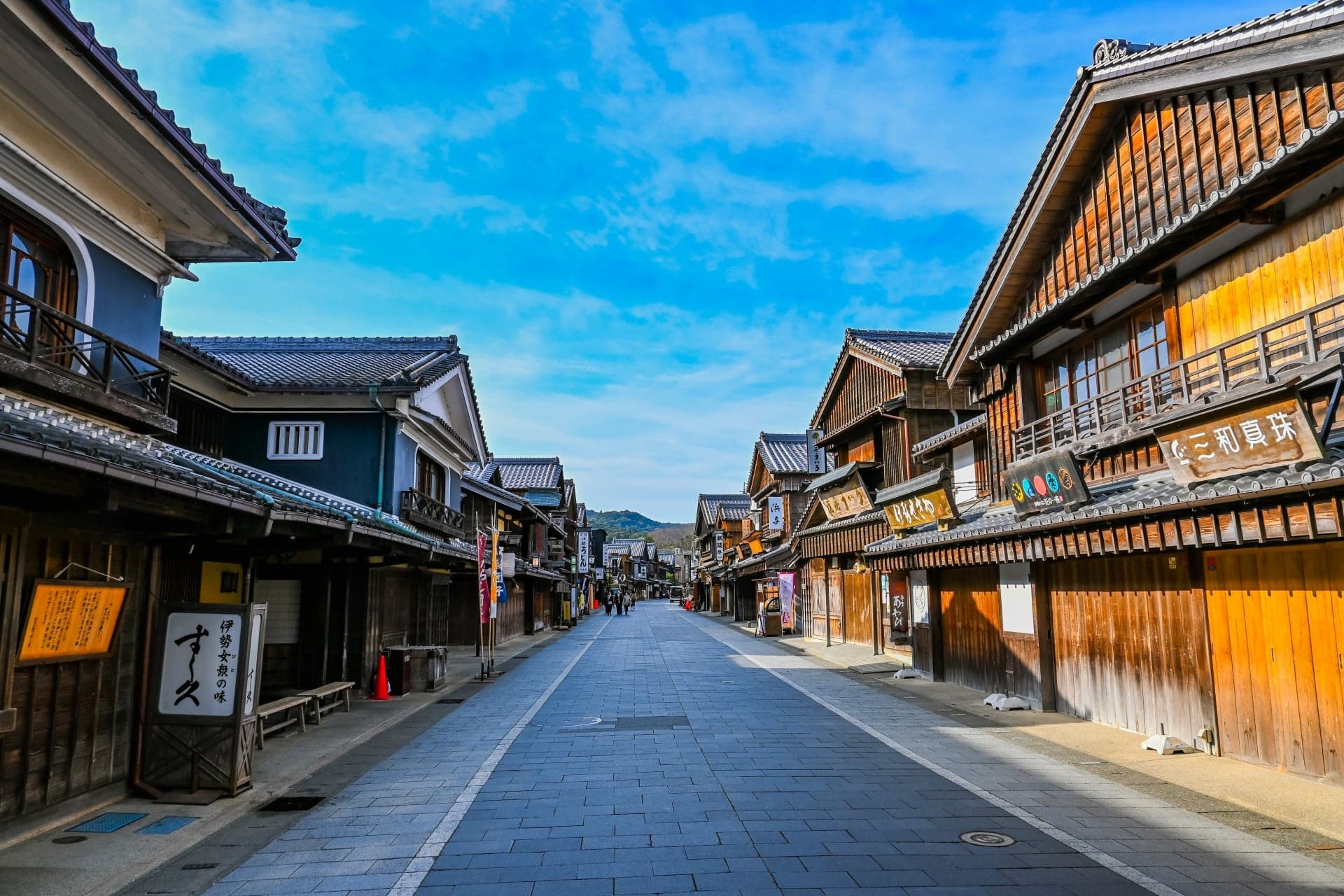
The street that grew up to feed and house the Edo-period pilgrims still leads to the Uji Bridge. Oharaimachi is the stone-paved approach lined with traditional shops, and Okage Yokocho is the block in its middle, rebuilt in the style of the Edo and Meiji periods, with many restaurants, food stalls and souvenir shops.
- Akafuku — soft mochi under sweet red bean paste, shaped into ripples said to represent the Isuzu River. The classic Ise snack.
- Ise udon — very soft, thick noodles in a dark, sweet soy sauce.
- Tekone-zushi — marinated bonito or tuna over rice, a fishermen's dish from the Shima coast.
- Matsusaka beef — one of Japan's best-known wagyu, from just up the line.
Many shops close around 17:00, earlier than you might expect, so plan lunch or a late-afternoon snack here rather than dinner.
How to Get to Ise Grand Shrine
Ise sits off the Golden Route, which is part of its appeal. The nearest stations are Iseshi (Kintetsu and JR) and Ujiyamada (Kintetsu), both a short walk from Geku. Ujiyamada's 1930s station building is itself a registered cultural property.
🚆 Trains to Ise (adult, one way)
| From / train | Time | Fare | Notes |
|---|---|---|---|
| Nagoya — Kintetsu Limited Express | About 80 min | ¥3,080 | All seats reserved; to Iseshi or Ujiyamada |
| Nagoya — Kintetsu Express | About 100 min | ¥1,740 | Unreserved; some trains need a change at Ise-Nakagawa |
| Nagoya — JR Rapid Mie | About 90 min | ¥2,040 | Japan Rail Pass valid with a ¥520 supplement for the Ise Railway section |
| Osaka-Namba or Kyoto — Kintetsu Limited Express | About 2 hours | Varies | Kyoto trips can involve a change; the Shimakaze runs from all three cities |
| Tokyo — Shinkansen to Nagoya, then as above | About 3.5 hours | Varies | The Shinkansen is covered by the Japan Rail Pass; Kintetsu is not |
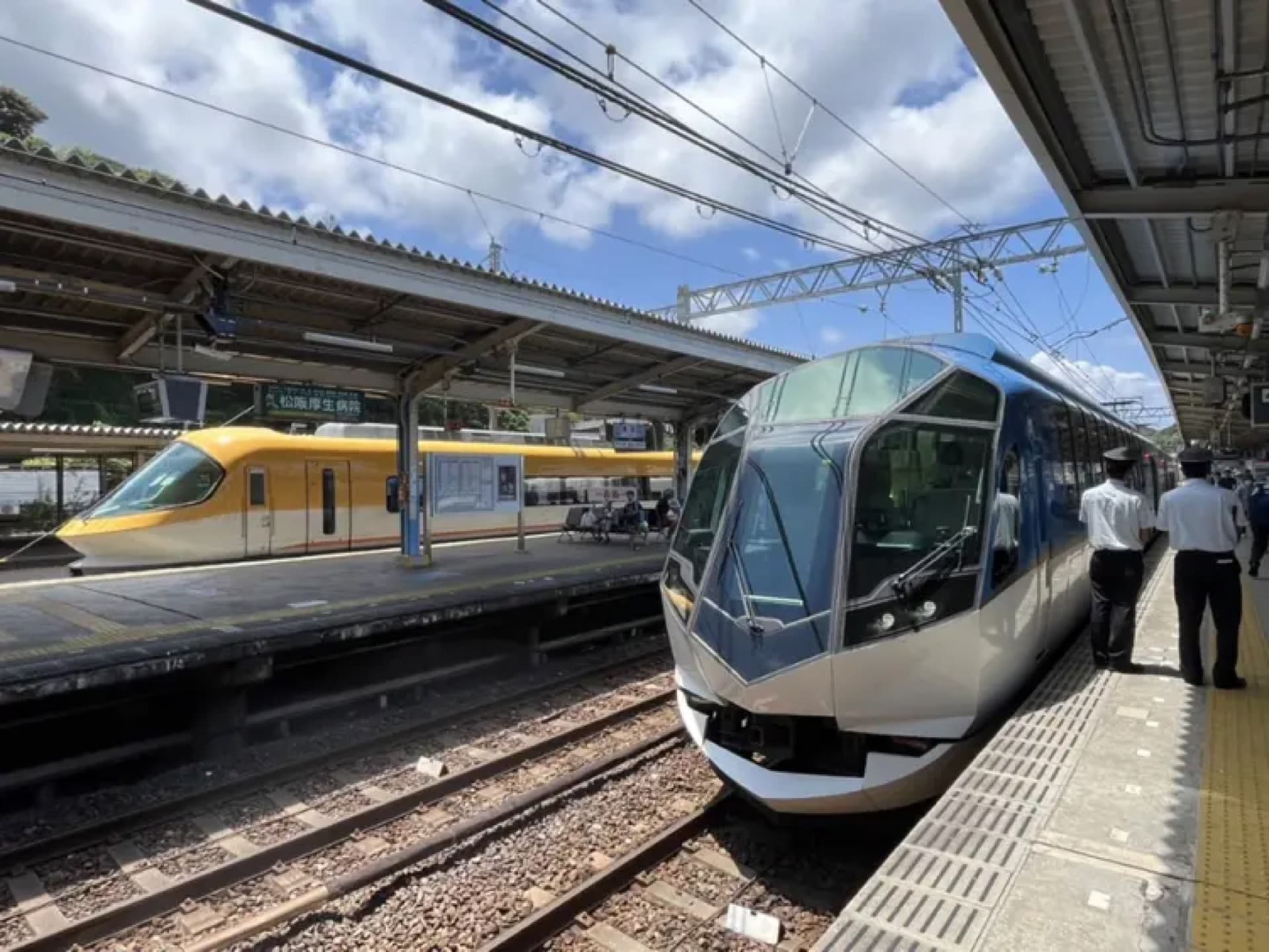
Nagoya is the easiest gateway, and a day trip from there is comfortable. From Osaka or Kyoto it is a longer day but still manageable; many visitors prefer to stay a night in Ise or on the Shima coast. For the most memorable way in, the Kintetsu Shimakaze sightseeing train runs from all three cities.
Getting around Ise: Geku is a 5–10 minute walk from Iseshi or Ujiyamada Station. Naiku is 10–15 minutes by local bus from the stations, and the buses between Geku and Naiku take 15–20 minutes for ¥520, payable in cash or with an IC card such as Suica. Walking between the two main shrines isn't practical: it is 5 kilometers along a busy road. The CAN Bus tourist loop links the stations, both shrines and outlying sights, and the Michikusa pass covers it for ¥1,300 (one day) or ¥1,900 (two days).
Half-Day and Full-Day Plans
- Half day (4–5 hours): Geku and the Sengukan → bus to Naiku → Uji Bridge and the main sanctuary → lunch in Okage Yokocho.
- Full day: Geku at opening time, Naiku by mid-morning, lunch in Okage Yokocho, then the Wedded Rocks (Meoto Iwa) at Futami on the coast, where pilgrims traditionally purified themselves before visiting the shrine.
- Two days: add the Shima coast in Ise-Shima National Park — Mikimoto Pearl Island in Toba, an ama diver's hut for grilled seafood, and a cruise on Ago Bay from Kashikojima, where the 2016 G7 summit was held.
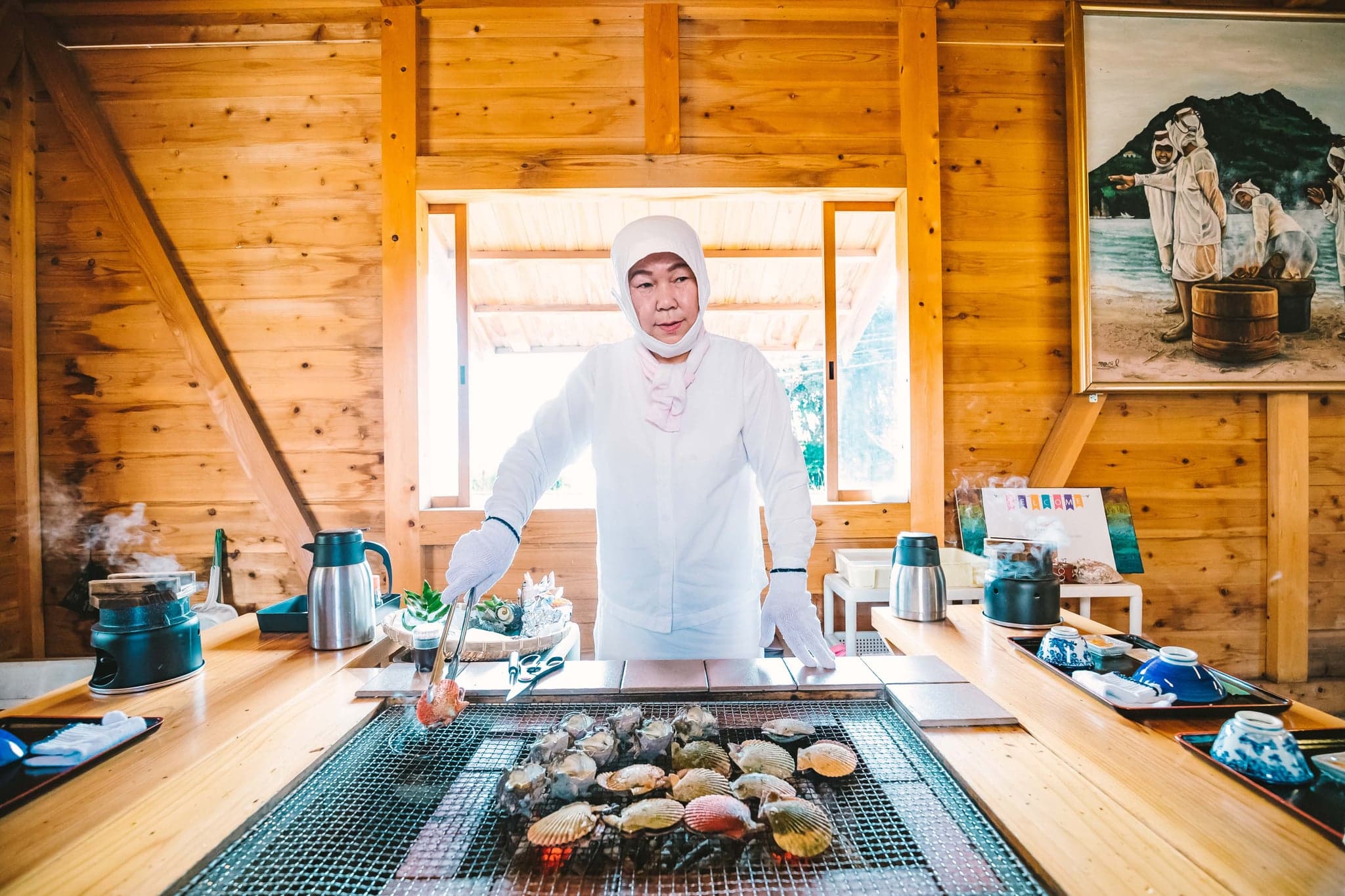
For the coast, pearls and ama divers in more depth, see our Ise-Shima guide. If you're combining Ise with the pilgrimage trails of the Kii Peninsula, our Kumano Kodo guide covers the other half of the journey.
Our routes that include Ise Jingu
Several of our self-guided tours build in a day at the shrine, with trains, hotels and transfers arranged:
🗺️ Self-guided tours with Ise Grand Shrine (per person)
| Tour | Length | The Ise day | Price range |
|---|---|---|---|
| The Pearl of Pacific Resort: Ise-Shima (KR004) | 2 days from Nagoya, Kyoto or Osaka | Shimakaze train, then a sightseeing taxi to the Wedded Rocks, Geku and Naiku; one night with hot springs | $1,400–$1,500 |
| Legend of Iga Ninjas & Spirits of Ise (KR002) | 4 days | A private taxi day with an English-speaking guide: the Wedded Rocks, Geku and Okage Yokocho | $2,800–$5,500 |
| Sacred Trails & Coastal Traditions (NT009) | 10 days | Naiku and Okage Yokocho by local train, with Toba, the Kumano shrines and Nachi Falls | $4,200–$5,500 |
| Sea of Serenity: Kashikojima & Cultural Japan (GR007) | 13 days | Naiku on the way from Hakone, then a reserved shuttle bus to your hotel on Ago Bay | $3,700–$5,200 |
| Luxury Japan Journey: Ise-Shima Escape (LX001) | 12 days | A chartered taxi to the Wedded Rocks, Geku and Naiku, then the Shimakaze to Kyoto | $8,100–$11,700 |
💡 Price ranges cover the departures in the current catalog and vary by date. Entrance fees are paid on the day.
When to Visit
Ise Jingu is beautiful in every season, but spring and autumn are the most comfortable for walking; in summer, the cedar forest gives real shade. The shrine's most important festival, Kannamesai, is held in October to offer the year's first rice harvest to Amaterasu, and in February the Kinensai prays for a bountiful harvest. Most of these rituals are performed by priests rather than staged for visitors, so the everyday experience changes little.
The one time to plan around is the New Year: huge numbers of Japanese people come for their first prayers of the year, and the approach to Naiku is shoulder to shoulder. Otherwise, weekday mornings are the quietest time of all.
FAQ: Ise Grand Shrine
Is there an entrance fee for Ise Grand Shrine?
No. Visiting Naiku, Geku and the associated shrines is free, and no ticket or booking is needed. The Sengukan museum at the Outer Shrine charges ¥300.
What are the opening hours of Ise Jingu?
The shrines open at 5:00 every day. They close at 18:00 from January to April and in September, at 19:00 from May to August, and at 17:00 from October to December. Hours change over the New Year.
Should I visit the Inner Shrine or the Outer Shrine first?
The Outer Shrine (Geku) first, then the Inner Shrine (Naiku). It is the traditional order, Ise Jingu asks visitors to follow it, and it suits the trains too: Geku is a ten-minute walk from Iseshi Station, and Naiku is about 15 minutes further by bus.
How long do I need at Ise Grand Shrine?
Allow four to five hours for both shrines and lunch in Okage Yokocho: about an hour at Geku, 60–90 minutes at Naiku, and the bus in between. Add a few hours if you also want to see the Wedded Rocks at Futami.
Can I take photos at Ise Jingu?
Yes, along the paths, bridges and forest approaches. Photography and video are not allowed at the main sanctuaries themselves, inside the stone steps in front of the outermost fence.
How do I get to Ise Grand Shrine from Nagoya?
The Kintetsu Limited Express takes about 80 minutes to Iseshi or Ujiyamada (¥3,080, all seats reserved). JR Rapid Mie takes about 90 minutes (¥2,040); Japan Rail Pass holders pay a ¥520 supplement for the Ise Railway section. From Osaka-Namba or Kyoto, allow about two hours by Kintetsu.
Can I see the Yata no Kagami?
No. The sacred mirror is kept inside the main sanctuary behind four layers of wooden fences, where only priests and members of the imperial family go. Visitors pray from in front of the outermost fence.
When is the next Shikinen Sengu?
The 63rd Shikinen Sengu, when both main sanctuaries move to newly built shrines, is scheduled for 2033. Its preparatory rites began in 2025, and the public Okihiki timber-hauling festival has a second round planned for May to August 2027.
Which tours include Ise Grand Shrine?
Our two-day Ise-Shima trip (KR004) from Nagoya, Kyoto or Osaka covers both shrines by sightseeing taxi, and longer self-guided routes such as GR007, NT009, KR002 and LX001 include an Ise day. Prices range from $1,400 to $11,700 per person depending on the route and date.
Adding Ise to Your Japan Trip?
Tell us your dates and where else you're going, and we'll suggest the route that fits — a two-day side trip from Nagoya, Kyoto or Osaka, or Ise as part of a longer journey — with trains, hotels and luggage delivery arranged, 24/7 support while you travel, and your time at the shrine left to your own pace. If anything is unclear, please feel free to get in touch at any time.
Last updated: September 15, 2026. Worship hours, visiting order and etiquette are from Ise Jingu; the Okihiki schedule from Ise Jingu and the Ise Sengu committee (2027 dates provisional); train and bus times and fares from Kintetsu, JR and the local bus operator as published in September 2026. Tour prices are per person from our current catalog and vary by departure date.