
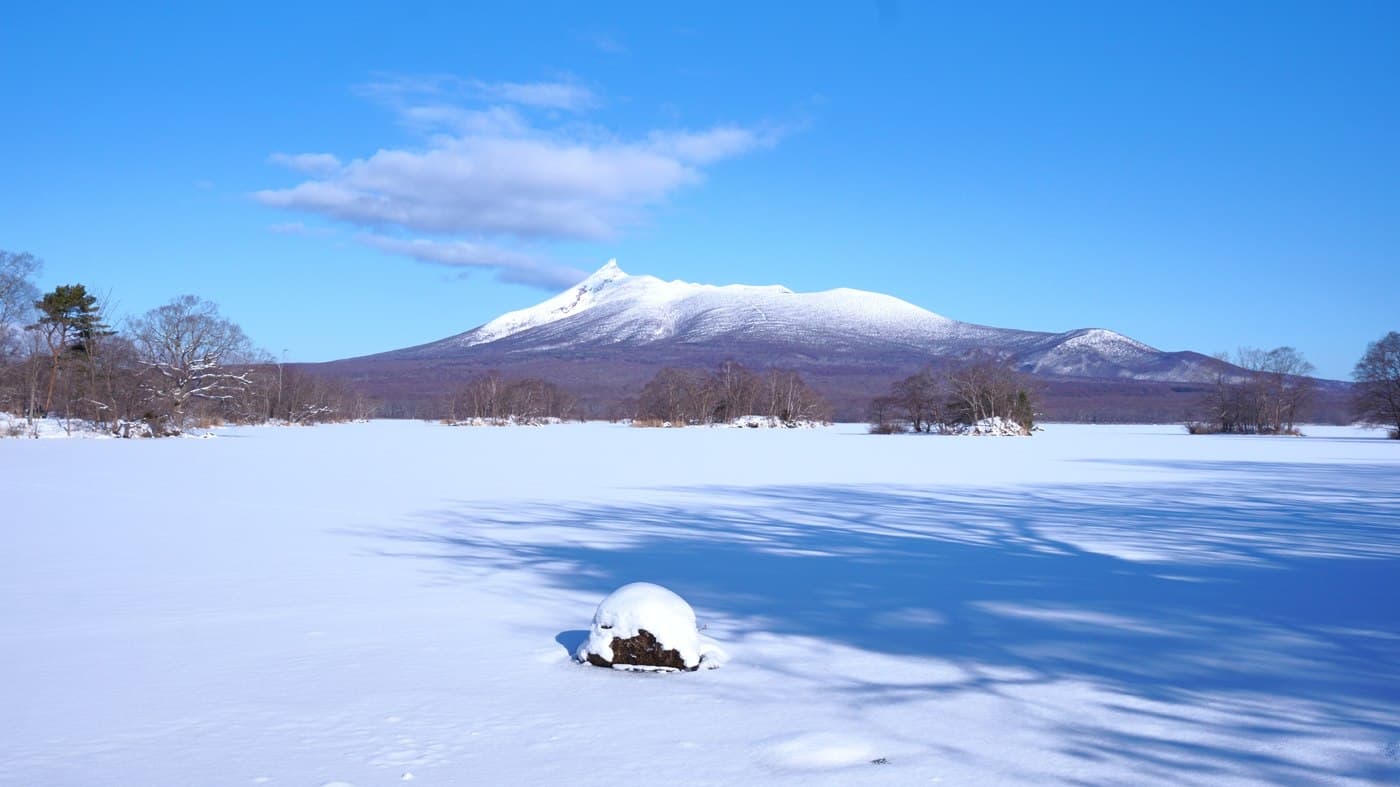
Hokkaido Winter: A Practical Self-Guided Guide to Snow, Ice and Onsen Season
Drift ice on the Okhotsk, jewelry ice at sunrise, 485cm of snow a year in Sapporo, and an outdoor bath at the end of every day. What's worth going for, when to be there, and how to move around when the trains give up.
Hokkaido winter is the version of Japan people talk about years after their trip. Powder snow, steaming outdoor baths, sea ice grinding against the hull of a ship, ramen so hot the film of fat keeps the broth boiling in a −10°C wind. Between mid-January and early March, Japan's northernmost island turns into one long open-air spectacle — and you don't need a group tour to see it.
This guide is for independent travelers building a self-guided itinerary. What's worth going for, where and when to be, how to get around when the trains bail on you, and the small decisions that separate a smooth trip from a frozen slog.
❄️ The one thing to get right
The biggest first-timer mistake is trying to do all of Hokkaido in five days. It is bigger than it looks on the map and winter slows everything down. Pick two or three anchors, book them early, and let the rest flex around the weather.
Why Winter, and Why Here
Hokkaido isn't just a colder Tokyo. Different landscape, different food, different pace. Sapporo is one of the snowiest cities on earth, averaging 485cm of snow a year, and it stays a winter city from November to March. That's the baseline. On top of it: drift ice on the Sea of Okhotsk, jewelry ice on the Pacific side, hot springs in every direction, and some of the best powder skiing anywhere.
It also works well bolted onto a mainland trip. Fly into Tokyo, spend a few days in Kyoto, then take a domestic flight north rather than burning a day on trains. And while the temples down south are quieter in winter, up here the season is the attraction rather than a discount on the usual one.
What you get for the cold is a landscape that behaves differently from the rest of the country. Snow falls from November through March and simply stays, so the towns work around it — heated arcades, tunnels between buildings, buses that keep their timetable through a blizzard. The food follows the same logic: everything is engineered to be eaten hot, fast, and outdoors if necessary.
When to Go
Timing matters more here than almost anywhere else in Japan. Snow starts in November, but the real Hokkaido winter clicks into place from mid-January through late February.
- Mid-January: reliable powder at the resorts, jewelry ice starts appearing, ice festivals begin.
- Early February: the peak week. Sapporo Snow Festival, drift ice, ice sculptures everywhere.
- Late February: still cold, still snowy, but crowds thin and hotel prices ease.
Drift ice around Abashiri and Shiretoko typically runs from early February to late February, stretching into early March. If sea ice is the reason you're coming, plan around that window rather than hoping.
Getting There
Most travelers arrive at New Chitose Airport, about 40 minutes south of central Sapporo. The JR Rapid Airport train reaches Sapporo Station in around 37 minutes.
If you're landing with jet lag from Europe or North America, don't overplan day one. Get to the hotel, eat something hot, and let the cold wake you up properly the next morning.
For eastern Hokkaido, Memanbetsu Airport is a far smarter entry than doubling back through Sapporo — Shiretoko is under two hours' flight from Haneda. Heading straight for jewelry ice instead? Tokachi-Obihiro Airport is about 1 hour 35 minutes from Haneda.
Sapporo: Your Winter Base
Sapporo is the natural anchor for a first winter trip. Compact, well connected by subway, and everything else radiates outward from it. The centre is walkable, and public transport keeps to schedule even in heavy snow — not something you can say about most snowy cities. Our things to do in Sapporo guide has the city itself, with this season's fees and hours.
Odori Park and the TV Tower
Odori Park runs 1.5km through the centre of the city, a green ribbon in summer and a snow-lined stage in winter. The Sapporo TV Tower sits at its eastern end, and for fifteen minutes and a modest ticket the observation deck gives you the whole festival layout in one look.
Sapporo Snow Festival
This is the reason many people book their flights. The 2027 Sapporo Snow Festival runs Thursday 4 February to Thursday 11 February 2027 — the 77th edition, with all three venues (Odori Park, Susukino, Tsudome) on the same dates.
The main Odori site is where the famous large sculptures stand, some over 25 metres wide and 15 metres high, lit until 22:00 daily. Admission to all three sites is free. The festival won't drain your wallet directly — you pay through hotels, which spike hard that week.
⚠️ Book Sapporo accommodation months ahead for festival week. Hotels fill weeks in advance, temperatures sit around −5°C to −10°C, and the city turns into an open-air gallery. Full detail in our Sapporo Snow Festival 2027 guide.
Okurayama Ski Jump Stadium
One of Sapporo's most underrated stops. This was the venue for the 1972 Sapporo Winter Olympics and it remains Japan's largest large-hill ski jumping stadium.
A lift carries you to a 307m observation deck, which puts you at the actual jump platform the athletes use. From up there the view opens out over the whole city and the Ishikari Plain beyond — the jumper's vantage point, which is a genuinely different way to see Sapporo than from the TV Tower.
Hourly JR buses run to the jump itself; several others stop nearby for a ten-minute walk uphill. Either way the ride is about ten minutes and ¥240 one way. The stadium is free to enter — only the lift costs extra, and for anyone even mildly interested in winter sport it's worth it.
Eating in Sapporo
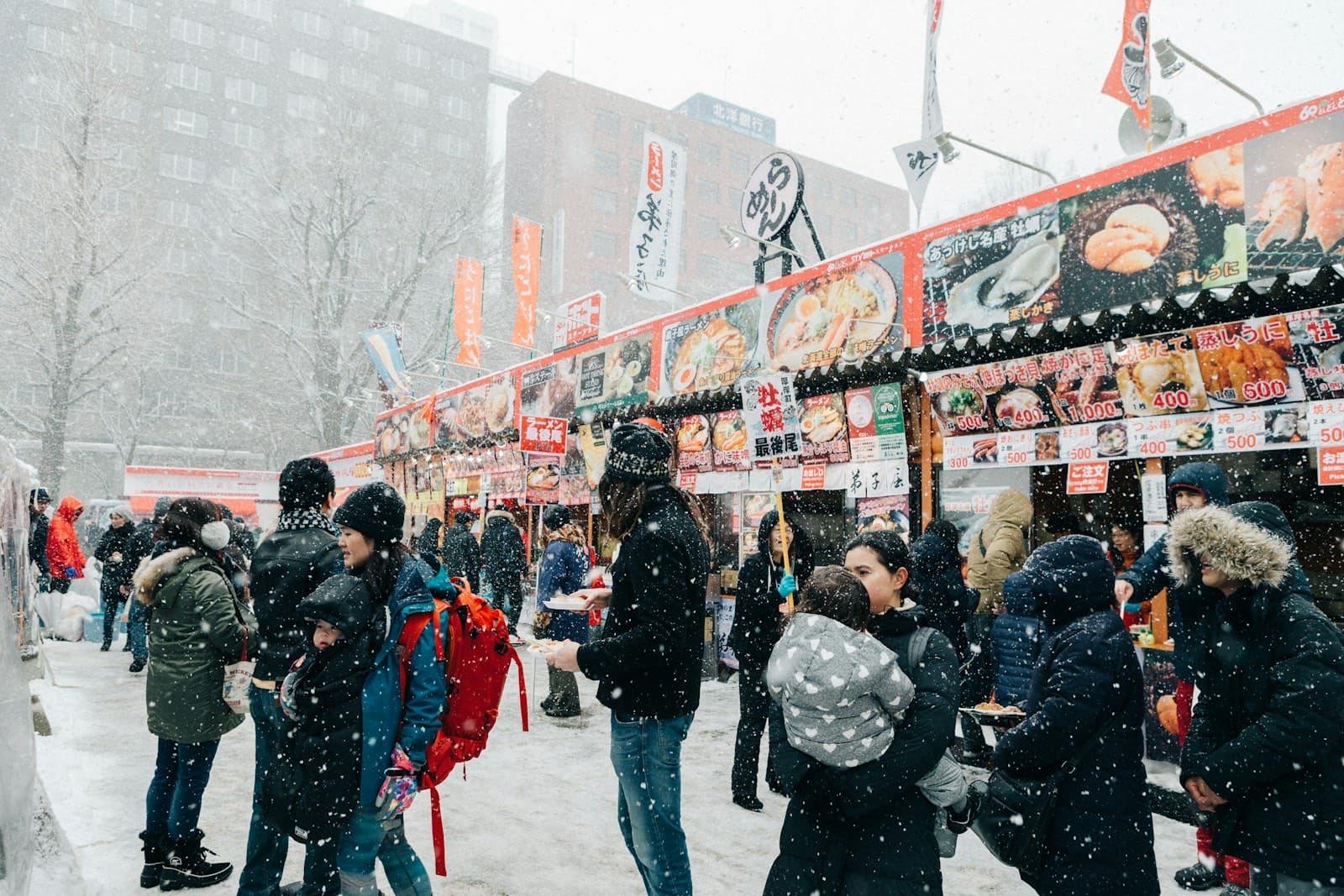
Winter is when the menu really opens up: miso ramen, soup curry, Genghis Khan grilled lamb, buttered corn in hot broth. Around the festival, food stalls fill Odori Park with hot drinks and quick bites — a lifesaver after two hours out shooting photos.
Seafood is its own category. Sea urchin, scallops, crab and salmon roe stack up on any decent kaisendon at Nijo or Jogai market.
Day Trips from Sapporo
Otaru
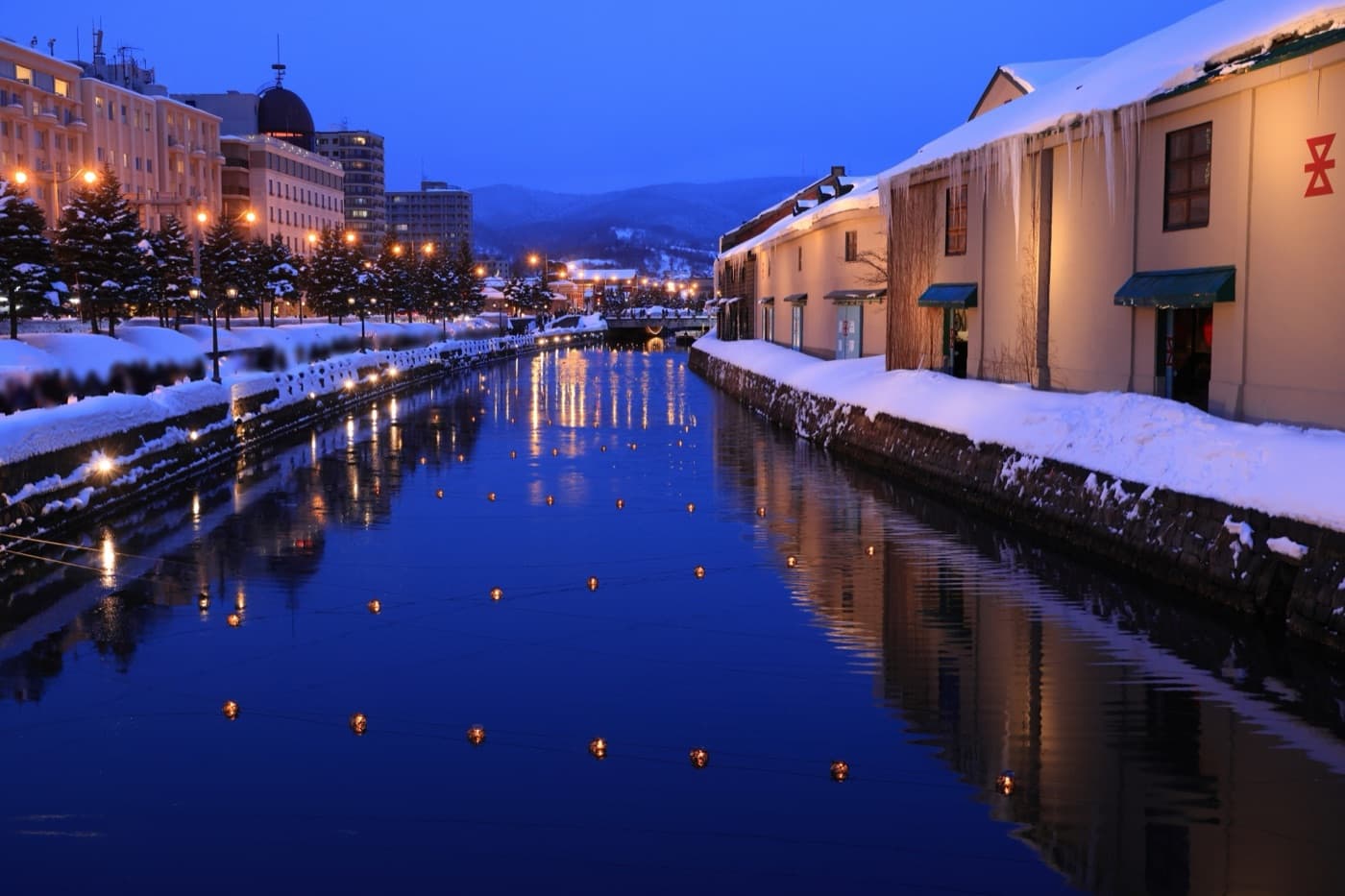
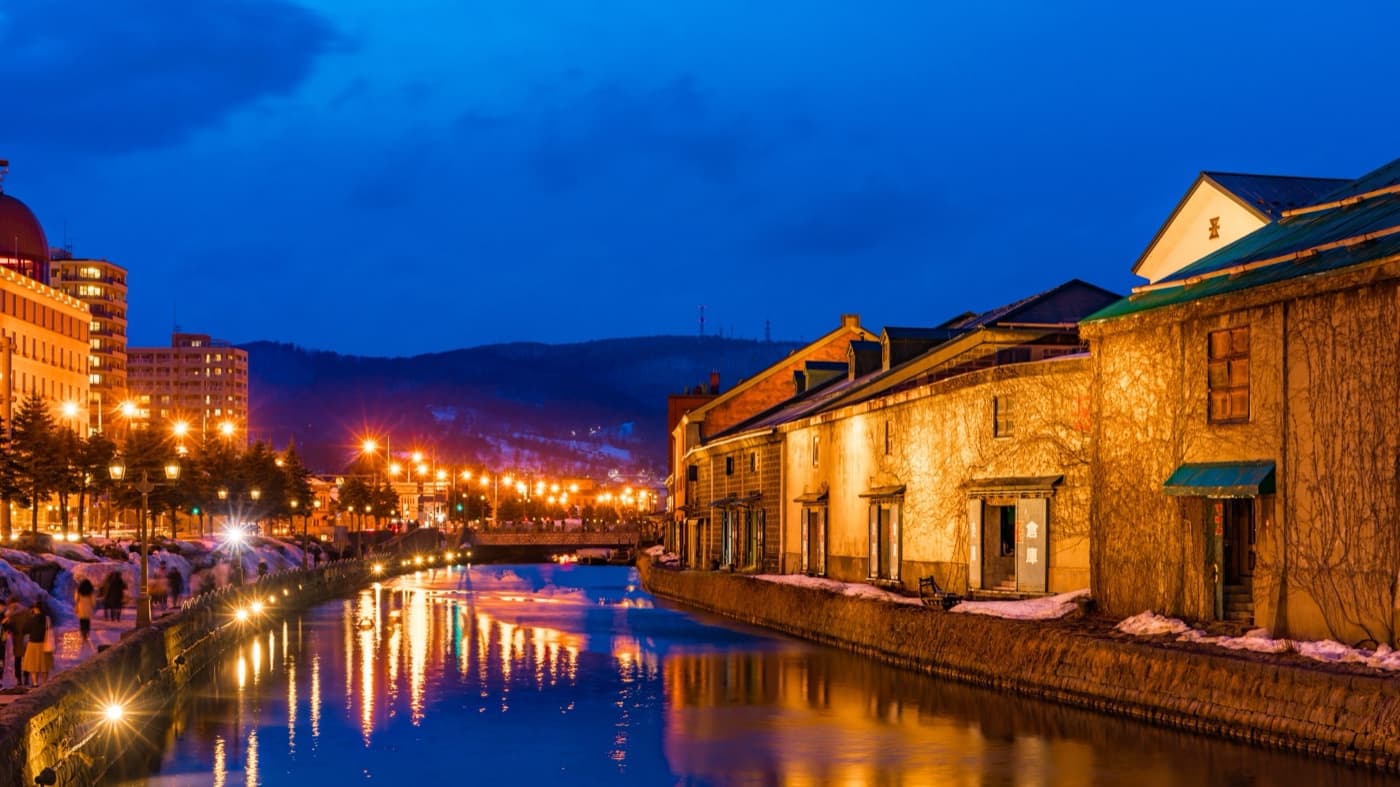
About 40 minutes by train, and the town looks purpose-built for winter photography — western-style buildings along the canal, snow banked on the old warehouses, gas lamps at dusk. The Snow Light Path festival in February fills the canal with candles and illuminated snow sculptures.
The Otaru Art Base Stained Glass Museum is worth an hour while you're there. You step out of the noise along the canal into a cool, quiet interior where around 140 stained glass works — once installed in British churches in the late 19th and early 20th centuries — catch the low winter light and throw jewel-coloured reflections across the floor. It is an odd, welcome contrast to a day spent outside in the snow.
Noboribetsu Hell Valley
Jigokudani is the geothermal heart of Noboribetsu Onsen and one of the more surreal winter sights in Japan: steam off bleached rock, snow banks, sulfur in the air. In winter the boardwalks are lit from sunset until 21:30 for an event called Onibi-no-Michi.
Direct Donan buses run from New Chitose Airport in just over an hour, or take JR to Noboribetsu Station and connect by bus. The valley feeds the town's hot springs, and there is no better bath in Japan than an outdoor one with steam off your shoulders and snow landing in your hair.
Lake Toya
A manageable day trip or overnight, especially chained with Noboribetsu. Geothermal activity keeps the lake from freezing over, so you get open water framed by snow-covered hills. The hot spring resorts run year round, and the area is quieter than Sapporo — which some travelers much prefer.
Central and Northern Hokkaido
Deeper snow, colder nights, fewer tourists. Head inland.
Asahikawa and its ramen
Hokkaido's second city and the hub for Daisetsuzan National Park. Asahikawa ramen is a soy-based broth blending seafood and pork stock with medium-thin curly noodles, and a thin layer of pork fat on top that keeps the soup blistering even at −20°C. Local food like this exists because of the climate, not despite it.
The Asahikawa Ramen Village gathers eight of the city's best-known shops along a single walkway, each with its own signature recipe for broth, noodles and tender char siu. Walk in and the smell of simmering soup and the sound of noodles going into boiling water do the marketing for them. Take JR to Minami-Nagayama Station, then about seven minutes on foot — roughly 20 minutes from Asahikawa Station. Many shops do half-size bowls, so you can manage two if you're ambitious. Pair it with Asahiyama Zoo and its winter penguin walk.
Sounkyo Ice Fall Festival
In a deep gorge at the foot of the Daisetsuzan range, Sounkyo Onsen hosts one of Hokkaido's most photogenic winter events. The 12,000m² site along the Ishikari River holds around 30 ice sculptures built over three months, with ice rooms and observation decks up to 13 metres high, lit in seven colours after dark.
It runs annually from late January to mid-March. Smaller and quieter than the Sapporo festival, and set against a real gorge rather than a city park — more atmospheric, if less famous. Direct buses from Asahikawa Station. Combine it with a soak in your ryokan's outdoor bath and you have one of the best single evenings a winter itinerary can produce.
Asahidake Onsen
On the slopes of Hokkaido's tallest peak — mostly skiers, backcountry hikers, and people who want to watch vapour drift up through birch trees in near silence. A quieter alternative to Niseko if you ski.
Eastern Hokkaido: Drift Ice, Ainu Culture, Wildlife
This is where the trip gets less obvious and more rewarding. The east repays travelers who commit an extra day or two.
Drift ice at Abashiri
Abashiri is the launching point. The Aurora is a large icebreaker with a capacity of 400 people, and its appeal is physical rather than scenic: the sound and the vibration as the hull drives through thick ice, felt through the deck.
Because it is a big ship there is very little roll, and the interior is heated — so you get the world of drift ice without having to stand out in the freezing cold for an hour. That matters more than it sounds when the wind comes off the Okhotsk.
The cruise runs about an hour and operates late January to late March, with direct buses from Memanbetsu Airport and Abashiri Station. With luck you'll see seals on the ice, or Steller's and white-tailed sea eagles overhead. Bring a real camera if you own one — phones struggle badly with the glare off ice.
Shiretoko National Park
Further east, Shiretoko is the wilder cousin. The peninsula is defined by a chain of steep mountains rising over 1,000 metres, jutting out into the Sea of Okhotsk, and it holds an ecosystem that hangs together in a genuinely unusual way.
Each winter the sea fills with white drift ice, and the ice carries nutrients that feed the plankton. The plankton support the salmon, which swim upstream to be taken by brown bears and Blakiston's fish owls, and what is left returns to the forest soil. Sea to land to peak, and back again. It was registered as Japan's third UNESCO World Natural Heritage Site in July 2005, and the citation is essentially that: a place where the circle is still intact.
Winter visits centre on drift ice walks, snowshoeing and wildlife. Guided eagle-watching tours are the main draw — the birds perch in tall coastal trees scanning the sea, and a white-tailed eagle against the ice is the photograph you came for. The World Heritage status is more than a plaque here: it is why the park was never overdeveloped and why the wildlife is still around.
Ainu culture at Lake Akan
The Ainu are the indigenous people of this land, and Lake Akan is one of the best places to meet a living culture rather than a museum version of one. Inside Akan-Mashu National Park, ringed by old-growth forest, the lakeside hot spring town of Akanko Onsen holds Lake Akan Ainu Kotan — Hokkaido's largest Ainu settlement, home to about 120 residents, with more than 30 craft shops and restaurants along its street.
The Ainu Theater Ikor stages performances of traditional Ainu dance, recognised as UNESCO Intangible Cultural Heritage. Learning even a little — many Hokkaido place names are Ainu words — reframes the whole trip.
Lake Akan itself sits inside Akan-Mashu National Park, ringed by virgin forest, and Akanko Onsen on its shore is a working hot spring town with hotels, craft shops and restaurants rather than a preserved exhibit. That matters: the kotan is somewhere people live and trade, not a reconstruction you walk through.
Winter at Lake Akan also means ice fishing for wakasagi smelt on the frozen lake, fried on the spot while you wait.
Ice fishing and wildlife
Ice fishing sounds miserable and turns out to be genuinely fun: small heated shelters, hot tea, and fish in the fryer minutes after you catch them. Lake Akan and Lake Shikaribetsu both run it. Add Asahiyama Zoo's penguin walk, and the red foxes and Ezo squirrels you spot from the road east, and the wildlife side of the trip fills itself in.
Jewelry Ice on the Otsu Coast
Hokkaido's most photographed winter scene isn't drift ice. It's jewelry ice at the mouth of the Tokachi River, on the Otsu Coast in Toyokoro Town — and it exists nowhere else.
It is a rare phenomenon found only at this estuary. The blocks begin as river ice, flow out into the Pacific, and are then returned to the shore by the waves. In the tumbling, the sharp edges wear smooth and round, and what washes up on the black sand is crystal-clear and glassy — a natural gallery of ice that looks polished.
Where the drift ice up north impresses by sheer scale, jewelry ice is valued for its clarity and its origin. Two completely different things, and worth seeing as a pair if your itinerary can stretch to both coasts.
The season runs mid-January to late February, and sunrise is the moment: the ice takes gold, then blue, then grey as the day moves on.
Access is the catch. There is no public transport to the Otsu Coast — it's a rental car, a taxi package, or a guided sunrise tour out of Obihiro. Factor in an early-morning drive on winter roads. While you're in Tokachi, the wider ranch country is worth the detour — this is dairy heartland, and stopping at a farm café in the middle of a snowfield is one of those small memories that outlasts the headline sights.
Ski Resorts and Snow Activities
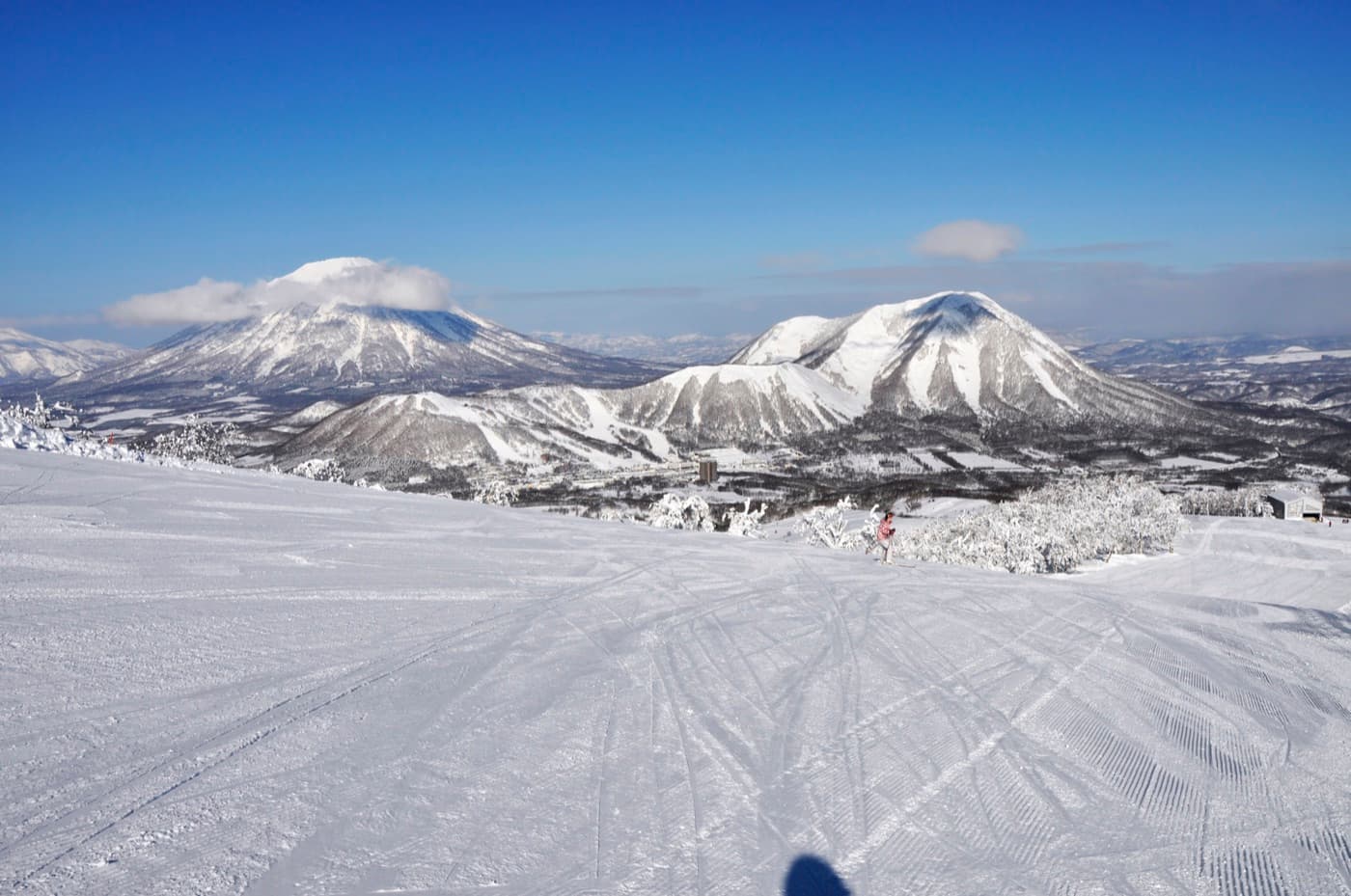
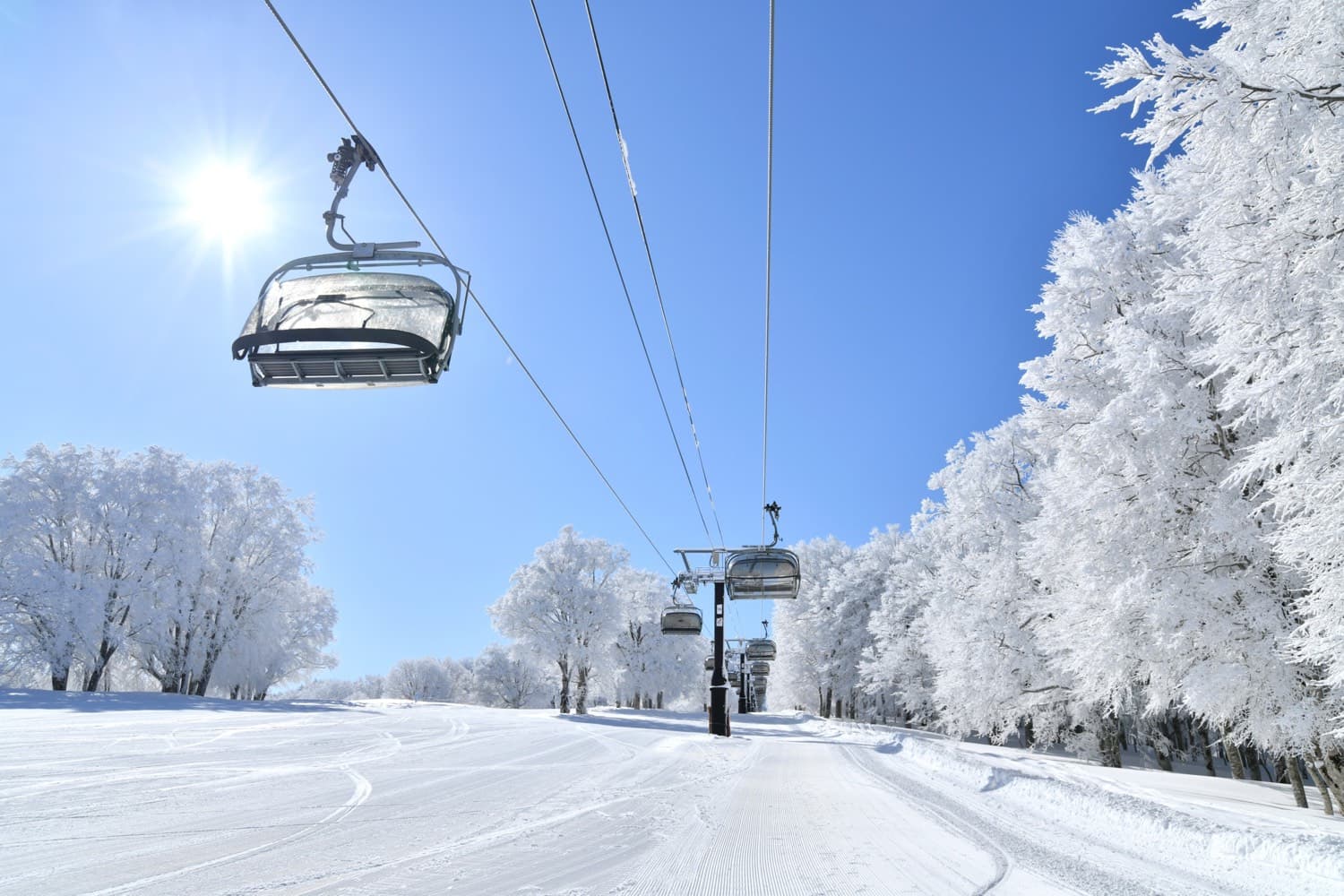
Hokkaido's ski resorts are legendary for a simple reason: Siberian weather systems dump dry, deep powder straight onto the island. Niseko is the big international name; Rusutsu, Kiroro, Furano and Tomamu each have their own character. Most sit within a couple of hours of New Chitose, which makes ski-focused trips very efficient.
Even if you don't ski, the resort areas run snowshoeing, snowmobile tours, sledding and tubing, and nearly all of them pair with hot springs — a morning on the slopes and an afternoon in the bath without moving your bags. That combination is the reason ski-focused trips here are so efficient: the lifts, the lodging and the onsen tend to sit within walking distance of each other, so a group with mixed appetites for skiing can still travel together. For the wider picture, see our Japan ski season guide.
A Sample 7-Day Winter Itinerary
- Day 1 — Land at New Chitose, train to Sapporo, easy dinner near the station.
- Day 2 — Sapporo: Odori Park, TV Tower deck, Okurayama ski jump.
- Day 3 — Otaru day trip: Snow Light Path, stained glass museum, seafood lunch.
- Day 4 — Train to Asahikawa, Asahiyama Zoo, Ramen Village for dinner.
- Day 5 — Bus to Sounkyo Onsen; the Ice Fall Festival after dark.
- Day 6 — Back to Sapporo, or push east to Abashiri for a drift ice cruise.
- Day 7 — Fly out from Chitose or Memanbetsu.
Swap Noboribetsu in for Otaru if you want more hot springs, or add Lake Toya as a two-night ryokan stop. If drift ice or Shiretoko is a must, add two days minimum — and if you want the east properly, plan 9 to 10 days.
Transport, Packing, and What Goes Wrong
Getting around
Rail covers the Sapporo–Otaru–Asahikawa corridor cleanly and buses fill the gaps. A rental car helps enormously in the east — Shiretoko, Lake Akan, Tokachi, the Otsu Coast — but only if you're comfortable on snow. If you're not, book guided day trips instead; operators run from Obihiro, Asahikawa and Kushiro.
What to pack
Real winter clothes, not "a warm jacket". Sub-zero is the default, not the exception: a proper down parka, thermal base layers, waterproof boots with grip, gloves, hat, hand warmers. Camera batteries drain fast in the cold — keep spares in an inside pocket.
Common mistakes
- Booking Sapporo hotels late for snow festival week.
- Chasing drift ice in early January — usually too early.
- Assuming city transit patterns hold everywhere; they don't cover the east coast.
- Planning drives over mountain passes without checking the forecast.
- Skipping Ainu culture because it feels like an add-on. It isn't.
Winter vs Other Seasons
Hokkaido's cherry blossom arrives in late April and early May, well after the rest of Japan, and the summers are cool and full of lavender. But if you're building a trip around snow, hot springs and cold-weather food, winter is the answer. Nothing else in Japan compares to standing on a frozen lake at −15°C and then walking straight into a bath fed by a volcano.
💬 From our Japan travel team
This is exactly the kind of trip our self-guided plans are built for — the flexibility to chase drift ice one day and soak in a mountain onsen the next, without being tied to a group. If you want help sequencing the routes, timing a Sapporo Snow Festival visit, or combining Hokkaido with a mainland leg, tell us your dates and we'll shape a route around them.
FAQ: Hokkaido in Winter
When exactly is the Sapporo Snow Festival in 2027?
It runs from Thursday 4 February to Thursday 11 February 2027 — the 77th edition. All three venues (Odori Park, Susukino, Tsudome) operate on the same dates.
Is the Sapporo Snow Festival free?
Yes. Admission to all three sites is free. You only pay for food, transport, and paid attractions such as the Okurayama lift.
When can I see drift ice?
From late January to late March the Sea of Okhotsk fills with drift ice and Abashiri turns white to the horizon. Peak conditions are usually early to mid-February.
Can I do Hokkaido without renting a car?
Yes, if you stay on the Sapporo–Otaru–Noboribetsu–Asahikawa–Sounkyo axis, which is well served by rail and bus. For the Otsu Coast, Shiretoko and Lake Akan you'll want a car or organised transfers.
How cold does it actually get?
Sapporo sits around −5°C to −10°C during festival week. Inland and eastern areas drop to −20°C or lower overnight, and winter in Shiretoko is genuinely harsh at around −20°C.
Is one week enough for a first winter trip?
It covers Sapporo, Otaru, Noboribetsu or Lake Toya, and a central loop through Asahikawa and Sounkyo. Adding eastern Hokkaido — drift ice, Lake Akan, Shiretoko — really wants 9 to 10 days.
What food should I not miss?
Sapporo miso ramen, soup curry and Genghis Khan grilled lamb in the city; Asahikawa's soy-based ramen with its lid of pork fat inland; and a kaisendon piled with sea urchin, scallop, crab and salmon roe at Nijo or Jogai market. In Tokachi, stop at a dairy farm café.
Is Hokkaido good for a first trip to Japan?
As a second stop, yes. Most first-timers pair a few days here with Tokyo and Kyoto rather than making Hokkaido the whole trip — a domestic flight north saves a day compared with the train.
Sapporo Snow Festival dates and free admission per the official festival information; the 2027 edition runs 4–11 February 2027. Sounkyo Ice Fall Festival runs late January to mid-March, and the Abashiri icebreaker Aurora sails from January 20 to March 31 — confirm current dates with each operator. Okurayama bus fare ¥240 one way and Sapporo's 485cm annual snowfall average per official city and transport information. Shiretoko was inscribed as a UNESCO World Natural Heritage Site in July 2005. Hero photo: 掬茶 via Wikimedia Commons (CC BY-SA 4.0). Last updated: August 24, 2026.
Related Articles
Sapporo Snow Festival 2027: The Practical Self-Guided Planning Guide
14 min read
Japan in January: A Practical Guide to Weather, Snow, and Self-Guided Travel
12 min read
Otaru Snow Light Path 2027: A Practical Guide to Hokkaido's Most Intimate Winter Festival
14 min read