
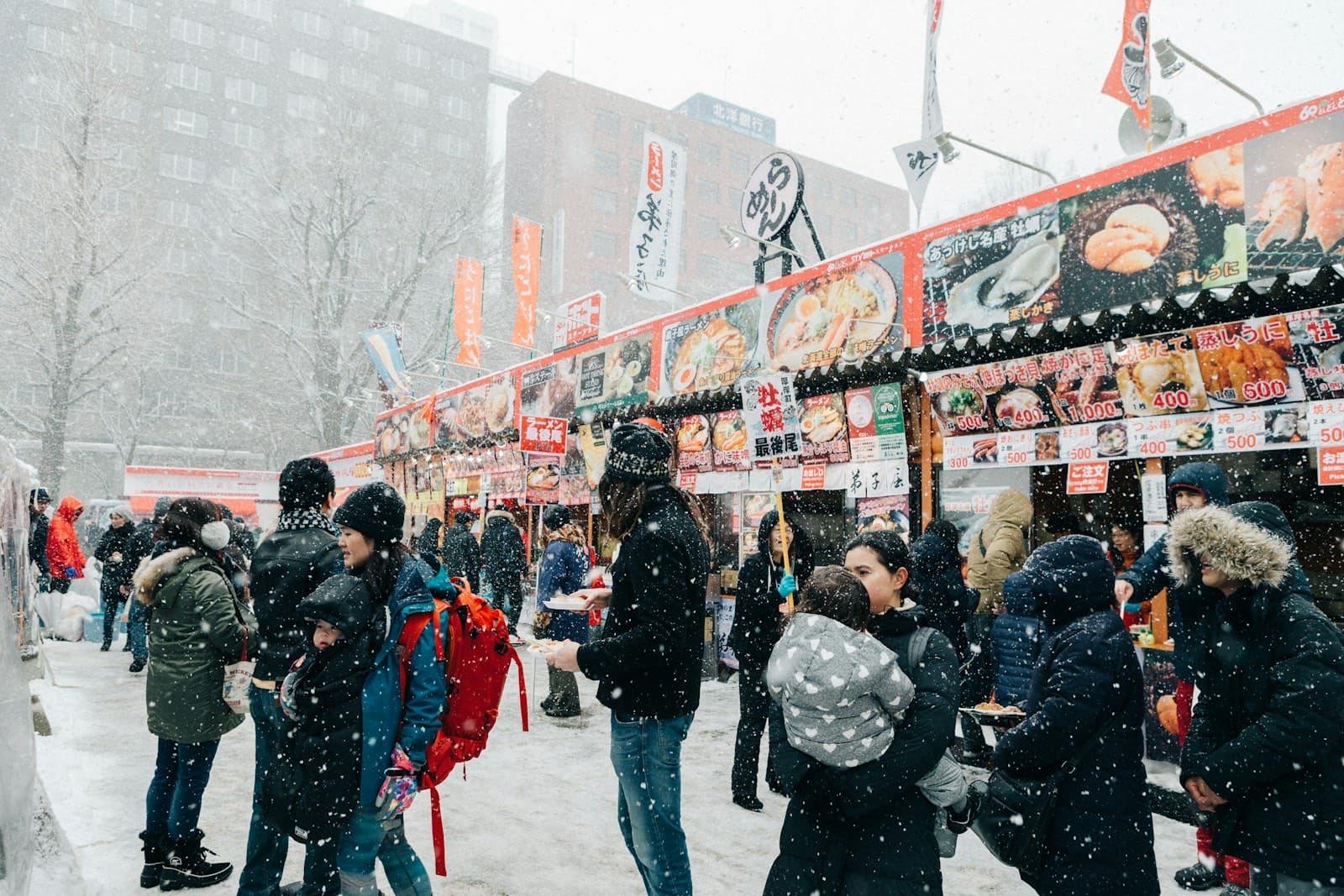
Sapporo Snow Festival 2027: The Practical Self-Guided Planning Guide
Dates, the three sites explained, how to reach each one, what a February week in Sapporo really costs, and a three-day plan you can build yourself — no packaged tour, no fixed group.
The Sapporo Snow Festival 2027 runs from Thursday 4 February to Thursday 11 February 2027, spread across three sites in Hokkaido's capital. It will be the 77th edition of Japan's biggest winter event, and if you're building a self-guided February trip, it's the fixed point you plan everything else around. Short version: yes, it's worth the detour north. Yes, book your hotel early. No, you don't need a tour to see it. For how the festival fits into a wider two-week winter trip, see Japan in February 2027.
The festival closes on 11 February, which is National Foundation Day — a public holiday in Japan. That matters less for the sculptures than it does for your wallet, and we'll come back to it. For the wider seasonal picture, our winter in Japan 2026 guide sets the scene, and Japan in January 2027 covers the month just before.
❄️ Quick Answer: Sapporo Snow Festival 2027
- Dates: Odori and Susukino run 4–11 February 2027 (Thu–Thu). Tsudome typically opens a little earlier and wraps up earlier — check the official site for its exact window.
- Cost: free to enter, all three sites. You only pay for food, souvenirs and the paid activities at Tsudome.
- Hotels: the single busiest week of Sapporo's year. Book 3–6 months out; the 11th is a national holiday, which pushes the final nights higher still.
- Time needed: two full days is the realistic minimum, three is comfortable — enough for Odori by day and night, Susukino after dark, and Tsudome in a morning.
Sapporo Snow Festival 2027 Dates at a Glance
The 77th Sapporo Snow Festival is scheduled for 4–11 February 2027. The two central sites — Odori Park and Susukino — run across that full window. The Tsudome site is the odd one out: it usually gets going a few days before the downtown sites and finishes before them too, so treat it as a separate booking decision rather than assuming it will be open on your last day.
One honest caveat. Festival organisers confirm the fine detail — Tsudome's exact opening day, projection mapping schedules, venue maps — closer to the event. The 4–11 February window is the announced one, but before you lock in flights, spend thirty seconds confirming on the official Sapporo tourism site. That goes double for Tsudome.
Note what the closing date means in practice. 11 February is National Foundation Day, a Japanese national holiday. Domestic travellers get a long weekend at exactly the moment the festival peaks, so the final nights are the most expensive and the most sold-out of the week. If your dates are flexible, arriving on the Wednesday and leaving on the Monday will cost you noticeably less than the reverse.
Is the Sapporo Snow Festival Worth It?
For anyone already in Japan in February — yes, without much hesitation.
Roughly two million people come each year to walk past something like 200 snow and ice sculptures spread across the three sites. Numbers like that can read as a warning rather than a recommendation, so here is the honest trade-off. The case against: central Sapporo hotels double or triple their rates this week, and the temperature sits below freezing day and night. The case for: the sculptures are simply not comparable to anything you've seen at a smaller winter event. The largest are several storeys tall, built by professional teams over weeks, and lit after dark with projection mapping that turns a block of carved snow into a moving screen.
If you're flying to Japan in February anyway, skipping it to save a few hundred dollars on hotels is a false economy. If you're debating whether to add Hokkaido to an otherwise Honshu-focused trip, the festival is a genuinely good reason to — and it pairs neatly with a ski leg, which our Japan ski season 2026-27 guide covers in full.
The Three Sites Explained
Each site has a distinct character, and they reward different visits. Don't try to sprint all three in one afternoon — you'll see everything and enjoy nothing.
| Site | Dates (2027) | What's There | Hours | Access |
|---|---|---|---|---|
| Odori Park | 4–11 Feb | Main venue. ~200 snow sculptures over a 1.5 km stretch; international carving contest | Open-air; sculptures lit until 22:00 | Directly above Odori Stn (Namboku, Tozai, Toho lines); 10–15 min underground walk from Sapporo Stn |
| Susukino | 4–11 Feb | Around 100 clear-ice sculptures, ice bars, neon backdrop | Lit until 23:00 (until 22:00 on the final day) | One subway stop south of Odori on the Namboku line, or a 10-min walk |
| Tsudome | Opens earlier, closes earlier — confirm officially | Family site: snow rafting, tube slides, mazes, indoor food stands | 10:00–16:00 daily | Toho line to Sakaemachi Stn, then a 15-min walk or a ¥200 shuttle bus (cash) |
💡 Tsudome does not run on the same calendar as the downtown sites. If it's a priority — and it is if you have kids — build your dates around Tsudome first, then confirm the exact window on the official festival site before booking.
Odori Site (The Main Venue)
Odori is the festival. The park is a narrow green strip — well, white strip in February — running 1.5 km through the middle of the city, from 1-chome to 12-chome. The headline sculptures are enormous: the biggest reach roughly 25 metres wide and 15 metres high, which is the sort of scale that doesn't photograph properly and has to be stood in front of. Smaller works line the whole stretch in between, and the international snow sculpture competition sets up at 11-chome, with teams from around the world carving in the open.
Go twice if you can. Daylight is when you see the craftsmanship — the tool marks, the depth of the relief, the teams still working. After sunset the sculptures are floodlit until 22:00 and the big ones become projection mapping canvases, which is a completely different show. The classic photograph is a huge snow sculpture framed against the Sapporo TV Tower at the park's eastern end.
Susukino Site (Ice Sculptures)
Susukino is Sapporo's entertainment district, and its contribution is about a hundred ice sculptures — clear carved ice, not packed snow, which reads very differently under light. Several have Hokkaido seafood frozen inside them: crab, scallops, whole fish suspended mid-block. It sounds like a gimmick and photographs brilliantly.
There are ice bars where the glass itself is ice, which lands somewhere between novelty and endurance test depending on how long you've been outside. Come at night — the ice picks up the neon of the surrounding streets, and it stays lit until 23:00 (22:00 on the last day, so don't leave it until then). The site is compact; an hour covers it comfortably, and dinner is a two-minute walk in any direction.
Tsudome Site (Snow Activities)
Tsudome sits well outside the city centre and trades sculptures for participation. This is the hands-on venue: snow rafting pulled behind snowmobiles, long tube slides, snow mazes, areas set aside for building your own snowman. Inside the dome itself there's a playground and a run of food stands, which is where you retreat when your fingers stop working.
It runs 10:00 to 16:00 — daytime only, no evening extension. Travelling with children? It's probably the highlight of the trip, and you should plan a full morning for it. Travelling as a couple who came for the sculptures and the food? You can skip it with a clear conscience.
How to Get to Each Site
Odori
The easiest of the three: Odori Station sits directly beneath the park, and all three subway lines (Namboku, Tozai, Toho) stop there. From Sapporo Station it's a 10–15 minute walk. When it's snowing hard — and it will be — take the underground walkway instead of the street. It's heated, dry, lined with shops, and it delivers you to the eastern end of the park.
Susukino
One stop south of Odori on the Namboku line, or about ten minutes on foot. Honestly, walk it: head south down the main street from Odori Park and you'll be among the ice sculptures within minutes.
Tsudome
This one needs a plan. Take the Toho subway line to Sakaemachi Station — roughly 10 minutes and ¥250 from Sapporo Station, or 15 minutes and ¥290 from Odori. From Sakaemachi it's a 15-minute walk to the venue, or you can take the shuttle bus that runs frequently between the station and the site for ¥200 one way.
The shuttle is cash only. Have coins in your pocket before you leave the hotel; a ¥10,000 note will not help you at a bus door in a snowstorm.
Getting to Sapporo from Tokyo and Beyond
Most international visitors land in Tokyo and connect north. Flying is the sensible move: it's about 90 minutes from Haneda to New Chitose Airport, and roughly two hours from Kansai International if you're starting from Osaka.
From New Chitose, the JR Rapid Airport train reaches Sapporo Station in about 37 minutes for ¥1,230 — one of the better airport transfers in the country, and you don't need to reserve. Trains run several times an hour.
You can reach Hokkaido overland via the Tohoku and Hokkaido Shinkansen through Shin-Hakodate-Hokuto, and it's a scenic ride, but it eats most of a day and then leaves you a long way south of Sapporo. Unless the journey itself is the point, fly. If you're thinking about a broader Hokkaido loop rather than a city-only trip, our Hokkaido tour package guide maps the options.
💬 From our Japan travel team
For winter 2027, several airlines are running direct flights to New Chitose from Vancouver, Sydney and San Francisco. We strongly recommend building a Japan trip around the Snow Festival and Hokkaido skiing — it's one of the best ways to use those routes.
Book a self-guided tour that combines Sapporo sightseeing with Hokkaido skiing and you can enjoy both the festival and the slopes without the stress of planning your itinerary or booking every transfer and hotel yourself.
Is the Festival Free?
Yes. Entry to all three sites costs nothing. You'll spend money on food stands, souvenirs and the paid rides and activities inside Tsudome, but walking the length of Odori Park and touring the Susukino ice sculptures is free from start to finish.
Where to Stay
Book the moment your dates are settled. Festival week is the most expensive and most sold-out period of Sapporo's year — rates in the centre routinely double or triple against a normal February week, and the well-located hotels are gone months ahead. Aim to reserve 3–6 months in advance if you want a decent price and a decent location rather than a choice between the two.
Best Neighbourhoods
- Sapporo Station area — best if you're arriving with luggage or connecting by JR. One subway stop from Odori, and the underground walkway means you barely go outside.
- Odori / city centre — you can walk to the main venue in minutes, which is worth a lot when it's minus eight and you want to go back for the night illuminations.
- Susukino — within walking distance of both Odori and the ice sculptures, and surrounded by the city's best food and nightlife.
- Nakajima Park — gentler on the budget, two subway stops from Odori.
For the rest of the city in festival week — the ramen alley, Nijo Market, Mt. Moiwa and the Beer Museum — see our guide to things to do in Sapporo.
If central Sapporo is fully booked or the prices have gone silly, look outward. Shin-Sapporo is about 20 minutes by subway, and Otaru is roughly 30 minutes by JR — both are dramatically cheaper during festival week, and Otaru is somewhere you probably want to visit anyway. Note that Japanese hotels typically quote per person on a twin-share basis, so solo travellers should expect to pay a premium on smaller rooms.
What to Wear
Sapporo in February is not Tokyo in February. Expect roughly -5°C to -10°C, below freezing around the clock, and packed snow underfoot that turns to sheet ice after dark. Bring proper gear:
- Insulated, waterproof boots with real tread — this is the one item not to compromise on
- Multiple thin layers under a genuine winter coat, not a fashion coat
- Gloves that work with a phone screen, because you will be taking photographs constantly
- A hat that covers your ears
- Adhesive heat pads for your pockets and inside your boots — sold in every convenience store
One piece of local wisdom worth repeating: the paths through Odori Park compact into ice under two million pairs of feet, and city sneakers will put you on the ground. Clip-on ice grips cost almost nothing at a convenience store or drugstore and are the best few hundred yen you'll spend on the trip.
A Practical 3-Day Sapporo Snow Festival Itinerary
Three days is enough to do the festival properly without route-marching. Here's a shape that works.
Day 1 — Odori by Day, Then Again by Night
Fly into New Chitose in the morning, take the Rapid Airport train in, drop your bags, and eat a bowl of miso ramen before you do anything else. Then walk to Odori Park and start at 1-chome near the TV Tower, working west block by block.
Give this a solid few hours. The 2026 edition — the 76th — filled the entire 1.5 km stretch with over 200 sculptures, and the 2027 layout will be similar; rushing it is the most common mistake visitors make. Break for hot food at the international stands partway along, and if the free ashiyu foot baths near J:COM Square are running again, use them. Warm feet change everything.
Come back after sunset for the illuminations and projection mapping, then walk south to Susukino for dinner. If your trip also takes in Honshu, the winter illuminations guide covers the light displays running elsewhere in the same window.
Day 2 — Tsudome in the Morning, Susukino at Night
Tsudome closes at 16:00, so it has to come first — that single fact dictates the whole day. Toho line to Sakaemachi, shuttle bus, and you're there. Try the snow rafting, take the big slides, eat lunch at the indoor stands, and head back to the centre mid-afternoon.
Spend the evening walking the Susukino ice sculptures, and have a drink at one of the ice bars. For dinner: fresh seafood at Nijo Market, or jingisukan — grilled lamb over a domed hotplate — in the city centre.
Day 3 — Otaru, and a Final Evening at Odori
Otaru is 30 minutes by JR from Sapporo Station: a former trading port with stone warehouses along a canal, lantern-lit in the evening. The Otaru Snow Light Path Festival runs in the same early-February window — the 29th edition is announced for 6–13 February 2027, lit 17:00–21:00 — which makes it an unusually good day trip during festival week, overlapping the Snow Festival for six nights. Our Otaru Snow Light Path 2027 guide covers every venue — including the one change this year: the canal's floating buoys switch from candles to electric lights.
Back in Sapporo, return to any stretch of Odori you rushed on the first day. It will look different, and you will have learned how to walk on ice by then.
Nearby Winter Festivals to Combine
Early February is dense with events across Hokkaido. If you have more than three days, you can stack two or three of them without much backtracking.
Lake Shikotsu Ice Festival
Held at the hot spring area on Lake Shikotsu, inside Shikotsu-Toya National Park and about 40 minutes by car from Sapporo, this one runs far longer than the Snow Festival — confirmed for 30 January to 23 February 2027, open 10:00–20:00 with the illumination from around 16:30 — so it's an easy add-on either side of your festival dates. Full details in our Lake Shikotsu Ice Festival 2027 guide.
The technique is the appeal. Rather than carving blocks, crews spray water drawn from the lake — which is exceptionally clear — onto frames, letting it freeze in layers until the structures build themselves into translucent towers and tunnels. In daylight they look almost glass-blue; lit from within at night, they look like something else entirely. Pair it with a night at a Shikotsu or Noboribetsu onsen and you have a proper reset day.
Asahikawa Winter Festival
Announced for 6–11 February 2027, and famous for building snow sculptures on a genuinely record-breaking scale, plus fireworks and stage performances. It overlaps directly with Sapporo's dates and is reachable as a long day trip or an overnight.
Drift Ice and Sea Eagles in Eastern Hokkaido
With a full week, extend east. The Sea of Okhotsk coast around Abashiri receives drift ice every February, and it's one of the world's best windows for spotting Steller's sea eagles. It's a long haul from Sapporo — a short domestic flight or a scenic rail day — but it turns a city festival trip into something wilder. Reaching the icebreaker cruises and the eagle spots without driving on snow is where a small guided excursion earns its keep.
Food You Shouldn't Miss
The stands at Odori are a cut above typical festival fare, because Hokkaido producers turn up with the good stuff: crab legs, soup curry, jingisukan, potato croquettes, hot chocolate made with local milk. Prices are marked up a little, but not offensively. Bring cash — most stalls don't take cards.
Beyond the festival stands, the city itself is the reason a lot of people come back:
- Miso ramen — Sapporo's defining dish. Ramen Alley in Susukino is the obvious pilgrimage.
- Fresh seafood at Nijo Market or Curb Market — uni, ikura, crab, scallops, at their February best.
- Soup curry — a Sapporo invention, and exactly what you want after four hours outdoors.
- Jingisukan — grilled lamb on a domed hotplate, cooked at your table.
- Sapporo Beer Museum — a short subway ride from the centre, and warm.
Common Mistakes to Avoid
- Booking too late. Three to six months out is the target. Prime locations disappear before that.
- Wearing city sneakers. Packed snow becomes ice. You will fall over.
- Trying to see all three sites in one afternoon. Tsudome shuts at 16:00 and isn't on the same calendar as the others. Give it its own morning.
- Skipping the night visit. Odori is lit from sunset to 22:00 and it becomes a different festival after dark. Arrive before sunset and stay through it — you get both versions for the price of standing still.
- Renting a car in central Sapporo. Parking is scarce and roads around Odori are partly closed. The subway does everything you need.
- Assuming cards work everywhere. Cash still rules at food stalls and on the Tsudome shuttle.
Which Days of the Festival Week Are Best?
Go early in the week if you can. The sculptures are at their sharpest for the first three or four days; by day seven or eight, warmer spells and sheer foot traffic leave the surfaces looking softened and grubby. Photographers should aim for the opening days, when the international competition teams are often still carving in front of you.
If you only have two days, the Thursday-to-Saturday window at the start (4–6 February 2027) is the strongest combination of fresh sculptures and pre-holiday hotel prices.
Turning This Into a Full Japan Itinerary
The festival makes an excellent anchor for a 10–14 day February trip. A shape that works: two days in Tokyo to shake off the jet lag, four in Sapporo for the festival and Otaru, one at Lake Shikotsu or Noboribetsu Onsen, then fly back and take the Shinkansen to Kyoto and Osaka for the second half. You get winter Hokkaido, modern Japan and traditional Japan without doubling back. Travelling around the year-end break instead? Our Japanese New Year 2027 guide explains what's open and what isn't.
💬 From our Japan travel team
The Snow Festival is one of the few Japanese events where booking early genuinely changes the trip. Hotels are the constraint, not tickets — the festival itself is free. Fix your Sapporo nights first, then build the rest of the itinerary outward from them.
Planning a trip to the Sapporo Snow Festival, when Sapporo hotels sell out early? Get in touch through Plan My Trip on our self-guided tours site, and we'll suggest the tours that best fit your dates and plans.
FAQ: Sapporo Snow Festival 2027
When exactly is the Sapporo Snow Festival 2027?
4–11 February 2027 (Thursday to Thursday) for the Odori and Susukino sites — the 77th edition. The Tsudome site normally opens earlier and closes earlier than the two central sites, so confirm its exact dates on the official festival website before you book.
Is the Sapporo Snow Festival free to attend?
Yes. Entry to all three sites is free. You only pay for food, souvenirs, and the paid rides and activities inside the Tsudome venue.
How many days do I need?
Two full days is the minimum, three is ideal. That covers Odori in daylight and again after dark, Tsudome in a morning, Susukino at night, and leaves room for a day trip to Otaru.
How do I get from Tokyo to Sapporo?
Fly from Haneda or Narita to New Chitose Airport — about 90 minutes from Haneda — then take the JR Rapid Airport train to Sapporo Station in roughly 37 minutes for ¥1,230 (fare revised April 2025).
How far in advance should I book hotels?
Three to six months. Festival week is the busiest of Sapporo's year and rates roughly double or triple. The festival ends on 11 February, National Foundation Day, so the closing nights are the most expensive of all.
How cold is Sapporo in February, and can I see it without a tour?
Expect around -5°C to -10°C, below freezing day and night — dress in layers with waterproof boots and ice grips. And yes, self-guided works fine: the subway is simple, signage is in English, and all three sites are easy to reach on your own. A guided excursion only really pays off if you're adding harder-to-reach trips like the Abashiri drift ice cruises.
Build Your February Japan Trip Around the Festival
If you want the Snow Festival, an onsen night, the Otaru day trip and the rail legs back down to Honshu — without handing your itinerary to a group tour — that's exactly what selfguidejapan.com is built for. You choose the hotels and the pace; we handle the routes, timing and the on-the-ground detail that makes a February trip enjoyable rather than merely cold.
Festival dates, venue hours and transport fares are as announced and are subject to change — the Tsudome site in particular operates on a different schedule from the Odori and Susukino sites. Confirm all dates, opening hours and prices with the official Sapporo Snow Festival and Sapporo tourism sources before booking flights or accommodation. Last updated: August 19, 2026.
Related Articles
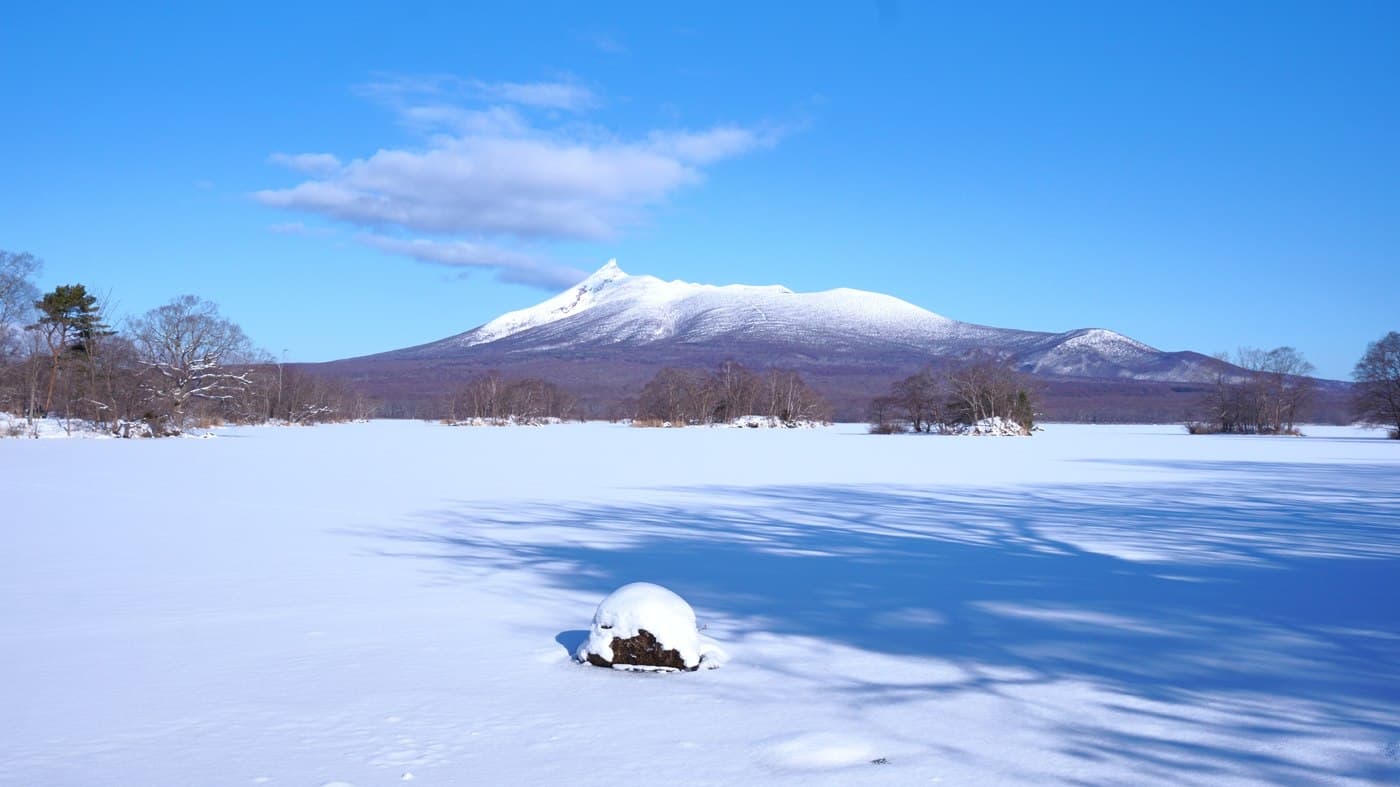
Hokkaido Winter: A Practical Self-Guided Guide to Snow, Ice and Onsen Season
17 min read
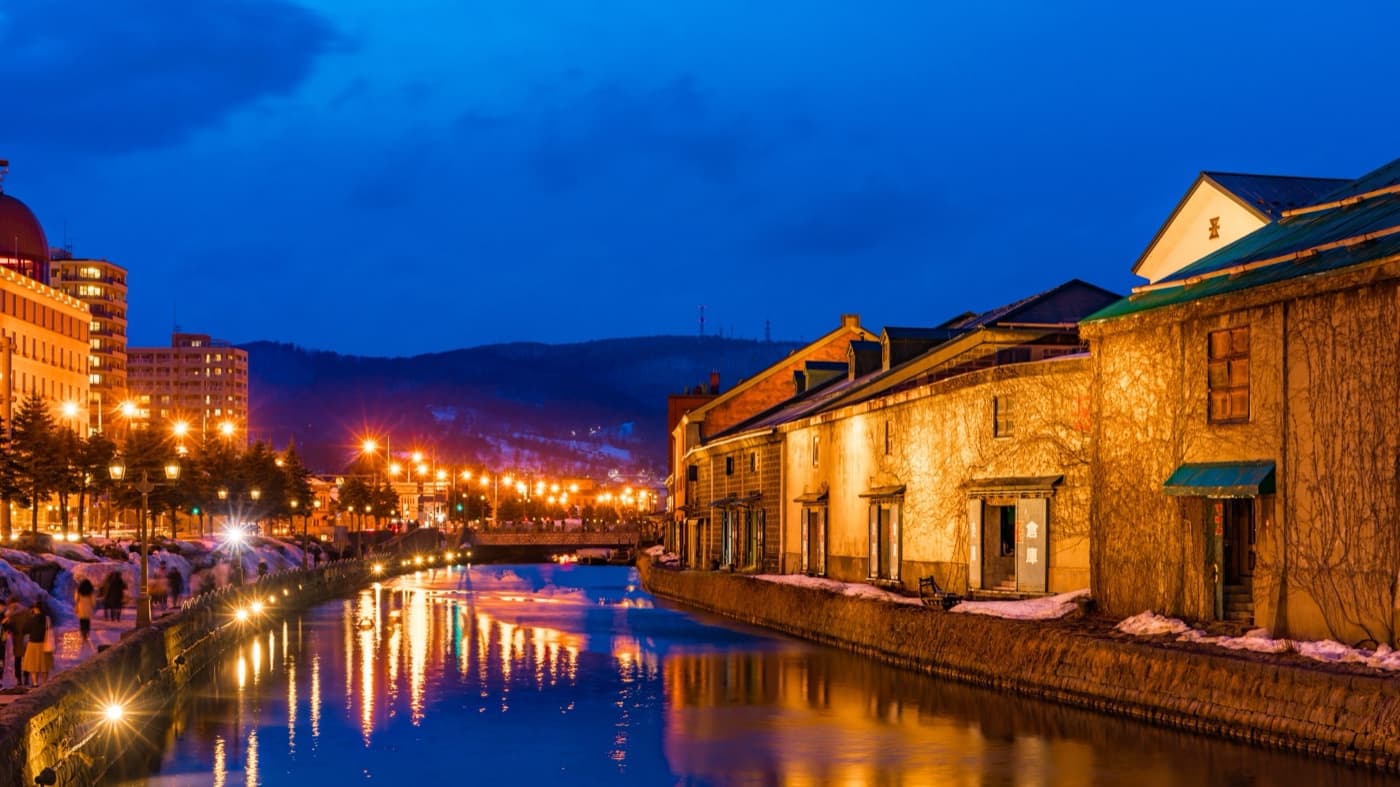
Otaru Snow Light Path 2027: A Practical Guide to Hokkaido's Most Intimate Winter Festival
14 min read
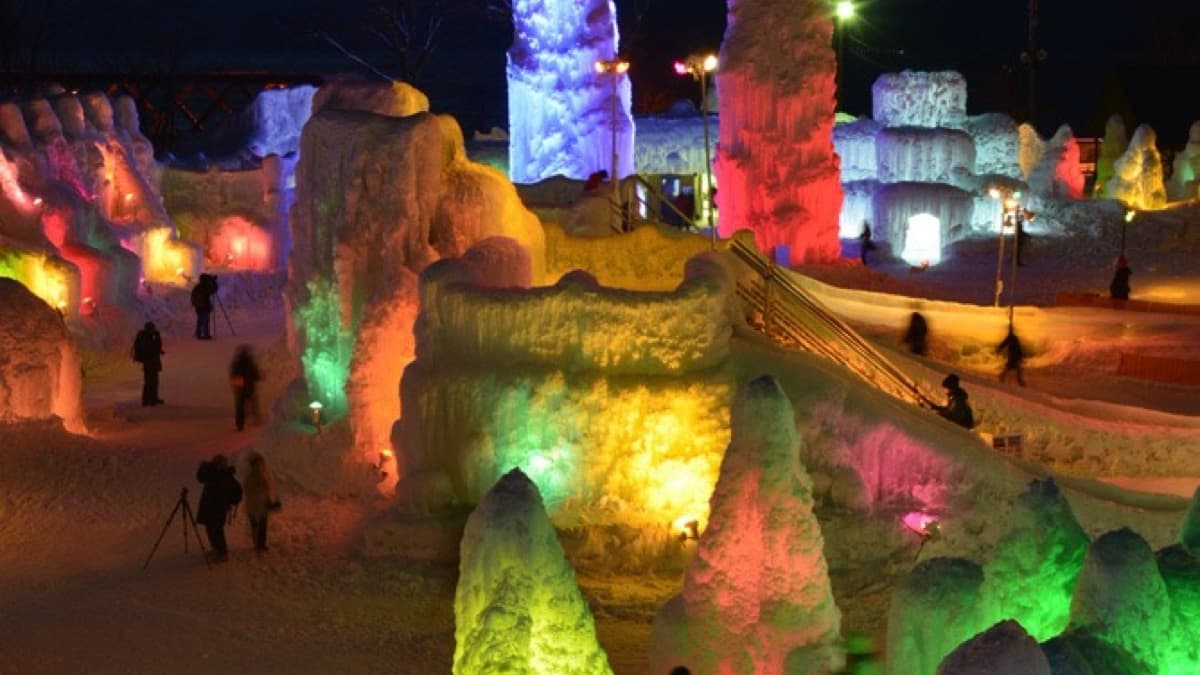
Lake Shikotsu Ice Festival 2027: A Self-Guided Traveler's Planning Guide
10 min read