Otaru Snow Light Path 2027: A Practical Guide to Hokkaido's Most Intimate Winter Festival
February 6–13, 2027. The exact dates, every venue, how to get there from Sapporo, and the one change to the canal lights that nobody outside Japan has reported yet.
The Otaru Snow Light Path 2027 runs from Saturday 6 February to Saturday 13 February 2027 — the 29th edition — filling this small Hokkaido port city with candles, snow lanterns and a glowing canal for eight nights. If you're planning a Hokkaido winter trip and wondering whether it's worth building an itinerary around: yes, and especially because it overlaps with the Sapporo Snow Festival and two other winter events you can chain together in a single self-guided week.
This guide covers the exact dates, each venue, how to get around from Otaru Station, what to pair it with, and the mistakes travellers keep making. It's written for independent travellers rather than tour-bus groups. For the wider seasonal picture, our winter in Japan guide sets the scene.
🕯️ Quick Answer: Otaru Snow Light Path 2027
- Dates: 6–13 February 2027 (Sat–Sat), the 29th edition.
- Hours: main venues lit 17:00–21:00 daily. Only four hours — this catches people out.
- Cost: free at every main venue. You pay only for the Tenguyama ropeway, food and indoor museums.
- Access: just over 30 minutes by JR from Sapporo Station; the canal is a 10-minute walk from Otaru Station.
- Overlap: 6–11 February coincides with the Sapporo Snow Festival and the Asahikawa Winter Festival.
What Changes in 2027: The Canal Buoys Go Electric
Here is something you won't find in the English-language coverage yet, and it changes the single most photographed thing about this festival.
The glass fishing buoys that float on the Otaru Canal — the ones in every photo you've seen of this event — have always held real candles. From the 29th edition in February 2027, they switch to electric lights. The organising committee took the decision at a meeting in June 2026 for two practical reasons: the canal-side wind and snow kept blowing the candles out, and visitors complained the flame simply wasn't bright enough to photograph well.
💡 What this actually means for your visit
Only the roughly 200 floating buoys on the water change. Everything on land — the snow lanterns along the towpath, the candles in the snow statues, the Temiya Line, the neighbourhood displays — is still real flame, still lit one by one by volunteers. So the canal will photograph more reliably in 2027 than it ever has, and the hand-made character of the rest of the festival is untouched. If you've been putting this trip off because your photos never came out, 2027 is the year.
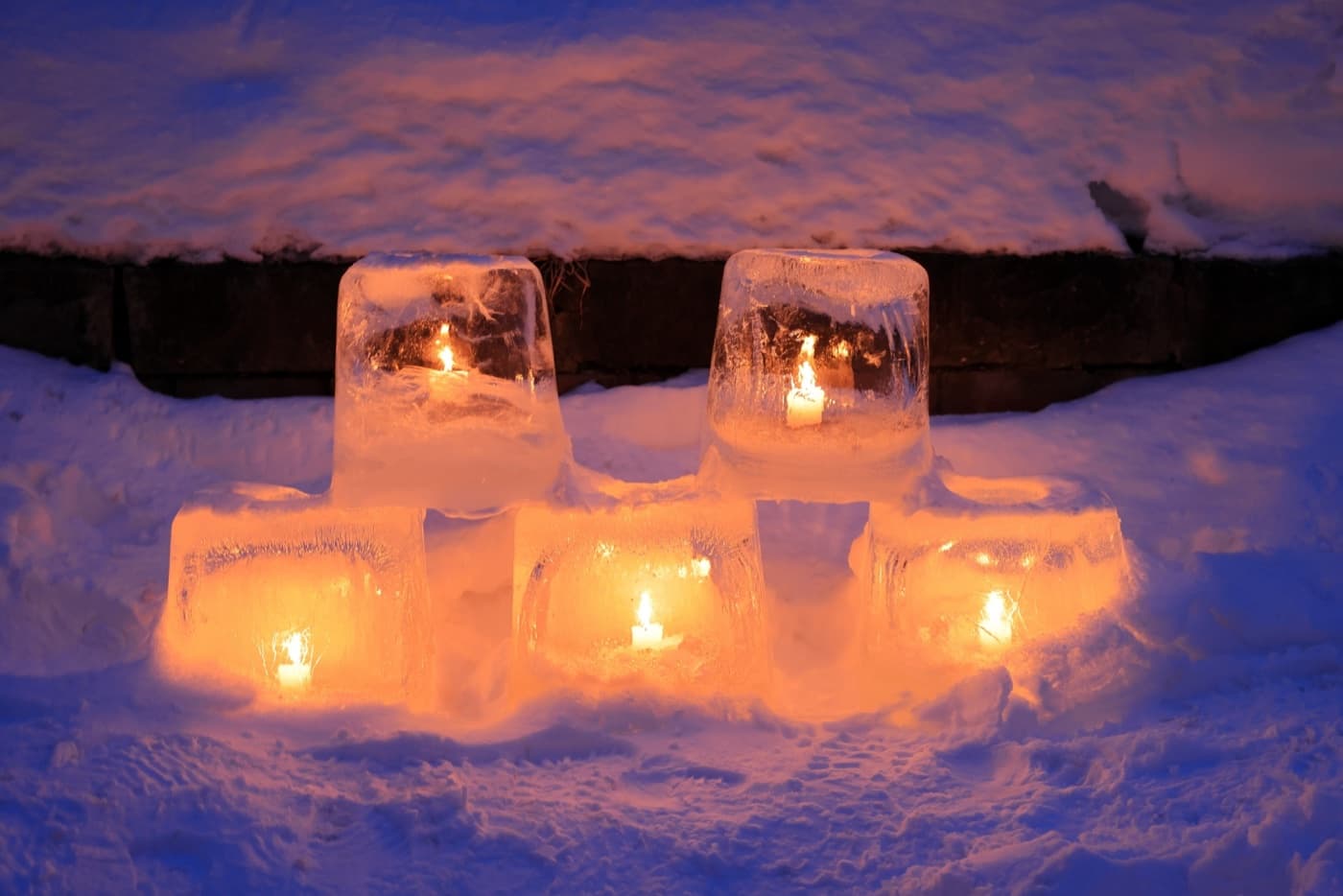
Worth knowing before you go, because a lot of the guidance still online describes the buoys as candlelit. That was true through the 28th edition in 2026. It isn't true for the festival you'll actually attend.
What Is the Otaru Snow Light Path?
The Otaru Snow Light Path — Otaru Yuki Akari no Michi in Japanese — is a winter festival held every February, during which the city is decorated with lights and small snow statues. The name is a mouthful, but it comes from something rather lovely: a poetry collection called Yukiakari no Michi by the Otaru-born poet Sei Ito.
The event began in 1999. It has grown from a small local initiative into a proper draw: held for about ten days each February, it attracts roughly 500,000 people, and around 100,000 candles are used over the course of the event — each one lit individually by volunteers from Japan and abroad.
It's smaller than Sapporo's festival. Quieter. More intimate. That's the whole point. There are no five-storey snow dragons here; the trade-off is candlelight and near-silence, and for a lot of visitors that turns out to be the better memory.
The festival has been made by hand by local residents since 1999 and has become part of Hokkaido's winter scenery, welcoming Otaru residents, overseas volunteers and visitors alike. That community, hand-made quality shows in every candle you walk past.
The Venues, Ranked by What They're Worth
The 2027 event covers the Otaru Canal, the former Temiya railway line, Asarigawa Onsen and other sites around the city. The main venues are lit daily from 17:00 to 21:00 and include three in the walkable city centre plus one on the mountain overlooking the city.
That four-hour window matters. The festival closes earlier than most travellers expect, so you can't roll up at 21:30 and see anything meaningful. Arrive by 17:00, ideally before sunset, so you catch the transition. Admission is free at all main venues.
The Canal Venue (Unga)
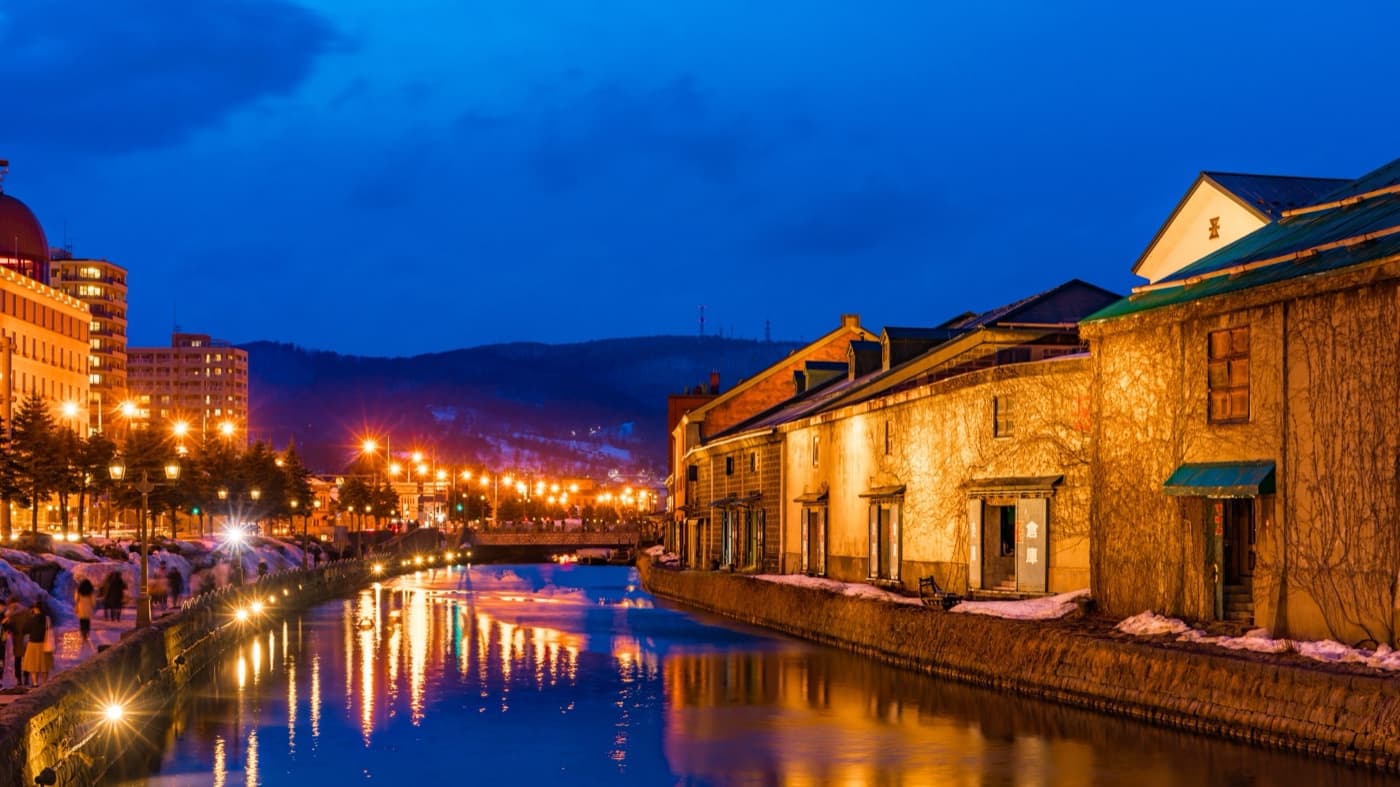
The headliner, and the source of most photos you've seen. It runs along 300 metres of the iconic Otaru Canal, where restored brick warehouses and gas lamps make a genuinely romantic setting. The water is covered with the floating buoys — electrically lit from 2027 — and the path beside it is lined with small snow statues holding candles.
The canal is about a ten-minute walk from Otaru Station along the main road leading down from the station. You walk out of the station, straight down Chuo-dori, and you're there. No taxis, no buses. Bring a camera, but don't hog the railings — it gets busy.
One timing note worth acting on: the photo at the top of this page is the canal at blue hour, and that window is short. Arrive around 17:00 and you get the transition — gas lamps and warehouses lit, the sky still holding colour. Turn up at 20:00 and the same scene sits against a flat black sky.
The Temiya Line Venue
My personal favourite, and most first-timers miss it because they head straight for the canal. Don't do that. Between the canal and the station, the Temiyasen venue stretches for about half a kilometre along the tracks of the abolished Temiya railway line. During the festival the pathway is lined with lanterns and illuminated snow statues, plus a few food stands.
Walking the old line at night, rails half-buried in snow and hundreds of candles marking the sleepers, is quieter and more atmospheric than the canal. You can easily do both in one evening — they're a five-minute walk apart.
The Otaru Art Base Venue
A newer addition that fills the gap between the other two: a plaza in front of the museum of the same name. Recent editions have included a snow slide and stage events, and there's usually a small cluster of food stalls. A nice touch if you're travelling with children.
The Tenguyama Venue
The outlier — a mountain viewpoint above the city, around the upper station of the Tenguyama Ropeway (about ¥2,000 round trip). The lower station is a 20-minute ride from Otaru Station on bus number 9 (¥240 one way, roughly every 30 minutes).
The night view from Tenguyama is counted among Hokkaido's top three, alongside Hakodate and Sapporo. During the festival small illuminated snow sculptures are arranged near the summit, so you get the festival atmosphere plus a panorama of Otaru glittering below. It eats a decent chunk of your evening, though. Skip it if you only have one night; do it if you have two.
The Neighbourhood Sites
Beyond the main venues, smaller displays prepared by local residents are spread across the city — in parks, shrine grounds and residential streets. You'll stumble on them if you wander. Local volunteers run most of them and, honestly, they're often the most charming corners of the whole event.
Getting to Otaru from Sapporo
Very easy. Otaru is just over 30 minutes from Sapporo Station by JR on the Hakodate Line; the rapid service is the one you want, and it runs frequently.
You arrive at Otaru Station, which sits at the top of a gentle slope down to the harbour. Everything for the main light path is within walking distance from there. If you're based in Sapporo, day-tripping is completely realistic: go in the late afternoon, stay through the lit hours, catch a train back. Just check the last departure before you settle in with a beer. For what to do back in the city, see our Sapporo guide.
Pairing It with the Other Three Winter Festivals
This is the real argument for going in early February rather than any other week of the Hokkaido winter. Four festivals sit within reach of each other, and their dates overlap.
| Festival | 2027 dates | From Sapporo |
|---|---|---|
| Otaru Snow Light Path | Feb 6–13 | 30 min by JR |
| Sapporo Snow Festival | Feb 4–11 | In the city |
| Asahikawa Winter Festival | Feb 6–11 | 80 min by train |
| Lake Shikotsu Ice Festival | Jan 30 – Feb 23 | 40 min from New Chitose |
The Sapporo Snow Festival
The Sapporo Snow Festival 2027 runs 4–11 February across Odori Park, the Tsudome community dome in Higashi-ku, and Susukino's main street. That gives you six days, 6–11 February, when you can do both.
Entry to all three Sapporo sites is free; you pay only for food and souvenirs. Odori is the main venue and the one that made the festival famous, with the giant sculptures and night illuminations running from sunset until 22:00 — reachable from Odori Station on the Namboku, Tozai and Toho lines. Susukino, just south, focuses on ice sculptures rather than snow and takes about an hour to walk. Tsudome is the family site, with snow rafting, tubing and slides, a 15-minute walk from Sakaemachi Station on the Toho Line or a ¥200 cash-only shuttle bus.
For most first-time Hokkaido visitors, the Sapporo festival is worth it — the scale is on another level. Our dedicated Sapporo guide goes site by site with timings and hotel advice.
The Asahikawa Winter Festival
Scheduled for 6–11 February 2027, and Hokkaido's second-largest winter festival after Sapporo's. Visiting both on the same trip is straightforward — the two cities are only an 80-minute train ride apart, which makes Asahikawa an easy day trip from a Sapporo base. Asahikawa also has direct flights from Tokyo and Taipei, so it works as an entry or exit point if you'd rather not double back.
The Lake Shikotsu Ice Festival
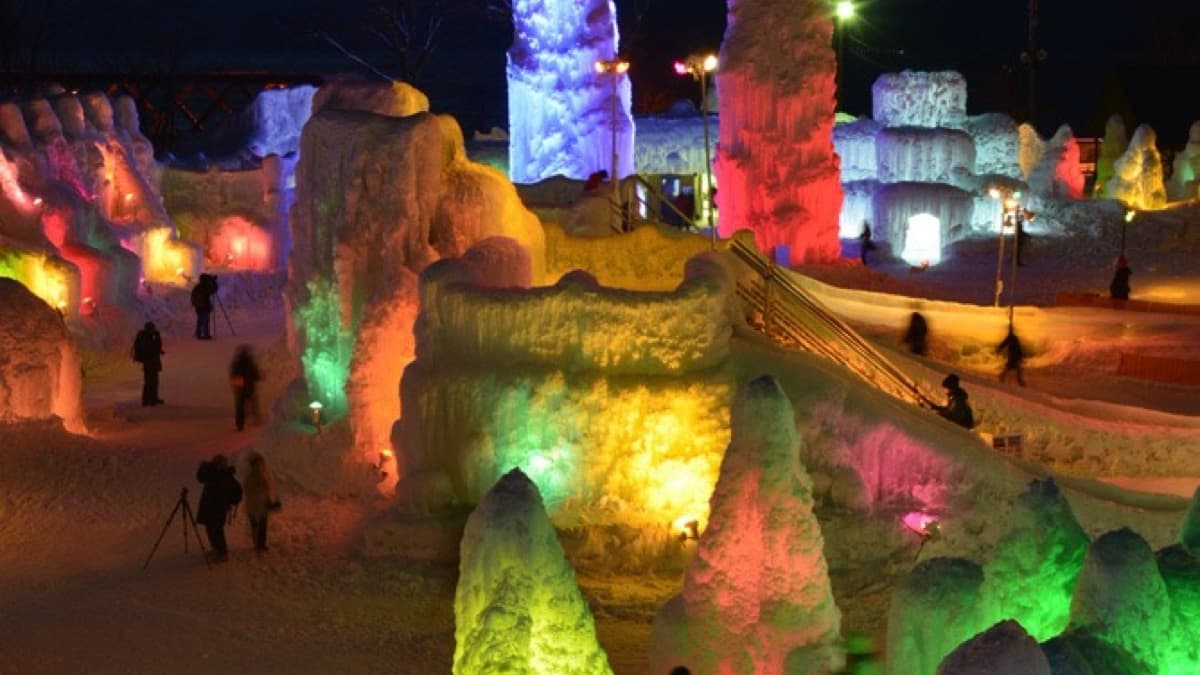
Smaller but visually the most unusual of the four: sculptures built by spraying water from Japan's clearest lake and letting it freeze into translucent blue layers. In 2027 it runs 30 January to 23 February — starting a week before the others and finishing well after, which makes it the easiest to slot in.
It's about 40 minutes by taxi from New Chitose Airport, or a bus for around ¥1,050, so it works nicely as an arrival-day or departure-day activity. Full detail in our Lake Shikotsu Ice Festival 2027 guide.
A Sample 5-Day Self-Guided Itinerary
Here's how I'd stitch a February trip together, assuming you arrive in the overlap window.
Day 1 — Arrival and Lake Shikotsu
Land at New Chitose. Bus to Lake Shikotsu for the ice festival on your way north, then continue to Sapporo. Overnight Sapporo.
Day 2 — Sapporo Snow Festival, all three sites
Start at Odori Park in daylight to see the sculpture detail, Susukino at dusk for the ice carvings, and Tsudome if the children need to burn off energy. Odori again after dark is a different experience entirely.
Day 3 — Asahikawa day trip
Roughly 80 minutes each way by train. Back to Sapporo for the evening.
Day 4 — Otaru
Arrive after lunch. Spend the afternoon on Sakaimachi Street and at the Music Box Museum, then hit the Canal and Temiya Line venues from 17:00. Overnight in Otaru so you're not watching the clock for the last train.
Day 5 — Tenguyama, then onward
Ropeway up Tenguyama in the morning for the view, then back to Sapporo or on to the airport.
What to Do in Otaru During the Day
The Snow Light Path is strictly an after-dark event, which makes daytime a good fit for the rest of the city: Sakaimachi shopping street, Kitaichi Glass and the Music Box Museum, before heading back to the canal once the light goes.
The Otaru Music Box Museum, at the canal end of Sakaimachi, is worth an hour. For lunch, the Sankaku Market beside Otaru Station does fresh seafood — Otaru's sushi punches well above the weight of a city this size.
What to Wear (Don't Underestimate This)
February in Hokkaido is properly cold. Sapporo sits around -5°C to -10°C (23°F to 14°F), and Otaru, being coastal, is often windier on top of that.
Layers. Waterproof boots with grip. Hand warmers tucked inside your gloves are honestly a lifesaver — buy them at any convenience store. A hat that covers your ears. The weather flips fast here; sunny afternoons become blizzard evenings.
And one thing people don't anticipate: standing still watching candles for two hours will freeze you far faster than walking. Keep moving between venues, and duck into a café when your hands stop working.
Food and Drink
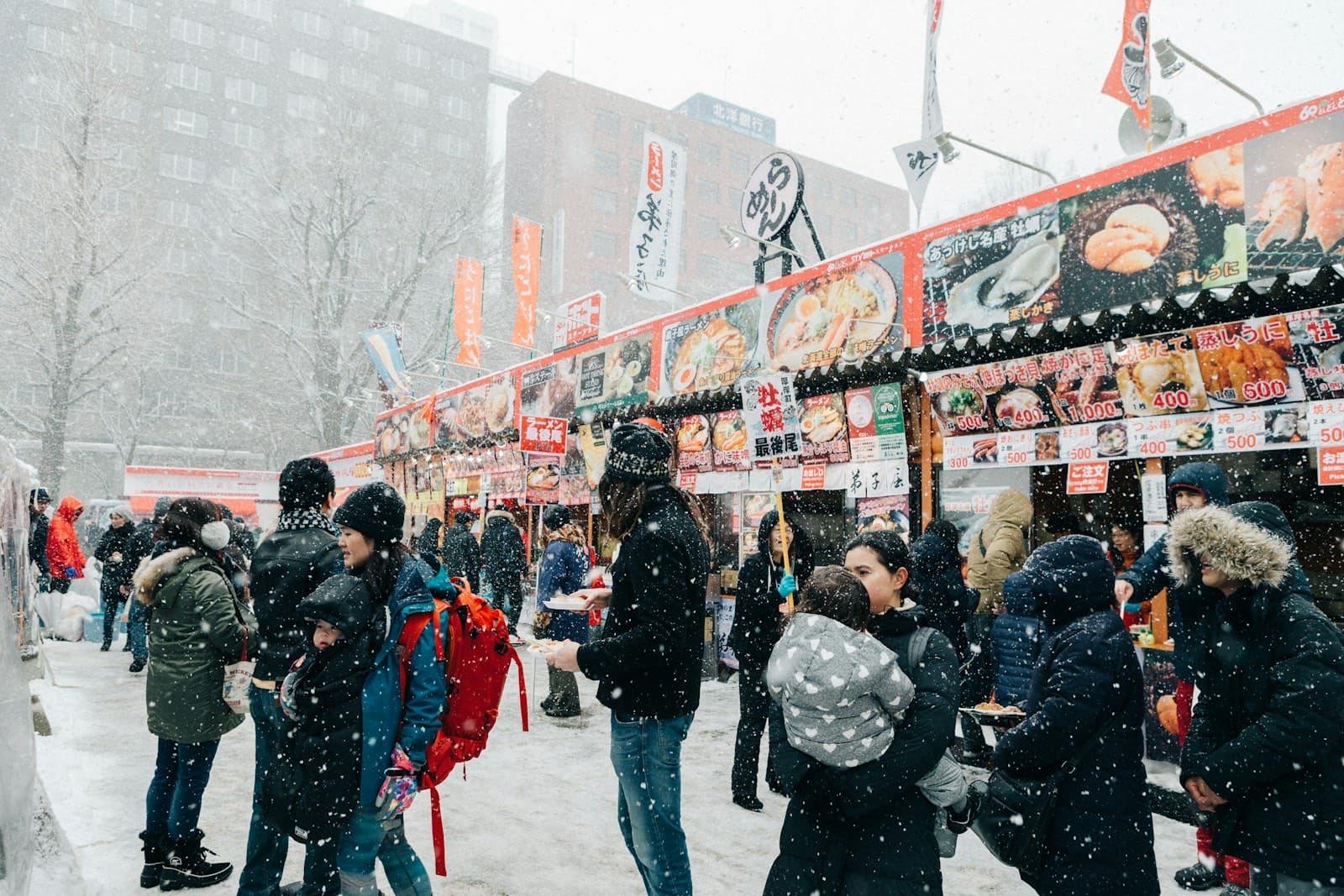
Both the canal venue and the Art Base area have official food stands with warm drinks and snacks, and there are cafés, izakaya and sushi bars within easy walking distance of the canal. At the Sapporo festival the stalls cluster around Odori Park and cover everything from Hokkaido corn potage to grilled scallops.
Common Mistakes to Avoid
- Arriving too late. The lights run 17:00 to 21:00. That's four hours, and the sunset transition is the best of it.
- Trying to do Otaru and all three Sapporo sites in one day. Don't. You'll be exhausted and rushing past the things you came to see.
- Assuming trains run late. They don't. Check the last JR back to Sapporo before you settle in somewhere warm.
- Skipping the Temiya Line. It's a five-minute detour from the canal and it's the better of the two.
- Ignoring the neighbourhood displays. Some of the best moments happen down side streets where a family has arranged candles outside their house.
- Booking Sapporo hotels late. Festival week fills months in advance. Otaru itself, 30 minutes away, is a charming overflow option when Sapporo is full.
Costs and Official Sources
Everything at the Snow Light Path and the Sapporo festival is free to enter. What you actually pay for:
- Tenguyama ropeway — around ¥2,000 adult round trip
- Bus 9 from Otaru Station to the ropeway — ¥240 one way
- Tsudome shuttle bus in Sapporo — ¥200 one way, cash only
- Food, drinks and indoor museums
Always confirm exact dates and hours on the official sites before you finalise plans. The Otaru Snow Light Path Executive Committee runs the festival at yukiakarinomichi.org, and the Sapporo Snow Festival's official page is snowfes.com. Both update in autumn with the confirmed schedule.
Winter vs Other Seasons in Hokkaido
If you're weighing when to visit Hokkaido: spring blossoms arrive far later here than the rest of Japan (early May), summer means the Furano lavender, autumn brings Daisetsuzan foliage. But if the point of the trip is the festival circuit — Otaru, Sapporo, Asahikawa, Shikotsu — early February is the only week that stacks all four together. Illumination events exist elsewhere in Japan, like the light-ups at Shirakawa-go in Gifu, but that's a historic thatched village on a handful of set weekend dates — a different experience entirely.
💬 From our Japan travel team
Hokkaido winters are severe, and the thing that derails February itineraries isn't the cold — it's delays. Snow closes roads, grounds flights at New Chitose and slows trains. Build slack into every travel day rather than scheduling back-to-back connections, and keep one flexible day before any onward flight.
Interested in visiting the Otaru Snow Light Path? Get in touch through Plan My Trip on our self-guided tours site, and we'll suggest the tours that best fit your dates and plans.
FAQ: Otaru Snow Light Path 2027
When exactly is the Otaru Snow Light Path 2027?
6–13 February 2027 (Saturday to Saturday), the 29th edition. Lights are on from 17:00 to 21:00 daily at the main venues.
Are the canal candles still real candles in 2027?
Not the floating ones. From the 29th edition in 2027 the roughly 200 glass buoys on the canal switch from candles to electric lights, because wind and snow kept extinguishing the flames and they were too dim to photograph well. Everything on land — the snow lanterns, the statues, the Temiya Line — is still lit by real candles placed by volunteers.
Is the Otaru Snow Light Path free?
Yes. Entry to all main venues is free. You only pay for the Tenguyama ropeway, transport, and any food or drinks.
Can I visit the Otaru Snow Light Path and the Sapporo Snow Festival on the same trip?
Absolutely. The dates overlap 6–11 February 2027, and Otaru is just over 30 minutes by JR from Sapporo Station.
Which Otaru venue should I prioritise if I only have one evening?
The Canal venue and the Temiya Line venue. They're a five-minute walk apart and together cover the essential experience. Leave Tenguyama for a second night.
Do I need to book anything in advance?
Not for the festival itself — it's free and unticketed. But book hotels months ahead. Sapporo fills up fast during festival week, and Otaru's smaller inventory goes too.
How cold does it get?
Expect -5°C to -10°C in Sapporo and Otaru at night, with coastal wind in Otaru on top. Dress in proper layers, bring hand warmers, and wear boots with grip.
Are there guided tours, or does self-guided work?
Operators do run tours, but the whole point of these events is walking freely at your own pace, and everything is within walking distance or a short train ride. Self-guided works well here.
What if the weather turns bad?
Volunteers relight the land candles throughout the evening, and heavy snow genuinely makes the scene more beautiful. Just dress for it — and allow extra time for trains and road transfers, which slow down in snow.
For Anyone Considering the Otaru Snow Light Path
The Otaru Snow Light Path runs for eight nights and then it is gone for another year. It is one of those events that only exists in a narrow window of the Hokkaido winter, and that shapes how we handle it.
We put together seasonal itineraries specifically so that a trip to Otaru at this time of year is worth the detour. Because what we can actually offer shifts with the season, not all of these seasonal options appear on the website — the list changes depending on when you travel.
So if the Snow Light Path is on your mind, just ask. Tell us your dates, what you want out of the trip and what you are hoping to see, and we will go through what we can arrange for that particular window and put forward the plan that actually fits you.
Build Your Hokkaido February Around the Festivals
Four festivals in two weeks, snow-delayed transfers, and hotels that sell out in November — a Hokkaido February rewards planning. Our self-guided tours handle the rail routing, chartered transfers, hotels and evening timing, and several run through the powder-snow ski areas if you want to add days on the slopes. You keep the freedom; we handle the logistics.
2027 dates, hours and venues per the Otaru Snow Light Path Executive Committee and the Otaru Tourism Association; the switch of the canal buoys from candles to electric lights from the 29th edition was decided at the executive committee meeting of June 2026 and reported by Hokkaido Shimbun. Sapporo Snow Festival, Asahikawa Winter Festival and Lake Shikotsu Ice Festival dates as announced by their respective organisers. Transport times and fares per JR Hokkaido and local operators. Dates, hours and fares are subject to change — confirm with the official sources before booking flights or accommodation. Last updated: August 17, 2026.