
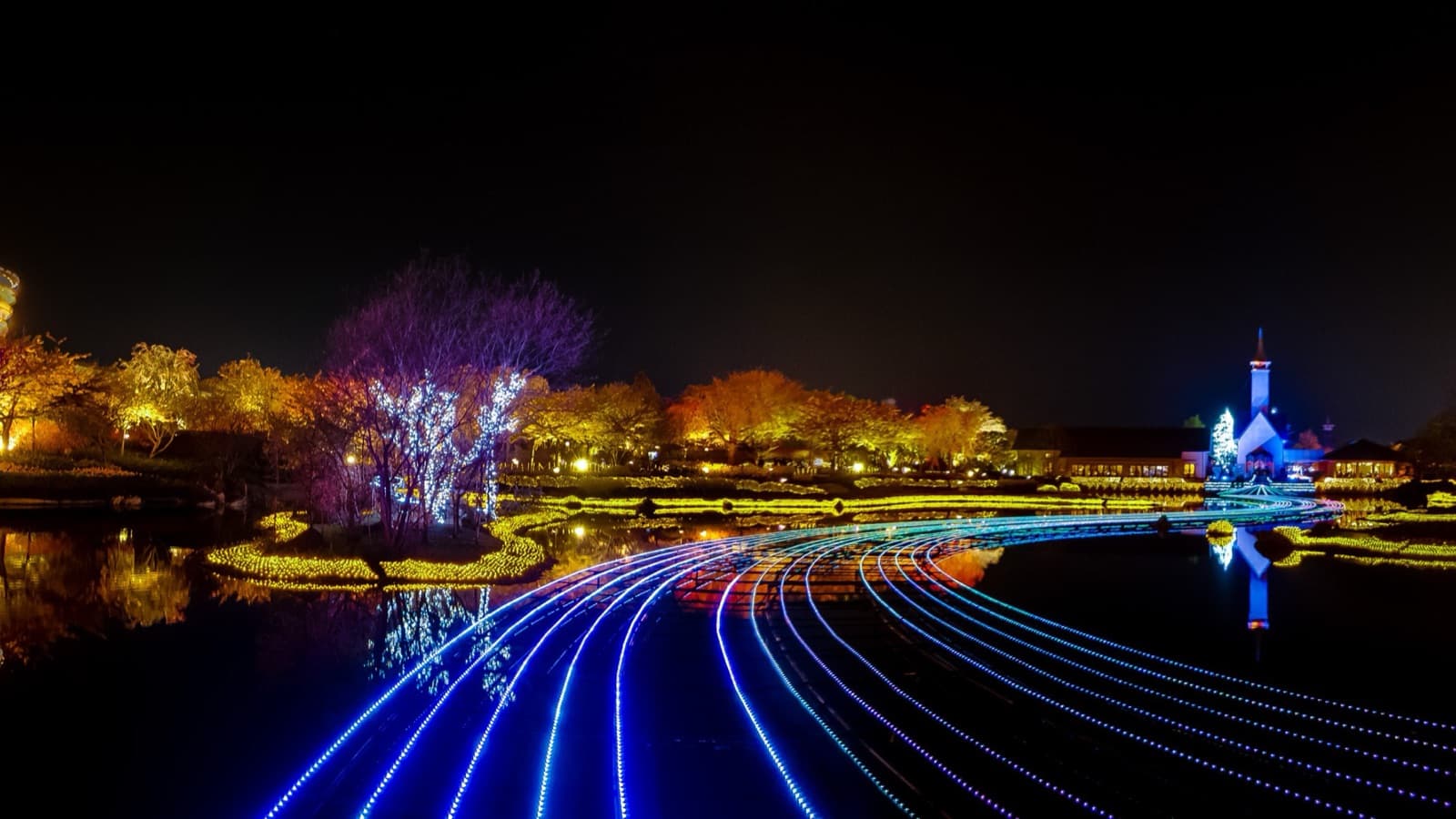
Nabana no Sato Illumination 2026–27: Dates, Tickets and Getting There From Nagoya
One of Japan's biggest winter illuminations, 35 minutes from Nagoya: this season's dates, lighting times and ticket prices, the bus and train from Nagoya, when to arrive to beat the crowds, and how to fit it into a self-guided trip.
Nabana no Sato is a flower park on the edge of Nagoya that turns into one of Japan's largest winter illuminations after dark. The 2026–27 Nabana no Sato illumination runs from 17 October 2026 to 31 May 2027 — seven and a half months, well into spring.
Most visitors make it an evening trip from Nagoya: 35 minutes by direct bus, a walk through the gardens as the lights come on, dinner at Nabana no Sato, and back in the city by 22:00.
Quick Answer: Nabana no Sato Illumination 2026–27
- Dates: 17 October 2026 – 31 May 2027. Closed 6–7 January 2027.
- Hours: 10:00–21:00 (22:00 on some days); lights on from about 17:00, following sunset.
- Tickets: ¥2,500–3,000 at convenience stores, ¥200 more at the gate until February. Every ticket includes a ¥1,000 voucher and the Begonia Garden.
- From Nagoya: direct bus from Meitetsu Bus Center, 35 min, ¥1,200 one way. Last bus back 21:05.
- Arrive: before 16:00 or after 19:00 to miss the worst queues.
Season
Oct 17 – May 31
From
¥2,500
Bus
35 min
Allow
3–4 hours
What Is Nabana no Sato?
Nabana no Sato is a flower park in Nagashima-cho, Kuwana City (Kuwana-shi), in Mie Prefecture, just across the prefectural border from Nagoya. It is run by Nagashima Resort, the group behind the Nagashima Spa Land amusement park nearby.
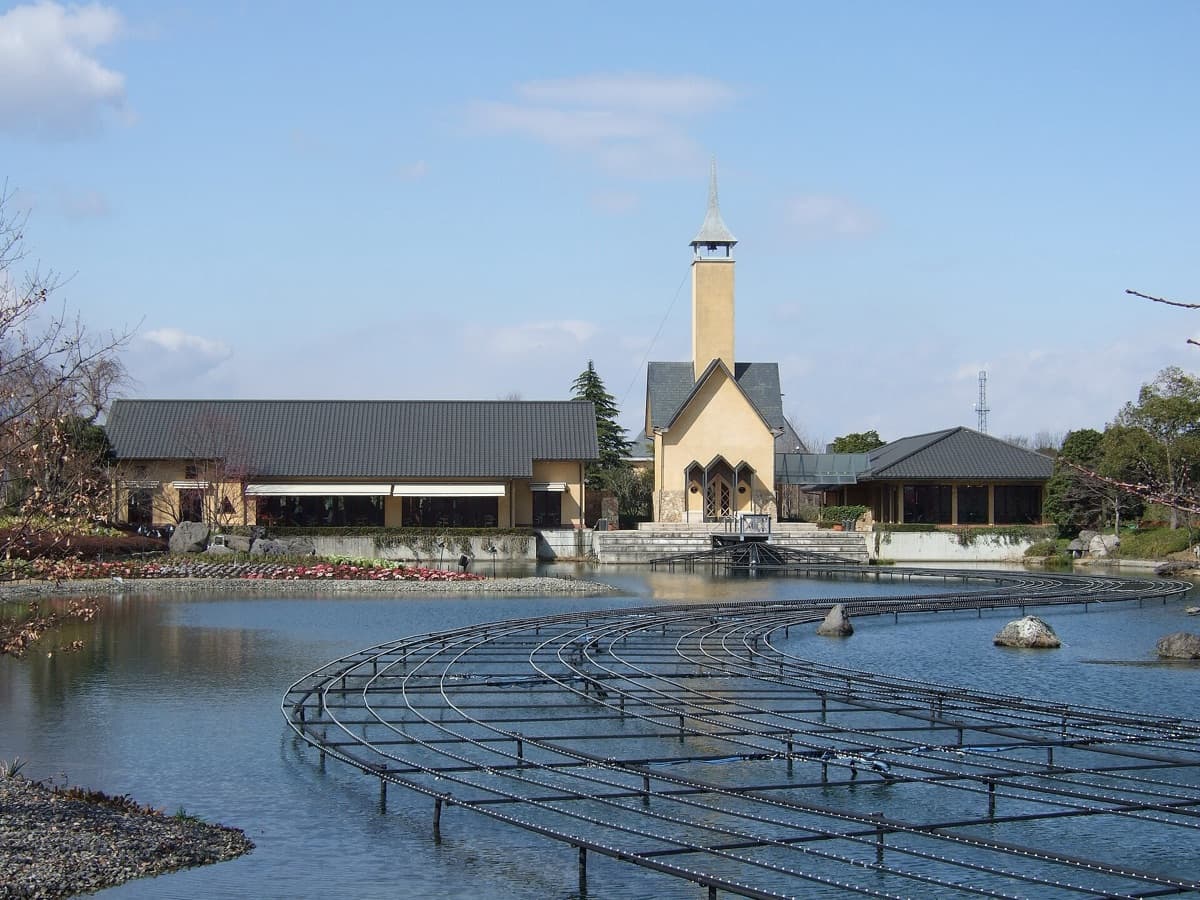
By day it is a flower garden: seasonal flowers in the open fields, a plum garden, a huge begonia greenhouse, a pond and restaurants. From mid-October to late May the whole park becomes the Nabana no Sato winter illumination, which started in 2004 and is now in its 23rd year. It isn't a temple garden, a historic site or wild nature, and it is no ordinary string of lights: it is a designed show on a huge scale.
The Nabana no Sato Winter Illumination: What You'll See
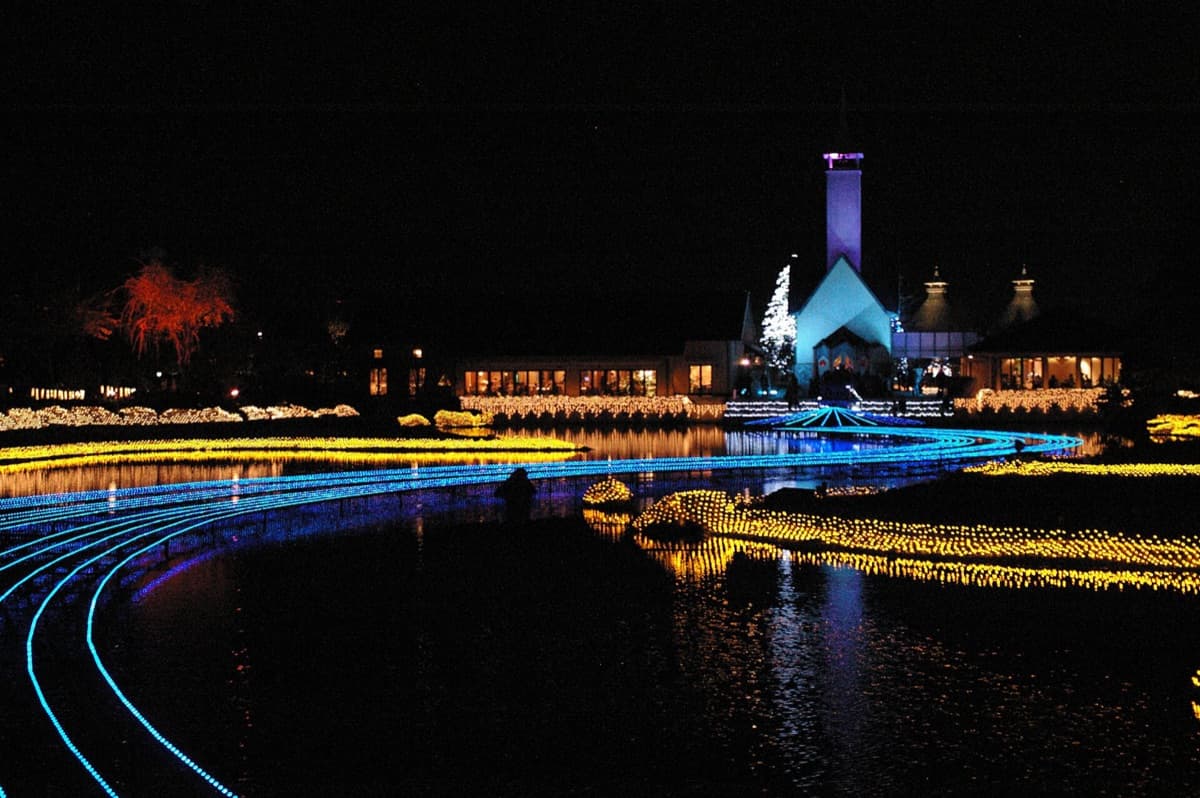
As the sun sets, LED bulbs transform the gardens into a twinkling wonderland. There are four main parts, and each scene is a short walk from the next.
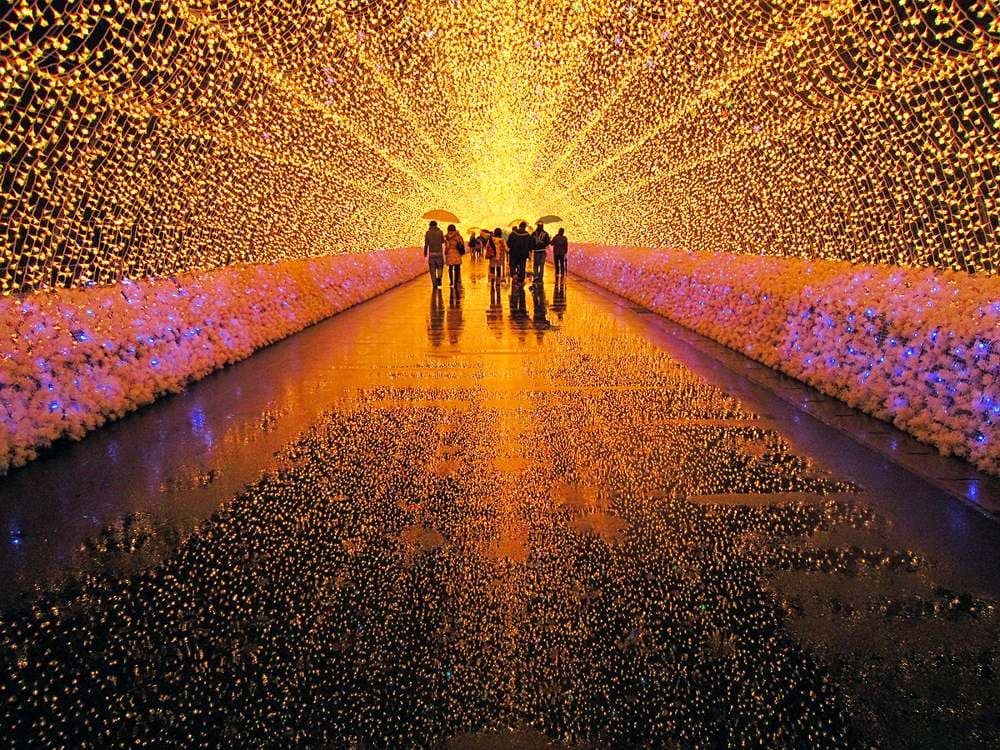
The Tunnel of Light
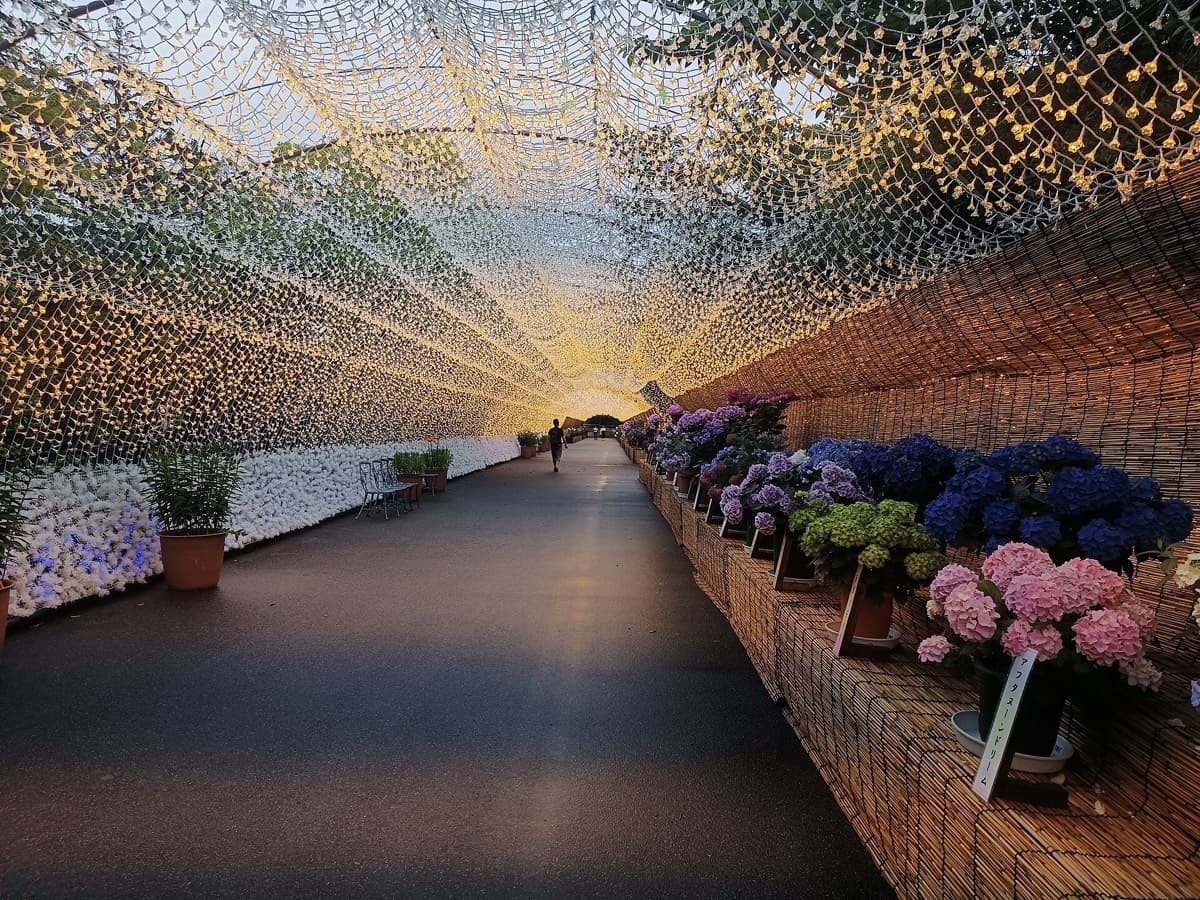
The most photographed spot is the Hana Kairo, a 200-meter tunnel of light with a ceiling of warm LED lights. It is the most famous of the park's vibrant light tunnels, and the busiest. Walk it when you arrive, and again late in the evening when it is quieter.
River of Light and the Pond
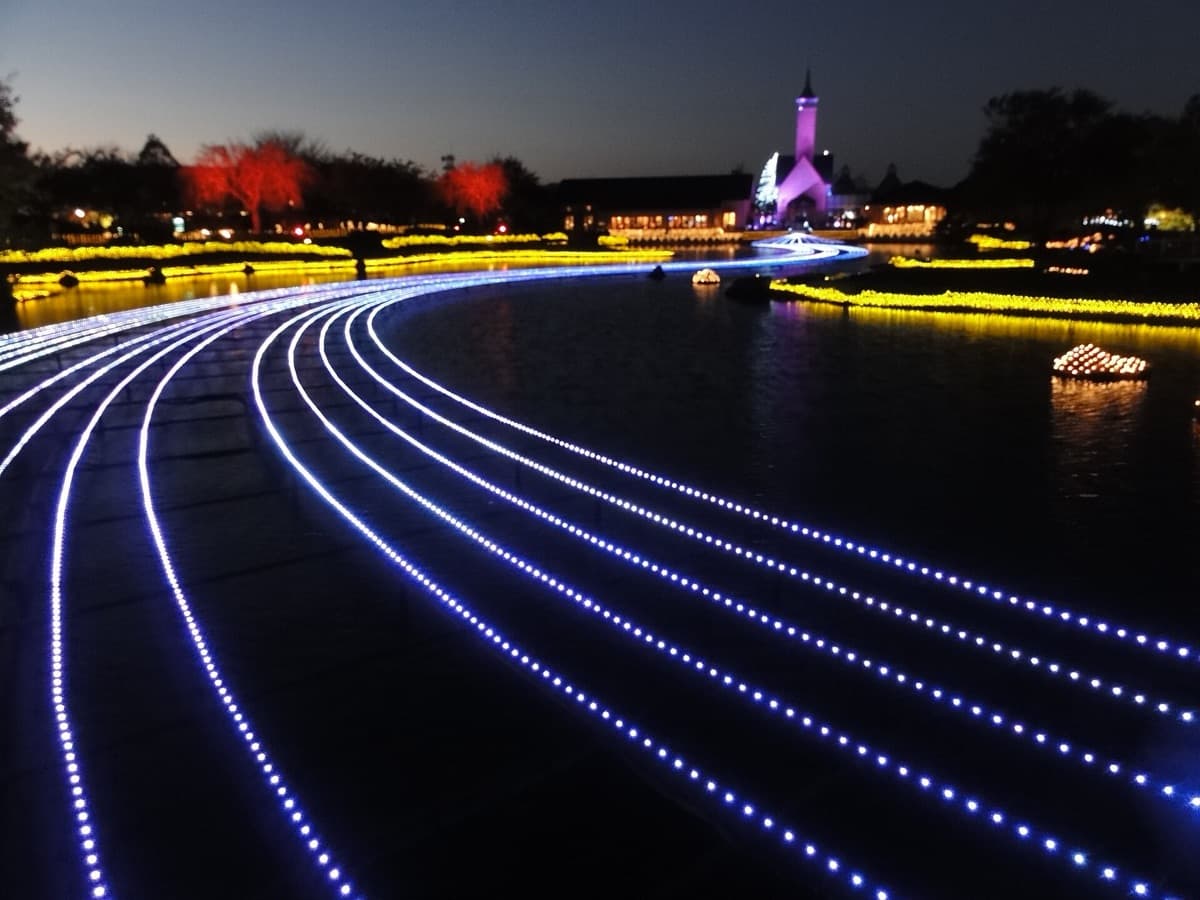
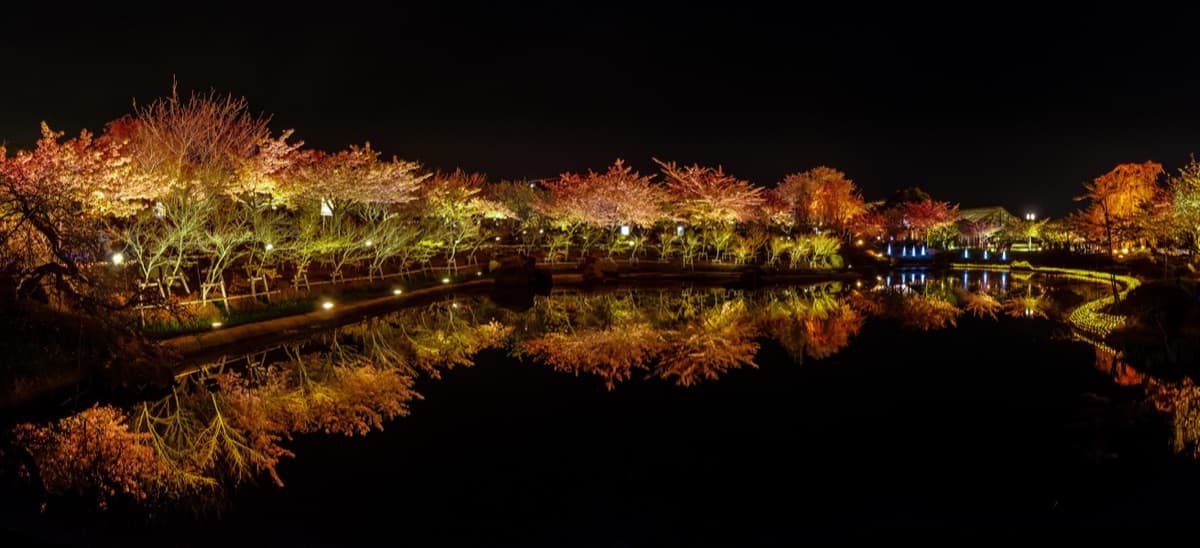
The park bills its River of Light as one of Japan's largest water illuminations. The main pond is lit too — lines of light across the water, trees glowing along the banks — and the stunning water reflections are half the beauty of it.
The Main Theme Area
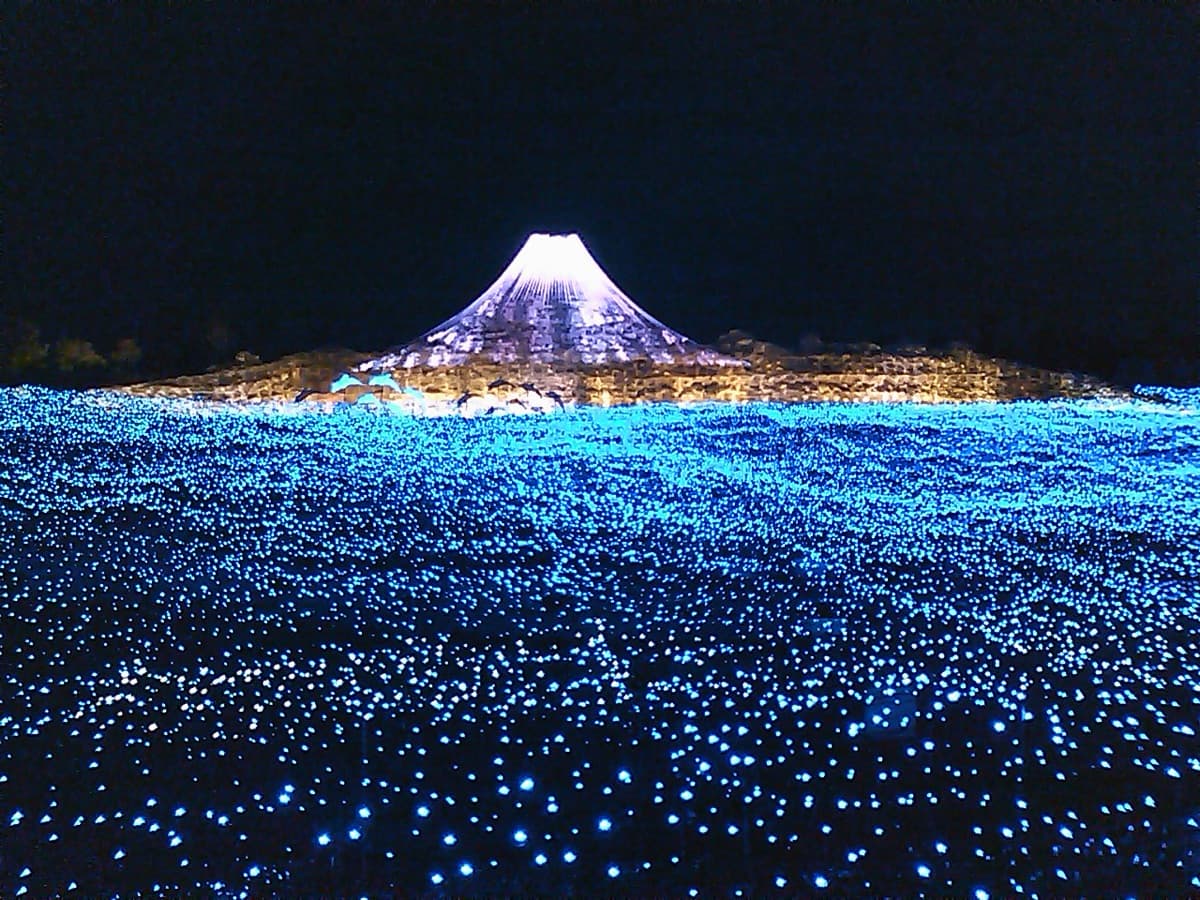
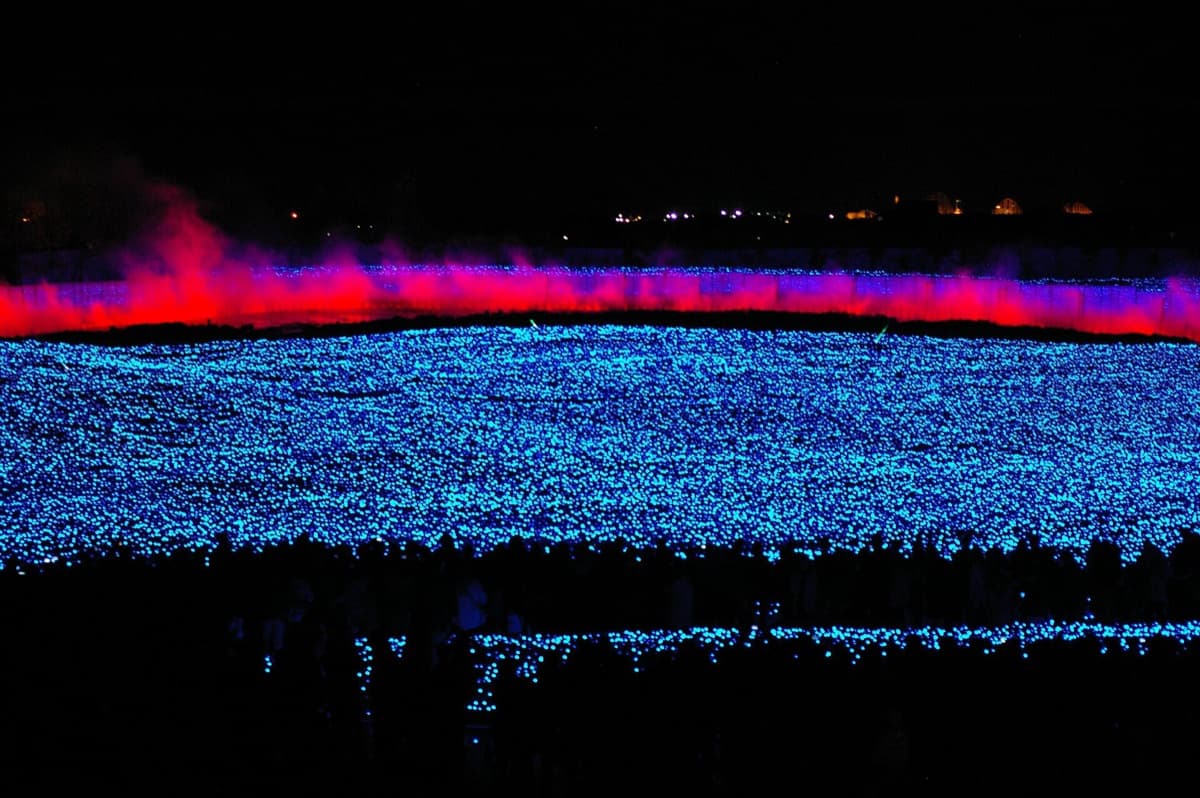
The main attraction is the theme area, which changes every year: a vast field of LED lights and a dazzling light show — an animated light show with music. Last winter's theme, ZIPANGU, was built around a Mount Fuji of light about 35 meters tall. The 2026–27 theme had not been announced when we checked on 24 September 2026.
Island Fuji Observation Tower
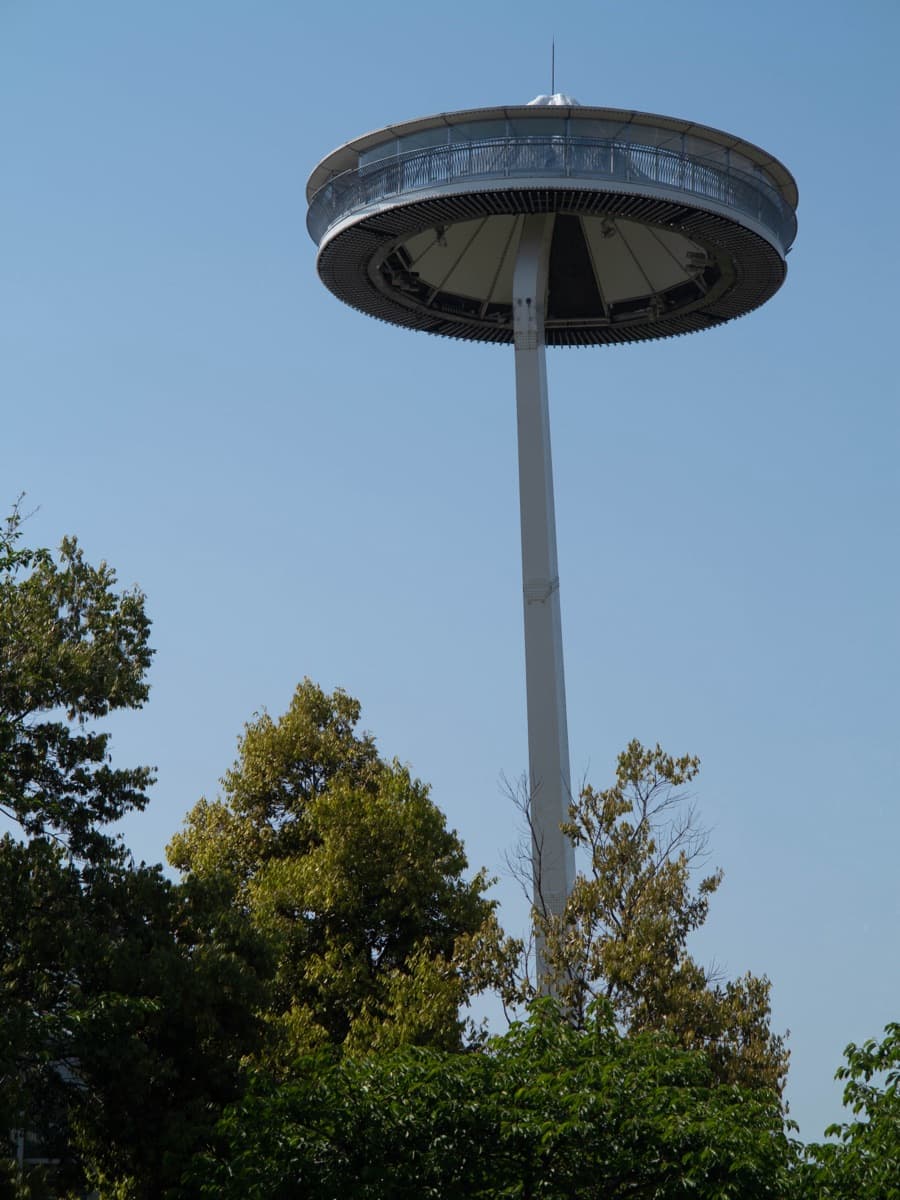
For the view from above, Island Fuji lifts you 45 meters and turns a full circle, and the view over the illumination is fantastic. The ride takes about 7 minutes and costs ¥800 for adults (¥500 for children from 3 to elementary-school age), on top of admission.
Nabana no Sato Illumination 2026–27: Dates and Opening Hours
- Season: 17 October 2026 – 31 May 2027.
- Closed: 6 and 7 January 2027.
- Opening hours: 10:00–21:00, and to 22:00 on some days — so far, weekends and holidays. Entry closes 30 minutes before closing. The calendar from December has not been published yet.
- Christmas (23–25 December): Nabana no Sato opens only from 15:00, to 22:00 on the 23rd and 23:00 on the 24th and 25th, with a date-specific ticket.
The illumination comes on at dusk, so the time moves through the winter and spring:
| Dates | Lights on |
|---|---|
| 17 Oct (opening night) | About 17:20 |
| 9 November – 27 December | About 17:00 |
| January | 17:10 → 17:40 |
| February | 17:40 → 18:00 |
| March | 18:10 → 18:30 |
| April | 18:30 → 18:50 |
| May | 18:50 → 19:10 |
Nabana no Sato Tickets and Prices
There is one price for everyone of elementary-school age and up; younger children are free. Every ticket includes a ¥1,000 voucher for the restaurants and shops and entry to the begonia greenhouse. New this year, the gate window costs ¥200 more than a convenience-store ticket until the end of February.
| Dates | Convenience store / online | At the gate |
|---|---|---|
| 17 Oct – 20 Nov 2026 | ¥2,500 | ¥2,700 |
| 21 Nov – 22 Dec 2026 | ¥3,000 | ¥3,200 |
| 23 – 25 Dec 2026 (Christmas) | Special date ticket | Not sold at the gate |
| 26 Dec 2026 – 28 Feb 2027 | ¥3,000 | ¥3,200 |
| 1 Mar – 31 May 2027 | ¥2,500 | ¥2,500 |
Buy at FamilyMart or 7-Eleven, or as an e-ticket on Asoview — you can buy on the day of your visit. It is worth it: buying at the gate can take more than 30 minutes on busy evenings.
For Christmas, a joint release from Nabana no Sato, Kintetsu and Sanco in September gives ¥5,000 with a ¥2,000 voucher and no gate sales, but the official pages still list the price as under review. If you will be there on 23–25 December, buy as soon as it goes on sale — those are the busiest nights of the illumination event.
How to Get to Nabana no Sato From Nagoya
Direct Bus From Meitetsu Bus Center
The simplest way. Buses leave from platform 22, on the 4th floor of the bus center next to Nagoya Station, and take 35 minutes to the gate. It costs ¥1,200 one way or ¥2,400 return (children half), with no advance sales. There is no standing, so if a bus is full you wait for the next. The last bus back leaves at 21:05 on the current timetable.
Kintetsu Train to Nagashima Station, Then the Bus
Take the Kintetsu Nagoya Line to Kintetsu-Nagashima Station — about 25 minutes by semi-express, or 17 minutes by express on weekends and holidays from 31 Oct to 11 Jan and on 23–25 December, when expresses make an extra stop. From Nagashima station, a Sanco bus takes about 10 minutes (¥250). Kintetsu sells a set ticket from Kintetsu Nagoya with the round trip, the bus, admission and the ¥1,000 voucher for ¥3,670 or ¥4,170 depending on the date (not sold for 23–25 December).
There is no station at Nabana no Sato itself: walking from Nagashima station is about 2 km, 25 minutes.
By Car
There are 5,700 free parking spaces, but traffic is heavy on peak evenings. If you have a car, go on a weekday.
By Day: The Flower Park, Begonia Garden and Seasonal Flowers
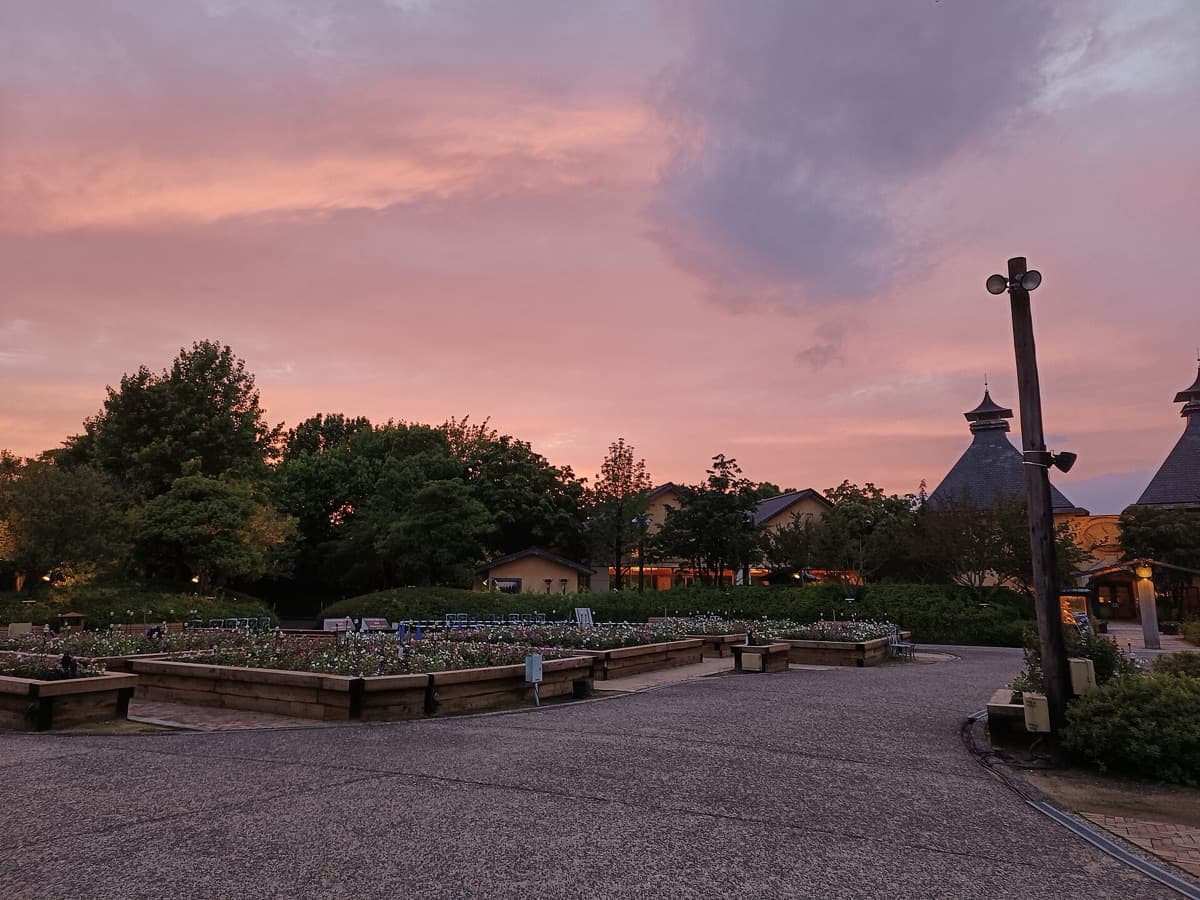
Don't arrive after dark. Get there at around 15:00 and you see the beauty of the flower park in daylight, then watch the green lawns and flower beds come to life as the lights go on. That change is the best part of visiting.
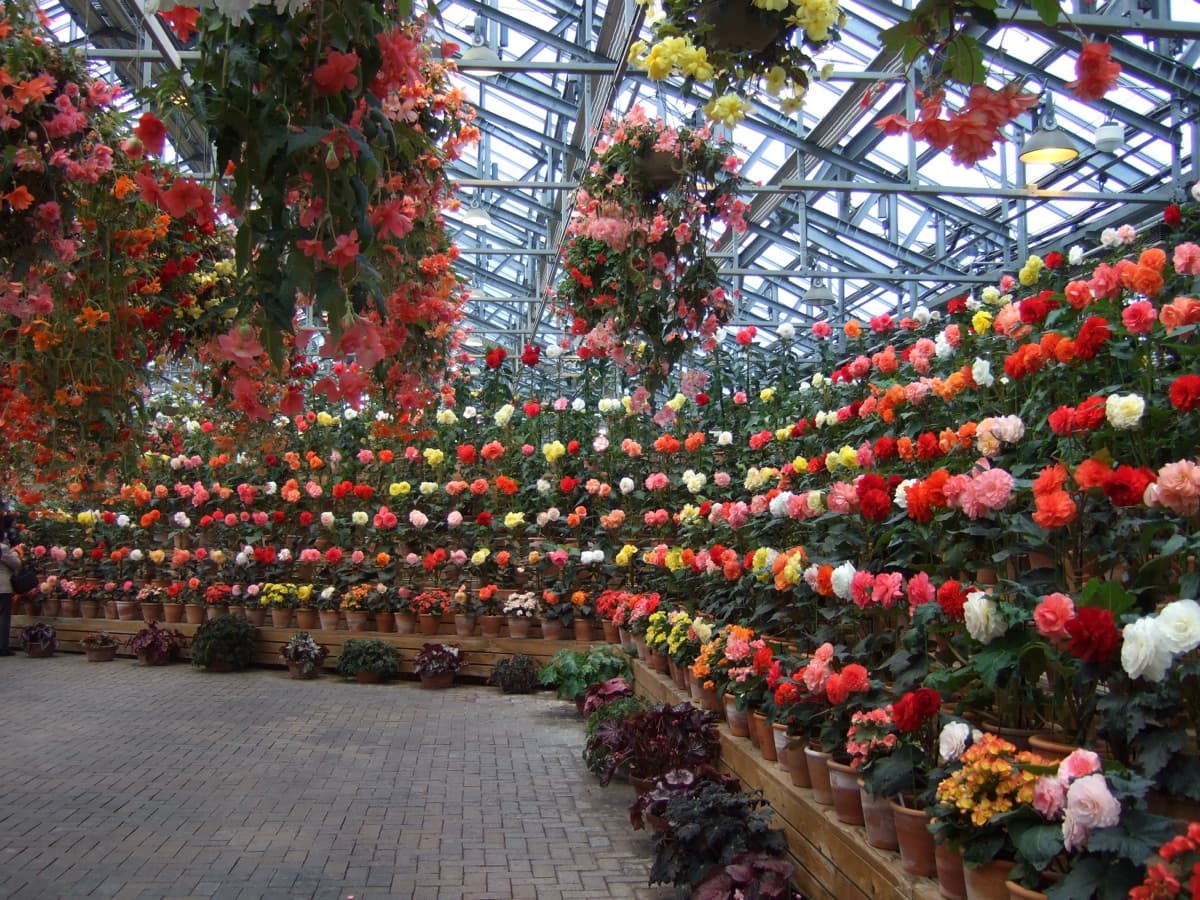
The Begonia Garden, billed as Japan's largest, is a 9,000 m² greenhouse of hanging begonias and other flowers in bloom year round. It is included in your ticket, and it is a good place to warm up on a January night.
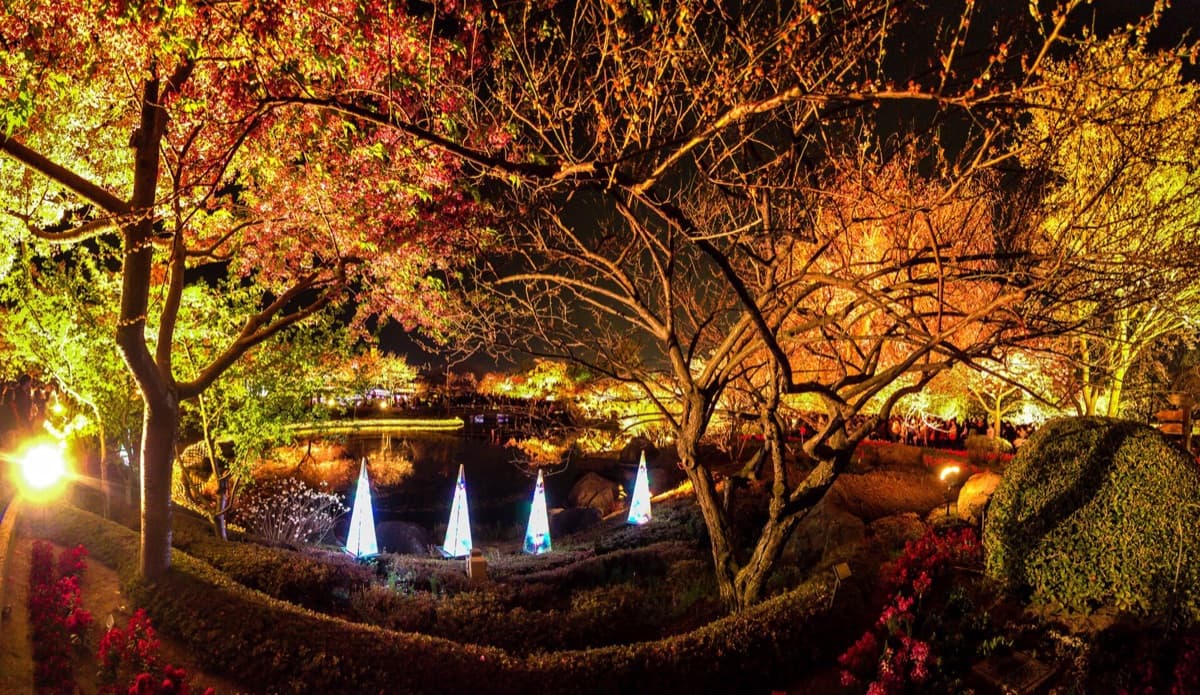
Outside, the seasonal flowers change month by month, so your dates decide what you see alongside the lights. The plum garden has about 330 weeping plum trees, lit up after dark with a quiet elegance.
| Flowers | Usually at their best |
|---|---|
| Weeping plum | Late February – late March |
| Cherry blossoms (Kawazu and Somei-yoshino) | Early March – early April |
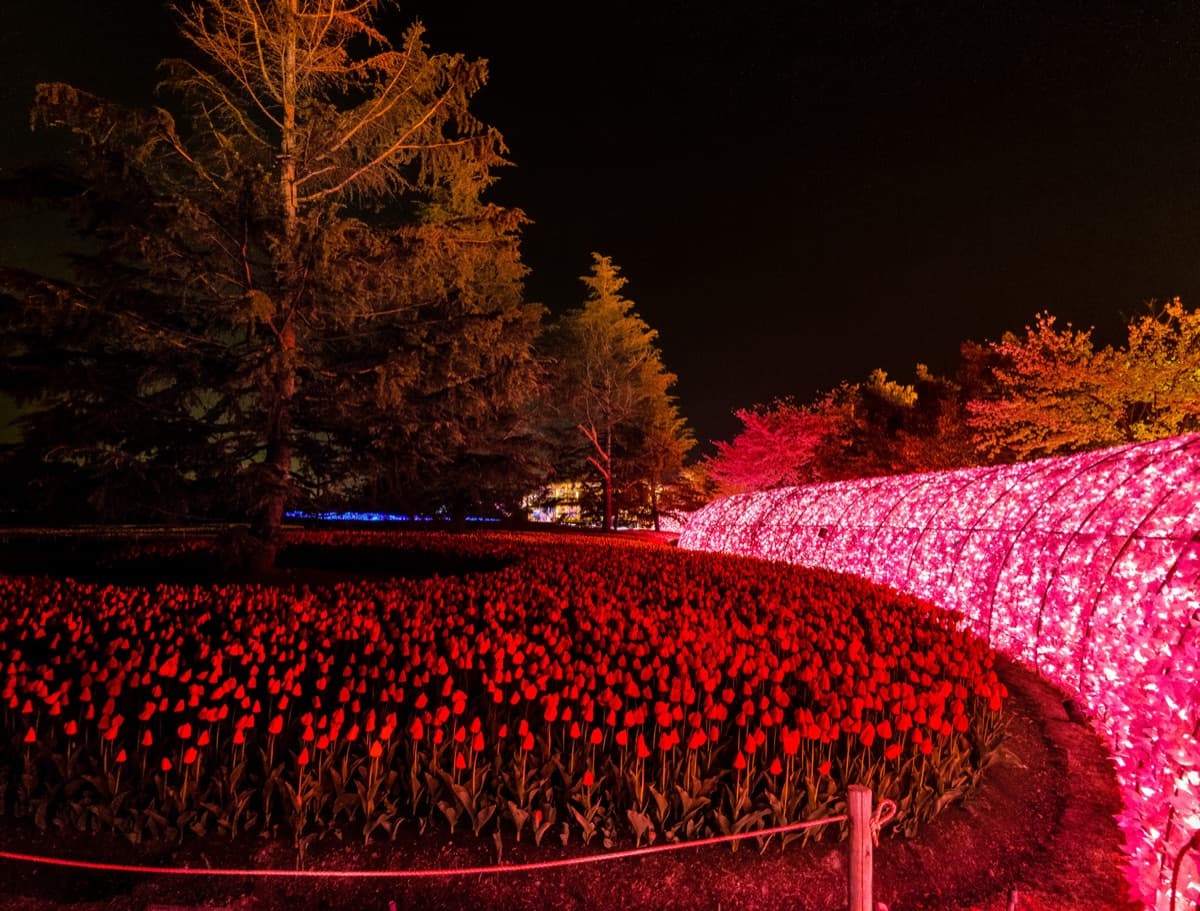
| Tulips | Late March – mid April |
| Nemophila | Mid April – mid May |
| Hydrangea | Late May – early July |
| Dahlia and cosmos | 19 September – mid November |
| Autumn leaves | Late November – mid December |
| Begonia | Year round, in the greenhouse |
From our Japan travel team
Most people think of Nabana no Sato as a winter event, but spring is our favorite time to go. From late March to mid-April the spring flowers are out under the lights, the evenings are mild enough to stand still and watch, and the ticket is back to ¥2,500. If you want the festive atmosphere, go in December — just dress for flat, open ground between two rivers on a cold night.
Beer, Food and Hot Springs
Spend your voucher at the Nagashima Beer Garden (Nagashima Beer-en), a brewery restaurant that makes German-style craft beer on site. The beer garden is the natural place to warm up between light shows. There are other restaurants and cafés too; the voucher works at most of them but not at some ticket machines.
There is also a day-use hot spring, Sato no Yu, with outdoor baths surrounded by flowers. It costs ¥1,300 on top of admission, and towels are included, so you can go empty-handed.
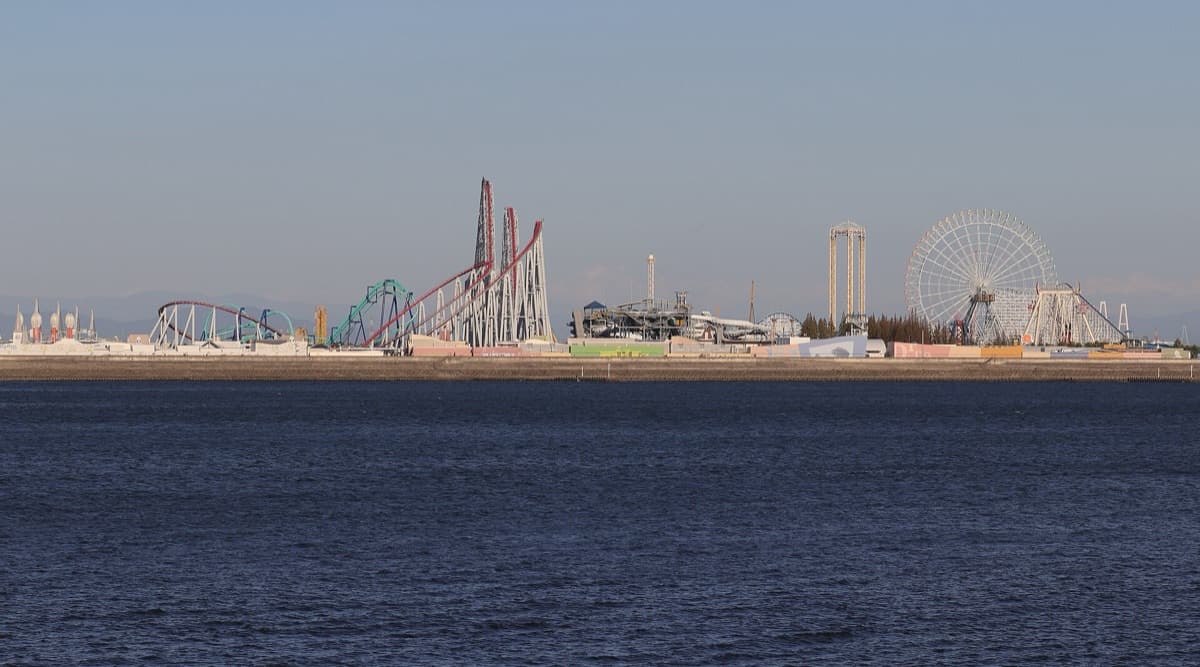
The rest of Nagashima Resort's facilities are nearby: Nagashima Spa Land, an amusement park known for its big roller coasters; Yuami-no-shima, a hot spring with 17 kinds of baths; and the Jazz Dream Nagashima outlet mall. A day of rides or a long soak, with the lights by night, works well.
When to Arrive and How Long to Stay
Visitors pile up just before the lights come on, and weekends and holidays are the busiest, with Japanese families and couples out in force. Nabana no Sato itself says the quietest times to arrive are before 16:00 or after 19:00; on peak days — weekends around Christmas, Golden Week, and the weekends when the flowers are at their best — aim for 15:00.
Allow three to four hours for the gardens at dusk, the tunnel, the pond, the theme area and dinner. The lights don't run all night long: they go off at closing time. The buses back to Nagoya fill up near the end, and there is no standing, so leave a little early rather than aim for the 21:05.
Visiting Nabana no Sato on a Self-Guided Trip
Nagoya is the natural base: it is on the Shinkansen between Tokyo and Kyoto, and the bus leaves from beside Nagoya Station. These routes of ours have a free evening in Nagoya, which is exactly what you need during the illumination season. Prices are per person; admission to Nabana no Sato is paid on the spot.
| Route | Length | From (per person) | Nagoya |
|---|---|---|---|
| Tokyo Bay, Creative Parks & Osaka Thrills (TP004) | 9 days | $2,200–3,500 | Two nights in Nagoya, then Osaka. |
| Family Holidays: Tokyo Bay, Creative Parks & Osaka Thrills (FG004) | 9 days | $2,000–3,500 | The family version, two nights in Nagoya. |
| Hidden Gems of Japan: Ise-Shima Escape (GR001) | 12 days | $3,300–4,400 | One night in Nagoya between Tokyo and Ise-Shima. |
| SOLO Hidden Gems of Japan: Ise-Shima Escape (SL001) | 12 days | $3,700–4,400 | The solo version of GR001. |
| Taste Your Way through Japan (GR008) | 16 days | $4,400–6,100 | One night in Nagoya on the way to Ise-Shima, Kyoto and Kyushu. |
On these routes you reach Nagoya by Shinkansen in the morning, with your large luggage sent ahead. That leaves the afternoon for Nagoya Castle and the evening for the lights. For the other light displays this winter, see our guide to Japan's winter illuminations.
From our Japan travel team
Imagine you only have one evening in Nagoya: take the bus out around 15:00, walk the gardens before the crowds, eat at the brewery, and you are back at Nagoya Station before 22:00. If your trip falls in the illumination season, tell us you want Nabana no Sato and we will plan your Nagoya day around it.
FAQ: Nabana no Sato
When is the Nabana no Sato illumination in 2026–27?
From 17 October 2026 to 31 May 2027, closed on 6 and 7 January 2027. The lights come on from about 17:00 in November and December and later in spring, following sunset.
How much is a Nabana no Sato ticket?
¥2,500 at convenience stores until 20 November and from March to May, and ¥3,000 from 21 November to February, with the gate ¥200 higher until February. Each ticket includes a ¥1,000 voucher and the Begonia Garden; children under elementary-school age are free.
How do I get to Nabana no Sato from Nagoya?
By direct bus from the Meitetsu Bus Center next to Nagoya Station: 35 minutes, ¥1,200 one way. Or take the Kintetsu train to Kintetsu-Nagashima and a 10-minute Sanco bus (¥250).
Do I need to book Nabana no Sato tickets in advance?
Not usually — you can buy at a convenience store or online on the day. Buying ahead saves the queue at the gate, which can take over 30 minutes. Christmas (23–25 December) needs a date-specific ticket that is not sold at the gate.
How long do you need at Nabana no Sato?
Three to four hours for the gardens at dusk, the tunnel of light, the pond, the main theme area and dinner. Add time for the hot spring or Island Fuji.
Is Nabana no Sato worth visiting?
Yes, if you will be near Nagoya between mid-October and late May. It is one of Japan's largest winter illuminations, it runs for seven and a half months, and you get flowers under the lights.
How does Nabana no Sato compare with other winter illuminations in Japan?
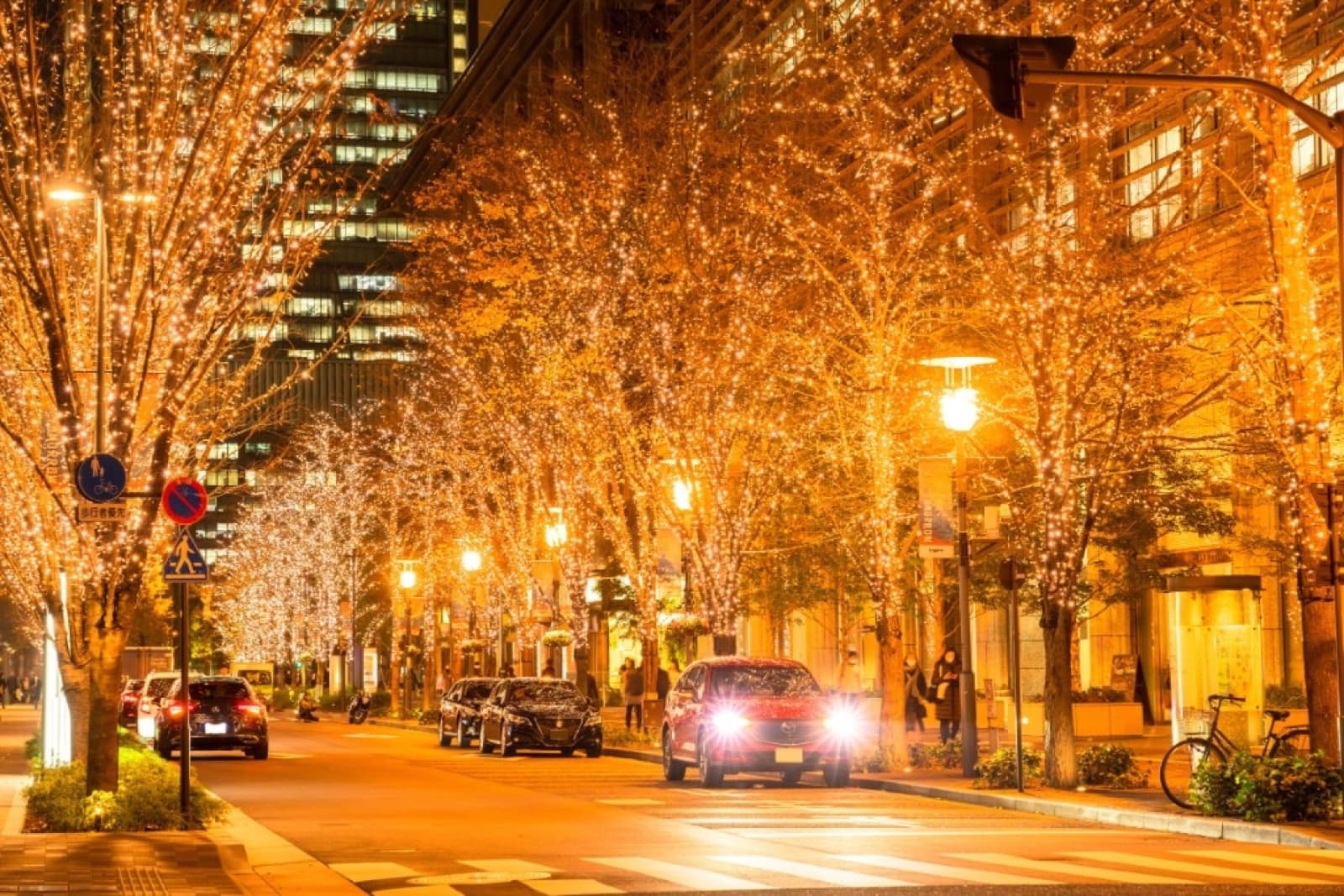
Many of Japan's winter illuminations are free city light displays that run for a few weeks around Christmas. Nabana no Sato is a ticketed garden illumination event that runs into late May, with a new theme every year and flowers in every season.
Dates, hours, prices and bus times were checked on 24 September 2026 against Nabana no Sato (Nagashima Resort), Meitetsu Bus, Kintetsu and the joint Kintetsu / Sanco / Nagashima Resort release of 11 September 2026. Routes and prices are from our catalogue on the same date.
Top photo: carloshonda, CC BY 3.0, via Wikimedia Commons. Other photos are credited in their captions.
An Evening at Nabana no Sato, Built In
Our self-guided routes through Nagoya give you the Shinkansen tickets, the hotel near Nagoya Station and your luggage sent ahead — so the evening is free for the lights, with our team in Japan on call throughout.
Related Articles
Japan Winter Illuminations 2026-27: Nabana no Sato Dates, Huis Ten Bosch's New Show and the Best Displays Nationwide
10 min read
Christmas in Japan 2026: What It's Really Like — Traditions, Food & Trip Planning
11 min read
Ise Grand Shrine (Ise Jingu) Guide: Geku and Naiku, Hours, Etiquette and How to Get There
15 min read