
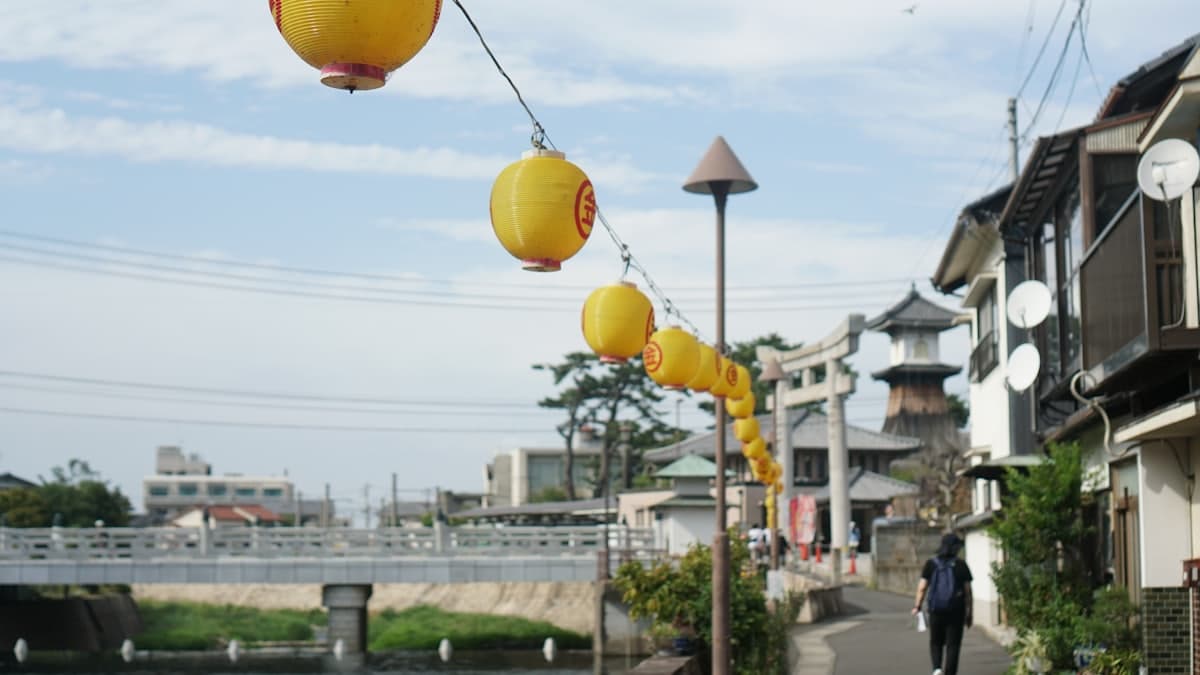
Tenjin Matsuri 2026: Osaka's Greatest Festival — Dates, Boat Procession & Fireworks
July 24–25, 2026: a 1,000-year-old festival climaxing in a land procession of 3,000 costumed participants, around 100 lantern-lit boats on the Okawa River, and a fireworks finale. Here's the full schedule and where to watch.
Last updated: 2026-06
Once a year, Osaka — a city that already runs louder and warmer than anywhere else in Japan — turns its main river into a stage. Tenjin Matsuri is one of Japan's top three festivals, and unlike Kyoto's month-long Gion Matsuri, it compresses everything into two days: shrine rituals, a land procession of around 3,000 people in Heian-period costume, a flotilla of roughly 100 lantern-lit boats, and a fireworks finale reflected in the water. If you're anywhere near Kansai in late July — 2026 has just passed, so realistically July 2027 — this is the night to be in Osaka.
This guide covers the verified 2026 dates and timings, what actually happens on each day, the best free and paid viewing spots, and the access and crowd logistics that make or break a festival evening. It's written for independent travelers — the kind who'd rather stand on a riverbank with a cold drink than follow a flag on a stick.
Quick Answer: Tenjin Matsuri 2026
Tenjin Matsuri 2026: July 24–25 (Friday–Saturday), centered on Osaka Tenmangu Shrine. The climax is the evening of July 25: a land procession (15:30–18:00), a boat procession on the Okawa River (~18:00–21:00), and a dedication fireworks show from around 19:30 to 21:00 with roughly 5,000 fireworks. Watching from the riverbanks is free; paid seats run about ¥3,000–¥31,000.
Dates
Jul 24–25, 2026
Main night
Sat, Jul 25
Fireworks
~19:30–21:00
Cost
Free / paid seats
Tenjin Matsuri 2026 Schedule at a Glance
Key events, July 24–25, 2026 (timings follow the festival's standard annual program — confirm exact times on the official site closer to the date)
| Day | Time | Event |
|---|---|---|
| Jul 24 (Fri) | Morning | Opening rituals at Osaka Tenmangu Shrine; river rite praying for peace and prosperity |
| Jul 24 (Fri) | Afternoon–evening | Moyoshi-daiko drum performances; food stalls around the shrine |
| Jul 25 (Sat) | 15:30–18:00 | Rikutogyo land procession — ~3,000 participants in Heian-period costume |
| Jul 25 (Sat) | ~18:00–21:00 | Funatogyo boat procession — ~100 boats on the Okawa River |
| Jul 25 (Sat) | ~19:30–21:00 | Dedication fireworks (~5,000 fireworks) over the river |
| Jul 25 (Sat) | By ~22:00 | Mikoshi (portable shrine) returns to Osaka Tenmangu Shrine |
Note the calendar luck this year: the festival always falls on July 24–25 regardless of the day of the week, and in 2026 the main day lands on a Saturday. Expect bigger domestic crowds than usual — and book your Osaka hotel accordingly.
What Is Tenjin Matsuri? A 1,000-Year-Old Festival of Fire and Water
Tenjin Matsuri is the festival of Osaka Tenmangu Shrine and dates back to the 10th century — it has been running for over 1,000 years. It honors Sugawara no Michizane, the Heian-era scholar deified as Tenjin, the god of scholarship and learning (the same deity students pray to before exams). Together with Kyoto's Gion Matsuri and Tokyo's Kanda Matsuri, it's ranked as one of Japan's three great festivals.
The core idea is simple and ancient: once a year, the deity is ceremonially invited out of the shrine, paraded through his city by land and by river so he can see how Osaka is doing, and then escorted home. Everything you'll watch — the costumed columns, the drummers, the boats — is built around that journey. The nickname says the rest: Osaka calls it the festival of fire and water, for the bonfires and lanterns of the boat procession and the fireworks burning above the river.
If Gion Matsuri is Kyoto's stately, slow-burn pageant, Tenjin Matsuri is pure Osaka: compressed, loud, food-obsessed, and best experienced at street level. It's also far easier to slot into an itinerary — two days instead of a month, in a city covered in depth in our What to Do in Osaka guide. For how it fits the wider matsuri calendar, see our roundup of Japanese summer festivals.
Self-Guided Tours That Include Osaka
View all →Day 1 — Yomiya (July 24): The Eve Festival
The first day is the quieter, more ritual-heavy half — and a good one for travelers who want atmosphere without the crush. In the morning, priests open the festival at Osaka Tenmangu Shrine, and a rite is held at the river to pray for the peace and prosperity of the city. In the afternoon, the moyoshi-daiko — great drums pounded by performers in tall red hats — signal that the preparations are complete and the festival has properly begun.
By evening, the streets around the shrine fill with food stalls, and Tenjinbashi-suji — Japan's longest shopping street at 2.6 kilometers, running just west of the shrine — buzzes with locals in yukata. This is the night to graze: takoyaki, yakisoba, kakigori shaved ice, grilled corn. Compared with the main day, crowds are manageable and the mood is loose and local.
Traveler's play for July 24: arrive in Osaka by mid-afternoon, drop bags at the hotel, and spend the evening around Osaka Tenmangu Shrine and the arcade. Save your energy — the marathon is tomorrow.
Day 2 — Honmiya (July 25): Land Procession, Boat Procession & Fireworks
Rikutogyo: The Land Procession (15:30–18:00)
The main day's headline act begins at 15:30, when a column of roughly 3,000 participants sets out from Osaka Tenmangu Shrine — courtiers, drummers, lion dancers, umbrella dancers, and the mikoshi (portable shrine) carrying the deity, all in Heian-period costume. The procession winds through the streets north of the shrine toward the Okawa River over about two and a half hours. Sidewalk viewing is free; just pick a stretch of the route and settle in early with water in hand.
Funatogyo: The Boat Procession (~18:00–21:00)
Around 18:00, the procession transfers to the water — the moment Tenjin Matsuri is famous for. Roughly 100 boats, hung with lanterns and bonfires, carry the mikoshi and festival parties up and down the Okawa River. Stage boats host noh and bunraku-style performances, company and neighborhood boats trade cheers across the water, and the whole river glows. It's one of the great spectacles in Japan, and it's completely free to watch from the banks.
The Fireworks Finale (~19:30–21:00)
From around 19:30 until about 21:00, a dedication fireworks display — roughly 5,000 fireworks — bursts over the river while the lantern-lit boats continue below. Fireworks above, bonfires on the water, a million-plus people on the banks: this is the "fire and water" image on every Tenjin Matsuri poster. Afterward, the mikoshi comes ashore and returns to the shrine by around 22:00, closing the festival. If hanabi is a priority for your trip, our Japan fireworks 2026 calendar maps out the rest of the summer.
Heads up: July 25, 2026 is a double-booking
Tokyo's Sumida River Fireworks falls on the same Saturday, July 25, 2026. You can't do both — pick Osaka or Tokyo and commit. Comparing the two? See our Tokyo fireworks 2026 guide for the Sumida side of the choice.
Golden Route & Kansai Tours
Itineraries with Osaka nights you can time to land on July 24–25 — hotels and rail sorted before festival demand spikes.
Where to Watch: Free Spots vs Paid Seats
Free Viewing
- Okawa riverbanks between Temmabashi and Sakuranomiya. The classic free option for both the boat procession and the fireworks. The park areas near the launch sites (around Kawasaki Park and Sakuranomiya Park) fill earliest — claim a spot 2–3 hours before the 19:30 fireworks, bring a picnic mat, and don't plan to move.
- The land procession route. Sidewalks anywhere along the route between Osaka Tenmangu Shrine and the river are free and far less competitive than the riverbank — a good choice if you'd rather see costumes up close than fireworks dead-on.
- Bridges are keep-moving zones. Police keep foot traffic flowing on the bridges over the Okawa during the evening — you can cross and glance, but you can't camp there.
Paid Seats (¥3,000–¥31,000)
Reserved riverside seating is sold in advance at several locations along the river, historically ranging from about ¥3,000 to ¥31,000 depending on location and whether food and drink are included — the priciest options put you at water level with the boats passing meters away. Advance booking is required and the better tiers sell out well before festival week. For a first-timer who wants the boat procession and fireworks without a three-hour stakeout in 32°C heat, a mid-range paid seat is honestly money well spent. 2026 seating is sold out and the festival is over; for 2027, check the official festival or Osaka tourism channels from late spring for on-sale dates.
Access & Survival Tips
Getting There
- Osaka Tenmangu Shrine: about a 5-minute walk from Minami-Morimachi Station (Osaka Metro Tanimachi and Sakaisuji lines) or JR Osakatemmangu Station (JR Tozai Line).
- Riverbank / fireworks area: JR Sakuranomiya Station (Osaka Loop Line) for the east-bank parks; Temmabashi Station (Keihan line and Tanimachi line) for the southern end and many paid-seat areas.
- From central Osaka: the whole festival zone is one or two stops from Umeda — close enough to walk back if the trains are crushed (30–45 minutes from the river to Umeda on foot).
Surviving the Night
- Budget a 30–60 minute buffer after the fireworks. Bridges and stations — JR Sakuranomiya especially — clog fast when a million spectators leave at once. Sit tight, finish the festival food, then move.
- Respect the heat. Late-July Osaka runs around 32°C highs with 25°C nights and heavy humidity. Carry water, use a hand towel and fan, and front-load sightseeing to the morning. Our Japan heatwave guide has the full playbook.
- Bring cash. Festival stalls are overwhelmingly cash-only. ¥5,000–¥10,000 in small bills covers a serious evening of takoyaki and beer.
- Book your hotel now. In 2027 both festival days fall on a weekend (Saturday 24 and Sunday 25 July), so Osaka hotels around Umeda, Namba, and Kyobashi will spike even harder than 2026. Booking by early summer is the realistic deadline.
- Build the trip around it. Tenjin Matsuri pairs naturally with Gion Matsuri's late-July events in Kyoto, 30 minutes away — the full late-July picture is in our Japan in July 2026 guide. Working with one week total? Our 7-day Japan itinerary shows how to end a Tokyo–Kyoto route in Osaka on festival night.
Routes That End in Osaka
View all →Thinking of seeing the Tenjin Matsuri on a summer trip to Osaka? Get in touch through Plan My Trip on our self-guided tours site, and we’ll suggest the tours that best fit your dates and plans.
FAQ: Tenjin Matsuri 2026
When is Tenjin Matsuri 2026?
July 24–25, 2026 — the festival is held on the same dates every year. In 2026 that's a Friday (Yomiya eve festival) and Saturday (Honmiya main day). The land procession, boat procession, and fireworks all happen on the afternoon and evening of July 25.
What time are the Tenjin Matsuri fireworks?
From around 19:30 to about 21:00 on July 25, with roughly 5,000 fireworks launched over the Okawa River while the lantern-lit boat procession passes below. Always confirm timings on the official site close to the date.
Is Tenjin Matsuri free to attend?
Yes — the processions, boat parade, and fireworks are all free to watch from streets and riverbanks. Paid reserved seats (roughly ¥3,000–¥31,000, advance booking required) buy you a guaranteed riverside view without the multi-hour stakeout.
Where is the best place to watch the boat procession and fireworks?
The Okawa riverbanks between Temmabashi and Sakuranomiya. Free spots near the park launch areas go 2–3 hours early; paid seats near Temmabashi offer the easiest first-timer experience. Note that bridges are keep-moving zones — you can't stop and watch from them.
How do I get to Osaka Tenmangu Shrine?
It's about a 5-minute walk from Minami-Morimachi Station (Osaka Metro Tanimachi and Sakaisuji lines) or JR Osakatemmangu Station (JR Tozai Line). For the fireworks area, use JR Sakuranomiya on the Osaka Loop Line or Temmabashi on the Keihan/Tanimachi lines — and budget 30–60 minutes extra for post-show station crowds.
Self-Guided Tours That Put You in Osaka for Tenjin Matsuri
Every route below includes Osaka — time your dates to land on July 24–25 (fixed every year; next up Saturday–Sunday, July 24–25, 2027) and the festival becomes the highlight of the trip.
From Urban Energy to the Soul of Koyasan
Faith & Tradition: Koyasan 2nights & Kinosaki Hotel Standard: Departures from April to November
Koyasan temple stay, scenic Amanohashidate, Kinosaki onsen hopping, and Himeji Castle. 12-day self-guided tour with Shinkansen and luggage delivery.
Destinations Mentioned in This Article
Related Articles
Gion Matsuri 2026: The Self-Guided Traveler's Guide to Kyoto's Greatest Festival
14 min read
Kishiwada Danjiri Matsuri 2026: Dates, Paid Seating, and How to Fit It Into Your Japan Trip
15 min read
Japan in July 2026: Festivals, Heat & a Self-Guided Itinerary
16 min read