
Kishiwada Danjiri Matsuri 2026: Dates, Paid Seating, and How to Fit It Into Your Japan Trip
September 18–20, 2026 in Kishiwada, Osaka: teams sprint four-tonne wooden danjiri carts around hairpin corners. Exact dates, paid grandstand seats from about ¥3,300, where to watch for free, and how to slot it into a real Japan itinerary.
If you're chasing Japan's most electric festival in September, the Kishiwada Danjiri Matsuri 2026 is the one to plan around. The main event takes place in Osaka prefecture's Kishiwada castle town from September 18–20, with a smaller second festival on October 10–11 — giving self-guided travelers two clear windows to work with, though the September weekend is the one most visitors build their itineraries around.
Short version: the main festival runs the weekend before Respect for the Aged Day, it's an easy day trip from Namba, and yes — you can buy a grandstand seat now instead of standing in the sun for hours. Below is a practical planning guide, not a history essay. We'll cover exact dates, transport from Osaka and Tokyo, where to stand for free, how the danjiri festival paid seating actually works, food stalls, common mistakes, and how to slot this into a real Japan itinerary.
🏮 Quick Answer: Kishiwada Danjiri Matsuri 2026
- Dates: September 18–20, 2026 (main, Hamate/beach side) plus October 10–11 (Yamate/hill side), in Kishiwada, Osaka.
- Main days: Fri Sept 18 Shiken-biki (test pulls), Sat Sept 19 Yoimiya (festival eve), Sun Sept 20 Honmiya (main day).
- There are two test pulls, not one: Sunday September 6 and Friday September 18, both 2:00–4:00 PM. Most English guides list only the September 18 one.
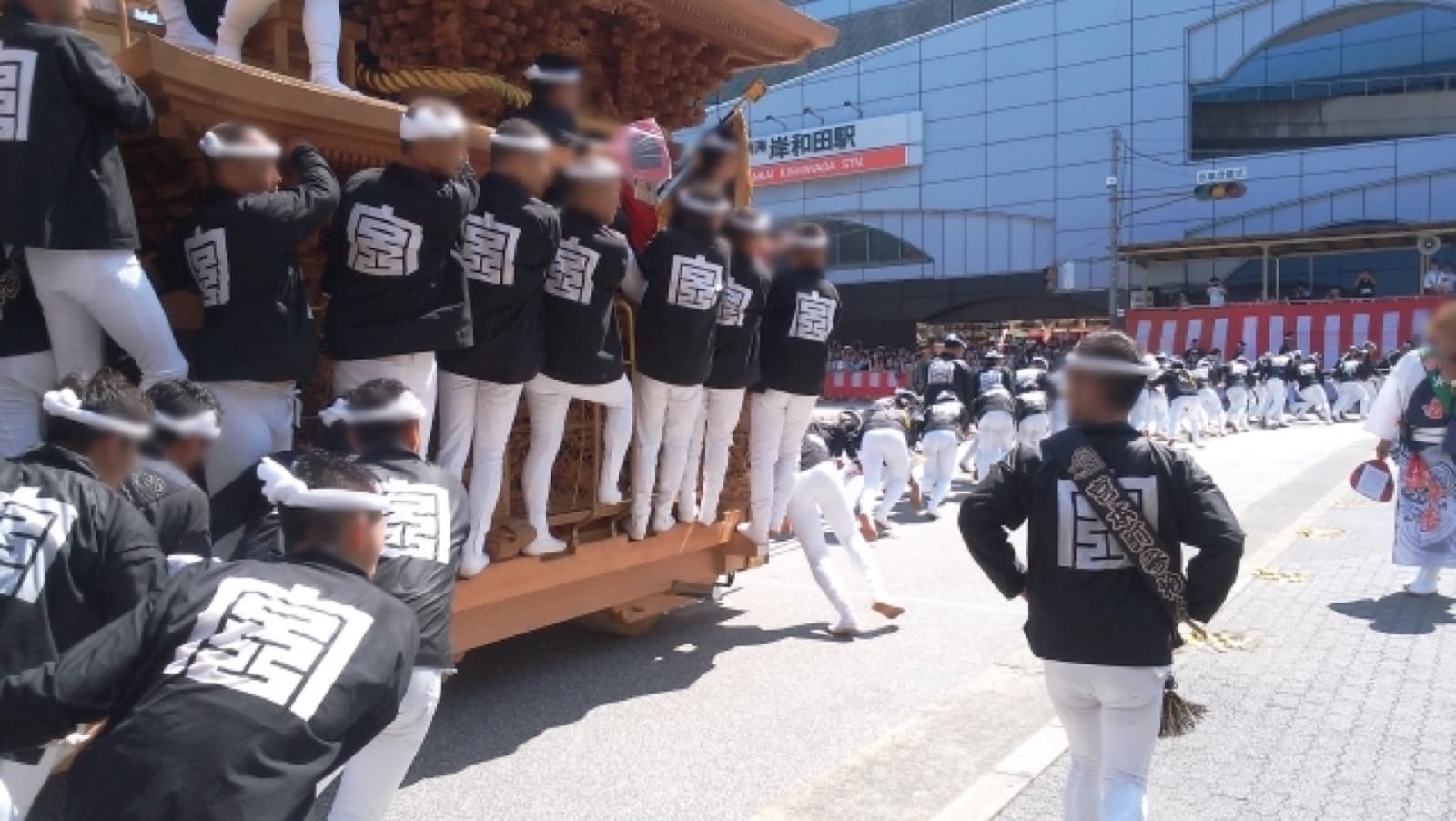
- The highlight: yarimawashi — teams slinging four-tonne wooden danjiri around hairpin corners at a full sprint.
- Cost: free to watch along the route; paid grandstand seats from about ¥3,300, Sofa VIP up to ¥121,000.
What Is the Kishiwada Danjiri Festival?
The Kishiwada Danjiri Matsuri, held in Kishiwada, Osaka, is one of the most famous danjiri festivals in Japan. At heart it's a parade involving large wooden shrine floats that are pulled at high speed by a big team of men. Think of it as a full-contact procession — these colossal floats are hauled down the streets using pure manpower, accompanied by energetic drumbeats.
The highlight comes when the floats hit a corner and make a speedy sharp turn, a dramatic move known as yarimawashi. It's loud. It's fast. It's genuinely dangerous for the participants. And it's unlike anything else you'll see in Japan.
💬 From our Japan travel team
The Kishiwada Danjiri Matsuri is one of Japan's most famous festivals — and the sight of danjiri racing at full speed through the town streets is genuinely breathtaking.
The momentum is real: floats have been known to damage houses and utility poles, which is why each neighbourhood team famously carries insurance before taking part. That raw energy is part of what makes this festival unlike anything else on the calendar.
A quick note on history
The festival began in 1703, when the daimyō of Kishiwada, Okabe Nagayasu, prayed for an abundant harvest to the Shinto divinity Inari — the rice goddess of Fushimi Inari-taisha in Kyoto — and opened the doors of Kishiwada Castle to the townspeople for the festival. So the tradition literally began at Kishiwada Castle in the Edo period, and roughly 300 years later, it's still going. That context matters when you're standing on the street watching a four-tonne float rocket past.
September vs October: two festivals, one name
There are actually two events. The danjiri festival is divided principally into two celebrations: the first is held in September and is the more famous of the two; the second occurs in October, is less famous, but involves more danjiri overall.
The larger, more famous September festival takes place in mid-September on the Hamate (beach) side of the city, while the smaller October version unfolds in early October on the Yamate (hilly) side, in a different district. Both are worth a visit — but if you can only pick one, September wins on scale and energy.
Kishiwada Danjiri Matsuri 2026 Dates
Here's what's locked in for 2026. The September main festival runs across three days, with the marquee action on Saturday and Sunday:
🗓️ Key dates for 2026
| Date | Event | What happens |
|---|---|---|
| Fri Sept 18 | Shiken-biki | Test pulls / rehearsal (main trial run 2:00–4:00 PM) |
| Sat Sept 19 | Yoimiya (festival eve) | Dawn Hikidashi, daytime runs, night lanterns |
| Sun Sept 20 | Honmiya (main day) | Intensive pulling, miya-iri climax, night lanterns |
| Sat Oct 10 | October festival | Mountainside districts — Kumeda, Shimomatsu, Higashi-Kishiwada |
| Sun Oct 11 | October festival | Around 47 danjiri centred on the Nankai/JR stations |
The Shiken-biki trial run on Friday September 18 (2:00–4:00 PM) offers the cheapest paid seats, at around ¥5,500. But for the high-intensity atmosphere and the full yarimawashi action, book one of the afternoon sessions on Saturday September 19 (Yoimiya) or Sunday September 20 (Honmiya).
In October, the towns between the Nankai line and the mountains hold their own danjiri festivals. These involve 47 danjiri and centre on the JR stations of Kumeda, Shimomatsu and Higashi-Kishiwada.
Why the dates move each year
In the old days, the festival was held during the eighth month of the traditional Japanese calendar, but since 2006 it has been held on the Saturday and Sunday before Respect for the Aged Day (the third Monday in September). So if you're planning ahead for future trips, that formula gives you the answer years in advance. It also lands squarely in the middle of the shoulder season — see our wider guide to Japan in September 2026 for weather, crowds and what else is on.
How to Get to Kishiwada
The whole thing is remarkably easy to reach from central Osaka. That's part of why so many self-guided travelers slot it in.
From Namba (Osaka)
From Namba Station, take a direct Nankai Main Line train to Kishiwada Station — about 25 minutes — then walk roughly 15 minutes north to reach the castle. This is the simplest route for most travelers.
From Osaka Station
Take the Osaka Loop Line to Shin-Imamiya Station, then switch to the Nankai Line for Kishiwada Station (about 25 minutes from Shin-Imamiya). From Osaka Station the whole journey runs around 45 minutes.
From Tokyo
Long haul, but doable if you plan the day right. A Shinkansen from Tokyo Station to Shin-Osaka takes about two and a half hours; transfer to Osaka Station, take the Osaka Loop Line to Shin-Imamiya, then a Nankai Limited Express straight to Kishiwada Station — roughly another 45 minutes. Honestly, if you're coming from Tokyo just for this, base yourself in Osaka the night before. Trying to do it same-day is rough.
From Kansai International Airport (KIX)
Kishiwada sits between KIX and central Osaka on the Nankai line, so if you're flying in and want to catch the festival straight from arrival, the timing can actually line up nicely. Just be prepared to lug your bags — coin lockers fill fast during the event.
The Main Parades and Key Moments
The festival isn't one long parade. It's a series of runs, turns and rituals spread across the weekend. Here's how the two main days break down:
⏱️ Two-day schedule at a glance
| Time block | Sat Sept 19 (Yoimiya) | Sun Sept 20 (Honmiya) |
|---|---|---|
| Dawn 6:00–7:30 AM | Hikidashi — all danjiri leave their towns at once | — |
| Morning | Initial runs & preparations (from 6:00 AM) | Intensive pulling from 9:00 AM; miya-iri up Konakara-saka to Kishiki Shrine |
| Afternoon | High-speed pulls & yarimawashi — the corner turns | Peak yarimawashi action |
| Evening 7:00–10:00 PM | Lantern procession, slow walking pace | Lantern procession, serene night pulls |
Shiken-biki (test pulls)
There are two Shiken-biki in the September cycle, and most English-language guides only mention the second one: Sunday September 6 and Friday September 18, each running 2:00–4:00 PM. If your dates fall in early September rather than the festival weekend, the September 6 session is the one that saves your trip — it is the only chance to see the danjiri run before the 19th–20th.
The Shiken-biki held before the main days serves as a rehearsal, providing nearly the same experience as the main event. With fewer crowds, it's a great viewing option for newcomers and families. If you hate crowds, this is your friend — the test pulls give you close-up access to the danjiri without shoulder-to-shoulder chaos.
Yoimiya (festival eve, Saturday)
The Saturday kicks off early. Yoimiya features initial runs and preparations, roughly 6:00 AM to 10:00 PM. The dawn Hikidashi is a spectacle in itself — all the danjiri leaving their neighborhoods at once, starting around 6:00 AM and running to about 7:30 AM on the first morning of the festival.
Honmiya (main day, Sunday)
Honmiya is the main day of the festival, featuring intensive danjiri pulling from 9:00 AM to 10:00 PM. The climax is the miya-iri — the journey to Kishiki Shrine. Fifteen danjiri are pulled one by one up Konakara-saka, the slope leading toward Kishiwada Castle, and they have to get to the top in one go. This is where you'll see the first yarimawashi.
The Airplane Dance
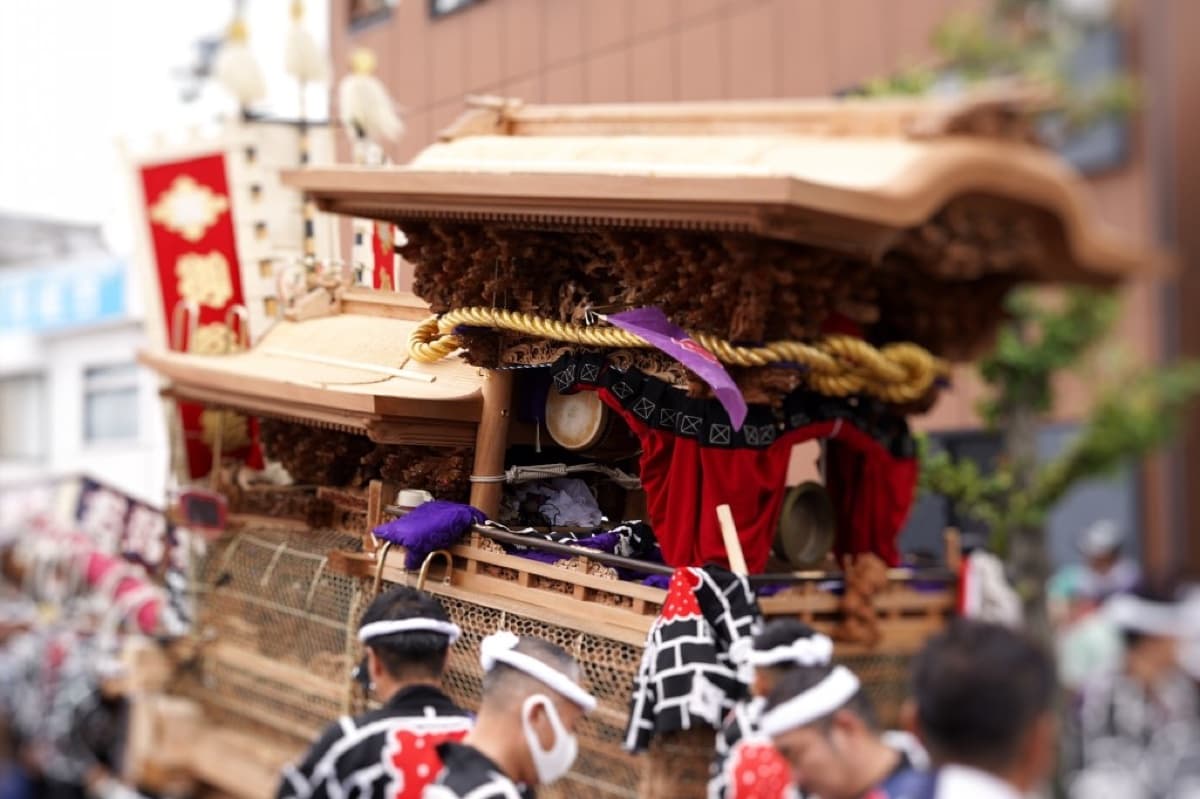
Look up during the runs — there's someone on the roof. Perched atop each danjiri float is the daikugata, or master carpenter. These individuals perform daring dances, including the famous Hikokinori (Airplane Dance), showcasing extraordinary balance and bravery while the float is in motion. It's the thing everyone photographs — and it's harder than it looks.
Night processions
A completely different vibe. The frenetic daytime energy fades into something more leisurely from 7:00 PM to 10:00 PM. The floats slow to a crawl and are adorned with roughly 200 red paper lanterns, pulled at a gentle walking pace by both adults and children — a magical, serene and far more photogenic experience. If you can only stay half a day, honestly, the night parade is the more photogenic half.
Where to Watch: Best Views for Free
You don't have to buy a ticket. Free viewing works — you just need to know where to plant yourself.
Kispa La Park
The classic spot. One of the most popular vantage points is directly in front of the Kispa La Park department store, just 5 minutes' walk from Haruki Station. Crowds gather here to enjoy the festivities alongside local food and novelty souvenirs from the stalls set up out front. Bonus for hot September days: you can watch from inside Kispa, where a large screen shows the event in air-conditioned comfort, or head to the third and fourth floors and view the proceedings from the car park.
Kishiwada Station shopping street
This is where the money shots happen. The main spectacle unfolds at the Kishiwada Station Front Shopping Street. The entire 265-metre arcade continuing from Kishiwada Station transforms into the festival course, with massive danjiri passing vigorously through the 10.6-metre-high arcade built specifically to accommodate these traditional floats.
The old town (Kishu Kaido)
For a more traditional feel: in the old town, where the roads are narrower — especially along Kishu Kaido Street — the floats appear to move faster, and the atmospheric setting will remind you of Japan's nostalgic Edo period (1603–1867).
Haruki district
The danjiri of the Haruki district, affectionately called "beautiful-type danjiri," feature exquisite carvings on the main body that represent centuries of craftsmanship. Compared with the bustling Kishiwada district, there are fewer spectators here, allowing the danjiri to pass much closer to viewers — perfect for appreciating the intricate decorative details. Access is straight off the Nankai Main Line at Haruki Station.
Danjiri Festival Paid Seating: Is It Worth It?
Short answer: yes, if you value comfort and shade over authenticity, or if you're travelling with kids or older parents.
Why paid seating exists
As the largest festival of its kind across Japan, the Kishiwada Danjiri Matsuri attracts around half a million spectators each year, so you can expect a huge turnout. Most visitors arrive hours early to secure a spot along the route. If you'd rather enjoy the festival without jostling for a good view, paid seating is the way to go. Half a million spectators — let that sink in before you decide to wing it.
The two paid seating zones
For the September outing there are two paid seating areas. If you're after the jaw-dropping yarimawashi, the mountainside seats at the Kankan-ba intersection offer the best view of the action. For a more comfortable experience and unobstructed views, make a beeline for the paid seating at Cancan Bayside Mall or Co-op Kishiwada.
🎫 Paid seating prices (2026 guide)
| Seat / zone | Price range | Notes |
|---|---|---|
| Shiken-biki (Fri Sep 18, 2–4 PM) | from ¥5,500 | Cheapest session; quieter rehearsal |
| Regular reserved seats | ¥3,300 – ¥12,100 | Varies by day and session |
| Kankan-ba (Yoimiya & Honmiya afternoons) | ¥8,800 – ¥27,500 | Best view of the yarimawashi corner turns |
| Sofa VIP | ¥22,000 – ¥121,000 | Shade, traditional lunch box, all-you-can-drink |
What VIP actually gets you
The Sofa VIP offers a premium viewing experience complete with shade, plus food and drinks. At Kankan-ba, international visitors can safely enjoy the raw power of yarimawashi from premium locations, and the Sofa VIP seats come with exclusive perks including traditional lunch boxes and all-you-can-drink beverages.
The fine print
Before you click "book": a paid ticket is required if children need their own seat, and all seats are reserved. Seat locations are assigned randomly and cannot be selected. In the event of bad weather or natural disasters, viewing areas may be closed even during the festival. Heavy crowds are expected, so allow extra time to arrive, and note that bringing meals into the viewing area is prohibited. Crucially, all sales are final — no refund is available for cancellations. So book with intention, not on impulse.
Food Stalls and Festival Eats
The food stalls are half the reason locals show up. You'll get the usual matsuri lineup — yakisoba, takoyaki (this is Osaka, after all), karaage, kakigori and grilled squid. Around Kispa La Park and along the main shopping street, stalls set up along the route so you can grab food between waves of danjiri. One tip from experience: eat before noon. The lines get brutal by early afternoon on Saturday.
What to Pair with the Festival
Kishiwada isn't just the festival. There's genuinely stuff to do between parade waves.
Kishiwada Castle
You can visit the place where it all began — Kishiwada Castle — just two stops from Haruki on the Nankai Main Line. You get a beautiful 360-degree view of the whole town overlooking Osaka Bay, plus a thorough rundown of local history. There are displays and even the chance to dress up as a samurai with costumes and props provided by Kishiwada City. The grounds also hold an elaborate stone garden by a modern Japanese horticulturalist, designed to replicate the strategic positions of a famous mythical Chinese battle and titled the "Garden of Eight Battle Formations." Heads up on timing: last admission is around 4:00 PM, so if you're combining a daytime festival visit with the castle, go early.
Danjiri Kaikan Museum
Missed the festival dates? You've still got options. If you want to experience the excitement of the Kishiwada Danjiri Matsuri but won't be in Japan during the festival, check out the Danjiri Kaikan Museum. It displays high-quality footage and engaging exhibits related to the festival, along with intricately carved danjiri replicas. It also pairs well with a broader day out — see our guide to what to do in Osaka for how to build the rest of the day around it.
Fitting It Into a Real Japan Itinerary
Here's how self-guided travelers usually work it in.
The Osaka weekender
Base in Namba. Do Dotonbori and Osaka Castle on Friday, then Kishiwada on Saturday for Yoimiya, and either return for Honmiya on Sunday or continue to Kobe or Nara. It's a clean two-night loop.
💬 From our Japan travel team
Our self-guided tours include free days in Osaka, so if your dates line up with the festival, you can slot Kishiwada in without rebuilding your whole itinerary. If the timing works, we'd love for you to experience it.
The Kansai loop
Kyoto → Nara → Osaka → Kishiwada → back to Kyoto, roughly 5–7 days. The festival becomes your anchor date and everything else flexes around it. From Kyoto, Kishiwada is about 90 minutes each way via Shin-Imamiya or Namba — doable as a day trip, but sleeping in Osaka the night before is easier on the legs.
The KIX arrival play
Land at Kansai International, stash your bags at your Osaka hotel, and head straight to Kishiwada on the Nankai line. This works great for evening lantern viewing on Saturday.
Adding it to a Tokyo-first trip
If your trip starts in Tokyo, use the Shinkansen to relocate to Osaka on the Friday, catch Shiken-biki that afternoon, and settle in for the weekend. Don't try it as a same-day round trip from Tokyo — you'll spend more time on trains than watching floats. If your dates are flexible, note that Osaka's Tenjin Matsuri in July and Kyoto's Gion Matsuri stack neatly into a summer-into-autumn festival run.
Common Mistakes to Avoid
- Showing up too late on Sunday morning. The best yarimawashi runs happen in the earlier hours — get there by 9:00 AM if you want the good crowd action.
- Wearing the wrong shoes. You'll walk a lot and the streets get slippery. Sneakers, not sandals.
- Skipping the test pulls. Shiken-biki is quieter, cheaper, and honestly still incredible — perfect for photographers.
- Not booking accommodation early. Kishiwada hotels fill up fast; staying in Namba is usually easier for last-minute bookings.
- Assuming free viewing means good viewing. With around half a million spectators over the weekend, free spots are packed. If you have a specific photo in mind, paid seats save you the stress.
- Confusing the September and October dates. They're different districts with different vibes — confirm which one matches your trip window before booking anything.
- Worrying about the language barrier. You don't really need Japanese. Kishiwada's tourist information centre is helpful and paid-seating platforms have English options; basic festival etiquette (don't cross barriers, keep phones out of the pullers' faces) is universal.
Why September Is Different
If you're comparing festivals across seasons — cherry blossoms in spring, Tenjin Matsuri and Gion Matsuri in July, the Jidai Matsuri and Kurama Fire Festival in October, snow festivals in winter — the Kishiwada danjiri sits in its own category. Japan's festivals feature mikoshi (portable shrines) and danjiri (wooden carts in the shape of a shrine), food stalls and fireworks, but few match the raw kinetic energy of a four-tonne float sliding around a corner. For the full picture of the warm-weather calendar, our Japanese summer festivals guide maps out the whole season.
September in Osaka is still warm — often uncomfortably so. Bring water, and a hand fan is a lifesaver. Rainy season is well past by mid-September, but a random typhoon can still crash the party, so check the forecast a few days out.
Practical Checklist Before You Go
- Confirm the exact dates for your year. For 2026 that's 18–20 September and 10–11 October.
- Book accommodation early — Namba or central Osaka is easiest.
- Decide free vs paid seating based on your tolerance for standing crowds.
- Buy paid seating in advance through official ticket agents — remember all sales are final.
- Plan your Nankai Main Line route — Kishiwada Station for the main action, Haruki Station for the Haruki district.
- Bring cash. Not all food stalls take cards.
- Arrive early. Trains fill up on Saturday morning.
- Check the weather the day before and pack a light rain shell just in case.
Thinking of seeing the danjiri floats on a trip to Osaka? Get in touch through Plan My Trip on our self-guided tours site, and we'll suggest the tours that best fit your dates and plans.
FAQ: Kishiwada Danjiri Matsuri 2026
When exactly is Kishiwada Danjiri Matsuri 2026?
The September main festival runs 18–20 September 2026 (Shiken-biki on Friday, Yoimiya on Saturday, Honmiya on Sunday). The October festival runs 10–11 October 2026 in the mountainside districts.
How much does danjiri festival paid seating cost?
Regular reserved seats start around ¥3,300 and can climb to ¥12,100 depending on the day and session. Sofa VIP seats run from roughly ¥22,000 up to ¥121,000. Kankan-ba mountainside seats for the Yoimiya and Honmiya afternoons range ¥8,800 to ¥27,500, and the Friday Shiken-biki is the cheapest session, from around ¥5,500.
Is the festival free to watch?
Yes. You can watch from anywhere along the public route. Popular free spots include the Kispa La Park area near Haruki Station, the Kishiwada Station shopping street, and the old town along Kishu Kaido.
How dangerous is it really?
Dangerous for participants, not spectators — as long as you respect the barriers. There have been serious accidents, and even deaths, among float-pullers historically. Follow local staff instructions and never step into the pull path.
Can I visit Kishiwada Castle the same day?
Yes, but note the castle has a last admission around 4:00 PM, so plan castle time before the main afternoon runs, or leave it for a return visit.
Which is better, September or October?
September is bigger, more famous, and centred on Kishiwada Castle on the Hamate (beach) side. October involves more danjiri overall but is spread across smaller districts, including Higashi-Kishiwada. Most first-time visitors pick September.
Plan Your Self-Guided Danjiri Trip
Planning a Japan trip around a specific festival takes a bit of research — train transfers, ticket timings, hotel windows, and backup plans if the weather turns. That's exactly the kind of trip we help you build: we turn fixed-date events like the Kishiwada danjiri into full self-guided itineraries, so the good seats and the good hotels are locked in early.
Dates, routes and prices per Kishiwada City and official festival ticketing; confirm paid-seat booking, session times and any changes on the official sites before you travel. Prices are indicative and subject to change. Last updated: July 11, 2026.
Related Articles
Tenjin Matsuri 2026: Osaka's Greatest Festival — Dates, Boat Procession & Fireworks
11 min read
Japanese Summer Festivals 2026: The Best Matsuri & How to See Them
14 min read
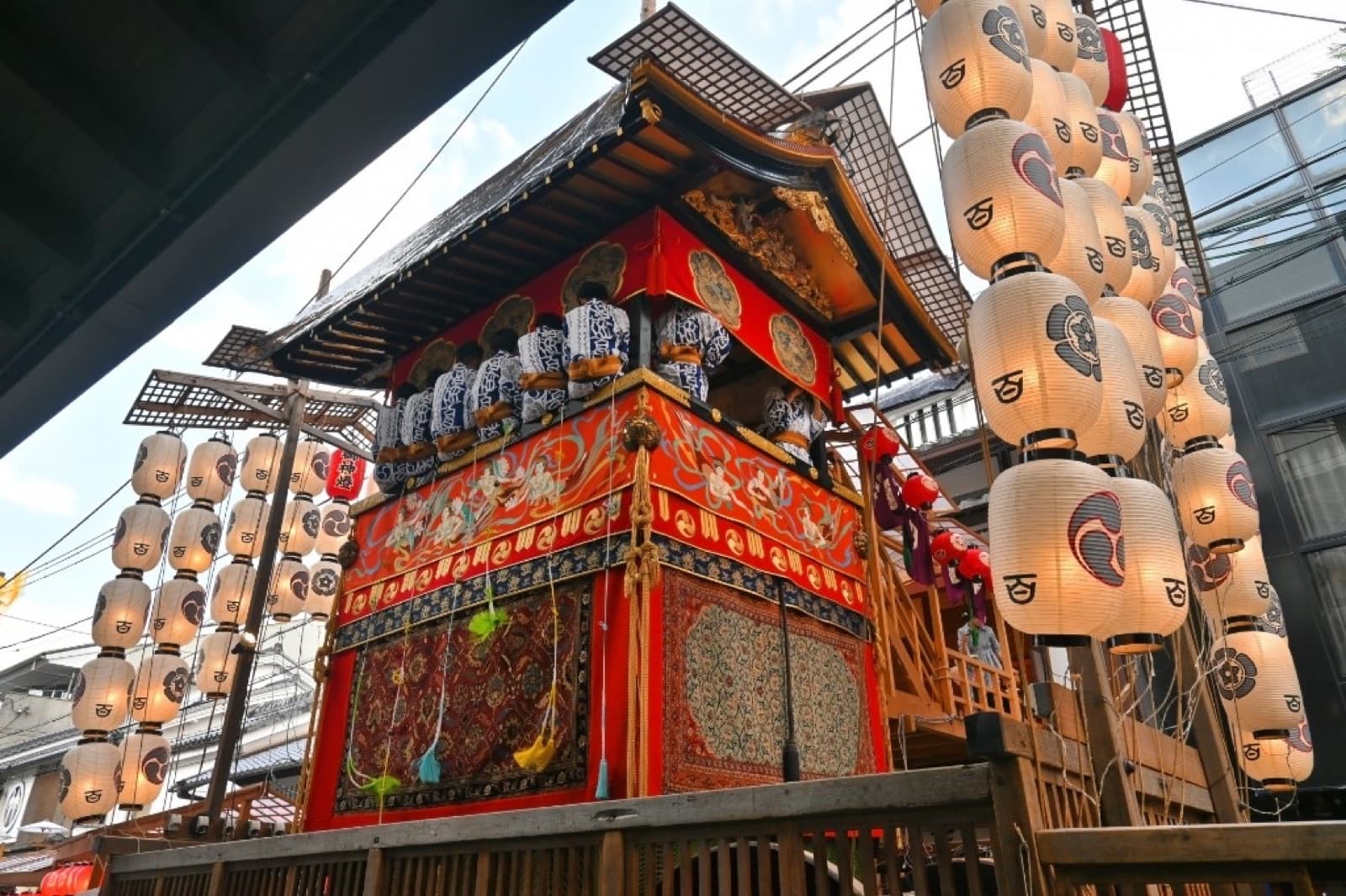
Gion Matsuri 2026: The Self-Guided Traveler's Guide to Kyoto's Greatest Festival
14 min read