Japan Fireworks 2026: Your Self-Guided Guide to the Best Hanabi Taikai
Summer 2026 is done — but Omagari (29 Aug) and Tsuchiura (7 Nov), Japan's two great judged competitions, are still ahead. Free vs paid viewing, station access, and how to weave a hanabi night into a self-guided itinerary.
If you're plotting a Japan trip around hanabi season, the short answer is this: japan fireworks 2026 runs from late spring through autumn, but the headline shows cluster in July and August. The biggest names — Sumida River, Edogawa, Adachi, Nagaoka — all have confirmed dates, and most are free to watch if you know where to stand.
This guide is built for independent travelers. No tour buses, no hand-holding. Just the hanabi taikai 2026 schedule you actually need, station-by-station access, ticket realities, and honest insider tips for slotting a fireworks night into a self-guided itinerary.
Quick Answer: Japan Fireworks 2026
The 2026 summer season has finished. Adachi (May 30), Sumida River (Jul 25), Edogawa (Aug 1) and Nagaoka (Aug 2–3) have all been held. Still ahead in 2026 are two of the three great competitions: Omagari, Saturday 29 August (Akita) and Tsuchiura, Saturday 7 November (Ibaraki) — these are judged competitions rather than display shows, and both sell reserved seating well in advance. Summer 2027 dates start appearing from around March.
Next Up
Omagari 8/29
Then
Tsuchiura 11/7
Big Three
Omagari/Tsuchiura/Nagaoka
Cost
Free / paid
The Hanabi Taikai 2026 Schedule at a Glance
Headline 2026 dates worth planning around
| Date | Event | Location | Shells |
|---|---|---|---|
| May 30 | Adachi Fireworks Festival | Arakawa, Tokyo | ~13,000 |
| Jul 25 | Sumida River Fireworks | Asakusa, Tokyo | ~20,000 |
| Jul 28 | Katsushika Noryo | Edogawa riverbank | ~20,000 (60th ed.) |
| Aug 1 | Edogawa Fireworks | Tokyo / Chiba border | ~14,000 |
| Aug 2–3 | Nagaoka Fireworks | Niigata | Big-three event |
| Aug 29 | Omagari Competition | Akita | ~18,000 |
| Nov 7 | Tsuchiura National | Ibaraki | ~20,000 |
Most events run from roughly 19:00 to 20:30. Weather can cancel a show outright — many festivals don't postpone — so always check the official site the morning of.
What Is a Hanabi Taikai, Really?
Hanabi means fireworks. Taikai means a large gathering or competition. Put them together and you get something closer to a community festival than a Western fireworks show. Expect food stalls lining the streets, locals in yukata, and a synchronized program of music and lighting that runs anywhere from one to two hours.
Fireworks have a long history in Japan and are an integral part of many summer festivals. The Sumida River Fireworks Festival in Tokyo dates back to the Edo period and is one of Japan's most famous fireworks displays, with shells launched from both sides of the river every last Saturday in July. These aren't just shows — they're the social heart of summer.
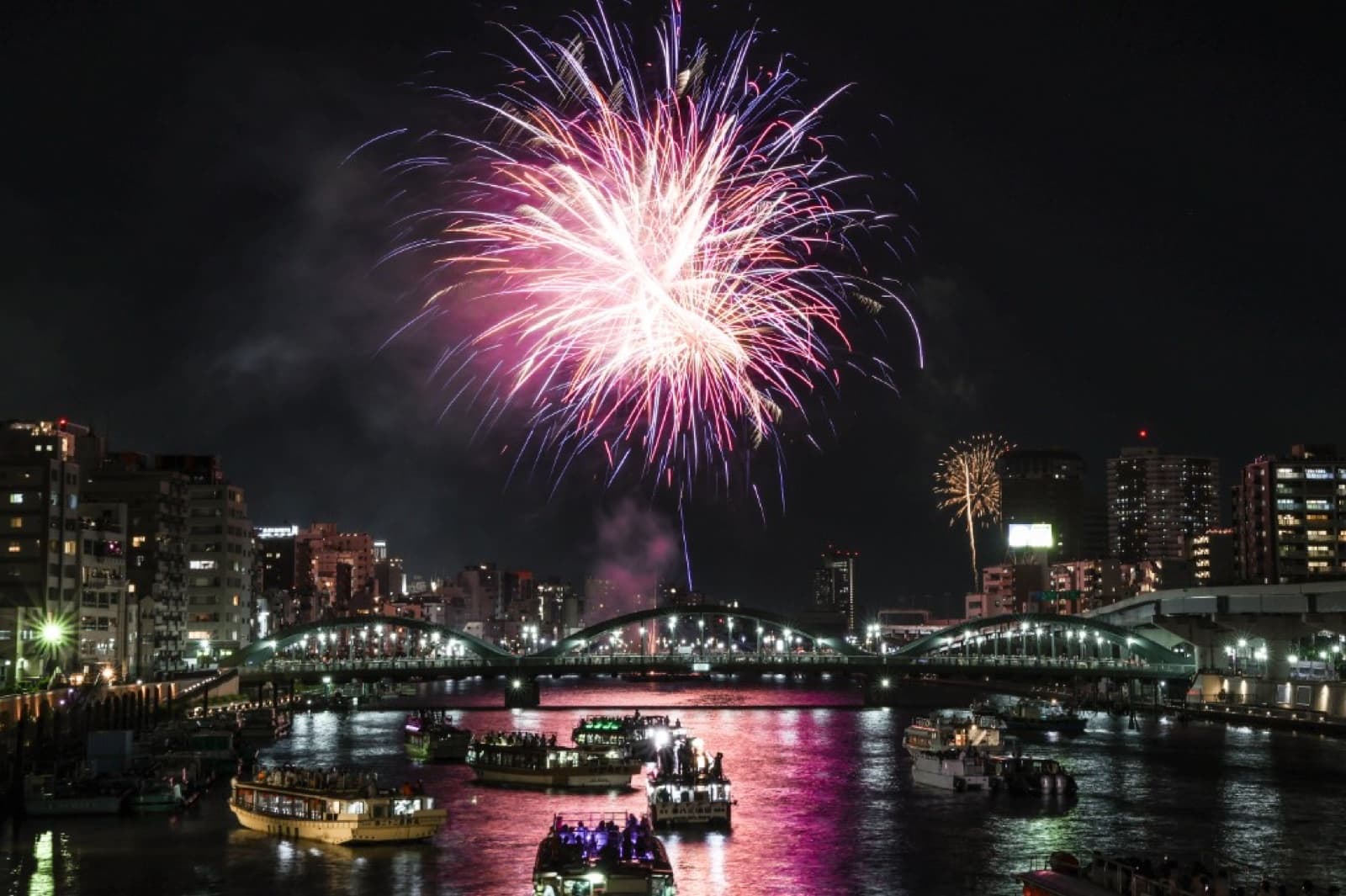
Sumida River Fireworks 2026: Tokyo's Most Famous Hanabi
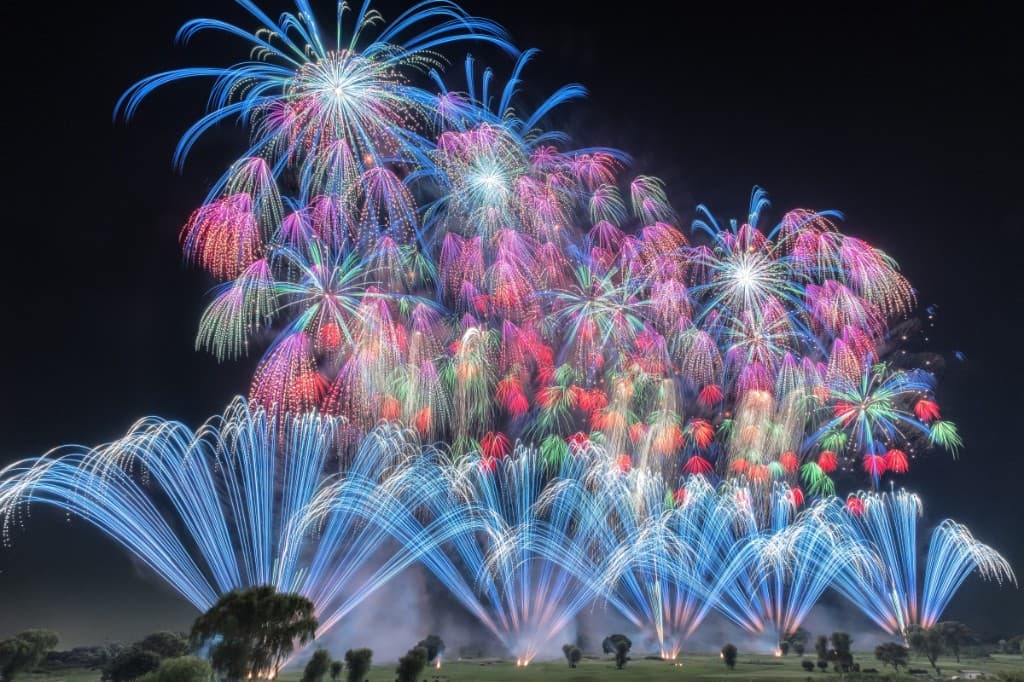
If you only see one, this is the obvious pick. The backdrop alone — Tokyo Skytree glowing behind exploding shells — is unreal.
Event Details and Venues
Fireworks are launched from two locations along the river: the Sakura Bridge area (Venue 1, ~9,350 shells) and the Komagata Bridge area (Venue 2, ~10,650 shells), both near Asakusa and Tokyo Skytree. That's roughly 20,000 fireworks in 90 minutes.
Access via Train Stations
Venue 1: 15 minutes on foot from Asakusa Station (Tobu Skytree Line, Hibiya Line, Ginza Line, Toei Asakusa Line). Venue 2: 5 minutes on foot from Kuramae Station (Toei Asakusa Line). Plenty of ways in, but expect every one of them to be packed.
Free Viewing Spots vs Paid Seats
The festival is free for everyone, with some paid reserved seating available along the river. For a calmer experience, head toward Tokyo Skytree — Shiori Park has a distant view of one of the launch points, and the north part of Oyokogawa Water Park near Honjo-Azumabashi is another quieter option. Honestly? Get there by mid-afternoon if you want a real seat by the river.
Edogawa Fireworks Festival 2026: The Underrated Pick
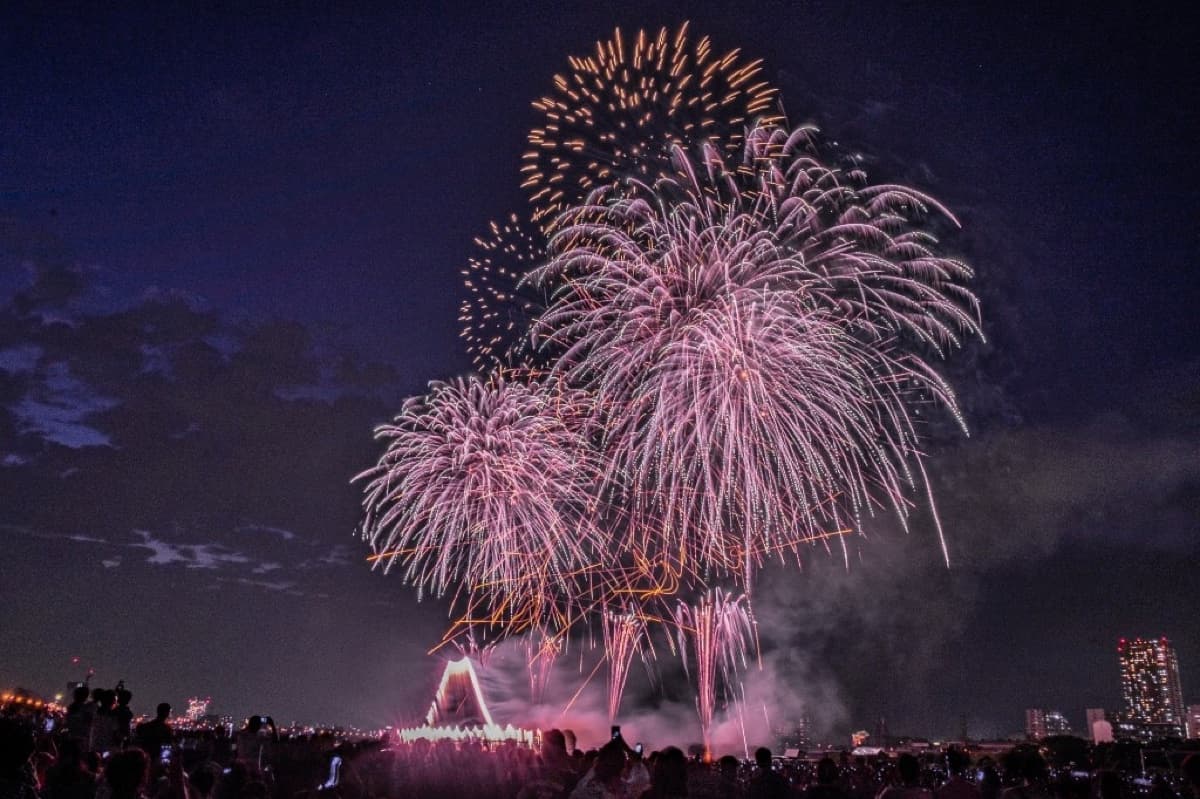
This is the one locals rave about. Held along the Edo River on the border between Tokyo and Chiba, it's effectively two shows running at once across the water — Ichikawa City on the Chiba side, Edogawa-ku on the Tokyo side, both trying to outdo each other.
The grand finale is the stuff of legend: a stunning opening with 1,000 fireworks launched in just five seconds, and the record-breaking "Mt. Fuji" firework display. Eight themed segments, over a million spectators, all for free.
Getting There
The venue is a 25-minute walk from JR Koiwa Station and a 15-minute walk from Shinozaki Station on the Toei Shinjuku Line.
Insider Tips for Edogawa
Picnic mats are a serious matter — some people stake their space the day before. Sheets are only allowed from the afternoon of the day prior; anything placed earlier gets removed by security patrols.
After the show, don't sprint to the nearest station. The crush at Koiwa and Shinozaki is real. A slow walk to the next station before boarding works much better. Trust me on that one.
Adachi Fireworks 2026: The Early Bird (May 30)
If your trip falls in late May rather than peak summer, Adachi is your shot at catching a major hanabi without the August heat. The 48th edition runs May 30, 2026, 19:20–20:20, on the Arakawa riverbank with approximately 13,000 shells in a condensed one-hour program.
Why It Moved to May
The event was historically held in July but was moved to late May to protect spectators from heatstroke. Smart move — Tokyo summers are brutal, and this is one of the more comfortable hanabi nights of the year. See our Japan heatwave 2026 guide for why summer heat planning matters more than ever.
Access
~20 minutes walk from Kitasenju Station (JR Joban, Hibiya, Chiyoda, Tobu Skytree, Tsukuba Express); ~25 minutes from Nishiarai Station or Adachiodai Station. Kitasenju is the busiest hub and one of the most useful interchanges in north Tokyo.
A Word on Cancellations
Adachi was cancelled in both 2024 and 2025 due to inclement weather. Don't bank everything on a single date. Always check the official site the morning of the event.
Nagaoka Fireworks 2026: Worth the Shinkansen Ride
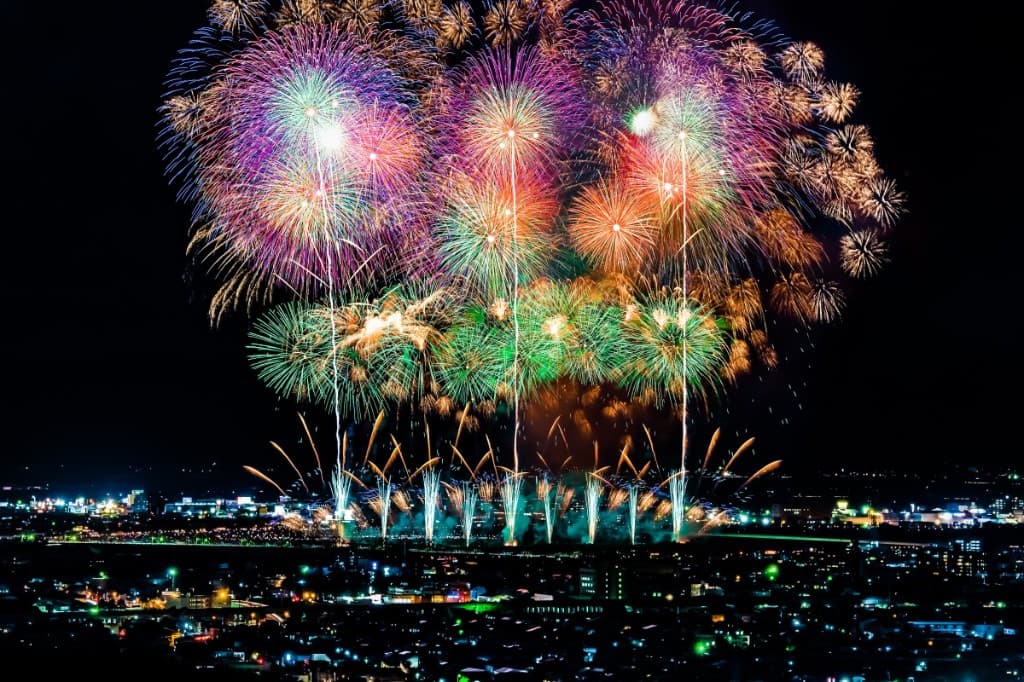
If you're after a once-in-a-lifetime experience, this is it. The dates aren't random.
History and Significance
The dates commemorate the Nagaoka Air Raid of August 1, 1945, when much of the city was destroyed and nearly 1,500 lives were lost. Holding the festival on August 2 and 3 serves as a memorial, a prayer for recovery, and a symbol of peace.
Getting There from Tokyo
Take the bullet train from Tokyo — about a 90-minute ride on the Joetsu Shinkansen. The JR Pass covers the ride, but does not include a confirmed seat reservation for August 2 or 3, and reserved seats sell out quickly. JR Pass holders also still need a fireworks ticket and accommodation. See our Japan Rail Pass price 2026 guide for the broader cost picture.
Book the train, the fireworks ticket, and the hotel as early as possible. Six months out isn't too soon.
How to Watch Like a Local
Beat the Heat: Find a Hidden Spot
Summer nights in Japan stay seriously hot, even after dark. Instead of staking out a riverbank seat hours early and baking in the crowd, the smarter move is often to hunt for a quieter, lesser-known viewing spot. Check X (Twitter) and local word-of-mouth reviews to find the kind of places only locals know about — a hillside, a park on the far bank, or a quiet stretch of riverside away from the main crush. You'll stay cooler, breathe easier, and often get a surprisingly good view.
Bring a Picnic Mat
A cheap tarp from any 100-yen shop is a lifesaver. You'll thank yourself when you grab a free spot on the river bank with three hours to kill before sunset.
Pack Smart
Snacks, drinks, mosquito repellent, a small flashlight, a hand fan, and trash bags. Trash bins are usually not available at the venue — take everything home with you. That's the rule.
Wear a Yukata
Half the festive atmosphere comes from the crowd itself. Renting a yukata in Asakusa or Ueno is cheap and easy, and it adds a real layer to the night.
Eat at the Food Stalls
Takoyaki, yakisoba, kakigori, grilled corn. The food stalls are part of the show. Don't skip them.
Common Mistakes to Avoid
- Arriving too late. Showing up at 18:00 for a 19:00 start is too late at the big ones. Arrive 2–3 hours early (16:00–17:00) to secure a real spot.
- Trying to leave right at the grand finale. Everyone has the same idea. Sit tight for 30 minutes, finish your drinks, then walk to the next station over.
- Forgetting about weather. Many Japan hanabi festivals are cancelled (not postponed) in bad weather. Don't book a non-refundable Nagaoka hotel and assume the show happens. Build a backup plan — see our typhoon season 2026 guide.
- Booking tickets too late. For Nagaoka especially, paid-seat availability vanishes fast. Tickets typically go on sale in May.
- Ignoring the heat. July and August are increasingly brutal — bring water and pace your arrival. Details in our heatwave guide.
Building a Self-Guided Itinerary Around Hanabi
Sample Tokyo Hanabi Week (Late July)
- Day 1–3: Tokyo classics — Asakusa, Shibuya, a day in Shimokitazawa.
- Day 4 (Saturday, July 25): Sumida River Fireworks. Spend the afternoon at Senso-ji, then walk to your viewing spot near Kuramae or Honjo-Azumabashi.
- Day 5–6: Hakone or Nikko side trip for cooler air and a change of pace.
- Day 7 (Saturday, August 1): Edogawa Fireworks. Use a free spot on the Tokyo bank if you didn't grab tickets.
For everything else happening around these dates — Gion Matsuri, Tenjin Matsuri, weather realities — see our Japan in July 2026 guide. Planning Tokyo specifically? Our Tokyo fireworks festivals 2026 guide covers every major show with station access, free spots, and paid-seat details.
Sample Nagaoka Add-On
Three nights in Tokyo, then Joetsu Shinkansen to Nagaoka on August 2. Two nights in or near Nagaoka, fireworks both evenings, then continue to the Sea of Japan coast or loop back via Echigo-Yuzawa for onsen.
Pair Hanabi with Other Summer Events
Hanabi season overlaps with bon odori dances, summer matsuri, and shrine festivals. Asakusa in late July is loaded with overlapping events. For the bon odori side of the season, see our Obon 2026 guide, and for the full matsuri calendar our roundup of Japanese summer festivals. For full month-by-week summer planning, see our Japan in August 2026 guide.
Thinking of timing a summer trip to Japan around a big fireworks night? Get in touch through Plan My Trip on our self-guided tours site, and we'll suggest the tours that best fit your dates and plans.
FAQ: Japan Fireworks 2026
When does japan fireworks 2026 season start?
The first major Tokyo display is Adachi on May 30, 2026. Most large shows run through July and August, with some autumn events extending into October and November.
Are fireworks festivals in Japan free?
Most are free along the river banks. Paid seats are available at almost every big event and are worth it if you don't want to camp out for hours.
What time do hanabi taikai start?
Usually between 19:00 and 19:30, running 60 to 105 minutes. Sumida River runs 19:00–20:30, Edogawa runs roughly 19:15–20:20.
Can I use a JR Pass to get to Nagaoka Fireworks?
Yes, the Joetsu Shinkansen is covered. But reserved seats sell out months early and you still need a fireworks ticket plus accommodation.
What should I bring?
A picnic mat, water, snacks, trash bags, mosquito repellent, a hand fan, and a fully charged phone. A small flashlight helps when you walk back to the station in the dark.
What if the event is canceled?
Most festivals are canceled rather than postponed in bad weather. Check the official site the morning of the event and have a backup plan ready.
Do I need to book tickets months in advance?
For free viewing, no — just arrive early. For paid seats, yes, especially for Nagaoka and Sumida River. Booking opens as early as April or May for many events.