
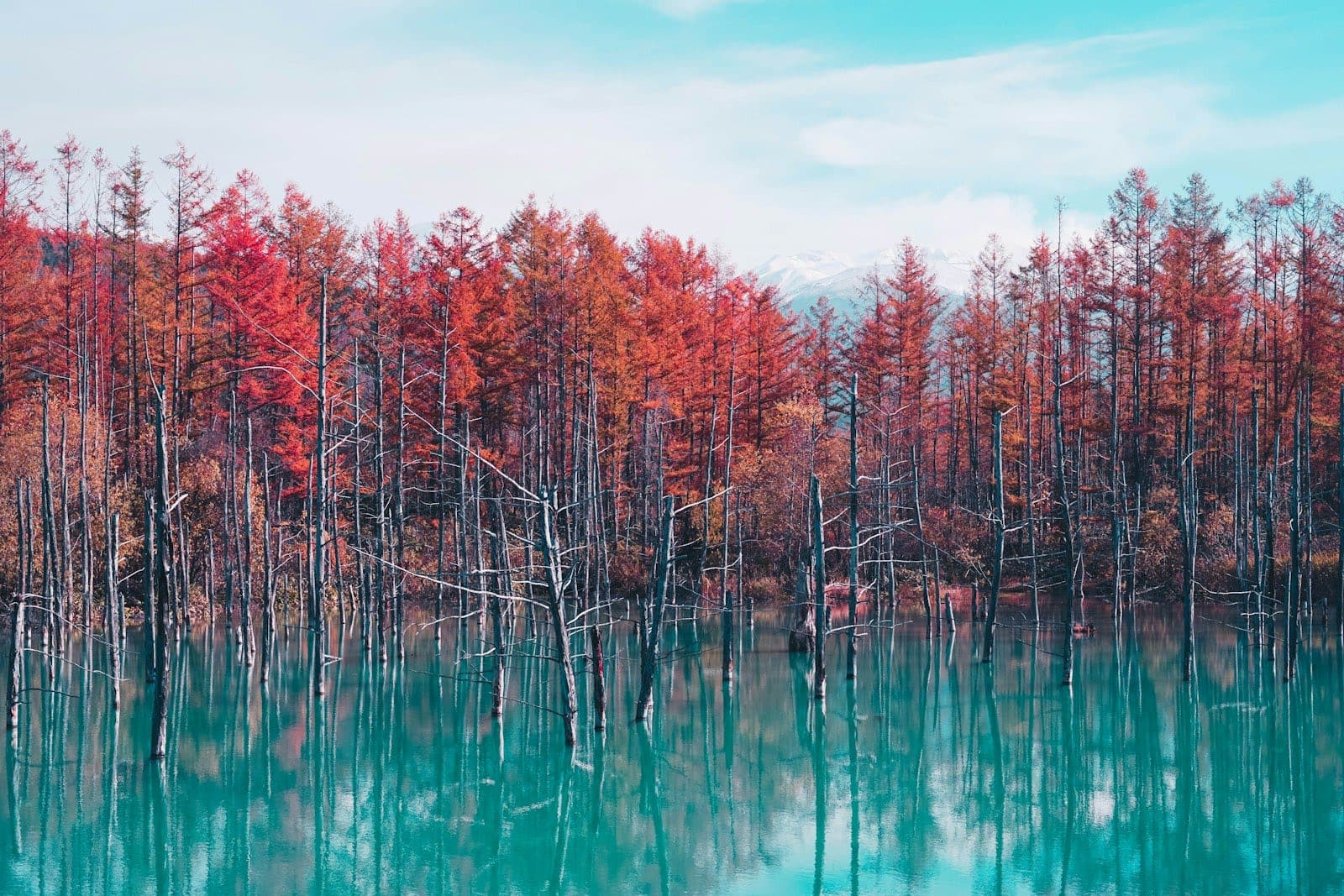
Hokkaido Autumn Leaves 2026: When to Go, Where to Be, and What It Actually Costs
Daisetsuzan peaks in mid-September — Japan's earliest colour, three to four weeks ahead of Kyoto. Area-by-area windows, Asahidake ropeway fares and hours, and a route built to absorb a late season.
If you are chasing Hokkaido autumn leaves in 2026, the answer splits in two. Come mid-September to early October for mountain colour at Daisetsuzan — the earliest foliage anywhere in Japan. Come mid to late October if you would rather have onsen towns, golden ginkgo and lake reflections. Hokkaido runs on its own calendar, roughly three to four weeks ahead of Honshu, and that gap is the whole reason to plan a trip around the north.
It is a genuine advantage for anyone travelling independently. While Honshu is still green, the slopes above Asahidake are already red — and by the time Kyoto hits its own peak in late November, Hokkaido has usually seen its first snow. Plan with a little flexibility and you get autumn in Japan without the November crush. Below: how the wave moves down the island, the numbers you need for the Asahidake ropeway, an area-by-area table, and two routes you can lift straight into your own trip.
🍁 Quick Answer: Hokkaido Autumn Leaves 2026
- Mountain colour (Asahidake, Daisetsuzan): peaks mid-September — Japan's earliest.
- Onsen towns & Sapporo: mid to late October; southern Hokkaido holds into early November.
- The whole island's peak lasts only ~30 days — mountains first, hot-spring towns last.
- 2026 caveat: El Niño conditions may push a warmer autumn and a later peak. Detailed forecasts land from late August — don't book non-refundable until then.
Why Hokkaido Turns First
Two things put Hokkaido at the front of the queue: it sits further north than anywhere else in Japan, and its central ranges climb past 2,000 m. Cold air reaches those summits weeks before it reaches sea level, so colour ignites on the peaks and then spills downhill and southward. The mountains of central Hokkaido can start turning in early September — a good month before Tokyo shows its first hint of the season.
Just don't arrive expecting Kyoto. The palette up here is different: golden larch and rust-toned Ezo spruce do much of the work, with rowan and birch filling in around them. Maples are in the mix, but they are not the headline act they are in Kansai. The effect is broader and more alpine — whole hillsides shifting at once rather than a single perfect maple framed by a temple gate.
For how this fits the national picture, our Japan autumn leaves forecast 2026 tracks the wave from Hokkaido all the way down to Kyushu.
Daisetsuzan and Asahidake: The Headline Act
Daisetsuzan National Park sits in the middle of the island and holds the earliest reliable colour in the country. Locals call it the roof of Hokkaido, and the nickname is earned — sixteen-plus summits clear 2,000 m. Summer here is brief, barely July into August, and autumn follows almost immediately: the park reaches its colourful peak in mid-September, with the first winter snows arriving as early as October.
Asahidake: Japan's Earliest Foliage Line
At 2,291 m, Asahidake is Hokkaido's highest mountain and, most years, the first place in Japan where autumn foliage shows up at all. That elevation is exactly why colour starts here — if you want to say you saw Japan's first red leaves of the year, this is where you stand.
The Asahidake Ropeway is the standard way up, and it is worth getting the numbers straight before you go:
🚡 Asahidake Ropeway — peak-season fares & hours
- Fares (peak season, adult): ¥3,500 round trip, ¥2,200 one way.
- Oct 1–20: first ride 8:00, last ride 17:00, departures every 15 minutes.
- From Oct 21: first ride 9:00, last ride 16:00, departures every 20 minutes.
- Mid-November: the ropeway may shut for maintenance, and the timetable is revised year to year.
💡 High winds and bad weather can suspend or shorten service with no notice. Check the operator's official site the morning you go — not the week before.
From the top station, the Sugatami Pond loop is the walk everyone comes for: fumaroles venting on the flank of the mountain, three small ponds, and a decent chance of alpine plants and wildlife you won't see further south. Budget 60 to 90 minutes. It is a stroll, not a summit push — but it is exposed, and Asahidake often carries a dusting of snow by late September. Warm layers are not optional.
Kurodake and Sounkyo Gorge
The eastern side of the park is every bit as good, and it runs on a clear relay. Kurodake starts turning in late September. Sounkyo picks it up about ten days later. Roughly ten days after that, the colour reaches Jozankei and the fringes of Sapporo. Add it up and the island's entire peak spans only about 30 days — the early stretch belongs to the mountains, the late stretch to the onsen towns.
Sounkyo Gorge is the pick of the bunch. Two waterfalls anchor it — Ryusei, the Shooting Star, and Ginga, the Milky Way — and at peak they run through a frame of colour, with columnar basalt cliffs closing in overhead. The gorge trails cost nothing to walk. Sounkyo is also a working hot-spring village, which makes it the obvious place to sleep: take the Kurodake ropeway in the morning, walk the gorge in the afternoon, and be in an onsen by dark. If you only get one mountain base, make it this one. Expect around ¥18,000 per night for a twin with dinner and breakfast, even outside the busiest dates.
💬 From our Japan travel team
Sounkyo and Asahidake Onsen are small villages with a fixed number of beds, and the good ryokan go early. The saving grace is that the crowd here skews towards hikers rather than coach tours, so rooms do sometimes surface four to six weeks out. We would not plan around that, though — if your dates are fixed, book the mountain nights first and build the rest of the trip around them.
Peak Windows by Area: Where to Be, and When
Colour drops from the summits to the coast over roughly six weeks. These are long-term averages — a planning skeleton, not a promise. Read them alongside the 2026 caveat further down.
🍂 Hokkaido peak foliage windows by area
| Area | Typical peak | What's there | Access |
|---|---|---|---|
| Asahidake / Daisetsuzan | mid-Sep | Japan's first colour; Sugatami Pond loop, fumaroles | Bus from Asahikawa to Asahidake Onsen, then ropeway |
| Kurodake | late Sep | Ropeway + chairlift; alpine views over the park | Ropeway from Sounkyo village |
| Sounkyo Gorge | early Oct | Ryusei & Ginga falls, basalt cliffs, free trails, onsen | Bus from Asahikawa (~2 hr) |
| Furano & Biei | early–mid Oct | Larch, rolling farmland, the Blue Pond | Rental car strongly preferred |
| Jozankei Onsen | mid-Oct | River valley, suspension bridge, day-use baths | ~1 hr bus from Sapporo (~¥1,100) |
| Sapporo (city) | late Oct | Hokkaido University ginkgo avenue, Odori, Nakajima Park | Walk or subway from Sapporo Station |
| Noboribetsu | late Oct | Hell Valley steam vents framed by colour; free trail | JR ltd. exp. ~75 min (~¥4,500), then bus 15 min (¥350) |
| Shiretoko | late Sep–mid Oct | UNESCO wilderness, forested cliffs, deep gold | Car, or bus from Shari |
| Onuma (southern Hokkaido) | mid-Oct–early Nov | Lake reflections below Mt. Komagatake; maple, beech, oak | ~20 min by ltd. exp. from Hakodate |
💡 Noboribetsu fares are covered by the Hokkaido Rail Pass. Summit dawn temperatures at Daisetsuzan run 3–5°C in late September — plan the ropeway for a clear morning and keep the afternoon loose.
A useful way to hold all this in your head: September is a mountain month, October is an onsen month, and November is over. By mid-November most of the island's foliage is finished, snow has reached the high ground, and the Asahidake ropeway is heading into its winter pattern. That is precisely when Honshu comes good — see our Kyoto autumn leaves 2026 guide if you want to chase the colour south.
Where to Actually Go
Jozankei Onsen
Sapporo's closest hot-spring town, tucked into a river valley about an hour south by bus (around ¥1,100 from Sapporo Station). The valley walls are thick with deciduous forest that comes good in mid-October, which is why this is the most-photographed foliage-and-onsen pairing on the island. There are walking trails along the Toyohira River, a suspension bridge worth the detour, and several ryokan that will let you use the baths without staying the night. As day trips from a city base go, it is hard to beat.
Noboribetsu and Hell Valley
Jigokudani — Hell Valley — gives you something no maple grove can: autumn colour wrapped around a live volcanic vent field, steam pouring out of bare rock while the slopes above burn orange. Colour peaks here in late October and the walking trail through the valley is free. Getting there is easy: a JR limited express from Sapporo runs about 75 minutes (about ¥4,900 one way with the reserved seat — all JR Hokkaido limited express seats are now reserved — and covered by the Hokkaido Rail Pass), then a 15-minute Donan bus up to the onsen town for ¥350.
Hokkaido University's Ginkgo Avenue
Golden ginkgo without leaving Sapporo. The university's central campus holds a 380 m avenue of around 70 ginkgo trees that turns solid gold in late October, and the campus throws a leaf festival on the avenue at the end of the month — food stalls, crowds, the lot. It costs nothing to walk in. If you want a quieter version of the same idea, Nakajima Park is a short subway ride away, and Odori Park runs right through the middle of the city for when you need a breather between bigger days.
Onuma Quasi-National Park
The most underrated stop in this guide. Onuma is a cluster of lakes — Onuma, Konuma, Junsainuma — sitting beneath the ragged cone of Mt. Komagatake, and in autumn the whole scene doubles itself on the water. Maple, beech and oak carry the colour from mid-October into early November, which makes it the last place on the island still worth visiting for foliage. It is 20 minutes by limited express from Hakodate, or an hour by bus, and the lakeside cycle path is flat and easy.
Furano, Biei and Shiretoko
If you have a car, the drive through Furano and Biei in early October is one of the better hours you will spend in Japan — larch turning gold over rolling farmland, with the Tokachi range on the horizon. Further east, the Shiretoko Peninsula is a UNESCO-listed wilderness of steep forested cliffs that turns deep gold and copper from late September. It is remote, it is not a casual add-on, and it is spectacular. Neither works well without your own wheels.
Volcano alert, September 2026: Mt. Tokachidake, the peak of the Tokachi range you see from Biei, was raised to volcanic alert Level 3 on September 12 — the mountain is closed, with a danger zone of about 3 km around the crater, an evacuation order for the Fukiage Onsen area, and the road between Shirogane Onsen and Tokachidake Onsen reported closed. The farm roads of Furano and Biei are outside the restrictions; check the Japan Meteorological Agency's volcano page for the latest before you drive towards the mountain.
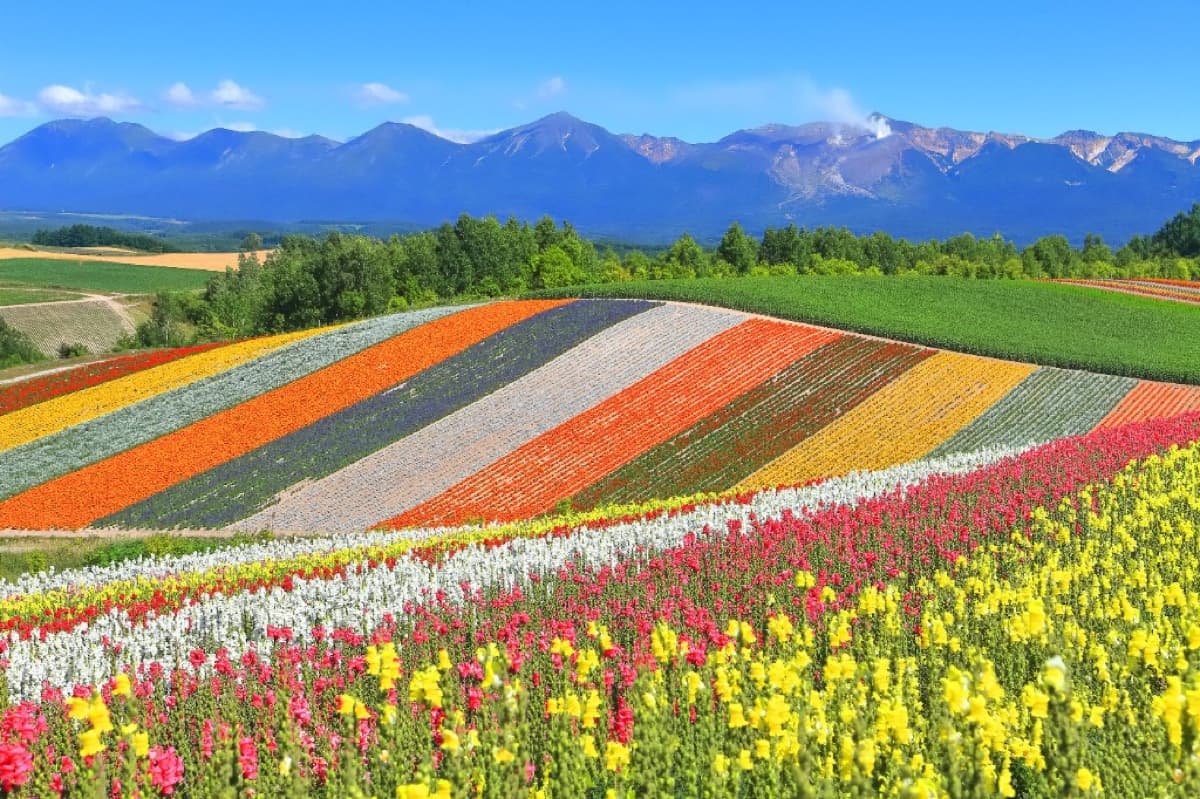
Want the wider national shortlist? Our guide to the best autumn leaves spots in Japan for 2026 ranks Hokkaido against Tohoku, the Alps and Kansai.
Two Sample Routes
The Mountain Chaser — 7 days, late September to early October
- Day 1: Fly into New Chitose. Settle into Sapporo, eat crab, walk Odori.
- Day 2: Train to Asahikawa, bus up to Asahidake Onsen. Ryokan night at the foot of the mountain.
- Day 3: First ropeway car up Asahidake. Sugatami Pond loop. Down by early afternoon.
- Day 4: Transfer to Sounkyo Onsen. Ryusei and Ginga falls in the afternoon.
- Day 5: Kurodake ropeway in the morning; gorge trails, then the baths.
- Day 6: Back to Sapporo. Hokkaido University ginkgo if the timing has lined up.
- Day 7: Fly home, or connect south to catch Honshu turning.
The Onsen Circuit — 6 days, mid to late October
- Day 1: Sapporo. Odori Park and Nijo Market.
- Day 2: Day trip to Jozankei — suspension bridge, river trail, footbaths.
- Day 3: Train to Noboribetsu. Hell Valley walk, ryokan overnight.
- Day 4: On to Hakodate. Night view from Mount Hakodate.
- Day 5: Day trip to Onuma. Cycle the lakeside path under Komagatake.
- Day 6: Fly out of Hakodate.
Either route slots neatly onto the front of a Honshu trip. If you are also weighing an early-autumn arrival, our Japan in September 2026 guide covers what else is happening while Daisetsuzan turns.
Cars, Trains and Passes
The honest answer is that it depends entirely on where you point yourself. For the Sapporo cluster — the university ginkgo, Maruyama Park, Jozankei — you do not need a car at all. Subway and bus cover everything, and parking in the city is a nuisance you can happily skip.
A car earns its keep the moment you head for Daisetsuzan, Furano, Biei, Shiretoko or Niseko. Rural bus timetables out here are thin, and last departures can be as early as 16:00 — miss one in a mountain village and your evening changes shape. For Sounkyo and Asahidake specifically, driving also buys you the thing that matters most in autumn: the freedom to chase good light and dodge a bad forecast. If you are not comfortable driving in Japan, that is completely fine — base yourself in Sapporo, pick two or three day-trip targets, and accept that Daisetsuzan becomes a longer, more committed excursion.
For rail-led planning, the Hokkaido Rail Pass covers the main lines including the Sapporo–Noboribetsu–Hakodate corridor, which is exactly the spine of the Onsen Circuit above. If a fuller Hokkaido loop appeals, see our Hokkaido tour package.
Reading the 2026 Forecast
Here is the honest part, and we would rather say it plainly than sell you false precision. El Niño conditions are expected to develop around summer 2026, which tends to mean a warmer-than-usual autumn. If that plays out, the koyo peak across Japan — Hokkaido included — is likely to arrive later than in a typical year. Warm autumns already dragged the 2024 and 2025 seasons well past their averages in the lowland cities. Nobody, us included, can hand you exact 2026 peak dates in July.
What we can tell you is when the real information shows up. Detailed foliage forecasts are published by the weather services from late August onwards — the Japan Meteorological Corporation is the most-watched, with tenki.jp and Weathernews updating through the season. The mountains are less sensitive to a warm autumn than the cities are, so Daisetsuzan is your steadiest bet. But the practical advice is simple: hold your dates loosely, cross-check all three sources a couple of weeks before you fly, and if they all read late, shift your foliage days back rather than hoping.
Above all, don't commit to non-refundable rates on mountain lodging until the forecasts land. That is the single mistake that costs travellers the most in this season.
What to Pack, and What to Eat
Hokkaido in autumn is colder than visitors expect. Days sit around 10°C and nights push towards freezing, and above the ropeway stations it is colder still — summit dawn temperatures at Daisetsuzan run 3–5°C in late September. Bring proper warm layers, a hat and gloves for anything above the top station, and waterproof shoes for boardwalks and gravel trails. A small daypack is enough for the walks in this guide. Carry some cash, too: rural inns and ropeway kiosks are not uniformly card-friendly.
The compensation is that autumn is the best eating season on the island. This is when salmon, ikura and fatty saury are at their peak, and when the king and hairy crab that Hokkaido is famous for are worth the fuss. Sapporo's Nijo Market is the obvious stop, but the ryokan kitchens in Sounkyo, Noboribetsu and Jozankei lean hard into local seafood at dinner. Go hungry.
Common Mistakes
- Assuming Hokkaido peaks when Kyoto does. It doesn't, and it isn't close. Turn up in late November expecting red mountains and you will find snow.
- Leaving the mountain lodging until last. Sounkyo and Asahidake Onsen are small. Book those nights before anything else, then fit the cities around them.
- Trying to bolt Hokkaido onto a first, short Japan trip. If it is your first visit and you have under ten days, skip it — it is a long way from the Tokyo–Kyoto axis and you will lose the trip to transit.
- Forgetting the last ride. Ropeway and rural bus timetables tighten as the season goes on, and last departures can be as early as 16:00. In a remote valley, missing one is a real problem.
- Ignoring mountain weather. Wind and rain can suspend the ropeway or cut its hours with no warning. Always check operating status on the day.
For a wider view of the season across the country — festivals, weather, crowds — our autumn in Japan 2026 guide is the place to start.
Self-Guided Routes for the 2026 Autumn Colour Season
The colour moves south for six weeks — Hokkaido in early October, the Japan Alps and Takayama in late October, Kyoto and Nara in the second half of November. These are the routes we run that follow it, with the month each one is built for.
| Route | Length | From (per person) | Why this autumn |
|---|---|---|---|
| Discover Hokkaido: Nature & Scenic Views (HD001) | 7 days | $3,700–4,300 | Sounkyo Gorge, Lake Akan and Shiretoko peak in early to mid October — the first colour of the season. |
| Spirit of Tradition: Shirakawa-go & Cultural Japan (GR009) | 14 days | $4,100–5,900 | Takayama for its Autumn Festival (9–10 October), Shirakawa-go in late October, Kyoto and Nara in November. |
| Japan Highlights & World Heritage (GR002) | 12 days | $3,300–4,800 | Kyoto and Nara at peak colour in the second half of November. |
| Cultural Essence: Kyoto & Kanazawa Short Escape (GR006) | 12 days | $2,800–4,200 | Kenrokuen and Kyoto within the same fortnight; the lowest-priced twelve-day route we run. |
| Koyasan: Sacred Sites and Quiet Beauty (KM003) | 12 days | $3,500–5,200 | Koyasan’s maples turn in early November. Departures run April to November. |
| Hot Springs & Highlights: Kinosaki & Gero (HS002) | 14 days | $4,300–5,700 | Kinosaki’s crab season opens on 7 November — colour by day, crab and the outdoor baths by night. |
Interested in a tour? Click the route name above, or search by route code in the top-right Search bar.
For the month itself, see Japan in October 2026 and Japan in November 2026; for the beds that sell out first in colour season, where to stay in Kyoto names the hotels our routes actually book.
Prices are per person on a twin-share basis from our current price list and move with the departure date; departure windows are as the catalogue listed them on 22 September 2026. Ask us for an exact quote for your dates.
Japan Trip Cost Calculator (2026)
Set your trip below — the estimate updates instantly. Yen prices are converted at a rounded ¥150 to the dollar; the market rate is about ¥157 in September 2026, which makes yen costs a few percent cheaper than shown.
Intercity is priced as point-to-point tickets unless you add the pass — on the Tokyo–Kyoto–Osaka route the pass usually costs more than the tickets.
Estimated total
$4,530
$2,265/person · $453/day · 2 travelers, 10 days
Your trip settings and estimate will be copied into an editable inquiry. Add your travel dates to ask for a free quote.
This is a DIY planning estimate, not a package price. Our tours have set itineraries and include the hotels and transport listed on each tour page. International flights are extra; meals, sightseeing and room arrangements vary by route.
Planning an autumn trip to Hokkaido, where the colors come first in Japan? Get in touch through Plan My Trip on our self-guided tours site, and we’ll suggest the tours that best fit your dates and plans.
FAQ: Hokkaido Autumn Leaves 2026
When is the best time to see Hokkaido autumn leaves in 2026?
Mid-September to early October for the mountains — Asahidake and Kurodake in Daisetsuzan. Mid to late October if your priority is onsen towns, Sapporo's golden ginkgo and lake reflections, with southern Hokkaido holding colour into early November. Note that El Niño conditions may push the 2026 peak later than usual; the detailed forecasts land from late August.
Can I really see autumn colours in Hokkaido in September?
Yes — this is the one place in Japan where you can. Colour begins on the highest ground of Daisetsuzan in early September and peaks around mid-September at Asahidake (2,291 m). Lower ground follows much later: Sapporo and the onsen towns aren't ready until mid to late October.
What does the Asahidake Ropeway cost, and what are its hours?
In peak season an adult round trip is ¥3,500 and a one-way ticket ¥2,200. From October 1–20 the first car runs at 8:00 and the last at 17:00, every 15 minutes; from October 21 it shifts to a 9:00 first car and 16:00 last car, every 20 minutes. The ropeway may close for maintenance in mid-November and the timetable changes year to year, so check the official site before you travel — and again on the morning itself, since bad weather can suspend service.
Do I need a rental car in Hokkaido?
Not for Sapporo, Jozankei, Noboribetsu or Hakodate — trains and buses handle those comfortably. For Daisetsuzan, Furano, Biei and Shiretoko a car will save you hours and spare you the anxiety of a 16:00 last bus.
How many days do I need for Hokkaido foliage?
Four days is the minimum for a Sapporo, Jozankei and Noboribetsu loop. Six or seven lets you add Daisetsuzan properly, or reach southern Hokkaido and Onuma. Anything shorter and you will spend the trip on transfers.
Is Hokkaido a good choice for a first trip to Japan in autumn?
Only if you have ten days or more, or you specifically want mountains over temples. For a shorter first visit, Tokyo–Hakone–Kyoto in late November is the stronger trip; save Hokkaido for a second visit, when you can give it the time it deserves.
Build a Route That Survives the Forecast
This is where self-guided beats a coach tour outright: you can move. If the September forecast shows Daisetsuzan running a week late, you push the ropeway day back. If Sapporo turns early, you pull Jozankei forward. We handle the trains, the ryokan and the transfers, and we build the flex in from the start.
Peak windows are based on long-term averages, not a 2026 prediction. El Niño conditions may push this year's koyo later than usual; detailed forecasts are published by Japanese weather services from late August. Fares and ropeway timetables were correct at the time of writing and change seasonally — confirm on official sites before booking non-refundable travel. Last updated: July 14, 2026.
Related Articles
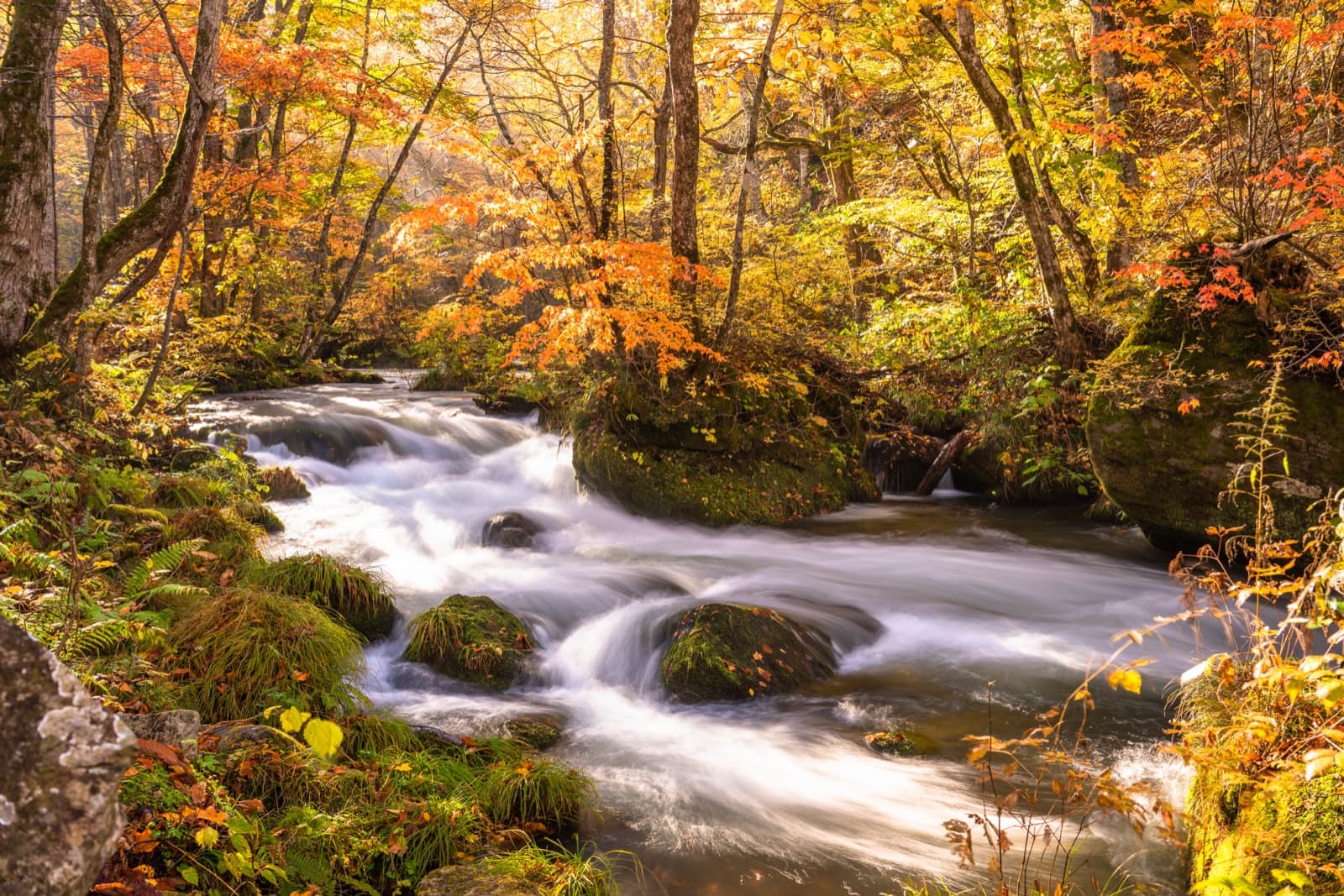
Tohoku Autumn Leaves 2026: A Self-Guided Guide to Oirase Stream and Lake Towada
12 min read
Japan Autumn Leaves Forecast 2026: Latest Dates City by City, and Where the Colors Are Now
14 min read
Osaka Autumn Leaves 2026: Peak Dates, Minoo Park & Why It Beats Kyoto as a Base
15 min read