
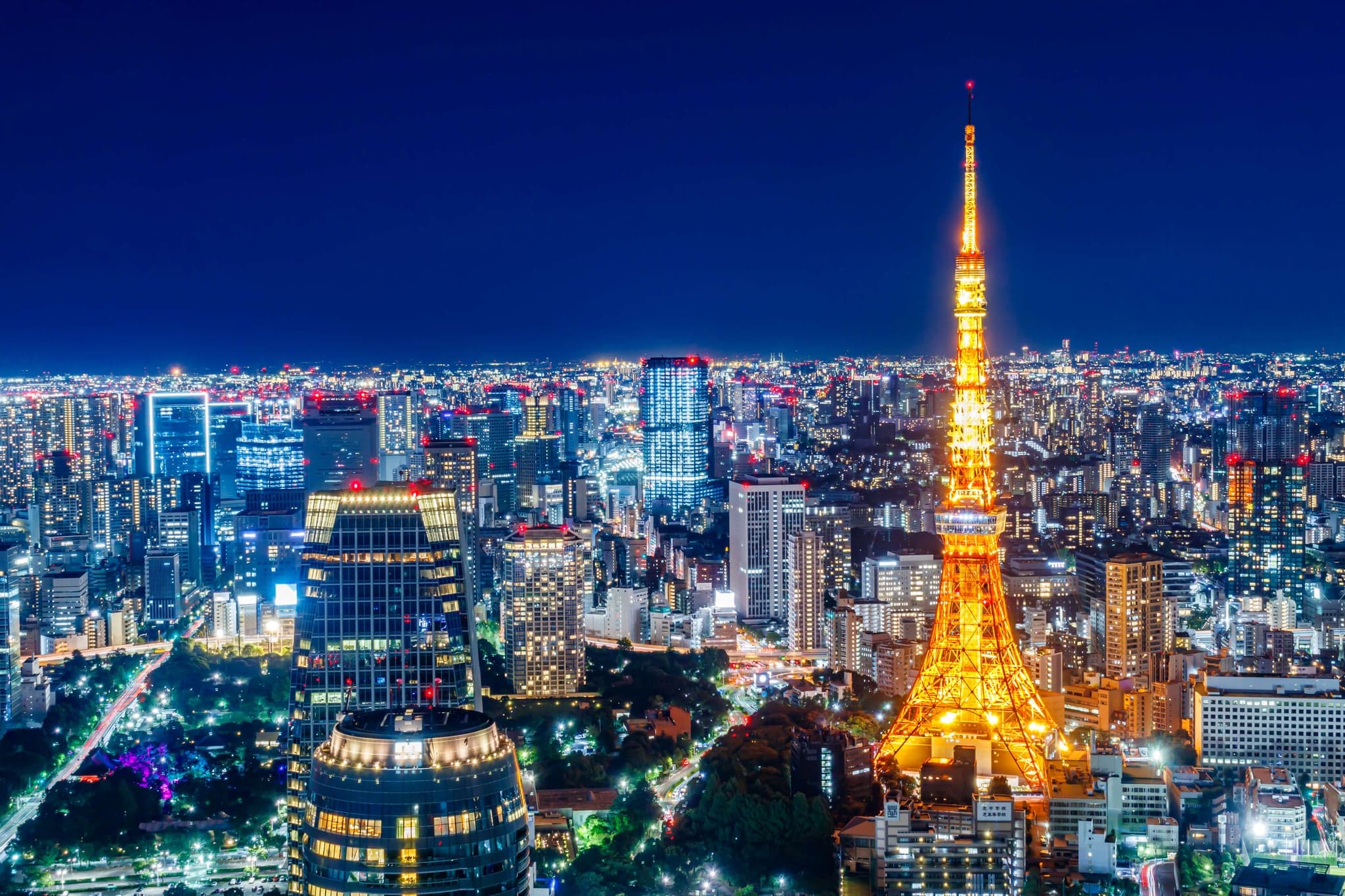
Tokyo at Night: The Best Night Views, Neon Streets and Nightlife, District by District
Where to see Tokyo at night: free and paid observation decks with current hours and prices, the neon districts, Golden Gai and the yokocho alleys, Tokyo Bay, late-night baths and kabuki, the last trains and taxi fares — and the 2026–27 winter night events.
Tokyo at night is the version of the city most people remember. Not the temples, not the shopping — the glow. Neon lights over a packed crossing, a skyline that goes on to the horizon, six-seat bars in alleys barely wider than your shoulders.
If you only have a few evenings, here's the short answer: watch the sunset from a high observation deck, eat at an izakaya or in a yokocho alley, then pick one nightlife district — Shinjuku, Shibuya or Roppongi — and stay there. Zigzagging across the city after dark costs you time, and once the trains stop it costs you money too.
Below are the decks worth paying for (and the free ones), the districts for drinks and live music, what to expect on the bill, and the unglamorous part: last trains, taxis and touts. Hours and prices were checked on each operator's official site on October 6, 2026.
Quick Answer: Tokyo at Night
- Best free night view: the Tokyo Metropolitan Government Building's South Observatory in Shinjuku, open until 22:00, plus the projection-mapping show on the building outside.
- Best paid view: SHIBUYA SKY (¥3,400 online for any evening slot; tickets go on sale two weeks ahead and sunset slots go first).
- Best nightlife for first-timers: Shinjuku — Omoide Yokocho for yakitori, then two or three bars in Golden Gai.
- Last trains: roughly midnight to 00:45; the last JR Yamanote trains from Shinjuku leave at 00:41 and 00:44.
- Taxis: ¥500 for the first kilometer, plus 20% between 22:00 and 5:00.
- One rule: never follow a street tout into a bar.
TMG deck
Free · to 22:00
Shibuya Sky
¥3,400 · to 22:30
Tokyo Tower
¥1,500 · to 23:00
Last Yamanote
~00:45
Tokyo at Night Works Best One District at a Time
Each nightlife district works like a small city of its own, and crossing town can take half an hour or more door to door. Group the sights that sit together:
- West (Shinjuku): the Tokyo Metropolitan Government Building, Kabukicho, Golden Gai, Omoide Yokocho.
- Southwest (Shibuya): the Scramble Crossing, SHIBUYA SKY, Nonbei Yokocho, clubs.
- Center (Roppongi): Roppongi Hills and Tokyo City View, international bars, with Tokyo Tower nearby.
- East (Asakusa): Senso-ji after the crowds, with Tokyo Skytree across the Sumida River.
- Waterfront (Odaiba and Shiodome): Tokyo Bay, the Rainbow Bridge and the bay cruises.
- Downtown (Ginza and Marunouchi): lit-up department stores, Tokyo Station and the winter street-tree lights.
A note on timing: department stores and many shops close around 8 p.m., but most places serving food and drink stay open long after that. That's when the night actually starts.
Night Views From Above: Tokyo's Observation Decks
Timing is everything. Go up about 30 minutes before the sun sets and stay through blue hour — one ticket buys you daylight, dusk and the whole city lighting up. In winter that's early: sunset in Tokyo falls between 16:28 and 16:46 in November and December, and between 16:38 and 17:35 in January and February.
| Deck | Hours | Adult price | Good to know |
|---|---|---|---|
| Tokyo Metropolitan Government Building, South Observatory (45F, 202 m) | 9:30–22:00 (entry until 21:30) | Free | Only the South deck is open at night (the North closes at 17:30). Expect a 20–30 minute queue. Closed 1st and 3rd Tuesdays, December 29–31 and January 2–3. |
| SHIBUYA SKY (Shibuya Scramble Square, 229 m) | 10:00–22:30 (last entry 21:20) | ¥3,400 online from 15:00 (¥3,700 at the counter); ¥2,700 / ¥3,000 before 15:00 | Timed tickets, on sale two weeks ahead. Bags, hats and tripods go in lockers; the open-air roof can close in wind, rain or snow. |
| Tokyo City View (Roppongi Hills Mori Tower, 52F) | 10:00–22:00 (last entry 21:30) | ¥2,200 online / ¥2,400 at the door | Indoor deck, so it works in bad weather. Closed October 27 and November 10–12, 2026; cheaper on October 28–30 and November 4–9. |
| Tokyo Tower Main Deck (150 m) | 9:00–23:00 (last entry 22:30) | ¥1,500 | The Top Deck Tour (250 m) runs to 22:45 and costs ¥3,300 online, ¥3,500 at the door. |
| Caretta Shiodome SKY VIEW (46F, about 200 m) | Elevator 11:00–23:30 | Free | A quieter bay view toward Odaiba and the Rainbow Bridge, from the restaurant floor. |
| Tokyo Skytree (350 m / 450 m) | Usually to 22:00; last entry one hour before closing | From ¥1,800 / ¥3,000 online (date-based); ¥500 more at the counter | The tallest, on the east side near Asakusa. |
Free night views at the Tokyo Metropolitan Government Building
The observatories are on the 45th floor, 202 meters up, and these free panoramic views are the best deal in Tokyo. At night only the South Observatory is open — the North one closes at 17:30 — so expect a queue of 20 to 30 minutes. The building is about a ten-minute walk from the west side of Shinjuku Station, or right above Tochomae Station on the Toei Oedo Line.
Don't rush off afterwards. "TOKYO Night & Light" projects animation onto the building's east face, which holds a Guinness record as the largest permanent projection mapping on a building. You watch from Tomin Plaza below, every night except in bad weather; from November to January the shows start every 30 minutes from 17:30 to 21:30, each about 15 minutes long. There's no ticket — just turn up.
One more free deck is coming back: the 25th-floor lounge at Bunkyo Civic Center has been closed for renovation since March 2025 and is due to reopen in early December 2026.
SHIBUYA SKY: book the sunset slot early
SHIBUYA SKY is located on the open-air roof of Shibuya Scramble Square, directly above Shibuya Station, on top of the building's shopping and restaurant floors. Adult tickets cost ¥3,400 online for entry from 15:00 (¥2,700 before), or ¥3,700 / ¥3,000 at the counter — and in winter every sunset and night slot is in the higher band. Tickets go on sale two weeks ahead, sunset slots sell out first, and if the online tickets are sold out, the counter is too. Bags, hats and tripods have to go in the 46th-floor lockers, and the roof can close for wind, rain or snow. Until December 25, 2026, a rooftop bar sells sofa seats with entry and drinks from ¥7,000 (minimum two people, 20 and over).
Tokyo Tower or Tokyo Skytree?
Tokyo Tower's Main Deck (150 m) stays open until 23:00, with last entry at 22:30, for ¥1,500. The Top Deck Tour to 250 m costs ¥3,300 online or ¥3,500 at the door. Tokyo Skytree goes much higher, with decks at 350 m and 450 m; prices change by date, starting at ¥1,800 (or ¥3,000 for both decks) online, with ¥500 more at the counter.
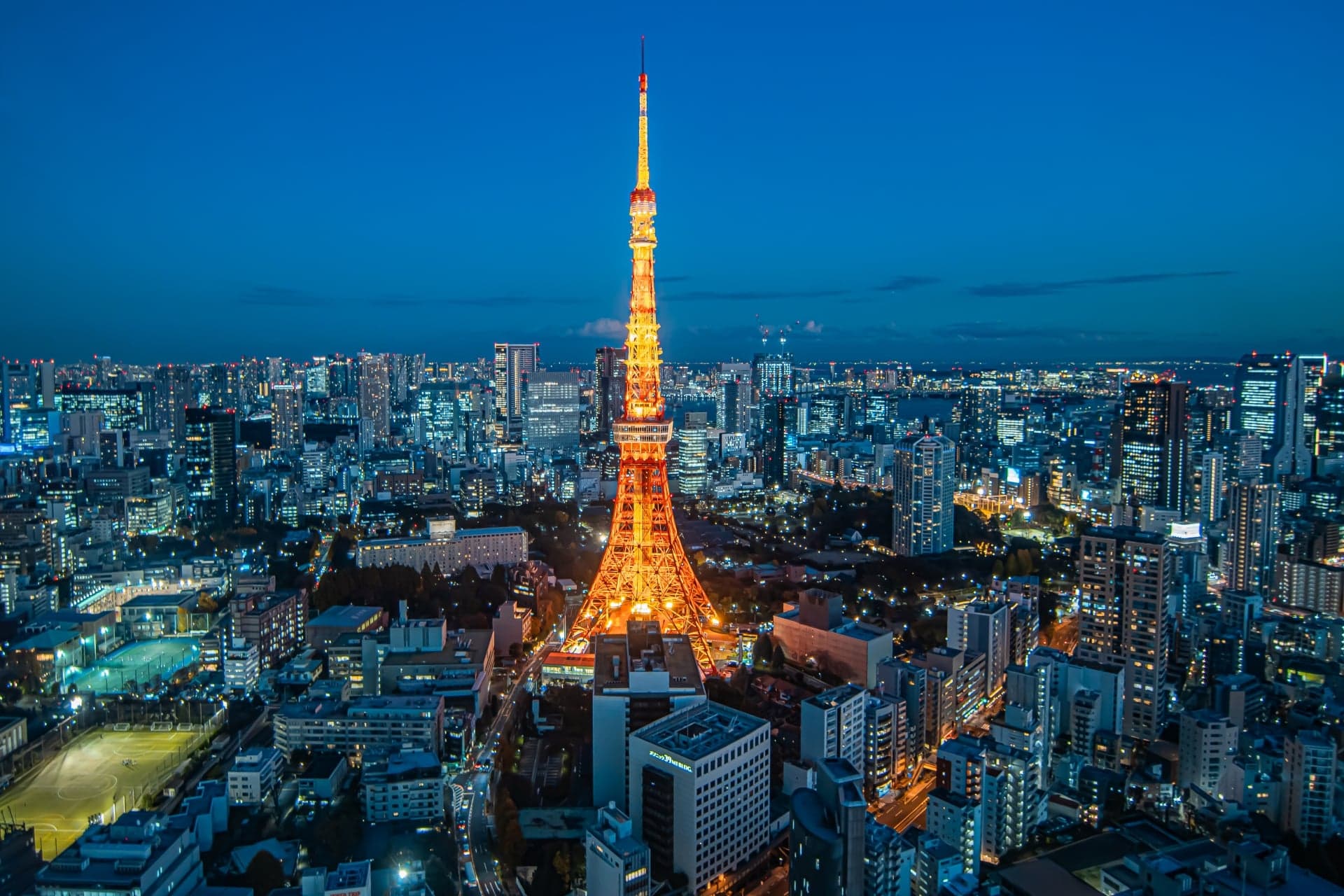
Honestly? Tokyo Tower is the better thing to look at, and Skytree is the better thing to look from. From early October the tower switches to its warm orange winter lighting. On Mondays and Thursdays from 20:00 to 22:00 it changes to a colored "Infinity Diamond Veil" — maple red in November, green in December — and every hour on the hour until midnight it sparkles white for two minutes.
Roppongi Hills: art and a view on one ticket
Tokyo City View, located on one of the top floors of Roppongi Hills Mori Tower (the 52nd), is indoors, so it's the deck to pick on a wet night. It closes at 22:00 (last entry 21:30). The Mori Art Museum on the floor above reopens on October 31, 2026 and stays open until 22:00 every day except Tuesday. On Roppongi Art Night (October 31 into November 1) both stay open until 6 a.m. From November 13 to February 14 the deck hosts a Little Prince exhibition. Then the restaurants, bars and clubs of Roppongi are right below — no train needed, and a good way to spend a whole evening in one place.
Neon Lights and Street-Level Tokyo
Decks give you scale. Streets give you noise.
Shibuya Crossing and the alleys behind it
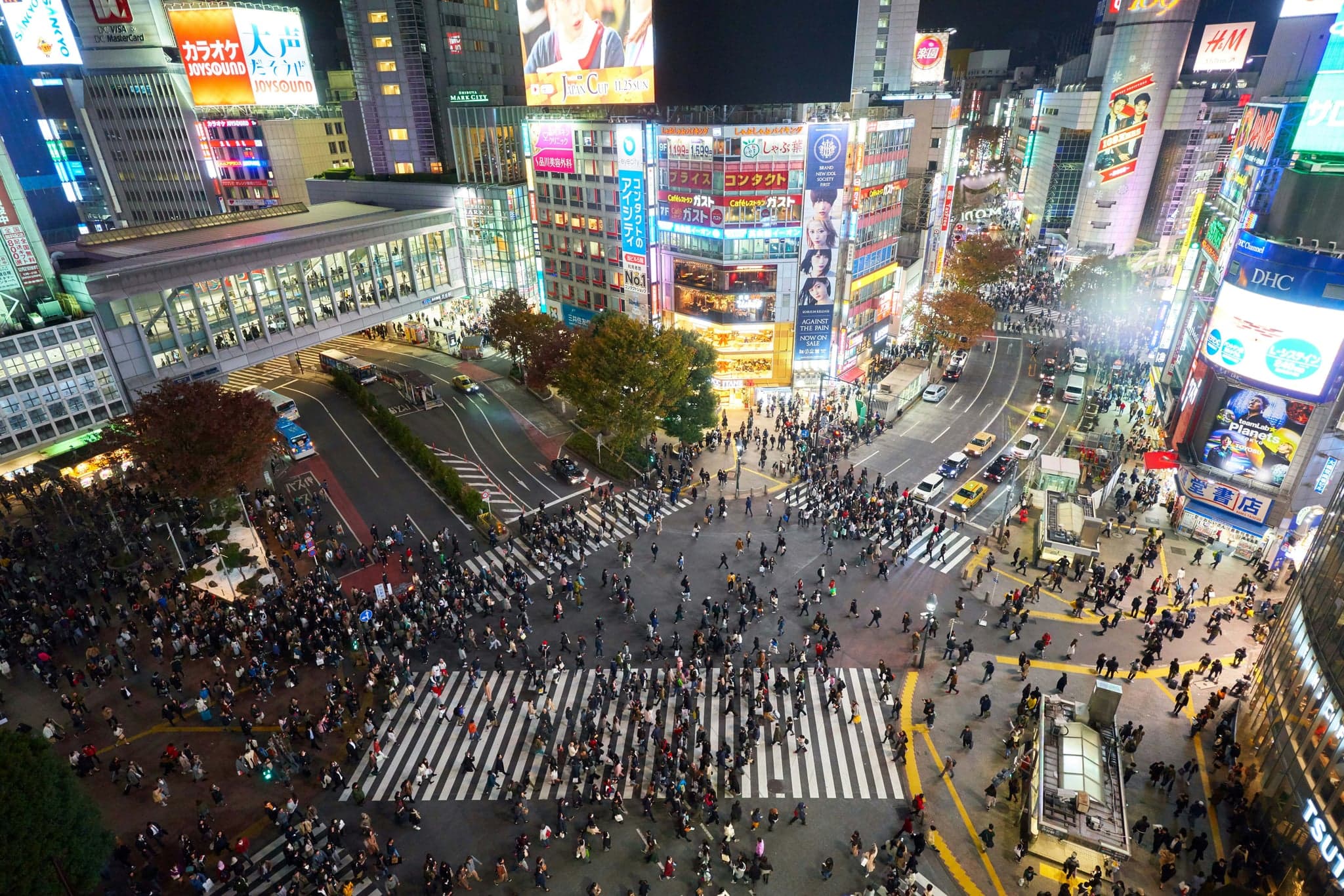
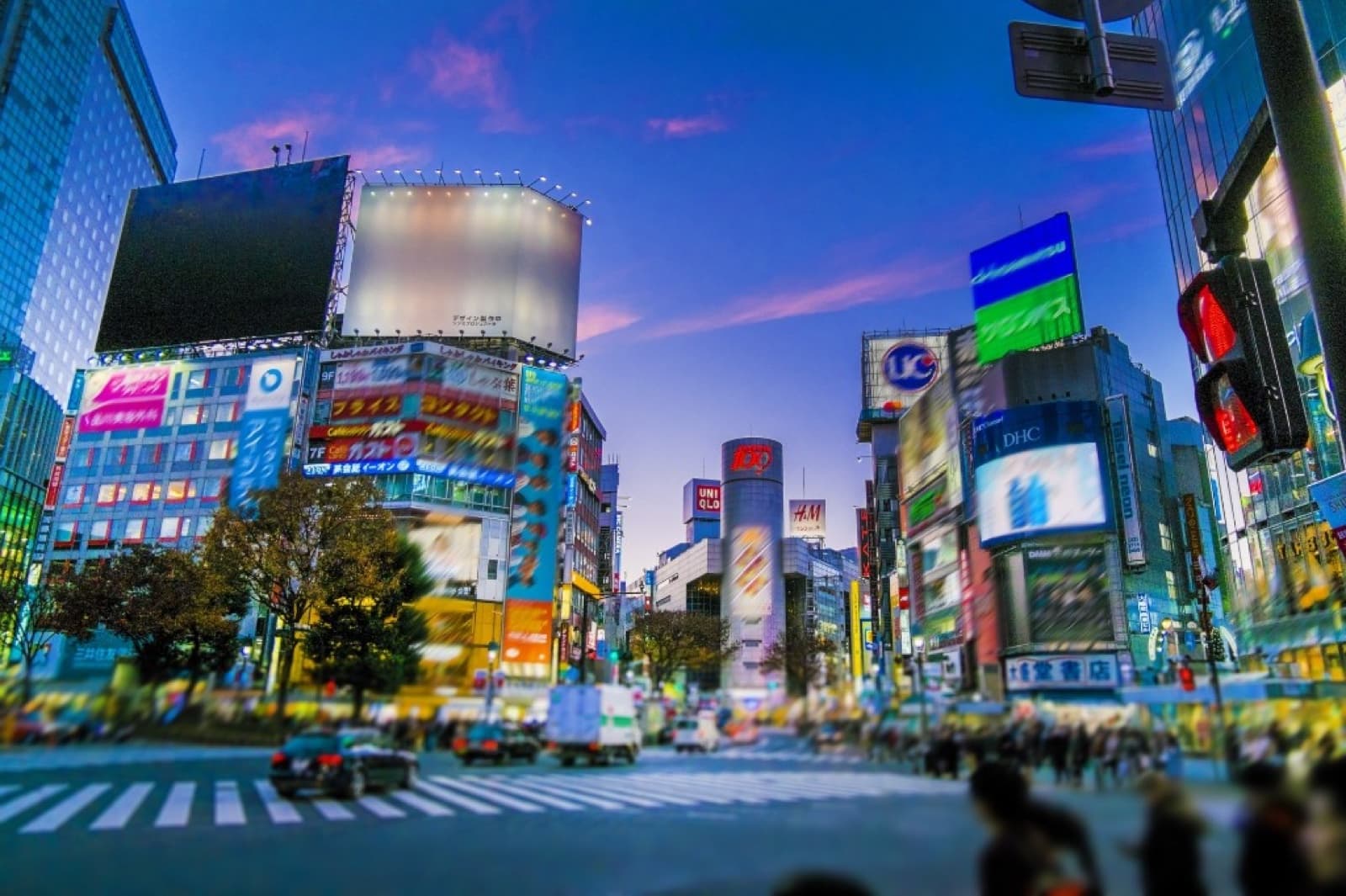
Cross the Shibuya Scramble at least twice: once to feel it, once to film it. The giant screens and bright lights look their best after dark, especially at weekends, and the streets around the station stay busy late. Then walk along the tracks to Nonbei Yokocho, two narrow lanes of tiny bars, or into Shibuya Yokocho in Miyashita Park, a brighter, indoor take on the alley. One rule to know: since October 2024, drinking on the street and in parks around Shibuya Station is banned every day, all year, from 18:00 to 5:00. Have your drink inside.
Shinjuku's neon (and why you ignore the touts)
Kabukicho, Tokyo's best-known entertainment district, sits just northeast of Shinjuku Station: arcades, neon signs, host-club billboards and the Godzilla head peering over the Toho cinema building. It's a great place to explore on foot and the streets are busy until late — just never follow anyone who approaches you on the street. Tokyo's police warn that touts targeting foreign visitors are on the rise, and that some lead you to partner bars that charge huge bills or misuse your card. Touting on the street is illegal in Shinjuku anyway. Choose your own venues and you won't need to worry.
Asakusa after the crowds
Senso-ji's main hall closes at 5 p.m., but the grounds stay open and the buildings are lit in the evening. By then the Nakamise stalls have shut and the daytime crush has gone home; it's dark, quiet and lovely. Tokyo Skytree is about a 20-minute walk away across the river.
Ginza and Marunouchi
For a calmer, grown-up evening, walk Ginza's main street past the lit department stores, then cross to Marunouchi. Tokyo Station's red-brick building is lit up after dark, and from November 12, 2026 to February 14, 2027 the street trees along Marunouchi Naka-dori glow champagne gold for the Marunouchi Illumination.
Tokyo Bay and the Rainbow Bridge
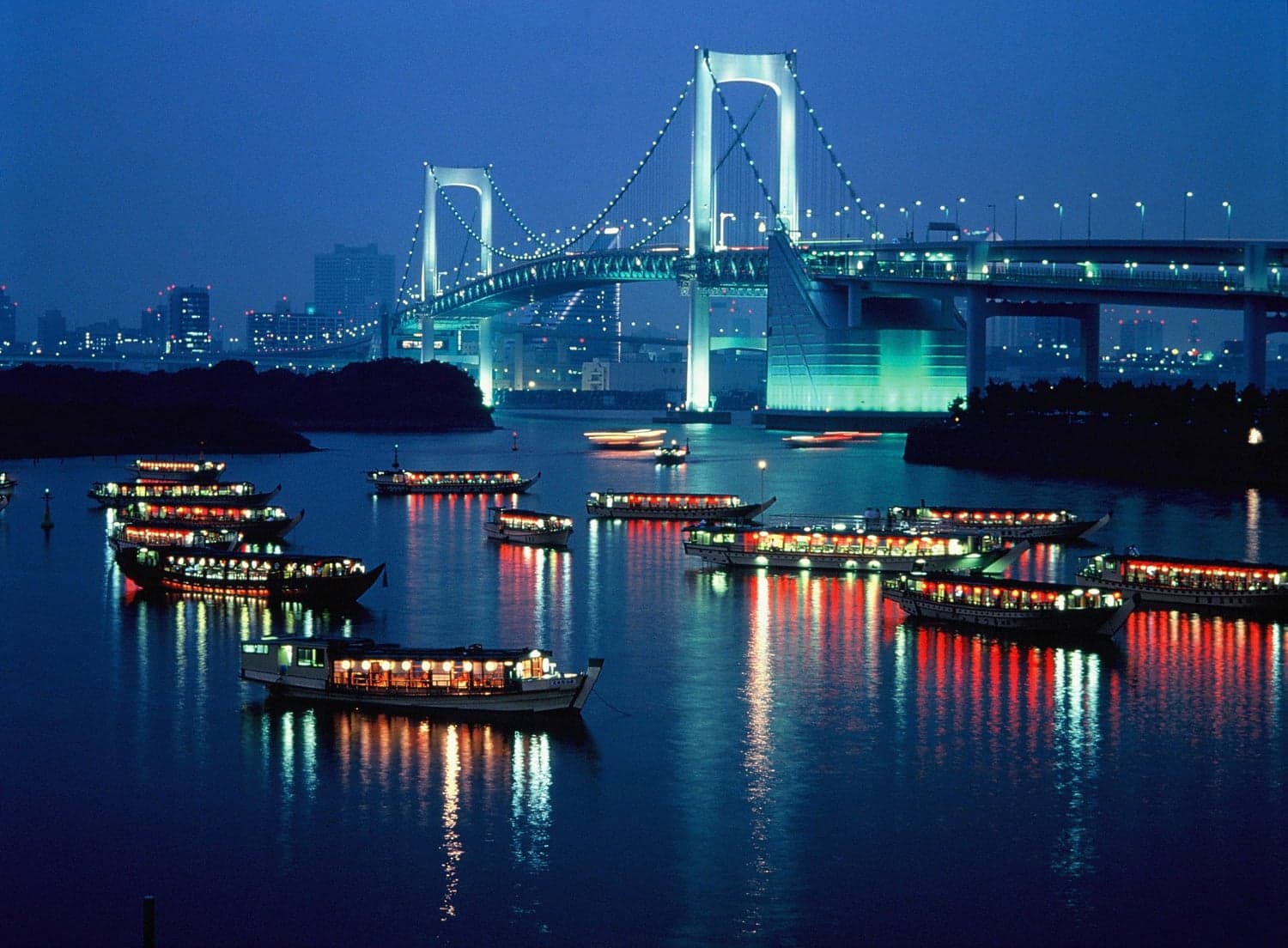
The Rainbow Bridge is lit from about 30 minutes after sunset until midnight; from November to March the towers glow a warm white. The classic view is from Odaiba Seaside Park, with the bridge in front and the city skyline behind it. There are free walkways across the bridge itself, but they close in the early evening in winter and shut in strong wind, so check the day's hours before you plan a sunset crossing.
For the view from the water, Symphony Cruise runs a dinner cruise from Hinode Pier, near Hamamatsucho, from 19:00 to 21:30, passing under the Rainbow Bridge toward Odaiba and the Tokyo Gate Bridge. You can ride without the meal for ¥4,400; dinner courses run from ¥14,000. There's also a sunset cruise from 16:20 to 18:20. For something more traditional, take a yakatabune tour: a wooden pleasure boat with a tatami room where Japanese food and drinks are served on board. Book either ahead, especially at weekends.
Tokyo Nightlife by District
Tokyo nightlife comes in pockets, not one long strip. Here's where to go for each mood.
Golden Gai: small bars in narrow alleys
Golden Gai is located just east of Kabukicho: a grid of narrow lanes packed with tiny bars, many seating only a handful of people, some up steep stairs. Most open around 19:00 and run late into the night. Expect a cover charge at many bars — some post it on the door, and it's fine to ask before you sit down. The lanes are private property and the local association bans smoking and drinking in the street, so ask before you photograph, and if a sign says members or regulars only, take the hint. Plenty of bars now have an English menu and English-speaking staff, so don't worry if you speak no Japanese. Two or three bars is the right number for one night; each has its own theme, so move around.
Omoide Yokocho: yakitori and smoke
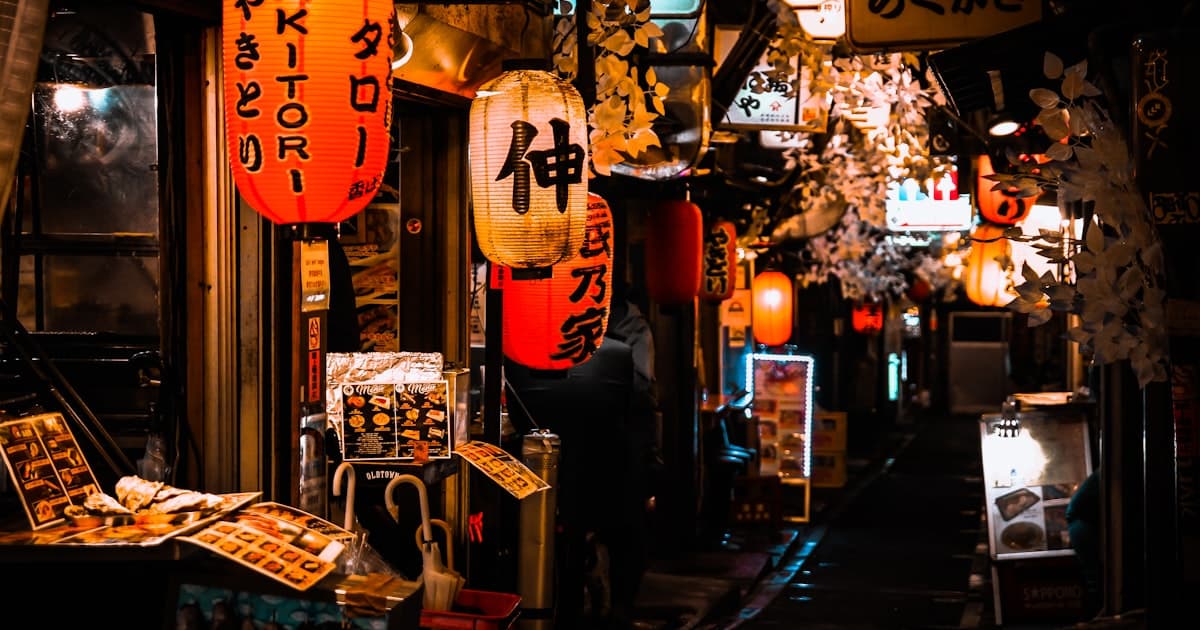
Right by the west exit of Shinjuku Station, Omoide Yokocho packs about 60 small eateries — mostly yakitori and grilled offal — into a few smoky lanes. Good food at fair prices and a taste of postwar Tokyo — it's the perfect first stop before Golden Gai. Know the house rules: some shops charge a seat fee (otoshi), some ask everyone to order one dish and one drink, some set a 90-minute limit, and many are cash only. See our Omoide Yokocho guide for how to pick a counter.
Roppongi: the international scene
Roppongi is the most international nightlife district, with pubs, sports bars, nightclubs and other clubs scattered around Roppongi Crossing. English goes a long way here, which helps first-timers. Carry your passport, because nightclubs check ID and the drinking age in Japan is 20 — and ignore the touts here too.
Shibuya clubs: younger and louder
Shibuya's clubs cluster on the slopes of Dogenzaka, and the crowd is young. Venues change names and owners often, so check the listings for the week you're in town rather than trusting an old roundup. Most clubs get busy after midnight, and big nights run until the first trains.
Live music and yokocho elsewhere
If you'd rather watch a band than a DJ, Blue Note Tokyo in Minami-Aoyama and Billboard Live Tokyo in Tokyo Midtown are the polished venues, with food and drinks served at your table (note that Tokyo Midtown closes from November 21 to 23, 2026 for construction work). For something rougher, Shimokitazawa and Koenji are full of small "live houses" with indie bands. Ebisu Yokocho is a lively covered alley of small restaurants near Ebisu Station; hours are set by each shop.
Art, Kabuki and Late-Night Baths
teamLab after dark
teamLab Planets in Toyosu, where you walk barefoot through water and mirrored rooms, is open 8:00–22:00 (last entry an hour before closing) and runs until the end of 2027. Adult tickets are listed at ¥3,800 with date-based pricing, and there are no tickets on site, so buy online. teamLab Borderless at Azabudai Hills usually closes at 21:00, but stays open until 22:00 on selected dates, including December 26–30; tickets are listed at ¥3,600, with ¥200 more if you buy on site. Planets is closed on November 5 and December 3, and Borderless on November 24 and December 8, 2026.
One act of kabuki
Kabuki-za in Ginza sells single-act seats (makumi-seki) on the 4th floor, so you can see one act — often an hour or two — instead of a whole program. Since October 2, 2026 these are reserved seats: they go on sale online from noon the day before (with a ¥110 fee per ticket), and about 20 seats are kept for sale at the window on the day, from 10:00 to 18:00, one per person, cards accepted. In October the single acts cost ¥1,500–4,000. The evening program starts at 16:30 in November and at 18:00 in December.
A hot bath at midnight
Thermae-yu, located in Kabukicho, is a large hot-spring bath complex on several floors, open 24 hours. Entry is ¥3,100 Monday to Thursday and ¥3,200 Friday to Sunday and on holidays, with a surcharge of ¥2,000–2,300 if you stay between midnight and 6 a.m. Its tattoo policy is looser than most: male visitors from overseas can enter if they cover tattoos with the venue's patch and show a passport, and women with fashion tattoos are admitted. Its outdoor baths have been out of use since October 4, 2026 because of an equipment fault, with no repair date given. Spa LaQua at Tokyo Dome City is open until 9 a.m. but refuses all tattoos.
Eating Well After Dark
Izakaya are Japanese pubs that take food seriously, usually with a wide selection of sake, shochu, Japanese whisky and beer. Most establishments add an otoshi, a small starter that doubles as a table charge of a few hundred yen. It isn't a scam — think of it as a cover charge, and remember there's no tipping in Japan. Chain izakaya near big stations often have tablet ordering with an English menu; tiny independent places may not, so your phone's camera translation is a lifesaver.
For a fine-dining night — kaiseki, an omakase sushi counter or a top-end Japanese restaurant — book weeks ahead; many high-end restaurants only take reservations, and some are on the top floors of the big hotels with a view to match. If you'd rather not plan, ramen counters, standing bars and 24-hour convenience stores mean you can eat at almost any hour. On smoking: bars and restaurants in Tokyo are non-smoking indoors by default. Only small owner-run bars with no staff, or places with a proper smoking room, can allow it, and a sign at the door tells you which.
Getting Home in the Early Hours: Last Trains and Taxis
Tokyo's trains don't run all night. Most lines run their last trains between about midnight and 00:45, and the first trains start again around 5 a.m. On the JR Yamanote Line from Shinjuku, for example, the last train toward Shibuya and Shinagawa leaves at 00:41 and the last toward Ikebukuro at 00:44 — the same on weekdays and weekends — and from about 23:15 many trains stop short of the full loop. Look up your own last train before you order another round, by when it leaves your station, not when you need to leave the bar.
Missed it? Taxis in Tokyo's 23 wards start at ¥500 for the first kilometer, then ¥100 for every 232 meters, and a 20% surcharge applies from 22:00 to 5:00, so a long ride back adds up. Taxi apps such as GO and Uber let you book and pay by card. Or stay out until morning: many karaoke chains in the big districts rent rooms through the night.
From our Japan travel team
Tokyo's trains stop for a few hours each night, roughly from midnight until about 5am, and a taxi across the city after 10pm carries a 20% surcharge. If your next day starts with an early shinkansen, save the late night for another evening and head back by train. Feel free to get in touch if you'd like help matching your nights out to the days with a later start.
Is Tokyo Safe at Night?
Generally, yes, and international visitors rarely have problems. The U.S. Embassy in Tokyo describes Japan as very safe, but asks visitors to take care in entertainment districts — it names Roppongi, Kabukicho, Shibuya and Ikebukuro — where reported incidents include spiked drinks, thefts and visitors pressured to pay huge bar tabs. Tokyo's police put it simply: do not follow street touts under any circumstance. Keep your drink where you can see it, check prices before you order, and save the numbers: 110 for the police in an emergency, and #9110 for police advice, with English available.
Tokyo Nights in Winter 2026–27
Already announced as of early October 2026:
- Roppongi Art Night: October 31 from 17:00 to 6:00 on November 1, with the Mori Art Museum and Tokyo City View open all night.
- Yomiuriland Jewellumination: from October 29, 2026; entry ¥1,600 online or ¥1,800 at the gate.
- Marunouchi Illumination: November 12, 2026 to February 14, 2027.
- Tokyo Christmas Market: Shin-Toyosu from November 20 and Shiba Park from December 4, both to December 25 — see our Tokyo Christmas Market 2026 guide.
- Rikugien Garden night viewing: November 25 to December 6, 18:00–20:30, ¥1,000 in advance online or ¥1,200 on the day — the autumn leaves lit up; see our Tokyo autumn leaves guide.
Roppongi Hills, Tokyo Midtown, Shibuya's "Ao no Dokutsu" and Ebisu hadn't announced their 2026 illuminations yet; our Japan winter illuminations guide is updated as they do. For the rest of the season, see Tokyo in winter.
Common Mistakes on a Tokyo Night Out
- Trying to cover three districts in one evening.
- Following a tout to a "cheap bar." Ever.
- Turning up at SHIBUYA SKY at sunset without a ticket.
- Planning on the old night favorites: the Unicorn Gundam statue in Odaiba was removed on August 31, 2026, and the Robot Restaurant has closed.
- Drinking on the street in Shibuya after 18:00.
- Leaving your passport at the hotel on a club night.
- Saving the observation deck for your last night, then getting rained out.
Three Sample Evenings
With limited time on your visit, plan one big night and one easy one. Book the timed things before you fly — SHIBUYA SKY, cruises, teamLab, kabuki and fine dining — and leave the bars unplanned.
- Shinjuku on a budget: the TMG South Observatory around sunset, then the projection show outside, yakitori in Omoide Yokocho and two or three Golden Gai bars. Almost all on foot.
- Shibuya sunset, Roppongi late: a sunset slot at SHIBUYA SKY, the Scramble when it's fully lit, Japanese food at an izakaya nearby, then a short train or taxi to Roppongi for Tokyo City View or a club.
- Ginza, the bay and a bath: one act of kabuki at Kabuki-za, a walk through the Marunouchi lights, or the Symphony cruise under the Rainbow Bridge — and a midnight soak at Thermae-yu if you're staying in Shinjuku.
From our Japan travel team
SHIBUYA SKY's sunset tickets go on sale two weeks ahead and are usually the first slots to sell out. Our self-guided tours include free days in Tokyo, so if your dates line up you can fit in a sunset slot, a jazz show or a Golden Gai evening without rebuilding the itinerary. Just ask and we'll help you slot it into your route.
Where Our Routes Stay in Tokyo — and What's Walkable at Night
Where you sleep decides how your nights go: a hotel within walking distance of the district you're out in means no watching the clock for the last train. These self-guided routes stay in different parts of central Tokyo, so you can walk back to your hotel room after a night out. On a self-guided tour your evenings are your own; our staff meet you at the airport with your trip documents, the tickets for the legs we book and a loaded IC card. No guide sets your schedule, though a local guide can be arranged as an option. Prices are per person and move with the departure date and room type.
| Route | Tokyo hotel | Nights in Tokyo | Length · from (USD) | At night |
|---|---|---|---|---|
| Japan Highlights & World Heritage (GR002) | Ginza — Hotel Monterey La Soeur Ginza or similar | 4 nights | 12 days · $3,300–4,800 | Walk to Ginza, Yurakucho and the Marunouchi lights; Tokyo Station is close. |
| Zen & Mt. Fuji Experience (EX003) | Shinjuku — Hotel Century Southern Tower | 2 nights | 7 days · $3,000–3,700 | Walk back from the TMG deck, Omoide Yokocho and Golden Gai. |
| SOLO Castles: Culture & Countryside (SL004) | Shinjuku — VIA INN SHINJUKU or similar | 4 nights | 15 days · $4,600–6,100 | A solo traveler’s base right in the nightlife district. |
| Japan Golden Route Highlights (BF001) | Shiodome — Mitsui Garden Hotel Shiodome Italia-gai or similar | 2 nights | 7 days · $1,200–1,800 | Near Tokyo Tower, the Caretta deck and the Yurikamome line to Odaiba. |
| The Art of Onsen: A Premium Japan Experience (HS003) | Hibiya — Imperial Hotel Tokyo | 4 nights | 11 days · $5,500–7,600 | Between Ginza and Marunouchi, an easy walk home from both. |
| Japan Highlights & World Heritage – Deluxe (GR102) | Akasaka-mitsuke — Hotel New Otani Tokyo | 4 nights | 12 days · $4,200–5,400 | A short taxi ride from Roppongi and Tokyo City View. |
Interested in a tour? Click the route name above, or search by route code in the top-right Search bar.
Choosing where to stay? Our where to stay in Tokyo guide compares the neighborhoods, and things to do in Tokyo covers the daytime.
Interested in seeing Tokyo at night as part of a bigger Japan trip? Get in touch through Plan My Trip on our self-guided tours site, and we'll suggest the tours that best fit your dates and plans.
FAQ: Tokyo at Night
Is Tokyo safe at night?
Generally, yes. The main risks for visitors are bars that street touts lead you to, mostly in Kabukicho and Roppongi, and spiked drinks. Never follow a tout, keep your drink in sight, and check prices before you order.
What time do the trains stop in Tokyo?
Most lines run their last trains between about midnight and 00:45 and start again around 5 a.m. The last JR Yamanote Line trains from Shinjuku leave at 00:41 and 00:44, on weekdays and weekends alike.
What time do bars close in Tokyo?
There's no single closing time. Many bars stay open well past midnight, Golden Gai bars typically run from about 19:00 until the early morning, and clubs often keep going until the first trains.
Where is the best free night view in Tokyo?
The South Observatory of the Tokyo Metropolitan Government Building in Shinjuku: 202 meters up, free and open until 22:00, with a projection-mapping show on the building outside. Caretta Shiodome's 46th-floor SKY VIEW is free until 23:30 and looks over Tokyo Bay.
Do I need to book observation decks in advance?
For SHIBUYA SKY at sunset, yes: tickets go on sale two weeks ahead and sunset slots sell out first. The TMG observatory is free with no ticket. Tokyo Tower and Tokyo City View sell tickets on the day, but booking online is cheaper.
Can you drink on the street in Tokyo?
Not around Shibuya Station: since October 2024 drinking in public places there is banned every day from 18:00 to 5:00. In Golden Gai, drinking in the lanes is also banned by the local association. Elsewhere, drink inside and keep it quiet.
Is Tokyo nightlife worth it on weeknights?
Yes. Clubs are busiest at weekends, but izakaya, bars and live music venues are open all week, and it's often easier to get a seat in Golden Gai midweek.
Checked on October 6, 2026 on the official sites of SHIBUYA SKY, Tokyo City View and the Mori Art Museum, Tokyo Tower, Tokyo Skytree, the Tokyo Metropolitan Government (observatories and TOKYO Night & Light), Bunkyo City, Caretta Shiodome, Shibuya City (street-drinking rules), the Omoide Yokocho and Golden Gai associations, the Tokyo Metropolitan Police Department, the U.S. Embassy in Tokyo, teamLab, Symphony Cruise, Shuto Expressway (Rainbow Bridge lighting), DiverCity Tokyo, Kabuki-za, Thermae-yu, Spa LaQua, JR East (timetables), the Tokyo Hire-Taxi Association, the Tokyo Metropolitan Government (smoking rules), Yomiuriland, Rikugien and Marunouchi; sunset times from the National Astronomical Observatory of Japan. Routes, hotels and prices are from our catalog on the same date. Photos: our own.
Related Articles
Things to Do in Tokyo: The Best Sights by Neighborhood, With Prices, Booking Rules and Day Trips
24 min read
Omoide Yokocho (Memory Lane) 2026: Hours, Prices & Best Yakitori Bars
8 min read
Where to Stay in Tokyo 2026: Best Areas & Neighborhoods by Traveler Type
16 min read