Tofukuji Autumn Leaves 2026: A Self-Guided Guide to Kyoto's Most Famous Maple Valley
If you only have room for one big maple spot in Kyoto, Tofukuji is probably it — a whole valley of thousands of maples seen from the Tsutenkyo Bridge. Here's the timing, the autumn surcharge, and how to see it without a two-hour queue.
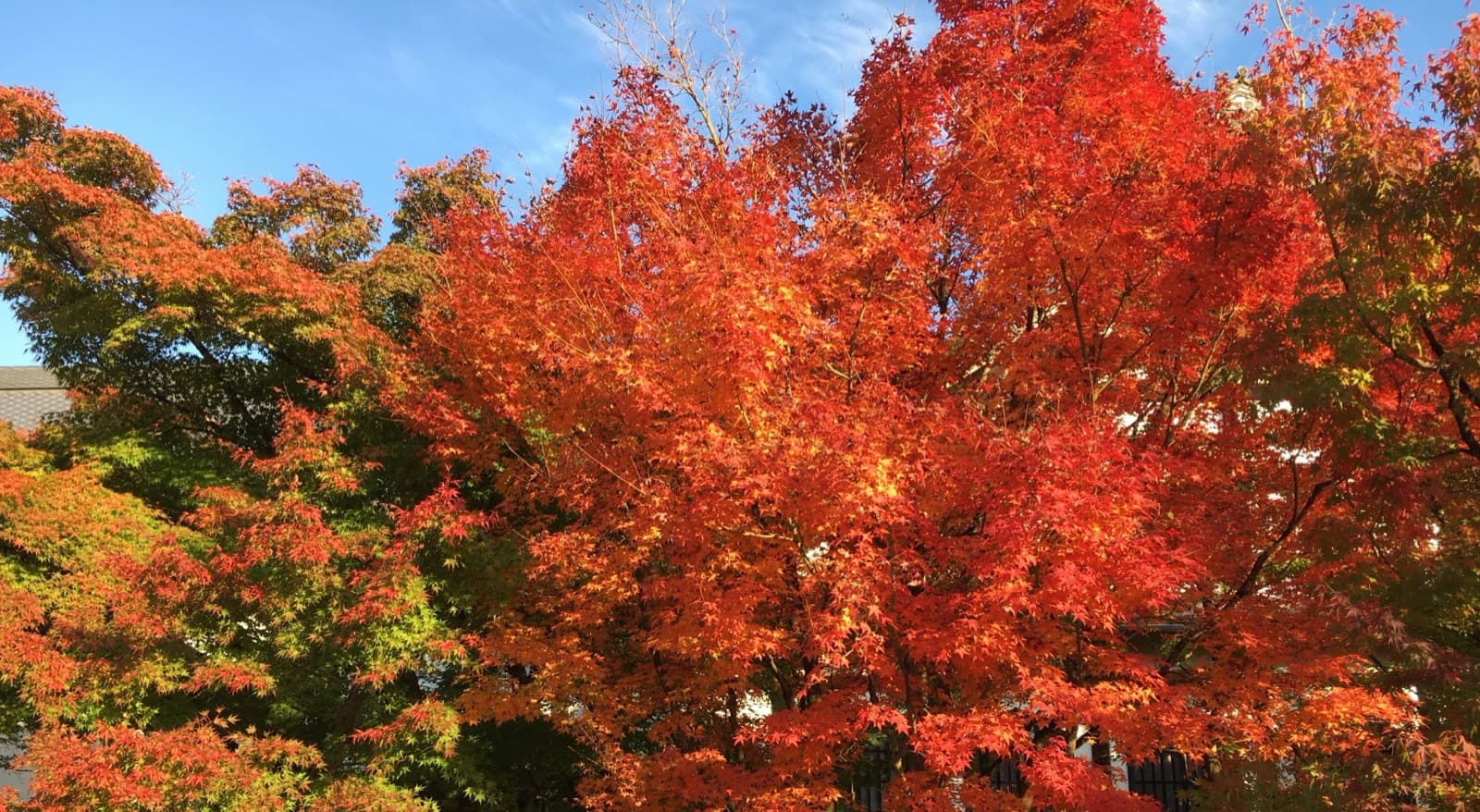
If you're planning a Kyoto trip for autumn 2026 and only have room for one big maple spot, Tofukuji is probably it. The temple's Tsutenkyo Bridge looks out over a valley of thousands of maples, and when the colour hits, the view is honestly hard to beat anywhere in Japan. For tofukuji autumn leaves 2026, plan around a window from mid-November to early December, with late November the safest bet.
The covered walkway gets extremely crowded at peak. If you want the classic red-leaf view from the bridge without a two-hour queue, aim for a weekday morning and get to the gate before it opens. This guide walks through the timing, the fees (which change during autumn), how to get there, what to see inside, and how to slot Tofukuji into a real self-guided Kyoto itinerary. For the wider picture, see our Japan autumn leaves forecast 2026 and Kyoto autumn leaves 2026.
🍁 Quick Answer: Tofukuji Autumn Leaves 2026
Peak is mid-to-late November 2026 (early December in a warm year). The Tsutenkyo Bridge over the maple valley is the view everyone comes for. Admission jumps to ¥1,000 during peak (Nov 15 – Dec 7), and the 8:30 a.m. autumn opening is your best weapon against the crowds — arrive at 8:15.
🍁 Peak
Mid–late Nov
🎟️ Autumn fee
¥1,000
🕗 Opens
8:30 a.m.
🚆 From Kyoto Stn
~3 min + walk
Why Tofukuji Is the Autumn Anchor of Eastern Kyoto
Tofukuji isn't just another temple with a few red trees out front — it's a working Zen complex with proper history. Founded in 1236 by the powerful Fujiwara clan, its name combines those of two great Nara temples, Todaiji and Kofukuji. It has long been one of Kyoto's principal Zen temples and is the head temple of its own Rinzai-school lineage. The 22-metre Sanmon Gate, dating to 1425, is the oldest Zen gate of its kind. Behind it, a valley cuts through the grounds — and lights up in colour when the maples turn.
When Do the Autumn Leaves Peak in 2026?
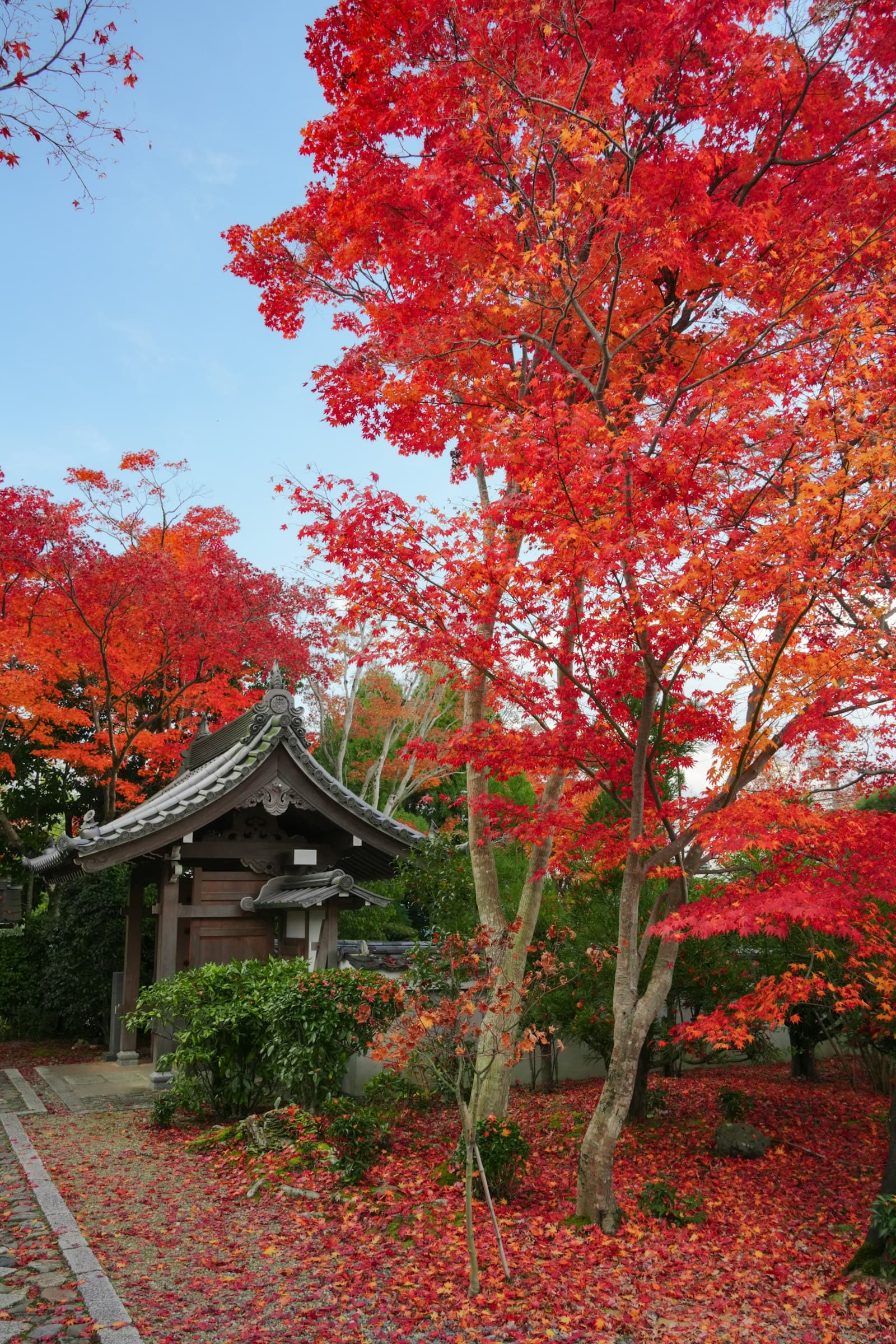
Kyoto's foliage season runs later than most first-timers expect — usually late November into early December, and later still in warm years. For Tofukuji specifically, mid-to-late November is the traditional sweet spot; if 2026 trends warm (as recent years have), the first week of December can still deliver strong colour in the deeper valley.
🍂 Tofukuji foliage, week by week
| Window | What to expect |
|---|---|
| Early October | Way too early. Trees still fully green — don't book around this. |
| Late October | Some early colour at higher-altitude spots, but not Tofukuji itself. |
| Mid November | First reds appear — good for mixed green-red-orange shots. |
| Late November | Peak, usually. The temple gets extremely crowded. |
| Early December | Often still excellent, sometimes better in warm years; crowds thin after the first Sunday. |
💡 The biggest mistake is arriving in early October expecting red maples — far too early for Kyoto.
Tsutenkyo Bridge: The View Everyone Comes For
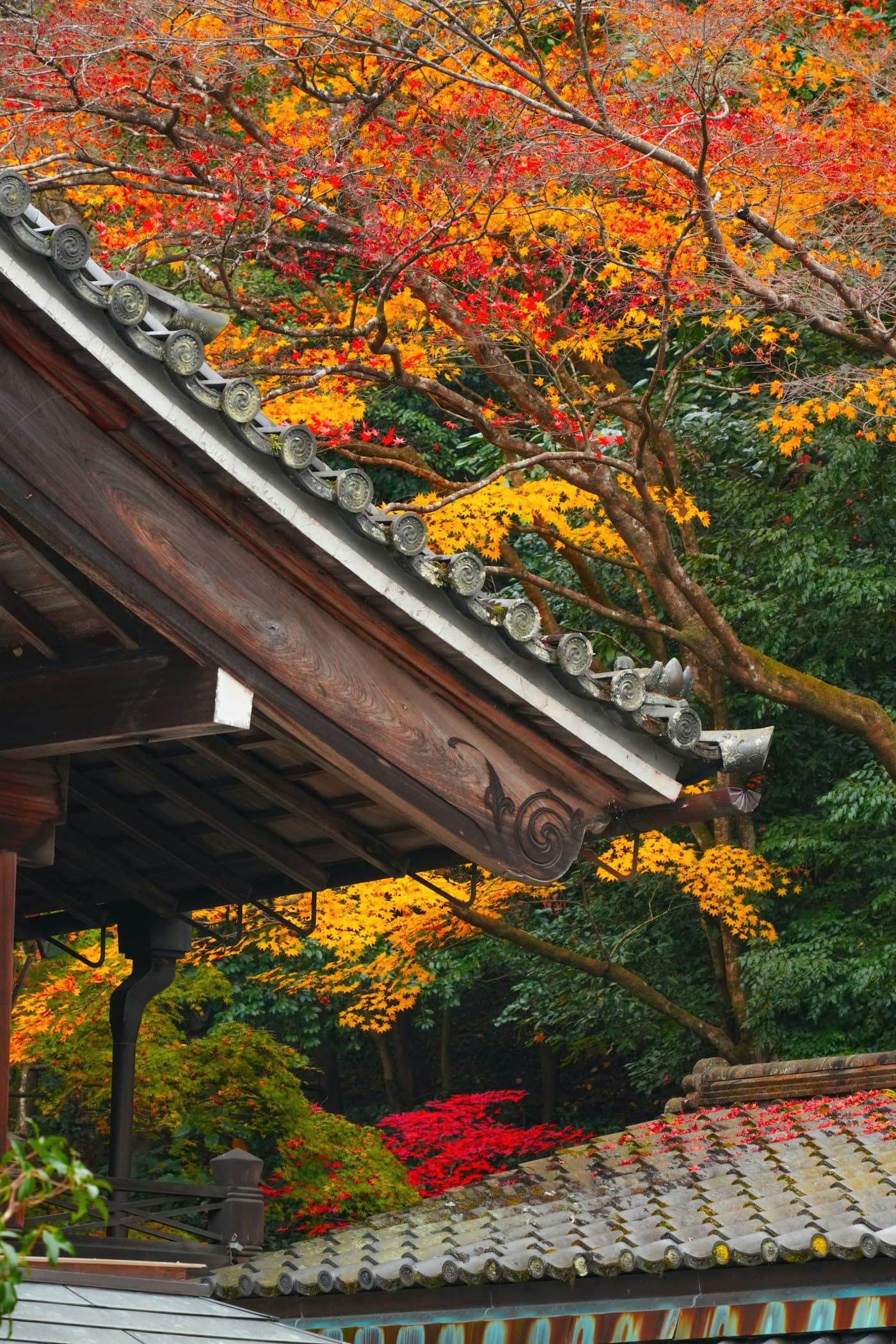
The Tsutenkyo Bridge is the money shot — a 100-metre covered wooden corridor spanning a valley lush with maples, connecting the main hall to Kaisando. Standing on it, you're essentially floating above a sea of maples: look one way to Kaisando Hall rising out of the trees, the other into layers of red, orange and yellow. At peak, photography on the bridge itself can be restricted to keep the crowd moving — take your shots from the nearby Gaun-kyo Bridge instead.
Hojo Garden and the Rest of the Grounds
Most people focus so hard on Tsutenkyo Bridge they forget there's a whole temple to explore. The Hojo Garden is a completely different vibe: a karesansui (dry-landscape) garden with four different designs on each side, created in 1939 by Shigemori Mirei — a mix of modernist grids (that famous moss-and-stone checkerboard) and classic Zen ideas. It's a quieter ticket and pairs beautifully with the bridge. Also worth a wander:
- Sanmon Gate — the oldest Zen gate in Japan, free to admire from outside.
- Hondo (Main Hall) — massive, though rebuilt in 1934.
- Kaisando Hall — at the far end of the bridge, with its own contrasting gardens.
There are three sections: the free temple grounds (with the massive Sanmon Gate), the Tsutenkyo Bridge & main buildings, and the Hojo Garden. The free area alone is worth a short walk on a tighter budget.
Admission Fees & Hours (Autumn 2026)
Fees jump during peak foliage. Based on the most recent operator information:
| Area | Normal | Autumn (Nov 15 – Dec 7) |
|---|---|---|
| Hojo Garden | ¥500 (¥300 child) | ¥500 (unchanged) |
| Tsutenkyo & Kaisando | ¥600 (¥300 child) | ¥1,000 (¥500 child) |
| Combination ticket | ¥1,000 | Not sold |
💡 Hours: 9:00–16:30 (Apr–Oct), 8:30–16:30 (Nov–early Dec), 9:00–16:00 (early Dec–Mar); last admission 30 min before close. Bring cash — card acceptance at older Kyoto temples is spotty.
How to Get to Tofukuji
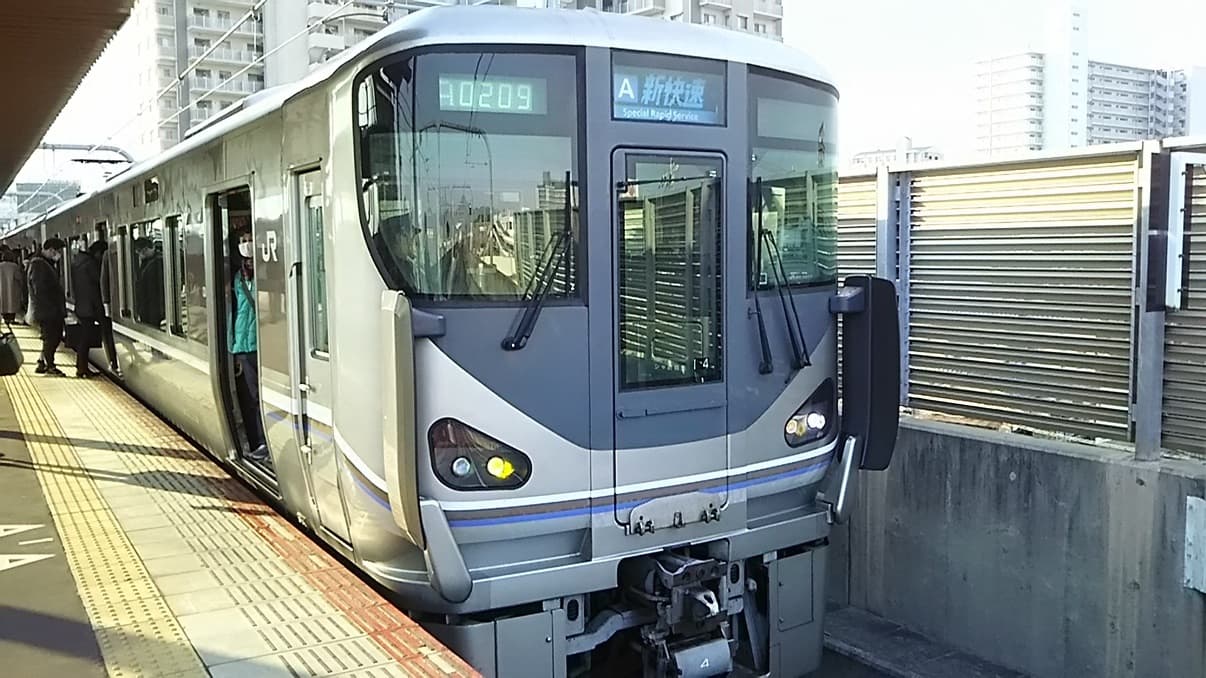
Easy access is one reason this temple pulls such big numbers — it sits in eastern Kyoto, close to Fushimi Inari. From Kyoto Station, take the JR Nara Line two stops to Tofukuji Station (about 3 minutes, ¥150), then walk ~10 minutes; the Keihan Main Line also stops there. From central Kyoto or Gion, use the Keihan Main Line to Tofukuji. City Bus 88 or 208 runs from Kyoto Station in ~15 minutes, but the bus is painful in November — take the train.
Beating the Crowds: What Actually Works
I'll be blunt — this place gets absolutely mobbed. On a peak Saturday in late November, expect long queues just to cross the bridge. What helps:
- Arrive before opening. Show up at 8:15 for an 8:30 gate.
- Pick a weekday morning. Any weekday beats any weekend.
- Skip Japanese public holidays. Domestic tourism doubles the crush.
- Try the last hour before closing. Fewer people, softer light.
- Enter through the free grounds first. Photograph the Sanmon Gate while the bridge queue thins.
Fitting Tofukuji Into a Self-Guided Kyoto Itinerary
Tofukuji works best as a morning stop. Combine it with Fushimi Inari (two stops south on the same line) for a strong half-day:
🗓️ Autumn half-day route
| 8:15 | Arrive Tofukuji Station, walk over |
| 8:30–10:00 | Tsutenkyo Bridge, Kaisando, Hojo Garden |
| 10:15 | Train down to Inari Station |
| 10:30–12:30 | Hike partway up Fushimi Inari |
| 13:00 | Lunch near Kyoto Station or in Higashiyama |
💡 Full-day extension: add quieter Sennyu-ji, or head north to Kiyomizu-dera. With two Kyoto days, pair Tofukuji + southern Higashiyama one day and the northern loop (Eikando, Nanzenji, Ginkakuji) the next.
💬 From our Japan travel team
At Tofukuji you can enjoy the autumn colour alongside plenty of sightseeing — pair the maple valley with Fushimi Inari, the great Sanmon Gate and the Hojo Garden. It's the maples set among classic Kyoto scenery, so take your time and soak it in.
Common Mistakes to Avoid
- Booking your Kyoto trip in early October and expecting foliage. October is a gap month for headline colour.
- Trying Tofukuji at midday on a weekend. You'll spend more time in line than looking at leaves.
- Buying the combo ticket without checking dates. It isn't sold during peak autumn.
- Underestimating travel time. Buses back to Kyoto Station crawl in November — use trains.
- Ignoring the free areas. The Sanmon Gate is one of Kyoto's most impressive temple structures and costs nothing.
For evening light-ups elsewhere in the city, pair this with our Kyoto autumn illuminations 2026 guide, and for the western district our Arashiyama autumn leaves 2026 guide.
After Tofuku-ji: Kyoto Without the Queue
Tofuku-ji is the most concentrated autumn crowd in Kyoto — the Tsutenkyo bridge genuinely runs on one-way pedestrian flow at peak. That ends in the first week of December, and the temple reverts to being a large, quiet Zen complex that almost nobody visits.
- The gardens are the year-round reason to come. Tofuku-ji's modernist Hojo gardens are considered among the finest twentieth-century Japanese gardens, and in winter you will often have them to yourself.
- Kyoto in winter. winter in Japan and Japan in December cover the season; snow on the moss is the payoff for the cold.
- New Year. Kyoto's temples and shrines are at their fullest of the year in early January — see Japanese New Year 2027.
Returning for the maples? Tofuku-ji peaks slightly later than northern Kyoto, usually late November into the first days of December. Track it with the autumn leaves forecast.
Self-Guided Routes for the 2026 Autumn Colour Season
The colour moves south for six weeks — Hokkaido in early October, the Japan Alps and Takayama in late October, Kyoto and Nara in the second half of November. These are the routes we run that follow it, with the month each one is built for.
| Route | Length | From (per person) | Why this autumn |
|---|---|---|---|
| Discover Hokkaido: Nature & Scenic Views (HD001) | 7 days | $3,700–4,300 | Sounkyo Gorge, Lake Akan and Shiretoko peak in early to mid October — the first colour of the season. |
| Spirit of Tradition: Shirakawa-go & Cultural Japan (GR009) | 14 days | $4,100–5,900 | Takayama for its Autumn Festival (9–10 October), Shirakawa-go in late October, Kyoto and Nara in November. |
| Japan Highlights & World Heritage (GR002) | 12 days | $3,300–4,800 | Kyoto and Nara at peak colour in the second half of November. |
| Cultural Essence: Kyoto & Kanazawa Short Escape (GR006) | 12 days | $2,800–4,200 | Kenrokuen and Kyoto within the same fortnight; the lowest-priced twelve-day route we run. |
| Koyasan: Sacred Sites and Quiet Beauty (KM003) | 12 days | $3,500–5,200 | Koyasan’s maples turn in early November. Departures run April to November. |
| Hot Springs & Highlights: Kinosaki & Gero (HS002) | 14 days | $4,300–5,700 | Kinosaki’s crab season opens on 7 November — colour by day, crab and the outdoor baths by night. |
Interested in a tour? Click the route name above, or search by route code in the top-right Search bar.
For the month itself, see Japan in October 2026 and Japan in November 2026; for the beds that sell out first in colour season, where to stay in Kyoto names the hotels our routes actually book.
Prices are per person on a twin-share basis from our current price list and move with the departure date; departure windows are as the catalogue listed them on 22 September 2026. Ask us for an exact quote for your dates.
Japan Trip Cost Calculator (2026)
Set your trip below — the estimate updates instantly. Yen prices are converted at a rounded ¥150 to the dollar; the market rate is about ¥157 in September 2026, which makes yen costs a few percent cheaper than shown.
Intercity is priced as point-to-point tickets unless you add the pass — on the Tokyo–Kyoto–Osaka route the pass usually costs more than the tickets.
Estimated total
$4,530
$2,265/person · $453/day · 2 travelers, 10 days
Your trip settings and estimate will be copied into an editable inquiry. Add your travel dates to ask for a free quote.
This is a DIY planning estimate, not a package price. Our tours have set itineraries and include the hotels and transport listed on each tour page. International flights are extra; meals, sightseeing and room arrangements vary by route.
Planning an autumn trip to Kyoto, when hotels and trains fill up early? Get in touch through Plan My Trip on our self-guided tours site, and we’ll suggest the tours that best fit your dates and plans.
FAQ: Tofukuji Autumn Leaves 2026
When is the best time to see Tofukuji autumn leaves in 2026?
Mid-to-late November is the traditional peak. In a warm year, the first week of December can still be excellent. Aim for a weekday morning.
How much does Tofukuji cost during autumn?
Tsutenkyo Bridge & Kaisando run ¥1,000 for adults during peak autumn (roughly Nov 15 – Dec 7), up from ¥600 the rest of the year. The Hojo Garden rises from ¥500 to ¥600 on 1 November 2026, so the higher rate applies throughout the autumn period (children ¥300 unchanged). The combo ticket is not sold during the peak window.
How early should I arrive at Tofukuji?
Get to the gate 10–15 minutes before opening. During autumn that's 8:30, so aim for 8:15. Turning up at 10–11 on a peak weekend means long lines to cross the bridge.
Can I visit Tofukuji and Fushimi Inari the same day?
Yes, easily — they're two stops apart on the JR Nara Line. Do Tofukuji first thing, then head to Fushimi Inari mid-morning.
Is October a good month for Tofukuji?
No. Early October is far too early for Kyoto maples, and even late October shows only the earliest hints. Push your trip into November.
Is Tofukuji free to enter?
Parts of the grounds, including around the Sanmon Gate, are free. Tsutenkyo Bridge, Kaisando Hall and the Hojo Garden all charge admission.
Turn This Into a Real Itinerary
Tofukuji is a strong anchor for your Kyoto days but not a full plan on its own. We build detailed self-guided routes that connect Tokyo, the Japanese Alps and Kyoto around the moving foliage front — train tickets, hotel picks and daily maps built in.
💬 From our Japan travel team
Tofukuji is a dawn game in peak weeks — the difference between an 8:30 arrival and an 11:00 one is a photo versus a queue. Book Kyoto 4–6 months ahead for late November, and we'll sequence Tofukuji + Fushimi Inari as a clean early-morning half-day before the crowds land.
Peak-foliage timing per the Japan Meteorological Corporation koyo forecast; Tofukuji admission fees, autumn surcharge dates (Nov 15 – Dec 7), opening hours and access per the temple's official operator information. Dates and fees shift year to year — confirm the current-year schedule before booking non-refundable travel. Last updated: July 2026.