Osechi: A Traveler's Guide to Japanese New Year Food and How to Actually Try It
Japan pauses from 31 December to 3 January, and the food on every table is osechi. What the dishes mean, and five realistic ways to eat it when you don't have a Japanese grandmother in the kitchen.
If you're planning a Japan trip that lands anywhere near January 1, you'll bump into a word that shows up on every hotel menu, konbini poster, and department store banner: osechi. It's the country's most important meal of the year, and it looks nothing like a regular restaurant plate. Understanding it changes how you plan those first few days of the year.
🥢 The short version
Osechi ryori is a traditional Japanese New Year meal made of symbolic dishes meant to bring luck, health and prosperity, eaten over the first few days of January. It comes packed in lacquered boxes, it's served cold, it's built to last, and it's eaten at home with family rather than at a restaurant. For visitors, that last part is the tricky bit — and it has a workaround.
This guide walks through what osechi actually is, how to experience it as a traveler, and how to fold it into a self-guided itinerary that still works when half the country shuts down for the holiday.
What Is Osechi, and Why Does It Matter for Your Trip?
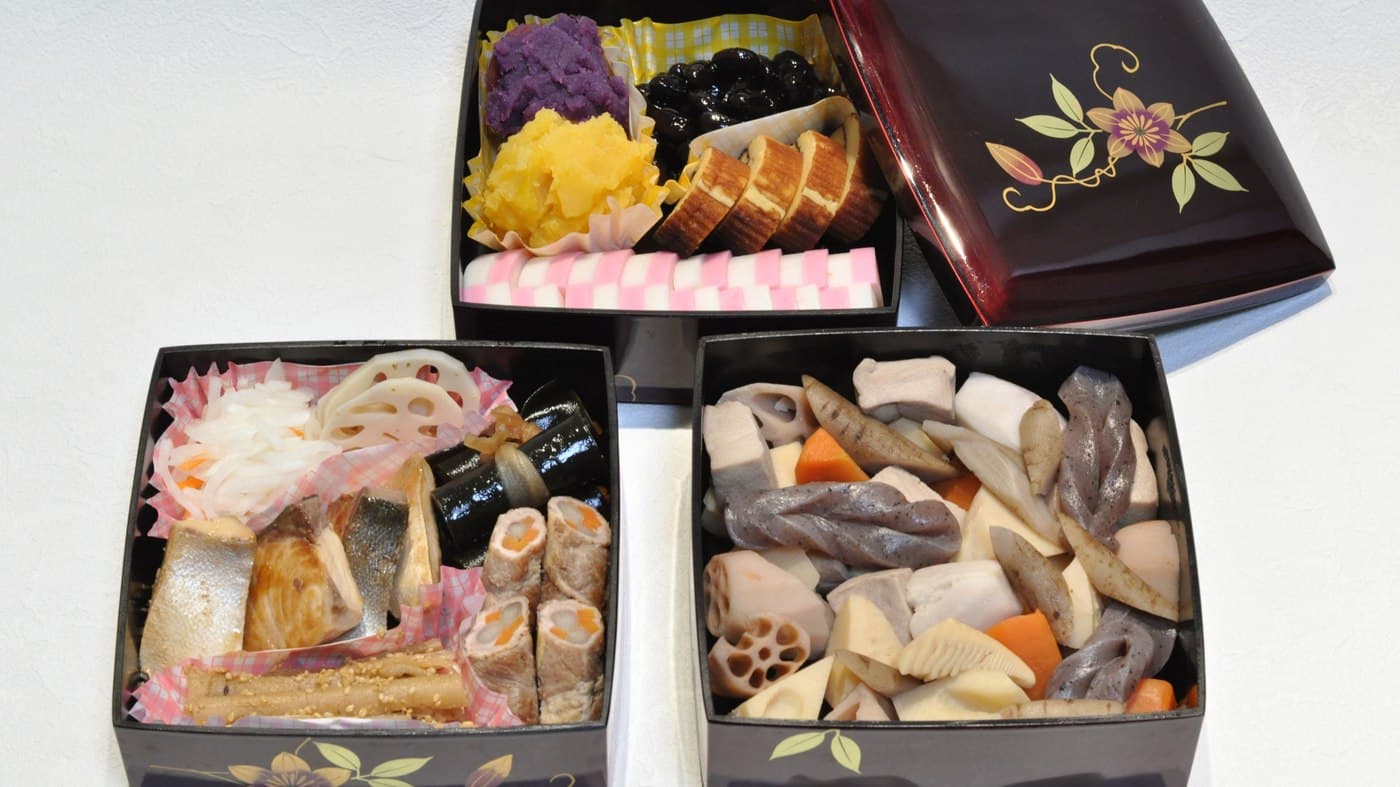
Osechi is not one dish. It's a curated set of small dishes, each with a meaning attached, served in elaborate multi-tiered lacquered boxes and eaten over the first three days of the New Year. Think of it as a symbolic bento designed for a holiday when nobody wants to cook.
Why should a traveler care? Because Japan effectively pauses from December 31 through January 3. Small restaurants close. Family-run shops shutter. If you don't know what osechi is, you might spend three days wondering why every hotel breakfast suddenly features tiny colourful boxes. Once you get it, the holiday actually becomes fun to travel through.
The Name, and a Very Short History
The word osechi derives from osechiku, which referred to special foods offered to the gods during important seasonal festivals — thanks for the previous year's harvest, and a prayer for fortune, health and prosperity in the year ahead. Over time the New Year became the most important of those festivals, and osechi ryori came to mean the New Year cuisine specifically.
The tradition is genuinely ancient. Its origins trace back over a thousand years to the Heian period (794–1185), when it began as court ritual food. Fires were not to be used in the first days of the year — except to heat ozoni — so food had to be prepared in advance. Early osechi was limited to preserved pickles and nimono, simmered in soy sauce and dashi.
That constraint explains the flavour profile you'll meet in the box: sweet, salty or vinegared, because it had to survive several days without a fridge. By the Edo period the custom had spread beyond the samurai class, its core dishes had settled, and the name came to refer only to New Year food.
The Jubako: Stacked Boxes with a Purpose
Open any osechi photo and you'll see the same thing: stacked boxes in black or red lacquer. Jubako literally means "tiered boxes", and stacking carries the auspicious sense of piling up happiness. Three- and four-tier sets are the common formats.
Each tier has a job. The top tier holds celebratory nibbles. The second — ni no ju — traditionally carries vinegared and grilled items. Lower tiers handle simmered vegetables and proteins.
And the bottom tier is usually left empty on purpose, as a gesture inviting good fortune into the coming year. Leaving a whole tier empty feels wrong the first time you see it. That is precisely the point.
The Dishes, and What Each One Means
There's no single canonical list — recipes shift by region and household — but a few items show up in nearly every box. These are the ones you'll actually encounter.
Kuromame — sweet black soybeans
Black soybeans simmered slowly in soy sauce and sugar. Mame, the word for bean, sounds like mamemameshii, meaning diligent, so eating them is a wish for healthy diligence in the year ahead. One of the three headline dishes in Kanto-style osechi.
Kazunoko — herring roe
Tiny crunchy yellow eggs that hold the shape of the roe sac, marinated in dashi, sake and soy sauce and topped with bonito shavings. Each sac holds around 20,000 eggs, so kazunoko symbolises many children. Chewy, briny, and honestly addictive once you're past the texture.
Kurikinton — candied chestnuts and sweet potato
Bright, glossy and gold. Candied chestnuts folded into mashed sweet potato, dyed golden with gardenia pods. The colour is a wish for prosperity, and the sticky sweetness makes it the children's favourite. If you've never had sweet potato as dessert, this is a friendly entry point.
Ebi — simmered shrimp
Cooked bent in half so the back curves. That curve is the whole point: it evokes an elder's stooped posture, a wish to live until your beard turns white. Simmered in dashi and mirin, it also brings red to the box.
Kamaboko — red and white fish cake
Sliced fish paste in alternating pink and white half-moons. Red wards off evil, white stands for purity. Mild and springy — the thing you eat between richer bites.
Datemaki — sweet rolled omelette
It looks like tamagoyaki, but one bite tells you otherwise: datemaki is mixed with hanpen fish cake, which makes it far fluffier. Rolled like a scroll, which links it to learning and study.
Gobo and renkon — burdock and lotus root
Burdock roots grow deep and hold firm, so gobo stands for strength and stability. Lotus root earns its place differently: the holes let you see through to the future. Together the root vegetables anchor the more substantial tier.
Namasu — pickled daikon and carrot
Thin ribbons dressed in sweetened vinegar, the red-and-white pairing echoing celebration. After a few salty bites this is the palate cleanser you didn't know you needed.
Tai — sea bream
A celebration fish through wordplay: it comes from medetai, to celebrate. Grilled whole, it usually sits alongside the jubako rather than inside it — too big to fit.
Nishime — simmered vegetables
Taro, carrot, shiitake, konnyaku and more lotus root, cooked together in one shared dashi. The mix symbolises family unity: different ingredients, one pot.
Tazukuri — candied sardines
Small dried sardines finished in sugar, mirin, soy and sake, eaten heads and all. The word gomame can mean "50,000 ears of rice", so they stand for a bountiful harvest. Crunchy, sweet, sticky.
Kagami Mochi: The Decoration You'll See Everywhere
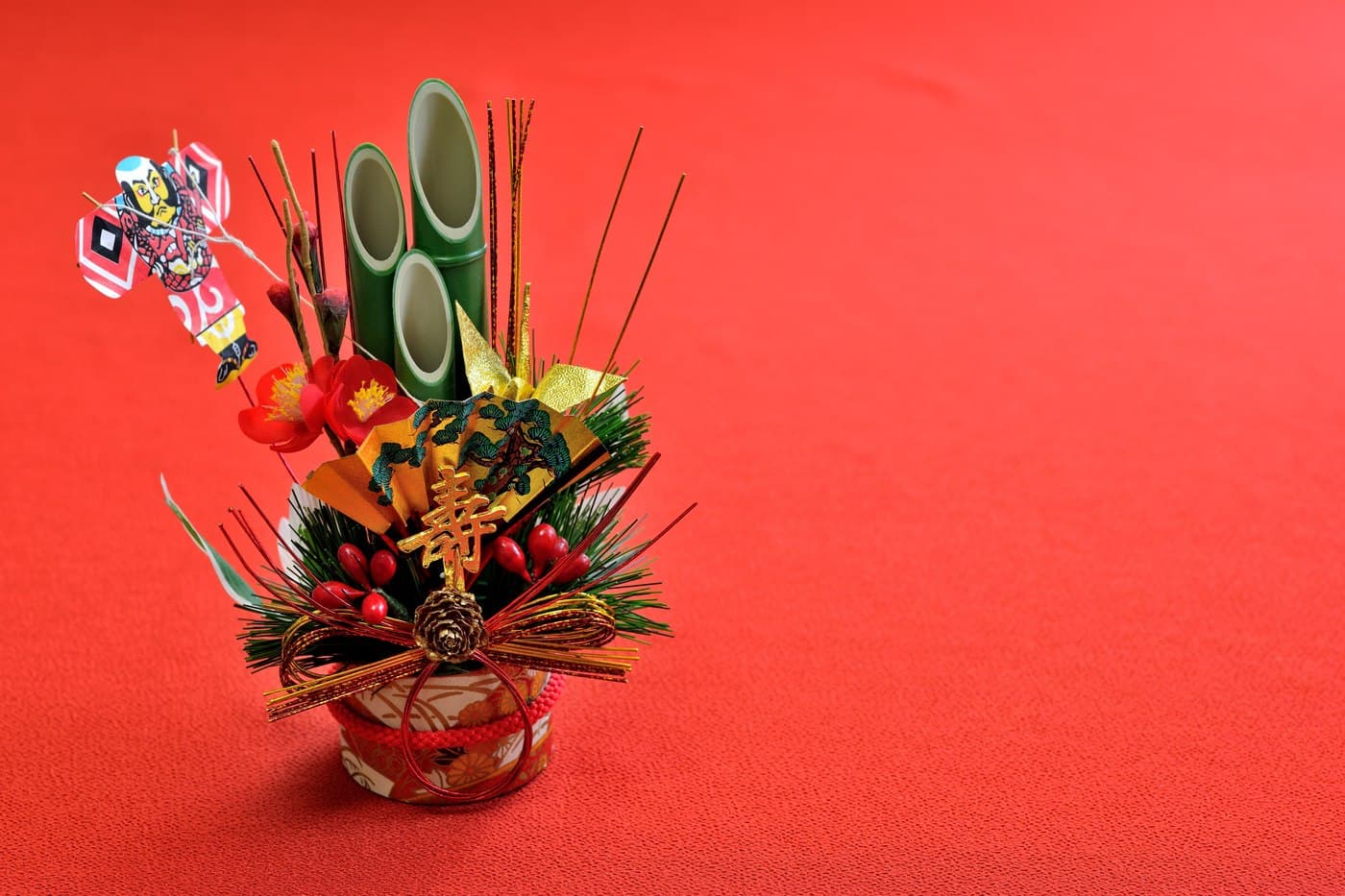
You'll spot these in hotel lobbies, shrines and shop entrances all through January. Kagami mochi — "mirror rice cake" — is two round mochi stacked smaller-on-larger, topped with a daidai bitter orange and its leaf.
The two cakes stand for the year just gone and the year to come, while daidai is a homonym for "generation to generation", celebrating long life and the continuity of a family.
It isn't eaten straight away. Later in January, families crack it open in a ritual called kagami-biraki and eat the pieces in soup — zenzai, sweet red bean soup with mochi, or ozoni.
Toshikoshi Soba: The New Year's Eve Warm-Up
Before osechi comes another ritual meal. On New Year's Eve, families eat toshikoshi soba — literally "year-crossing" buckwheat noodles in a clear broth.
The usual explanation is that soba is easily bitten through, making a clean cut between one year and the next and leaving the past year's regrets behind. Another reading: the long thin noodles stand for a long life.
Practically speaking, this is the easy one. Most soba shops that stay open on the 31st serve it, and convenience stores sell instant versions. If you want one guaranteed New Year food you can actually order in a shop, this is it.
Eastern Japan vs Western Japan
There are fewer strict rules than you'd expect — recipes shift household to household — but there is a rough east/west split.
The three celebratory dishes for the top tier in the Kanto area around Tokyo are black soybeans, herring roe and candied sardines. In Kansai the first two are generally joined by pounded burdock instead. So the east leans on tazukuri; the west swaps in tataki gobo.
The ozoni soup changes too. Kanto uses a clear broth with square, grilled mochi. Kansai uses white miso with round mochi. Same holiday, two very different bowls — worth knowing if you're moving between Osaka and Tokyo over the holiday.
When Osechi Is Eaten: The Timeline
📅 A traveler's calendar
- December 28–30: kagami mochi goes up; shops fill with osechi displays.
- December 31: toshikoshi soba for dinner; osechi delivered or collected.
- January 1–3: the osechi spread stays on the table. Family visits, shrine visits, first-sunrise viewing (hatsuhinode).
- Around January 11 (varies): kagami-biraki — the mochi is broken and eaten.
Every dish in the box carries its own wish: longevity, prosperity of descendants, a good harvest, success, money. Eaten together, they add up to a year's worth of hopes on one table.

Five Ways a Traveler Can Actually Try Osechi
This is where most guides go vague. Here is the practical version, easiest first.
1. Hotel breakfast
The easiest path by far. Many hotels put small portions of osechi on the Japanese breakfast buffet on January 1 and 2 — low risk, small servings, staff on hand to tell you what everything is. Ask the front desk when you check in.
2. Depachika — department store food halls
The best hack in this guide. Food halls at Isetan, Takashimaya and Daimaru sell osechi by the item — a scoop of kuromame, a slice of datemaki, a piece of kamaboko — so you can build a mini box for two without paying for a full set.
Mind the opening dates. Daimaru Tokyo, Takashimaya and Matsuya Ginza have all started their New Year sales on the 3rd in recent years, so plan for the 1st and 2nd being quiet. Buy on the morning of December 31 if you want a sure thing — food halls often open even when the retail floors don't.
3. Convenience stores
Genuinely. 7-Eleven, Lawson and FamilyMart all take osechi reservations in autumn for late-December collection. Not the fanciest version you'll ever eat, but reliable and cheap.
4. Order ahead from a shop or restaurant
Osechi is home cooking, so you will not find it on a normal restaurant menu. Where you can eat it out is a handful of ryotei and hotels — and those bookings open months in advance, which is the part that catches travelers out. Specialty shops selling boxes to take away work the same way.
To give you the shape of it: for the previous New Year, DEAN & DELUCA took reservations from 19 September to 11 December, with pickup in Roppongi, Shinjuku, Kyoto, Osaka and Fukuoka.
Expect a similar window for the 2027 boxes — reservations typically open in September and close in early to mid-December. If you arrive late in the month, this route is already shut. Confirm current dates on the retailer's own site.
5. Stay at a ryokan
Book a traditional inn for January 1 or 2 and osechi often arrives as part of the kaiseki dinner or New Year breakfast. Plenty of Japanese families travel to a ryokan for exactly this reason. It's the closest you'll get to a home-style spread — see what a ryokan stay actually includes before you book.
Common Mistakes Travelers Make Around New Year
- Assuming restaurants will be open. Chains and hotel restaurants stay open; small izakaya often close for three to five days.
- Trying to order ozoni in a restaurant. It's fundamentally a home-cooked dish and rarely a menu item. If it turns up at a hotel breakfast, count yourself lucky.
- Booking an osechi delivery to a hotel. Frozen packages, bulky boxes, nowhere to thaw them. Don't.
- Expecting it hot and fresh. Osechi is cold, salty, sweet and preserved. That is the design, not a fault.
- Ignoring shrine crowds. Hatsumode draws millions. Meiji Jingu on January 1 is not a peaceful moment.
Should You Try Making Your Own?
If you're in an apartment rental with a kitchen and you want the project, start with a few dishes that carry clear meanings — kuromame for health, kazunoko for family. Most ingredients turn up in Japanese and Asian grocery stores, and local substitutes cover the gaps.
Realistically, though: even in Japan plenty of families buy ready-made sets, or mix shop-bought dishes with a couple of homemade ones. If locals are outsourcing, so can you. Building your own box from depachika pieces is the traveler-friendly middle path.
Fitting Osechi Into a Real Itinerary
A practical five-day shape for a Tokyo-based trip over the holiday:
- Dec 30 — Arrive. Stock up on snacks. Confirm your January 1 hotel breakfast.
- Dec 31 — Slow sightseeing; museums close early. Soba shop for toshikoshi soba by 8pm.
- Jan 1 — Hotel breakfast for your first taste. Hatsumode at a smaller local shrine to avoid the crush. Rest.
- Jan 2 — Department store food halls reopen. Buy pieces of the dishes you liked. Hatsu-uri sales start.
- Jan 3 — Out to a ryokan in Hakone or Nikko for a night. Kaiseki, onsen, done.
That plan respects the holiday's rhythm instead of fighting it. For the wider picture of what opens and closes, see our guide to Japanese New Year 2027, and for the month around it, Japan in January.
Is New Year a Good Time to Visit?
For self-guided travel it's underrated. You skip the crowds of cherry blossom season and Golden Week, the weather is cold but clear, and the trains run.
The downside is closures — not every itinerary bends easily around three quiet days. If you want every restaurant open, come in February for the plum blossoms or later. If you want a side of Japan most visitors never see — quiet shrines, families in kimono, actual New Year ritual — late December into early January is genuinely special.
💬 From our Japan travel team
One thing worth saying plainly: osechi is home cooking. It is difficult to eat in a restaurant. Some ryotei and hotels do serve it, but reservations open months ahead — so treat it as something to plan for rather than something to find once you arrive.
And there is a great deal more to a Japanese New Year than the food:
- Hatsumode — the first shrine visit of the year, where you make a wish for the months ahead and warm up with a cup of amazake.
- Toshikoshi soba on New Year's Eve — and local soba shops often stay open late into the night on 31 December.
- Hatsuhinode — the first sunrise. The New Year sunrise is considered the most auspicious of the whole year, and people travel to the coast for it.
Please do come and enjoy Japan's New Year culture on a self-guided trip. Tell us your dates and we'll build the itinerary around it — hotels with the right breakfast, a ryokan on the right night, and shrine timings that skip the worst of the crowds.
FAQ: Osechi
Is osechi vegetarian-friendly?
Not really. Most dishes contain fish, seafood or dashi made from bonito. Kuromame, kurikinton, namasu and the simmered vegetables are usually safe, but a full osechi set is not.
How much does a full osechi set cost?
Typically ¥10,000 to ¥50,000 for a complete jubako, depending on the maker and the number of tiers. Buying single dishes at a depachika is far cheaper and lets you taste more widely.
Can I buy osechi at the last minute?
For a full jubako, no — most sets sell out on reservation in early December. For individual dishes at a food hall, or a convenience store bento, yes, right up to and including December 31.
Is osechi healthy?
Mixed. Plenty of vegetables, seafood and beans, but also a lot of sugar and soy sauce for preservation. Small portions of many things is the intended way to eat it — nibble, don't devour.
Why does osechi taste so salty and sweet?
Preservation. Before refrigeration the food had to survive three days on a table, and sugar, salt, vinegar and soy sauce did that job. The flavour is a leftover from the engineering.
What is the difference between osechi and osechi ryori?
Almost none. Osechi is the casual short form; osechi ryori is the full name of the cuisine. Both refer to the same New Year meal.
Where is the best place to try osechi as a first-timer?
A mid-range hotel Japanese breakfast on January 1 or 2. Low risk, small portions, and staff you can ask about each dish. From there, graduate to a depachika for the pieces you liked.
Enjoy your first bite. It is one of the most quietly meaningful meals in Japanese food culture, and once you have had it, every January will feel a little different.
Osechi prices are typical retail ranges and vary by maker, tier count and year. Department store opening dates and retailer reservation windows follow recent years' patterns and are confirmed each autumn — check the individual store or retailer before planning around a specific date. Hero photo: Ocdp via Wikimedia Commons (CC0). Last updated: August 24, 2026.