Japanese Food: A Practical Guide for Planning Your Japan Trip
What to actually eat in Japan, where to find it, what it costs, and how to fit it into a self-guided itinerary that flows between Tokyo, Kyoto, and Osaka.
If you're searching for "japanese food" while plotting a trip to Japan, you probably want two things at once: a quick map of what to eat, and a sense of how to actually fit those meals into a real itinerary without wasting half your trip standing in queues. This guide does both.
A short answer up front: the Japanese food you should plan around isn't just sushi. It's a wide spread of regional, everyday, and seasonal cooking — ramen, tonkatsu, soba, udon, kaiseki, izakaya plates, conbini bites at 1 a.m., and a few items you'd never order at home.
Japan has excellent food in many everyday places. Small local restaurants are often best for ramen, udon, soba, tonkatsu, and donburi. Izakaya restaurants are good for grilled dishes, small plates, and casual meals with drinks. Department store food halls are useful for prepared dishes, sweets, and regional specialties. Train stations often have bento boxes and quick meals. Convenience stores are reliable for onigiri, sandwiches, drinks, and simple snacks.
Quick Answer: Japanese Food for Travelers
Don't over-index on sushi. Plan around ramen, udon, soba, tonkatsu, donburi, and izakaya for everyday meals, with one or two splurges (sushi counter, kaiseki, wagyu beef). Use convenience stores for breakfast and late-night snacks. Pick shops by what they specialize in — one menu, done well.
Cheap meal
¥600–1,000
Mid-range
¥1,500–3,500
Splurge
¥10,000+
Conbini
¥150–500
The trick is knowing which to chase, which to stumble into, and which to book ahead. For wider context on costs across hotels and transport, see our Japan daily budget 2026 guide.
What "Japanese Food" Actually Means for Travelers
Beyond the Sushi Cliché
Most first-time visitors arrive thinking japanese cuisine = sushi. It isn't. Rice and miso soup are typically served at every meal in Japan, especially at home or in traditional Japanese restaurants. That's the real backbone — a bowl of rice, a bowl of miso soup, a grilled fish, a few pickled vegetables, maybe a small simmered dish on the side.
Washoku, or Japanese cuisine, is recognized by UNESCO as an intangible cultural heritage and celebrated for its health benefits. That's the traditional japanese food tradition. But when you actually visit japan, you're going to eat far more than washoku. You'll eat curry rice in train stations. You'll eat fried chicken from a convenience store at midnight. You'll eat ramen for breakfast in Hokkaido because it's cold and the locals do it too.
Plan for variety. Don't over-romanticize.
Why Japanese Food Culture Is Different from Other Asian Countries
You can spot the difference quickly. The portions are smaller. The flavor lines are cleaner. Each japanese restaurant tends to do one thing well rather than carrying a 200-item menu.
Walking into a Japanese restaurant it's quickly apparent what style food they serve. Similarly to Korea, many restaurants in Japan specialize in a specific type of dish. Want ramen? Head to a ramen shop. Feeling like sushi? Go to the local sushi joint. If you want breaded pork cutlet or buckwheat noodles there's a restaurant for that too.
For travelers, this is great news. You don't need to research the best dish at each place. You pick the shop by what it specializes in, and that's the dish you order. Simple.
The Building Blocks: Ingredients That Define Japanese Cooking
Soy Sauce, Dashi, and Miso
Three ingredients carry most of japanese cooking: soy sauce, dashi (a soup stock typically made from kombu kelp and bonito flakes), and miso. Ingredients like soy sauce, miso paste, and nori seaweed have become very present in kitchens worldwide, contributing to the globalization of Japanese flavours.
If you taste something and can't place it, it's usually dashi. It's in your miso soup, your udon broth, your simmered vegetables, the inside of your takoyaki batter.
Rice and Sushi Rice
Plain steamed Japanese short-grain rice shows up at almost every typical meal. Sushi rice is different — short-grain rice seasoned with vinegar, sugar, and salt. At a serious sushi restaurant, the rice is the star, not the fish. Real sushi chefs are deeply committed to perfecting their shari (sushi rice) and use two types of vinegared rice tailored to complement each topping.
Green Tea, Pickles, and the Side Plates
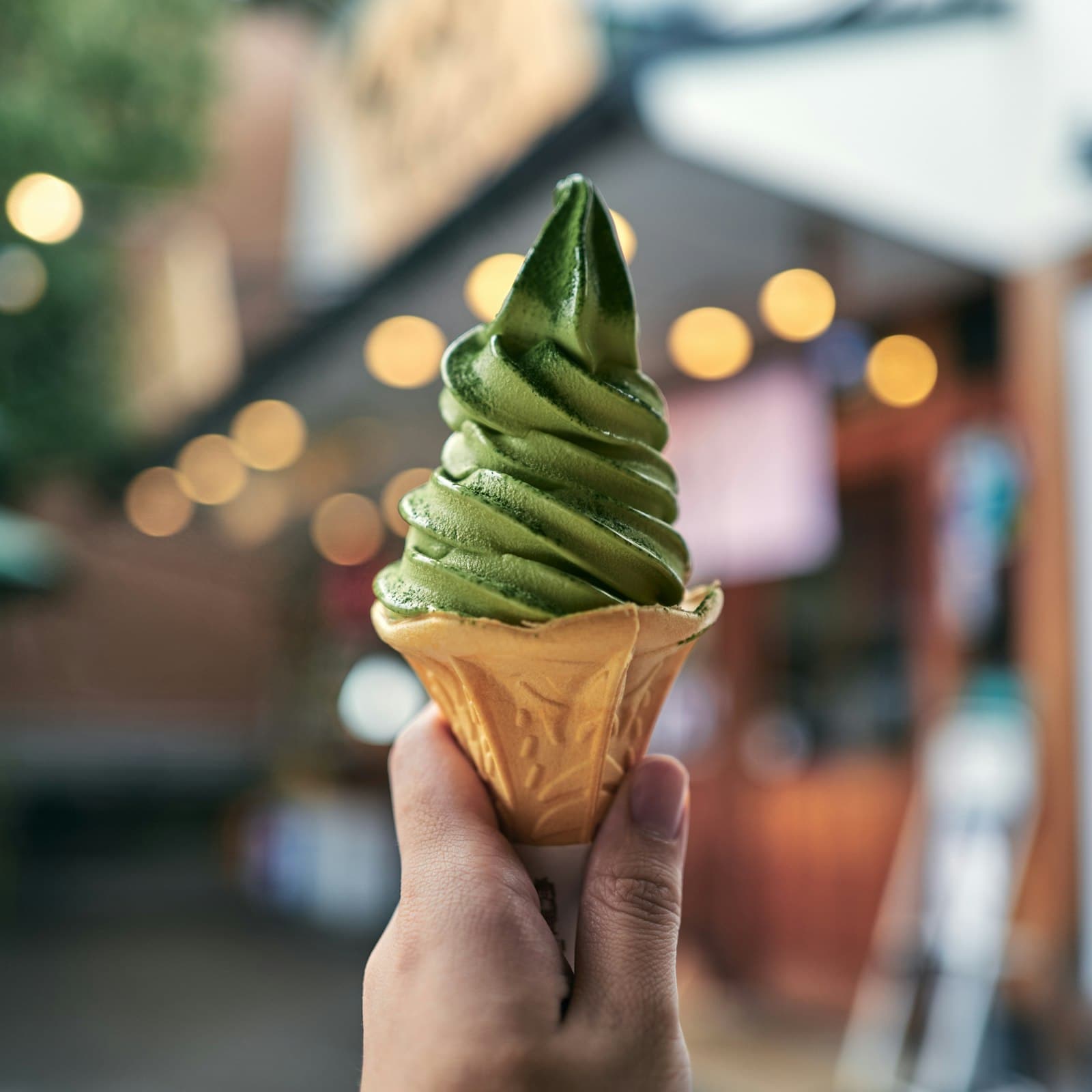
Green tea is the most classic everyday drink to try with Japanese food. You'll get it free with most teishoku set meals. Matcha is its thicker, ceremonial cousin — finely ground green tea powder whisked with hot water. Pickled vegetables (tsukemono) and pickled ginger (gari) appear on the side of almost every meal as palate cleansers.
The Core Dishes Worth Planning Around
Here's the short list. Don't try to eat them all in one city. Spread them across your route.
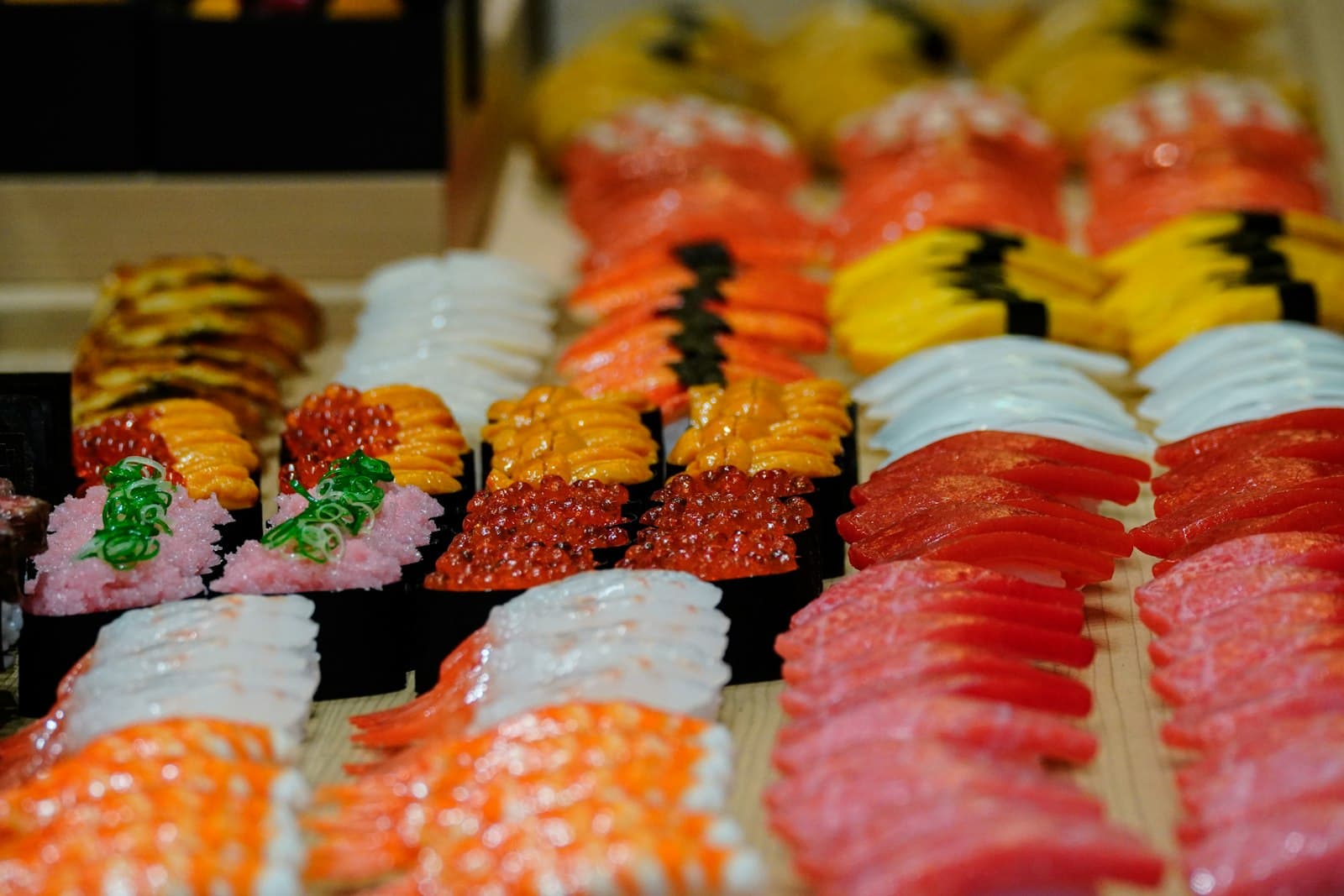
Typical price ranges per dish (2026)
| Dish | Casual | Specialty / Premium |
|---|---|---|
| Ramen | ¥600–1,000 | ¥1,500–2,500 |
| Udon / Soba | ¥500–900 | ¥1,500–3,000 |
| Sushi (kaiten) | ¥100–500/plate | ¥10,000–30,000 omakase |
| Tonkatsu / Katsu curry | ¥1,000–1,800 | ¥3,000–6,000 |
| Tempura set | ¥1,000 (tendon) | ¥8,000–20,000 (counter) |
| Yakitori | ¥150–300/skewer | ¥6,000–12,000 course |
| Donburi (gyudon) | ¥400–700 | ¥2,000–4,000 |
| Shabu-shabu / Sukiyaki | ¥3,000–5,000 | ¥10,000–25,000 wagyu |
| Kaiseki | — | ¥15,000–40,000+ |
Sushi and Sashimi
Sushi is one of the best known Japanese foods around the world. It's offered in various ways and prices, from the entertaining kaiten-zushi (conveyor belt sushi), where visitors can enjoy sushi for a reasonable price of about 100 yen per plate, to high-end traditional Edomae sushi where you sit at a quiet counter to eat as the sushi is prepared right before your eyes. Sushi usually refers to a dish of pressed vinegared rice with a piece of raw fish or shellfish, called a neta, on top.
A few terms worth knowing:
- Nigiri sushi: the small mound of sushi rice with a slice of raw fish or seafood pressed on top.
- Maki / sushi rolls: rice and fillings rolled in seaweed.
- Sashimi: just the raw fish, no rice underneath.
Order pickled ginger on the side and a small dish for your soy sauce. Don't drench the rice.
Ramen
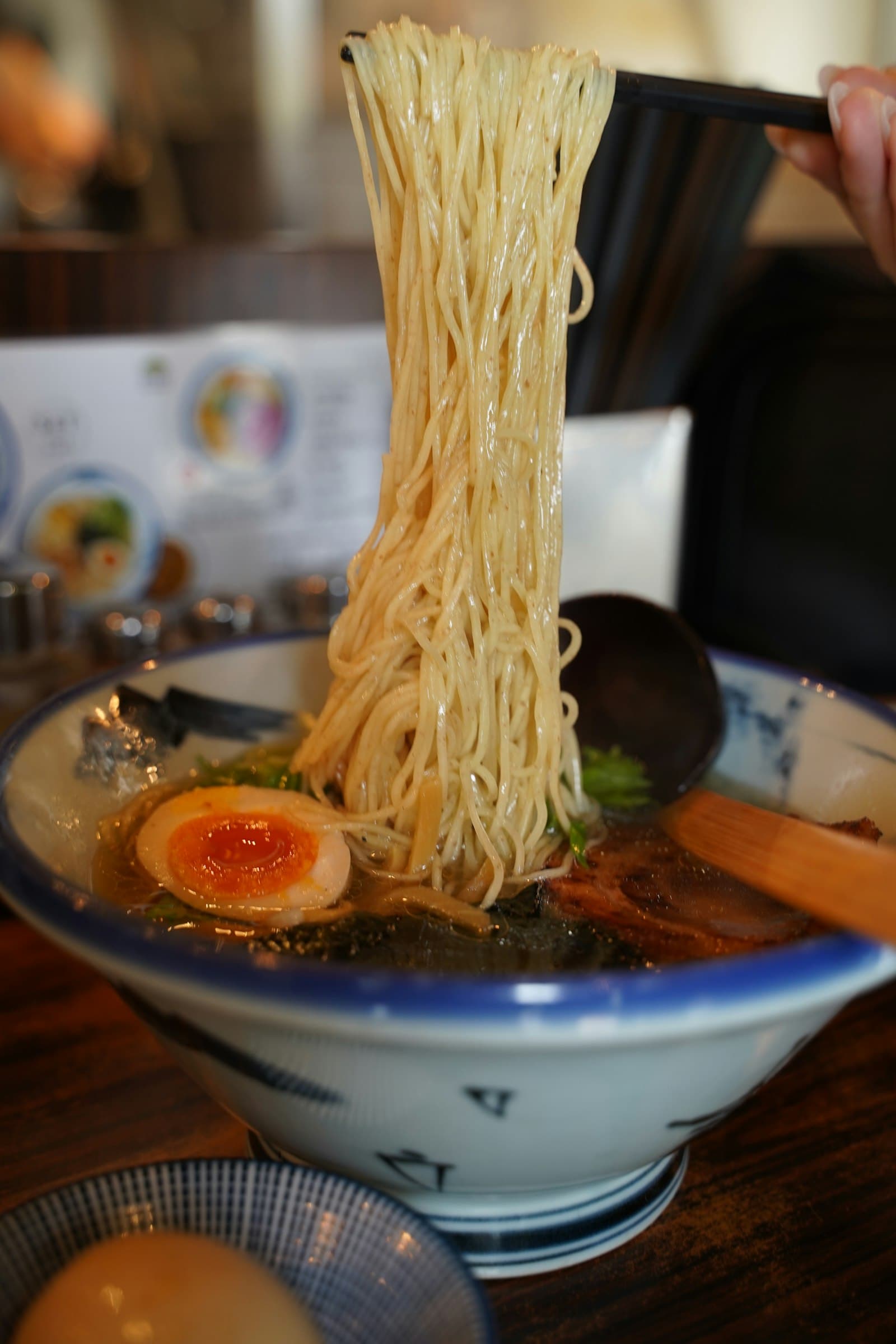
Ramen is one of those dishes that is known and loved across the world. It's a noodle soup consisting of wheat noodles in a broth with miso or soy and toppings such as sliced pork, nori and sometimes a boiled egg. Each region of Japan has its own variation of ramen which differ in toppings and the type of broth. The dish can be found everywhere from street stalls to sit-down restaurants and tends to be a really budget-friendly meal.
Ramen will usually cost between 600–1,000 yen, making it great even for travelers on a budget. Honestly, this is one of the easiest wins of any Japan trip. Pick a shop with a vending-machine ticket system out front, point at what looks good, and sit down.
Udon Noodles
Udon — thick wheat flour noodles — is the comfort food of the noodle world. These thick wheat flour noodles are thought to have been introduced to Japan from China around 800 years ago, and one of a staple traditional Japanese food. Nowadays, udon is a hearty and inexpensive lunch option, usually boiled and then served with a simple broth. Kake udon features those two ingredients alone, and although it might look basic, it actually makes for a very hearty meal by itself. If you want a bit more bite, udon shops usually offer a wide range of toppings such as raw egg, tempura bits and spring onion.
Kagawa Prefecture on Shikoku is the udon capital, but you'll find solid bowls everywhere. In Osaka, try kitsune udon — thick udon noodles, green onion and a dashi (seafood) soup stock with a deep-fried slab of tofu placed right on top.
Soba
Soba — buckwheat noodles — is thinner, earthier, and often served cold with a dipping sauce. If you're tired and don't want a heavy meal after a long day of temples in Kyoto, cold soba with tempura on the side is the move. The wheat noodles family (ramen, udon, somen) and the buckwheat noodles family (soba) cover most everyday Japanese meals.
Tonkatsu and Katsu Curry
Tonkatsu is a deep fried pork cutlet — breaded pork cutlet with panko, fried until golden, served with shredded cabbage, rice, and a thick brown sauce. As with many of the things we consider to be quintessentially Japanese, that's only half the story. Tonkatsu was invented at a Tokyo restaurant called Rengatei in 1899, served with rice and shredded cabbage. It was originally considered a Western-style dish due to the use of pork, which the Japanese rarely ate.
Katsu curry is basically Japan's version of curry rice with a slab of tonkatsu (or chicken katsu) on top. Which leads us to…
Japanese Curry
Japanese curry isn't traditional in the ancient sense — it's a younger import. Curry was introduced to Japan during the Meiji era (1868–1912). At the time, the Indian subcontinent was under British colonial rule. It is most likely that the British introduced the spice mix called curry powder to Japan via the countries' respective navies.
That history matters because Japanese curry tastes nothing like Indian or Thai curry. The Japanese version typically features a thick, rich curry sauce poured over white rice, often containing meat and vegetables like potatoes, carrots, and onions. It's mild, slightly sweet, thick, and weirdly addictive.
It's a comfort food favorite, especially when served with tonkatsu as katsu curry. CoCo Ichibanya is the big Japanese chains option — useful when you're hungry and don't want to think.
Tempura
Deep fried seafood and vegetables in a light, lacy batter. Tempura is one of the dishes where price and quality scale hard — a counter tempura meal in Tokyo can run thousands of yen, while a tempura bowl (tendon) at a casual place is under 1,000 yen.
Yakitori
Grilled chicken skewers cooked over charcoal and seasoned with salt or a sweet soy sauce. Yaki means "grilled" and tori means "chicken" — yakitori is a classic after-work Japanese meal and is typically served with ice-cold mugs of beer. Traditional yakitori uses almost every part of the chicken: thigh, breast, liver, gizzard, heart, and skin.
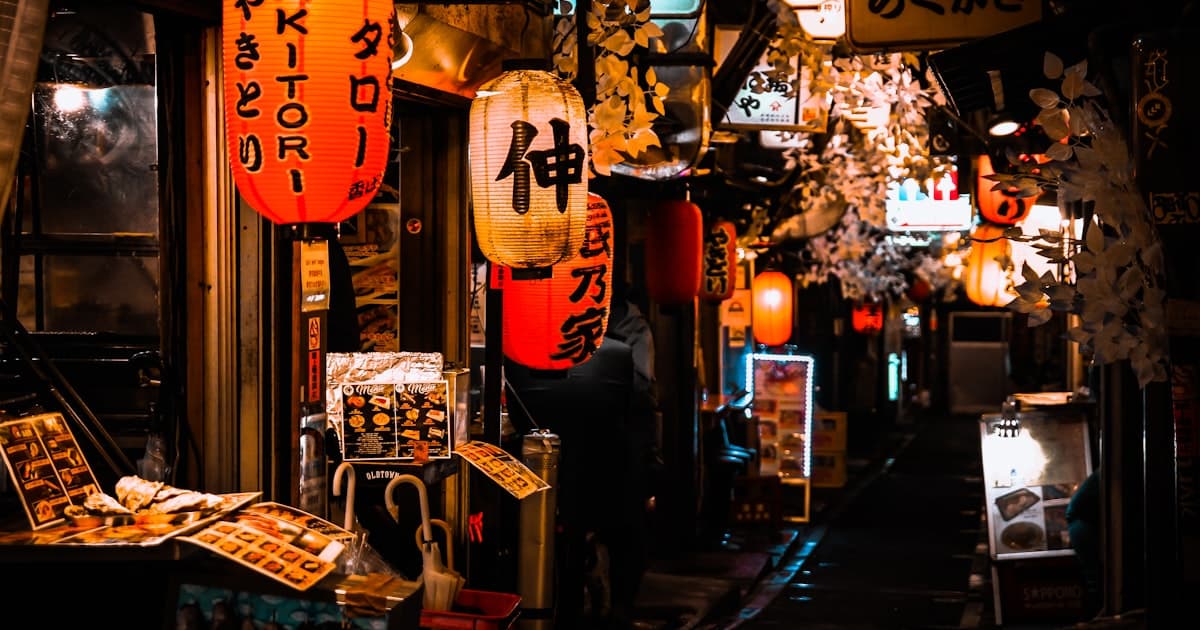
Best done at a smoky alley spot with a beer. Yurakucho's tracks-side stalls in Tokyo are a classic. For a deeper Tokyo yakitori alley, see our Omoide Yokocho guide.
Donburi (Rice Bowls)
Donburi are rice bowls with meat, seafood, egg, or vegetables served alongside rice. They're filling, quick and widely available. Popular versions include gyudon with beef, katsudon with pork cutlet and egg, oyakodon with chicken and egg, and tendon with tempura.
Gyudon at Yoshinoya or Sukiya costs less than a coffee back home and takes about three minutes to arrive. Lifesaver between sightseeing stops.
Teriyaki Chicken
Yes, teriyaki chicken exists in Japan, but it's nowhere near as central to the food scene as it appears at Western Japanese restaurants. Order it if you fancy it, but don't make a pilgrimage for it. If you want grilled chicken in Japan, head to a yakitori shop instead.
Shabu-Shabu and Sukiyaki
Two hot pot styles using paper-thin sliced beef. Wagyu beef is often sliced one to two millimeters thin so that it cooks in seconds. After the color of the beef changes, it can be dipped in an aromatic ponzu sauce or a creamy sesame gomadare. After the meat is cooked, vegetables are added to the hot pot. Traditional ingredients include shiitake, Napa cabbage, chrysanthemum greens, leeks, carrots, and tofu — vegetables cooked alongside the beef.
Sukiyaki is cooked in a shallow iron pan, traditionally enjoyed in the fall and winter in Japan. It became popular in Japan around the 19th century. Made both in homes and available on menus at restaurants, it's a dish you'll want to try when you're craving something hearty. A raw egg on the side is the traditional dipping sauce for sukiyaki.
Okonomiyaki
A savory cabbage pancake. It's a Japanese style pancake made from a wheat based batter, shredded cabbage, vegetables and meat or fish, topped with bonito flakes or nori and condiments (including mayonnaise). Osaka and Hiroshima both claim it — different styles, both worth eating.
Kaiseki
The fine-dining end of traditional japanese cuisine. A type of cuisine rather than a single food, this style of fine dining has its roots in the courtly culture of imperial Kyoto in the 16th century, when visiting samurai and dignitaries were treated to a series of small dishes to accompany traditional tea ceremonies.
Book this in japan's ancient capital, Kyoto. Expect a long, multi-course meal, often at a ryokan. Reserve weeks ahead. For more on what a ryokan stay actually looks like, see our what is a ryokan guide.
Wagyu and Japanese Beef
Because Japan has very little grazing land, beef is expensive — think Wagyu and Kobe beef — which is part of why chicken is the more popular everyday choice. Splurge once. Don't try to eat A5 wagyu beef every night unless your budget is bottomless.
Miso Soup
Miso soup is another famous Japanese food, renowned for its great taste and health benefits. This soup is conventionally drunk accompanied by other side and main dishes. A traditional Japanese diet generally includes drinking miso soup daily. Miso soup is made simply, with the fermented miso base, which has a flavorful taste full of depth, added to Japanese dashi (conventionally a mixture of bonito and kelp).
You'll have it whether you order it or not. Set meals come with it by default.
Street Food: What to Eat and Where
Japanese street food is more about specific neighborhoods than wandering and grazing. The whole "eating while walking" thing is actually frowned upon in a lot of places — at Nishiki Market in Kyoto, for example, the local etiquette is to eat near the stall, not on the move. For the deeper Tokyo / Osaka / Kyoto street food breakdown with more stalls and prices, see our Japan street food guide.
Osaka: The Street Food Capital
Osaka is the centre of gravity for Japanese street food. Not because it has the widest variety — Tokyo does — but because food is central to Osaka's sense of itself in a way that is unusual even by Japanese standards. The phrase kuidaore (eat until you drop) applies to the city's relationship with eating generally, and street food specifically.
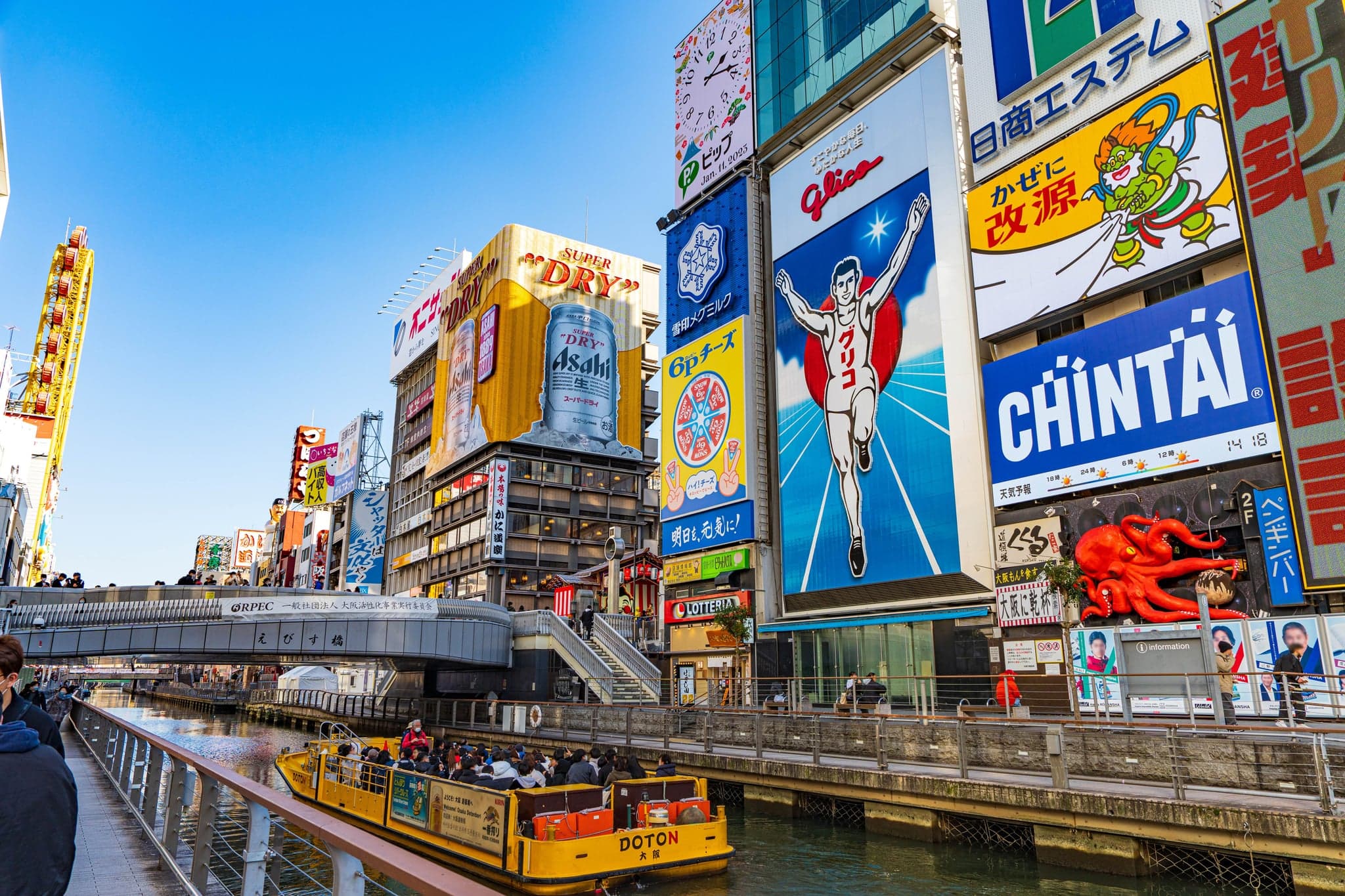
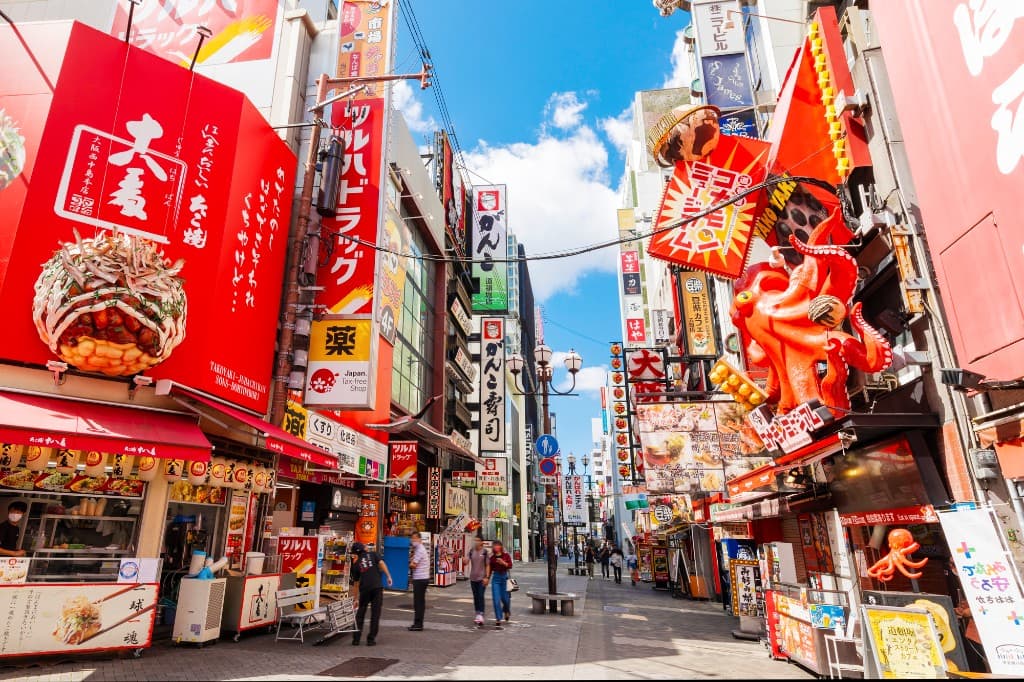
Head straight to Dotonbori near Namba Station. The best place to experience Osaka's food culture is the neon-laden Dotonbori district, which is packed with all types of eateries along its main thoroughfare and many side streets.
What to try:
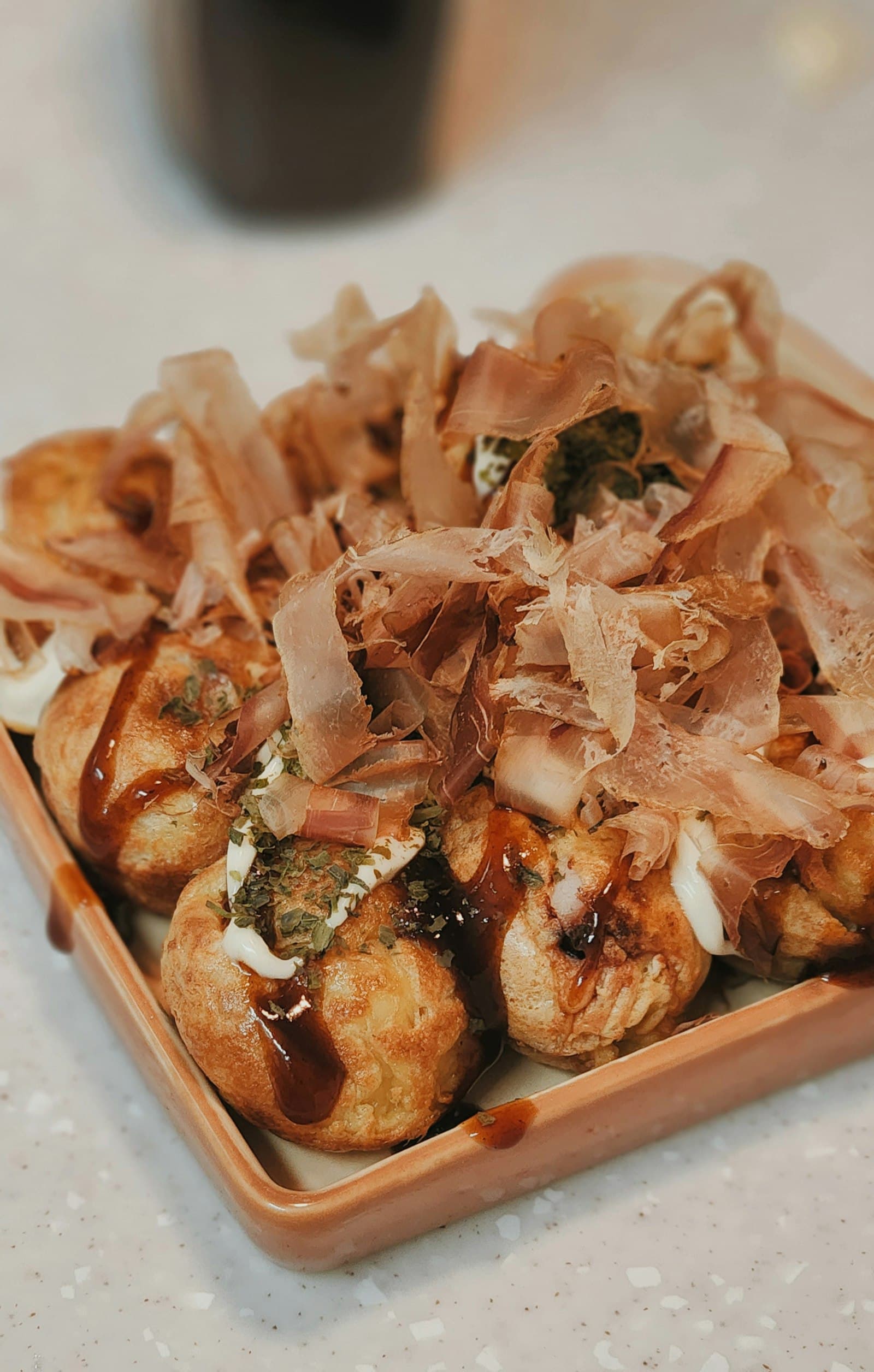
- Takoyaki. Popular street food in Japan, especially in Osaka. Takoyaki are savory balls of batter filled with tender octopus chunks, green onion, and pickled ginger, then topped with bonito flakes, takoyaki sauce, and mayo. These octopus-filled wheat batter balls hail from Osaka, where they were invented by a street vendor in the 1930s. Eat them hot but cautiously — the inside is molten.
- Kushikatsu. Battered and deep fried pieces of food on skewers. Meat and vegetables are the most common ingredients for kushikatsu, but some restaurants also have more exotic varieties such as strawberries on their menus. Shinsekai is the best place to enjoy kushikatsu in a nostalgic Osaka atmosphere. One rule: no double-dipping in the shared sauce.
- Okonomiyaki. Many places let you cook it yourself on a tabletop grill.
- Karaage (Japanese fried chicken). A popular Japanese street food made with bite-sized pieces of chicken marinated in soy sauce, ginger, and garlic, then lightly coated and deep-fried to crispy perfection.
Cheap-eats budgeting: cheap street food like okonomiyaki, takoyaki, ramen, soba and udon costs between 500 and 1,000 JPY (4.60 to 9.25 USD).
For a deeper neighborhood-by-neighborhood Osaka walk, see our what to do in Osaka guide.
Tokyo's Street Food Pockets
Tokyo's street food is less concentrated geographically than Osaka's. The best pockets are in older neighbourhoods. Asakusa, the area around Senso-ji temple, has the densest traditional street food scene in Tokyo.
In Asakusa, look for ningyo-yaki — small baked cakes filled with sweet red bean paste, sold along Nakamise-dori. Taiyaki is another classic Japanese fish-shaped pastry typically filled with sweet red bean paste, though custard, chocolate, and sweet potato are also common. Taiyaki originated in Tokyo during the Meiji era and has since become a popular treat across Japan.
Harajuku's Takeshita-dori is the candy-colored version: crepes, cotton candy, the lot. Tsukiji Outer Market — the old fish market — still has great seafood snacks and grilled skewers.
Kyoto's More Restrained Street Food Scene
Kyoto offers a more traditional street food experience, especially around temple areas where you'll find treats like mitarashi dango. Nishiki Market is the spot.
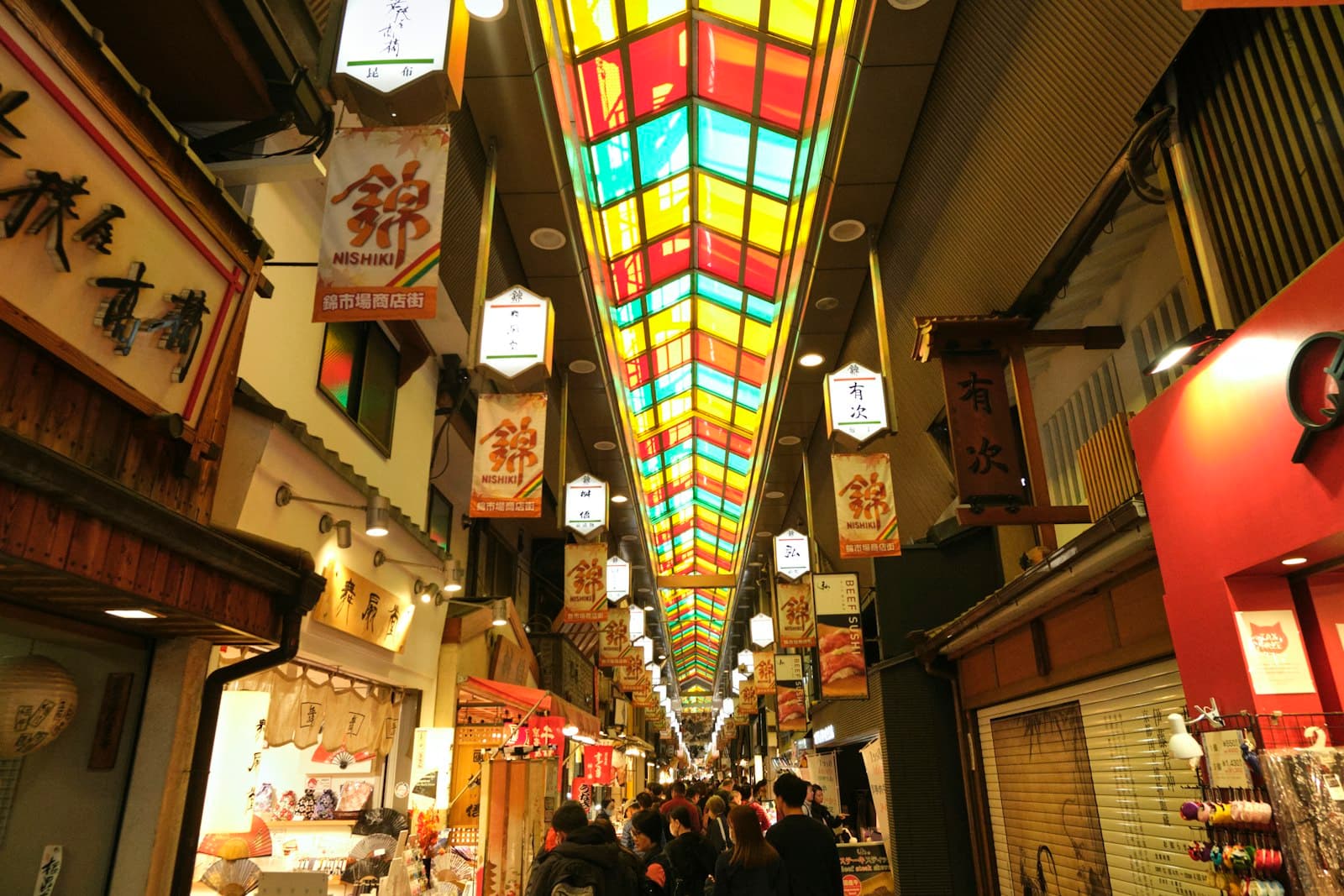
Nishiki Market (錦市場) is a narrow, five-block-long shopping street lined by more than one hundred shops and restaurants. Known as "Kyoto's Kitchen," this lively retail market specializes in all things food related, like fresh seafood, produce, knives and cookware, and is a great place to find seasonal foods and Kyoto specialties, such as Japanese sweets, pickles, dried seafood and sushi — including a small fish cake stall or two if you look.
Practical info: the market itself is open every day, but shop opening hours vary. Most shops are open between 9 a.m. and 6 p.m. Some smaller family-run shops will be closed on certain days of the week, Wednesday being the most common.
Getting there is easy: from Kyoto Station, take the Karasuma Subway Line to Shijo Station. Nishiki Market is located one block north of Shijo Avenue, between Teramachi and Shinmachi, less than a five-minute walk from Shijo Station.
A note on manners:
Make sure to refrain from eating while you walk through Nishiki Market — eat near the stall you bought from, then move on. The same rule applies in many traditional shopping streets and shrine approaches across Japan.
Convenience Stores and Snack Food
Don't skip the conbini. 7-Eleven, FamilyMart, and Lawson are three of the most reliable food sources in the country. Convenience stores are where you'll get breakfast on travel days, late-night snack food after the trains stop, and an honest cheap meal when you're too tired to read a menu.
What's actually good:
- Onigiri (rice balls with fillings like salmon, tuna mayo, ume): ¥150–200 each.
- Tamago sando (egg salad sandwich): the famous one, especially at 7-Eleven.
- Karaage-kun (Lawson's mini fried chicken): around ¥250.
- Oden in winter: a hot pot of dashi with daikon, eggs, and fish cake.
- Hot drinks in cans — coffee, green tea, even corn soup.
Conbini food is also a budget hack. If you're trying to keep food costs down, two conbini meals + one good restaurant meal per day is a solid pattern.
Drinks: Green Tea, Sake, and Japanese Whisky
With food, the everyday drink is green tea — served free with most meals — or barley tea (mugicha) in summer. With evening meals at an izakaya, it's beer to start, then sake, shochu, or chuhai. Sake is a rice wine made from fermented rice, water, koji, and yeast.
Japanese whisky deserves its own mention. Suntory and Nikka have pulled global awards for years; a glass at a Tokyo whisky bar is one of the simpler luxuries on the trip. Don't expect bargain prices on the rare bottlings.
Etiquette and Common Mistakes
A few rules that will instantly mark you as someone who's done their homework:
- Don't walk and eat. Especially in shrine approaches and traditional markets like Nishiki.
- Don't pass food chopstick-to-chopstick. It evokes a funeral ritual.
- Don't stick chopsticks vertically into rice. Same reason.
- Don't tip. Service is included. Leaving cash on the table can confuse staff and sometimes offend.
- Slurp noodles. Quietly, but slurping ramen or soba is fine and even expected. Pasta-style restraint is unnecessary.
- Order what the shop specializes in. A ramen-ya is for ramen. A soba-ya is for soba. Don't ask for off-menu fusion.
- Cash still matters. Lots of small Japanese restaurants are cash-only or vending-machine ticket only.
For a wider list of etiquette pitfalls, see our Japan travel mistakes to avoid guide.
Planning Food Into Your Self-Guided Itinerary
The best way to think about food on a Japan trip is to anchor each city around what it does best, then leave room for accidents.
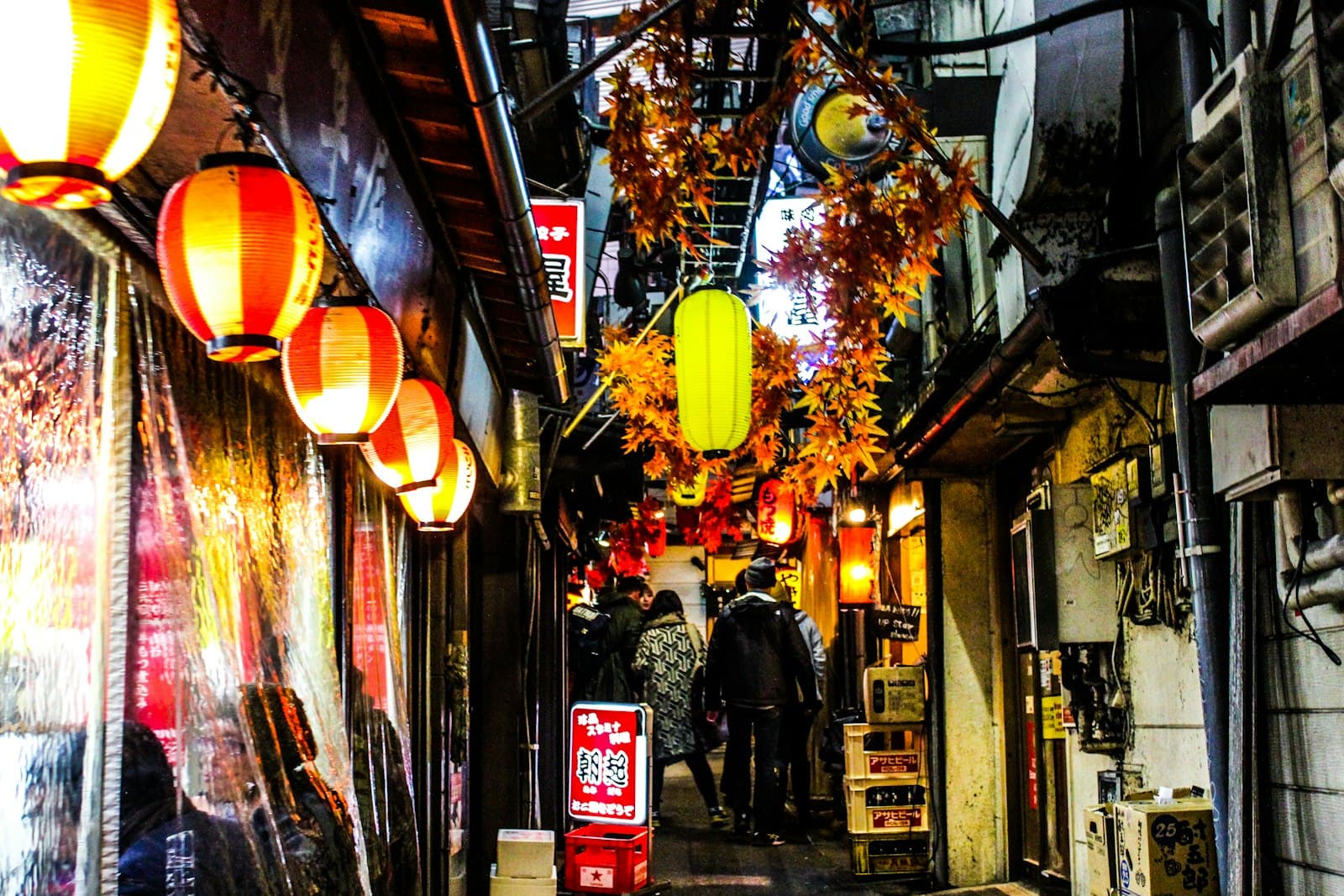
Rough food anchor map:
- Tokyo: sushi (Tsukiji + a counter splurge), ramen, izakaya in Shinjuku/Shibuya, yakitori under the Yurakucho tracks, kaiten-zushi for an easy lunch.
- Kyoto: kaiseki at a ryokan, Nishiki Market, soba and tofu cuisine, matcha sweets in Gion.
- Osaka: takoyaki, okonomiyaki, kushikatsu in Shinsekai, late-night izakaya in Ura-Namba.
- Hiroshima: Hiroshima-style okonomiyaki and oysters.
- Fukuoka: tonkotsu ramen and the yatai (street food stalls) along Nakasu.
- Hokkaido: miso ramen, fresh uni and crab, jingisukan (grilled lamb).
A few practical rules from putting together hundreds of itineraries:
- Reserve kaiseki and high-end sushi at least 2–4 weeks ahead. Walk-ins almost never work.
- Don't plan a heavy lunch + heavy dinner on the same day. Japanese portions are smaller, but kaiseki and shabu-shabu both run long.
- Keep one "pick-the-line" meal per city. Walk into whatever has a queue of locals at lunch.
- Use the Japanese whisky bar / sake izakaya slot for the late evening. Many close past midnight, while restaurants stop seating around 9–9:30 p.m.
For full city sequencing, see our 7-day itinerary or 2-week itinerary.
Want a self-guided trip designed around the food?
We design self-guided trips for travelers who care about authentic Japanese food — with the right neighborhood for each meal, kaiseki reserved in advance, and the easy ramen / izakaya / conbini rhythm built into your daily plan. Tell us your dates and tastes.
FAQ
What are the must-try traditional Japanese foods?
Aim for sushi (kaiten and at least one counter meal), ramen, udon or soba noodles, tonkatsu or katsu curry, tempura, yakitori, donburi (rice bowls), shabu-shabu or sukiyaki, okonomiyaki, miso soup, and one kaiseki meal in Kyoto. Spread them across cities rather than trying to eat all of them in three days.
How much does food cost per day in Japan?
Budget around ¥3,000–5,000 per day for cheap eats (ramen, donburi, conbini), ¥6,000–10,000 for mid-range (one nice restaurant meal plus casual lunches), and ¥15,000+ when you add a kaiseki, omakase sushi, or wagyu dinner. See our Japan daily budget 2026 guide for fuller numbers.
Is Japanese food healthy?
The traditional Japanese diet — rice, miso soup, grilled fish, pickled vegetables, vegetable dishes, green tea — is one of the healthiest in the world and is part of why washoku is on the UNESCO intangible cultural heritage list. Modern travel eating is a mix of that and a lot of fried food (tempura, tonkatsu, karaage), so balance grilled fish, soba, and side vegetables across the trip.
What is the difference between sushi and sashimi?
Sushi is built on vinegared rice (shari) with raw fish, cooked seafood, or vegetables on top or rolled inside. Sashimi is just the raw fish, sliced and served without rice. A sushi restaurant typically serves both. At a serious counter, the rice is the star, not the fish.
Where can I eat the best Japanese food on a budget?
Specialty shops with vending-machine tickets out front (ramen, gyudon, soba), department store food halls (depachika) in the late afternoon when prices are reduced, conveyor-belt sushi (kaiten-zushi) at chains like Sushiro and Kura, and convenience stores. A genuinely good lunch under ¥1,000 is easy almost anywhere in Japan.
What should I eat in each city — Tokyo, Kyoto, Osaka?
Tokyo: sushi, ramen, izakaya, yakitori. Kyoto: kaiseki, soba, tofu cuisine, Nishiki Market, matcha sweets. Osaka: takoyaki, okonomiyaki, kushikatsu, late-night izakaya in Dotonbori and Ura-Namba. Pick one signature meal per city rather than trying to eat each city's entire menu.