
Onsen: A First-Timer's Guide to Japan's Natural Hot Springs
How onsen bathing actually works, what the different waters feel like, and which onsen towns are worth building your itinerary around.
An onsen is a natural hot spring bath — and soaking in one is the single most Japanese thing you can do on your trip. Not visiting a temple. Not riding the bullet train. Sitting naked in 42°C volcanic water with strangers while snow falls on your head. That's the onsen experience.
But if you've never done it, the whole thing can feel intimidating. Public nudity, unfamiliar etiquette, kanji-only signs on the doors. This guide covers everything: how onsen bathing actually works, what the different types of Japanese hot springs feel like, where to find tattoo-friendly options, and which onsen towns are worth building your itinerary around.
♨️ Quick Answer: What Is an Onsen?
A natural hot spring bath fed by volcanic mineral water. Japan has over 27,000 hot spring sources and ~3,000 onsen towns. You bathe nude, wash before entering, and soak for 10-15 minutes per session. Day-use costs ¥600–2,000; an overnight ryokan stay with onsen runs ¥15,000–80,000/person.
🌋 Source
Volcanic mineral water
🌡️ Temp
40–43°C typical
⏱️ Soak
10–15 min/session
💴 Cost
¥600–2,000 day-use
What Is an Onsen? (And How It's Different from a Sento)
An onsen is a bathing facility fed by naturally heated, mineral-rich water from underground volcanic sources. Japan sits on the Pacific Ring of Fire, which means geothermal activity is everywhere — the country has over 27,000 individual hot spring sources and roughly 3,000 onsen towns scattered from Hokkaido to Kyushu. Many of these onsen towns are popular domestic tourism destinations, packed with Japanese families on weekend getaways.
Onsen bathing is deeply woven into Japanese culture. The word "onsen" first appeared in the Kojiki, Japan's oldest historical chronicle from the 8th century. For much of Japanese history, hot springs were considered sacred waters with healing properties — samurai bathed in them to treat battle wounds, and Buddhist monks used them for ritual purification.
A sento, by contrast, is a neighborhood public bathhouse that typically uses heated tap water. The bathing process is the same, but the water itself isn't volcanic. That said, the line blurs — some sento in Tokyo actually pipe in natural hot spring water. Maenohara Onsen Sayano Yudokoro in Itabashi ward sits in a residential neighborhood but offers genuine amber-colored source water for ¥1,000 admission.
📋 The Legal Definition
The Japanese Hot Springs Act defines onsen as hot water, mineral water, or water vapor gushing from underground. To be officially classified, the water must be at least 25°C at the source, or contain a minimum concentration of specific minerals. This is why Japanese people care about mineral composition in a way that can seem obsessive to visitors — it's not marketing, it's regulated by law.
Types of Hot Springs: What the Water Actually Feels Like
This is where most guides fail. They list mineral types without telling you what the experience is like. Here's what matters when you're choosing between baths.
🟣 Sulfur onsen (硫黄泉)
Milky white or pale blue hot spring water with a strong egg-like smell. Your skin feels silky afterward. The smell lingers for hours. Leave silver jewelry in your locker — the water tarnishes it.
Try it at: Kusatsu (Gunma), Hakone Owakudani, Nyuto Onsen (Akita)
🟤 Iron onsen (鉄泉)
Rust-red or deep golden brown. Arima Onsen near Osaka calls theirs "kinsen" (gold water) and it genuinely looks like strong tea. The warmth stays with your body long after you get out. White towels will stain permanently brown.
Try it at: Arima Onsen (Hyogo), near Kobe/Osaka
🔵 Sodium chloride onsen (塩化物泉)
Clear water, but taste it and it's distinctly salty. The salt forms a thin film on your skin that traps heat, making these baths popular in winter.
Try it at: Kinosaki Onsen (Hyogo), Atami (Shizuoka)
🫧 Carbonated onsen (炭酸泉)
Clear water with tiny bubbles that cling to your skin like warm soda. The fizzing sensation is surprisingly pleasant, and the temperature is often lower (35–38°C), making long soaks easy.
Try it at: Nagayu Onsen (Oita Prefecture)
⚪ Simple alkaline onsen (単純温泉)
Clear, odorless, gentle. The most common type across Japan and the best choice for first-timers or anyone with sensitive skin. Feels soft and deeply relaxing.
Try it at: Gero Onsen (Gifu), Dogo Onsen (Ehime) — one of Japan's oldest
How to Bathe in a Japanese Onsen (Step by Step)
This is the part everyone worries about. The process is simple once you've done it once.
Find the right door
Look for the noren curtains at the entrance. Blue or the kanji 男 means men. Red/pink or 女 means women. Some facilities use 殿方 (gentlemen) and 御婦人 (ladies). Many onsen swap sides overnight, so you can experience both baths during a two-night stay.
The changing room
Undress completely and put everything in a basket or locker (some need a ¥100 coin, returned when done). Take only your small towel into the bathing area. This is the moment that feels most awkward for first-timers. The truth: nobody is looking at you. Within 30 seconds in the water, you'll forget you were nervous.
Wash before you soak
This is the most important rule of onsen etiquette. Sit on the low stool at a shower station and wash your entire body thoroughly with soap. Rinse completely. Do not stand — sit. Do not splash other bathers. The bath water isn't filtered in real-time, so everyone entering clean is what keeps the shared water pristine.
Enter the bath
Pour a few scoops of hot water over your body first (called kakeyu) to adjust to the temperature. Ease in feet first. Water temperature is typically 40–43°C. Start with the coolest pool. Your small towel stays out of the water — fold it on top of your head.
Outdoor baths (rotenburo)
Most facilities have both indoor (uchiyu) and outdoor onsen (rotenburo). The outdoor bath is usually the highlight — hot water surrounded by forested mountains or under the night sky. Warm up indoors first, then move outside. In winter, the contrast between cold air and hot water is extraordinary.
Getting out
Resist rinsing in the shower — for mineral-rich springs, leaving the onsen water on your skin is part of the point. Dry yourself with your small towel before returning to the changing room. Then find the vending machine, buy a bottle of coffee milk (コーヒー牛乳), and drink it with one hand on your hip. This post-bath ritual is an unofficial tradition. It tastes unreasonably good after a hot soak.
Where to Soak: Types of Onsen Facilities
"Onsen" refers to the water, but the facilities vary enormously. For the full traditional ryokan experience — hot spring bath, kaiseki dinner, yukata, tatami room — see our What Is a Ryokan? guide.
🏯 Onsen Facility Types
| Type | What It Is | Cost | Tattoo |
|---|---|---|---|
| Ryokan bath | Hot spring inside a traditional inn. Guests only. | Included | Varies |
| Day-use onsen | Walk-in facility, no overnight stay. | ¥600–2,000 | Varies |
| Super sento | Large bathhouse with saunas, restaurants, rest areas. | ¥800–2,500 | Often restricted |
| Private onsen | Reservable bath for couples, families, or solo use. | ¥2,000–5,000/45min | Always OK |
| Foot bath (足湯) | Free roadside baths in onsen towns. Clothed, shoes off. | Free | N/A |
| Sento (銭湯) | Neighborhood bathhouse. Usually tap water. | ~¥500 | Varies |
Tattoo-Friendly Onsen: The Honest Reality
Let's be direct. Many onsen in Japan still restrict guests with tattoos from communal baths. The rule originally existed to discourage yakuza (Japanese organized crime members, who traditionally have extensive tattoos), and it persists today even though most tattooed visitors are clearly tourists.
✅ Usually OK
- • Private/reservable onsen (always fine)
- • Ryokan with in-room baths
- • Large international hotel chains
- • Foot baths
- • Many rural family-run inns
⚠️ Usually Restricted
- • Large super sento chains
- • Municipal public bathhouses in cities
- • Popular tourist-area onsen
What to Do
Book a private onsen (kashikiri-buro) — this guarantees access with zero stress. Or ask your accommodation directly before booking: "Do you accept guests with tattoos in the communal bath?" Some facilities offer skin-colored sticking plaster to cover small tattoos. The situation has been improving in recent years, but don't assume — always confirm in advance.
Onsen Etiquette: What Foreign Guests Need to Know
For more cultural tips beyond the bath, see our 25 Japan Travel Mistakes to Avoid.
Health Benefits of Natural Hot Springs
Japanese culture has a long tradition of toji — extended stays at hot spring resorts for therapeutic purposes, dating back centuries. Different mineral compositions are traditionally linked to different benefits: sulfur onsen for skin conditions, sodium chloride springs for joint stiffness, carbonated springs for circulation.
Be cautious about treating these as medical claims. The relaxation benefits of hot water immersion — reduced muscle tension, better sleep, stress relief — are well-supported and something almost every bather experiences firsthand. The surrounding landscape of most hot spring resorts — forested mountains, rivers, volcanic terrain — contributes to the stress reduction as much as the water itself.
"After 20 minutes in a natural hot spring, you will sleep better that night than you have in weeks. Every traveler we've worked with says the same thing."
Best Onsen Towns in Japan
♨️ Hakone
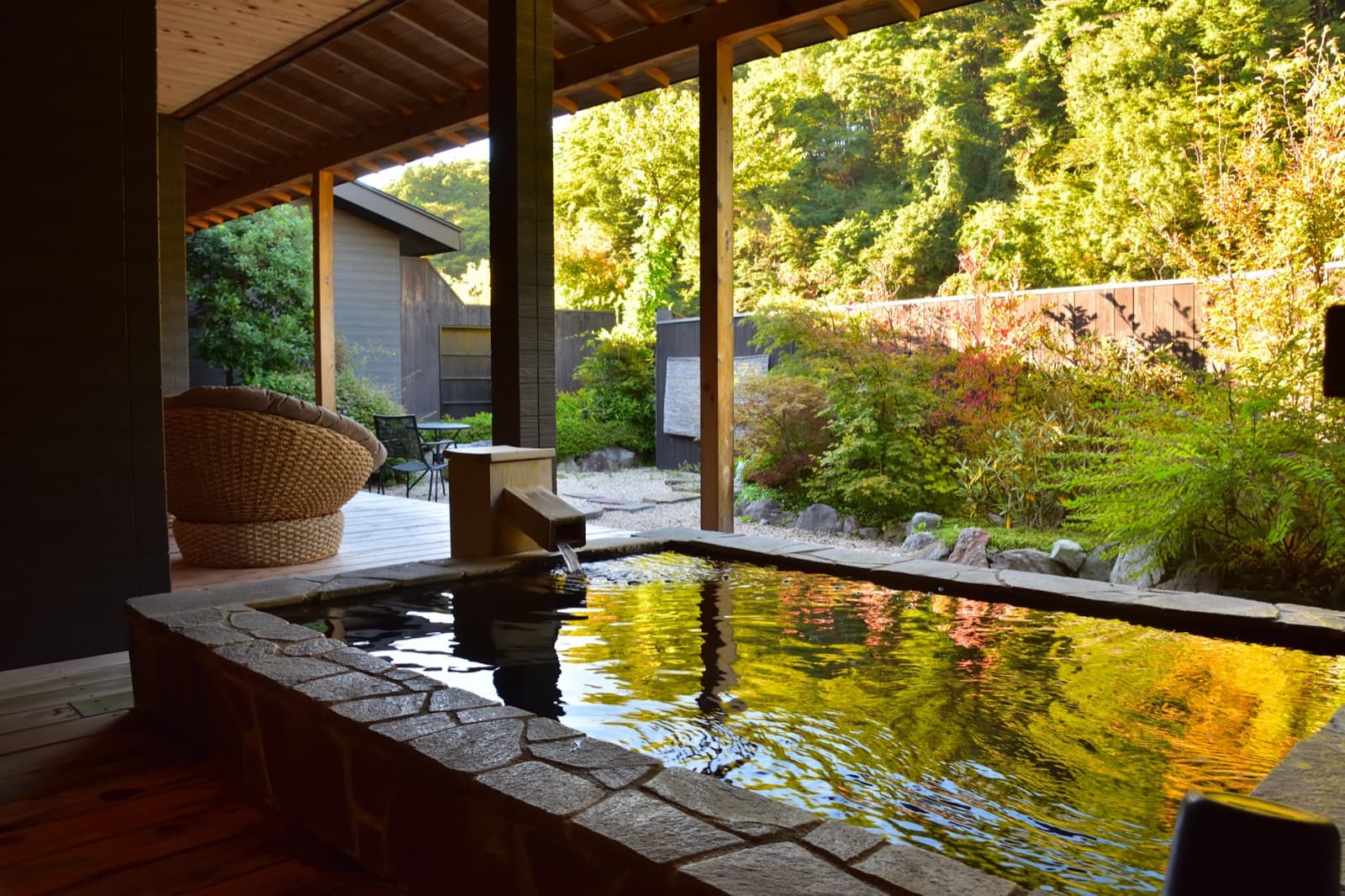
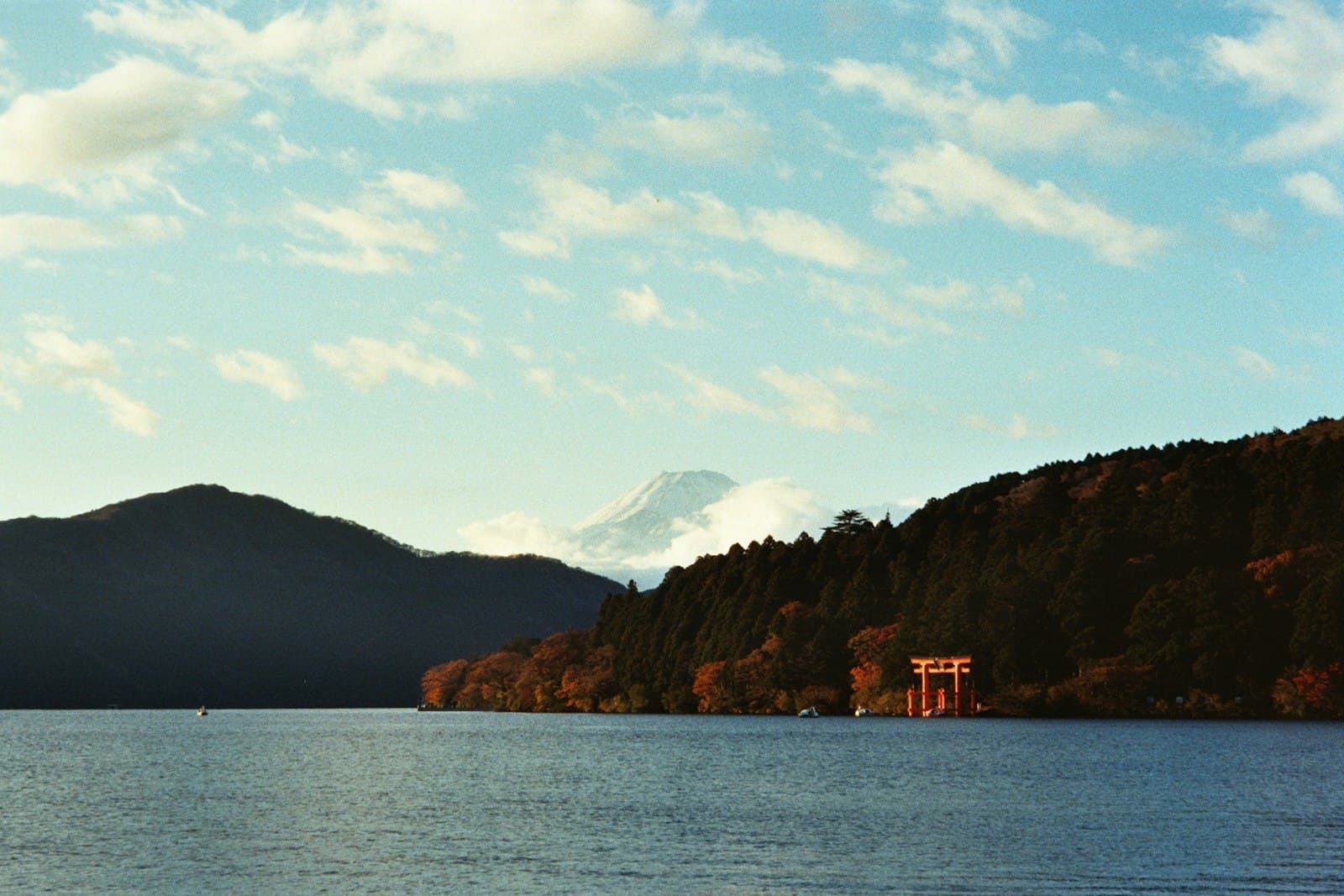
Just 85 minutes from Tokyo by train. 17 distinct spring types, from sulfur vents at Owakudani to gentle alkaline waters at Hakone-Yumoto. Both budget hotels and luxury ryokan line the valleys. Some high-end properties feature guest rooms with private outdoor onsen and cypress wood tubs. See our day trips from Tokyo guide.
🏮 Kinosaki Onsen
A small onsen town on the Sea of Japan coast, 2.5 hours from Kyoto by JR. Seven public bathhouses connected by a willow-lined canal — stroll between them in your yukata and wooden geta sandals (¥1,500 all-bath pass). One of the few places where wearing ryokan clothes outdoors is the norm.
🌋 Beppu
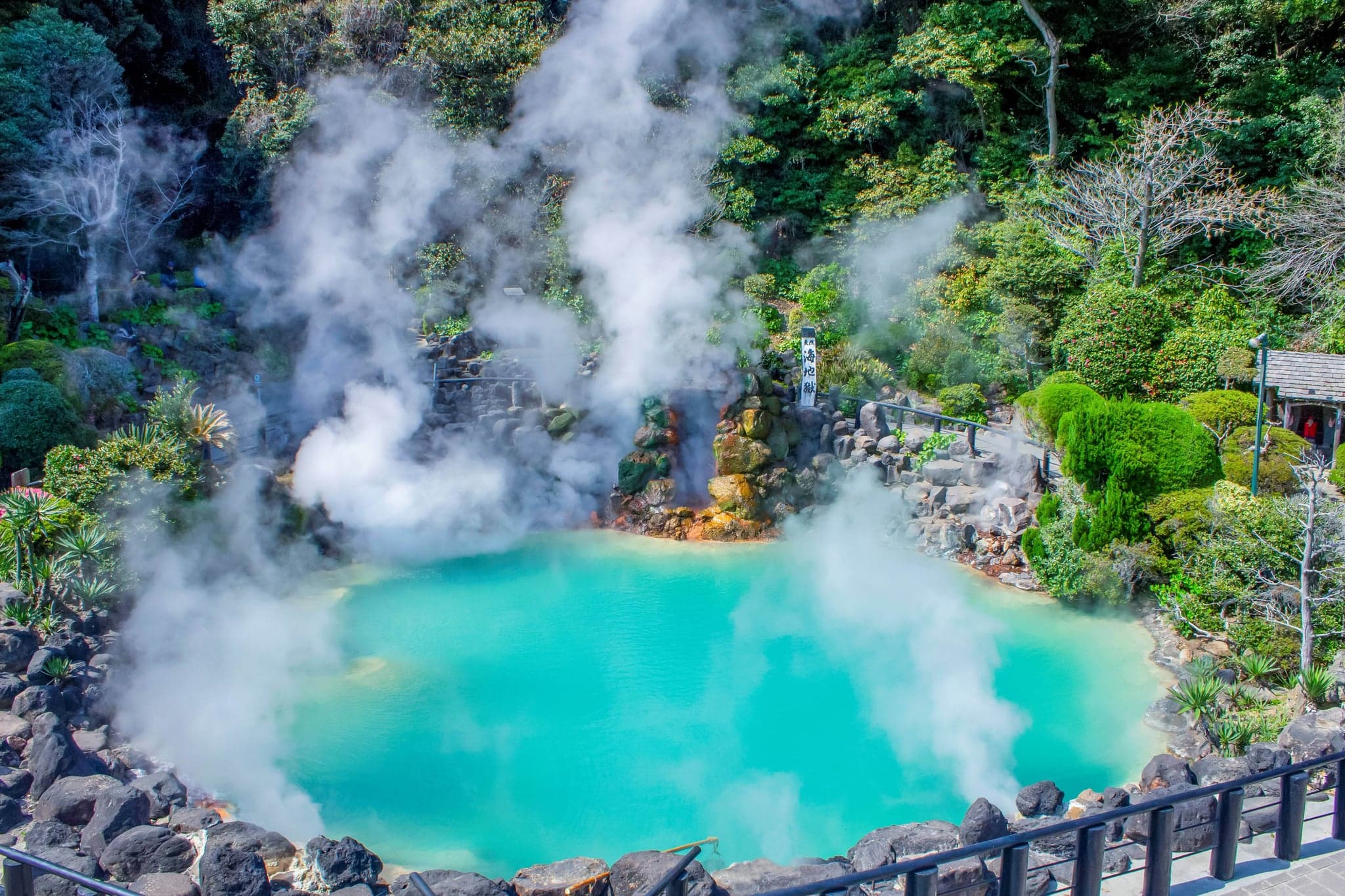
On Kyushu's eastern coast, Beppu produces more hot spring water than anywhere else in Japan. The "Jigoku Meguri" (Hell Tour) visits eight spectacular springs too hot for bathing — boiling mud pools, cobalt-blue ponds. For soaking, Beppu's eight districts each have their own character, from sand baths at the beach to historic stone baths in Kannawa.
🏛️ Dogo Onsen
On Shikoku, one of Japan's oldest hot springs, in continuous use for over 1,000 years. The ornate main bathhouse — said to have inspired the bathhouse in Miyazaki's Spirited Away — completed a six-year preservation restoration in December 2024 and is now fully open again. Worth visiting for the architecture alone.
❄️ Nyuto Onsen
Deep in Akita Prefecture's forested mountains. Tsurunoyu, the most famous, has a milky-white mixed-gender outdoor bath surrounded by snow in winter. Remote, basic, and one of the most photographed onsen in Japan.
For more off-the-beaten-path destinations, see our Japan Hidden Gems guide.
Onsen in Different Seasons
❄️ Winter (Dec–Feb)
The best season. Snow-covered outdoor baths (yukimi-buro) are the iconic image. Mountain locations like Nyuto and Ginzan Onsen become magical. The temperature contrast between cold air and hot water is at its peak.
🌸 Spring (Mar–May)
Cherry blossoms above outdoor baths in late March–early April. Less crowded than autumn. The hot spring water feels perfectly balanced against mild air.
☀️ Summer (Jun–Aug)
Sounds counterintuitive, but lower-temperature carbonated baths and riverside outdoor onsen are refreshing. Evenings are best. Avoid midday soaking.
🍁 Autumn (Sep–Nov)
Peak foliage = mountain onsen surrounded by red and gold. October to mid-November is prime time. Also the busiest season — book ahead.
For more on timing your trip, see our Best Time to Visit Japan guide.
FAQ
Can I use onsen if I can't read Japanese?
Are onsen gender-separated?
Is the water safe?
How long should I soak?
An onsen visit is the experience that makes Japan trips unforgettable. Build at least one night at an onsen ryokan into your itinerary — your body will thank you for it.
Experience Japan's Best Hot Springs
Our self-guided tours include hand-picked onsen ryokan — we handle the booking, the tattoo-policy checks, and the logistics so you just show up and soak.
Last reviewed: March 2026.
Related: What Is a Ryokan? | 14-Day Japan Itinerary | Best Time to Visit Japan
Related Articles
Ryokan With a Private Onsen: What It Costs, How It Works, and the Rooms We Actually Book
13 min read
Hakone Day Trip from Tokyo 2026: Hour-by-Hour Itinerary
18 min read
Japan Honeymoon Packages: Real Prices, What's Included, and How to Plan a Self-Guided Trip
16 min read
BluePlanet Travel Team
Japan Travel Experts